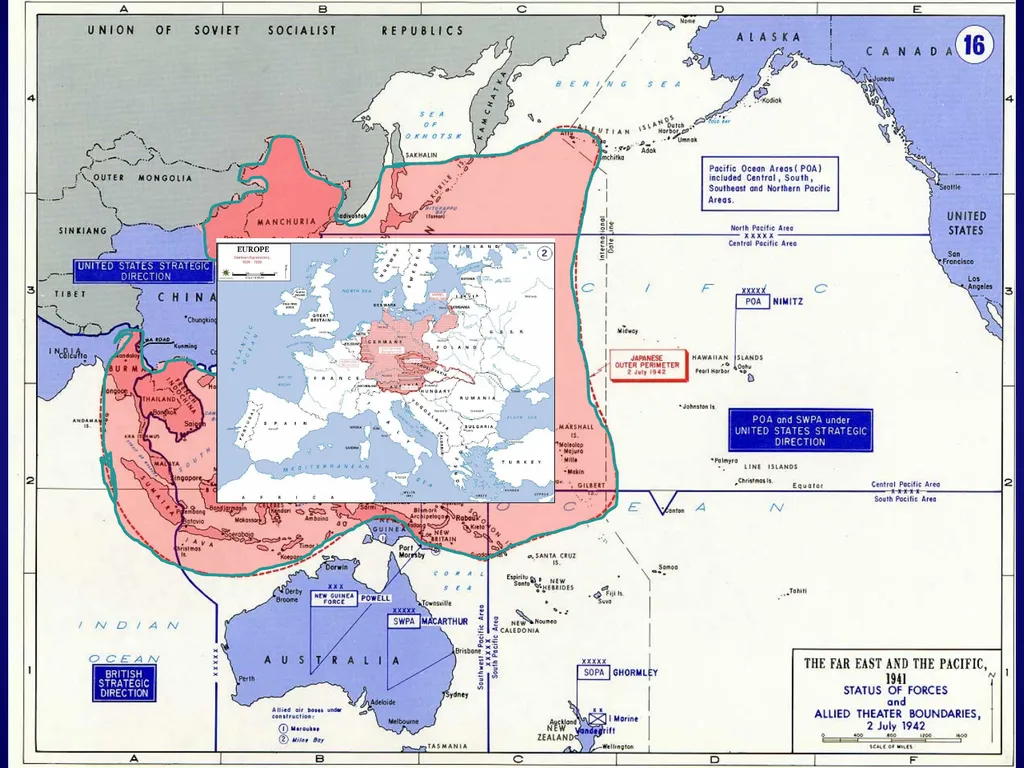
The RNZAF in the Pacific 1942-45 The RNZAF in the Pacific 1939-1942 War: The struggle to be ready July 1942-February 1944 Deployment The first half: Seeking credibility March 1944-August 1945 The second half: Looking for a fight Overview
"The RNZAF in the Pacific 1942-45 The RNZAF in the" is the property of its rightful owner. Permission is granted to
download and print the materials on this website for personal, non-commercial use only, and to display it
on your personal computer provided you do not modify the materials and that you retain all copyright
notices contained in the materials. By downloading content from our website, you accept the terms of this
agreement.
Presentation Transcript
01
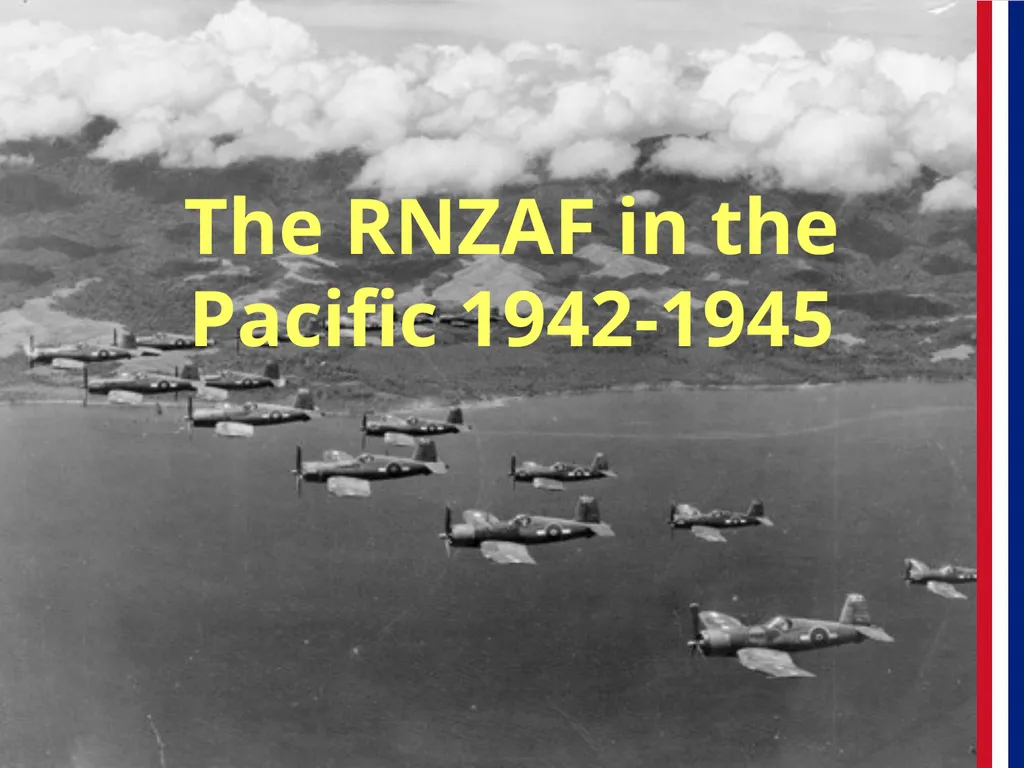
The RNZAF in the Pacific 1942-45<br>
02
The RNZAF in the Pacific 1939-1942
War: The struggle to be ready
July 1942-February 1944 – Deployment The first half: Seeking credibility
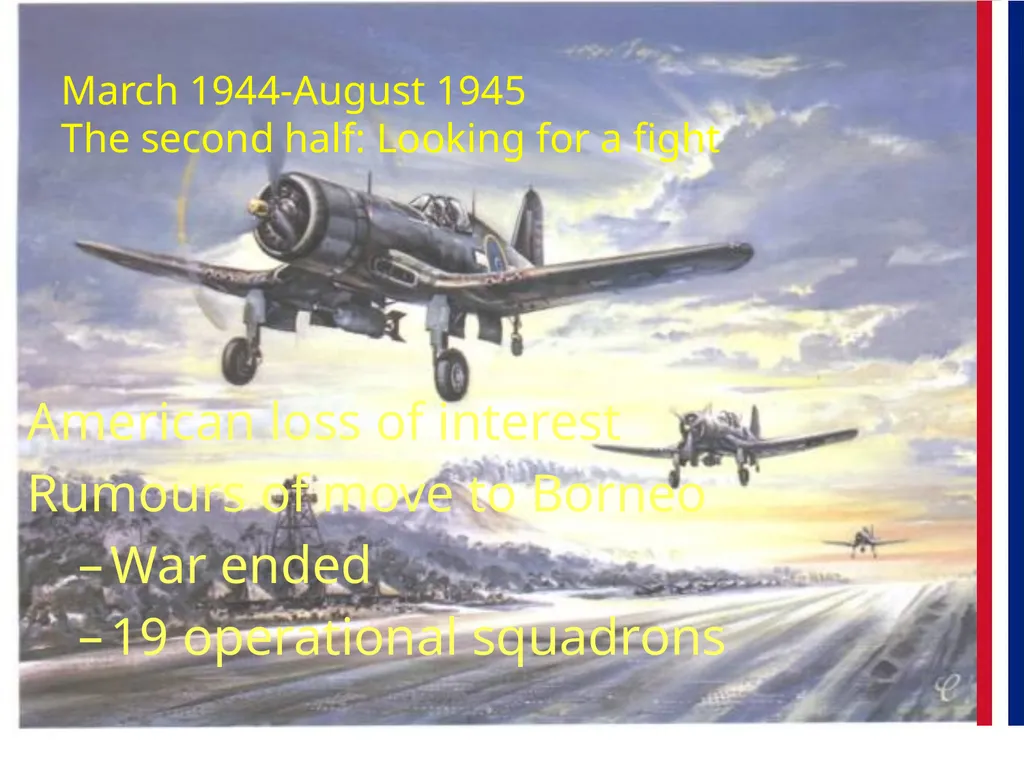
March 1944-August 1945
The second half: Looking for a fight<br>
03
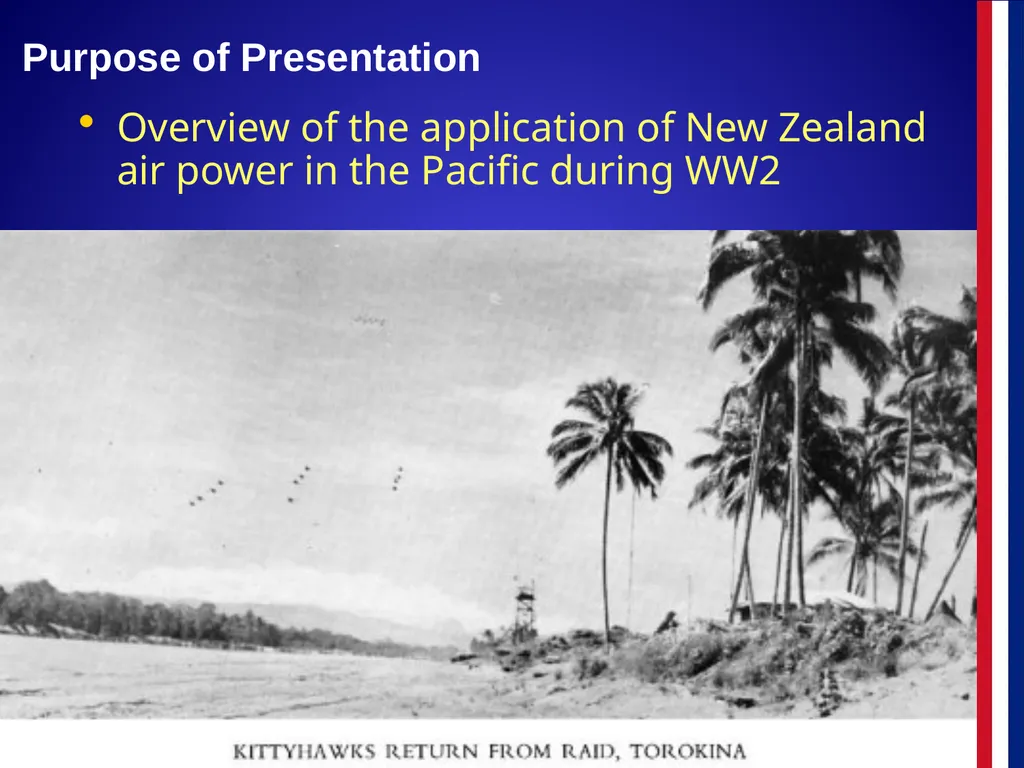
Overview of the application of New Zealand air power in the Pacific during WW2 Purpose of Presentation<br>
04
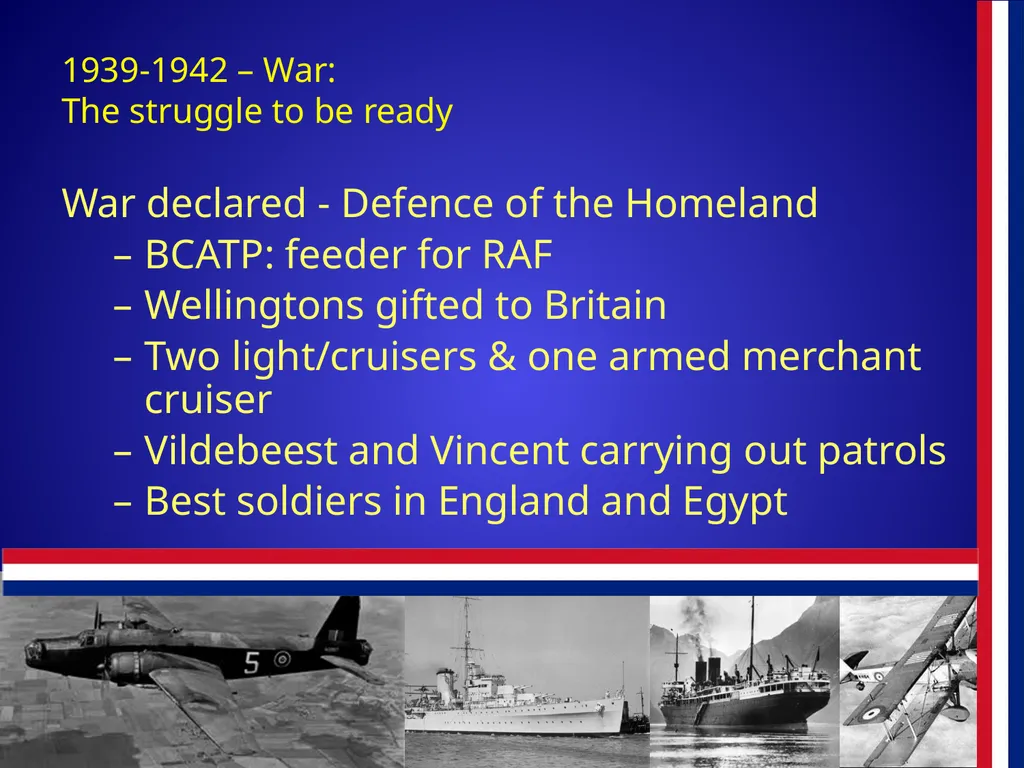
1939-1942 – War: The struggle to be ready War declared - Defence of the Homeland
BCATP: feeder for RAF
Wellingtons gifted to Britain
Two light/cruisers & one armed merchant cruiser
Vildebeest and Vincent carrying out patrols
Best soldiers in England and Egypt<br>
05
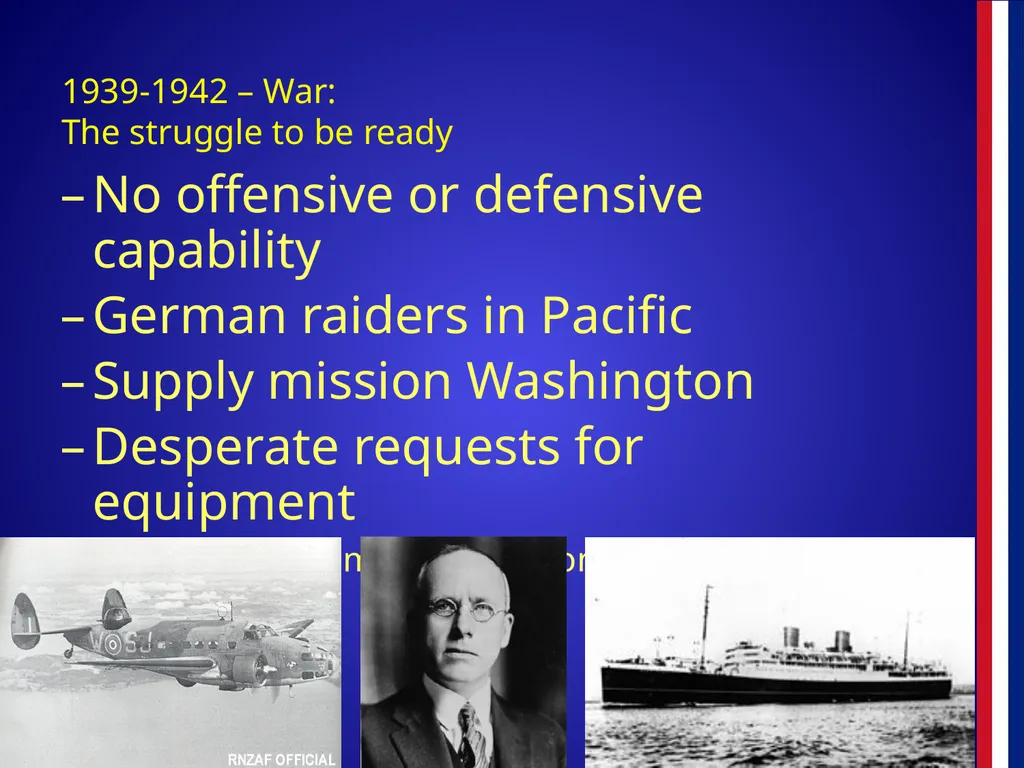
1939-1942 – War: The struggle to be ready No offensive or defensive capability
German raiders in Pacific
Supply mission Washington
Desperate requests for equipment
Hudsons promised for second half of 1941<br>
06
1939-1942 – War: The struggle to be ready Japan enters war – threat of invasion?
36 Hudsons in service – 11,000 pers
Around 500 trainers
Japanese drive south through Rabaul and Solomon Islands –Fall of Singapore
Invasion remote but focus on home defence
Used as lever for more equipment requests including 36 fighters
Roosevelt promises Churchill to supply NZ<br>
07
The RNZAF in the Pacific 1942-1945<br>
08
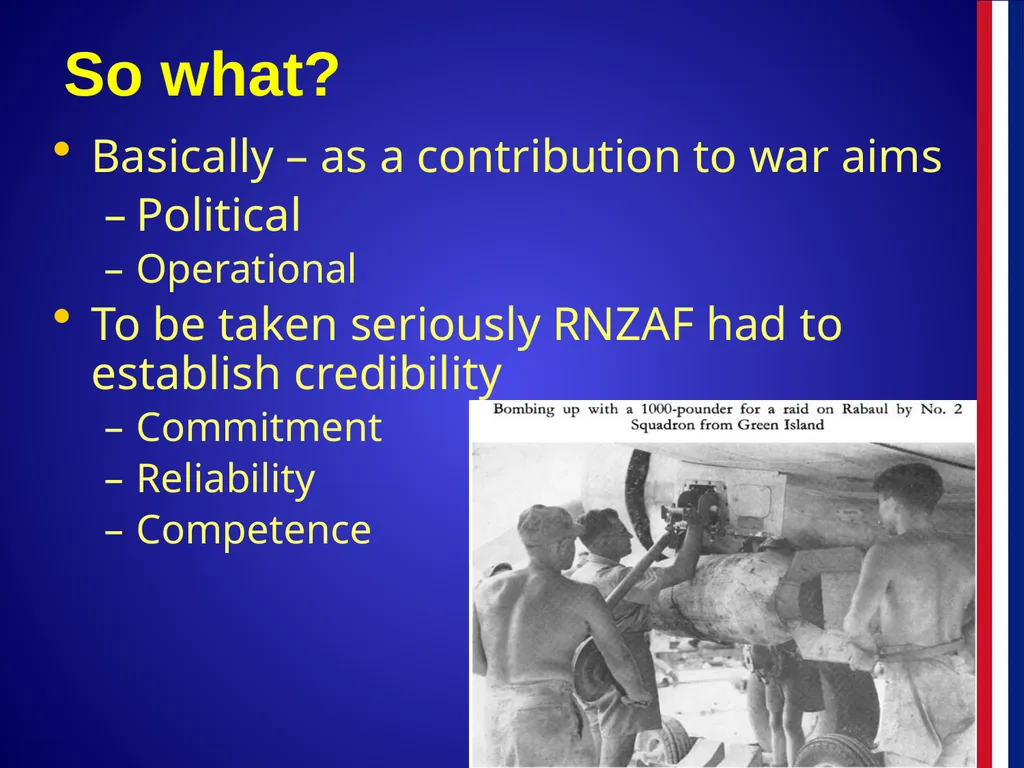
Basically – as a contribution to war aims
Political
Operational
To be taken seriously RNZAF had to establish credibility
Commitment
Reliability
Competence So what?<br>
09
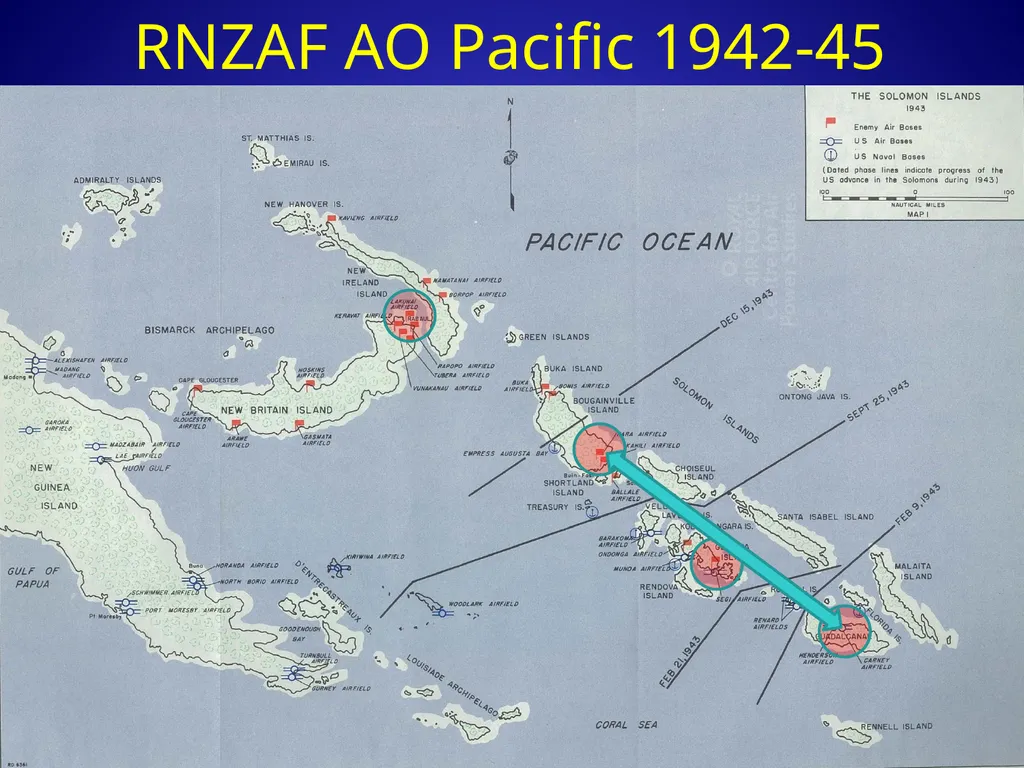
RNZAF AO Pacific 1942-45<br>
10
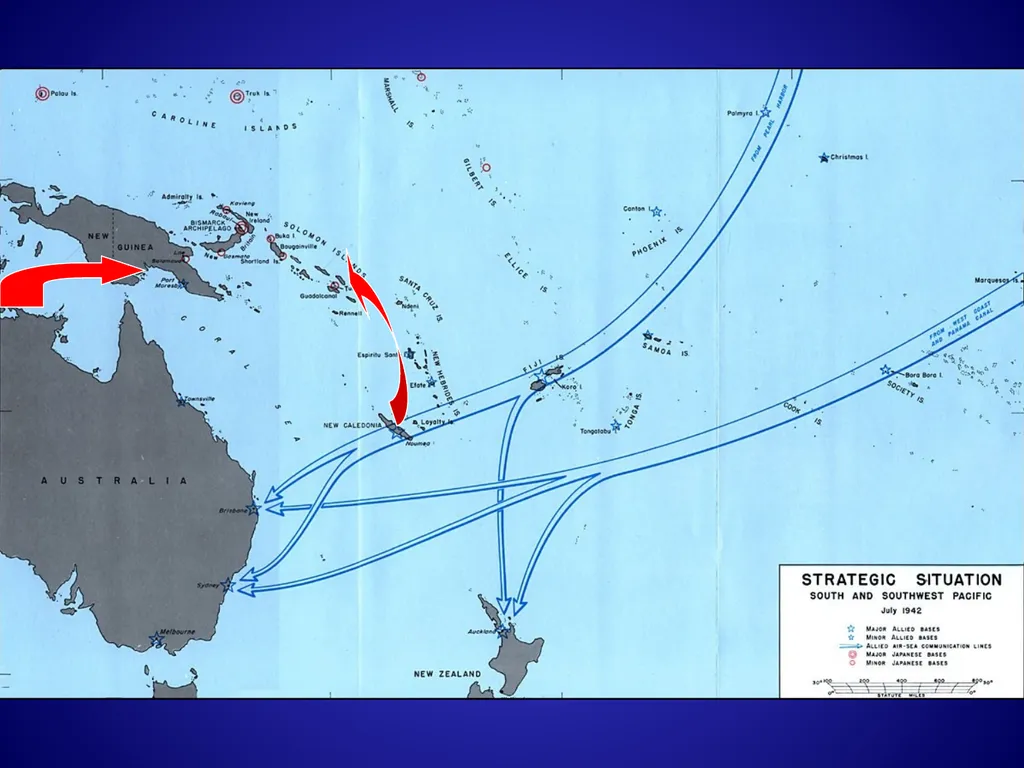
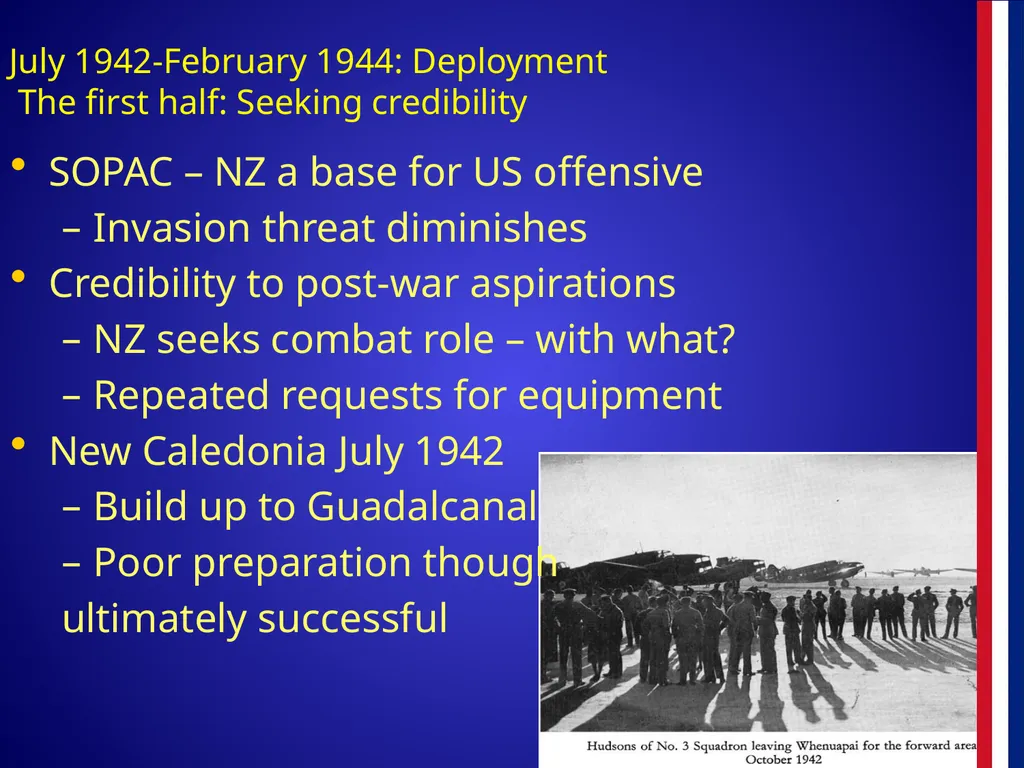
SOPAC – NZ a base for US offensive
Invasion threat diminishes
Credibility to post-war aspirations
NZ seeks combat role – with what?
Repeated requests for equipment
New Caledonia July 1942
Build up to Guadalcanal
Poor preparation though
ultimately successful July 1942-February 1944: Deployment
The first half: Seeking credibility<br>
11
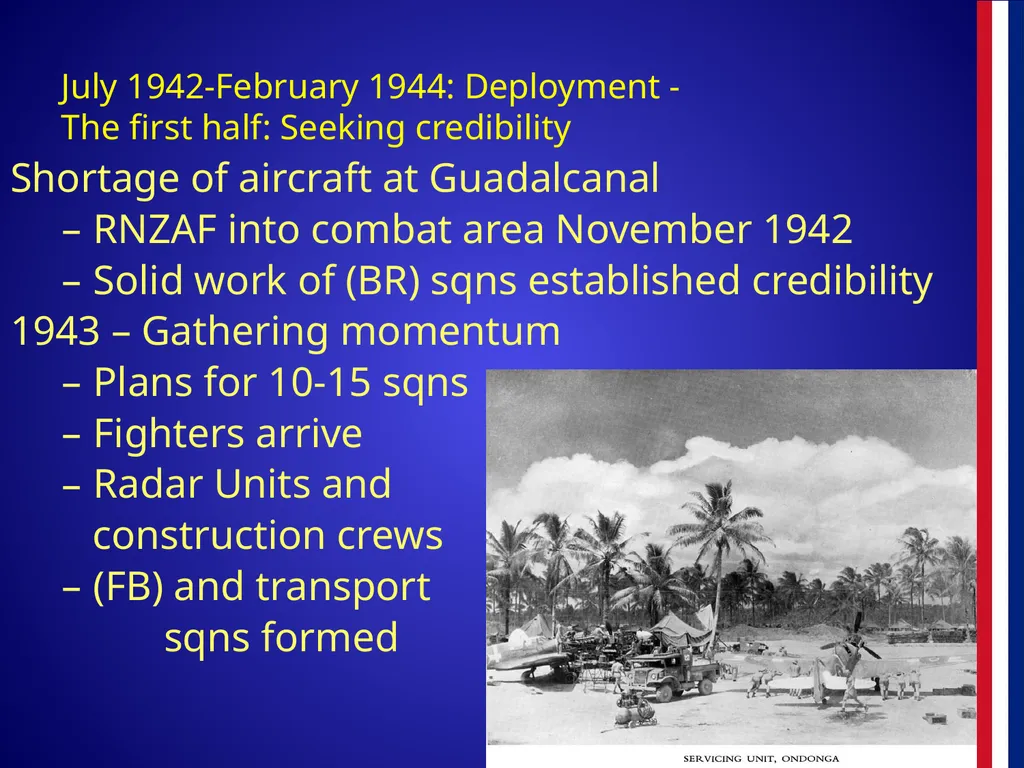
Shortage of aircraft at Guadalcanal
RNZAF into combat area November 1942
Solid work of (BR) sqns established credibility
1943 – Gathering momentum
Plans for 10-15 sqns
Fighters arrive
Radar Units and
construction crews
(FB) and transport
sqns formed July 1942-February 1944: Deployment -
The first half: Seeking credibility<br>
12
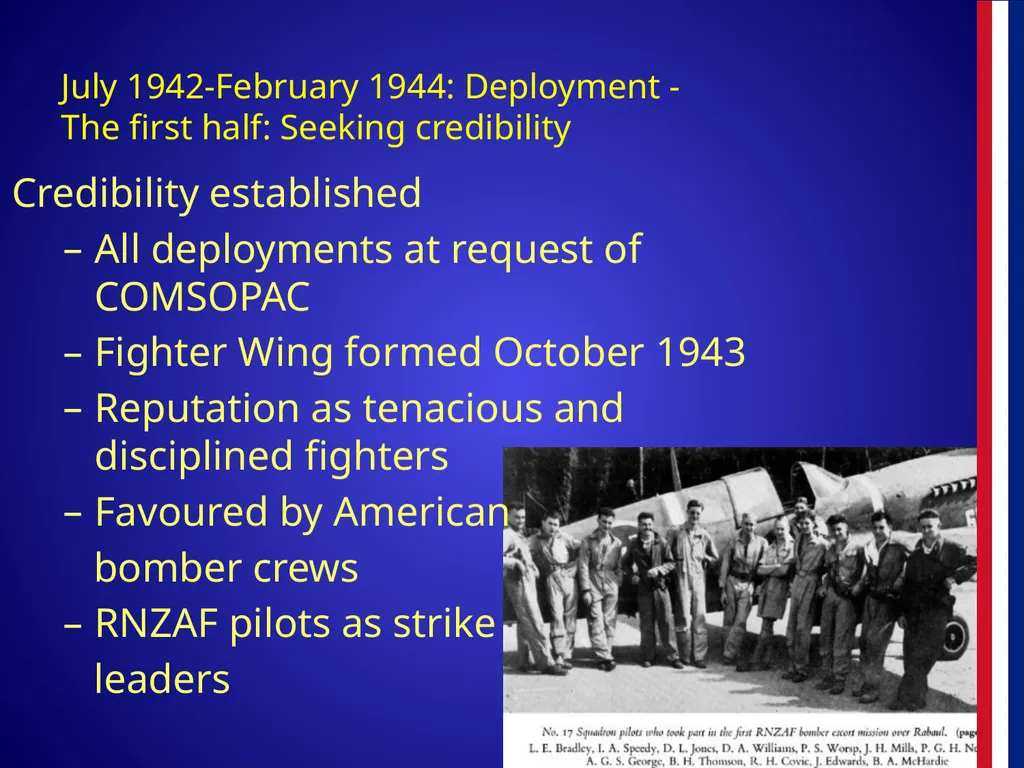
Credibility established
All deployments at request of COMSOPAC
Fighter Wing formed October 1943
Reputation as tenacious and disciplined fighters
Favoured by American
bomber crews
RNZAF pilots as strike
leaders July 1942-February 1944: Deployment -
The first half: Seeking credibility<br>
13
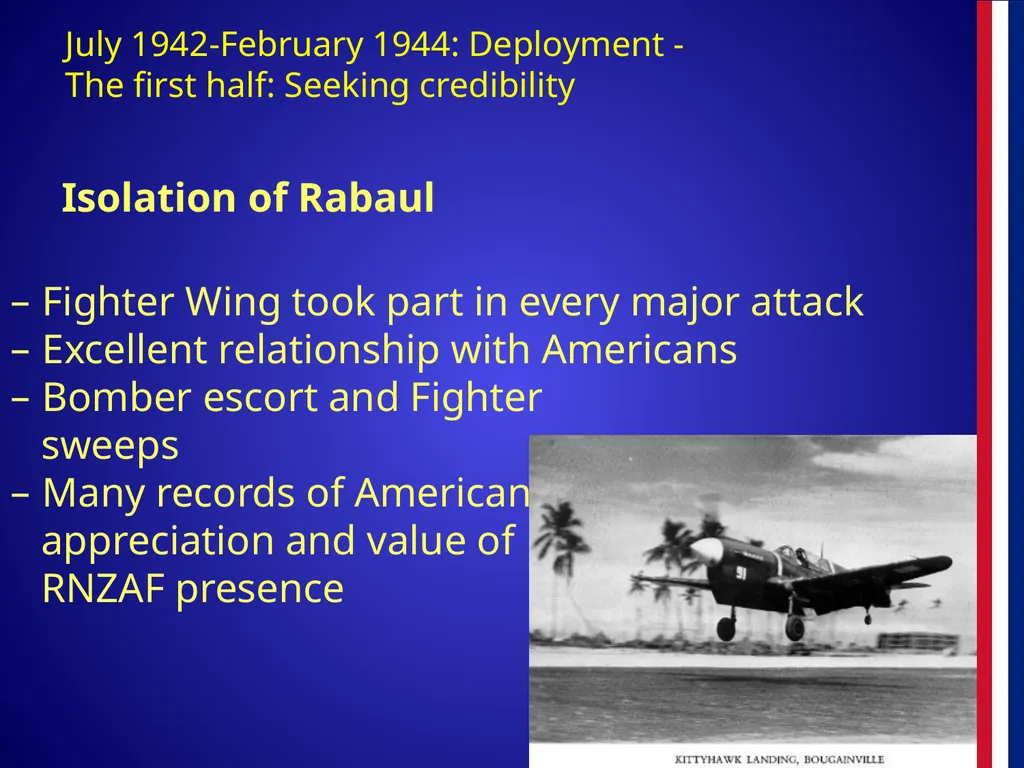
Isolation of Rabaul
Fighter Wing took part in every major attack
Excellent relationship with Americans
Bomber escort and Fighter
sweeps
Many records of American
appreciation and value of
RNZAF presence July 1942-February 1944: Deployment -
The first half: Seeking credibility<br>
14
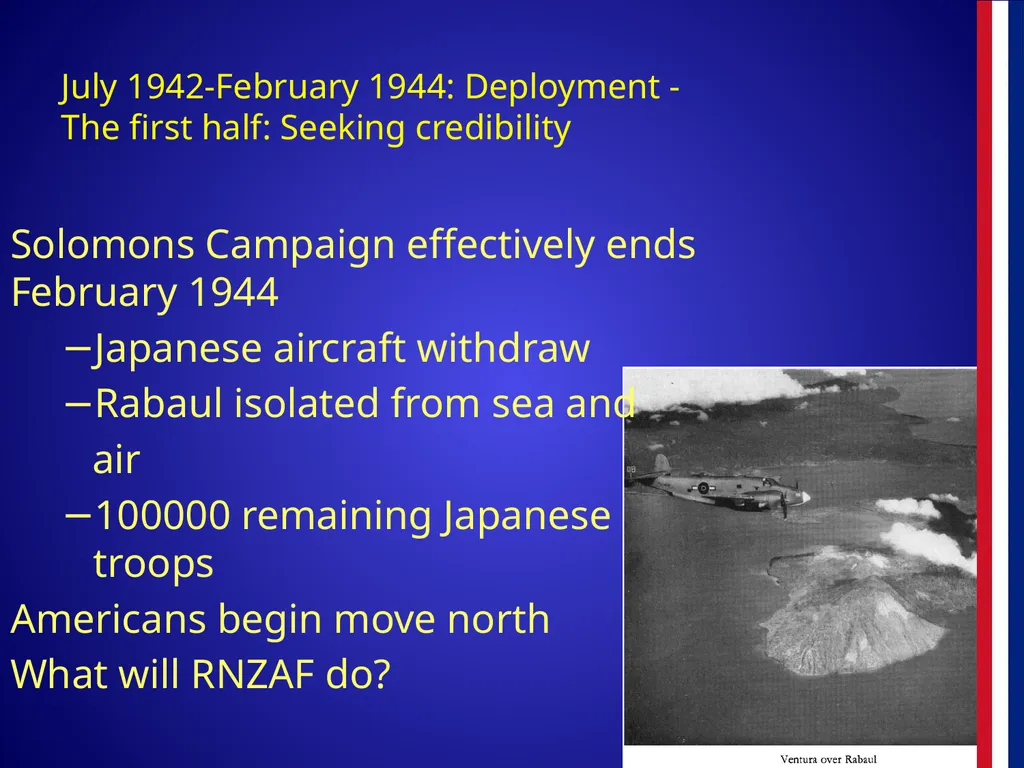
Solomons Campaign effectively ends February 1944
Japanese aircraft withdraw
Rabaul isolated from sea and
air
100000 remaining Japanese troops
Americans begin move north
What will RNZAF do? July 1942-February 1944: Deployment -
The first half: Seeking credibility<br>
15
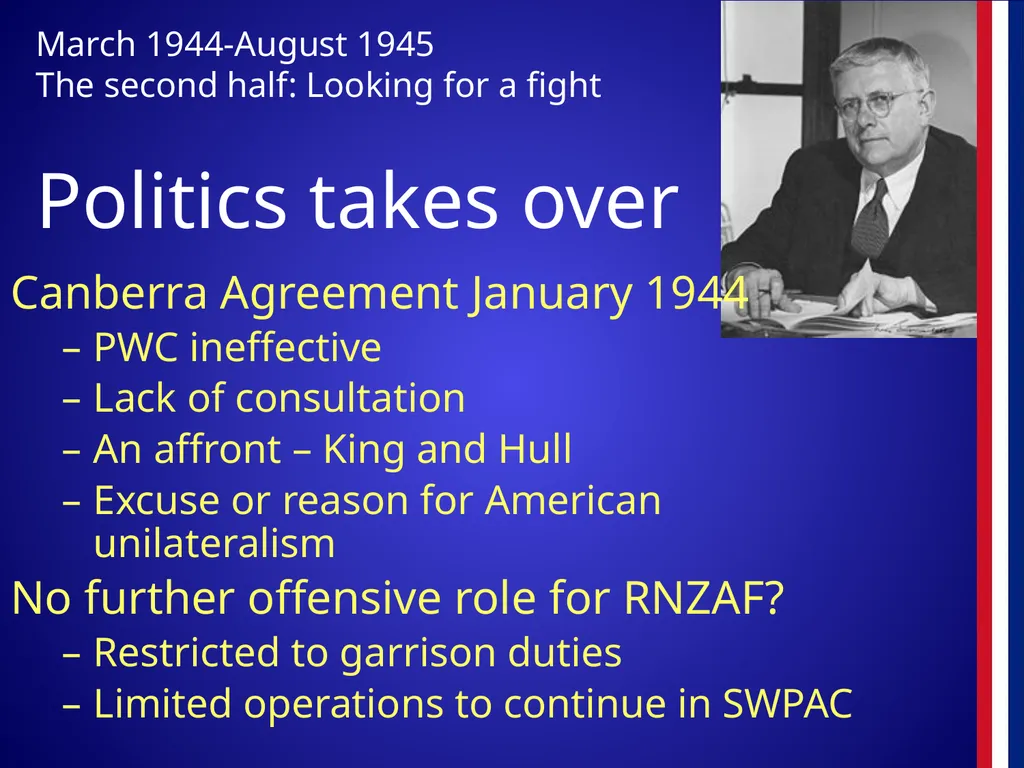
Canberra Agreement January 1944
PWC ineffective
Lack of consultation
An affront – King and Hull
Excuse or reason for American unilateralism
No further offensive role for RNZAF?
Restricted to garrison duties
Limited operations to continue in SWPAC March 1944-August 1945
The second half: Looking for a fight
Politics takes over<br>
16
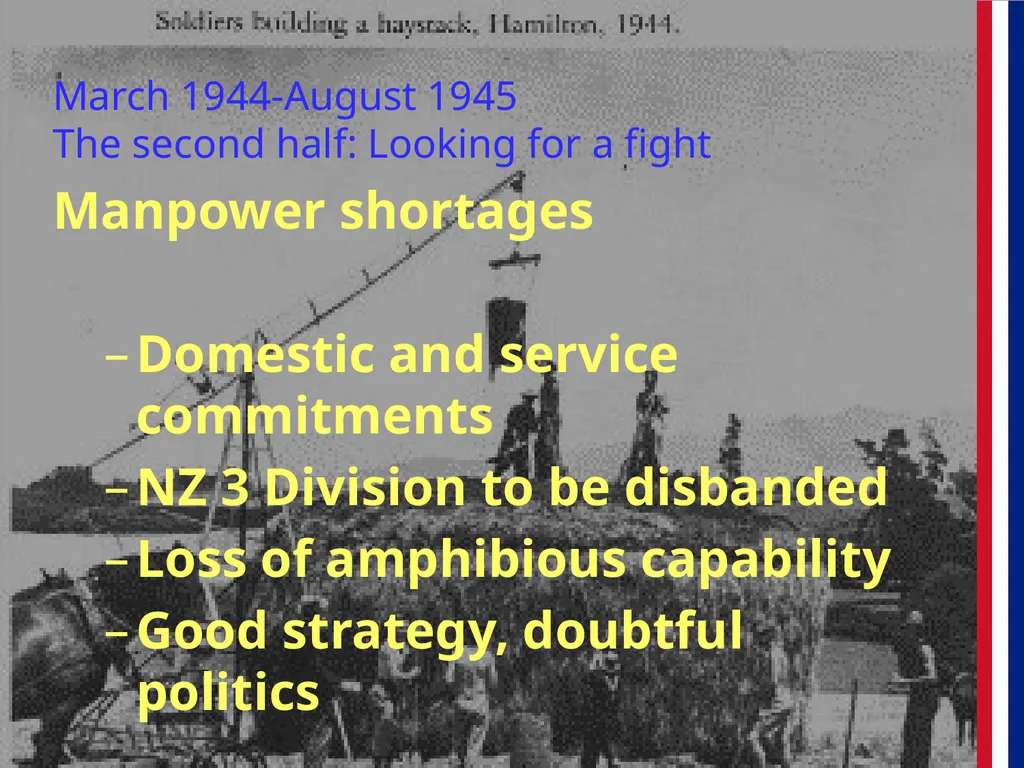
Manpower shortages
Domestic and service commitments
NZ 3 Division to be disbanded
Loss of amphibious capability
Good strategy, doubtful politics March 1944-August 1945
The second half: Looking for a fight<br>
17
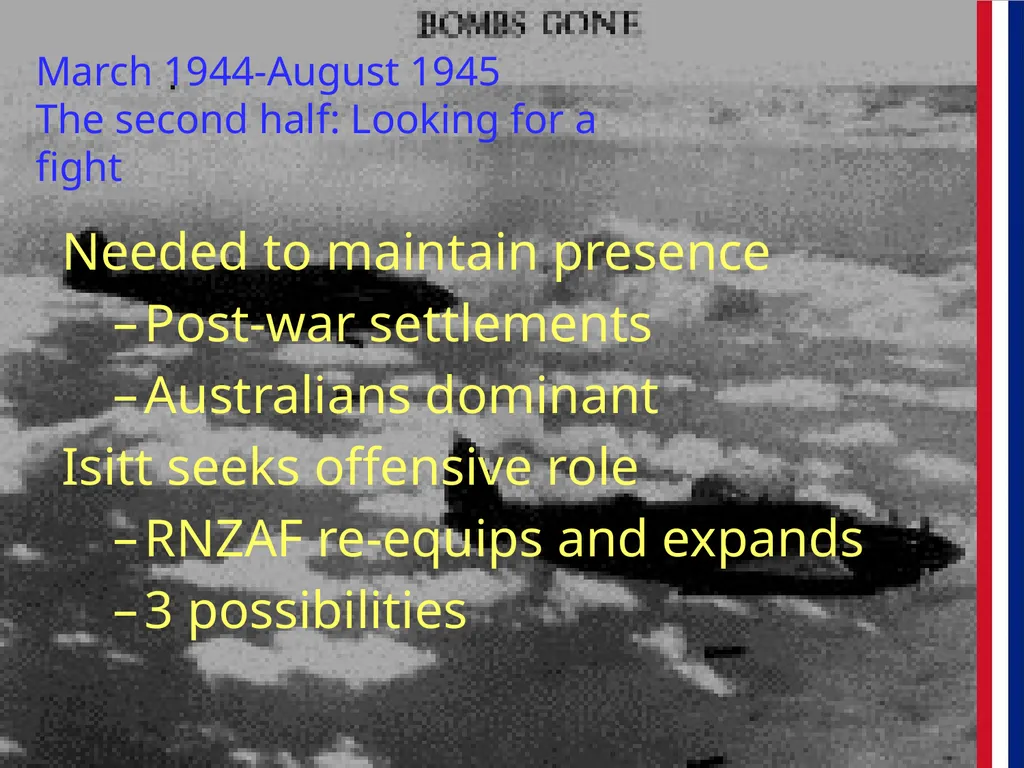
Needed to maintain presence
Post-war settlements
Australians dominant
Isitt seeks offensive role
RNZAF re-equips and expands
3 possibilities March 1944-August 1945
The second half: Looking for a fight<br>
18
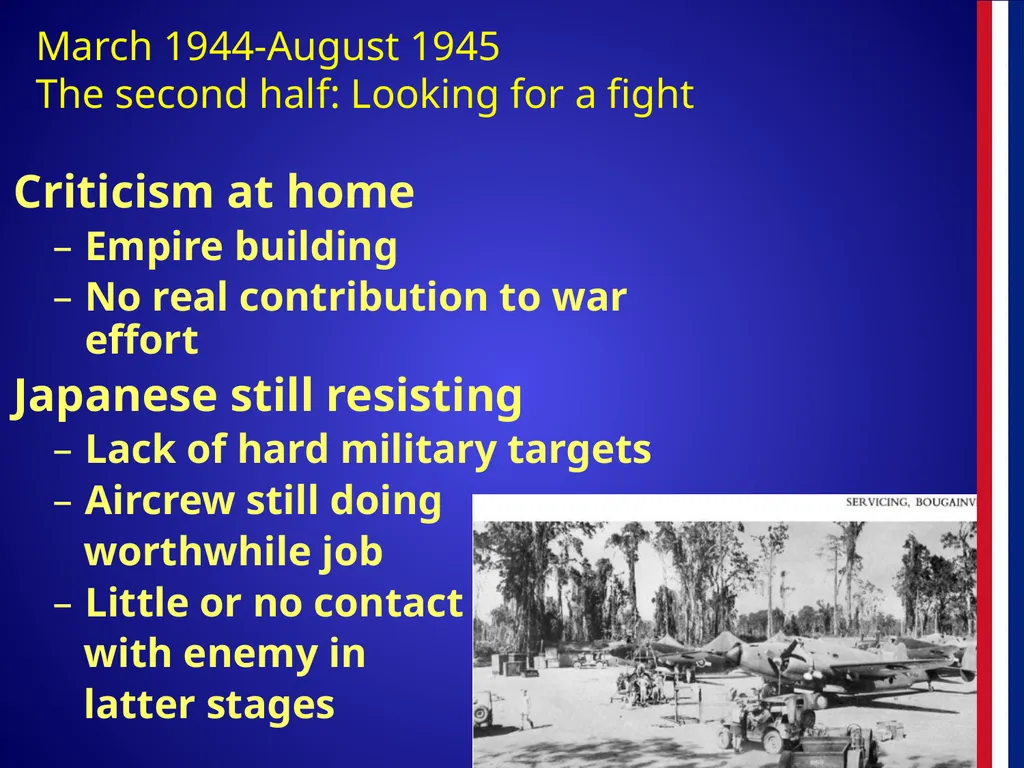
Criticism at home
Empire building
No real contribution to war effort
Japanese still resisting
Lack of hard military targets
Aircrew still doing
worthwhile job
Little or no contact
with enemy in
latter stages March 1944-August 1945
The second half: Looking for a fight<br>
19
American loss of interest
Rumours of move to Borneo
War ended
19 operational squadrons March 1944-August 1945
The second half: Looking for a fight<br>
20
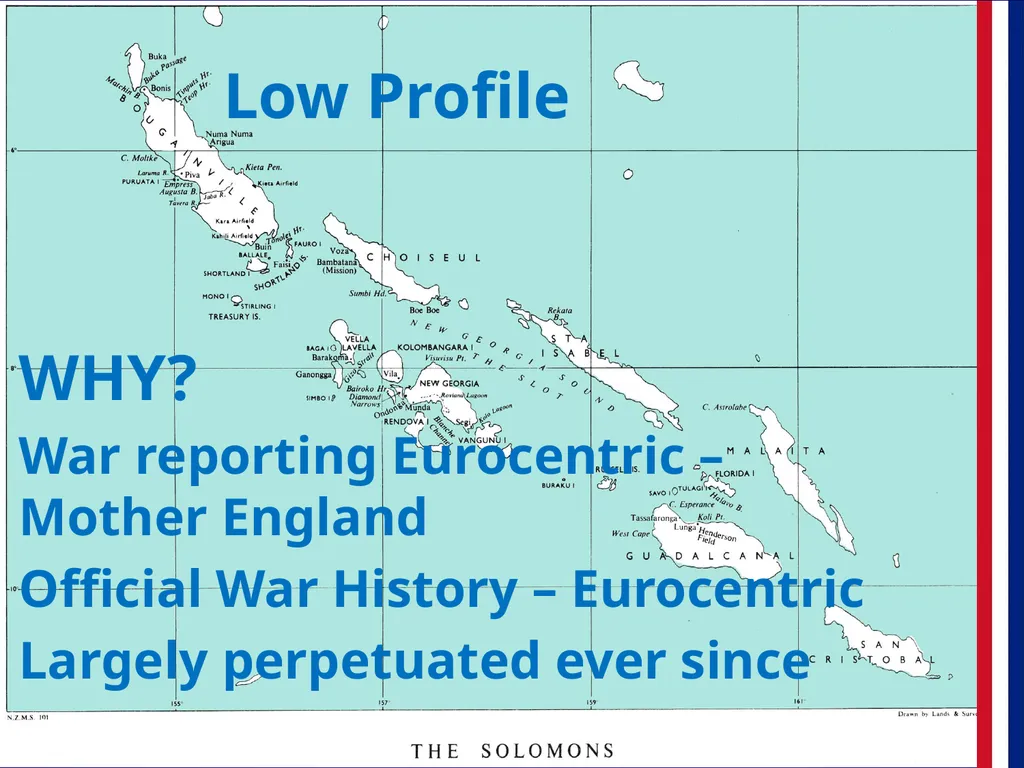
WHY?
War reporting Eurocentric – Mother England
Official War History – Eurocentric
Largely perpetuated ever since Low Profile<br>
21
Credibility established beyond question
There because they were needed
Responded to every request and fulfilled tasks
Superior to US forces in some aspects
Though relegated from Feb44 – never doubted worth
Overtaken by politics? Conclusions<br>
22
So what did New Zealand get out of this?
Nothing! Conclusions<br>
23
The US successfully monopolised the last 18 months of the Pacific war and the Japanese surrender Conclusions<br>
24
ANZUS – New Zealand’s reward?
Trade-off for accepting peace treaty
Previously reluctant to participate in regional security
US containment policy – Communism in Asia
Wartime alliance indirect influence at best Conclusions<br>
25
New Zealand sidelined in post-war settlements
Despite relative massive contribution
ANZUS a belated consolation prize
Provided for a policy of limited self-reliance over a ‘broad range’ until 1984
Political and Strategic Lessons
Maritime nation – SLOC protection
Absolute reliance on air and sea power
Major powers don’t care much about small powers Conclusions<br>