The transatlantic slave trade 1. Who lived in the New World by the 1600s? 2. How did ideas about race develop in the New World? 3. What was Africa like by the 1700s? 4. What was the triangular trade and Middle Passage? 5. What happened to
"The transatlantic slave trade 1. Who lived in the" is the property of its rightful owner. Permission is granted to
download and print the materials on this website for personal, non-commercial use only, and to display it
on your personal computer provided you do not modify the materials and that you retain all copyright
notices contained in the materials. By downloading content from our website, you accept the terms of this
agreement.
Presentation Transcript
01
The transatlantic slave trade 1. Who lived in the New World by the 1600s? 2. How did ideas about race develop in the New World? 3. What was Africa like by the 1700s? 4. What was the triangular trade and Middle Passage? 5. What happened to the slave ship Zong? 6. What was life like for enslaved people? 7. How did enslaved people resist and rebel? 8. Why was slavery abolished?<br>
02
Who lived in the New World by the 1600s? Lesson Targets:
Understand the links between Tudor and Stuart England and ‘the New World’
Look at the similarities and differences in experiences in the New World<br>
03
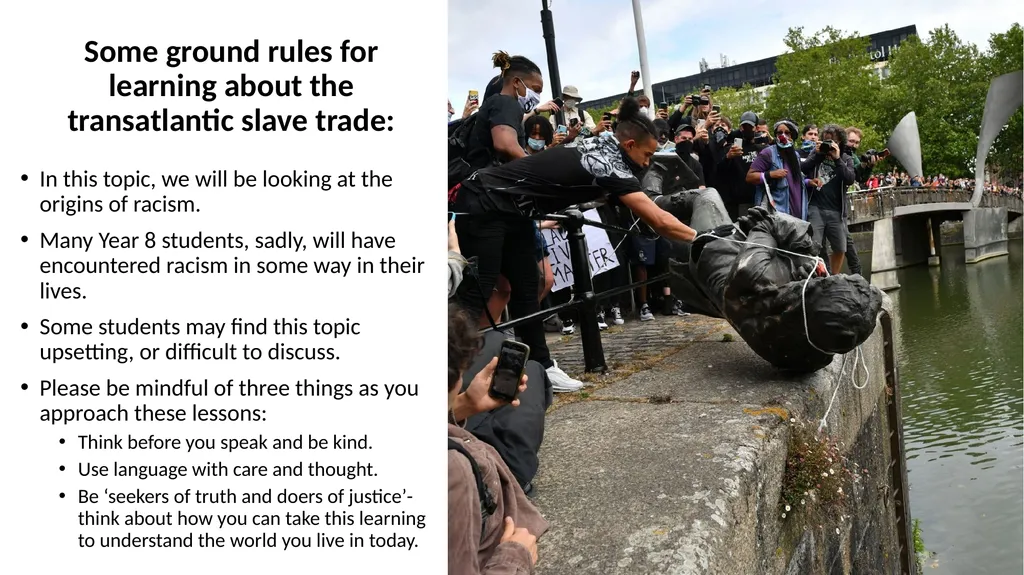
Some ground rules for learning about the transatlantic slave trade: In this topic, we will be looking at the origins of racism.
Many Year 8 students, sadly, will have encountered racism in some way in their lives.
Some students may find this topic upsetting, or difficult to discuss.
Please be mindful of three things as you approach these lessons:
Think before you speak and be kind.
Use language with care and thought.
Be ‘seekers of truth and doers of justice’- think about how you can take this learning to understand the world you live in today.<br>
04
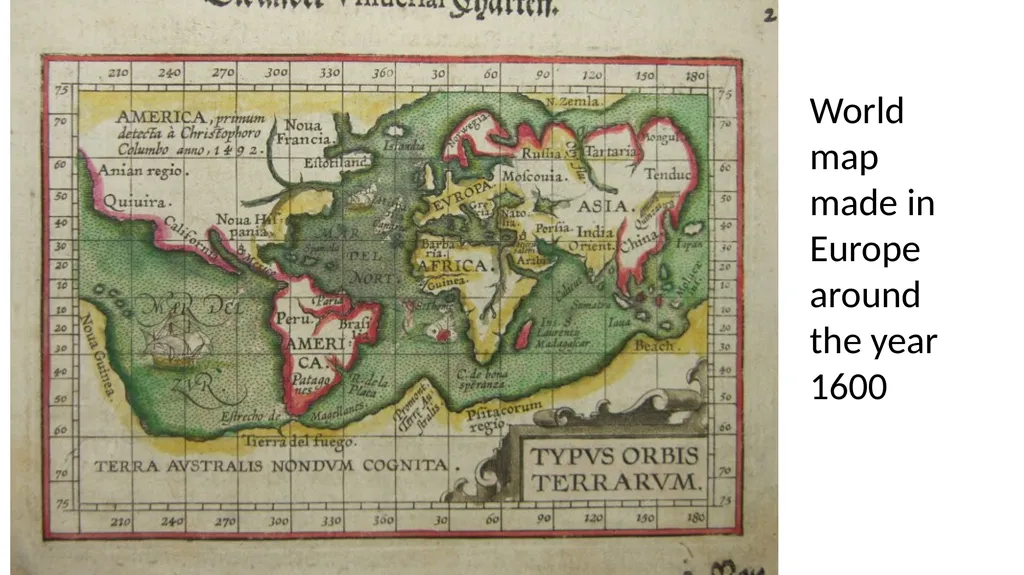
World map made in Europe around the year 1600<br>
05
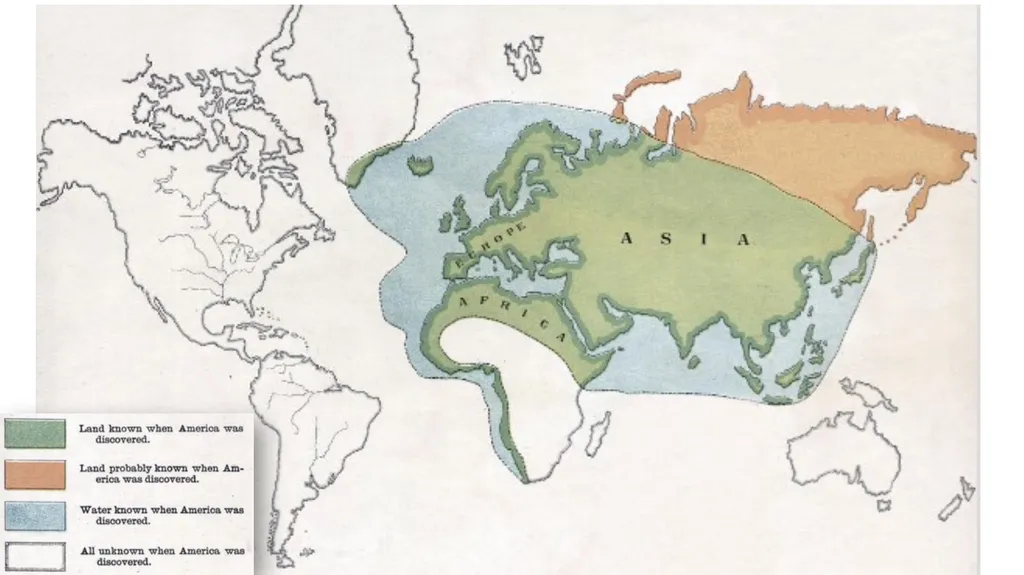
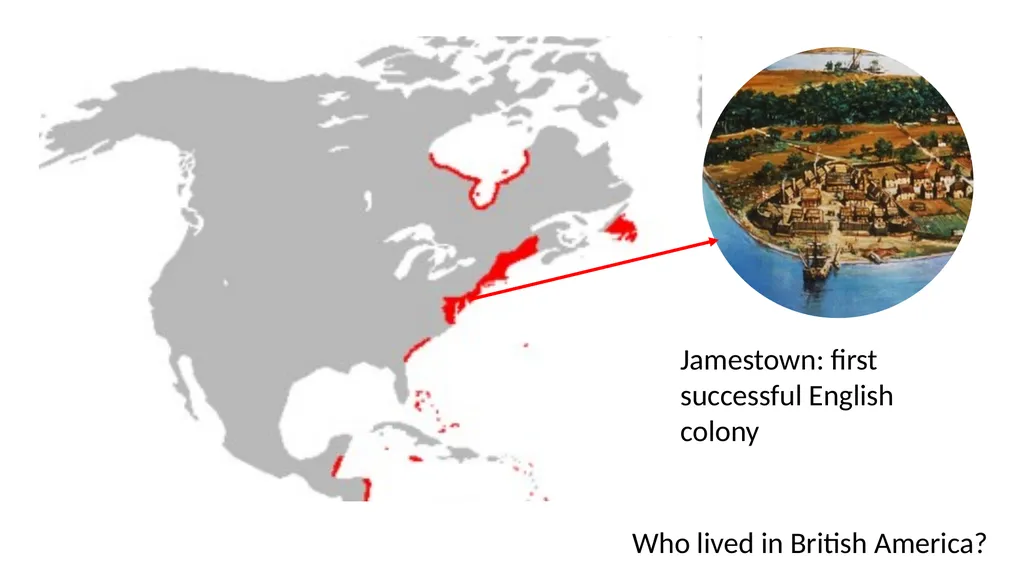
By 1700s, this is the land the British controlled across the world… Who lived in British America?<br>
06
Who lived in British America? Jamestown: first successful English colony<br>
07
Why did people want to go to the New World? ? ? ? ?<br>
08
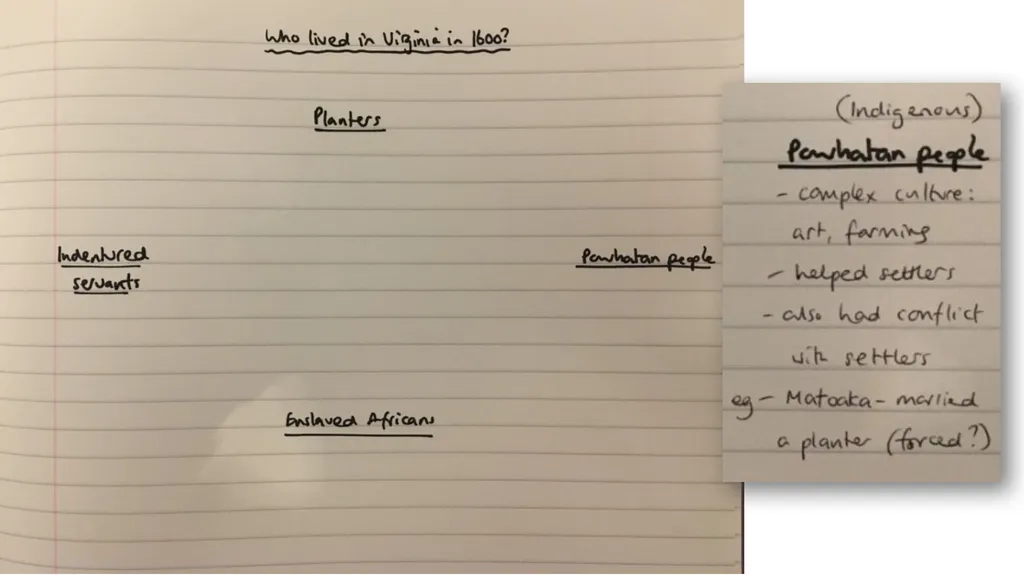
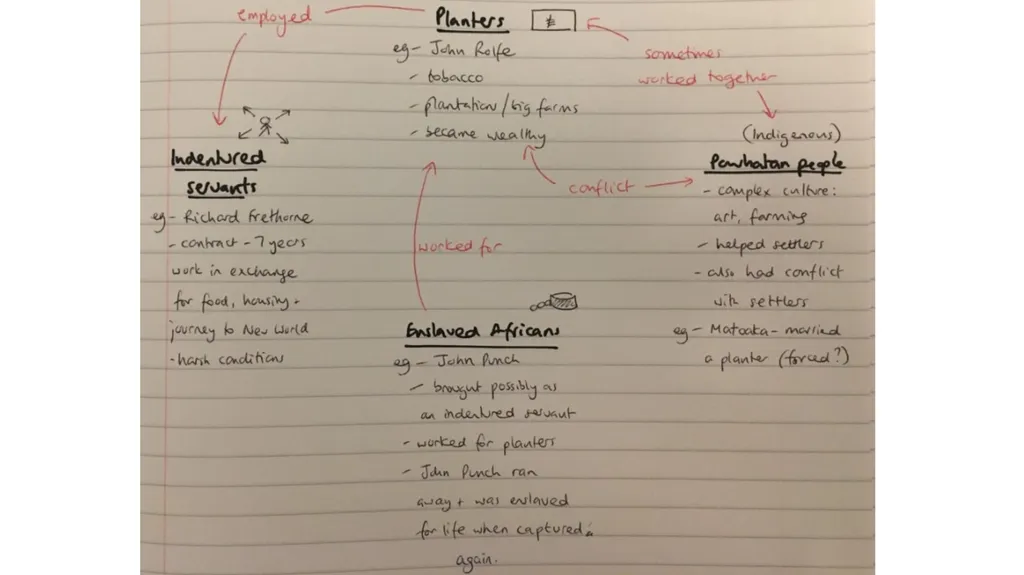
Who lived in the colony of Virginia? Read the four case studies and make a diagram like this in your book. Next, write 3-4 short bullet pointed notes under each group describing their experience. Powhatan people
Planters
Indentured servants
Enslaved Africans<br>
09
Matoaka
Matoaka was a young woman of the Powhatan people. These were the indigenous people of the part of North America colonised by English settlers. The Powhatan had a complex culture. They farmed the land and made beautiful art, including a cloak that was given to James I as a gift.
Matoaka is often known today as Pocahontas, which was probably a nickname. She was the daughter of the chief. When English settlers first set up their colony, called Jamestown, they did not understand the land and relied on the Powhatan to help them. Matoaka often visited the English settlers, bringing them food and furs and playing with the children. In 1614, the English started to take over more land and fighting broke out between the settlers and the Powhatan. Matoaka was kidnapped by the English. She converted to Christianity and married an English man called John Rolfe. Some sources say that she did this voluntarily, but others say she was forced. Matoaka was taken to England, where she was treated like a celebrity. The English said that her story showed that English culture was the best. She sadly died in England in 1617, never returning home.<br>
10
John Rolfe
John Rolfe was born in England in 1585. He wanted to become rich and could see that Spanish merchants were making a lot of money from trading tobacco. He decided to set up a plantation in the New World to grow tobacco himself. A plantation is like a large farm, but it was used for only one type of crop and that was sold for a profit.
John Rolfe arrived in Jamestown in 1609. His wife and child, who had travelled with him, sadly died on the journey.
He set up a plantation and began to grow tobacco. Soon, he was exporting huge quantities and making big profits. He set up a new plantation, 30 miles inland from Jamestown. As English planters like John started taking more land, conflict between the English and the indigenous Powhatan people grew.
John Rolfe married Matoaka (also known as Pocahontas) in 1614. For a few years after the marriage, there was peace between the Powhatan and the English. After Matoaka’s death in England, John returned to Virginia. He was killed in fighting with the Powhatan in 1622.<br>
11
Richard Frethorne
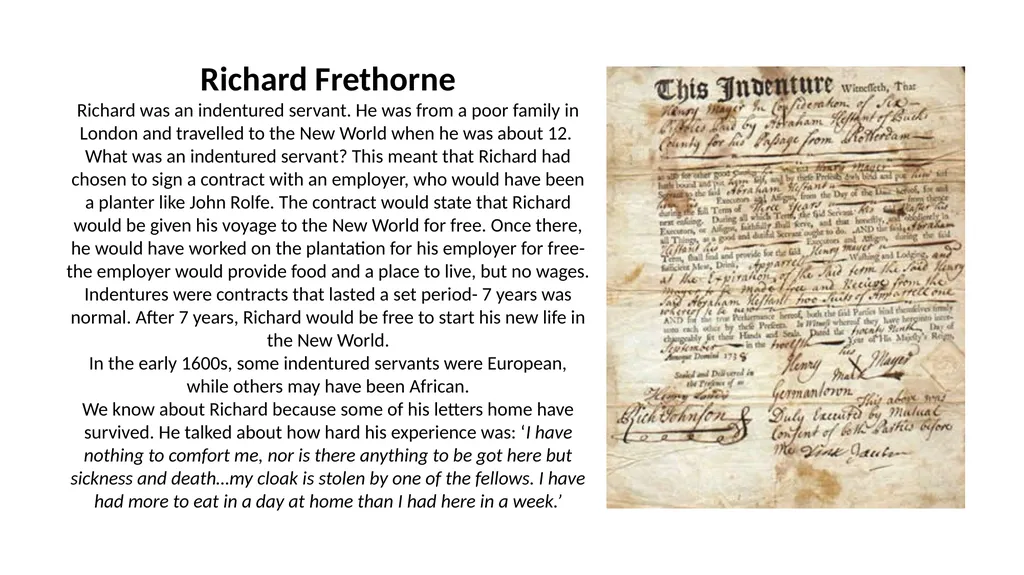
Richard was an indentured servant. He was from a poor family in London and travelled to the New World when he was about 12.
What was an indentured servant? This meant that Richard had chosen to sign a contract with an employer, who would have been a planter like John Rolfe. The contract would state that Richard would be given his voyage to the New World for free. Once there, he would have worked on the plantation for his employer for free- the employer would provide food and a place to live, but no wages. Indentures were contracts that lasted a set period- 7 years was normal. After 7 years, Richard would be free to start his new life in the New World.
In the early 1600s, some indentured servants were European, while others may have been African.
We know about Richard because some of his letters home have survived. He talked about how hard his experience was: ‘I have nothing to comfort me, nor is there anything to be got here but sickness and death…my cloak is stolen by one of the fellows. I have had more to eat in a day at home than I had here in a week.’<br>
12
John Punch
By the 1600s there was a well established trade in enslaved Africans. At first, this trade was dominated by the Spanish and Portuguese. Africans may have been brought as indentured servants at first. But by the 1640s, the treatment of indentured African servants had changed. John Punch’s story gives us a good idea of this change.
John Punch was an African servant of a Virginia planter called Hugh Gywn. In 1640, John ran away from the plantation, along with at least two other servants who were Europeans. All the servants were captured and brought back. The white servants who had run away had 4 years added to their original indentures. However, John Punch was treated differently. His indenture was extended for life- the document now read that John must ‘serve his master or his master’s heirs for the rest of his life.’ John, along with the white runaways, was also whipped as a punishment for running away.
Why was John Punch treated differently to the white indentured servants? We will investigate this question next lesson.<br>
13
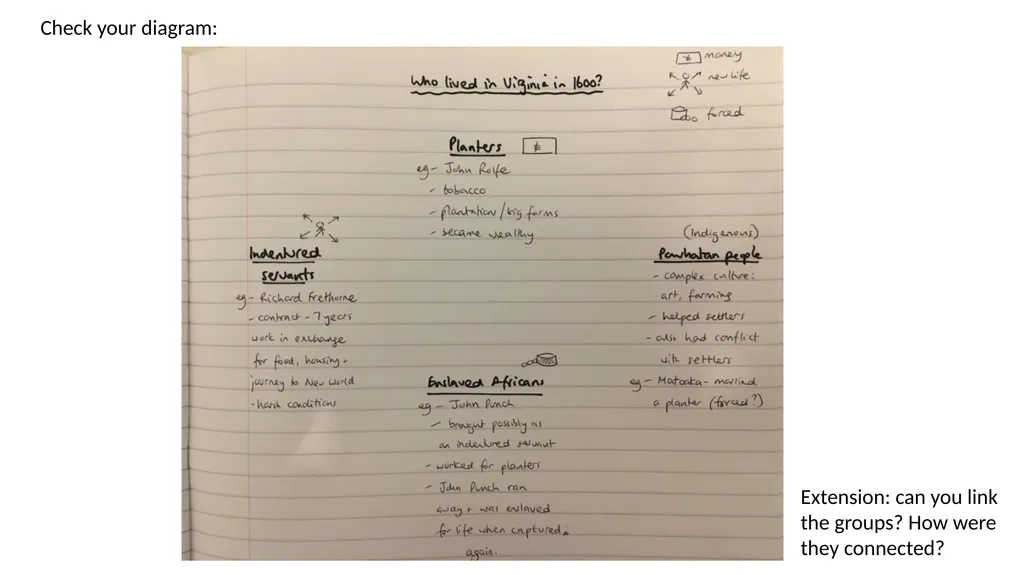
Check your diagram: Extension: can you link the groups? How were they connected?<br>
14
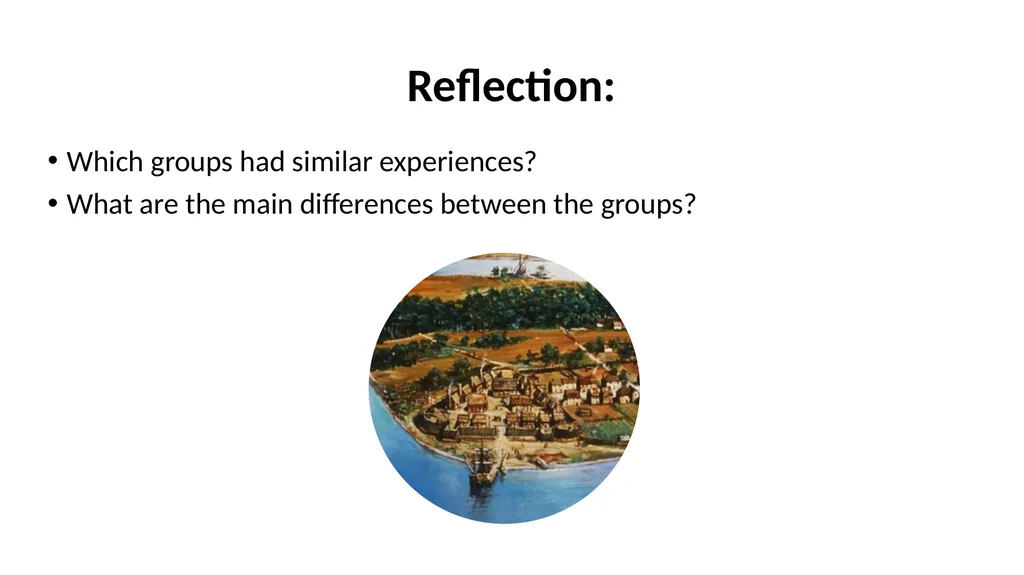
Reflection: Which groups had similar experiences?
What are the main differences between the groups?<br>