
They found them in the walls. I watch you when
LD
Published · 38 slides · 0 views

1 / 1















Description
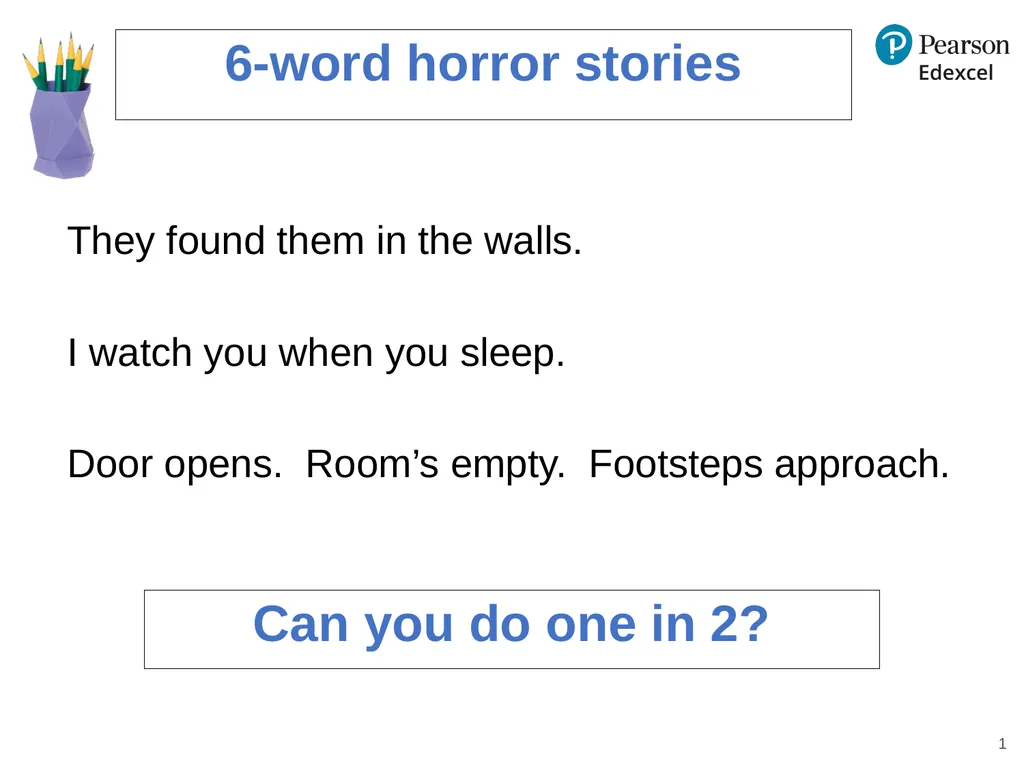
They found them in the walls. I watch you when you sleep. Door opens. Rooms empty. Footsteps approach. 6-word horror stories Can you do one in 2? GCSE (9-1) English Weekly Webinar 13 16th July Language Check-in Online resources Language
Related Topics
Share
Embed code
Download this presentation From Below
"They found them in the walls. I watch you when" is the property of its rightful owner. Permission is granted to download and print the materials on this website for personal, non-commercial use only, and to display it on your personal computer provided you do not modify the materials and that you retain all copyright notices contained in the materials. By downloading content from our website, you accept the terms of this agreement.
Presentation Transcript
01
They found them in the walls.
I watch you when you sleep.
Door opens. Room’s empty. Footsteps approach. 6-word horror stories Can you do one in 2?<br>
I watch you when you sleep.
Door opens. Room’s empty. Footsteps approach. 6-word horror stories Can you do one in 2?<br>
02
GCSE (9-1)
English Weekly Webinar 13
16th July
Language<br>
16th July
Language<br>
03
Check-in
Online resources
Language resources
Tea break
Shared resources
Support Agenda<br>
Online resources
Language resources
Tea break
Shared resources
Support Agenda<br>
04
Check-in What has been the most useful part of our webinars during lockdown?
What one thing will you do differently next year?<br>
What one thing will you do differently next year?<br>
05
GCSE (9-1)
English Online resources<br>
06
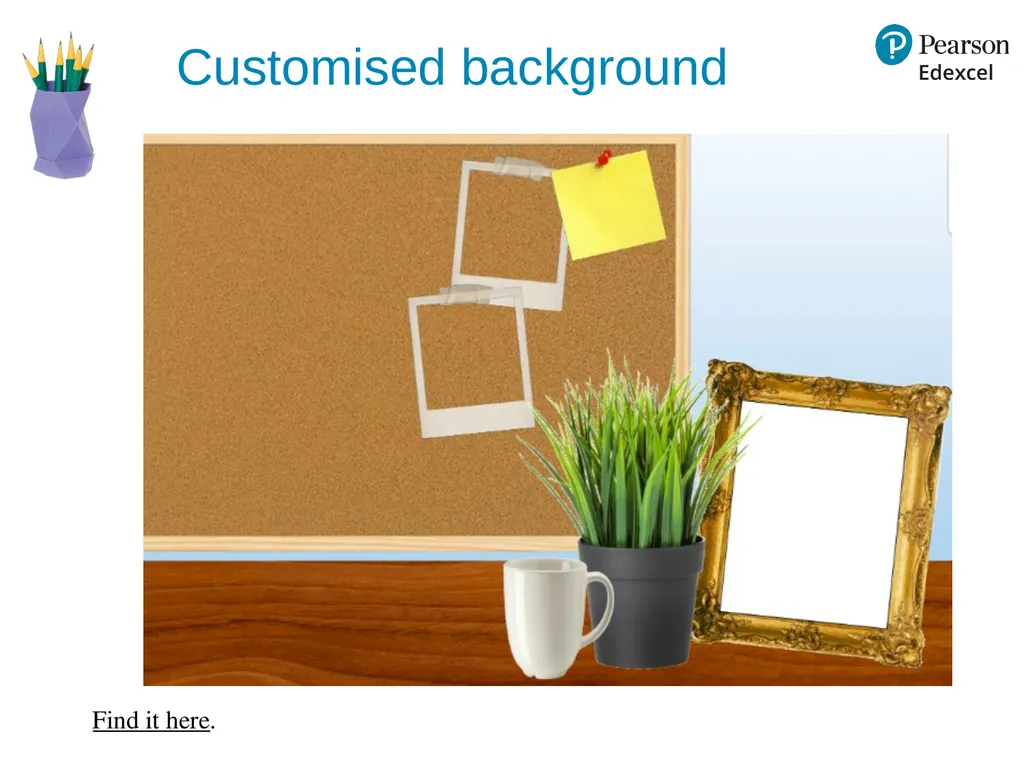
Customised background Find it here.<br>
07
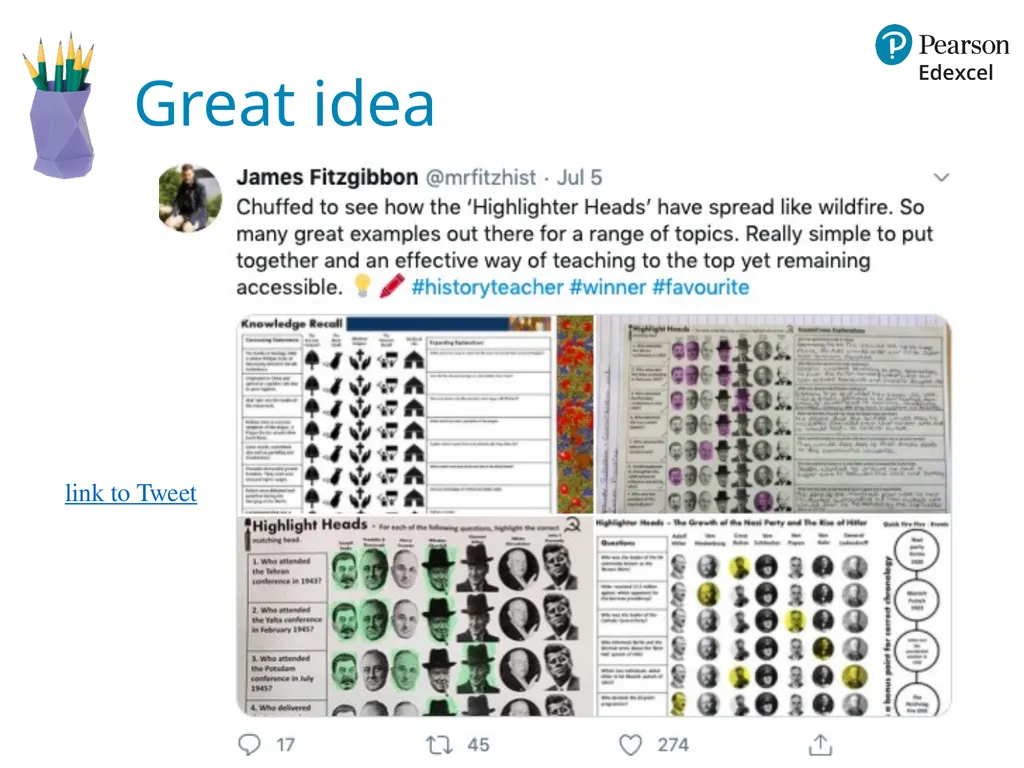
Great idea link to Tweet<br>
08
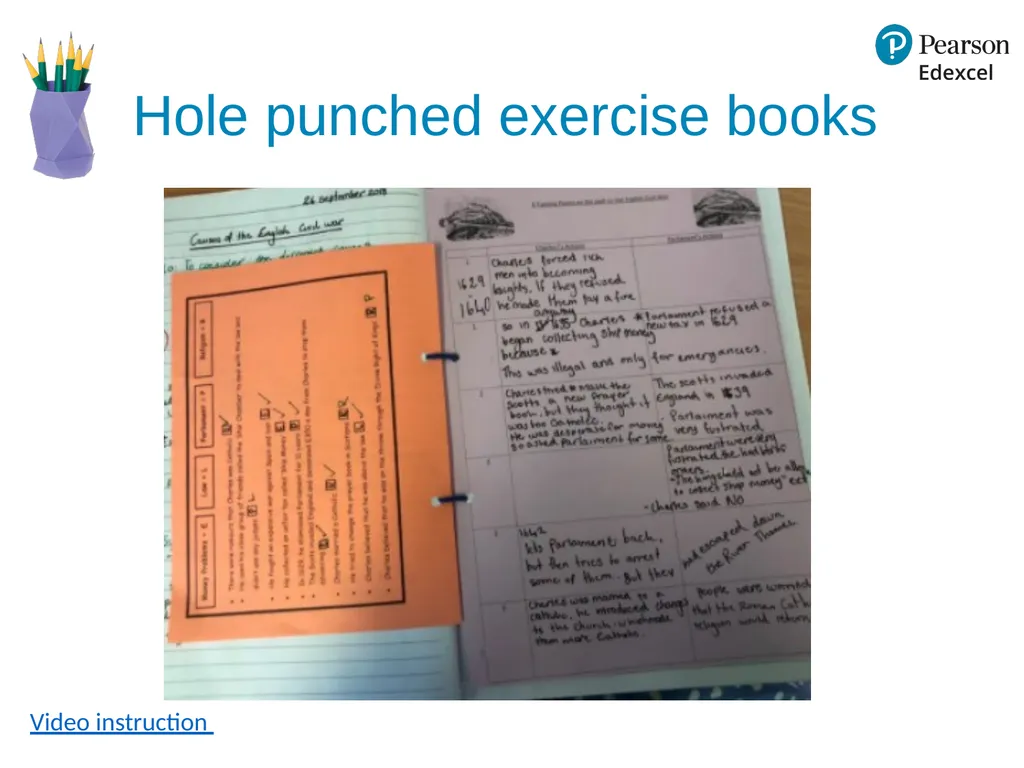
Hole punched exercise books Video instruction<br>
09
Twitter link.
Website Lit Drive<br>
Website Lit Drive<br>
10
GCSE (9-1)
English Language resources<br>
11
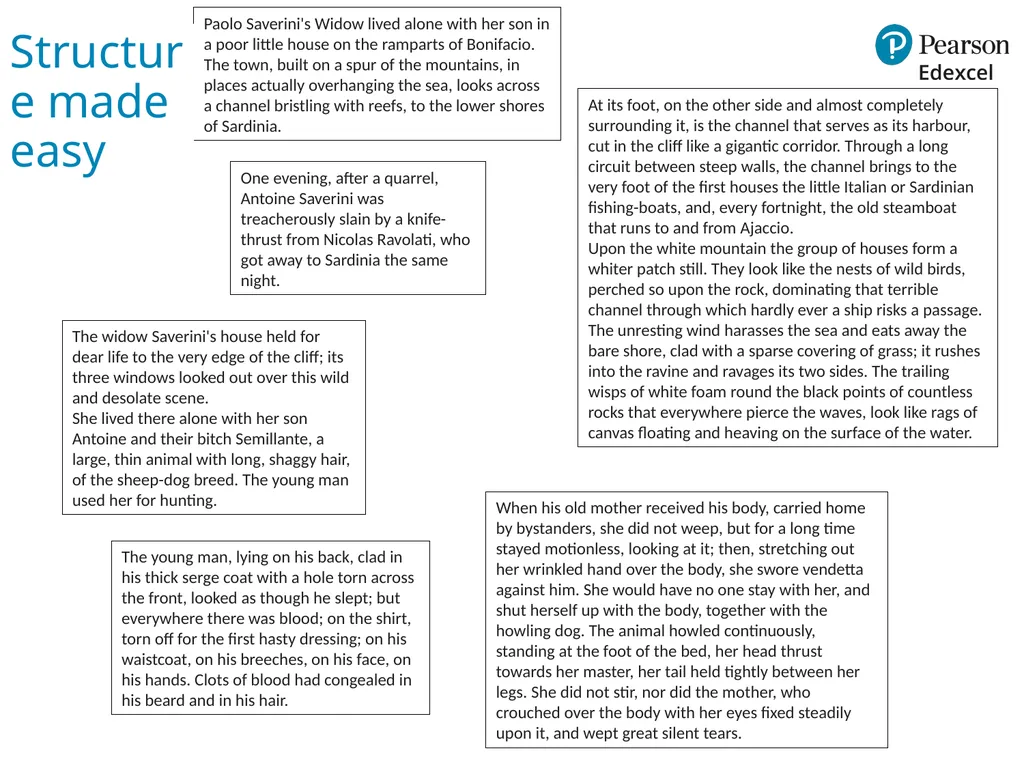
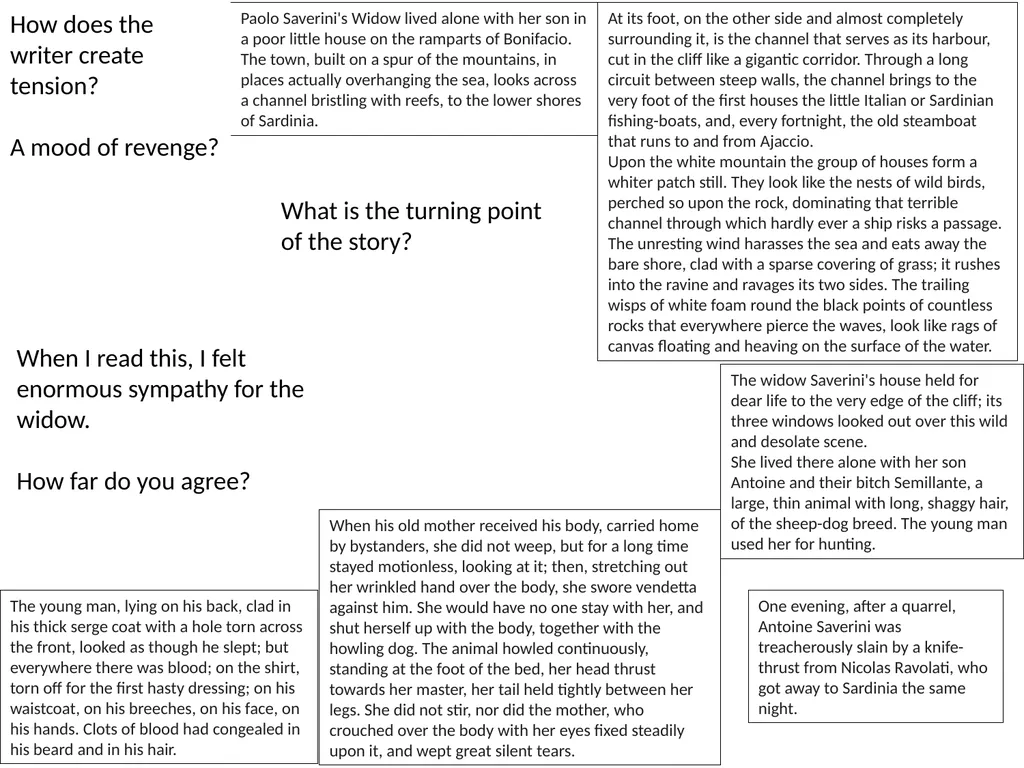
At its foot, on the other side and almost completely surrounding it, is the channel that serves as its harbour, cut in the cliff like a gigantic corridor. Through a long circuit between steep walls, the channel brings to the very foot of the first houses the little Italian or Sardinian fishing-boats, and, every fortnight, the old steamboat that runs to and from Ajaccio.
Upon the white mountain the group of houses form a whiter patch still. They look like the nests of wild birds, perched so upon the rock, dominating that terrible channel through which hardly ever a ship risks a passage. The unresting wind harasses the sea and eats away the bare shore, clad with a sparse covering of grass; it rushes into the ravine and ravages its two sides. The trailing wisps of white foam round the black points of countless rocks that everywhere pierce the waves, look like rags of canvas floating and heaving on the surface of the water. The young man, lying on his back, clad in his thick serge coat with a hole torn across the front, looked as though he slept; but everywhere there was blood; on the shirt, torn off for the first hasty dressing; on his waistcoat, on his breeches, on his face, on his hands. Clots of blood had congealed in his beard and in his hair. When his old mother received his body, carried home by bystanders, she did not weep, but for a long time stayed motionless, looking at it; then, stretching out her wrinkled hand over the body, she swore vendetta against him. She would have no one stay with her, and shut herself up with the body, together with the howling dog. The animal howled continuously, standing at the foot of the bed, her head thrust towards her master, her tail held tightly between her legs. She did not stir, nor did the mother, who crouched over the body with her eyes fixed steadily upon it, and wept great silent tears. Paolo Saverini's Widow lived alone with her son in a poor little house on the ramparts of Bonifacio. The town, built on a spur of the mountains, in places actually overhanging the sea, looks across a channel bristling with reefs, to the lower shores of Sardinia. The widow Saverini's house held for dear life to the very edge of the cliff; its three windows looked out over this wild and desolate scene.
She lived there alone with her son Antoine and their bitch Semillante, a large, thin animal with long, shaggy hair, of the sheep-dog breed. The young man used her for hunting. One evening, after a quarrel, Antoine Saverini was treacherously slain by a knife-thrust from Nicolas Ravolati, who got away to Sardinia the same night. Structure made easy<br>
12
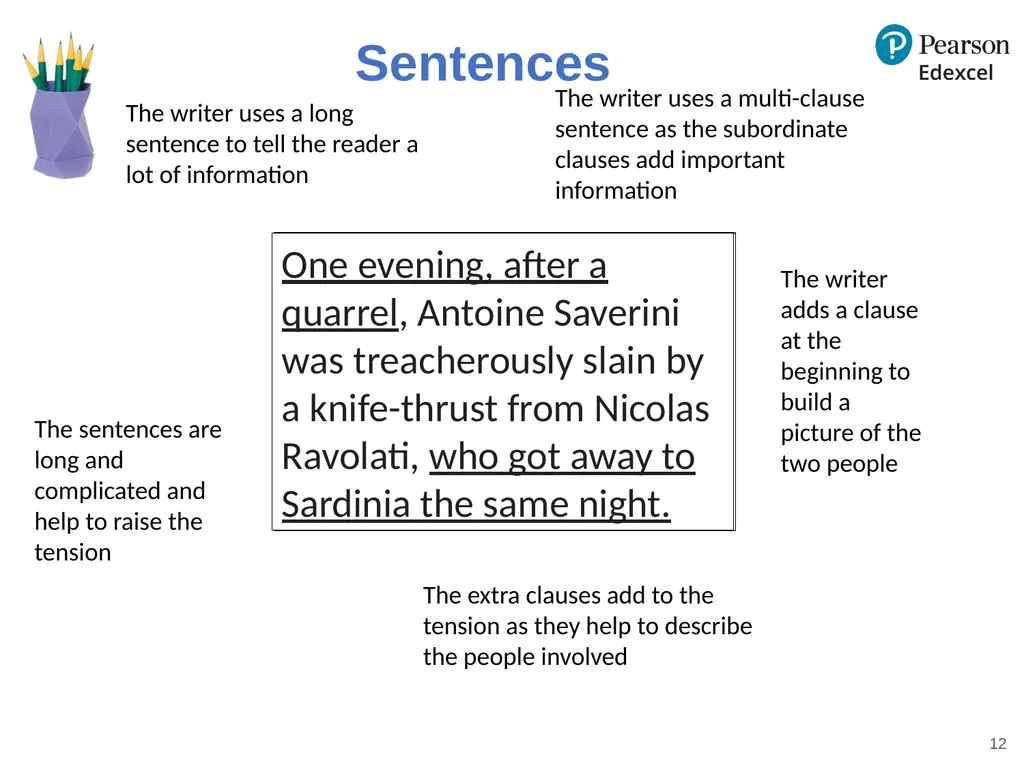
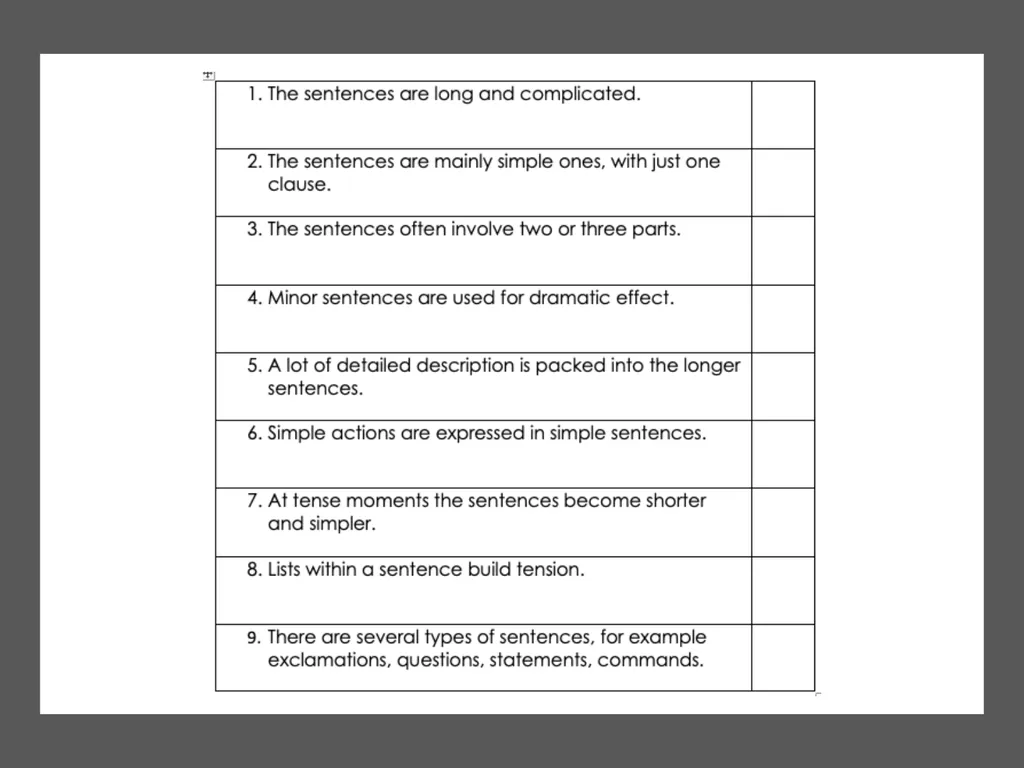
Sentences One evening, after a quarrel, Antoine Saverini was treacherously slain by a knife-thrust from Nicolas Ravolati, who got away to Sardinia the same night. Antoine Saverini was treacherously slain by a knife-thrust from Nicolas Ravolati One evening, after a quarrel, Antoine Saverini was treacherously slain by a knife-thrust from Nicolas Ravolati, who got away to Sardinia the same night. The writer uses a long sentence to tell the reader a lot of information The writer uses a multi-clause sentence as the subordinate clauses add important information The sentences are long and complicated and help to raise the tension The writer adds a clause at the beginning to build a picture of the two people The extra clauses add to the tension as they help to describe the people involved<br>
13
Sentences She lived there alone with her son Antoine and their bitch Semillante, a large, thin animal with long, shaggy hair, of the sheep-dog breed. The young man used her for hunting. The young man, lying on his back, clad in his thick serge coat with a hole torn across the front, looked as though he slept; but everywhere there was blood; on the shirt, torn off for the first hasty dressing; on his waistcoat, on his breeches, on his face, on his hands. Clots of blood had congealed in his beard and in his hair.<br>
14
Sentences There is terror in the carriage, there is weeping, there is the heavy breathing of the insensible traveller.
“Are we not going too slowly? Can they not be induced to go faster?” asks Lucie, clinging to the old man.
“It would seem like flight, my darling. I must not urge them too much; it would rouse suspicion.”
“Look back, look back, and see if we are pursued!”
“The road is clear, my dearest. So far, we are not pursued.”
Houses in twos and threes pass by us, solitary farms, ruinous buildings, dye-works, tanneries, and the like, open country, avenues of leafless trees. The hard uneven pavement is under us, the soft deep mud is on either side. Sometimes, we strike into the skirting mud, to avoid the stones that clatter us and shake us; sometimes, we stick in ruts and sloughs there. The agony of our impatience is then so great, that in our wild alarm and hurry we are for getting out and running—hiding—doing anything but stopping.
Out of the open country, in again among ruinous buildings, solitary farms, dye-works, tanneries, and the like, cottages in twos and threes, avenues of leafless trees. Have these men deceived us, and taken us back by another road? Is not this the same place twice over? Thank Heaven, no. A village. Look back, look back, and see if we are pursued! Hush! the posting-house.<br>
15
At its foot, on the other side and almost completely surrounding it, is the channel that serves as its harbour, cut in the cliff like a gigantic corridor. Through a long circuit between steep walls, the channel brings to the very foot of the first houses the little Italian or Sardinian fishing-boats, and, every fortnight, the old steamboat that runs to and from Ajaccio.
Upon the white mountain the group of houses form a whiter patch still. They look like the nests of wild birds, perched so upon the rock, dominating that terrible channel through which hardly ever a ship risks a passage. The unresting wind harasses the sea and eats away the bare shore, clad with a sparse covering of grass; it rushes into the ravine and ravages its two sides. The trailing wisps of white foam round the black points of countless rocks that everywhere pierce the waves, look like rags of canvas floating and heaving on the surface of the water. The young man, lying on his back, clad in his thick serge coat with a hole torn across the front, looked as though he slept; but everywhere there was blood; on the shirt, torn off for the first hasty dressing; on his waistcoat, on his breeches, on his face, on his hands. Clots of blood had congealed in his beard and in his hair. When his old mother received his body, carried home by bystanders, she did not weep, but for a long time stayed motionless, looking at it; then, stretching out her wrinkled hand over the body, she swore vendetta against him. She would have no one stay with her, and shut herself up with the body, together with the howling dog. The animal howled continuously, standing at the foot of the bed, her head thrust towards her master, her tail held tightly between her legs. She did not stir, nor did the mother, who crouched over the body with her eyes fixed steadily upon it, and wept great silent tears. Paolo Saverini's Widow lived alone with her son in a poor little house on the ramparts of Bonifacio. The town, built on a spur of the mountains, in places actually overhanging the sea, looks across a channel bristling with reefs, to the lower shores of Sardinia. The widow Saverini's house held for dear life to the very edge of the cliff; its three windows looked out over this wild and desolate scene.
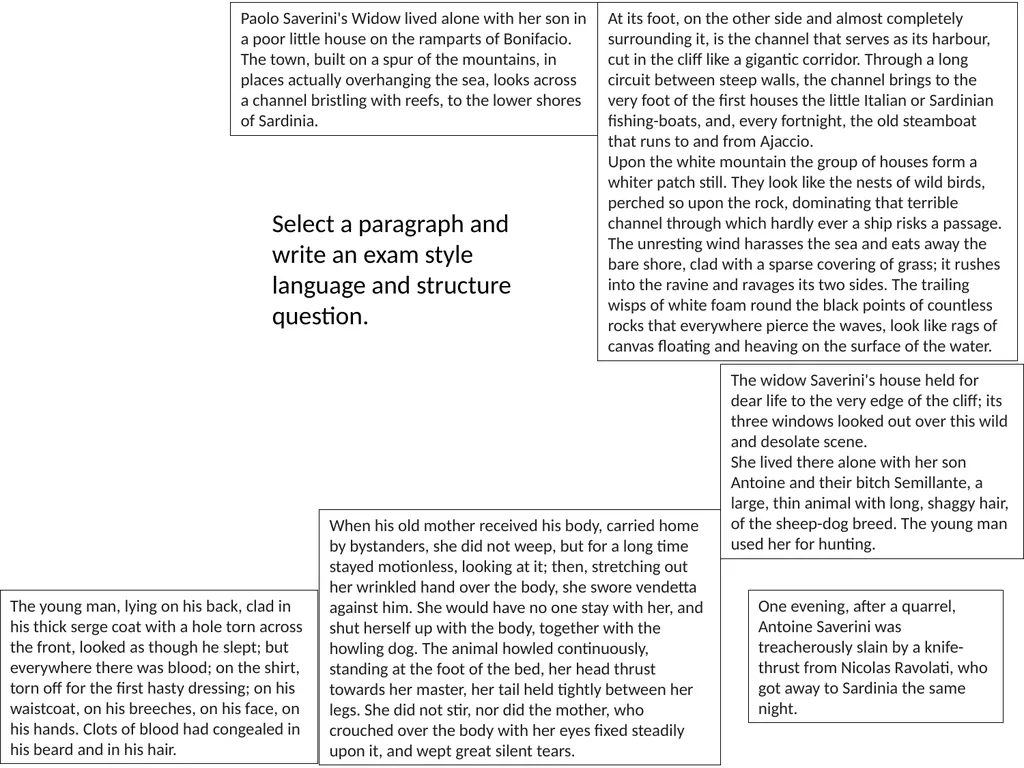
She lived there alone with her son Antoine and their bitch Semillante, a large, thin animal with long, shaggy hair, of the sheep-dog breed. The young man used her for hunting. One evening, after a quarrel, Antoine Saverini was treacherously slain by a knife-thrust from Nicolas Ravolati, who got away to Sardinia the same night. Select a paragraph and write an exam style language and structure question.<br>
16
At its foot, on the other side and almost completely surrounding it, is the channel that serves as its harbour, cut in the cliff like a gigantic corridor. Through a long circuit between steep walls, the channel brings to the very foot of the first houses the little Italian or Sardinian fishing-boats, and, every fortnight, the old steamboat that runs to and from Ajaccio.
Upon the white mountain the group of houses form a whiter patch still. They look like the nests of wild birds, perched so upon the rock, dominating that terrible channel through which hardly ever a ship risks a passage. The unresting wind harasses the sea and eats away the bare shore, clad with a sparse covering of grass; it rushes into the ravine and ravages its two sides. The trailing wisps of white foam round the black points of countless rocks that everywhere pierce the waves, look like rags of canvas floating and heaving on the surface of the water. The young man, lying on his back, clad in his thick serge coat with a hole torn across the front, looked as though he slept; but everywhere there was blood; on the shirt, torn off for the first hasty dressing; on his waistcoat, on his breeches, on his face, on his hands. Clots of blood had congealed in his beard and in his hair. When his old mother received his body, carried home by bystanders, she did not weep, but for a long time stayed motionless, looking at it; then, stretching out her wrinkled hand over the body, she swore vendetta against him. She would have no one stay with her, and shut herself up with the body, together with the howling dog. The animal howled continuously, standing at the foot of the bed, her head thrust towards her master, her tail held tightly between her legs. She did not stir, nor did the mother, who crouched over the body with her eyes fixed steadily upon it, and wept great silent tears. Paolo Saverini's Widow lived alone with her son in a poor little house on the ramparts of Bonifacio. The town, built on a spur of the mountains, in places actually overhanging the sea, looks across a channel bristling with reefs, to the lower shores of Sardinia. The widow Saverini's house held for dear life to the very edge of the cliff; its three windows looked out over this wild and desolate scene.
She lived there alone with her son Antoine and their bitch Semillante, a large, thin animal with long, shaggy hair, of the sheep-dog breed. The young man used her for hunting. How does the writer create tension?
A mood of revenge? One evening, after a quarrel, Antoine Saverini was treacherously slain by a knife-thrust from Nicolas Ravolati, who got away to Sardinia the same night. What is the turning point of the story? When I read this, I felt enormous sympathy for the widow.
How far do you agree?<br>
17
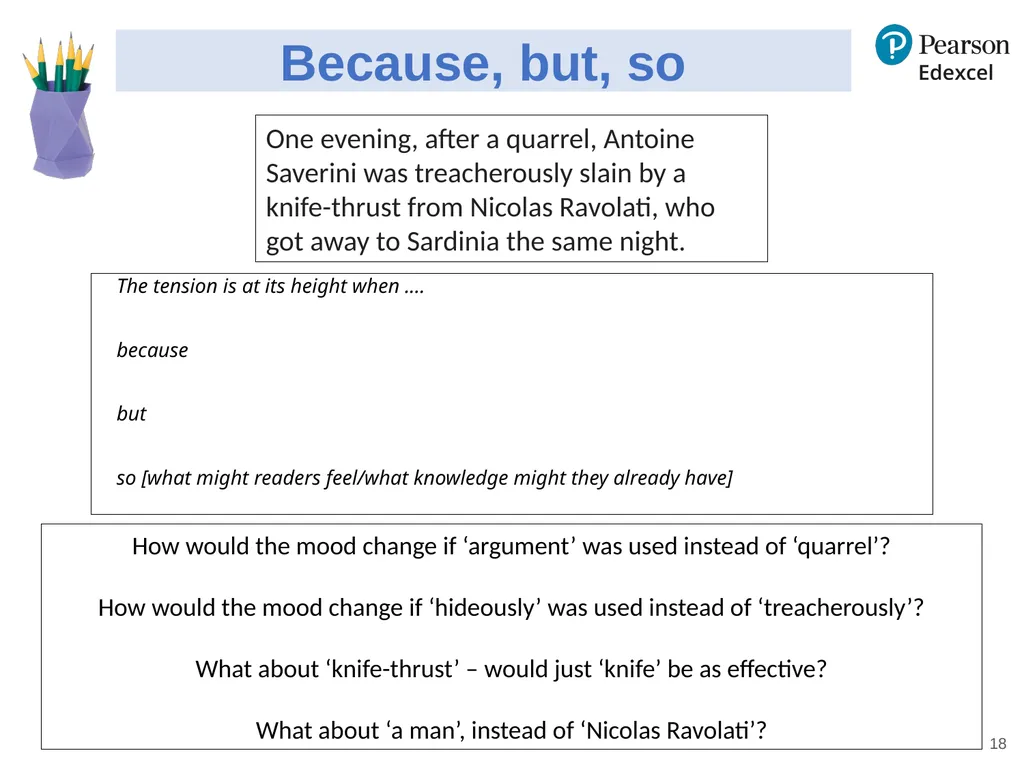
Because, but, so The tension is at its height when ....
because
but
so [what might readers feel/what knowledge might they already have] One evening, after a quarrel, Antoine Saverini was treacherously slain by a knife-thrust from Nicolas Ravolati, who got away to Sardinia the same night. How would the mood change if ‘argument’ was used instead of ‘quarrel’?
How would the mood change if ‘hideously’ was used instead of ‘treacherously’?
What about ‘knife-thrust’ – would just ‘knife’ be as effective?
What about ‘a man’, instead of ‘Nicolas Ravolati’?<br>
18
For sale, baby shoes never worn.
Baby shoes for sale. Never worn.
For sale: baby shoes. Never worn.
Never worn: baby shoes. For sale.
Never worn; for sale. Baby shoes. Sentence stories<br>
Baby shoes for sale. Never worn.
For sale: baby shoes. Never worn.
Never worn: baby shoes. For sale.
Never worn; for sale. Baby shoes. Sentence stories<br>
19
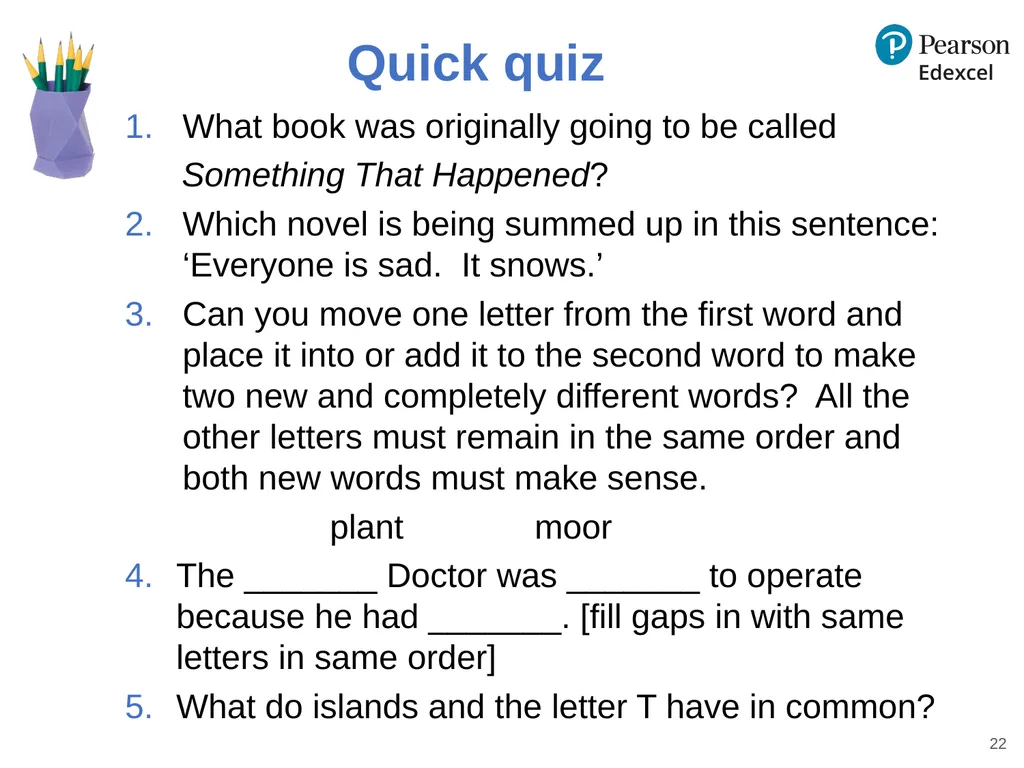
What book was originally going to be called
Something That Happened?
Which novel is being summed up in this sentence: ‘Everyone is sad. It snows.’
Can you move one letter from the first word and place it into or add it to the second word to make two new and completely different words? All the other letters must remain in the same order and both new words must make sense.
plant moor
The _______ Doctor was _______ to operate because he had _______. [fill gaps in with same letters in same order]
What do islands and the letter T have in common? Quick quiz<br>
20
GCSE (9-1)
English Tea Break<br>
21
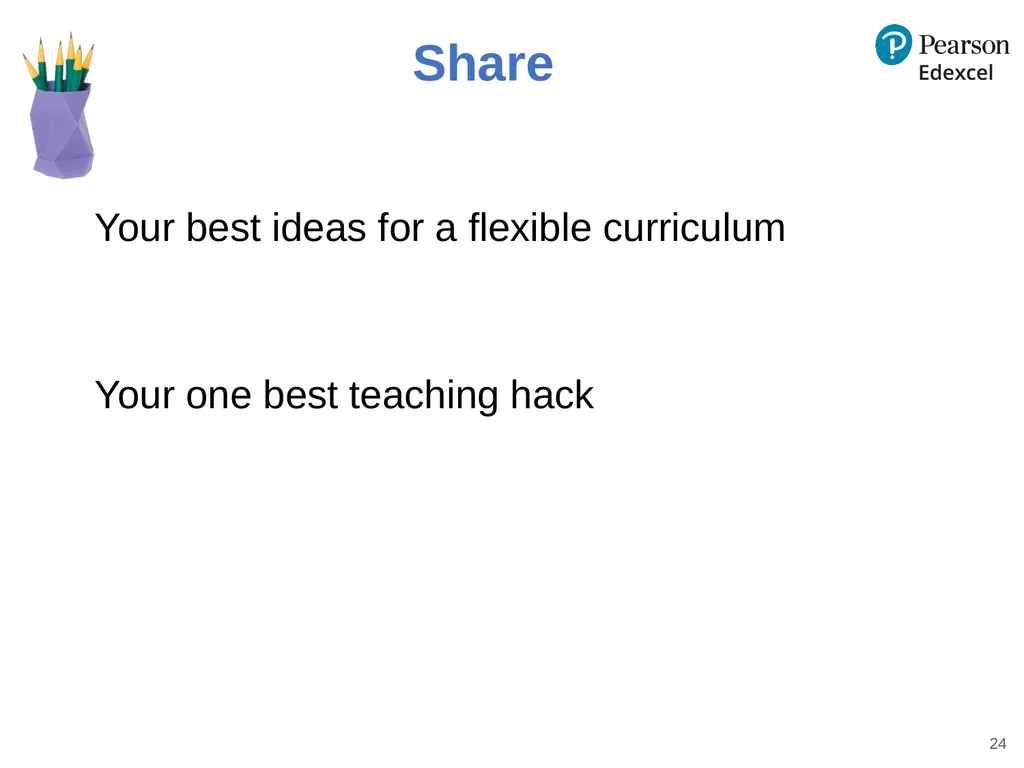
Your best ideas for a flexible curriculum
Your one best teaching hack Share<br>
Your one best teaching hack Share<br>
22
GCSE (9-1)
English Shared Resources<br>
23
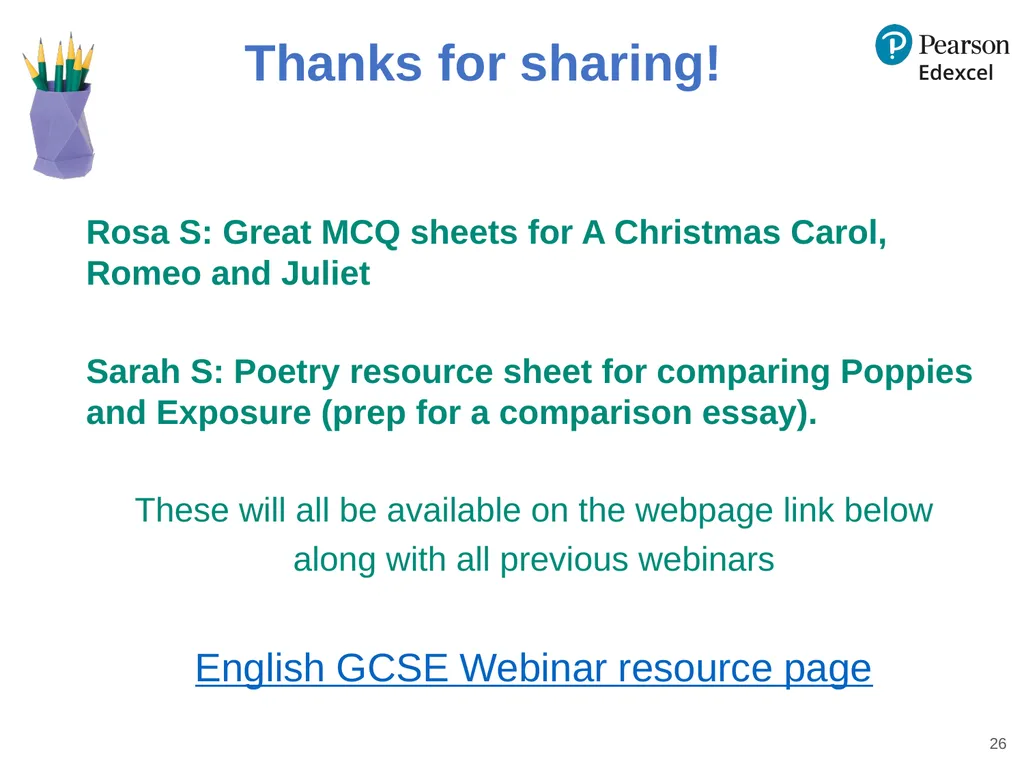
Rosa S: Great MCQ sheets for A Christmas Carol, Romeo and Juliet
Sarah S: Poetry resource sheet for comparing Poppies and Exposure (prep for a comparison essay).
These will all be available on the webpage link below
along with all previous webinars
English GCSE Webinar resource page Thanks for sharing!<br>
Sarah S: Poetry resource sheet for comparing Poppies and Exposure (prep for a comparison essay).
These will all be available on the webpage link below
along with all previous webinars
English GCSE Webinar resource page Thanks for sharing!<br>
24
If you send them to us at
thefullenglish@pearson.com
we will make them available to all who have signed up today. Any other ideas to share? £25 voucher shared resource (fortnightly draw)<br>
thefullenglish@pearson.com
we will make them available to all who have signed up today. Any other ideas to share? £25 voucher shared resource (fortnightly draw)<br>
25
£10 voucher and the winner is.. Weekly Draw for
feedback survey<br>
feedback survey<br>
26
Episode 1 with Kat Howard: discussing work-life balance, imposter syndrome, timesaving marking strategies, relationships in schools. https://soundcloud.com/pearson-education (Also coming soon to Spotify and Apple Music)<br>
27
GCSE (9-1)
English What more can we do to help?<br>
28
https://qualifications.pearson.com/en/campaigns/pearson-covid-19/united-kingdom-covid-19-coronavirus-update.html The latest current and 2021 updates can be found through the following link and will be updated as soon as new information is available<br>
29
Free online lessons for Year 10 students 6 weekly 45 minute lessons delivered by a teacher
Started 3rd June
English Language focus
Follow this link<br>
Started 3rd June
English Language focus
Follow this link<br>
30
Boys Don’t Cry
The Empress
Refugee Boy
Coram Boy
Follow this link New Knowledge Organisers<br>
The Empress
Refugee Boy
Coram Boy
Follow this link New Knowledge Organisers<br>
31
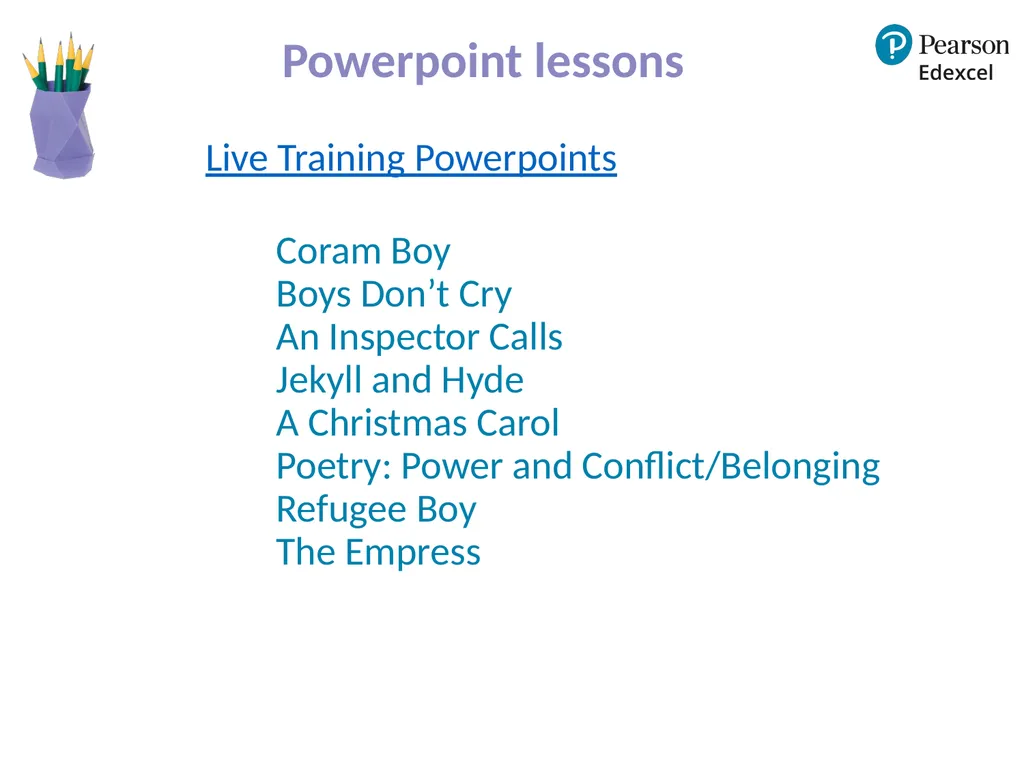
Coram Boy
Boys Don’t Cry
An Inspector Calls
Jekyll and Hyde
A Christmas Carol
Poetry: Power and Conflict/Belonging
Refugee Boy
The Empress Live Training Powerpoints Powerpoint lessons<br>
32
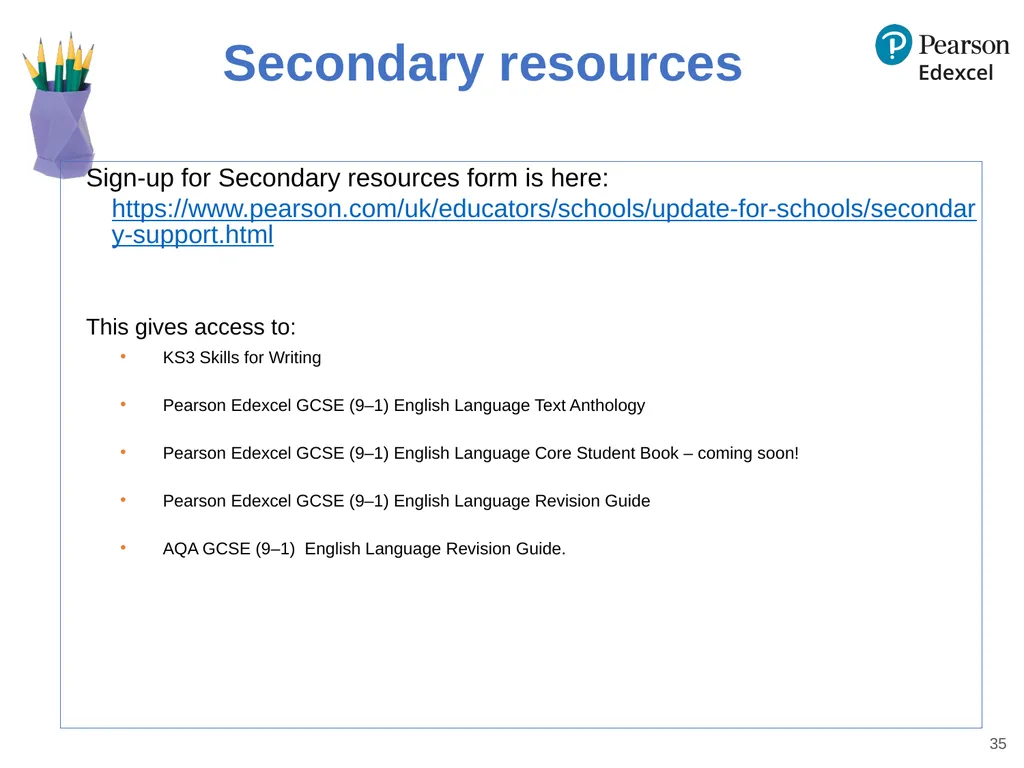
Sign-up for Secondary resources form is here: https://www.pearson.com/uk/educators/schools/update-for-schools/secondary-support.html
This gives access to:
KS3 Skills for Writing
Pearson Edexcel GCSE (9–1) English Language Text Anthology
Pearson Edexcel GCSE (9–1) English Language Core Student Book – coming soon!
Pearson Edexcel GCSE (9–1) English Language Revision Guide
AQA GCSE (9–1) English Language Revision Guide. Secondary resources<br>
33
Your Subject Advisor Clare Haviland
Telephone: 03330164120
Twitter: @PearsonTeachEng
Email or live chat
You can sign up for Clare’s
e-updates by completing this
online form
Facebook page: https://www.facebook.com/pearsonedexcelenglish/<br>
Telephone: 03330164120
Twitter: @PearsonTeachEng
Email or live chat
You can sign up for Clare’s
e-updates by completing this
online form
Facebook page: https://www.facebook.com/pearsonedexcelenglish/<br>
34
https://www.youtube.com/watch?v=Q0DYFcgCejI. Switching to Edexcel<br>
35
Feedback<br>