04
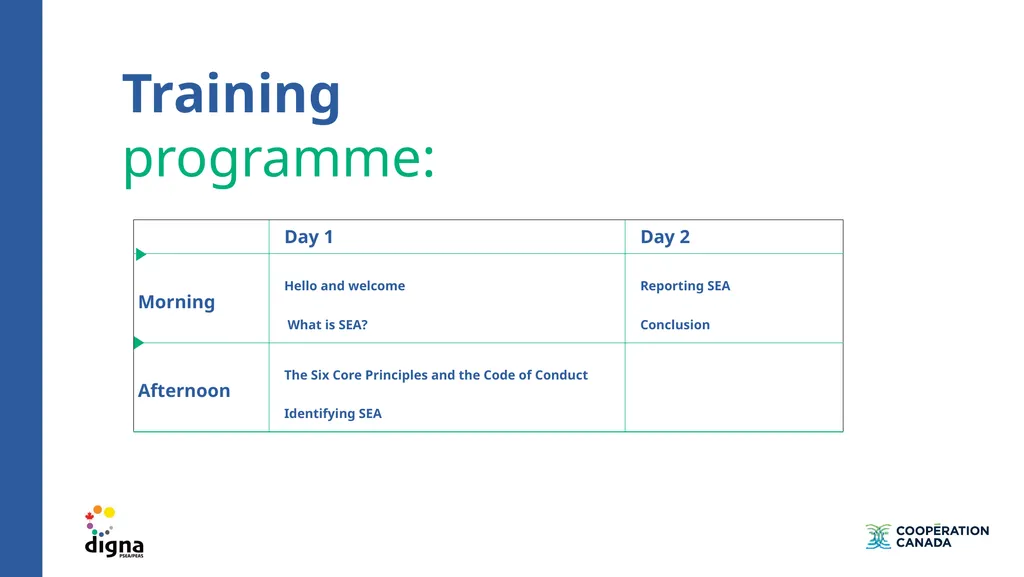
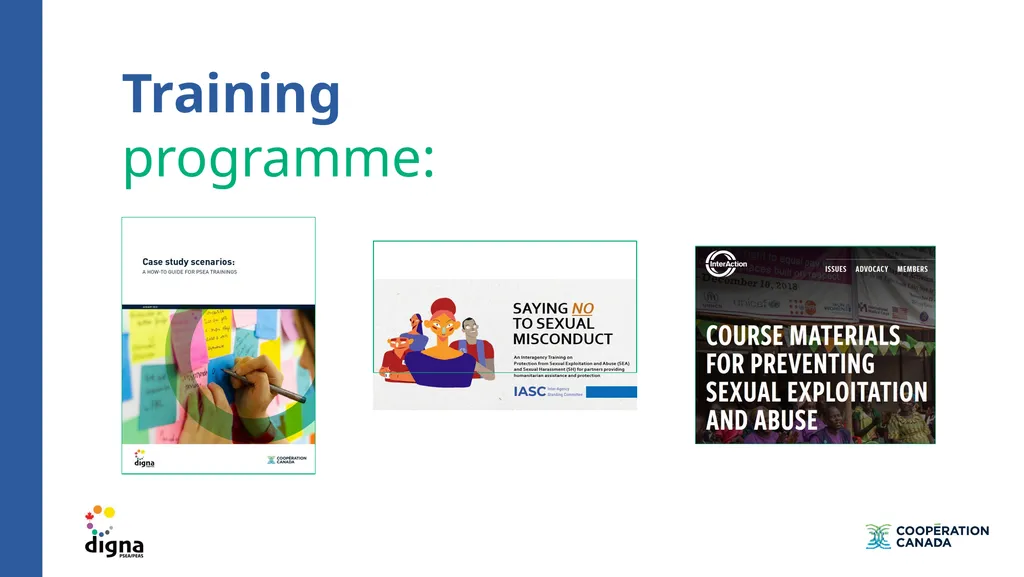
Training programme:<br>
06
Trigger warning: Psychosocial support available<br>
07
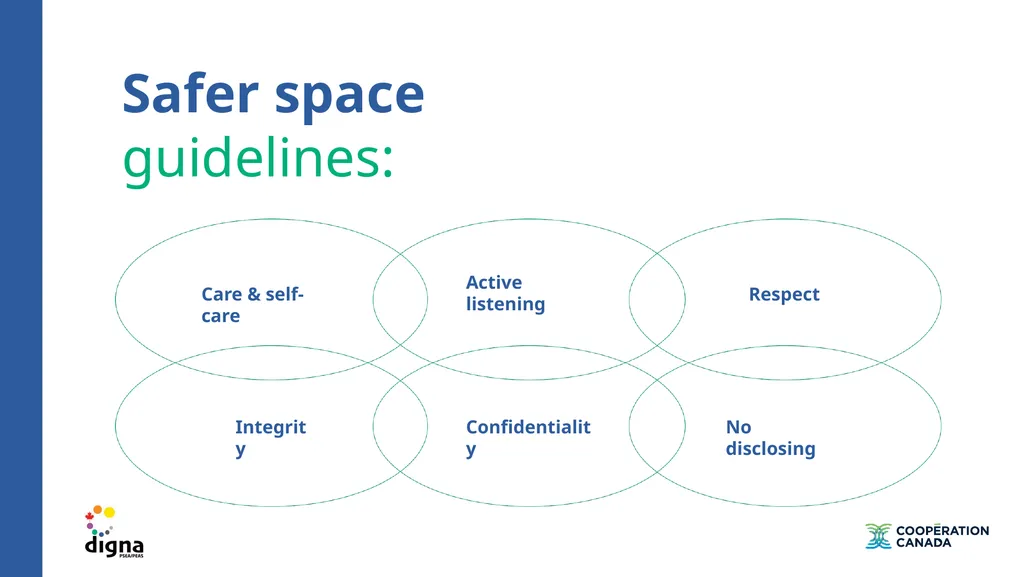
Safer space guidelines: Care & self-care Integrity Active listening Confidentiality Respect No disclosing<br>
08
Ice-breaker: Who are you?
Name / Pronouns / Organization / Position<br>
09
What is sexual exploitation and abuse?<br>
10
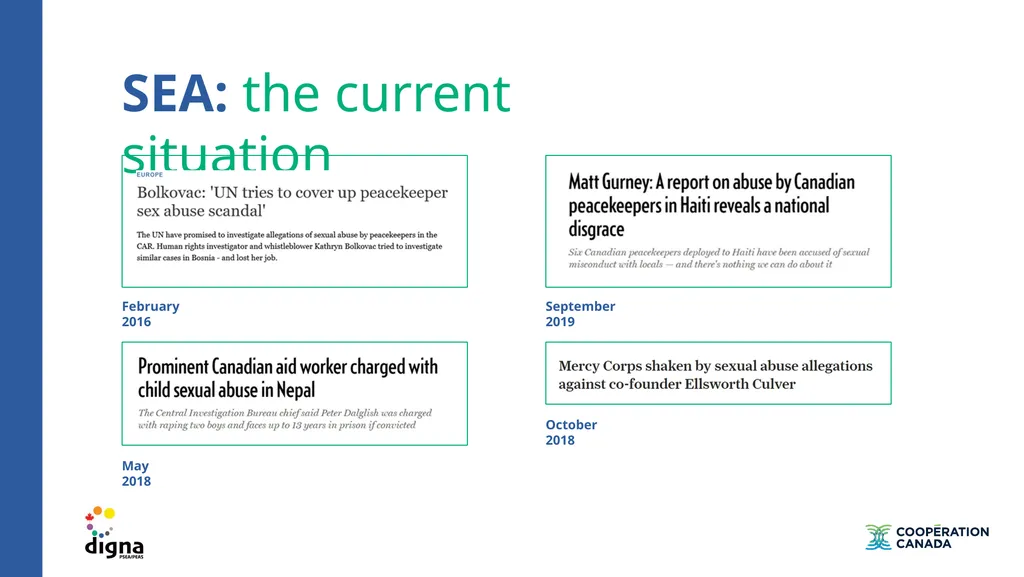
SEA: the current situation September 2019 October 2018 May 2018 February 2016<br>
12
PSEA: it’s everyone’s responsibility<br>
13
PSEA: it’s everyone’s responsibility Whole group discussion:
What are your thoughts about the video? What did you notice?
What were the main themes you noticed in the video?<br>
14
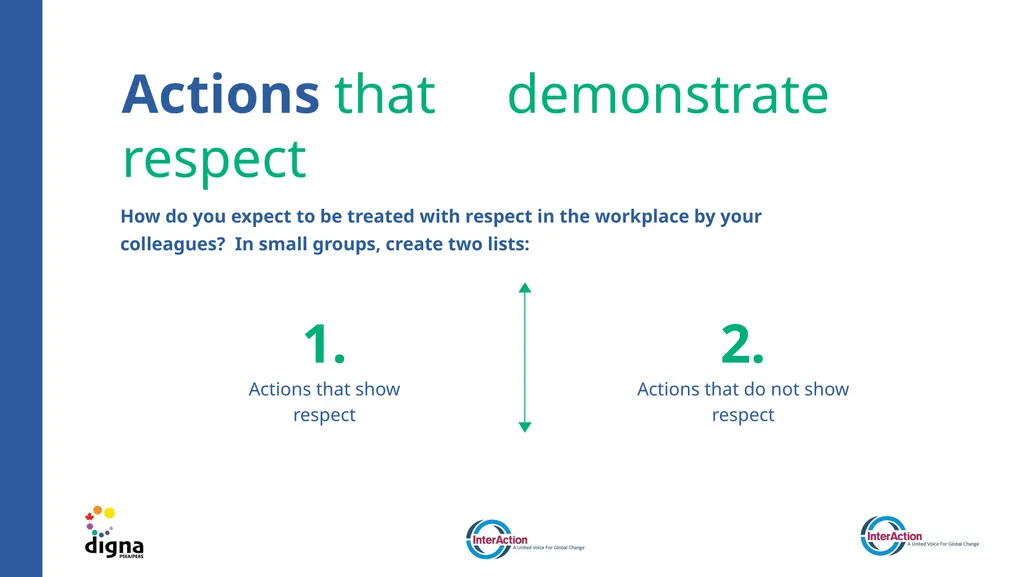
Actions that demonstrate respect 1.
Actions that show respect 2.
Actions that do not show respect How do you expect to be treated with respect in the workplace by your colleagues? In small groups, create two lists:<br>
15
Actions that demonstrate respect How do we treat program participants and community members with respect?<br>
16
Actions that demonstrate respect What actions of respect or disrespect in this list do you think are most important when we talk about the examples of sexual exploitation and abuse we saw in the video?<br>
17
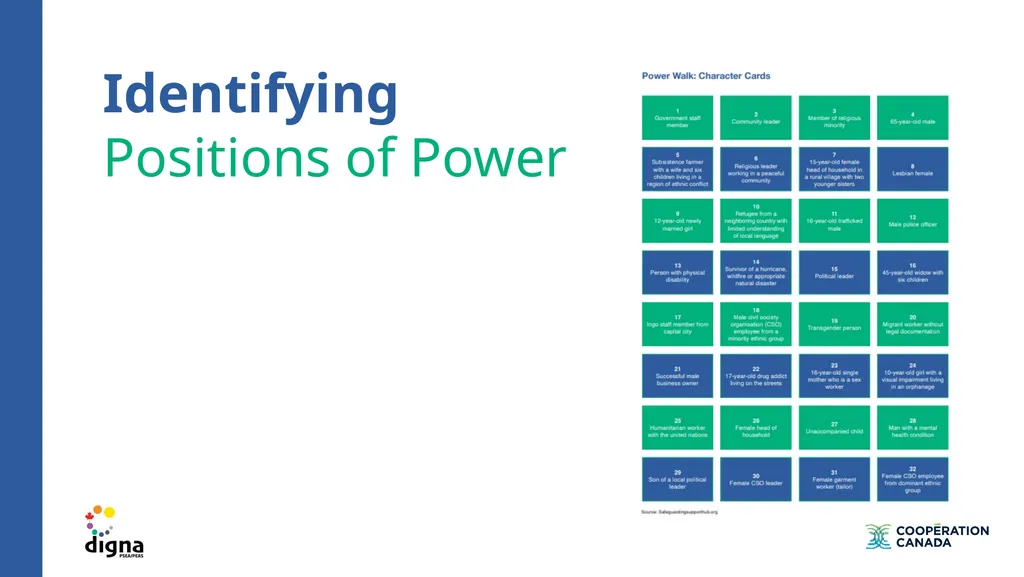
Identifying
Positions of Power<br>
18
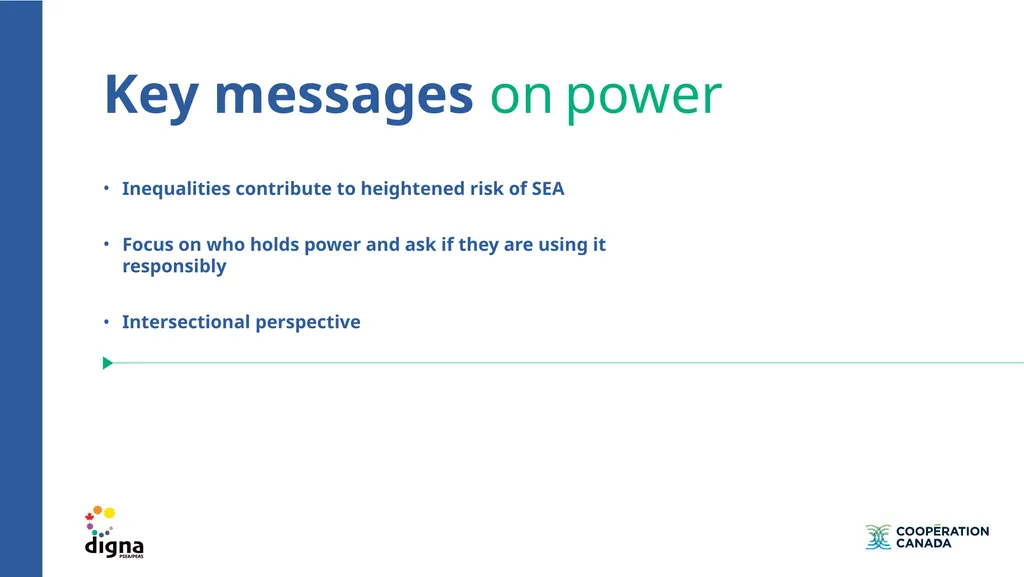
Key messages on power Inequalities contribute to heightened risk of SEA
Focus on who holds power and ask if they are using it responsibly
Intersectional perspective<br>
19
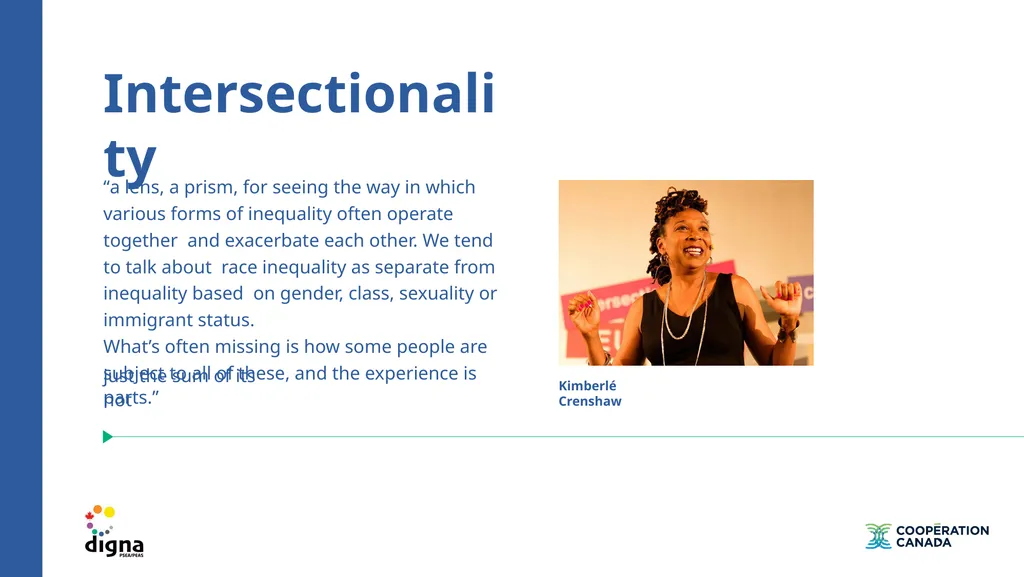
Intersectionality “a lens, a prism, for seeing the way in which various forms of inequality often operate together and exacerbate each other. We tend to talk about race inequality as separate from inequality based on gender, class, sexuality or immigrant status.
What’s often missing is how some people are subject to all of these, and the experience is not just the sum of its parts.” Kimberlé Crenshaw<br>
20
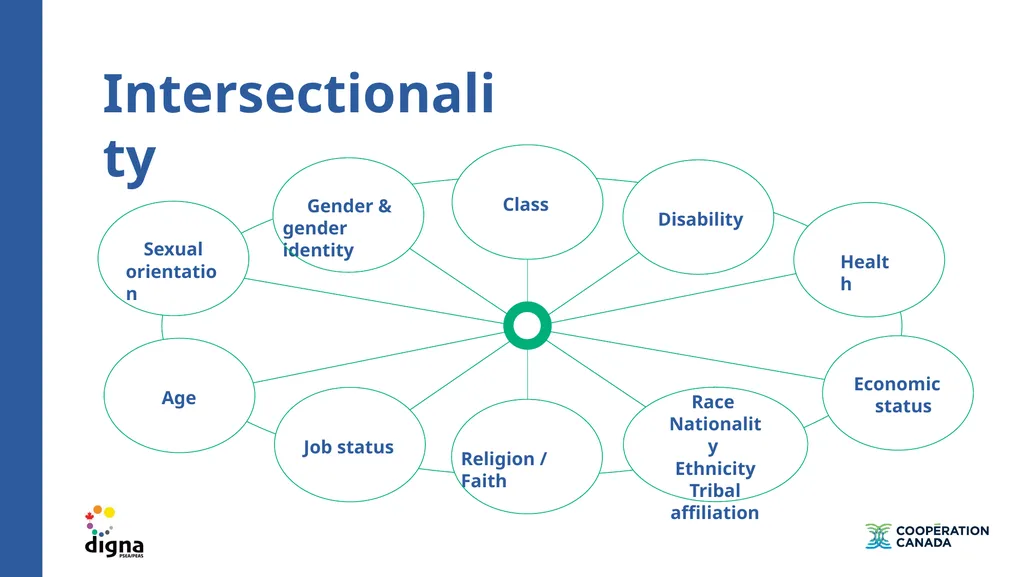
Intersectionality Job status Disability Race Nationality Ethnicity
Tribal affiliation Gender & gender identity Age Health Sexual orientation Economic status Class Religion / Faith<br>
21
IASC Core Principles<br>
22
IASC Core Principles Sexual activity with children (persons under the age of 18) is prohibited regardless of the age of majority or age of consent locally. Mistaken belief regarding the age of a child is not a defense. 1. Sexual exploitation and abuse by humanitarian workers constitute acts of gross misconduct and
are therefore grounds for termination of employment.
2.
3. Exchange of money, employment, goods, or services for sex, including sexual favors or other forms of humiliating, degrading or exploitative behavior is prohibited. This includes exchange of
assistance that is due to beneficiaries.<br>
23
IASC Core Principles Where a humanitarian worker develops concerns or suspicions regarding sexual abuse or exploitation by a fellow worker, whether in the same agency or not, he or she must report such concerns via established agency reporting mechanisms. Humanitarian workers are obliged to create and maintain an environment which prevents sexual exploitation and abuse and promotes the implementation of their code of conduct. Managers at all levels have particular responsibilities to support and develop systems which maintain this environment. 4. Any sexual relationship between those providing humanitarian assistance and protection and
a person benefiting from such humanitarian assistance and protection that involves improper
use of rank or position is prohibited. Such relationships undermine the credibility and integrity of humanitarian aid work.
5.
6.<br>
24
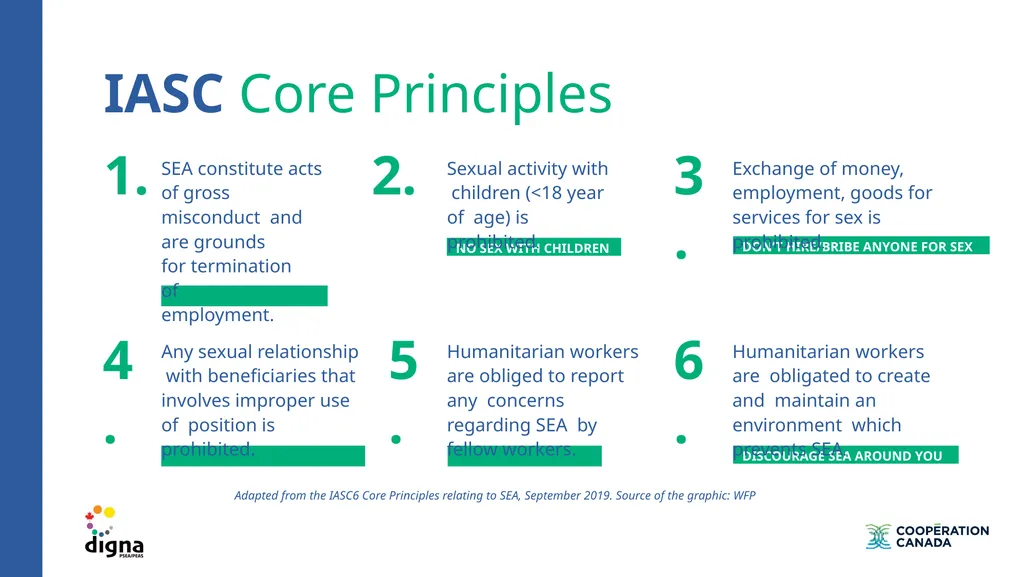
IASC Core Principles SEA constitute acts of gross misconduct and are grounds
for termination of employment.
NO SECOND CHANCES Any sexual relationship with beneficiaries that involves improper use of position is prohibited.
NO SEX WITH BENEFICIARIES Humanitarian workers are obliged to report any concerns regarding SEA by fellow workers.
ALWAYS REPORT SEA DISCOURAGE SEA AROUND YOU NO SEX WITH CHILDREN DON’T HIRE/BRIBE ANYONE FOR SEX Sexual activity with children (<18 year of age) is prohibited. Adapted from the IASC6 Core Principles relating to SEA, September 2019. Source of the graphic: WFP Exchange of money, employment, goods for services for sex is prohibited. Humanitarian workers are obligated to create and maintain an environment which prevents SEA. 1. 2. 4. 5. 3. 6.<br>
25
Vocabulary note:
survivor and victim What is the difference?<br>
26
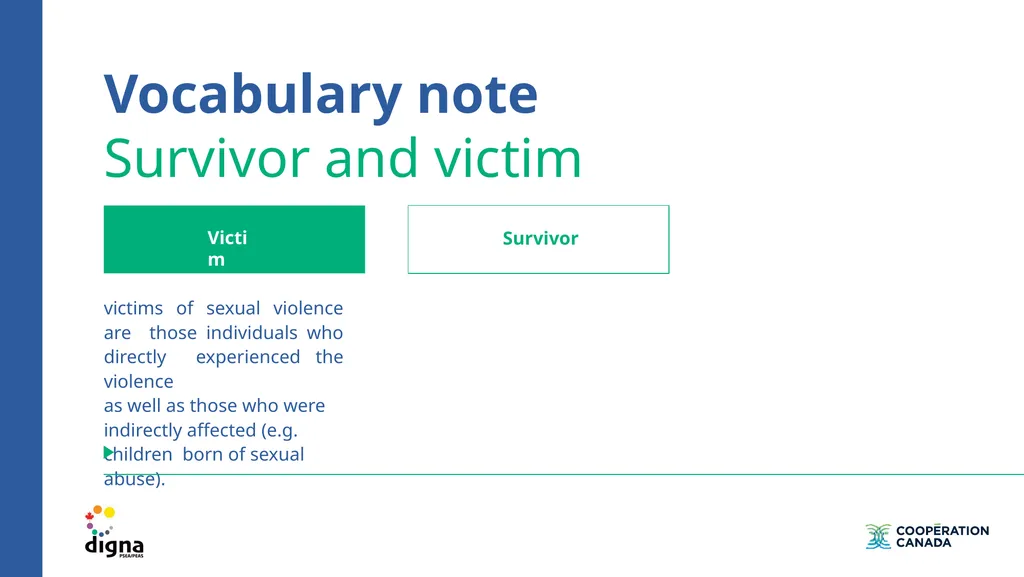
Vocabulary note�Survivor and victim victims of sexual violence are those individuals who directly experienced the violence
as well as those who were indirectly affected (e.g. children born of sexual abuse). Victim Survivor<br>
27
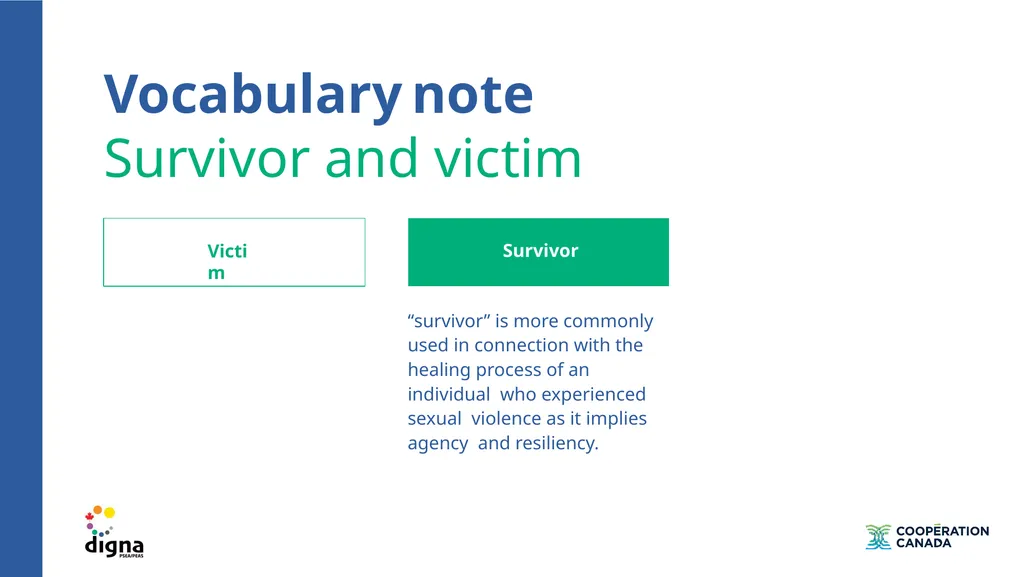
Vocabulary note�Survivor and victim “survivor” is more commonly used in connection with the healing process of an individual who experienced sexual violence as it implies agency and resiliency. Victim Survivor<br>
28
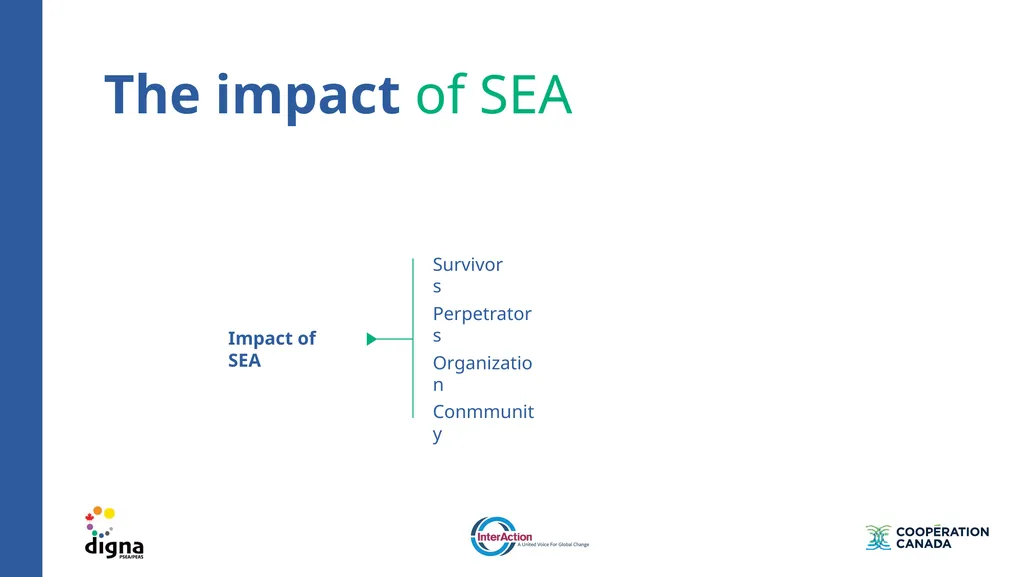
The impact of SEA Survivors Perpetrators Organization Conmmunity Impact of SEA<br>
29
Terms and definitions Sexual abuse Sexual exploitation Sexual harassment<br>
30
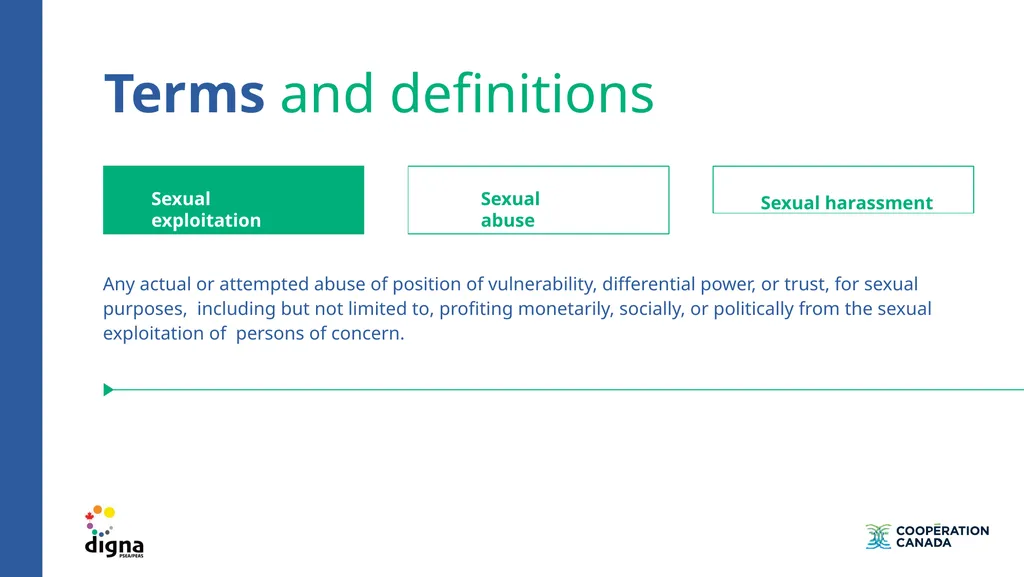
Terms and definitions Sexual abuse Sexual exploitation Sexual harassment Any actual or attempted abuse of position of vulnerability, differential power, or trust, for sexual purposes, including but not limited to, profiting monetarily, socially, or politically from the sexual exploitation of persons of concern.<br>
31
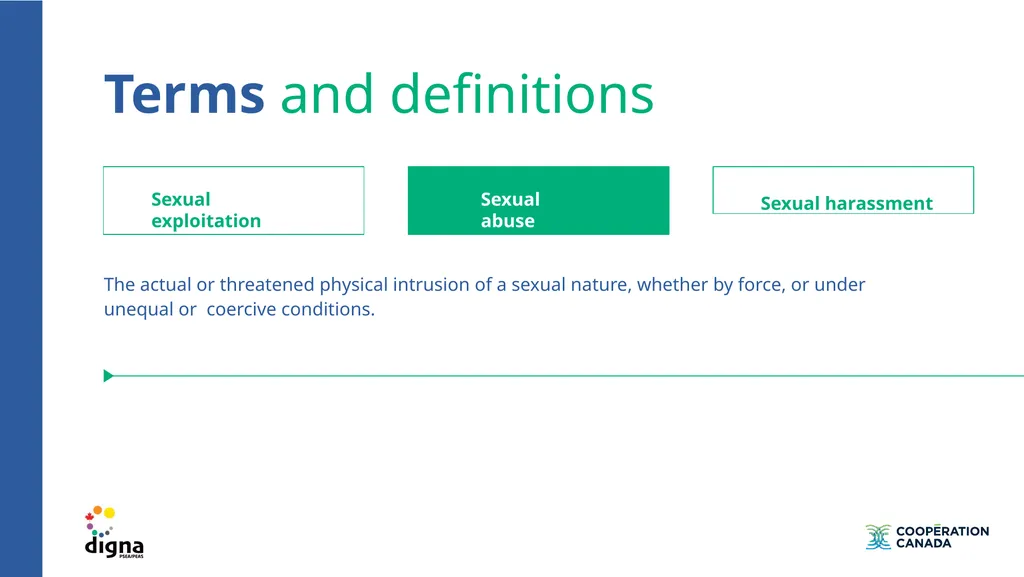
Terms and definitions Sexual abuse Sexual exploitation Sexual harassment The actual or threatened physical intrusion of a sexual nature, whether by force, or under unequal or coercive conditions.<br>
32
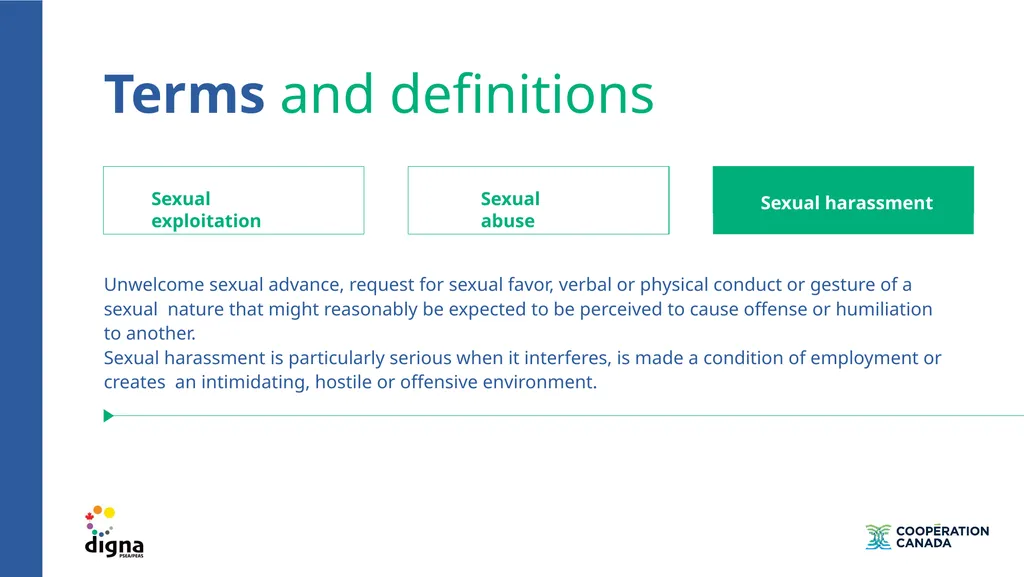
Terms and definitions Sexual abuse Sexual exploitation Sexual harassment Unwelcome sexual advance, request for sexual favor, verbal or physical conduct or gesture of a sexual nature that might reasonably be expected to be perceived to cause offense or humiliation to another.
Sexual harassment is particularly serious when it interferes, is made a condition of employment or creates an intimidating, hostile or offensive environment.<br>
33
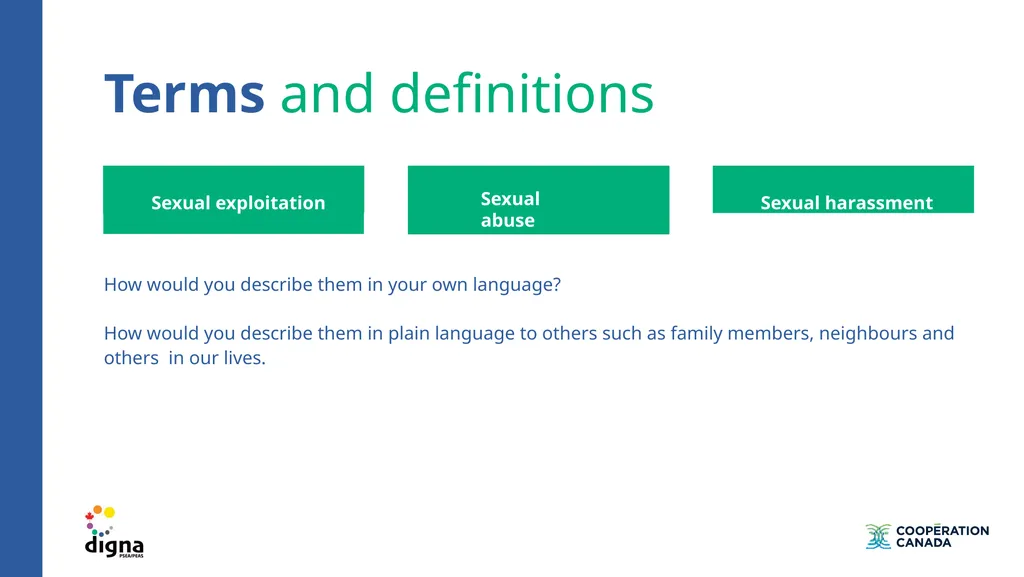
Terms and definitions Sexual abuse Sexual exploitation Sexual harassment How would you describe them in your own language?
How would you describe them in plain language to others such as family members, neighbours and others in our lives.<br>
34
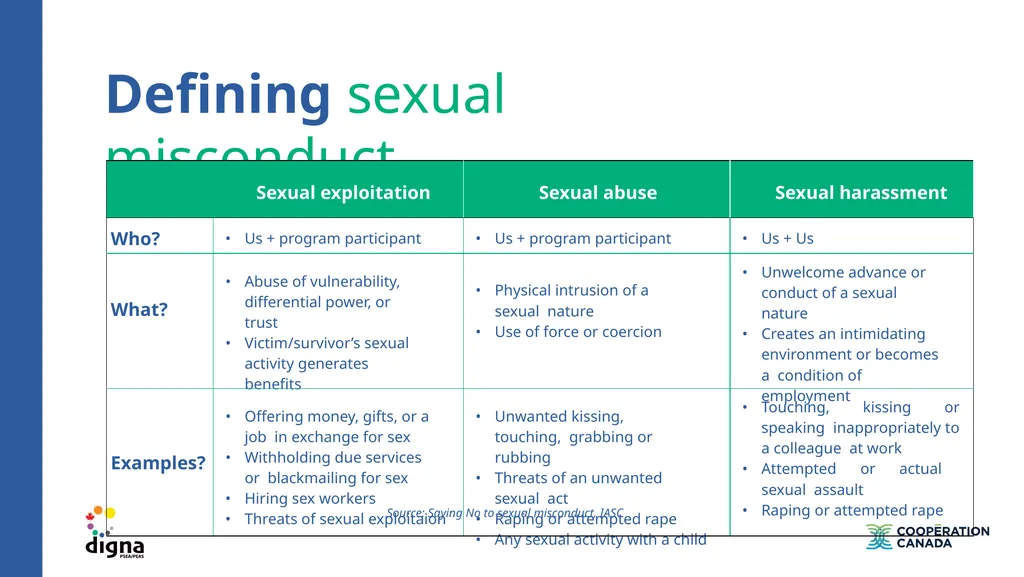
Defining sexual misconduct Source: Saying No to sexual misconduct, IASC<br>
36
Case studies In groups:
name a notetaker and a rapporteur
discuss the case study using the handout as a guide<br>
39
Thank you �and see you tomorrow!<br>