Tucker Turtle Takes Time to Tuck and Think at Home Adapted 2020 by WestEd Teaching Pyramid from a scripted story to assist with teaching the Turtle Technique Original By Rochelle Lentini March 2005 Artwork by Alejandro Castillon, 2011
"Tucker Turtle Takes Time to Tuck and Think at Home" is the property of its rightful owner. Permission is granted to
download and print the materials on this website for personal, non-commercial use only, and to display it
on your personal computer provided you do not modify the materials and that you retain all copyright
notices contained in the materials. By downloading content from our website, you accept the terms of this
agreement.
Presentation Transcript
01
Tucker Turtle Takes Time to Tuck and Think at Home Adapted 2020 by WestEd Teaching Pyramid from a scripted story to assist with teaching the “Turtle Technique” Original By Rochelle Lentini March 2005 Artwork by Alejandro Castillon, 2011 WestEd<br>
02
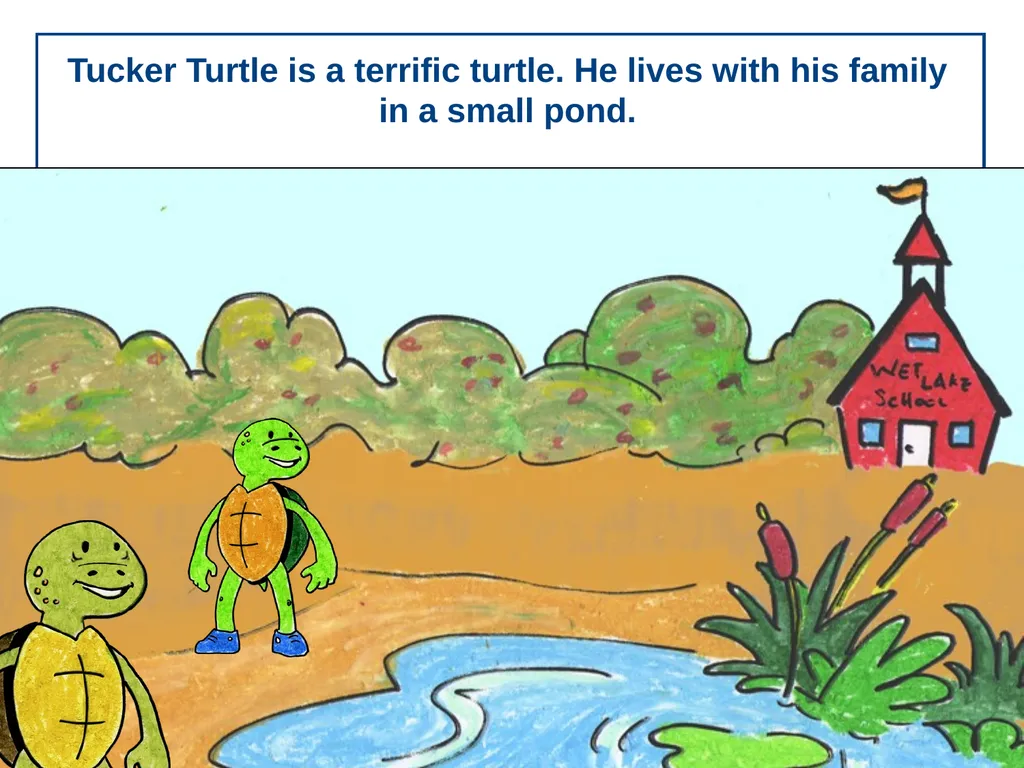
Tucker Turtle is a terrific turtle. He lives with his family in a small pond.<br>
03
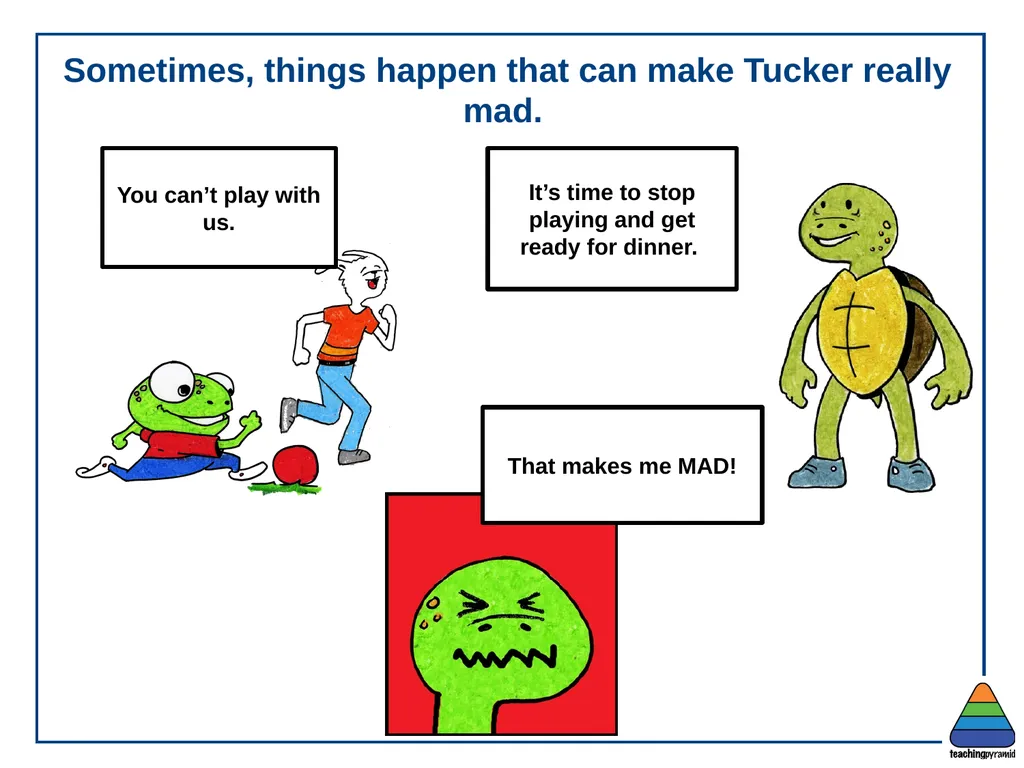
Sometimes, things happen that can make Tucker really mad. You can’t play with us. It’s time to stop playing and get ready for dinner. That makes me MAD!<br>
04
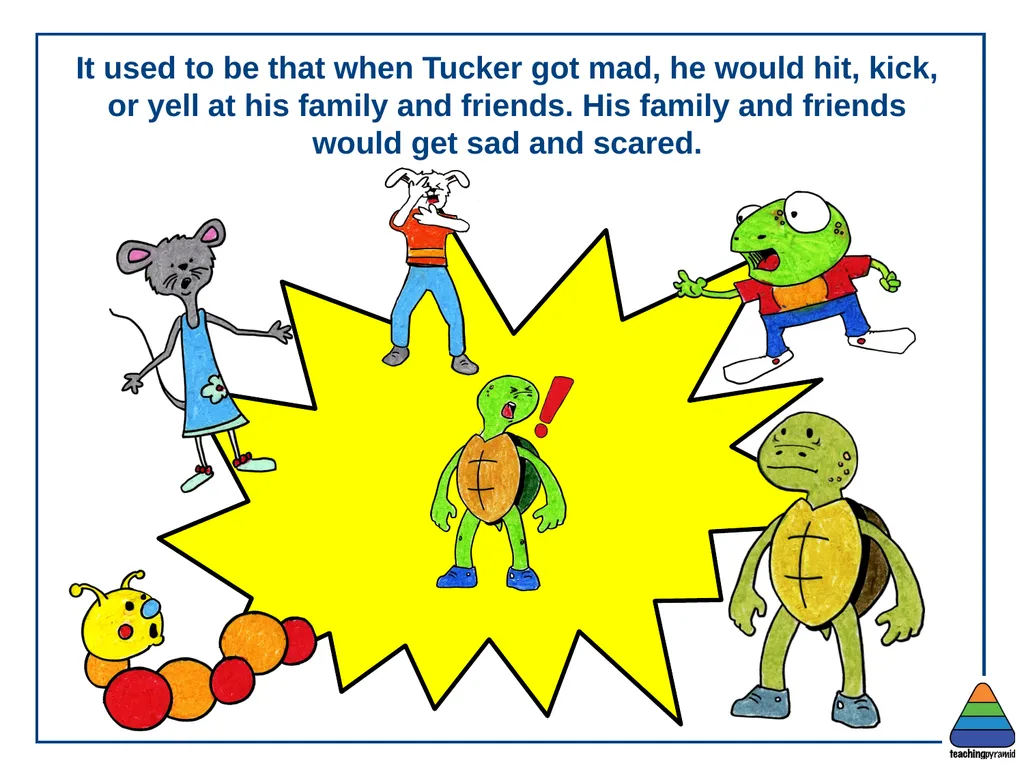
It used to be that when Tucker got mad, he would hit, kick, or yell at his family and friends. His family and friends would get sad and scared.<br>
05
Tucker now knows a new way to stay calm when he gets mad.<br>
06
Tucker now knows a new way to “think like a turtle” when something happens to make him mad. Step 1<br>
07
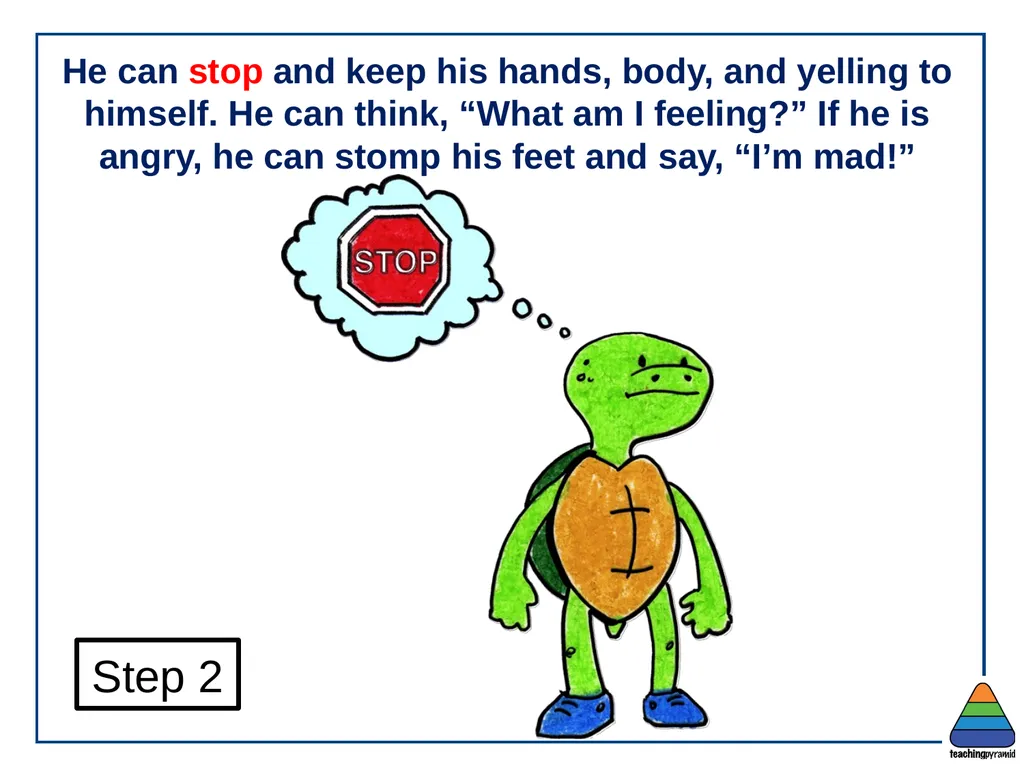
He can stop and keep his hands, body, and yelling to himself. He can think, “What am I feeling?” If he is angry, he can stomp his feet and say, “I’m mad!” Step 2<br>
08
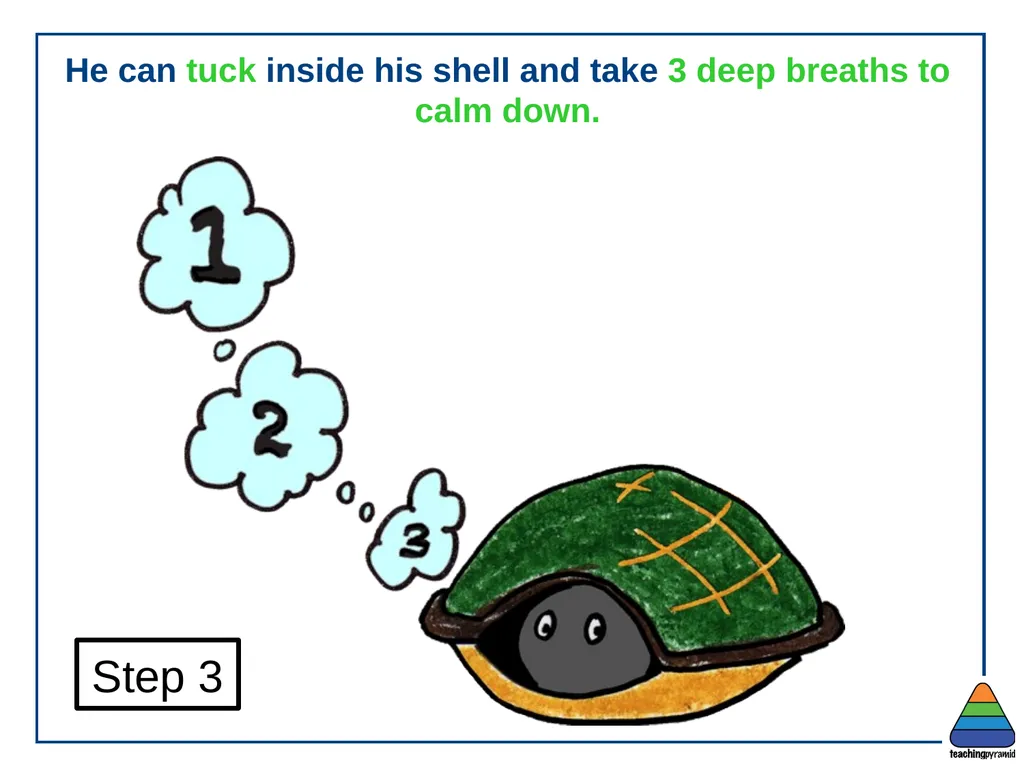
He can tuck inside his shell and take 3 deep breaths to calm down. Step 3<br>
09
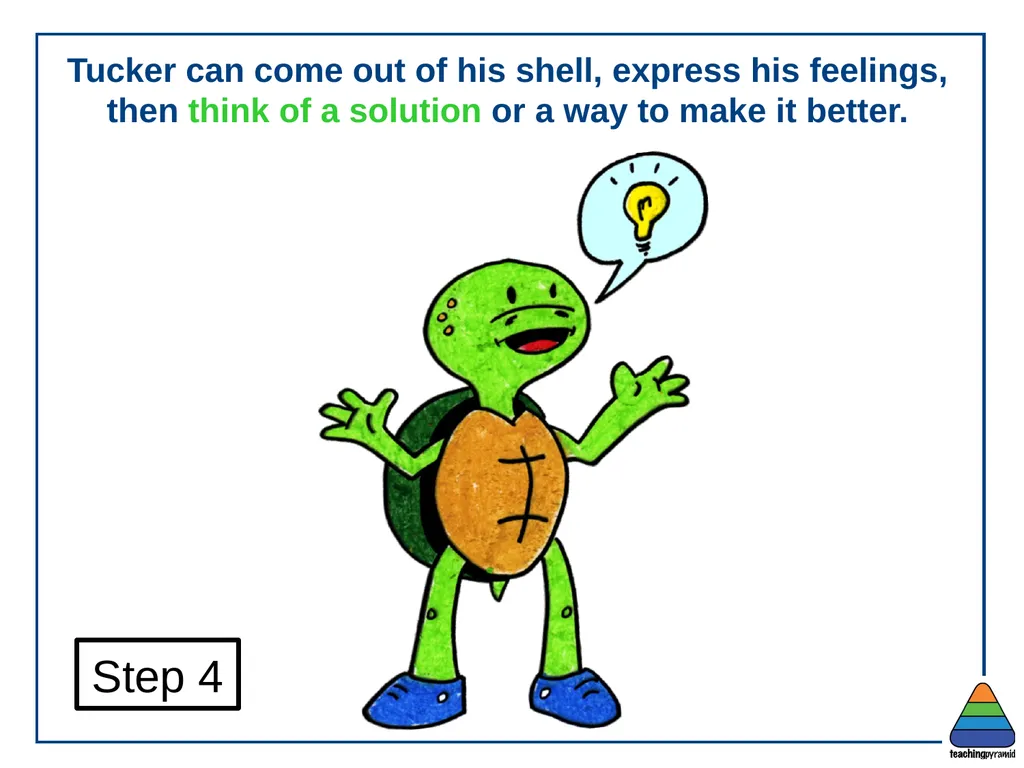
Tucker can come out of his shell, express his feelings, then think of a solution or a way to make it better. Step 4<br>
10
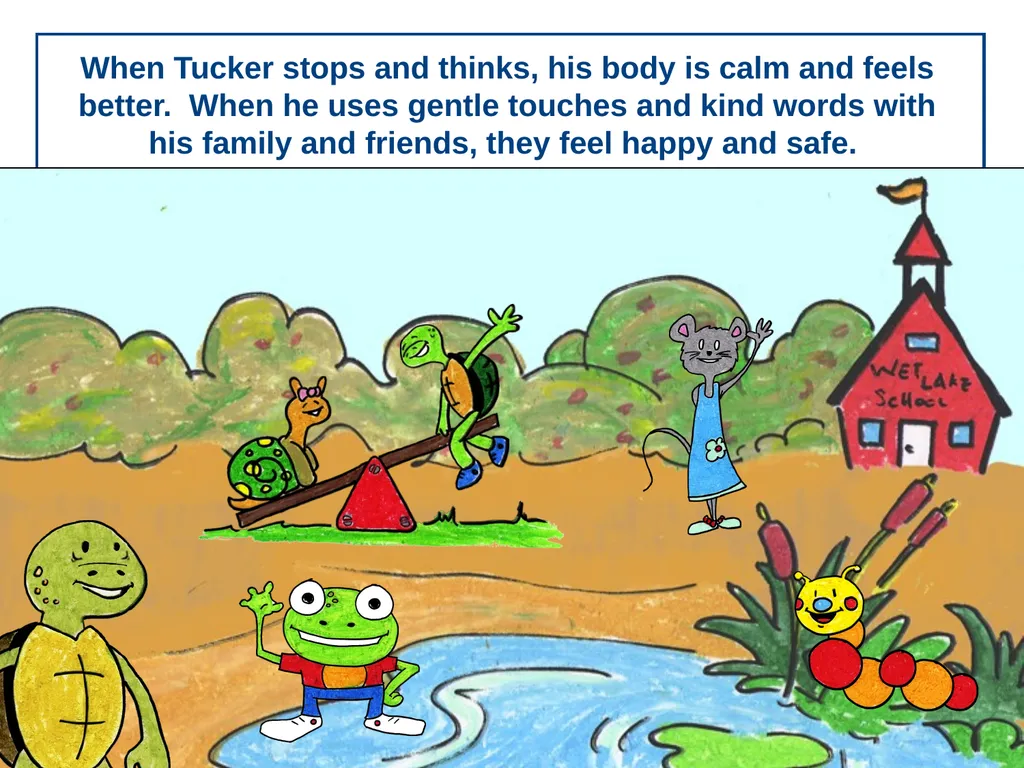
When Tucker stops and thinks, his body is calm and feels better. When he uses gentle touches and kind words with his family and friends, they feel happy and safe.<br>
11
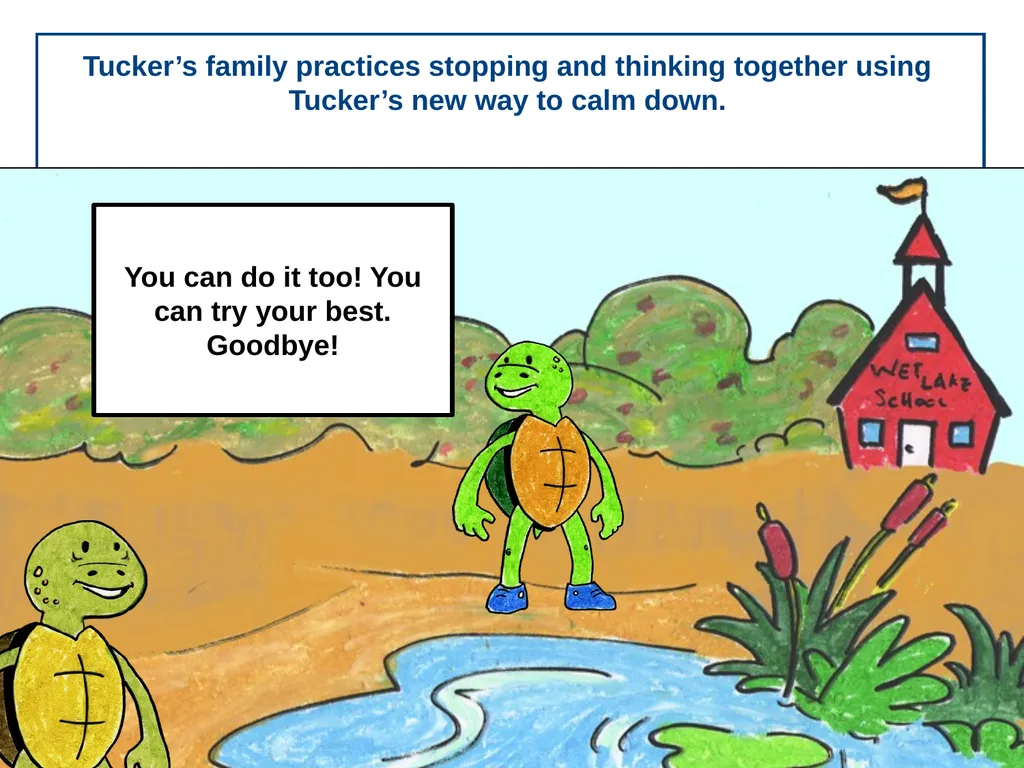
Tucker’s family practices stopping and thinking together using Tucker’s new way to calm down. You can do it too! You can try your best. Goodbye!<br>
12
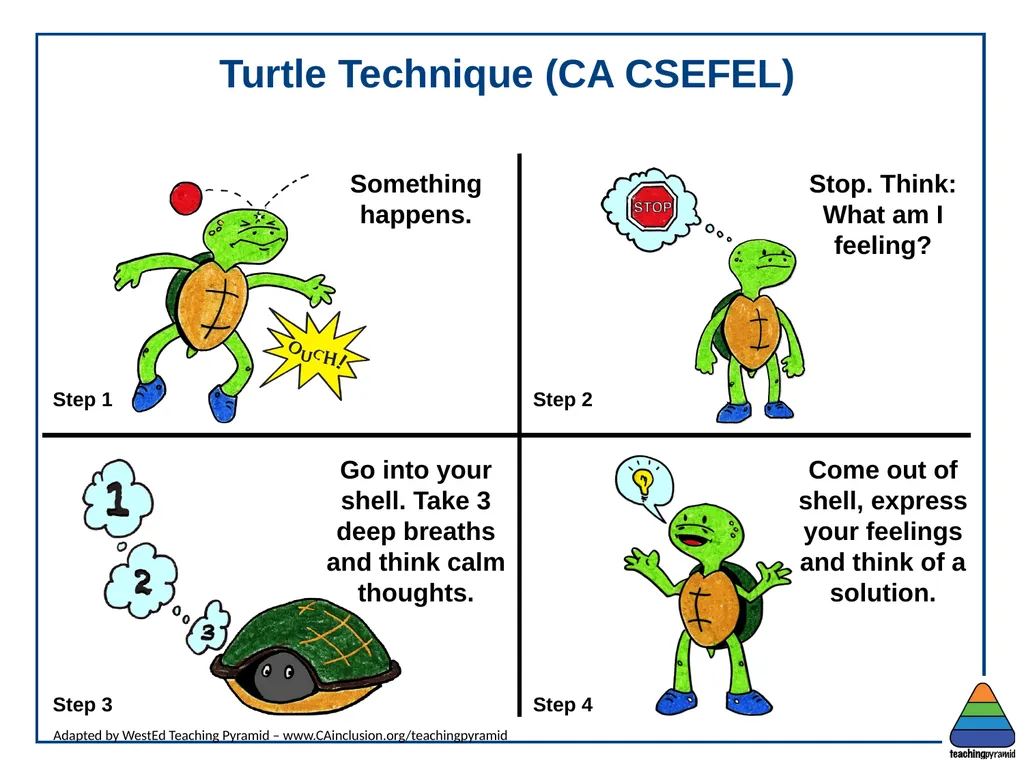
Turtle Technique (CA CSEFEL) Step 1 Something happens. Step 2 Stop. Think: What am I feeling? Step 3 Go into your shell. Take 3 deep breaths and think calm thoughts. Step 4 Come out of shell, express your feelings and think of a solution. Adapted by WestEd Teaching Pyramid – www.CAinclusion.org/teachingpyramid<br>
13
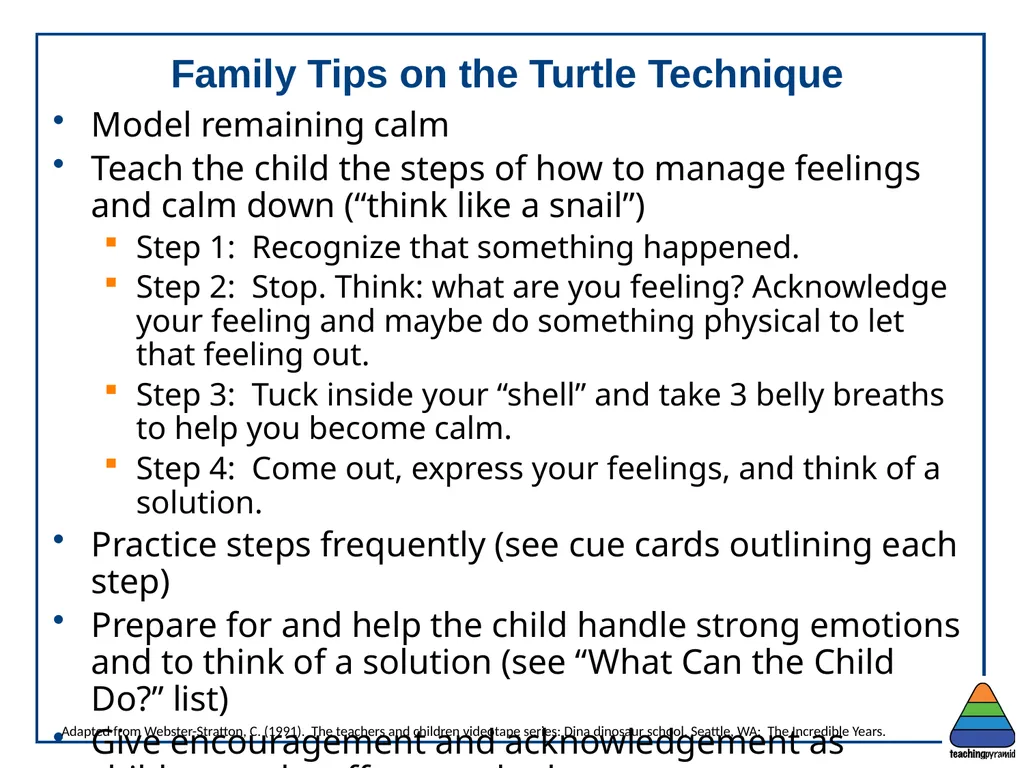
Family Tips on the Turtle Technique Model remaining calm
Teach the child the steps of how to manage feelings and calm down (“think like a snail”)
Step 1: Recognize that something happened.
Step 2: Stop. Think: what are you feeling? Acknowledge your feeling and maybe do something physical to let that feeling out.
Step 3: Tuck inside your “shell” and take 3 belly breaths to help you become calm.
Step 4: Come out, express your feelings, and think of a solution.
Practice steps frequently (see cue cards outlining each step)
Prepare for and help the child handle strong emotions and to think of a solution (see “What Can the Child Do?” list)
Give encouragement and acknowledgement as children make efforts to do the steps
Families – teach the “Turtle Technique” Adapted from Webster-Stratton, C. (1991). The teachers and children videotape series: Dina dinosaur school. Seattle, WA: The Incredible Years.<br>
14
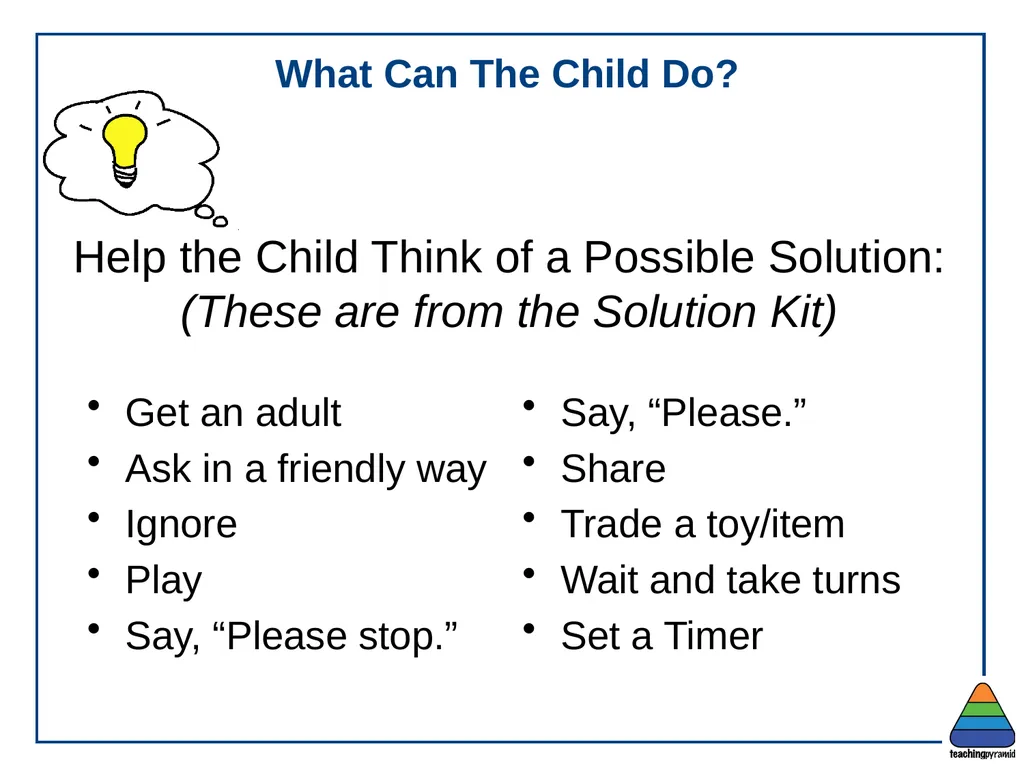
What Can The Child Do? Help the Child Think of a Possible Solution: (These are from the Solution Kit) Get an adult
Ask in a friendly way
Ignore
Play
Say, “Please stop.” Say, “Please.”
Share
Trade a toy/item
Wait and take turns
Set a Timer<br>