"UNIT-3 ‘Zoonotic disease’ (Credit Hours-3+1)" is the property of its rightful owner. Permission is granted to
download and print the materials on this website for personal, non-commercial use only, and to display it
on your personal computer provided you do not modify the materials and that you retain all copyright
notices contained in the materials. By downloading content from our website, you accept the terms of this
agreement.
Introduction Prions diseases/ TSE are a family of:
Rare, Neurological disorder
Effects both humans and Animals
Characterized by:
long incubation periods
Neuronal loss
Failure to induce inflammatory response
Prion diseases are usually rapidly progressive and always fatal<br>
04
Causative agent Causative agents of TSEs are believed to be “PRIONs”
Termed: Prusiner (1982)
Dia. 25-50 nm in size
Able to induce abnormal folding of specific normal cellular proteins called prion proteins
Prion proteins: most abundantly in the brain
Abnormal folding leads to brain damage
The prions is resistant to physical (high temp. UV rays) & chemical agents
It is non-immunogenic & highly stable molecule
It produces slow and progressive infection<br>
05
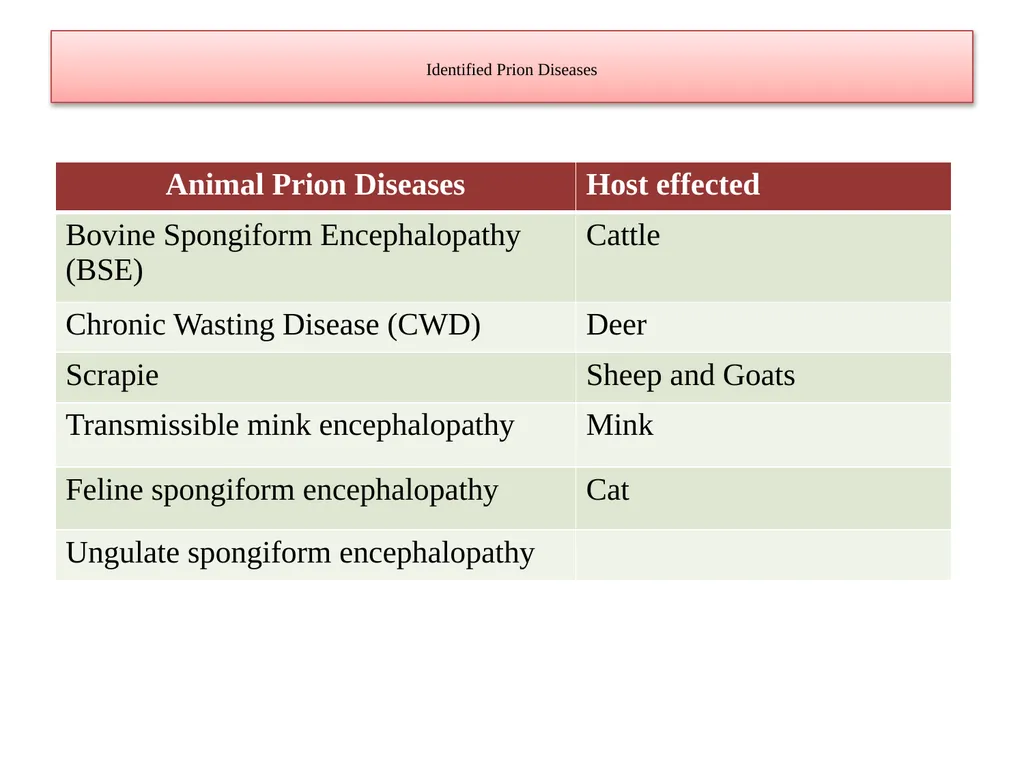
Identified Prion Diseases<br>
06
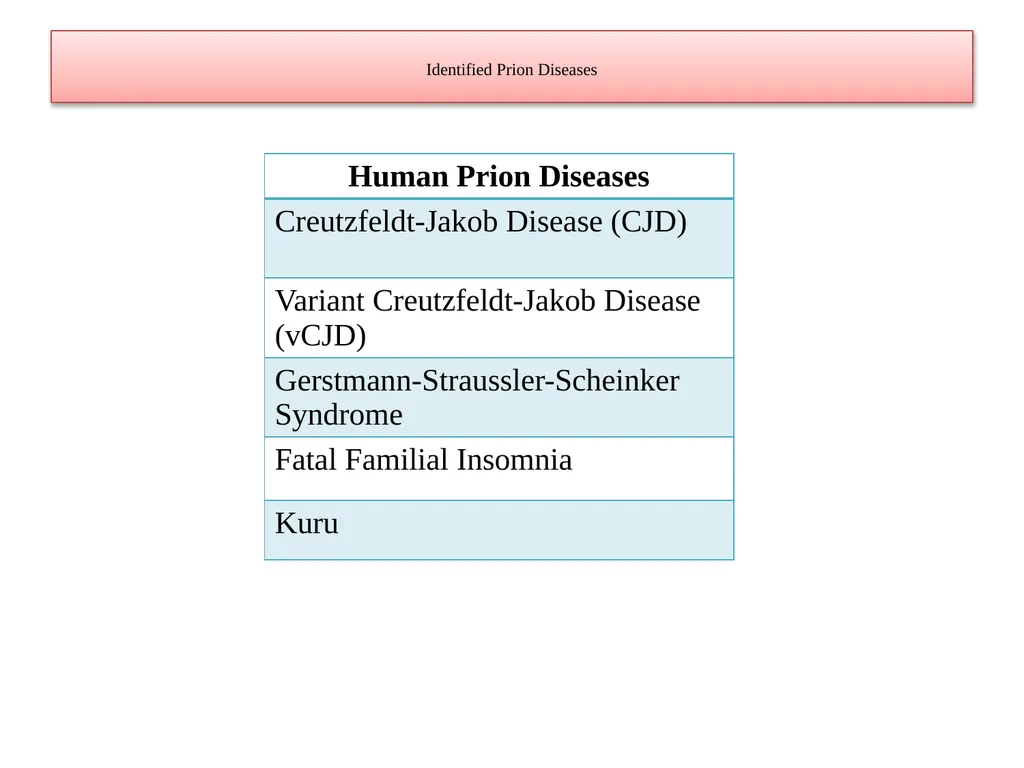
Identified Prion Diseases<br>
07
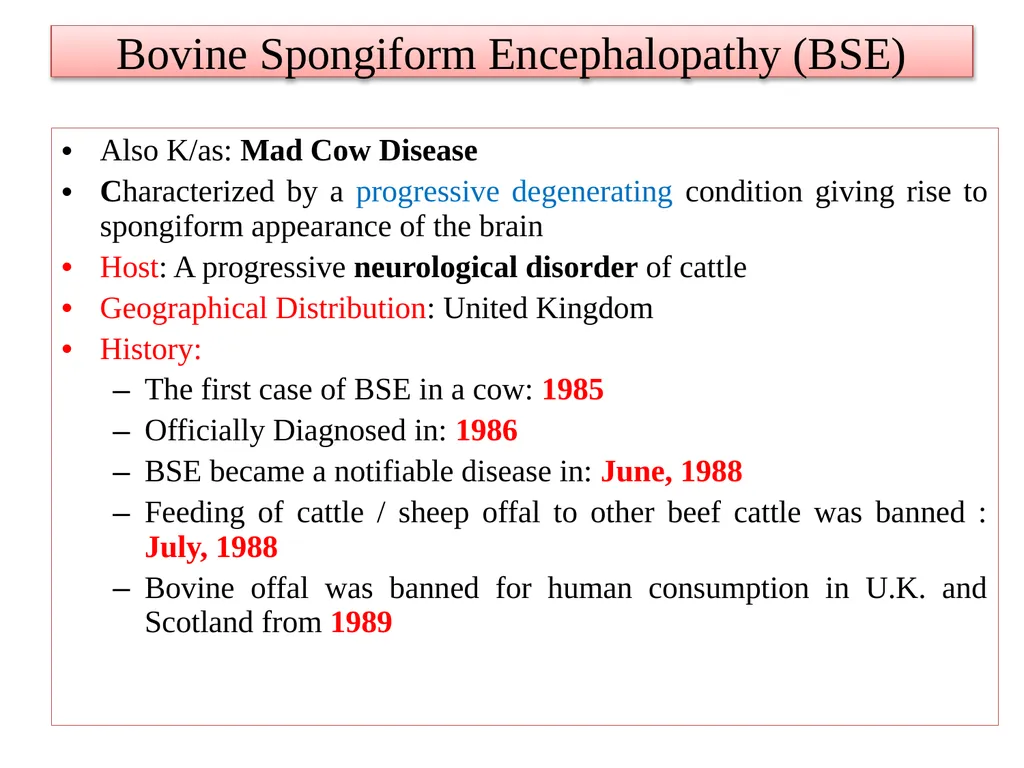
Also K/as: Mad Cow Disease
Characterized by a progressive degenerating condition giving rise to spongiform appearance of the brain
Host: A progressive neurological disorder of cattle
Geographical Distribution: United Kingdom
History:
The first case of BSE in a cow: 1985
Officially Diagnosed in: 1986
BSE became a notifiable disease in: June, 1988
Feeding of cattle / sheep offal to other beef cattle was banned : July, 1988
Bovine offal was banned for human consumption in U.K. and Scotland from 1989 Bovine Spongiform Encephalopathy (BSE)<br>
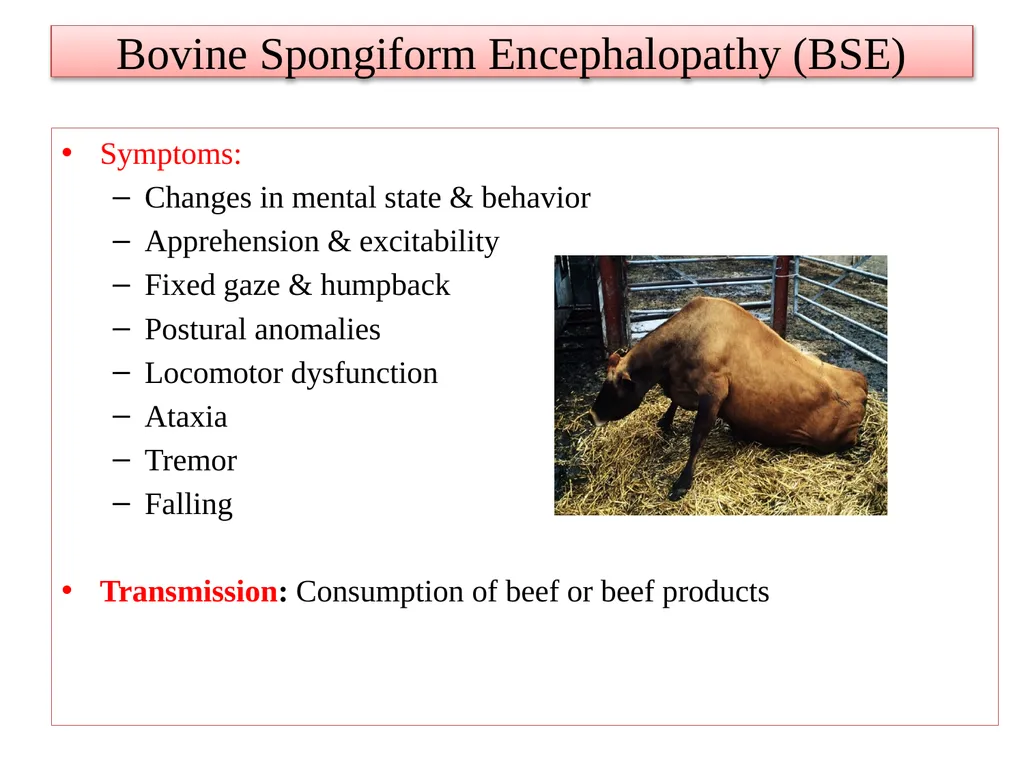
Transmission: Consumption of beef or beef products Bovine Spongiform Encephalopathy (BSE)<br>
09
Diagnosis:
Clinical sign &symptoms
Based on histopathology
Prevention & Control:
Thoroughly cooked beef & beef products before consumption
Issue of animal health certificate from the government veterinary authorities of exporting countries
BSE free certificate: the animals imported from these countries into India
Create public awareness: education about it potential health hazards
Careful handling of animals/ meat: particularly the brain or spinal cord tissues Bovine Spongiform Encephalopathy (BSE)<br>
10
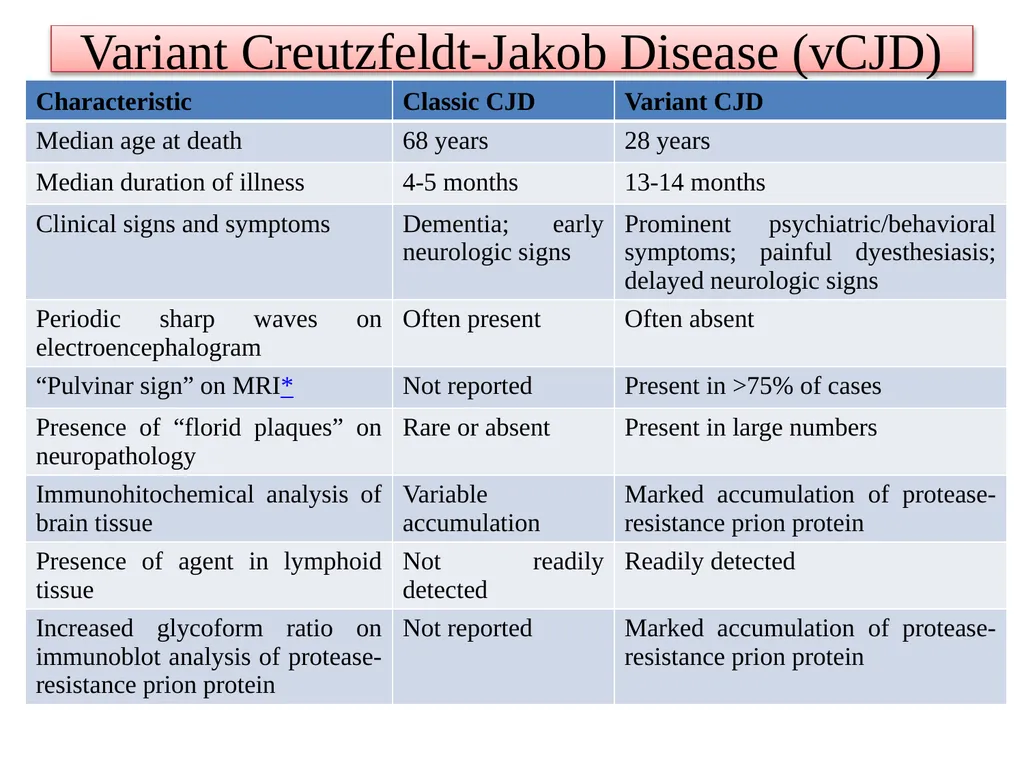
Creutzfeldt-Jakob Disease (CJD) Subacute spongiform encephalopathy
Rare brain disease: Effects one person per million population/year
Etiology: Classic CJD
Host: Human
Geographical Distribution:
World wide mainly, United States
Higher incidence in cities
Sources of infection:
Ingestion of brain & other tissue of scrapie infected sheep
Disease:
Incubation Period: Infection with this disease leads to death usually within 1 year of onset of illness<br>
11
Creutzfeldt-Jakob Disease (CJD) Symptoms:
Rapid onset of dementia,
a range of neurological symptoms
i.e. walking difficulties
Sudden jerky movements,
Sometimes,
Visual disturbances
Diagnosis:
Clinical sign
Histopathology-CNS
MRI
Treatment: Only supportive treatment
Prevention: Care during the handling of infected material & disinfection
CJD is not transmissible from person-to-person by normal contact<br>