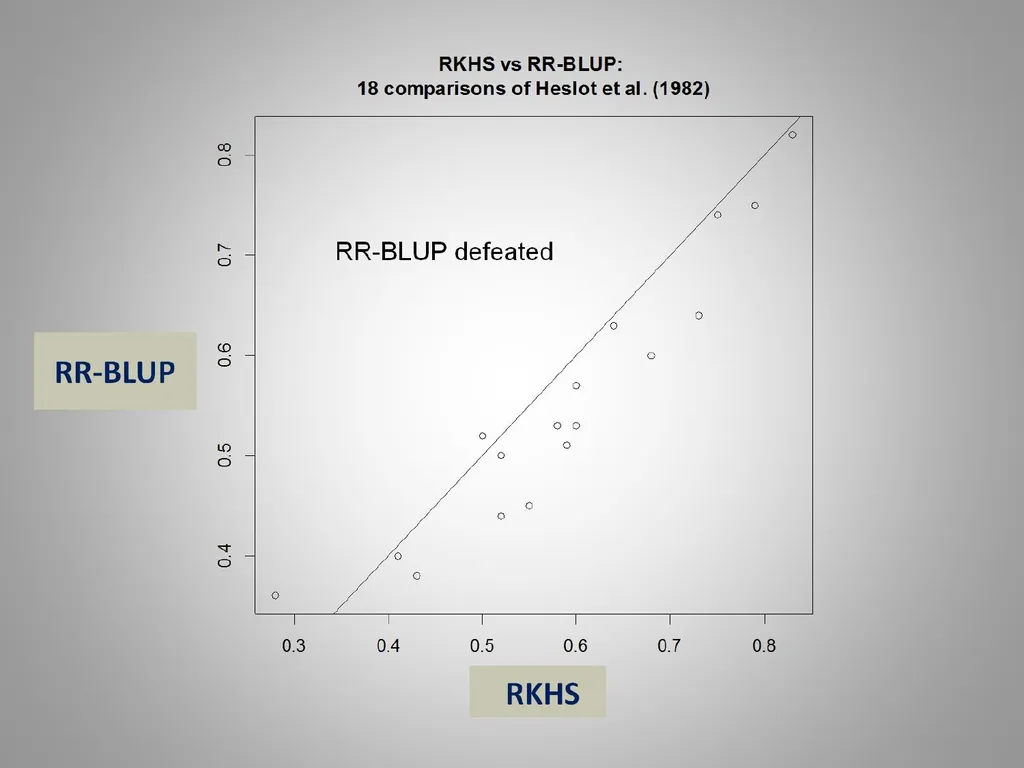
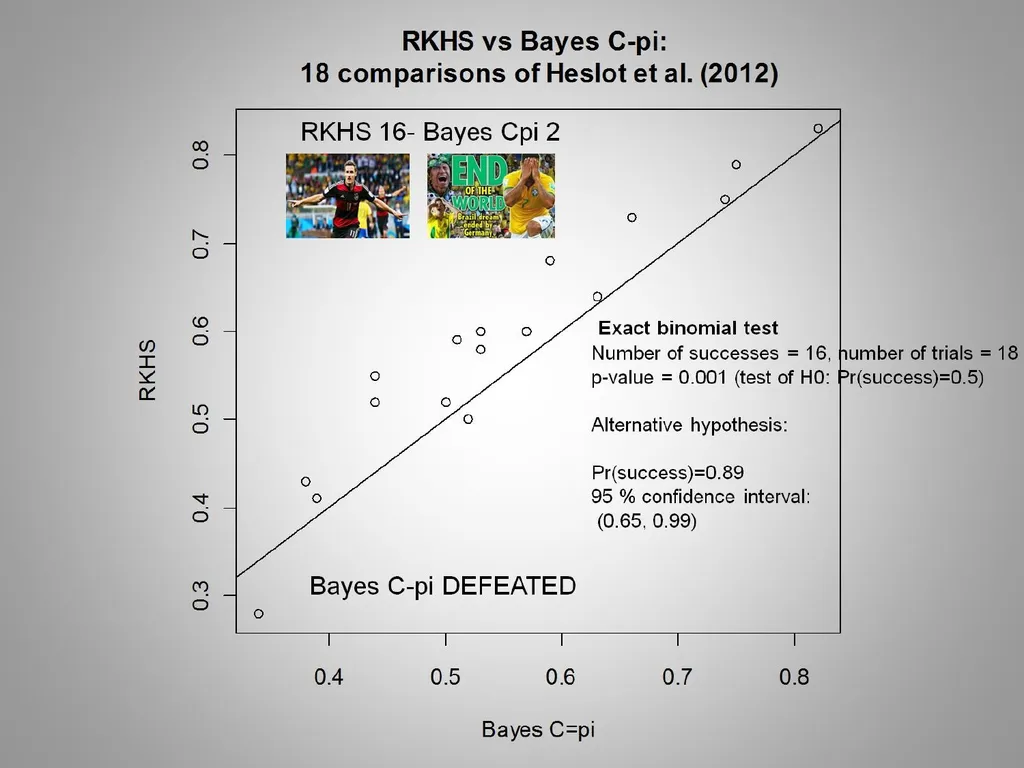
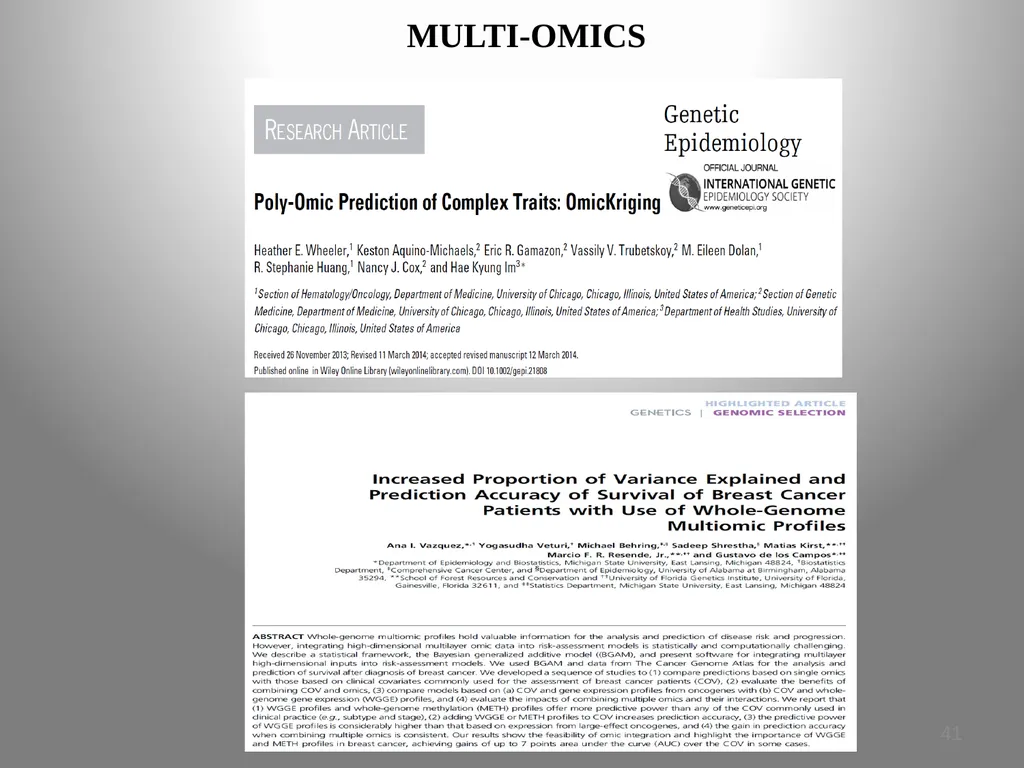
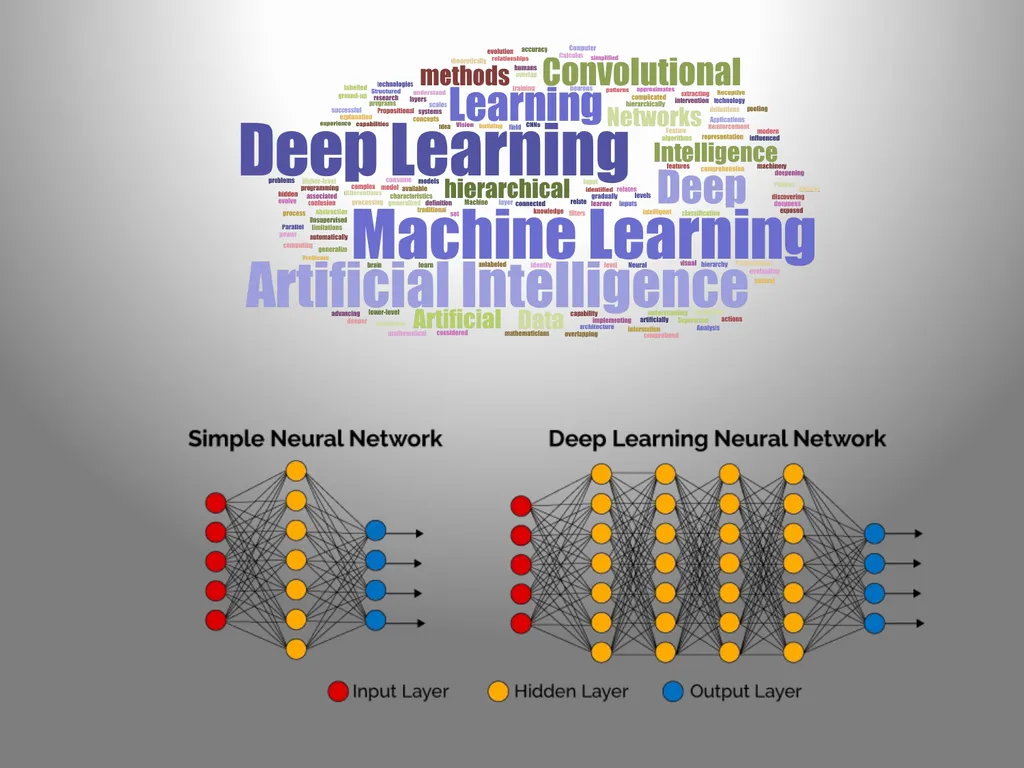
04
Proposition 2���It must be true that epistasis�is pervasive<br>
05
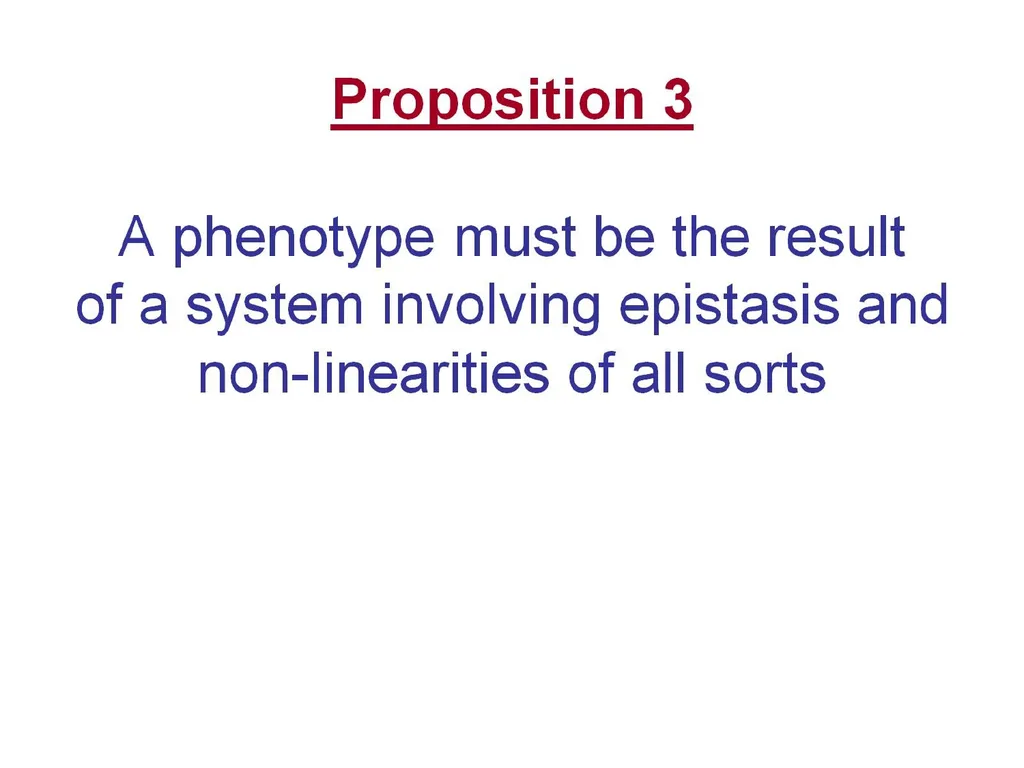
Proposition 3��A phenotype must be the result�of a system involving epistasis and non-linearities of all sorts<br>
06
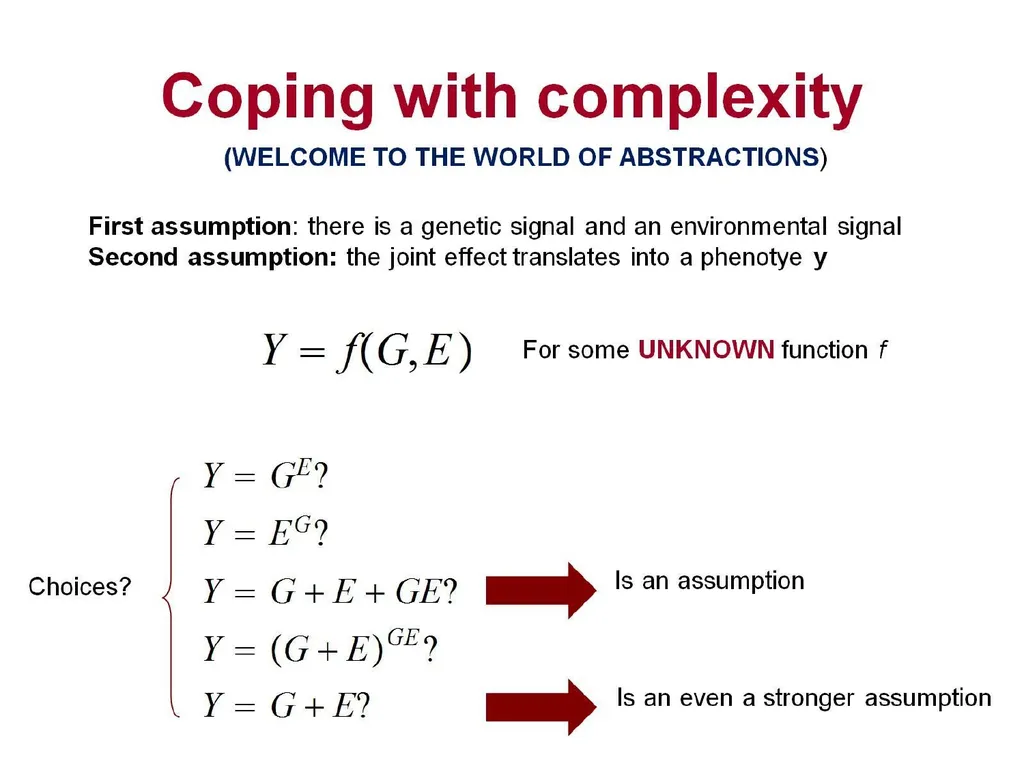
Coping with complexity<br>
07
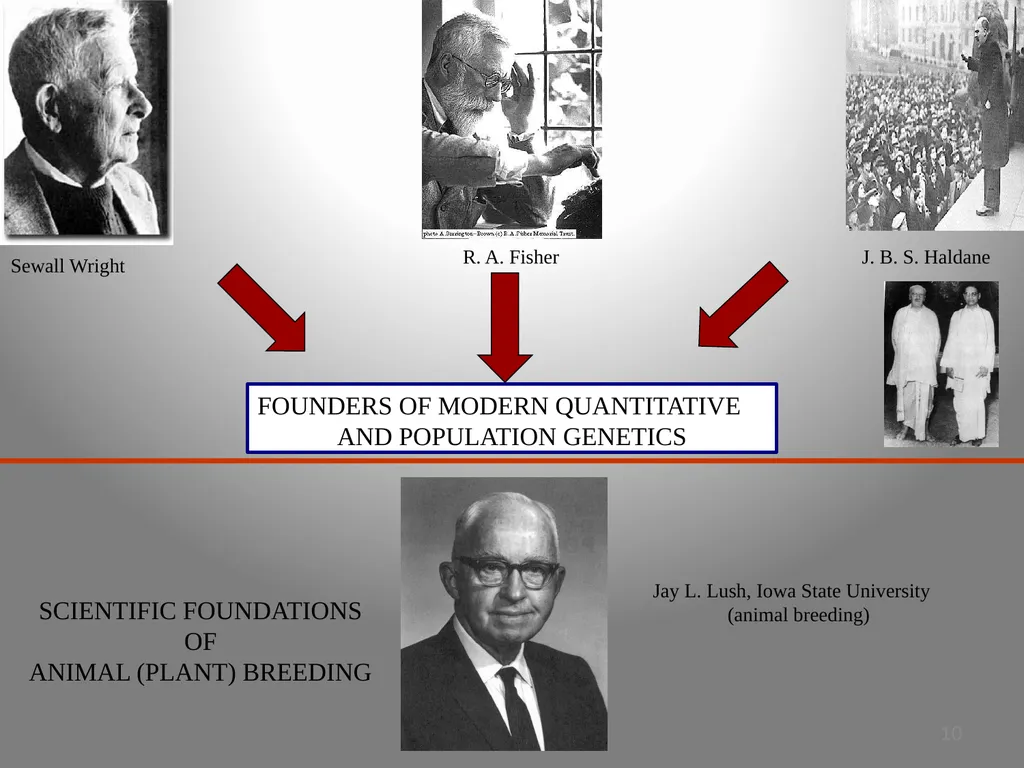
Sewall Wright R. A. Fisher J. B. S. Haldane Jay L. Lush, Iowa State University
(animal breeding) SCIENTIFIC FOUNDATIONS OF
ANIMAL (PLANT) BREEDING FOUNDERS OF MODERN QUANTITATIVE
AND POPULATION GENETICS 10<br>
08
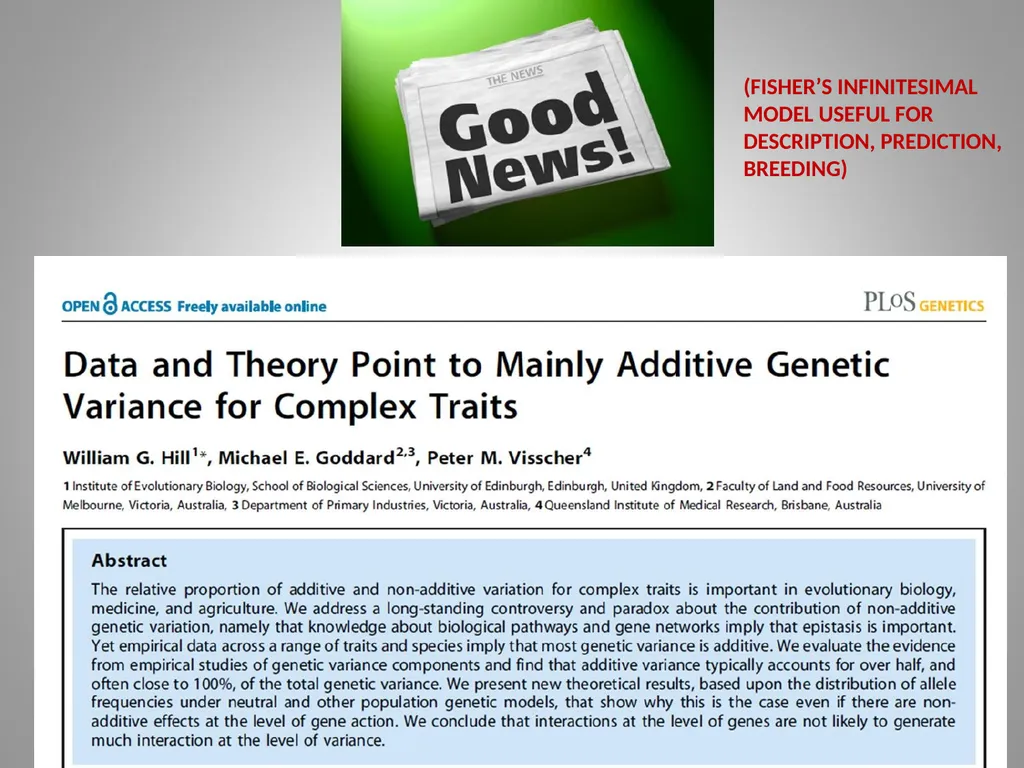
(FISHER’S INFINITESIMAL
MODEL USEFUL FOR
DESCRIPTION, PREDICTION, BREEDING)<br>
09
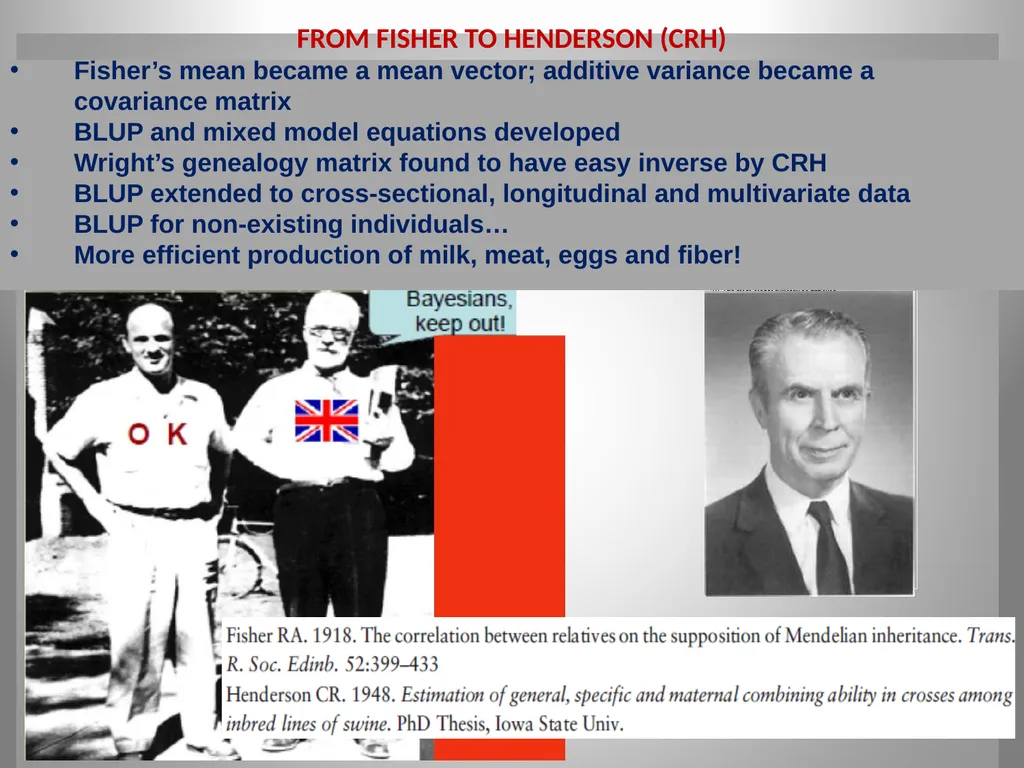
ABSTRACTION PARADIGM 2 FROM FISHER TO HENDERSON (CRH)
Fisher’s mean became a mean vector; additive variance became a covariance matrix
BLUP and mixed model equations developed
Wright’s genealogy matrix found to have easy inverse by CRH
BLUP extended to cross-sectional, longitudinal and multivariate data
BLUP for non-existing individuals…
More efficient production of milk, meat, eggs and fiber!<br>
10
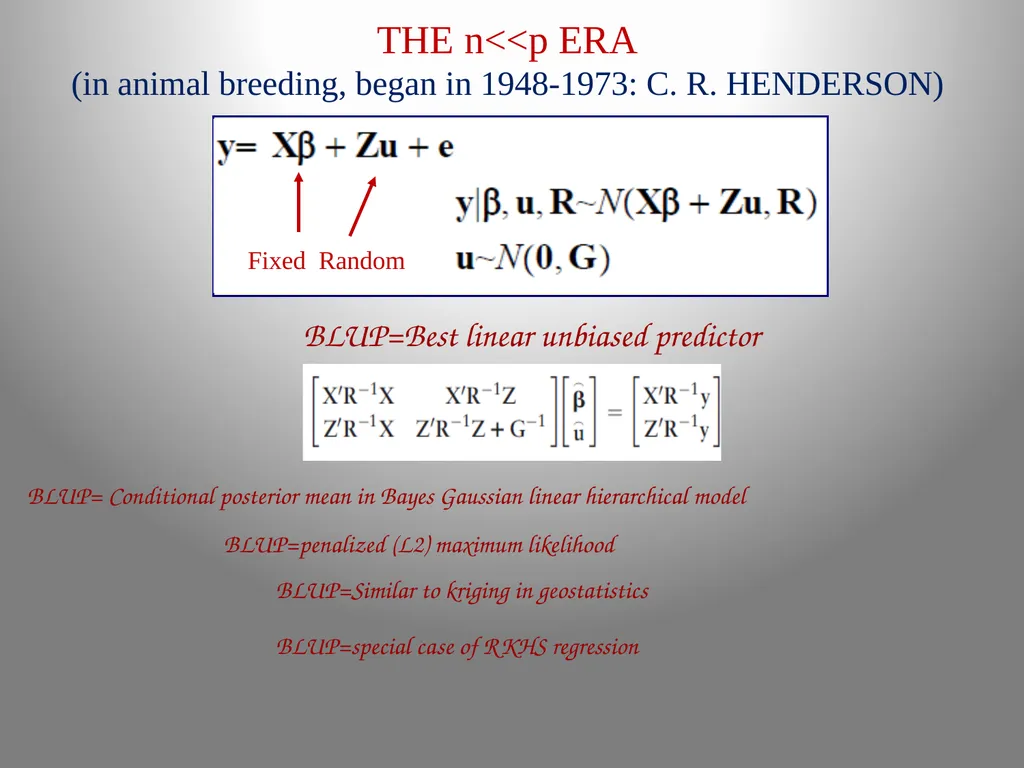
BLUP=Exactly like the Holy Roman Empire (Gelman) Fixed Random THE n<<p ERA�(in animal breeding, began in 1948-1973: C. R. HENDERSON) BLUP=Best linear unbiased predictor BLUP= Conditional posterior mean in Bayes Gaussian linear hierarchical model BLUP=Similar to kriging in geostatistics BLUP=penalized (L2) maximum likelihood BLUP=special case of RKHS regression<br>
11
WHY BLUP? FLEXIBLE
AMENDABLE
WELL UNDERSTOOD
FEASIBLE (250 million equations)
UNPRETENTIOUS
OUTPUTS EASY TO EXPLAIN “UNBIASEDNESS” MISUNDERSTOOD AND OVERSOLD IN ANIMAL BREEDING<br>
12
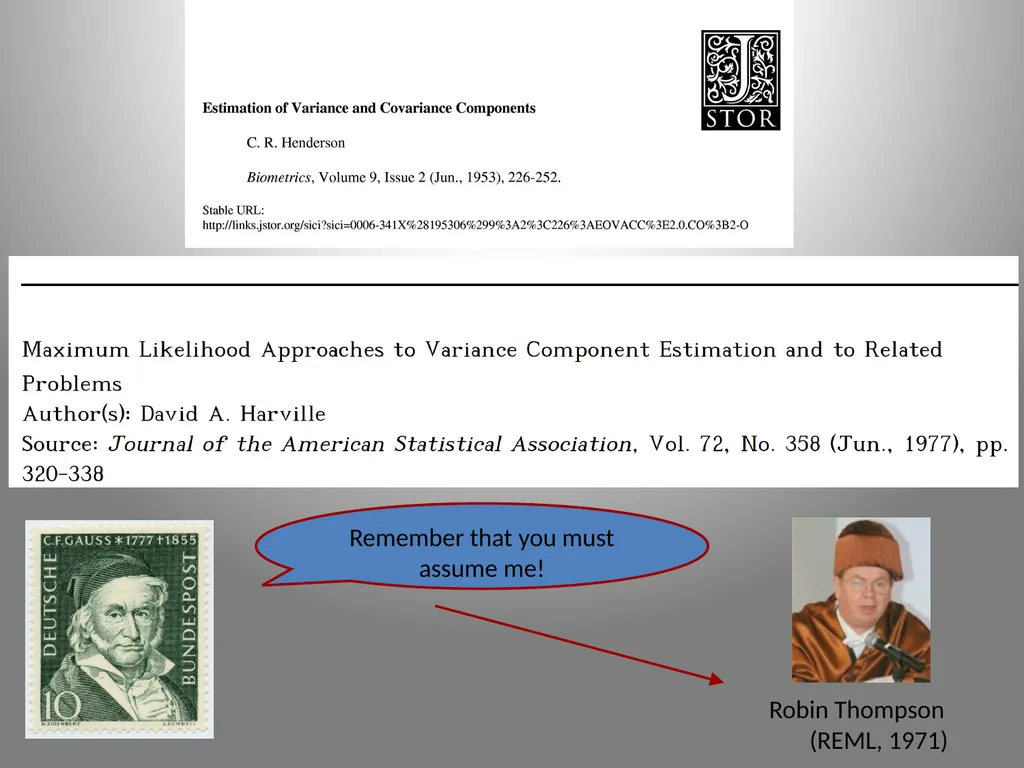
Robin Thompson
(REML, 1971) Remember that you must assume me!<br>
13
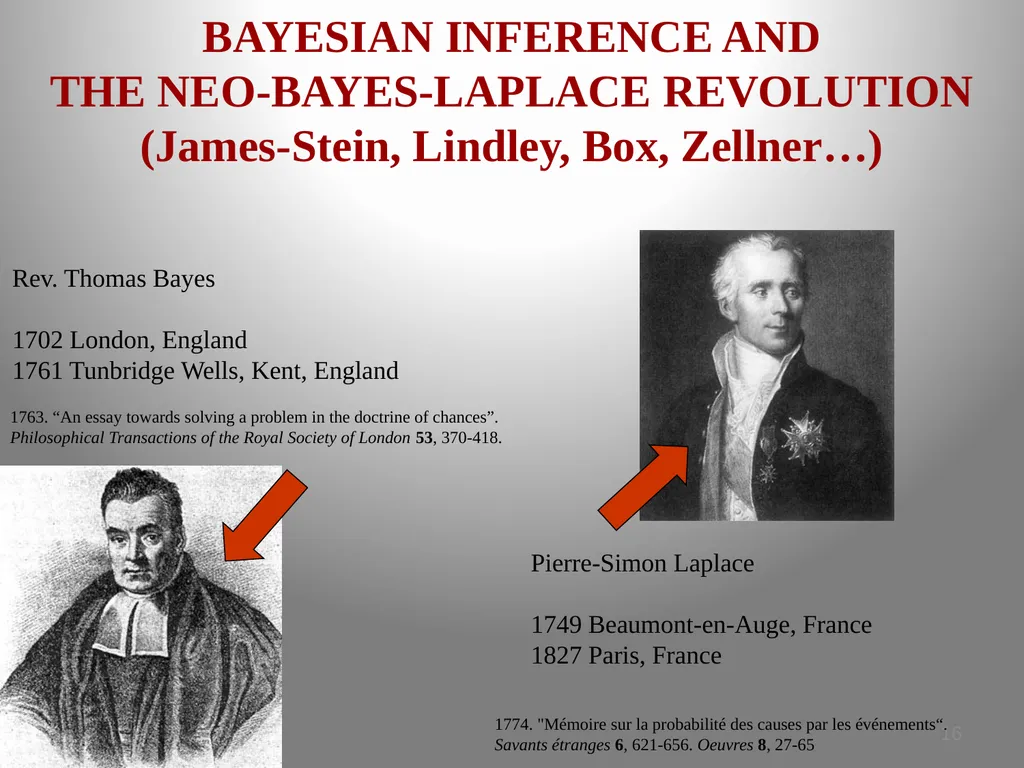
16 BAYESIAN INFERENCE AND�THE NEO-BAYES-LAPLACE REVOLUTION�(James-Stein, Lindley, Box, Zellner…) Rev. Thomas Bayes
1702 London, England�1761 Tunbridge Wells, Kent, England 1763. “An essay towards solving a problem in the doctrine of chances”. Philosophical Transactions of the Royal Society of London 53, 370-418. Pierre-Simon Laplace
1749 Beaumont-en-Auge, France�1827 Paris, France 1774. "Mémoire sur la probabilité des causes par les événements“. Savants étranges 6, 621-656. Oeuvres 8, 27-65<br>
14
Gianola, D., Foulley, J.L. Non-linear prediction of latent genetic liability with binary expression: an empirical Bayes approach. in: Proc. 2nd World Congr. Genet. Appl. Livest. Prod. VII. ; 1982:293–303. FROM HENDERSON TO BAYES Gianola, D., Foulley, J.L. Non-linear prediction of latent genetic liability with binary expression: an empirical Bayes approach. in: Proc. 2nd World Congr. Genet. Appl. Livest. Prod. VII. ; 1982: 293–303. GENOMIC SELECTION PRE-MCMC MCMC MCMC WITH MARKER DATA “Gibbs for pigs” (1993)<br>
15
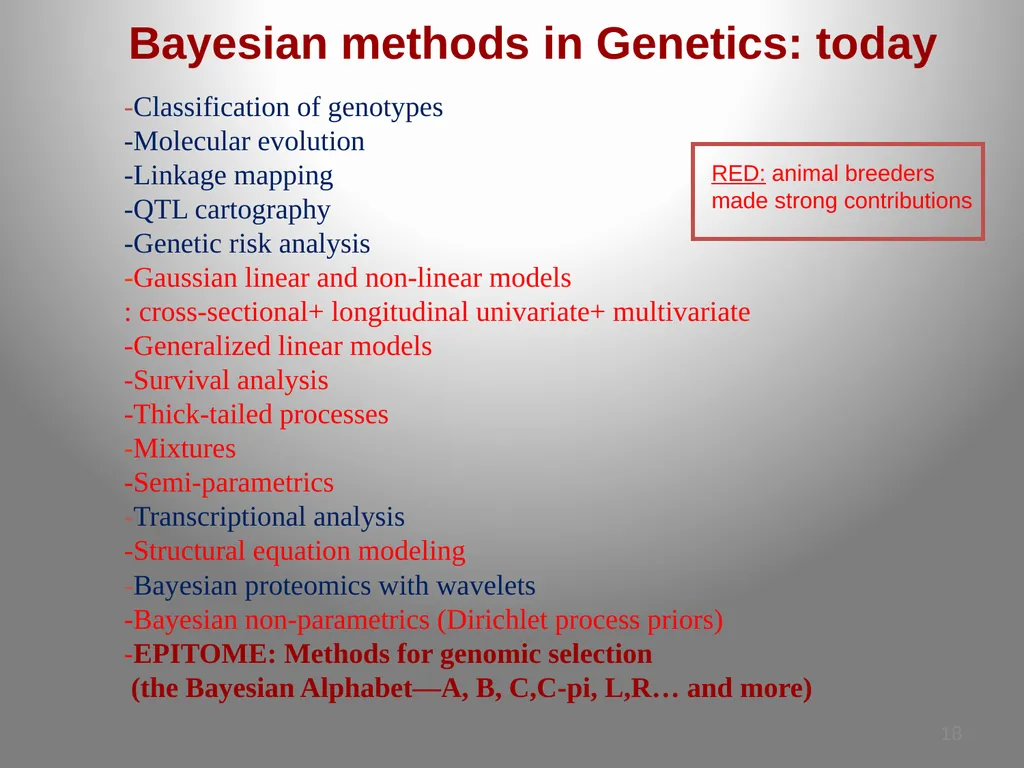
18 Bayesian methods in Genetics: today -Classification of genotypes
-Molecular evolution
-Linkage mapping
-QTL cartography
-Genetic risk analysis
-Gaussian linear and non-linear models
: cross-sectional+ longitudinal univariate+ multivariate
-Generalized linear models
-Survival analysis
-Thick-tailed processes
-Mixtures
-Semi-parametrics
-Transcriptional analysis
-Structural equation modeling
-Bayesian proteomics with wavelets
-Bayesian non-parametrics (Dirichlet process priors)
-EPITOME: Methods for genomic selection
(the Bayesian Alphabet—A, B, C,C-pi, L,R… and more) RED: animal breeders
made strong contributions<br>
17
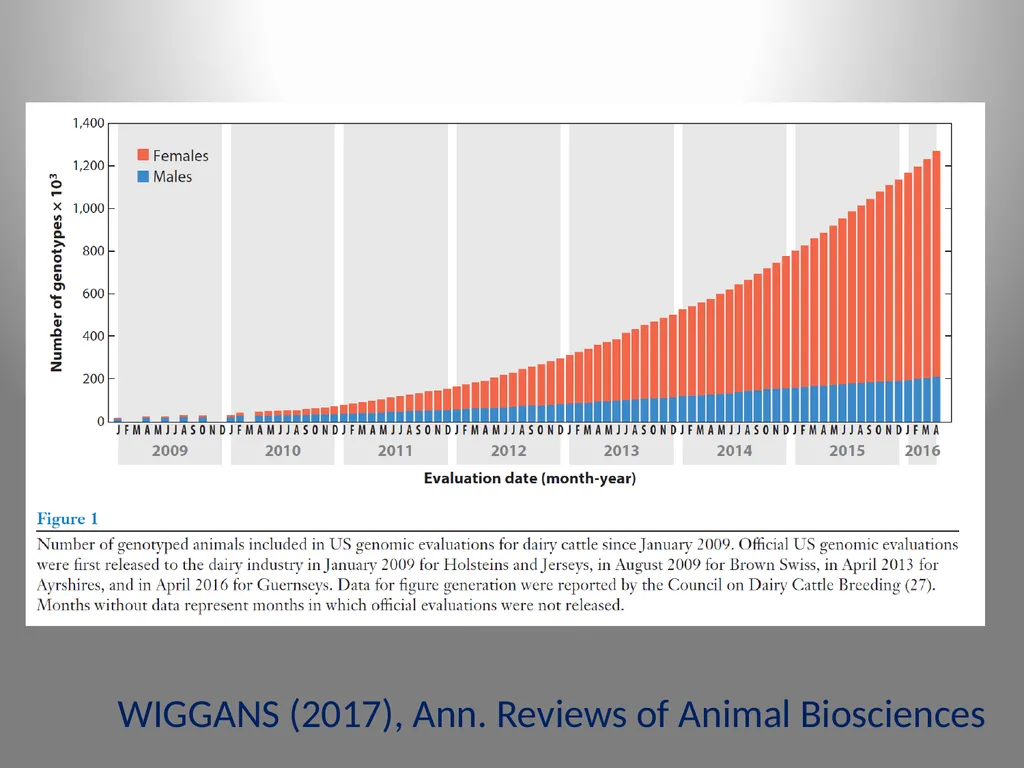
WIGGANS (2017), Ann. Reviews of Animal Biosciences<br>
18
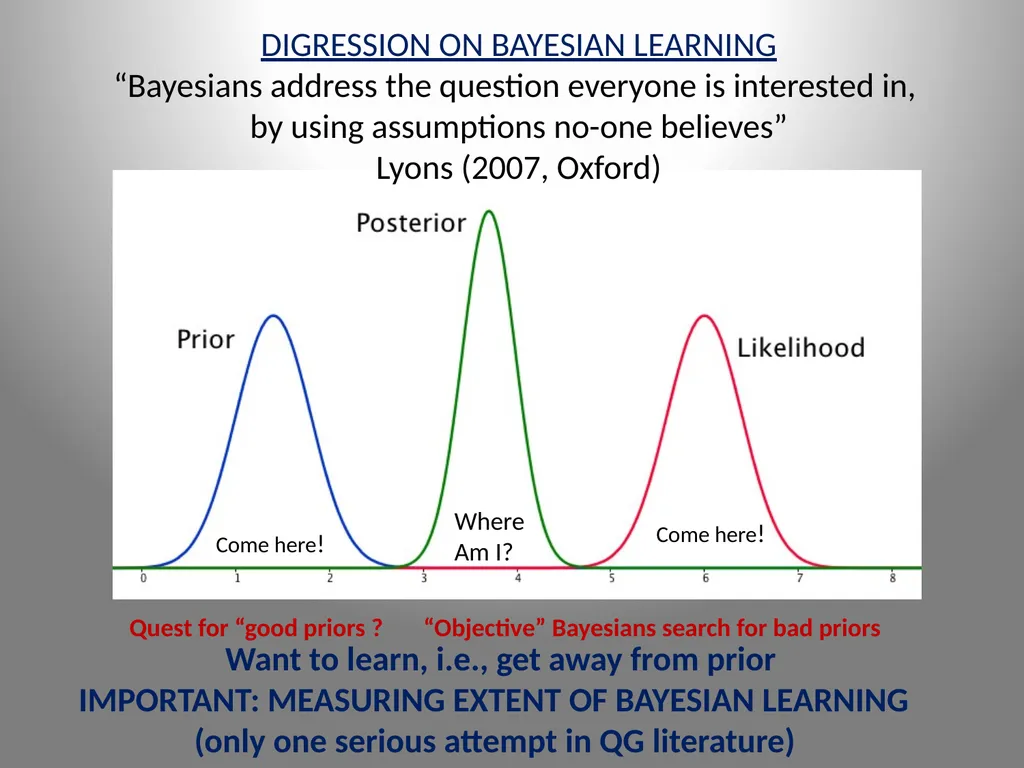
Want to learn, i.e., get away from prior
IMPORTANT: MEASURING EXTENT OF BAYESIAN LEARNING
(only one serious attempt in QG literature) Quest for “good priors ? “Objective” Bayesians search for bad priors DIGRESSION ON BAYESIAN LEARNING
“Bayesians address the question everyone is interested in,
by using assumptions no-one believes”
Lyons (2007, Oxford) Come here! Come here! Where
Am I?<br>
19
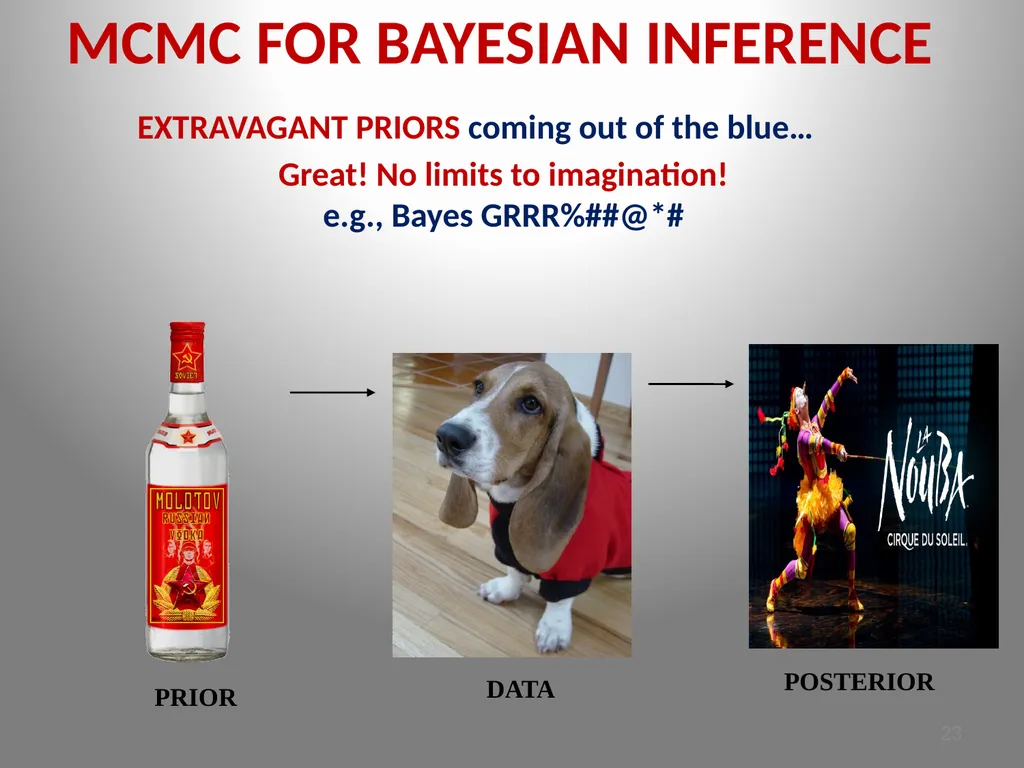
23 PRIOR DATA POSTERIOR MCMC FOR BAYESIAN INFERENCE
EXTRAVAGANT PRIORS coming out of the blue…
Great! No limits to imagination!
e.g., Bayes GRRR%##@*#<br>
20
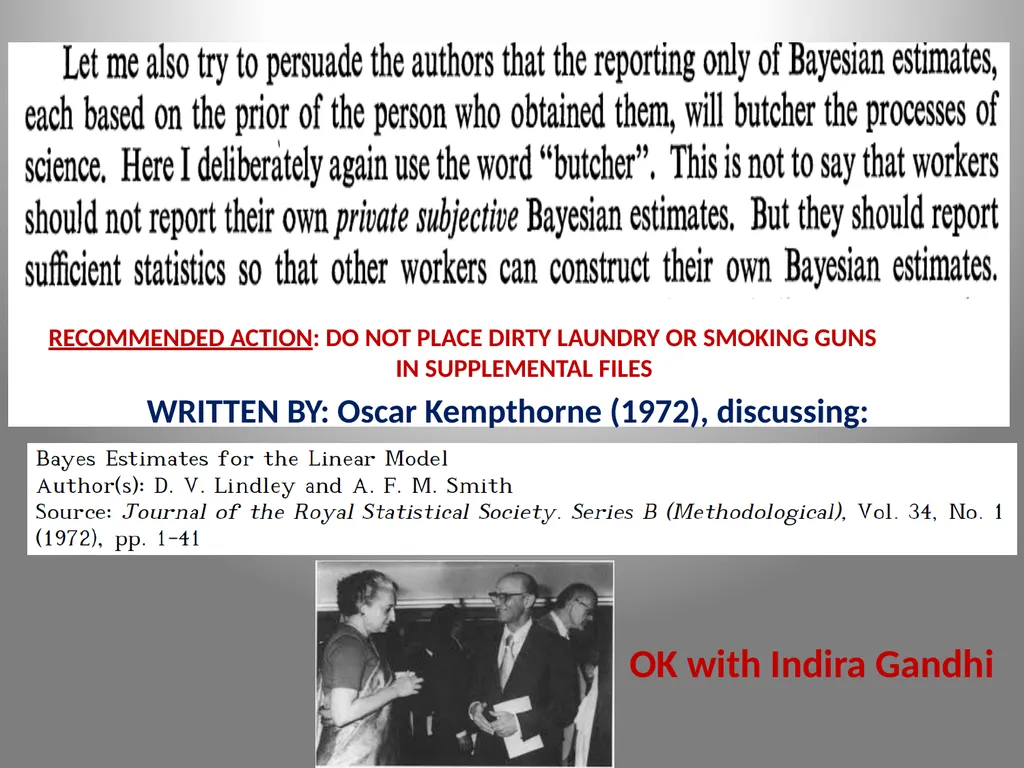
WRITTEN BY: Oscar Kempthorne (1972), discussing: OK with Indira Gandhi RECOMMENDED ACTION: DO NOT PLACE DIRTY LAUNDRY OR SMOKING GUNS
IN SUPPLEMENTAL FILES<br>
21
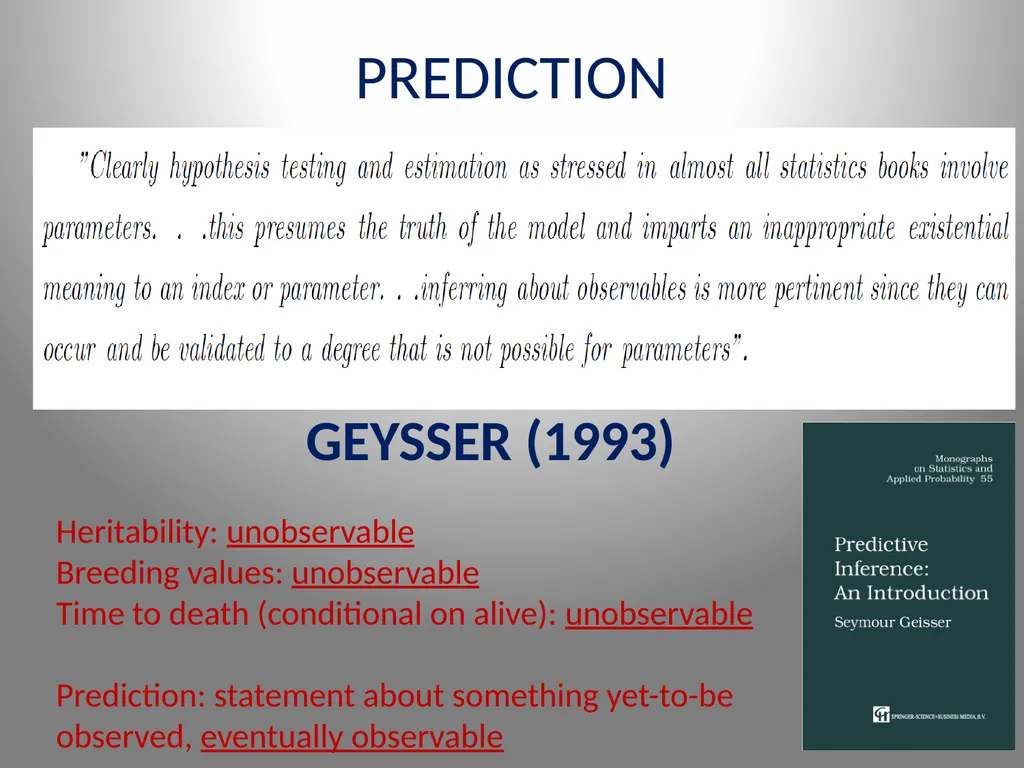
GEYSSER (1993) Heritability: unobservable
Breeding values: unobservable
Time to death (conditional on alive): unobservable
Prediction: statement about something yet-to-be observed, eventually observable PREDICTION<br>
22
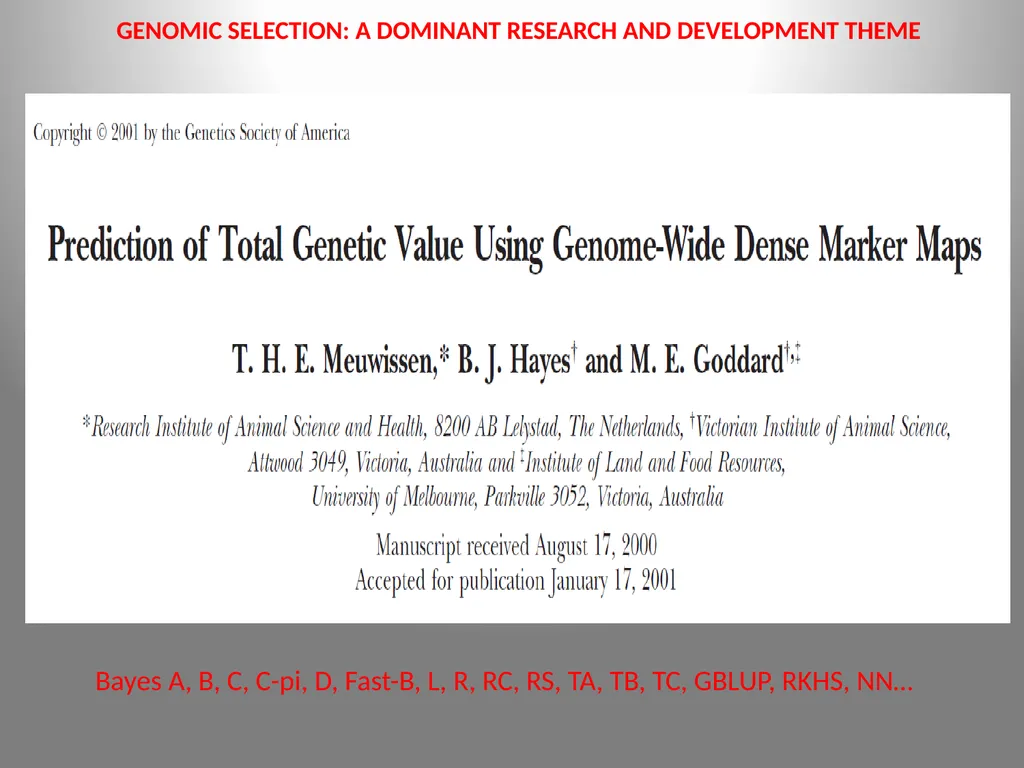
GENOMIC SELECTION: A DOMINANT RESEARCH AND DEVELOPMENT THEME Bayes A, B, C, C-pi, D, Fast-B, L, R, RC, RS, TA, TB, TC, GBLUP, RKHS, NN…<br>
23
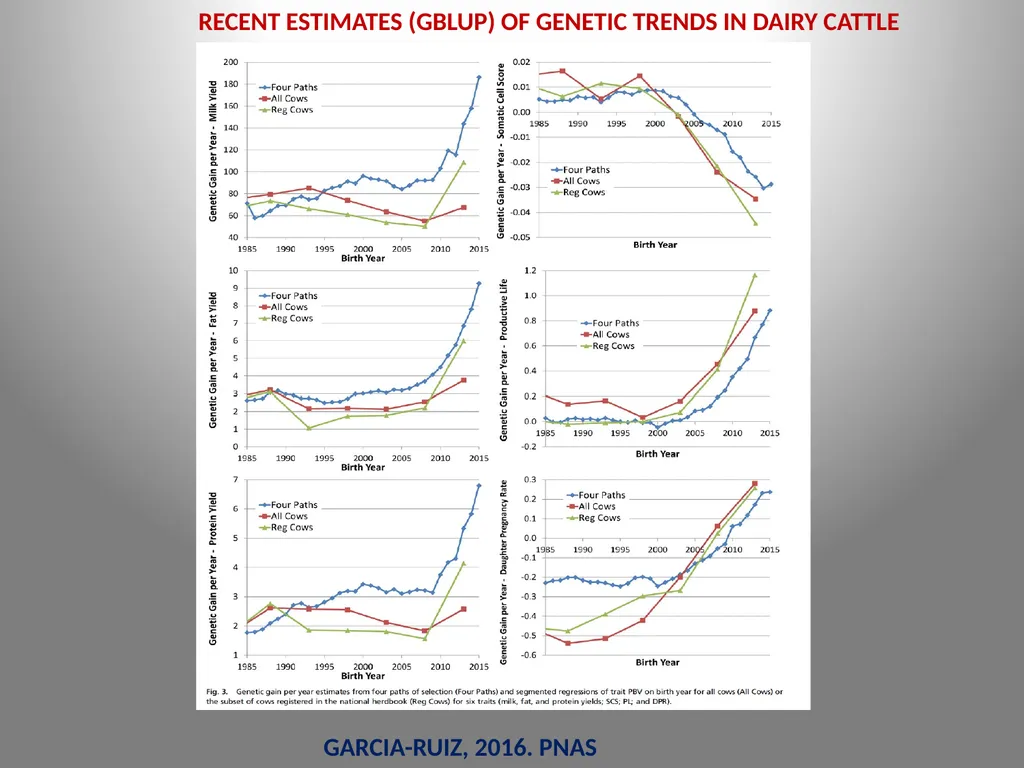
GARCIA-RUIZ, 2016. PNAS RECENT ESTIMATES (GBLUP) OF GENETIC TRENDS IN DAIRY CATTLE<br>
24
The era of machine�learning and artificial�intelligence��(largely non-parametric)<br>
26
ANIMAL+ PLANT BREEDERS WERE ALREADY DOING MACHINE LEARNING!<br>
27
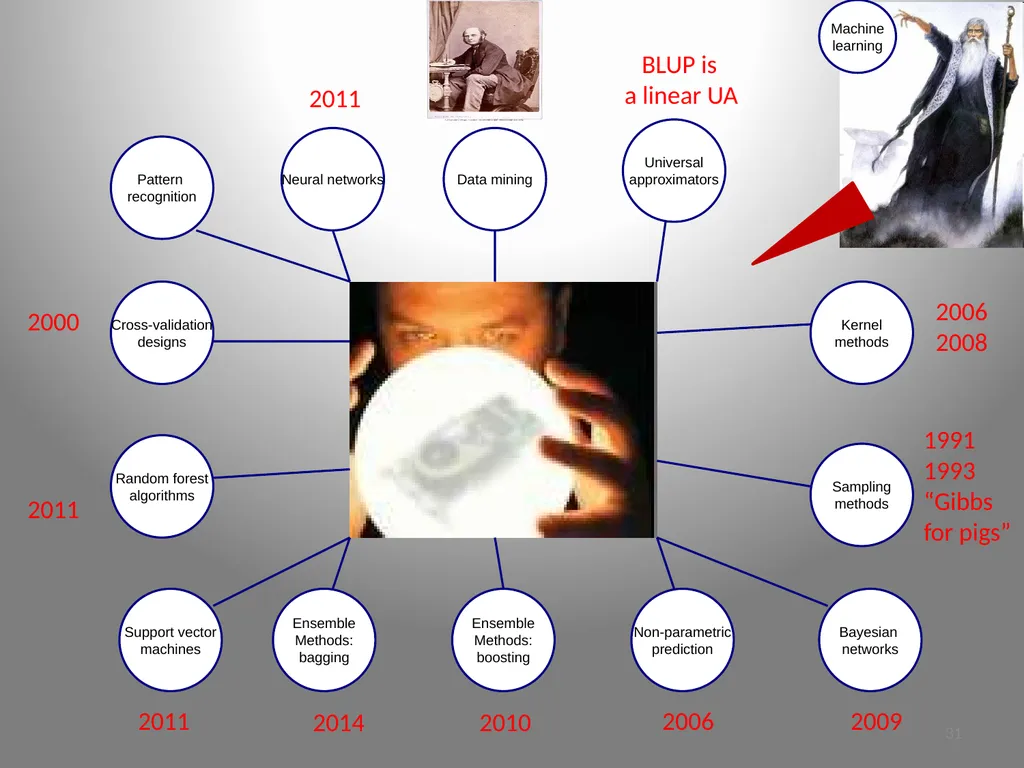
31 Pattern
recognition Data mining Neural networks Universal
approximators Machine
learning Kernel
methods Sampling
methods Cross-validation
designs Bayesian
networks Non-parametric
prediction Ensemble
Methods:
boosting Ensemble
Methods:
bagging Support vector
machines Random forest
algorithms 2011 2000 2011 2006
2008 1991
1993
“Gibbs
for pigs” 2014 2006 2011 2010 BLUP is
a linear UA 2009<br>
28
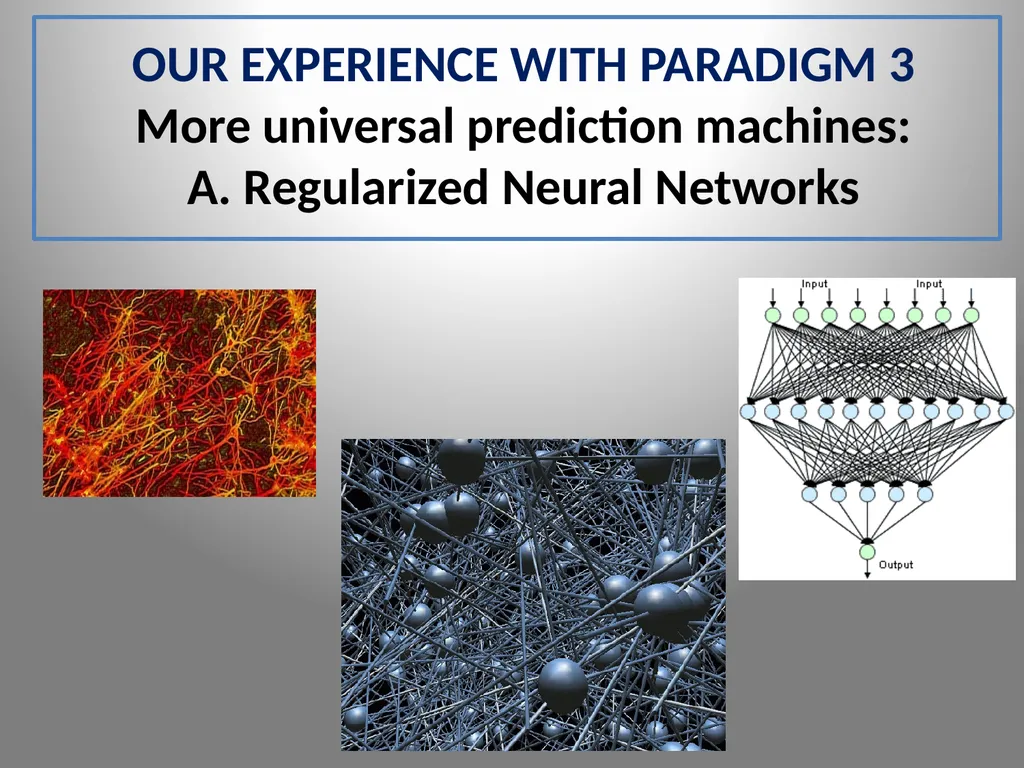
OUR EXPERIENCE WITH PARADIGM 3
More universal prediction machines:
A. Regularized Neural Networks<br>
29
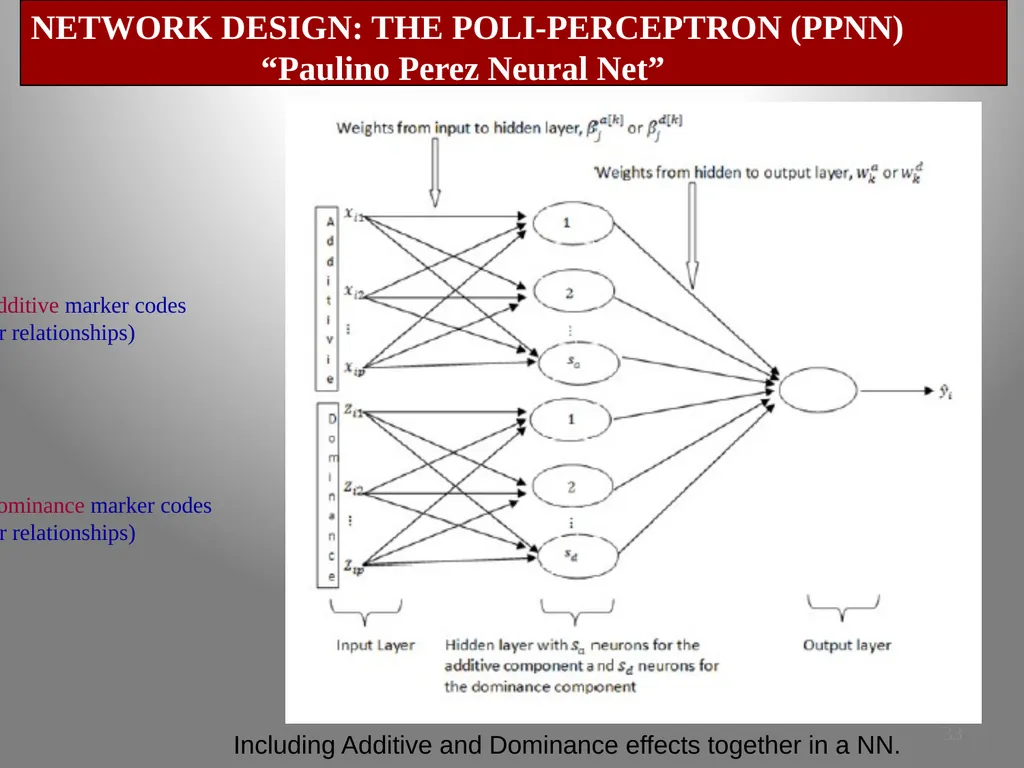
33 Including Additive and Dominance effects together in a NN. Additive marker codes
(or relationships) Dominance marker codes
(or relationships) NETWORK DESIGN: THE POLI-PERCEPTRON (PPNN)
“Paulino Perez Neural Net”<br>
30
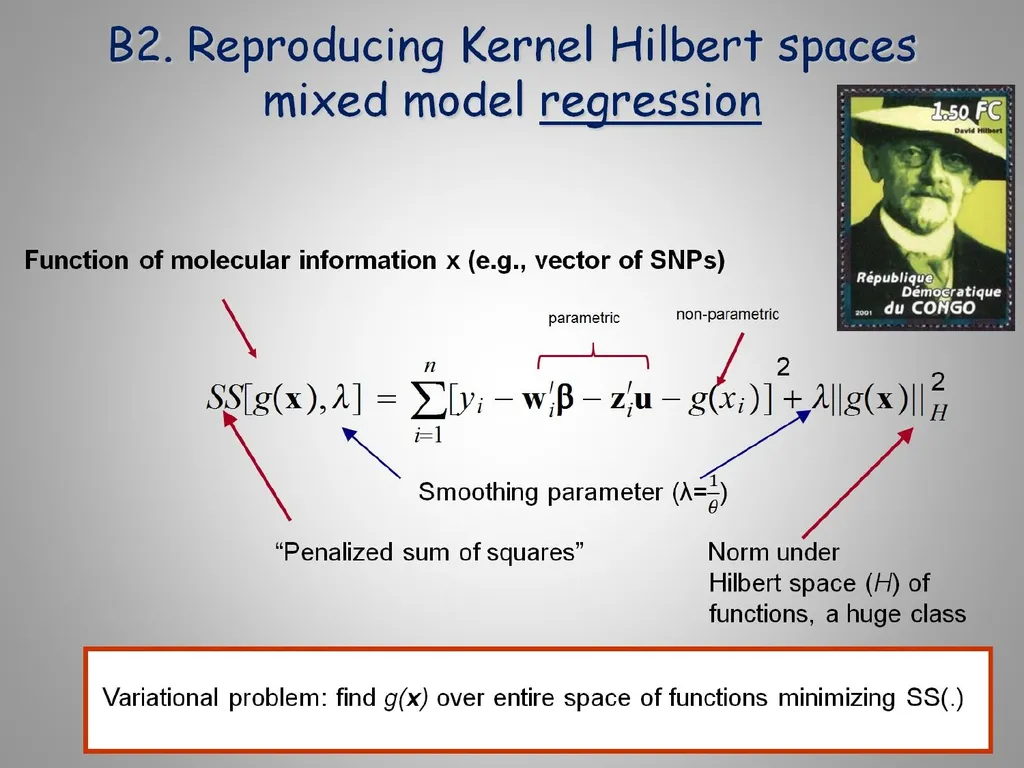
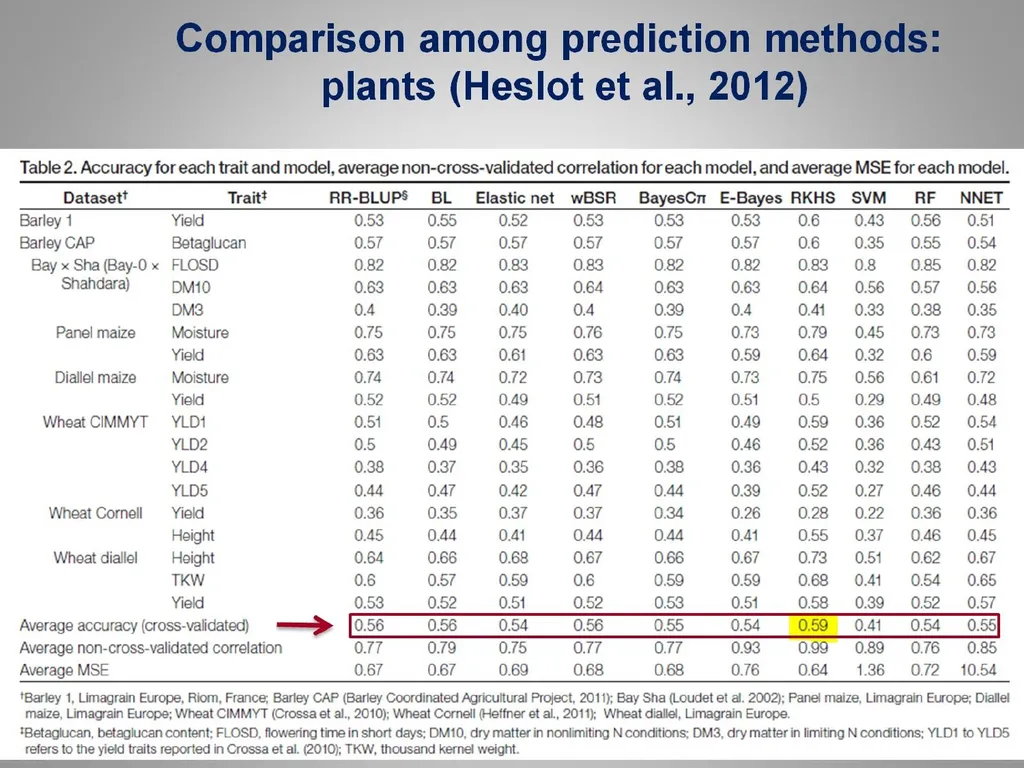
SOME RECENT CASE STUDIES�WITH RKHS�(some excitement from plant breeding)<br>
31
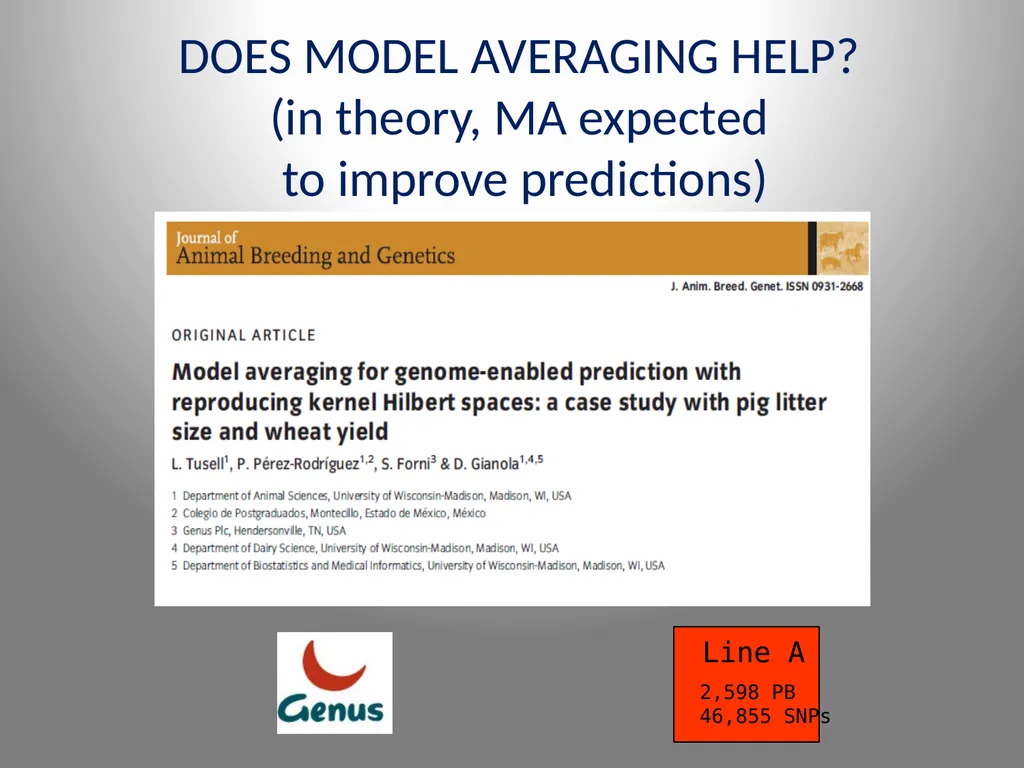
DOES MODEL AVERAGING HELP?
(in theory, MA expected
to improve predictions) Line A 2,598 PB
46,855 SNPs<br>
32
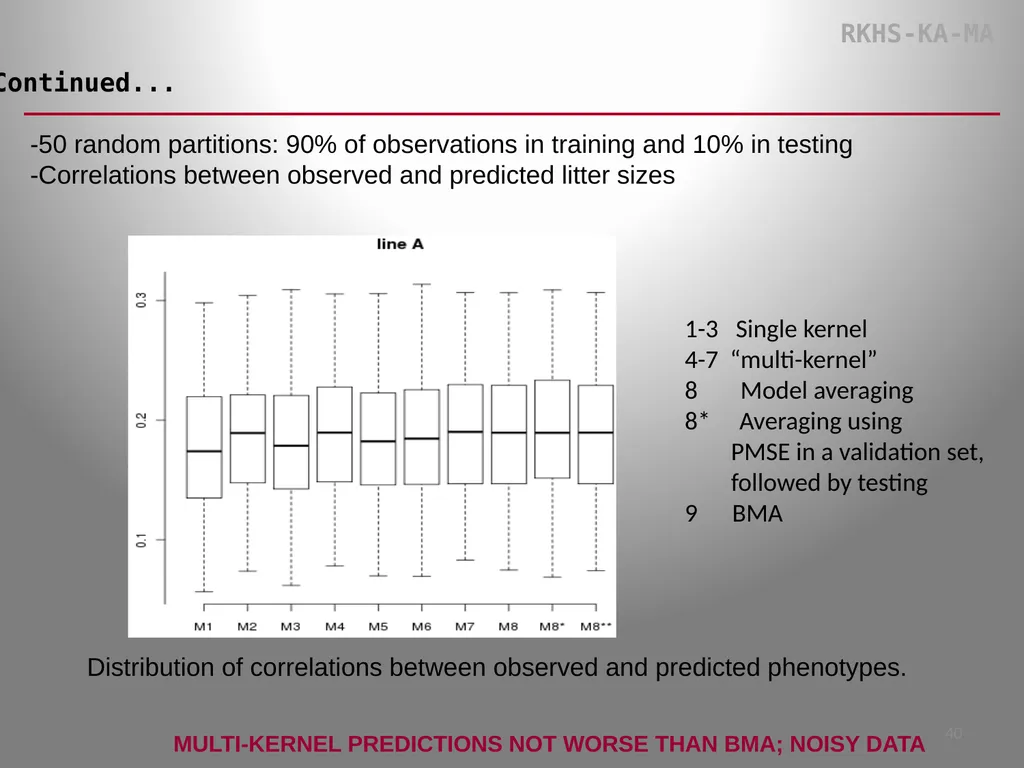
RKHS-KA-MA 40 Continued... -50 random partitions: 90% of observations in training and 10% in testing
-Correlations between observed and predicted litter sizes Distribution of correlations between observed and predicted phenotypes. MULTI-KERNEL PREDICTIONS NOT WORSE THAN BMA; NOISY DATA 1-3 Single kernel
4-7 “multi-kernel”
Model averaging
8* Averaging using
PMSE in a validation set,
followed by testing
9 BMA<br>
34
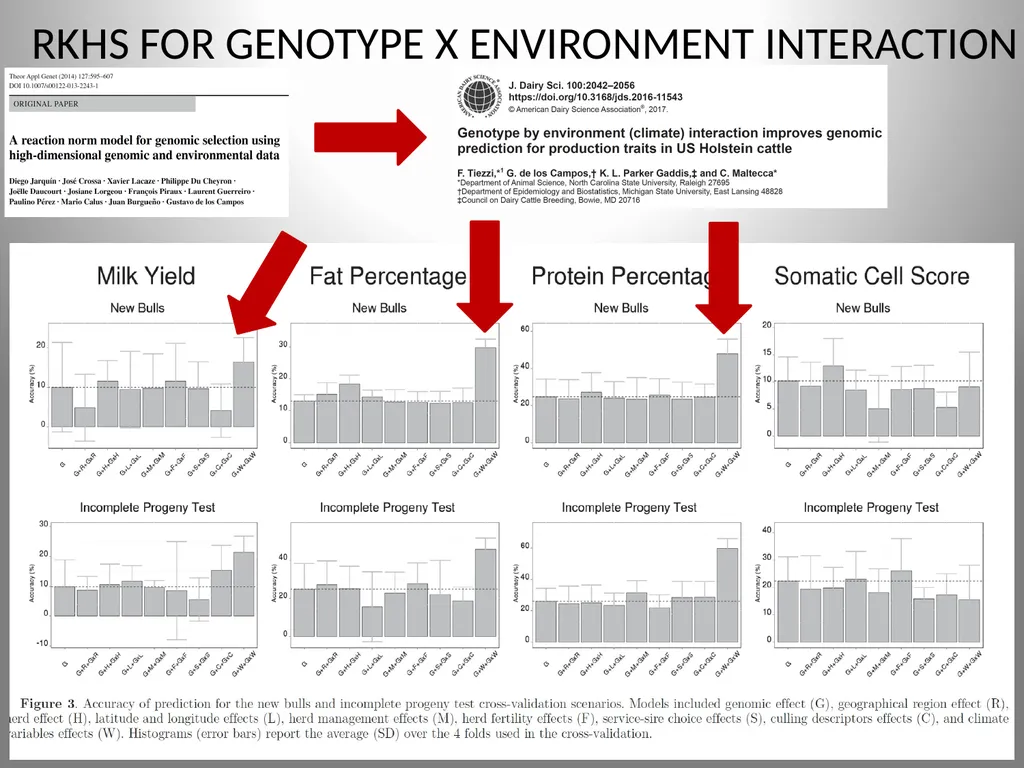
RKHS FOR GENOTYPE X ENVIRONMENT INTERACTION<br>
35
NEW METHODS COMING… The return of the neural networks…<br>
36
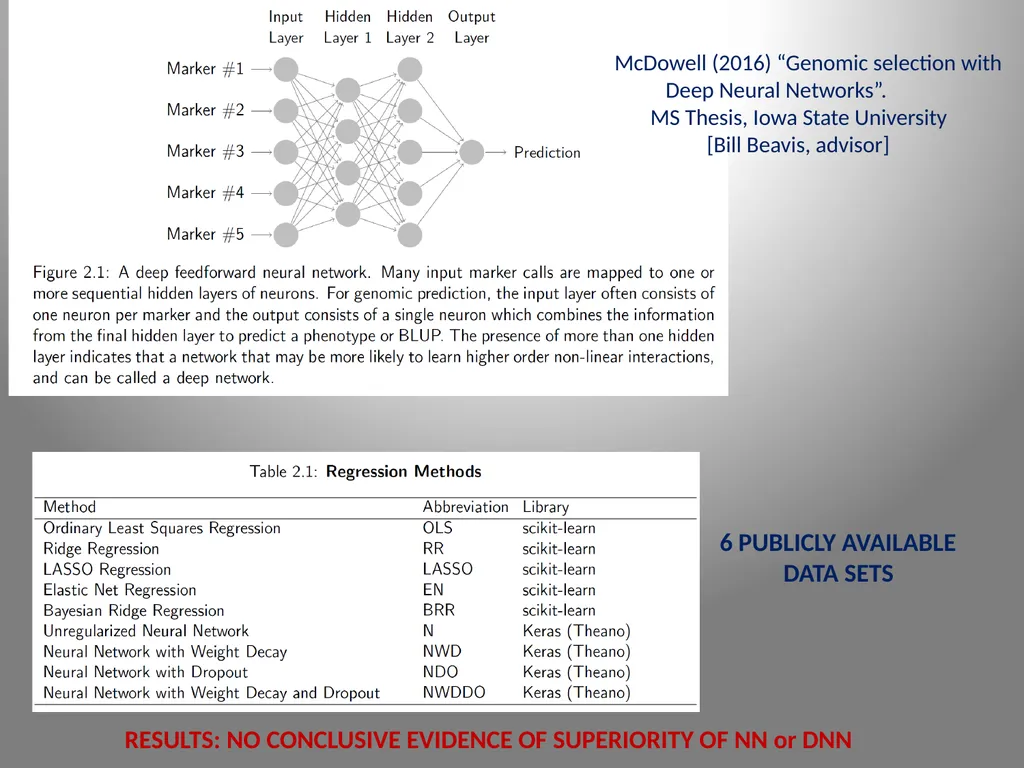
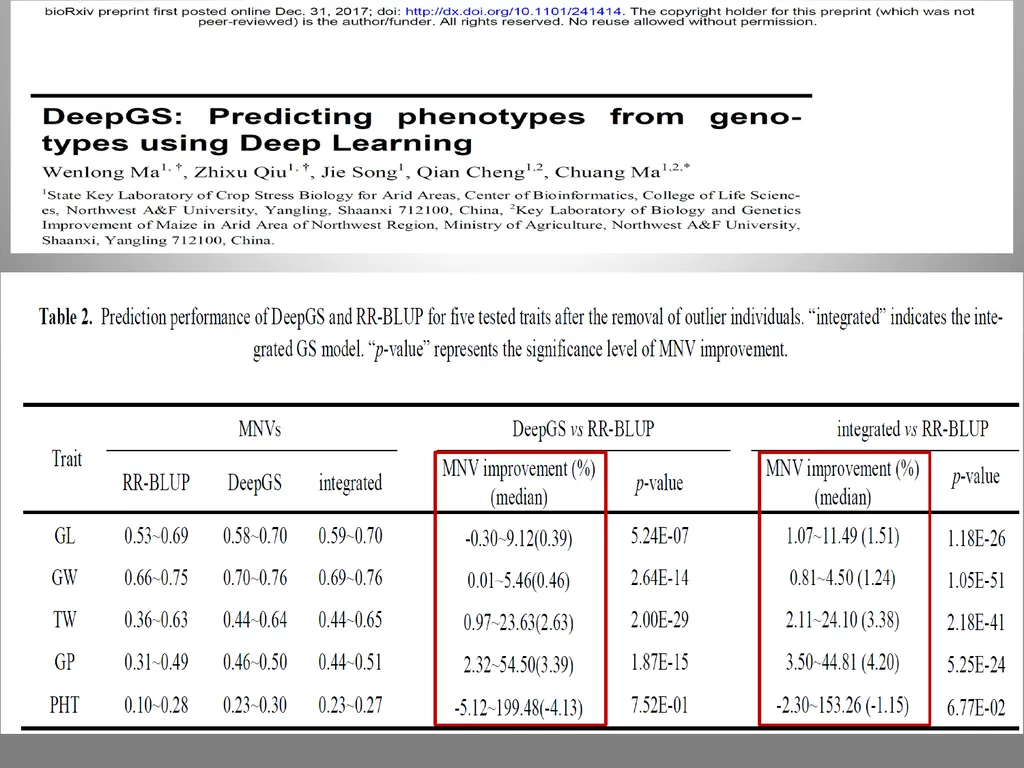
RESULTS: NO CONCLUSIVE EVIDENCE OF SUPERIORITY OF NN or DNN 6 PUBLICLY AVAILABLE
DATA SETS McDowell (2016) “Genomic selection with
Deep Neural Networks”.
MS Thesis, Iowa State University
[Bill Beavis, advisor]<br>
37
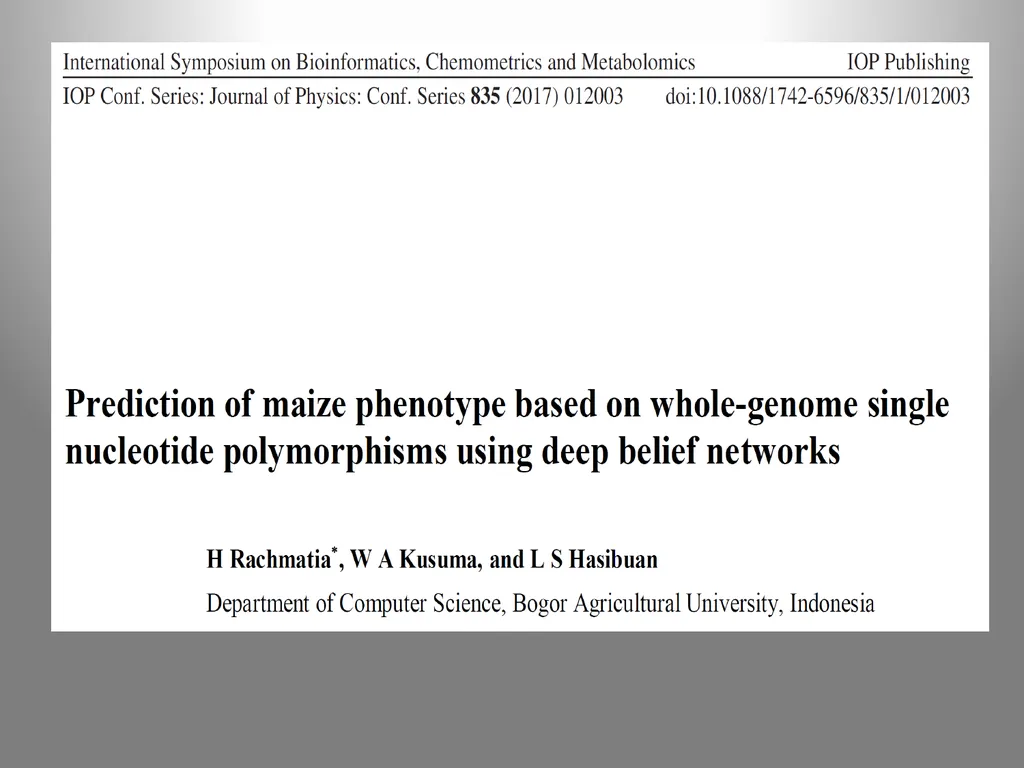
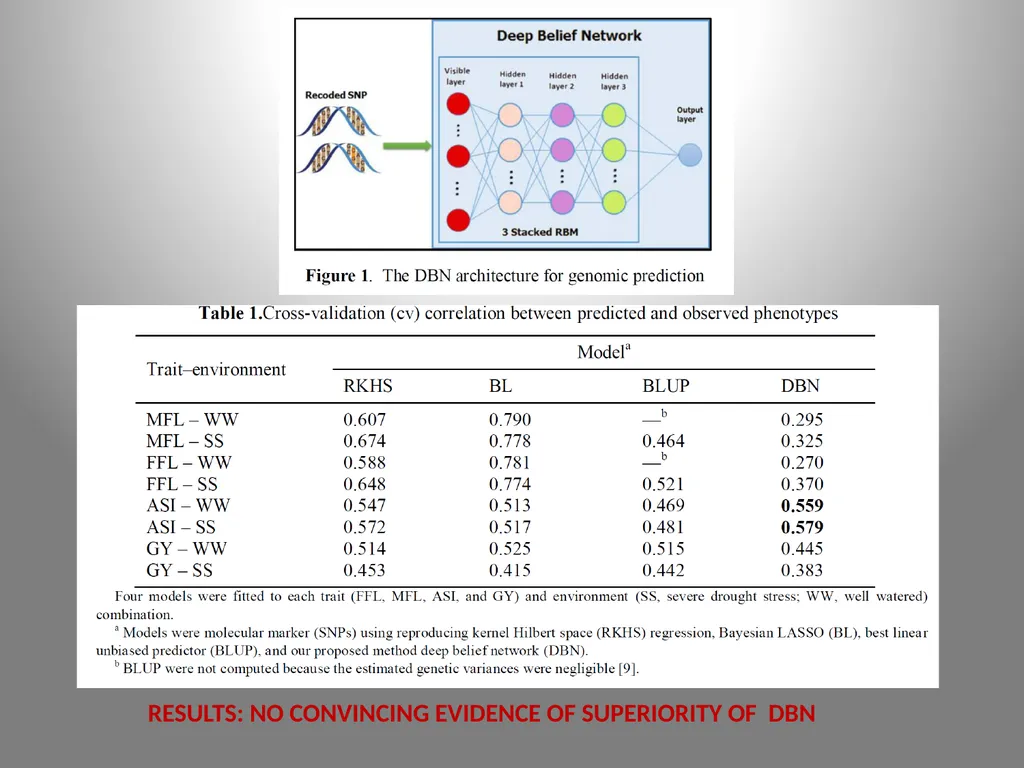
RESULTS: NO CONVINCING EVIDENCE OF SUPERIORITY OF DBN<br>
38
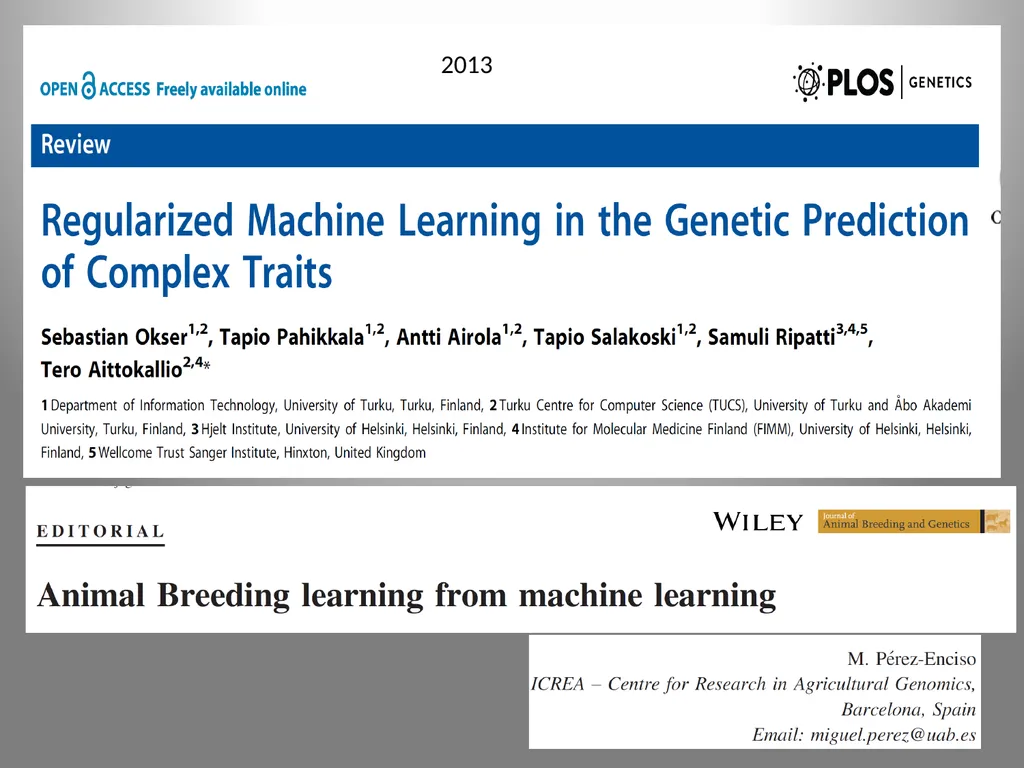
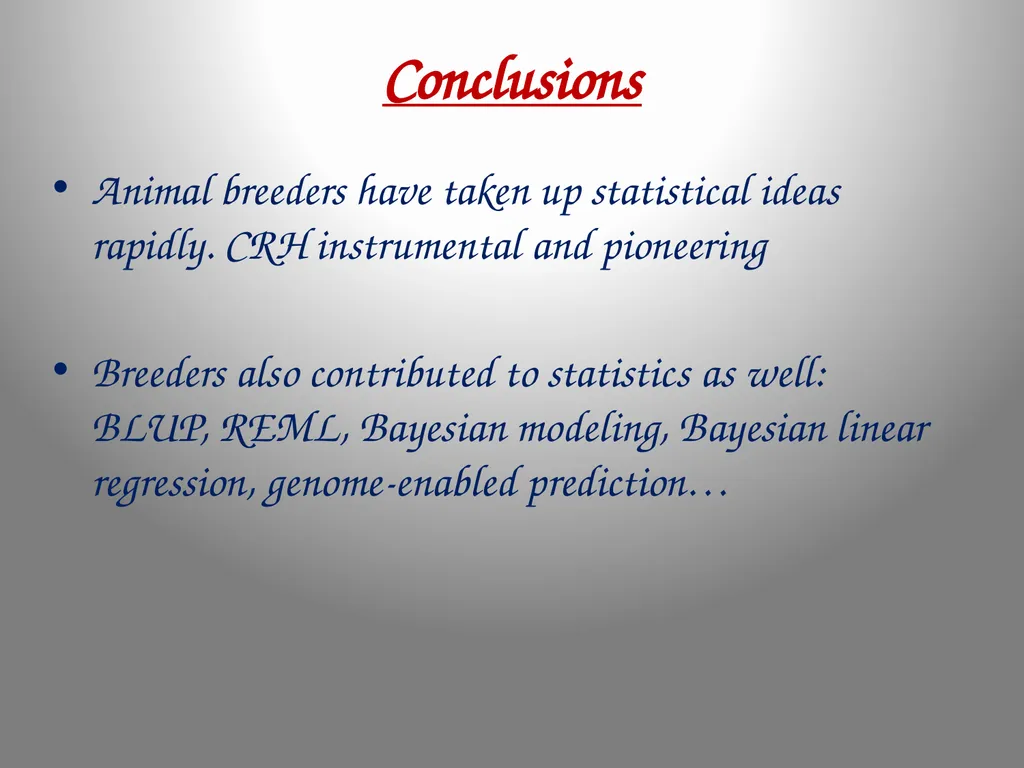
Conclusions Animal breeders have taken up statistical ideas rapidly. CRH instrumental and pioneering
Breeders also contributed to statistics as well: BLUP, REML, Bayesian modeling, Bayesian linear regression, genome-enabled prediction…<br>
39
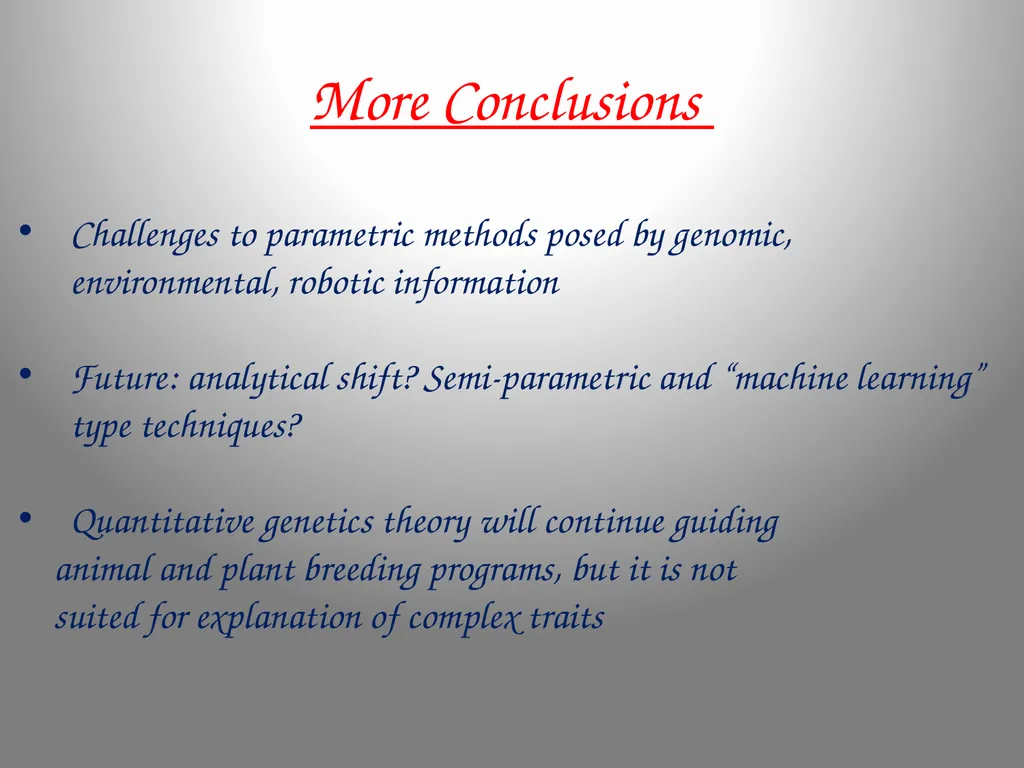
More Conclusions Challenges to parametric methods posed by genomic, environmental, robotic information
Future: analytical shift? Semi-parametric and “machine learning” type techniques?
Quantitative genetics theory will continue guiding
animal and plant breeding programs, but it is not
suited for explanation of complex traits<br>