Ways of the World: A Brief Global History with Sources Third Edition CHAPTER 6 Commonalities and Variations: Africa, the Americas, and Pacific Oceania 500 B.C.E.1200 C.E. Copyright 2016 by BedfordSt. Martins Distributed by BedfordSt.
"Ways of the World: A Brief Global History with" is the property of its rightful owner. Permission is granted to
download and print the materials on this website for personal, non-commercial use only, and to display it
on your personal computer provided you do not modify the materials and that you retain all copyright
notices contained in the materials. By downloading content from our website, you accept the terms of this
agreement.
I. Continental Comparisons A. Independent Agricultural Revolutions
B. 250 million people, C.E.
C. Differences between civilizations<br>
03
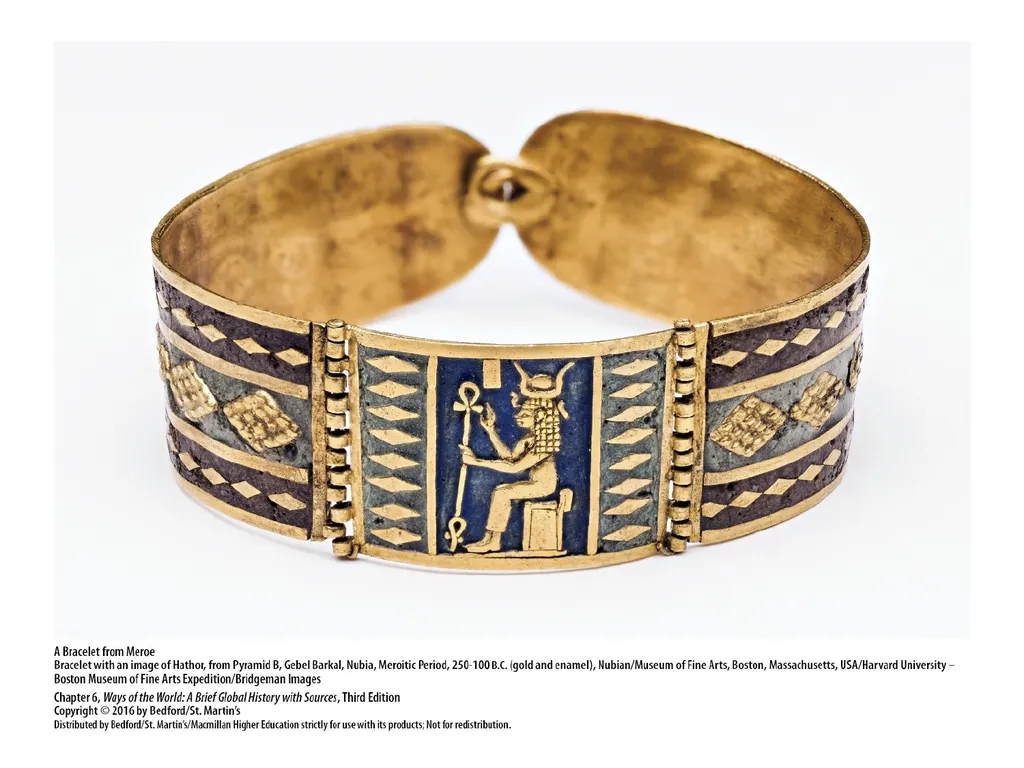
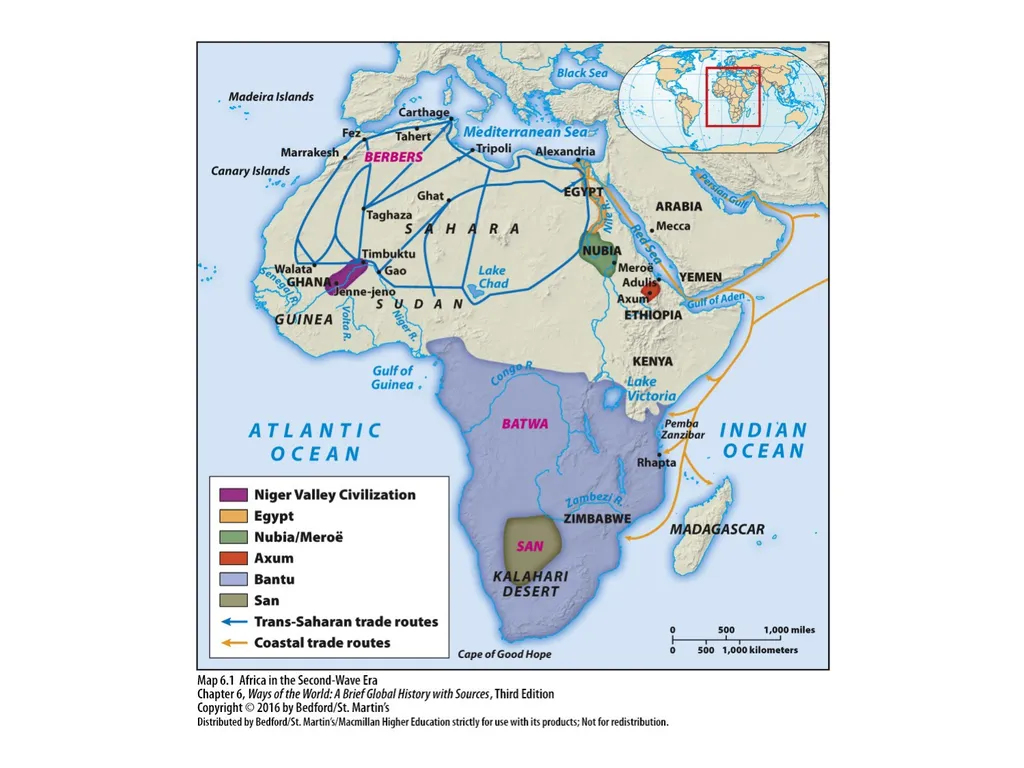
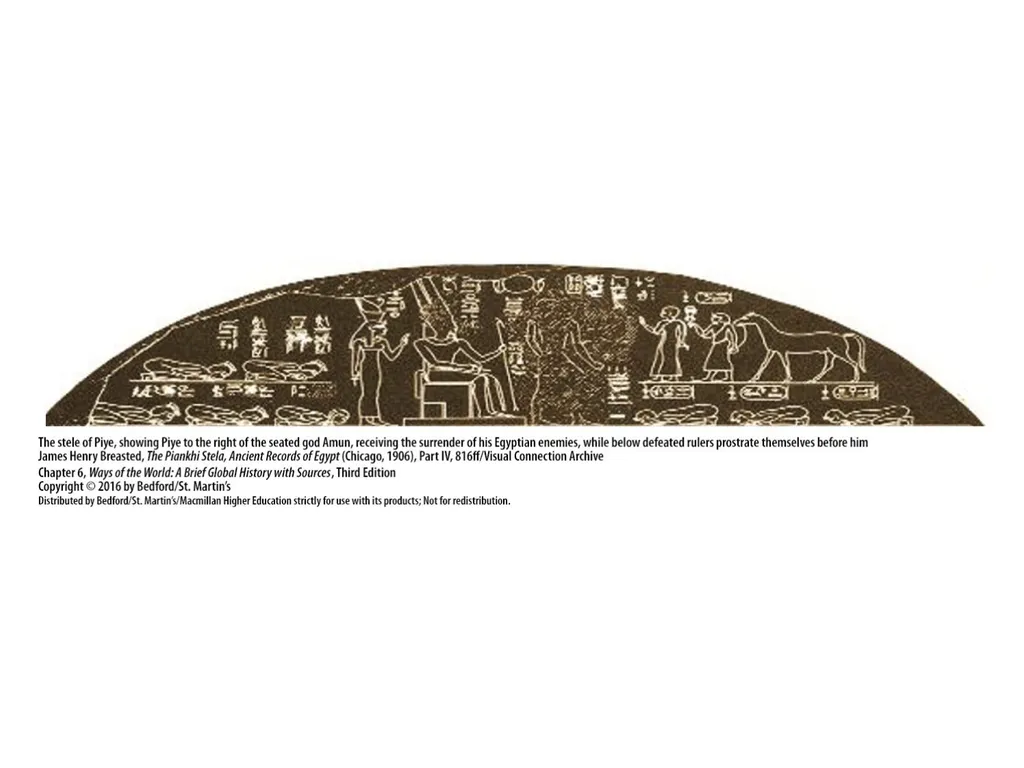
II. Civilizations of Africa A. Meroë: Continuing a Nile Valley Civilization
1. Nubian Civilization
2. Meroë
3. Urban crafts, rural farming
4. Long-distance trade (by Mediterranean or camel caravans)
5. Decline of Meroë after 100 C.E.<br>
04
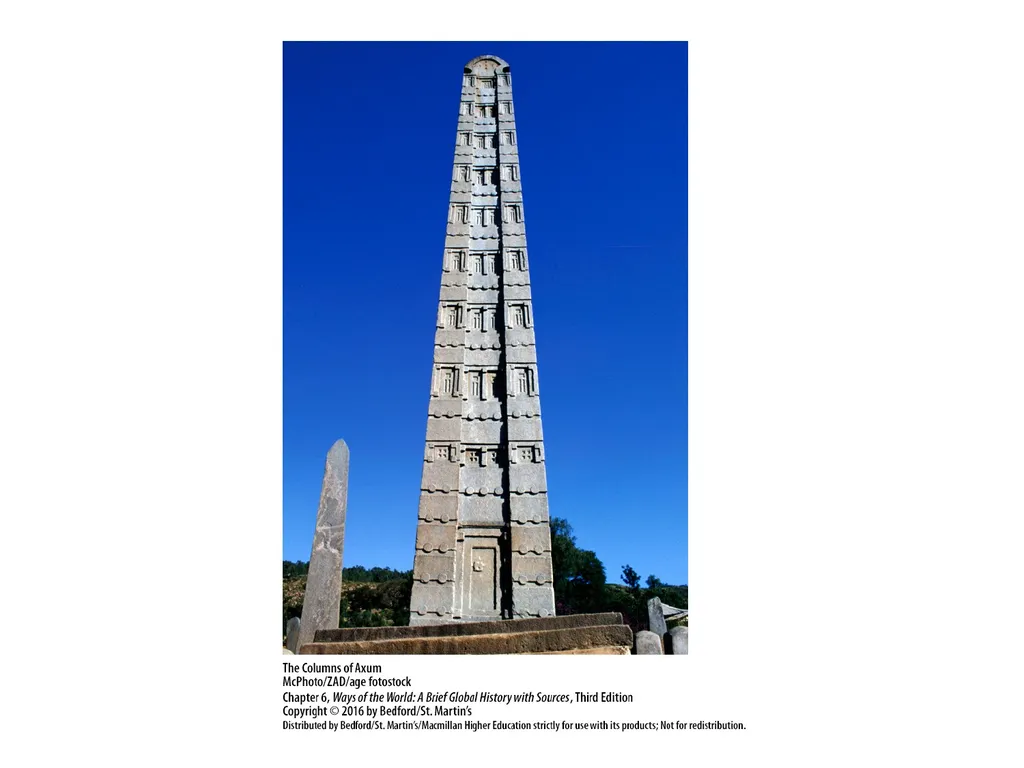
II. Civilizations of Africa B. Axum: The Making of a Christian Kingdom
1. Axum
2. Coptic Christianity
3. Imperial expansion
4. Paralleled Eurasian developments<br>
05
II. Civilizations of Africa C. Along the Niger River: Cities without States
1. Major urbanization, 300 B.C.E. – 900 C.E.
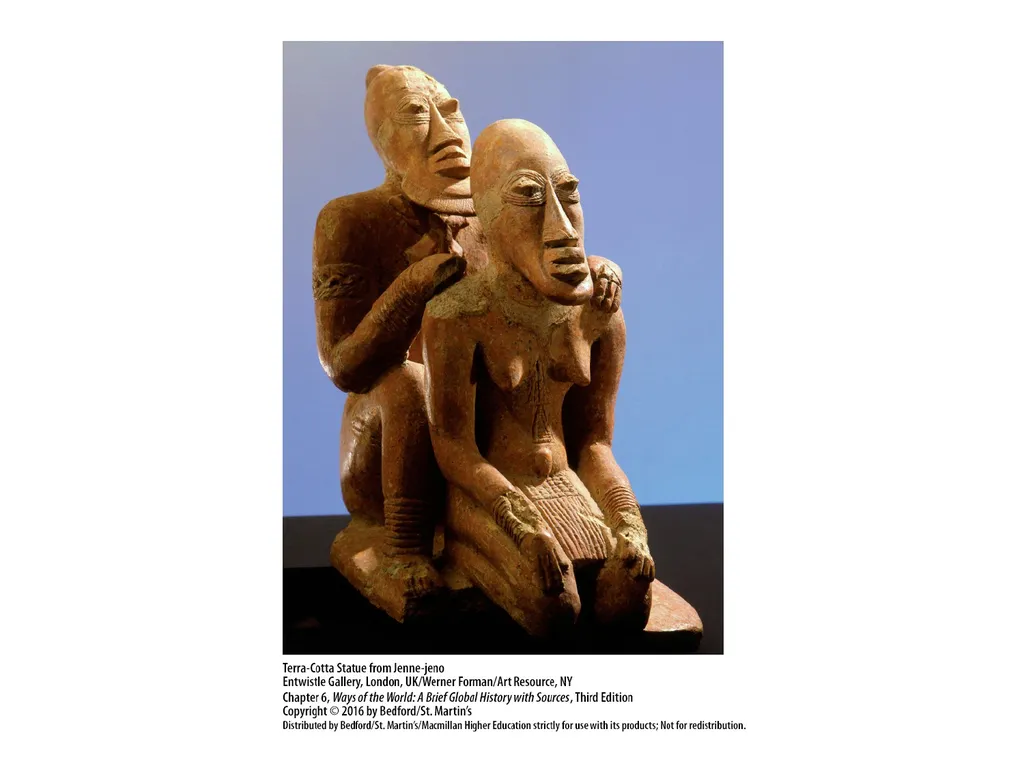
2. Jenne-jeno
3. Middle Niger cities stimulated by West African commerce<br>
06
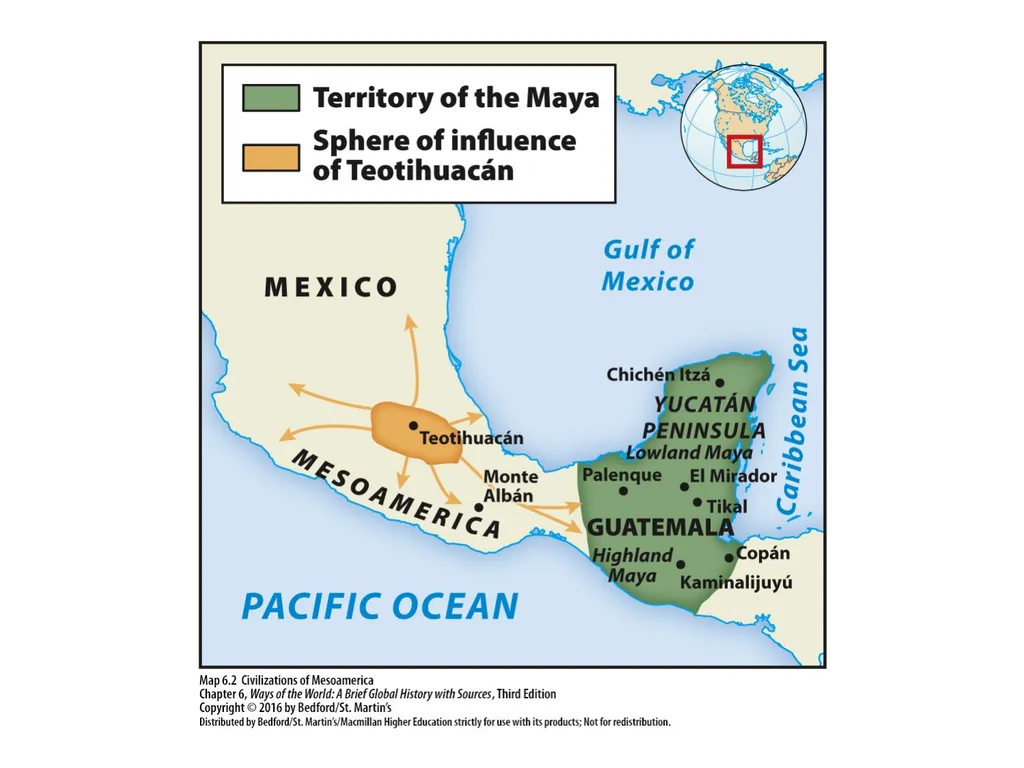
III. Civilizations of Mesoamerica A. The Maya: Writing and Warfare
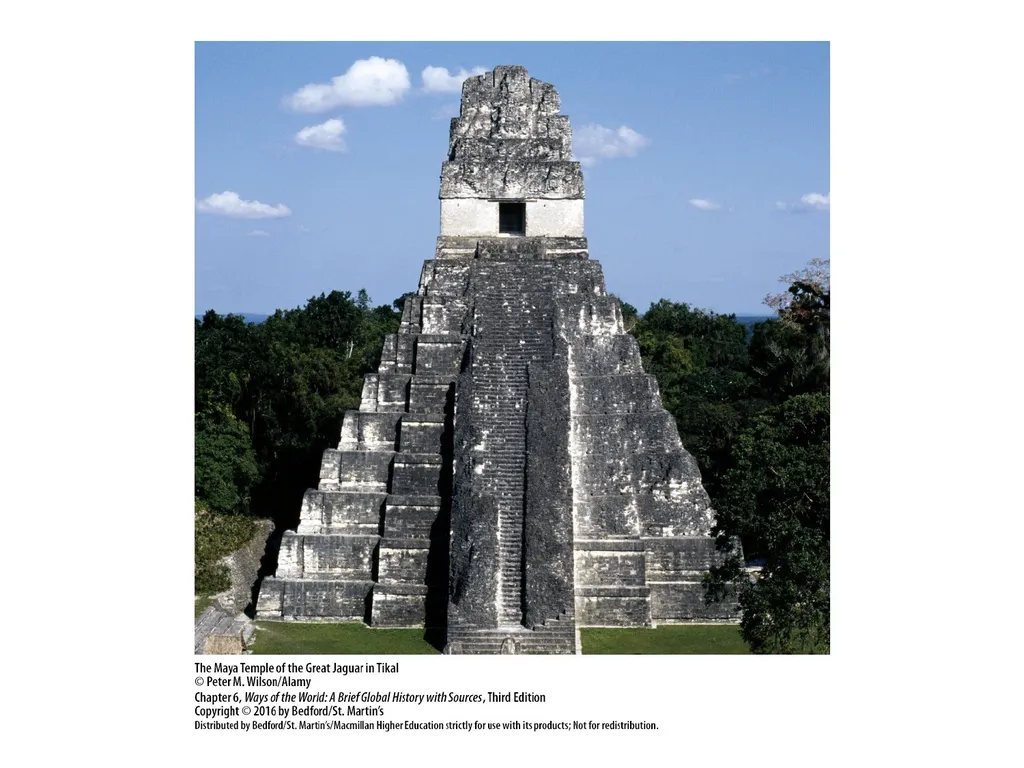
1. Maya ceremonial centers
2. Well-known cultural achievements: mathematical system, calendars, writing system, architecture
3. Maya Economy: Agriculture
4. Fragmented system of city-states and kingdoms
4. Rapid collapse<br>
07
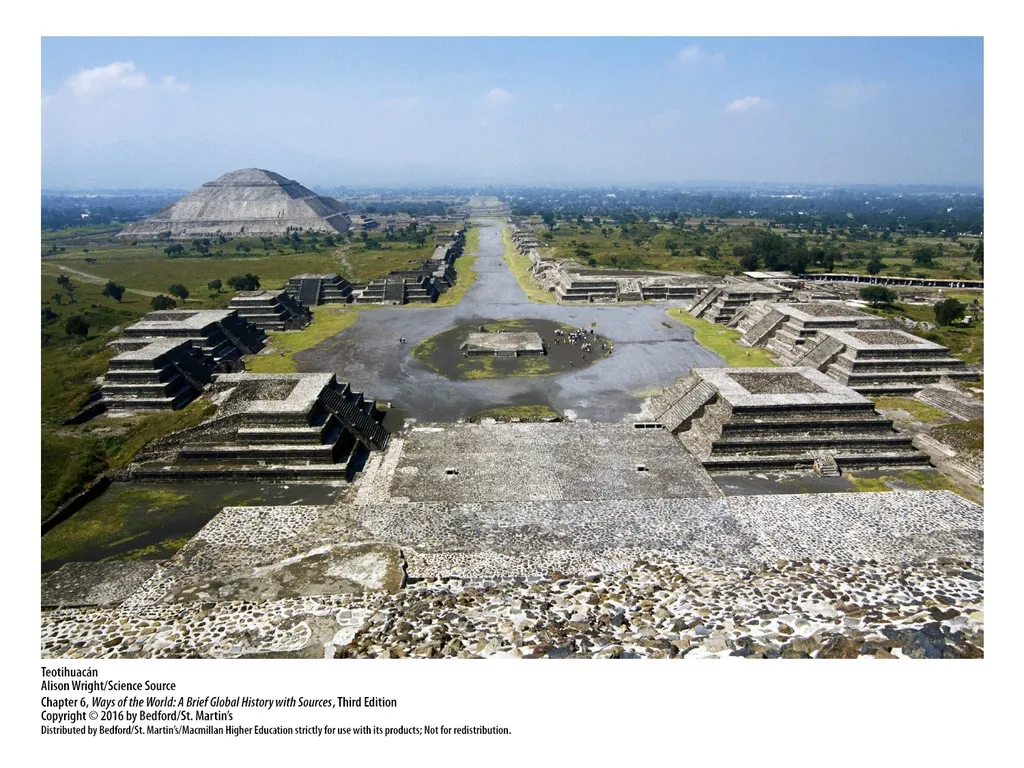
III. Civilizations of Mesoamerica B. Teotihuacán: The Americas’ Greatest City
1. Much remains unknown
3. Deep influence on Mesoamerica
4. Mysterious collapse ca. 650 C.E.
5. “City of the gods”<br>
08
IV. Civilizations of the Andes A. Chavín: A Pan-Andean Religious Movement
1. Ceremonial centers, 2000 – 1000 B.C.E.
2. Chavín de Huántar
3. Widespread imitation across Peru and beyond<br>
09
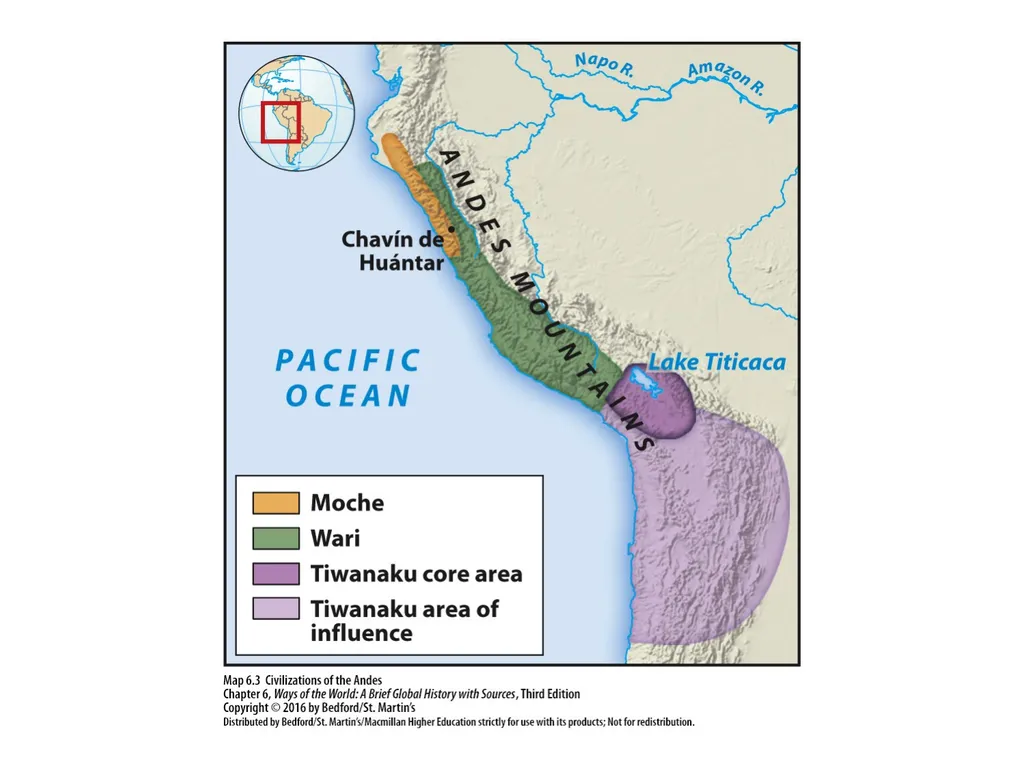
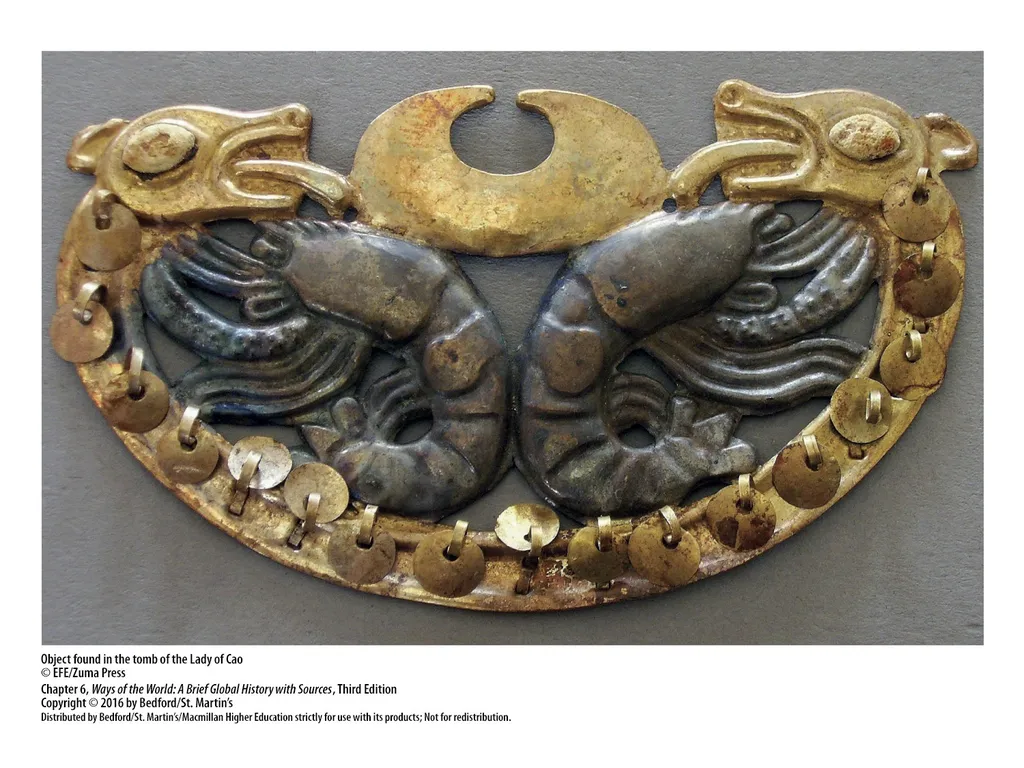
IV. Civilizations of the Andes B. Moche: A Civilization of the Coast
1. 100 – 800 C.E.
2. Complex irrigation system
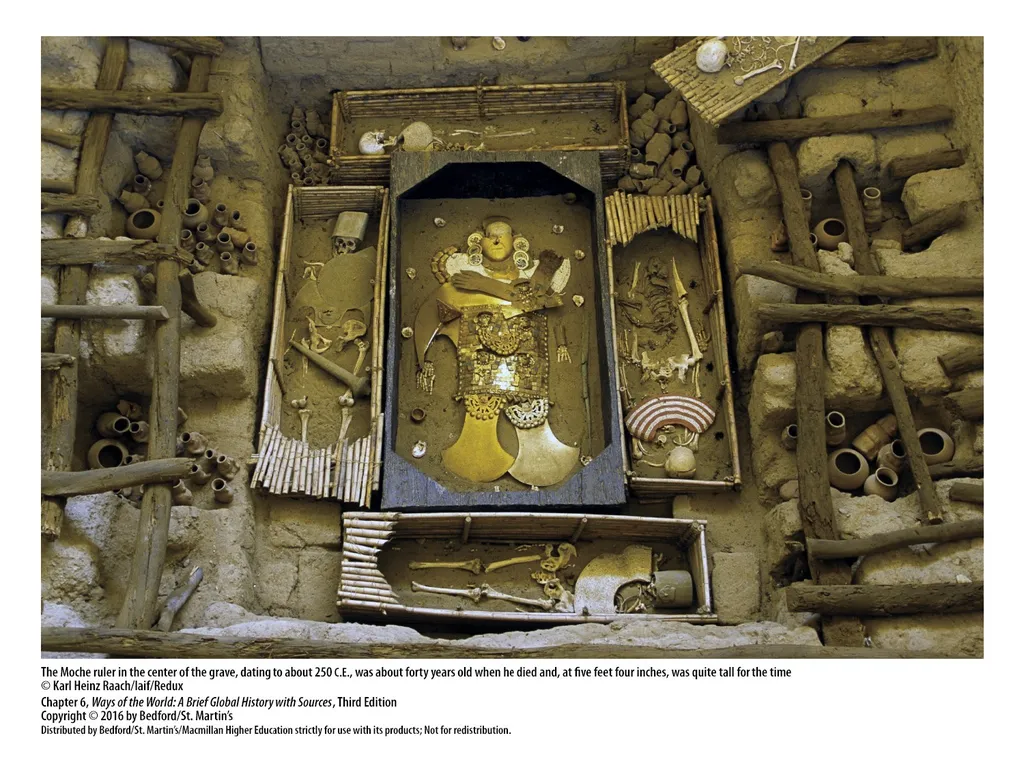
3. Ruled by warrior-priests
4. Superb craftsmanship of elite objects
5. Ecological disruption in sixth century C.E.<br>
10
IV. Civilizations of the Andes C. Wari and Tiwanaku: Empires of the Interior
1. 400 – 1000 C.E.
2. Large urban capitals
3. Caravan trade
4. Agricultural differences
5. Little overt conflict or warfare
6. Collapsed after 1000 C.E.; influenced Incas<br>
11
V. Alternatives to Civilization A. Bantu Africa: Cultural Encounters and Social Variation
1. Movement of Bantu-speaking peoples 3000 B.C.E.
2. Bantu agriculturalists in forest regions of equatorial Africa
3. Bantu advantages
4. Survival of gathering and hunting peoples<br>
12
V. Alternatives to Civilization A. Bantu Africa: Cultural Encounters and Social Variation
5. Bantu culture changed
6. Creation of distinct societies 500-1500 C.E.
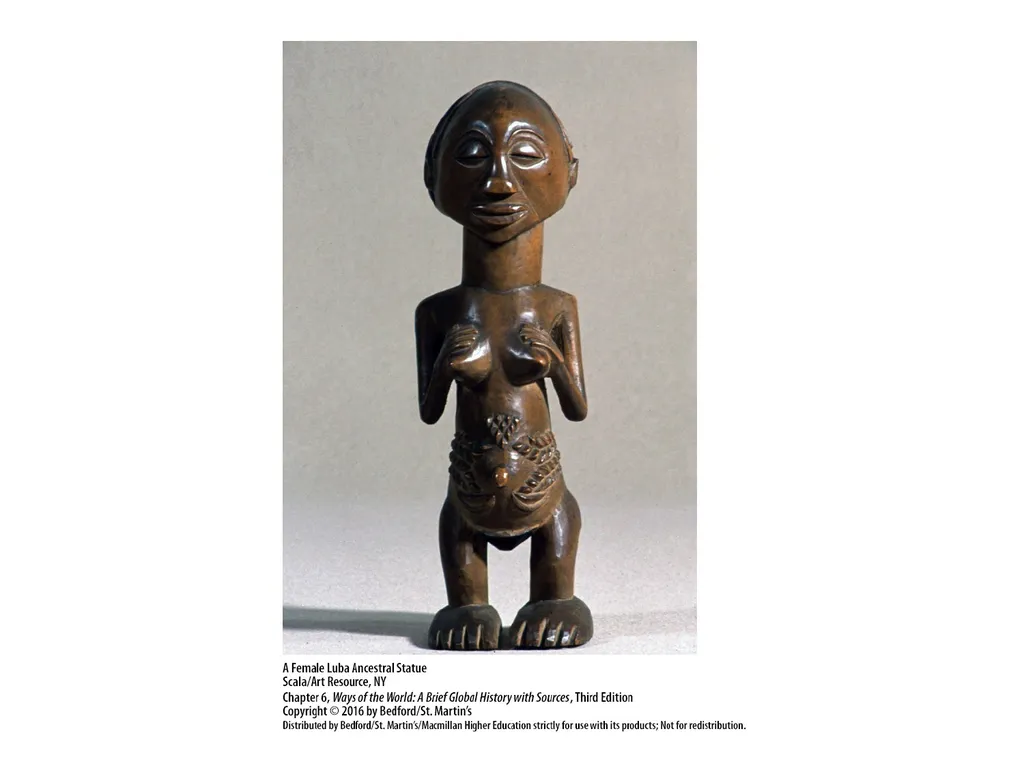
7. Religion: ancestral or nature spirits<br>
13
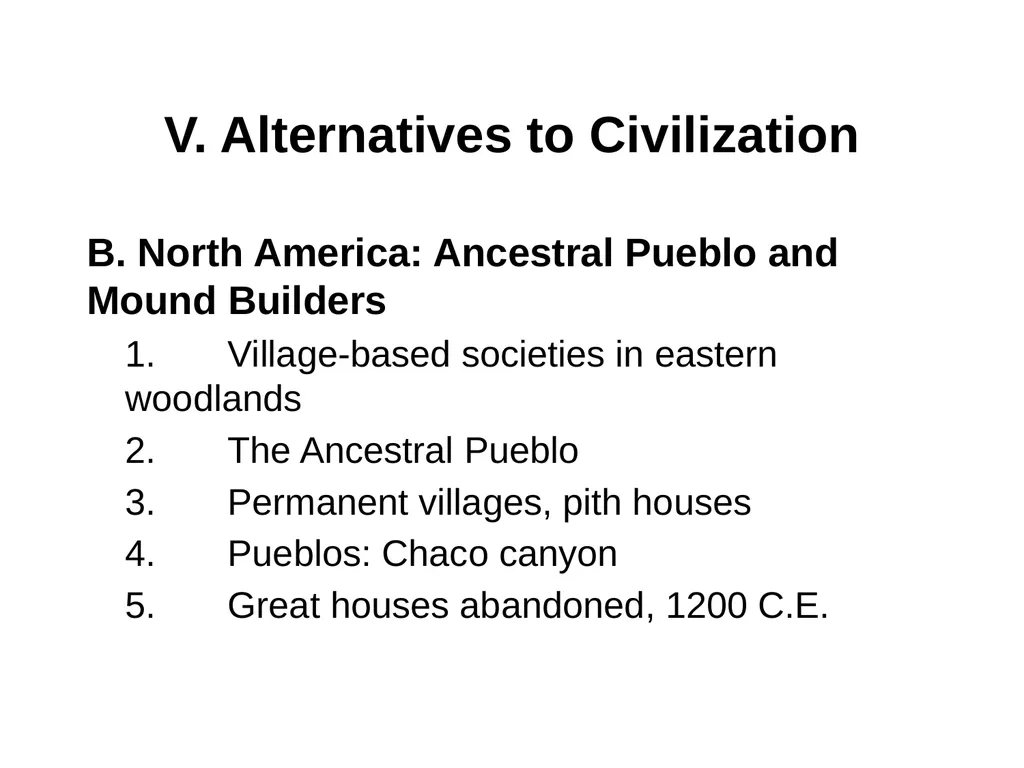
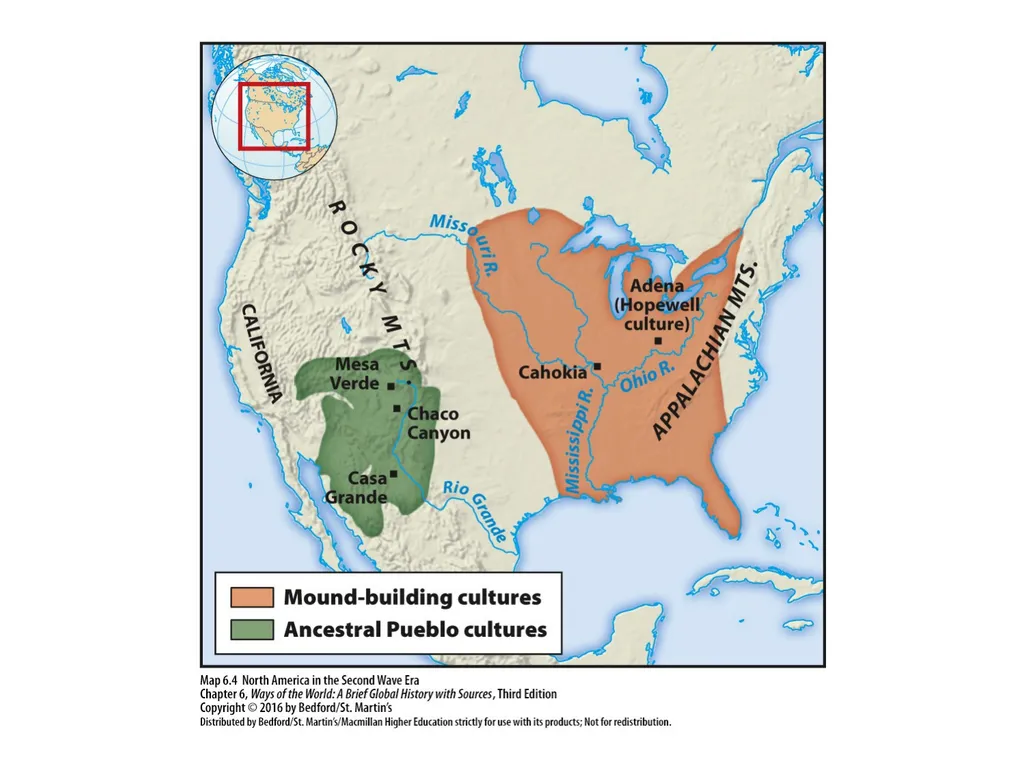
V. Alternatives to Civilization B. North America: Ancestral Pueblo and Mound Builders
1. Village-based societies in eastern woodlands
2. The Ancestral Pueblo
3. Permanent villages, pith houses
4. Pueblos: Chaco canyon
5. Great houses abandoned, 1200 C.E.<br>
14
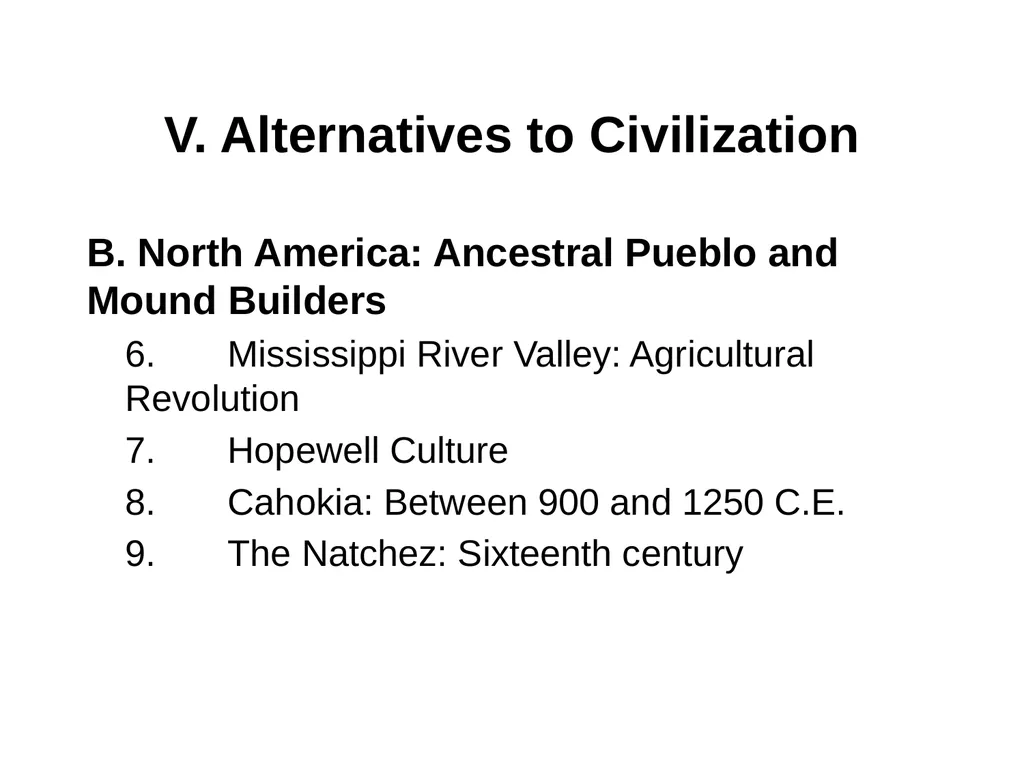
V. Alternatives to Civilization B. North America: Ancestral Pueblo and Mound Builders
6. Mississippi River Valley: Agricultural Revolution
7. Hopewell Culture
8. Cahokia: Between 900 and 1250 C.E.
9. The Natchez: Sixteenth century<br>
15
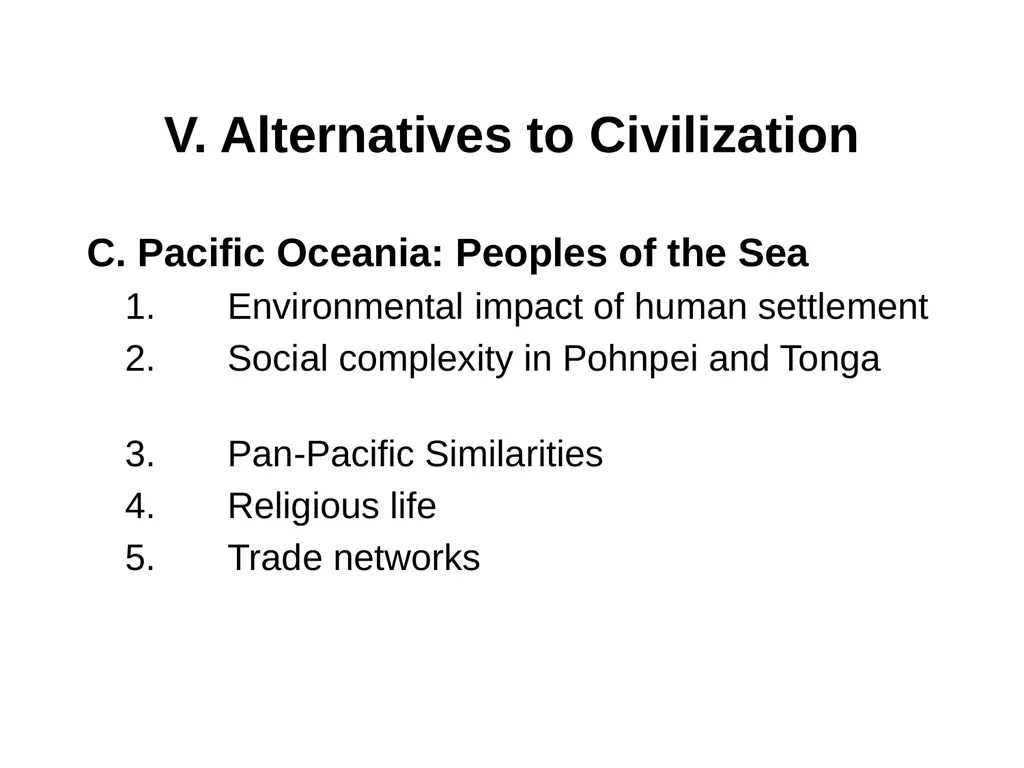
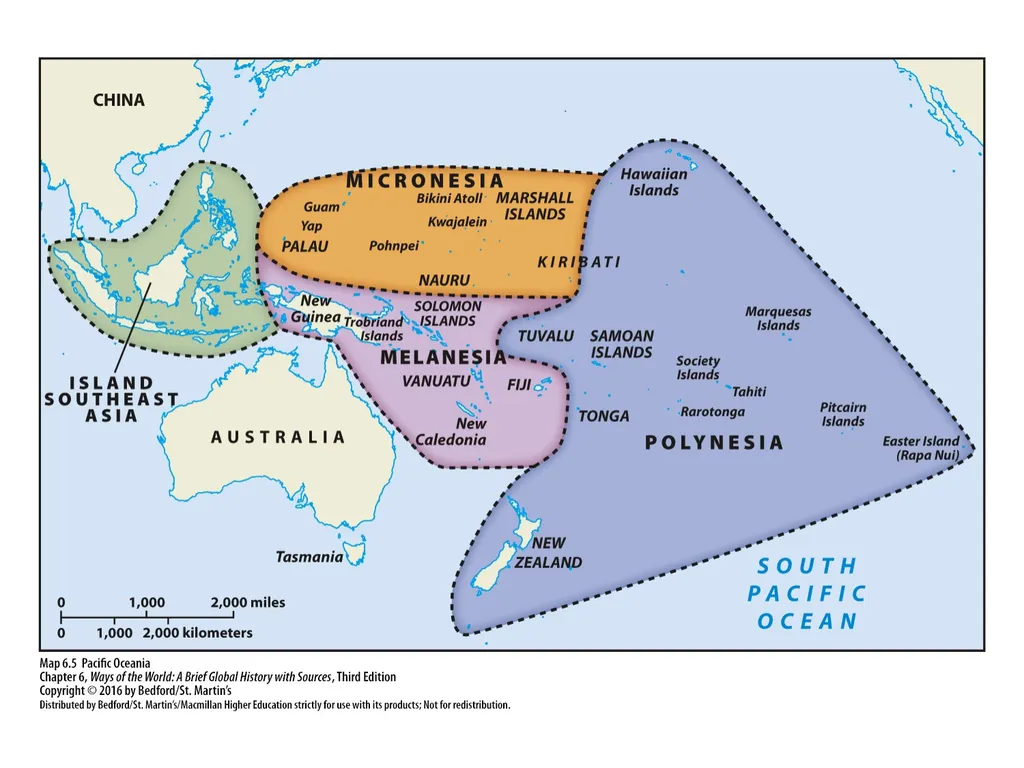
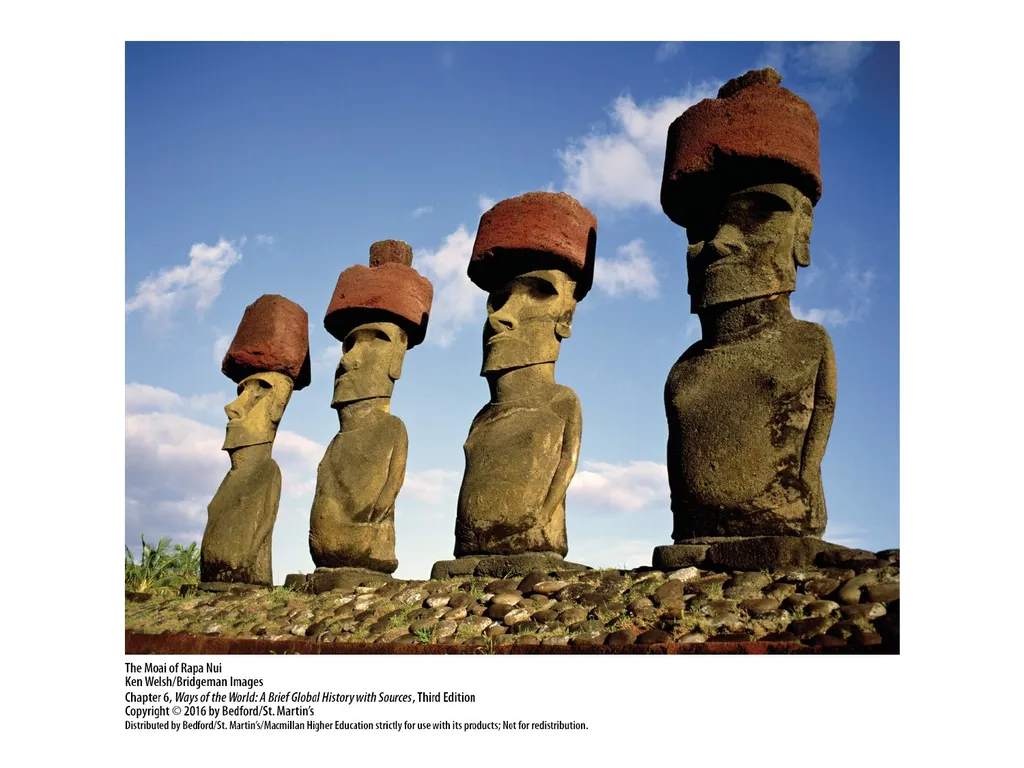
V. Alternatives to Civilization C. Pacific Oceania: Peoples of the Sea
1. Environmental impact of human settlement
2. Social complexity in Pohnpei and Tonga
3. Pan-Pacific Similarities
4. Religious life
5. Trade networks<br>