What Key Personnel Need To Know CHILD CARE Diabetes Care Tasks at School All staff members should have basic knowledge of diabetes and know who to contact for help. Optimal Student Health and Learning GOAL: PARTICIPANTS WILL BE ABLE TO
"What Key Personnel Need To Know CHILD CARE" is the property of its rightful owner. Permission is granted to
download and print the materials on this website for personal, non-commercial use only, and to display it
on your personal computer provided you do not modify the materials and that you retain all copyright
notices contained in the materials. By downloading content from our website, you accept the terms of this
agreement.
Presentation Transcript
01
What Key Personnel Need To Know CHILD CARE Diabetes Care Tasks at School<br>
02
All staff members should have basic knowledge of diabetes and know who to contact for help. Optimal Student Health and Learning GOAL:<br>
03
PARTICIPANTS WILL BE ABLE TO UNDERSTAND: Learning Objectives Basics of caring for a child with diabetes at daycare
Hypoglycemia and hyperglycemia
Diabetes care tools and resources<br>
04
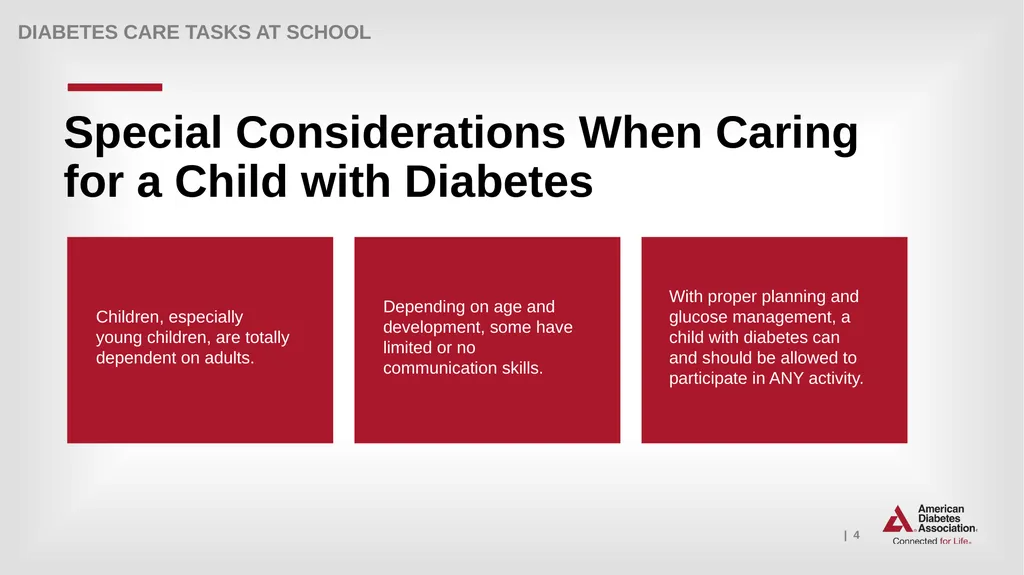
Special Considerations When Caring for a Child with Diabetes Children, especially young children, are totally dependent on adults. Depending on age and development, some have limited or no communication skills. With proper planning and glucose management, a child with diabetes can and should be allowed to participate in ANY activity.<br>
05
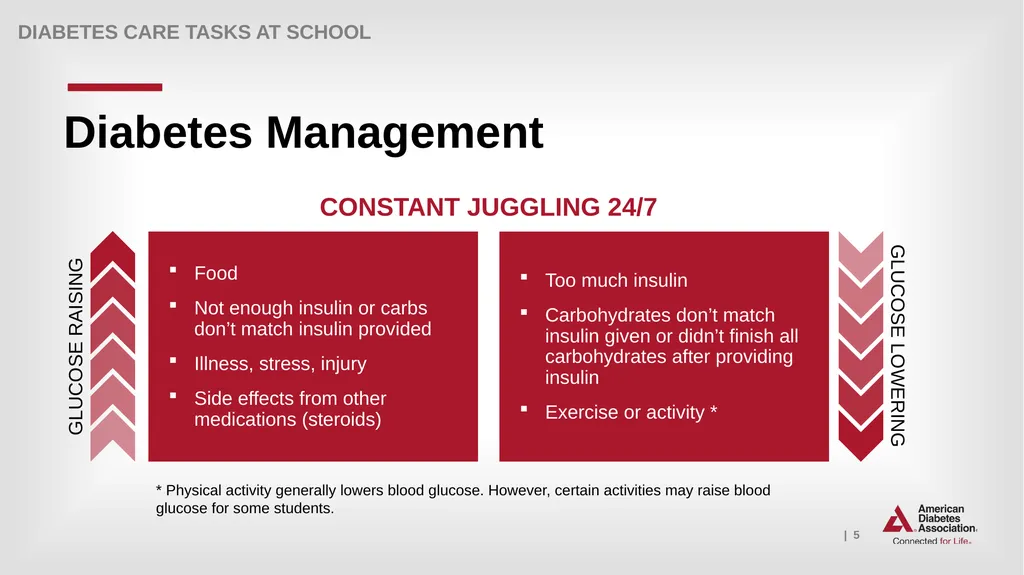
Diabetes Management Food
Not enough insulin or carbs don’t match insulin provided
Illness, stress, injury
Side effects from other medications (steroids) Too much insulin
Carbohydrates don’t match insulin given or didn’t finish all carbohydrates after providing insulin
Exercise or activity * GLUCOSE RAISING GLUCOSE LOWERING CONSTANT JUGGLING 24/7 * Physical activity generally lowers blood glucose. However, certain activities may raise blood glucose for some students.<br>
06
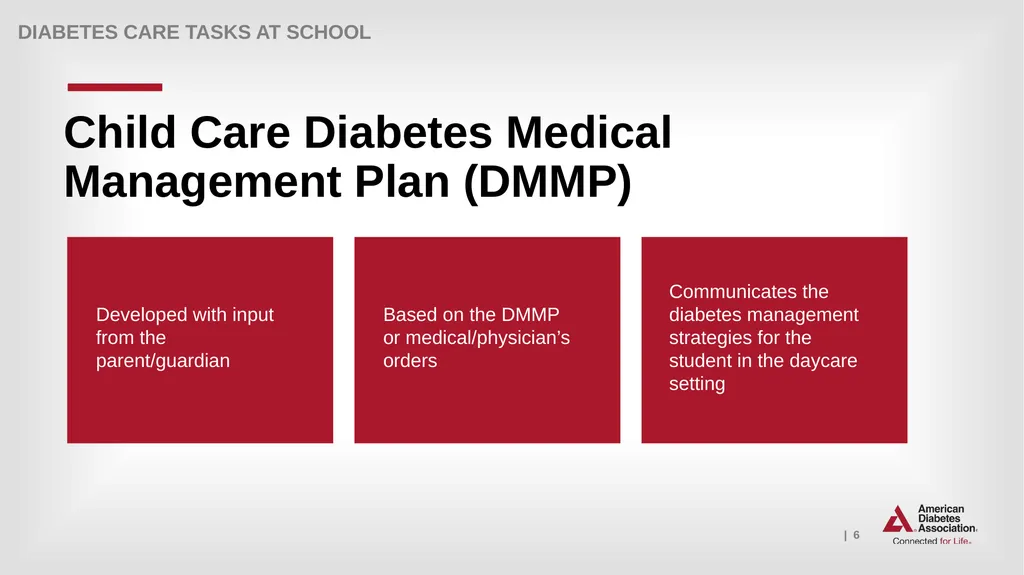
Child Care Diabetes Medical Management Plan (DMMP) Developed with input from the parent/guardian Based on the DMMP or medical/physician’s orders Communicates the diabetes management strategies for the student in the daycare setting<br>
07
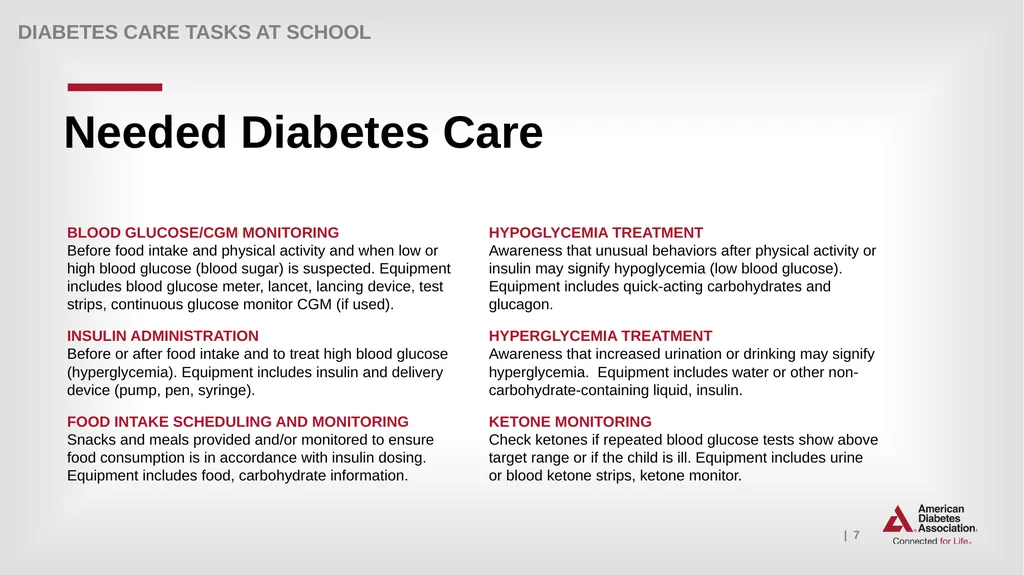
BLOOD GLUCOSE/CGM MONITORING Before food intake and physical activity and when low or high blood glucose (blood sugar) is suspected. Equipment includes blood glucose meter, lancet, lancing device, test strips, continuous glucose monitor CGM (if used).
INSULIN ADMINISTRATION Before or after food intake and to treat high blood glucose (hyperglycemia). Equipment includes insulin and delivery device (pump, pen, syringe).
FOOD INTAKE SCHEDULING AND MONITORING Snacks and meals provided and/or monitored to ensure food consumption is in accordance with insulin dosing. Equipment includes food, carbohydrate information. Needed Diabetes Care HYPOGLYCEMIA TREATMENT Awareness that unusual behaviors after physical activity or insulin may signify hypoglycemia (low blood glucose). Equipment includes quick-acting carbohydrates and glucagon.
HYPERGLYCEMIA TREATMENT Awareness that increased urination or drinking may signify hyperglycemia. Equipment includes water or other non-carbohydrate-containing liquid, insulin.
KETONE MONITORING Check ketones if repeated blood glucose tests show above target range or if the child is ill. Equipment includes urine or blood ketone strips, ketone monitor.<br>
08
Hypoglycemia: Glucose <70 mg/dL Mild to Moderate Symptoms Extreme Hunger
Shakiness
Weakness
Paleness
Dizzy or lightheaded
Increased heart rate
Yawning
Irritability/frustration
Extreme tiredness/fatigue Severe Symptoms Inability to eat or drink
Unconscious
Unresponsive
Seizure activity or convulsions (jerking movements) Sleepiness
Changed behavior
Sweating
Anxiety
Dilated pupils
Restlessness
Confusion
Sudden crying<br>
09
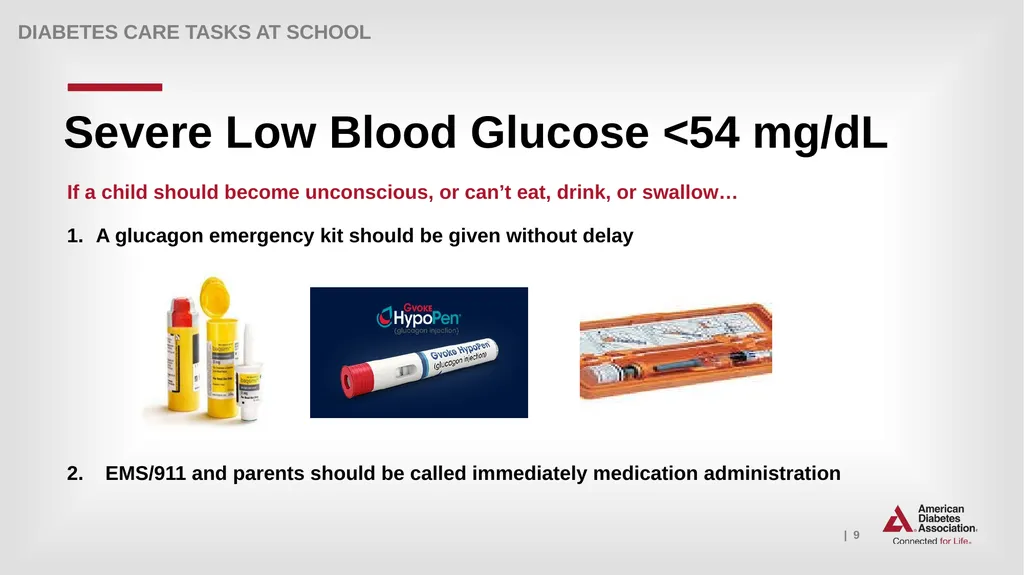
If a child should become unconscious, or can’t eat, drink, or swallow… Severe Low Blood Glucose <54 mg/dL A glucagon emergency kit should be given without delay EMS/911 and parents should be called immediately medication administration<br>
10
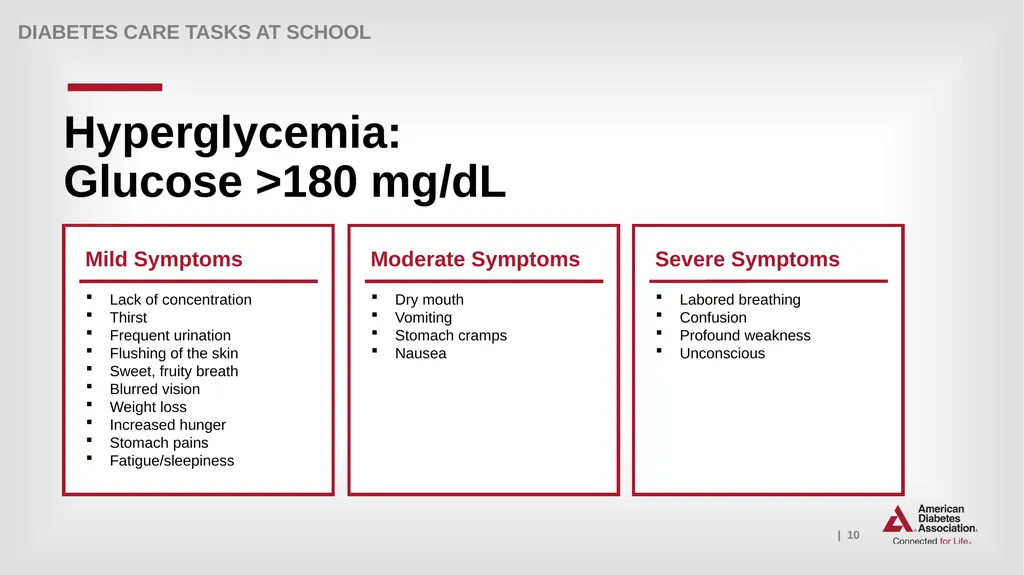
Hyperglycemia: Glucose >180 mg/dL Mild Symptoms Lack of concentration
Thirst
Frequent urination
Flushing of the skin
Sweet, fruity breath
Blurred vision
Weight loss
Increased hunger
Stomach pains
Fatigue/sleepiness Moderate Symptoms Dry mouth
Vomiting
Stomach cramps
Nausea Severe Symptoms Labored breathing
Confusion
Profound weakness
Unconscious<br>
11
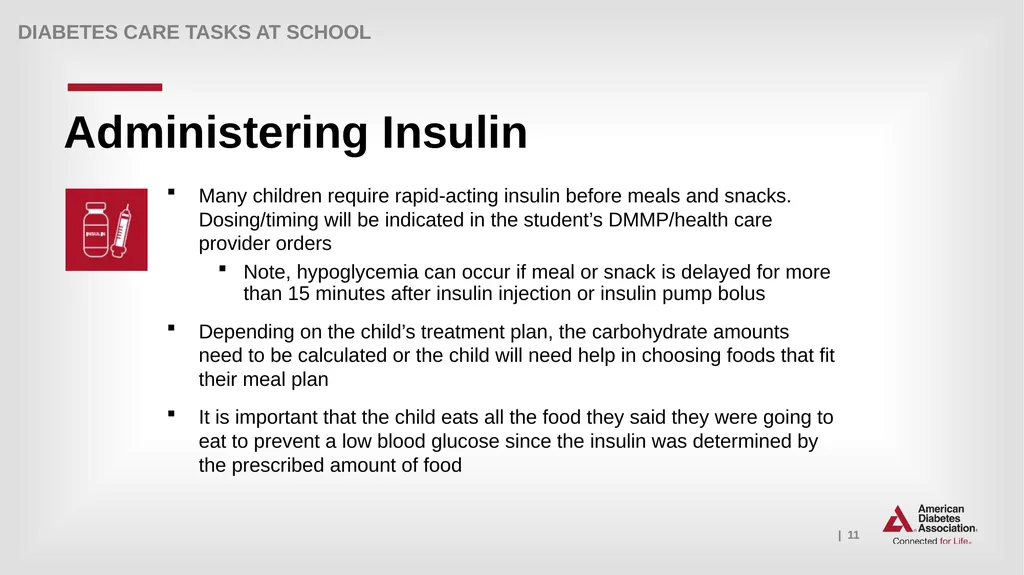
Many children require rapid-acting insulin before meals and snacks. Dosing/timing will be indicated in the student’s DMMP/health care provider orders
Note, hypoglycemia can occur if meal or snack is delayed for more than 15 minutes after insulin injection or insulin pump bolus
Depending on the child’s treatment plan, the carbohydrate amounts need to be calculated or the child will need help in choosing foods that fit their meal plan
It is important that the child eats all the food they said they were going to eat to prevent a low blood glucose since the insulin was determined by the prescribed amount of food Administering Insulin<br>
12
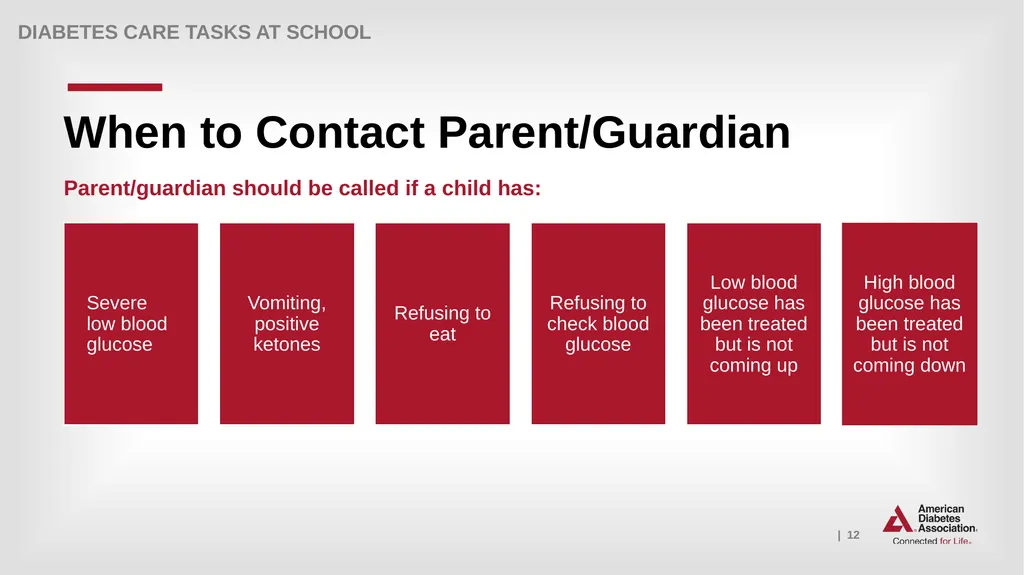
When to Contact Parent/Guardian Parent/guardian should be called if a child has:<br>
13
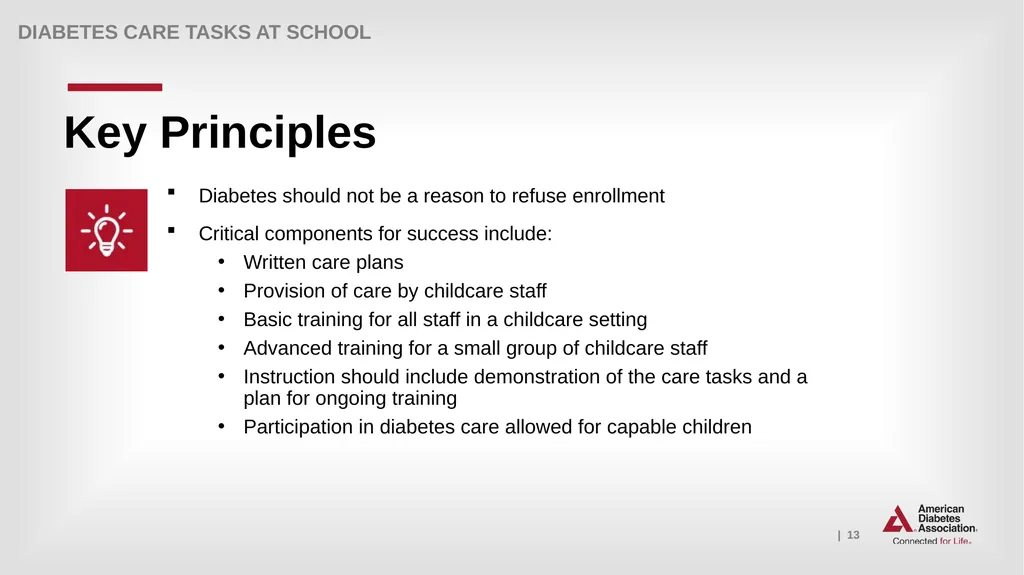
Diabetes should not be a reason to refuse enrollment
Critical components for success include:
Written care plans
Provision of care by childcare staff
Basic training for all staff in a childcare setting
Advanced training for a small group of childcare staff
Instruction should include demonstration of the care tasks and a plan for ongoing training
Participation in diabetes care allowed for capable children Key Principles<br>
14
Module 14 Pre- and Post-Tests: CHILD CARE This tool may be freely duplicated and distributed for training purposes<br>
15
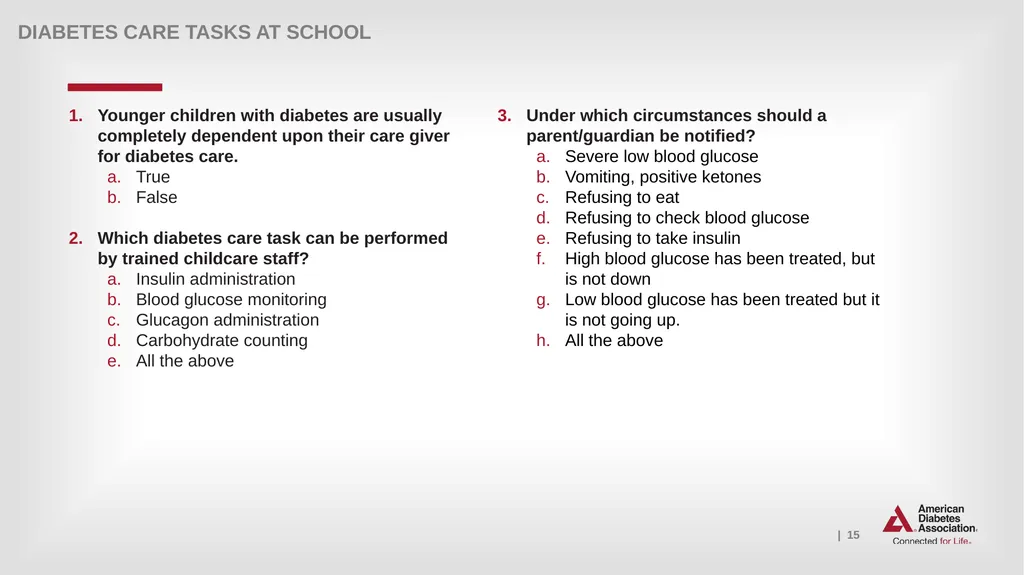
Younger children with diabetes are usually completely dependent upon their care giver for diabetes care.
True
False
Which diabetes care task can be performed by trained childcare staff?
Insulin administration
Blood glucose monitoring
Glucagon administration
Carbohydrate counting
All the above Under which circumstances should a parent/guardian be notified?
Severe low blood glucose
Vomiting, positive ketones
Refusing to eat
Refusing to check blood glucose
Refusing to take insulin
High blood glucose has been treated, but is not down
Low blood glucose has been treated but it is not going up.
All the above<br>
16
Disclaimer This presentation is not intended to provide legal or health care advice. Please consult with a legal or health care professional regarding your specific questions or needs.<br>
17
Where to Get More Information AMERICAN DIABETES ASSOCIATION
1-800-DIABETES (342-2383)
DIABETES.ORG/SAFEATSCHOOL<br>