What Key Personnel Need To Know PSYCHOSOCIAL ASPECTS Diabetes Care Tasks at School Understanding psychosocial aspects of diabetes is a vital piece of the Diabetes Medical Management Plan (DMMP). Optimal Student Health and Learning GOAL:
"What Key Personnel Need To Know PSYCHOSOCIAL" is the property of its rightful owner. Permission is granted to
download and print the materials on this website for personal, non-commercial use only, and to display it
on your personal computer provided you do not modify the materials and that you retain all copyright
notices contained in the materials. By downloading content from our website, you accept the terms of this
agreement.
Presentation Transcript
01
What Key Personnel Need To Know PSYCHOSOCIAL ASPECTS Diabetes Care Tasks at School<br>
02
Understanding psychosocial aspects of diabetes is a vital piece of the Diabetes Medical Management Plan (DMMP). Optimal Student Health and Learning GOAL:<br>
03
PARTICIPANTS WILL BE ABLE TO UNDERSTAND: Learning Objectives Strategies to help promote overall development and well-being
Shared-decision making
Developmental issues and their effect on diabetes<br>
04
Students with diabetes can do anything any other student can do
Students with diabetes are not fragile, sick, or immunocompromised (unless they have another condition)
Do not let the fact that the student has diabetes influence your style when interacting with them
Remain consistent. Rules are still rules. Expectations are still expectations.
Strategies to help promote overall development and well-being may vary depending on the student’s age Thriving with Diabetes<br>
05
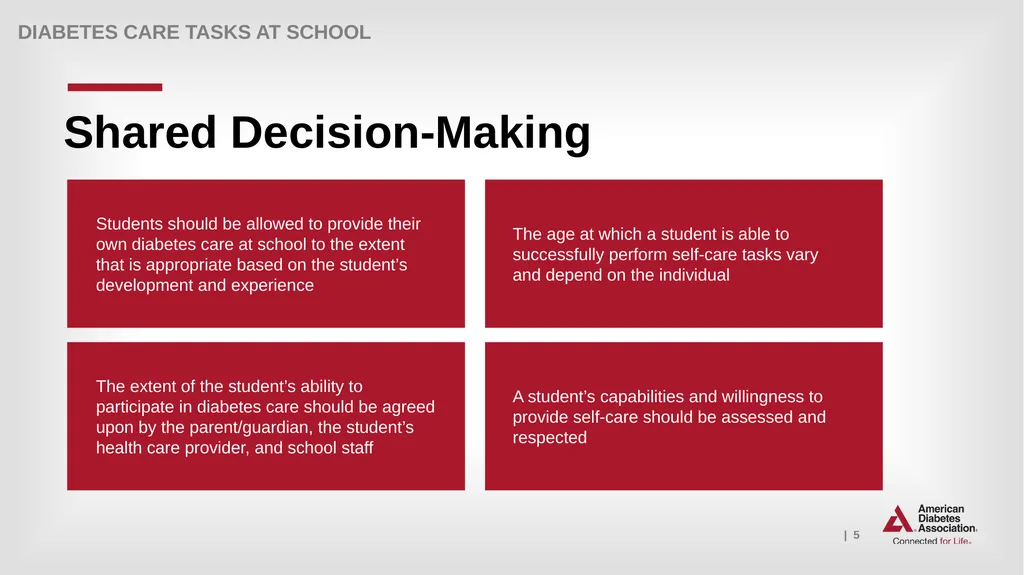
Shared Decision-Making Students should be allowed to provide their own diabetes care at school to the extent that is appropriate based on the student’s development and experience The extent of the student’s ability to participate in diabetes care should be agreed upon by the parent/guardian, the student’s health care provider, and school staff The age at which a student is able to successfully perform self-care tasks vary and depend on the individual A student’s capabilities and willingness to provide self-care should be assessed and respected<br>
06
Explaining diabetes in a developmentally appropriate way
The importance of language/communication
Helping the child or student cooperate with injections and blood glucose checks
Strategies for cooperating with site rotation
Handling food refusals/mealtime behaviors
The importance of routines and structure
Understanding if the student’s behavior is due to blood glucose (blood sugar) or just toddler/preschooler behavior Preschoolers and Toddlers<br>
07
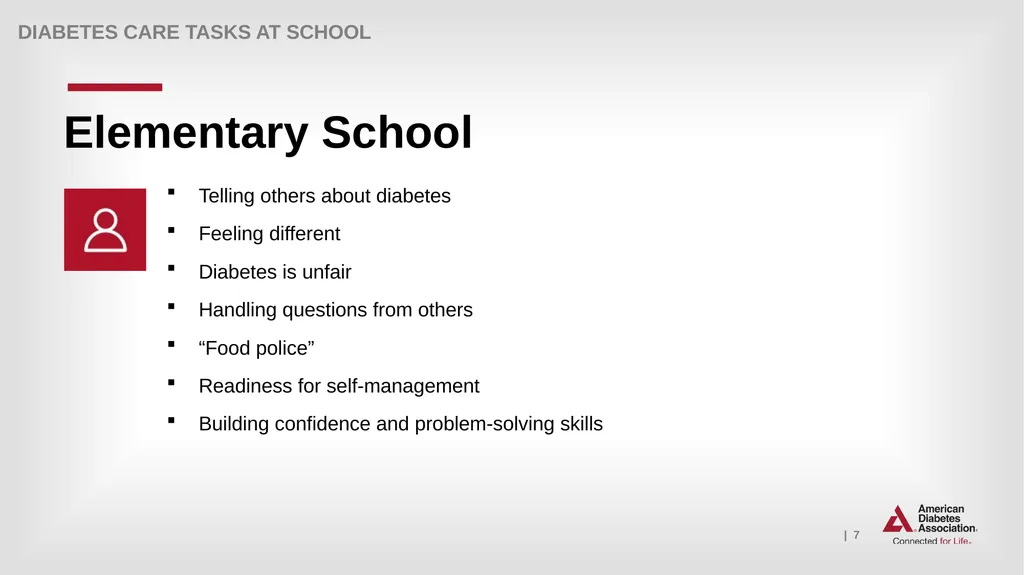
Telling others about diabetes
Feeling different
Diabetes is unfair
Handling questions from others
“Food police”
Readiness for self-management
Building confidence and problem-solving skills Elementary School<br>
08
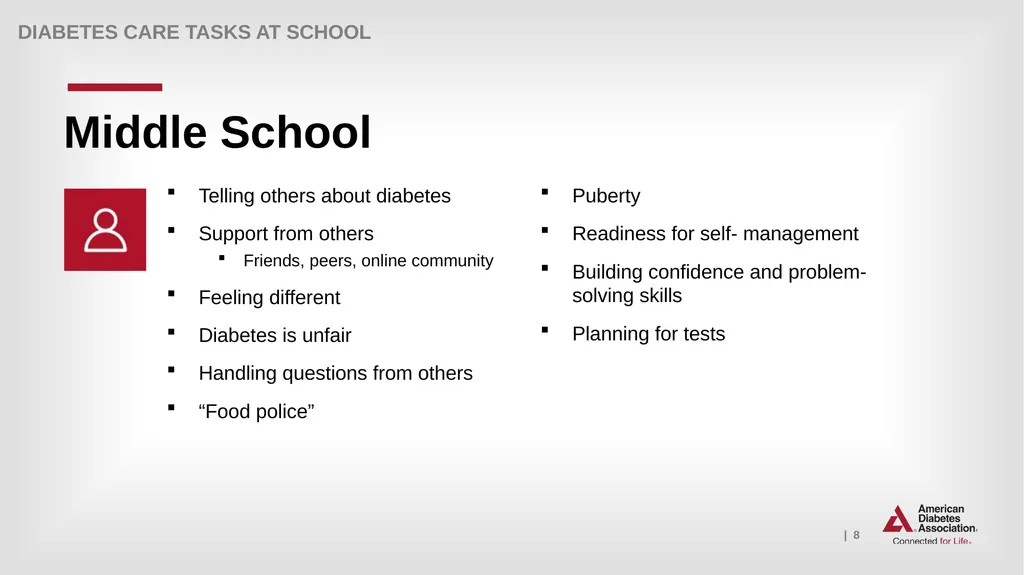
Telling others about diabetes
Support from others
Friends, peers, online community
Feeling different
Diabetes is unfair
Handling questions from others
“Food police” Middle School Puberty
Readiness for self- management
Building confidence and problem-solving skills
Planning for tests<br>
09
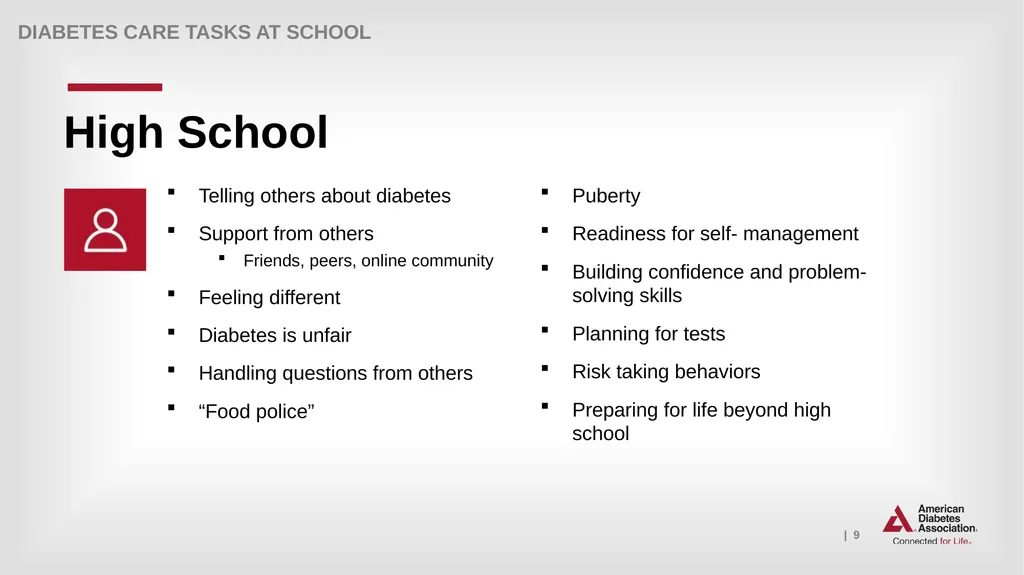
Telling others about diabetes
Support from others
Friends, peers, online community
Feeling different
Diabetes is unfair
Handling questions from others
“Food police” High School Puberty
Readiness for self- management
Building confidence and problem-solving skills
Planning for tests
Risk taking behaviors
Preparing for life beyond high school<br>
10
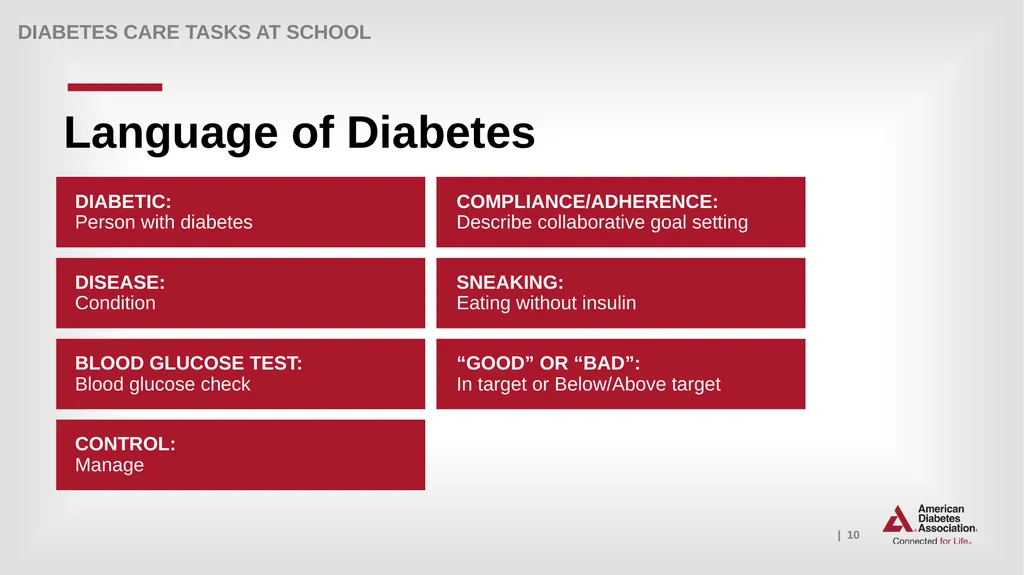
Language of Diabetes DIABETIC: Person with diabetes COMPLIANCE/ADHERENCE: Describe collaborative goal setting DISEASE: Condition SNEAKING: Eating without insulin BLOOD GLUCOSE TEST: Blood glucose check “GOOD” OR “BAD”: In target or Below/Above target CONTROL: Manage<br>
11
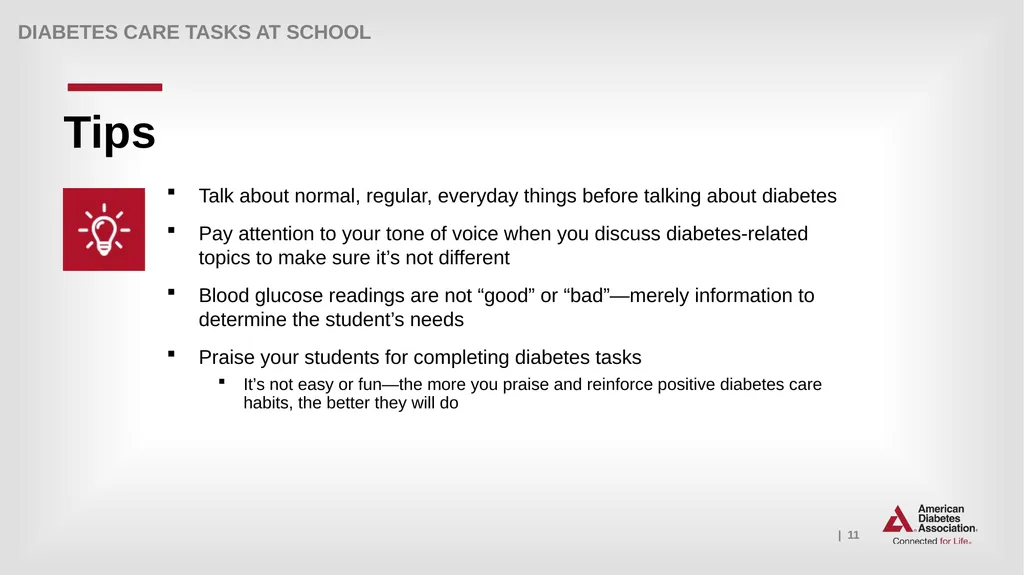
Talk about normal, regular, everyday things before talking about diabetes
Pay attention to your tone of voice when you discuss diabetes-related topics to make sure it’s not different
Blood glucose readings are not “good” or “bad”—merely information to determine the student’s needs
Praise your students for completing diabetes tasks
It’s not easy or fun—the more you praise and reinforce positive diabetes care habits, the better they will do Tips<br>
12
Module 13 Pre- and Post-Tests: PSYCHOSOCIAL ASPECTS This tool may be freely duplicated and distributed for training purposes<br>
13
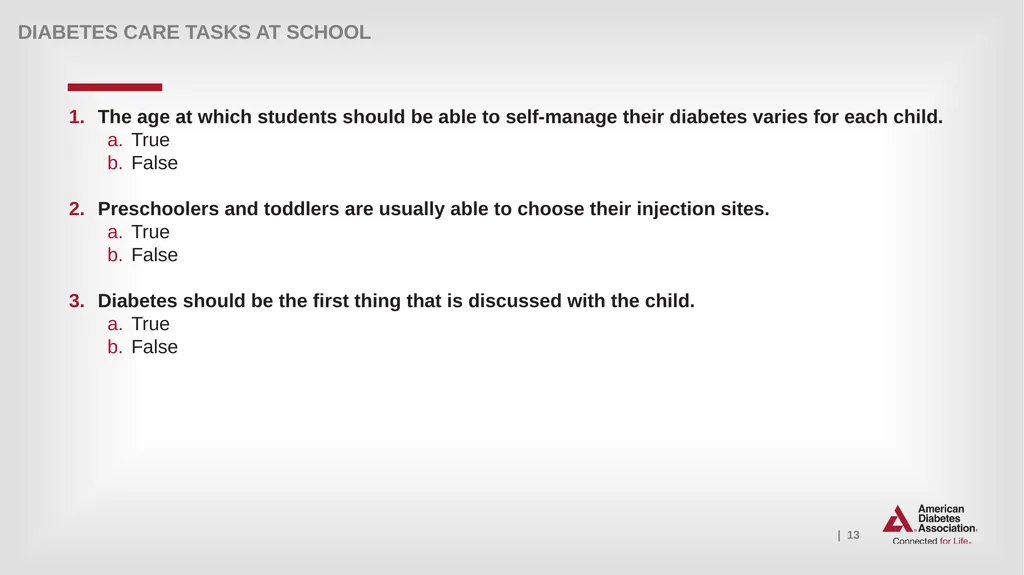
The age at which students should be able to self-manage their diabetes varies for each child.
True
False
Preschoolers and toddlers are usually able to choose their injection sites.
True
False
Diabetes should be the first thing that is discussed with the child.
True
False<br>
14
Disclaimer This presentation is not intended to provide legal or health care advice. Please consult with a legal or health care professional regarding your specific questions or needs.<br>
15
Where to Get More Information AMERICAN DIABETES ASSOCIATION
1-800-DIABETES (342-2383)
DIABETES.ORG/SAFEATSCHOOL<br>