04
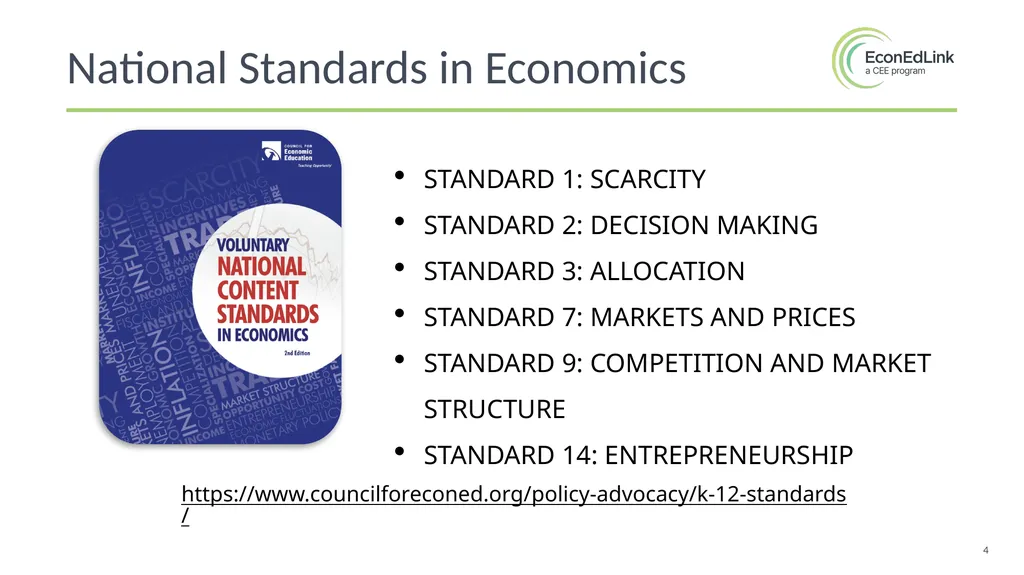
National Standards in Economics 4 https://www.councilforeconed.org/policy-advocacy/k-12-standards/ STANDARD 1: SCARCITY
STANDARD 2: DECISION MAKING
STANDARD 3: ALLOCATION
STANDARD 7: MARKETS AND PRICES
STANDARD 9: COMPETITION AND MARKET STRUCTURE
STANDARD 14: ENTREPRENEURSHIP<br>
05
Session Agenda Introduction
Book Background and Concept Connections
Lesson Plans and Activities
Resources and Support Materials
Conclusion and Survey 5<br>
06
Objectives You will be able to:
Explore the merits of using children’s picture books that have been made into movies to teach economics and financial literacy.
Examine the lessons and activities provided to support the presented material.
Discuss social issues featured in books by Roald Dahl. 6 It is to be noted that the students do not need to have read the
books or seen the movies to successfully complete the lessons.<br>
07
Book Background and Concept Connections<br>
08
But be an opportunist –
A popular movie will generate interest in a book. It’s not a coincidence that The Hunger Games Trilogy was on the USA Today Bestseller List six straight weeks before the movie release date. Movie Popularity<br>
09
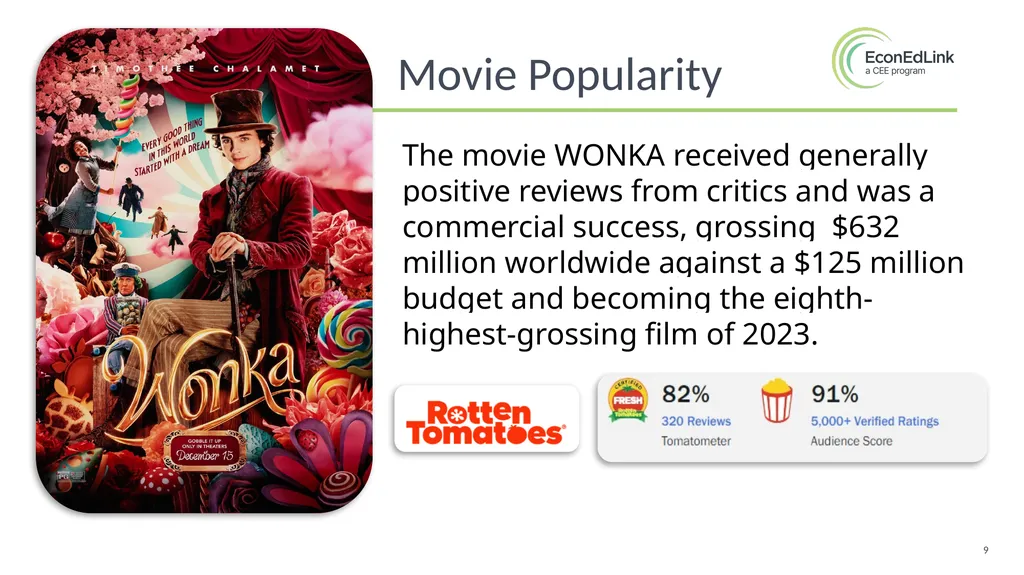
9 The movie WONKA received generally positive reviews from critics and was a commercial success, grossing $632 million worldwide against a $125 million budget and becoming the eighth-highest-grossing film of 2023. Movie Popularity<br>
10
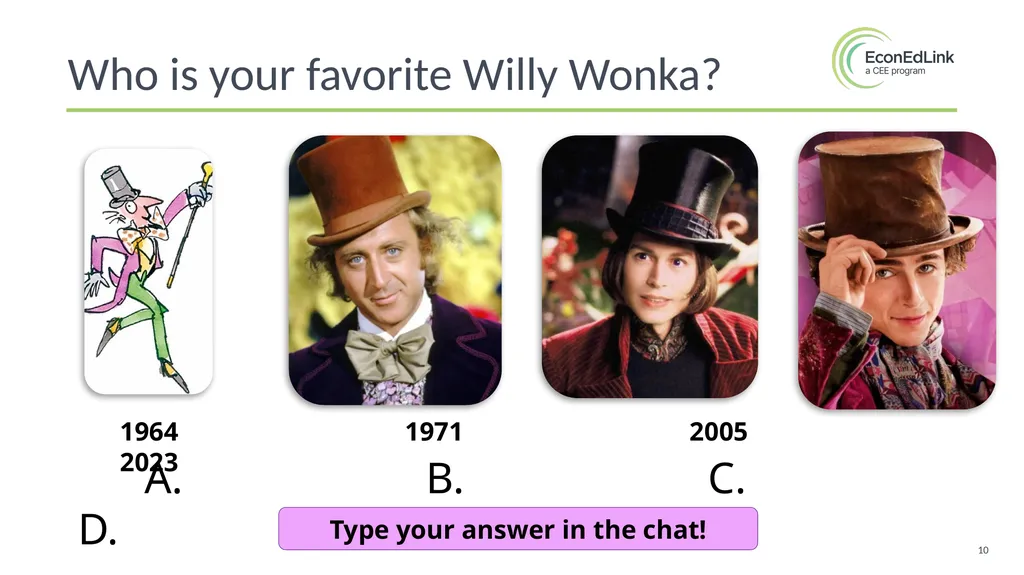
10 A. B. C. D. 1964 1971 2005 2023 Type your answer in the chat! Who is your favorite Willy Wonka?<br>
11
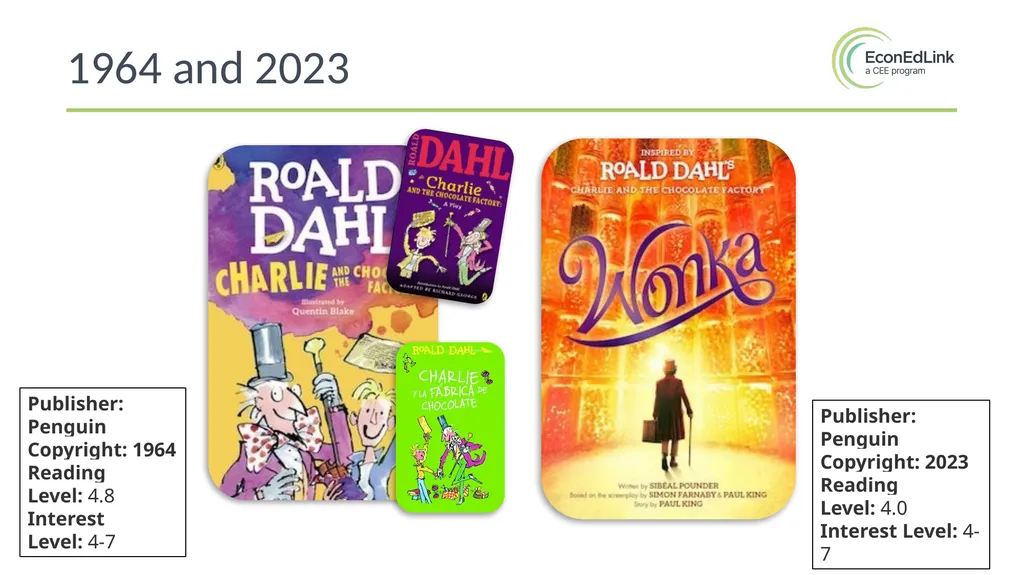
Publisher: Penguin
Copyright: 1964
Reading Level: 4.8
Interest Level: 4-7 Publisher: Penguin
Copyright: 2023
Reading Level: 4.0
Interest Level: 4-7 1964 and 2023<br>
12
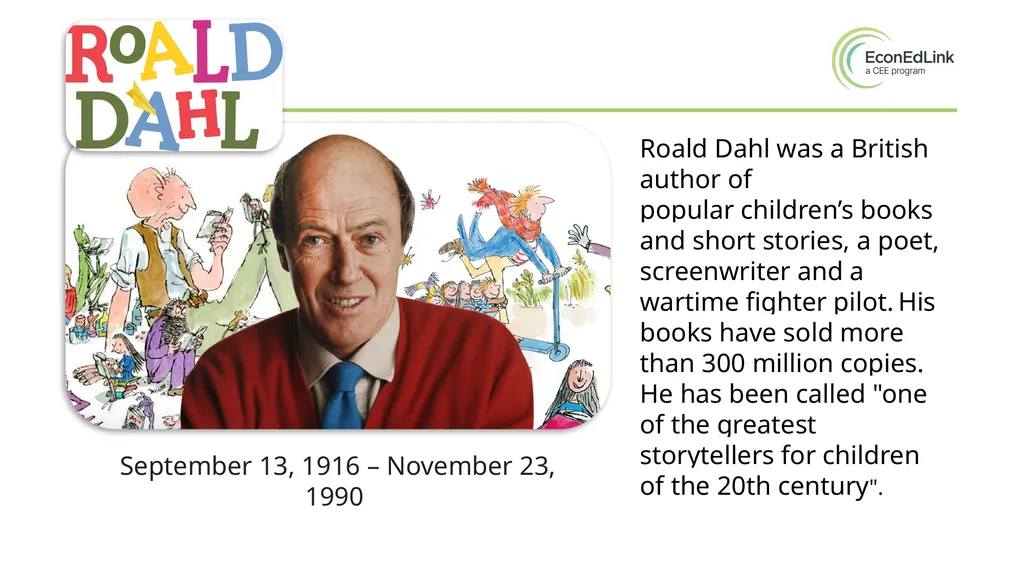
September 13, 1916 – November 23, 1990 Roald Dahl was a British author of popular children’s books and short stories, a poet, screenwriter and a wartime fighter pilot. His books have sold more than 300 million copies. He has been called "one of the greatest storytellers for children of the 20th century".<br>
13
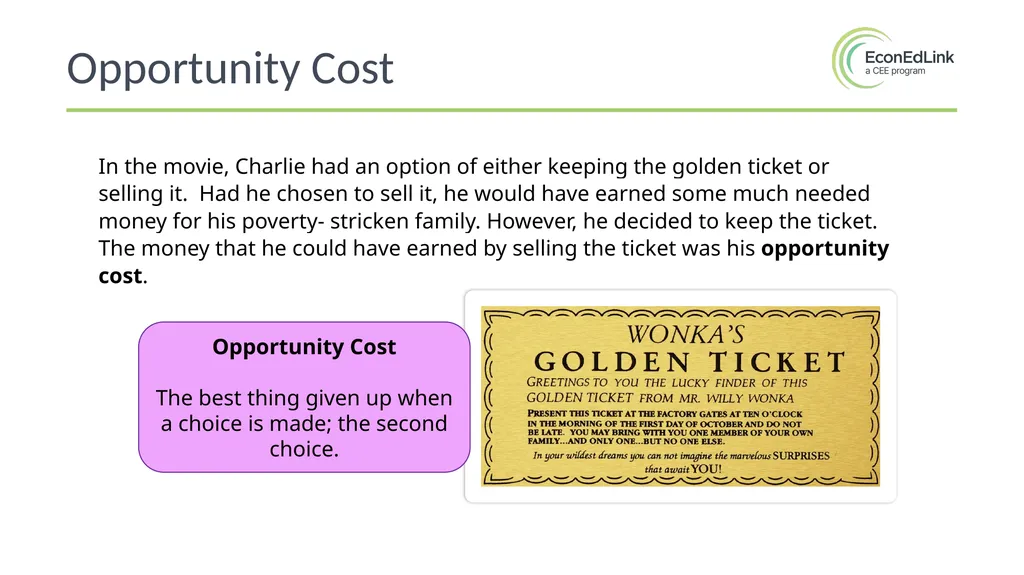
In the movie, Charlie had an option of either keeping the golden ticket or selling it. Had he chosen to sell it, he would have earned some much needed money for his poverty- stricken family. However, he decided to keep the ticket. The money that he could have earned by selling the ticket was his opportunity cost. Opportunity Cost
The best thing given up when a choice is made; the second choice. Opportunity Cost<br>
14
The compelling situation that defines the plot of the Willy Wonka stories.
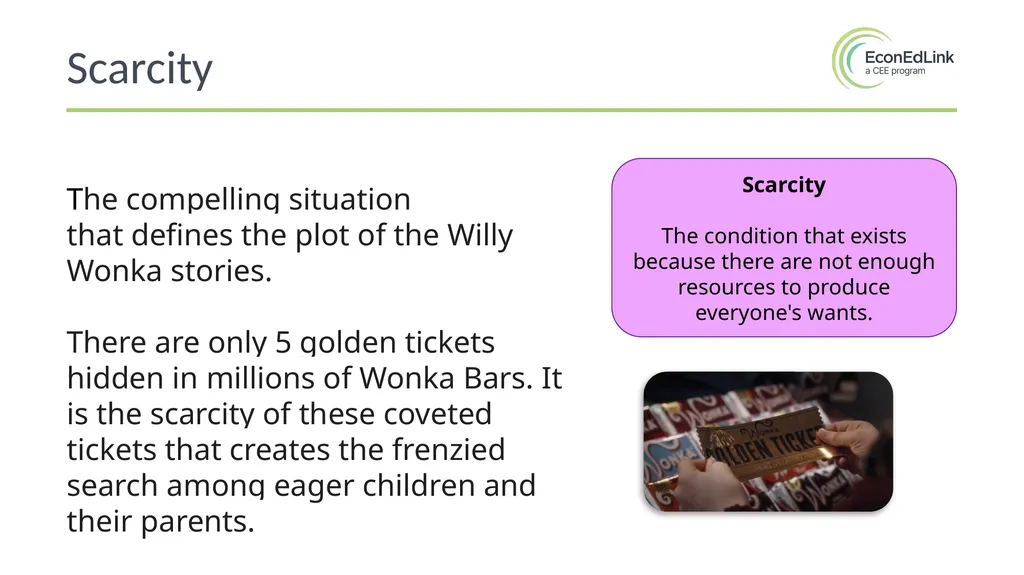
There are only 5 golden tickets hidden in millions of Wonka Bars. It is the scarcity of these coveted tickets that creates the frenzied search among eager children and their parents. Scarcity Scarcity
The condition that exists because there are not enough resources to produce everyone's wants.<br>
15
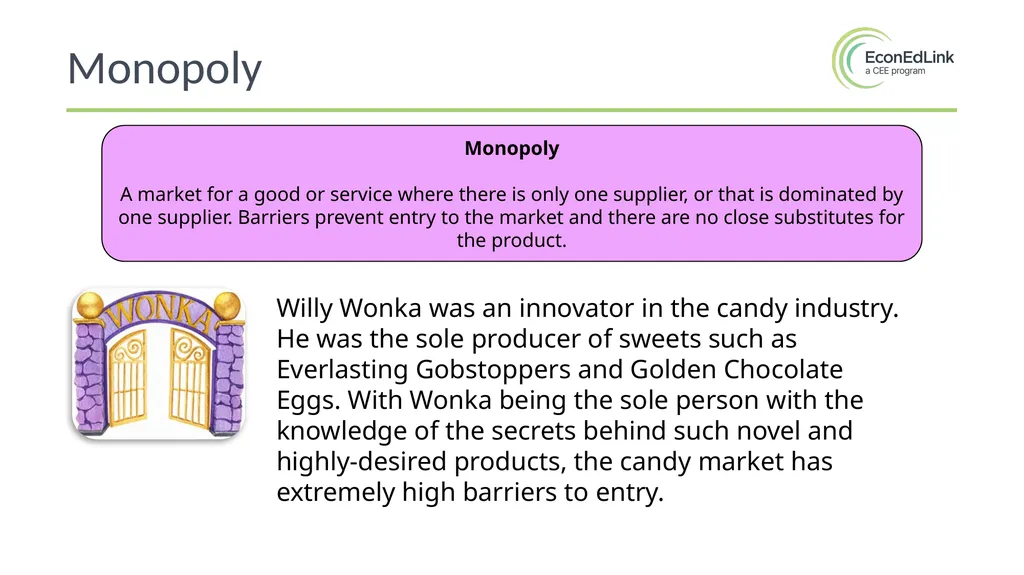
Monopoly
A market for a good or service where there is only one supplier, or that is dominated by one supplier. Barriers prevent entry to the market and there are no close substitutes for the product. Willy Wonka was an innovator in the candy industry. He was the sole producer of sweets such as Everlasting Gobstoppers and Golden Chocolate Eggs. With Wonka being the sole person with the knowledge of the secrets behind such novel and highly-desired products, the candy market has extremely high barriers to entry. Monopoly<br>
16
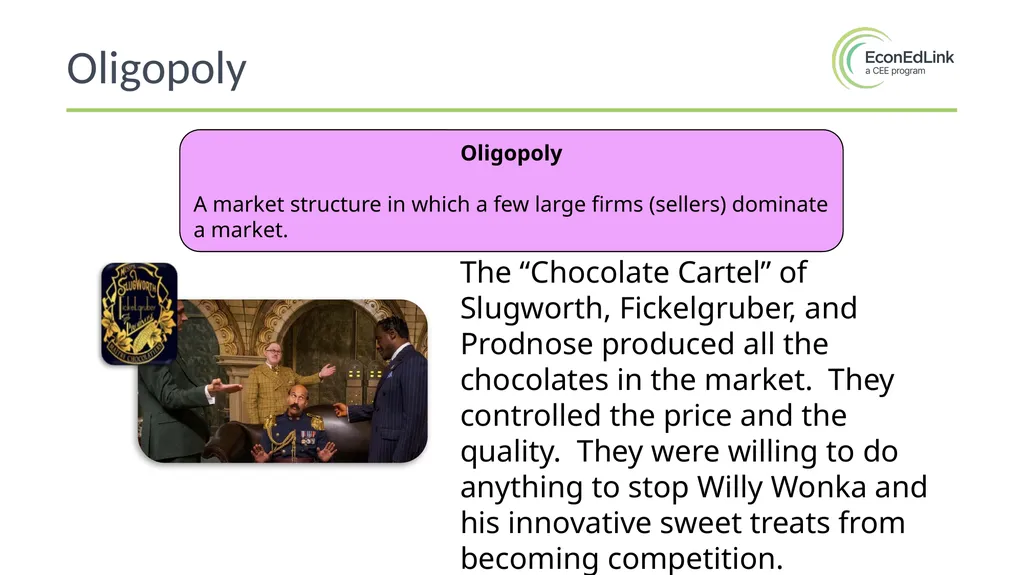
Oligopoly
A market structure in which a few large firms (sellers) dominate a market. The “Chocolate Cartel” of Slugworth, Fickelgruber, and Prodnose produced all the chocolates in the market. They controlled the price and the quality. They were willing to do anything to stop Willy Wonka and his innovative sweet treats from becoming competition. Oligopoly<br>
17
Lesson Plans and Activities<br>
18
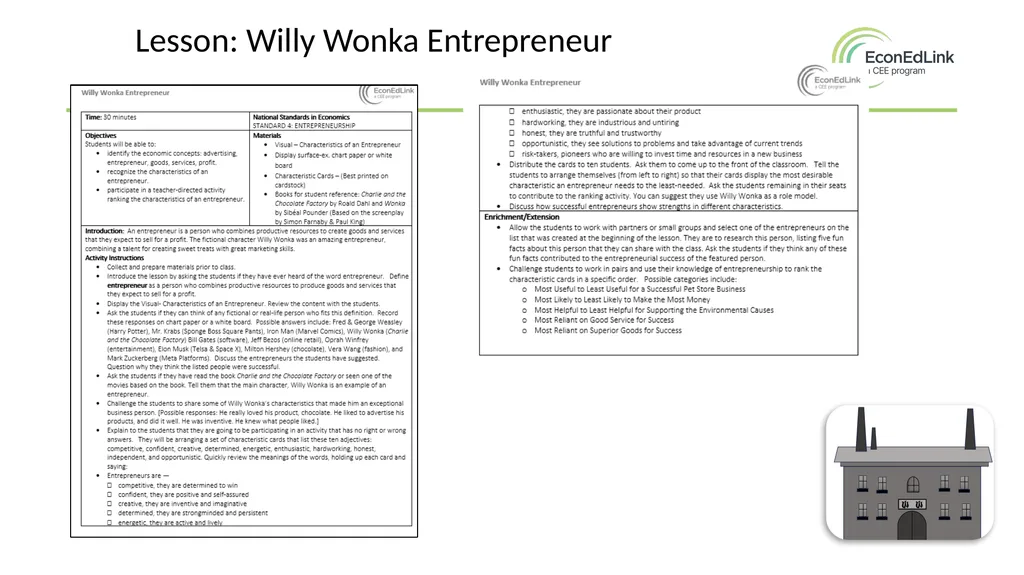
Lesson: Willy Wonka Entrepreneur<br>
19
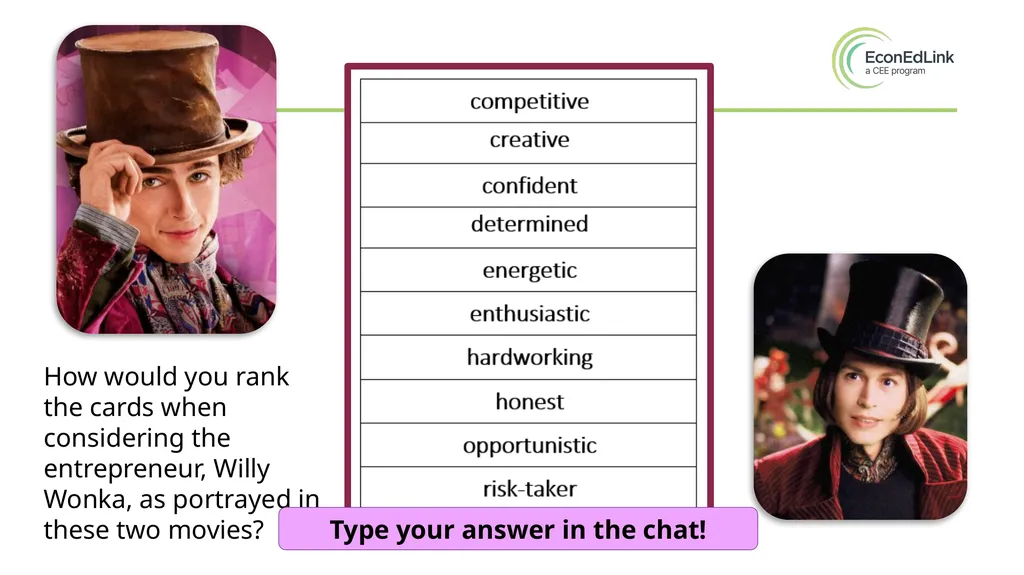
How would you rank the cards when considering the entrepreneur, Willy Wonka, as portrayed in these two movies? Type your answer in the chat!<br>
20
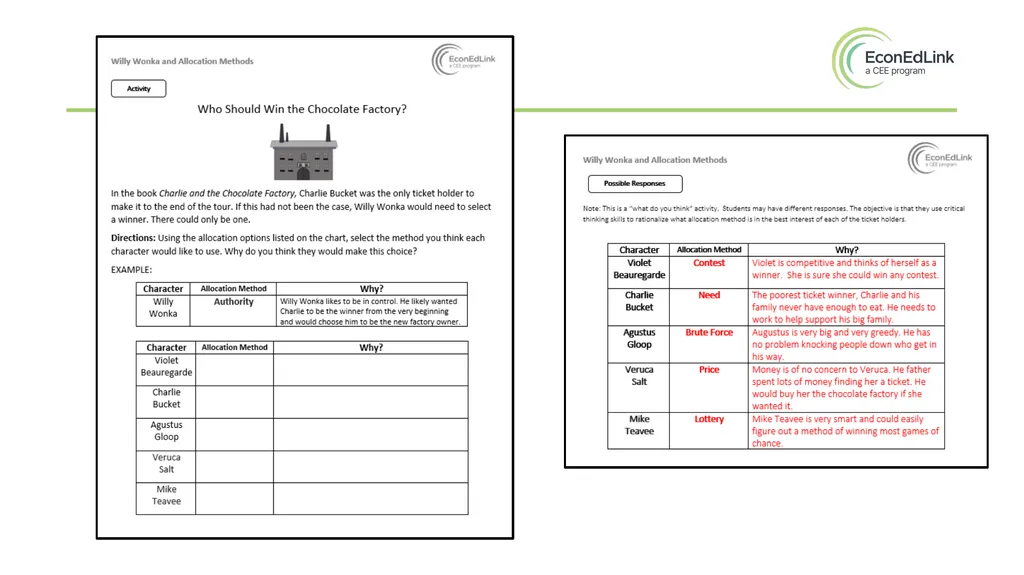
Lesson: Willy Wonka and Allocation Methods<br>
21
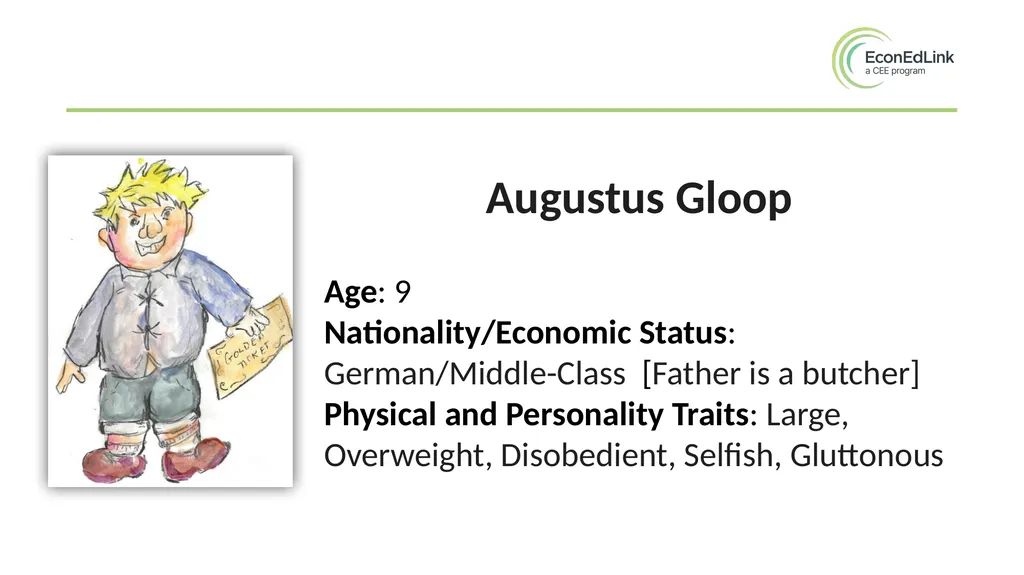
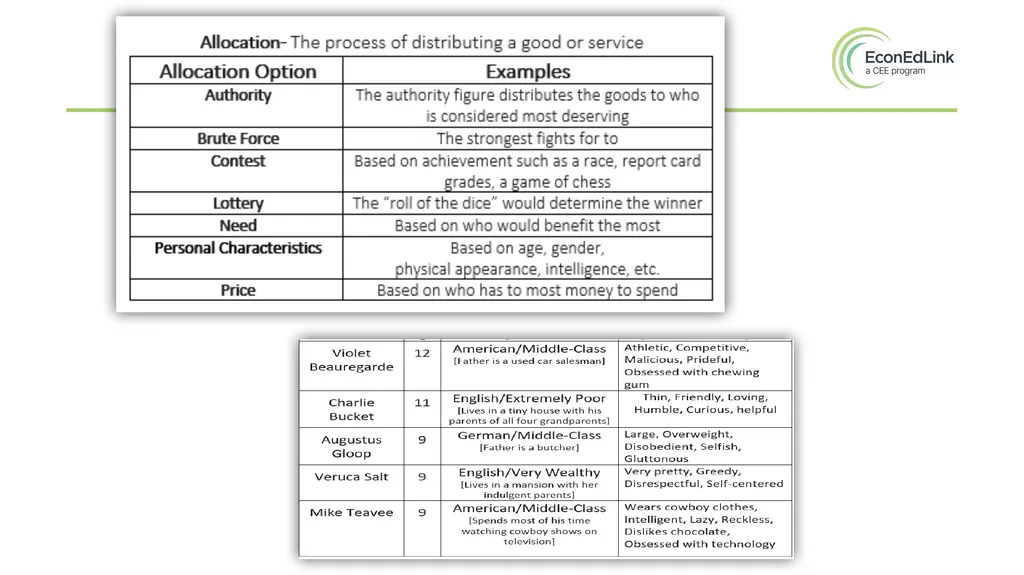
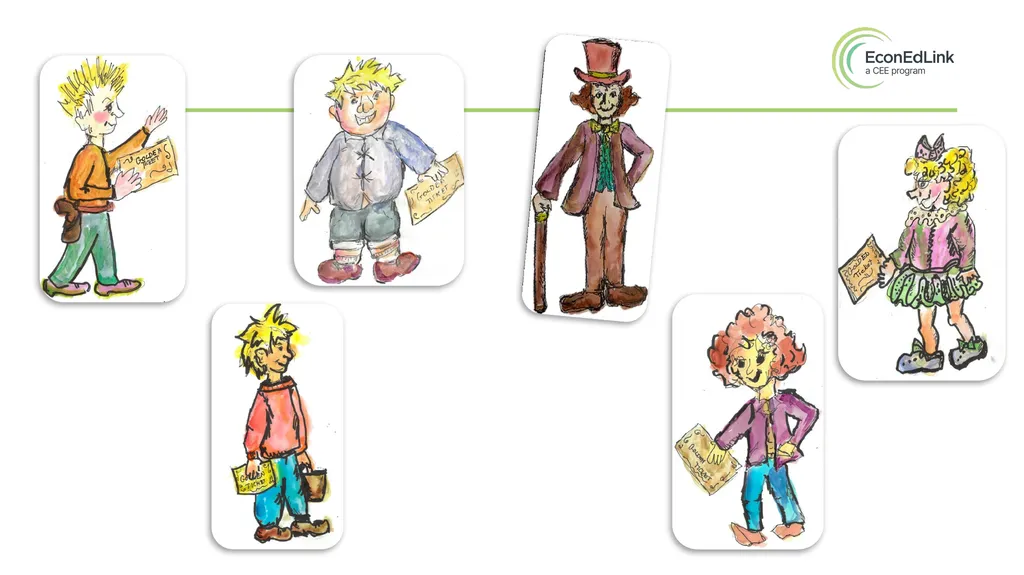
Augustus Gloop
Age: 9
Nationality/Economic Status: German/Middle-Class [Father is a butcher]
Physical and Personality Traits: Large, Overweight, Disobedient, Selfish, Gluttonous<br>
22
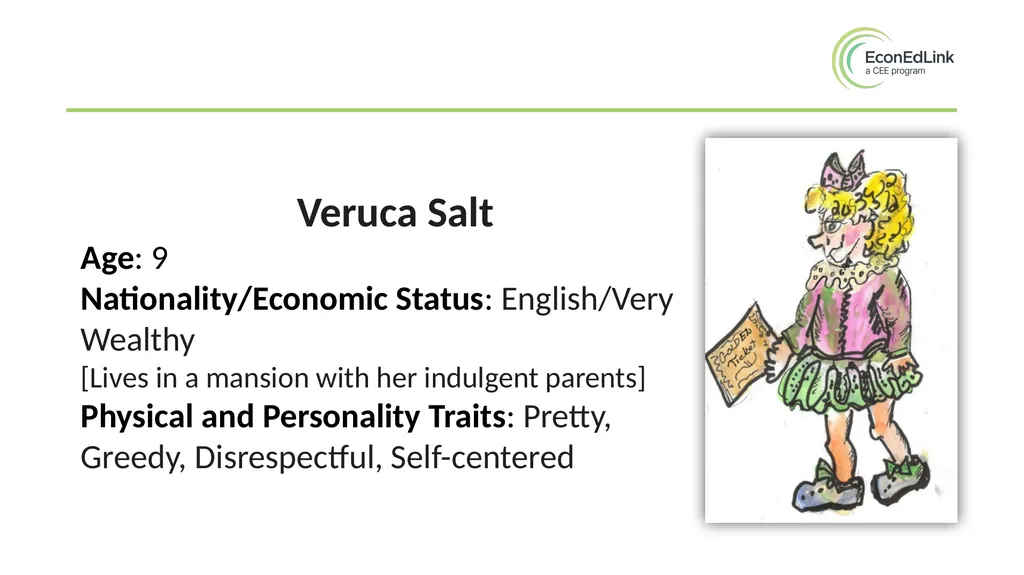
Veruca Salt
Age: 9
Nationality/Economic Status: English/Very Wealthy
[Lives in a mansion with her indulgent parents]
Physical and Personality Traits: Pretty, Greedy, Disrespectful, Self-centered<br>
23
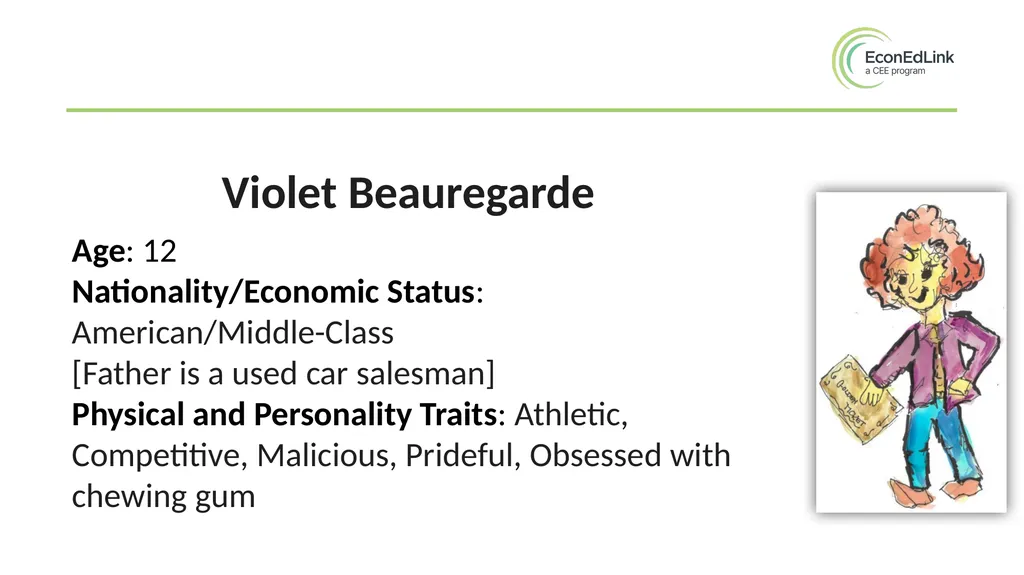
Violet Beauregarde
Age: 12
Nationality/Economic Status: American/Middle-Class
[Father is a used car salesman]
Physical and Personality Traits: Athletic, Competitive, Malicious, Prideful, Obsessed with chewing gum<br>
24
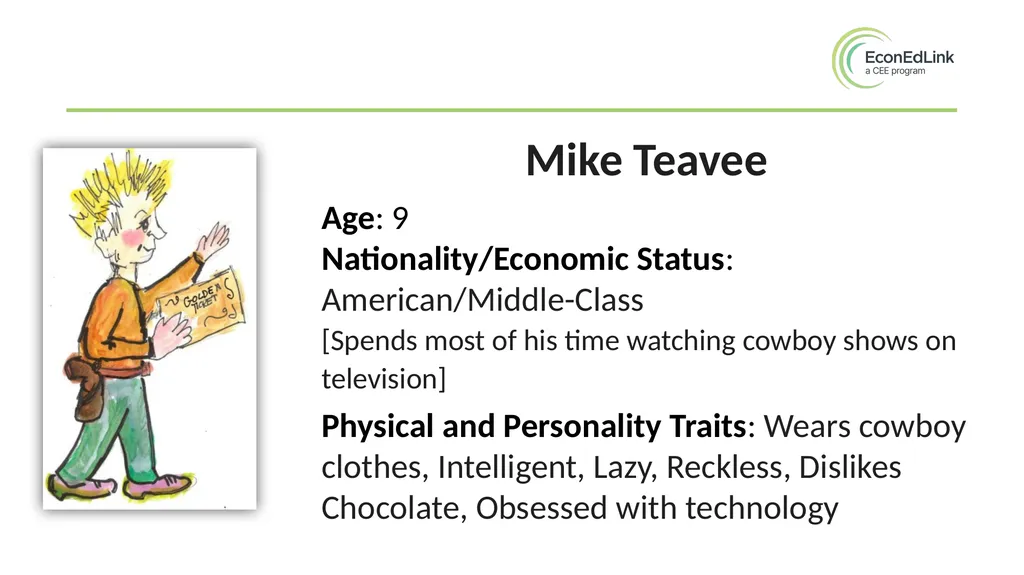
Mike Teavee
Age: 9
Nationality/Economic Status: American/Middle-Class
[Spends most of his time watching cowboy shows on television]
Physical and Personality Traits: Wears cowboy clothes, Intelligent, Lazy, Reckless, Dislikes Chocolate, Obsessed with technology<br>
25
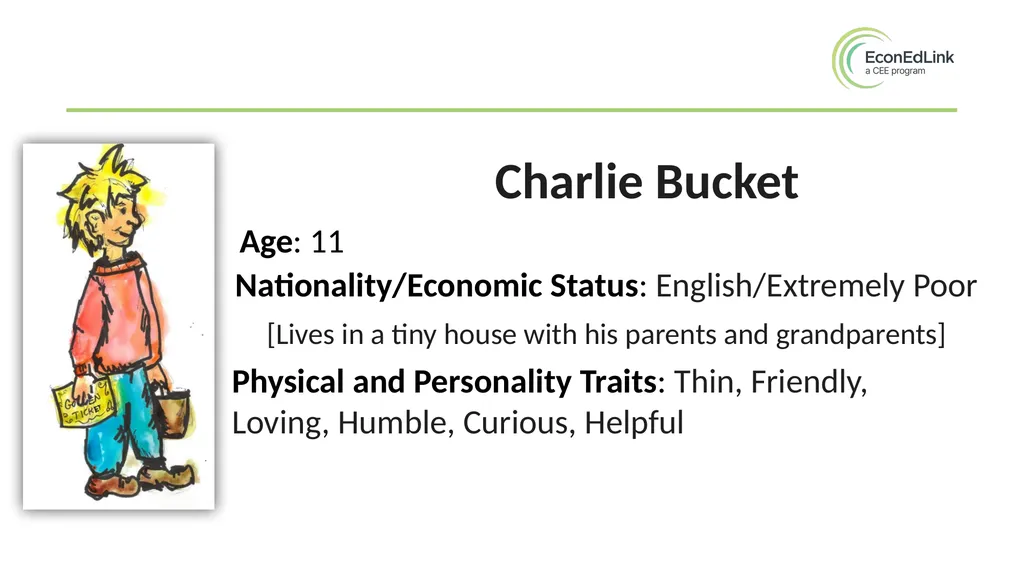
Charlie Bucket
Age: 11
Nationality/Economic Status: English/Extremely Poor
[Lives in a tiny house with his parents and grandparents]
Physical and Personality Traits: Thin, Friendly,
Loving, Humble, Curious, Helpful<br>
26
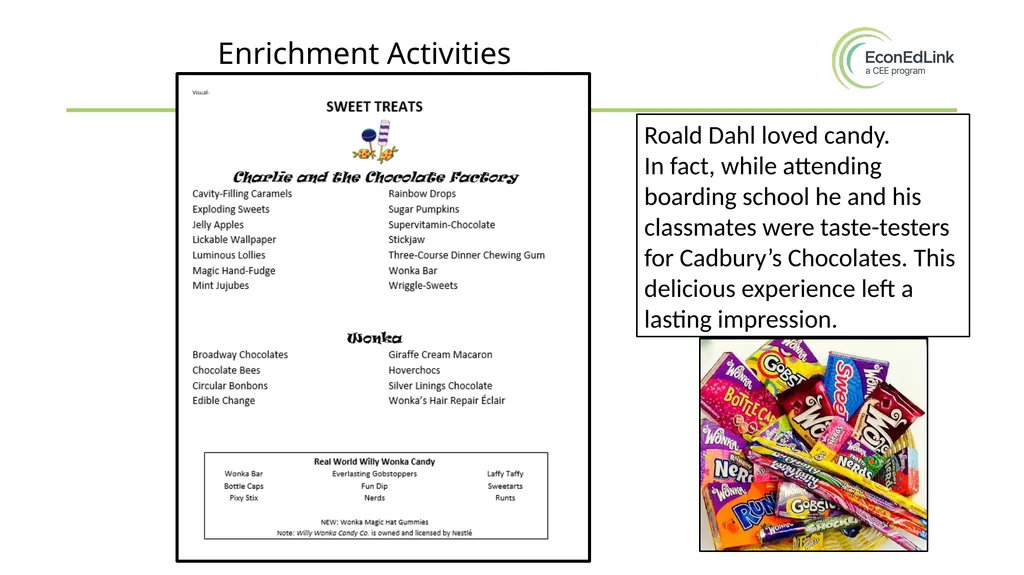
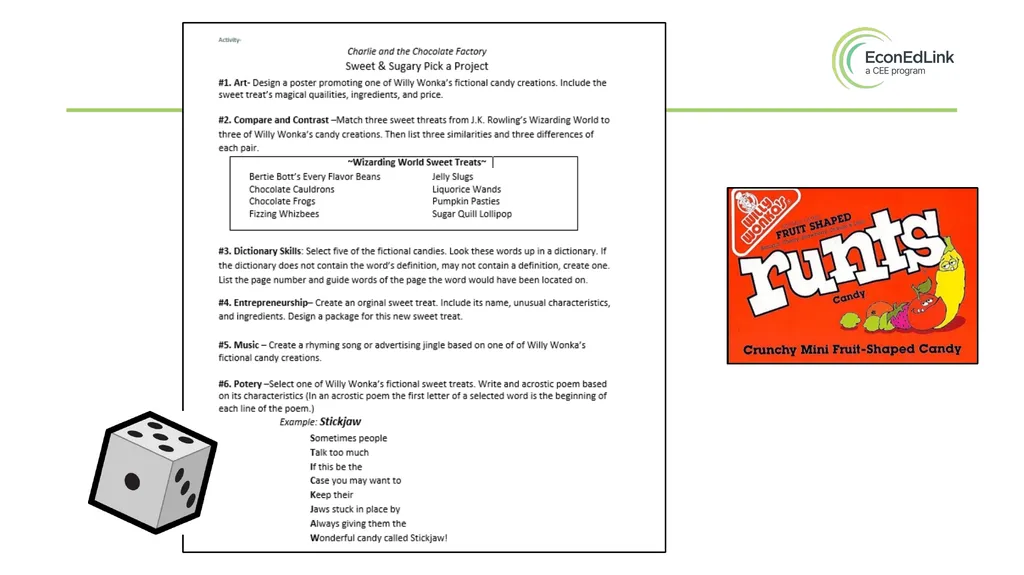
Roald Dahl loved candy.
In fact, while attending boarding school he and his classmates were taste-testers for Cadbury’s Chocolates. This delicious experience left a lasting impression. Enrichment Activities<br>
27
Support Materials and Fun Stuff<br>
28
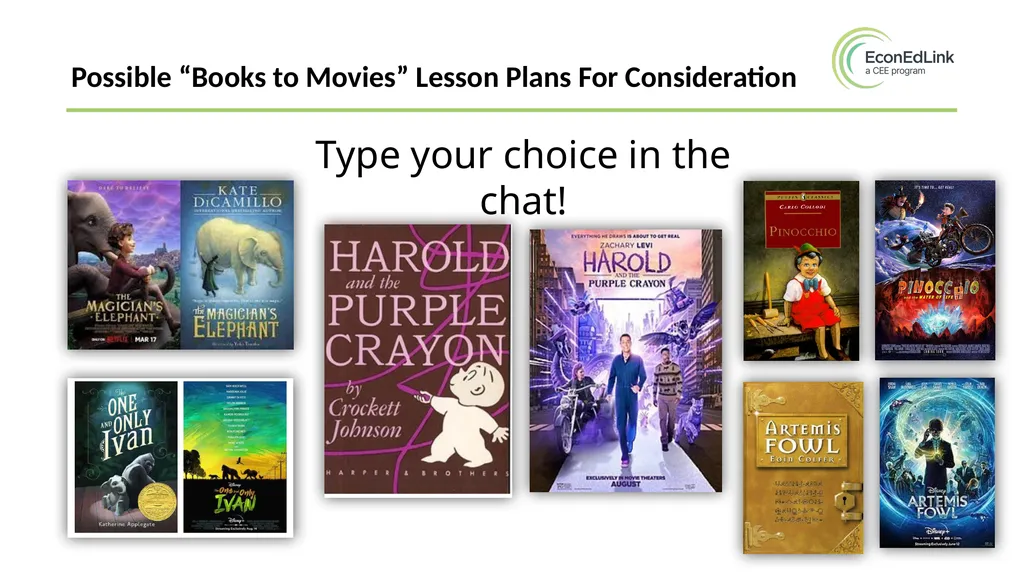
Possible “Books to Movies” Lesson Plans For Consideration Type your choice in the chat!<br>
29
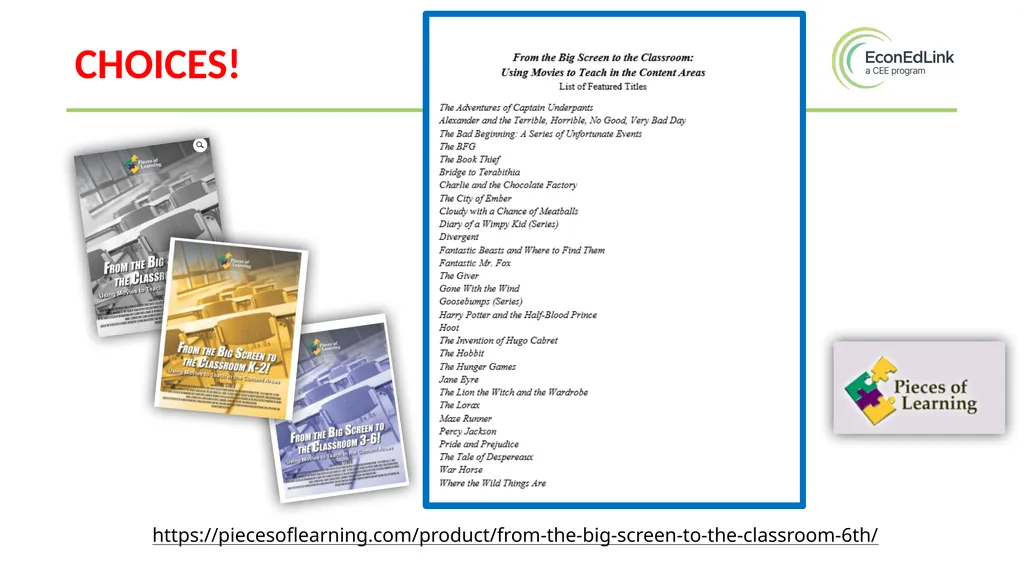
CHOICES! https://piecesoflearning.com/product/from-the-big-screen-to-the-classroom-6th/<br>
31
35 Willy Wonka and the Chocolate Factory appears to be a rags-to-riches story. Charlie Bucket, a poor boy, gets a lucky break, and through his moral righteousness makes all his dreams come true.
In the last line of the movie, Willy Wonka says:
“But Charlie...don't forget what happened to the man who suddenly got everything he always wanted. He lived happily ever after.”
Consider this:
King Midas wanted everything he touched to turn to gold, then found he couldn't eat or give his daughter a hug.<br>