04
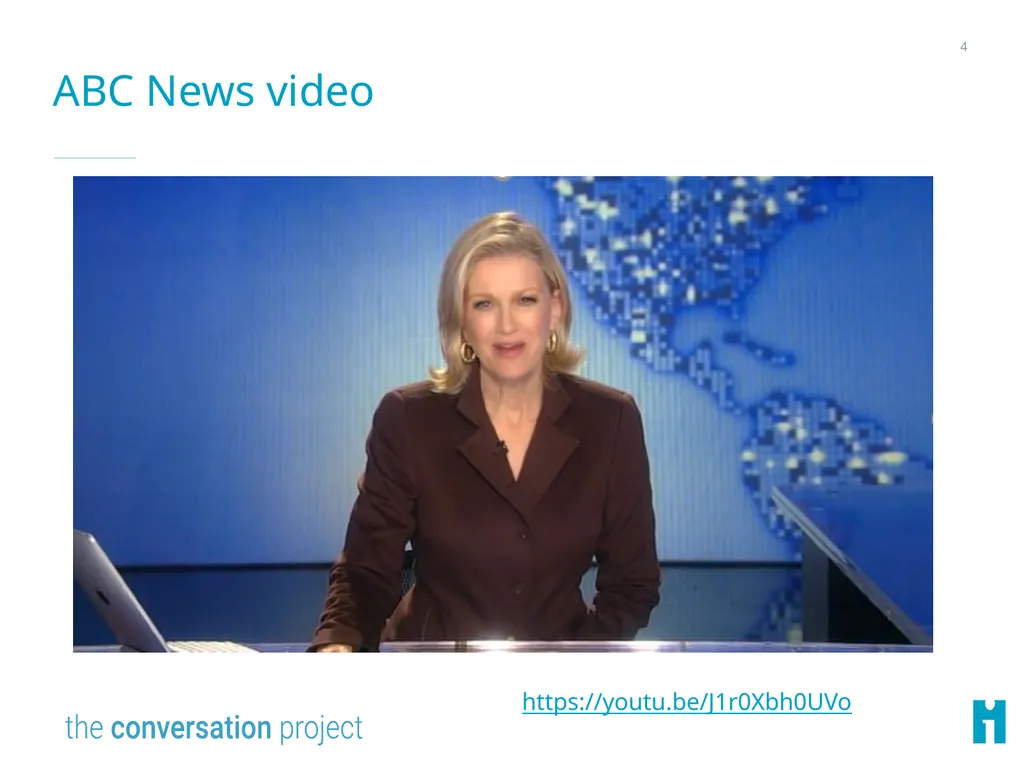
ABC News video 4 https://youtu.be/J1r0Xbh0UVo<br>
05
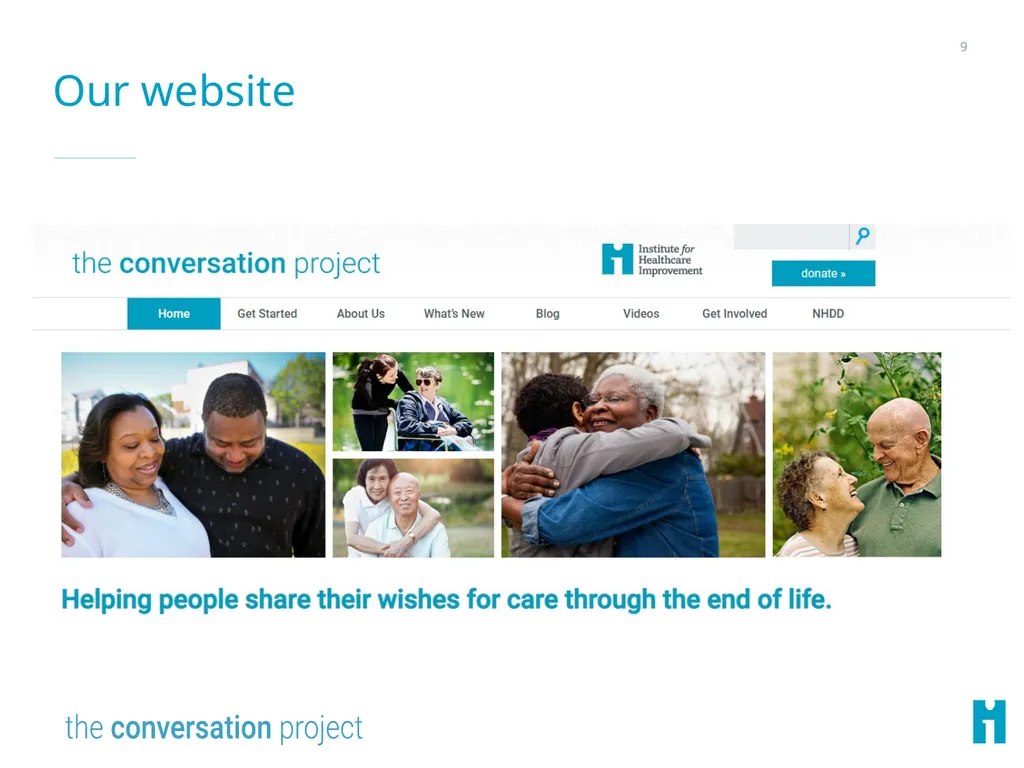
Helping people share their wishes for care through the end of life Helping people share their wishes for care through the end of life 5<br>
06
Why talking matters We can’t plan for everything. But we can share what matters to us with the people who matter most to us.
Talking creates the foundation of a care plan built on our values—a plan that will be available when the need arises. 6<br>
07
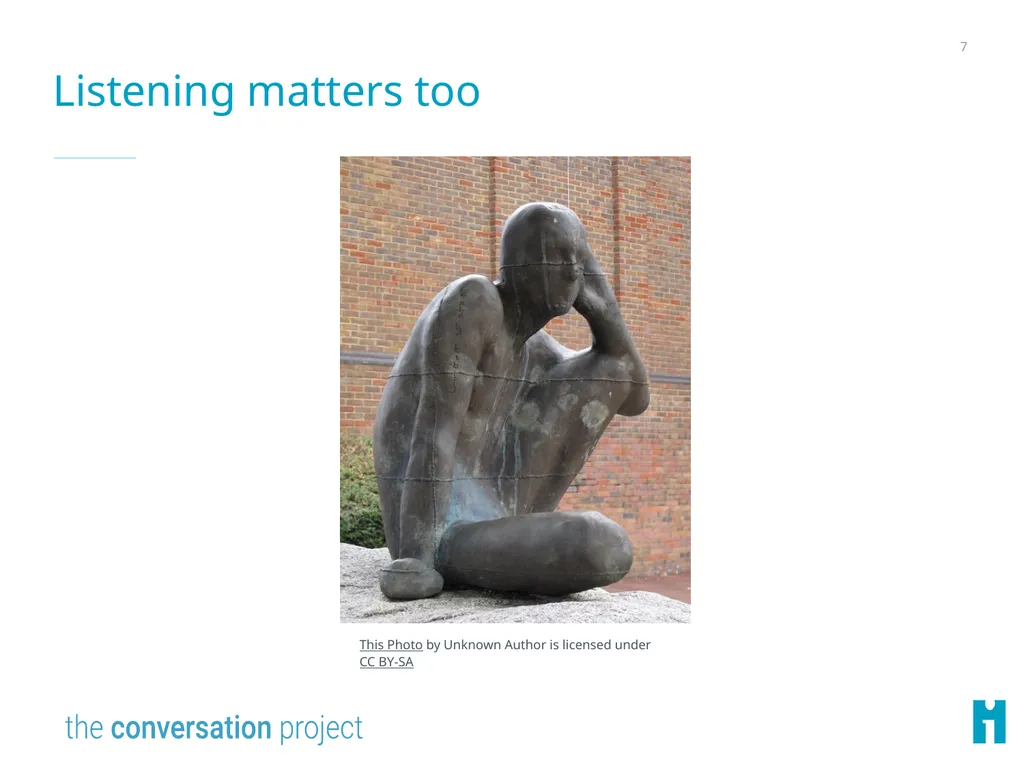
Listening matters too This Photo by Unknown Author is licensed under CC BY-SA 7<br>
08
Our ultimate goal, after all, is not a good death but a good life to the very end.� ~ Atul Gawande 8<br>
10
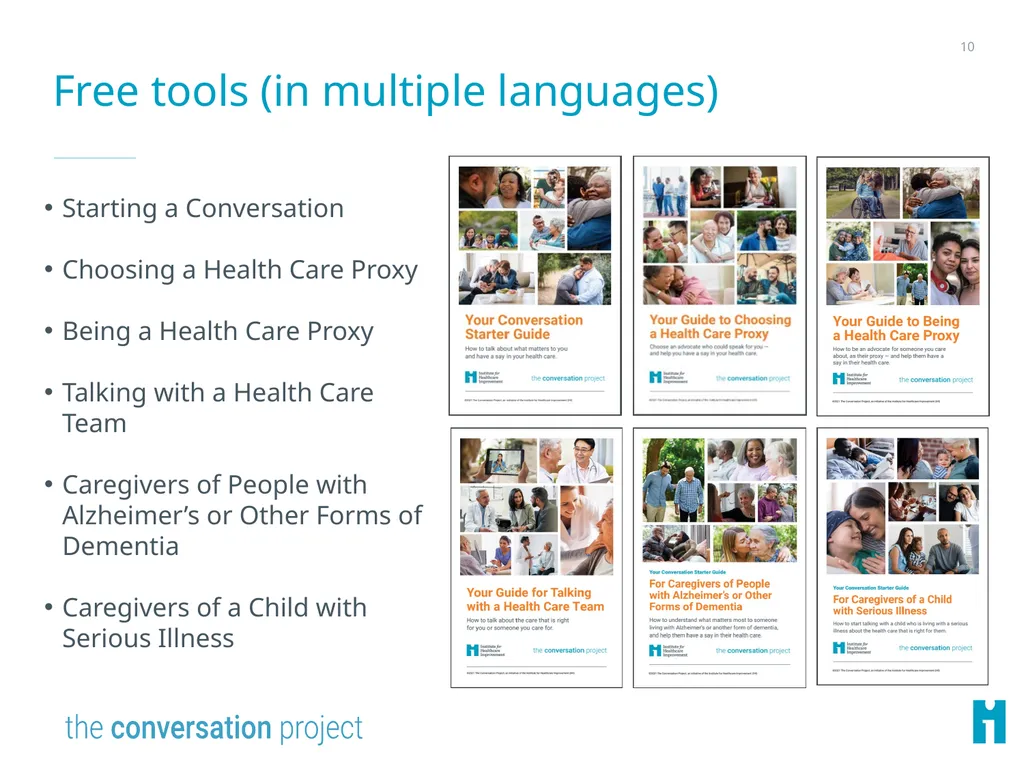
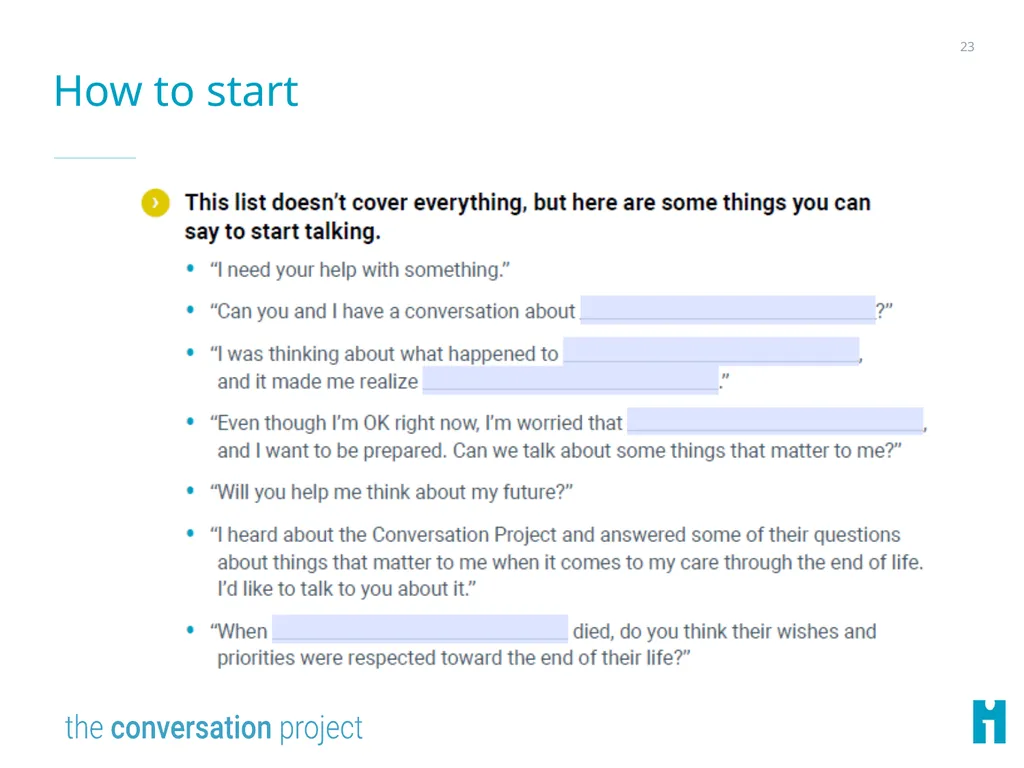
Free tools (in multiple languages) Starting a Conversation
Choosing a Health Care Proxy
Being a Health Care Proxy
Talking with a Health Care Team
Caregivers of People with Alzheimer’s or Other Forms of Dementia
Caregivers of a Child with Serious Illness 10<br>
11
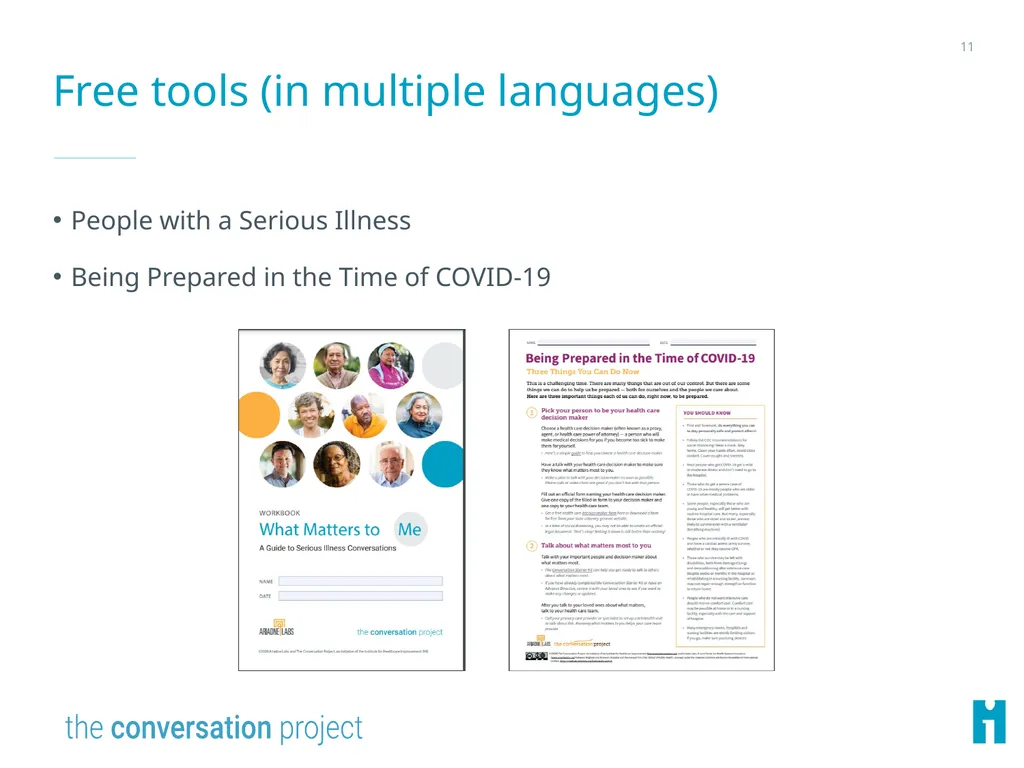
Free tools (in multiple languages) People with a Serious Illness
Being Prepared in the Time of COVID-19 11<br>
12
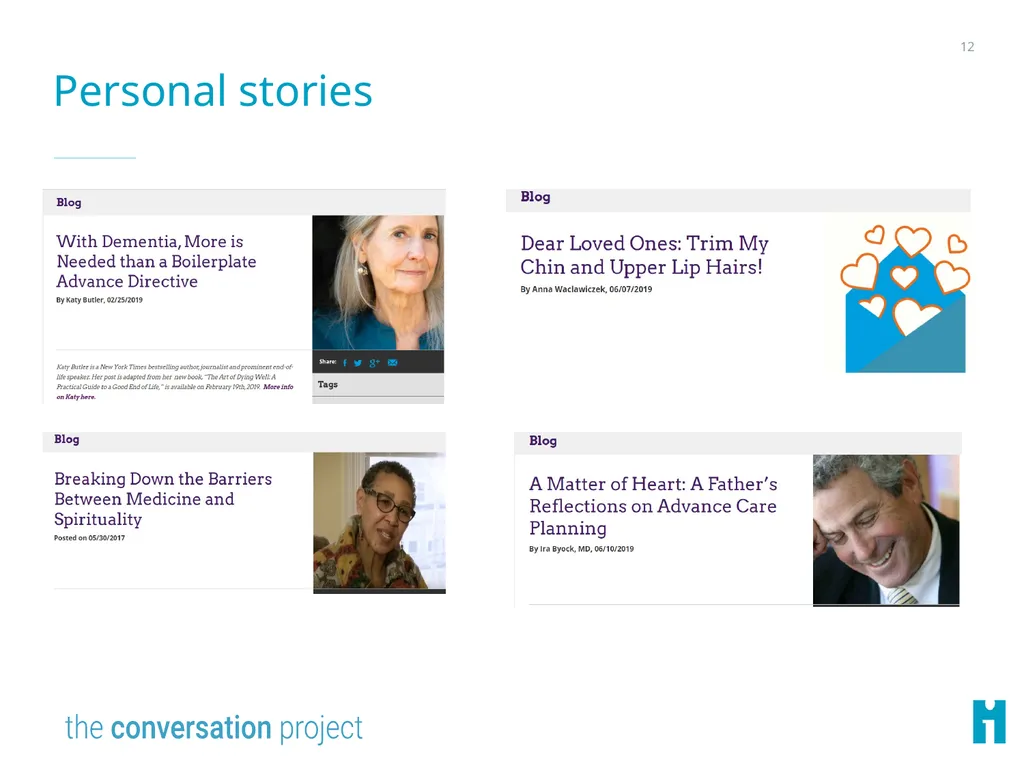
Personal stories 12<br>
13
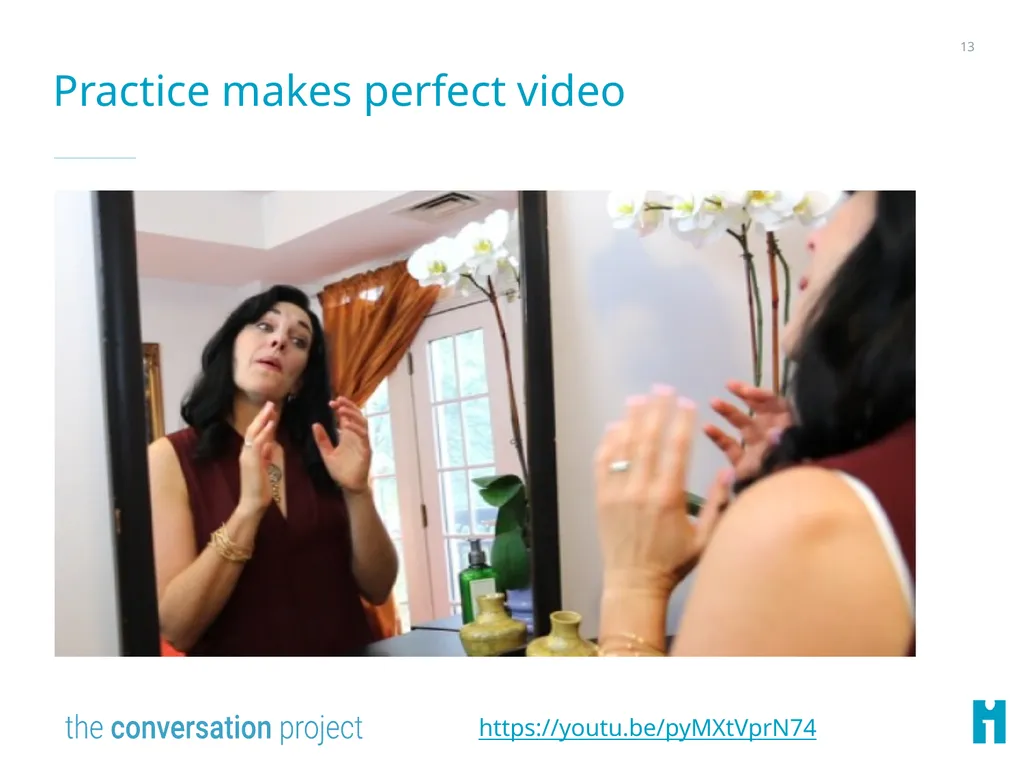
Practice makes perfect video https://youtu.be/pyMXtVprN74 13<br>
14
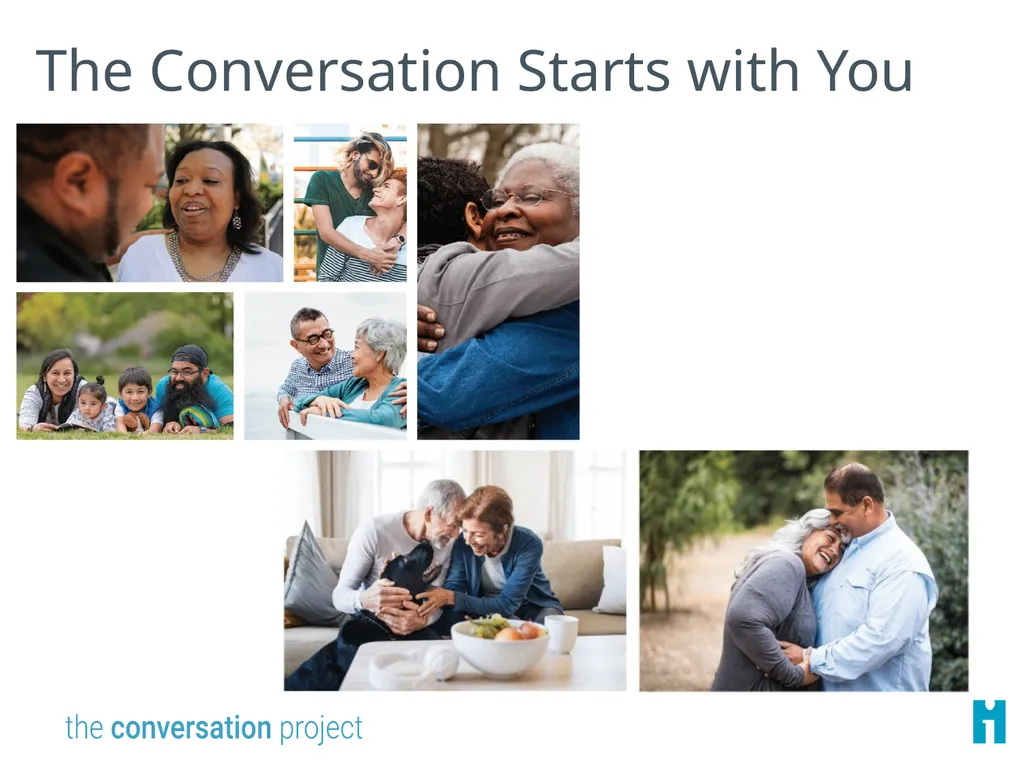
The Conversation Starts with You<br>
15
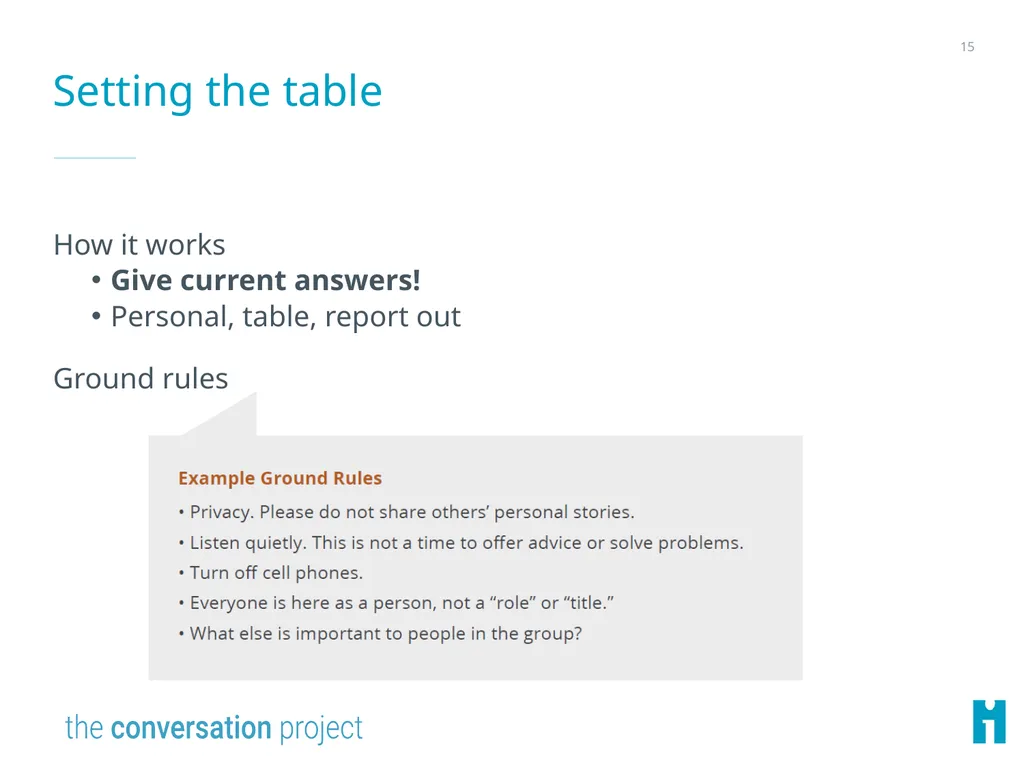
Setting the table How it works
Give current answers!
Personal, table, report out
Ground rules 15<br>
16
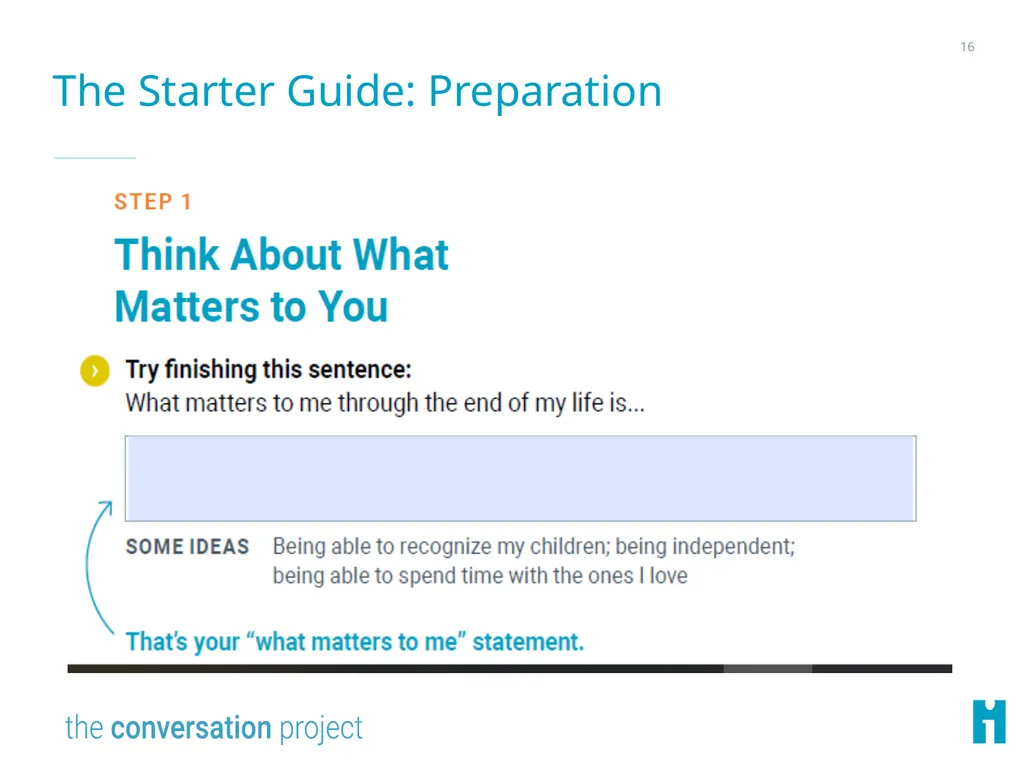
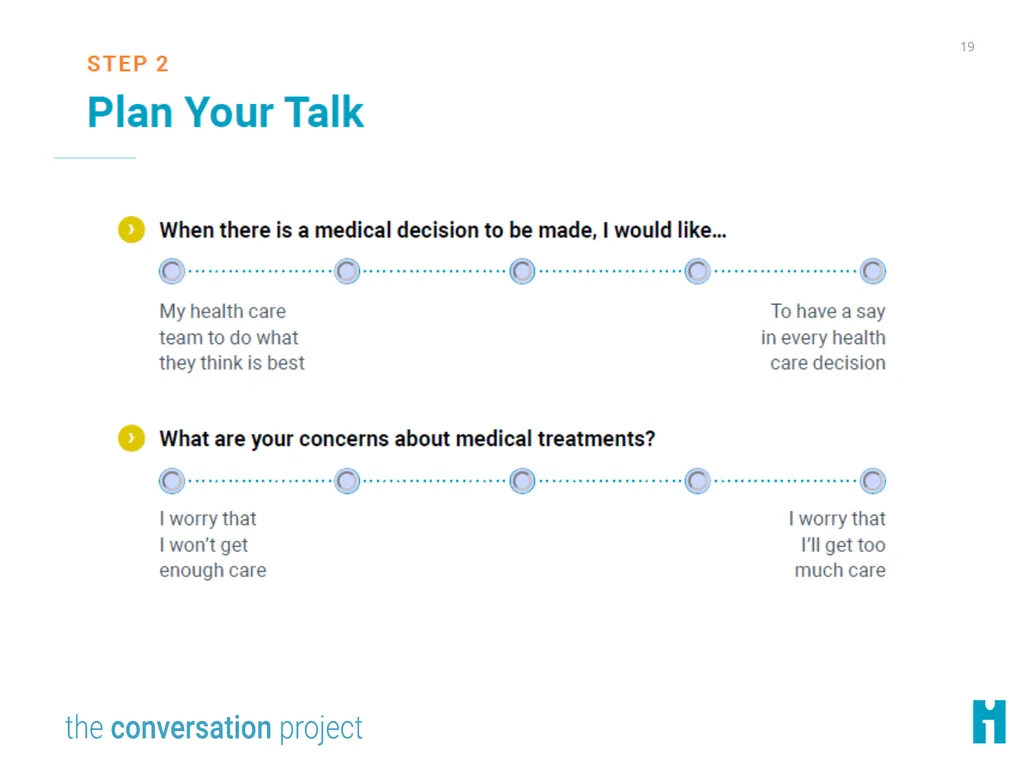
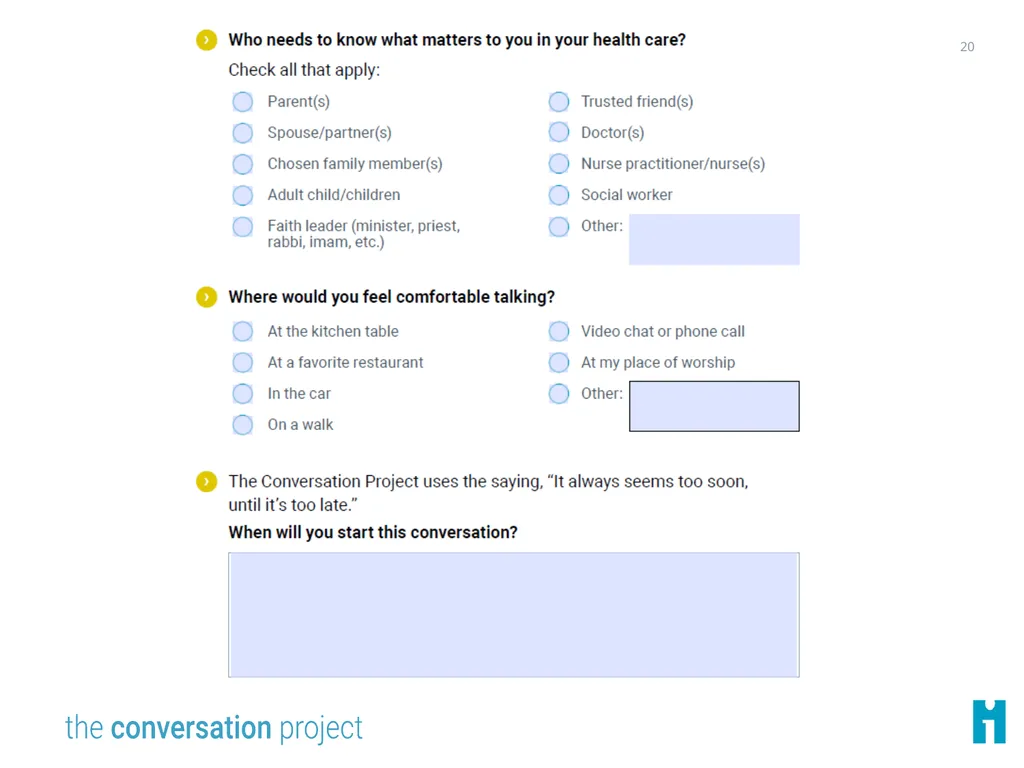
The Starter Guide: Preparation 16<br>
17
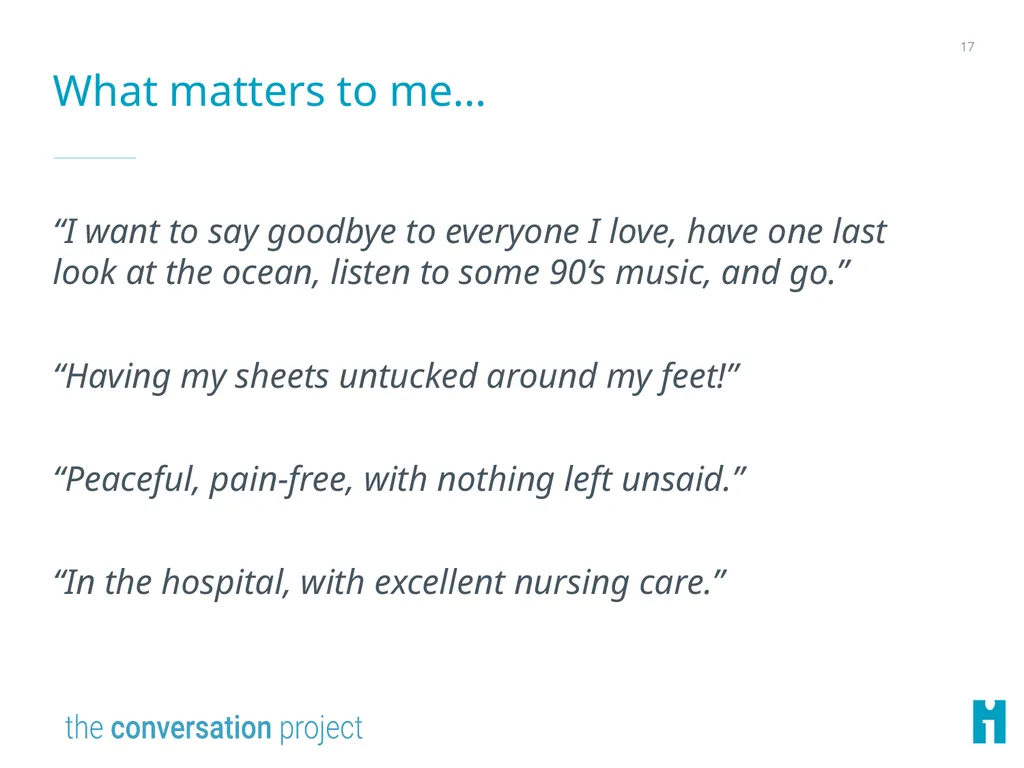
What matters to me… “I want to say goodbye to everyone I love, have one last look at the ocean, listen to some 90’s music, and go.”
“Having my sheets untucked around my feet!”
“Peaceful, pain-free, with nothing left unsaid.”
“In the hospital, with excellent nursing care.” 17<br>
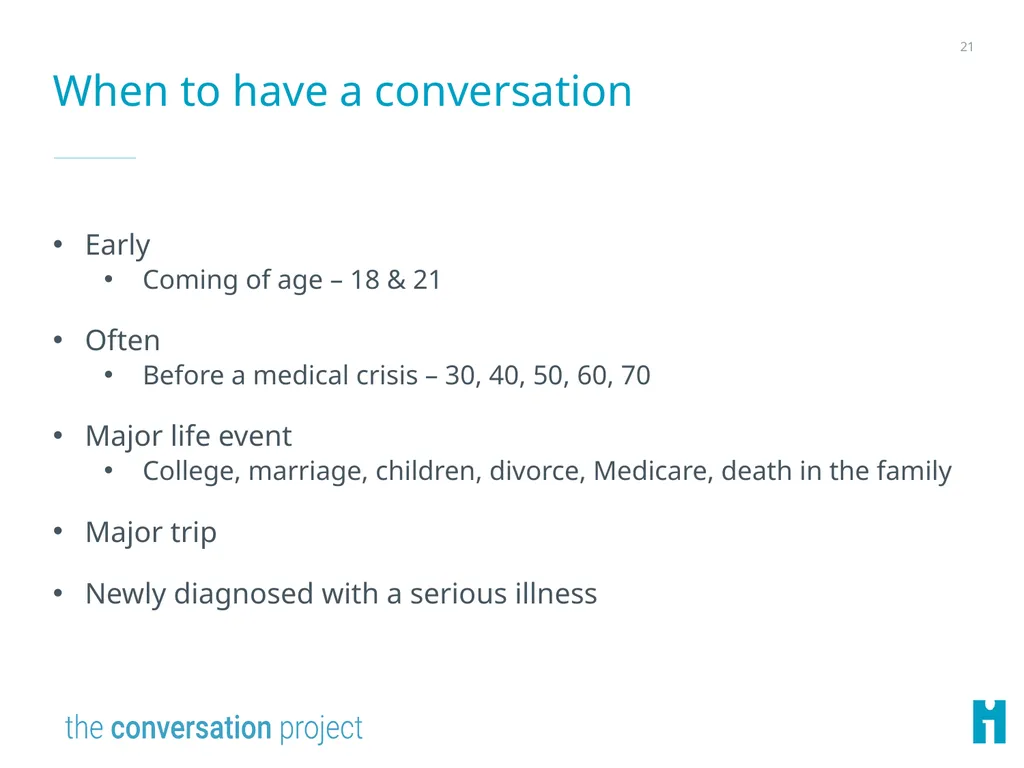
21
When to have a conversation Early
Coming of age – 18 & 21
Often
Before a medical crisis – 30, 40, 50, 60, 70
Major life event
College, marriage, children, divorce, Medicare, death in the family
Major trip
Newly diagnosed with a serious illness 21<br>
22
What did you learn? What plans did you make?
Questions
Concerns
Surprises
Trends 22<br>
24
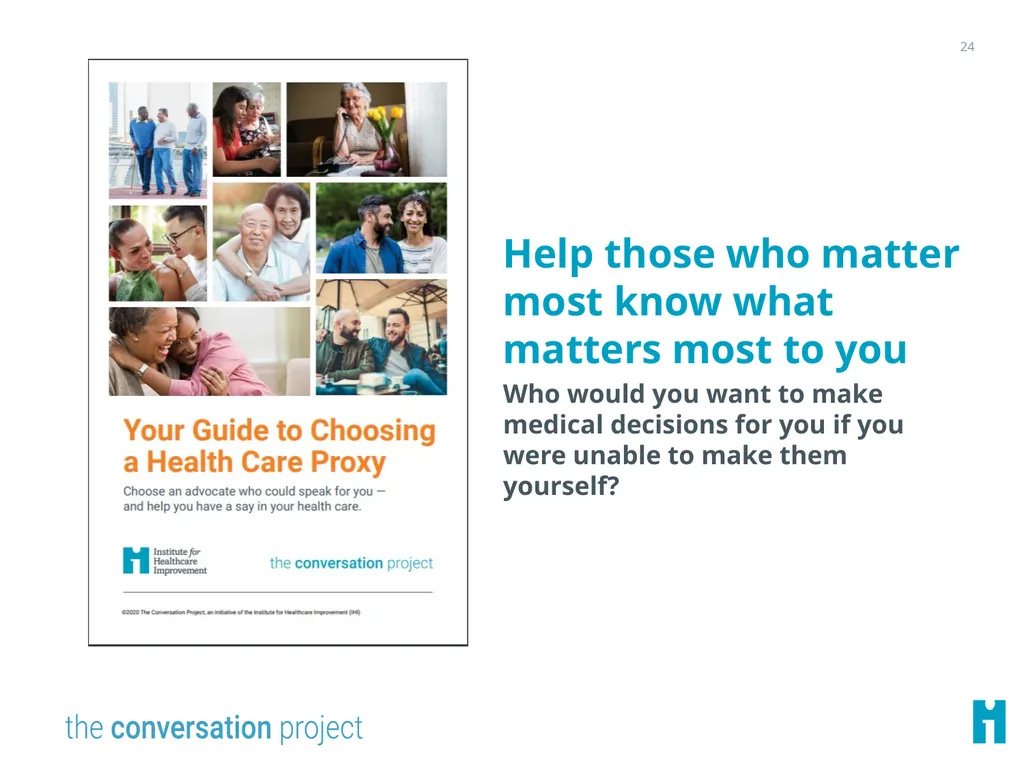
Help those who matter most know what matters most to you
Who would you want to make medical decisions for you if you were unable to make them yourself? 24<br>
25
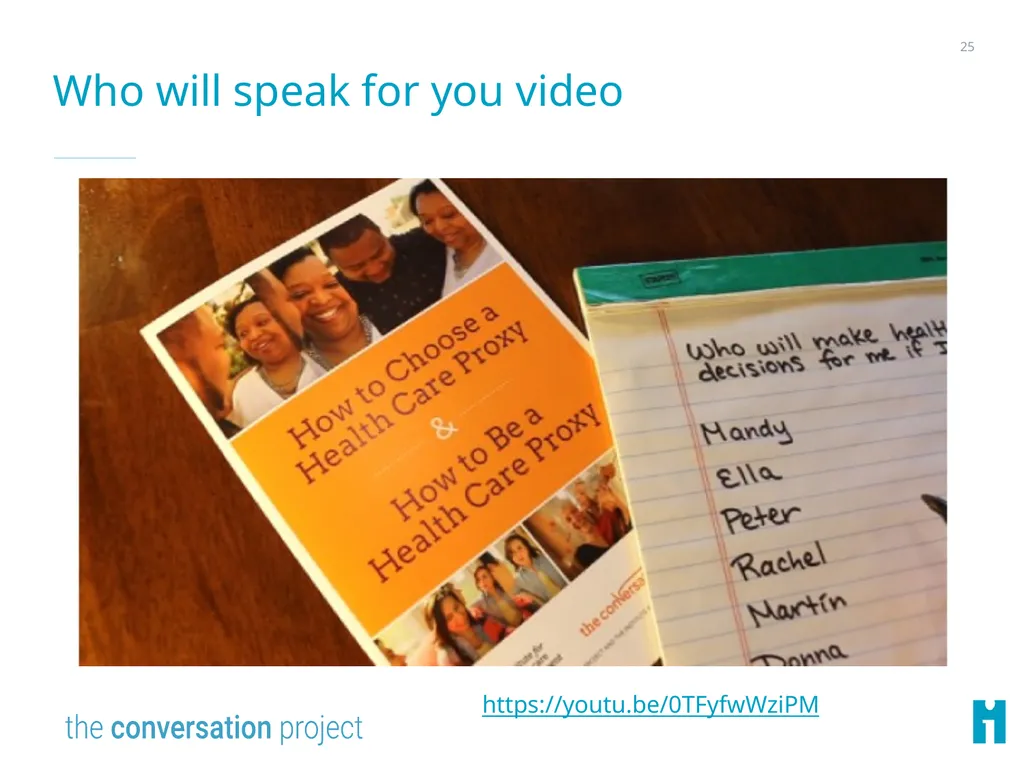
Who will speak for you video https://youtu.be/0TFyfwWziPM 25<br>
26
Practice with a partner Think about how you may start this conversation with someone who matters/someone who may speak on your behalf someday
- 1 min
Turn to your partner and take turns practicing!
5 minutes 26<br>
27
Optional: additional topics Advance care planning (ACP)
Advance directive (AD)
Health care proxy/agent/durable power of attorney
Living Will
MOLST/POLST 27<br>
28
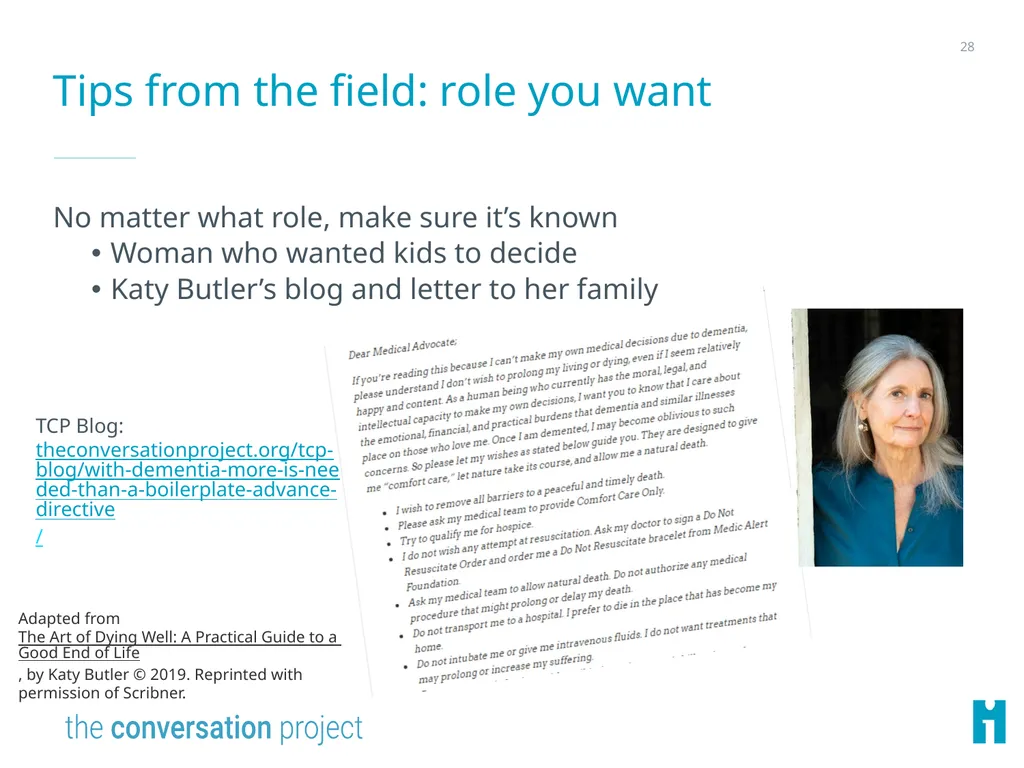
Tips from the field: role you want No matter what role, make sure it’s known
Woman who wanted kids to decide
Katy Butler’s blog and letter to her family TCP Blog: theconversationproject.org/tcp-blog/with-dementia-more-is-needed-than-a-boilerplate-advance-directive/ Adapted from The Art of Dying Well: A Practical Guide to a Good End of Life, by Katy Butler © 2019. Reprinted with permission of Scribner. 28<br>
29
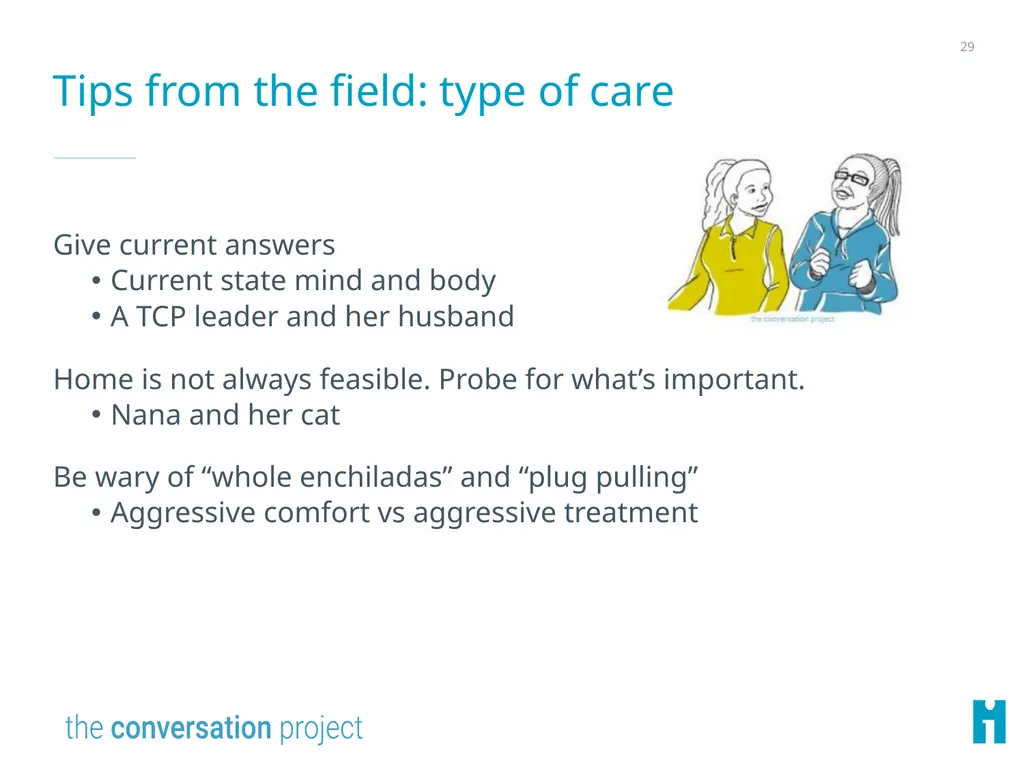
Tips from the field: type of care Give current answers
Current state mind and body
A TCP leader and her husband
Home is not always feasible. Probe for what’s important.
Nana and her cat
Be wary of “whole enchiladas” and “plug pulling”
Aggressive comfort vs aggressive treatment 29<br>
30
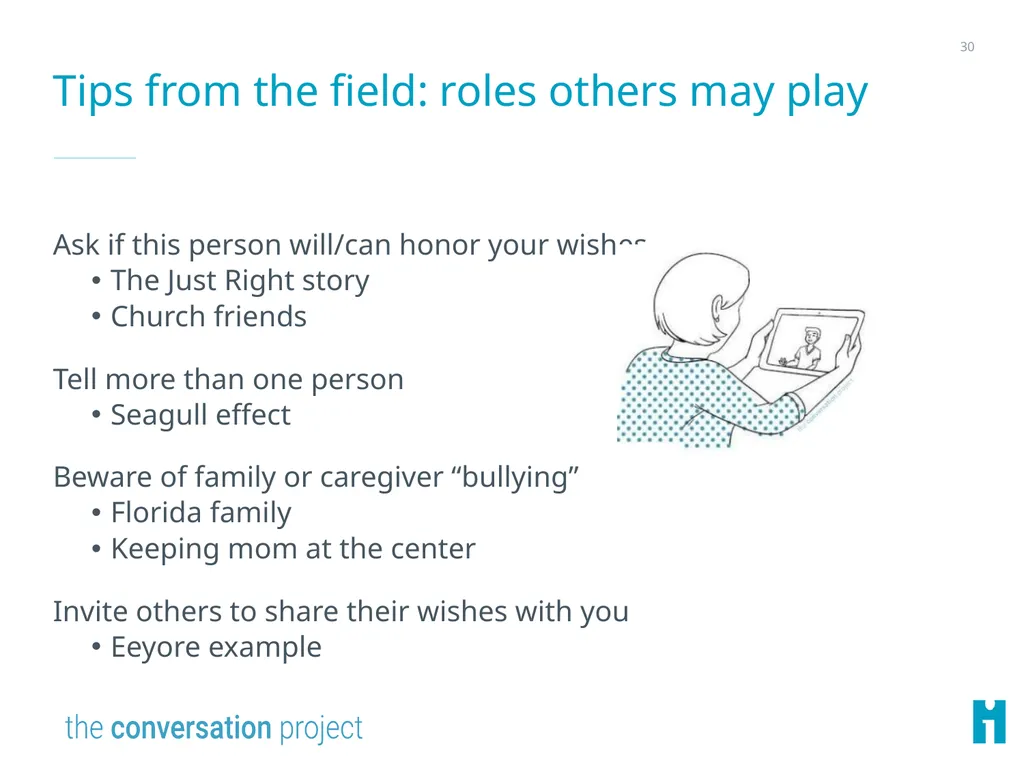
Tips from the field: roles others may play Ask if this person will/can honor your wishes
The Just Right story
Church friends
Tell more than one person
Seagull effect
Beware of family or caregiver “bullying”
Florida family
Keeping mom at the center
Invite others to share their wishes with you
Eeyore example 30<br>
31
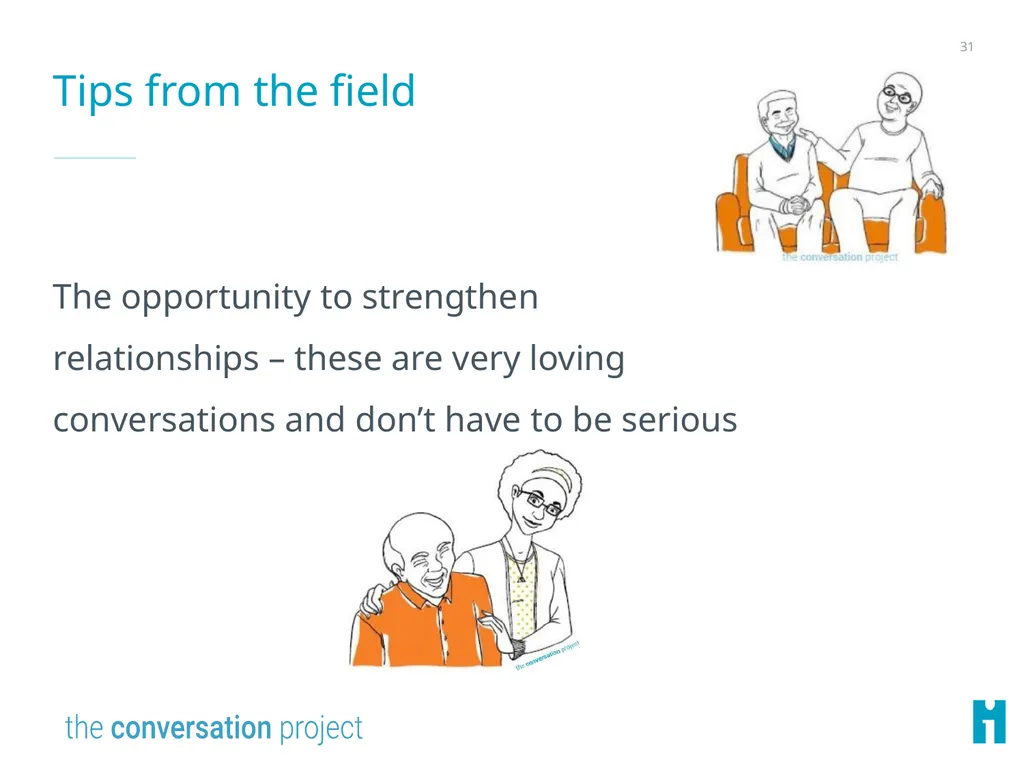
Tips from the field The opportunity to strengthen relationships – these are very loving conversations and don’t have to be serious 31<br>
32
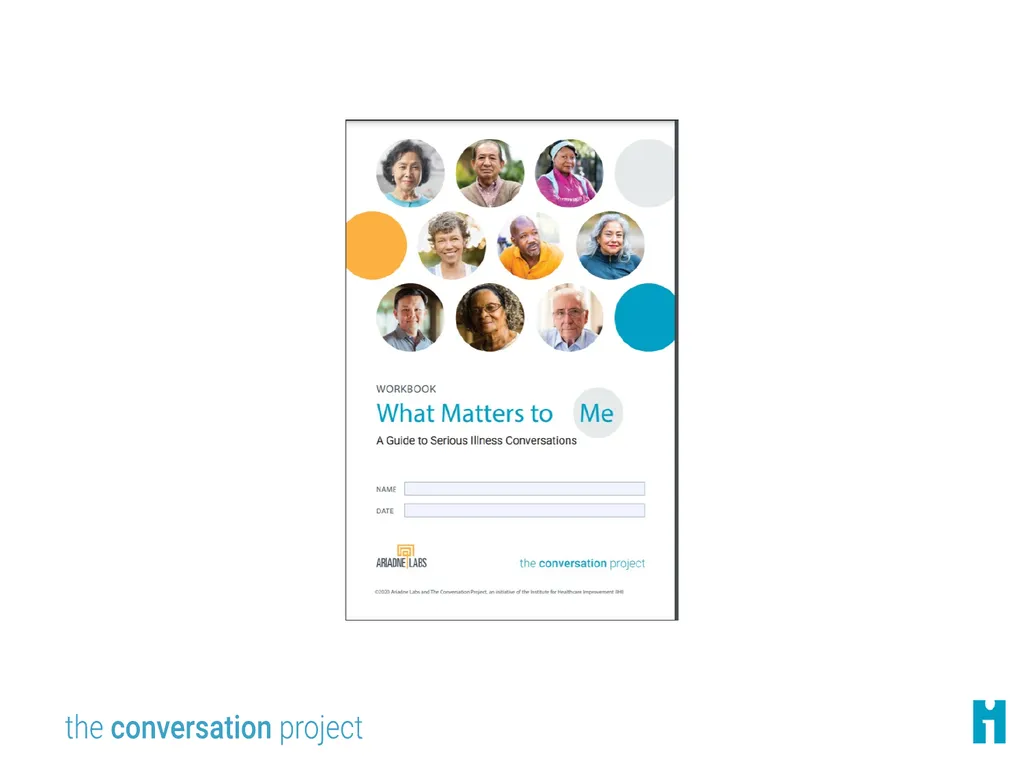
Leaving in action Complete the Conversation Starter Guide
Pick your person, start the conversation with someone who may speak on your behalf
Document your proxy and wishes
Bring What Matters to Me concept back to your organization / community 32<br>
33
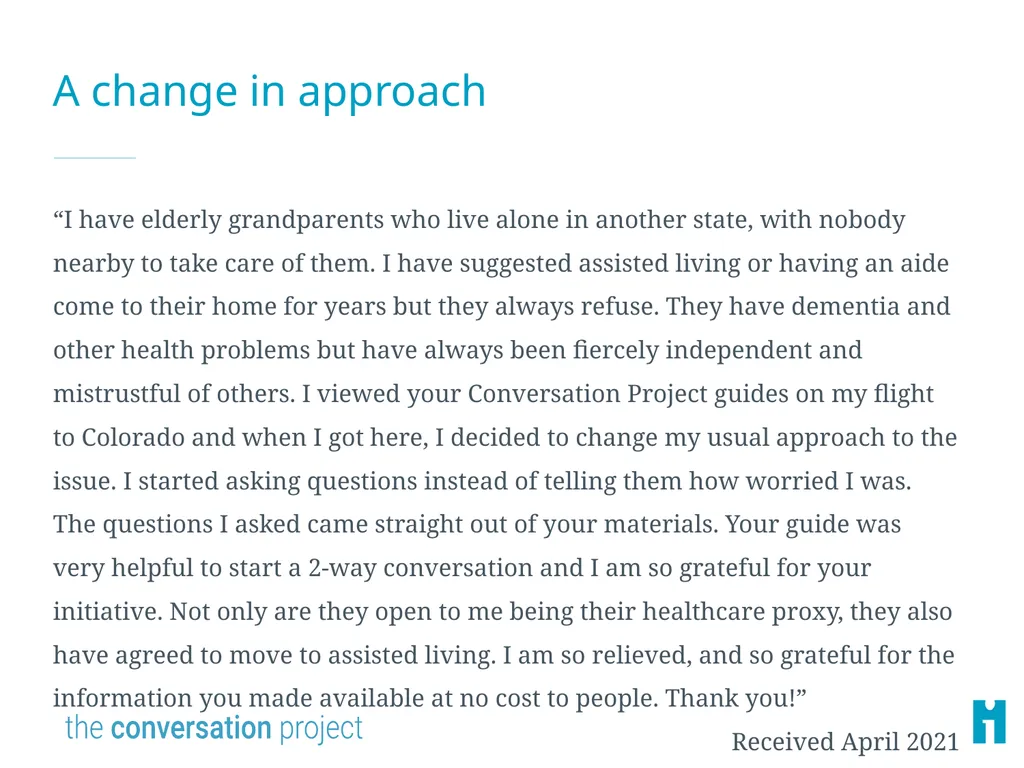
A change in approach “I have elderly grandparents who live alone in another state, with nobody nearby to take care of them. I have suggested assisted living or having an aide come to their home for years but they always refuse. They have dementia and other health problems but have always been fiercely independent and mistrustful of others. I viewed your Conversation Project guides on my flight to Colorado and when I got here, I decided to change my usual approach to the issue. I started asking questions instead of telling them how worried I was. The questions I asked came straight out of your materials. Your guide was very helpful to start a 2-way conversation and I am so grateful for your initiative. Not only are they open to me being their healthcare proxy, they also have agreed to move to assisted living. I am so relieved, and so grateful for the information you made available at no cost to people. Thank you!”
Received April 2021<br>
34
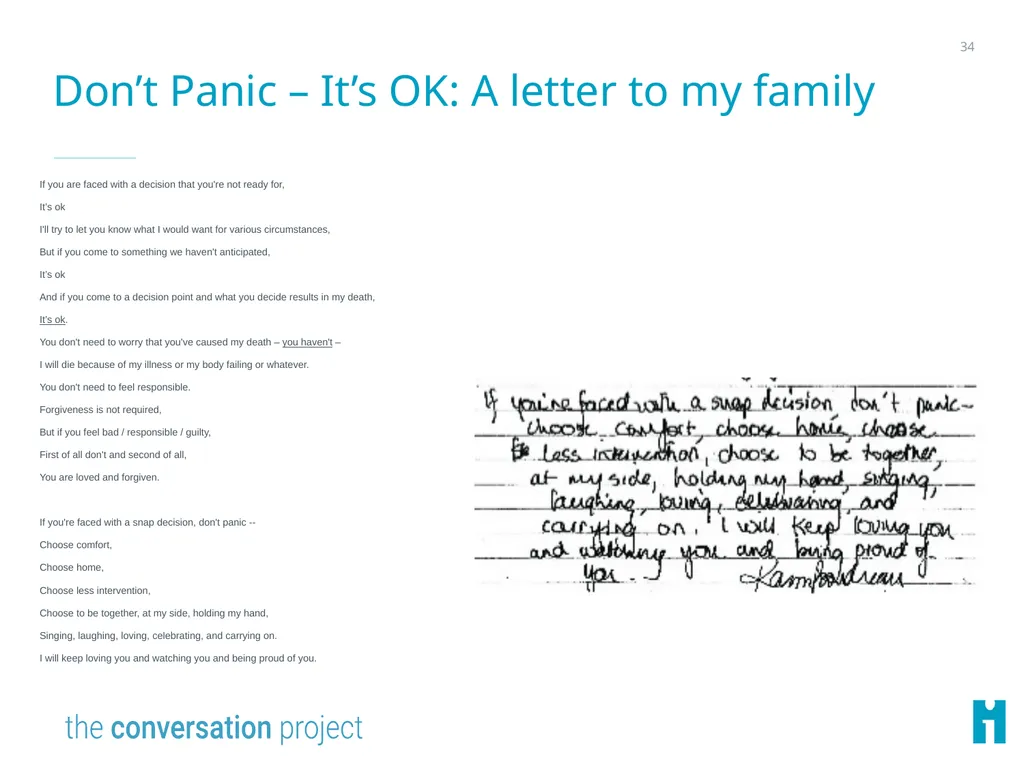
Don’t Panic – It’s OK: A letter to my family If you are faced with a decision that you're not ready for,
It’s ok
I'll try to let you know what I would want for various circumstances,
But if you come to something we haven't anticipated,
It’s ok
And if you come to a decision point and what you decide results in my death,
It’s ok.
You don't need to worry that you've caused my death – you haven't –
I will die because of my illness or my body failing or whatever.
You don't need to feel responsible.
Forgiveness is not required,
But if you feel bad / responsible / guilty,
First of all don't and second of all,
You are loved and forgiven.
If you're faced with a snap decision, don't panic --
Choose comfort,
Choose home,
Choose less intervention,
Choose to be together, at my side, holding my hand,
Singing, laughing, loving, celebrating, and carrying on.
I will keep loving you and watching you and being proud of you. 34<br>
35
A soul doctor and a jazz singer 35<br>
36
Questions? <Your name and organization>
<Your email address/phone number>
www.theconversationproject.org 36<br>
38
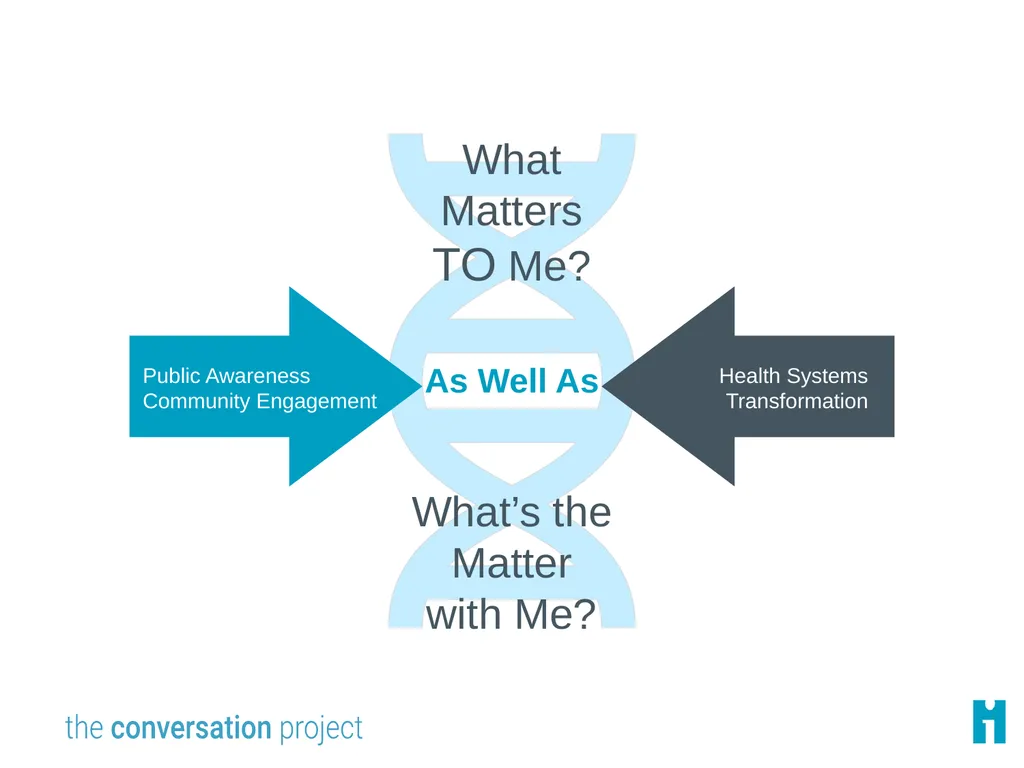
What Matters TO Me? What’s the Matter with Me? As Well As<br>
39
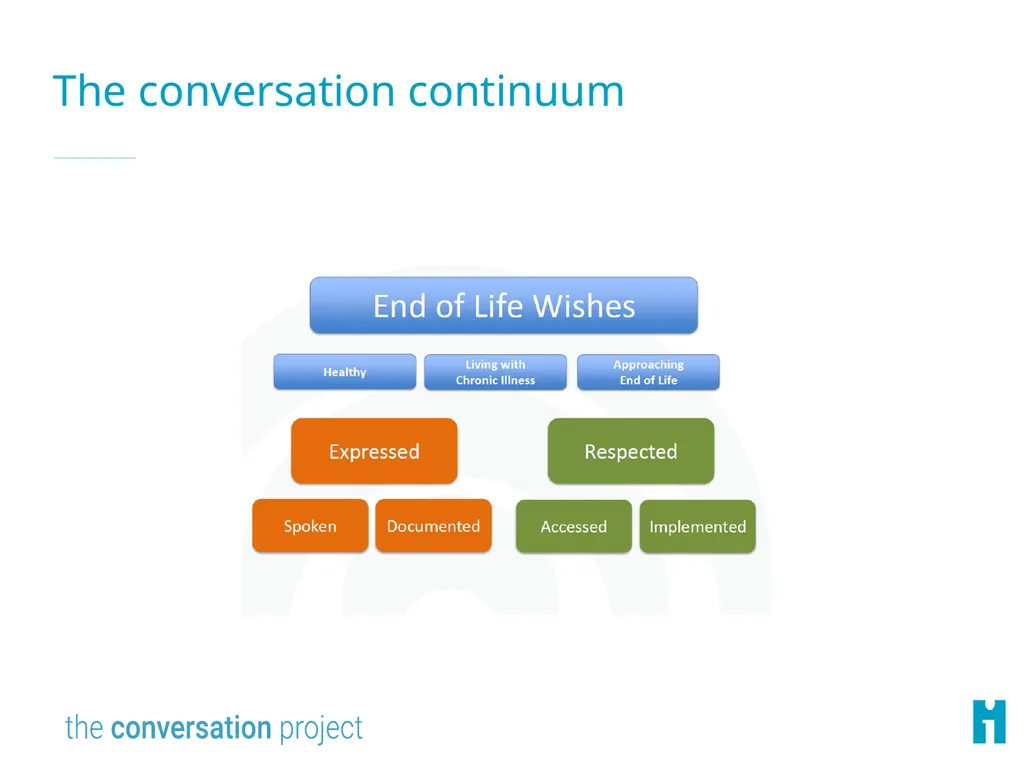
The conversation continuum<br>
40
Izumi S and Fromme EK, Journal of Palliative Medicine. March 2017, 20(3): 220-221. ONGOING CONVERSATIONS AND DOCUMENTATION HEALTH TRAJECTORY
HEALTHY------------------------ILL--------------END-OF-LIFE<br>