
Advancing local pharmaceutical production through
CM
Published · 32 slides · 0 views
1 / 1




Description
Advancing local pharmaceutical production through legislation and institutional reforms in the ESA region Southern and Eastern African Trade Information and Negotiations Institute (SEATINI) AFYA na Haki IN EQUINET The issue Pharmaceutical
Related Topics
Share
Embed code
Download this presentation From Below
"Advancing local pharmaceutical production through" is the property of its rightful owner. Permission is granted to download and print the materials on this website for personal, non-commercial use only, and to display it on your personal computer provided you do not modify the materials and that you retain all copyright notices contained in the materials. By downloading content from our website, you accept the terms of this agreement.
Presentation Transcript
01
Advancing local pharmaceutical production through legislation and institutional reforms in the ESA region Southern and Eastern African Trade Information and Negotiations Institute (SEATINI)
AFYA na Haki
IN EQUINET<br>
AFYA na Haki
IN EQUINET<br>
02
The issue Pharmaceutical production in Africa and the ESA region is affected by several factors and deficits and incapacities in:
research and development,
intellectual property rights,
established markets, regulation,
human and technical skills,
capital markets for finance and;
competition laws and policies<br>
research and development,
intellectual property rights,
established markets, regulation,
human and technical skills,
capital markets for finance and;
competition laws and policies<br>
03
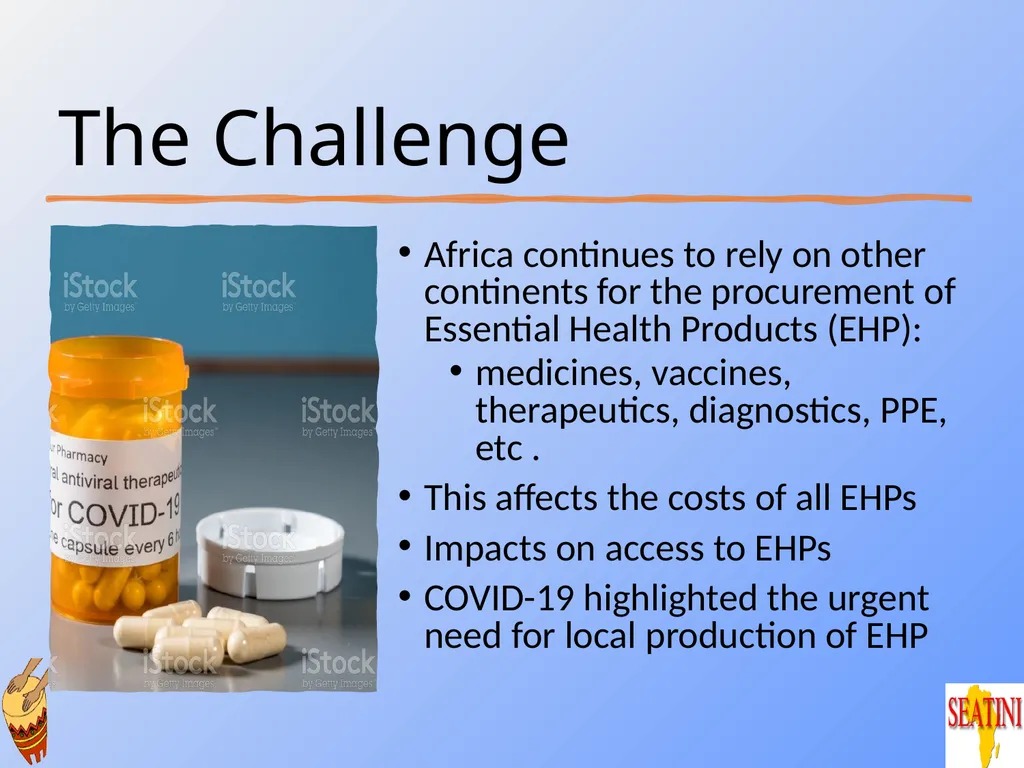
The Challenge Africa continues to rely on other continents for the procurement of Essential Health Products (EHP):
medicines, vaccines, therapeutics, diagnostics, PPE, etc .
This affects the costs of all EHPs
Impacts on access to EHPs
COVID-19 highlighted the urgent need for local production of EHP<br>
medicines, vaccines, therapeutics, diagnostics, PPE, etc .
This affects the costs of all EHPs
Impacts on access to EHPs
COVID-19 highlighted the urgent need for local production of EHP<br>
04
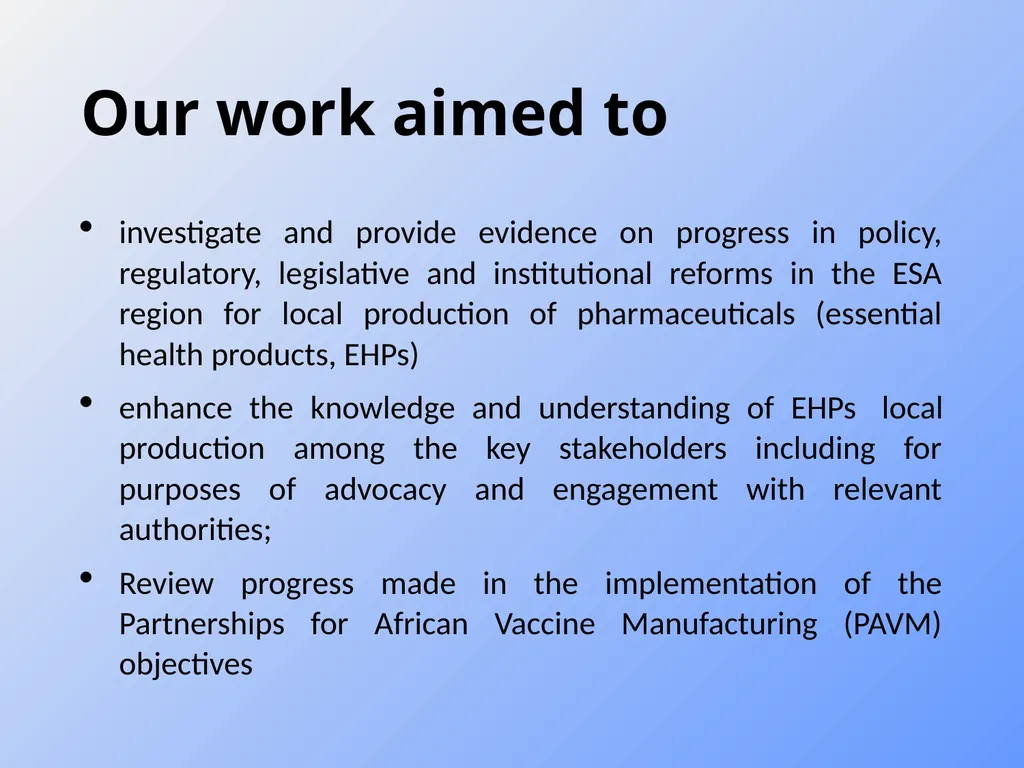
Our work aimed to investigate and provide evidence on progress in policy, regulatory, legislative and institutional reforms in the ESA region for local production of pharmaceuticals (essential health products, EHPs)
enhance the knowledge and understanding of EHPs local production among the key stakeholders including for purposes of advocacy and engagement with relevant authorities;
Review progress made in the implementation of the Partnerships for African Vaccine Manufacturing (PAVM) objectives<br>
enhance the knowledge and understanding of EHPs local production among the key stakeholders including for purposes of advocacy and engagement with relevant authorities;
Review progress made in the implementation of the Partnerships for African Vaccine Manufacturing (PAVM) objectives<br>
05
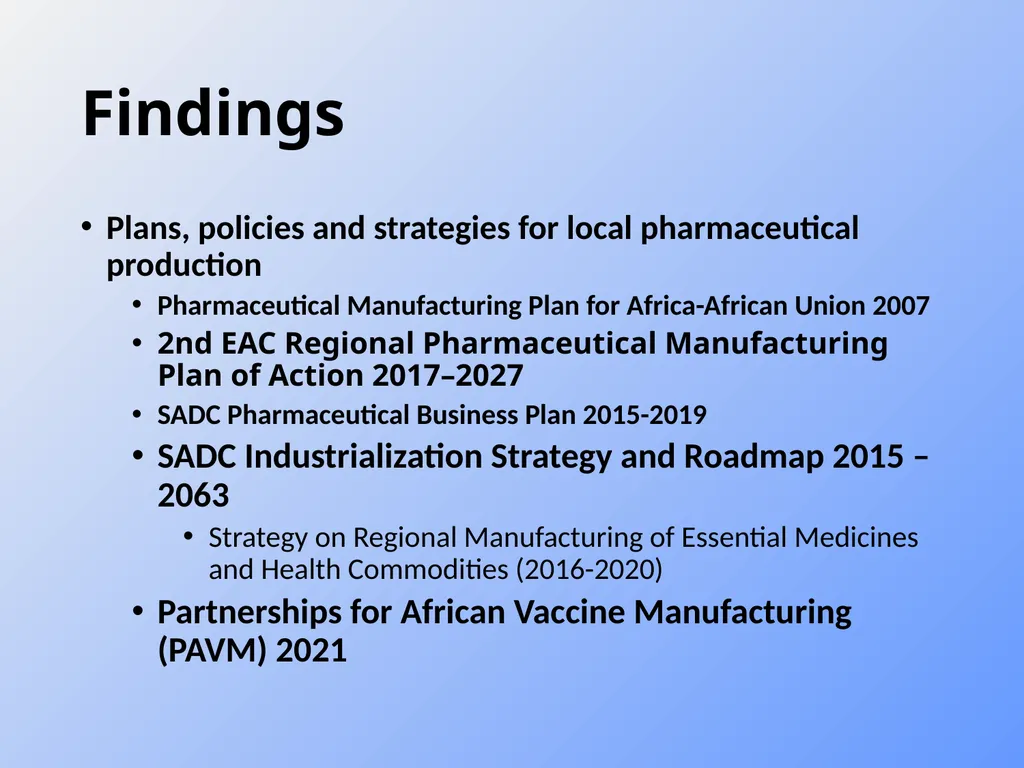
Findings Plans, policies and strategies for local pharmaceutical production
Pharmaceutical Manufacturing Plan for Africa-African Union 2007
2nd EAC Regional Pharmaceutical Manufacturing Plan of Action 2017–2027
SADC Pharmaceutical Business Plan 2015-2019
SADC Industrialization Strategy and Roadmap 2015 – 2063
Strategy on Regional Manufacturing of Essential Medicines and Health Commodities (2016-2020)
Partnerships for African Vaccine Manufacturing (PAVM) 2021<br>
Pharmaceutical Manufacturing Plan for Africa-African Union 2007
2nd EAC Regional Pharmaceutical Manufacturing Plan of Action 2017–2027
SADC Pharmaceutical Business Plan 2015-2019
SADC Industrialization Strategy and Roadmap 2015 – 2063
Strategy on Regional Manufacturing of Essential Medicines and Health Commodities (2016-2020)
Partnerships for African Vaccine Manufacturing (PAVM) 2021<br>
06
National plans and strategies Extensive policy and legal measures, e.g.
National Pharmaceutical plans, Policies and strategies
National health policies
National development plans and strategies
Industrial Development policies (National industrial policy)
National drug policies (e.g. Uganda National Drug Policy 2002)
National Medicines Policies (Zimbabwe National Medicines Policy (ZNMP) (2011)
National visions (e.g. Kenya Vision 2030; Uganda Vision 20240)
The challenge of local pharmaceutical production does not appear to be a lack of policies and laws, but in their implementation<br>
National Pharmaceutical plans, Policies and strategies
National health policies
National development plans and strategies
Industrial Development policies (National industrial policy)
National drug policies (e.g. Uganda National Drug Policy 2002)
National Medicines Policies (Zimbabwe National Medicines Policy (ZNMP) (2011)
National visions (e.g. Kenya Vision 2030; Uganda Vision 20240)
The challenge of local pharmaceutical production does not appear to be a lack of policies and laws, but in their implementation<br>
07
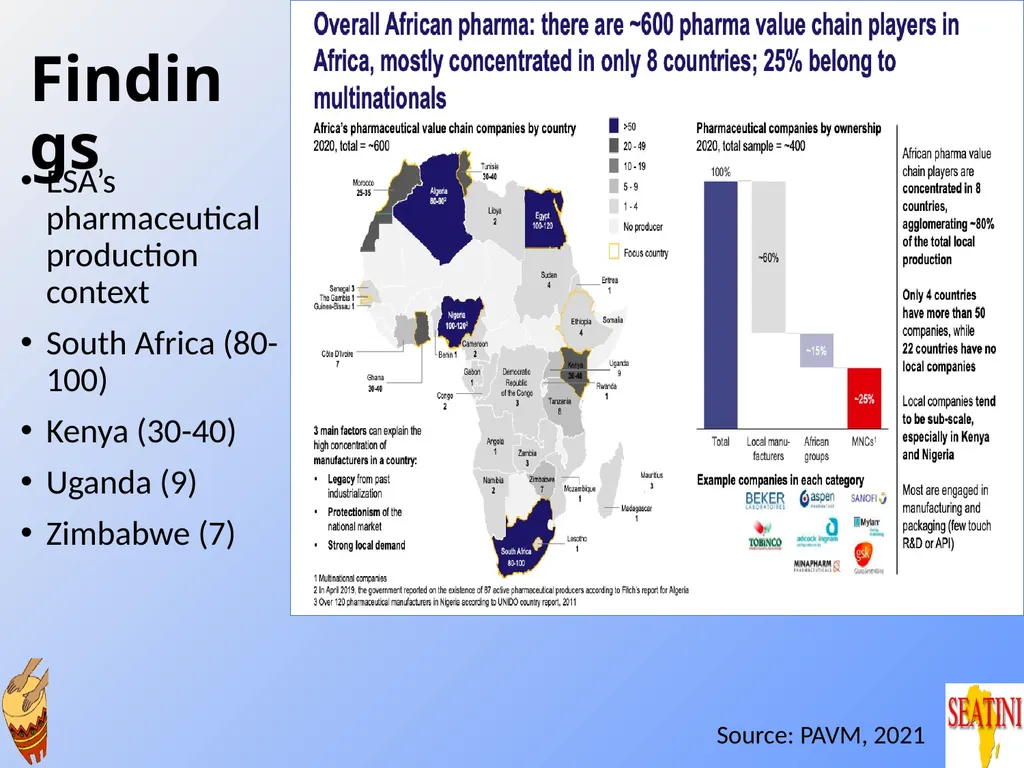
Findings ESA’s pharmaceutical production context
South Africa (80-100)
Kenya (30-40)
Uganda (9)
Zimbabwe (7) Source: PAVM, 2021<br>
South Africa (80-100)
Kenya (30-40)
Uganda (9)
Zimbabwe (7) Source: PAVM, 2021<br>
08
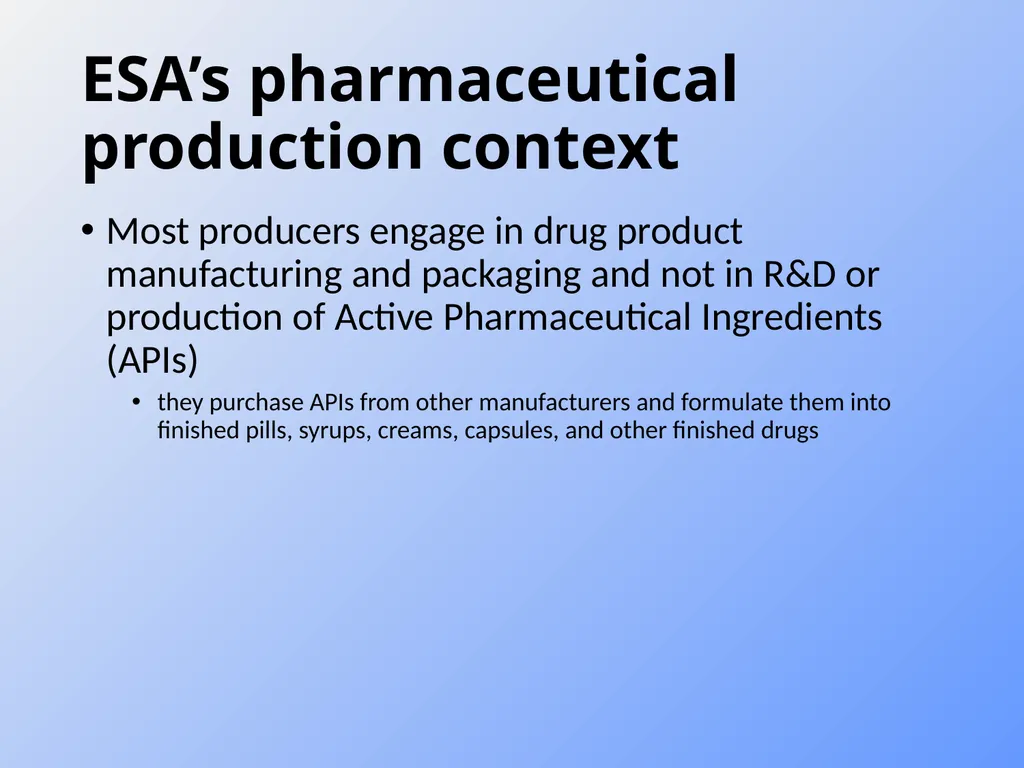
ESA’s pharmaceutical production context Most producers engage in drug product manufacturing and packaging and not in R&D or production of Active Pharmaceutical Ingredients (APIs)
they purchase APIs from other manufacturers and formulate them into finished pills, syrups, creams, capsules, and other finished drugs<br>
they purchase APIs from other manufacturers and formulate them into finished pills, syrups, creams, capsules, and other finished drugs<br>
09
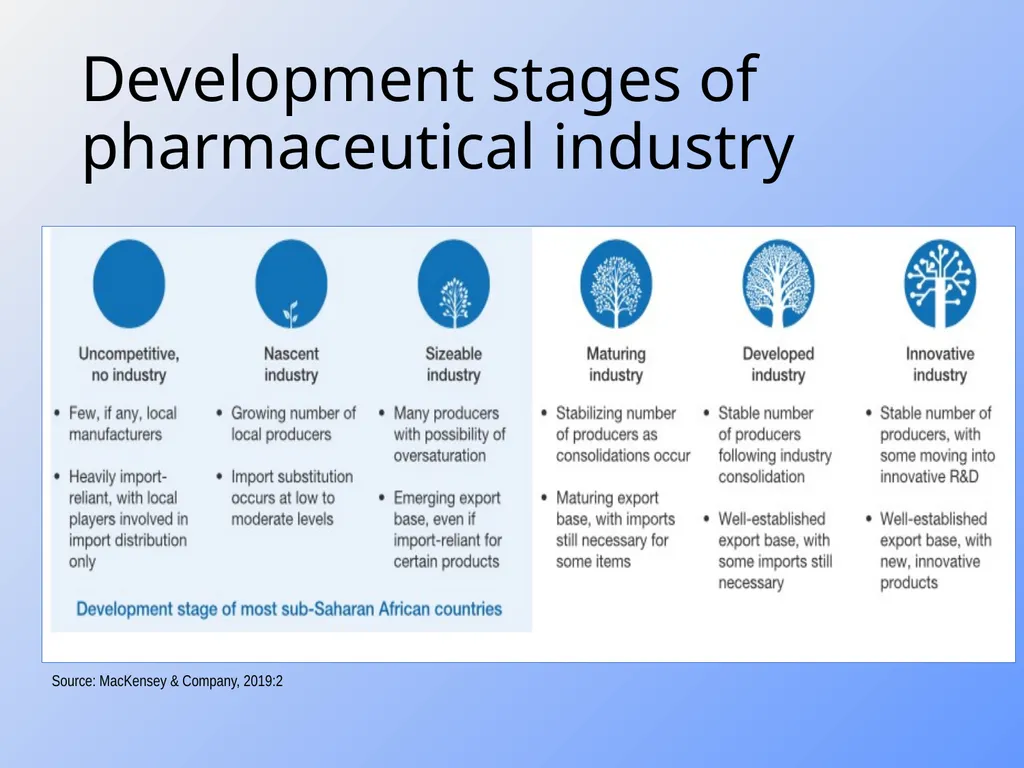
Development stages of pharmaceutical industry Source: MacKensey & Company, 2019:2<br>
10
Constraints to production local production is constrained by:
Availability of a viable and accessible local market,
high costs related to very old plants and equipment;
Availability and retention of skilled workers (Human resources in specialised sub-sectors)
exorbitant utility tariffs (water, electricity);
lack of working capital including access to capital for recapitalisation;
lack of technology
Effective regulation of medicines production, procurement and distribution<br>
Availability of a viable and accessible local market,
high costs related to very old plants and equipment;
Availability and retention of skilled workers (Human resources in specialised sub-sectors)
exorbitant utility tariffs (water, electricity);
lack of working capital including access to capital for recapitalisation;
lack of technology
Effective regulation of medicines production, procurement and distribution<br>
11
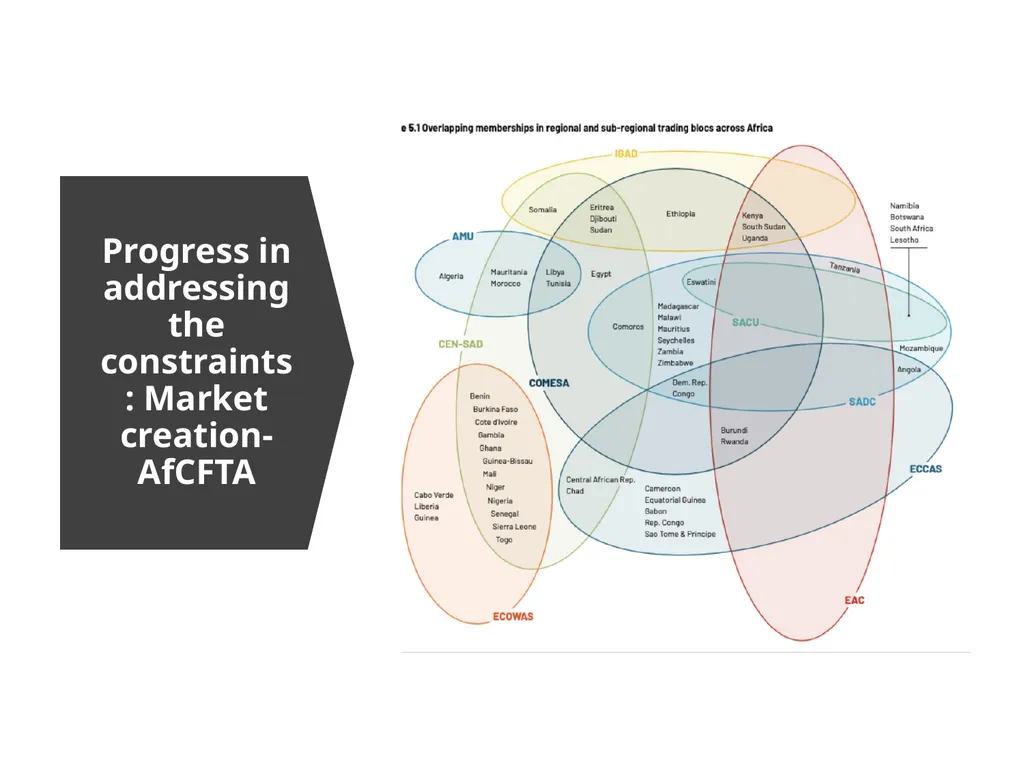
Addressing the constraints: Market creation-AfCFTA Negotiations for the creation of the AfCFTA
launched on 15 June 2015 and concluded in March 2018 with the adoption of the AfCFTA Agreement and its three protocols on goods, services and dispute settlement;
In February 2023 tree protocols were adopted (Investment, intellectual property, competition policy)
As of June 2023, 54 countries-signed, 46 countries have ratified, that is taking the necessary legal processes at the national level to domesticate and implement it;
All ESA countries signed the agreement;<br>
launched on 15 June 2015 and concluded in March 2018 with the adoption of the AfCFTA Agreement and its three protocols on goods, services and dispute settlement;
In February 2023 tree protocols were adopted (Investment, intellectual property, competition policy)
As of June 2023, 54 countries-signed, 46 countries have ratified, that is taking the necessary legal processes at the national level to domesticate and implement it;
All ESA countries signed the agreement;<br>
12
AfCFTA AfCFTA objective:
elimination of tariff and non-tariff barriers amongst the African countries;
facilitate movement of persons, thus deepening economic integration of the continent;
The AfCFTA seeks to operate a single market of 1.2 billion people with potential of becoming the largest regional economic bloc in the world based on the number of countries involved;
It is expected to boost intra-Africa trade currently accounting for only 12% of trade for Africa;<br>
elimination of tariff and non-tariff barriers amongst the African countries;
facilitate movement of persons, thus deepening economic integration of the continent;
The AfCFTA seeks to operate a single market of 1.2 billion people with potential of becoming the largest regional economic bloc in the world based on the number of countries involved;
It is expected to boost intra-Africa trade currently accounting for only 12% of trade for Africa;<br>
13
Progress in addressing the constraints: Market creation-AfCFTA<br>
14
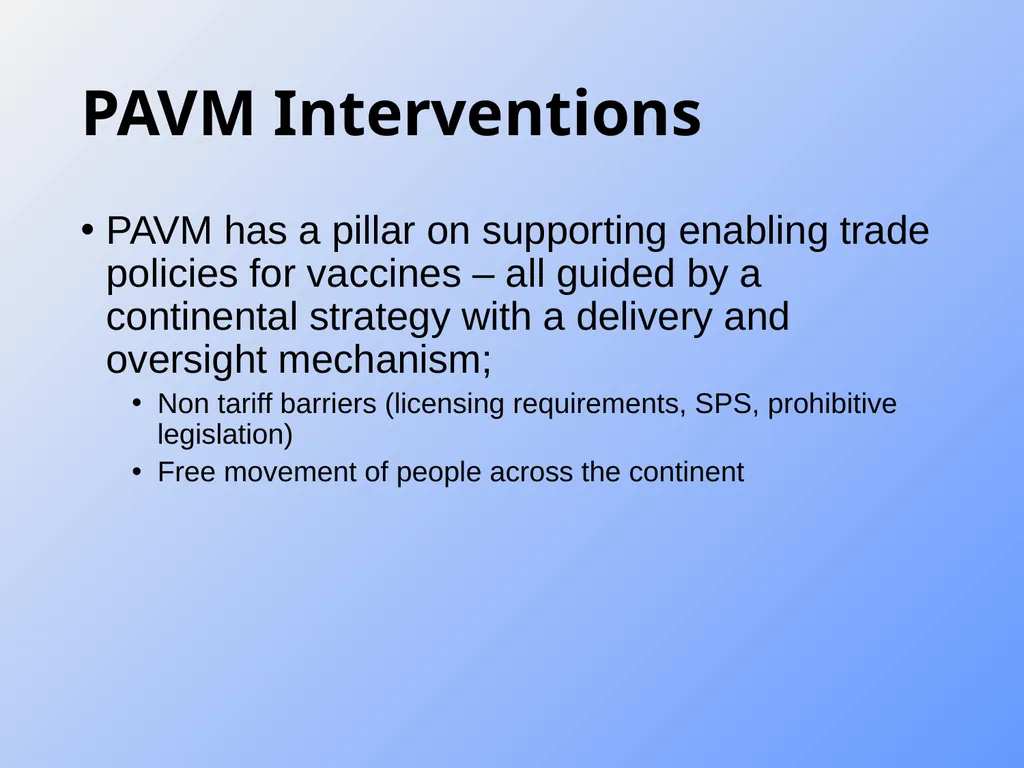
PAVM Interventions PAVM has a pillar on supporting enabling trade policies for vaccines – all guided by a continental strategy with a delivery and oversight mechanism;
Non tariff barriers (licensing requirements, SPS, prohibitive legislation)
Free movement of people across the continent<br>
Non tariff barriers (licensing requirements, SPS, prohibitive legislation)
Free movement of people across the continent<br>
15
Trade policies and the manufacturing sector Trade policies are an integral part of a manufacturing system:
Local production of pharmaceuticals depend on trade policies particularly:
Import duty exemptions on raw materials
Harmonisation of trade and industrial policies
Policy coordination eg for industrial parks, special economic zones, pharmaceutical parks
Ratification and implementation of agreements for intra-regional and continental trade & distribution<br>
Local production of pharmaceuticals depend on trade policies particularly:
Import duty exemptions on raw materials
Harmonisation of trade and industrial policies
Policy coordination eg for industrial parks, special economic zones, pharmaceutical parks
Ratification and implementation of agreements for intra-regional and continental trade & distribution<br>
16
Tariffs on medical product groups Average MFN tariff on medical goods 5%, (8% for manufactured goods)
MFN tariffs in HICs average 2.4 %
Pharma products have lowest MFN applied tariffs
PPE -highest duties (twice the average for all medical goods). Average tariff on textile face masks is 13.5%.<br>
MFN tariffs in HICs average 2.4 %
Pharma products have lowest MFN applied tariffs
PPE -highest duties (twice the average for all medical goods). Average tariff on textile face masks is 13.5%.<br>
17
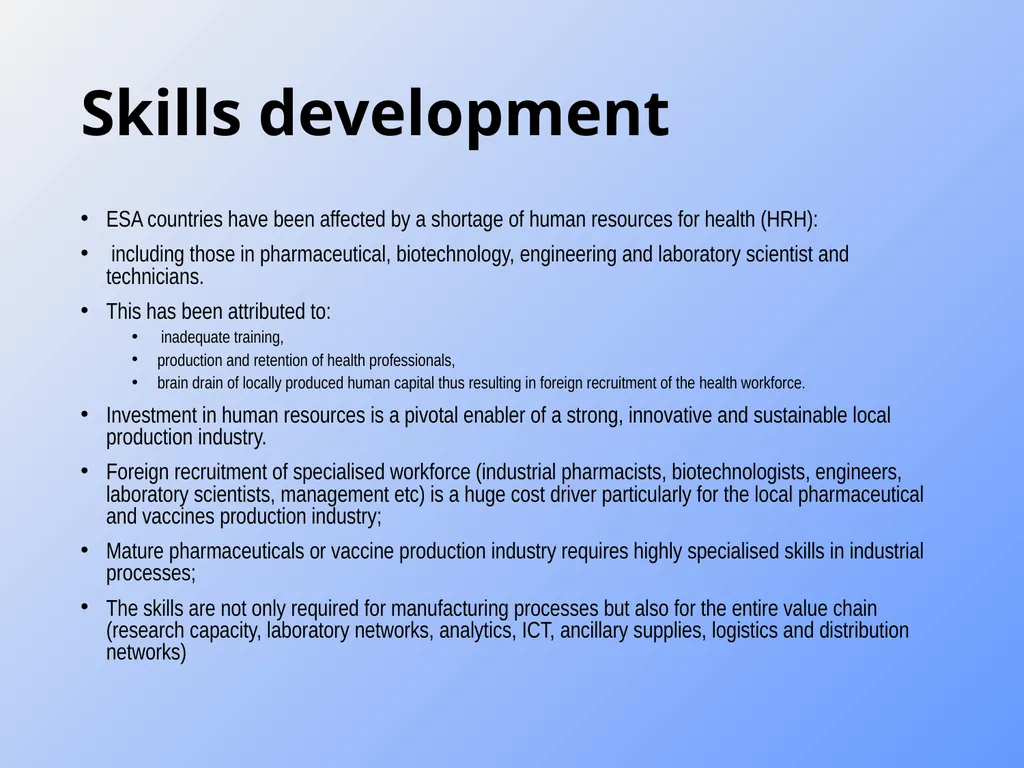
Skills development ESA countries have been affected by a shortage of human resources for health (HRH):
including those in pharmaceutical, biotechnology, engineering and laboratory scientist and technicians.
This has been attributed to:
inadequate training,
production and retention of health professionals,
brain drain of locally produced human capital thus resulting in foreign recruitment of the health workforce.
Investment in human resources is a pivotal enabler of a strong, innovative and sustainable local production industry.
Foreign recruitment of specialised workforce (industrial pharmacists, biotechnologists, engineers, laboratory scientists, management etc) is a huge cost driver particularly for the local pharmaceutical and vaccines production industry;
Mature pharmaceuticals or vaccine production industry requires highly specialised skills in industrial processes;
The skills are not only required for manufacturing processes but also for the entire value chain (research capacity, laboratory networks, analytics, ICT, ancillary supplies, logistics and distribution networks)<br>
including those in pharmaceutical, biotechnology, engineering and laboratory scientist and technicians.
This has been attributed to:
inadequate training,
production and retention of health professionals,
brain drain of locally produced human capital thus resulting in foreign recruitment of the health workforce.
Investment in human resources is a pivotal enabler of a strong, innovative and sustainable local production industry.
Foreign recruitment of specialised workforce (industrial pharmacists, biotechnologists, engineers, laboratory scientists, management etc) is a huge cost driver particularly for the local pharmaceutical and vaccines production industry;
Mature pharmaceuticals or vaccine production industry requires highly specialised skills in industrial processes;
The skills are not only required for manufacturing processes but also for the entire value chain (research capacity, laboratory networks, analytics, ICT, ancillary supplies, logistics and distribution networks)<br>
18
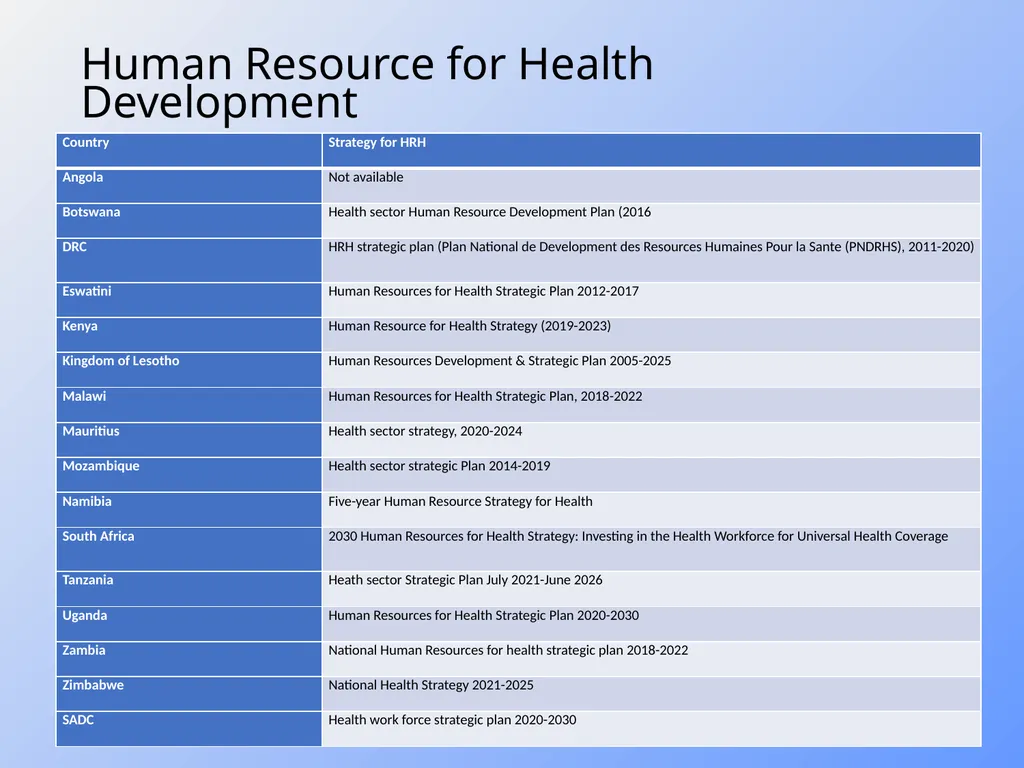
Human Resource for Health Development<br>
19
Skills development ESA countries have developed strategic plans for human resource development in the health sector;
Some of the plans are not explicit particularly for the training of critical resources required for local production although they do recognise the importance of technical human resources;
Some, like the Kingdom of Lesotho, point to the training of biomedical engineers, laboratory technologists and technicians;
The Botswana plan focuses on improved quality of education and training, employment creation and productivity, research innovation and development and skills development without elaborating on the specificities;
Tanzania plan does not explicitly make clear the strategy for training specific human resources for pharmaceutical production, it outlines government’s commitment to strengthen domestic pharmaceutical manufacturing, as well as research and development;
Kenya strategy for health products and technologies (HPT) supply chain for 2020-2025 shows that than 40 institutions offer specialised training in pharmaceutical analysis, Industrial Pharmacy, Pharmacovigilance and Pharmaco-epidemiology, Pharmacology, Clinical practice, and Toxicology;<br>
Some of the plans are not explicit particularly for the training of critical resources required for local production although they do recognise the importance of technical human resources;
Some, like the Kingdom of Lesotho, point to the training of biomedical engineers, laboratory technologists and technicians;
The Botswana plan focuses on improved quality of education and training, employment creation and productivity, research innovation and development and skills development without elaborating on the specificities;
Tanzania plan does not explicitly make clear the strategy for training specific human resources for pharmaceutical production, it outlines government’s commitment to strengthen domestic pharmaceutical manufacturing, as well as research and development;
Kenya strategy for health products and technologies (HPT) supply chain for 2020-2025 shows that than 40 institutions offer specialised training in pharmaceutical analysis, Industrial Pharmacy, Pharmacovigilance and Pharmaco-epidemiology, Pharmacology, Clinical practice, and Toxicology;<br>
20
PAVM-interventions Africa CDC, WHO and has started supporting professionals from Africa to acquire skills in different areas:
course for standard practice (GxP) to equip the professionals representing the biomanufacturing workforce from LMICs with the essential skills required to operate according to current good practices. This course focusses on:
Good Laboratory Practice (GLP)
Good Clinical Practice (GCP)
Good Clinical Laboratory Practice (GCLP)
Good Manufacturing Practice (GMP)
Biosafety<br>
course for standard practice (GxP) to equip the professionals representing the biomanufacturing workforce from LMICs with the essential skills required to operate according to current good practices. This course focusses on:
Good Laboratory Practice (GLP)
Good Clinical Practice (GCP)
Good Clinical Laboratory Practice (GCLP)
Good Manufacturing Practice (GMP)
Biosafety<br>
21
PAVM interventions In partnership with Texas A&M National Centre for Therapeutics Manufacturing in College Station;
Offering courses in:
biopharmaceutical manufacturing
Biomanufacturing of vectors for gene therapy
mRNA Vaccine manufacturing
Challenge:
How can these courses be institutionalised at country level through state led collaboration with AU/Africa CDC<br>
Offering courses in:
biopharmaceutical manufacturing
Biomanufacturing of vectors for gene therapy
mRNA Vaccine manufacturing
Challenge:
How can these courses be institutionalised at country level through state led collaboration with AU/Africa CDC<br>
22
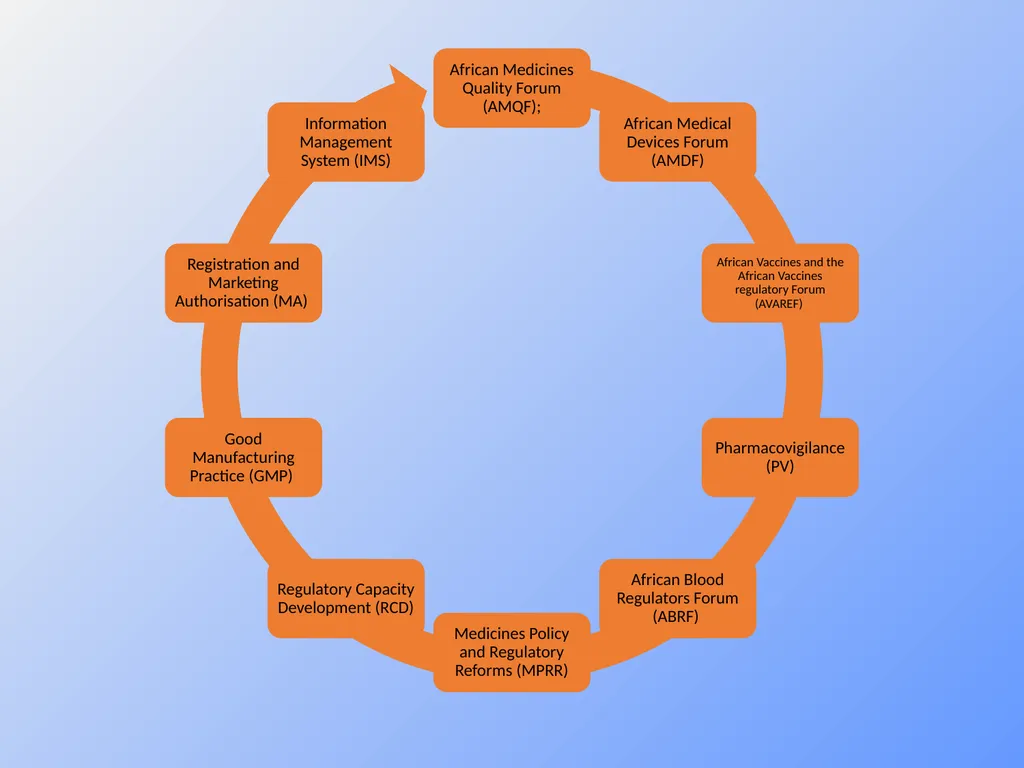
Medicines Regulation Medicines Regulatory Harmonization (AMRH) programme in 2009:
to facilitate and coordinate the harmonization of medicines regulation and improve access to quality, safe, efficacious and affordable medicines in Africa
One of the major milestones achieved by the AMRH is the development of the AU Model Law on Medical Products Regulation;
The Model Law was developed to contribute towards harmonizing medicines regulatory systems and providing an enabling environment for the development and scale-up of health technologies in Africa;
AMRH has 10 technical committees<br>
to facilitate and coordinate the harmonization of medicines regulation and improve access to quality, safe, efficacious and affordable medicines in Africa
One of the major milestones achieved by the AMRH is the development of the AU Model Law on Medical Products Regulation;
The Model Law was developed to contribute towards harmonizing medicines regulatory systems and providing an enabling environment for the development and scale-up of health technologies in Africa;
AMRH has 10 technical committees<br>
23
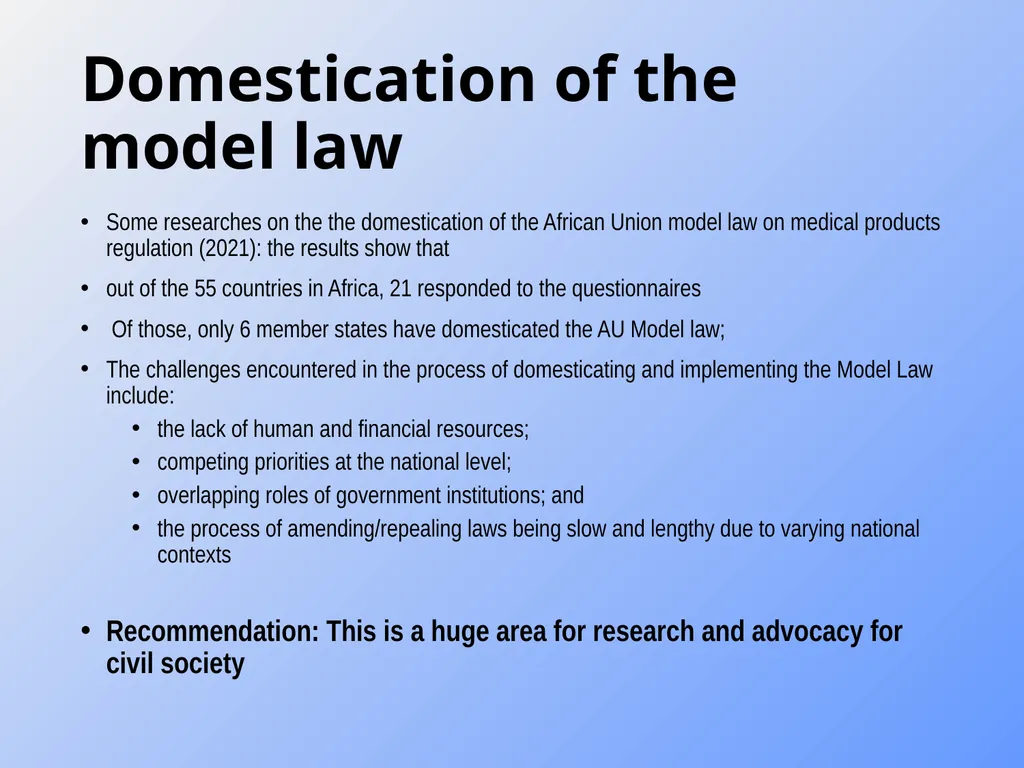
Domestication of the model law Some researches on the the domestication of the African Union model law on medical products regulation (2021): the results show that
out of the 55 countries in Africa, 21 responded to the questionnaires
Of those, only 6 member states have domesticated the AU Model law;
The challenges encountered in the process of domesticating and implementing the Model Law include:
the lack of human and financial resources;
competing priorities at the national level;
overlapping roles of government institutions; and
the process of amending/repealing laws being slow and lengthy due to varying national contexts
Recommendation: This is a huge area for research and advocacy for civil society<br>
out of the 55 countries in Africa, 21 responded to the questionnaires
Of those, only 6 member states have domesticated the AU Model law;
The challenges encountered in the process of domesticating and implementing the Model Law include:
the lack of human and financial resources;
competing priorities at the national level;
overlapping roles of government institutions; and
the process of amending/repealing laws being slow and lengthy due to varying national contexts
Recommendation: This is a huge area for research and advocacy for civil society<br>
24
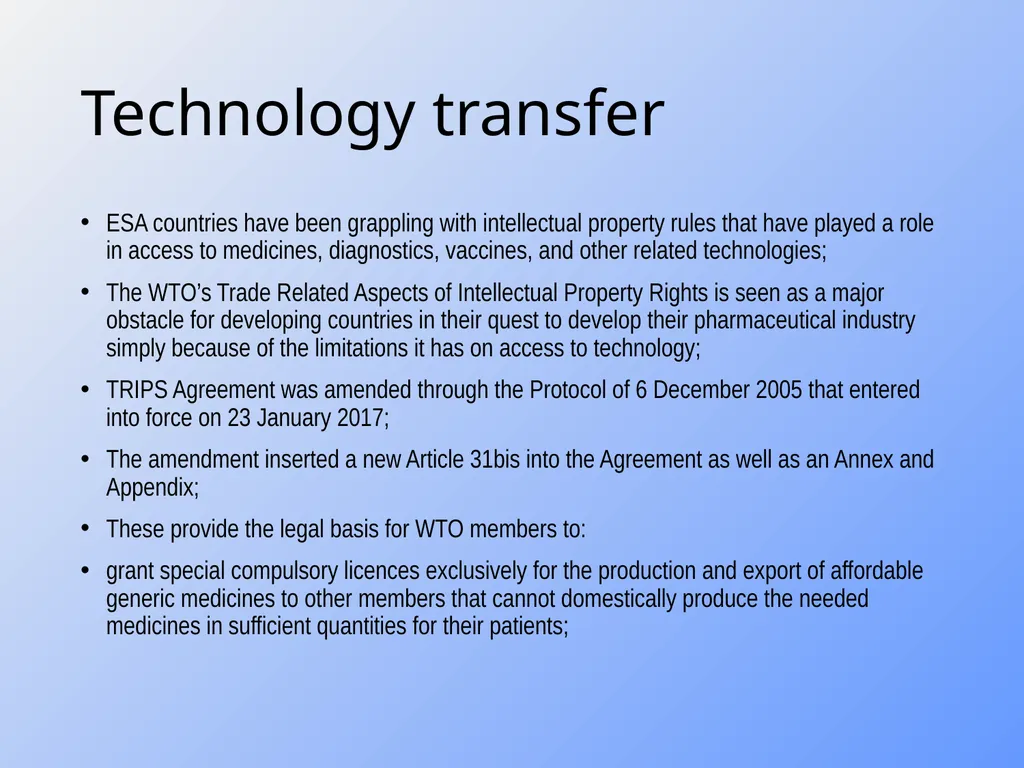
Technology transfer ESA countries have been grappling with intellectual property rules that have played a role in access to medicines, diagnostics, vaccines, and other related technologies;
The WTO’s Trade Related Aspects of Intellectual Property Rights is seen as a major obstacle for developing countries in their quest to develop their pharmaceutical industry simply because of the limitations it has on access to technology;
TRIPS Agreement was amended through the Protocol of 6 December 2005 that entered into force on 23 January 2017;
The amendment inserted a new Article 31bis into the Agreement as well as an Annex and Appendix;
These provide the legal basis for WTO members to:
grant special compulsory licences exclusively for the production and export of affordable generic medicines to other members that cannot domestically produce the needed medicines in sufficient quantities for their patients;<br>
The WTO’s Trade Related Aspects of Intellectual Property Rights is seen as a major obstacle for developing countries in their quest to develop their pharmaceutical industry simply because of the limitations it has on access to technology;
TRIPS Agreement was amended through the Protocol of 6 December 2005 that entered into force on 23 January 2017;
The amendment inserted a new Article 31bis into the Agreement as well as an Annex and Appendix;
These provide the legal basis for WTO members to:
grant special compulsory licences exclusively for the production and export of affordable generic medicines to other members that cannot domestically produce the needed medicines in sufficient quantities for their patients;<br>
25
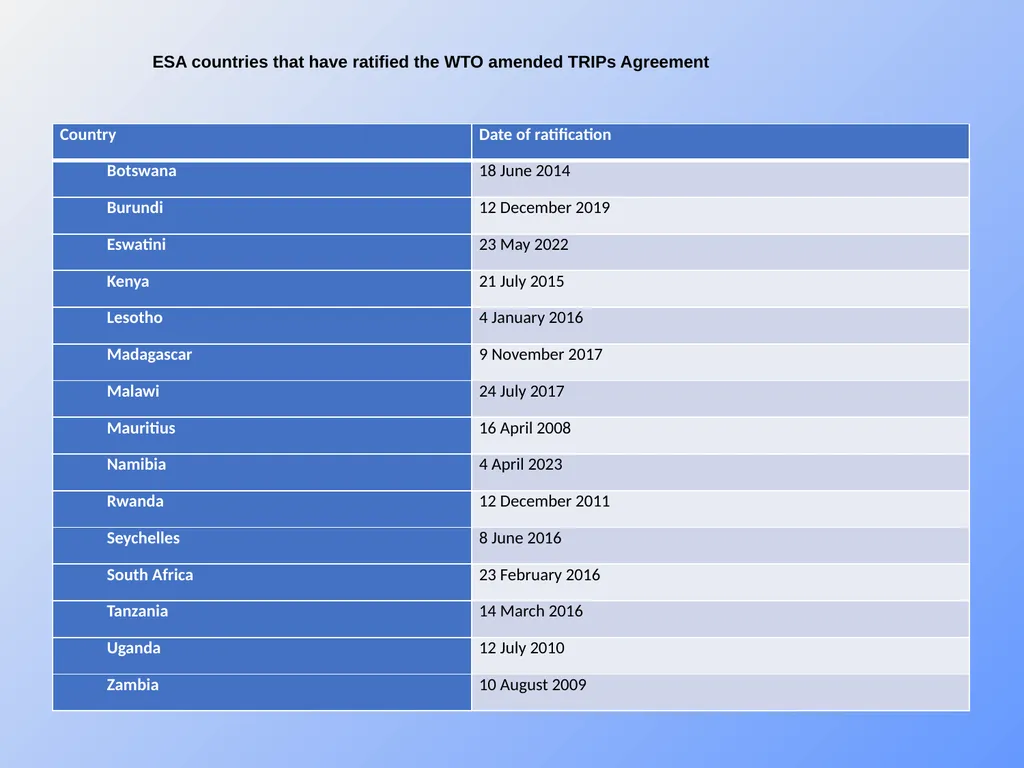
ESA countries that have ratified the WTO amended TRIPs Agreement<br>
26
TRIPs Waiver for covid 19 vaccines Rwanda took advantage of the WTO mechanism for compulsory licenses for importation of medicines for HIV and AIDS;
There were complications in applying this WTO mechanism leading to the medicines taking almost a year to arrive in Rwanda from Canada;
This exposed the challenges in applying TRIPS flexibilities related to regulatory issues, including government procurement rules, and to practices, including the procedures for notifying the WTO;
TRIPs waiver:
India and South Africa requested the WTO to waive the implementation, application and enforcement of four forms of IPRs covered by the TRIPS Agreement (copyright and related rights, industrial designs, patents and trade secrets);
Waiver granted which allows eligible members the legal rights to use the subject matter of a patent required for the production and supply of COVID-19 vaccines without the consent of the right holder to the extent necessary to address the COVID-19 pandemic
The subject matter referred to includes the ingredients and processes necessary for the manufacture of the COVID-19 vaccine;<br>
There were complications in applying this WTO mechanism leading to the medicines taking almost a year to arrive in Rwanda from Canada;
This exposed the challenges in applying TRIPS flexibilities related to regulatory issues, including government procurement rules, and to practices, including the procedures for notifying the WTO;
TRIPs waiver:
India and South Africa requested the WTO to waive the implementation, application and enforcement of four forms of IPRs covered by the TRIPS Agreement (copyright and related rights, industrial designs, patents and trade secrets);
Waiver granted which allows eligible members the legal rights to use the subject matter of a patent required for the production and supply of COVID-19 vaccines without the consent of the right holder to the extent necessary to address the COVID-19 pandemic
The subject matter referred to includes the ingredients and processes necessary for the manufacture of the COVID-19 vaccine;<br>
27
AfCFTA IPR protocol At the continental level, to allow for innovation, the member countries of the AU in February 2023 adopted the protocol on intellectual property rights as part of the AfCFTA;
On a level playing ground, IPRs could be useful to stimulate innovation and encourage research and development:
offers incentives through royalties for a novel development with utility value;
What is crucial is for governments to provide incentives and support to local talent to exploit their resources for innovative developments particularly in the fields of pharmaceutical technology, drug formulation and industrial processes;<br>
On a level playing ground, IPRs could be useful to stimulate innovation and encourage research and development:
offers incentives through royalties for a novel development with utility value;
What is crucial is for governments to provide incentives and support to local talent to exploit their resources for innovative developments particularly in the fields of pharmaceutical technology, drug formulation and industrial processes;<br>
28
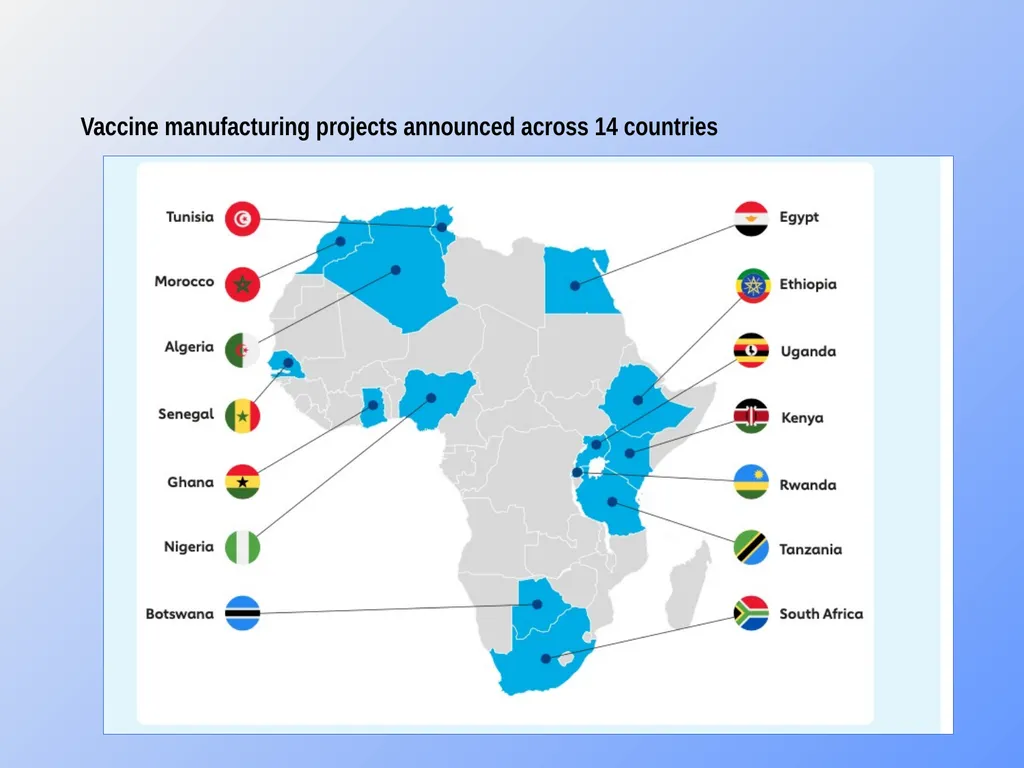
Vaccine manufacturing projects announced across 14 countries<br>
29
Regional collaboration and partnerships Vaccine manufacturing is a complex undertaking that might require pooled resources especially from countries that belong to the same REC;
In addition, the EAC is advanced in terms of integration, which could be beneficial for the four countries to agree to support and finance the establishment of a regional pharmaceutical manufacturing plant to cater for the region;
Mechanisms of sharing revenues could be obtained from other customs unions on how they have and continue to do it (e.g. SACU);
The different pieces of projects announced as shown in the map above might only use significant resources without advancement to maturity levels required:
Recommendation: CSOs could do more advocacy on regional pooling of resources to support perhaps two of the projects rather than disparate ones.<br>
In addition, the EAC is advanced in terms of integration, which could be beneficial for the four countries to agree to support and finance the establishment of a regional pharmaceutical manufacturing plant to cater for the region;
Mechanisms of sharing revenues could be obtained from other customs unions on how they have and continue to do it (e.g. SACU);
The different pieces of projects announced as shown in the map above might only use significant resources without advancement to maturity levels required:
Recommendation: CSOs could do more advocacy on regional pooling of resources to support perhaps two of the projects rather than disparate ones.<br>
30
Other areas Financing
Competition law and policy<br>
Competition law and policy<br>
31
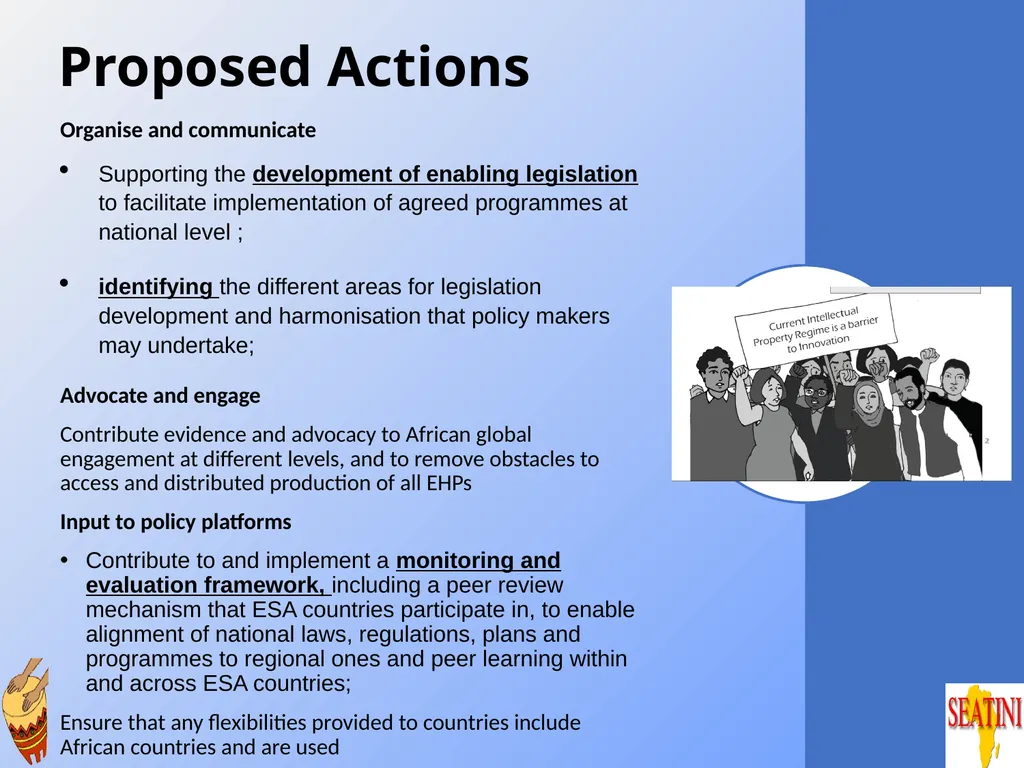
Proposed Actions Organise and communicate
Supporting the development of enabling legislation to facilitate implementation of agreed programmes at national level ;
identifying the different areas for legislation development and harmonisation that policy makers may undertake;
Advocate and engage
Contribute evidence and advocacy to African global engagement at different levels, and to remove obstacles to access and distributed production of all EHPs
Input to policy platforms
Contribute to and implement a monitoring and evaluation framework, including a peer review mechanism that ESA countries participate in, to enable alignment of national laws, regulations, plans and programmes to regional ones and peer learning within and across ESA countries;
Ensure that any flexibilities provided to countries include African countries and are used<br>
Supporting the development of enabling legislation to facilitate implementation of agreed programmes at national level ;
identifying the different areas for legislation development and harmonisation that policy makers may undertake;
Advocate and engage
Contribute evidence and advocacy to African global engagement at different levels, and to remove obstacles to access and distributed production of all EHPs
Input to policy platforms
Contribute to and implement a monitoring and evaluation framework, including a peer review mechanism that ESA countries participate in, to enable alignment of national laws, regulations, plans and programmes to regional ones and peer learning within and across ESA countries;
Ensure that any flexibilities provided to countries include African countries and are used<br>