
Challenges in Public Safety and Security Cindy
CP
Published · 24 slides · 0 views

1 / 1


Description
Challenges in Public Safety and Security Cindy Smail, Loss Control Consultant Marsh Risk Consulting Todays Topics 1 Carrier Concerns 1. Written policies and procedures, written policies and procedures, written policies and procedures! 2.
Related Topics
Share
Embed code
Download this presentation From Below
"Challenges in Public Safety and Security Cindy" is the property of its rightful owner. Permission is granted to download and print the materials on this website for personal, non-commercial use only, and to display it on your personal computer provided you do not modify the materials and that you retain all copyright notices contained in the materials. By downloading content from our website, you accept the terms of this agreement.
Presentation Transcript
01
Challenges in Public Safety and Security Cindy Smail, Loss Control Consultant
Marsh Risk Consulting<br>
02
Today’s Topics 1<br>
03
Carrier Concerns 1. Written policies and procedures, written policies and procedures, written policies and procedures!
2. Police collaboration with community resources
3. Non-enforcement dialogue and engagement (community events, coaching, campus presentations, mentoring, charity events)
4. Officer training
5. Crisis management support 2 Source:
Interview with Laura Nivens, Vice President, Public Entity Division at Genesis.<br>
2. Police collaboration with community resources
3. Non-enforcement dialogue and engagement (community events, coaching, campus presentations, mentoring, charity events)
4. Officer training
5. Crisis management support 2 Source:
Interview with Laura Nivens, Vice President, Public Entity Division at Genesis.<br>
04
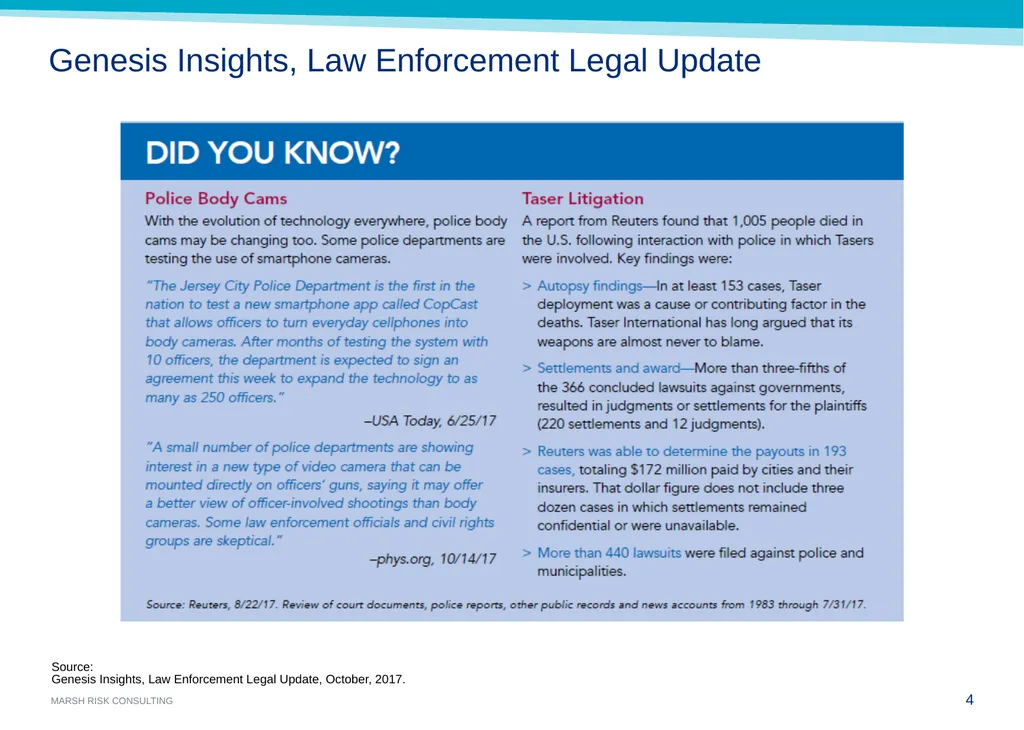
Genesis Insights, Law Enforcement Legal Update 3 Source:
Genesis Insights, Law Enforcement Legal Update, October, 2017.<br>
Genesis Insights, Law Enforcement Legal Update, October, 2017.<br>
05
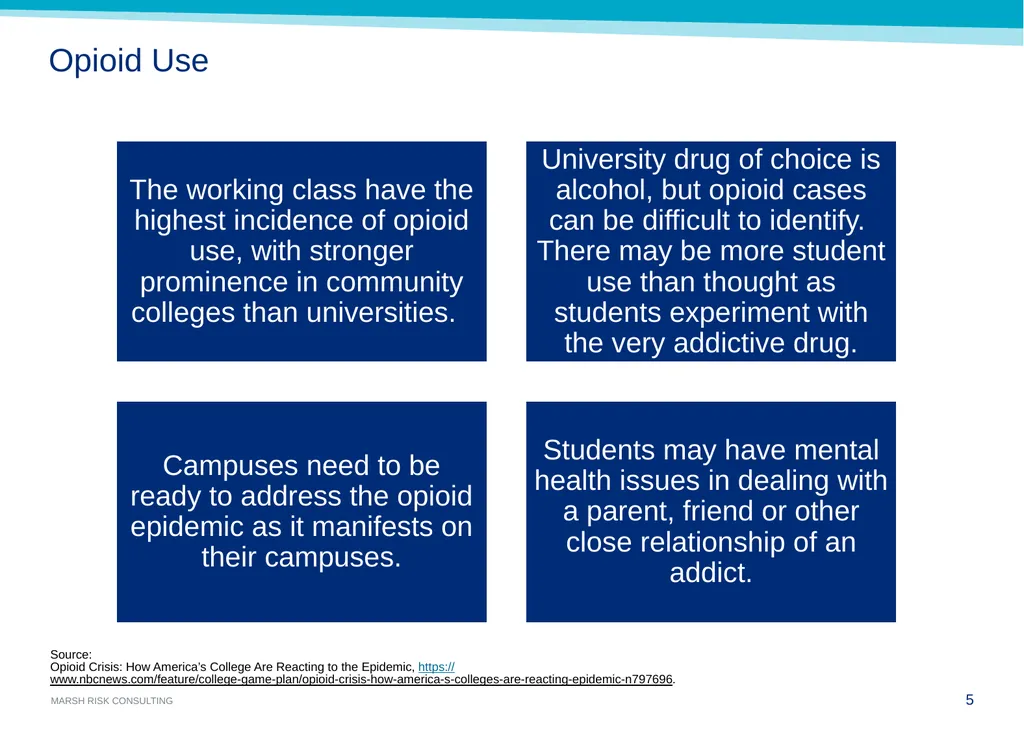
Opioid Use 4 Source:
Opioid Crisis: How America’s College Are Reacting to the Epidemic, https://www.nbcnews.com/feature/college-game-plan/opioid-crisis-how-america-s-colleges-are-reacting-epidemic-n797696.<br>
Opioid Crisis: How America’s College Are Reacting to the Epidemic, https://www.nbcnews.com/feature/college-game-plan/opioid-crisis-how-america-s-colleges-are-reacting-epidemic-n797696.<br>
06
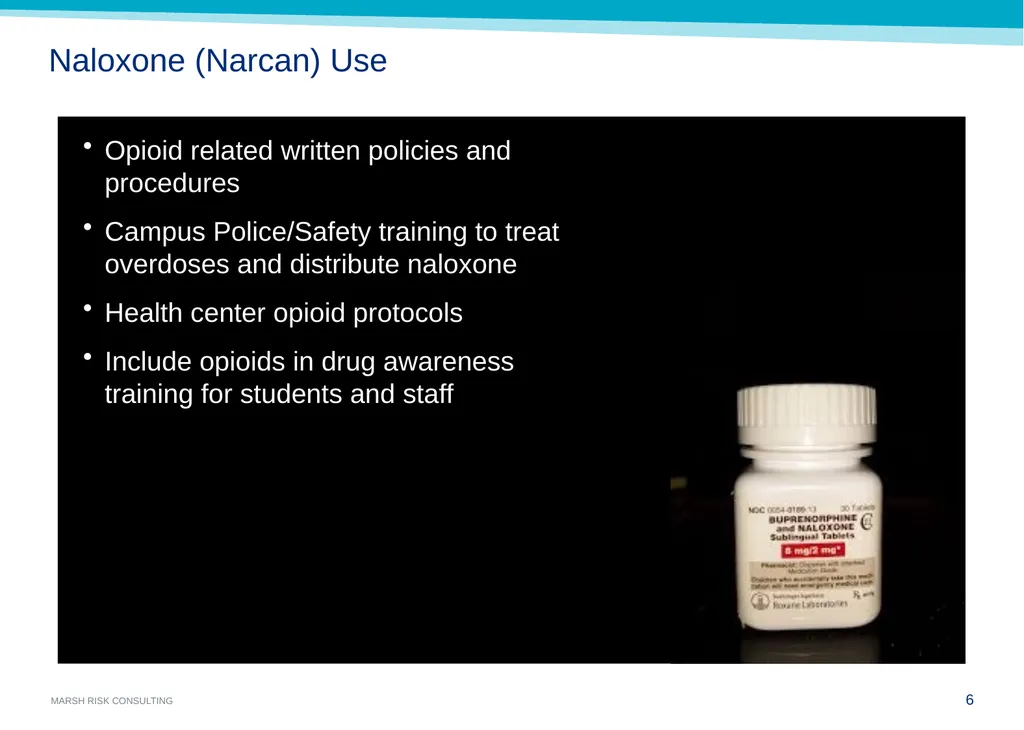
Naloxone (Narcan) Use Opioid related written policies and procedures
Campus Police/Safety training to treat overdoses and distribute naloxone
Health center opioid protocols
Include opioids in drug awareness training for students and staff 5<br>
Campus Police/Safety training to treat overdoses and distribute naloxone
Health center opioid protocols
Include opioids in drug awareness training for students and staff 5<br>
07
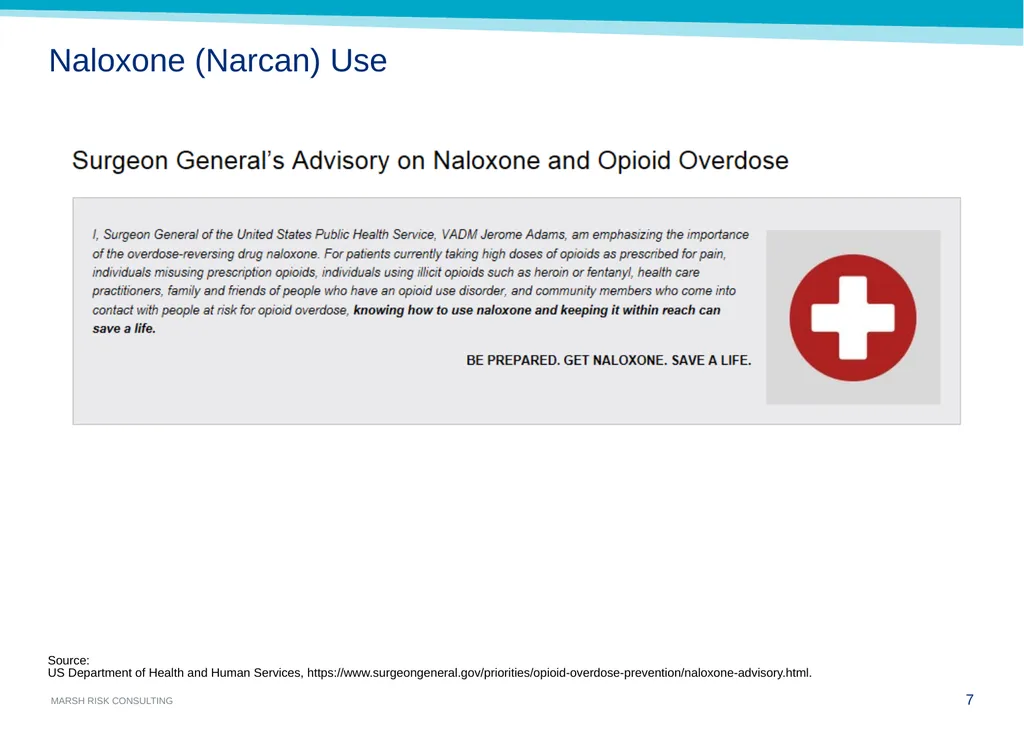
Naloxone (Narcan) Use 6 Source:
US Department of Health and Human Services, https://www.surgeongeneral.gov/priorities/opioid-overdose-prevention/naloxone-advisory.html.<br>
US Department of Health and Human Services, https://www.surgeongeneral.gov/priorities/opioid-overdose-prevention/naloxone-advisory.html.<br>
08
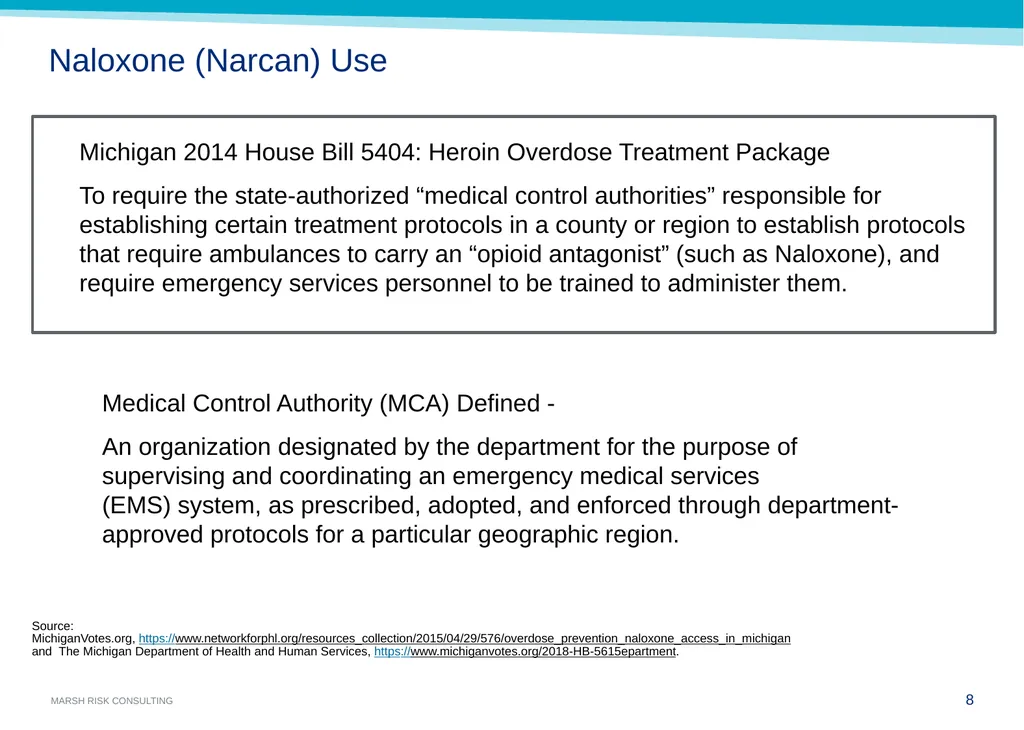
Naloxone (Narcan) Use Michigan 2014 House Bill 5404: Heroin Overdose Treatment Package
To require the state-authorized “medical control authorities” responsible for establishing certain treatment protocols in a county or region to establish protocols that require ambulances to carry an “opioid antagonist” (such as Naloxone), and require emergency services personnel to be trained to administer them. 7 Medical Control Authority (MCA) Defined -
An organization designated by the department for the purpose of supervising and coordinating an emergency medical services (EMS) system, as prescribed, adopted, and enforced through department-approved protocols for a particular geographic region. Source:
MichiganVotes.org, https://www.networkforphl.org/resources_collection/2015/04/29/576/overdose_prevention_naloxone_access_in_michigan and The Michigan Department of Health and Human Services, https://www.michiganvotes.org/2018-HB-5615epartment.<br>
To require the state-authorized “medical control authorities” responsible for establishing certain treatment protocols in a county or region to establish protocols that require ambulances to carry an “opioid antagonist” (such as Naloxone), and require emergency services personnel to be trained to administer them. 7 Medical Control Authority (MCA) Defined -
An organization designated by the department for the purpose of supervising and coordinating an emergency medical services (EMS) system, as prescribed, adopted, and enforced through department-approved protocols for a particular geographic region. Source:
MichiganVotes.org, https://www.networkforphl.org/resources_collection/2015/04/29/576/overdose_prevention_naloxone_access_in_michigan and The Michigan Department of Health and Human Services, https://www.michiganvotes.org/2018-HB-5615epartment.<br>
09
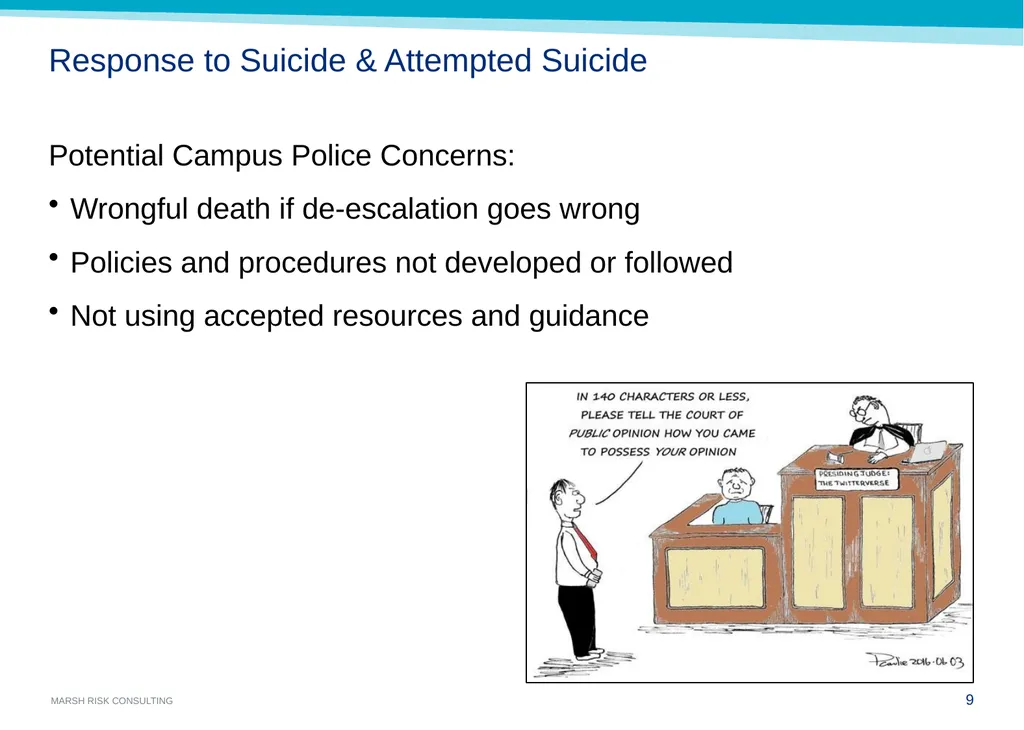
Response to Suicide & Attempted Suicide Potential Campus Police Concerns:
Wrongful death if de-escalation goes wrong
Policies and procedures not developed or followed
Not using accepted resources and guidance 8<br>
Wrongful death if de-escalation goes wrong
Policies and procedures not developed or followed
Not using accepted resources and guidance 8<br>
10
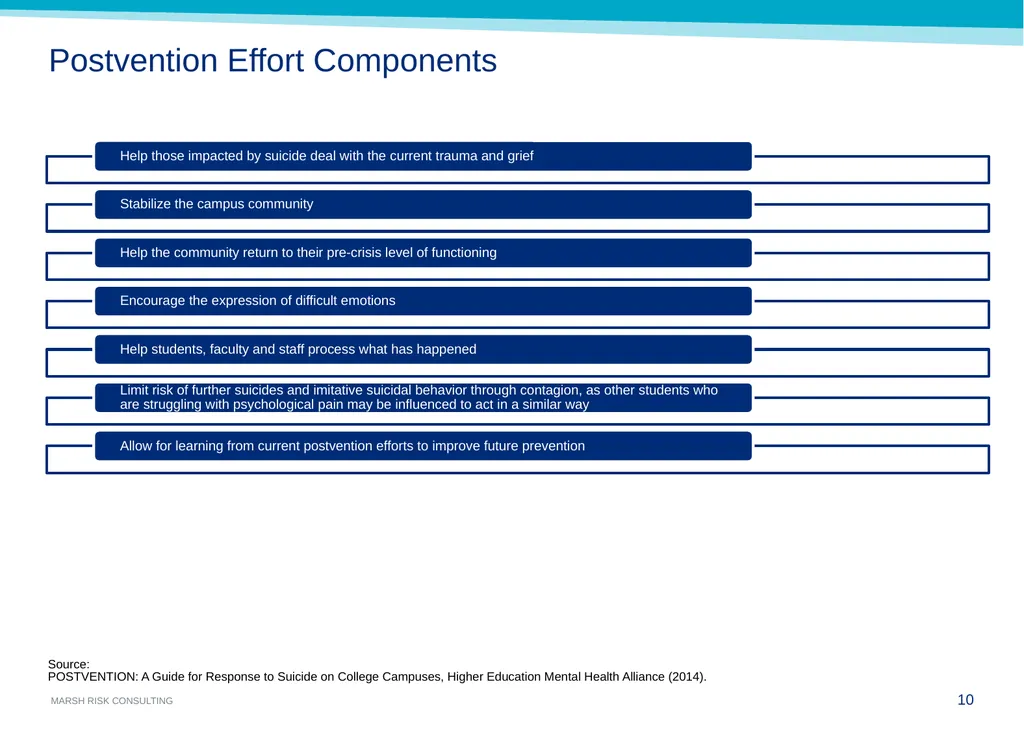
Postvention Effort Components 9 Source:
POSTVENTION: A Guide for Response to Suicide on College Campuses, Higher Education Mental Health Alliance (2014).<br>
POSTVENTION: A Guide for Response to Suicide on College Campuses, Higher Education Mental Health Alliance (2014).<br>
11
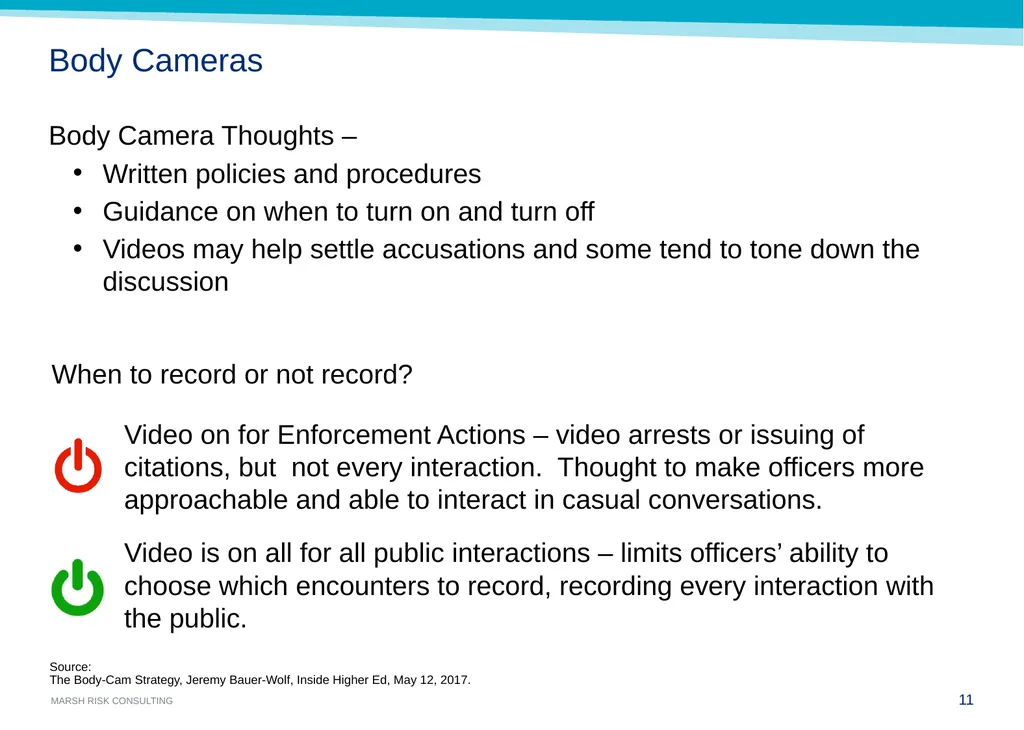
Body Cameras Body Camera Thoughts –
Written policies and procedures
Guidance on when to turn on and turn off
Videos may help settle accusations and some tend to tone down the discussion 10 Source:
The Body-Cam Strategy, Jeremy Bauer-Wolf, Inside Higher Ed, May 12, 2017. When to record or not record? Video on for Enforcement Actions – video arrests or issuing of citations, but not every interaction. Thought to make officers more approachable and able to interact in casual conversations.
Video is on all for all public interactions – limits officers’ ability to choose which encounters to record, recording every interaction with the public.<br>
Written policies and procedures
Guidance on when to turn on and turn off
Videos may help settle accusations and some tend to tone down the discussion 10 Source:
The Body-Cam Strategy, Jeremy Bauer-Wolf, Inside Higher Ed, May 12, 2017. When to record or not record? Video on for Enforcement Actions – video arrests or issuing of citations, but not every interaction. Thought to make officers more approachable and able to interact in casual conversations.
Video is on all for all public interactions – limits officers’ ability to choose which encounters to record, recording every interaction with the public.<br>
12
Surveillance Camera Thoughts –
Written Policies and Procedures
Legal Principles
Fourth Amendment
FERPA
Open Records Law
Deterring Student Misconduct and Violence
Evaluation and Monitoring Employees
Recording Access Surveillance Cameras 11 Source:
The Body-Cam Strategy, Jeremy Bauer-Wolf, Inside Higher Ed, May 12, 2017.<br>
Written Policies and Procedures
Legal Principles
Fourth Amendment
FERPA
Open Records Law
Deterring Student Misconduct and Violence
Evaluation and Monitoring Employees
Recording Access Surveillance Cameras 11 Source:
The Body-Cam Strategy, Jeremy Bauer-Wolf, Inside Higher Ed, May 12, 2017.<br>
13
12 Insights Source:
Interview with Ben Coffman, CMU.<br>
Interview with Ben Coffman, CMU.<br>
14
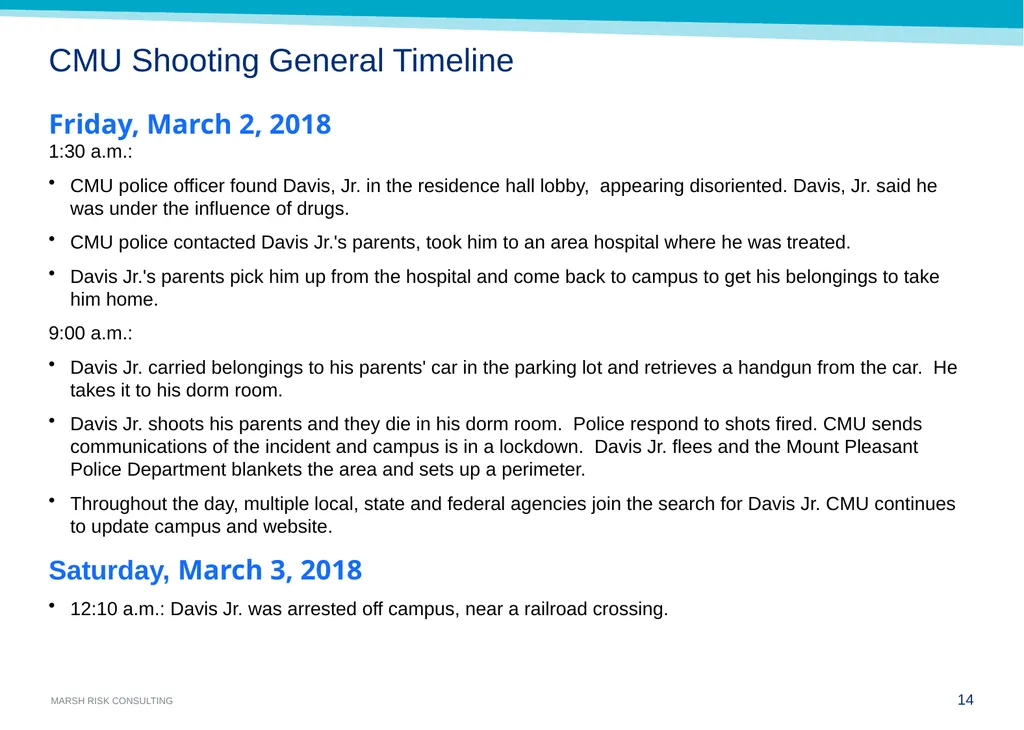
CMU Shooting General Timeline Friday, March 2, 2018
1:30 a.m.:
CMU police officer found Davis, Jr. in the residence hall lobby, appearing disoriented. Davis, Jr. said he was under the influence of drugs.
CMU police contacted Davis Jr.'s parents, took him to an area hospital where he was treated.
Davis Jr.'s parents pick him up from the hospital and come back to campus to get his belongings to take him home.
9:00 a.m.:
Davis Jr. carried belongings to his parents' car in the parking lot and retrieves a handgun from the car. He takes it to his dorm room.
Davis Jr. shoots his parents and they die in his dorm room. Police respond to shots fired. CMU sends communications of the incident and campus is in a lockdown. Davis Jr. flees and the Mount Pleasant Police Department blankets the area and sets up a perimeter.
Throughout the day, multiple local, state and federal agencies join the search for Davis Jr. CMU continues to update campus and website.
Saturday, March 3, 2018
12:10 a.m.: Davis Jr. was arrested off campus, near a railroad crossing. 13<br>
CMU police officer found Davis, Jr. in the residence hall lobby, appearing disoriented. Davis, Jr. said he was under the influence of drugs.
CMU police contacted Davis Jr.'s parents, took him to an area hospital where he was treated.
Davis Jr.'s parents pick him up from the hospital and come back to campus to get his belongings to take him home.
9:00 a.m.:
Davis Jr. carried belongings to his parents' car in the parking lot and retrieves a handgun from the car. He takes it to his dorm room.
Davis Jr. shoots his parents and they die in his dorm room. Police respond to shots fired. CMU sends communications of the incident and campus is in a lockdown. Davis Jr. flees and the Mount Pleasant Police Department blankets the area and sets up a perimeter.
Throughout the day, multiple local, state and federal agencies join the search for Davis Jr. CMU continues to update campus and website.
Saturday, March 3, 2018
12:10 a.m.: Davis Jr. was arrested off campus, near a railroad crossing. 13<br>
15
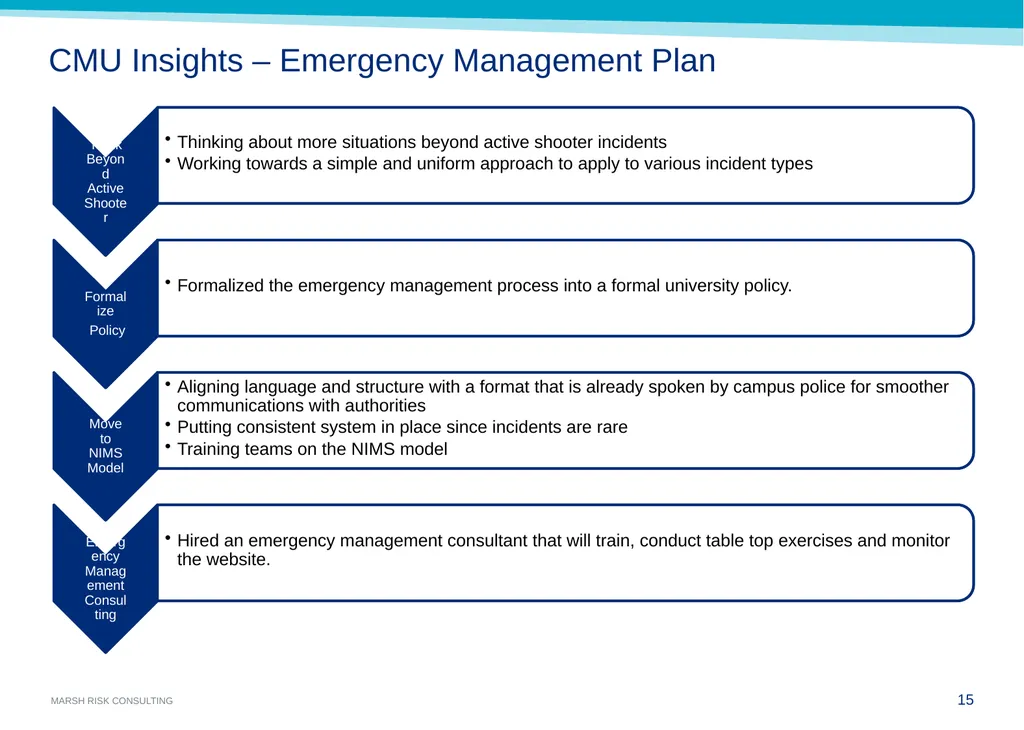
CMU Insights – Emergency Management Plan 14<br>
16
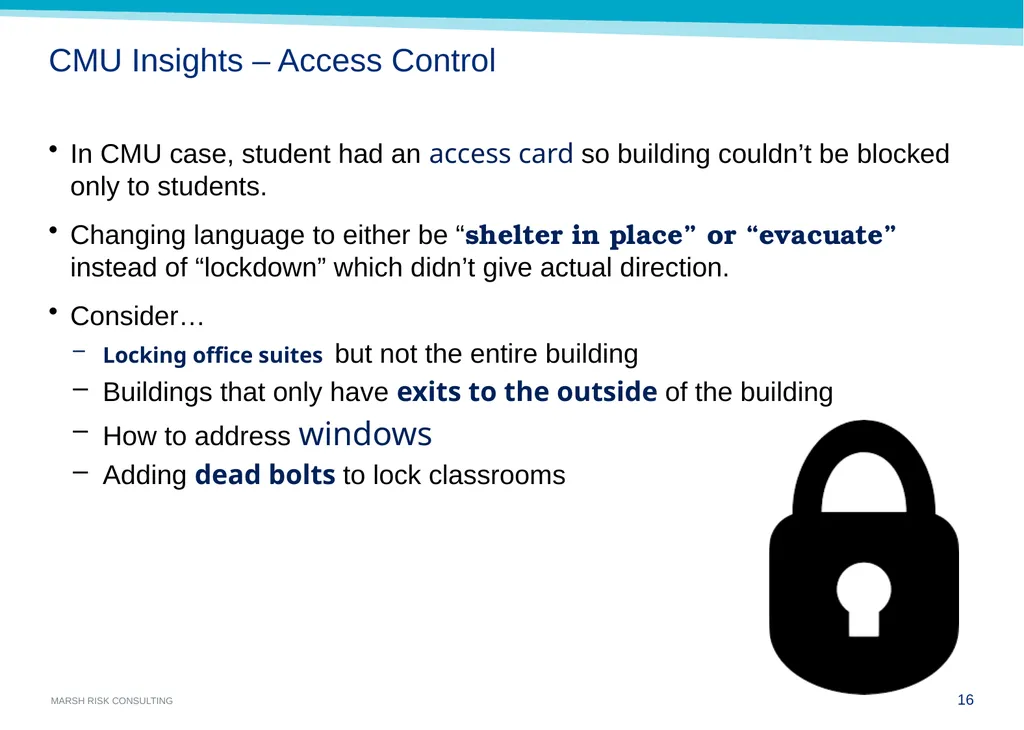
CMU Insights – Access Control In CMU case, student had an access card so building couldn’t be blocked only to students.
Changing language to either be “shelter in place” or “evacuate” instead of “lockdown” which didn’t give actual direction.
Consider…
Locking office suites but not the entire building
Buildings that only have exits to the outside of the building
How to address windows
Adding dead bolts to lock classrooms 15<br>
Changing language to either be “shelter in place” or “evacuate” instead of “lockdown” which didn’t give actual direction.
Consider…
Locking office suites but not the entire building
Buildings that only have exits to the outside of the building
How to address windows
Adding dead bolts to lock classrooms 15<br>
17
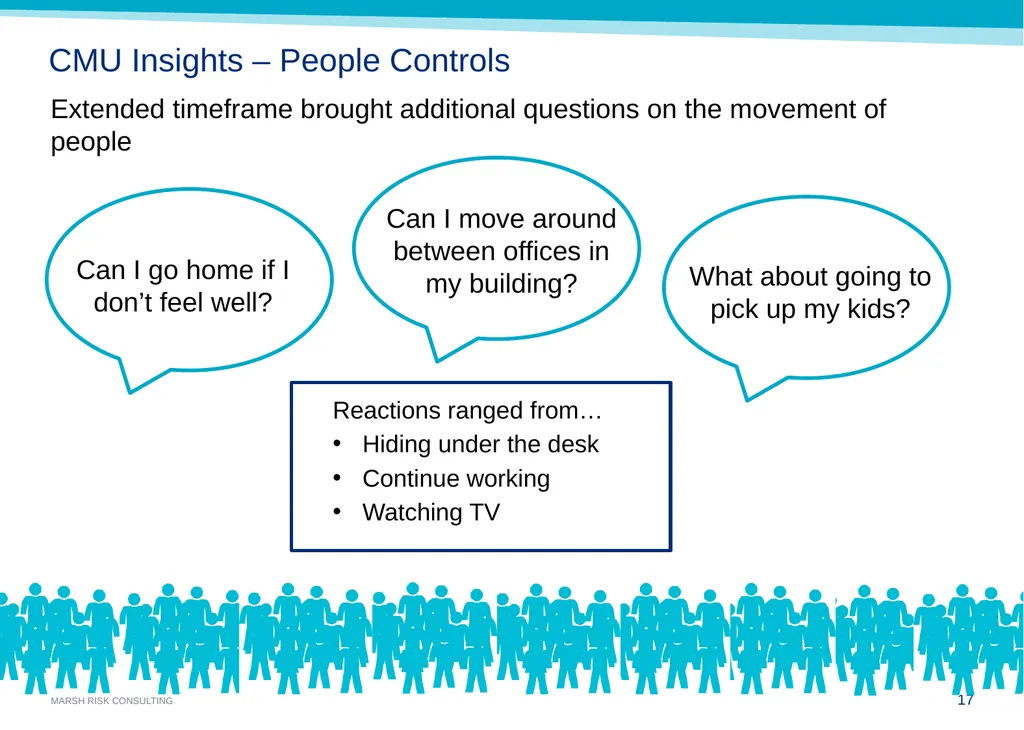
CMU Insights – People Controls Extended timeframe brought additional questions on the movement of people 16 Reactions ranged from…
Hiding under the desk
Continue working
Watching TV What about going to pick up my kids? Can I move around between offices in my building? Can I go home if I don’t feel well?<br>
Hiding under the desk
Continue working
Watching TV What about going to pick up my kids? Can I move around between offices in my building? Can I go home if I don’t feel well?<br>
18
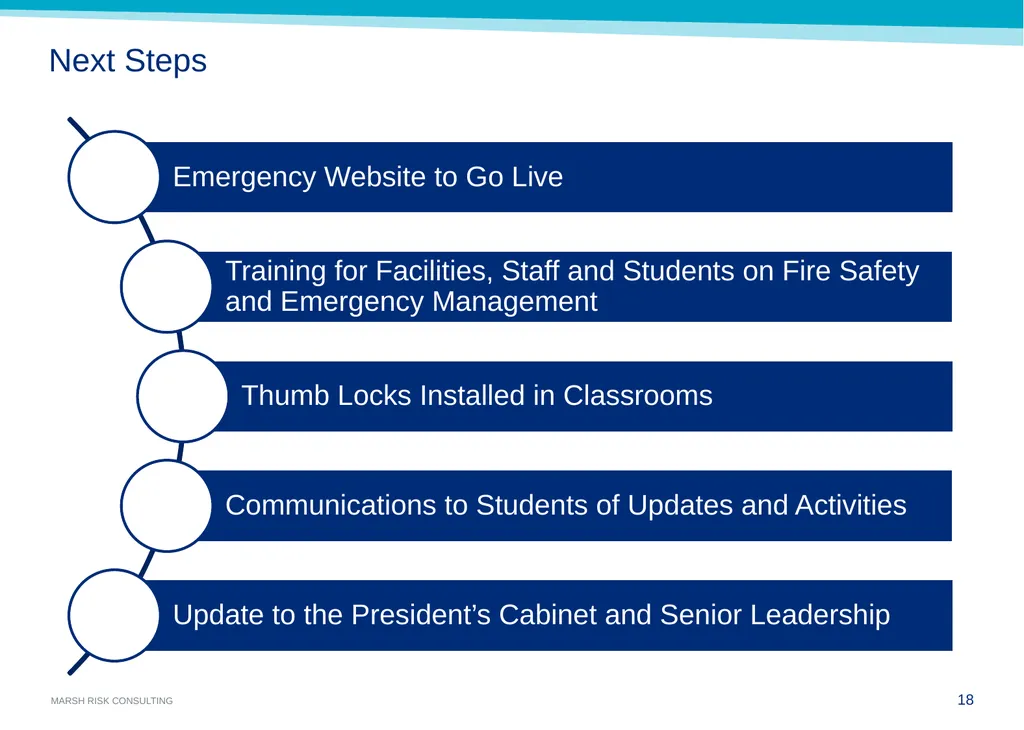
Next Steps 17<br>
19
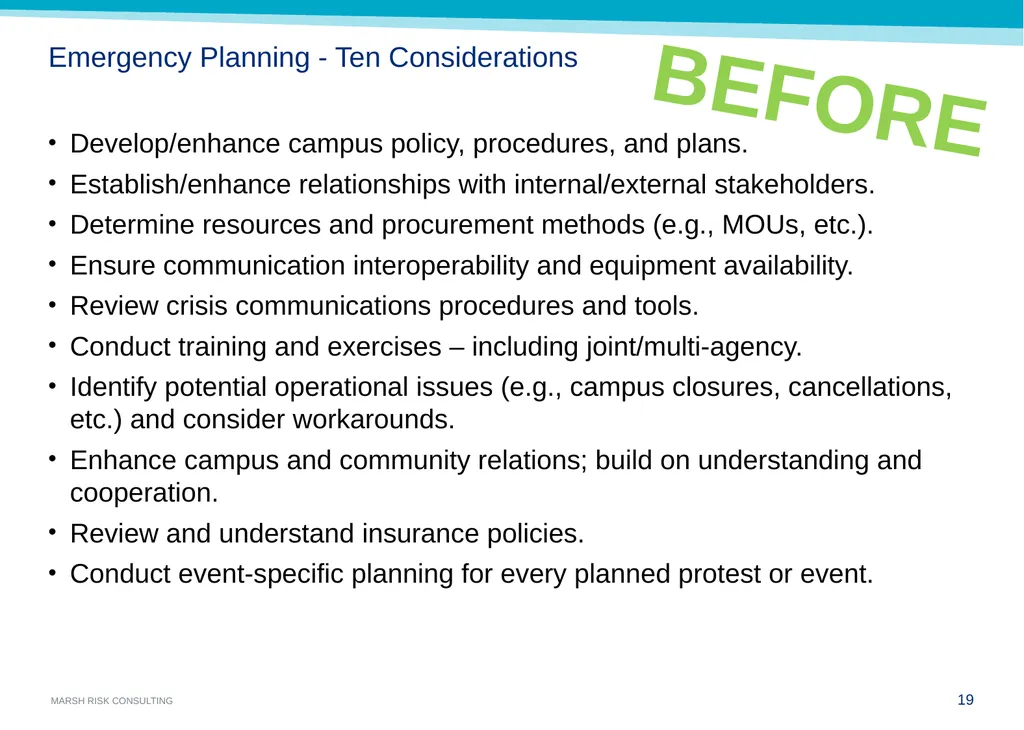
Emergency Planning - Ten Considerations Develop/enhance campus policy, procedures, and plans.
Establish/enhance relationships with internal/external stakeholders.
Determine resources and procurement methods (e.g., MOUs, etc.).
Ensure communication interoperability and equipment availability.
Review crisis communications procedures and tools.
Conduct training and exercises – including joint/multi-agency.
Identify potential operational issues (e.g., campus closures, cancellations, etc.) and consider workarounds.
Enhance campus and community relations; build on understanding and cooperation.
Review and understand insurance policies.
Conduct event-specific planning for every planned protest or event. 18 February 6, 2019 BEFORE<br>
Establish/enhance relationships with internal/external stakeholders.
Determine resources and procurement methods (e.g., MOUs, etc.).
Ensure communication interoperability and equipment availability.
Review crisis communications procedures and tools.
Conduct training and exercises – including joint/multi-agency.
Identify potential operational issues (e.g., campus closures, cancellations, etc.) and consider workarounds.
Enhance campus and community relations; build on understanding and cooperation.
Review and understand insurance policies.
Conduct event-specific planning for every planned protest or event. 18 February 6, 2019 BEFORE<br>
20
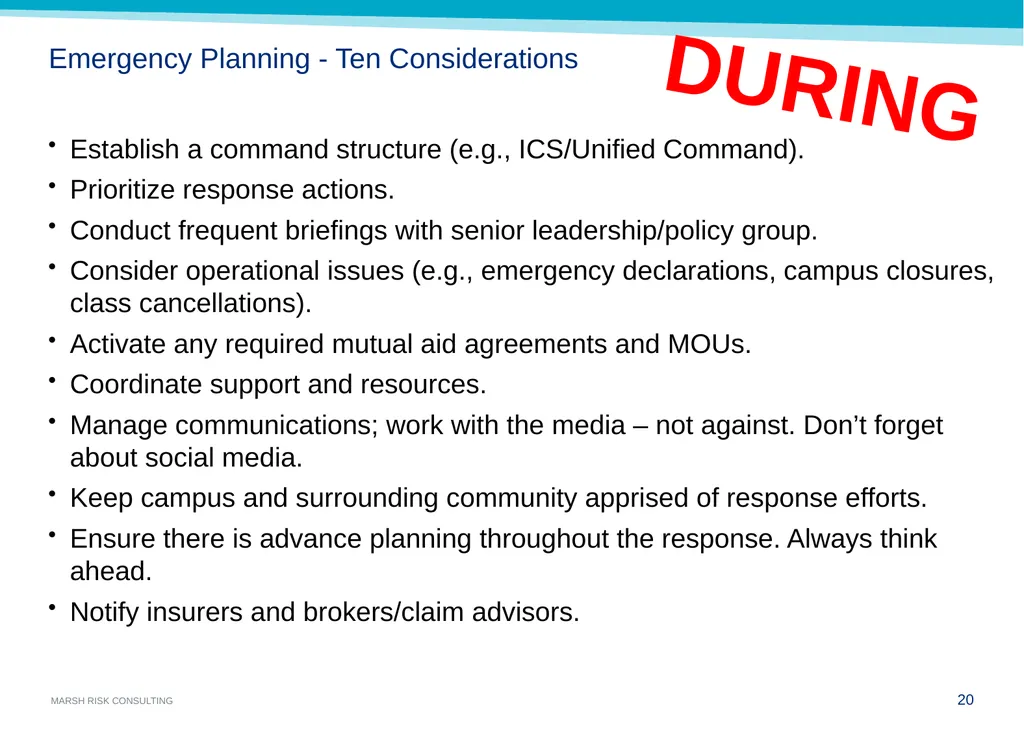
Emergency Planning - Ten Considerations Establish a command structure (e.g., ICS/Unified Command).
Prioritize response actions.
Conduct frequent briefings with senior leadership/policy group.
Consider operational issues (e.g., emergency declarations, campus closures, class cancellations).
Activate any required mutual aid agreements and MOUs.
Coordinate support and resources.
Manage communications; work with the media – not against. Don’t forget about social media.
Keep campus and surrounding community apprised of response efforts.
Ensure there is advance planning throughout the response. Always think ahead.
Notify insurers and brokers/claim advisors. 19 February 6, 2019 DURING<br>
Prioritize response actions.
Conduct frequent briefings with senior leadership/policy group.
Consider operational issues (e.g., emergency declarations, campus closures, class cancellations).
Activate any required mutual aid agreements and MOUs.
Coordinate support and resources.
Manage communications; work with the media – not against. Don’t forget about social media.
Keep campus and surrounding community apprised of response efforts.
Ensure there is advance planning throughout the response. Always think ahead.
Notify insurers and brokers/claim advisors. 19 February 6, 2019 DURING<br>
21
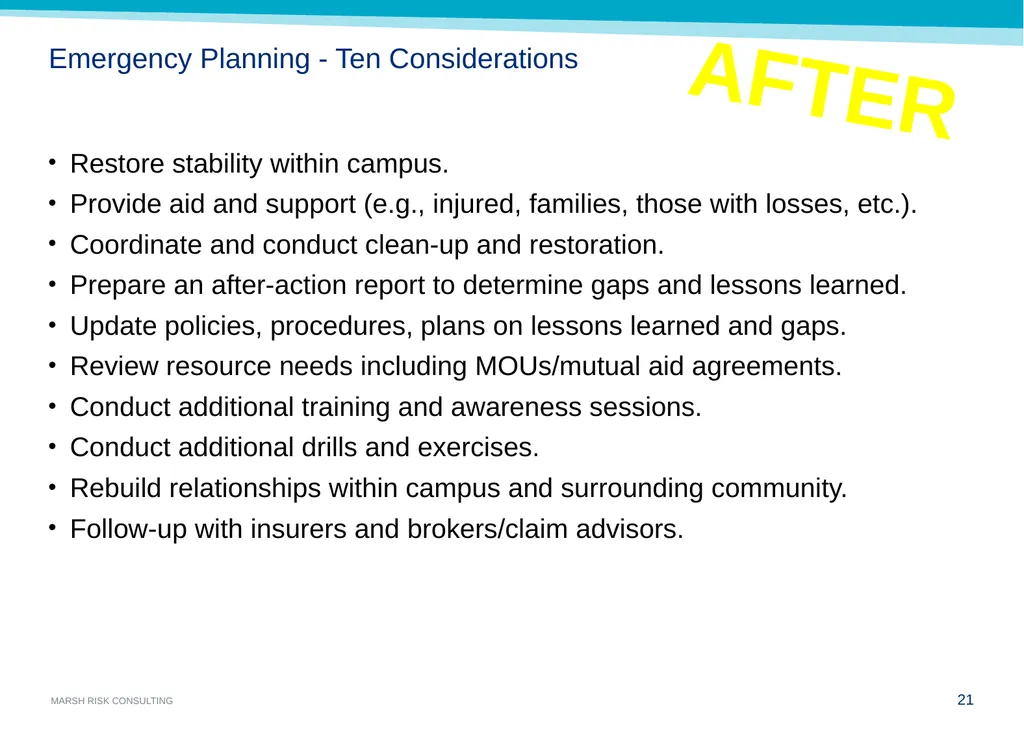
Emergency Planning - Ten Considerations Restore stability within campus.
Provide aid and support (e.g., injured, families, those with losses, etc.).
Coordinate and conduct clean-up and restoration.
Prepare an after-action report to determine gaps and lessons learned.
Update policies, procedures, plans on lessons learned and gaps.
Review resource needs including MOUs/mutual aid agreements.
Conduct additional training and awareness sessions.
Conduct additional drills and exercises.
Rebuild relationships within campus and surrounding community.
Follow-up with insurers and brokers/claim advisors. 20 February 6, 2019 AFTER<br>
Provide aid and support (e.g., injured, families, those with losses, etc.).
Coordinate and conduct clean-up and restoration.
Prepare an after-action report to determine gaps and lessons learned.
Update policies, procedures, plans on lessons learned and gaps.
Review resource needs including MOUs/mutual aid agreements.
Conduct additional training and awareness sessions.
Conduct additional drills and exercises.
Rebuild relationships within campus and surrounding community.
Follow-up with insurers and brokers/claim advisors. 20 February 6, 2019 AFTER<br>
22
21 M.U.S.I.C.
Symposium
2019<br>
Symposium
2019<br>
23
?<br>
24
This document and any recommendations, analysis, or advice provided by Marsh (collectively, the “Marsh Analysis”) are intended solely for the entity identified as the recipient herein (“you”). This document contains proprietary, confidential information of Marsh and may not be shared with any third party, including other insurance producers, without Marsh’s prior written consent. Any statements concerning actuarial, tax, accounting, or legal matters are based solely on our experience as insurance brokers and risk consultants and are not to be relied upon as actuarial, accounting, tax, or legal advice, for which you should consult your own professional advisors. Any modeling, analytics, or projections are subject to inherent uncertainty, and the Marsh Analysis could be materially affected if any underlying assumptions, conditions, information, or factors are inaccurate or incomplete or should change. The information contained herein is based on sources we believe reliable, but we make no representation or warranty as to its accuracy. Except as may be set forth in an agreement between you and Marsh, Marsh shall have no obligation to update the Marsh Analysis and shall have no liability to you or any other party with regard to the Marsh Analysis or to any services provided by a third party to you or Marsh. Marsh makes no representation or warranty concerning the application of policy wordings or the financial condition or solvency of insurers or reinsurers. Marsh makes no assurances regarding the availability, cost, or terms of insurance coverage.<br>