
Session 1 Legislative Requirements + Other
Description: Session 1 Legislative Requirements Other Frameworks Governing Risk Management Introduction Welcome Introduction Overview Enterprise Risk Management Definition A systematic, integrated and formalised process to identify, assesses, manage
Related Topics
Download Presentation
"Session 1 Legislative Requirements + Other" is the property of its rightful owner. Permission is granted to download and print the materials on this website for personal, non-commercial use only, and to display it on your personal computer provided you do not modify the materials and that you retain all copyright notices contained in the materials. By downloading content from our website, you accept the terms of this agreement.
Presentation Transcript
slide1. Session 1 Legislative Requirements
+
Other Frameworks
Governing Risk Management<br>
slide2. Introduction Welcome
Introduction
Overview<br>
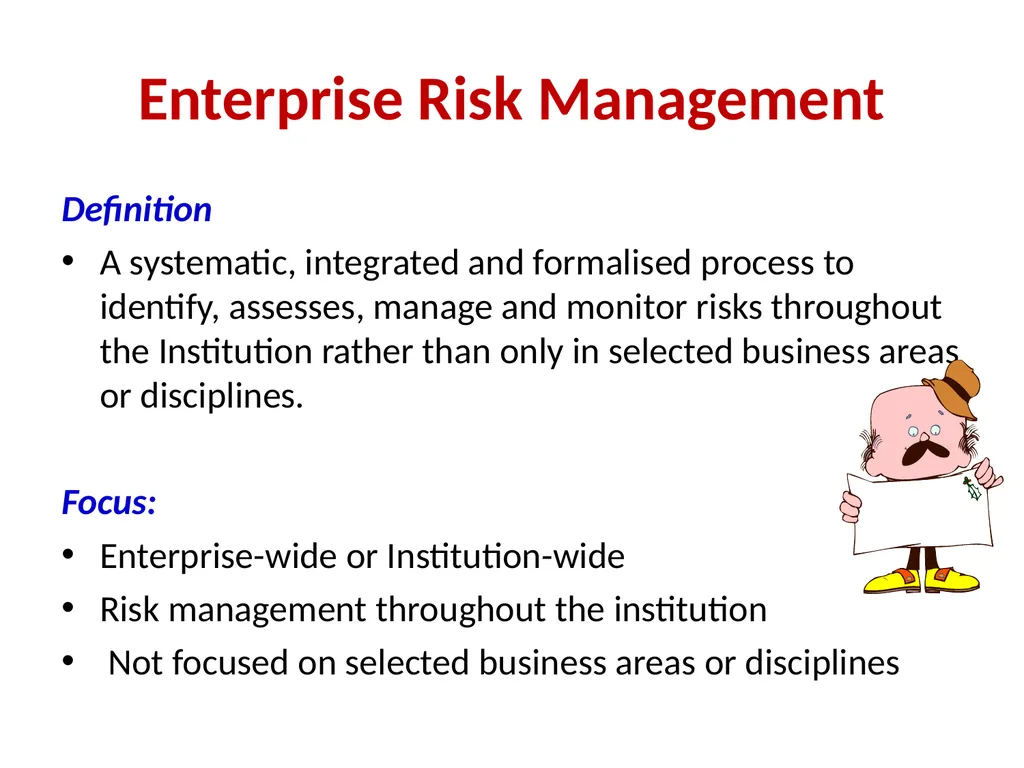
slide3. Enterprise Risk Management Definition
A systematic, integrated and formalised process to identify, assesses, manage and monitor risks throughout the Institution rather than only in selected business areas or disciplines.
Focus:
Enterprise-wide or Institution-wide
Risk management throughout the institution
Not focused on selected business areas or disciplines<br>
slide4. PFMA Requirements for Risk Management Risk management contributions:
Section 38 (a) (i) & Section 51 (a) (i) of the PFMA - need for AO& Authorities of department, trading entity or constitutional institution have and maintain effective, efficient and transparent systems of financial and risk management and internal control.
Section 6 (2) (a) of the PFMA – NT norms and standards
Chapter 4 and 8 of the PFMA - financial planning, expenditure and liability management<br>
slide5. Intergovernmental Fiscal Relations Act (No. 97 of 1997) Risk management contributions:
Establishment , Functions , Meetings of Local Government Budget Forum
Process for revenue-sharing among the spheres of government
Revenue-sharing and allocation of money in terms of section 214 of Constitution
Commission’s recommendations
Division of Revenue Bill<br>
slide6. Intergovernmental Relations Framework Act (No. 13 of 2005) Risk management contributions:
Development of intergovernmental structures such as President’s Co-ordinating Council, National intergovernmental forums, Provincial intergovernmental forums, Municipal intergovernmental forums
Conduct of intergovernmental relations
Settlement of intergovernmental disputes<br>
slide7. MFMA, 2003 Risk management contributions:
Section 62 (c) (i) and 95 (c) (i) - municipality has and maintains effective, efficient and transparent systems of financial and risk management and internal control.
Section 20 (1) (iv), (v) and (vi) – NT norms and standards
Chapter 4 - municipal budgets
Chapter 6 – debt
Chapter 7 & 8 – roles and responsibilities
Chapter 3 - revenue management<br>
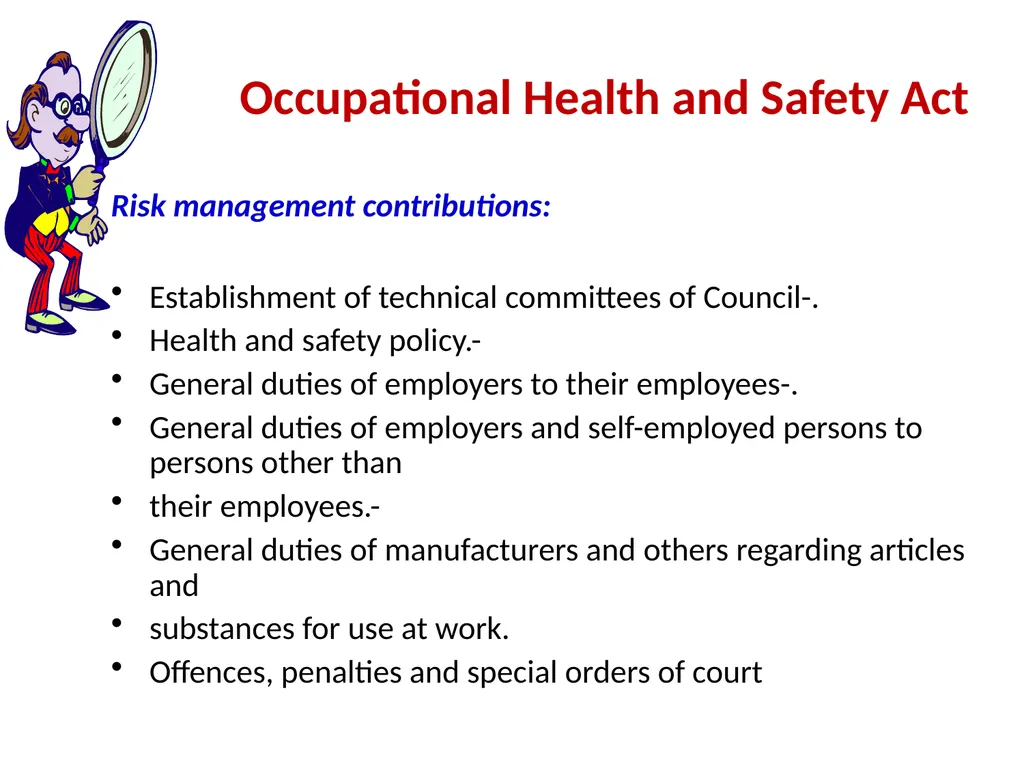
slide8. Occupational Health and Safety Act Risk management contributions:
Establishment of technical committees of Council-.
Health and safety policy.-
General duties of employers to their employees-.
General duties of employers and self-employed persons to persons other than
their employees.-
General duties of manufacturers and others regarding articles and
substances for use at work.
Offences, penalties and special orders of court<br>
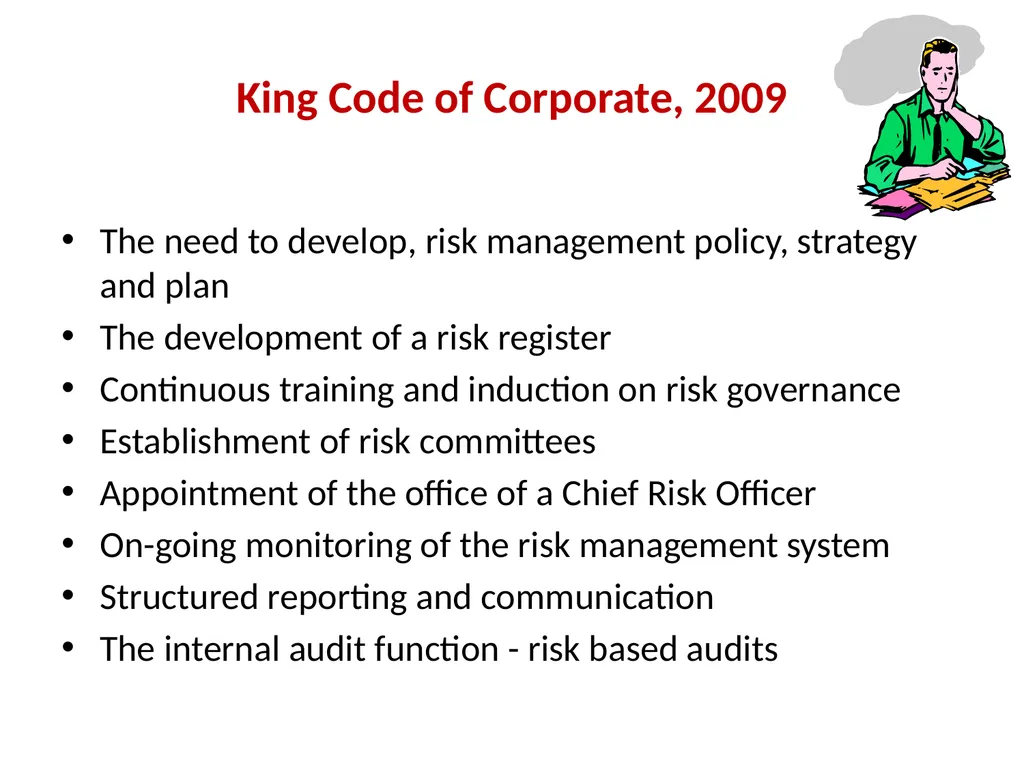
slide9. King Code of Corporate, 2009 The need to develop, risk management policy, strategy and plan
The development of a risk register
Continuous training and induction on risk governance
Establishment of risk committees
Appointment of the office of a Chief Risk Officer
On-going monitoring of the risk management system
Structured reporting and communication
The internal audit function - risk based audits<br>
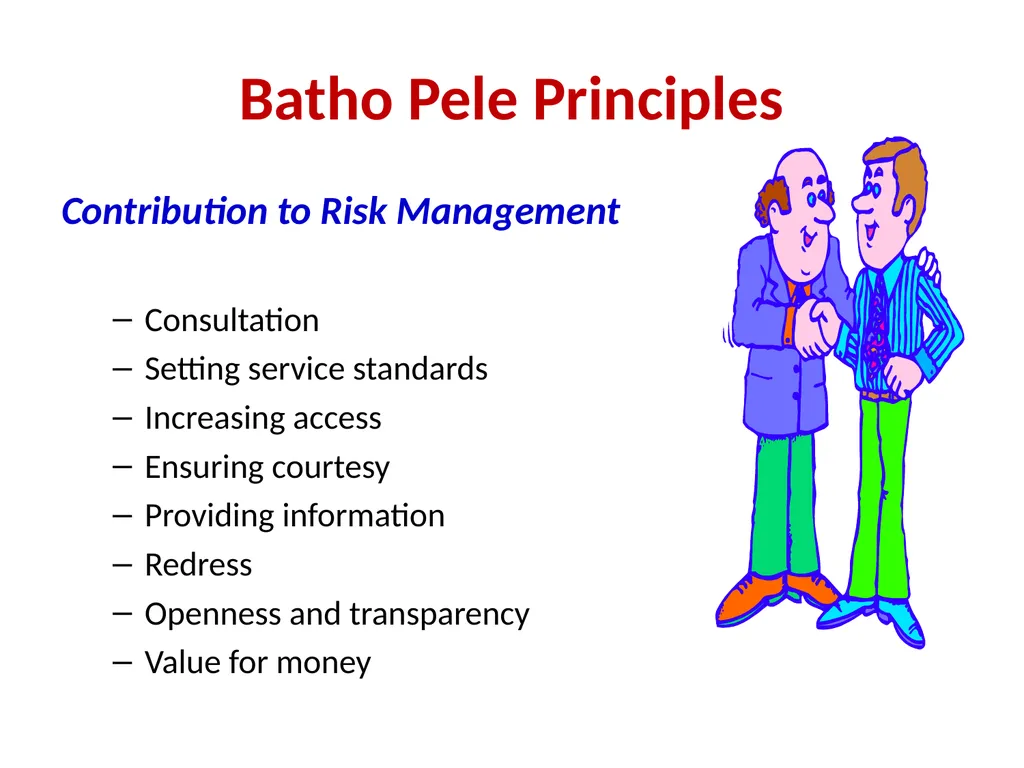
slide10. Batho Pele Principles Contribution to Risk Management
Consultation
Setting service standards
Increasing access
Ensuring courtesy
Providing information
Redress
Openness and transparency
Value for money<br>
slide11. Public Sector Codes of Conduct Contribution to Risk Management
Relationship with the legislature and the executive
Relationship with the Public
Relationship among Employee
Performance of Duties
Personal Conduct and Private Interests<br>
slide12. Code of Conduct for Municipal Staff Members Contribution to Risk Management
General Conduct
Commitment to serving the public interest
Personal gain
Disclosure of benefits
Unauthorised disclosure of information
Undue influence
Rewards, gifts and favours
Council property
Payment of arrears
Participation in elections
Sexual harassment
Reporting duty of staff members
Breaches of Code<br>
slide13. Session 2: Governance Structure<br>
slide14. Risk Management Unit headed by the Chief Risk Officer Summary Functions
Facilitating and Coordinating various risk management activities relating to developing;
risk management policy
risk management strategy
implementation plan
identification and assessment methodology
appetite and tolerance
classification.
Monitoring the implementation of the response strategies<br>
slide15. Risk Coordinators Summary Functions
Intervening in instances where the risk management efforts are being hampered
Providing guidance and support to manage "problematic" risks<br>
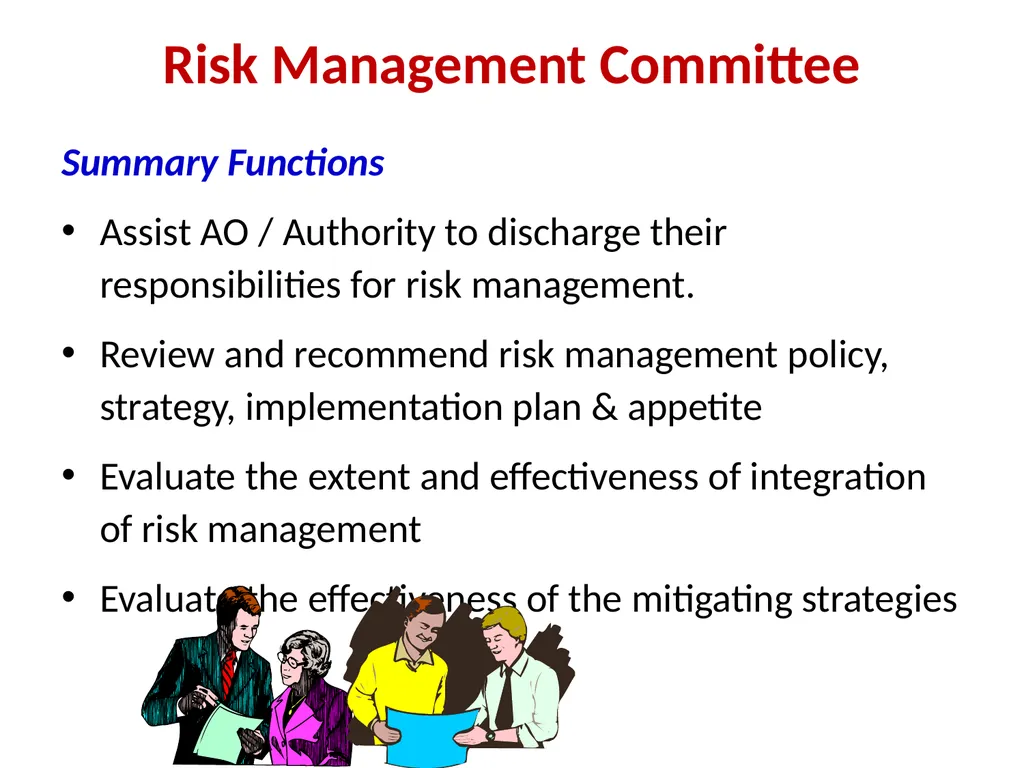
slide16. Risk Management Committee Summary Functions
Assist AO / Authority to discharge their responsibilities for risk management.
Review and recommend risk management policy, strategy, implementation plan & appetite
Evaluate the extent and effectiveness of integration of risk management
Evaluate the effectiveness of the mitigating strategies<br>
slide17. Internal Audit Summary Functions
to provide an independent, objective assurance on the effectiveness of the Institution’s system of risk management
evaluate the effectiveness of the entire system of risk management
provide recommendations for improvement where necessary.
Execute risk-based audits<br>
slide18. Managers & Supervisors Summary Functions
Setting the tone for risk management in the respective units that they manage
Owning risks which the managers are responsible for managing
Managing the risks
Reporting the risks to relevant parties
Monitoring the risks for changes, management status and effectiveness of current controls<br>
slide19. Other Officials Summary Functions
Integrating risk management into their day-to-day activities
Applying the risk management processes in their respective functions;
Implementing the delegated action plans to address the identified risks;
Informing their supervisors and/or the Risk Management Unit of new risks and significant changes in known risks;
Co-operating with other role players in risk management<br>
slide20. Thank you .<br>
+
Other Frameworks
Governing Risk Management<br>
slide2. Introduction Welcome
Introduction
Overview<br>
slide3. Enterprise Risk Management Definition
A systematic, integrated and formalised process to identify, assesses, manage and monitor risks throughout the Institution rather than only in selected business areas or disciplines.
Focus:
Enterprise-wide or Institution-wide
Risk management throughout the institution
Not focused on selected business areas or disciplines<br>
slide4. PFMA Requirements for Risk Management Risk management contributions:
Section 38 (a) (i) & Section 51 (a) (i) of the PFMA - need for AO& Authorities of department, trading entity or constitutional institution have and maintain effective, efficient and transparent systems of financial and risk management and internal control.
Section 6 (2) (a) of the PFMA – NT norms and standards
Chapter 4 and 8 of the PFMA - financial planning, expenditure and liability management<br>
slide5. Intergovernmental Fiscal Relations Act (No. 97 of 1997) Risk management contributions:
Establishment , Functions , Meetings of Local Government Budget Forum
Process for revenue-sharing among the spheres of government
Revenue-sharing and allocation of money in terms of section 214 of Constitution
Commission’s recommendations
Division of Revenue Bill<br>
slide6. Intergovernmental Relations Framework Act (No. 13 of 2005) Risk management contributions:
Development of intergovernmental structures such as President’s Co-ordinating Council, National intergovernmental forums, Provincial intergovernmental forums, Municipal intergovernmental forums
Conduct of intergovernmental relations
Settlement of intergovernmental disputes<br>
slide7. MFMA, 2003 Risk management contributions:
Section 62 (c) (i) and 95 (c) (i) - municipality has and maintains effective, efficient and transparent systems of financial and risk management and internal control.
Section 20 (1) (iv), (v) and (vi) – NT norms and standards
Chapter 4 - municipal budgets
Chapter 6 – debt
Chapter 7 & 8 – roles and responsibilities
Chapter 3 - revenue management<br>
slide8. Occupational Health and Safety Act Risk management contributions:
Establishment of technical committees of Council-.
Health and safety policy.-
General duties of employers to their employees-.
General duties of employers and self-employed persons to persons other than
their employees.-
General duties of manufacturers and others regarding articles and
substances for use at work.
Offences, penalties and special orders of court<br>
slide9. King Code of Corporate, 2009 The need to develop, risk management policy, strategy and plan
The development of a risk register
Continuous training and induction on risk governance
Establishment of risk committees
Appointment of the office of a Chief Risk Officer
On-going monitoring of the risk management system
Structured reporting and communication
The internal audit function - risk based audits<br>
slide10. Batho Pele Principles Contribution to Risk Management
Consultation
Setting service standards
Increasing access
Ensuring courtesy
Providing information
Redress
Openness and transparency
Value for money<br>
slide11. Public Sector Codes of Conduct Contribution to Risk Management
Relationship with the legislature and the executive
Relationship with the Public
Relationship among Employee
Performance of Duties
Personal Conduct and Private Interests<br>
slide12. Code of Conduct for Municipal Staff Members Contribution to Risk Management
General Conduct
Commitment to serving the public interest
Personal gain
Disclosure of benefits
Unauthorised disclosure of information
Undue influence
Rewards, gifts and favours
Council property
Payment of arrears
Participation in elections
Sexual harassment
Reporting duty of staff members
Breaches of Code<br>
slide13. Session 2: Governance Structure<br>
slide14. Risk Management Unit headed by the Chief Risk Officer Summary Functions
Facilitating and Coordinating various risk management activities relating to developing;
risk management policy
risk management strategy
implementation plan
identification and assessment methodology
appetite and tolerance
classification.
Monitoring the implementation of the response strategies<br>
slide15. Risk Coordinators Summary Functions
Intervening in instances where the risk management efforts are being hampered
Providing guidance and support to manage "problematic" risks<br>
slide16. Risk Management Committee Summary Functions
Assist AO / Authority to discharge their responsibilities for risk management.
Review and recommend risk management policy, strategy, implementation plan & appetite
Evaluate the extent and effectiveness of integration of risk management
Evaluate the effectiveness of the mitigating strategies<br>
slide17. Internal Audit Summary Functions
to provide an independent, objective assurance on the effectiveness of the Institution’s system of risk management
evaluate the effectiveness of the entire system of risk management
provide recommendations for improvement where necessary.
Execute risk-based audits<br>
slide18. Managers & Supervisors Summary Functions
Setting the tone for risk management in the respective units that they manage
Owning risks which the managers are responsible for managing
Managing the risks
Reporting the risks to relevant parties
Monitoring the risks for changes, management status and effectiveness of current controls<br>
slide19. Other Officials Summary Functions
Integrating risk management into their day-to-day activities
Applying the risk management processes in their respective functions;
Implementing the delegated action plans to address the identified risks;
Informing their supervisors and/or the Risk Management Unit of new risks and significant changes in known risks;
Co-operating with other role players in risk management<br>
slide20. Thank you .<br>