Session 11 Fiscal Policy Disclaimer: The views expressed are those of the presenters and do not necessarily reflect those of the Federal Reserve Bank of Dallas or the Federal Reserve System. TEKS (15) Economics. The student understands the
Related Topics
Share
Embed code
Download this presentation From Below
"Session 11 Fiscal Policy Disclaimer: The views" is the property of its rightful owner. Permission is granted to
download and print the materials on this website for personal, non-commercial use only, and to display it
on your personal computer provided you do not modify the materials and that you retain all copyright
notices contained in the materials. By downloading content from our website, you accept the terms of this
agreement.
Presentation Transcript
01
Session 11 Fiscal Policy Disclaimer: The views expressed are those of the presenters and do not necessarily reflect those of the Federal Reserve Bank of Dallas or the Federal Reserve System.<br>
02
TEKS (15) Economics. The student understands the economic impact of fiscal policy decisions at the local, state, and national levels. The student is expected to:
(A) identify types of taxes at the local, state, and national levels and the economic importance of each;
(B) analyze the categories of revenues and expenditures in the U.S. federal budget; and
(C) analyze the impact of fiscal policy decisions on the economy.
(6) Economics. The student understands the basic characteristics and benefits of a free enterprise system. The student is expected to:
(D) analyze the costs and benefits of U.S. economic policies related to the economic goals of economic growth, stability, full employment, freedom, security, equity (equal opportunity versus equal outcome), and efficiency.<br>
03
Teaching the Terms<br>
04
Fiscal Policy Government spends money to provide goods and services
Government pays for those expenditures through taxation and borrowing<br>
05
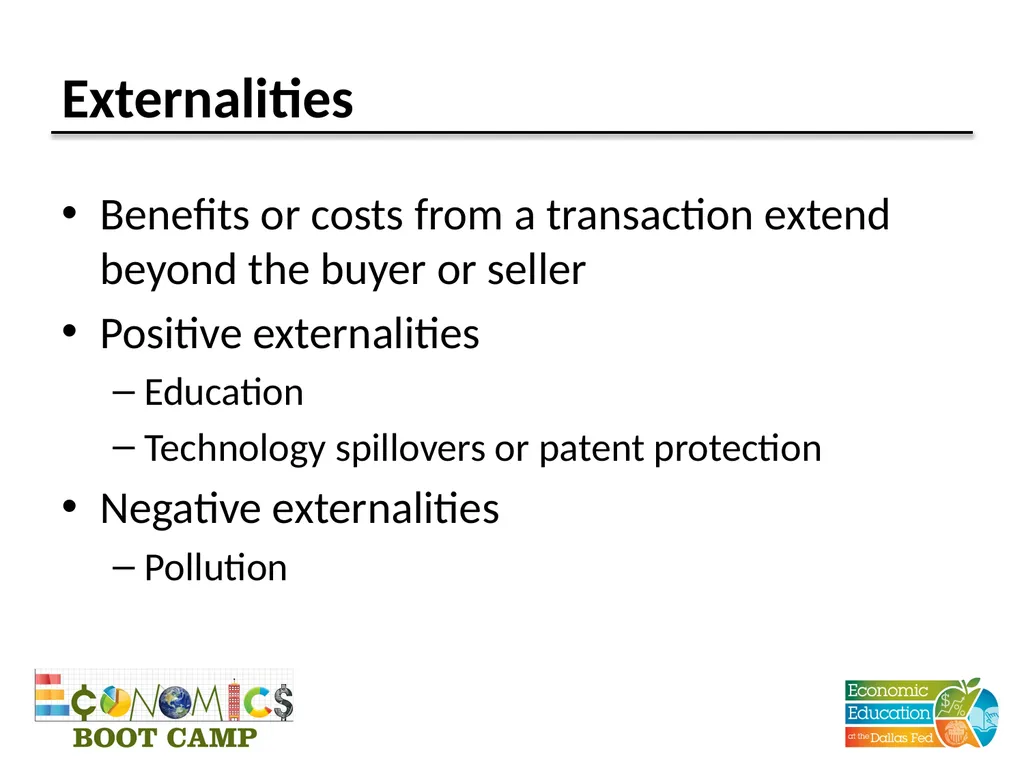
Externalities Benefits or costs from a transaction extend beyond the buyer or seller
Positive externalities
Education
Technology spillovers or patent protection
Negative externalities
Pollution<br>
06
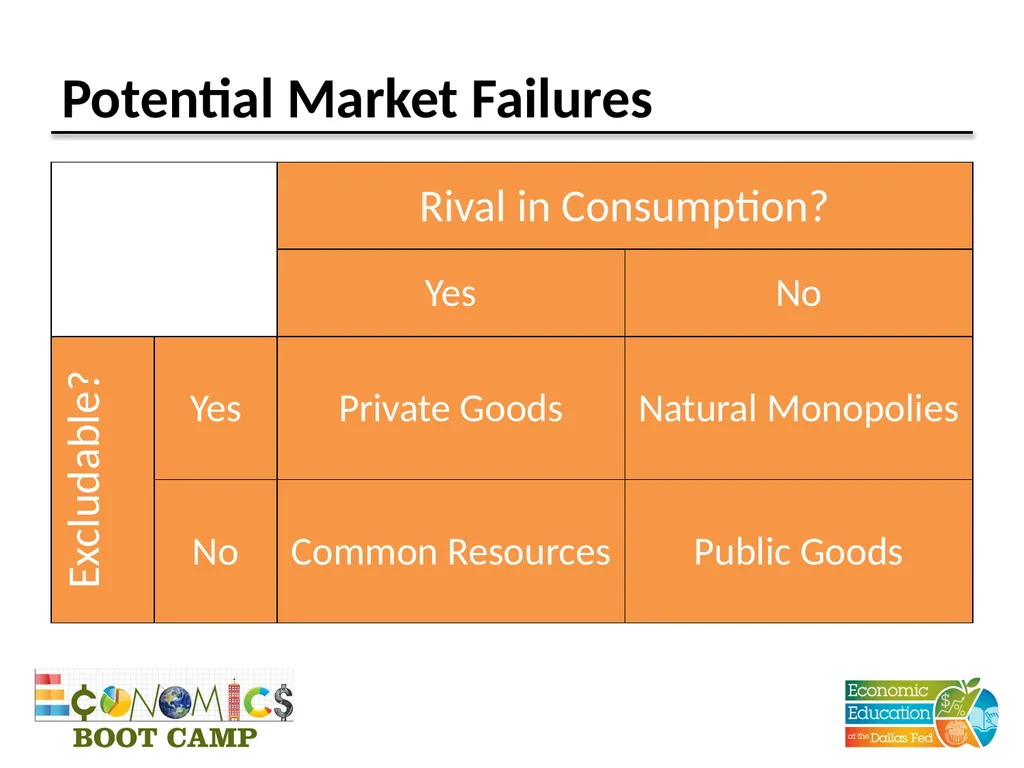
Potential Market Failures<br>
07
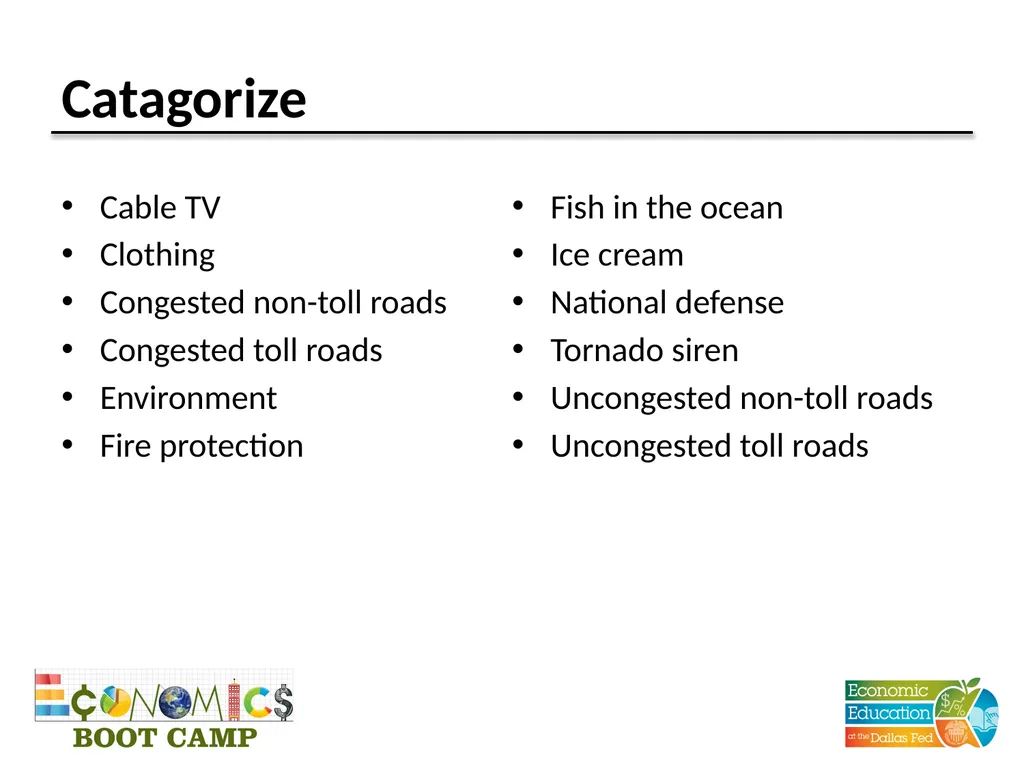
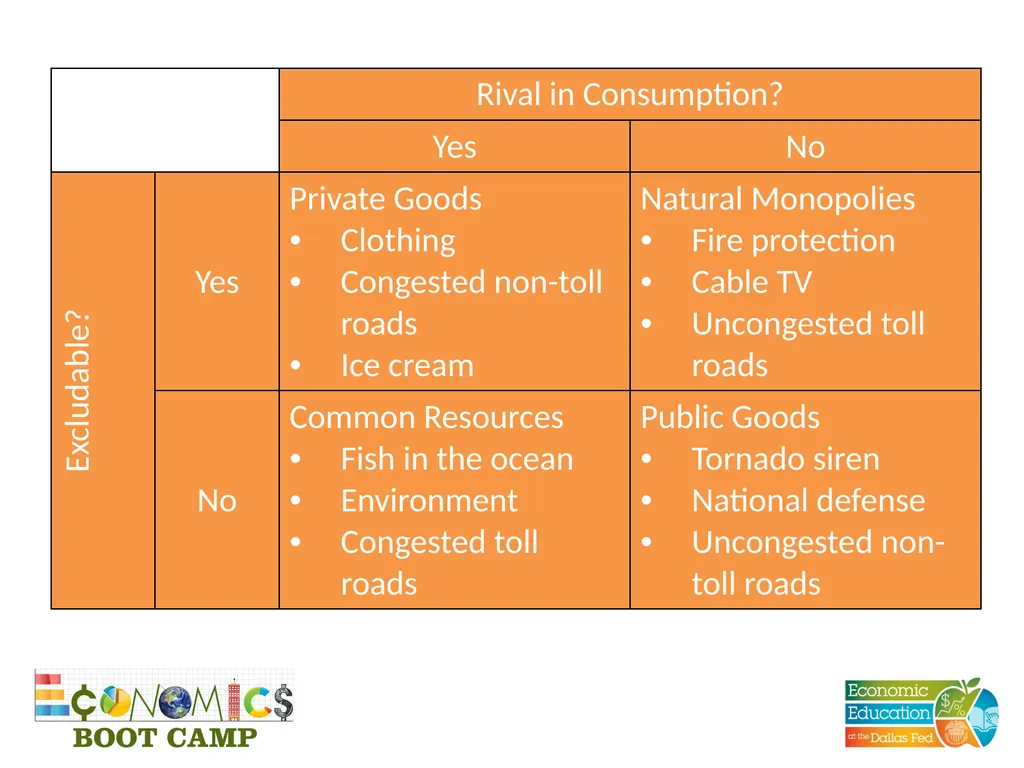
Catagorize Cable TV
Clothing
Congested non-toll roads
Congested toll roads
Environment
Fire protection
Fish in the ocean
Ice cream
National defense
Tornado siren
Uncongested non-toll roads
Uncongested toll roads<br>
08
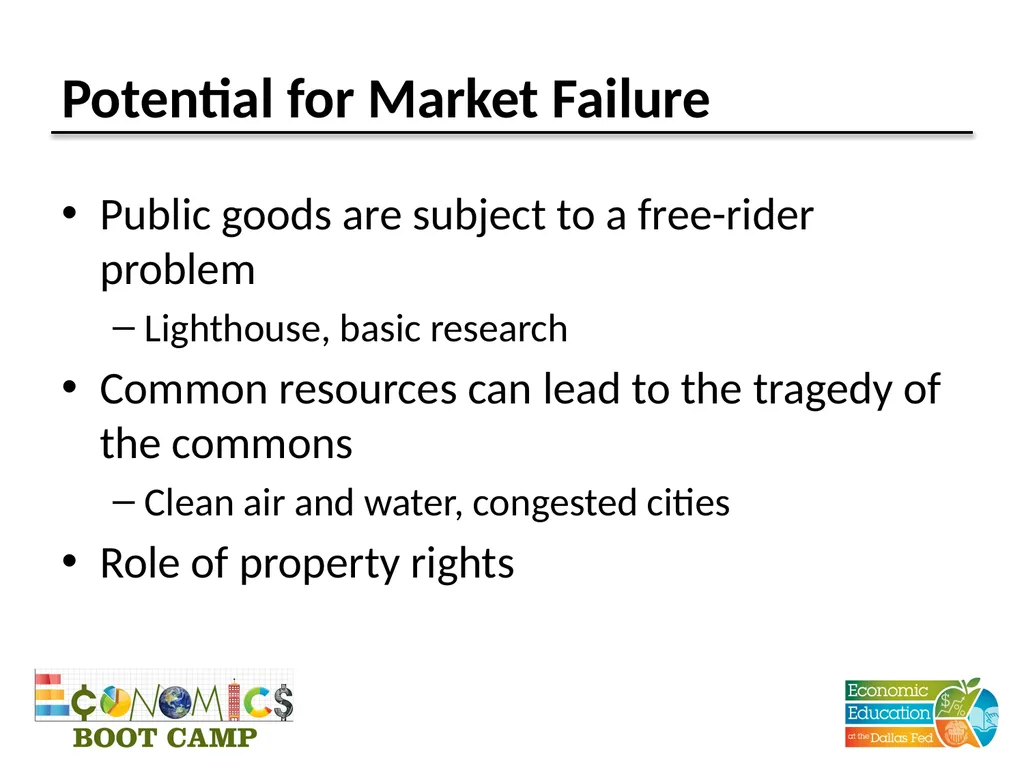
Potential for Market Failure Public goods are subject to a free-rider problem
Lighthouse, basic research
Common resources can lead to the tragedy of the commons
Clean air and water, congested cities
Role of property rights<br>
09
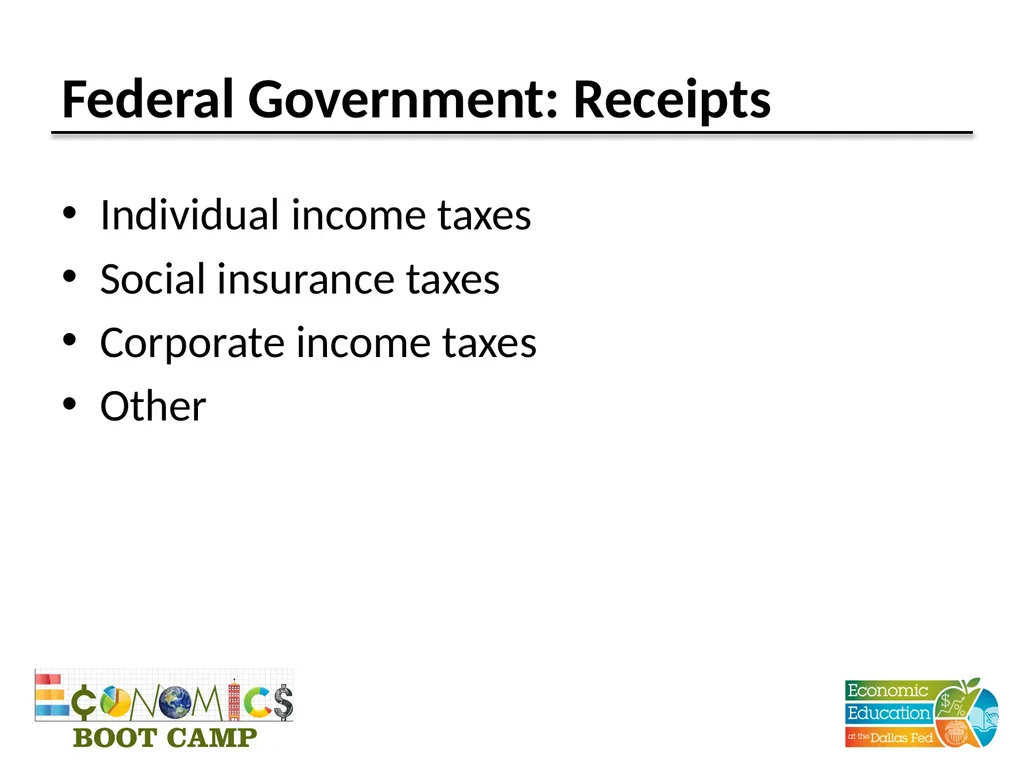
Federal Government: Receipts Individual income taxes
Social insurance taxes
Corporate income taxes
Other<br>
10
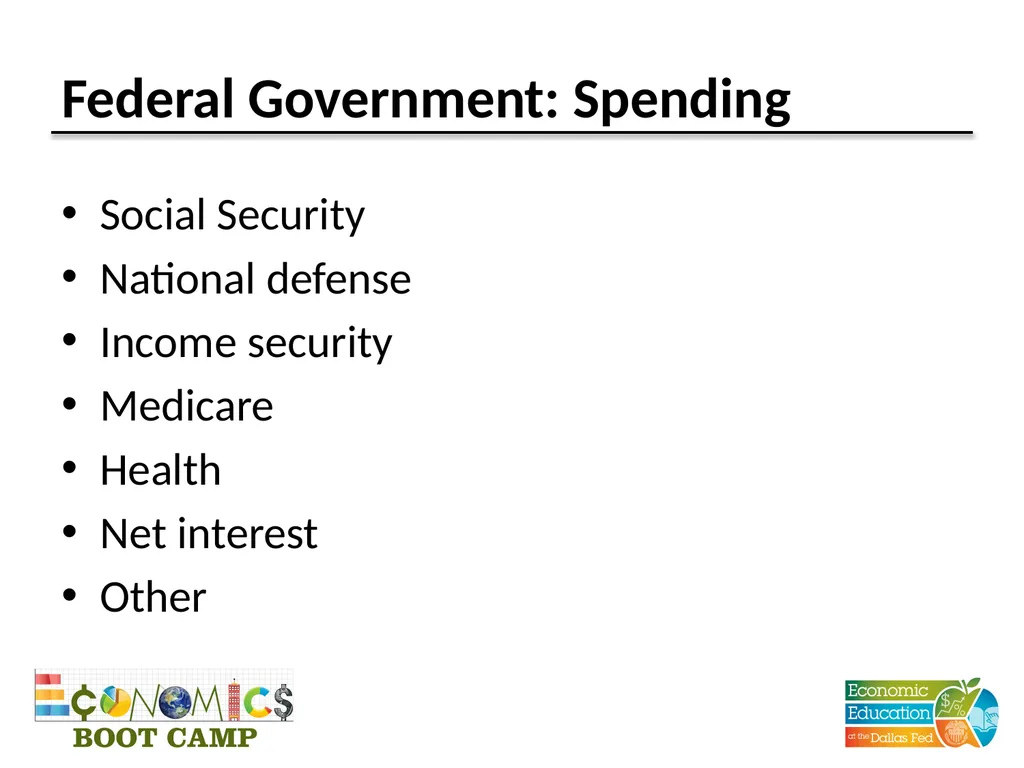
Federal Government: Spending Social Security
National defense
Income security
Medicare
Health
Net interest
Other<br>
11
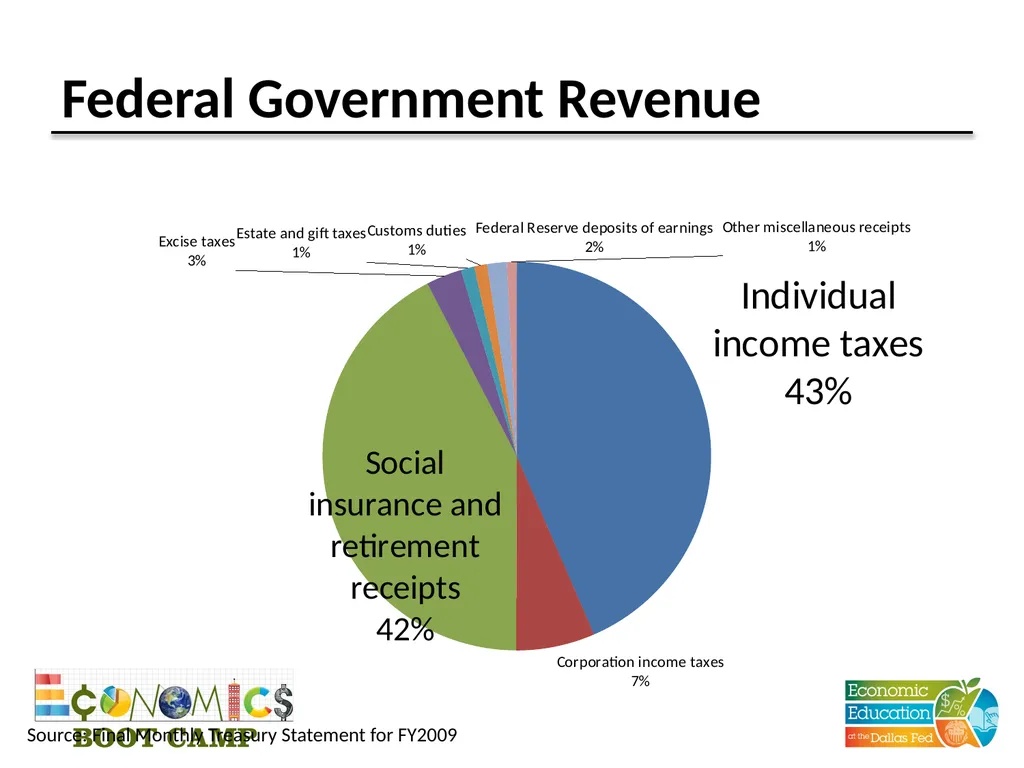
Federal Government Revenue Source: Final Monthly Treasury Statement for FY2009<br>
12
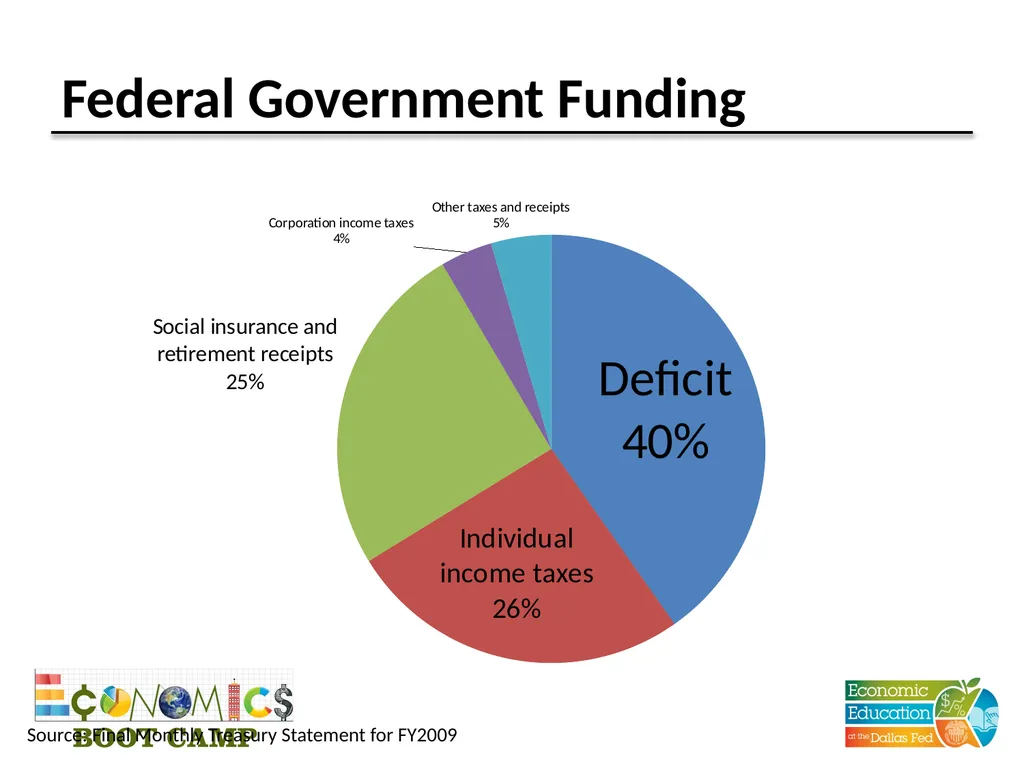
Federal Government Funding Source: Final Monthly Treasury Statement for FY2009<br>
13
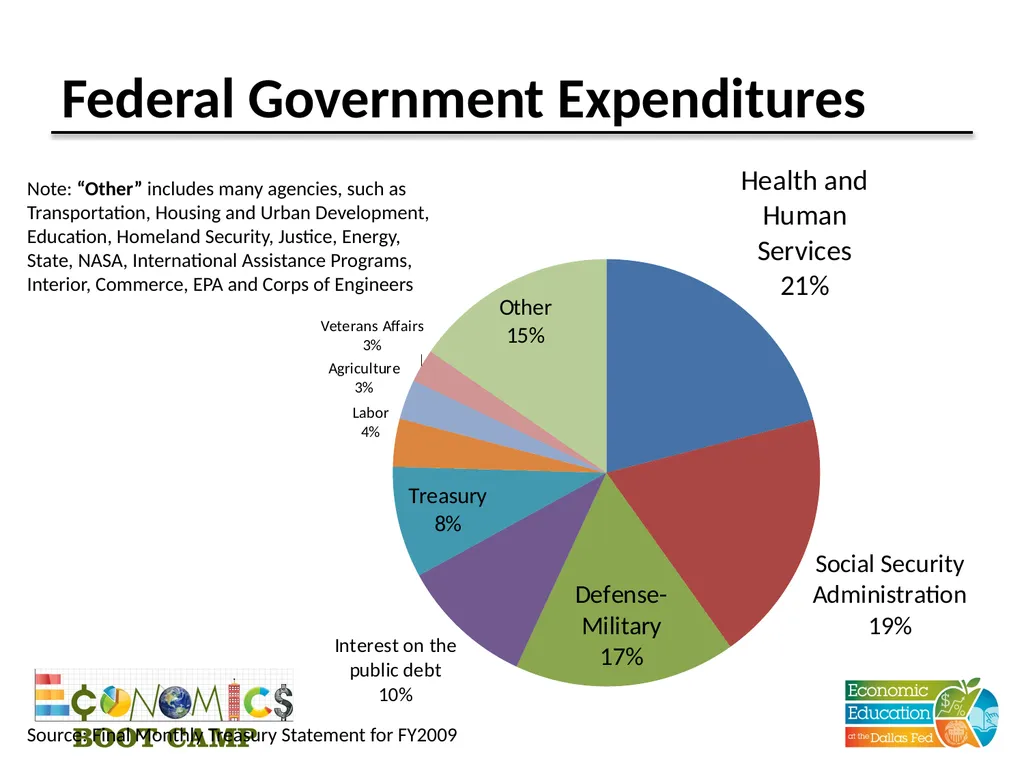
Federal Government Expenditures Note: “Other” includes many agencies, such as Transportation, Housing and Urban Development, Education, Homeland Security, Justice, Energy, State, NASA, International Assistance Programs, Interior, Commerce, EPA and Corps of Engineers Source: Final Monthly Treasury Statement for FY2009<br>
14
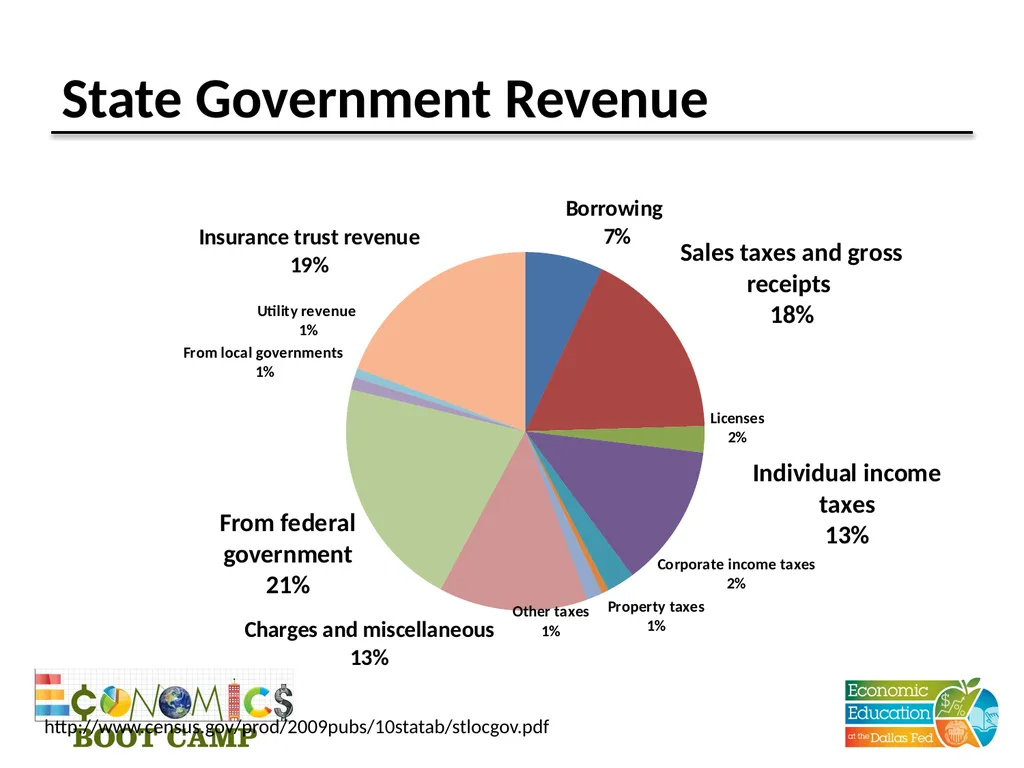
State Government Revenue http://www.census.gov/prod/2009pubs/10statab/stlocgov.pdf<br>
15
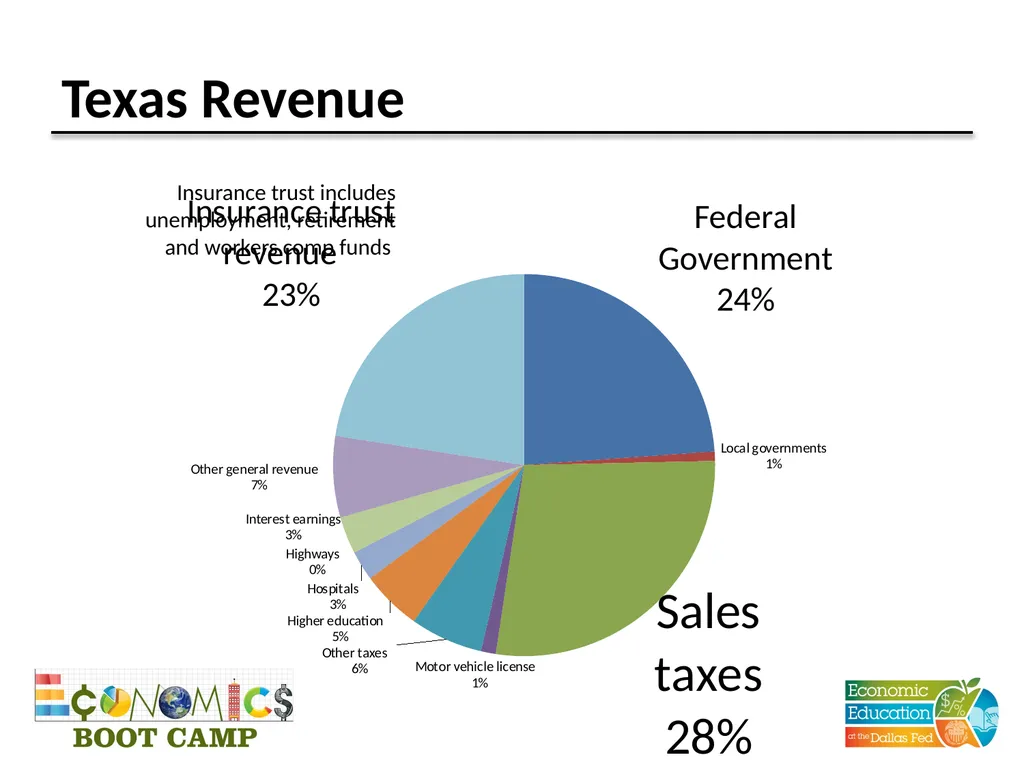
Texas Revenue Insurance trust includes unemployment, retirement and workers comp funds<br>
16
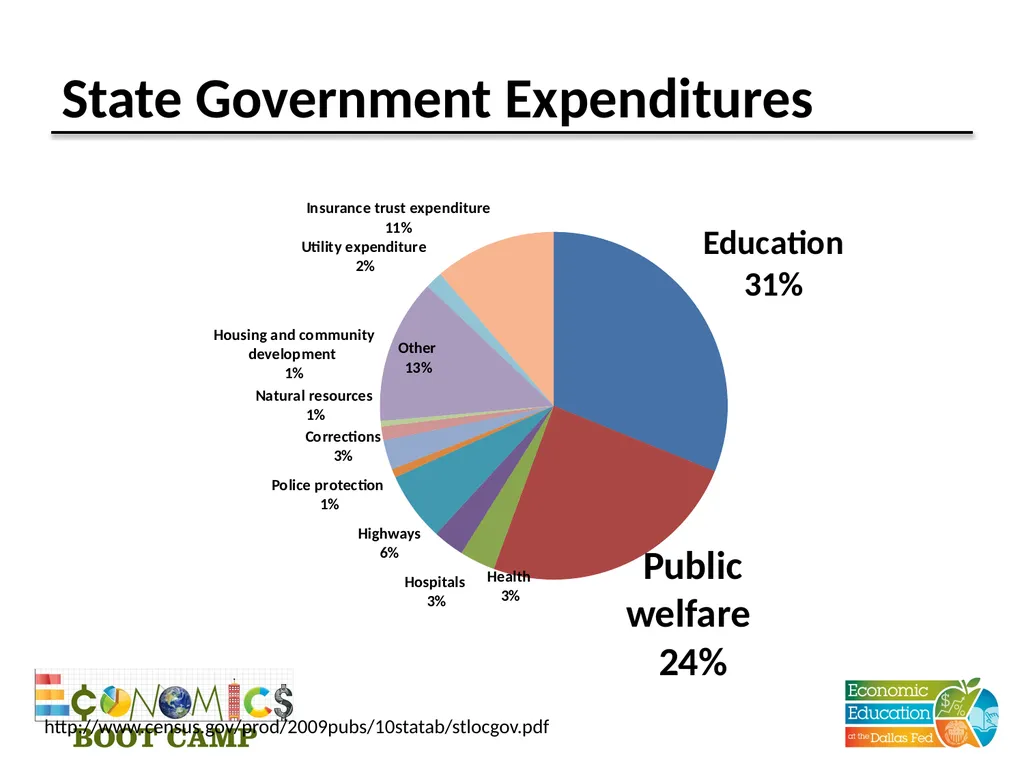
State Government Expenditures http://www.census.gov/prod/2009pubs/10statab/stlocgov.pdf<br>
17
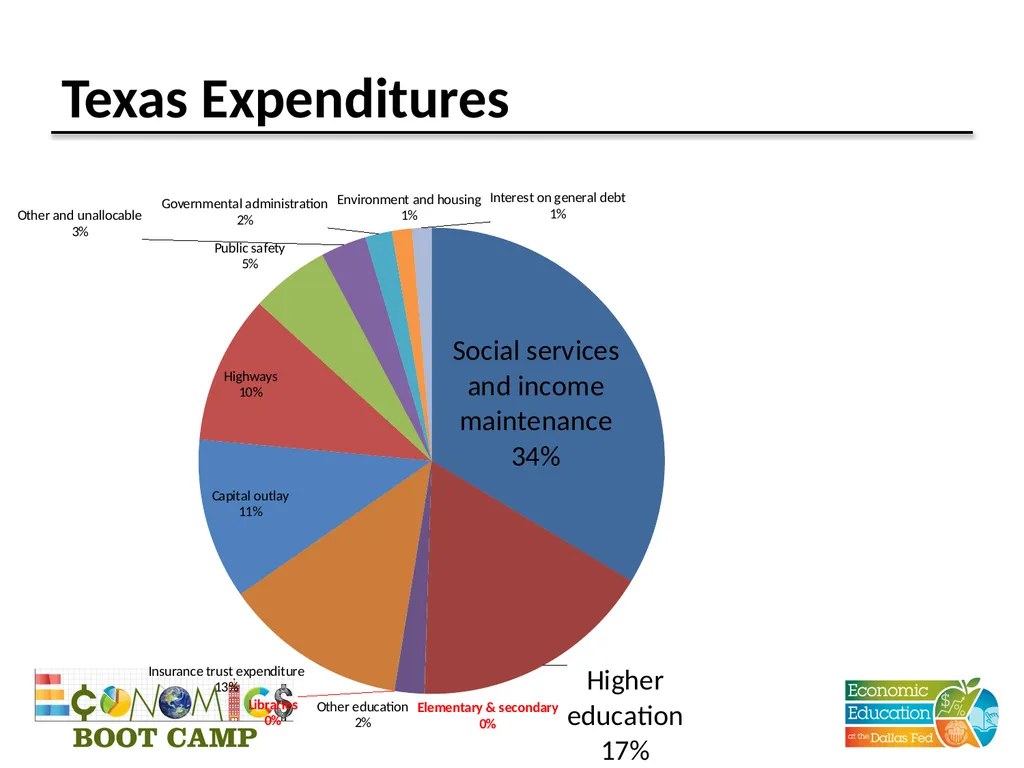
Texas Expenditures<br>
18
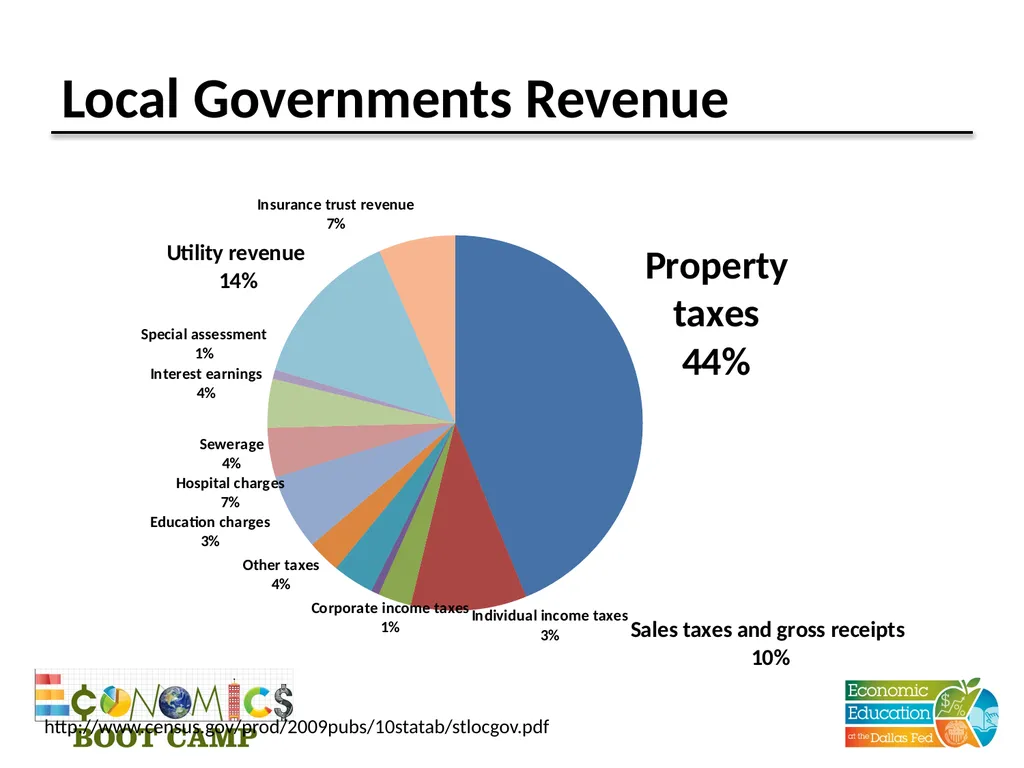
Local Governments Revenue http://www.census.gov/prod/2009pubs/10statab/stlocgov.pdf<br>
19
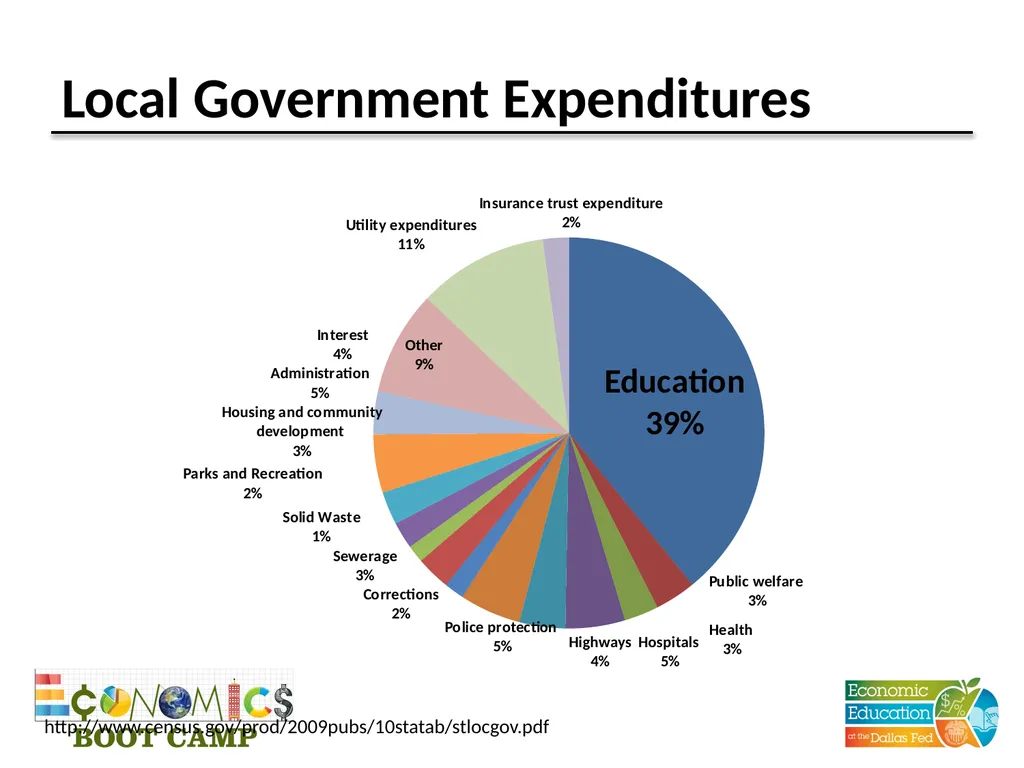
Local Government Expenditures http://www.census.gov/prod/2009pubs/10statab/stlocgov.pdf<br>
20
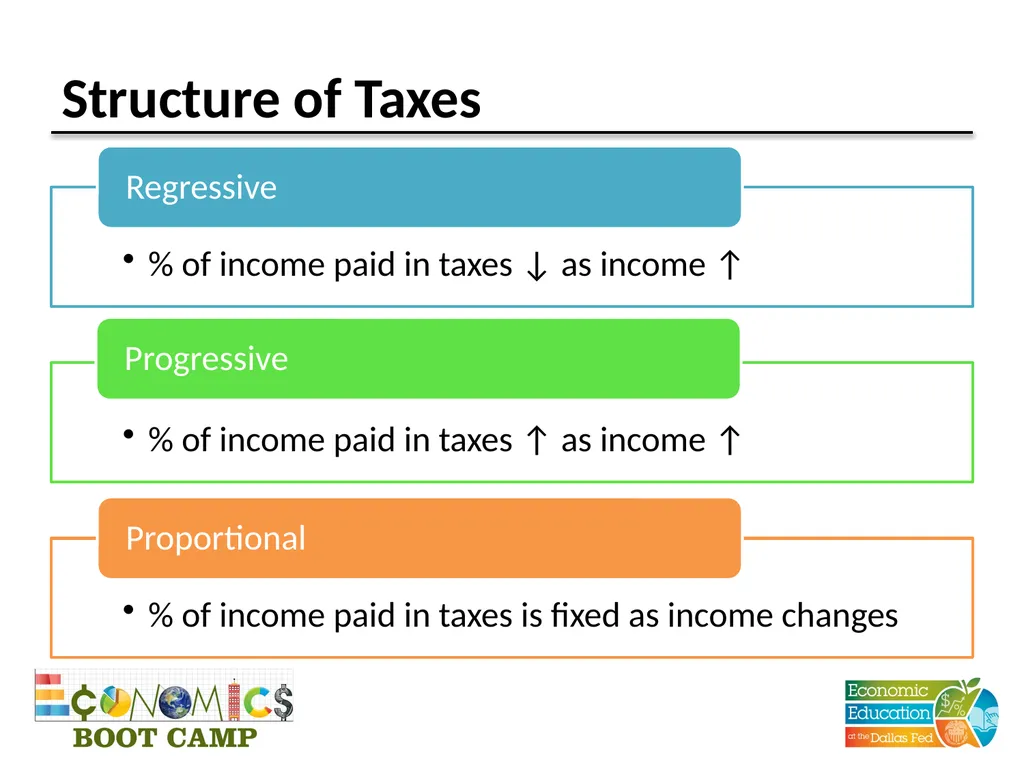
Structure of Taxes<br>
21
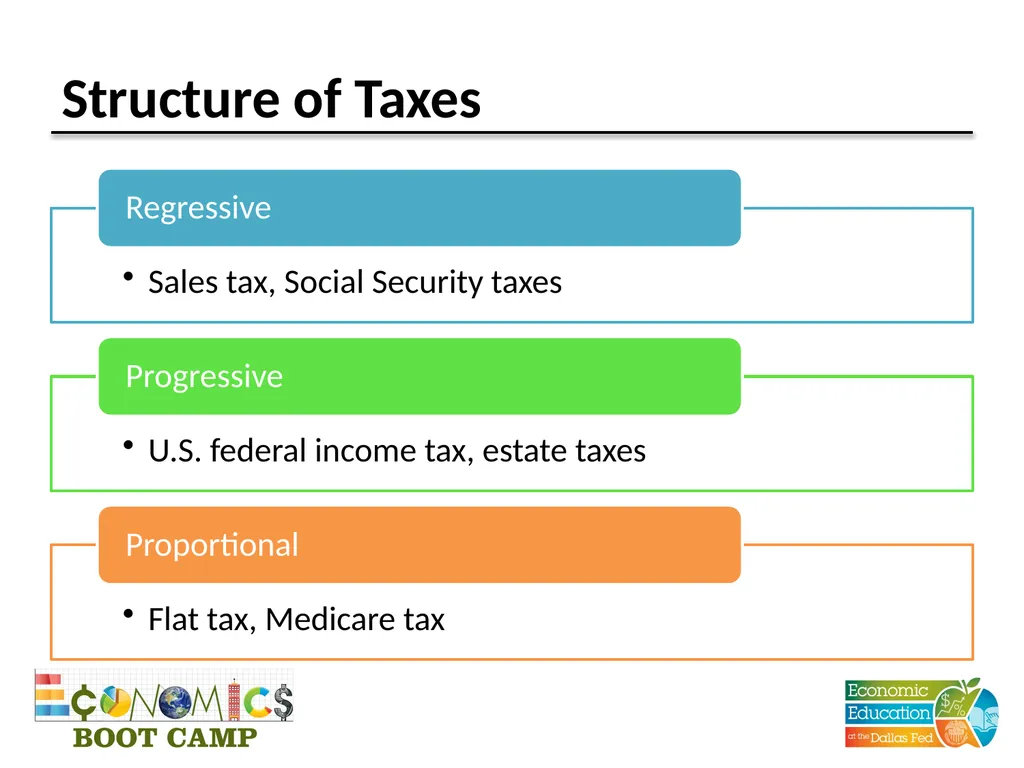
Structure of Taxes<br>
22
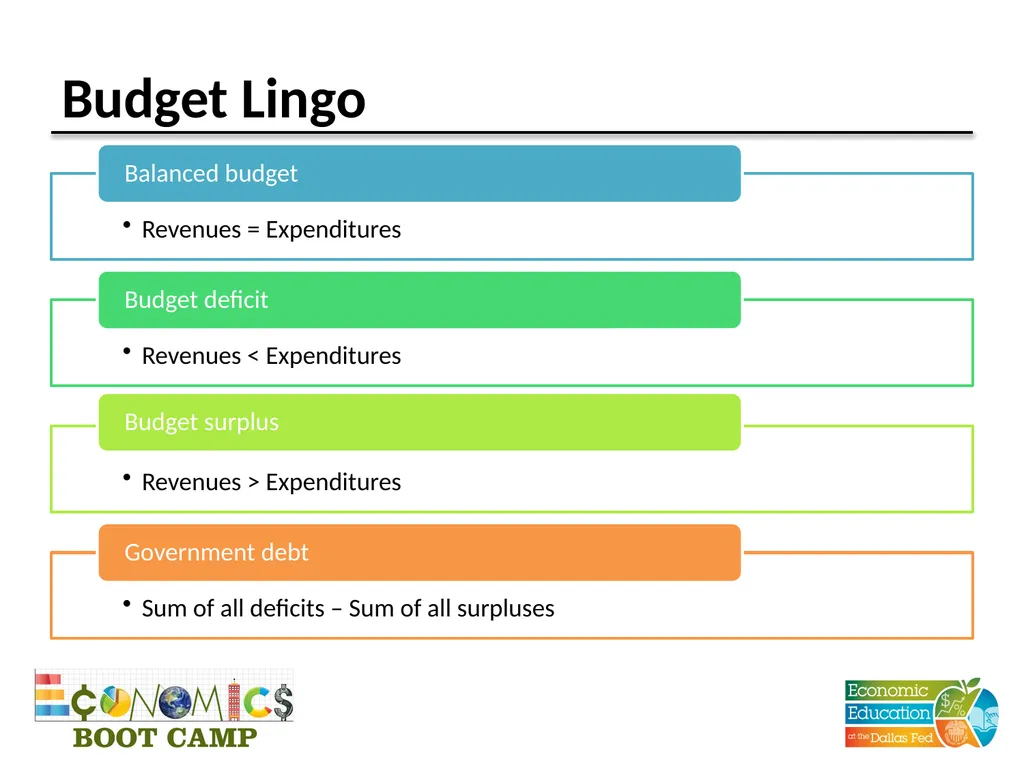
Budget Lingo<br>
23
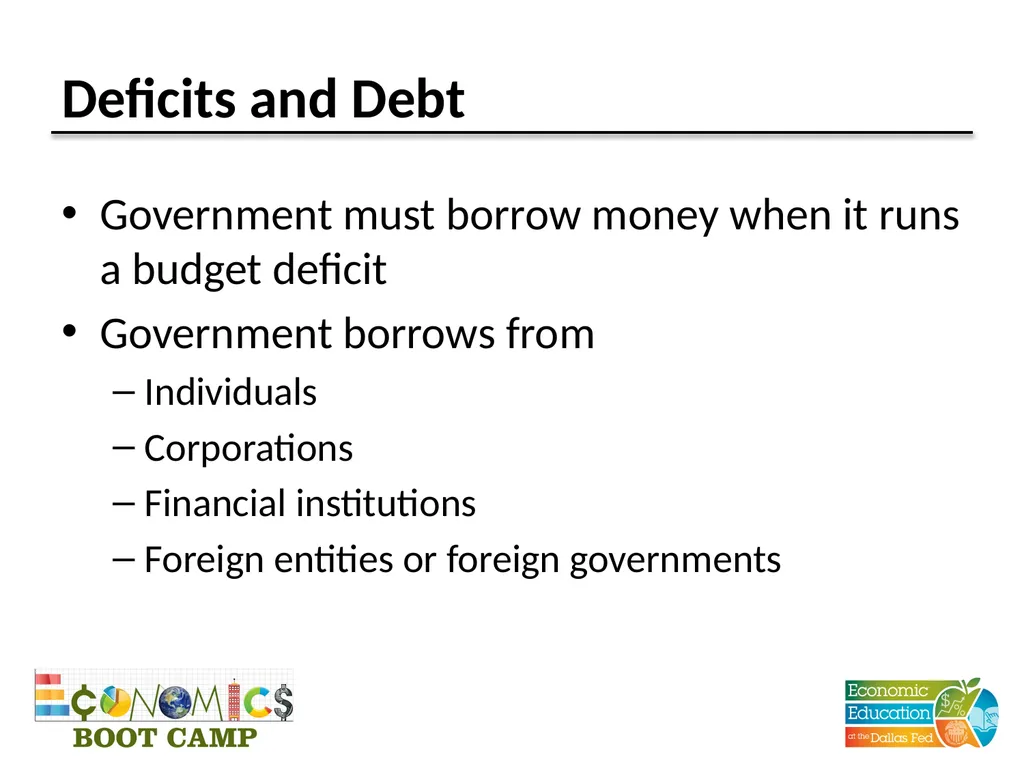
Deficits and Debt Government must borrow money when it runs a budget deficit
Government borrows from
Individuals
Corporations
Financial institutions
Foreign entities or foreign governments<br>
24
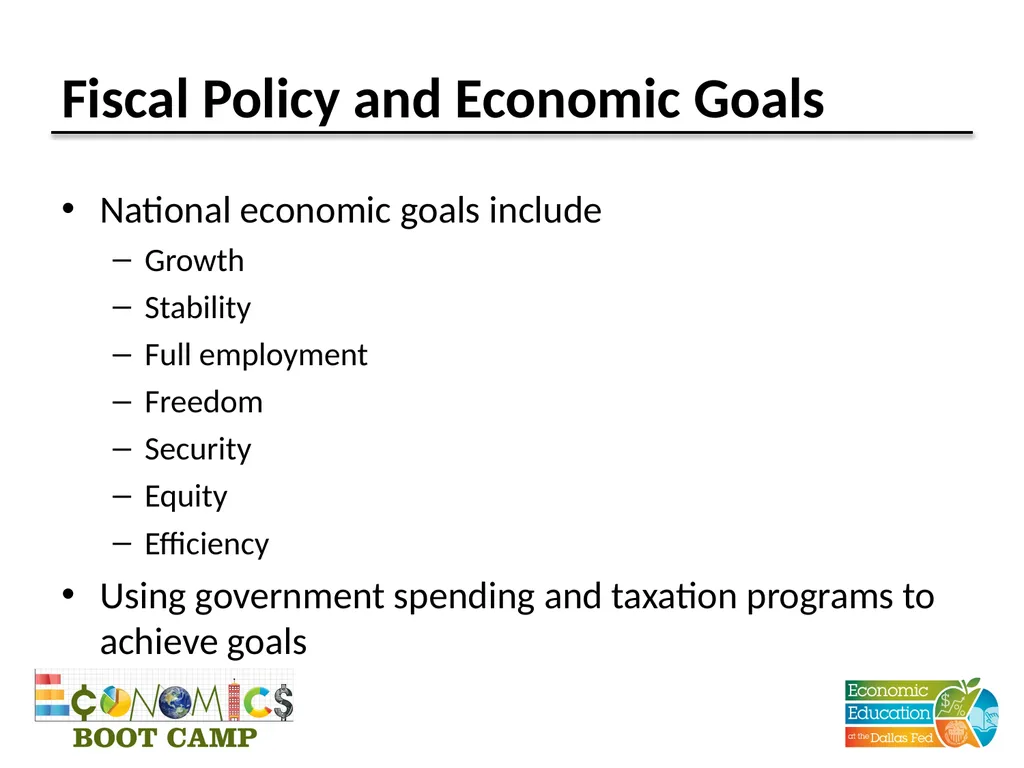
Fiscal Policy and Economic Goals National economic goals include
Growth
Stability
Full employment
Freedom
Security
Equity
Efficiency
Using government spending and taxation programs to achieve goals<br>
25
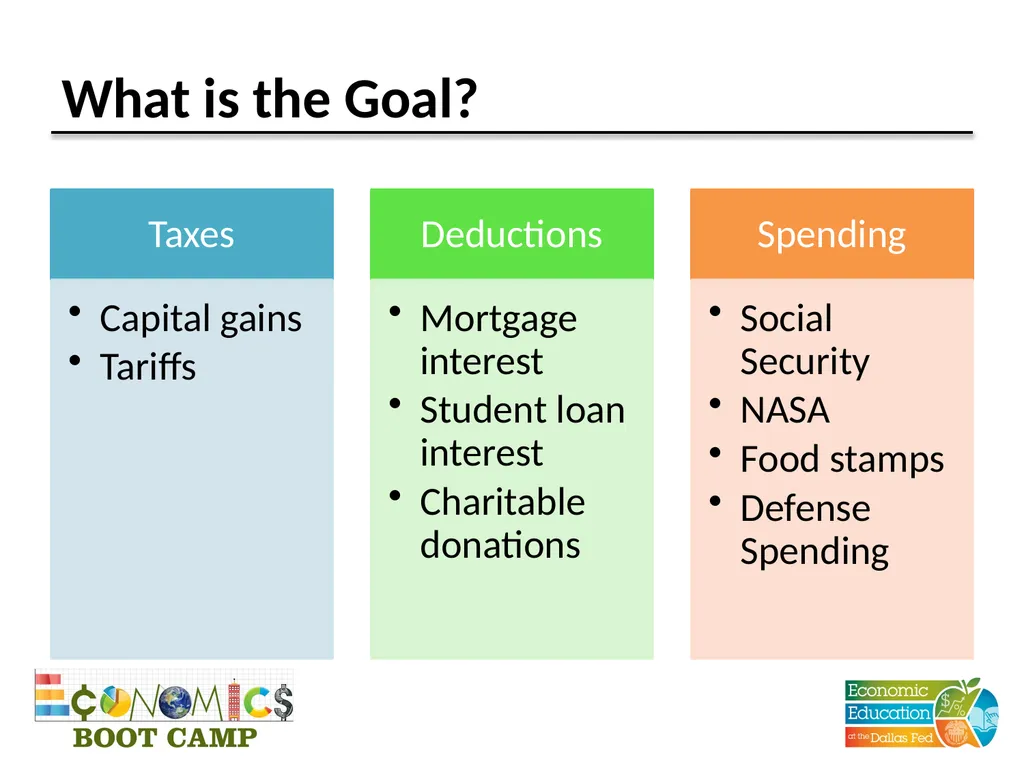
What is the Goal?<br>
26
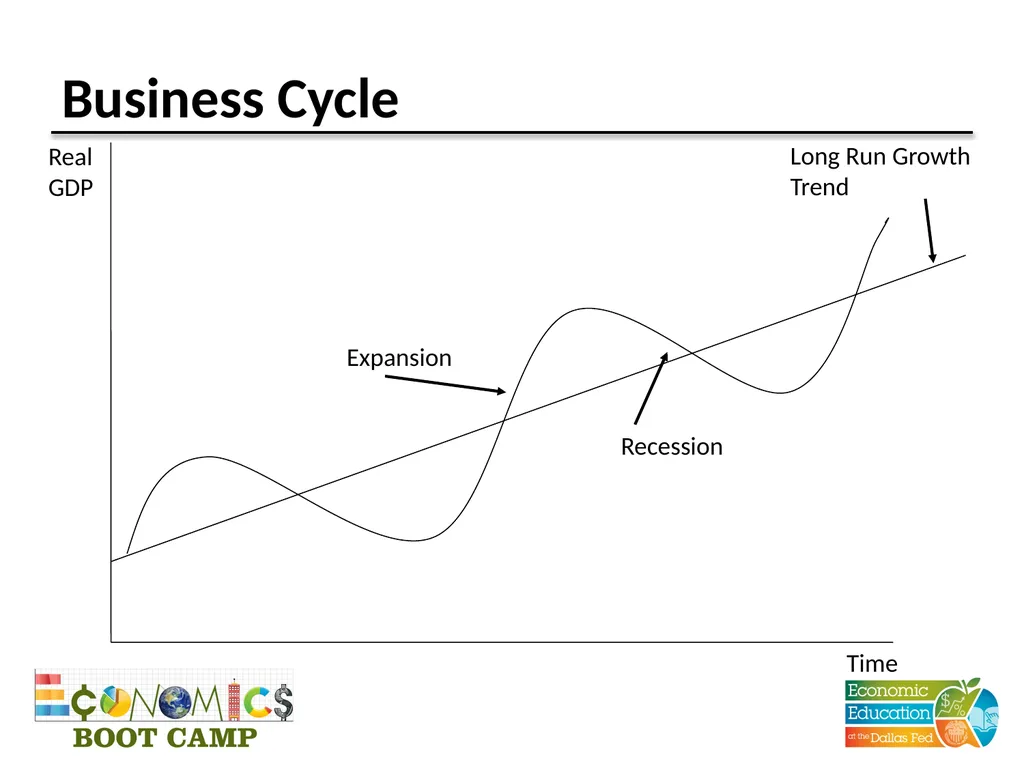
Business Cycle<br>
27
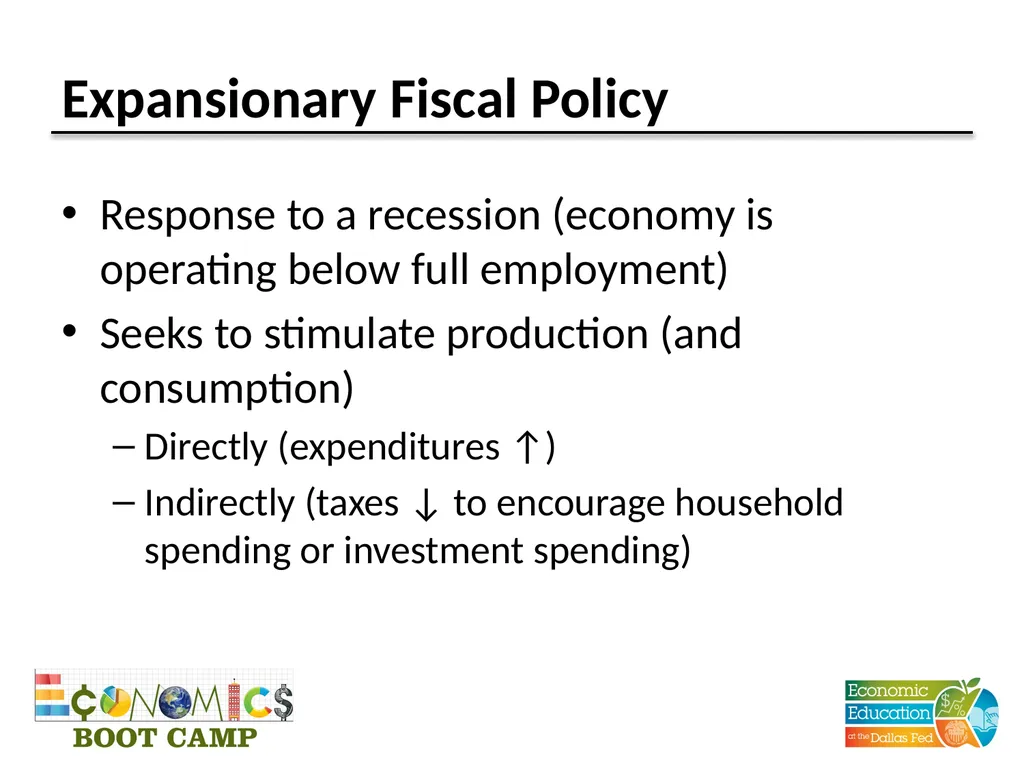
Expansionary Fiscal Policy Response to a recession (economy is operating below full employment)
Seeks to stimulate production (and consumption)
Directly (expenditures ↑)
Indirectly (taxes ↓ to encourage household spending or investment spending)<br>
28
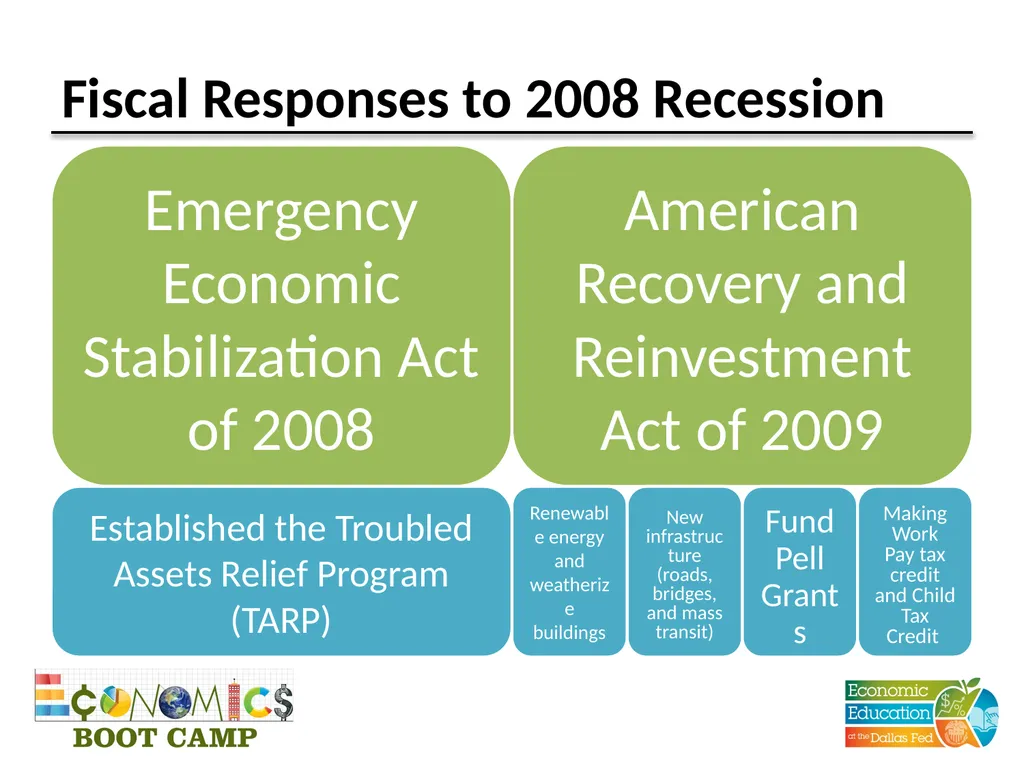
Fiscal Responses to 2008 Recession<br>
29
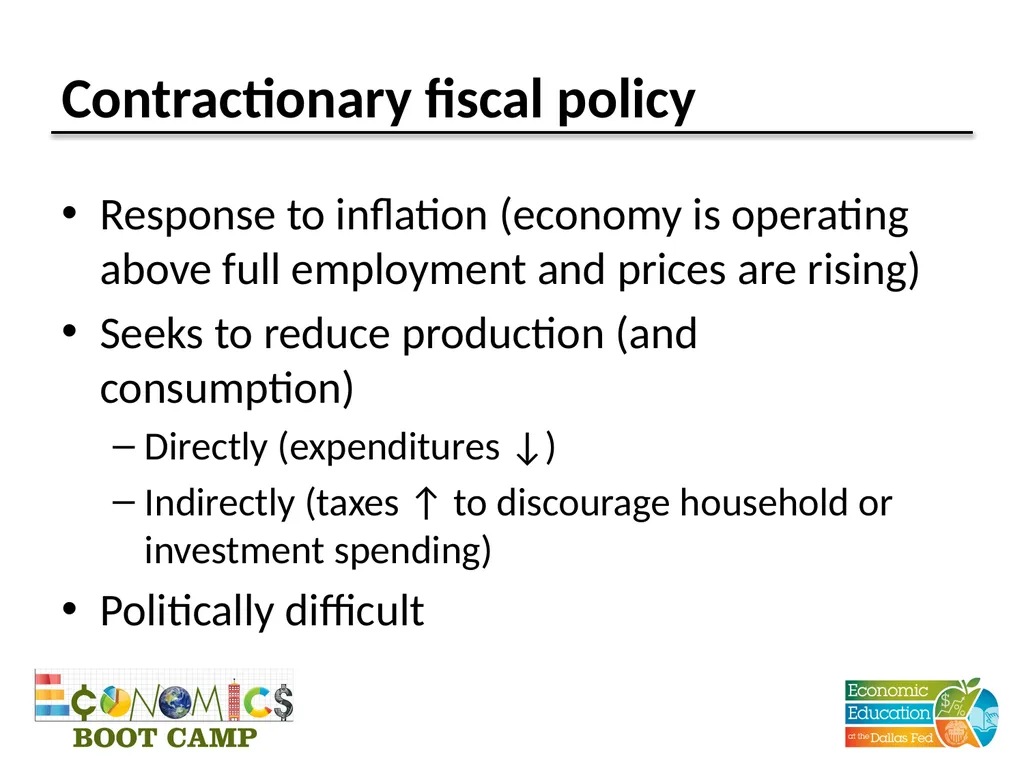
Contractionary fiscal policy Response to inflation (economy is operating above full employment and prices are rising)
Seeks to reduce production (and consumption)
Directly (expenditures ↓)
Indirectly (taxes ↑ to discourage household or investment spending)
Politically difficult<br>
30
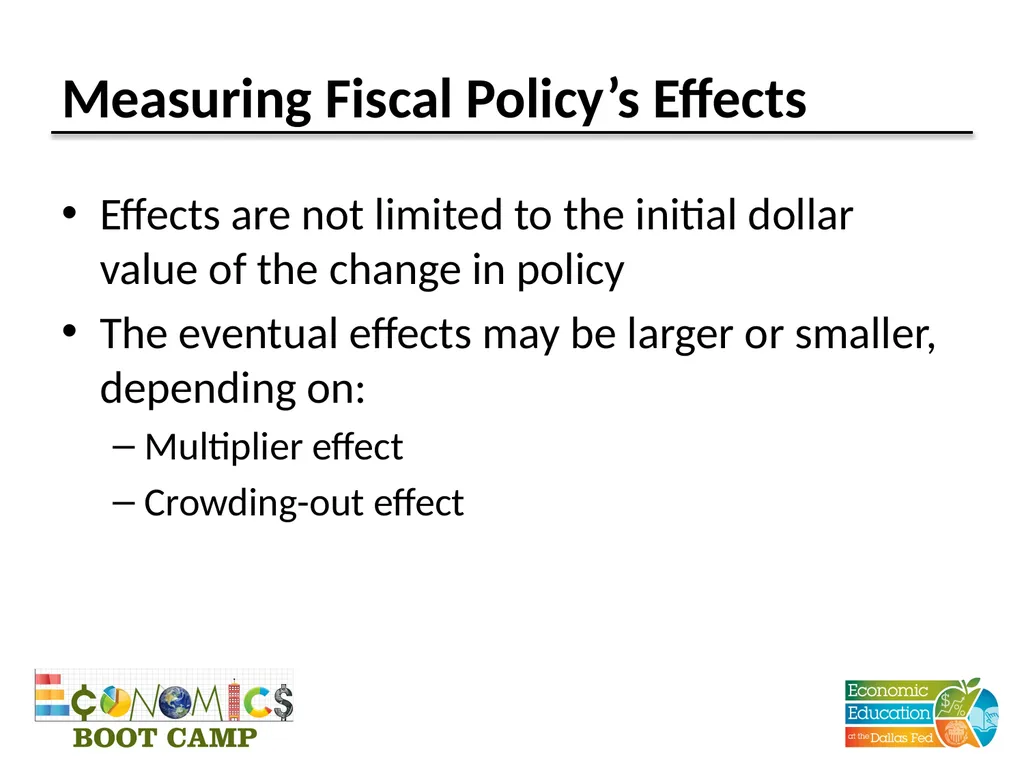
Measuring Fiscal Policy’s Effects Effects are not limited to the initial dollar value of the change in policy
The eventual effects may be larger or smaller, depending on:
Multiplier effect
Crowding-out effect<br>
31
Multiplier Effect Spending and tax policies create a chain reaction in the economy as people spend new income
Many factors complicate the multiplier
Taxes
International trade
Differing consumption patterns among various segments of the population<br>
32
Crowding Out Investment or consumption spending that is lost because government borrowing drives up interest rates
Government is entering the same market for funds as investors<br>
33
Two Types of Fiscal Policy Discretionary fiscal policy
Policymakers change tax policies or spending programs in response to fluctuations in the business cycle (at their discretion)
Automatic stabilizers
Implemented without any deliberate action from policymakers
Found in the tax system and spending programs<br>
34
Automatic Stabilizers – Tax System Taxes are linked to economic activity
Progressive income tax rates (individual and corporate)
Payroll taxes
Sales and excise taxes
Recessions → automatic “tax cut”
Expansion → automatic “tax increase”<br>
35
Automatic Stabilizers – Spending Government spending responds to the business cycle
Unemployment insurance benefits
Welfare benefits
School lunch programs
Other income-support programs
Recessions → more spending
Expansion → less spending<br>
36
Challenges Related to Fiscal Policy Political factors
Time lags
Time required to create and pass legislation
Time required to implement legislation
Supply side impacts
Forecasting difficulties
Monetary policies may reinforce or offset fiscal policies<br>