Status of Implementation of SDG Indicator Framework in Ghana By Baah Wadieh, Deputy Government Statistician, Ghana At the Cape Town International Convention Centre January 19, 2017 This presentation talks about Legal framework SDG
Related Topics
Share
Embed code
Download this presentation From Below
"Status of Implementation of SDG Indicator" is the property of its rightful owner. Permission is granted to
download and print the materials on this website for personal, non-commercial use only, and to display it
on your personal computer provided you do not modify the materials and that you retain all copyright
notices contained in the materials. By downloading content from our website, you accept the terms of this
agreement.
Presentation Transcript
01
Status of Implementation of SDG Indicator Framework in Ghana By
Baah Wadieh,
Deputy Government Statistician, Ghana
At the
Cape Town International Convention Centre
January 19, 2017<br>
02
This presentation talks about… Legal framework
SDG implementation plan
Long Term National Development Plan
Linking the data needs
Data availability
Activities to ensure increased data production
Way forward 19 January 2017 2<br>
03
Existing legal framework Statistical activities of the National Statistical System in Ghana is governed by
the Statistical Service Law, PNDC Law 135, enacted in 1985 and
the 1993 Civil Service Law, PNDC Law 327, which requires each Ministry to establish a Research, Information, Statistics and Public Relations Directorate<br>
04
Ghana’s Long Term National Development Plan (LTNDP) Ghana is preparing a Long Term National Development Plan (2018 - 2057)
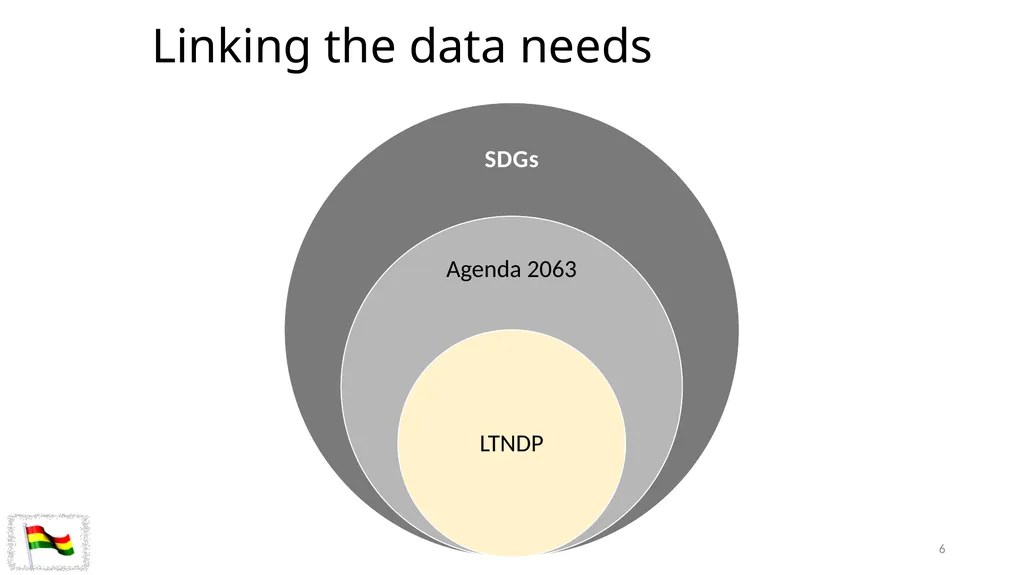
The LTNDP overlaps with AU Agenda 2063 (2014 – 2063) and UN Agenda 2030 (2016 – 2030)
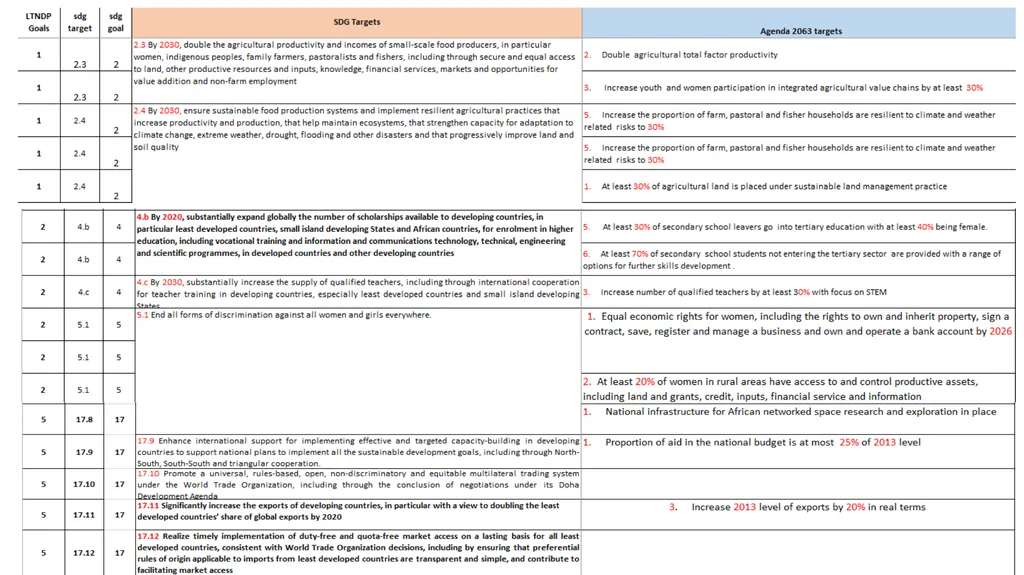
To avoid the proliferation of national plans in response to the global, regional and national agenda, the National Development Planning Commission (NDPC) leading the developing a national development framework which will incorporate Agenda 2030 and Agenda 2063
As part of the process, the SDGs Implementation Coordination Committee comprising representatives from selected Ministries, Agencies and Departments (MDAs) has been formed to provide strategic direction for the SDGs related activities
The committee will also provide technical support to the High Level Inter-Ministerial Committee on the SDGs, chaired by HE the President
Technical Committee currently mapping all three agenda and identifying specific MDAs/CSOs/NGOs to lead implementation of specific SDG targets 4<br>
05
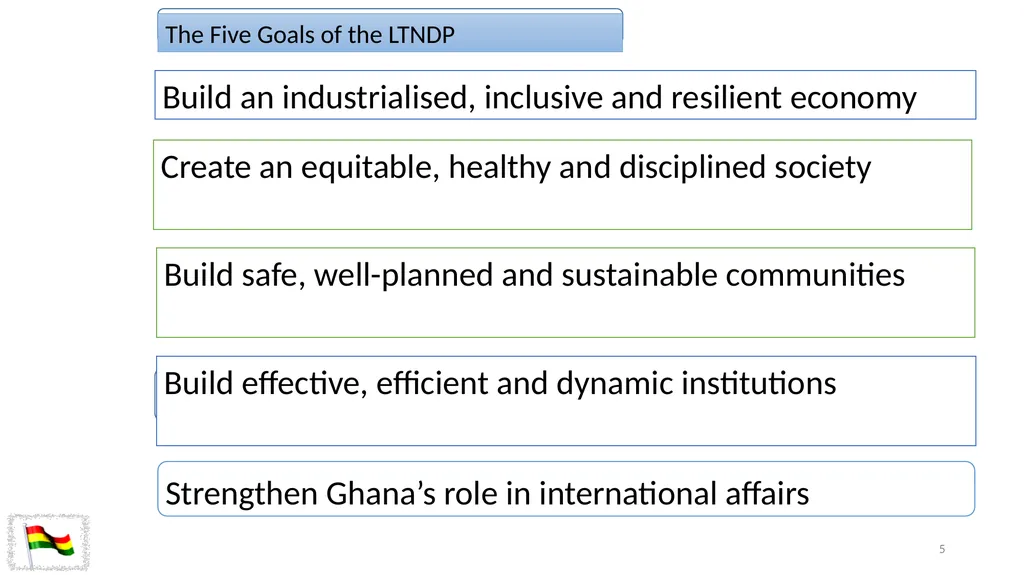
Build an industrialised, inclusive and resilient economy Create an equitable, healthy and disciplined society Build safe, well-planned and sustainable communities Build effective, efficient and dynamic institutions Strengthen Ghana’s role in international affairs The Five Goals of the LTNDP 5<br>
06
Linking the data needs 6<br>
07
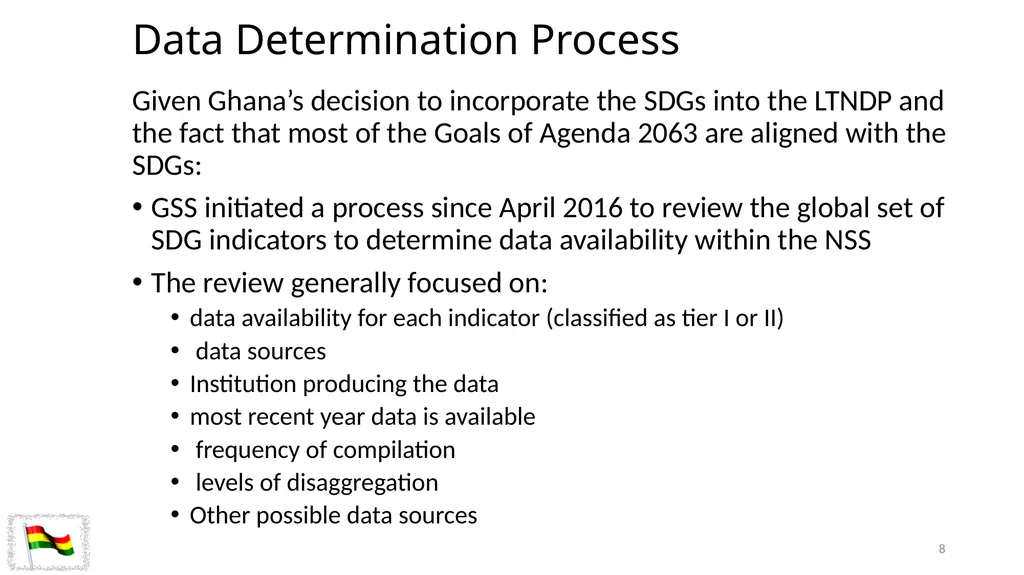
Data Determination Process Given Ghana’s decision to incorporate the SDGs into the LTNDP and the fact that most of the Goals of Agenda 2063 are aligned with the SDGs:
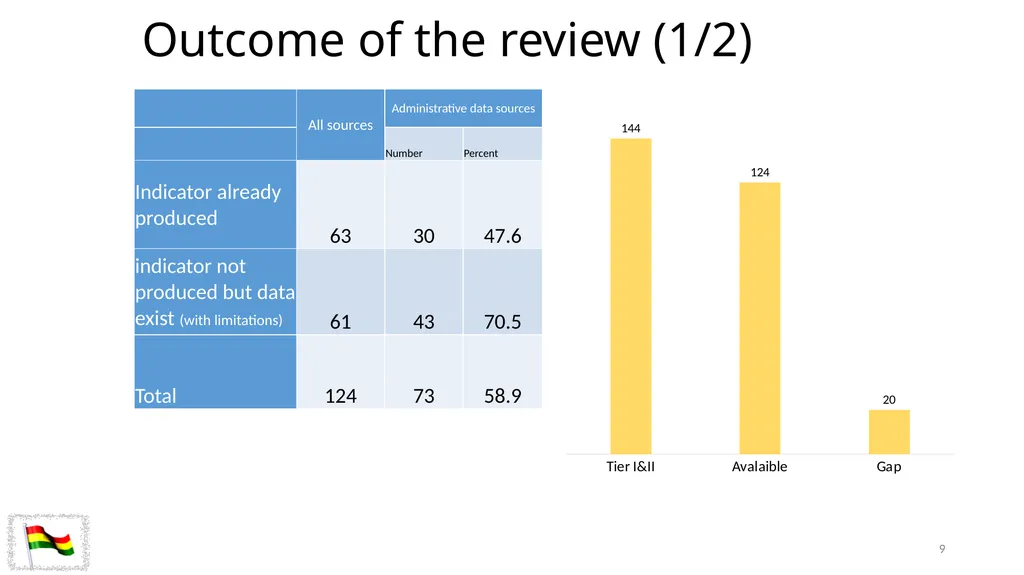
GSS initiated a process since April 2016 to review the global set of SDG indicators to determine data availability within the NSS
The review generally focused on:
data availability for each indicator (classified as tier I or II)
data sources
Institution producing the data
most recent year data is available
frequency of compilation
levels of disaggregation
Other possible data sources 8<br>
08
Outcome of the review (1/2) 9<br>
09
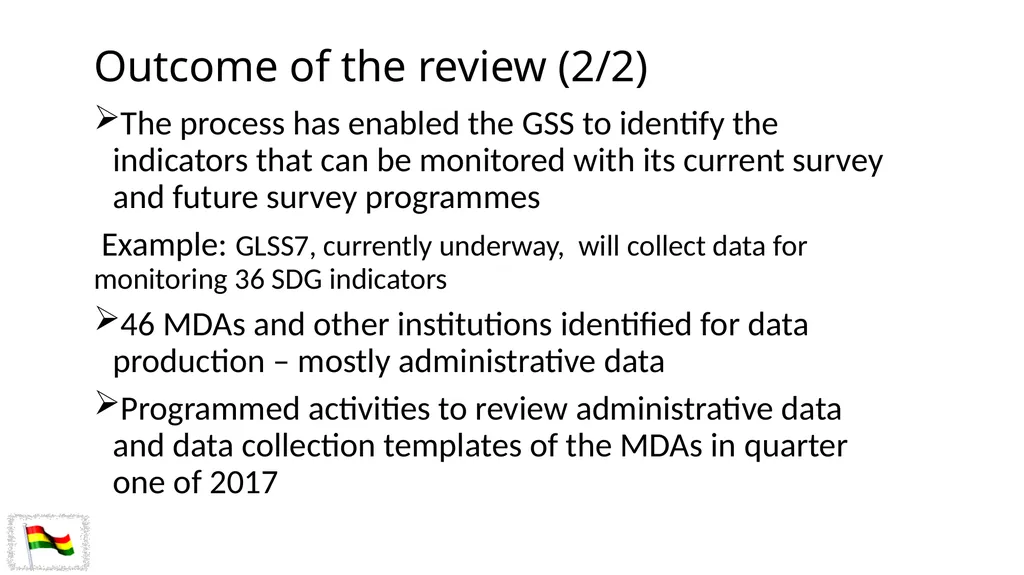
Outcome of the review (2/2) The process has enabled the GSS to identify the indicators that can be monitored with its current survey and future survey programmes
Example: GLSS7, currently underway, will collect data for monitoring 36 SDG indicators
46 MDAs and other institutions identified for data production – mostly administrative data
Programmed activities to review administrative data and data collection templates of the MDAs in quarter one of 2017<br>
10
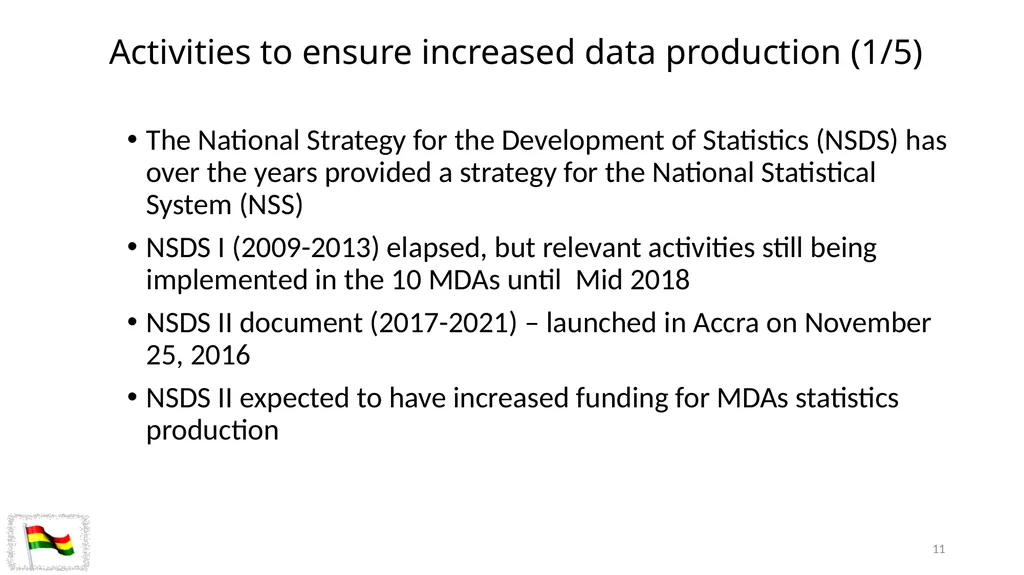
Activities to ensure increased data production (1/5) The National Strategy for the Development of Statistics (NSDS) has over the years provided a strategy for the National Statistical System (NSS)
NSDS I (2009-2013) elapsed, but relevant activities still being implemented in the 10 MDAs until Mid 2018
NSDS II document (2017-2021) – launched in Accra on November 25, 2016
NSDS II expected to have increased funding for MDAs statistics production 11<br>
11
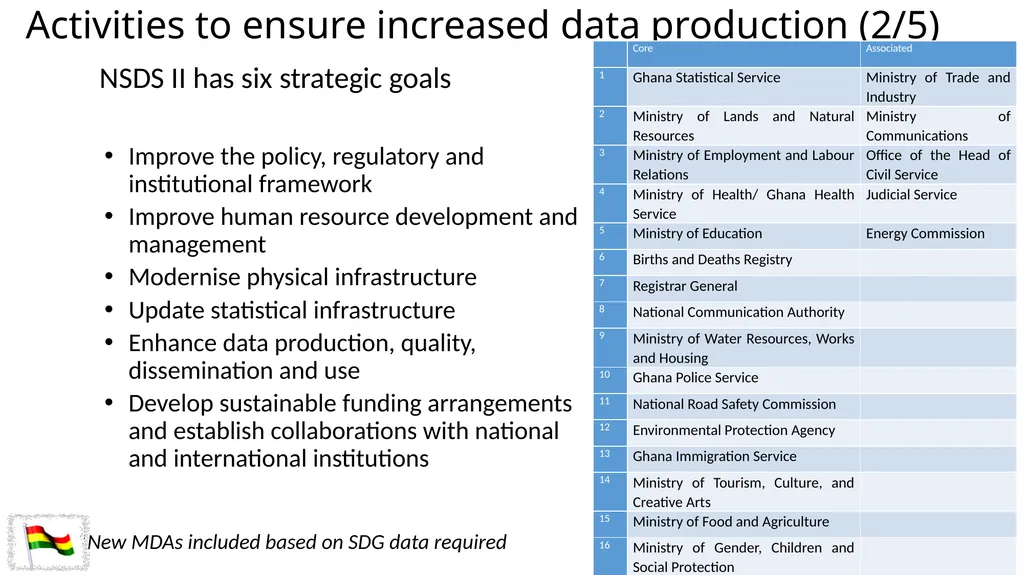
Activities to ensure increased data production (2/5) NSDS II has six strategic goals
Improve the policy, regulatory and institutional framework
Improve human resource development and management
Modernise physical infrastructure
Update statistical infrastructure
Enhance data production, quality, dissemination and use
Develop sustainable funding arrangements and establish collaborations with national and international institutions
**New MDAs included based on SDG data required 12<br>
12
Activities to ensure increased data production (3/5) Improving policy, institutional and regulatory framework – New Decentralization Bill
The bill has a provision for the establishment of Statistics Department in each of the 216 MMDAs
Collaborating with the Local Government Service Secretariat to establish a Statistics Department in each of the MMDAs
Restructuring the Service – operating up to the regional level and to give technical backstopping services to the MMDAs
Human resource capacity building – providing advanced training (MSc) in priority subject areas for GSS and MDAs staff
Collaborating with research and other institutions to build capacity in data analysis – poverty analysis 13<br>
13
Activities to ensure increased data production (4/5) Formation of statistics and development team - NDPC & GSS
Assessment for strengthening statistics in national development planning underway
To assess the state of statistical development, the availability of quality data within the decentralized planning system (MDAs & MMDAs)
Statistical Service Law being revised and strengthened – first reading in Parliament in October 2016
New Law expected to strengthen the role of GSS in coordinating the NSS
Moving from PAPI to CAPI to reduce the time lag between completion of data collection and publication of results
Collaborating with PARIS21 to develop data dashboard for monitoring NSDS II & SDG implementation – ADAPT
Efforts underway to open all data (microdata and metadata)
Discussions underway to develop Data Quality Assurance Framework 14<br>
14
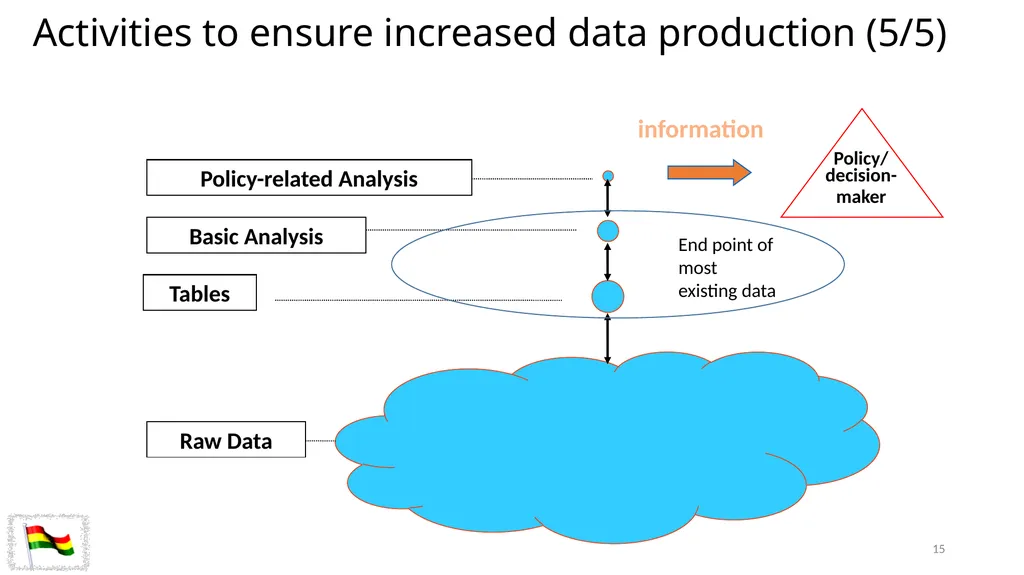
15 Activities to ensure increased data production (5/5) End point of most existing data<br>
15
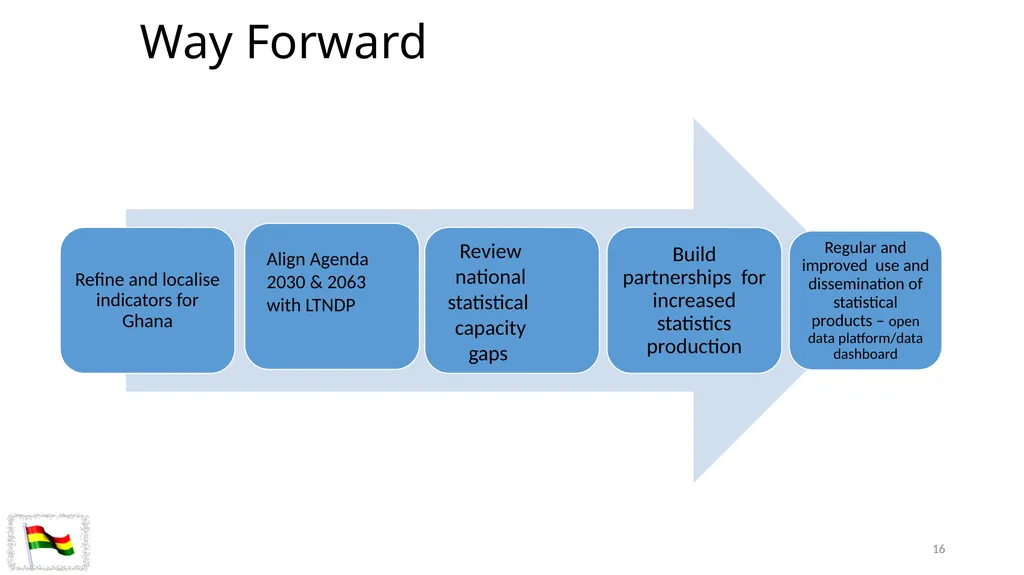
Way Forward 16 Review national statistical
capacity gaps Align Agenda
2030 & 2063
with LTNDP<br>