
Unit 1: BUSINESS SYSTEM Presented by - Dr. Rahul
TA
Published · 22 slides · 0 views
1 / 1


Description
Unit 1: BUSINESS SYSTEM Presented by - Dr. Rahul Singh (Asst. Prof) DSPMU, Ranchi Unit -1 Business System Unit-1 Business System BUSINESS A business refers to an organization or entity engaged in economic activities with the primary goal of
Related Topics
Share
Embed code
Download this presentation From Below
"Unit 1: BUSINESS SYSTEM Presented by - Dr. Rahul" is the property of its rightful owner. Permission is granted to download and print the materials on this website for personal, non-commercial use only, and to display it on your personal computer provided you do not modify the materials and that you retain all copyright notices contained in the materials. By downloading content from our website, you accept the terms of this agreement.
Presentation Transcript
01
Unit 1: BUSINESS SYSTEM Presented by
- Dr. Rahul Singh
(Asst. Prof)
DSPMU, Ranchi<br>
- Dr. Rahul Singh
(Asst. Prof)
DSPMU, Ranchi<br>
02
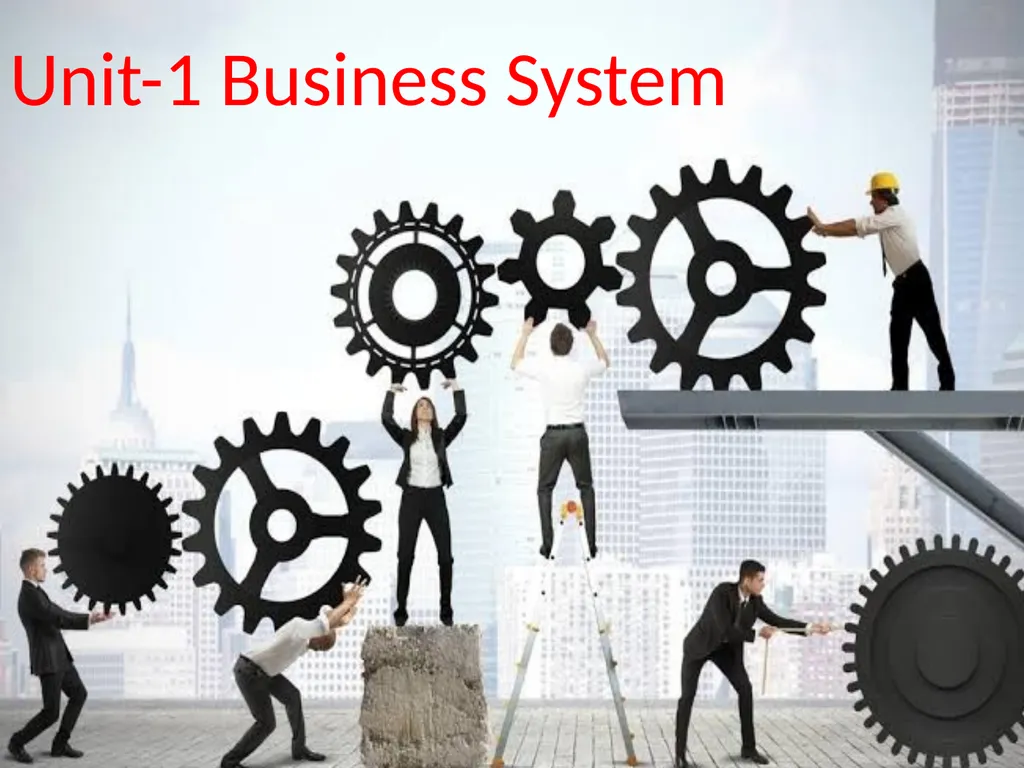
Unit -1 Business System Unit-1 Business System<br>
03
BUSINESS
A business refers to an organization or entity engaged in economic activities with the primary goal of earning a profit. It involves offering products or services to customers or clients in exchange for money or other valuable considerations.<br>
A business refers to an organization or entity engaged in economic activities with the primary goal of earning a profit. It involves offering products or services to customers or clients in exchange for money or other valuable considerations.<br>
04
The purpose of a business is typically to generate revenue, cover expenses, and ideally, make a profit. Businesses can take various forms, such as sole proprietorships, partnerships, corporations, or even non-profit organizations, each with its unique characteristics and objectives. The concept of a business is central to the world of commerce and economics, encompassing a wide range of activities and industries.<br>
05
Business System
A business system is a structured and interconnected set of processes, workflows, people, technology, and resources within an organization designed to achieve specific goals and objectives. It involves the organized flow of information, materials, and activities to facilitate the efficient and effective functioning of the business.<br>
A business system is a structured and interconnected set of processes, workflows, people, technology, and resources within an organization designed to achieve specific goals and objectives. It involves the organized flow of information, materials, and activities to facilitate the efficient and effective functioning of the business.<br>
06
Characteristics of a business :-
Processes: The systematic series of tasks and activities that are performed to produce goods or services or achieve a specific outcome.
Interconnectedness: Various components of the system, such as departments, teams, and technologies, are interconnected and interdependent.<br>
Processes: The systematic series of tasks and activities that are performed to produce goods or services or achieve a specific outcome.
Interconnectedness: Various components of the system, such as departments, teams, and technologies, are interconnected and interdependent.<br>
07
Goals and Objectives: The system is designed to help the organization achieve its strategic goals and objectives.
Efficiency: Business systems aim to streamline operations, minimize waste, and optimize resource utilization.
Data and Information: They rely on data and information flow to support decision-making and performance monitoring.<br>
Efficiency: Business systems aim to streamline operations, minimize waste, and optimize resource utilization.
Data and Information: They rely on data and information flow to support decision-making and performance monitoring.<br>
08
Technology: Many modern business systems leverage technology, including software and hardware, to automate and improve processes.
Feedback Loops: Systems often incorporate feedback mechanisms to continuously monitor and improve performance.
Examples of business systems include supply chain management systems, customer relationship management (CRM) systems, financial management systems, and human resource management systems. These systems play a vital role in helping organizations operate smoothly, adapt to changes, and achieve their strategic objectives.<br>
Feedback Loops: Systems often incorporate feedback mechanisms to continuously monitor and improve performance.
Examples of business systems include supply chain management systems, customer relationship management (CRM) systems, financial management systems, and human resource management systems. These systems play a vital role in helping organizations operate smoothly, adapt to changes, and achieve their strategic objectives.<br>
09
Nature of business system
A business system refers to the structured and interconnected set of processes, activities, people, and resources within an organization that work together to achieve specific goals and objectives. The nature of a business system can vary widely depending on the type of business, industry, and its goals. Some key aspects of a business system include:
Purpose: The business system exists to fulfill the primary purpose of the organization, which could be profit generation, providing services, manufacturing products, or any combination thereof.<br>
A business system refers to the structured and interconnected set of processes, activities, people, and resources within an organization that work together to achieve specific goals and objectives. The nature of a business system can vary widely depending on the type of business, industry, and its goals. Some key aspects of a business system include:
Purpose: The business system exists to fulfill the primary purpose of the organization, which could be profit generation, providing services, manufacturing products, or any combination thereof.<br>
10
Processes: It includes various processes and workflows, such as production, sales, marketing, finance, and human resources, which are designed to achieve specific tasks and functions.
People:Employees, managers, and stakeholders play vital roles within the business system, contributing their skills, knowledge, and expertise to its operations.
Technology: Many modern business systems heavily rely on technology, including software, hardware, and communication tools, to enhance efficiency and effectiveness.<br>
People:Employees, managers, and stakeholders play vital roles within the business system, contributing their skills, knowledge, and expertise to its operations.
Technology: Many modern business systems heavily rely on technology, including software, hardware, and communication tools, to enhance efficiency and effectiveness.<br>
11
Interconnectedness: Different components of the system are interconnected and interdependent. Changes in one area can impact others, so it's essential to manage the system holistically.
Adaptability: Business systems must be adaptable to changing market conditions, customer demands, and technological advancements to remain competitive.
Goals and Performance: The system's success is measured by how well it achieves its goals, whether it's financial profitability, customer satisfaction, or other key performance indicators.<br>
Adaptability: Business systems must be adaptable to changing market conditions, customer demands, and technological advancements to remain competitive.
Goals and Performance: The system's success is measured by how well it achieves its goals, whether it's financial profitability, customer satisfaction, or other key performance indicators.<br>
12
Regulation and Compliance: Depending on the industry and location, business systems often need to comply with various regulations and standards.
The nature of a business system can vary significantly between different organizations, reflecting their unique missions, strategies, and environments. Successful businesses continuously analyze and optimize their systems to stay competitive and meet their objectives.<br>
The nature of a business system can vary significantly between different organizations, reflecting their unique missions, strategies, and environments. Successful businesses continuously analyze and optimize their systems to stay competitive and meet their objectives.<br>
13
Evolution of business
The evolution of business has been a dynamic and ongoing process shaped by various factors over time. Here's a simplified overview of its evolution:
Barter System: In ancient times, businesses operated through barter, where goods and services were exchanged without a standardized currency.
Agricultural and Craftsmanship: Agrarian societies gave rise to agricultural businesses, while craftsmanship led to early forms of trade and commerce.
Industrial Revolution: The 18th and 19th centuries saw the emergence of the Industrial Revolution, which brought mechanization and mass production, transforming business and economies.<br>
The evolution of business has been a dynamic and ongoing process shaped by various factors over time. Here's a simplified overview of its evolution:
Barter System: In ancient times, businesses operated through barter, where goods and services were exchanged without a standardized currency.
Agricultural and Craftsmanship: Agrarian societies gave rise to agricultural businesses, while craftsmanship led to early forms of trade and commerce.
Industrial Revolution: The 18th and 19th centuries saw the emergence of the Industrial Revolution, which brought mechanization and mass production, transforming business and economies.<br>
14
4. Corporations: The late 19th and early 20th centuries saw the rise of large corporations, which became dominant players in various industries.
5. Globalization: In the latter half of the 20th century, globalization accelerated business expansion, enabling companies to operate on a global scale.
6. Technology: The advent of the internet and digital technology revolutionized business operations, giving rise to e-commerce, online marketing, and digital services.
7. Entrepreneurship: The 21st century witnessed a surge in entrepreneurship and startups, driven by innovation and technology.<br>
5. Globalization: In the latter half of the 20th century, globalization accelerated business expansion, enabling companies to operate on a global scale.
6. Technology: The advent of the internet and digital technology revolutionized business operations, giving rise to e-commerce, online marketing, and digital services.
7. Entrepreneurship: The 21st century witnessed a surge in entrepreneurship and startups, driven by innovation and technology.<br>
15
8. Sustainability: Growing environmental and social concerns have led to a focus on sustainable business practices and corporate responsibility.
9. Remote Work: The COVID-19 pandemic accelerated remote work and digital transformation, changing the way businesses operate.
10. Data and AI: Businesses are increasingly leveraging data analytics and artificial intelligence to make informed decisions and enhance efficiency.
11. Ecosystems and Platforms: Many businesses now operate as part of larger ecosystems and platforms, collaborating and competing in interconnected networks.<br>
9. Remote Work: The COVID-19 pandemic accelerated remote work and digital transformation, changing the way businesses operate.
10. Data and AI: Businesses are increasingly leveraging data analytics and artificial intelligence to make informed decisions and enhance efficiency.
11. Ecosystems and Platforms: Many businesses now operate as part of larger ecosystems and platforms, collaborating and competing in interconnected networks.<br>
16
12. Future Trends: The future of business may involve developments in green technology, blockchain, biotechnology, and more, shaping the business landscape in unforeseen ways.
Business evolution is an ongoing process influenced by economic, technological, social, and environmental factors, and it continues to adapt to new challenges and opportunities.<br>
Business evolution is an ongoing process influenced by economic, technological, social, and environmental factors, and it continues to adapt to new challenges and opportunities.<br>
17
𝙻𝚊𝚞𝚗𝚌𝚑𝚒𝚗𝚐 𝚘𝚏 𝚋𝚞𝚜𝚒𝚗𝚎𝚜𝚜 𝚎𝚗𝚝𝚎𝚛𝚙𝚛𝚒𝚜𝚎
Launching a successful business enterprise involves several key steps:
Idea Generation: Start by identifying a business idea or concept that aligns with your passion, skills, and market demand.
Market Research: Research your target market to understand customer needs, preferences, and competition. This helps refine your business idea.
Business Plan: Create a detailed business plan outlining your goals, strategies, financial projections, and operational structure.<br>
Launching a successful business enterprise involves several key steps:
Idea Generation: Start by identifying a business idea or concept that aligns with your passion, skills, and market demand.
Market Research: Research your target market to understand customer needs, preferences, and competition. This helps refine your business idea.
Business Plan: Create a detailed business plan outlining your goals, strategies, financial projections, and operational structure.<br>
18
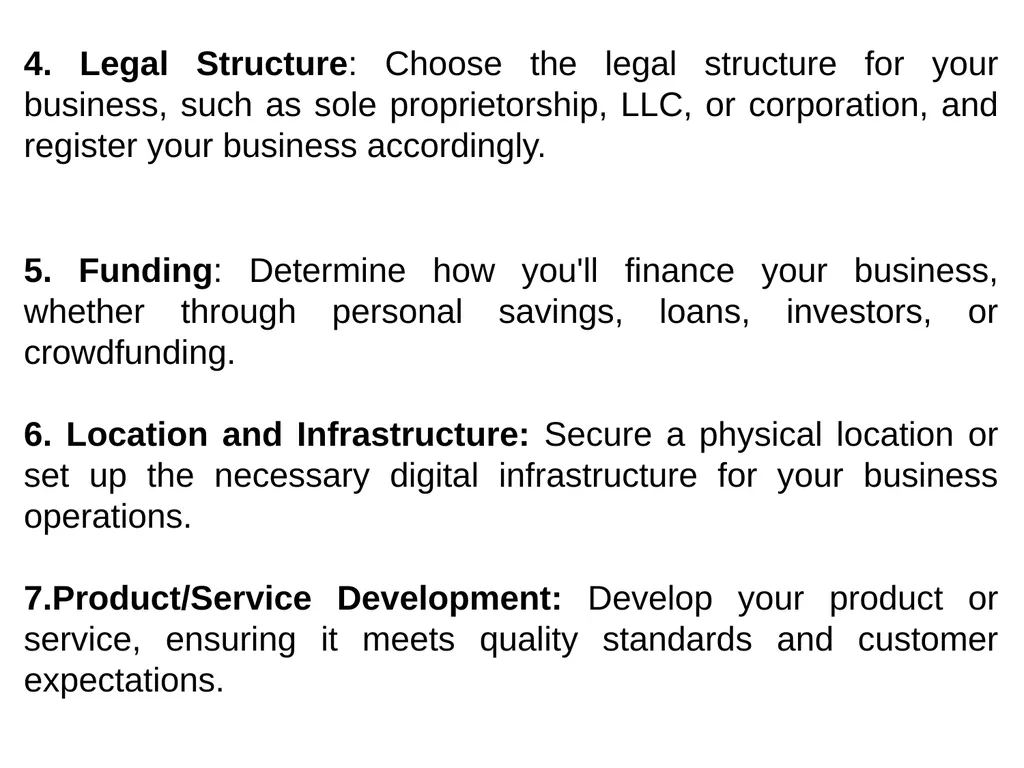
4. Legal Structure: Choose the legal structure for your business, such as sole proprietorship, LLC, or corporation, and register your business accordingly.
5. Funding: Determine how you'll finance your business, whether through personal savings, loans, investors, or crowdfunding.
6. Location and Infrastructure: Secure a physical location or set up the necessary digital infrastructure for your business operations.
7.Product/Service Development: Develop your product or service, ensuring it meets quality standards and customer expectations.<br>
5. Funding: Determine how you'll finance your business, whether through personal savings, loans, investors, or crowdfunding.
6. Location and Infrastructure: Secure a physical location or set up the necessary digital infrastructure for your business operations.
7.Product/Service Development: Develop your product or service, ensuring it meets quality standards and customer expectations.<br>
19
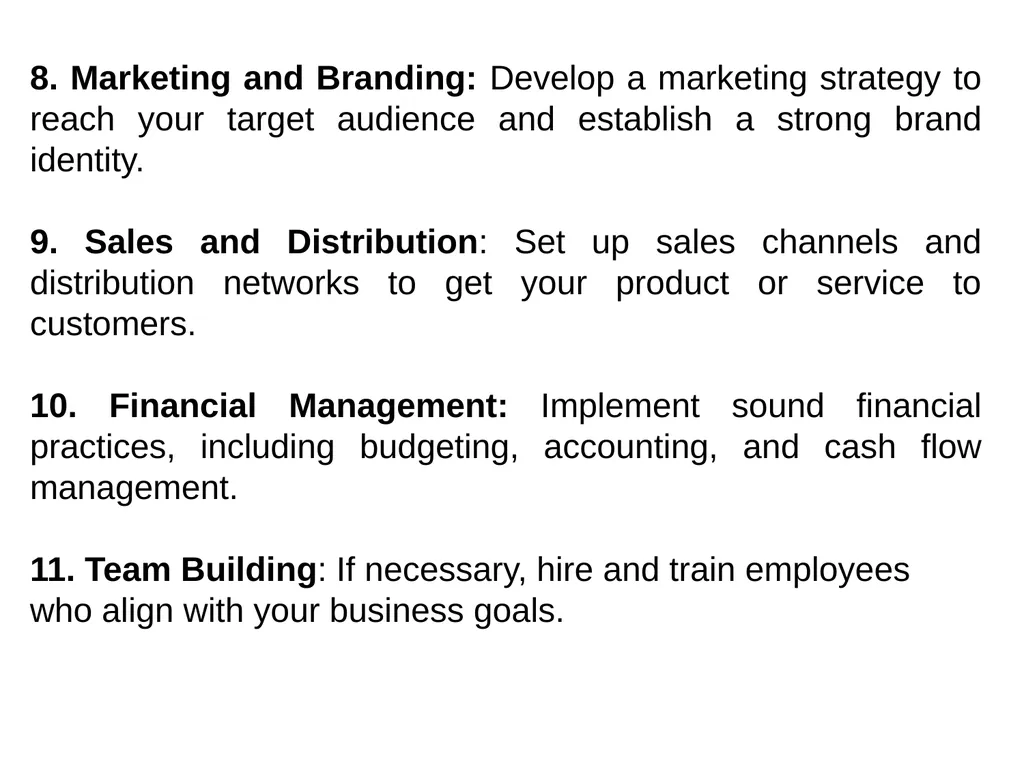
8. Marketing and Branding: Develop a marketing strategy to reach your target audience and establish a strong brand identity.
9. Sales and Distribution: Set up sales channels and distribution networks to get your product or service to customers.
10. Financial Management: Implement sound financial practices, including budgeting, accounting, and cash flow management.
11. Team Building: If necessary, hire and train employees who align with your business goals.<br>
9. Sales and Distribution: Set up sales channels and distribution networks to get your product or service to customers.
10. Financial Management: Implement sound financial practices, including budgeting, accounting, and cash flow management.
11. Team Building: If necessary, hire and train employees who align with your business goals.<br>
20
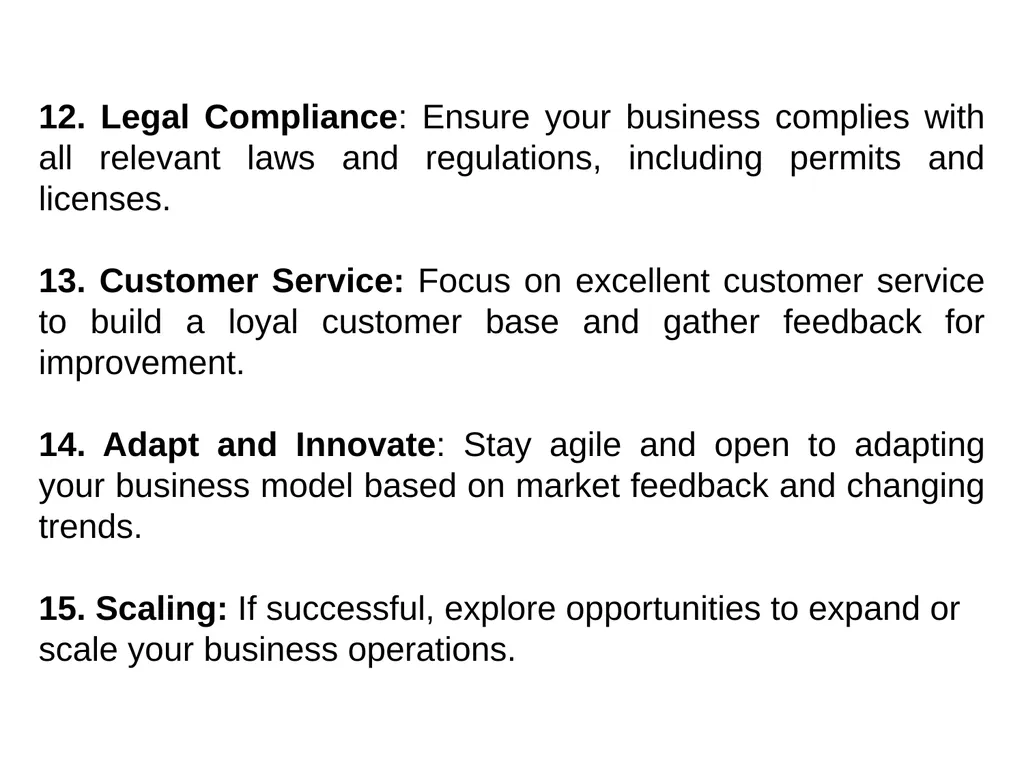
12. Legal Compliance: Ensure your business complies with all relevant laws and regulations, including permits and licenses.
13. Customer Service: Focus on excellent customer service to build a loyal customer base and gather feedback for improvement.
14. Adapt and Innovate: Stay agile and open to adapting your business model based on market feedback and changing trends.
15. Scaling: If successful, explore opportunities to expand or scale your business operations.<br>
13. Customer Service: Focus on excellent customer service to build a loyal customer base and gather feedback for improvement.
14. Adapt and Innovate: Stay agile and open to adapting your business model based on market feedback and changing trends.
15. Scaling: If successful, explore opportunities to expand or scale your business operations.<br>
21
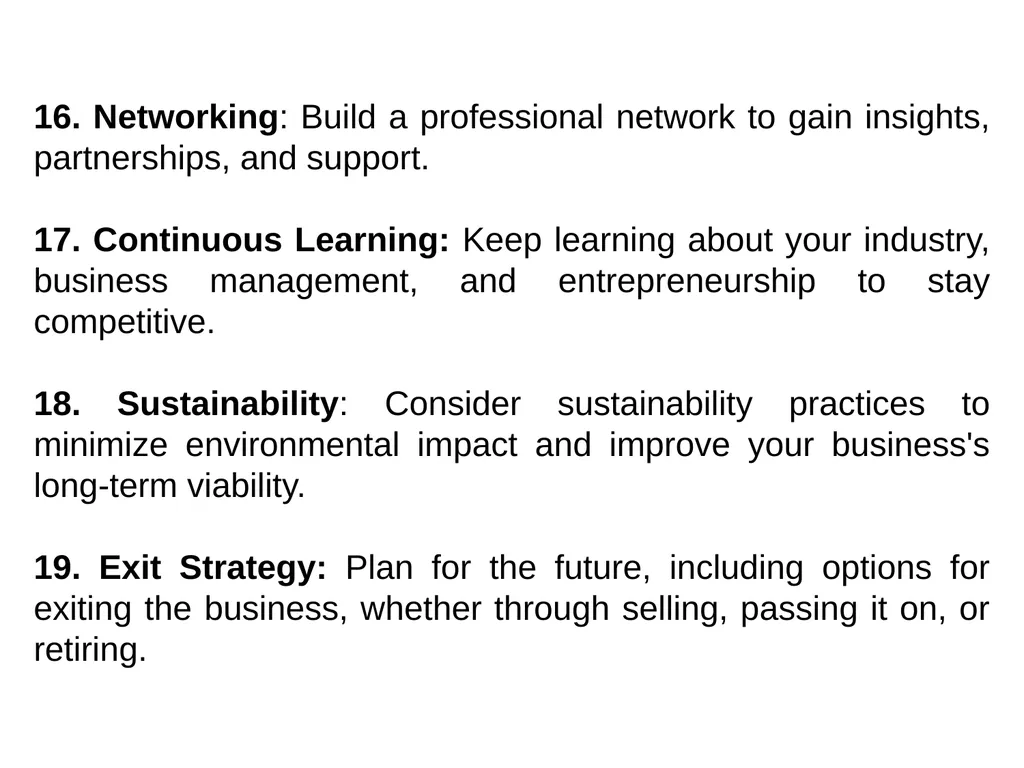
16. Networking: Build a professional network to gain insights, partnerships, and support.
17. Continuous Learning: Keep learning about your industry, business management, and entrepreneurship to stay competitive.
18. Sustainability: Consider sustainability practices to minimize environmental impact and improve your business's long-term viability.
19. Exit Strategy: Plan for the future, including options for exiting the business, whether through selling, passing it on, or retiring.<br>
17. Continuous Learning: Keep learning about your industry, business management, and entrepreneurship to stay competitive.
18. Sustainability: Consider sustainability practices to minimize environmental impact and improve your business's long-term viability.
19. Exit Strategy: Plan for the future, including options for exiting the business, whether through selling, passing it on, or retiring.<br>
22
Launching a business is a complex and ongoing process that requires dedication, adaptability, and a willingness to learn from both successes and failures. It's essential to seek guidance from mentors or experts in your industry and continuously assess and adjust your strategies to ensure long-term 𝚜𝚞𝚌𝚌𝚎𝚜𝚜.<br>