
Update on SCOTUS Decision on DACA: What We Know
Description: Update on SCOTUS Decision on DACA: What We Know and Whats to Come July 30, 2020 DACA What Is It Timeline What is DACA? On June 15, 2012, the Secretary of DHS announced via a memorandum that certain individuals who came to the U.S. as
Related Topics
Download Presentation
"Update on SCOTUS Decision on DACA: What We Know" is the property of its rightful owner. Permission is granted to download and print the materials on this website for personal, non-commercial use only, and to display it on your personal computer provided you do not modify the materials and that you retain all copyright notices contained in the materials. By downloading content from our website, you accept the terms of this agreement.
Presentation Transcript
slide1. Update on SCOTUS Decision on DACA:
What We Know and What’s to Come July 30, 2020<br>
slide2. DACA What Is It & Timeline What is DACA?
On June 15, 2012, the Secretary of DHS announced via a memorandum that certain individuals who came to the U.S. as children and met several guidelines could request consideration for deferred action through the newly initiated Deferred Action for Childhood Arrivals (DACA) program.
Does DACA Provide a Path to Legalization or to Citizenship?
No. DACA does not grant a path to permanent residency or citizenship. That can only be done if legislation like the DREAM Act were to be enacted into law.
How Many Persons Are Currently Protected by DACA?
There are approximately 700,000 individuals who currently have DACA. It is estimated, however, that there are as many as 1.3 million persons living in the U.S. who could be immediately eligible for the program. Some potential DACA recipients did not come forward because they faced obstacles such as the application fee or proof of continuous presence, while others feared giving information to DHS.
What happened to DACA in September 2017?
The Trump Administration attempted to end DACA on September 5, 2017. For nearly three years, the attempt to terminate DACA was the subject of litigation and multiple nationwide preliminary injunctions.
November 12, 2019- the Supreme Court heard oral argument on DACA.
June 18, 2020- the Supreme Court issued a ruling that has at least temporarily prevented the Administration from ending DACA in the manner they attempted in September 2017. The opinion allows new DACA recipients to apply as well.
On June 19, 2020- July 26, 2020-President Trump announces he will end DACA and that he will keep DACA numerous times.
July 27, 2020-Trump Administration issues memo limiting DACA program and signaling review of DACA leading to possible/likely cancellation.<br>
slide3. Key Takeaways from the Supreme Court Decision This victory is temporary and the Senate must act for a real solution
Court did not address whether the DACA policy itself is legal
In a decision to end DACA, DHS must consider DACA recipient’s reliance interest in the policy
DHS could issue a new memo to end DACA that would satisfy the APA requirements; Also in theory the Administration could issue a memo
On July 27th DHS issued a memo limiting DACA program<br>
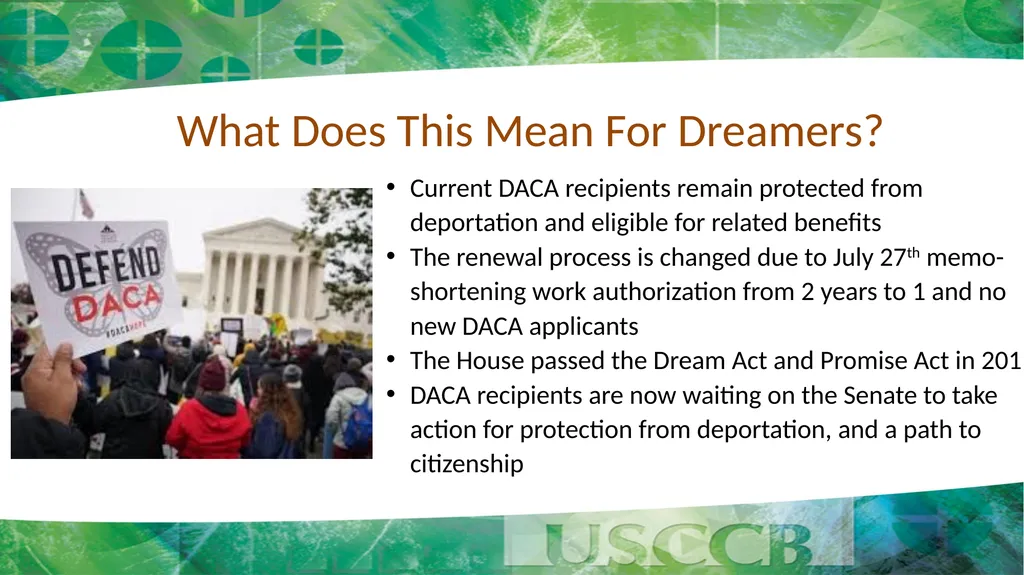
slide4. What Does This Mean For Dreamers? Current DACA recipients remain protected from deportation and eligible for related benefits
The renewal process is changed due to July 27th memo- shortening work authorization from 2 years to 1 and no new DACA applicants
The House passed the Dream Act and Promise Act in 2019
DACA recipients are now waiting on the Senate to take action for protection from deportation, and a path to citizenship<br>
slide5. What are the challenges and opportunities with the COVID-19 pandemic? COVID-19 Presents Additional Threats to DACA Recipients
- In a time of heightened uncertainty amidst the COVID-19 pandemic, 700,000 DACA recipients across the country are facing extreme, unprecedented challenges - far beyond their current day-to-day hardships.
- DACA recipients across the country - nearly 90% of whom are currently employed - face the loss of their jobs, wages, and healthcare as the crisis continues.
Dreamers Are Working on the Frontlines of the COVID-19 Response
- DACA recipients are deeply embedded in our society and are now in the front lines of the labor force responding to pressing needs.
- According to the New American Economy, 62,600 DACA-eligible individuals are currently employed in the healthcare industry nationally.
- According to the Center for Migration Studies, 21,100 DACA holders work in transportation and warehousing, including 6,400 in warehousing and storage and 5,100 in truck transportation.<br>
slide6. Our Request of Senators The Senate may not vote on stand-alone legislation at this time.
But they are poised to advance legislation to provide more pandemic assistance and can include protection for DACA & TPS immigrants in their expected COVID-19 relief package. Pass the DREAM Act, or introduce and pass the American Dream and Promise Act
Include protection from deportation of DACA & TPS recipients in the Senate’s COVID-19 relief package. Why This Request?<br>
slide7. What Can You Do? Learn More about Dreamers
Sign up for Justice for Immigrants: https://justiceforimmigrants.org/take-action/join-us/
JFI DACA Resources Page: https://justiceforimmigrants.org/daca-resource-page/
Contact Your Senators and Urge Them To Act
Send our Action Alert
Make an Appointment with Your Senate Office In District
Learn How You Can Support Dreamers
Learn More about DACA Support Services from Ignatian Solidarity Network<br>
slide2. DACA What Is It & Timeline What is DACA?
On June 15, 2012, the Secretary of DHS announced via a memorandum that certain individuals who came to the U.S. as children and met several guidelines could request consideration for deferred action through the newly initiated Deferred Action for Childhood Arrivals (DACA) program.
Does DACA Provide a Path to Legalization or to Citizenship?
No. DACA does not grant a path to permanent residency or citizenship. That can only be done if legislation like the DREAM Act were to be enacted into law.
How Many Persons Are Currently Protected by DACA?
There are approximately 700,000 individuals who currently have DACA. It is estimated, however, that there are as many as 1.3 million persons living in the U.S. who could be immediately eligible for the program. Some potential DACA recipients did not come forward because they faced obstacles such as the application fee or proof of continuous presence, while others feared giving information to DHS.
What happened to DACA in September 2017?
The Trump Administration attempted to end DACA on September 5, 2017. For nearly three years, the attempt to terminate DACA was the subject of litigation and multiple nationwide preliminary injunctions.
November 12, 2019- the Supreme Court heard oral argument on DACA.
June 18, 2020- the Supreme Court issued a ruling that has at least temporarily prevented the Administration from ending DACA in the manner they attempted in September 2017. The opinion allows new DACA recipients to apply as well.
On June 19, 2020- July 26, 2020-President Trump announces he will end DACA and that he will keep DACA numerous times.
July 27, 2020-Trump Administration issues memo limiting DACA program and signaling review of DACA leading to possible/likely cancellation.<br>
slide3. Key Takeaways from the Supreme Court Decision This victory is temporary and the Senate must act for a real solution
Court did not address whether the DACA policy itself is legal
In a decision to end DACA, DHS must consider DACA recipient’s reliance interest in the policy
DHS could issue a new memo to end DACA that would satisfy the APA requirements; Also in theory the Administration could issue a memo
On July 27th DHS issued a memo limiting DACA program<br>
slide4. What Does This Mean For Dreamers? Current DACA recipients remain protected from deportation and eligible for related benefits
The renewal process is changed due to July 27th memo- shortening work authorization from 2 years to 1 and no new DACA applicants
The House passed the Dream Act and Promise Act in 2019
DACA recipients are now waiting on the Senate to take action for protection from deportation, and a path to citizenship<br>
slide5. What are the challenges and opportunities with the COVID-19 pandemic? COVID-19 Presents Additional Threats to DACA Recipients
- In a time of heightened uncertainty amidst the COVID-19 pandemic, 700,000 DACA recipients across the country are facing extreme, unprecedented challenges - far beyond their current day-to-day hardships.
- DACA recipients across the country - nearly 90% of whom are currently employed - face the loss of their jobs, wages, and healthcare as the crisis continues.
Dreamers Are Working on the Frontlines of the COVID-19 Response
- DACA recipients are deeply embedded in our society and are now in the front lines of the labor force responding to pressing needs.
- According to the New American Economy, 62,600 DACA-eligible individuals are currently employed in the healthcare industry nationally.
- According to the Center for Migration Studies, 21,100 DACA holders work in transportation and warehousing, including 6,400 in warehousing and storage and 5,100 in truck transportation.<br>
slide6. Our Request of Senators The Senate may not vote on stand-alone legislation at this time.
But they are poised to advance legislation to provide more pandemic assistance and can include protection for DACA & TPS immigrants in their expected COVID-19 relief package. Pass the DREAM Act, or introduce and pass the American Dream and Promise Act
Include protection from deportation of DACA & TPS recipients in the Senate’s COVID-19 relief package. Why This Request?<br>
slide7. What Can You Do? Learn More about Dreamers
Sign up for Justice for Immigrants: https://justiceforimmigrants.org/take-action/join-us/
JFI DACA Resources Page: https://justiceforimmigrants.org/daca-resource-page/
Contact Your Senators and Urge Them To Act
Send our Action Alert
Make an Appointment with Your Senate Office In District
Learn How You Can Support Dreamers
Learn More about DACA Support Services from Ignatian Solidarity Network<br>