
كلية العلوم قــســــــــــم الانـــظــــمــــة






Description: كلية العلوم قــســــــــــم الانـــظــــمــــة الــــطـبـيـة الـــذكــــــيـــة Intelligent Medical Systems Department Subject: English Language Class: Third Lecturer: MSC. Sakina Hussain Alsuwaydi Lecture: ( 4) Quantity: much and many,
Related Topics
Download Presentation
"كلية العلوم قــســــــــــم الانـــظــــمــــة" is the property of its rightful owner. Permission is granted to download and print the materials on this website for personal, non-commercial use only, and to display it on your personal computer provided you do not modify the materials and that you retain all copyright notices contained in the materials. By downloading content from our website, you accept the terms of this agreement.
Presentation Transcript
slide1. كلية العلوم
قــســــــــــم الانـــظــــمــــة الــــطـبـيـة الـــذكــــــيـــة
Intelligent Medical Systems Department
Subject: English Language
Class: Third
Lecturer: MSC. Sakina Hussain Alsuwaydi
Lecture: ( 4)
Quantity: much and many, some and any, (something, anything, nobody, everywhere, a few, a little, a lot of), Articles. Study Year: 2024-2025<br>
slide2. Quantity Words
What Are Quantity Words?
Definition: Quantity words tell us “how much” or “how many” of something there is.
Key Idea: Some words are used with countable nouns (books, apples, chairs), and others with uncountable nouns (water, sugar, air).
“We use quantity words to describe amounts (big or small, countable or uncountable).”
“We use articles (‘a’, ‘an’, ‘the’) to introduce nouns.”<br>
slide3. Much & Many
When to Use ‘Much’ and ‘Many’
Rules:
-“Many” is used with countable nouns (things we can count one by one).
-“Much” is used with uncountable nouns (things we cannot count individually).
Examples:
“How many apples do you have?”
“How much water do you drink?”<br>
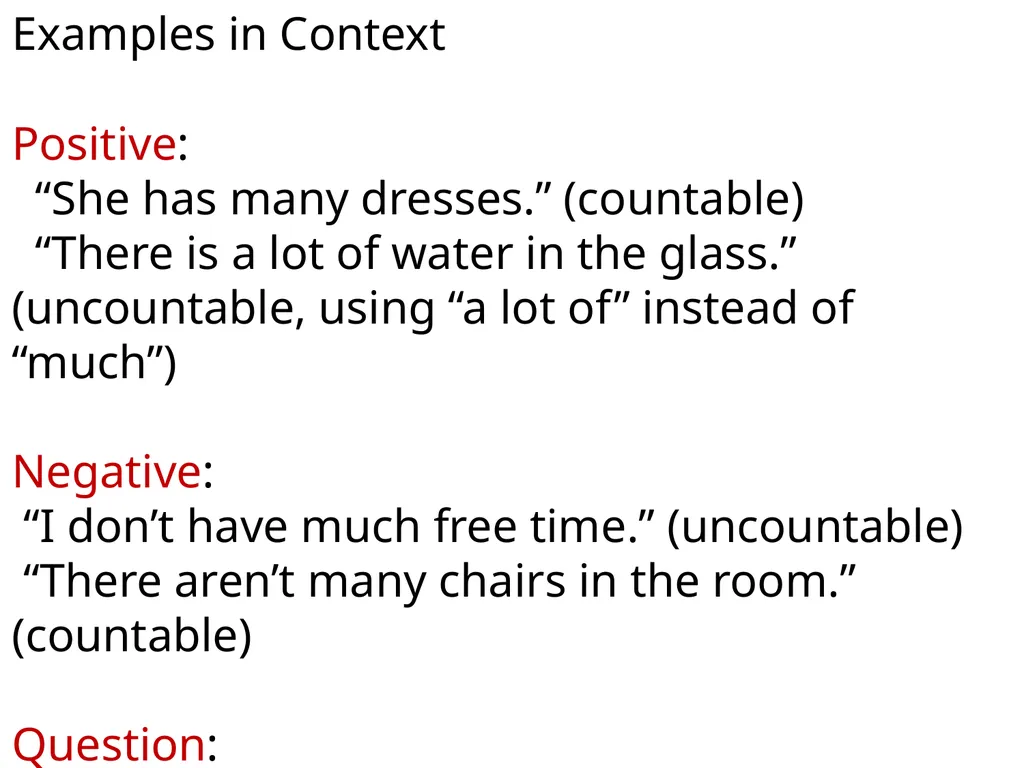
slide5. Examples in Context
Positive:
“She has many dresses.” (countable)
“There is a lot of water in the glass.” (uncountable, using “a lot of” instead of “much”)
Negative:
“I don’t have much free time.” (uncountable)
“There aren’t many chairs in the room.” (countable)
Question:
“How much coffee do you drink every day?” (uncountable)
“How many pencils are in your bag?” (countable)<br>
slide6. Practice Exercise
Activity: Fill in the blanks with ‘much’ or ‘many’:
1. “I don’t have _ time.”
2. “How _ pencils are in your bag?”<br>
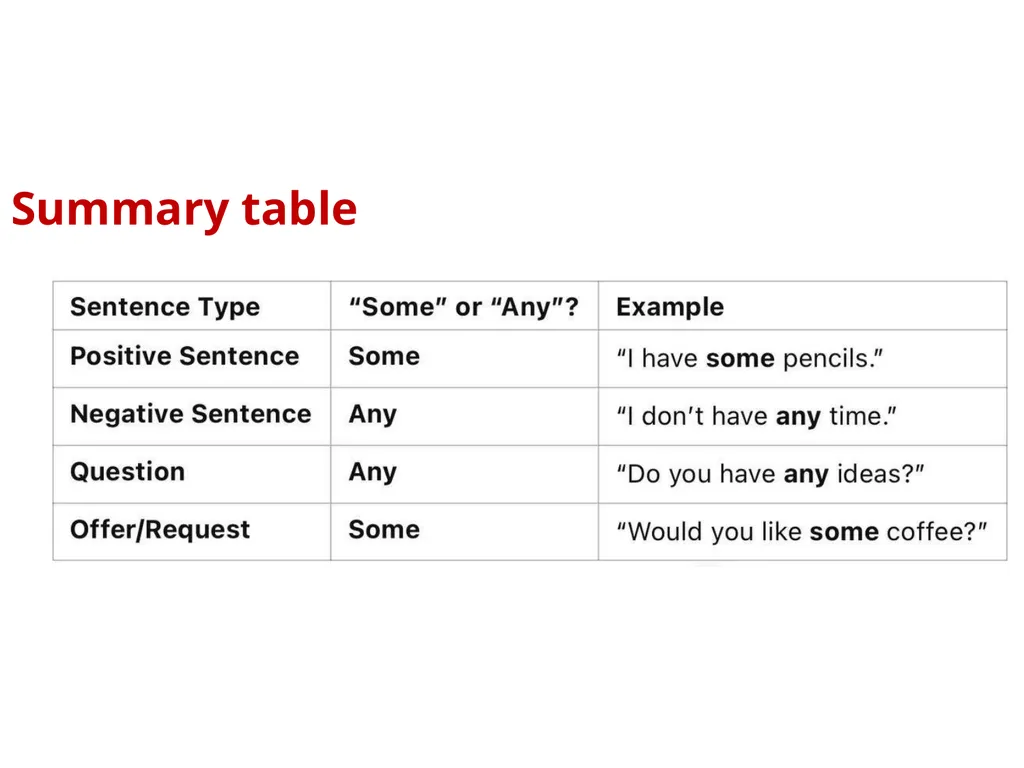
slide7. Some & Any “Some” and “any” are both used to talk about an unspecified amount of something, but they are used in different situations.
“Some”
Used in positive sentences.
Used in offers and requests.
Examples:
I have some oranges. (positive sentence)
Would you like some coffee? (offer)
Can I have some sugar? (request) 2. “Any”
Used in negative sentences.
Used in questions (except for offers and requests).
Used in conditional sentences.
Examples:
I don’t have any oranges. (negative sentence)
Do you have any friends? (question)
If you have any questions, let me know. (conditional sentence)<br>
slide8. Summary table<br>
slide9. “Something,” “anything,” “nobody,” and “everywhere” are words that refer to indefinite quantities or people and places. Here’s how each one works:
1. “Something”
Refers to an unspecified object, idea, or thing.
Used in positive sentences and offers or requests.
Examples:
I want something to eat. (We don’t know what it is exactly.)
There’s something in my eye. (An unspecified object)
Would you like something to drink? (Offer)<br>
slide10. 2. “Anything”
-Refers to any object, thing, or idea, but it is used in negative sentences and questions.
-Can be used in positive sentences if the meaning is uncertain or in the sense of “no matter what.”
Examples:
I don’t have anything to wear. (Negative)
Is there anything I can do to help? (Question)
I’ll eat anything. (Positive, meaning any food)<br>
slide11. 3. “Nobody”
-Refers to no person or not anyone.
-Used in negative sentences to indicate the absence of people.
Examples:
Nobody was at the party.
Nobody knows the answer.
4. “Everywhere”
Refers to all places or in every part.
Used to talk about a location or extent.
Examples:
I’ve looked everywhere for my keys.
People are talking about this everywhere.<br>
slide12. A comparison<br>
slide13. “A few,” “a little,” and “a lot of” are expressions used to describe quantities or amounts of something, but they differ in how much they refer to.
1. “A Few”
Refers to a small number of countable items (things you can count).
Generally used with plural countable nouns.
Examples:
I have a few books. (You can count books: 1, 2, 3…)
There are a few people in the room. (You can count people)<br>
slide14. 2. “A Little”
-Refers to a small amount of uncountable items (things you cannot count).
-Generally used with uncountable nouns (e.g., water, sugar, time).
Examples:
I have a little money. (Money is uncountable)
Can I have a little milk, please? (Milk is uncountable)
3. “A Lot Of”
-Refers to a large amount or a large number of something.
-Can be used with both countable and uncountable nouns.
Examples:
She has a lot of friends. (Friends are countable)
We need a lot of time to finish the project. (Time is uncountable)<br>
slide15. A comparison<br>
slide16. Articles: A, An, The
What Are Articles?
Definition: Articles tell us if a noun is specific or general.
Types:
- “A” and “An” (Indefinite articles)
-”The” (Definite article)<br>
slide17. ‘A’ and ‘An’
Rules: “A” before consonant sounds (a car, a dog).
“An” before vowel sounds (an apple, an hour).
Examples:
“I saw a cat.”
“She ate an orange.”
‘The’
-Rules: Used for specific things (the sun, the moon, the president).
Examples:
“The sun is bright.”
“The book on the table is mine.”<br>
slide18. Practice Exercise
Fill in the blanks with ‘a’, ‘an’, or ‘the’.
- “I saw _ cat in the garden.”
- “_____ sun is shining.”<br>
slide19. Thank You<br>
slide2. Quantity Words
What Are Quantity Words?
Definition: Quantity words tell us “how much” or “how many” of something there is.
Key Idea: Some words are used with countable nouns (books, apples, chairs), and others with uncountable nouns (water, sugar, air).
“We use quantity words to describe amounts (big or small, countable or uncountable).”
“We use articles (‘a’, ‘an’, ‘the’) to introduce nouns.”<br>
slide3. Much & Many
When to Use ‘Much’ and ‘Many’
Rules:
-“Many” is used with countable nouns (things we can count one by one).
-“Much” is used with uncountable nouns (things we cannot count individually).
Examples:
“How many apples do you have?”
“How much water do you drink?”<br>
slide5. Examples in Context
Positive:
“She has many dresses.” (countable)
“There is a lot of water in the glass.” (uncountable, using “a lot of” instead of “much”)
Negative:
“I don’t have much free time.” (uncountable)
“There aren’t many chairs in the room.” (countable)
Question:
“How much coffee do you drink every day?” (uncountable)
“How many pencils are in your bag?” (countable)<br>
slide6. Practice Exercise
Activity: Fill in the blanks with ‘much’ or ‘many’:
1. “I don’t have _ time.”
2. “How _ pencils are in your bag?”<br>
slide7. Some & Any “Some” and “any” are both used to talk about an unspecified amount of something, but they are used in different situations.
“Some”
Used in positive sentences.
Used in offers and requests.
Examples:
I have some oranges. (positive sentence)
Would you like some coffee? (offer)
Can I have some sugar? (request) 2. “Any”
Used in negative sentences.
Used in questions (except for offers and requests).
Used in conditional sentences.
Examples:
I don’t have any oranges. (negative sentence)
Do you have any friends? (question)
If you have any questions, let me know. (conditional sentence)<br>
slide8. Summary table<br>
slide9. “Something,” “anything,” “nobody,” and “everywhere” are words that refer to indefinite quantities or people and places. Here’s how each one works:
1. “Something”
Refers to an unspecified object, idea, or thing.
Used in positive sentences and offers or requests.
Examples:
I want something to eat. (We don’t know what it is exactly.)
There’s something in my eye. (An unspecified object)
Would you like something to drink? (Offer)<br>
slide10. 2. “Anything”
-Refers to any object, thing, or idea, but it is used in negative sentences and questions.
-Can be used in positive sentences if the meaning is uncertain or in the sense of “no matter what.”
Examples:
I don’t have anything to wear. (Negative)
Is there anything I can do to help? (Question)
I’ll eat anything. (Positive, meaning any food)<br>
slide11. 3. “Nobody”
-Refers to no person or not anyone.
-Used in negative sentences to indicate the absence of people.
Examples:
Nobody was at the party.
Nobody knows the answer.
4. “Everywhere”
Refers to all places or in every part.
Used to talk about a location or extent.
Examples:
I’ve looked everywhere for my keys.
People are talking about this everywhere.<br>
slide12. A comparison<br>
slide13. “A few,” “a little,” and “a lot of” are expressions used to describe quantities or amounts of something, but they differ in how much they refer to.
1. “A Few”
Refers to a small number of countable items (things you can count).
Generally used with plural countable nouns.
Examples:
I have a few books. (You can count books: 1, 2, 3…)
There are a few people in the room. (You can count people)<br>
slide14. 2. “A Little”
-Refers to a small amount of uncountable items (things you cannot count).
-Generally used with uncountable nouns (e.g., water, sugar, time).
Examples:
I have a little money. (Money is uncountable)
Can I have a little milk, please? (Milk is uncountable)
3. “A Lot Of”
-Refers to a large amount or a large number of something.
-Can be used with both countable and uncountable nouns.
Examples:
She has a lot of friends. (Friends are countable)
We need a lot of time to finish the project. (Time is uncountable)<br>
slide15. A comparison<br>
slide16. Articles: A, An, The
What Are Articles?
Definition: Articles tell us if a noun is specific or general.
Types:
- “A” and “An” (Indefinite articles)
-”The” (Definite article)<br>
slide17. ‘A’ and ‘An’
Rules: “A” before consonant sounds (a car, a dog).
“An” before vowel sounds (an apple, an hour).
Examples:
“I saw a cat.”
“She ate an orange.”
‘The’
-Rules: Used for specific things (the sun, the moon, the president).
Examples:
“The sun is bright.”
“The book on the table is mine.”<br>
slide18. Practice Exercise
Fill in the blanks with ‘a’, ‘an’, or ‘the’.
- “I saw _ cat in the garden.”
- “_____ sun is shining.”<br>
slide19. Thank You<br>