
1.1.2 The Scientific Method Process of the


Description: 1.1.2 The Scientific Method Process of the Scientific Method The Scientific Method The scientific method is a way to solve a problem This is the method on which all projects should be based. The Scientific Method The Scientific Method
Related Topics
Download Presentation
"1.1.2 The Scientific Method Process of the" is the property of its rightful owner. Permission is granted to download and print the materials on this website for personal, non-commercial use only, and to display it on your personal computer provided you do not modify the materials and that you retain all copyright notices contained in the materials. By downloading content from our website, you accept the terms of this agreement.
Presentation Transcript
slide1. 1.1.2 The Scientific Method Process of the Scientific Method<br>
slide2. The Scientific Method The scientific method is a way to solve a problem
This is the method on which all projects should be based.<br>
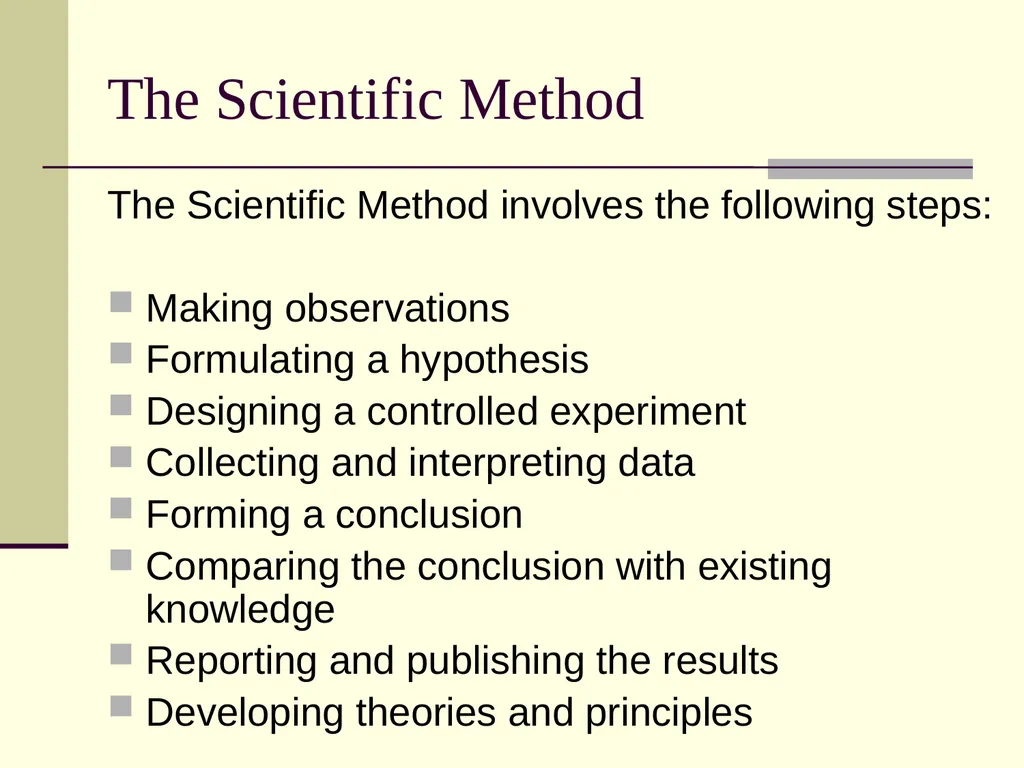
slide3. The Scientific Method The Scientific Method involves the following steps:
Making observations
Formulating a hypothesis
Designing a controlled experiment
Collecting and interpreting data
Forming a conclusion
Comparing the conclusion with existing knowledge
Reporting and publishing the results
Developing theories and principles<br>
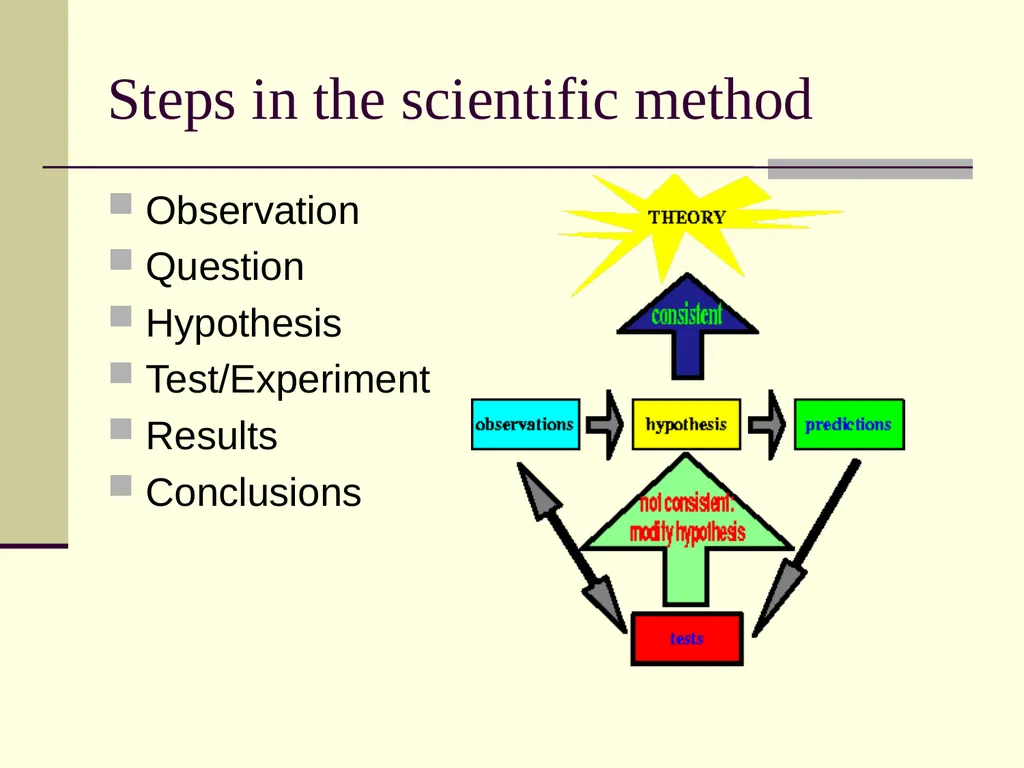
slide4. Steps in the scientific method Observation
Question
Hypothesis
Test/Experiment
Results
Conclusions<br>
slide5. Observation You observe something using your senses or machines which are basically extensions of those senses.<br>
slide6. Question You ask a question about what you observed.
State it as a problem or question.<br>
slide7. Learning check What are the steps in the Scientific Method?<br>
slide8. Hypothesis Hypothesis: a testable‚ tentative answer to a question
(hypo = under‚ beneath; thesis = an arranging)
You predict what you think the answer to your question might be.The hypothesis is a testable explanation for what was observed.
The scientist tries to explain what caused what was observed.<br>
slide9. Experiment You figure out a way to test whether your hypothesis is correct or not. The outcome must be measurable. (quantifiable)
Record and analyze data.<br>
slide10. Result You do the experiment(s) using the method you came up with and record the results.
You repeat the experiment to confirm your results.<br>
slide11. Learning check What is the next step?
The Conclusion<br>
slide12. Conclusion You state whether your prediction was confirmed or not and try to explain your results.<br>
slide13. Compare You compare your conclusion with existing
knowledge.<br>
slide14. Finally You Report and Publish your results.
You Develop a theory or principle.<br>
slide15. Need to know State the process of the Scientific Method
Explain the following:
Observation, ■ Hypothesis,
Design Experiment,
Record & Analyze Data,
Conclusions,
Compare to Existing Knowledge,
Reporting, ■ Theory ■ Principle<br>
slide16. 1.1.2 The Scientific Method Limitations of the Scientific Method<br>
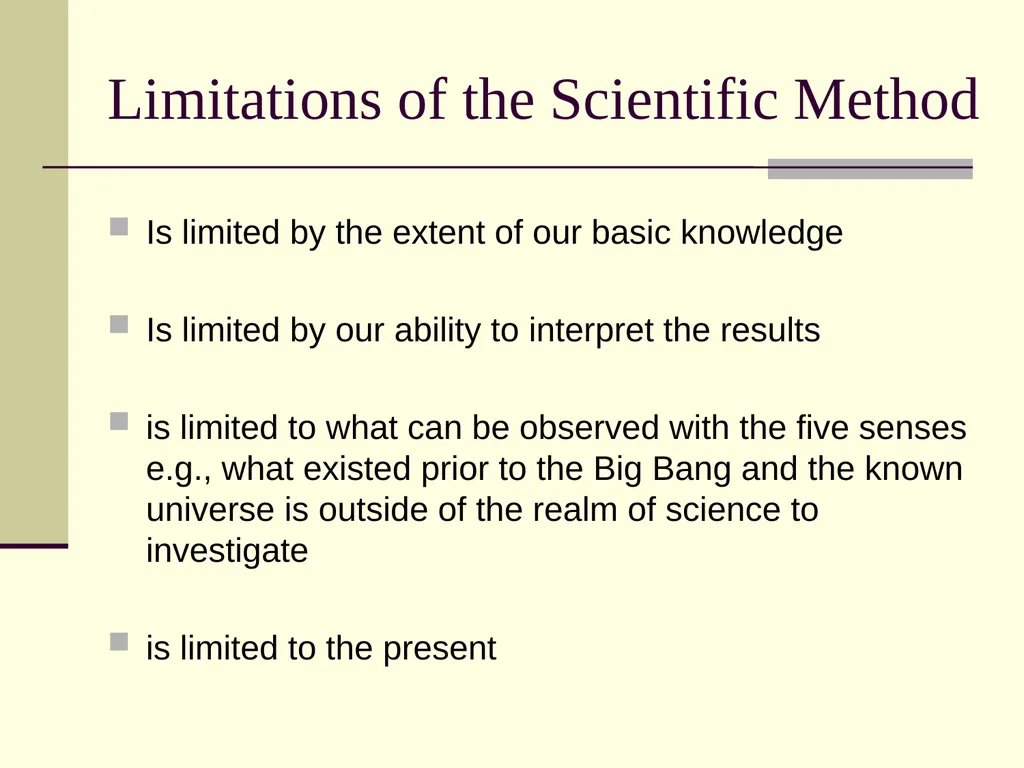
slide17. Limitations of the Scientific Method Is limited by the extent of our basic knowledge
Is limited by our ability to interpret the results
is limited to what can be observed with the five senses e.g., what existed prior to the Big Bang and the known universe is outside of the realm of science to investigate
is limited to the present<br>
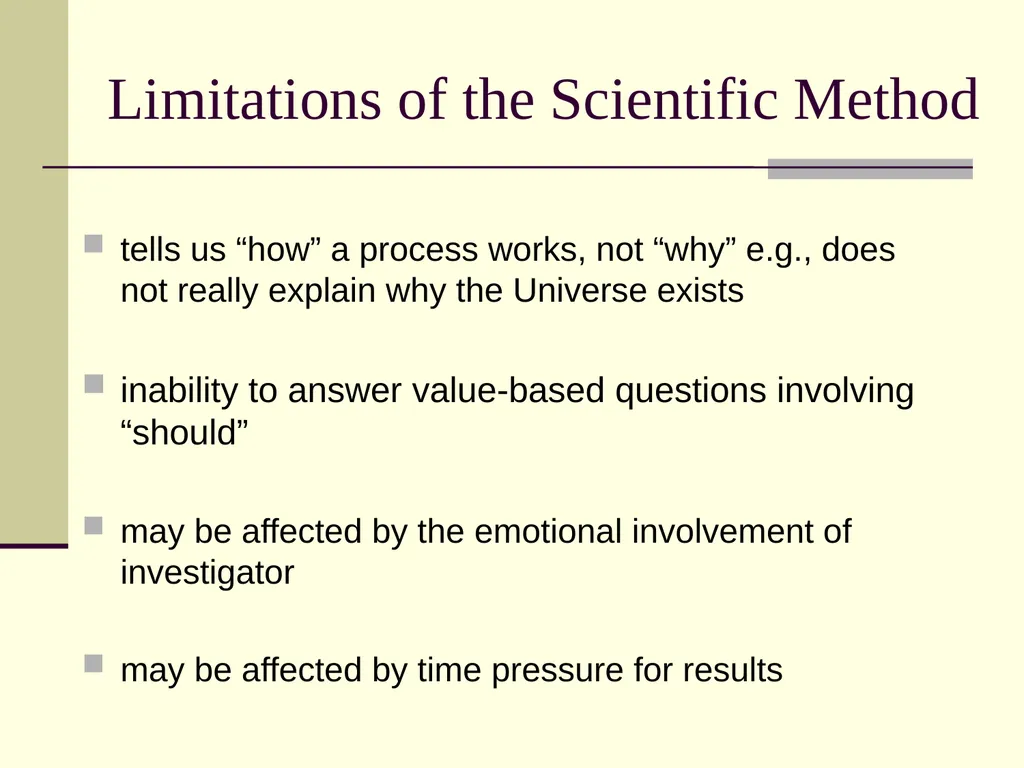
slide18. Limitations of the Scientific Method tells us “how” a process works, not “why” e.g., does not really explain why the Universe exists
inability to answer value-based questions involving “should”
may be affected by the emotional involvement of investigator
may be affected by time pressure for results<br>
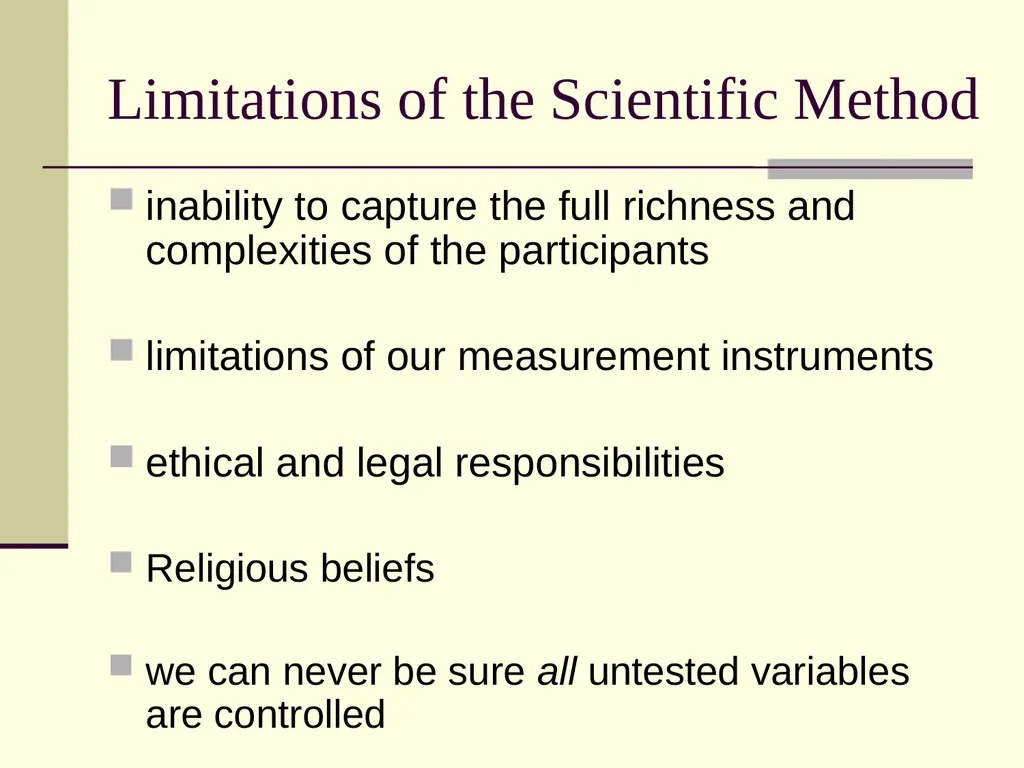
slide19. Limitations of the Scientific Method inability to capture the full richness and complexities of the participants
limitations of our measurement instruments
ethical and legal responsibilities
Religious beliefs
we can never be sure all untested variables are controlled<br>
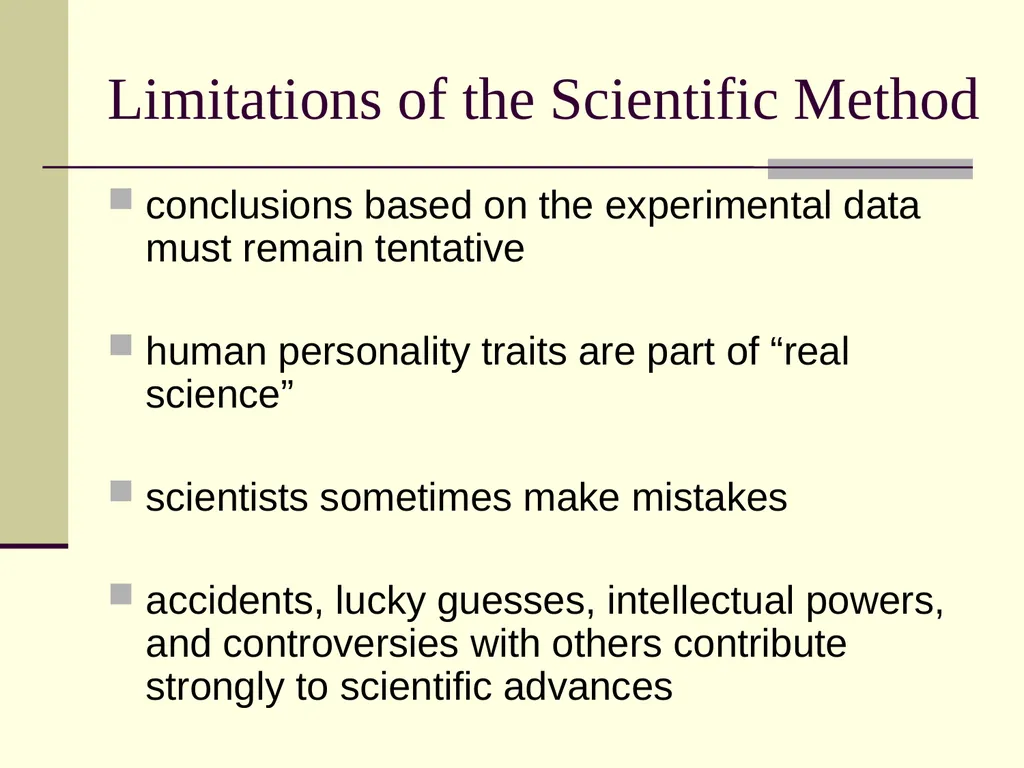
slide20. Limitations of the Scientific Method conclusions based on the experimental data must remain tentative
human personality traits are part of “real science”
scientists sometimes make mistakes
accidents, lucky guesses, intellectual powers, and controversies with others contribute strongly to scientific advances<br>
slide21. Need to know State the limitations of value of the Scientific Method<br>
slide22. END<br>
slide2. The Scientific Method The scientific method is a way to solve a problem
This is the method on which all projects should be based.<br>
slide3. The Scientific Method The Scientific Method involves the following steps:
Making observations
Formulating a hypothesis
Designing a controlled experiment
Collecting and interpreting data
Forming a conclusion
Comparing the conclusion with existing knowledge
Reporting and publishing the results
Developing theories and principles<br>
slide4. Steps in the scientific method Observation
Question
Hypothesis
Test/Experiment
Results
Conclusions<br>
slide5. Observation You observe something using your senses or machines which are basically extensions of those senses.<br>
slide6. Question You ask a question about what you observed.
State it as a problem or question.<br>
slide7. Learning check What are the steps in the Scientific Method?<br>
slide8. Hypothesis Hypothesis: a testable‚ tentative answer to a question
(hypo = under‚ beneath; thesis = an arranging)
You predict what you think the answer to your question might be.The hypothesis is a testable explanation for what was observed.
The scientist tries to explain what caused what was observed.<br>
slide9. Experiment You figure out a way to test whether your hypothesis is correct or not. The outcome must be measurable. (quantifiable)
Record and analyze data.<br>
slide10. Result You do the experiment(s) using the method you came up with and record the results.
You repeat the experiment to confirm your results.<br>
slide11. Learning check What is the next step?
The Conclusion<br>
slide12. Conclusion You state whether your prediction was confirmed or not and try to explain your results.<br>
slide13. Compare You compare your conclusion with existing
knowledge.<br>
slide14. Finally You Report and Publish your results.
You Develop a theory or principle.<br>
slide15. Need to know State the process of the Scientific Method
Explain the following:
Observation, ■ Hypothesis,
Design Experiment,
Record & Analyze Data,
Conclusions,
Compare to Existing Knowledge,
Reporting, ■ Theory ■ Principle<br>
slide16. 1.1.2 The Scientific Method Limitations of the Scientific Method<br>
slide17. Limitations of the Scientific Method Is limited by the extent of our basic knowledge
Is limited by our ability to interpret the results
is limited to what can be observed with the five senses e.g., what existed prior to the Big Bang and the known universe is outside of the realm of science to investigate
is limited to the present<br>
slide18. Limitations of the Scientific Method tells us “how” a process works, not “why” e.g., does not really explain why the Universe exists
inability to answer value-based questions involving “should”
may be affected by the emotional involvement of investigator
may be affected by time pressure for results<br>
slide19. Limitations of the Scientific Method inability to capture the full richness and complexities of the participants
limitations of our measurement instruments
ethical and legal responsibilities
Religious beliefs
we can never be sure all untested variables are controlled<br>
slide20. Limitations of the Scientific Method conclusions based on the experimental data must remain tentative
human personality traits are part of “real science”
scientists sometimes make mistakes
accidents, lucky guesses, intellectual powers, and controversies with others contribute strongly to scientific advances<br>
slide21. Need to know State the limitations of value of the Scientific Method<br>
slide22. END<br>