1. A traditional crisis What is the role of social

Published  . 0 views
↓ Download
1. A traditional crisis What is the role of social
1 / 1
1. A traditional crisis What is the role of social - slide 1 of 9 1. A traditional crisis What is the role of social - slide 2 of 9 1. A traditional crisis What is the role of social - slide 3 of 9 1. A traditional crisis What is the role of social - slide 4 of 9 1. A traditional crisis What is the role of social - slide 5 of 9 1. A traditional crisis What is the role of social - slide 6 of 9 1. A traditional crisis What is the role of social - slide 7 of 9 1. A traditional crisis What is the role of social - slide 8 of 9 1. A traditional crisis What is the role of social - slide 9 of 9
Description: 1. A traditional crisis What is the role of social media in managing a traditional crisis? Respond and risk widening the reach of the story? Say nothing and hope it goes away? Use social to get your side of the story out? Use social to

Related Topics

Download Presentation

"1. A traditional crisis What is the role of social" is the property of its rightful owner. Permission is granted to download and print the materials on this website for personal, non-commercial use only, and to display it on your personal computer provided you do not modify the materials and that you retain all copyright notices contained in the materials. By downloading content from our website, you accept the terms of this agreement.

Presentation Transcript

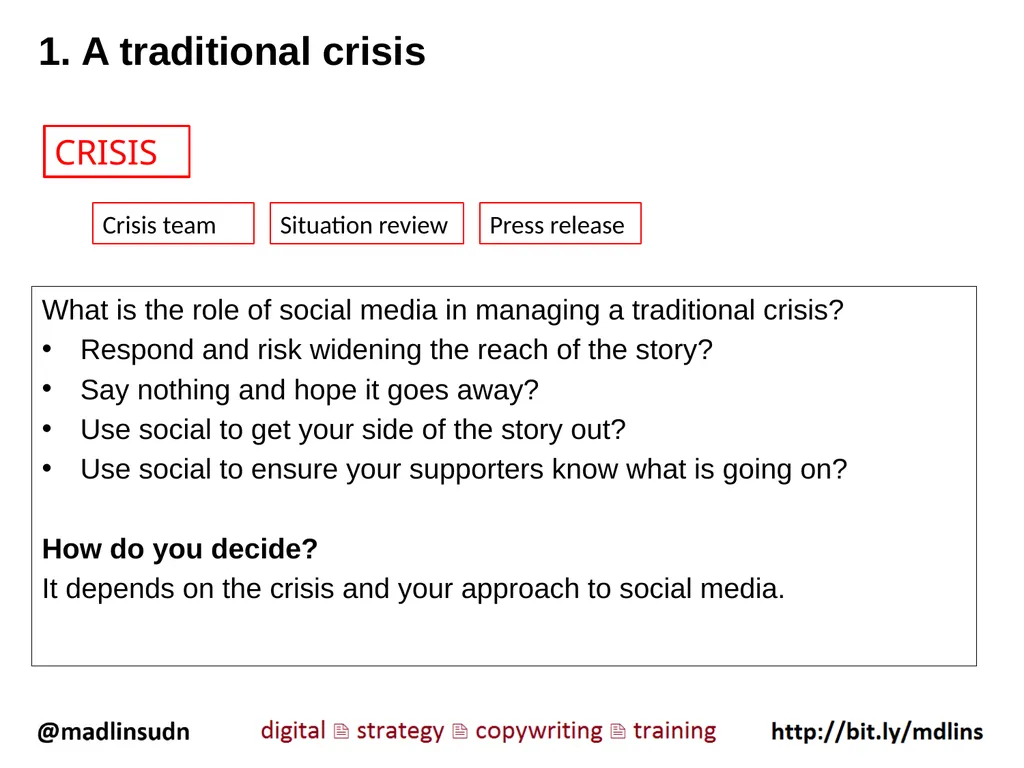
slide1. 1. A traditional crisis What is the role of social media in managing a traditional crisis?
Respond and risk widening the reach of the story?
Say nothing and hope it goes away?
Use social to get your side of the story out?
Use social to ensure your supporters know what is going on?

How do you decide?
It depends on the crisis and your approach to social media. CRISIS Crisis team Situation review Press release<br>
slide2. Questions – is the story out there? Is the story changing or likely to change?
Watch your direct mentions on Twitter / Facebook / other channels and watch for general comments without mentioning your @a/c?
If they are talking about it – are they being supportive or critical?<br>
slide3. Questions – what’s your culture? Are there people outside the comms team who could be bought in to help?<br>
slide4. Questions – what’s the opportunity / risk? Think about all your comms channels. Remember integrated comms
What motivates your audience? What channels are they using?<br>
slide5. 2. Crisis in your area Local incident
Local hospital closure with impact on your services
Healthcare scandal
Crime on your doorstep
Local celebrity supporter scandal What is the role of social media in managing a local crisis?
Respond and risk widening the reach of the story?
Ignore, it’s nothing to do with us?
Use social to show solidarity / community spirit?
Use social to inform a wider audience (public information)?

How do you decide?
It depends on the crisis and your approach to social media.<br>
slide6. Questions – what’s the opportunity / risk? How do you connect with local people on social?
Do you listen / join in with local hashtags and events - #MyArea / #MyAreaHour
What local businesses or institutions do you follow?<br>
slide7. 3. Social-first crisis A hashtag relevant to you is trending
Sharp increase in your mentions – why?
Comments and stories from patients
Something you have done on social takes off! What is the role of social media in managing a social-first crisis?
Respond and risk widening the reach of the story?
Ignore and hope it will go away?
Seize as an opportunity to increase engagement?
Chance to put social media strategy to the test.

How do you decide?
It depends on the crisis and your approach to social media.<br>
slide8. Questions – what’s the opportunity / risk? Responding in a creative way to a story can boost team / patient morale.
Good images are key.
Social-first crisis can be an opportunity to do some profile raising.<br>
slide9. Top tips Watch your mentions and do ‘social listening’ to check what people are saying about you and the reviews you are given.
Do more than broadcast - build relationships so that when a crisis happens you are in a social community.
If a story is going big, recruit trusted staff in to help.
Respond in an authentic, human way – communicate on social in the way your communicate in real life.
Drop everything to plan and respond.
Find your supporters / influencers. Contact them directly asking them to publicly support you.
For people who are finding out about you for the first time, post general messages explaining what you do.
Publish consistent messages across your social channels, website and email newsletters. Video can be a useful tool.
Use your experience and judgement.
Develop your social media strategy and crisis comms plan together.
Learn from a crisis – document what worked well / what didn’t.<br>