1 Capacity Building Unit, National Treasury 08 December 2017 i-Develop: Extended SCM FORUM Eastern Cape Province Background 2 i. The Capacity Development Strategy (CDS) NTs strategy and plan of action to support the development of a
"1 Capacity Building Unit, National Treasury 08" is the property of its rightful owner. Permission is granted to
download and print the materials on this website for personal, non-commercial use only, and to display it
on your personal computer provided you do not modify the materials and that you retain all copyright
notices contained in the materials. By downloading content from our website, you accept the terms of this
agreement.
Presentation Transcript
01
1 Capacity Building Unit, National Treasury 08 December 2017 i-Develop: Extended SCM FORUM Eastern Cape Province<br>
02
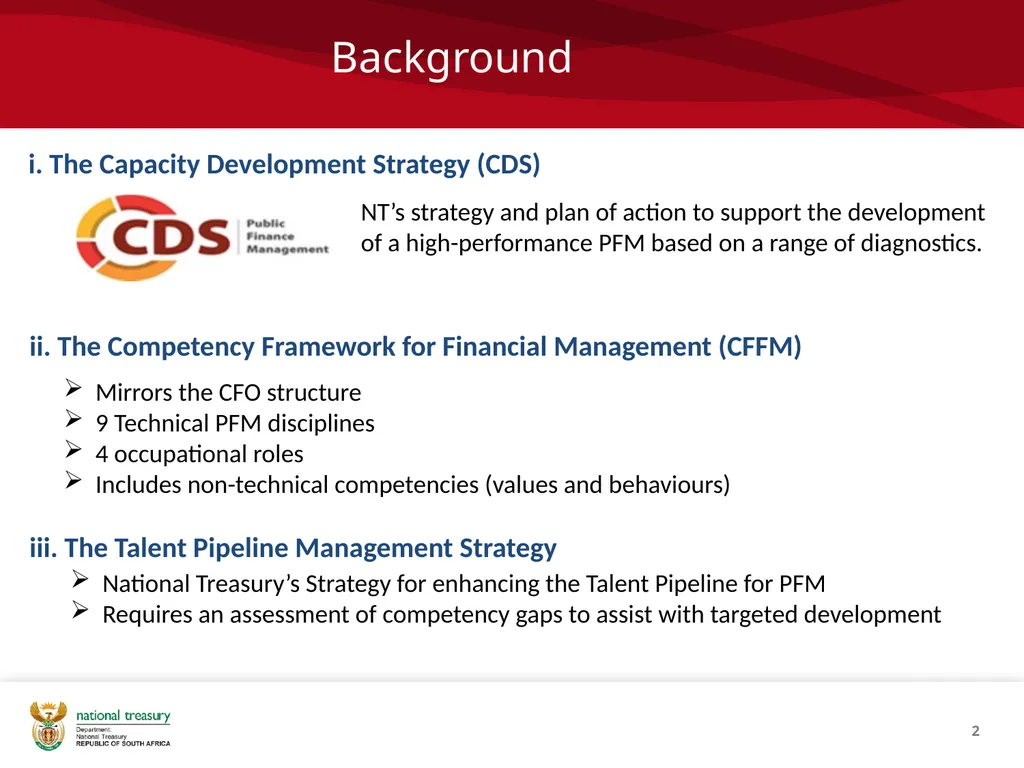
Background 2 i. The Capacity Development Strategy (CDS) NT’s strategy and plan of action to support the development of a high-performance PFM based on a range of diagnostics. iii. The Talent Pipeline Management Strategy National Treasury’s Strategy for enhancing the Talent Pipeline for PFM
Requires an assessment of competency gaps to assist with targeted development ii. The Competency Framework for Financial Management (CFFM) Mirrors the CFO structure
9 Technical PFM disciplines
4 occupational roles
Includes non-technical competencies (values and behaviours)<br>
03
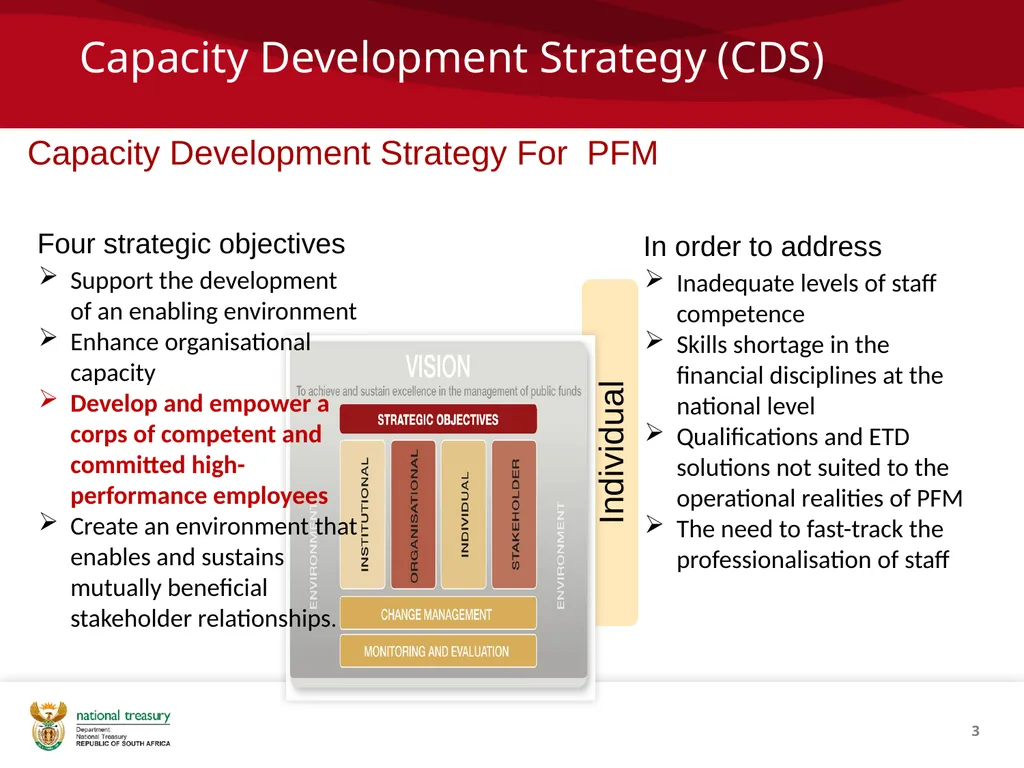
Individual Capacity Development Strategy (CDS) 3 Four strategic objectives Support the development of an enabling environment
Enhance organisational capacity
Develop and empower a corps of competent and committed high-performance employees
Create an environment that enables and sustains mutually beneficial stakeholder relationships. In order to address Inadequate levels of staff competence
Skills shortage in the financial disciplines at the national level
Qualifications and ETD solutions not suited to the operational realities of PFM
The need to fast-track the professionalisation of staff Capacity Development Strategy For PFM<br>
04
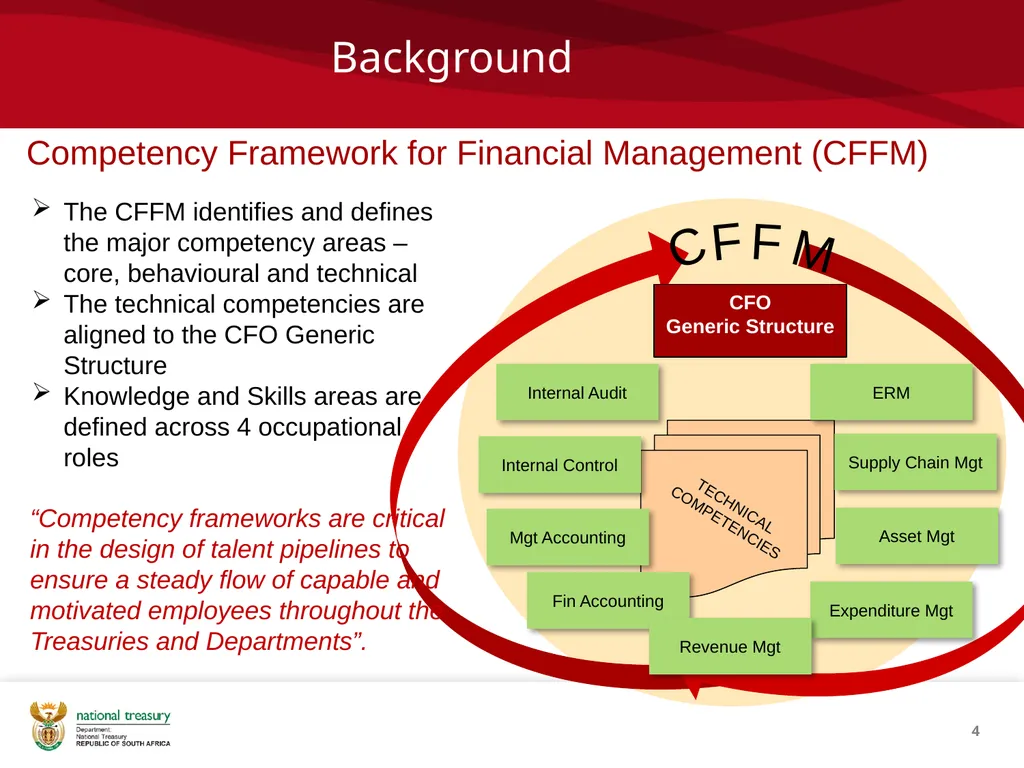
Background 4 Competency Framework for Financial Management (CFFM) The CFFM identifies and defines the major competency areas – core, behavioural and technical
The technical competencies are aligned to the CFO Generic Structure
Knowledge and Skills areas are defined across 4 occupational roles “Competency frameworks are critical in the design of talent pipelines to ensure a steady flow of capable and motivated employees throughout the Treasuries and Departments”.<br>
05
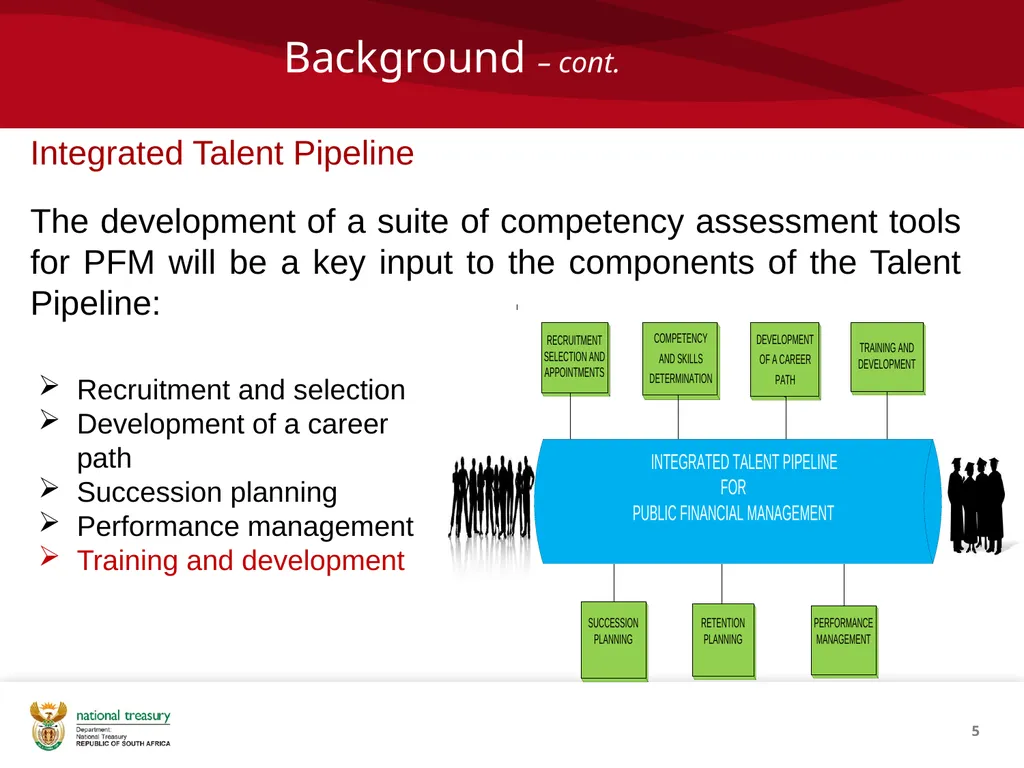
Background – cont. 5 Integrated Talent Pipeline The development of a suite of competency assessment tools for PFM will be a key input to the components of the Talent Pipeline: Recruitment and selection
Development of a career path
Succession planning
Performance management
Training and development<br>
06
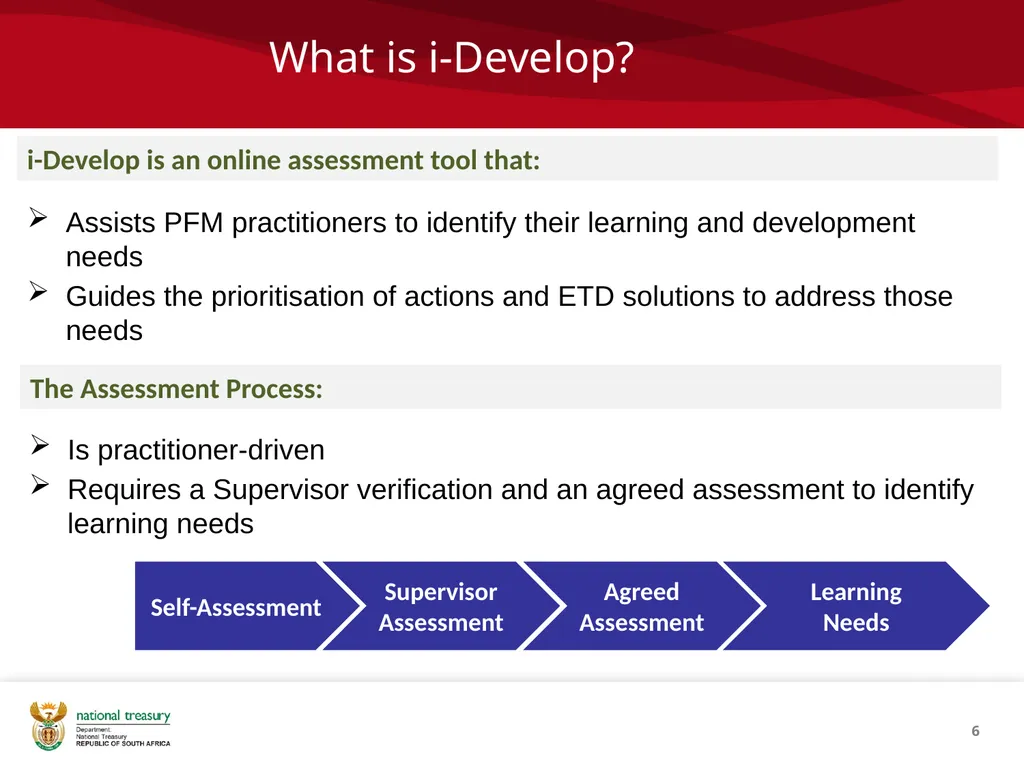
What is i-Develop? Assists PFM practitioners to identify their learning and development needs
Guides the prioritisation of actions and ETD solutions to address those needs 6 i-Develop is an online assessment tool that: The Assessment Process: Is practitioner-driven
Requires a Supervisor verification and an agreed assessment to identify learning needs<br>
07
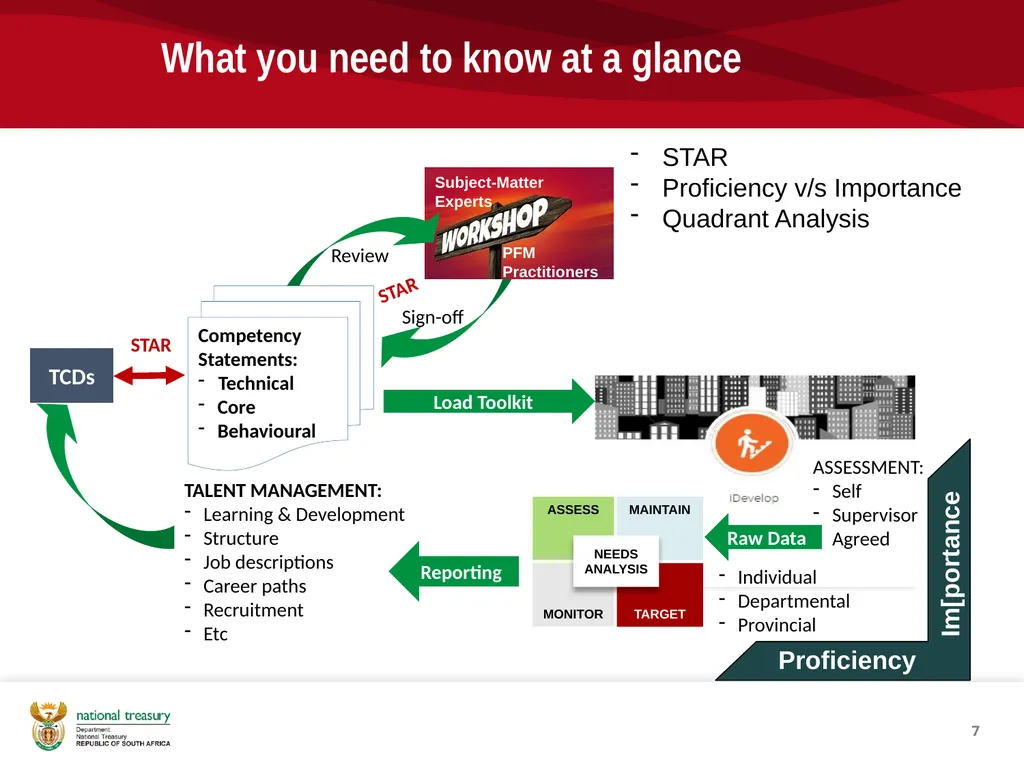
What you need to know at a glance 7 Competency Statements:
Technical
Core
Behavioural TCDs ASSESSMENT:
Self
Supervisor
Agreed Review Sign-off Raw Data Individual
Departmental
Provincial TALENT MANAGEMENT:
Learning & Development
Structure
Job descriptions
Career paths
Recruitment
Etc Load Toolkit Reporting STAR STAR STAR
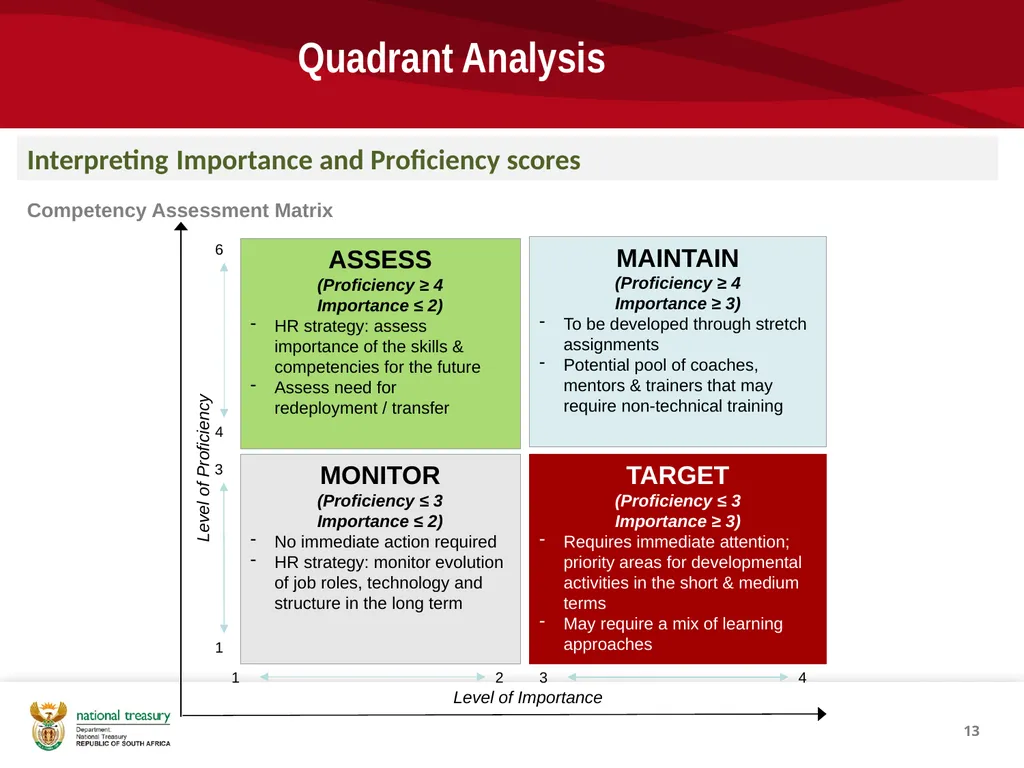
Proficiency v/s Importance
Quadrant Analysis Proficiency Im[portance<br>
08
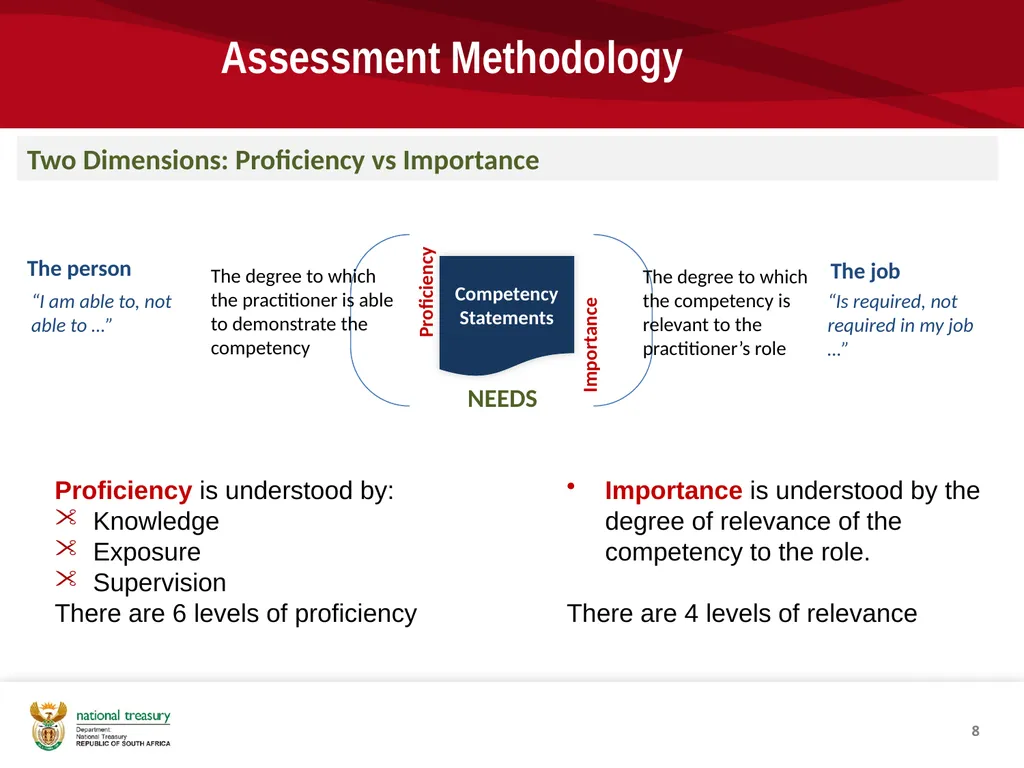
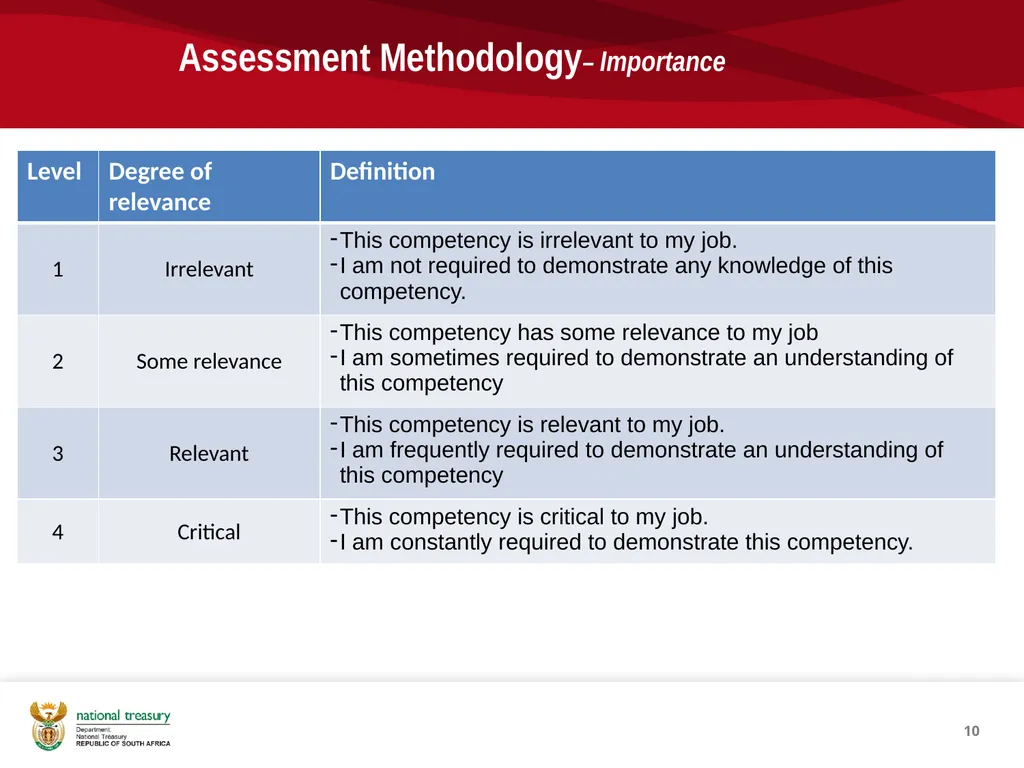
Assessment Methodology 8 Importance is understood by the degree of relevance of the competency to the role.
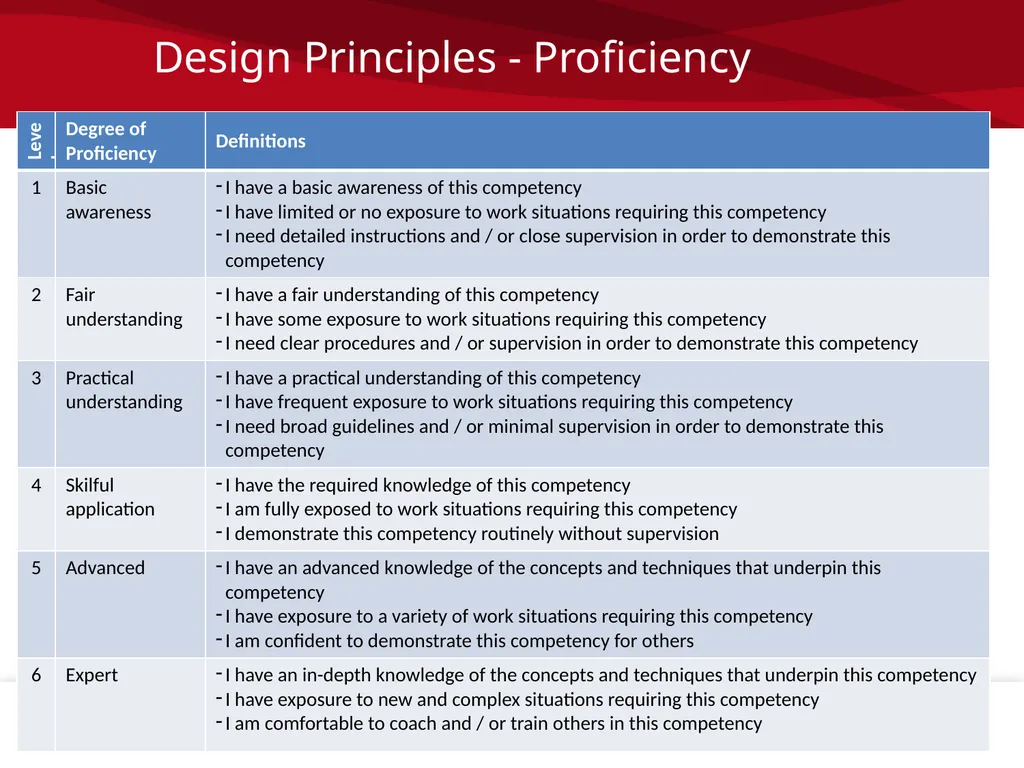
There are 4 levels of relevance Two Dimensions: Proficiency vs Importance Proficiency is understood by:
Knowledge
Exposure
Supervision
There are 6 levels of proficiency<br>
09
Design Principles - Proficiency 9<br>
10
Assessment Methodology– Importance 10<br>
11
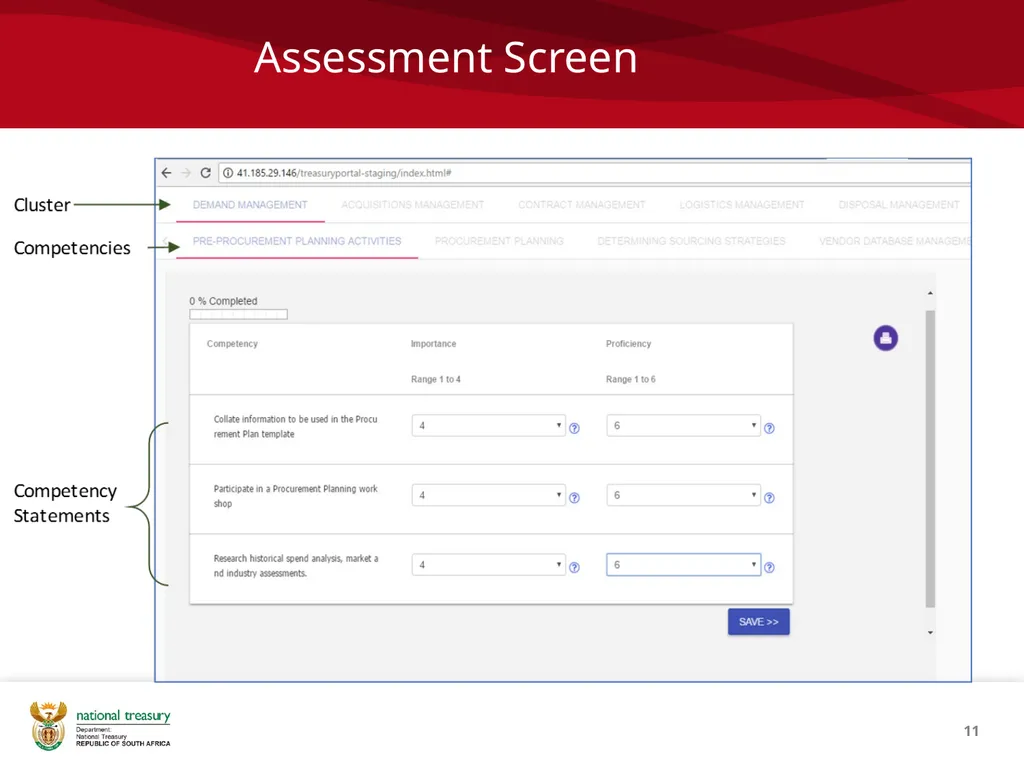
Assessment Screen 11<br>
12
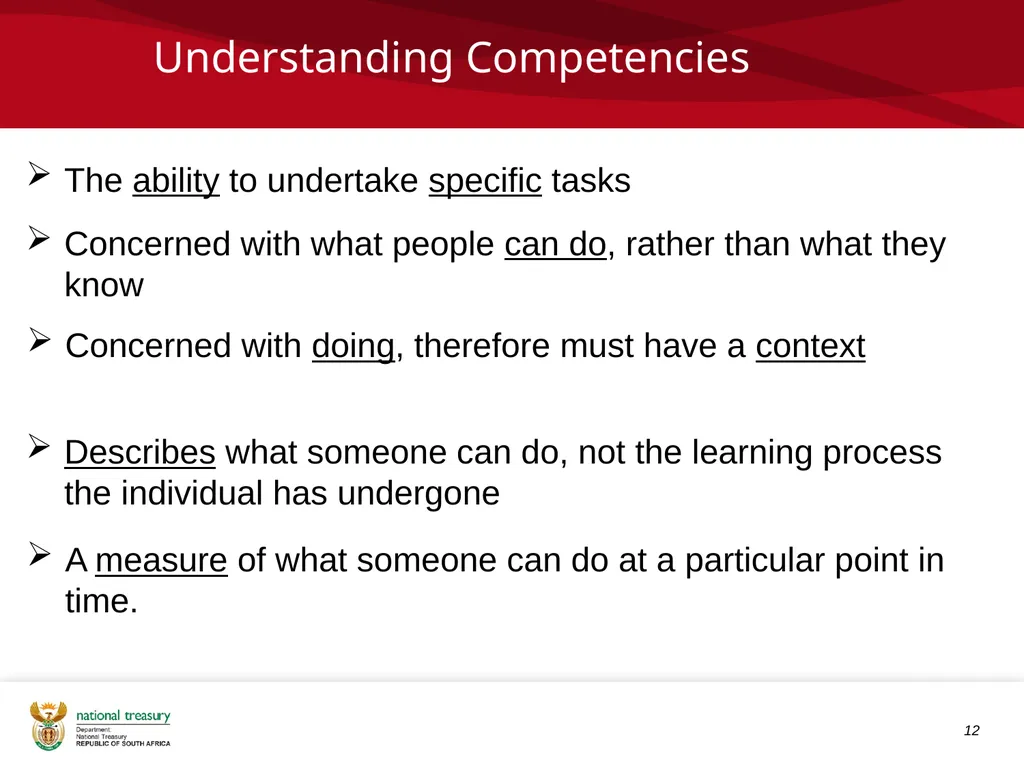
Understanding Competencies 12 The ability to undertake specific tasks Concerned with what people can do, rather than what they know Concerned with doing, therefore must have a context Describes what someone can do, not the learning process the individual has undergone A measure of what someone can do at a particular point in time.<br>
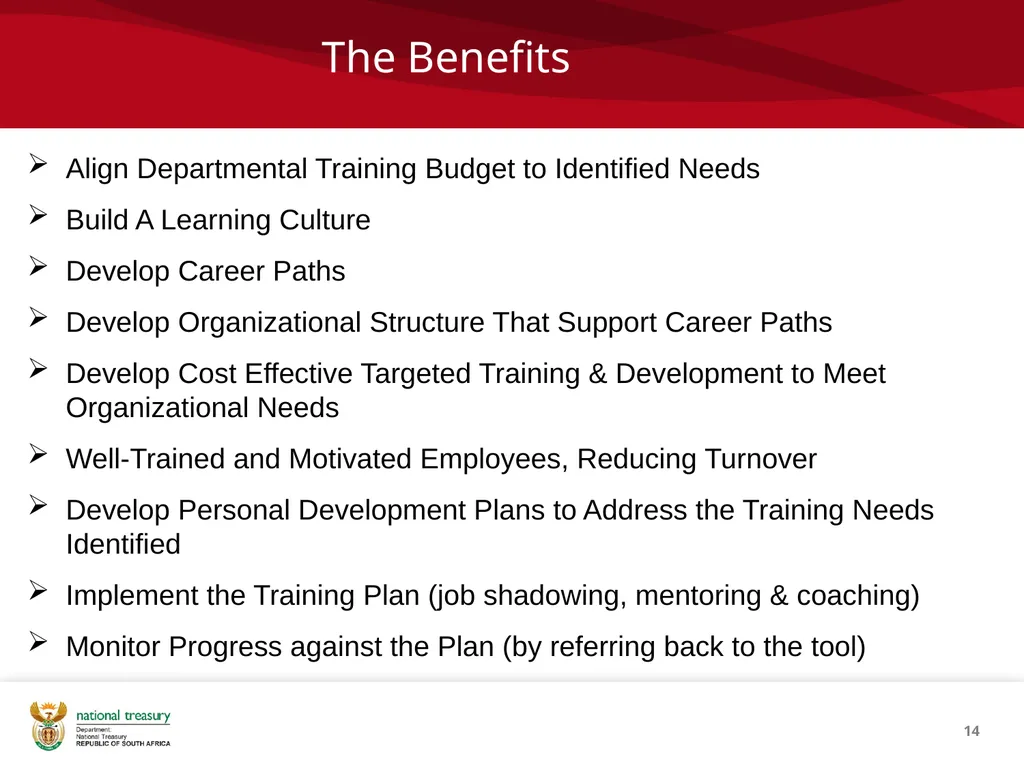
The Benefits Align Departmental Training Budget to Identified Needs
Build A Learning Culture
Develop Career Paths
Develop Organizational Structure That Support Career Paths
Develop Cost Effective Targeted Training & Development to Meet Organizational Needs
Well-Trained and Motivated Employees, Reducing Turnover
Develop Personal Development Plans to Address the Training Needs Identified
Implement the Training Plan (job shadowing, mentoring & coaching)
Monitor Progress against the Plan (by referring back to the tool) 14<br>
15
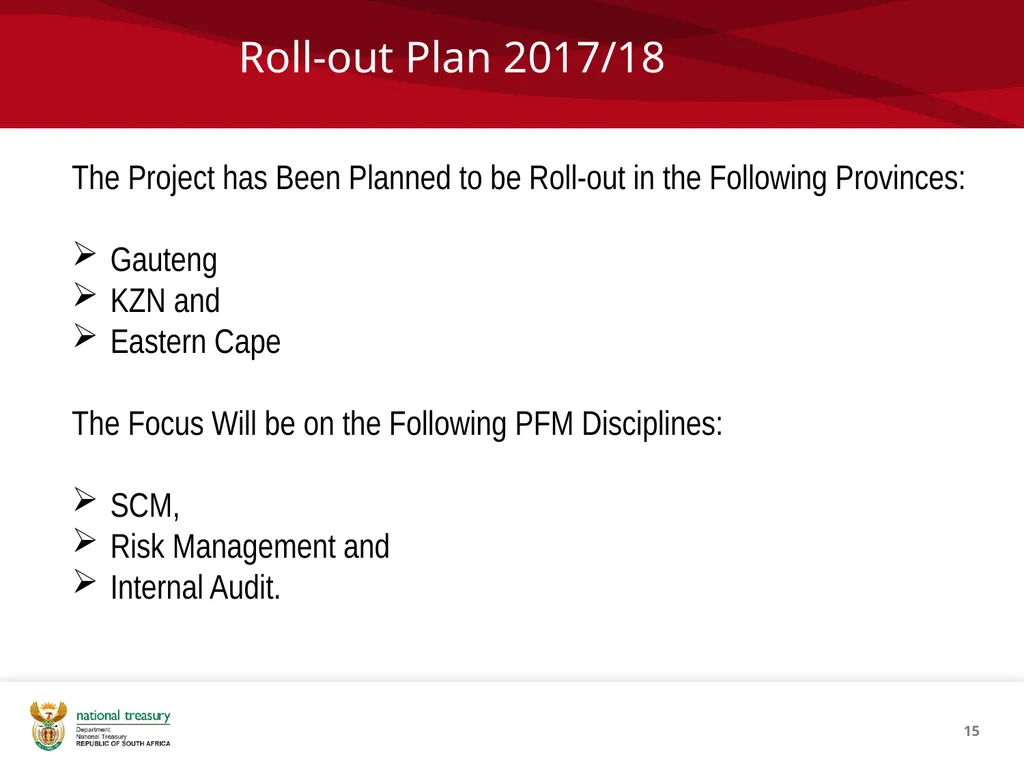
Roll-out Plan 2017/18 15 The Project has Been Planned to be Roll-out in the Following Provinces:
Gauteng
KZN and
Eastern Cape
The Focus Will be on the Following PFM Disciplines:
SCM,
Risk Management and
Internal Audit.<br>
16
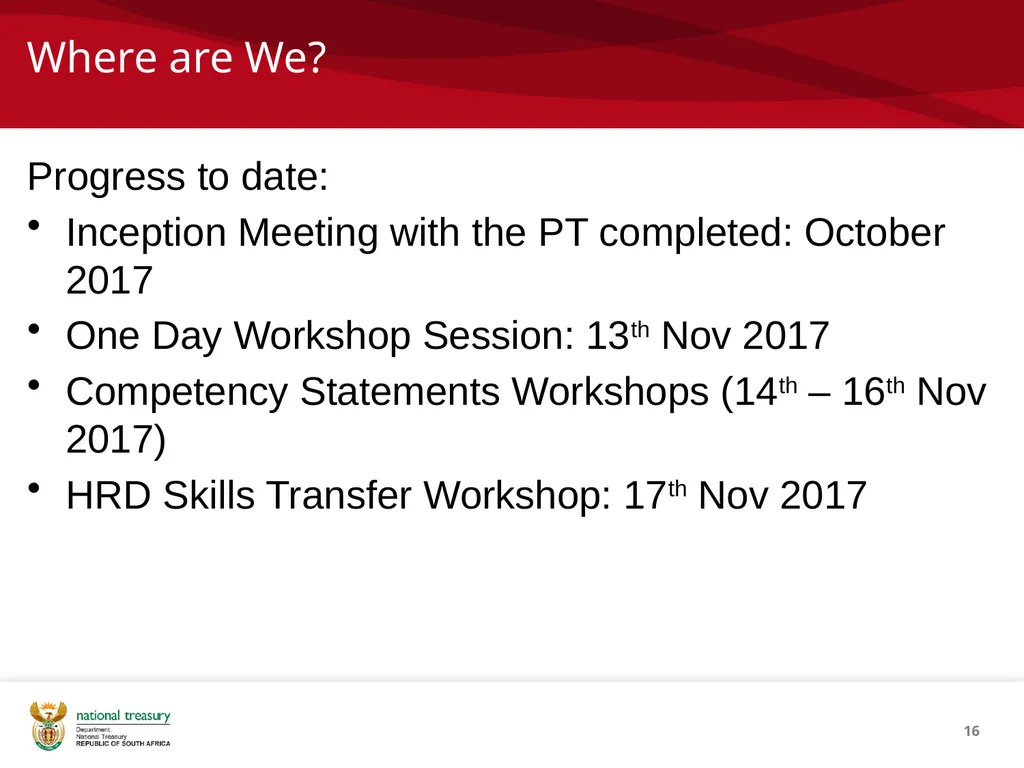
Where are We? Progress to date:
Inception Meeting with the PT completed: October 2017
One Day Workshop Session: 13th Nov 2017
Competency Statements Workshops (14th – 16th Nov 2017)
HRD Skills Transfer Workshop: 17th Nov 2017 16<br>
17
Implementation Phase Scheduled Dates: Feb – March 2018
Self-Assessment
Supervisors Assessment
Agreed Assessment
Project Close-out Reports: March 2018
PT Management Team
Discipline Champions and HRDs 17<br>