
1 M O N T E N E G R
Description: 1 M O N T E N E G R O Negotiating Team for the Accession of Montenegro to the European Union Working Group for Chapter 29 Customs union Bilateral screening: Chapter 29 PRESENTATION OF MONTENEGRO Brussels, June 2013 Computerization Content
Related Topics
Download Presentation
"1 M O N T E N E G R" is the property of its rightful owner. Permission is granted to download and print the materials on this website for personal, non-commercial use only, and to display it on your personal computer provided you do not modify the materials and that you retain all copyright notices contained in the materials. By downloading content from our website, you accept the terms of this agreement.
Presentation Transcript
slide1. 1 M O N T E N E G R O
Negotiating Team for the Accession of Montenegro to the European Union Working Group for Chapter 29 – Customs union Bilateral screening: Chapter 29
PRESENTATION OF MONTENEGRO Brussels, June 2013 Computerization<br>
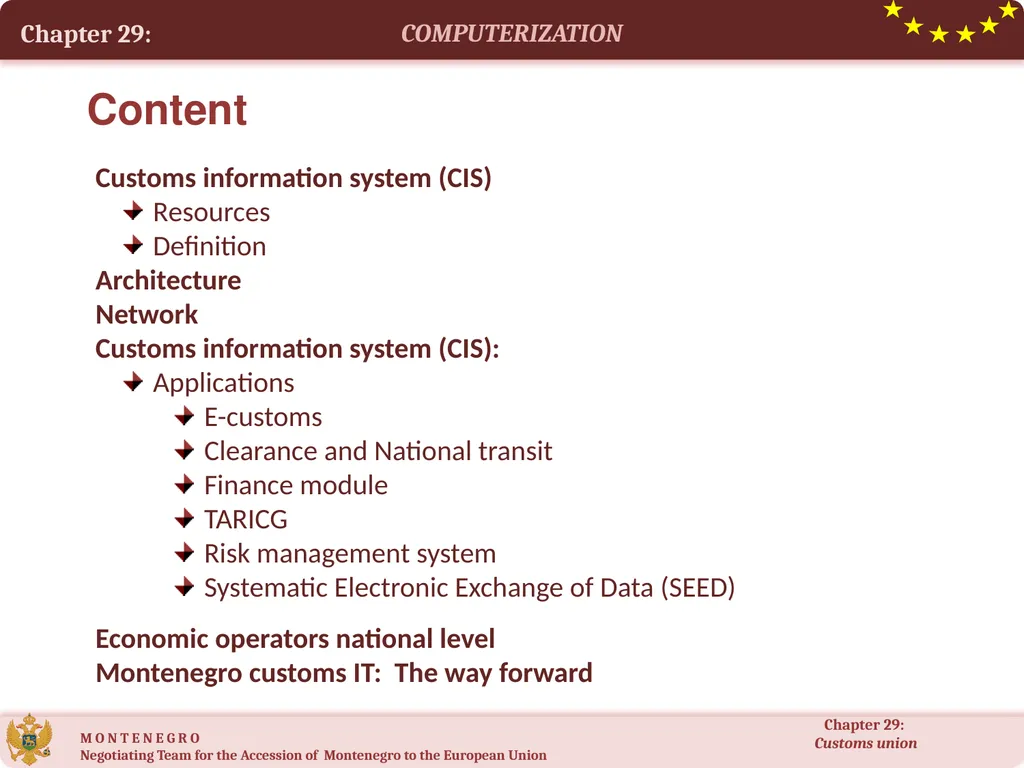
slide2. Content Customs information system (CIS)
Resources
Definition
Architecture
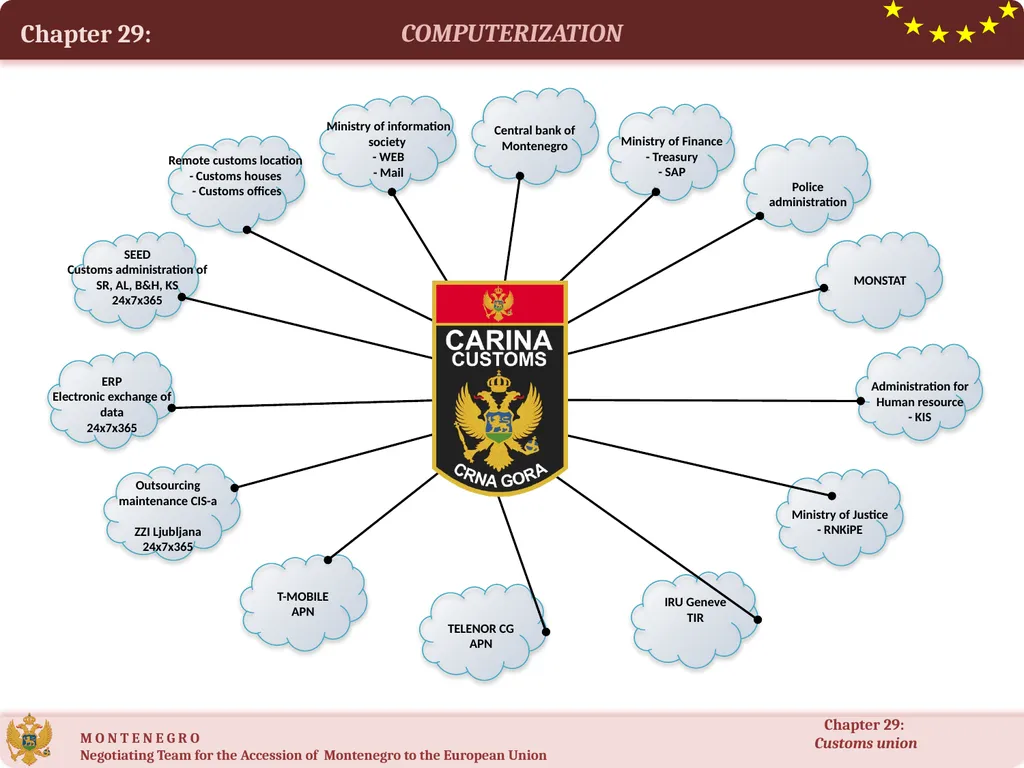
Network
Customs information system (CIS):
Applications
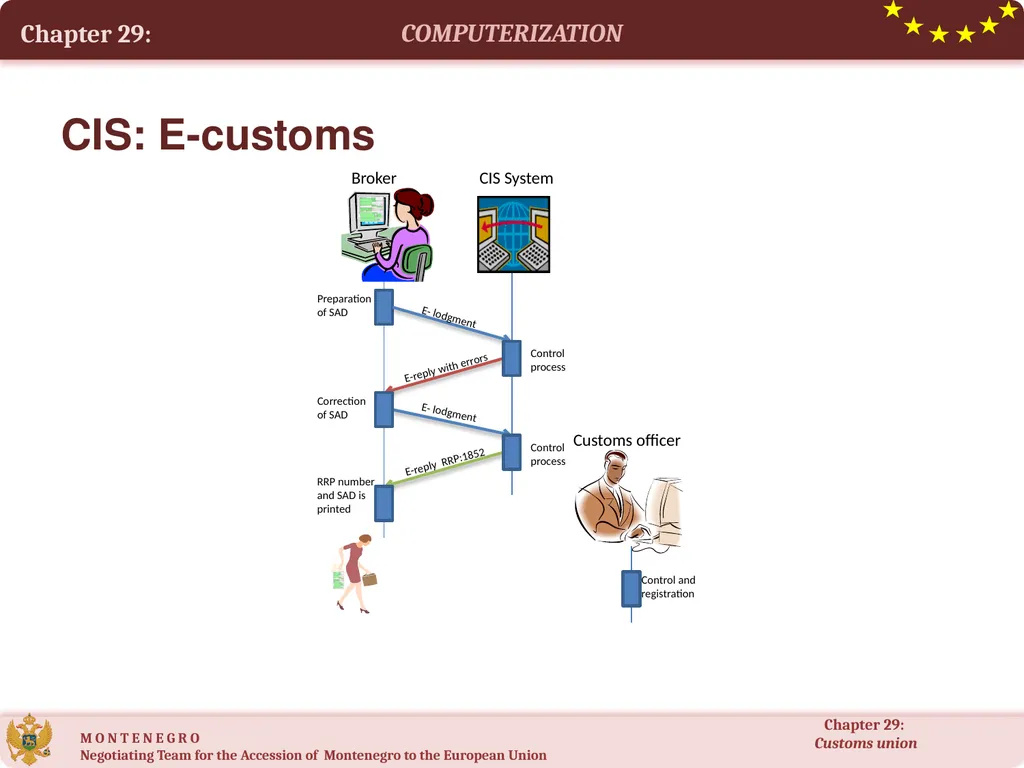
E-customs
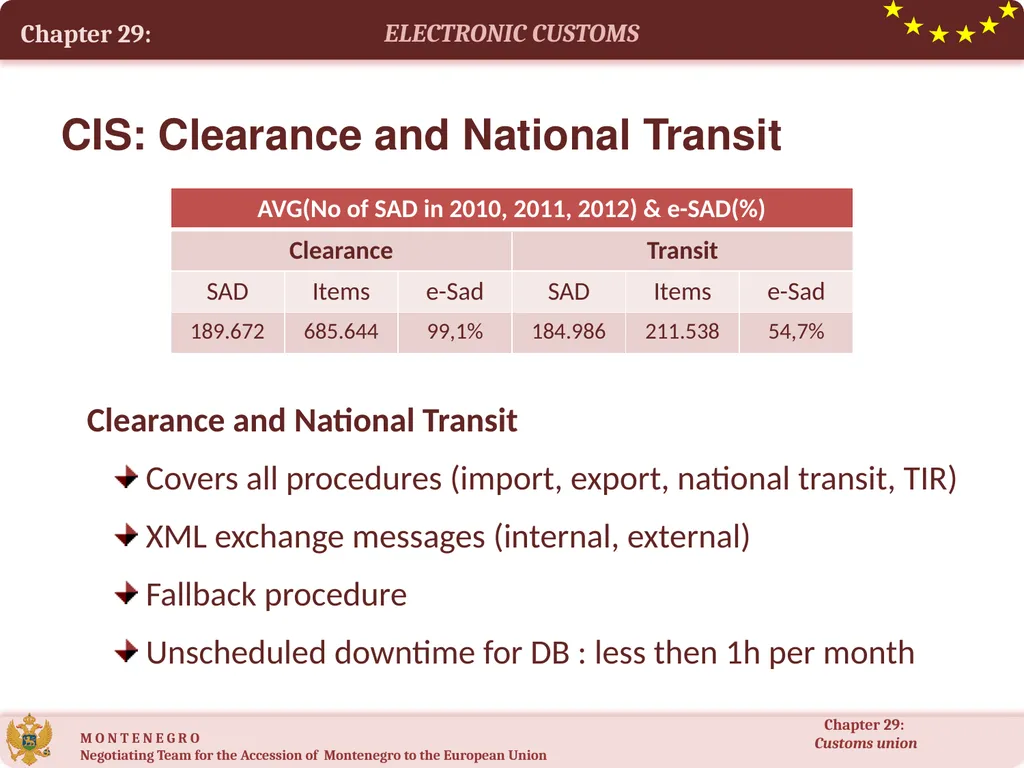
Clearance and National transit
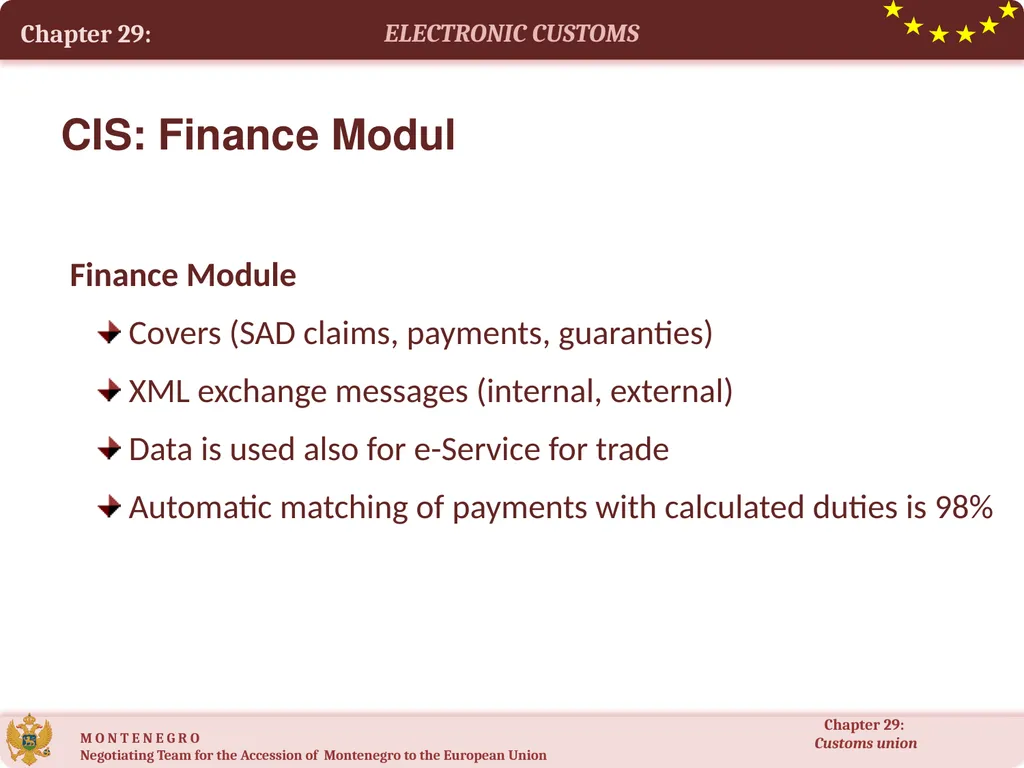
Finance module
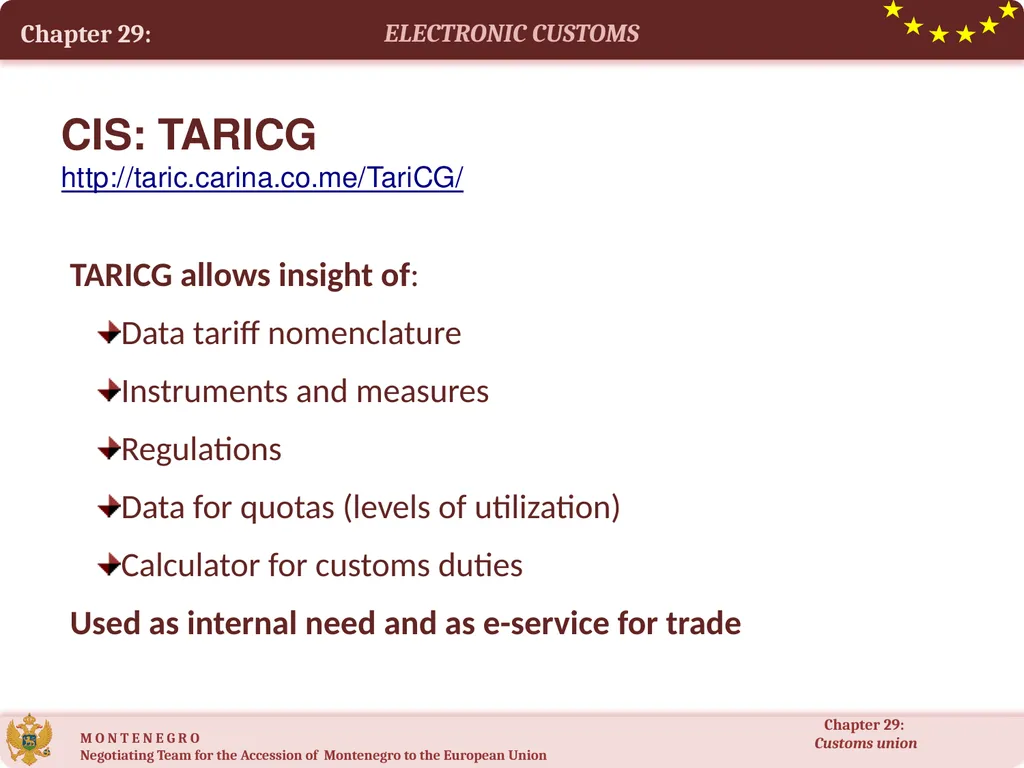
TARICG
Risk management system
Systematic Electronic Exchange of Data (SEED)
Economic operators national level
Montenegro customs IT: The way forward<br>
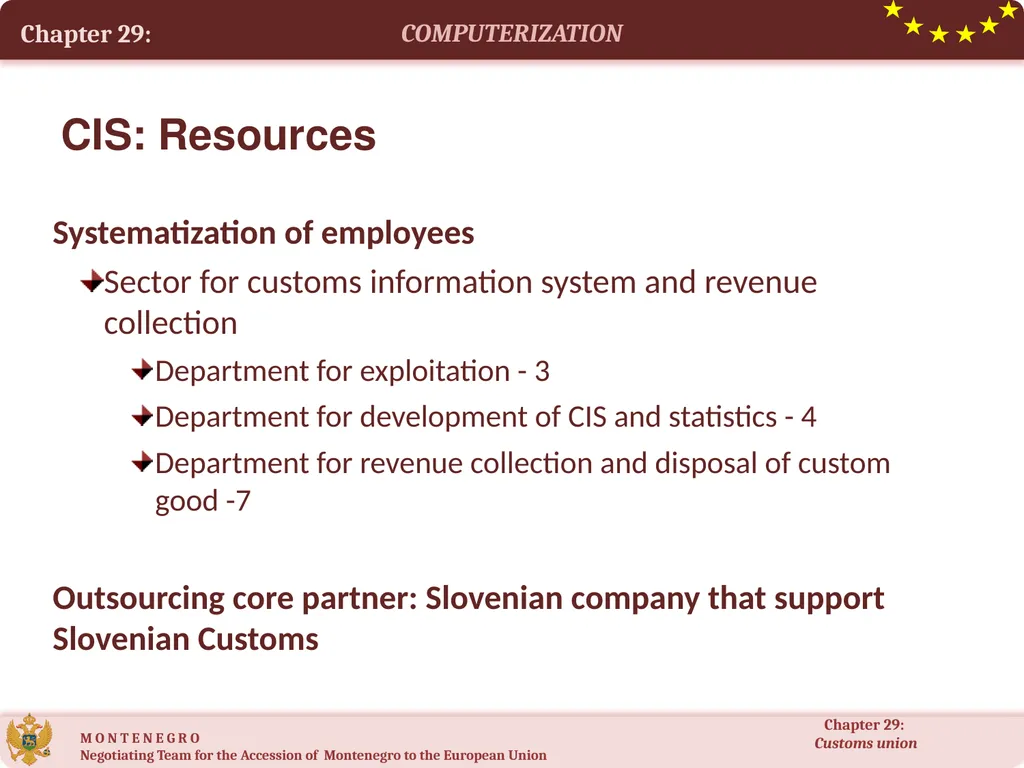
slide3. Systematization of employees
Sector for customs information system and revenue collection
Department for exploitation - 3
Department for development of CIS and statistics - 4
Department for revenue collection and disposal of custom good -7
Outsourcing core partner: Slovenian company that support Slovenian Customs CIS: Resources<br>
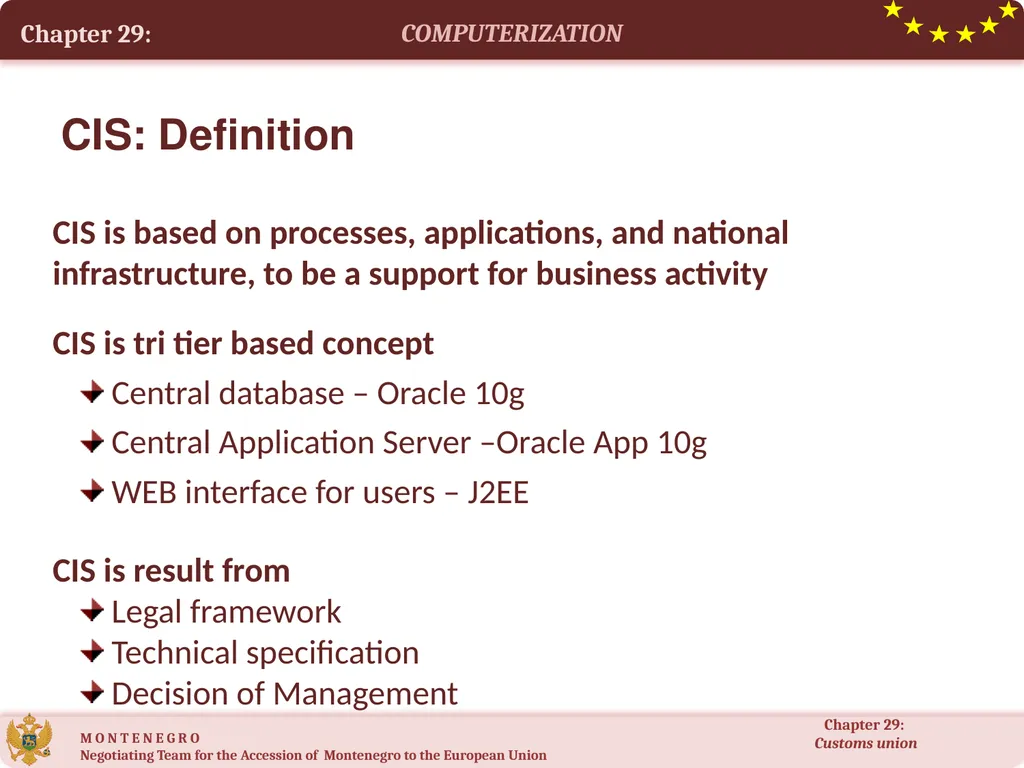
slide4. CIS is based on processes, applications, and national infrastructure, to be a support for business activity
CIS is tri tier based concept
Central database – Oracle 10g
Central Application Server –Oracle App 10g
WEB interface for users – J2EE
CIS is result from
Legal framework
Technical specification
Decision of Management CIS: Definition<br>
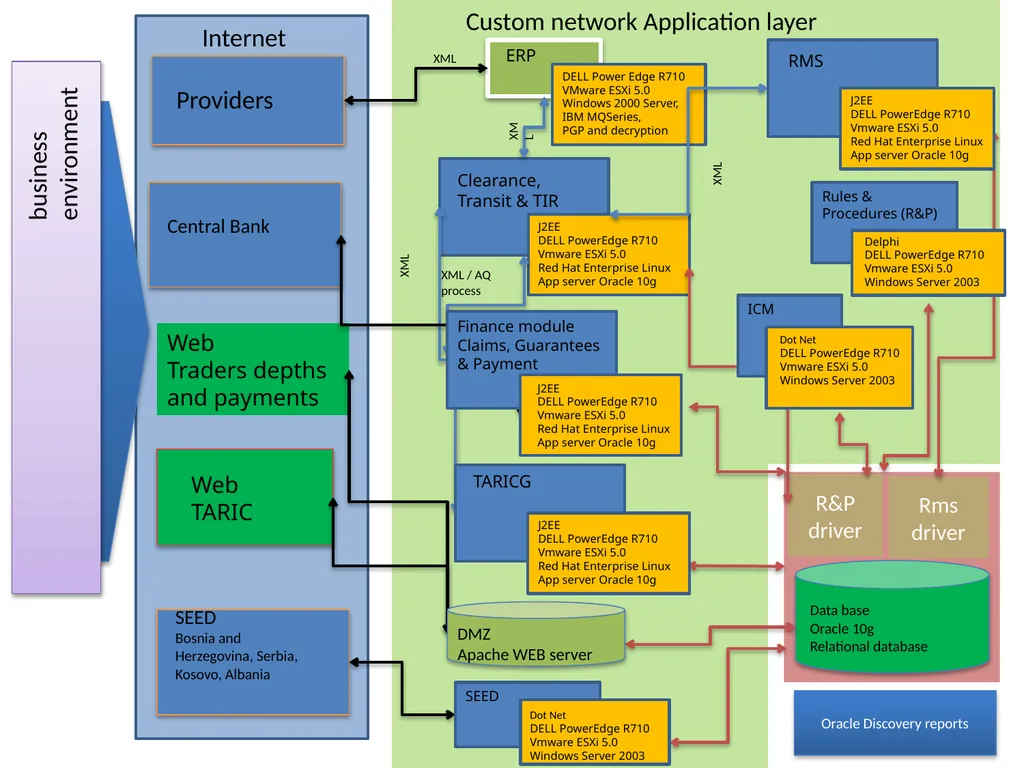
slide5. CIS: Arhitecture<br>
slide6. Oracle Discovery reports<br>
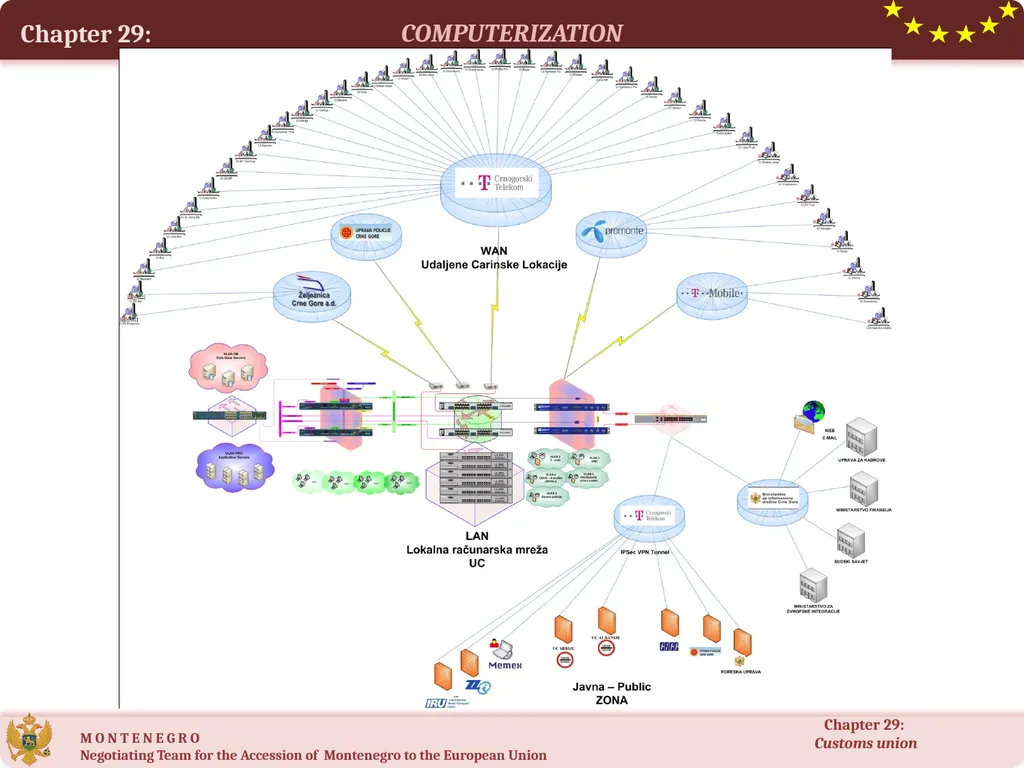
slide7. CIS: Network<br>
slide9. CIS: Applications<br>
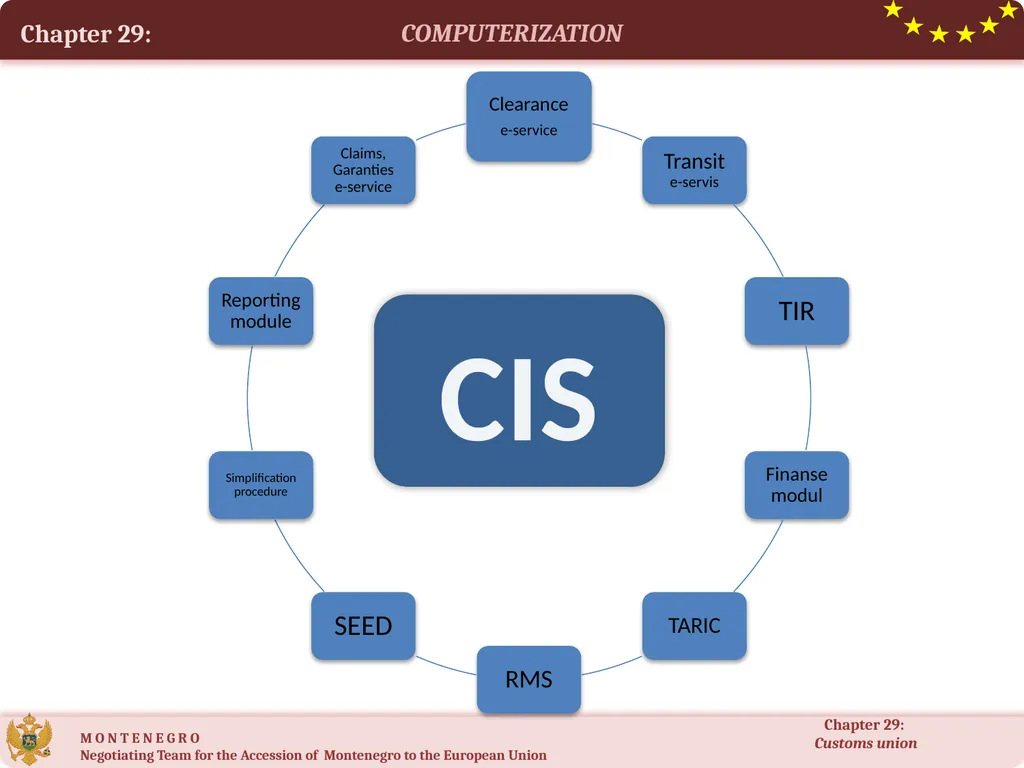
slide10. CIS<br>
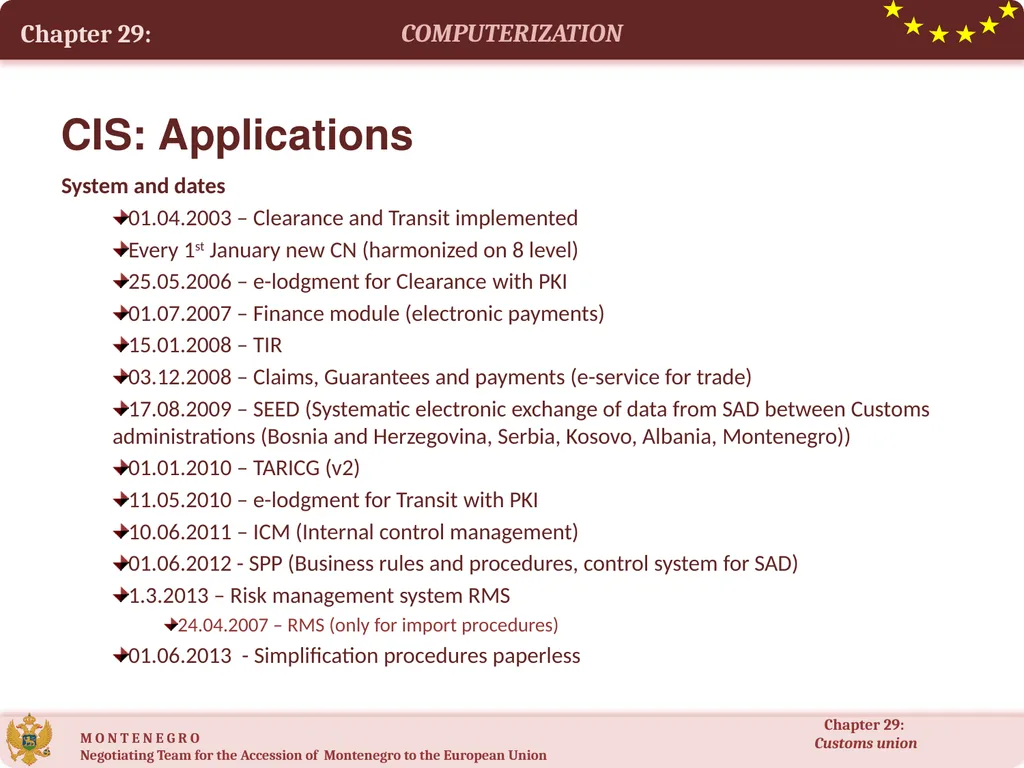
slide11. CIS: Applications System and dates
01.04.2003 – Clearance and Transit implemented
Every 1st January new CN (harmonized on 8 level)
25.05.2006 – e-lodgment for Clearance with PKI
01.07.2007 – Finance module (electronic payments)
15.01.2008 – TIR
03.12.2008 – Claims, Guarantees and payments (e-service for trade)
17.08.2009 – SEED (Systematic electronic exchange of data from SAD between Customs administrations (Bosnia and Herzegovina, Serbia, Kosovo, Albania, Montenegro))
01.01.2010 – TARICG (v2)
11.05.2010 – e-lodgment for Transit with PKI
10.06.2011 – ICM (Internal control management)
01.06.2012 - SPP (Business rules and procedures, control system for SAD)
1.3.2013 – Risk management system RMS
24.04.2007 – RMS (only for import procedures)
01.06.2013 - Simplification procedures paperless<br>
slide12. CIS: E-customs<br>
slide13. CIS: Clearance and National Transit Clearance and National Transit
Covers all procedures (import, export, national transit, TIR)
XML exchange messages (internal, external)
Fallback procedure
Unscheduled downtime for DB : less then 1h per month<br>
slide14. CIS: Finance Modul Finance Module
Covers (SAD claims, payments, guaranties)
XML exchange messages (internal, external)
Data is used also for e-Service for trade
Automatic matching of payments with calculated duties is 98%<br>
slide15. CIS: TARICG http://taric.carina.co.me/TariCG/ TARICG allows insight of:
Data tariff nomenclature
Instruments and measures
Regulations
Data for quotas (levels of utilization)
Calculator for customs duties
Used as internal need and as e-service for trade<br>
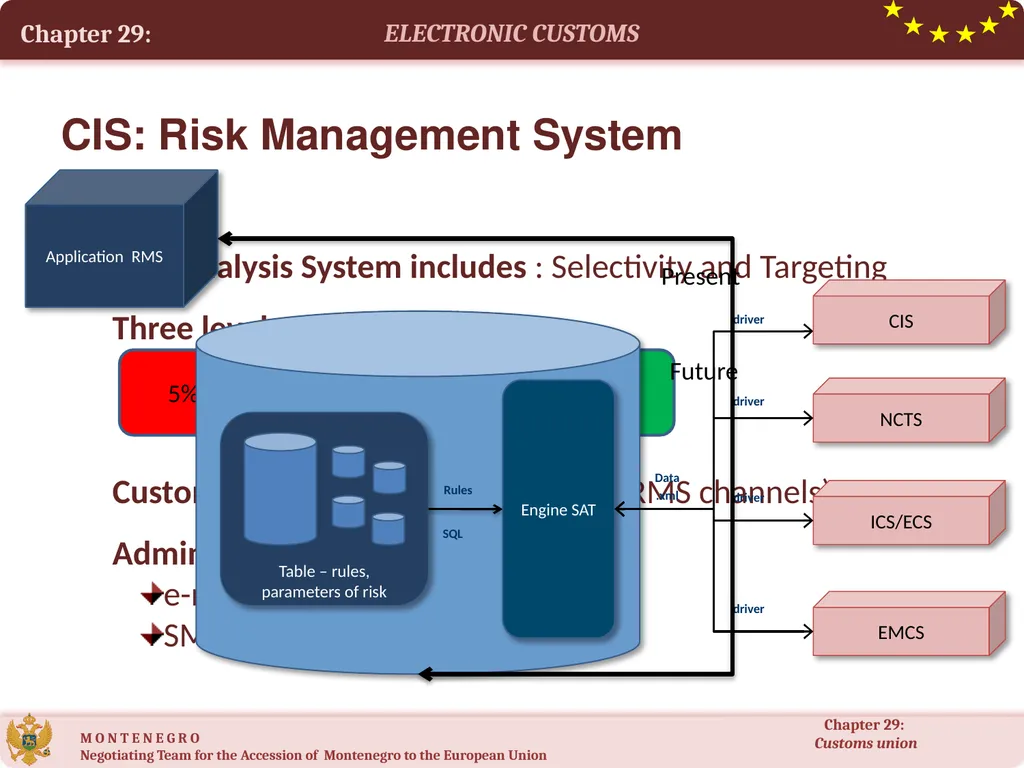
slide16. CIS: Risk Management System Risk Analysis System includes : Selectivity and Targeting
Three levels of scoring
Customs officers - Inspection report (RMS channels)
Administrators of RMS :
e-mail notification
SMS over mobile network 5% 3% 92%<br>
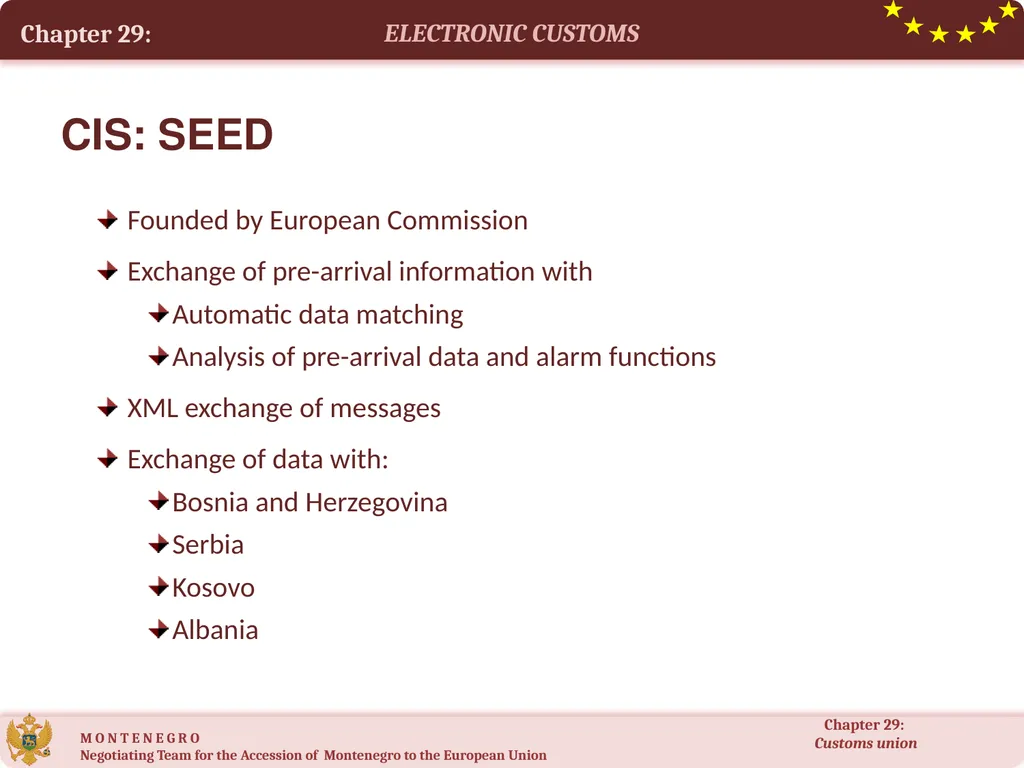
slide17. CIS: SEED Founded by European Commission
Exchange of pre-arrival information with
Automatic data matching
Analysis of pre-arrival data and alarm functions
XML exchange of messages
Exchange of data with:
Bosnia and Herzegovina
Serbia
Kosovo
Albania<br>
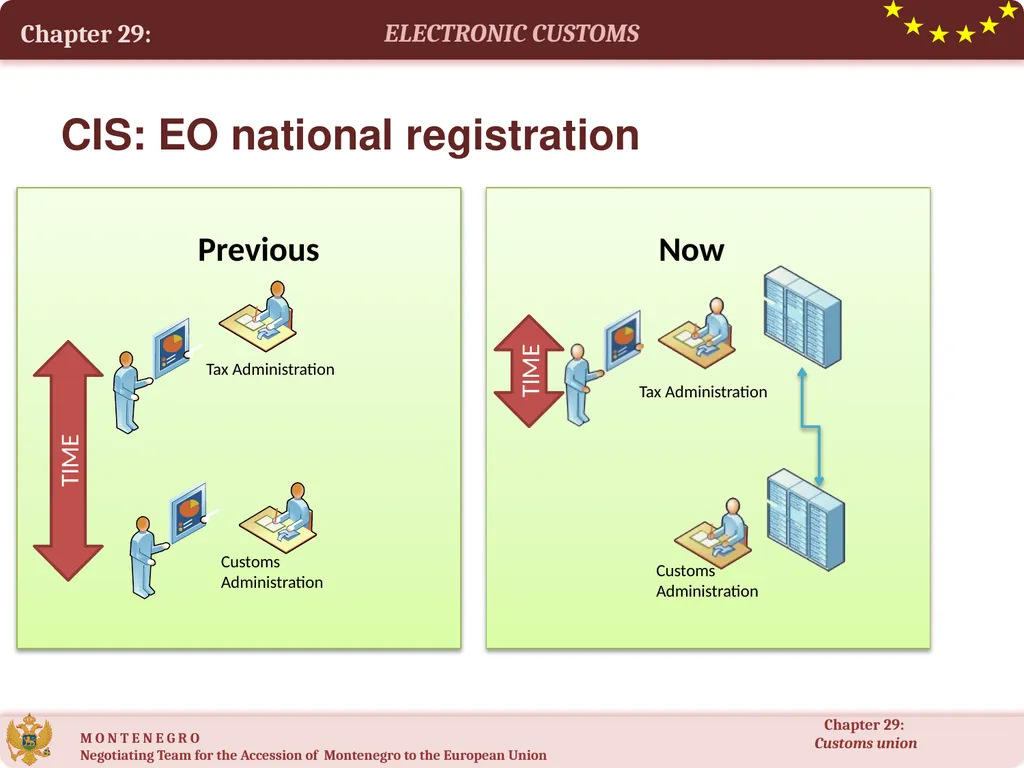
slide18. CIS: EO national registration Tax Administration TIME Customs Administration Previous Now TIME<br>
slide20. The way forward<br>
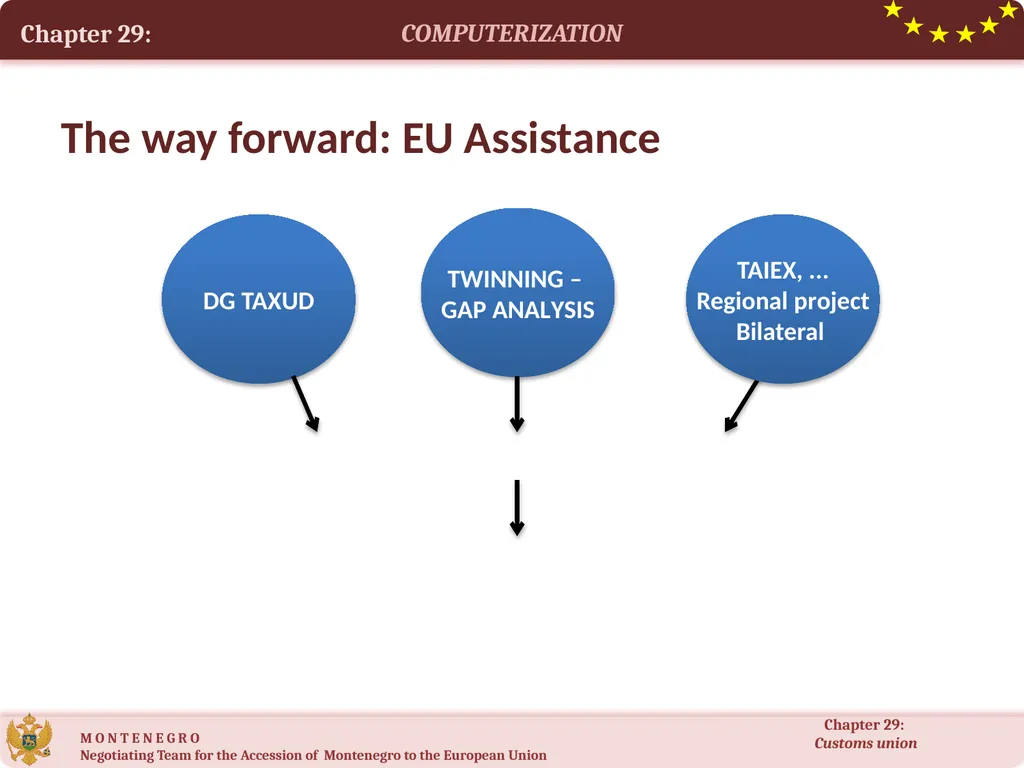
slide21. The way forward: EU Assistance DG TAXUD TWINNING – GAP ANALYSIS IT SRATEGY Doc – Roadmap to EU BUISNESS STRATEGY Doc – Roadmap to EU TAIEX, ... Regional project
Bilateral<br>
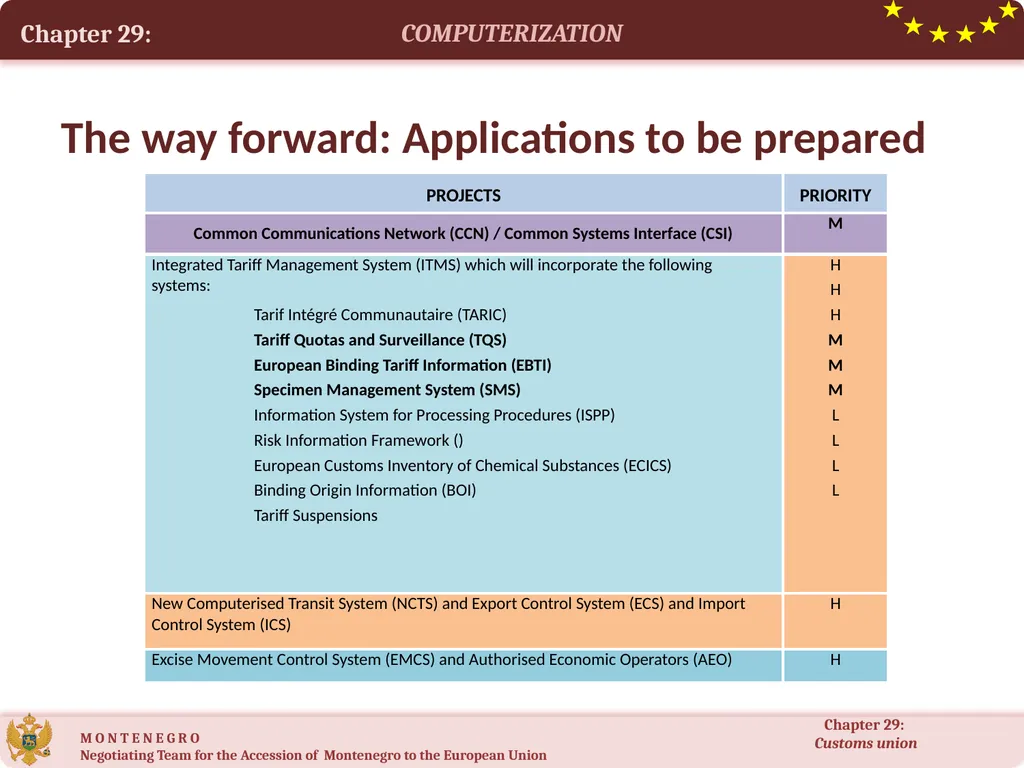
slide22. The way forward: Applications to be prepared<br>
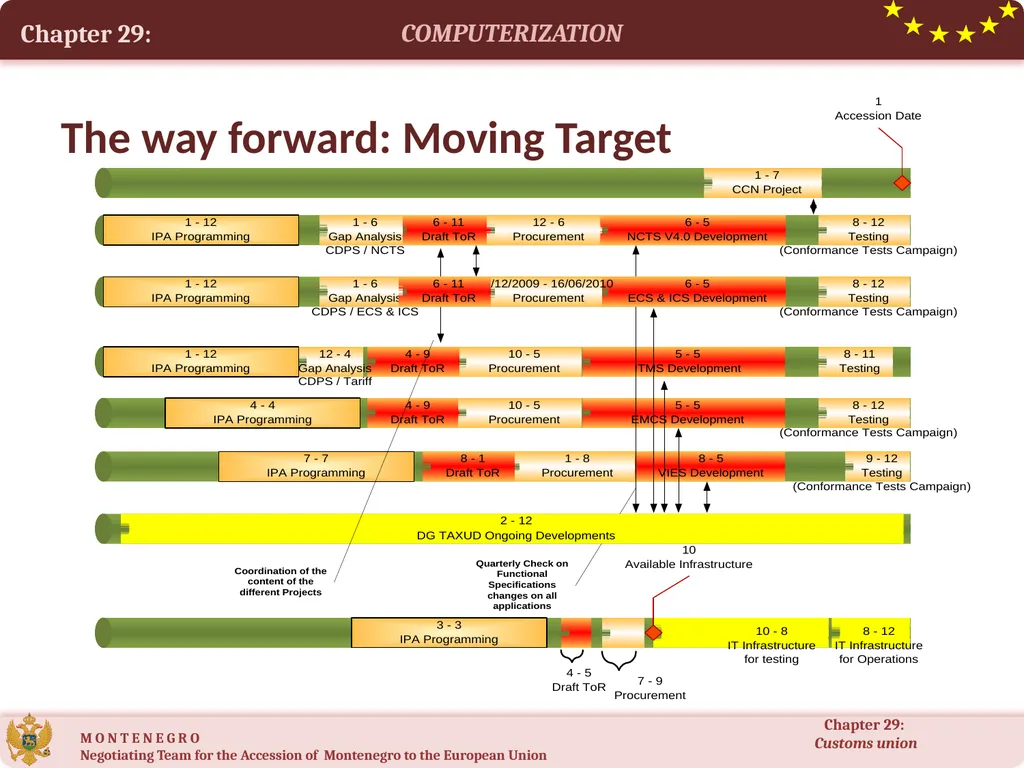
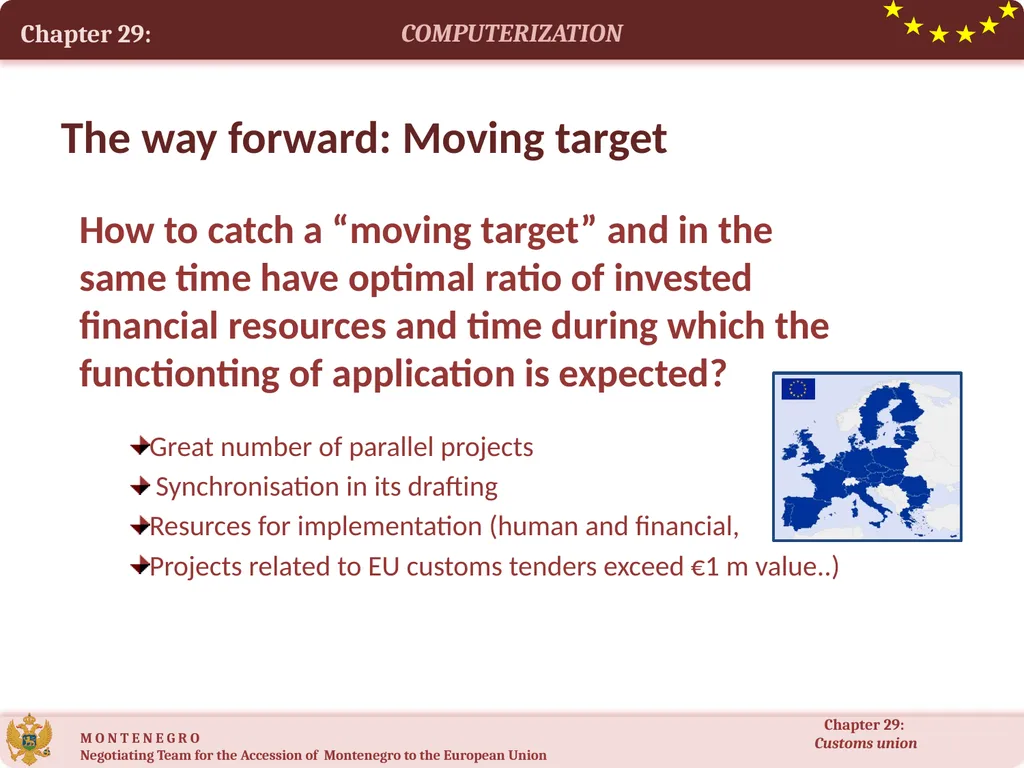
slide23. The way forward: Moving Target<br>
slide24. The way forward: Moving target<br>
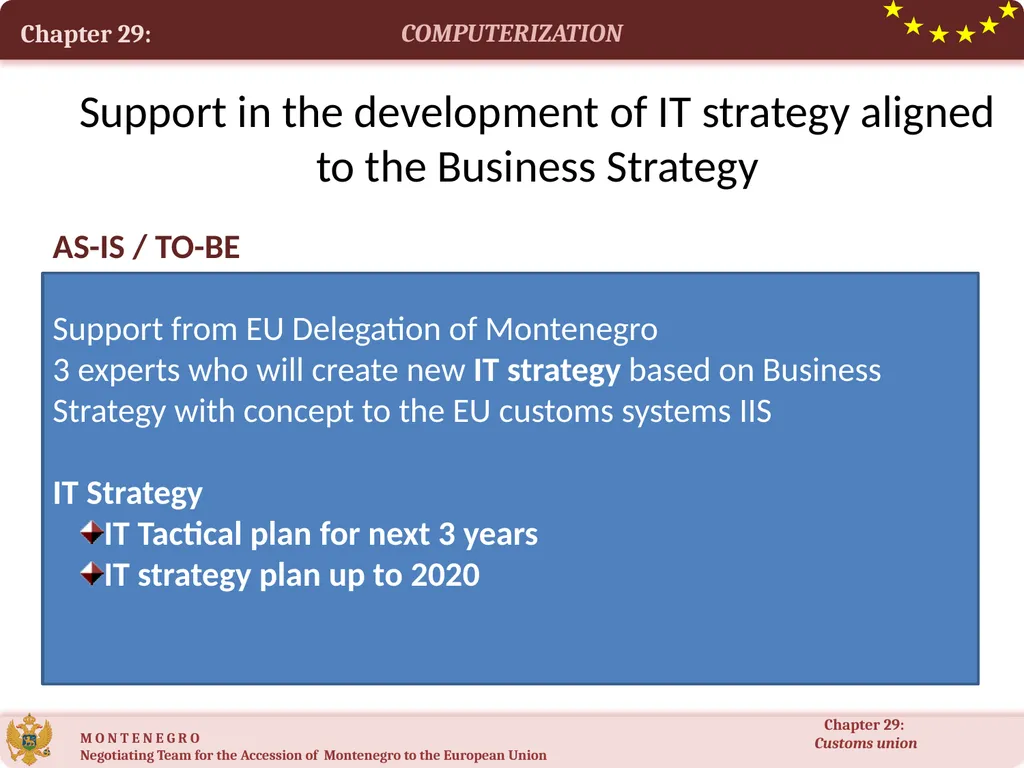
slide25. Support in the development of IT strategy aligned to the Business Strategy AS-IS / TO-BE
Support from EU Delegation of Montenegro
3 experts who will create new IT strategy based on Business Strategy with concept to the EU customs systems IIS
IT Strategy
IT Tactical plan for next 3 years
IT strategy plan up to 2020<br>
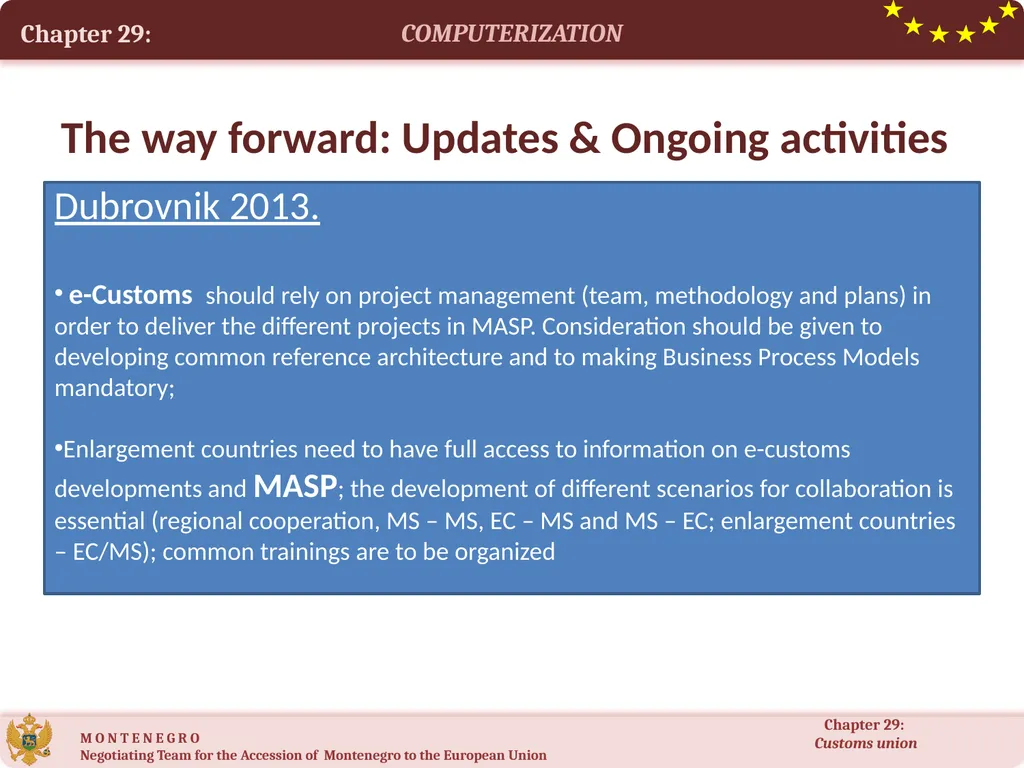
slide26. The way forward: Updates & Ongoing activities Dubrovnik 2013.
e-Customs should rely on project management (team, methodology and plans) in order to deliver the different projects in MASP. Consideration should be given to developing common reference architecture and to making Business Process Models mandatory;
Enlargement countries need to have full access to information on e-customs developments and MASP; the development of different scenarios for collaboration is essential (regional cooperation, MS – MS, EC – MS and MS – EC; enlargement countries – EC/MS); common trainings are to be organized<br>
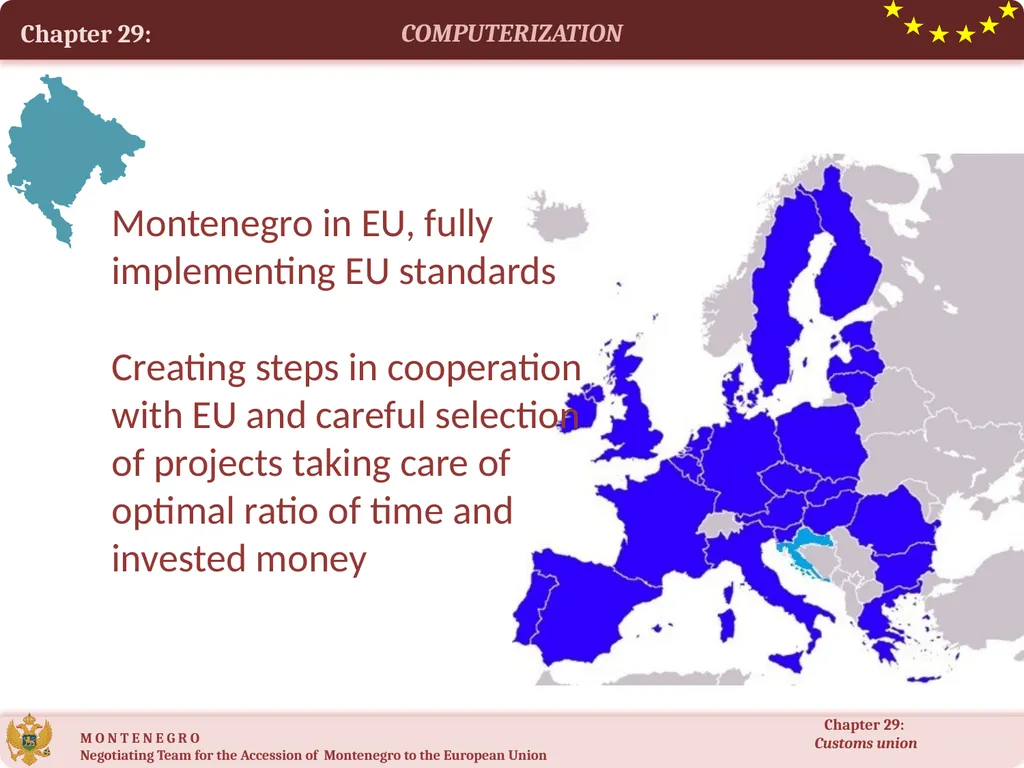
slide27. Montenegro in EU, fully implementing EU standards
Creating steps in cooperation with EU and careful selection of projects taking care of optimal ratio of time and invested money<br>
slide28. Contact:
Danilo Minić
Milan Martinović
Customs Administration of Montenegro – Sector 02
danilo.minic@carina.gov.me
milan.martionovic@carina.gov.me Thank you for your attention Q & A<br>
Negotiating Team for the Accession of Montenegro to the European Union Working Group for Chapter 29 – Customs union Bilateral screening: Chapter 29
PRESENTATION OF MONTENEGRO Brussels, June 2013 Computerization<br>
slide2. Content Customs information system (CIS)
Resources
Definition
Architecture
Network
Customs information system (CIS):
Applications
E-customs
Clearance and National transit
Finance module
TARICG
Risk management system
Systematic Electronic Exchange of Data (SEED)
Economic operators national level
Montenegro customs IT: The way forward<br>
slide3. Systematization of employees
Sector for customs information system and revenue collection
Department for exploitation - 3
Department for development of CIS and statistics - 4
Department for revenue collection and disposal of custom good -7
Outsourcing core partner: Slovenian company that support Slovenian Customs CIS: Resources<br>
slide4. CIS is based on processes, applications, and national infrastructure, to be a support for business activity
CIS is tri tier based concept
Central database – Oracle 10g
Central Application Server –Oracle App 10g
WEB interface for users – J2EE
CIS is result from
Legal framework
Technical specification
Decision of Management CIS: Definition<br>
slide5. CIS: Arhitecture<br>
slide6. Oracle Discovery reports<br>
slide7. CIS: Network<br>
slide9. CIS: Applications<br>
slide10. CIS<br>
slide11. CIS: Applications System and dates
01.04.2003 – Clearance and Transit implemented
Every 1st January new CN (harmonized on 8 level)
25.05.2006 – e-lodgment for Clearance with PKI
01.07.2007 – Finance module (electronic payments)
15.01.2008 – TIR
03.12.2008 – Claims, Guarantees and payments (e-service for trade)
17.08.2009 – SEED (Systematic electronic exchange of data from SAD between Customs administrations (Bosnia and Herzegovina, Serbia, Kosovo, Albania, Montenegro))
01.01.2010 – TARICG (v2)
11.05.2010 – e-lodgment for Transit with PKI
10.06.2011 – ICM (Internal control management)
01.06.2012 - SPP (Business rules and procedures, control system for SAD)
1.3.2013 – Risk management system RMS
24.04.2007 – RMS (only for import procedures)
01.06.2013 - Simplification procedures paperless<br>
slide12. CIS: E-customs<br>
slide13. CIS: Clearance and National Transit Clearance and National Transit
Covers all procedures (import, export, national transit, TIR)
XML exchange messages (internal, external)
Fallback procedure
Unscheduled downtime for DB : less then 1h per month<br>
slide14. CIS: Finance Modul Finance Module
Covers (SAD claims, payments, guaranties)
XML exchange messages (internal, external)
Data is used also for e-Service for trade
Automatic matching of payments with calculated duties is 98%<br>
slide15. CIS: TARICG http://taric.carina.co.me/TariCG/ TARICG allows insight of:
Data tariff nomenclature
Instruments and measures
Regulations
Data for quotas (levels of utilization)
Calculator for customs duties
Used as internal need and as e-service for trade<br>
slide16. CIS: Risk Management System Risk Analysis System includes : Selectivity and Targeting
Three levels of scoring
Customs officers - Inspection report (RMS channels)
Administrators of RMS :
e-mail notification
SMS over mobile network 5% 3% 92%<br>
slide17. CIS: SEED Founded by European Commission
Exchange of pre-arrival information with
Automatic data matching
Analysis of pre-arrival data and alarm functions
XML exchange of messages
Exchange of data with:
Bosnia and Herzegovina
Serbia
Kosovo
Albania<br>
slide18. CIS: EO national registration Tax Administration TIME Customs Administration Previous Now TIME<br>
slide20. The way forward<br>
slide21. The way forward: EU Assistance DG TAXUD TWINNING – GAP ANALYSIS IT SRATEGY Doc – Roadmap to EU BUISNESS STRATEGY Doc – Roadmap to EU TAIEX, ... Regional project
Bilateral<br>
slide22. The way forward: Applications to be prepared<br>
slide23. The way forward: Moving Target<br>
slide24. The way forward: Moving target<br>
slide25. Support in the development of IT strategy aligned to the Business Strategy AS-IS / TO-BE
Support from EU Delegation of Montenegro
3 experts who will create new IT strategy based on Business Strategy with concept to the EU customs systems IIS
IT Strategy
IT Tactical plan for next 3 years
IT strategy plan up to 2020<br>
slide26. The way forward: Updates & Ongoing activities Dubrovnik 2013.
e-Customs should rely on project management (team, methodology and plans) in order to deliver the different projects in MASP. Consideration should be given to developing common reference architecture and to making Business Process Models mandatory;
Enlargement countries need to have full access to information on e-customs developments and MASP; the development of different scenarios for collaboration is essential (regional cooperation, MS – MS, EC – MS and MS – EC; enlargement countries – EC/MS); common trainings are to be organized<br>
slide27. Montenegro in EU, fully implementing EU standards
Creating steps in cooperation with EU and careful selection of projects taking care of optimal ratio of time and invested money<br>
slide28. Contact:
Danilo Minić
Milan Martinović
Customs Administration of Montenegro – Sector 02
danilo.minic@carina.gov.me
milan.martionovic@carina.gov.me Thank you for your attention Q & A<br>