1 Parallel Structure Examples and Non-Examples Common Core ELA Parallel Structure Parallel structure (also called parallelism) is the process of repeating a particular form within a sentence. Each part of your sentence should be consistent.
"1 Parallel Structure Examples and Non-Examples" is the property of its rightful owner. Permission is granted to
download and print the materials on this website for personal, non-commercial use only, and to display it
on your personal computer provided you do not modify the materials and that you retain all copyright
notices contained in the materials. By downloading content from our website, you accept the terms of this
agreement.
Presentation Transcript
01
1 Parallel Structure Examples and Non-Examples Common Core
ELA<br>
02
Parallel Structure Parallel structure (also called parallelism) is the process of repeating a particular form within a sentence.
Each part of your sentence should be consistent. Let’s look at some examples
and non-examples. 2<br>
03
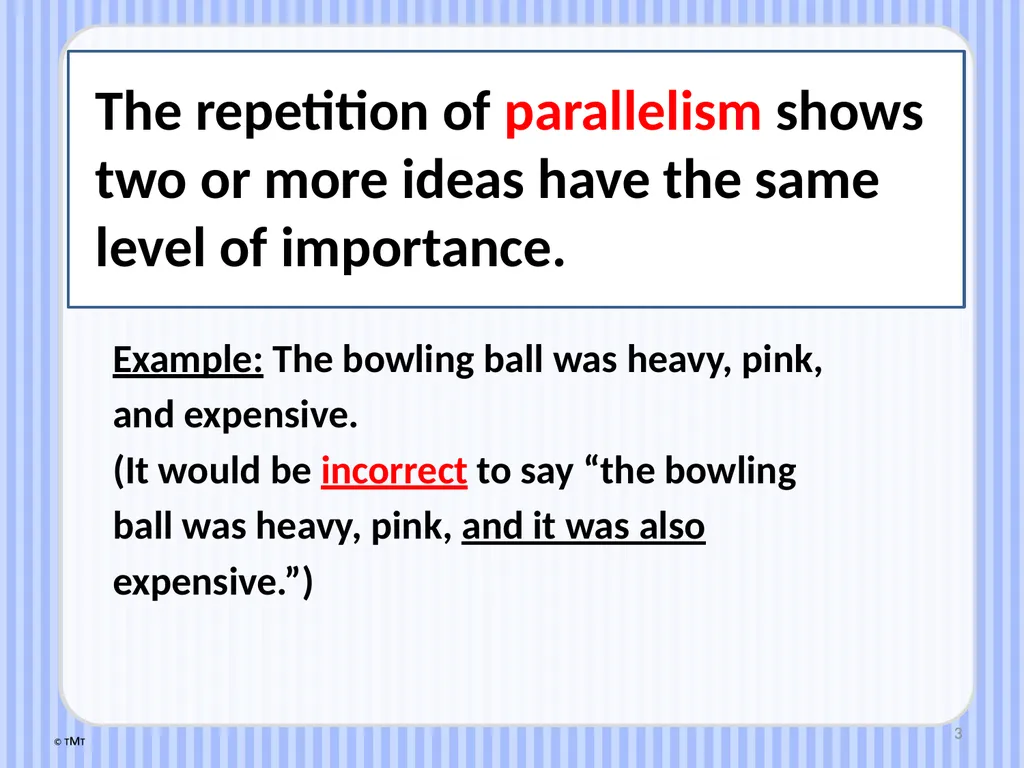
Example: The bowling ball was heavy, pink,
and expensive.
(It would be incorrect to say “the bowling
ball was heavy, pink, and it was also
expensive.”) 3 The repetition of parallelism shows two or more ideas have the same level of importance.<br>
04
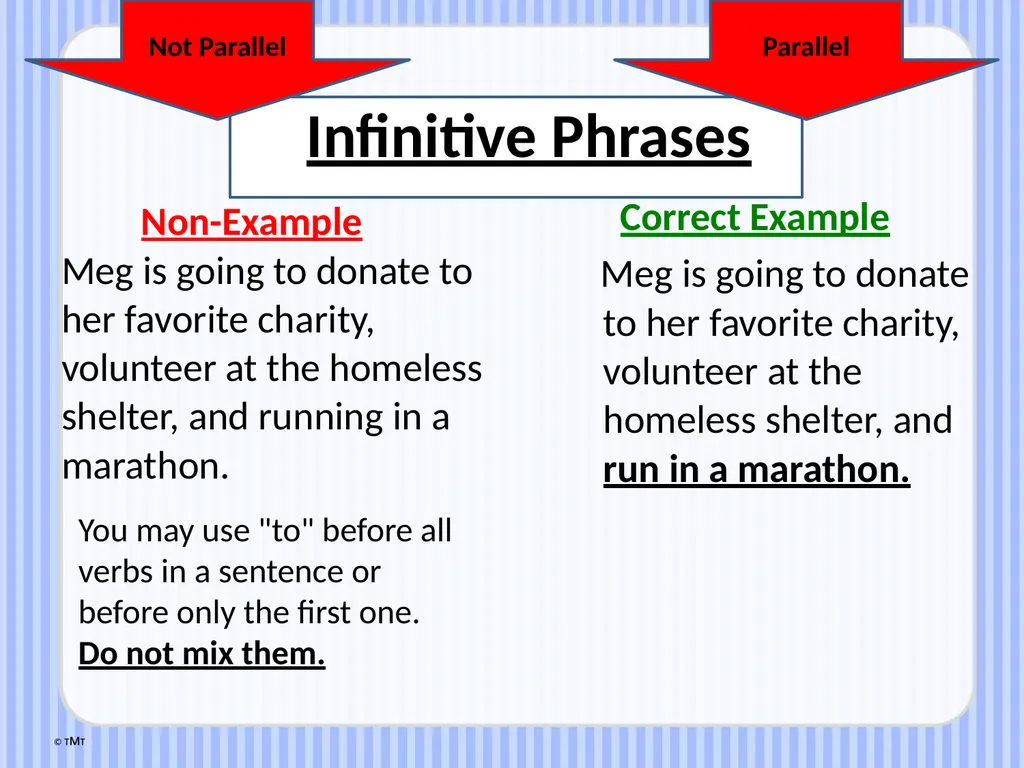
Infinitive Phrases You may use "to" before all verbs in a sentence or before only the first one.
Do not mix them. Not Parallel Parallel<br>
05
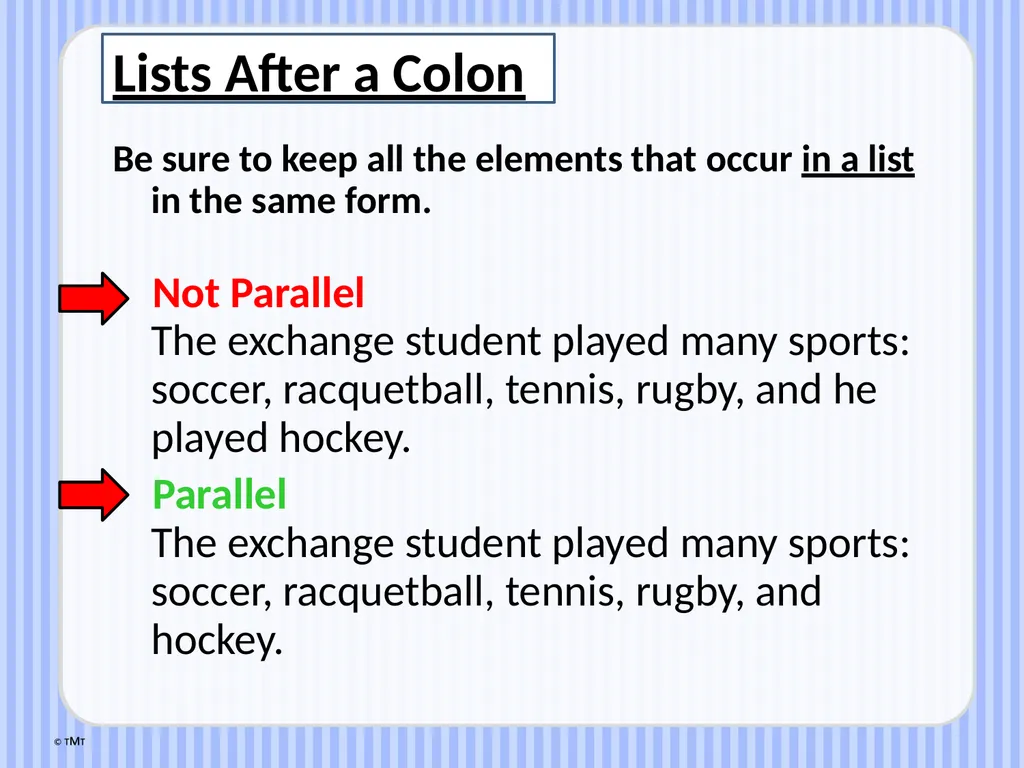
Lists After a Colon
Be sure to keep all the elements that occur in a list in the same form.
Not Parallel The exchange student played many sports: soccer, racquetball, tennis, rugby, and he played hockey.
Parallel The exchange student played many sports: soccer, racquetball, tennis, rugby, and hockey.<br>
06
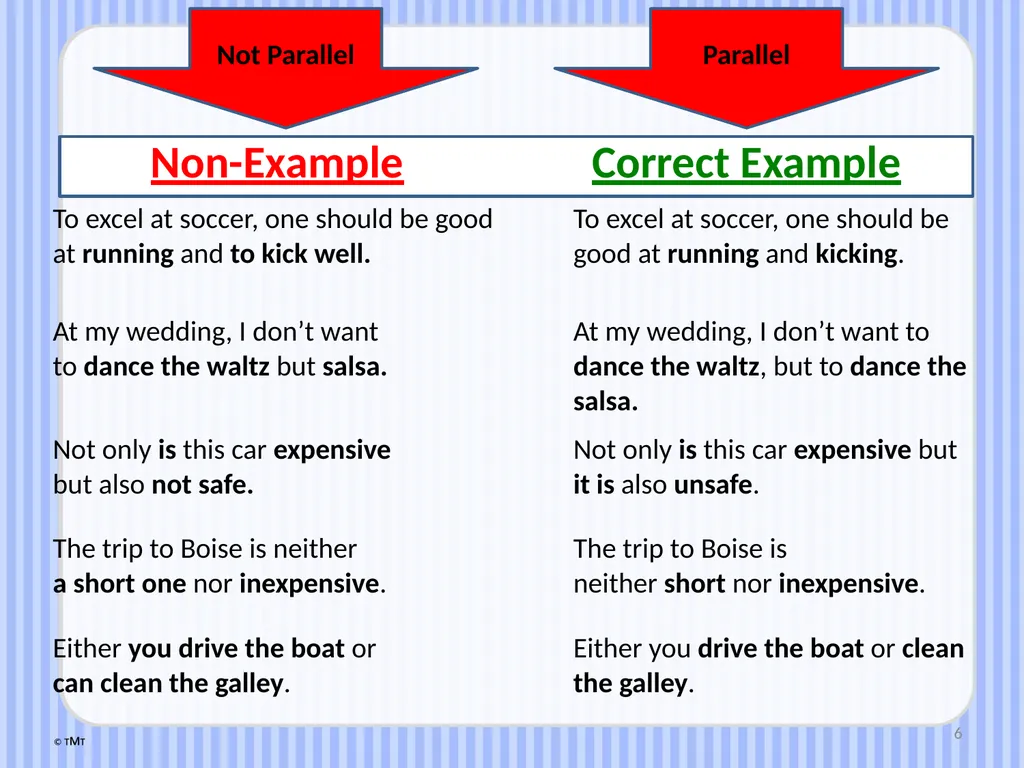
Not Parallel Parallel 6<br>
07
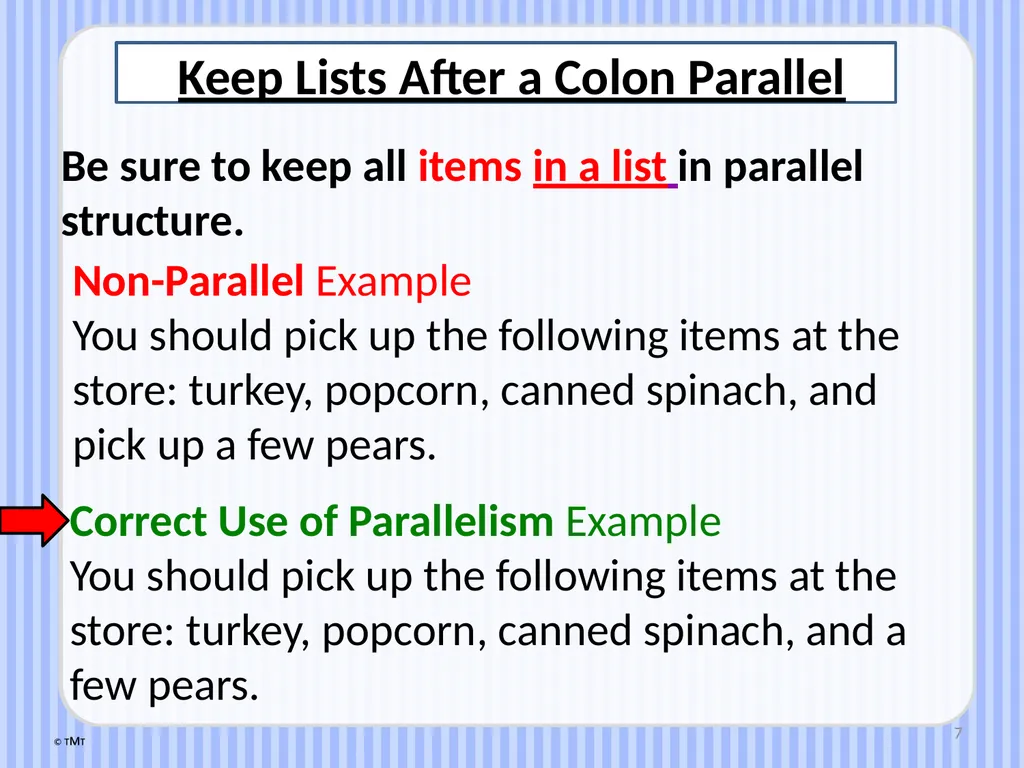
Non-Parallel Example You should pick up the following items at the store: turkey, popcorn, canned spinach, and pick up a few pears. Correct Use of Parallelism Example
You should pick up the following items at the store: turkey, popcorn, canned spinach, and a few pears. Keep Lists After a Colon Parallel
Be sure to keep all items in a list in parallel structure. 7<br>
08
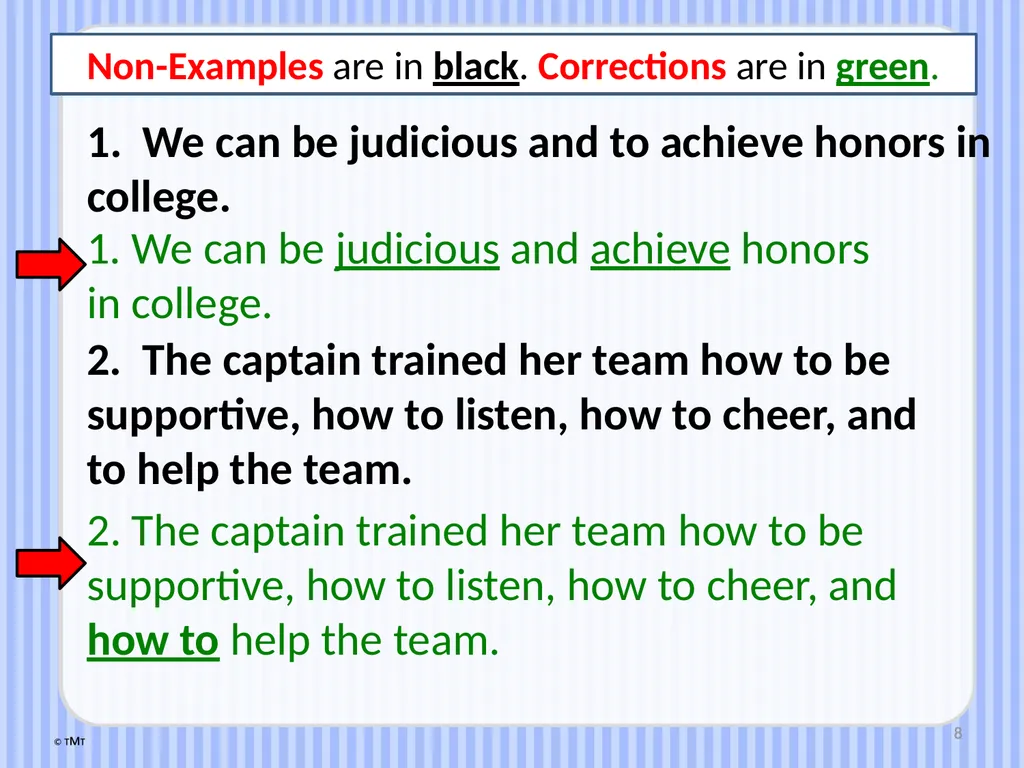
Non-Examples are in black. Corrections are in green.
1. We can be judicious and to achieve honors in college. 2. The captain trained her team how to be supportive, how to listen, how to cheer, and to help the team. 1. We can be judicious and achieve honors in college. 2. The captain trained her team how to be supportive, how to listen, how to cheer, and how to help the team. 8<br>
09
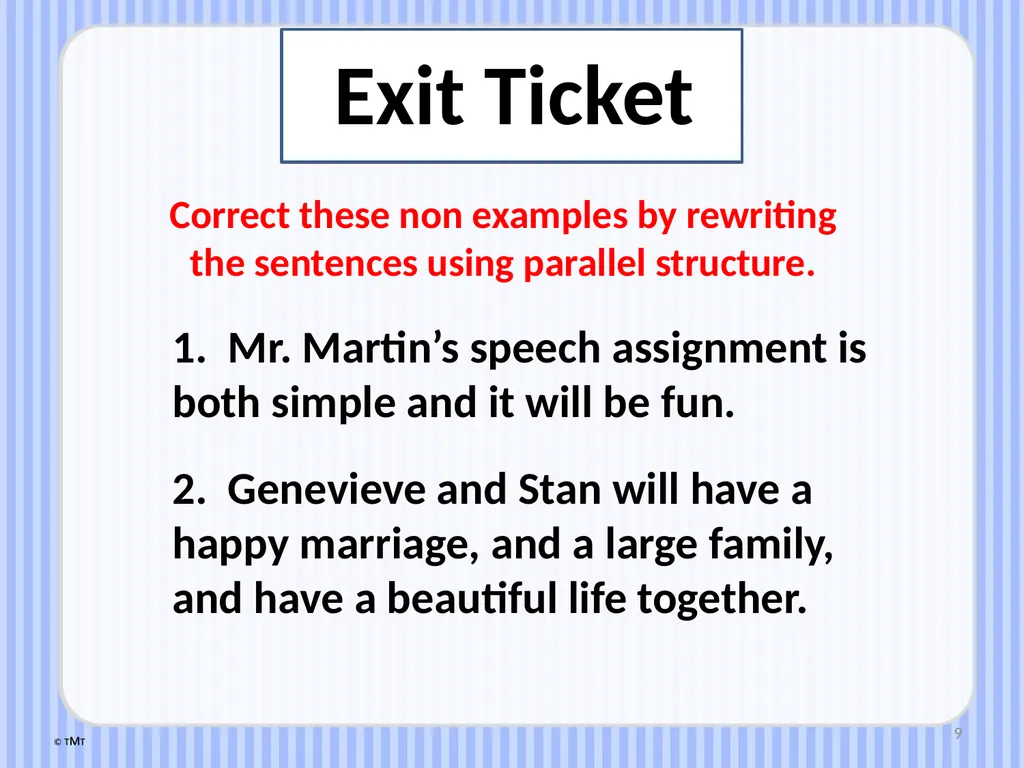
1. Mr. Martin’s speech assignment is both simple and it will be fun.
2. Genevieve and Stan will have a happy marriage, and a large family, and have a beautiful life together. Exit Ticket Correct these non examples by rewriting the sentences using parallel structure. 9<br>
10
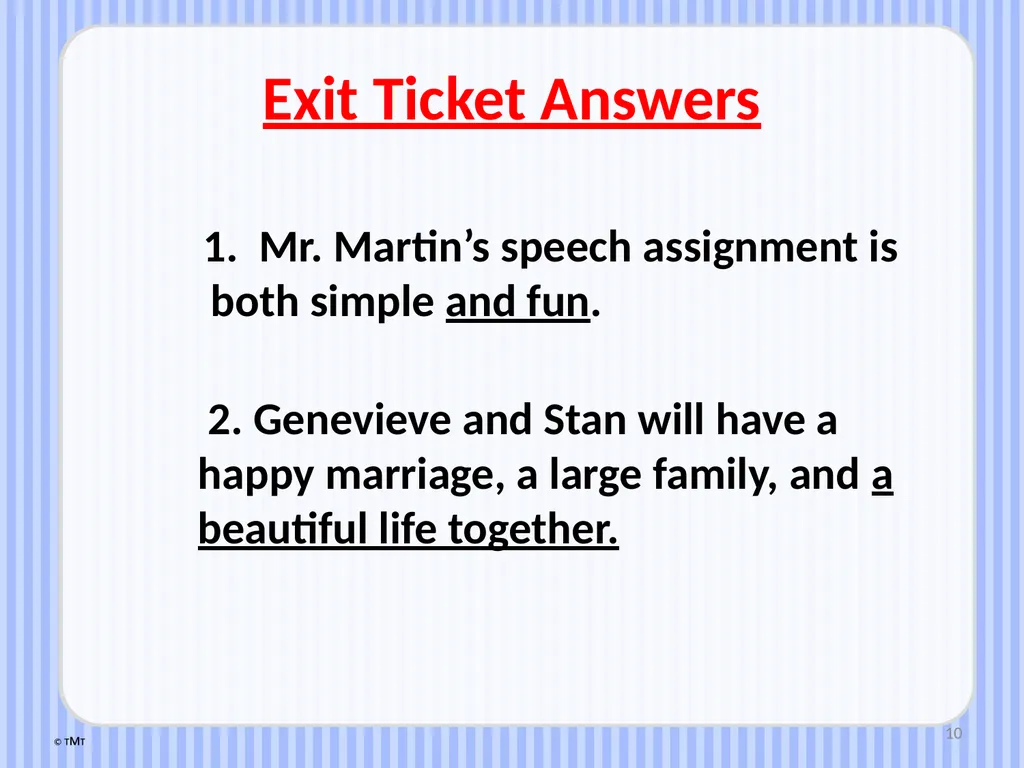
Exit Ticket Answers 1. Mr. Martin’s speech assignment is both simple and fun. 2. Genevieve and Stan will have a happy marriage, a large family, and a beautiful life together. 10<br>