1920s (The Jazz Age) Post WWI Struggles (1919 1921) The decade of the 1920s opened with the difficult task of adjusting to peace. Americans returned to their traditional policy of isolationism. The government stopped its wartime spending
"1920s (The Jazz Age) Post WWI Struggles (1919 –" is the property of its rightful owner. Permission is granted to
download and print the materials on this website for personal, non-commercial use only, and to display it
on your personal computer provided you do not modify the materials and that you retain all copyright
notices contained in the materials. By downloading content from our website, you accept the terms of this
agreement.
Presentation Transcript
01
1920s (The Jazz Age)<br>
02
Post WWI Struggles (1919 – 1921) The decade of the 1920s opened with the difficult task of adjusting to peace.
Americans returned to their traditional policy of isolationism.
The government stopped its wartime spending and soldiers returned home from war looking for jobs.
Factories closed to convert from military to civilian production.
These factors led to a temporary economic recession (downturn) in the United States, lasting from 1919 until 1921.<br>
03
Post WWI Struggles (1919 – 1921) – The Red Scare You have a more detailed reading in your packet.
But …. Remember ..… during WWI the Bolsheviks established a new Communist state in Russia.
Well ….. A Communist Party formed in the U.S.
Bombs were mailed to government and business leaders; the public grew fearful that the Communists were taking over.
Agents started hunting down suspected Communists (Called Palmer Raids).<br>
04
They violated people’s civil rights, invading private homes and offices and jailing suspects without allowing them legal counsel.
Hundreds of foreign-born people were deported without trials.
But Palmer’s raids failed to turn up evidence of a revolutionary conspiracy— or even explosives.
Although short-lived, the Red Scare fed people’s suspicions of foreigners and immigrants. This nativist attitude led to ruined reputations and wrecked lives.<br>
05
1920’s (The Jazz Age) – Begins The 1920s was an era of rapid change and clashing values.
Some believed society was losing its traditional values.
Others embraced new values associated with a freer lifestyle and the pursuit of individual goals.<br>
06
1920s (The Jazz Age) – Not All Good This was the time of …..
Prohibition which gave rise to organized crime (gangsters)
Nativism which gave rise to new immigration laws like quotas.
Racism which gave a resurgence to the KKK.
Fundamentalism which sparked a clash of tradition vs Modern.
Eugenics (superior race) which led to forced sterilizations, segregation laws, and marriage restrictions.<br>
07
1920s (The Jazz Age) So not everything was great!
But …… This time is remembered as the “Roaring 20’s” because a lot of stuff was great!<br>
08
1920’s (The Jazz Age) – Economic The 1920s were prosperous times for many Americans.
After the initial slump in the economy of 1919-1921, wages and employment opportunities began to rise, while business profits and production soared.
Government policies favoring business were one factor behind this prosperity.
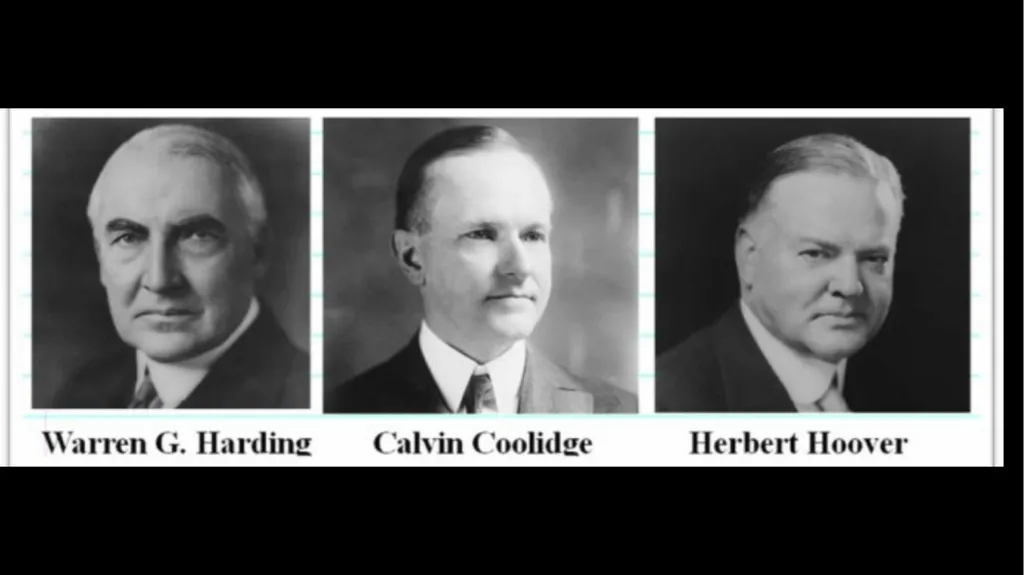
Presidents Harding, Coolidge, and Hoover followed policies favorable to American business. They supported laissez-faire policies with minimal government interference in business activities.<br>
09
1920’s (The Jazz Age) – Economic Probably the single most important factor behind the prosperity of the 1920s was the use of the automobile.
automobile ownership increased.
Automobile production required vast amounts of steel, glass, and rubber – stimulating those industries.
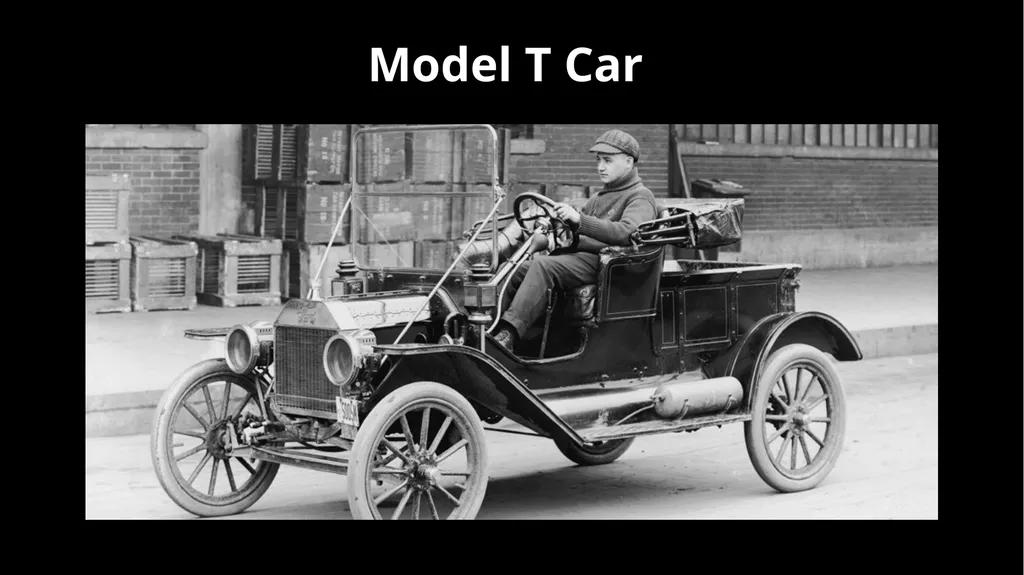
Henry Ford developed the Model T
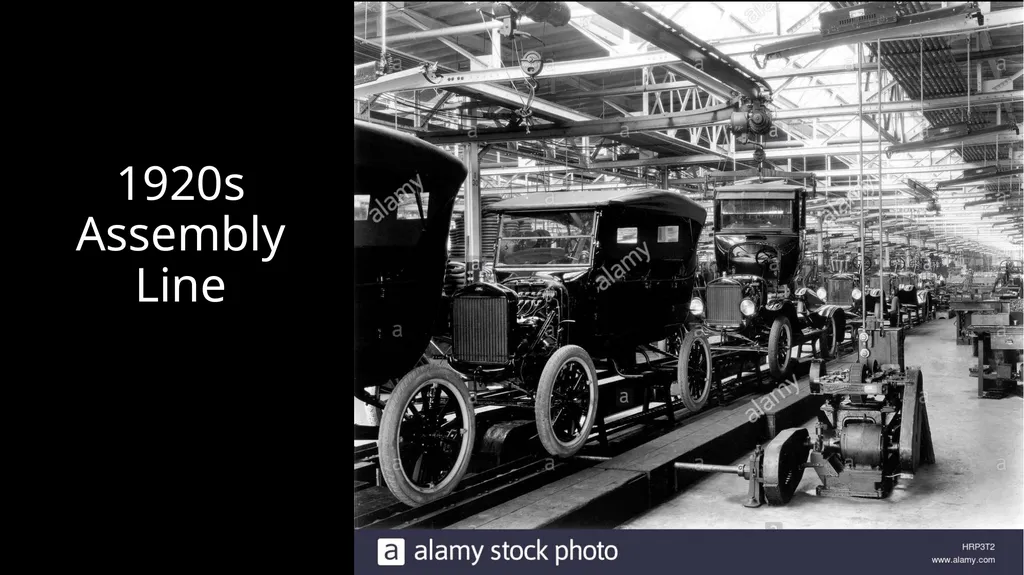
He developed the assembly line. It was so efficient he was able to double wages overnight while slashing prices. Ford wanted to give workers enough buying power to purchase the cars and other goods they were mass-producing.<br>
10
Model T Car<br>
11
1920s Assembly Line<br>
12
1920’s (The Jazz Age) – Economic The 1920s witnessed new patterns of consumption, creating mass markets for goods called mass consumption.
Advertising stimulated demand, while workers with higher wages and more leisure time had greater purchasing power.
Retailers introduced the idea of buying on credit.
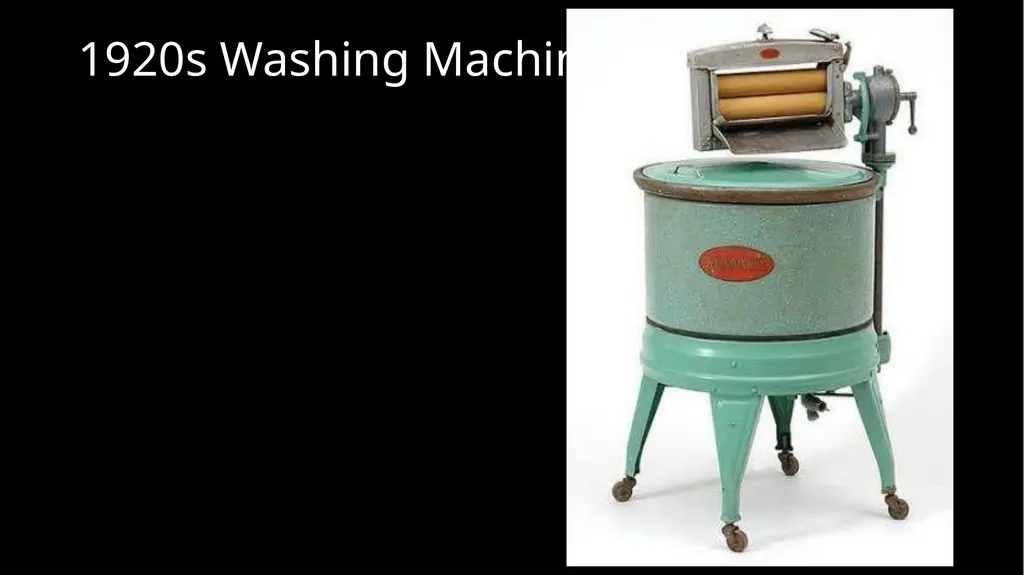
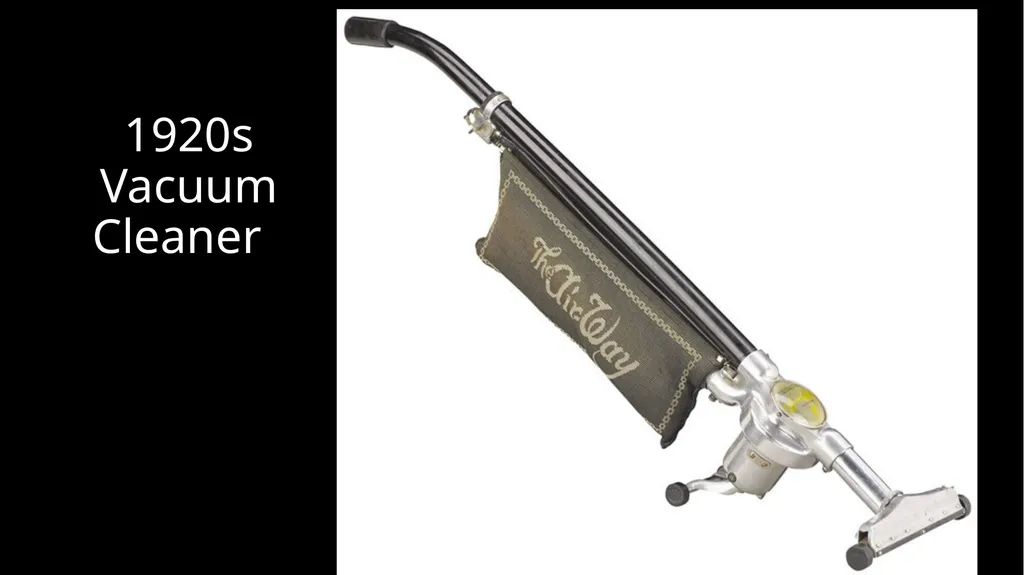
This is the time of vacuum cleaners, washing machines, cars, radios, and luxury furniture.<br>
13
1920s Washing Machine<br>
14
1920s Vacuum Cleaner<br>
15
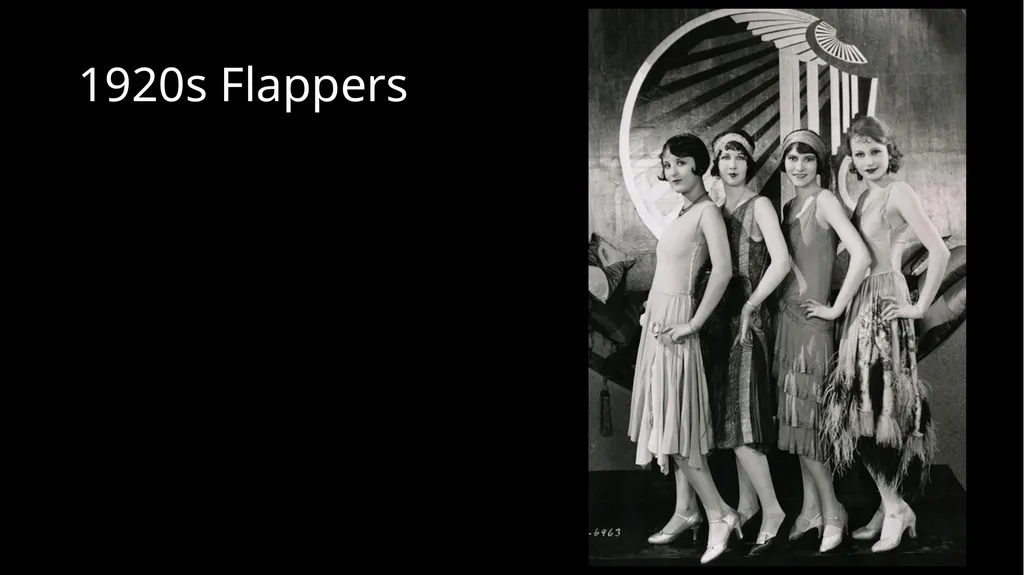
1920’s (The Jazz Age) – Culture New values emerged which encouraged greater openness and self-expression.
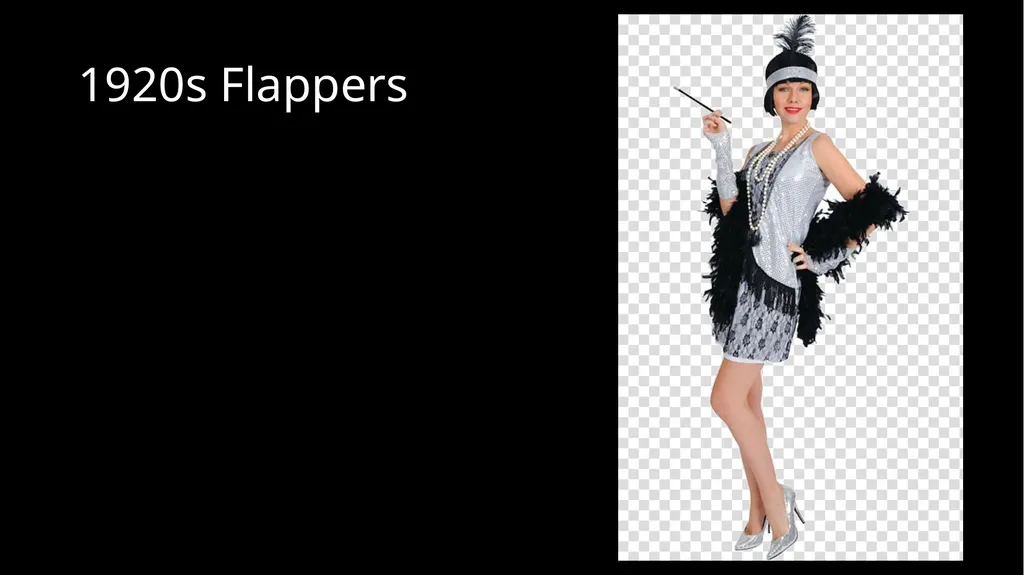
The iconic representation of this period is the “Flapper” look.
Flappers wore short dresses that revealed their body shapes as well as their legs and arms.
Their hair was short and choppy, and they also wore a lot of make up.<br>
16
1920s Flappers<br>
17
1920s Flappers<br>
18
1920’s (The Jazz Age) – Culture The Great Migration
about two million African Americans left the South for the North.
They left in search of jobs in cities (because of WWI) and to escape the deep racism they faced in the South.
Unfortunately, they found more racism, housing shortages and crime, in the North.
Confined to all black neighborhoods, African Americans created cities-within-cities. The largest of these was Harlem, in upper Manhattan of New York City.<br>
19
1920’s (The Jazz Age) – Culture The Harlem Renaissance
But the key takeaway is …….
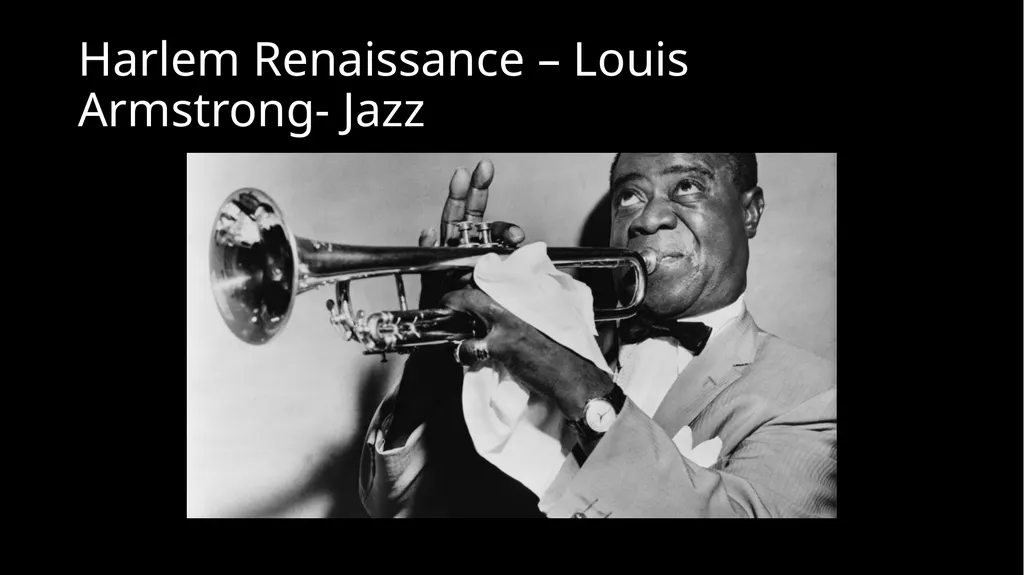
The 1920s is often referred to as the Jazz Age, reflecting a new form of African-American music called jazz.
This renaissance (in Harlem) was begun by a rising middle class of African Americans.
It was more than simply about music. It reached into other forms of art such as literature, dance and visual arts.<br>
20
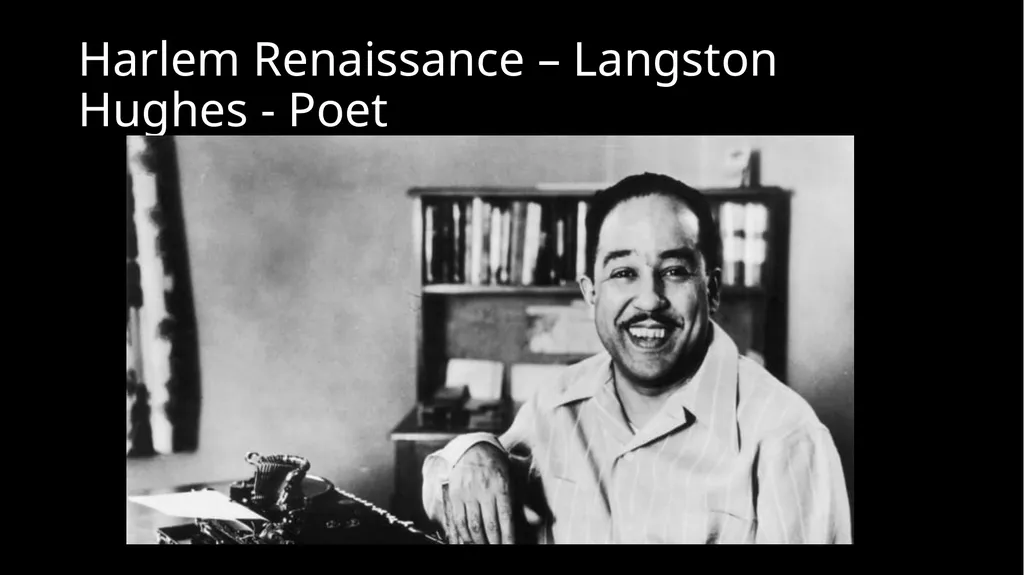
Harlem Renaissance – Langston Hughes - Poet<br>
21
Harlem Renaissance – Louis Armstrong- Jazz<br>
22
Summary This were not great following WWI – Red Scare, Strikes, Economy!
Once the economy improved conditions improved.
Mass consumption started – buying with credit. Like Cars and Vacuums.
Culture battles between fundamentalists and modernists.
Flappers lifestyle was big!
African Americans – Great Migration and started the Harlem Renaissance.
Time of ….. Prohibition, Organized Crime, Racism, and Nativism.<br>