2 Chapter Global E-Business: How Businesses Use Information Systems LEARNING OBJECTIVES Management Information Systems Chapter 2 Global E-Business: How Businesses Use Information Systems Define and describe business processes and their
Related Topics
Share
Embed code
Download this presentation From Below
"2 Chapter Global E-Business: How Businesses Use" is the property of its rightful owner. Permission is granted to
download and print the materials on this website for personal, non-commercial use only, and to display it
on your personal computer provided you do not modify the materials and that you retain all copyright
notices contained in the materials. By downloading content from our website, you accept the terms of this
agreement.
Presentation Transcript
01
2 Chapter Global E-Business: How Businesses Use Information Systems<br>
02
LEARNING OBJECTIVES Management Information Systems
Chapter 2 Global E-Business: How Businesses Use Information Systems Define and describe business processes and their relationship to information systems.
Describe the information systems supporting the major business functions: sales and marketing, manufacturing and production, finance and accounting, and human resources.
Evaluate the role played by systems serving the various levels of management in a business and their relationship to each other.<br>
03
Explain how enterprise applications and intranets promote business process integration and improve organizational performance.
Assess the role of the information systems function in a business. LEARNING OBJECTIVES (Continued) Management Information Systems
Chapter 2 Global E-Business: How Businesses Use Information Systems<br>
04
Business Processes and Information Systems Business processes
How information technology enhances business processes: efficiency and transformation Management Information Systems
Chapter 2 Global E-Business: How Businesses Use Information Systems<br>
05
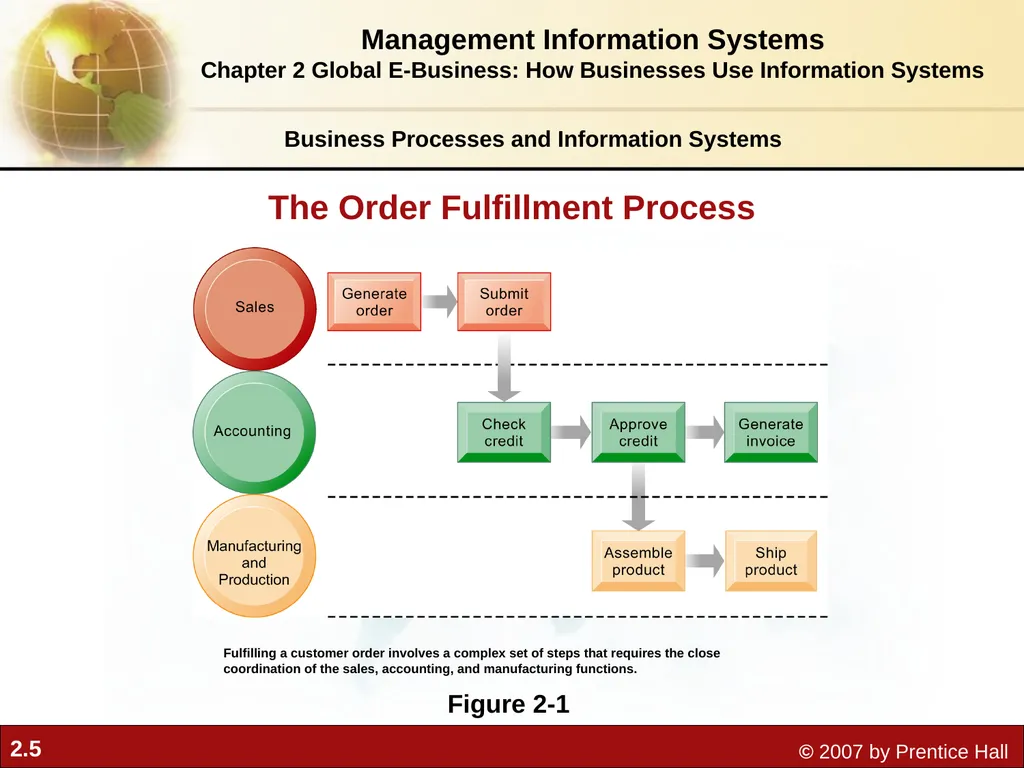
The Order Fulfillment Process Figure 2-1 Fulfilling a customer order involves a complex set of steps that requires the close coordination of the sales, accounting, and manufacturing functions. Business Processes and Information Systems Management Information Systems
Chapter 2 Global E-Business: How Businesses Use Information Systems<br>
06
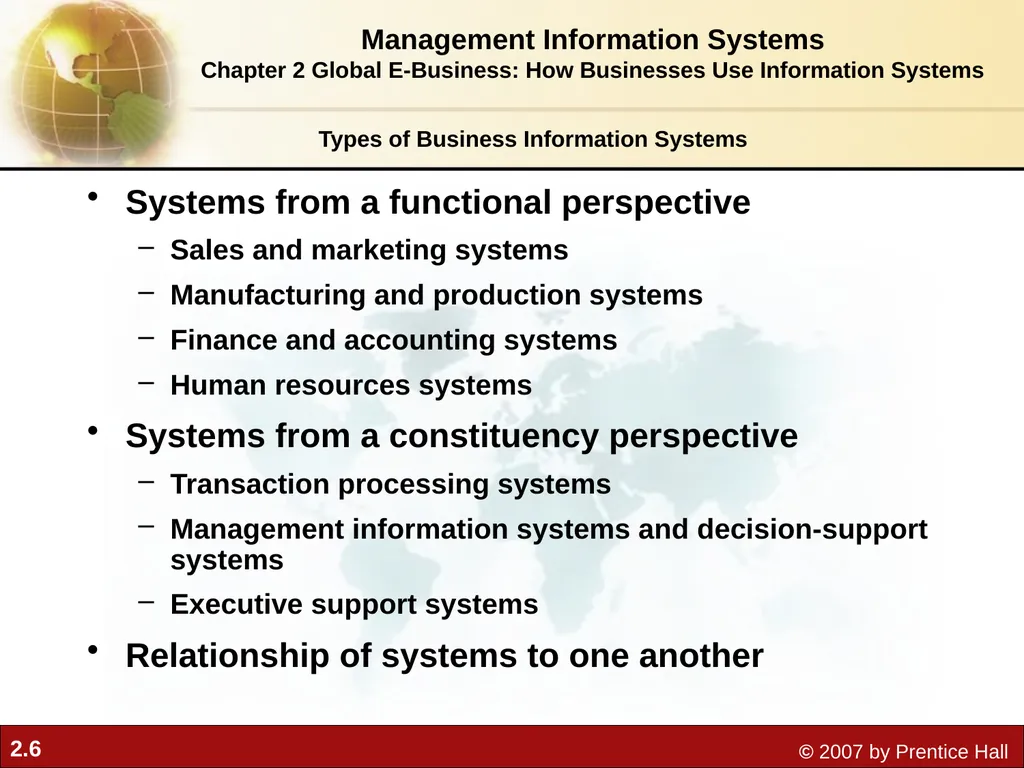
Systems from a functional perspective
Sales and marketing systems
Manufacturing and production systems
Finance and accounting systems
Human resources systems
Systems from a constituency perspective
Transaction processing systems
Management information systems and decision-support systems
Executive support systems
Relationship of systems to one another Types of Business Information Systems Management Information Systems
Chapter 2 Global E-Business: How Businesses Use Information Systems<br>
07
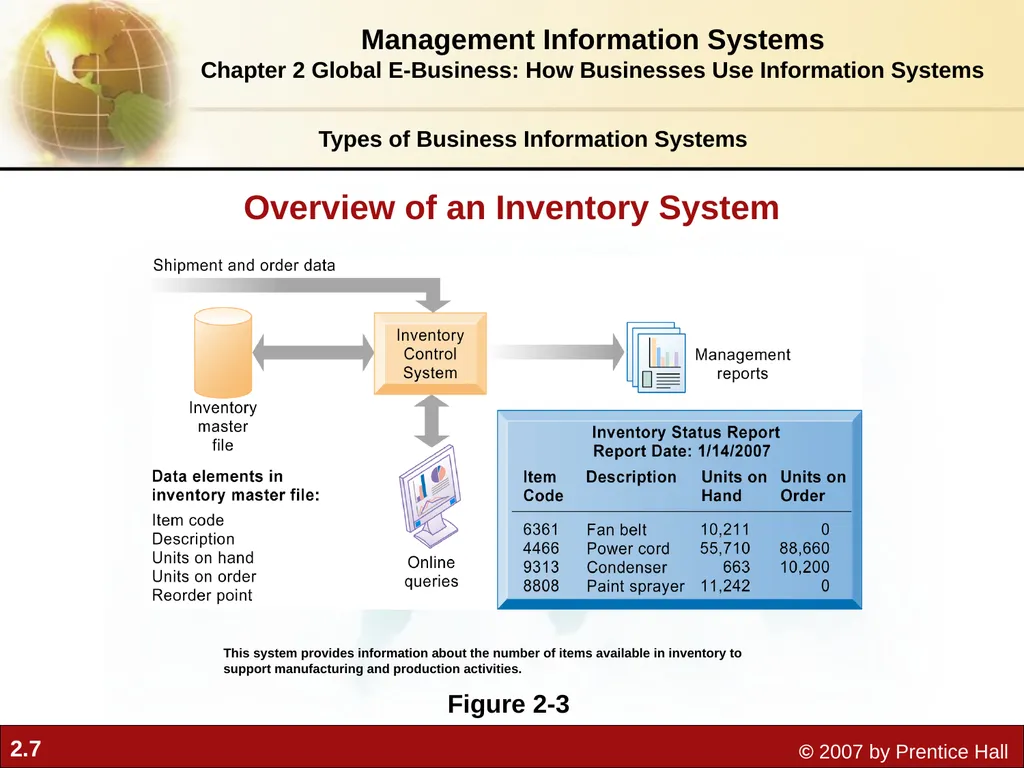
Overview of an Inventory System Figure 2-3 This system provides information about the number of items available in inventory to support manufacturing and production activities. Types of Business Information Systems Management Information Systems
Chapter 2 Global E-Business: How Businesses Use Information Systems<br>
08
Read the Interactive Session: Organizations, and then discuss the following questions:
Why was it so difficult for Kia to identify sources of defects in the cars it produced?
What was the business impact of Kia not having an information system to track defects? What other business processes besides manufacturing and production were affected?
How did Kia’s new defect-reporting system improve the way it ran its business?
What management, organization, and technology issues did Kia have to address when it adopted its new quality control system?
What new business processes were enabled by Kia’s new quality control system? Information Systems Help Kia Solve Its Quality Problems Types of Business Information Systems Management Information Systems
Chapter 2 Global E-Business: How Businesses Use Information Systems<br>
09
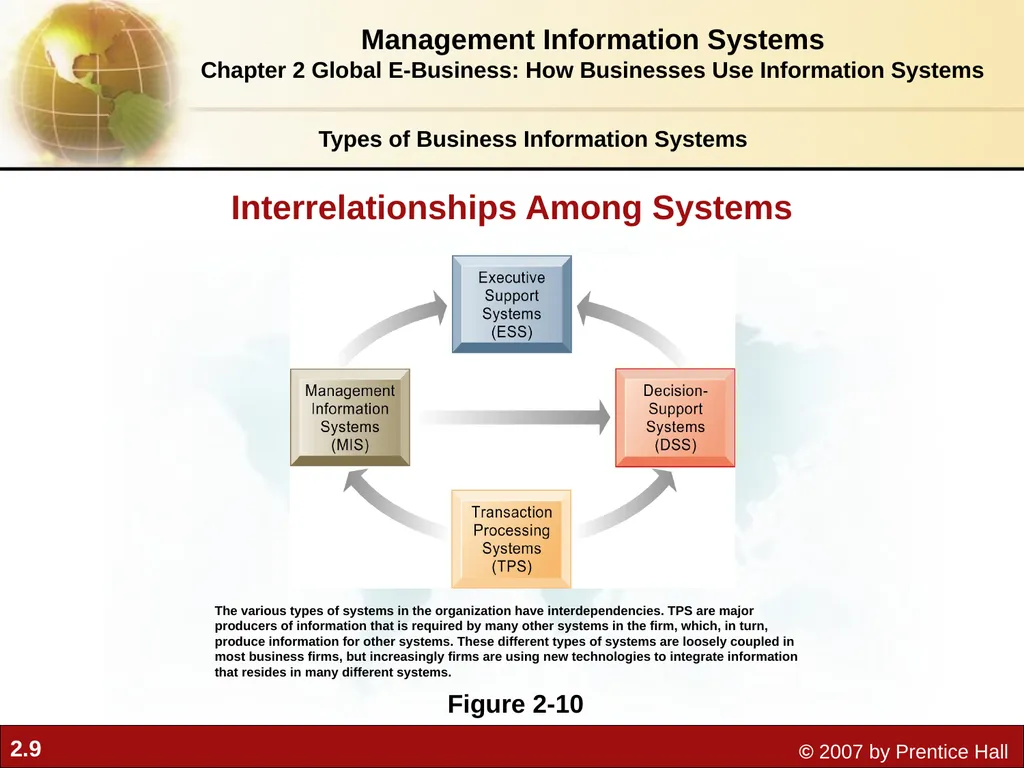
Interrelationships Among Systems Figure 2-10 The various types of systems in the organization have interdependencies. TPS are major producers of information that is required by many other systems in the firm, which, in turn, produce information for other systems. These different types of systems are loosely coupled in most business firms, but increasingly firms are using new technologies to integrate information that resides in many different systems. Types of Business Information Systems Management Information Systems
Chapter 2 Global E-Business: How Businesses Use Information Systems<br>
10
Enterprise applications
Enterprise systems
Supply chain management systems
Customer relationship management systems
Knowledge management systems
Intranets and extranets
E-business, e-commerce, and e-government Systems That Span the Enterprise Management Information Systems
Chapter 2 Global E-Business: How Businesses Use Information Systems<br>
11
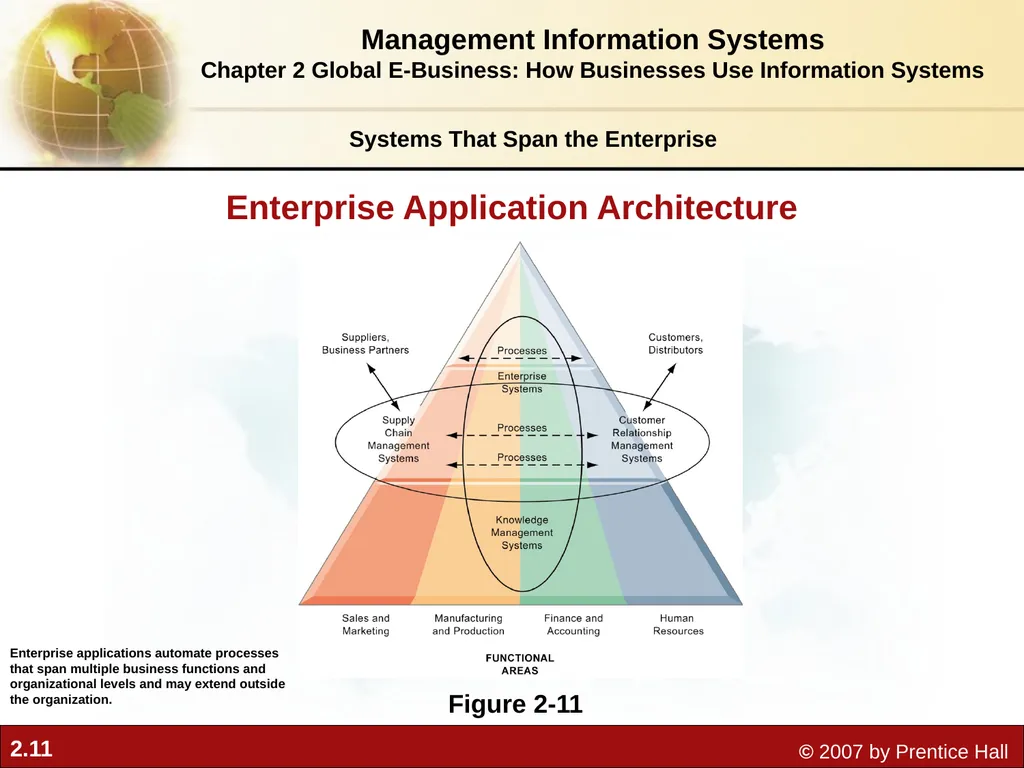
Enterprise Application Architecture Figure 2-11 Enterprise applications automate processes that span multiple business functions and organizational levels and may extend outside the organization. Systems That Span the Enterprise Management Information Systems
Chapter 2 Global E-Business: How Businesses Use Information Systems<br>
12
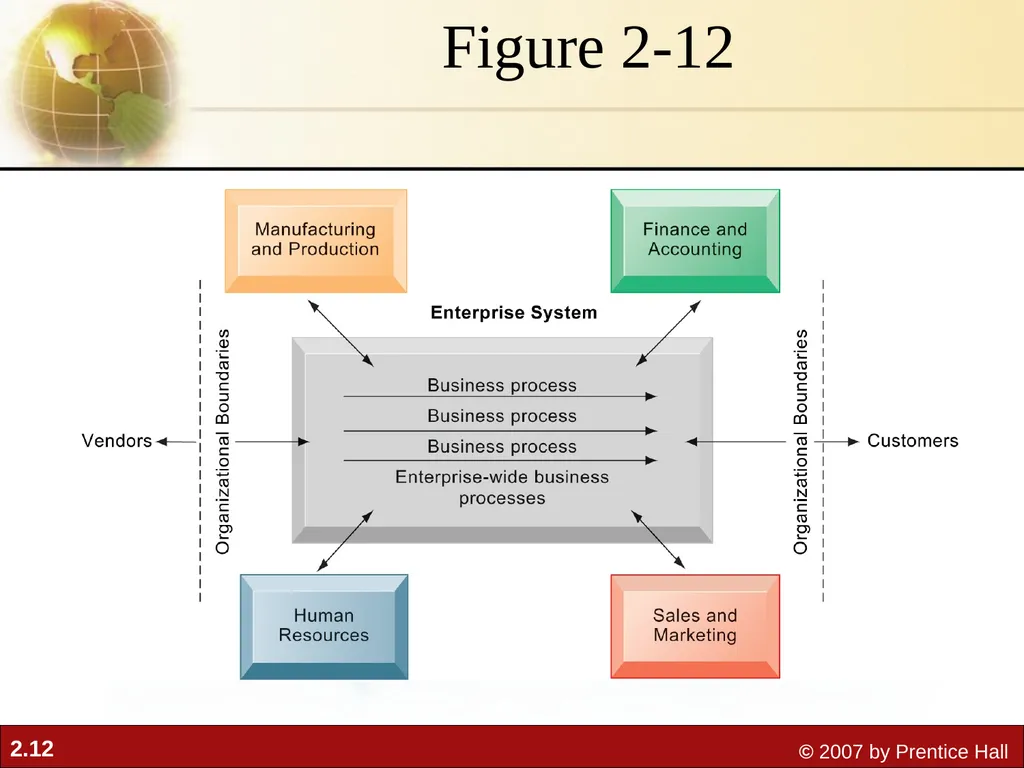
Figure 2-12<br>
13
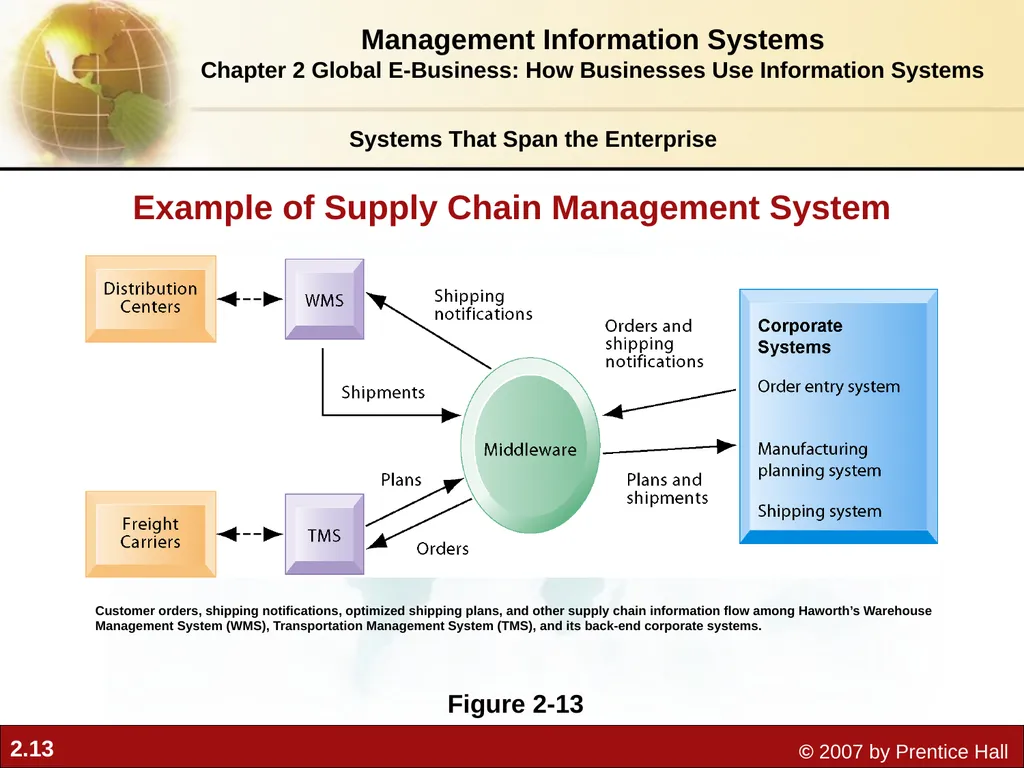
Example of Supply Chain Management System Figure 2-13 Systems That Span the Enterprise Management Information Systems
Chapter 2 Global E-Business: How Businesses Use Information Systems Customer orders, shipping notifications, optimized shipping plans, and other supply chain information flow among Haworth’s Warehouse Management System (WMS), Transportation Management System (TMS), and its back-end corporate systems.<br>
14
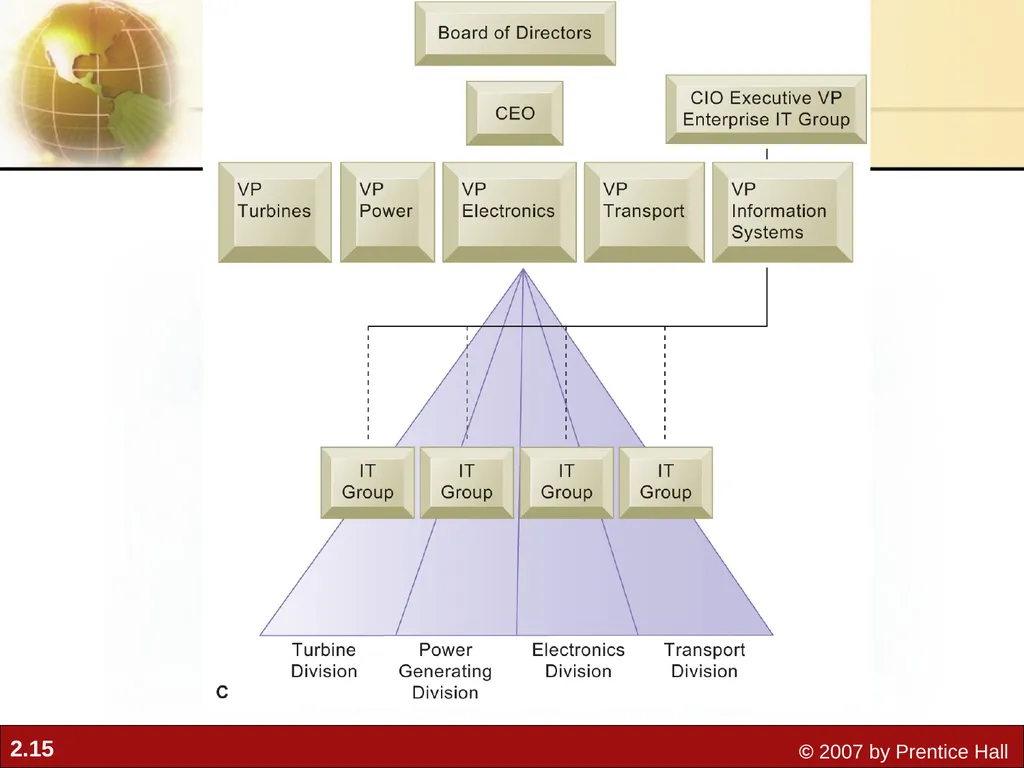
The information systems department
Organizing the information systems function The Information Systems Function in Business Management Information Systems
Chapter 2 Global E-Business: How Businesses Use Information Systems<br>