
2018 Housing Colorado NOW Problem Solving and
Description: 2018 Housing Colorado NOW Problem Solving and Negotiating Skills Todays Learning Objectives How to recognize financial and non-financial aspects of a problem How to negotiate more effectively with other deal participants How to create
Related Topics
Download Presentation
"2018 Housing Colorado NOW Problem Solving and" is the property of its rightful owner. Permission is granted to download and print the materials on this website for personal, non-commercial use only, and to display it on your personal computer provided you do not modify the materials and that you retain all copyright notices contained in the materials. By downloading content from our website, you accept the terms of this agreement.
Presentation Transcript
slide1. 2018 Housing Colorado NOW Problem Solving
and Negotiating Skills<br>
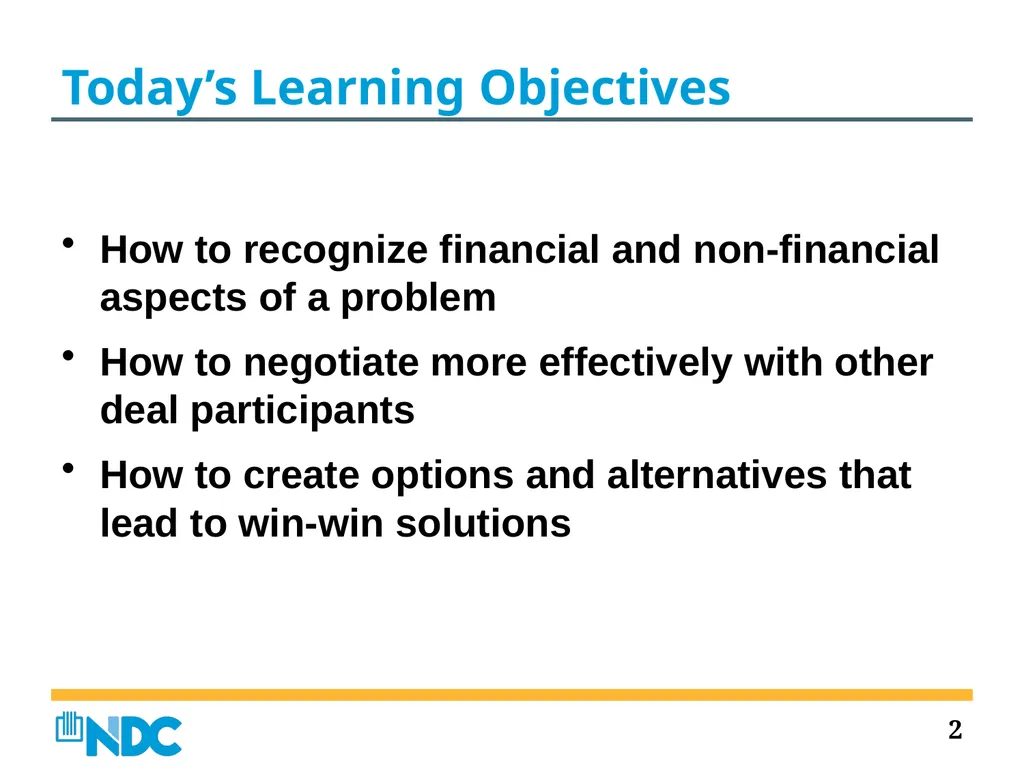
slide2. Today’s Learning Objectives How to recognize financial and non-financial aspects of a problem
How to negotiate more effectively with other deal participants
How to create options and alternatives that lead to win-win solutions<br>
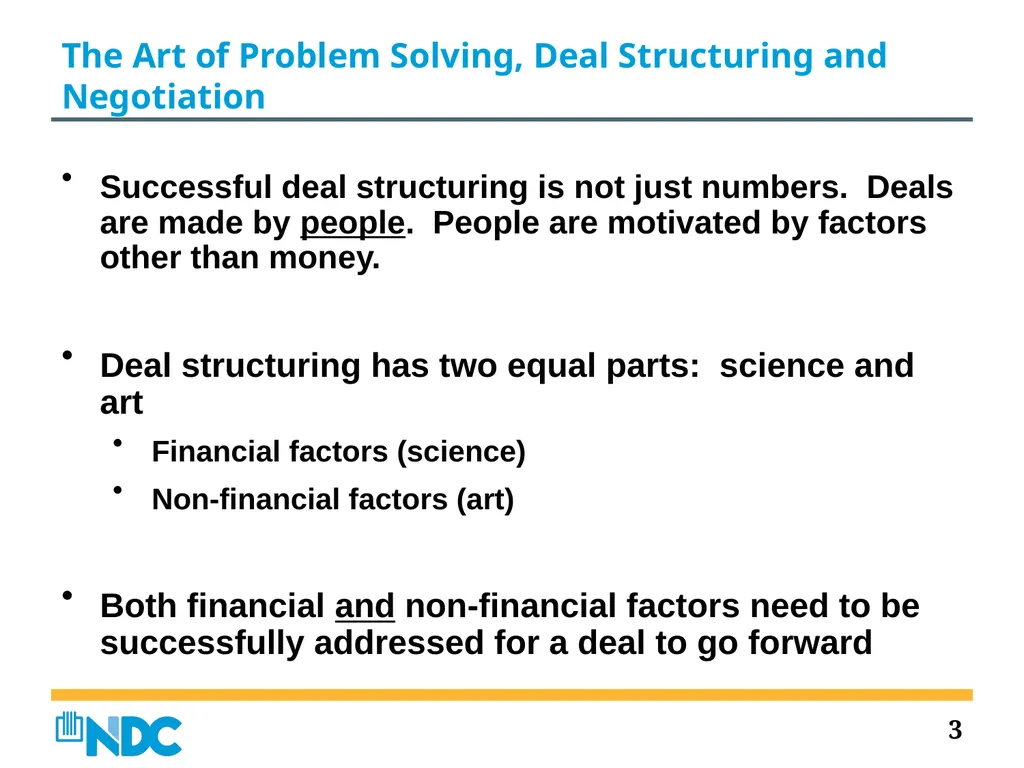
slide3. Successful deal structuring is not just numbers. Deals are made by people. People are motivated by factors other than money.
Deal structuring has two equal parts: science and art
Financial factors (science)
Non-financial factors (art)
Both financial and non-financial factors need to be successfully addressed for a deal to go forward The Art of Problem Solving, Deal Structuring and Negotiation<br>
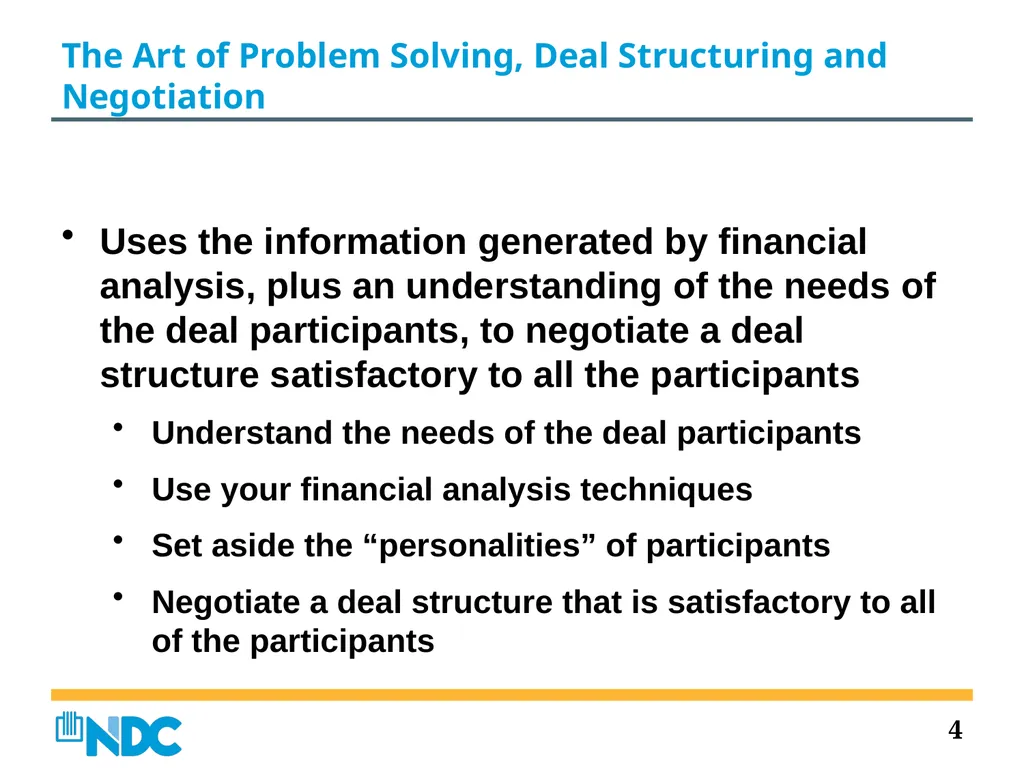
slide4. The Art of Problem Solving, Deal Structuring and Negotiation Uses the information generated by financial analysis, plus an understanding of the needs of the deal participants, to negotiate a deal structure satisfactory to all the participants
Understand the needs of the deal participants
Use your financial analysis techniques
Set aside the “personalities” of participants
Negotiate a deal structure that is satisfactory to all of the participants<br>
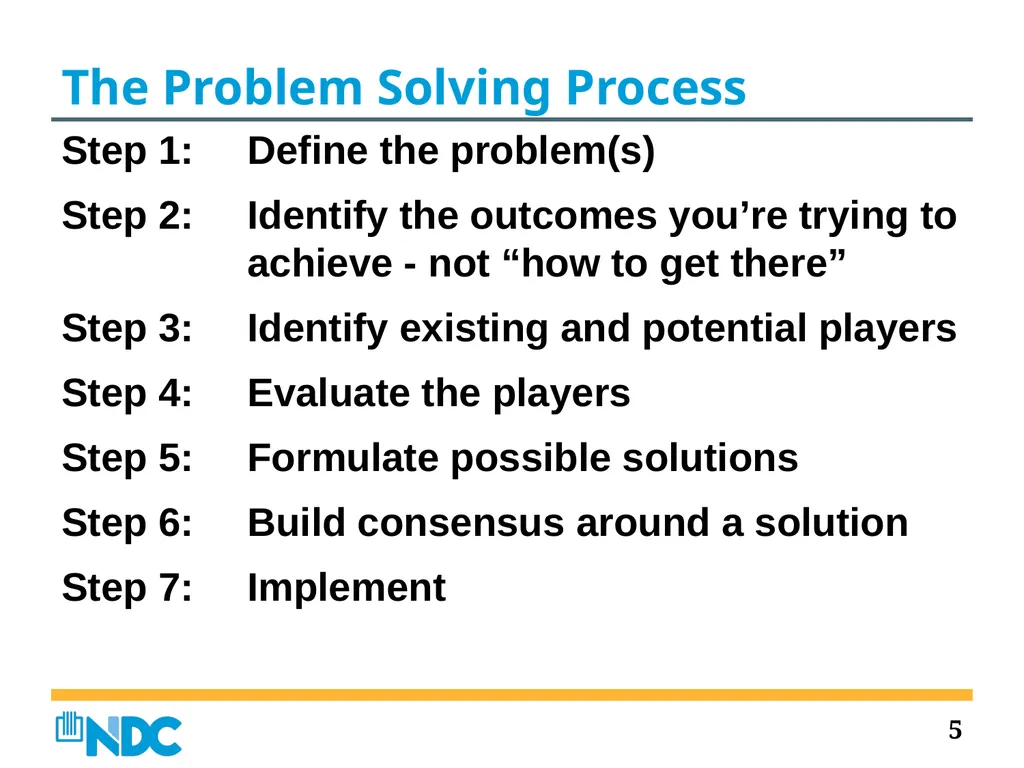
slide5. The Problem Solving Process Step 1: Define the problem(s)
Step 2: Identify the outcomes you’re trying to achieve - not “how to get there”
Step 3: Identify existing and potential players
Step 4: Evaluate the players
Step 5: Formulate possible solutions
Step 6: Build consensus around a solution
Step 7: Implement<br>
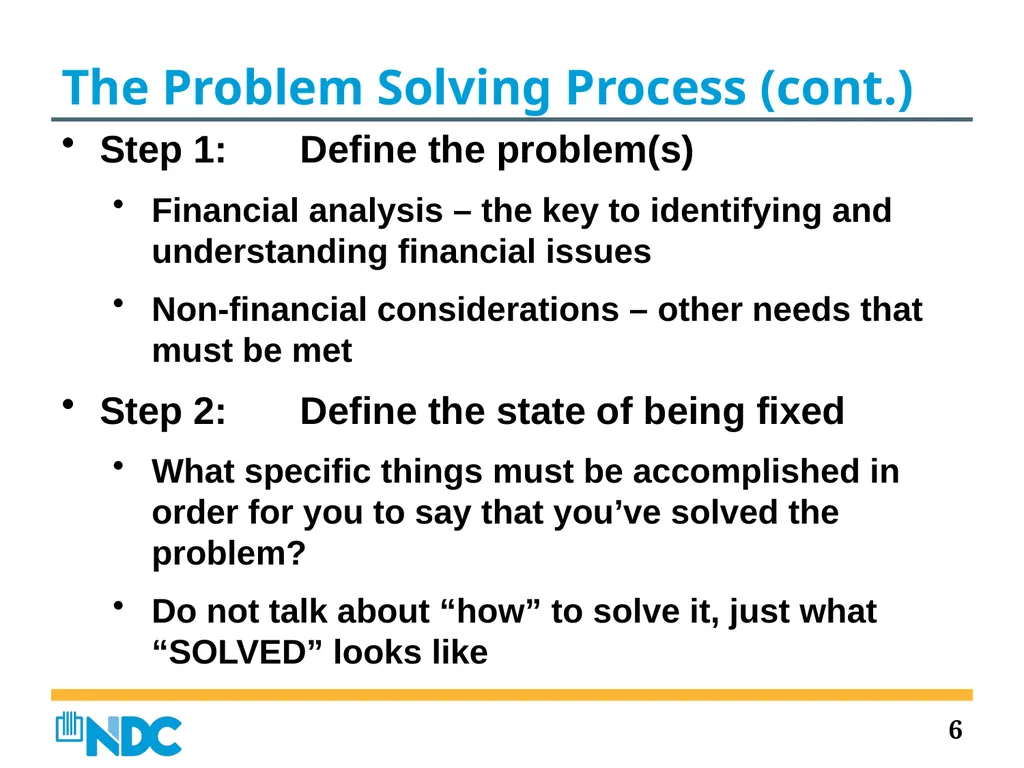
slide6. The Problem Solving Process (cont.) Step 1: Define the problem(s)
Financial analysis – the key to identifying and understanding financial issues
Non-financial considerations – other needs that must be met
Step 2: Define the state of being fixed
What specific things must be accomplished in order for you to say that you’ve solved the problem?
Do not talk about “how” to solve it, just what “SOLVED” looks like<br>
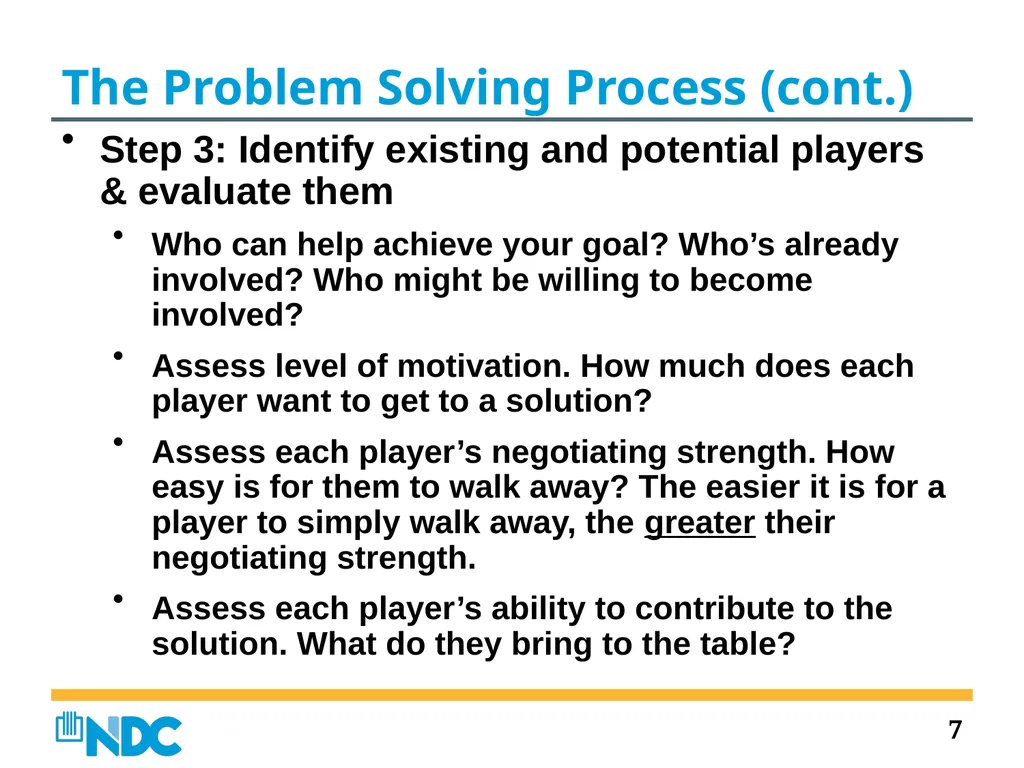
slide7. The Problem Solving Process (cont.) Step 3: Identify existing and potential players & evaluate them
Who can help achieve your goal? Who’s already involved? Who might be willing to become involved?
Assess level of motivation. How much does each player want to get to a solution?
Assess each player’s negotiating strength. How easy is for them to walk away? The easier it is for a player to simply walk away, the greater their negotiating strength.
Assess each player’s ability to contribute to the solution. What do they bring to the table?<br>
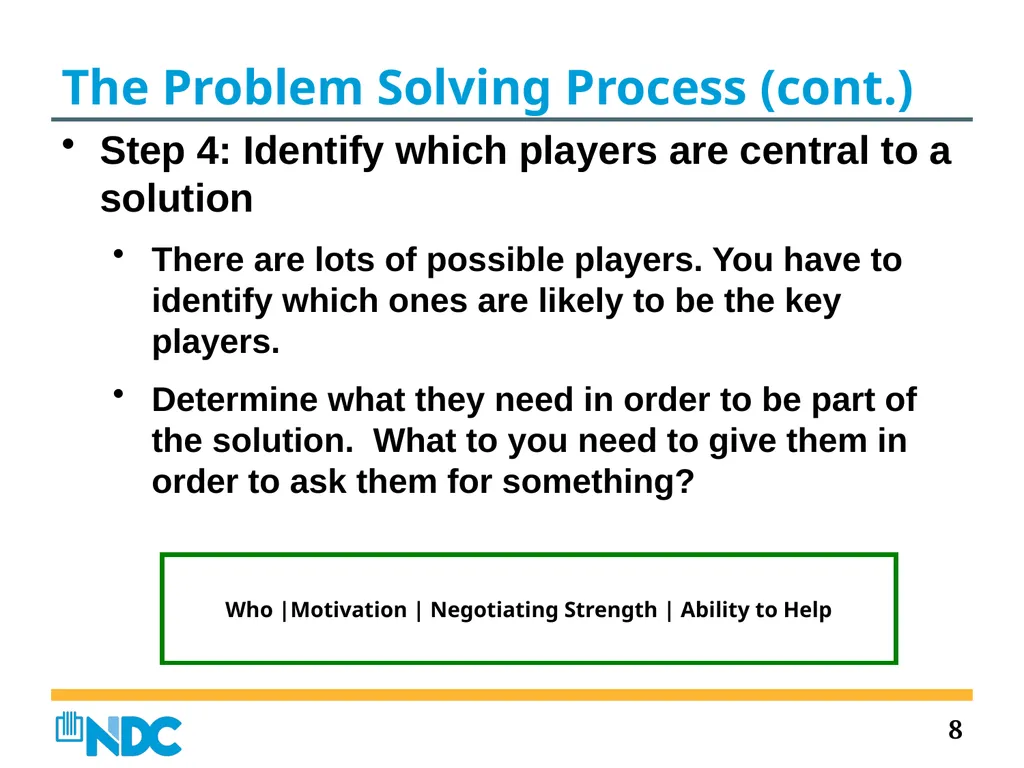
slide8. The Problem Solving Process (cont.) Step 4: Identify which players are central to a solution
There are lots of possible players. You have to identify which ones are likely to be the key players.
Determine what they need in order to be part of the solution. What to you need to give them in order to ask them for something? Who |Motivation | Negotiating Strength | Ability to Help<br>
slide9. The Problem Solving Process (cont.) Step 5: Formulate possible solutions as a group
Kick around ideas, brainstorm
Test ideas for viability (are players’ needs met?)
Propose solutions that solve the problem and seem acceptable to all players
Step 6: Build consensus around one solution
Get all essential participants to “buy in.” May take time - build trust, vesting.
Step 7: Implement solution
Put agreed-to solution in writing<br>
slide10. The Problem Solving Process (cont.) Negotiating
Affordable housing is a relationship business
Goal is not to “win” but to find a solution that
is acceptable to all players
Realistic commitments
allows a continuing relationship
Negotiating is a way of finding common ground
Separates the people from the problem
Focuses on interest, not position
Invents options for mutual gain<br>
slide11. Why Do We Negotiate? Provides a Framework to deal with and resolve conflict
The sources of conflict are:
Resources
Needs
Values/Interests
Good negotiation skills assist you in resolving conflicts so a project can go forward
Not whether you want to do a deal, but finding the correct deal – obtainable and practical
How to make it happen given the political and environmental constraints<br>
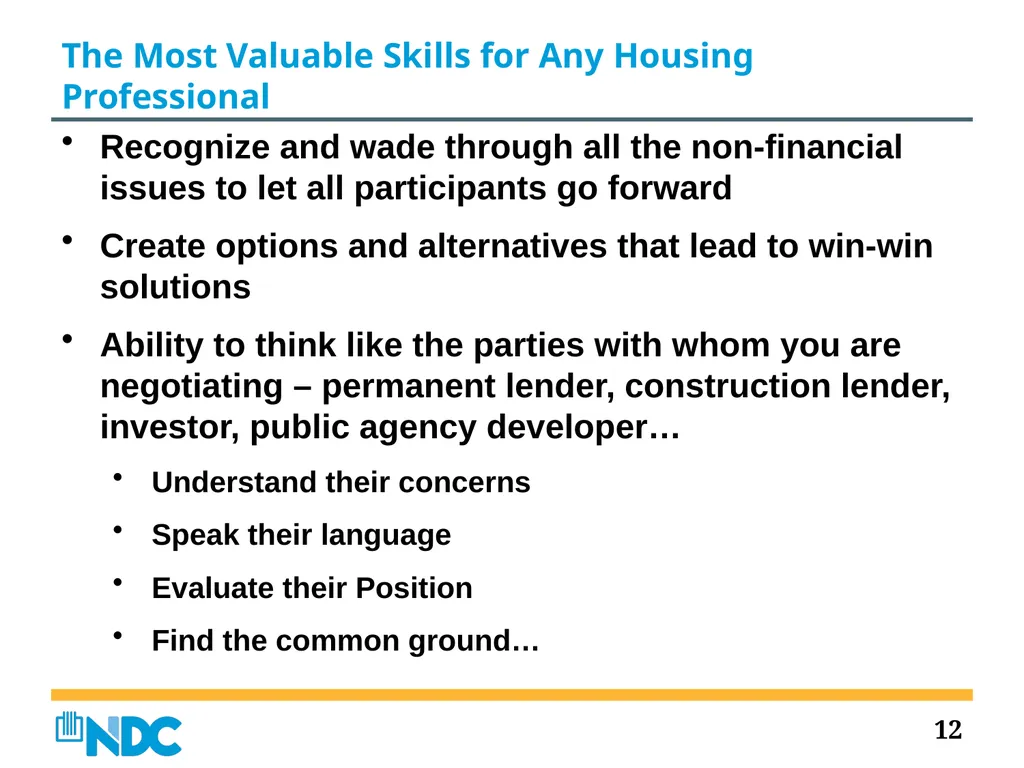
slide12. The Most Valuable Skills for Any Housing Professional Recognize and wade through all the non-financial issues to let all participants go forward
Create options and alternatives that lead to win-win solutions
Ability to think like the parties with whom you are negotiating – permanent lender, construction lender, investor, public agency developer…
Understand their concerns
Speak their language
Evaluate their Position
Find the common ground…<br>
slide13. Contact Us Training
Technical Assistance
Development Services
Syndication
Karen Garritson
303-475-7986
kgarritson@ndconline.org
Erin O’Neill
303-665-7068 (o)
720-985-7068
eoneill@ndconline.org<br>
and Negotiating Skills<br>
slide2. Today’s Learning Objectives How to recognize financial and non-financial aspects of a problem
How to negotiate more effectively with other deal participants
How to create options and alternatives that lead to win-win solutions<br>
slide3. Successful deal structuring is not just numbers. Deals are made by people. People are motivated by factors other than money.
Deal structuring has two equal parts: science and art
Financial factors (science)
Non-financial factors (art)
Both financial and non-financial factors need to be successfully addressed for a deal to go forward The Art of Problem Solving, Deal Structuring and Negotiation<br>
slide4. The Art of Problem Solving, Deal Structuring and Negotiation Uses the information generated by financial analysis, plus an understanding of the needs of the deal participants, to negotiate a deal structure satisfactory to all the participants
Understand the needs of the deal participants
Use your financial analysis techniques
Set aside the “personalities” of participants
Negotiate a deal structure that is satisfactory to all of the participants<br>
slide5. The Problem Solving Process Step 1: Define the problem(s)
Step 2: Identify the outcomes you’re trying to achieve - not “how to get there”
Step 3: Identify existing and potential players
Step 4: Evaluate the players
Step 5: Formulate possible solutions
Step 6: Build consensus around a solution
Step 7: Implement<br>
slide6. The Problem Solving Process (cont.) Step 1: Define the problem(s)
Financial analysis – the key to identifying and understanding financial issues
Non-financial considerations – other needs that must be met
Step 2: Define the state of being fixed
What specific things must be accomplished in order for you to say that you’ve solved the problem?
Do not talk about “how” to solve it, just what “SOLVED” looks like<br>
slide7. The Problem Solving Process (cont.) Step 3: Identify existing and potential players & evaluate them
Who can help achieve your goal? Who’s already involved? Who might be willing to become involved?
Assess level of motivation. How much does each player want to get to a solution?
Assess each player’s negotiating strength. How easy is for them to walk away? The easier it is for a player to simply walk away, the greater their negotiating strength.
Assess each player’s ability to contribute to the solution. What do they bring to the table?<br>
slide8. The Problem Solving Process (cont.) Step 4: Identify which players are central to a solution
There are lots of possible players. You have to identify which ones are likely to be the key players.
Determine what they need in order to be part of the solution. What to you need to give them in order to ask them for something? Who |Motivation | Negotiating Strength | Ability to Help<br>
slide9. The Problem Solving Process (cont.) Step 5: Formulate possible solutions as a group
Kick around ideas, brainstorm
Test ideas for viability (are players’ needs met?)
Propose solutions that solve the problem and seem acceptable to all players
Step 6: Build consensus around one solution
Get all essential participants to “buy in.” May take time - build trust, vesting.
Step 7: Implement solution
Put agreed-to solution in writing<br>
slide10. The Problem Solving Process (cont.) Negotiating
Affordable housing is a relationship business
Goal is not to “win” but to find a solution that
is acceptable to all players
Realistic commitments
allows a continuing relationship
Negotiating is a way of finding common ground
Separates the people from the problem
Focuses on interest, not position
Invents options for mutual gain<br>
slide11. Why Do We Negotiate? Provides a Framework to deal with and resolve conflict
The sources of conflict are:
Resources
Needs
Values/Interests
Good negotiation skills assist you in resolving conflicts so a project can go forward
Not whether you want to do a deal, but finding the correct deal – obtainable and practical
How to make it happen given the political and environmental constraints<br>
slide12. The Most Valuable Skills for Any Housing Professional Recognize and wade through all the non-financial issues to let all participants go forward
Create options and alternatives that lead to win-win solutions
Ability to think like the parties with whom you are negotiating – permanent lender, construction lender, investor, public agency developer…
Understand their concerns
Speak their language
Evaluate their Position
Find the common ground…<br>
slide13. Contact Us Training
Technical Assistance
Development Services
Syndication
Karen Garritson
303-475-7986
kgarritson@ndconline.org
Erin O’Neill
303-665-7068 (o)
720-985-7068
eoneill@ndconline.org<br>