2022 Right Start Training: financial essentials in the church Keep in Mind The material in this is provided as general information and education. Individuals should consult with their counsel(s) or other professional advisor before acting
"2022 Right Start Training: financial essentials in" is the property of its rightful owner. Permission is granted to
download and print the materials on this website for personal, non-commercial use only, and to display it
on your personal computer provided you do not modify the materials and that you retain all copyright
notices contained in the materials. By downloading content from our website, you accept the terms of this
agreement.
Presentation Transcript
01
2022 Right Start Training: financial essentials in the church<br>
02
Keep in Mind The material in this is provided as general information and education. Individuals should consult with their counsel(s) or other professional advisor before acting on any information contained in this presentation.<br>
03
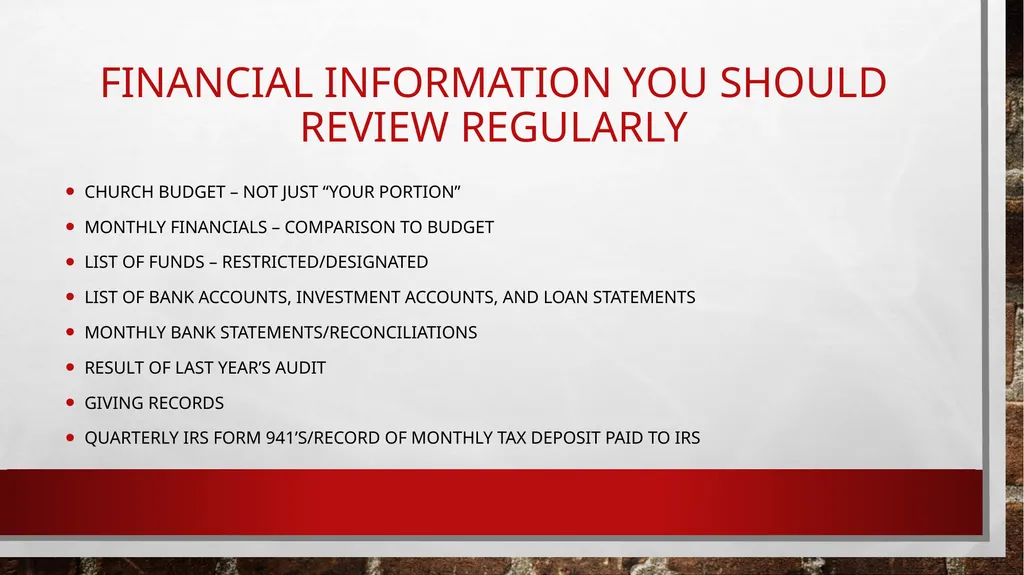
Financial information you should review regularly Church budget – not just “your portion”
Monthly financials – comparison to budget
List of funds – restricted/designated
List of bank accounts, investment accounts, and loan statements
Monthly bank statements/reconciliations
Result of last year’s audit
Giving records
Quarterly IRS form 941’s/record of monthly tax deposit paid to irs<br>
04
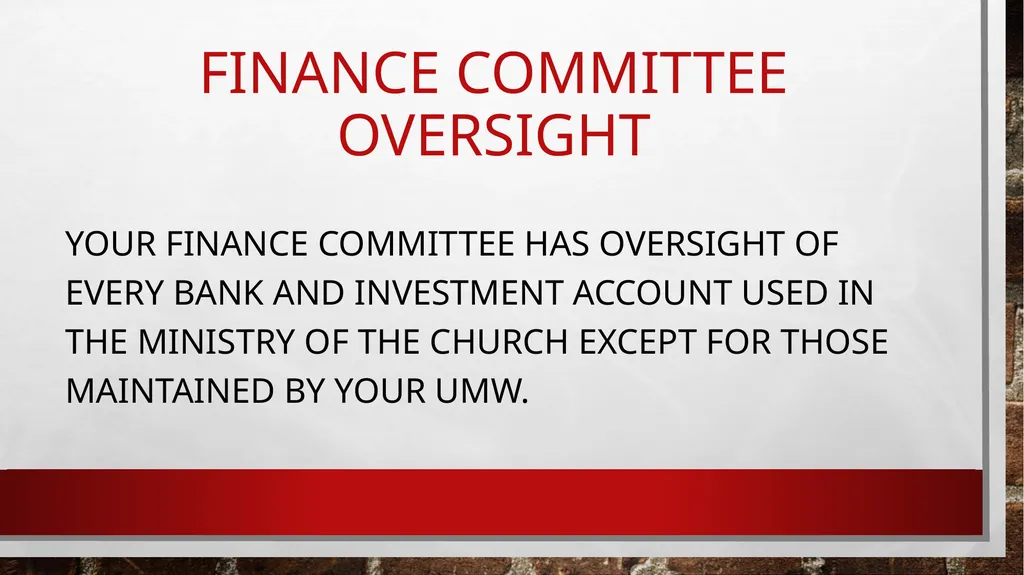
Finance committee oversight Your finance committee has oversight of every bank and investment account used in the ministry of the church except for those maintained by your UMW.<br>
05
Attend the monthly finance committee meetings<br>
06
What is a designated fund and what is a restricted fund? Designated fund – created through committee vote (unused budget)
Restricted fund – donor stated the purpose of the gift (scholarship, building, youth, music, etc.)<br>
07
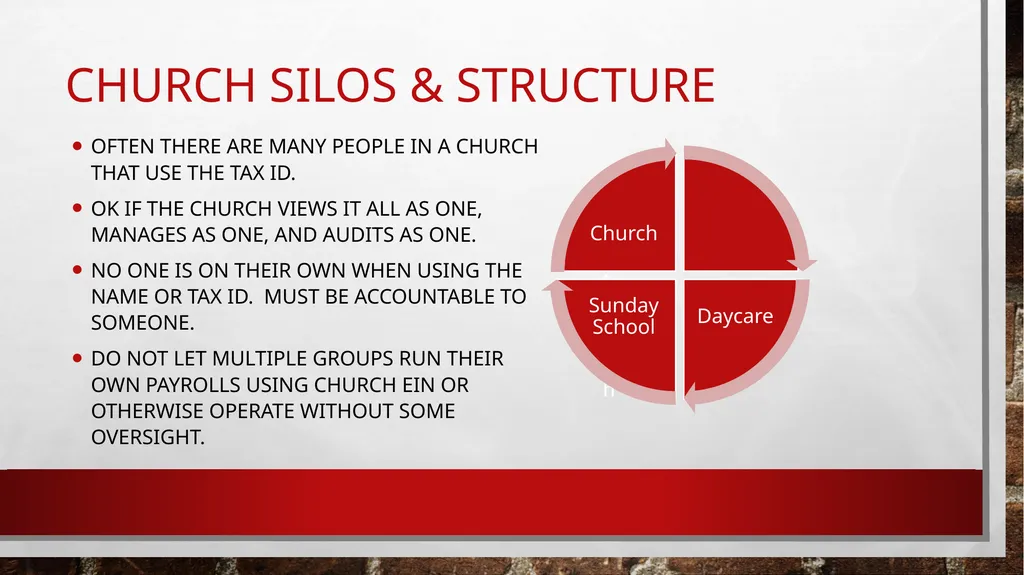
Church Silos & Structure Often there are many people in a church that use the tax id.
ok if the church views it all as one, manages as one, and audits as one.
No one is on their own when using the name or tax id. Must be accountable to someone.
Do not let multiple groups run their own payrolls using church EIN or otherwise operate without some oversight.<br>
08
Why do I need to know who gives what? Committee members should come from those who pledge to tithe and who pay their tithe
A large drop in giving could be an opportunity for ministry<br>
09
Stewardship is part of discipleship You need to talk about/preach on stewardship
Resources for the local church:
Saving Grace: A guide to financial well-being developed by wespath and Abingdon press
The Generosity Challenge, by Kristine miller & Scott mckenzie
enough: discovering joy through simplicity and generosity, by adam Hamilton
Generosity, Stewardship, and abundance, by Lovett Weems & Ann A. Michel
We aren’t broke, by mark elsdon & craig dykstra<br>
10
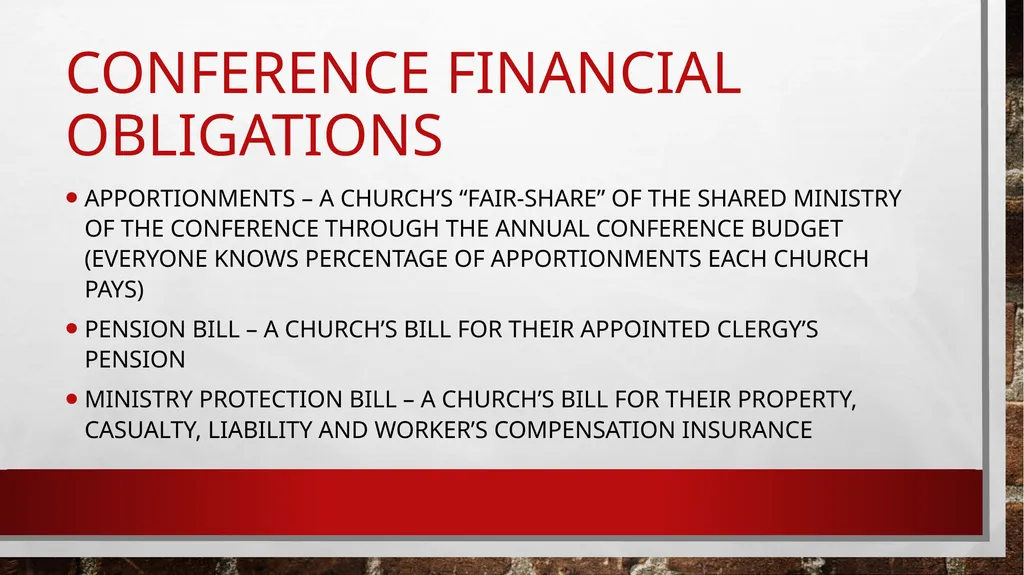
Conference financial obligations Apportionments – a church’s “fair-share” of the shared ministry of the conference through the annual conference budget (everyone knows percentage of apportionments each church pays)
Pension bill – a church’s bill for their appointed clergy’s pension
Ministry protection bill – a church’s bill for their property, casualty, liability and worker’s compensation insurance<br>
11
Resources on conference website Financial services page
Financial controls, policies and procedures
Stewardship aids
Guide to auditing the local church
Irs tax guide for churches and religious organizations
Apportionments guide<br>
12
Questions Call Me – 863-393-1421
Email csmelser@flumc.org<br>