04
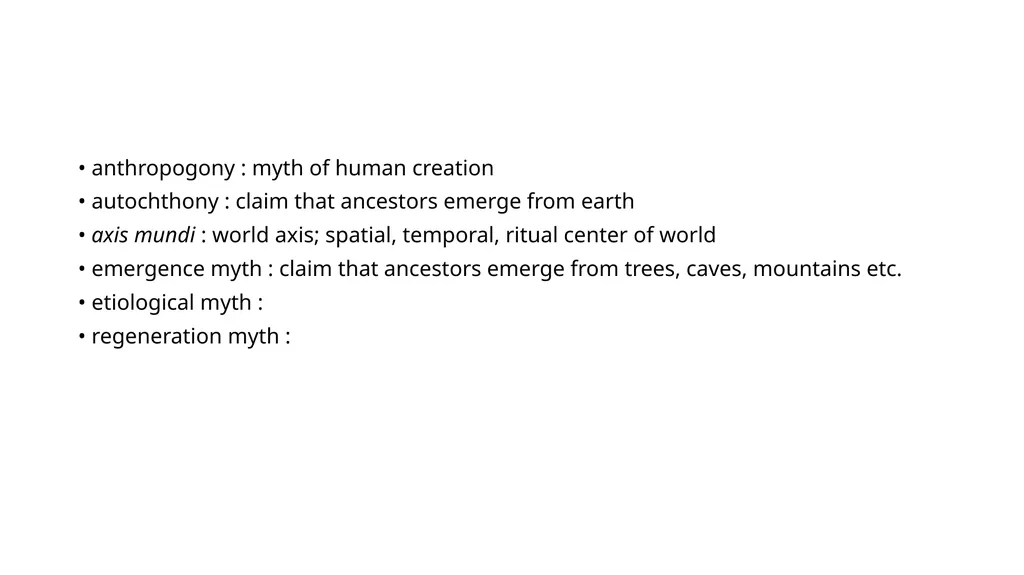
• anthropogony :
• autochthony :
• axis mundi :
• emergence myth :
• etiological myth :
• regeneration myth :<br>
05
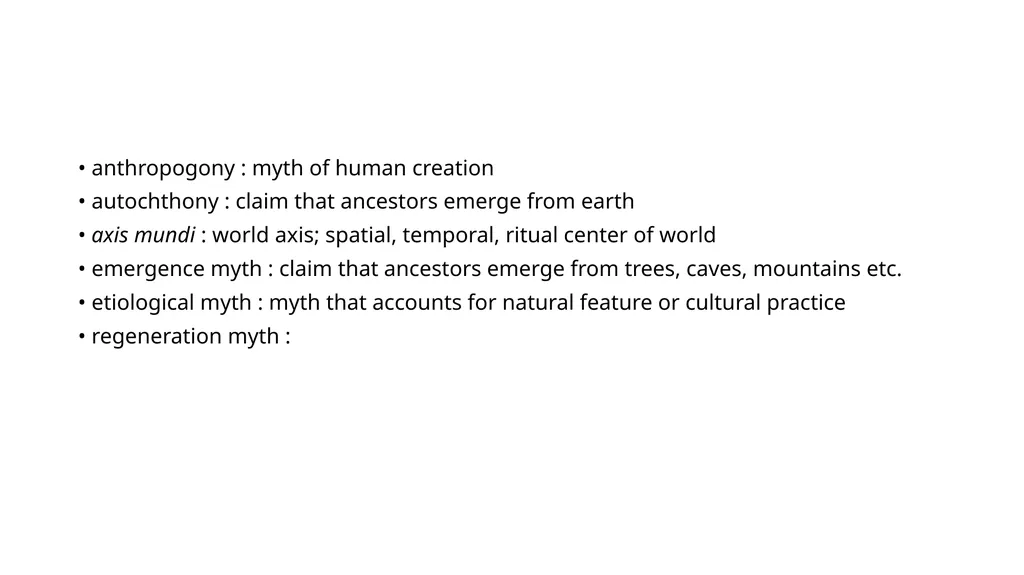
• anthropogony : myth of human creation
• autochthony :
• axis mundi :
• emergence myth :
• etiological myth :
• regeneration myth :<br>
06
• anthropogony : myth of human creation
• autochthony : claim that ancestors emerge from earth
• axis mundi :
• emergence myth :
• etiological myth :
• regeneration myth :<br>
07
• anthropogony : myth of human creation
• autochthony : claim that ancestors emerge from earth
• axis mundi : world axis; spatial, temporal, ritual center of world
• emergence myth :
• etiological myth :
• regeneration myth :<br>
08
• anthropogony : myth of human creation
• autochthony : claim that ancestors emerge from earth
• axis mundi : world axis; spatial, temporal, ritual center of world
• emergence myth : claim that ancestors emerge from trees, caves, mountains etc.
• etiological myth :
• regeneration myth :<br>
09
• anthropogony : myth of human creation
• autochthony : claim that ancestors emerge from earth
• axis mundi : world axis; spatial, temporal, ritual center of world
• emergence myth : claim that ancestors emerge from trees, caves, mountains etc.
• etiological myth : myth that accounts for natural feature or cultural practice
• regeneration myth :<br>
10
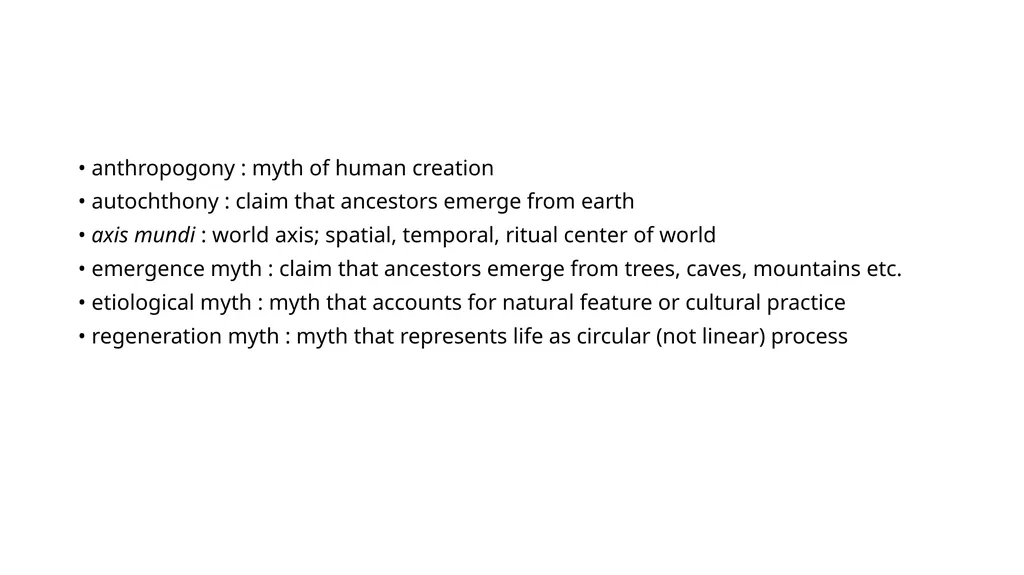
• anthropogony : myth of human creation
• autochthony : claim that ancestors emerge from earth
• axis mundi : world axis; spatial, temporal, ritual center of world
• emergence myth : claim that ancestors emerge from trees, caves, mountains etc.
• etiological myth : myth that accounts for natural feature or cultural practice
• regeneration myth : myth that represents life as circular (not linear) process<br>
11
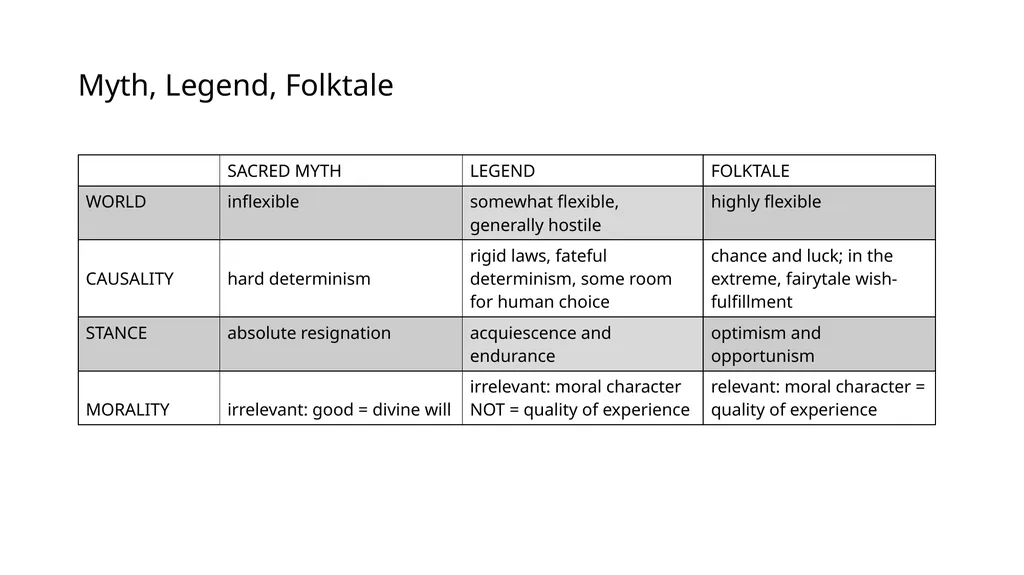
Myth, Legend, Folktale<br>
15
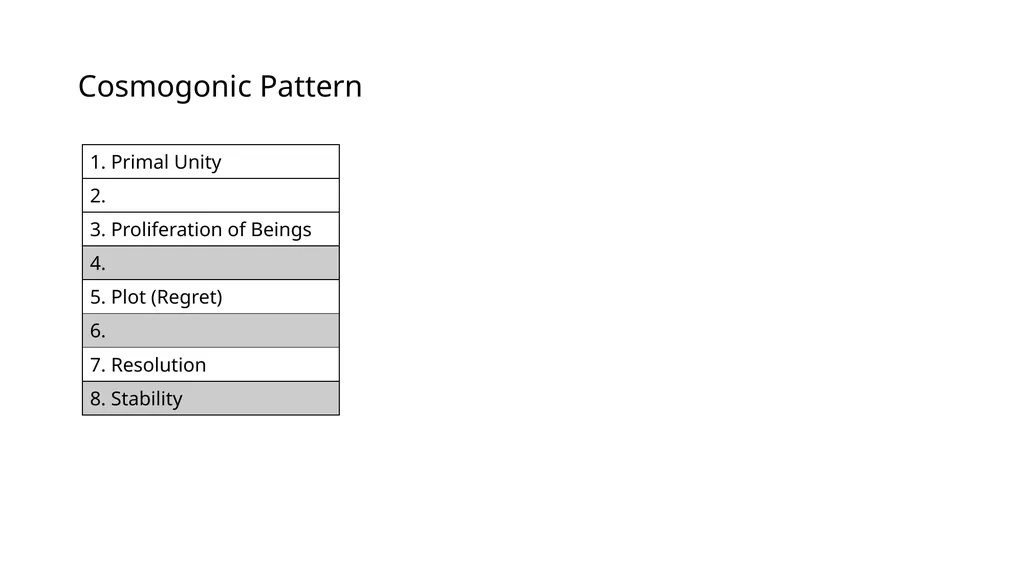
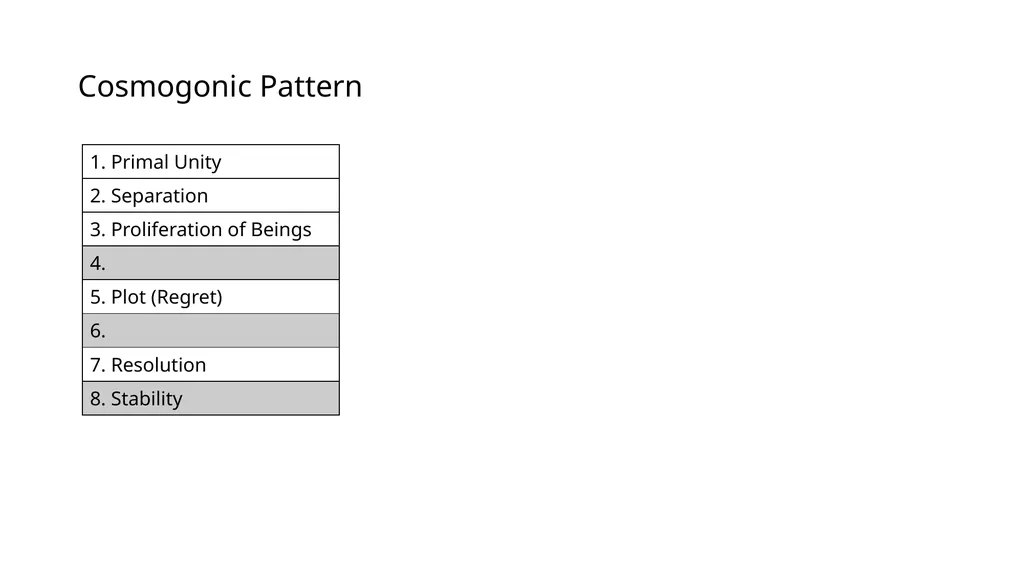
Cosmogonic Pattern<br>
16
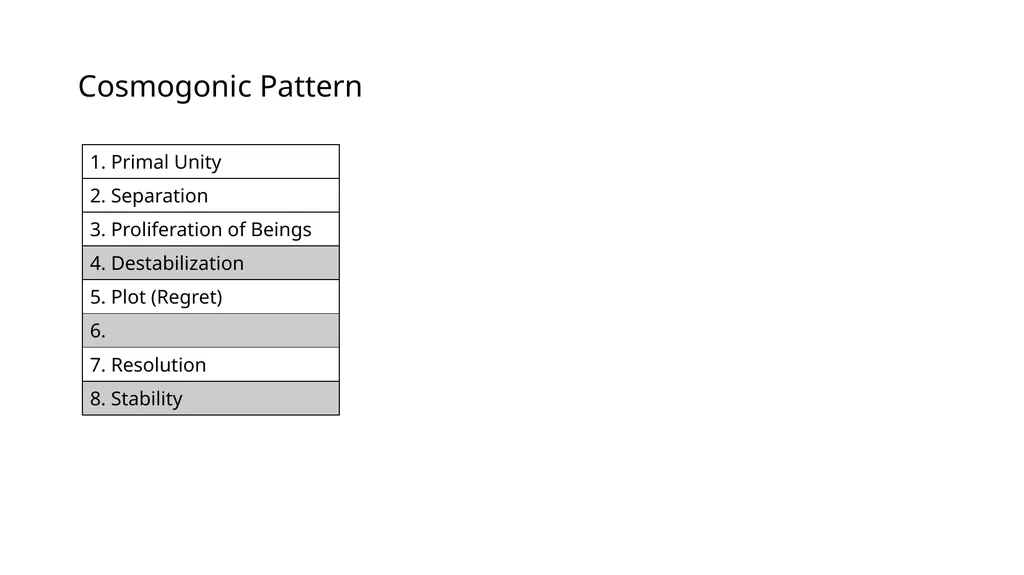
Cosmogonic Pattern<br>
17
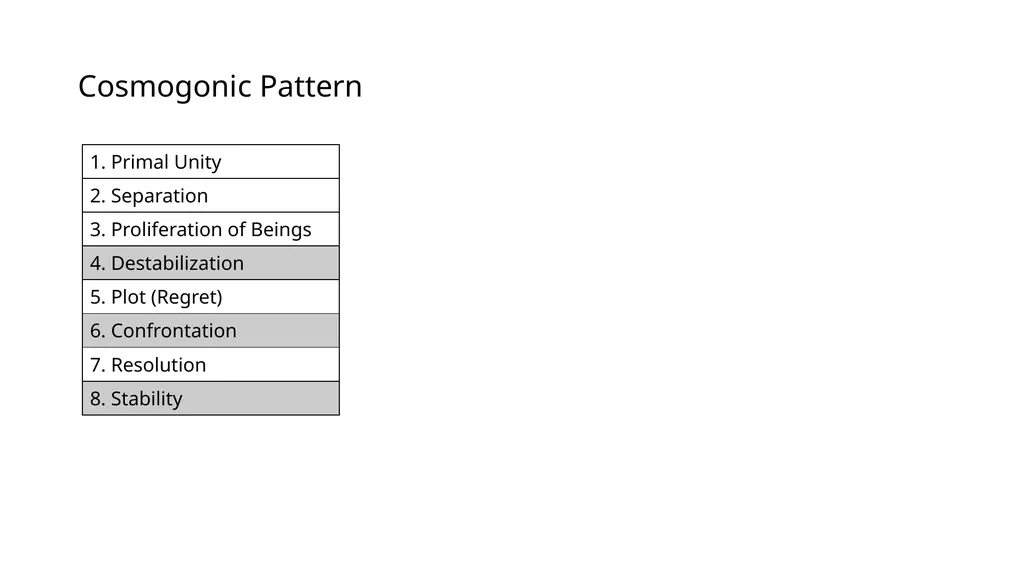
Cosmogonic Pattern<br>
18
Cosmogonic Pattern<br>
21
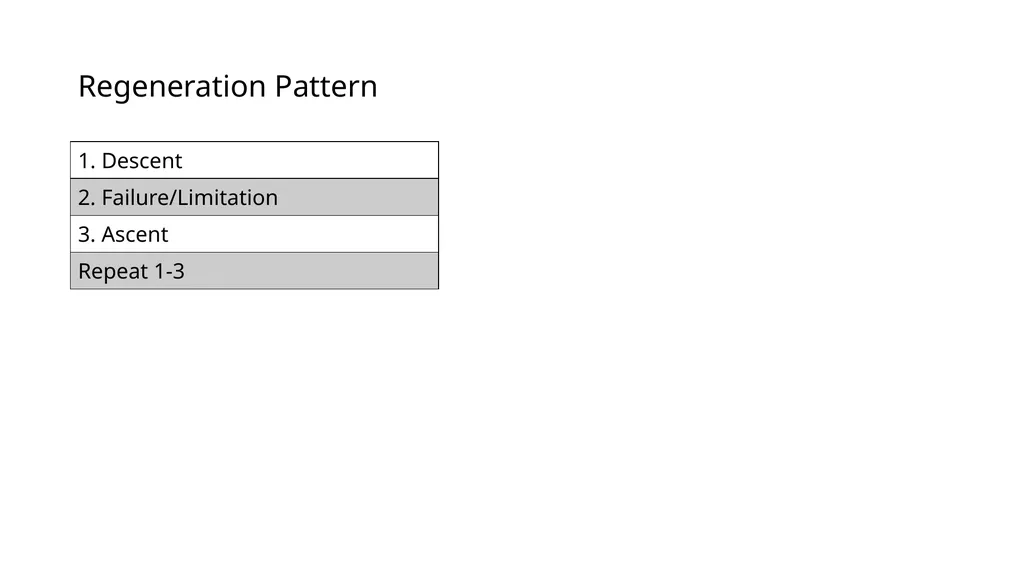
Regeneration Pattern<br>
22
MESOAMERICAN MATERIAL<br>
23
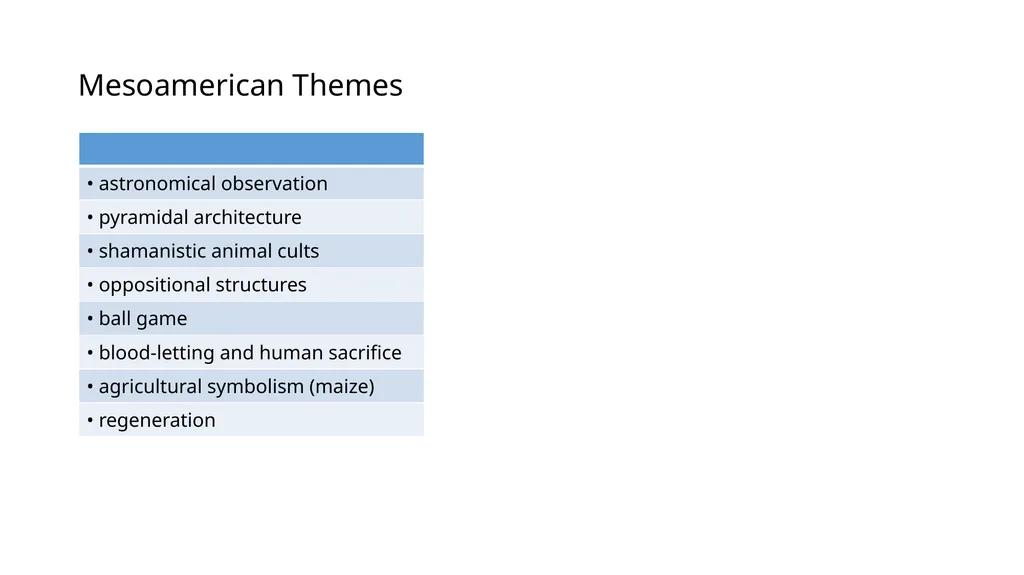
Mesoamerican Themes<br>
24
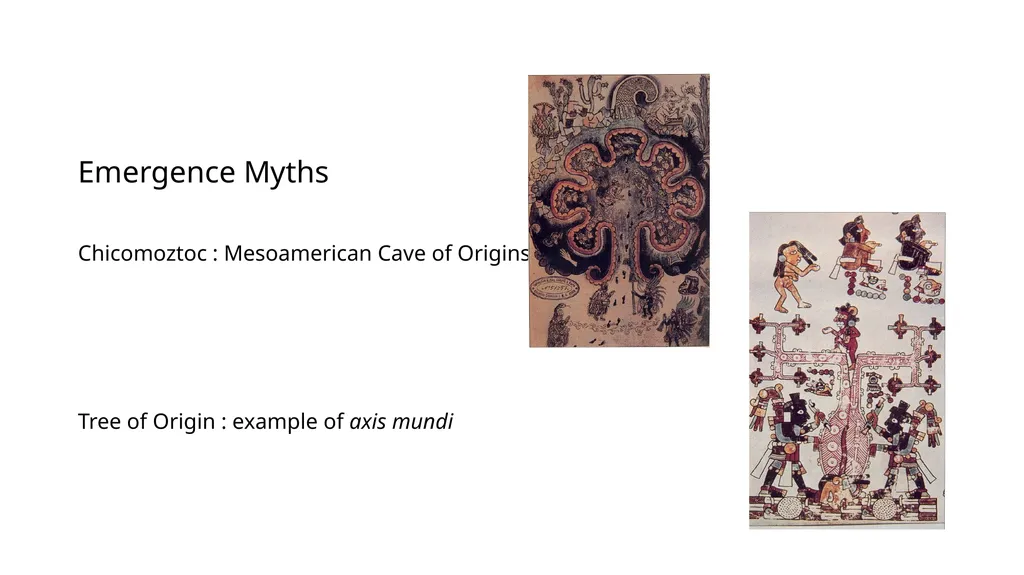
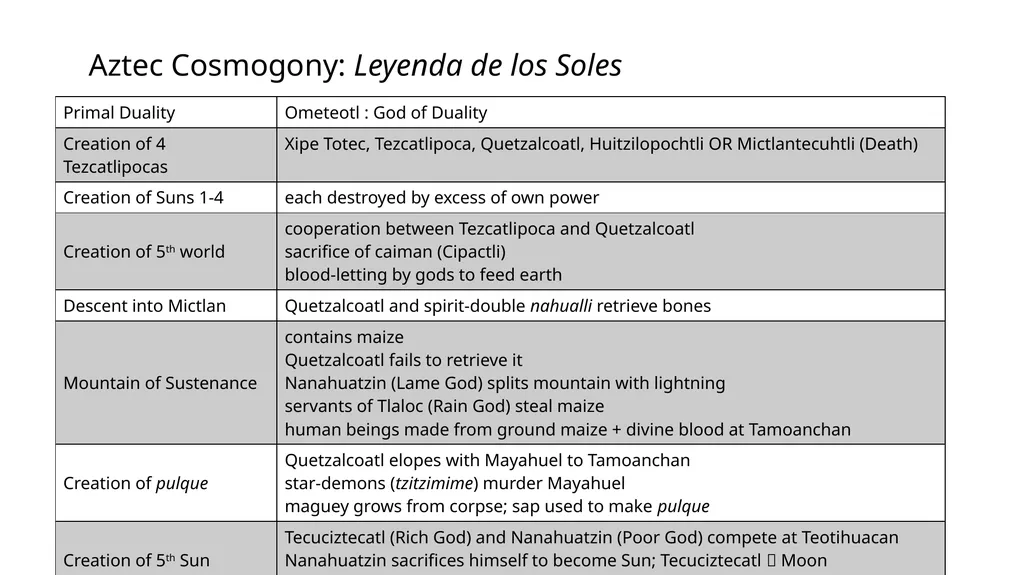
Emergence Myths
Chicomoztoc : Mesoamerican Cave of Origins
Tree of Origin : example of axis mundi<br>
25
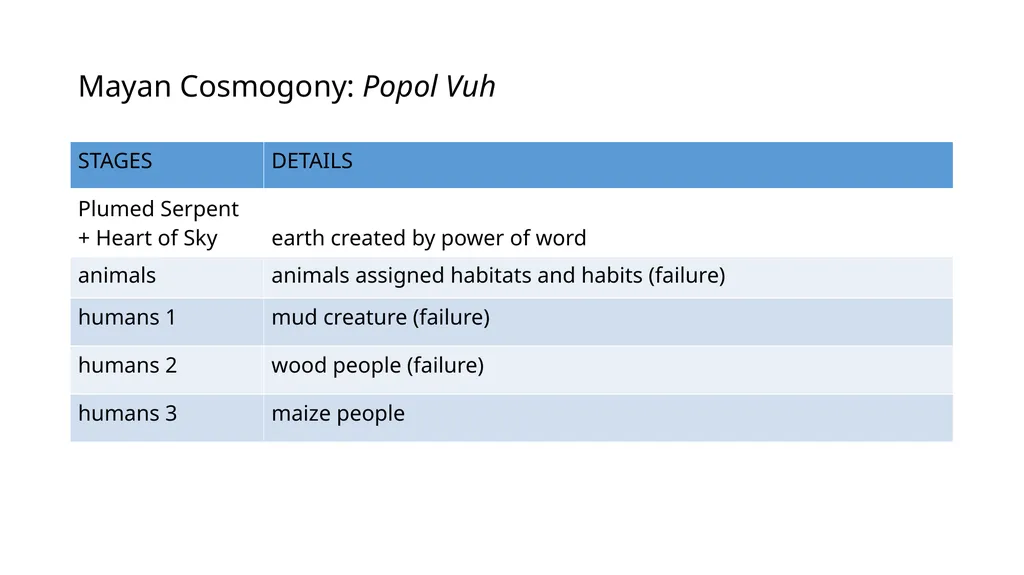
Aztec Cosmogony: Leyenda de los Soles<br>
26
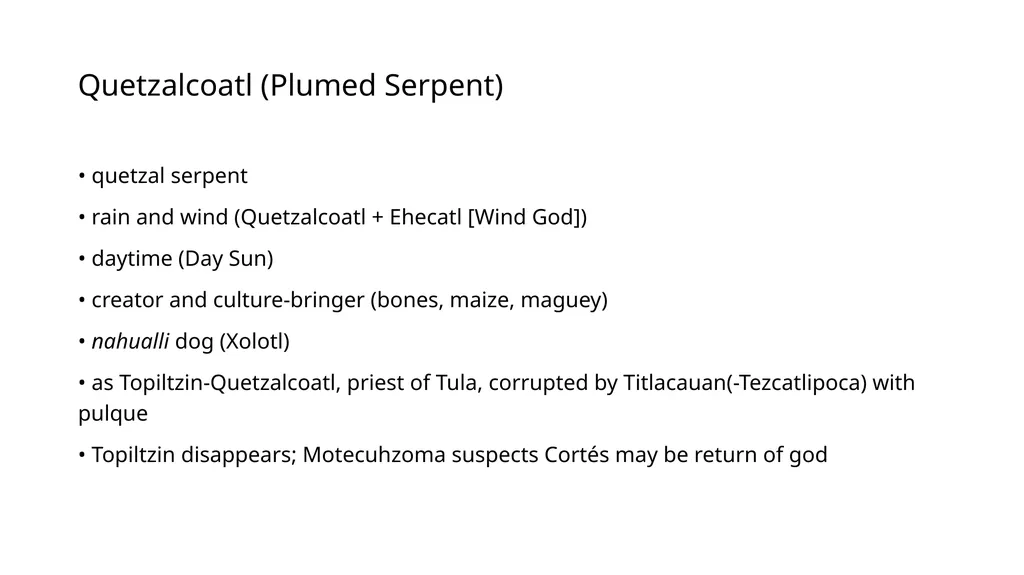
Mayan Cosmogony: Popol Vuh<br>
27
Quetzalcoatl (Plumed Serpent) • quetzal serpent
• rain and wind (Quetzalcoatl + Ehecatl [Wind God])
• daytime (Day Sun)
• creator and culture-bringer (bones, maize, maguey)
• nahualli dog (Xolotl)
• as Topiltzin-Quetzalcoatl, priest of Tula, corrupted by Titlacauan(-Tezcatlipoca) with pulque
• Topiltzin disappears; Motecuhzoma suspects Cortés may be return of god<br>
28
Tezcatlipoca (Smoking Mirror) • original (Black) created god
• cooperates with Quetzalcoatl to create world
• associations: night (Night Sun), earth, death, jaguar (nahualli), obsidian (divination), smoke, mirrors (divination), magic, drunkenness, sexual debauchery (lameness, fire, lightning), war, kingship
• Tezcatlipoca (as Titlacauan) corrupts Quetzalcoatl-Topiltzin with pulque, causing fall of city of Tula<br>
29
Huitzilopochtli and Aztec Migration • Migration as “external motivation”: fated, destined, divinely supported.
• Migration charts genealogical, physical, topographical ancestry.
• Migration establishes itinerary of significant places, sacralizing space.
• Migration establishes political history of relations, legitimizing wars and alliances.
• Route of migration provides map for ritual reenactment.<br>
30
Huitzilopochtli and Aztec Migration • Aztecs leave Aztlan led by bodiless Huitzilopochtli
• Coatlicue (Snake Skirt Woman) impregnated by feather
• Huitzilopochtli born and attacked by 400 step-brothers and Coyolxauhqui (She Whose Face is Adorned with Bells)
• death of Coyolxauhqui ~ defeat of moon by sun
• sculptured slab of dismembered Coyolxauhqui at Templo Mayor
• Aztecs foundTenochtitlan (1345) where eagle perches in cactus<br>
31
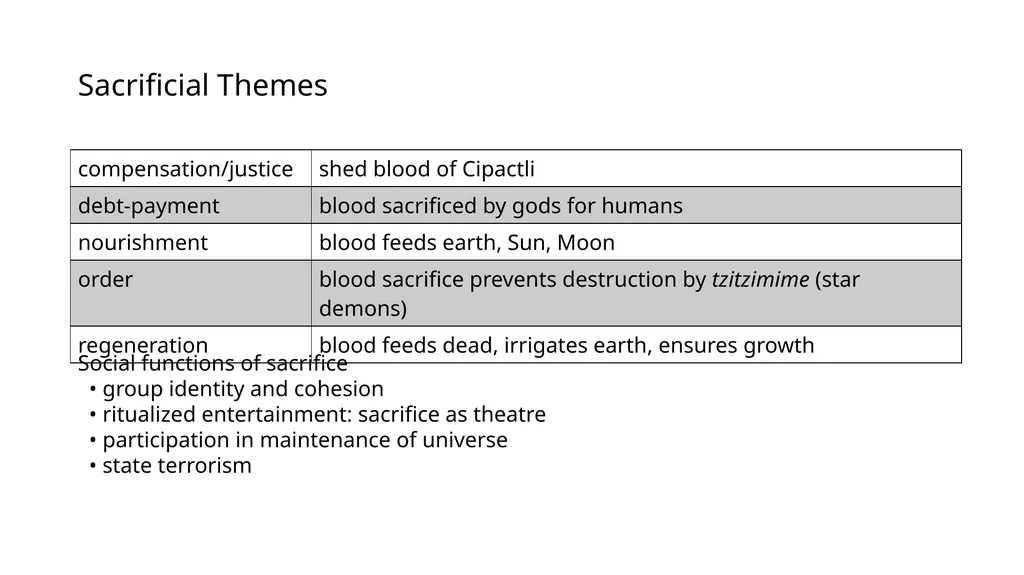
Sacrificial Themes Social functions of sacrifice
• group identity and cohesion
• ritualized entertainment: sacrifice as theatre
• participation in maintenance of universe
• state terrorism<br>
32
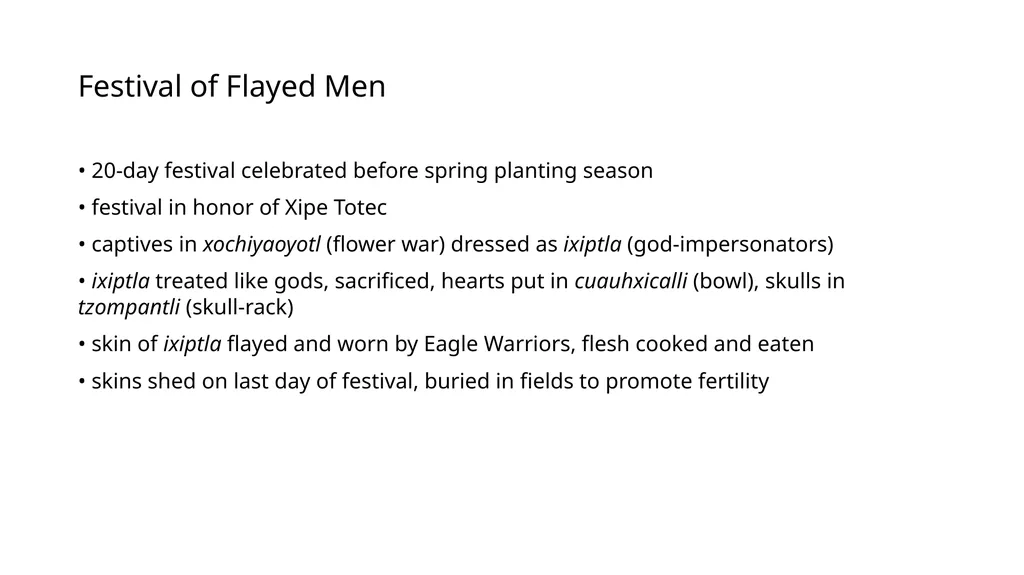
Festival of Flayed Men • 20-day festival celebrated before spring planting season
• festival in honor of Xipe Totec
• captives in xochiyaoyotl (flower war) dressed as ixiptla (god-impersonators)
• ixiptla treated like gods, sacrificed, hearts put in cuauhxicalli (bowl), skulls in tzompantli (skull-rack)
• skin of ixiptla flayed and worn by Eagle Warriors, flesh cooked and eaten
• skins shed on last day of festival, buried in fields to promote fertility<br>
33
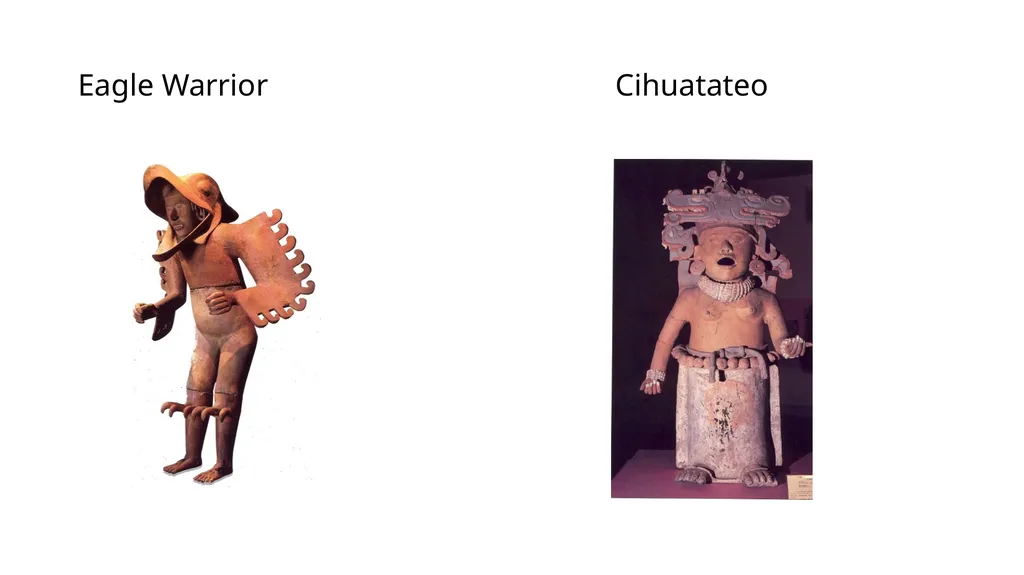
Eagle Warrior Cihuatateo<br>
34
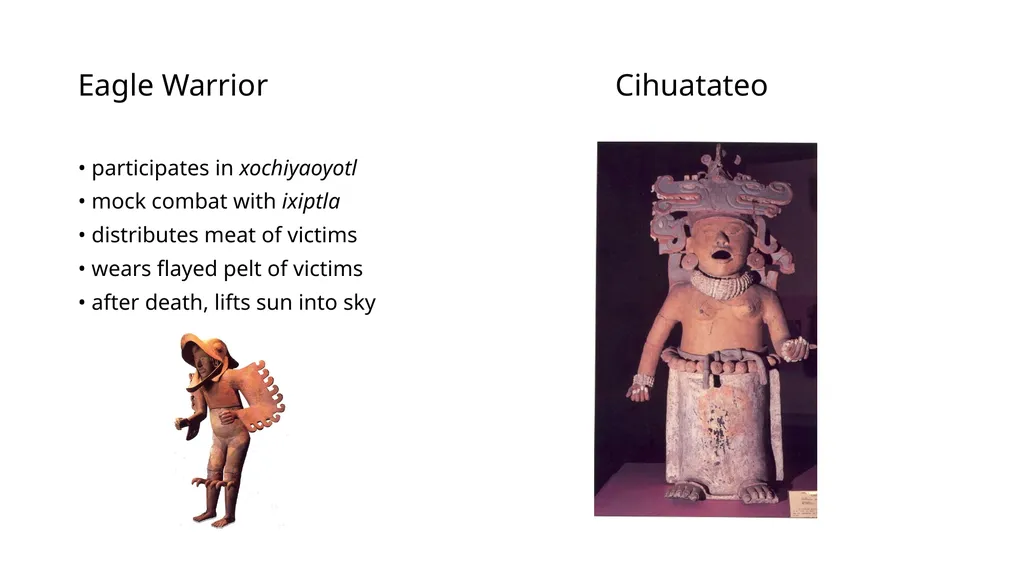
Eagle Warrior Cihuatateo • participates in xochiyaoyotl
• mock combat with ixiptla
• distributes meat of victims
• wears flayed pelt of victims
• after death, lifts sun into sky<br>
35
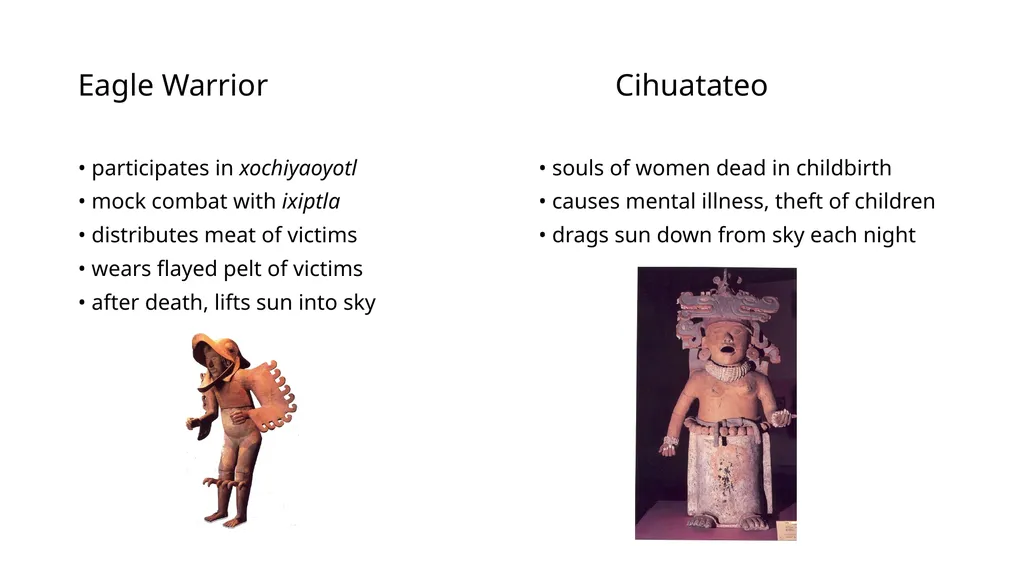
Eagle Warrior Cihuatateo • participates in xochiyaoyotl • souls of women dead in childbirth
• mock combat with ixiptla • causes mental illness, theft of children
• distributes meat of victims • drags sun down from sky each night
• wears flayed pelt of victims
• after death, lifts sun into sky<br>
36
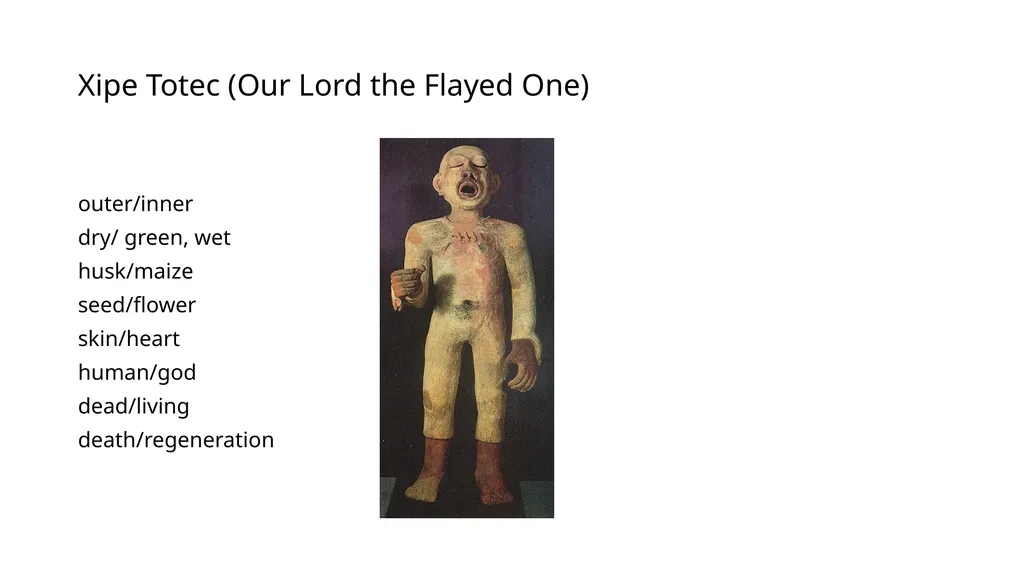
Xipe Totec (Our Lord the Flayed One) outer/inner
dry/ green, wet
husk/maize
seed/flower
skin/heart
human/god
dead/living
death/regeneration<br>
37
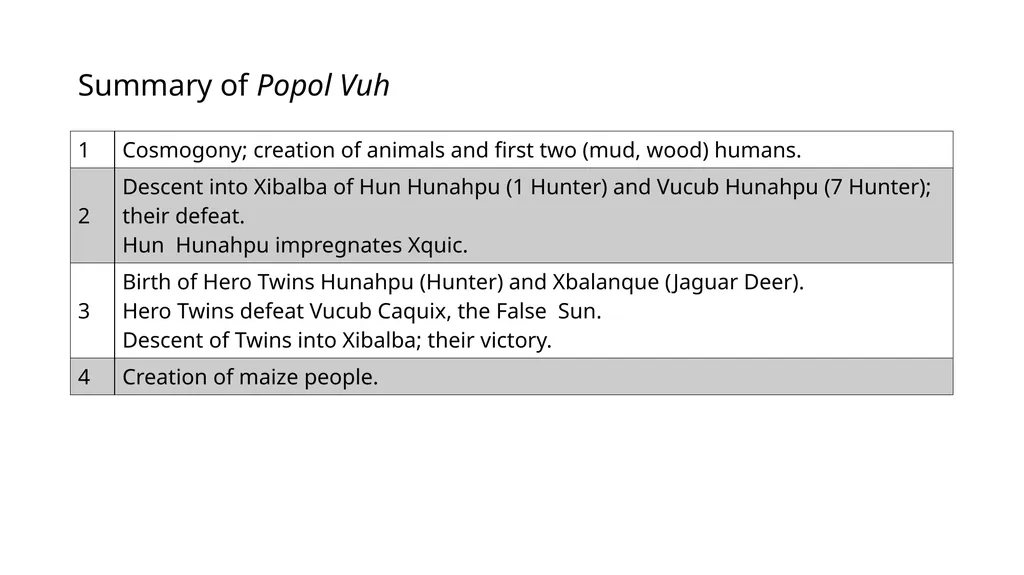
Summary of Popol Vuh<br>
38
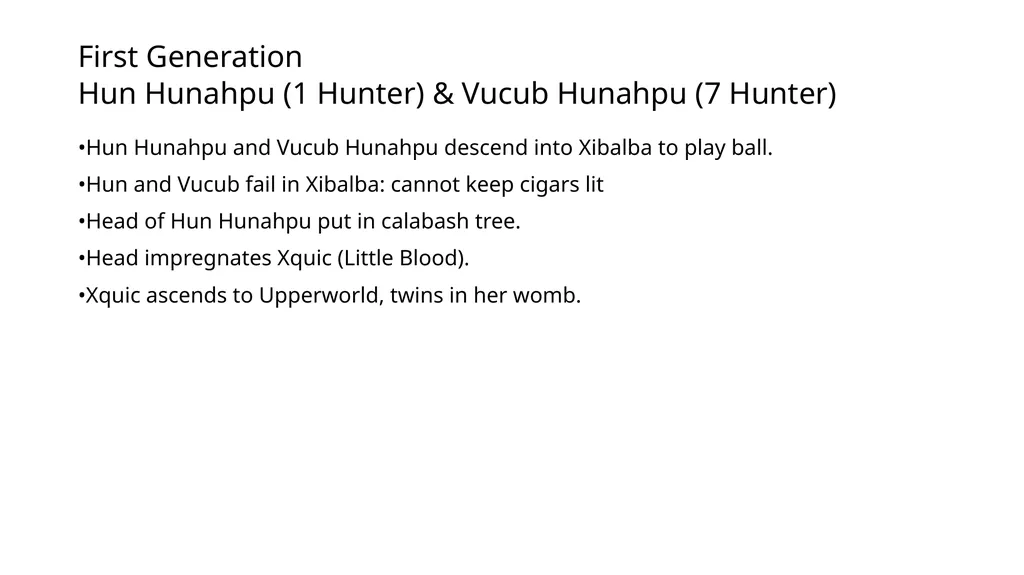
First Generation�Hun Hunahpu (1 Hunter) & Vucub Hunahpu (7 Hunter) •Hun Hunahpu and Vucub Hunahpu descend into Xibalba to play ball.
•Hun and Vucub fail in Xibalba: cannot keep cigars lit
•Head of Hun Hunahpu put in calabash tree.
•Head impregnates Xquic (Little Blood).
•Xquic ascends to Upperworld, twins in her womb.<br>
39
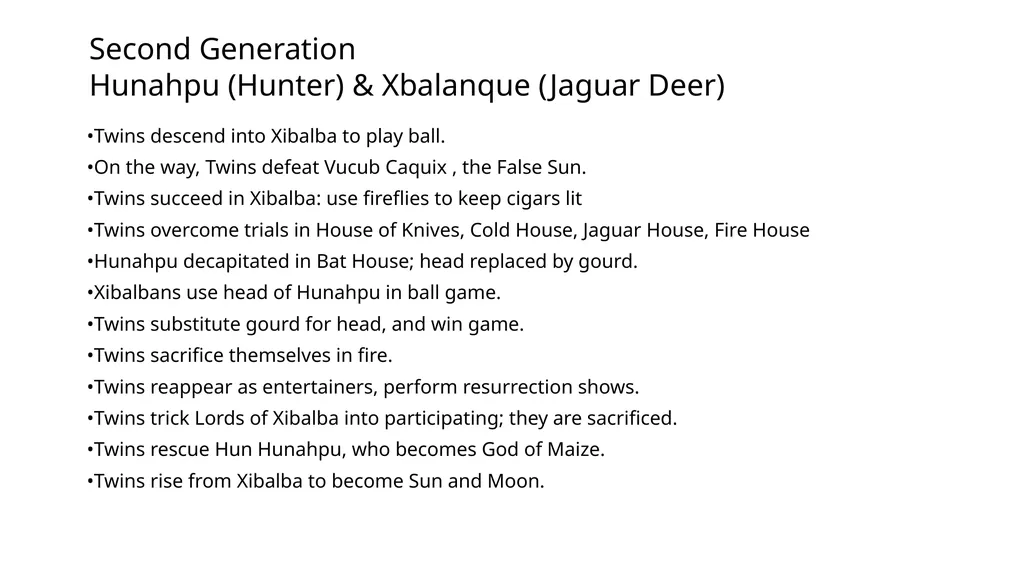
Second Generation�Hunahpu (Hunter) & Xbalanque (Jaguar Deer) •Twins descend into Xibalba to play ball.
•On the way, Twins defeat Vucub Caquix , the False Sun.
•Twins succeed in Xibalba: use fireflies to keep cigars lit
•Twins overcome trials in House of Knives, Cold House, Jaguar House, Fire House
•Hunahpu decapitated in Bat House; head replaced by gourd.
•Xibalbans use head of Hunahpu in ball game.
•Twins substitute gourd for head, and win game.
•Twins sacrifice themselves in fire.
•Twins reappear as entertainers, perform resurrection shows.
•Twins trick Lords of Xibalba into participating; they are sacrificed.
•Twins rescue Hun Hunahpu, who becomes God of Maize.
•Twins rise from Xibalba to become Sun and Moon.<br>
40
Substitutions in Popol Vuh head of Hunahpu skull gourd ball head Sun<br>
41
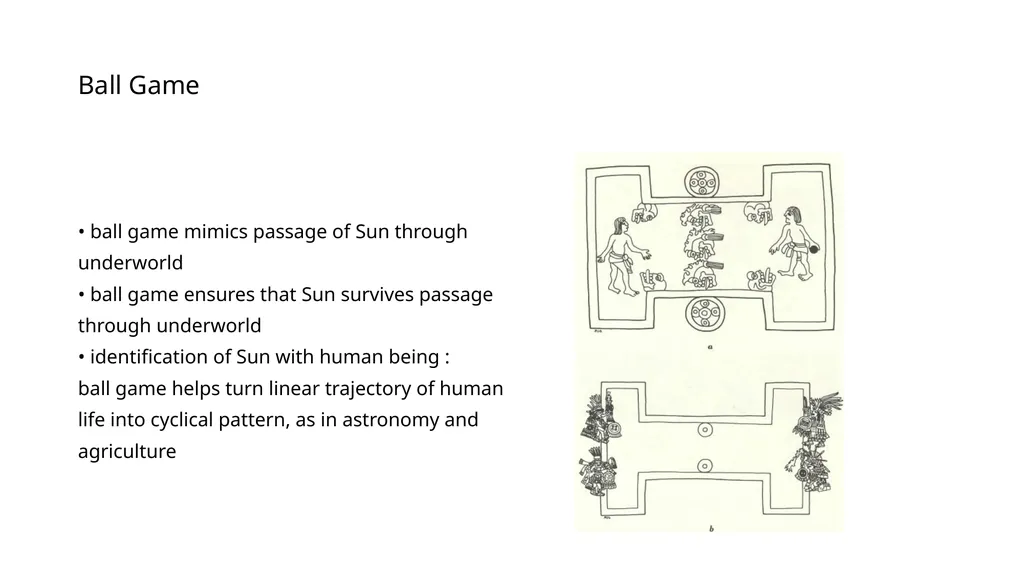
Ball Game • ball game mimics passage of Sun through
underworld
• ball game ensures that Sun survives passage
through underworld
• identification of Sun with human being :
ball game helps turn linear trajectory of human
life into cyclical pattern, as in astronomy and
agriculture<br>