
A Critical Analysis Characters in Henrik Ibsen’s

Description: A Critical Analysis Characters in Henrik Ibsens Ghosts crnadpc Introduction Henrik Ibsens Ghosts (1881) presents a powerful critique of societal norms through its deeply symbolic characters. Each character embodies the themes of
Related Topics
Download Presentation
"A Critical Analysis Characters in Henrik Ibsen’s" is the property of its rightful owner. Permission is granted to download and print the materials on this website for personal, non-commercial use only, and to display it on your personal computer provided you do not modify the materials and that you retain all copyright notices contained in the materials. By downloading content from our website, you accept the terms of this agreement.
Presentation Transcript
slide1. A Critical Analysis Characters in Henrik Ibsen’s 'Ghosts' crn@adpc<br>
slide2. Introduction Henrik Ibsen’s 'Ghosts' (1881) presents a powerful critique of societal norms through its deeply symbolic characters. Each character embodies the themes of hypocrisy, morality, and the burden of the past. This presentation explores their roles and significance.<br>
slide3. Mrs. Helene Alving – The Tragic Mother A strong, intelligent woman trapped by societal expectations.
Tries to shield her son from his father’s corruption.
Represents the struggle between duty and personal truth.
Realizes too late that she cannot escape the 'ghosts' of the past.<br>
slide4. Oswald Alving – The Doomed Son An artist who seeks freedom but inherits his father’s illness.
Represents the consequences of past sins and heredity.
His plea for euthanasia forces his mother into a tragic moral dilemma.
His suffering symbolizes the inevitable decay caused by societal repression.<br>
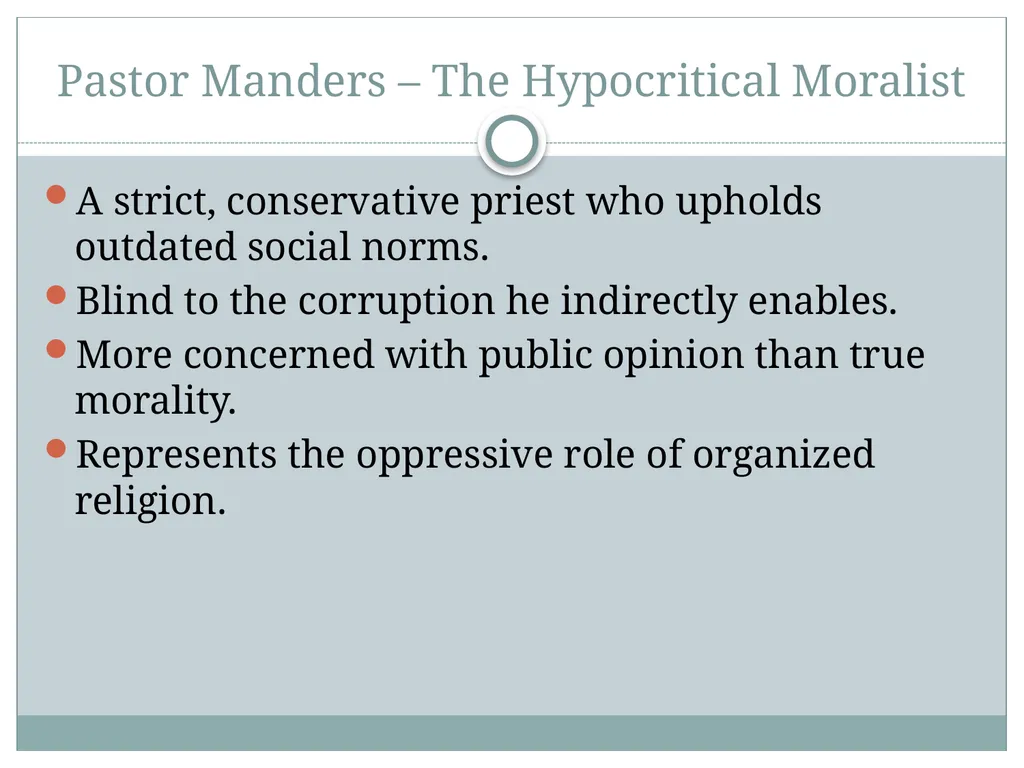
slide5. Pastor Manders – The Hypocritical Moralist A strict, conservative priest who upholds outdated social norms.
Blind to the corruption he indirectly enables.
More concerned with public opinion than true morality.
Represents the oppressive role of organized religion.<br>
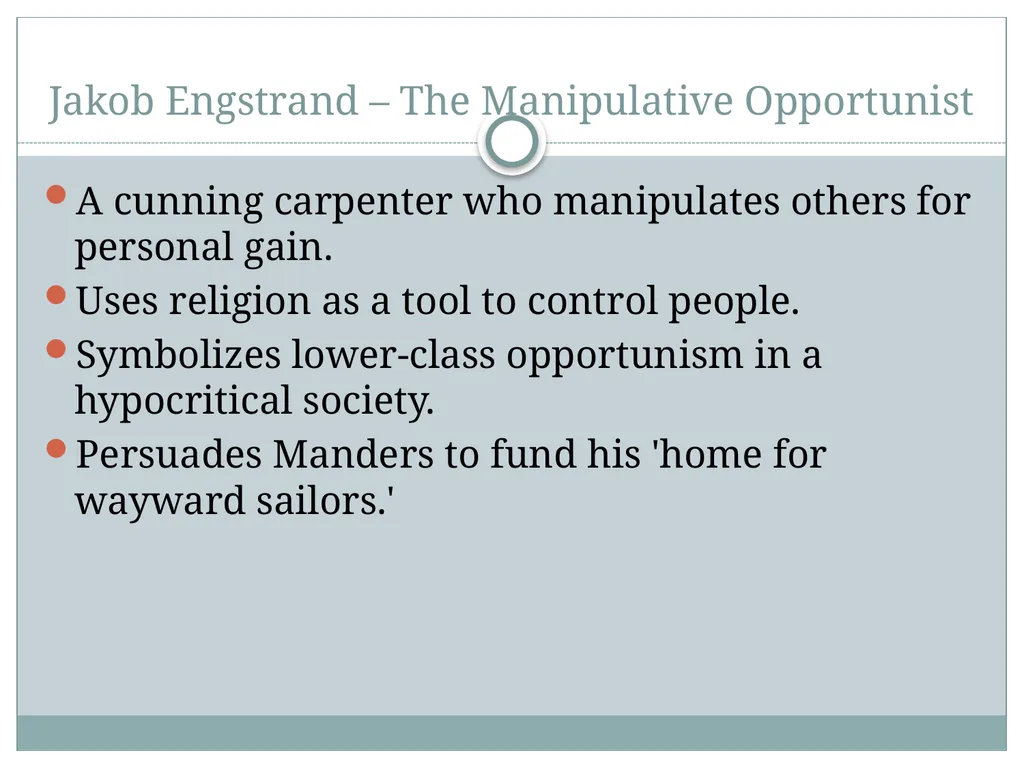
slide6. Jakob Engstrand – The Manipulative Opportunist A cunning carpenter who manipulates others for personal gain.
Uses religion as a tool to control people.
Symbolizes lower-class opportunism in a hypocritical society.
Persuades Manders to fund his 'home for wayward sailors.'<br>
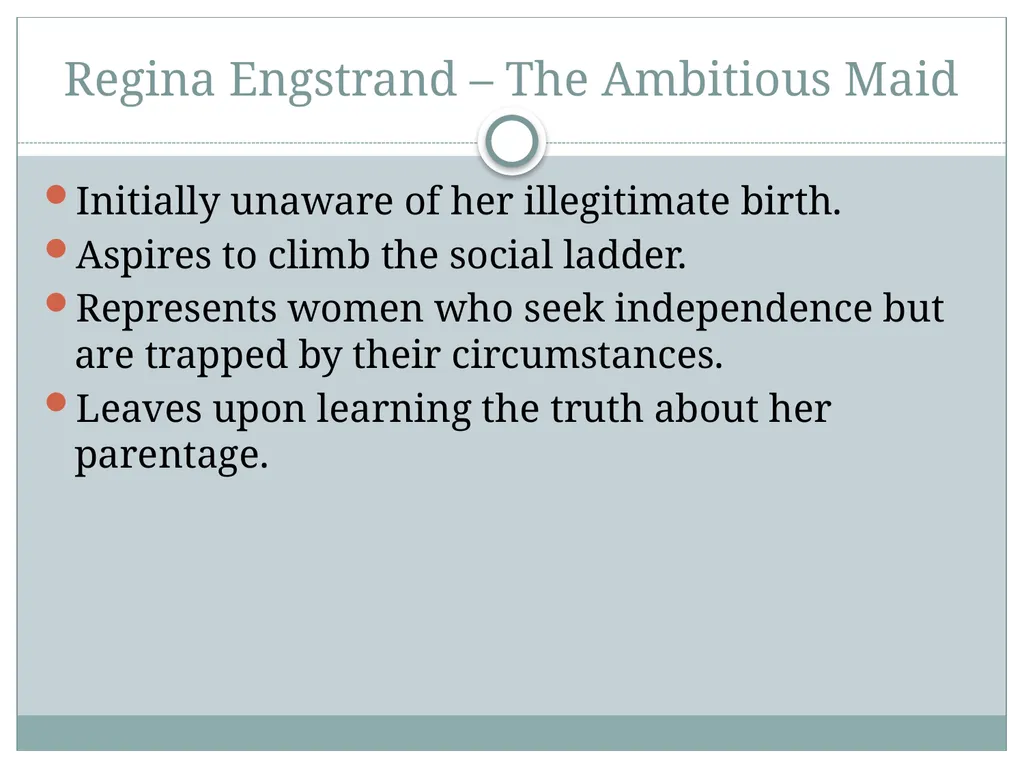
slide7. Regina Engstrand – The Ambitious Maid Initially unaware of her illegitimate birth.
Aspires to climb the social ladder.
Represents women who seek independence but are trapped by their circumstances.
Leaves upon learning the truth about her parentage.<br>
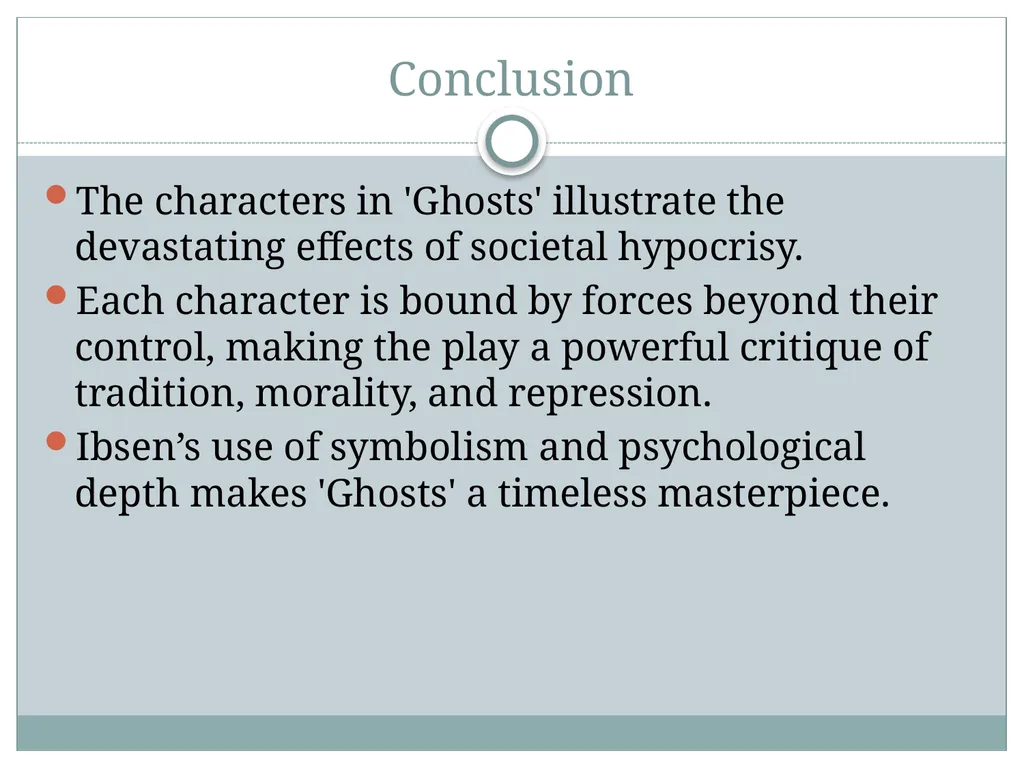
slide8. Conclusion The characters in 'Ghosts' illustrate the devastating effects of societal hypocrisy.
Each character is bound by forces beyond their control, making the play a powerful critique of tradition, morality, and repression.
Ibsen’s use of symbolism and psychological depth makes 'Ghosts' a timeless masterpiece.<br>
slide2. Introduction Henrik Ibsen’s 'Ghosts' (1881) presents a powerful critique of societal norms through its deeply symbolic characters. Each character embodies the themes of hypocrisy, morality, and the burden of the past. This presentation explores their roles and significance.<br>
slide3. Mrs. Helene Alving – The Tragic Mother A strong, intelligent woman trapped by societal expectations.
Tries to shield her son from his father’s corruption.
Represents the struggle between duty and personal truth.
Realizes too late that she cannot escape the 'ghosts' of the past.<br>
slide4. Oswald Alving – The Doomed Son An artist who seeks freedom but inherits his father’s illness.
Represents the consequences of past sins and heredity.
His plea for euthanasia forces his mother into a tragic moral dilemma.
His suffering symbolizes the inevitable decay caused by societal repression.<br>
slide5. Pastor Manders – The Hypocritical Moralist A strict, conservative priest who upholds outdated social norms.
Blind to the corruption he indirectly enables.
More concerned with public opinion than true morality.
Represents the oppressive role of organized religion.<br>
slide6. Jakob Engstrand – The Manipulative Opportunist A cunning carpenter who manipulates others for personal gain.
Uses religion as a tool to control people.
Symbolizes lower-class opportunism in a hypocritical society.
Persuades Manders to fund his 'home for wayward sailors.'<br>
slide7. Regina Engstrand – The Ambitious Maid Initially unaware of her illegitimate birth.
Aspires to climb the social ladder.
Represents women who seek independence but are trapped by their circumstances.
Leaves upon learning the truth about her parentage.<br>
slide8. Conclusion The characters in 'Ghosts' illustrate the devastating effects of societal hypocrisy.
Each character is bound by forces beyond their control, making the play a powerful critique of tradition, morality, and repression.
Ibsen’s use of symbolism and psychological depth makes 'Ghosts' a timeless masterpiece.<br>