
A new Complaint Handling Code for the sector

Description: A new Complaint Handling Code for the sector Webinar 26 February 2021 Dave Simmons Sector Development Lead John Goodwin Systemic Adjudicator Agenda New Complaint Handling Code background aims key points New Housing Ombudsman Scheme
Related Topics
Download Presentation
"A new Complaint Handling Code for the sector" is the property of its rightful owner. Permission is granted to download and print the materials on this website for personal, non-commercial use only, and to display it on your personal computer provided you do not modify the materials and that you retain all copyright notices contained in the materials. By downloading content from our website, you accept the terms of this agreement.
Presentation Transcript
slide1. A new
Complaint Handling Code for the sector
Webinar – 26 February 2021
Dave Simmons – Sector Development Lead
John Goodwin – Systemic Adjudicator<br>
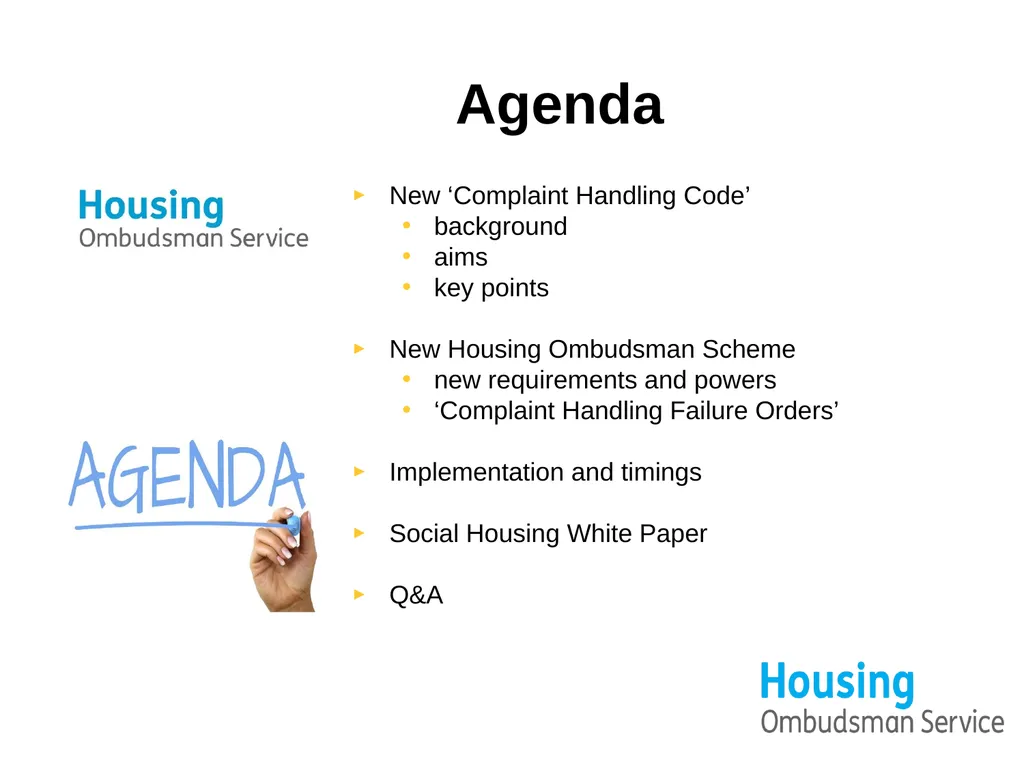
slide2. Agenda New ‘Complaint Handling Code’
background
aims
key points
New Housing Ombudsman Scheme
new requirements and powers
‘Complaint Handling Failure Orders’
Implementation and timings
Social Housing White Paper
Q&A<br>
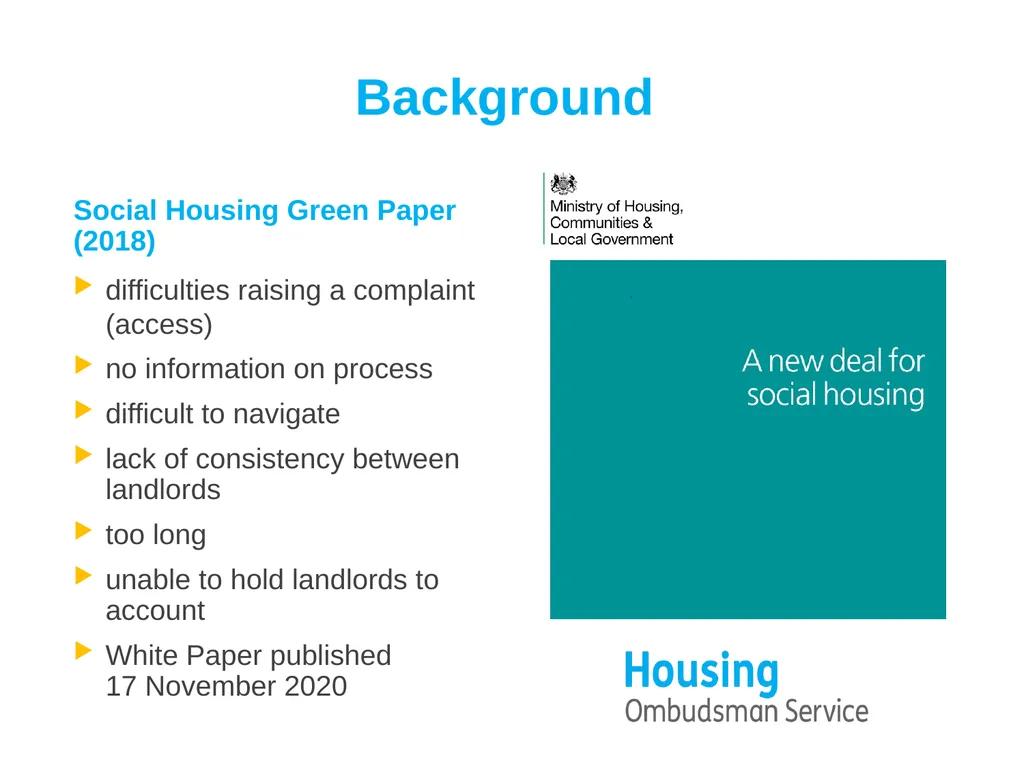
slide3. Background Social Housing Green Paper (2018)
difficulties raising a complaint (access)
no information on process
difficult to navigate
lack of consistency between landlords
too long
unable to hold landlords to account
White Paper published 17 November 2020<br>
slide4. Background Ombudsman’s experience:
delays in landlords engaging with residents
not accepting or escalating complaints
delays in engaging with us (providing evidence)
Ombudsman’s response: Complaint Handling Code
Consultation with sector
residents and landlords
TPAS, TAROE, NFA, ARCH, CIH, Housemark, NHF, landlords<br>
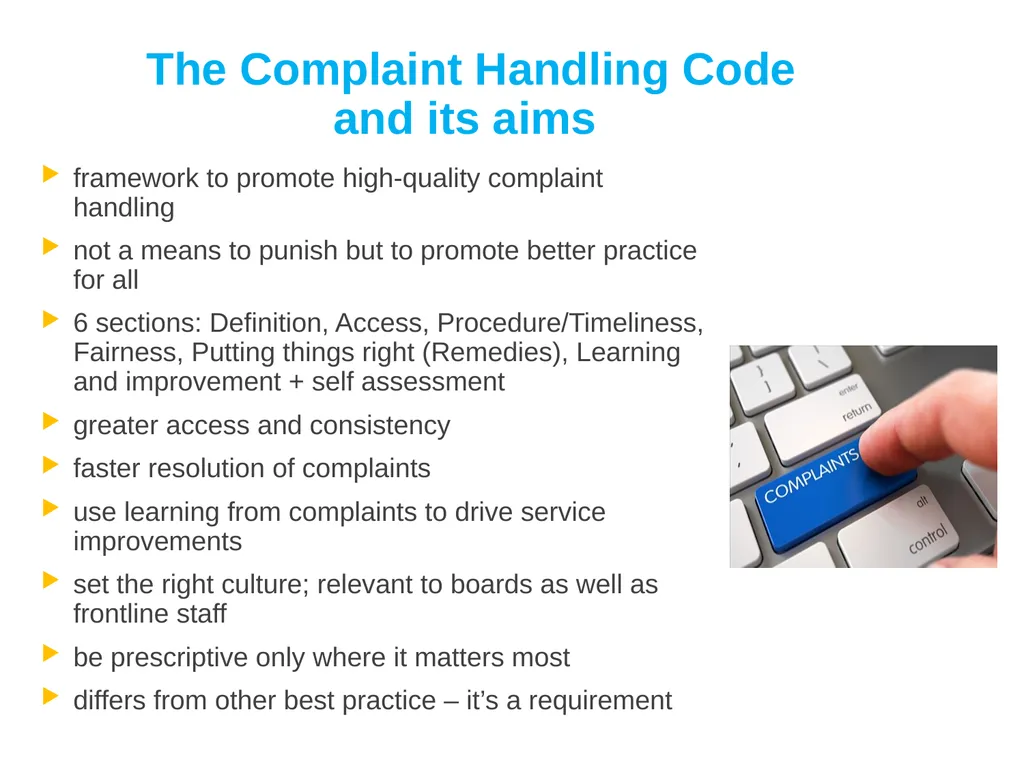
slide5. The Complaint Handling Code and its aims framework to promote high-quality complaint handling
not a means to punish but to promote better practice for all
6 sections: Definition, Access, Procedure/Timeliness, Fairness, Putting things right (Remedies), Learning and improvement + self assessment
greater access and consistency
faster resolution of complaints
use learning from complaints to drive service improvements
set the right culture; relevant to boards as well as frontline staff
be prescriptive only where it matters most
differs from other best practice – it’s a requirement<br>
slide6. The Complaint Handling Code - key points universal definition of a complaint:
‘A complaint shall be defined as an expression of dissatisfaction, however made, about the standard of service, actions or lack of action by the organisation, its own staff, or those acting on its behalf, affecting an individual resident or group of residents.’ (Code 1.2)
requirement to improve access for residents
ensuring residents are aware of the complaint procedure, the Code, and their right to access HOS<br>
slide7. Key points continued the structure of the complaints procedure
promotes two stages
clear time-frames for responses
fairness in complaint handling with a resident-focused process
taking action to put things right and appropriate remedies
creating a positive complaint handling culture
continuous learning and improvement - demonstrate learning with evidence in Annual Reports<br>
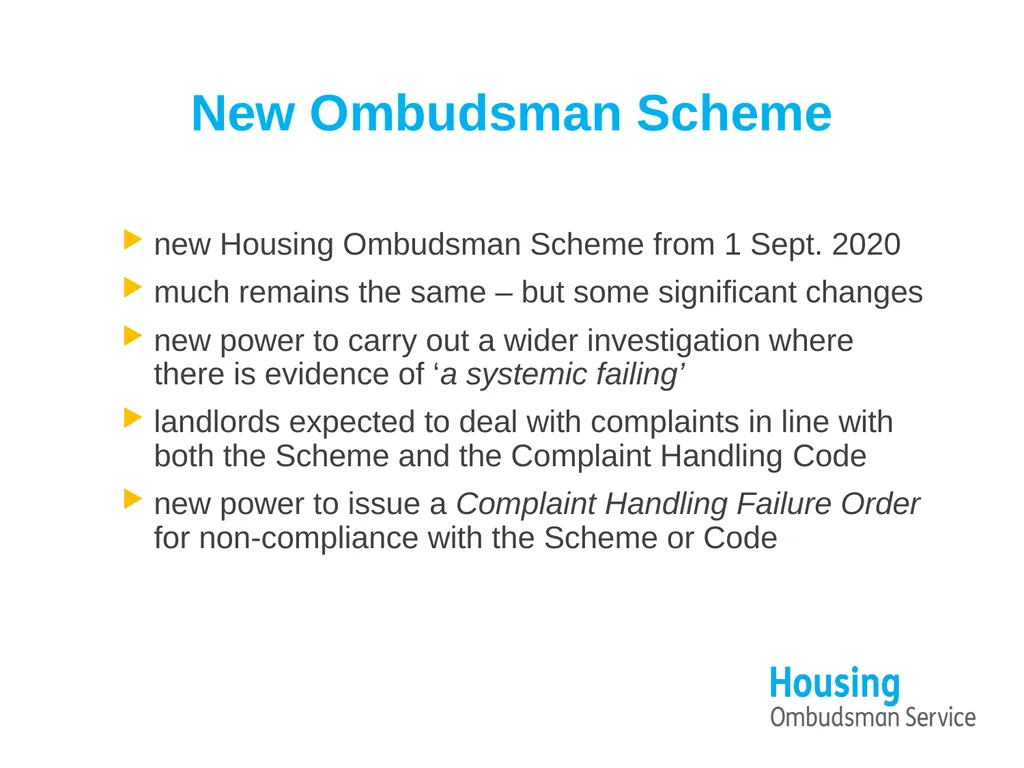
slide8. New Ombudsman Scheme new Housing Ombudsman Scheme from 1 Sept. 2020
much remains the same – but some significant changes
new power to carry out a wider investigation where there is evidence of ‘a systemic failing’
landlords expected to deal with complaints in line with both the Scheme and the Complaint Handling Code
new power to issue a Complaint Handling Failure Order for non-compliance with the Scheme or Code<br>
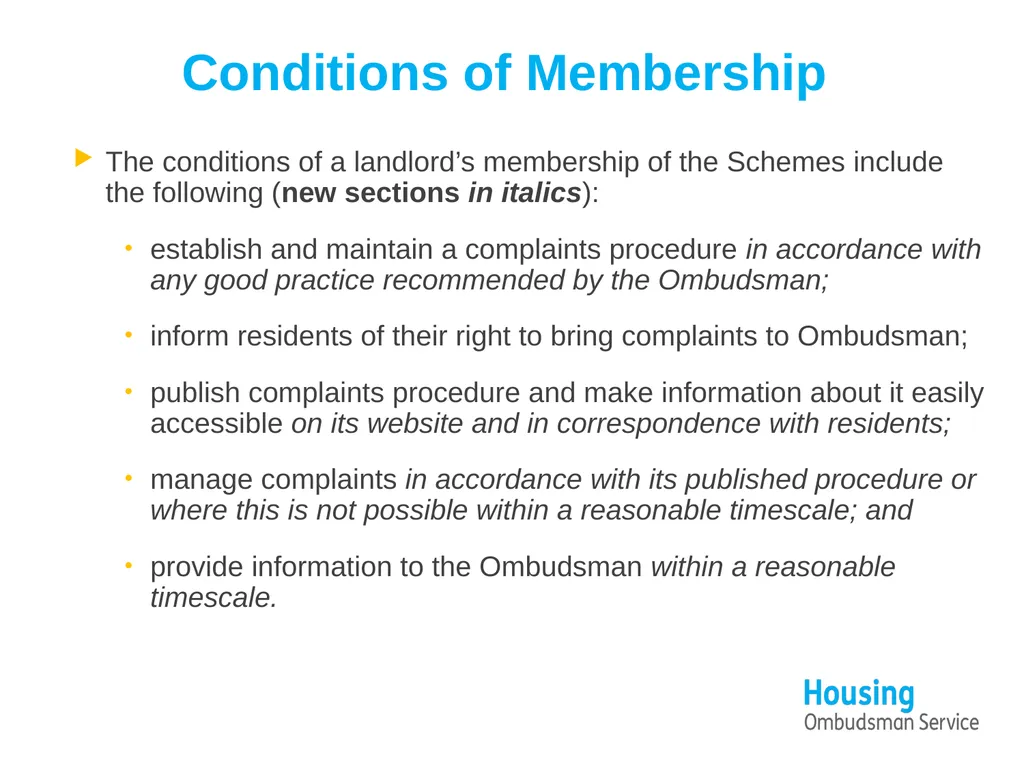
slide9. Conditions of Membership The conditions of a landlord’s membership of the Schemes include the following (new sections in italics):
establish and maintain a complaints procedure in accordance with any good practice recommended by the Ombudsman;
inform residents of their right to bring complaints to Ombudsman;
publish complaints procedure and make information about it easily accessible on its website and in correspondence with residents;
manage complaints in accordance with its published procedure or where this is not possible within a reasonable timescale; and
provide information to the Ombudsman within a reasonable timescale.<br>
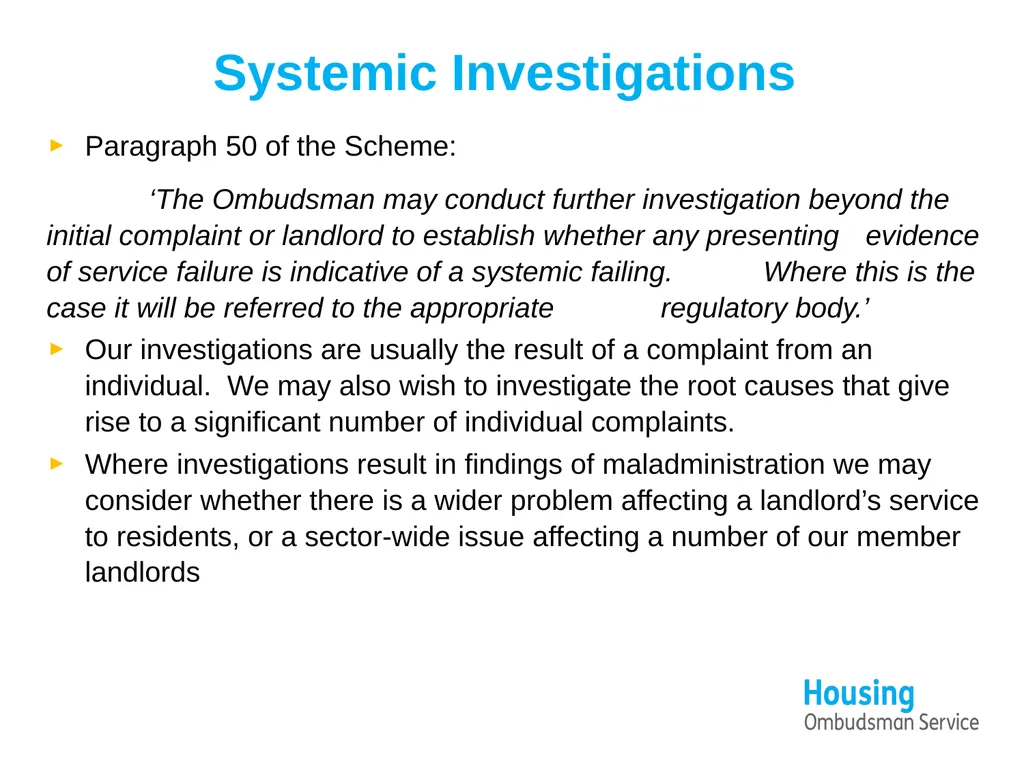
slide10. Systemic Investigations Paragraph 50 of the Scheme:
‘The Ombudsman may conduct further investigation beyond the initial complaint or landlord to establish whether any presenting evidence of service failure is indicative of a systemic failing. Where this is the case it will be referred to the appropriate regulatory body.’
Our investigations are usually the result of a complaint from an individual. We may also wish to investigate the root causes that give rise to a significant number of individual complaints.
Where investigations result in findings of maladministration we may consider whether there is a wider problem affecting a landlord’s service to residents, or a sector-wide issue affecting a number of our member landlords<br>
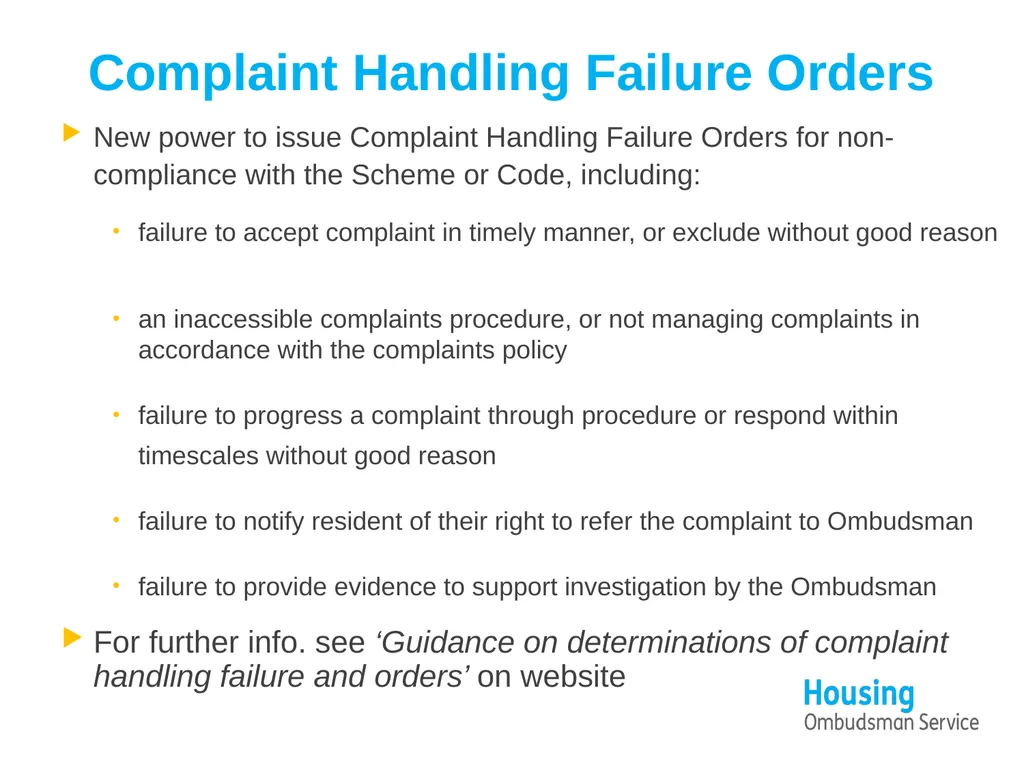
slide11. Complaint Handling Failure Orders New power to issue Complaint Handling Failure Orders for non-compliance with the Scheme or Code, including:
failure to accept complaint in timely manner, or exclude without good reason
an inaccessible complaints procedure, or not managing complaints in accordance with the complaints policy
failure to progress a complaint through procedure or respond within timescales without good reason
failure to notify resident of their right to refer the complaint to Ombudsman
failure to provide evidence to support investigation by the Ombudsman
For further info. see ‘Guidance on determinations of complaint handling failure and orders’ on website<br>
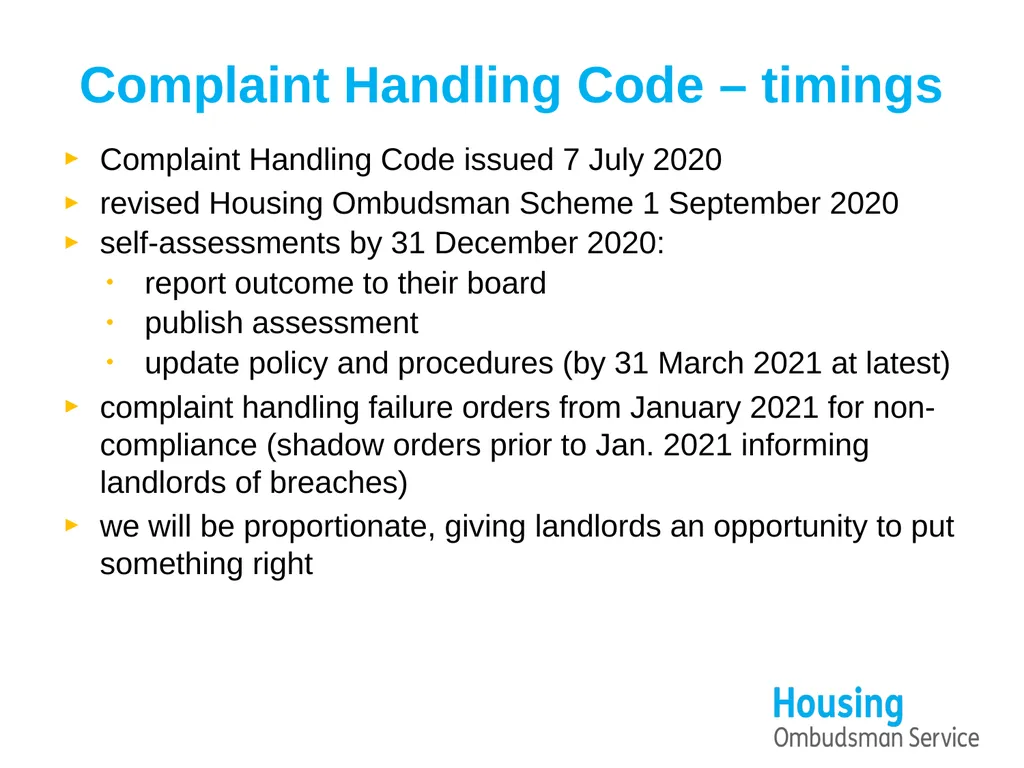
slide12. Complaint Handling Code – timings Complaint Handling Code issued 7 July 2020
revised Housing Ombudsman Scheme 1 September 2020
self-assessments by 31 December 2020:
report outcome to their board
publish assessment
update policy and procedures (by 31 March 2021 at latest)
complaint handling failure orders from January 2021 for non-compliance (shadow orders prior to Jan. 2021 informing landlords of breaches)
we will be proportionate, giving landlords an opportunity to put something right<br>
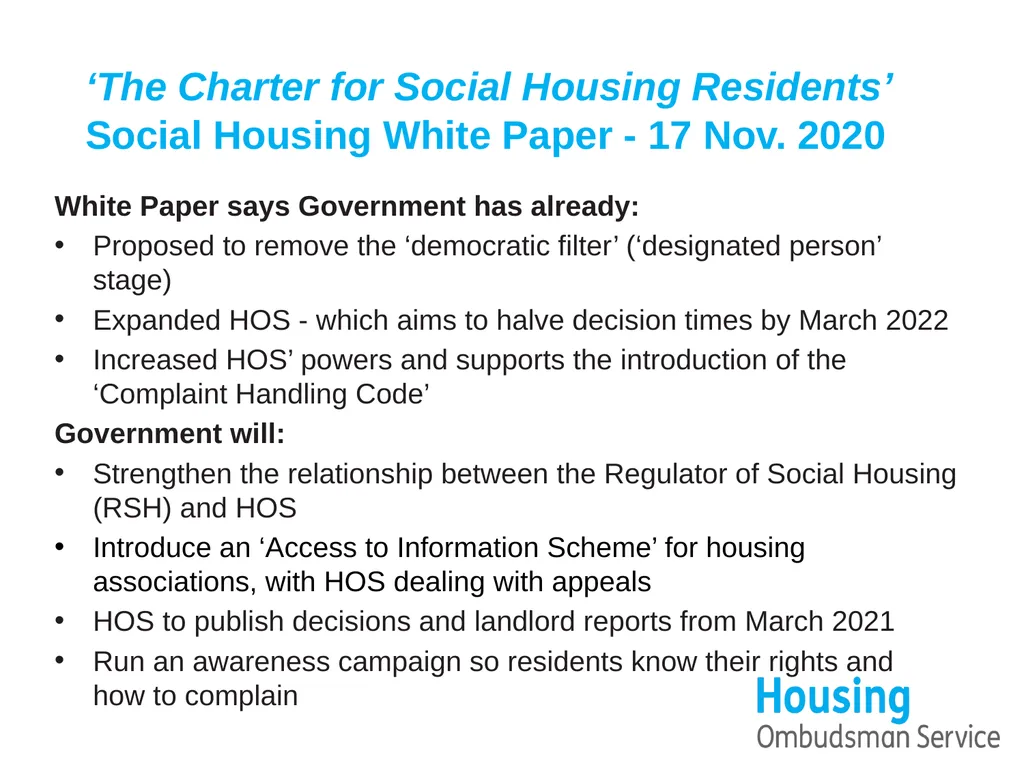
slide13. ‘The Charter for Social Housing Residents’ Social Housing White Paper - 17 Nov. 2020 White Paper says Government has already:
Proposed to remove the ‘democratic filter’ (‘designated person’ stage)
Expanded HOS - which aims to halve decision times by March 2022
Increased HOS’ powers and supports the introduction of the ‘Complaint Handling Code’
Government will:
Strengthen the relationship between the Regulator of Social Housing (RSH) and HOS
Introduce an ‘Access to Information Scheme’ for housing associations, with HOS dealing with appeals
HOS to publish decisions and landlord reports from March 2021
Run an awareness campaign so residents know their rights and how to complain<br>
Complaint Handling Code for the sector
Webinar – 26 February 2021
Dave Simmons – Sector Development Lead
John Goodwin – Systemic Adjudicator<br>
slide2. Agenda New ‘Complaint Handling Code’
background
aims
key points
New Housing Ombudsman Scheme
new requirements and powers
‘Complaint Handling Failure Orders’
Implementation and timings
Social Housing White Paper
Q&A<br>
slide3. Background Social Housing Green Paper (2018)
difficulties raising a complaint (access)
no information on process
difficult to navigate
lack of consistency between landlords
too long
unable to hold landlords to account
White Paper published 17 November 2020<br>
slide4. Background Ombudsman’s experience:
delays in landlords engaging with residents
not accepting or escalating complaints
delays in engaging with us (providing evidence)
Ombudsman’s response: Complaint Handling Code
Consultation with sector
residents and landlords
TPAS, TAROE, NFA, ARCH, CIH, Housemark, NHF, landlords<br>
slide5. The Complaint Handling Code and its aims framework to promote high-quality complaint handling
not a means to punish but to promote better practice for all
6 sections: Definition, Access, Procedure/Timeliness, Fairness, Putting things right (Remedies), Learning and improvement + self assessment
greater access and consistency
faster resolution of complaints
use learning from complaints to drive service improvements
set the right culture; relevant to boards as well as frontline staff
be prescriptive only where it matters most
differs from other best practice – it’s a requirement<br>
slide6. The Complaint Handling Code - key points universal definition of a complaint:
‘A complaint shall be defined as an expression of dissatisfaction, however made, about the standard of service, actions or lack of action by the organisation, its own staff, or those acting on its behalf, affecting an individual resident or group of residents.’ (Code 1.2)
requirement to improve access for residents
ensuring residents are aware of the complaint procedure, the Code, and their right to access HOS<br>
slide7. Key points continued the structure of the complaints procedure
promotes two stages
clear time-frames for responses
fairness in complaint handling with a resident-focused process
taking action to put things right and appropriate remedies
creating a positive complaint handling culture
continuous learning and improvement - demonstrate learning with evidence in Annual Reports<br>
slide8. New Ombudsman Scheme new Housing Ombudsman Scheme from 1 Sept. 2020
much remains the same – but some significant changes
new power to carry out a wider investigation where there is evidence of ‘a systemic failing’
landlords expected to deal with complaints in line with both the Scheme and the Complaint Handling Code
new power to issue a Complaint Handling Failure Order for non-compliance with the Scheme or Code<br>
slide9. Conditions of Membership The conditions of a landlord’s membership of the Schemes include the following (new sections in italics):
establish and maintain a complaints procedure in accordance with any good practice recommended by the Ombudsman;
inform residents of their right to bring complaints to Ombudsman;
publish complaints procedure and make information about it easily accessible on its website and in correspondence with residents;
manage complaints in accordance with its published procedure or where this is not possible within a reasonable timescale; and
provide information to the Ombudsman within a reasonable timescale.<br>
slide10. Systemic Investigations Paragraph 50 of the Scheme:
‘The Ombudsman may conduct further investigation beyond the initial complaint or landlord to establish whether any presenting evidence of service failure is indicative of a systemic failing. Where this is the case it will be referred to the appropriate regulatory body.’
Our investigations are usually the result of a complaint from an individual. We may also wish to investigate the root causes that give rise to a significant number of individual complaints.
Where investigations result in findings of maladministration we may consider whether there is a wider problem affecting a landlord’s service to residents, or a sector-wide issue affecting a number of our member landlords<br>
slide11. Complaint Handling Failure Orders New power to issue Complaint Handling Failure Orders for non-compliance with the Scheme or Code, including:
failure to accept complaint in timely manner, or exclude without good reason
an inaccessible complaints procedure, or not managing complaints in accordance with the complaints policy
failure to progress a complaint through procedure or respond within timescales without good reason
failure to notify resident of their right to refer the complaint to Ombudsman
failure to provide evidence to support investigation by the Ombudsman
For further info. see ‘Guidance on determinations of complaint handling failure and orders’ on website<br>
slide12. Complaint Handling Code – timings Complaint Handling Code issued 7 July 2020
revised Housing Ombudsman Scheme 1 September 2020
self-assessments by 31 December 2020:
report outcome to their board
publish assessment
update policy and procedures (by 31 March 2021 at latest)
complaint handling failure orders from January 2021 for non-compliance (shadow orders prior to Jan. 2021 informing landlords of breaches)
we will be proportionate, giving landlords an opportunity to put something right<br>
slide13. ‘The Charter for Social Housing Residents’ Social Housing White Paper - 17 Nov. 2020 White Paper says Government has already:
Proposed to remove the ‘democratic filter’ (‘designated person’ stage)
Expanded HOS - which aims to halve decision times by March 2022
Increased HOS’ powers and supports the introduction of the ‘Complaint Handling Code’
Government will:
Strengthen the relationship between the Regulator of Social Housing (RSH) and HOS
Introduce an ‘Access to Information Scheme’ for housing associations, with HOS dealing with appeals
HOS to publish decisions and landlord reports from March 2021
Run an awareness campaign so residents know their rights and how to complain<br>