02
Powder present in various dosage forms as: vials, suspension, and dusting powder. The term powder is used to describe a formulation in which a drug has been mixed with other powder excipients to produce the final product .The function of the added excipients depends upon the intended use of the product
Examples on excipients are:
Diluents ,coloring ,flavoring and sweetening agent for example may be added to the powder for oral use.<br>
04
Spatulation:
Is a method by which a small amount of powder may be blended by the movement of a spatula through the powders on a sheet of paper or an ointment tile.
Note:
Spatulation is not suitable for large quantities of powders containing potent substance ,because homogenous blending is not as certain as through other methods .
Very little compression or compacting of the powder results from spatulation.
Spatulation is especially suited to the mixing of solid substances that form eutectic mixtures (or liquefy)when in close and prolonged contact with one another (ex: phenol ,camphor, menthol, aspirin……)<br>
05
2. Trituration:
This method employed both to decrease the particle size and to mix the powder.
Notes:
In trituration method if simple admixture is desired without special need to decrease particle size, the glass mortar is usually preferred.
If we have small amount of potent substance the trituration method is suited for dilution method because the uniform distribution of potent drug is achieved.<br>
06
3. Sifting:
In this method powders mixing by passing them through sifters like those used in kitchen to sift flour.
Notes:
Sifting result in light fluffy product.
Sifting is not acceptable for the incorporation potent drugs into diluent powder.<br>
07
4.Tumbling:
By this method the powders are mixed by tumbling in rotating container.<br>
08
Dispensing of powders:
Medicated powder may be provided to the patient as
a.Bulk powder: for non-potent drug as antacid laxative, douche powders.
b.Divided powder: for potent drug as antibiotics.<br>
09
Methods of Preparing Divided Powders:
Depending on the potency of the drug substance, the pharmacist decides to prepare by either method 1 or 2.
Weighing Method: By this method each portion of powder is weighed separately before enfolding in a paper.<br>
10
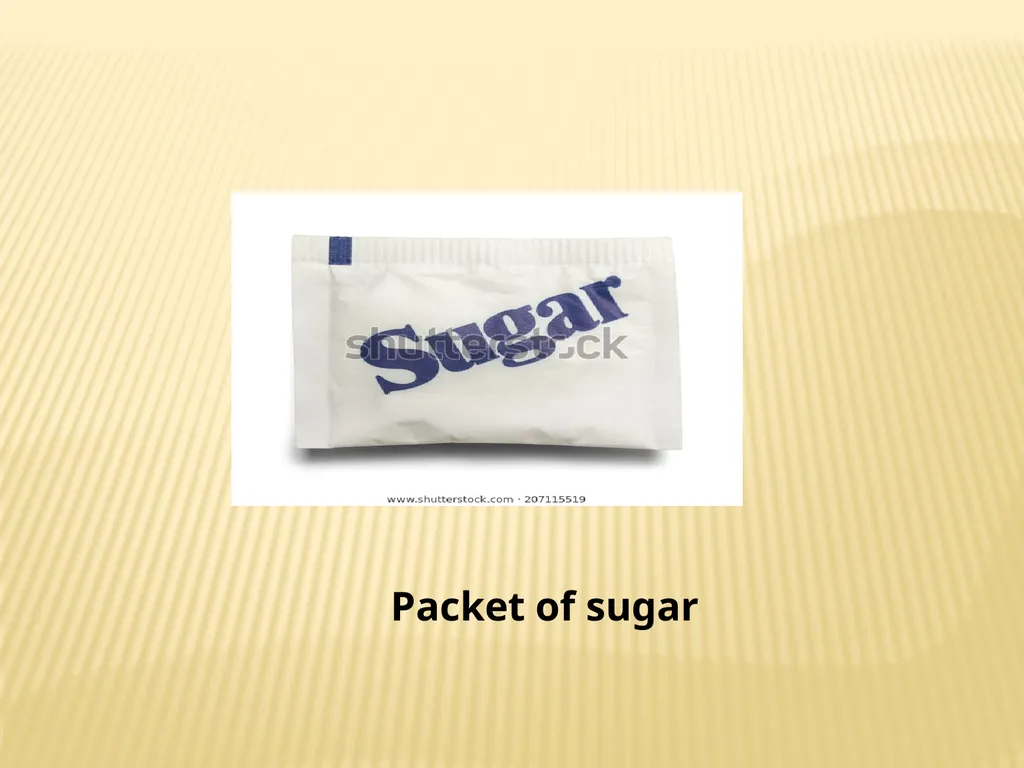
2-Block and divide method: It is used only for nonpotent drugs, the pharmacist places the entire amount of the prepared powder on a flat surface such as a porcelain or glass plate, pill tile or large sheet of paper and with a large spatula forms a rectangular or square block of powder having a uniform depth. Then, using the spatula, the pharmacist cuts into the powder vertically and horizontally to delineate the appropriate number of smaller, uniform blocks, each representing a dose or unit of medication. Each of the smaller blocks is separated from the main block with the spatula, transferred to a powder paper, and wrapped.<br>
12
Rules of mixing and preparation of powders:
Calculate one packet more than the prescribed amount because of the loss of weight.
Particle size of the powder should be reduced by the mortar if any crystalline substance is present.
Mix the powder by geometrical dilution method.
Divide and package.<br>
13
Notes:
The weight of powder mixture in EACH PACKET should be at least 0.1 g or 2 gr. Remember
When weighing any pharmaceutical ingredient, it is imperative to give due consideration to the accuracy of the instrument being used. However, every balance has its own range and tolerance .<br>
14
In preparation of powders, if the total amount of an active ingredient is less than the minimum weighable quantity of the balance (0.05 g or 1 gr), dilution will be necessary. Lactose is usually used as a diluent, because it is colorless, odorless, soluble and generally harmless.<br>
15
Types of Paper used to Enclose the Powder:
Simple bond paper.
Vegetable parchment, a thin, semi opaque paper having limited moisture resistance qualities.
Glassine, glazed, transparent paper, having limited moisture – resistant qualities.
Waxed paper, a transparent, waterproof paper.<br>
16
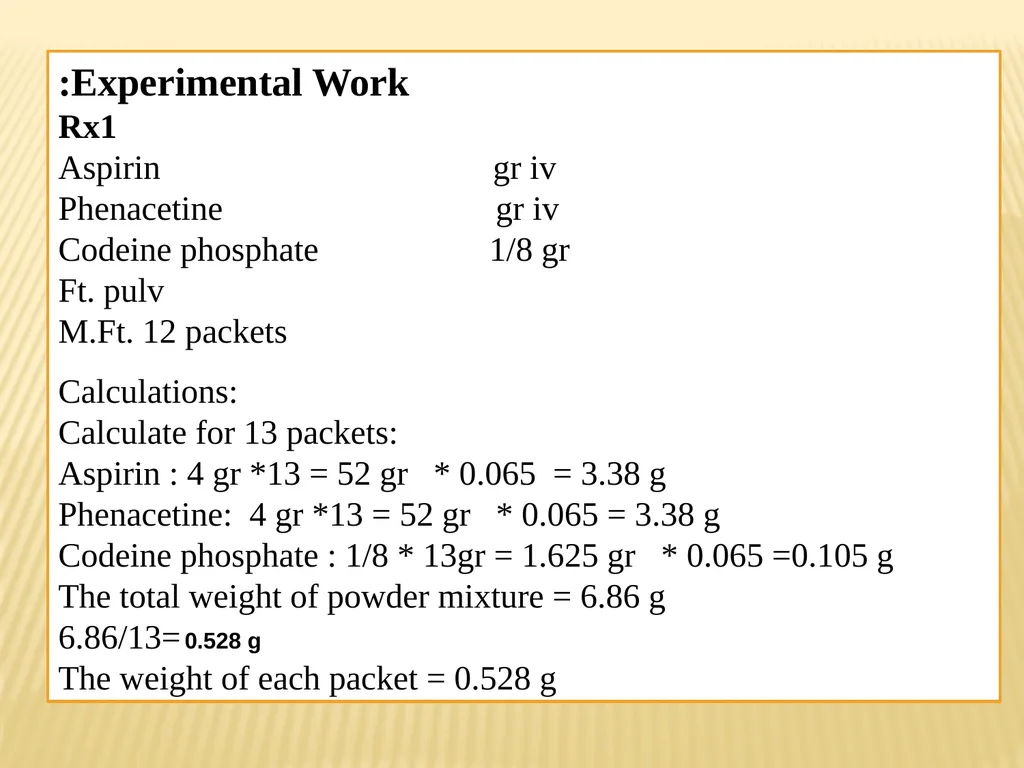
Experimental Work:
Rx1
Aspirin gr iv
Phenacetine gr iv
Codeine phosphate 1/8 gr
Ft. pulv
M.Ft. 12 packets
Calculations:
Calculate for 13 packets:
Aspirin : 4 gr *13 = 52 gr * 0.065 = 3.38 g
Phenacetine: 4 gr *13 = 52 gr * 0.065 = 3.38 g
Codeine phosphate : 1/8 * 13gr = 1.625 gr * 0.065 =0.105 g
The total weight of powder mixture = 6.86 g
6.86/13= 0.528 g
The weight of each packet = 0.528 g<br>
17
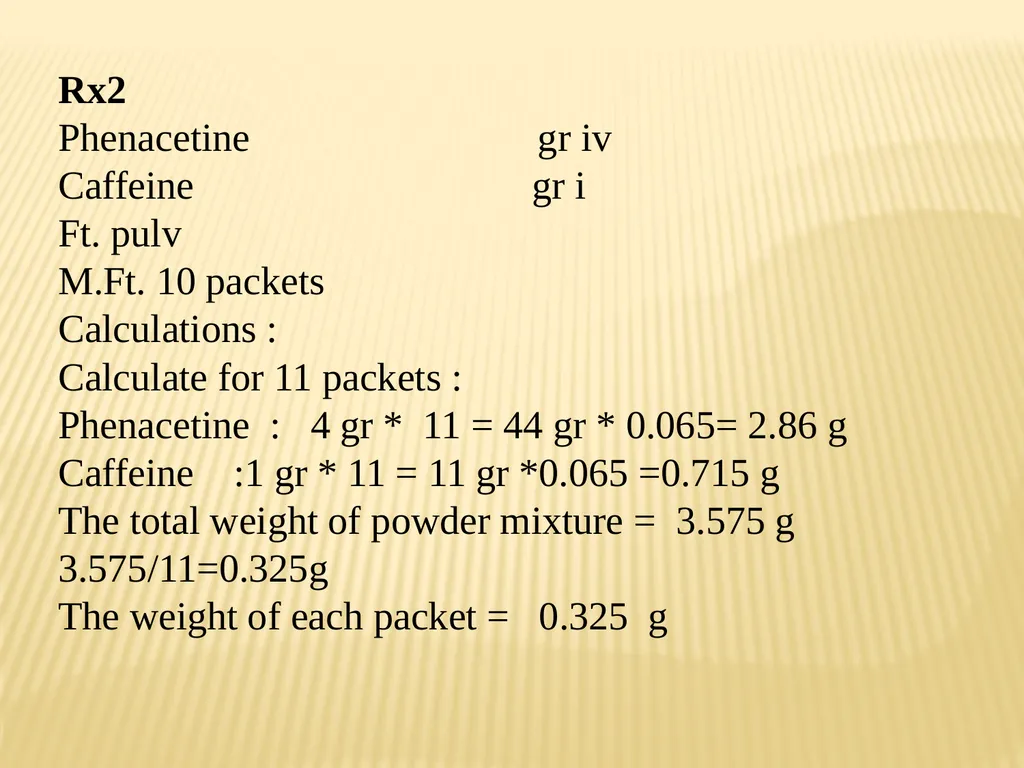
Rx2
Phenacetine gr iv
Caffeine gr i
Ft. pulv
M.Ft. 10 packets
Calculations :
Calculate for 11 packets :
Phenacetine : 4 gr * 11 = 44 gr * 0.065= 2.86 g
Caffeine :1 gr * 11 = 11 gr *0.065 =0.715 g
The total weight of powder mixture = 3.575 g
3.575/11=0.325g
The weight of each packet = 0.325 g<br>
18
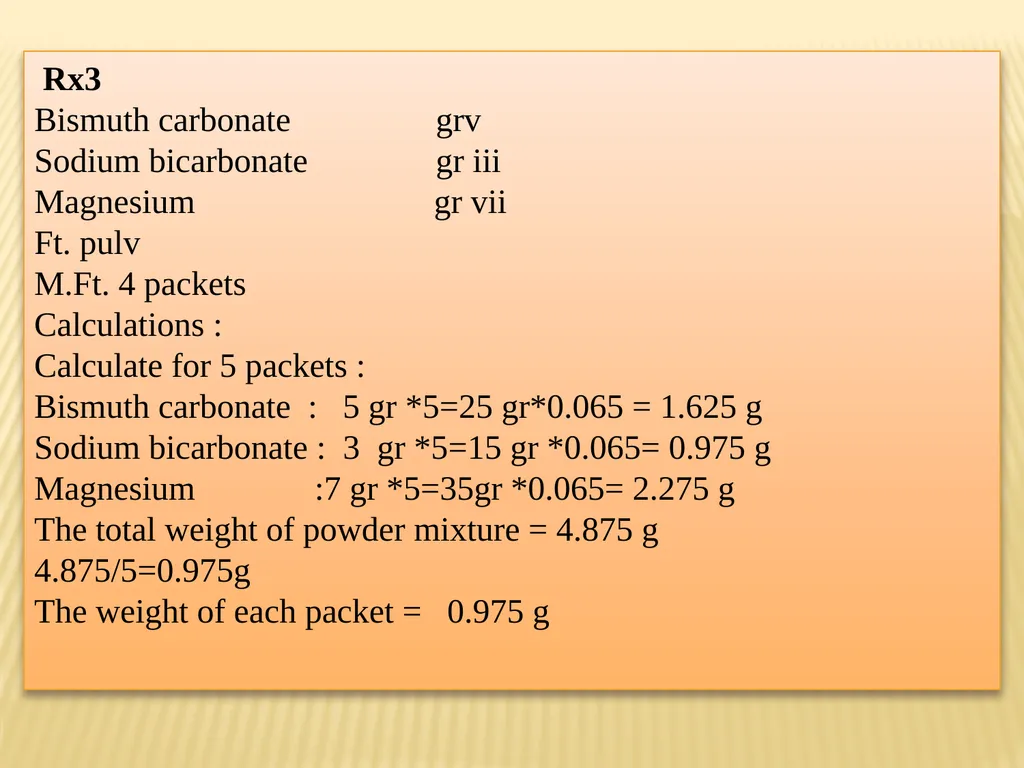
Rx3
Bismuth carbonate grv
Sodium bicarbonate gr iii
Magnesium gr vii
Ft. pulv
M.Ft. 4 packets
Calculations :
Calculate for 5 packets :
Bismuth carbonate : 5 gr *5=25 gr*0.065 = 1.625 g
Sodium bicarbonate : 3 gr *5=15 gr *0.065= 0.975 g
Magnesium :7 gr *5=35gr *0.065= 2.275 g
The total weight of powder mixture = 4.875 g
4.875/5=0.975g
The weight of each packet = 0.975 g<br>
19
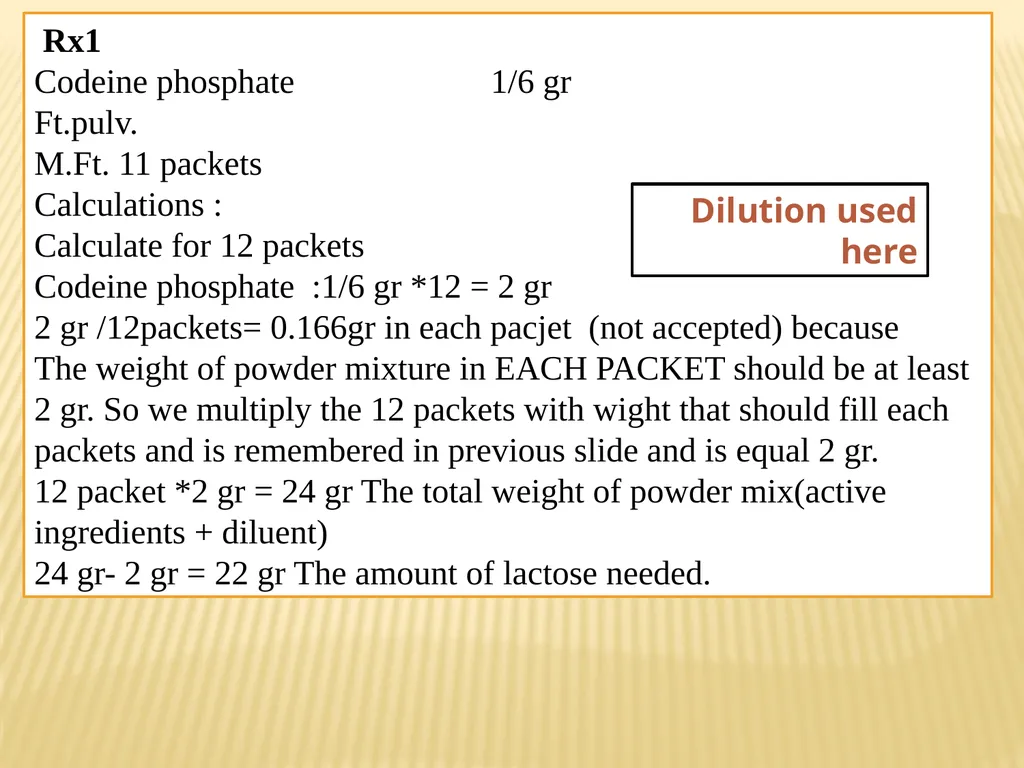
Rx1
Codeine phosphate 1/6 gr
Ft.pulv.
M.Ft. 11 packets
Calculations :
Calculate for 12 packets
Codeine phosphate :1/6 gr *12 = 2 gr
2 gr /12packets= 0.166gr in each pacjet (not accepted) because
The weight of powder mixture in EACH PACKET should be at least 2 gr. So we multiply the 12 packets with wight that should fill each packets and is remembered in previous slide and is equal 2 gr.
12 packet *2 gr = 24 gr The total weight of powder mix(active ingredients + diluent)
24 gr- 2 gr = 22 gr The amount of lactose needed. Dilution used here<br>
20
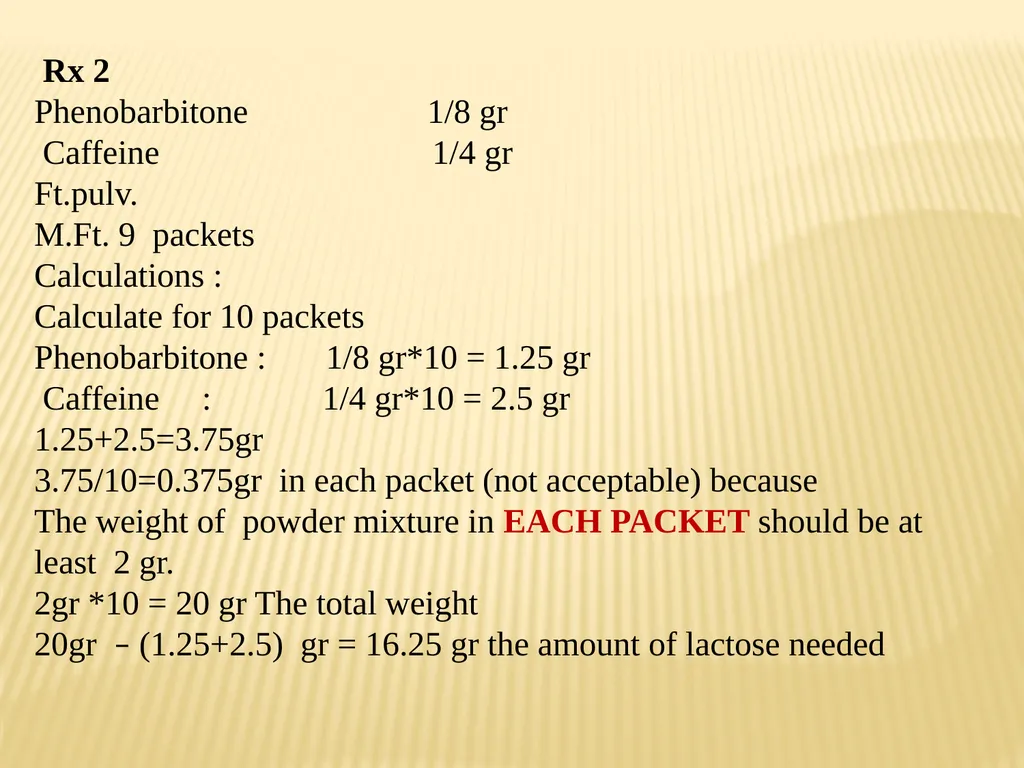
Rx 2
Phenobarbitone 1/8 gr
Caffeine 1/4 gr
Ft.pulv.
M.Ft. 9 packets
Calculations :
Calculate for 10 packets
Phenobarbitone : 1/8 gr*10 = 1.25 gr
Caffeine : 1/4 gr*10 = 2.5 gr
1.25+2.5=3.75gr
3.75/10=0.375gr in each packet (not acceptable) because
The weight of powder mixture in EACH PACKET should be at least 2 gr.
2gr *10 = 20 gr The total weight
20gr – (1.25+2.5) gr = 16.25 gr the amount of lactose needed<br>
21
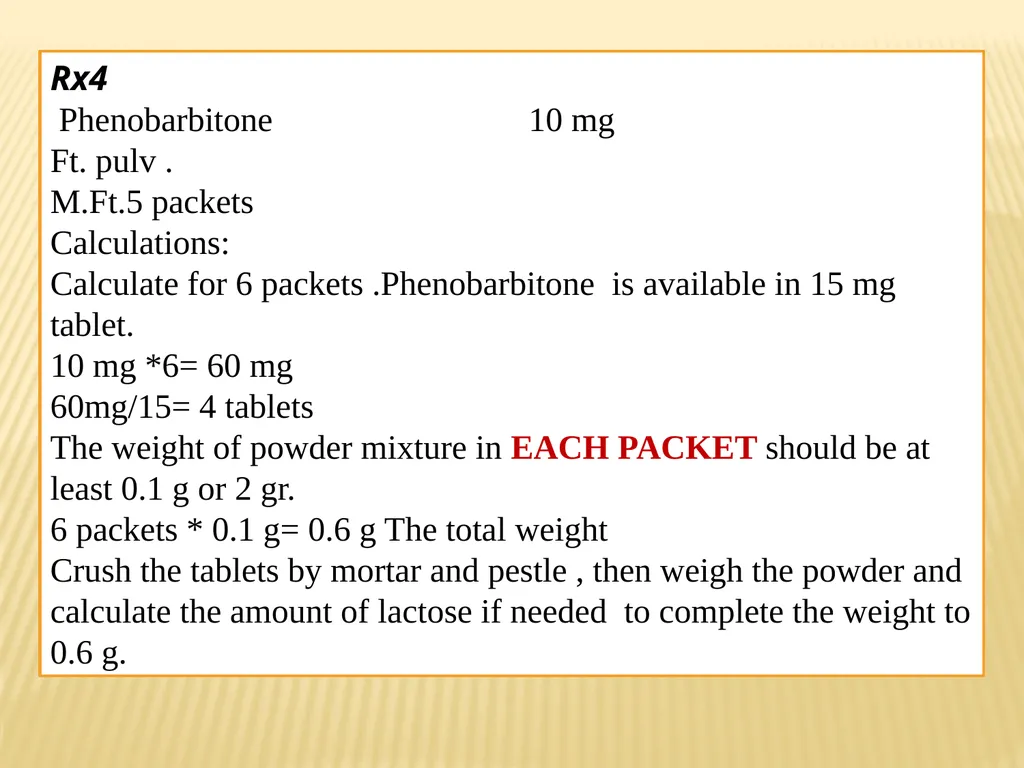
Rx4
Phenobarbitone 10 mg
Ft. pulv .
M.Ft.5 packets
Calculations:
Calculate for 6 packets .Phenobarbitone is available in 15 mg tablet.
10 mg *6= 60 mg
60mg/15= 4 tablets
The weight of powder mixture in EACH PACKET should be at least 0.1 g or 2 gr.
6 packets * 0.1 g= 0.6 g The total weight
Crush the tablets by mortar and pestle , then weigh the powder and calculate the amount of lactose if needed to complete the weight to 0.6 g.<br>
22
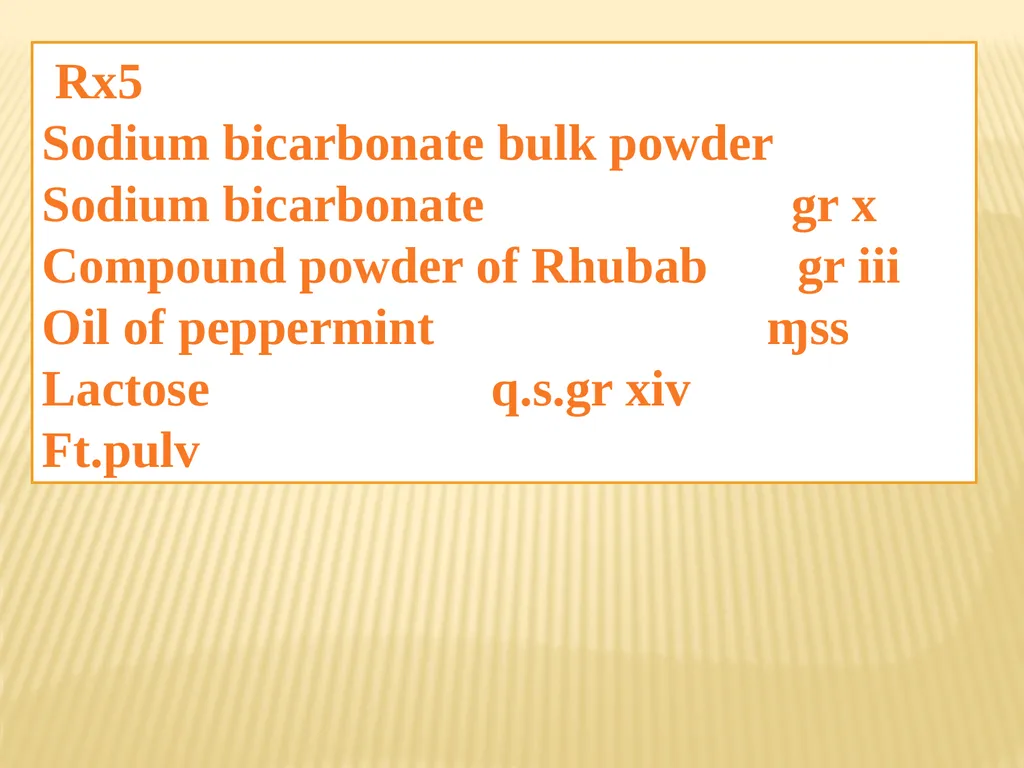
Rx5
Sodium bicarbonate bulk powder
Sodium bicarbonate gr x
Compound powder of Rhubab gr iii
Oil of peppermint ɱss
Lactose q.s.gr xiv
Ft.pulv<br>
23
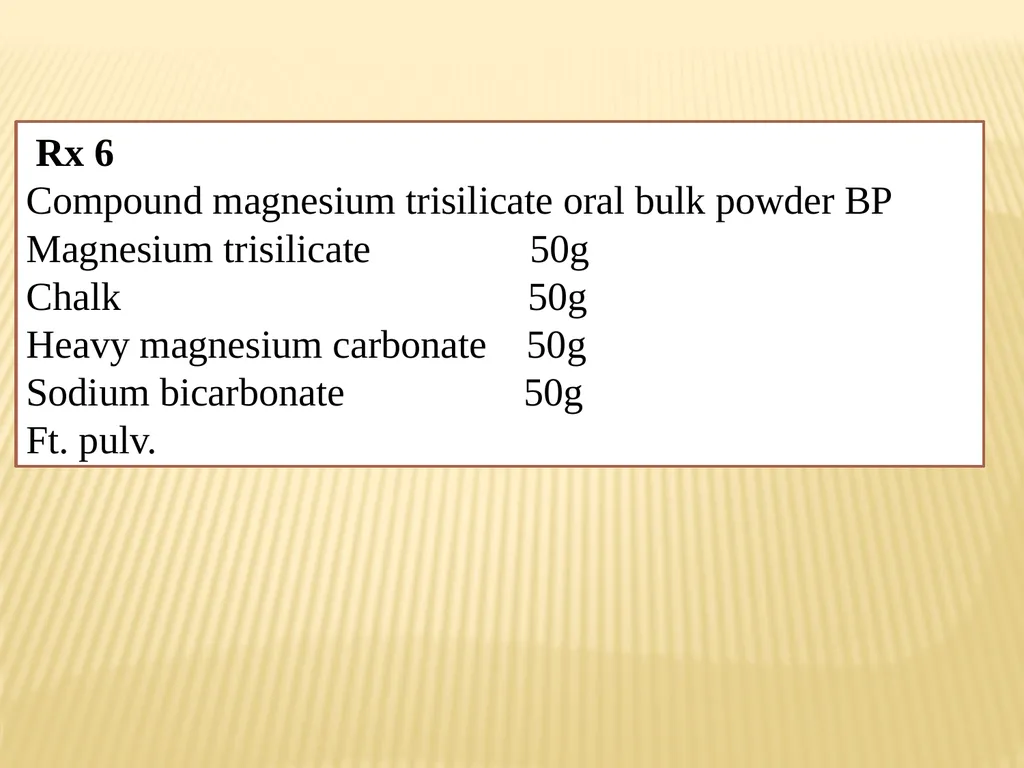
Rx 6
Compound magnesium trisilicate oral bulk powder BP
Magnesium trisilicate 50g
Chalk 50g
Heavy magnesium carbonate 50g
Sodium bicarbonate 50g
Ft. pulv.<br>
24
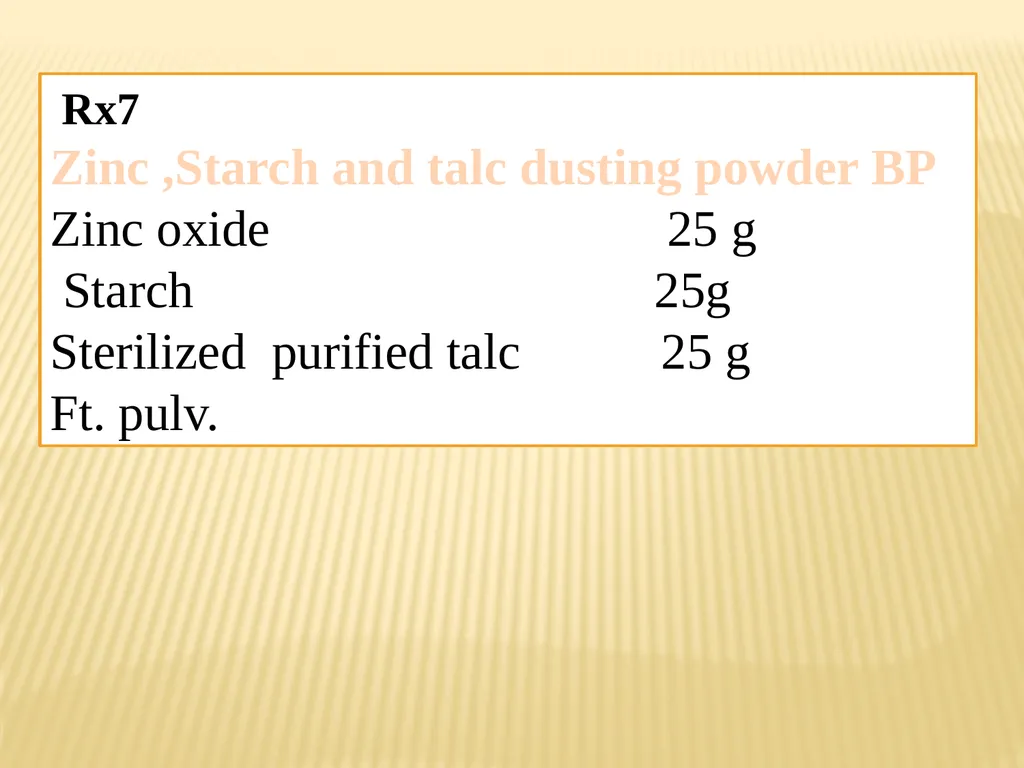
Rx7
Zinc ,Starch and talc dusting powder BP
Zinc oxide 25 g
Starch 25g
Sterilized purified talc 25 g
Ft. pulv.<br>