
AAO-HNSF Clinical Practice Guideline (Update):

Description: AAO-HNSF Clinical Practice Guideline (Update): Tonsillectomy in Children Update to 2011 Guideline Published February 2019 What is Tonsillectomy? Tonsillectomy is defined as a surgical procedure performed with or without adenoidectomy that
Related Topics
Download Presentation
"AAO-HNSF Clinical Practice Guideline (Update):" is the property of its rightful owner. Permission is granted to download and print the materials on this website for personal, non-commercial use only, and to display it on your personal computer provided you do not modify the materials and that you retain all copyright notices contained in the materials. By downloading content from our website, you accept the terms of this agreement.
Presentation Transcript
slide1. AAO-HNSF
Clinical Practice Guideline (Update): Tonsillectomy in Children
Update to 2011 Guideline
Published February 2019<br>
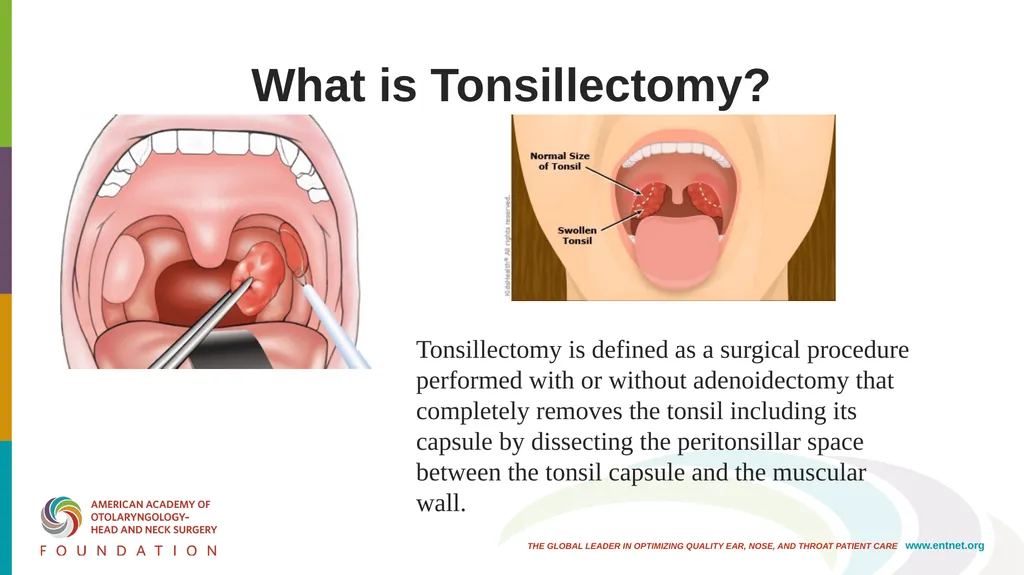
slide2. What is Tonsillectomy? Tonsillectomy is defined as a surgical procedure performed with or without adenoidectomy that completely removes the tonsil including its capsule by dissecting the peritonsillar space between the tonsil capsule and the muscular wall.<br>
slide3. Definitions of Common Terminology Tonsillectomy is defined as a surgical procedure performed with or without adenoidectomy that completely removes the tonsil, including its capsule, by dissecting the peritonsillar space between the tonsil capsule and the muscular wall.
Throat infection is defined as a sore throat caused by viral or bacterial infection of the pharynx, palatine tonsils, or both, which may or may not be culture positive for group A streptococcus. This includes the terms strep throat, acute tonsillitis, pharyngitis, adenotonsillitis or tonsillopharyngitis.
Obstructive sleep-disordered breathing (oSDB) is a clinical diagnosis characterized by obstructive abnormalities of the respiratory pattern; or the adequacy of oxygenation/ventilation during sleep, which include snoring, mouth breathing, and pauses in breathing. oSDB encompasses a spectrum of obstructive disorders that increases in severity from primary snoring to obstructive sleep apnea (OSA). Daytime symptoms associated with oSDB may include inattention, poor concentration, hyperactivity or excessive sleepiness. The term oSDB is used to distinguish oSDB from SDB that includes central apnea and/or abnormalities of ventilation (e.g. hypopnea associated hypoventilation).
Obstructive sleep apnea (OSA) is diagnosed when oSDB is accompanied by an abnormal polysomnography (PSG) with an obstructive apnea- hypopnea index (AHI) ≥ 1. It is a disorder of breathing during sleep characterized by prolonged partial upper airway obstruction and/or intermittent complete obstruction (obstructive apnea) that disrupts normal ventilation during sleep and normal sleep patterns.5
The term “caregiver” is used throughout the document to refer to parents, guardians or other adults providing care to children under consideration for or undergoing tonsillectomy.<br>
slide4. Burden of Tonsillectomy in Children Tonsillectomy is the second most common ambulatory surgical procedure performed on children in the United States.
There were 289,000 tonsillectomies performed in children under 15 years of age in 2017, constituting 16% of all ambulatory surgery in this age group.
Tonsillectomy is a surgical procedure with an associated morbidity that includes possible hospitalization, risks of anesthesia, prolonged throat pain, and financial costs.
Mortality rates for tonsillectomy have been estimated at between 1 in 16,000 to 1 in 35,000, based on data from the 1970s. There are no current estimates of tonsillectomy mortality.<br>
slide5. Why bother with an update? National Academies of Sciences, Engineering, and Medicine (formerly Institute of Medicine) Clinical Practice Guidelines We Can Trust Standard 8 states:
Literature should be monitored regularly following CPG publication to identify the emergence of new, potentially relevant evidence and to evaluate the continued validity of the CPG.
The AAO-HNSF strives to update every 5-years<br>
slide6. Inclusion of PSG Guideline Due to the overlap of information in the Clinical Practice Guideline: Polysomnography (PSG) for Sleep-Disordered Breathing Prior to Tonsillectomy in Children (2011), portions of this CPG were incorporated into the CPG: Tonsillectomy in Children (update) as deemed relevant by the guideline update panel.<br>
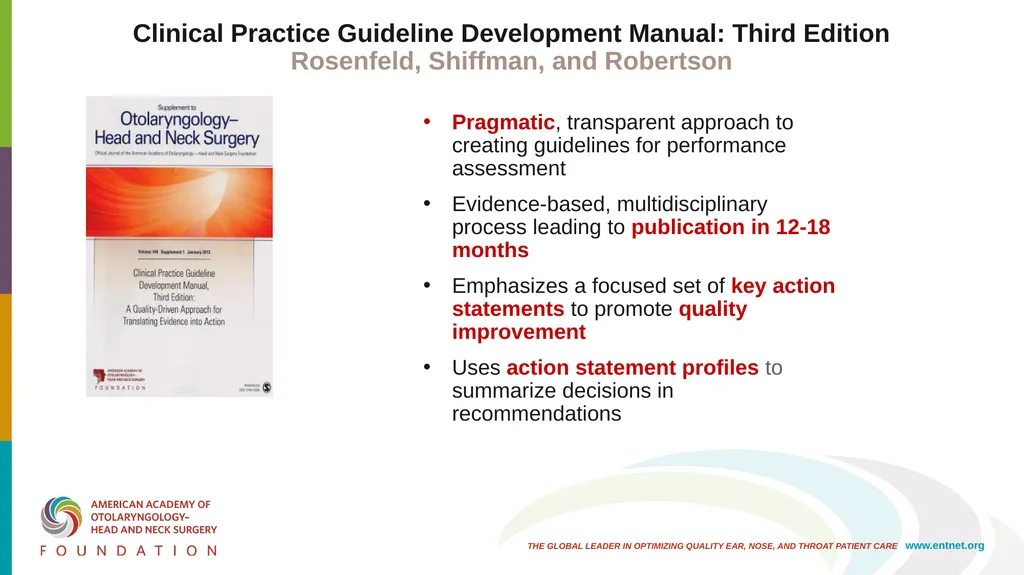
slide7. Clinical Practice Guideline Development Manual: Third Edition Rosenfeld, Shiffman, and Robertson Pragmatic, transparent approach to creating guidelines for performance assessment
Evidence-based, multidisciplinary process leading to publication in 12-18 months
Emphasizes a focused set of key action statements to promote quality improvement
Uses action statement profiles to summarize decisions in recommendations<br>
slide8. Clinical Practice Guideline (CPG) Goals Focus on quality improvement opportunities
Define actionable recommendations for clinicians regardless of discipline to improve care
The guideline is not intended to be comprehensive
The guideline is not intended to limit or restrict care provided by clinicians to individual patients<br>
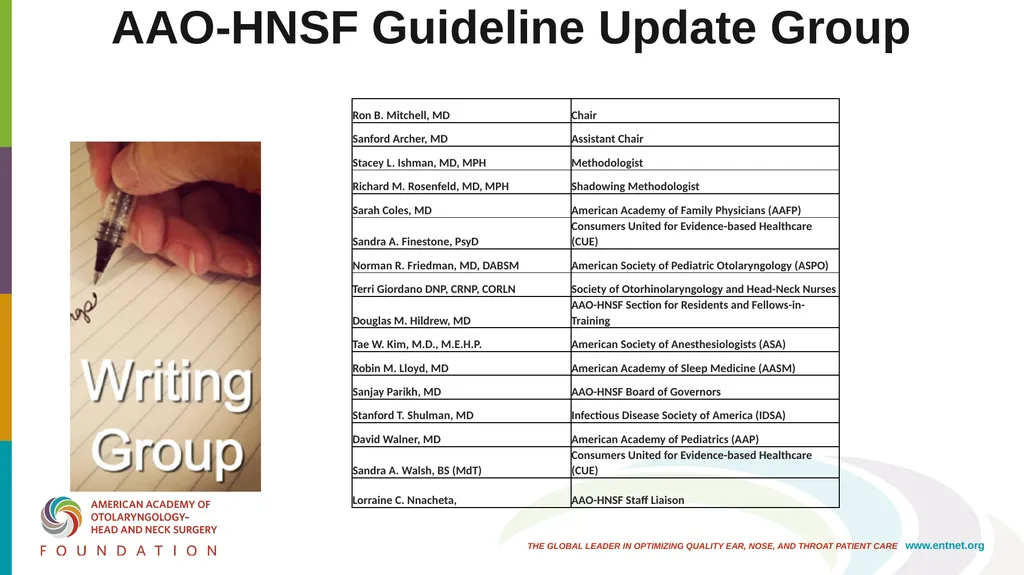
slide9. AAO-HNSF Guideline Update Group<br>
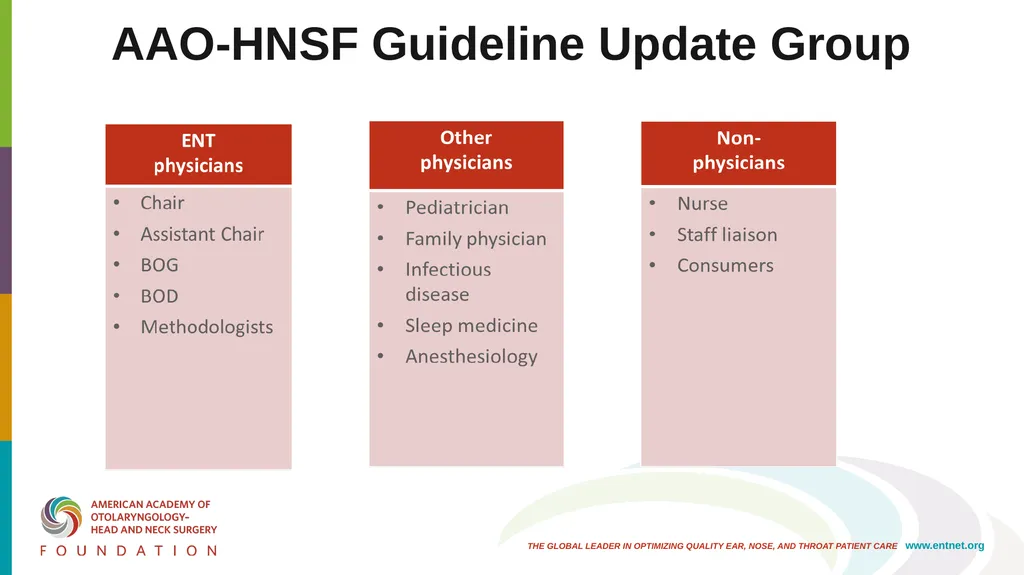
slide10. AAO-HNSF Guideline Update Group<br>
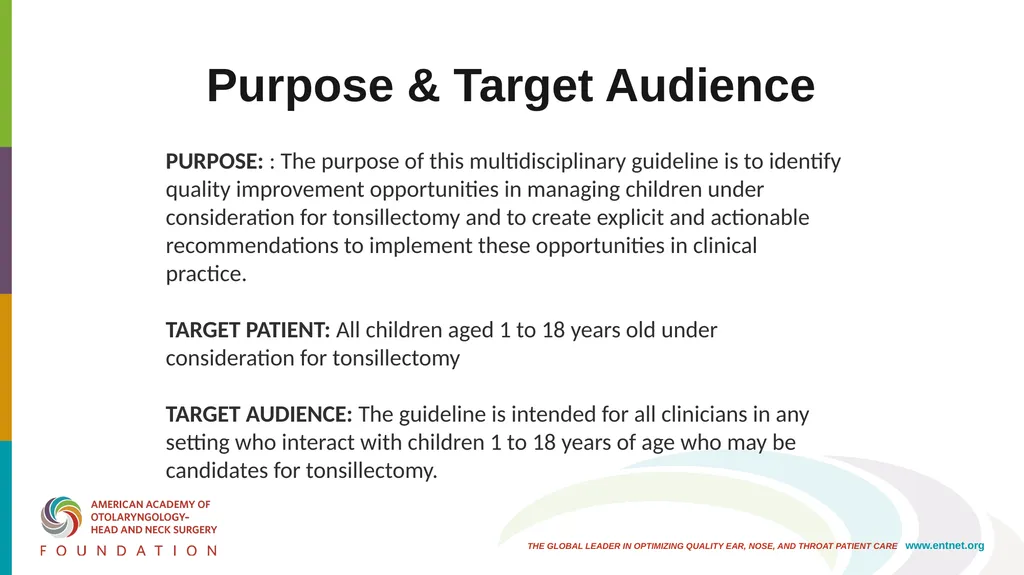
slide11. Purpose & Target Audience PURPOSE: : The purpose of this multidisciplinary guideline is to identify quality improvement opportunities in managing children under consideration for tonsillectomy and to create explicit and actionable recommendations to implement these opportunities in clinical practice.
TARGET PATIENT: All children aged 1 to 18 years old under consideration for tonsillectomy
TARGET AUDIENCE: The guideline is intended for all clinicians in any setting who interact with children 1 to 18 years of age who may be candidates for tonsillectomy.<br>
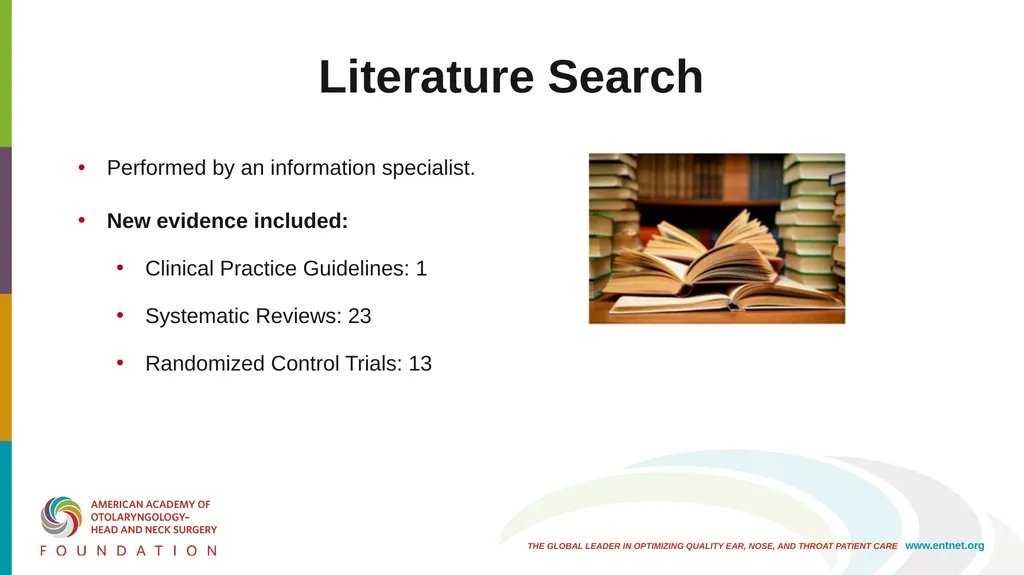
slide12. Literature Search Performed by an information specialist.
New evidence included:
Clinical Practice Guidelines: 1
Systematic Reviews: 23
Randomized Control Trials: 13<br>
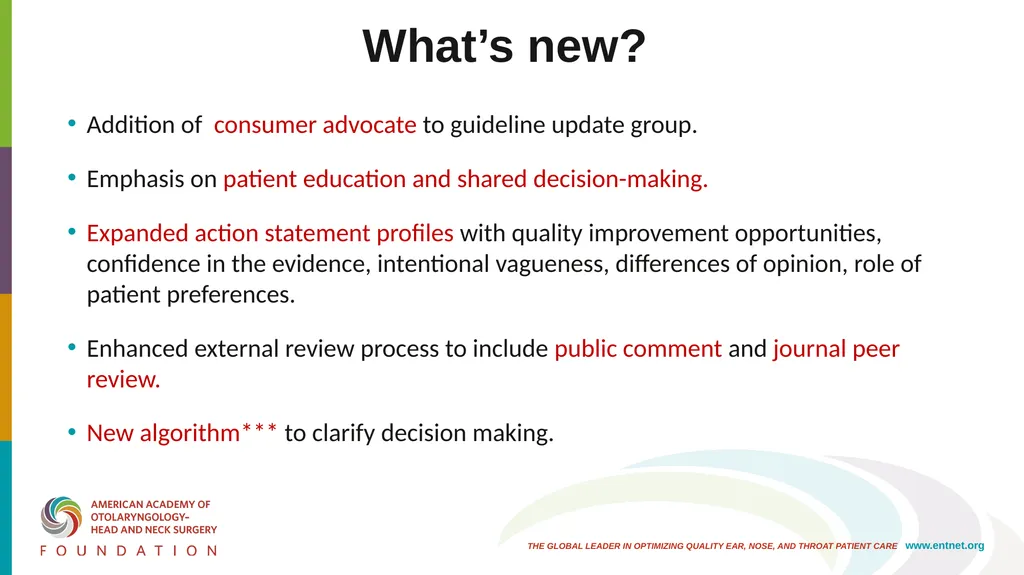
slide13. What’s new? Addition of consumer advocate to guideline update group.
Emphasis on patient education and shared decision-making.
Expanded action statement profiles with quality improvement opportunities, confidence in the evidence, intentional vagueness, differences of opinion, role of patient preferences.
Enhanced external review process to include public comment and journal peer review.
New algorithm*** to clarify decision making.<br>
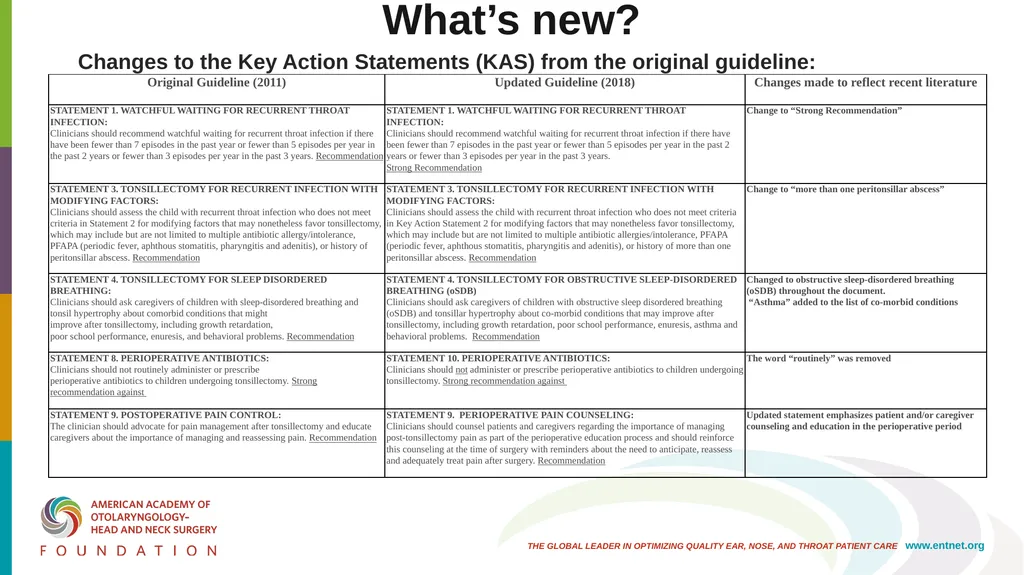
slide14. What’s new? Changes to the Key Action Statements (KAS) from the original guideline:<br>
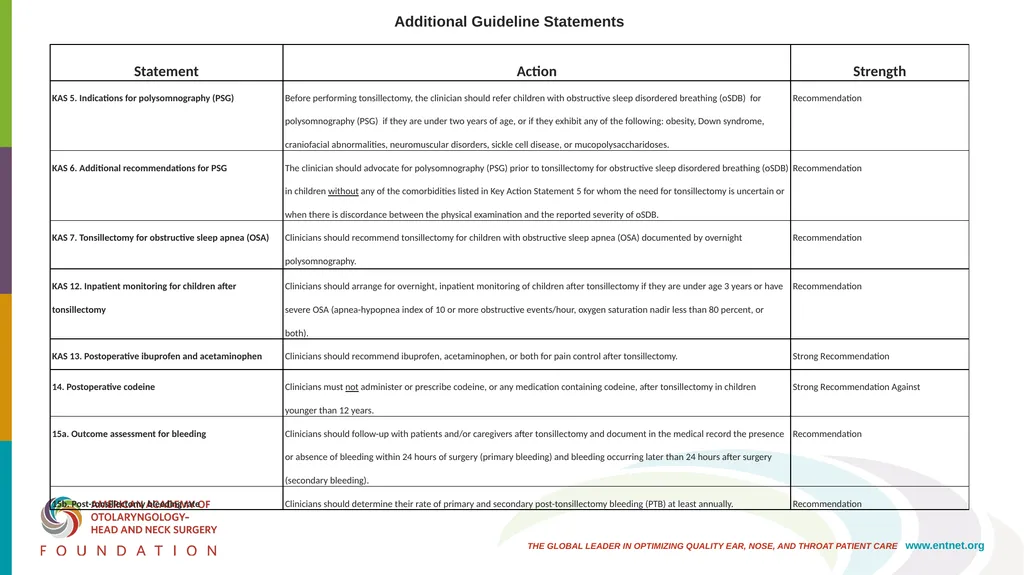
slide15. Additional Guideline Statements<br>
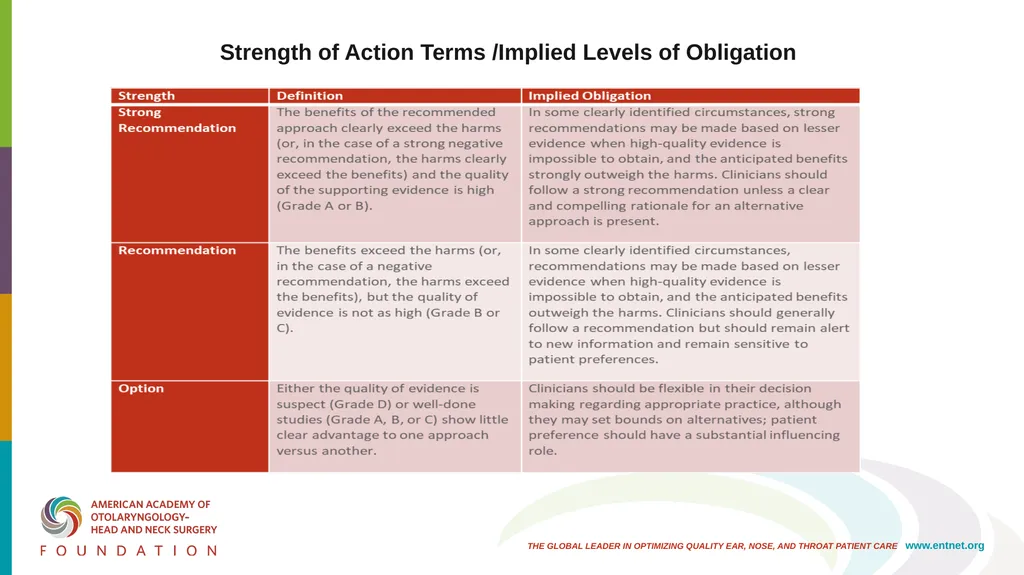
slide16. Strength of Action Terms /Implied Levels of Obligation<br>
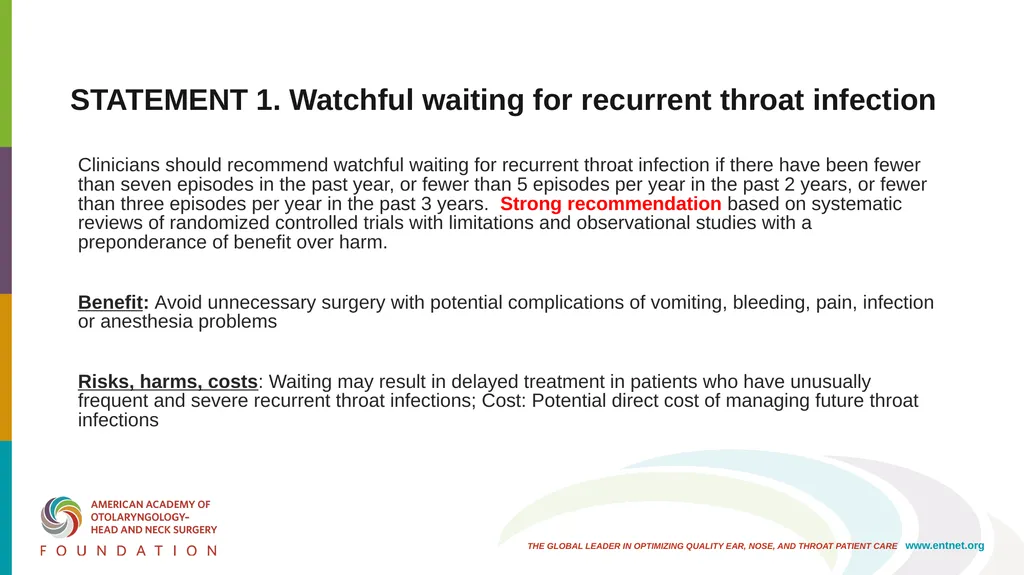
slide17. STATEMENT 1. Watchful waiting for recurrent throat infection Clinicians should recommend watchful waiting for recurrent throat infection if there have been fewer than seven episodes in the past year, or fewer than 5 episodes per year in the past 2 years, or fewer than three episodes per year in the past 3 years. Strong recommendation based on systematic reviews of randomized controlled trials with limitations and observational studies with a preponderance of benefit over harm.
Benefit: Avoid unnecessary surgery with potential complications of vomiting, bleeding, pain, infection or anesthesia problems
Risks, harms, costs: Waiting may result in delayed treatment in patients who have unusually frequent and severe recurrent throat infections; Cost: Potential direct cost of managing future throat infections<br>
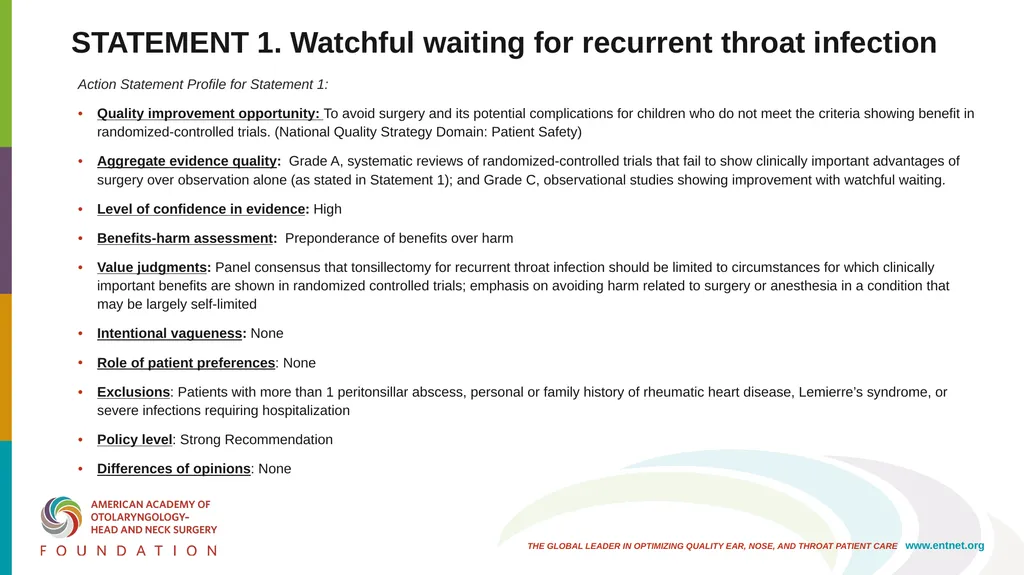
slide18. STATEMENT 1. Watchful waiting for recurrent throat infection Action Statement Profile for Statement 1:
Quality improvement opportunity: To avoid surgery and its potential complications for children who do not meet the criteria showing benefit in randomized-controlled trials. (National Quality Strategy Domain: Patient Safety)
Aggregate evidence quality: Grade A, systematic reviews of randomized-controlled trials that fail to show clinically important advantages of surgery over observation alone (as stated in Statement 1); and Grade C, observational studies showing improvement with watchful waiting.
Level of confidence in evidence: High
Benefits-harm assessment: Preponderance of benefits over harm
Value judgments: Panel consensus that tonsillectomy for recurrent throat infection should be limited to circumstances for which clinically important benefits are shown in randomized controlled trials; emphasis on avoiding harm related to surgery or anesthesia in a condition that may be largely self-limited
Intentional vagueness: None
Role of patient preferences: None
Exclusions: Patients with more than 1 peritonsillar abscess, personal or family history of rheumatic heart disease, Lemierre’s syndrome, or severe infections requiring hospitalization
Policy level: Strong Recommendation
Differences of opinions: None<br>
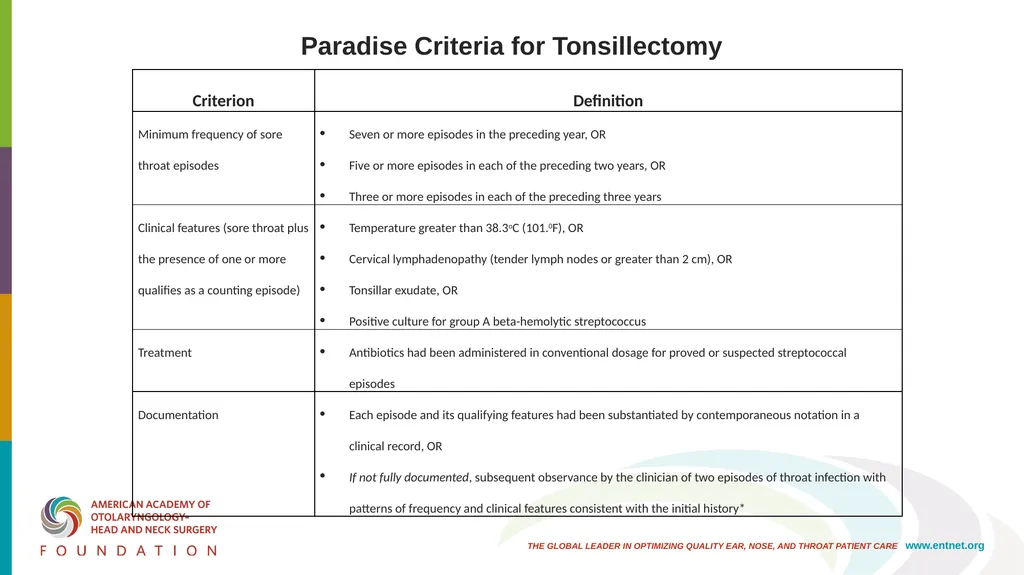
slide19. Paradise Criteria for Tonsillectomy<br>
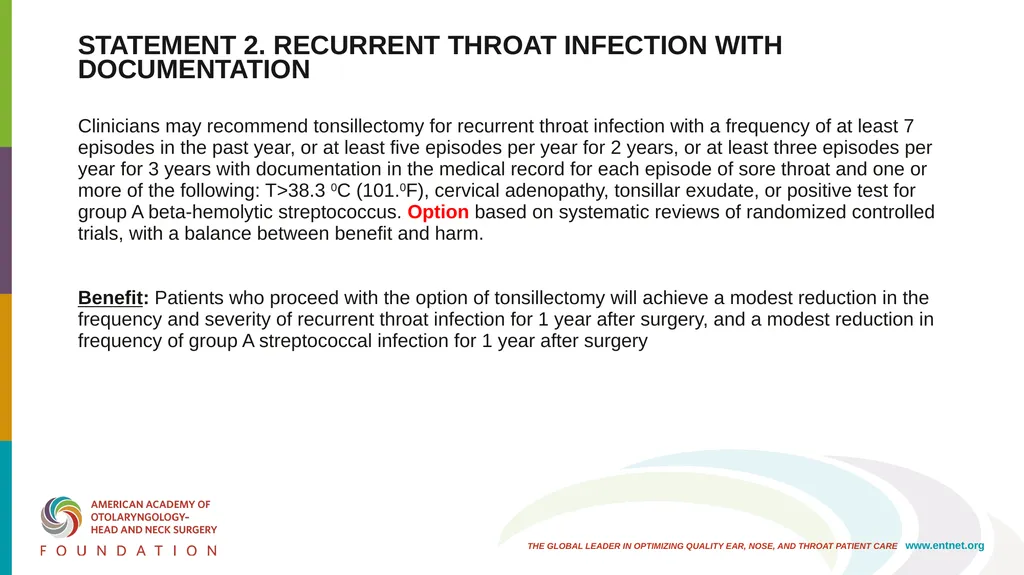
slide20. STATEMENT 2. RECURRENT THROAT INFECTION WITH DOCUMENTATION Clinicians may recommend tonsillectomy for recurrent throat infection with a frequency of at least 7 episodes in the past year, or at least five episodes per year for 2 years, or at least three episodes per year for 3 years with documentation in the medical record for each episode of sore throat and one or more of the following: T>38.3 0C (101.0F), cervical adenopathy, tonsillar exudate, or positive test for group A beta-hemolytic streptococcus. Option based on systematic reviews of randomized controlled trials, with a balance between benefit and harm.
Benefit: Patients who proceed with the option of tonsillectomy will achieve a modest reduction in the frequency and severity of recurrent throat infection for 1 year after surgery, and a modest reduction in frequency of group A streptococcal infection for 1 year after surgery<br>
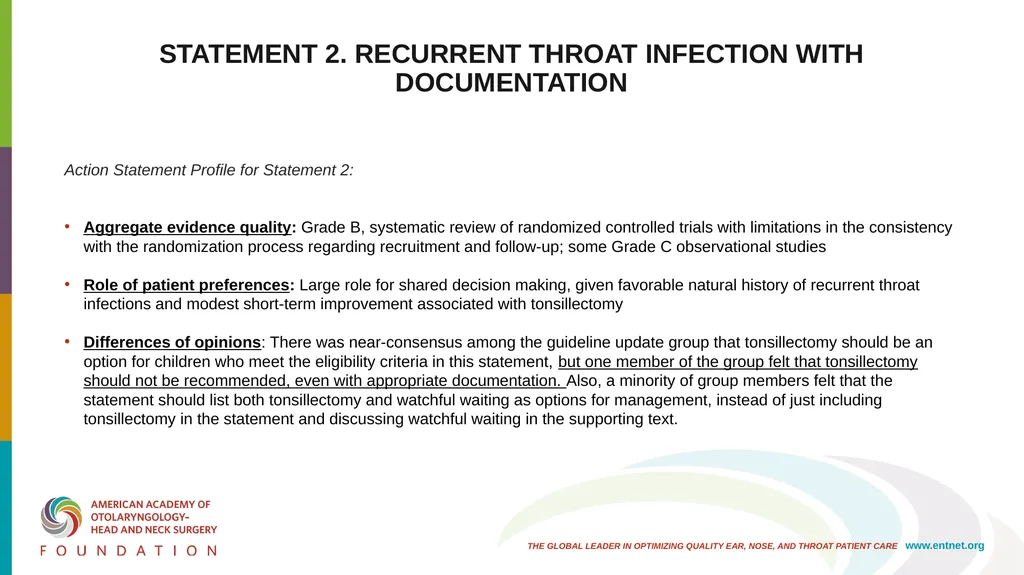
slide21. STATEMENT 2. RECURRENT THROAT INFECTION WITH DOCUMENTATION Action Statement Profile for Statement 2:
Aggregate evidence quality: Grade B, systematic review of randomized controlled trials with limitations in the consistency with the randomization process regarding recruitment and follow-up; some Grade C observational studies
Role of patient preferences: Large role for shared decision making, given favorable natural history of recurrent throat infections and modest short-term improvement associated with tonsillectomy
Differences of opinions: There was near-consensus among the guideline update group that tonsillectomy should be an option for children who meet the eligibility criteria in this statement, but one member of the group felt that tonsillectomy should not be recommended, even with appropriate documentation. Also, a minority of group members felt that the statement should list both tonsillectomy and watchful waiting as options for management, instead of just including tonsillectomy in the statement and discussing watchful waiting in the supporting text.<br>
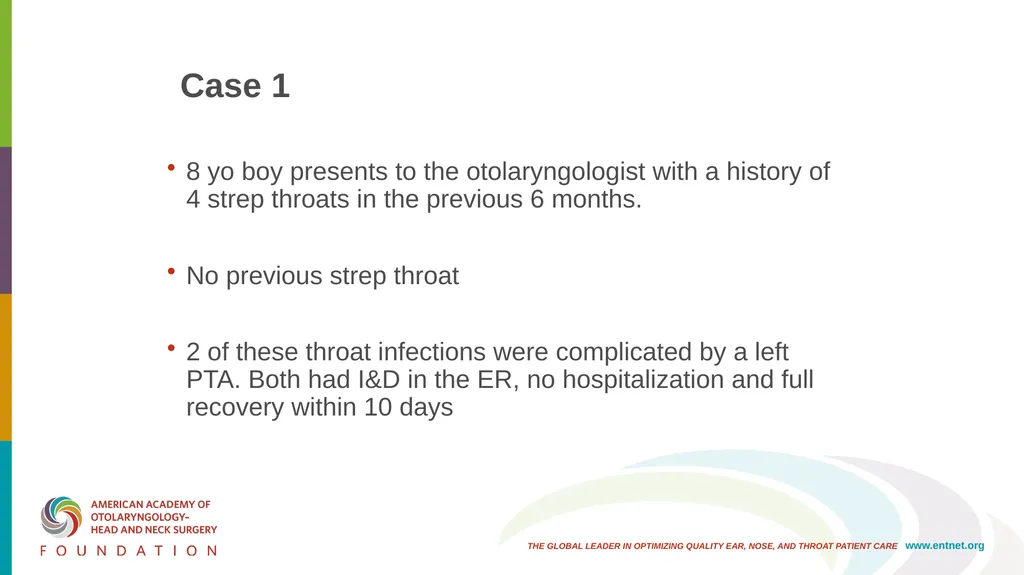
slide22. Case 1 8 yo boy presents to the otolaryngologist with a history of 4 strep throats in the previous 6 months.
No previous strep throat
2 of these throat infections were complicated by a left PTA. Both had I&D in the ER, no hospitalization and full recovery within 10 days<br>
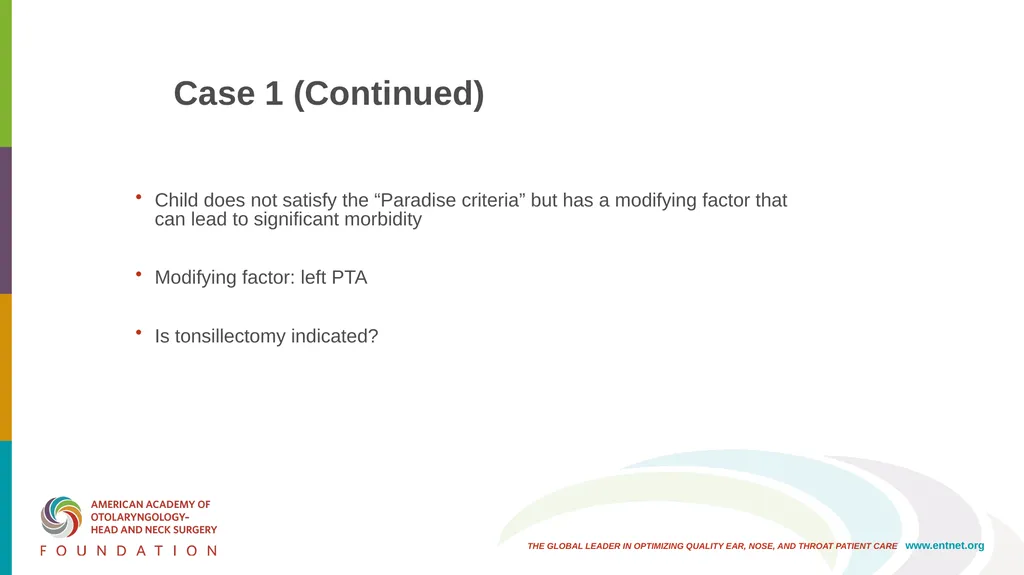
slide23. Case 1 (Continued) Child does not satisfy the “Paradise criteria” but has a modifying factor that can lead to significant morbidity
Modifying factor: left PTA
Is tonsillectomy indicated?<br>
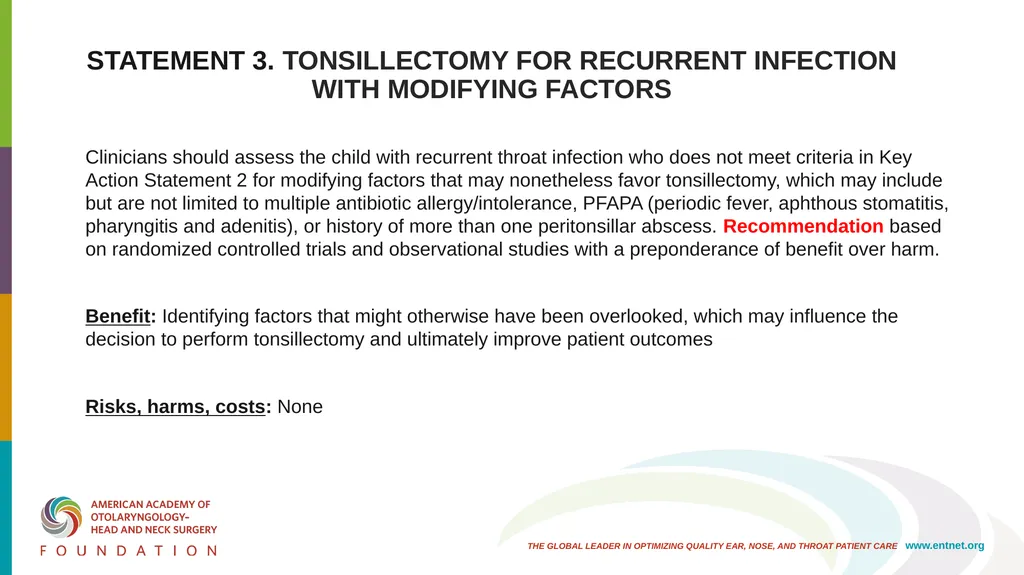
slide24. STATEMENT 3. TONSILLECTOMY FOR RECURRENT INFECTION WITH MODIFYING FACTORS Clinicians should assess the child with recurrent throat infection who does not meet criteria in Key Action Statement 2 for modifying factors that may nonetheless favor tonsillectomy, which may include but are not limited to multiple antibiotic allergy/intolerance, PFAPA (periodic fever, aphthous stomatitis, pharyngitis and adenitis), or history of more than one peritonsillar abscess. Recommendation based on randomized controlled trials and observational studies with a preponderance of benefit over harm.
Benefit: Identifying factors that might otherwise have been overlooked, which may influence the decision to perform tonsillectomy and ultimately improve patient outcomes
Risks, harms, costs: None<br>
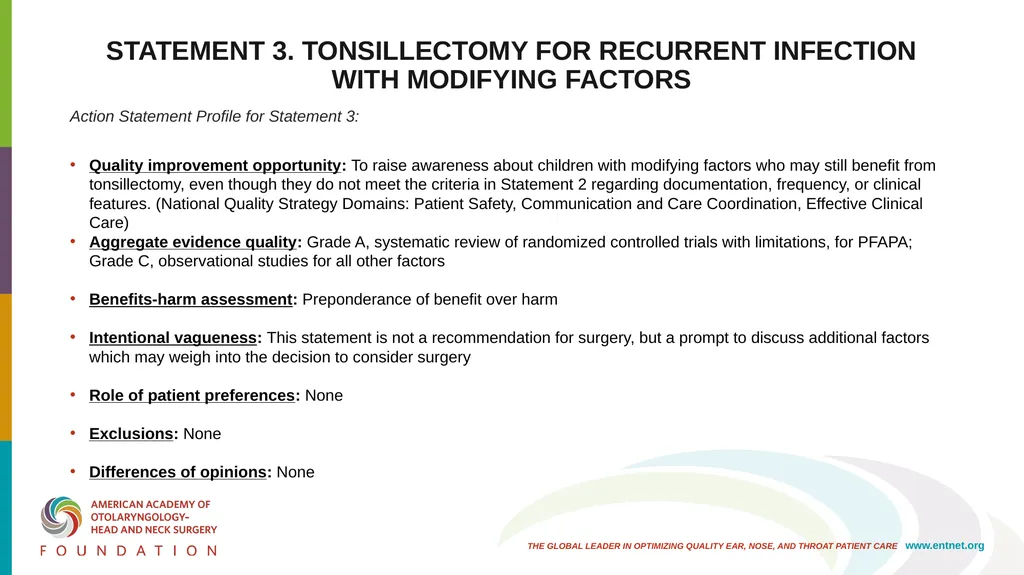
slide25. STATEMENT 3. TONSILLECTOMY FOR RECURRENT INFECTION WITH MODIFYING FACTORS Action Statement Profile for Statement 3:
Quality improvement opportunity: To raise awareness about children with modifying factors who may still benefit from tonsillectomy, even though they do not meet the criteria in Statement 2 regarding documentation, frequency, or clinical features. (National Quality Strategy Domains: Patient Safety, Communication and Care Coordination, Effective Clinical Care)
Aggregate evidence quality: Grade A, systematic review of randomized controlled trials with limitations, for PFAPA; Grade C, observational studies for all other factors
Benefits-harm assessment: Preponderance of benefit over harm
Intentional vagueness: This statement is not a recommendation for surgery, but a prompt to discuss additional factors which may weigh into the decision to consider surgery
Role of patient preferences: None
Exclusions: None
Differences of opinions: None<br>
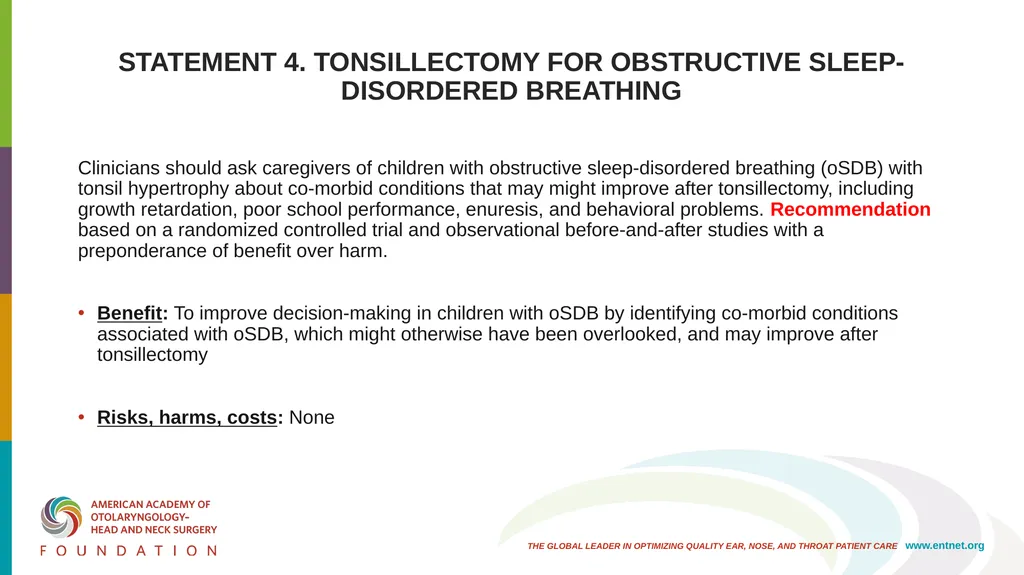
slide26. STATEMENT 4. TONSILLECTOMY FOR OBSTRUCTIVE SLEEP-DISORDERED BREATHING Clinicians should ask caregivers of children with obstructive sleep-disordered breathing (oSDB) with tonsil hypertrophy about co-morbid conditions that may might improve after tonsillectomy, including growth retardation, poor school performance, enuresis, and behavioral problems. Recommendation based on a randomized controlled trial and observational before-and-after studies with a preponderance of benefit over harm.
Benefit: To improve decision-making in children with oSDB by identifying co-morbid conditions associated with oSDB, which might otherwise have been overlooked, and may improve after tonsillectomy
Risks, harms, costs: None<br>
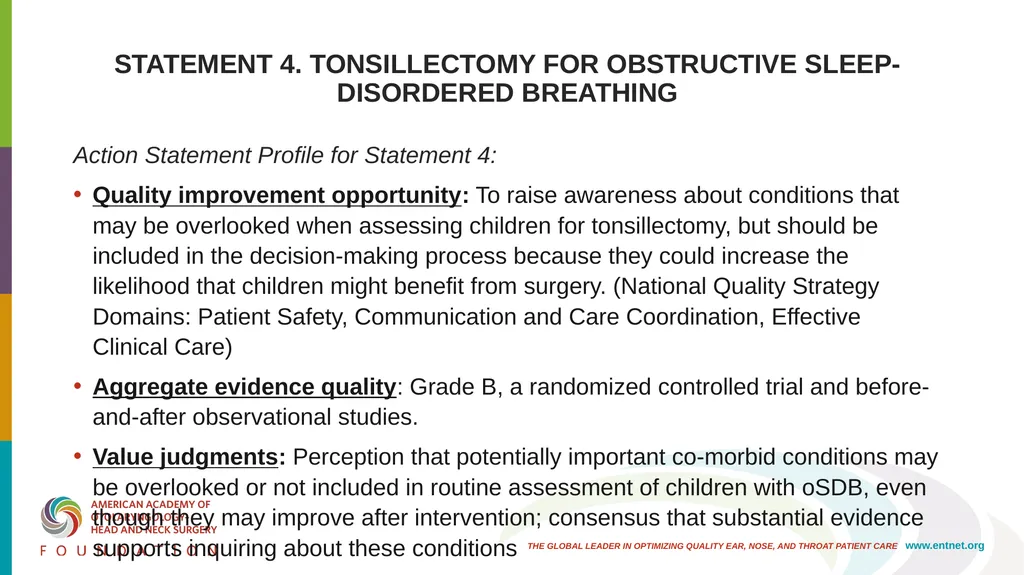
slide27. STATEMENT 4. TONSILLECTOMY FOR OBSTRUCTIVE SLEEP-DISORDERED BREATHING Action Statement Profile for Statement 4:
Quality improvement opportunity: To raise awareness about conditions that may be overlooked when assessing children for tonsillectomy, but should be included in the decision-making process because they could increase the likelihood that children might benefit from surgery. (National Quality Strategy Domains: Patient Safety, Communication and Care Coordination, Effective Clinical Care)
Aggregate evidence quality: Grade B, a randomized controlled trial and before-and-after observational studies.
Value judgments: Perception that potentially important co-morbid conditions may be overlooked or not included in routine assessment of children with oSDB, even though they may improve after intervention; consensus that substantial evidence supports inquiring about these conditions<br>
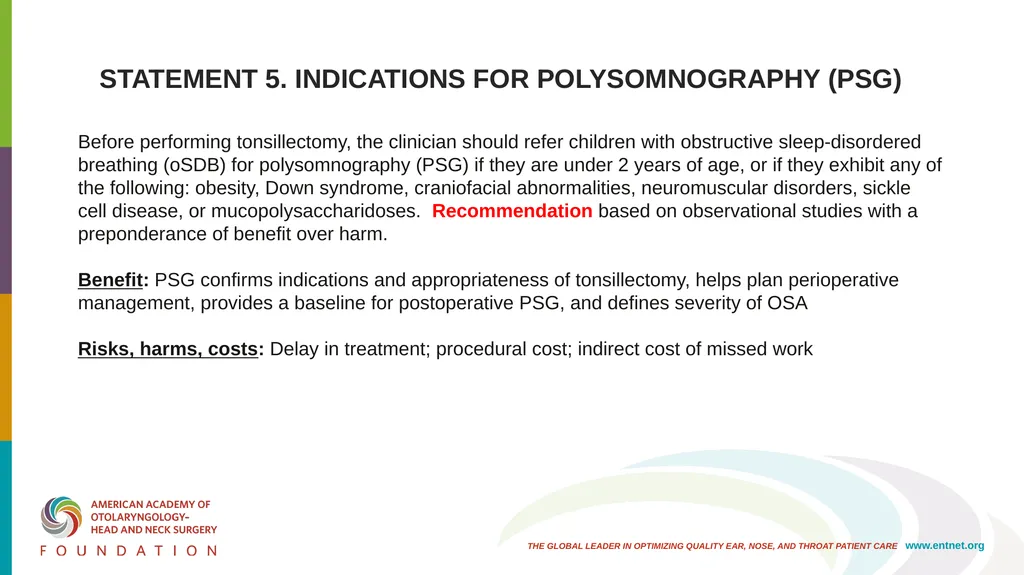
slide28. STATEMENT 5. INDICATIONS FOR POLYSOMNOGRAPHY (PSG) Before performing tonsillectomy, the clinician should refer children with obstructive sleep-disordered breathing (oSDB) for polysomnography (PSG) if they are under 2 years of age, or if they exhibit any of the following: obesity, Down syndrome, craniofacial abnormalities, neuromuscular disorders, sickle cell disease, or mucopolysaccharidoses. Recommendation based on observational studies with a preponderance of benefit over harm.
Benefit: PSG confirms indications and appropriateness of tonsillectomy, helps plan perioperative management, provides a baseline for postoperative PSG, and defines severity of OSA
Risks, harms, costs: Delay in treatment; procedural cost; indirect cost of missed work<br>
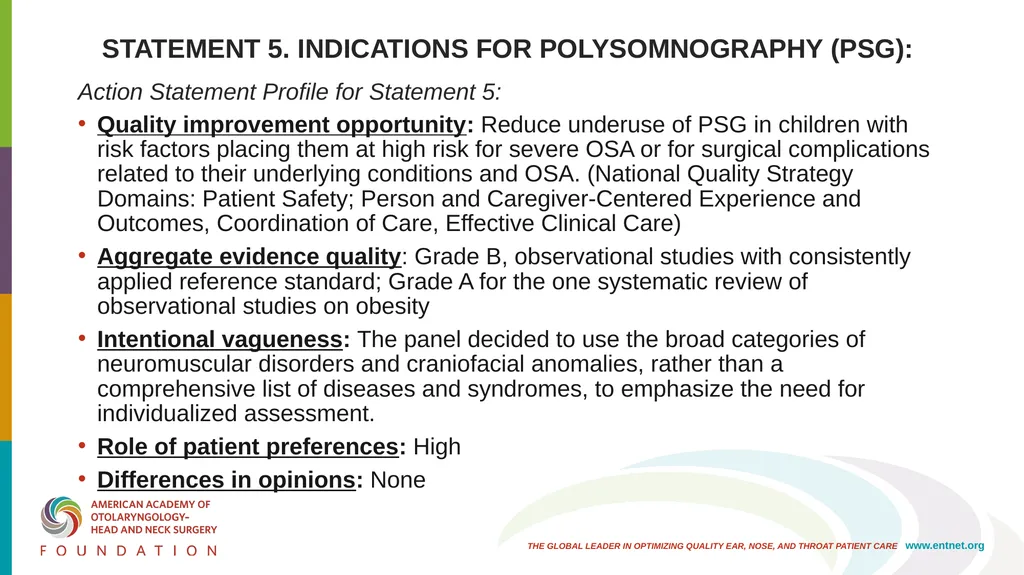
slide29. STATEMENT 5. INDICATIONS FOR POLYSOMNOGRAPHY (PSG): Action Statement Profile for Statement 5:
Quality improvement opportunity: Reduce underuse of PSG in children with risk factors placing them at high risk for severe OSA or for surgical complications related to their underlying conditions and OSA. (National Quality Strategy Domains: Patient Safety; Person and Caregiver-Centered Experience and Outcomes, Coordination of Care, Effective Clinical Care)
Aggregate evidence quality: Grade B, observational studies with consistently applied reference standard; Grade A for the one systematic review of observational studies on obesity
Intentional vagueness: The panel decided to use the broad categories of neuromuscular disorders and craniofacial anomalies, rather than a comprehensive list of diseases and syndromes, to emphasize the need for individualized assessment.
Role of patient preferences: High
Differences in opinions: None<br>
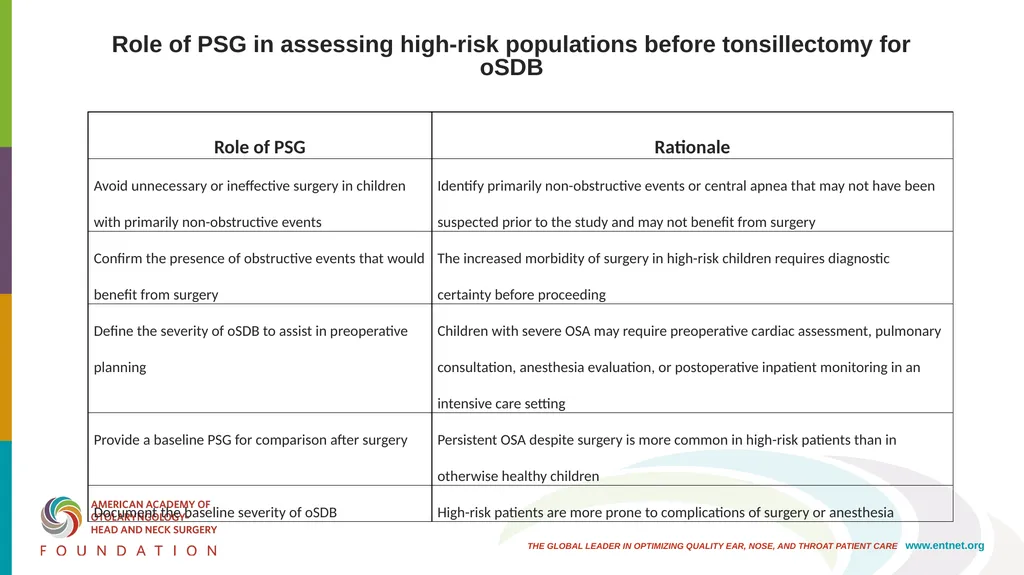
slide30. Role of PSG in assessing high-risk populations before tonsillectomy for oSDB<br>
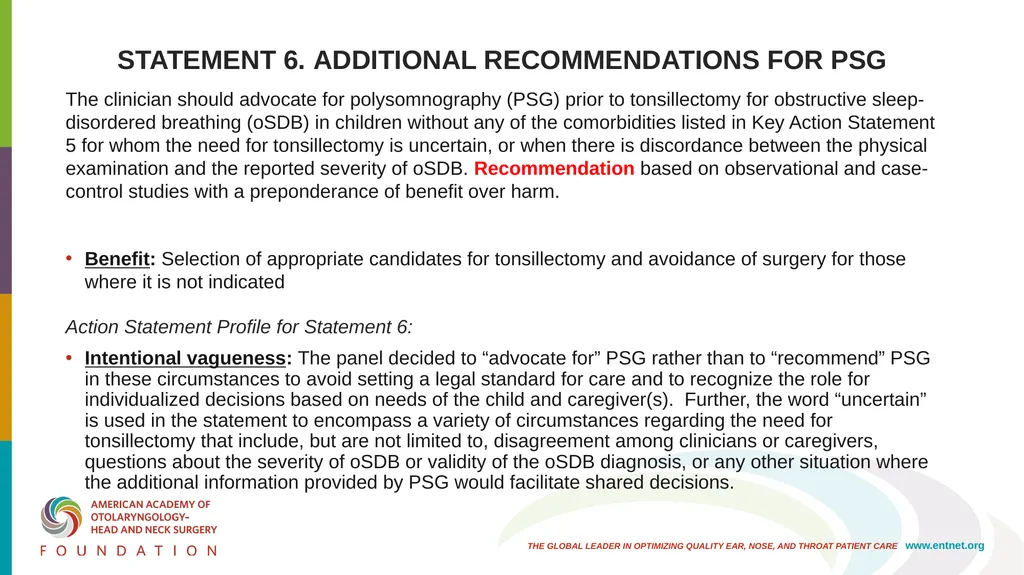
slide31. STATEMENT 6. ADDITIONAL RECOMMENDATIONS FOR PSG The clinician should advocate for polysomnography (PSG) prior to tonsillectomy for obstructive sleep-disordered breathing (oSDB) in children without any of the comorbidities listed in Key Action Statement 5 for whom the need for tonsillectomy is uncertain, or when there is discordance between the physical examination and the reported severity of oSDB. Recommendation based on observational and case-control studies with a preponderance of benefit over harm.
Benefit: Selection of appropriate candidates for tonsillectomy and avoidance of surgery for those where it is not indicated
Action Statement Profile for Statement 6:
Intentional vagueness: The panel decided to “advocate for” PSG rather than to “recommend” PSG in these circumstances to avoid setting a legal standard for care and to recognize the role for individualized decisions based on needs of the child and caregiver(s). Further, the word “uncertain” is used in the statement to encompass a variety of circumstances regarding the need for tonsillectomy that include, but are not limited to, disagreement among clinicians or caregivers, questions about the severity of oSDB or validity of the oSDB diagnosis, or any other situation where the additional information provided by PSG would facilitate shared decisions.<br>
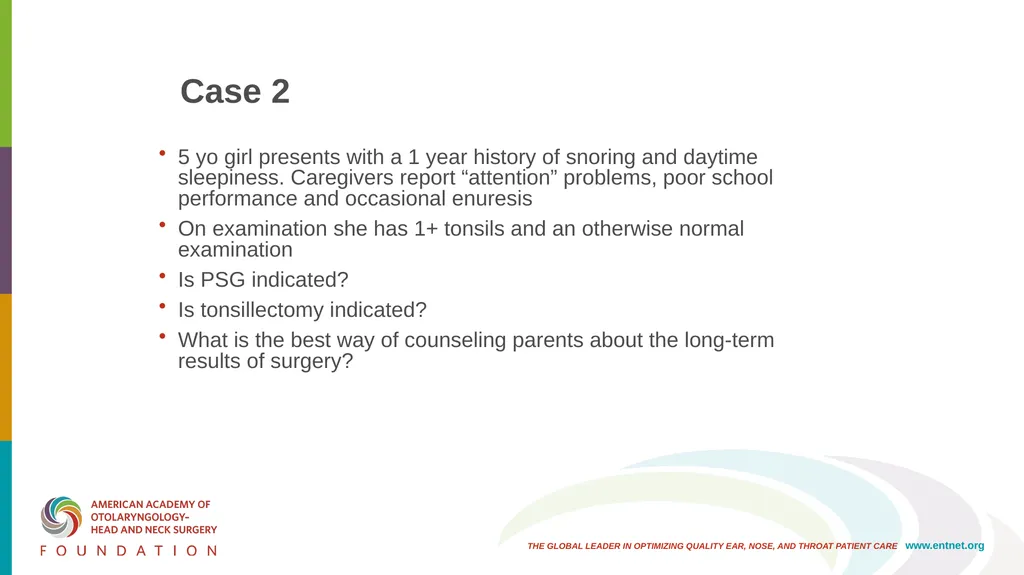
slide32. Case 2 5 yo girl presents with a 1 year history of snoring and daytime sleepiness. Caregivers report “attention” problems, poor school performance and occasional enuresis
On examination she has 1+ tonsils and an otherwise normal examination
Is PSG indicated?
Is tonsillectomy indicated?
What is the best way of counseling parents about the long-term results of surgery?<br>
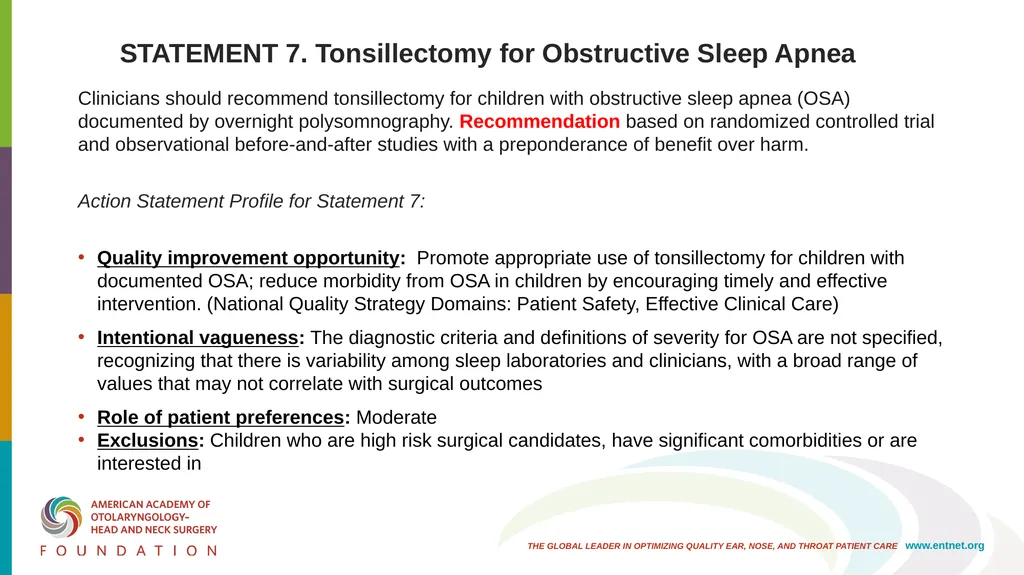
slide33. STATEMENT 7. Tonsillectomy for Obstructive Sleep Apnea Clinicians should recommend tonsillectomy for children with obstructive sleep apnea (OSA) documented by overnight polysomnography. Recommendation based on randomized controlled trial and observational before-and-after studies with a preponderance of benefit over harm.
Action Statement Profile for Statement 7:
Quality improvement opportunity: Promote appropriate use of tonsillectomy for children with documented OSA; reduce morbidity from OSA in children by encouraging timely and effective intervention. (National Quality Strategy Domains: Patient Safety, Effective Clinical Care)
Intentional vagueness: The diagnostic criteria and definitions of severity for OSA are not specified, recognizing that there is variability among sleep laboratories and clinicians, with a broad range of values that may not correlate with surgical outcomes
Role of patient preferences: Moderate
Exclusions: Children who are high risk surgical candidates, have significant comorbidities or are interested in<br>
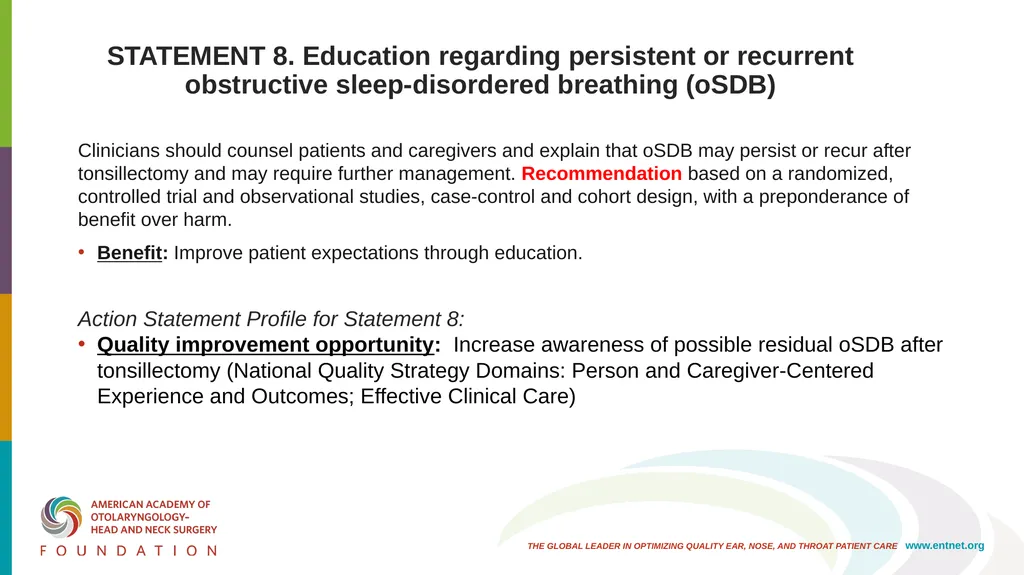
slide34. STATEMENT 8. Education regarding persistent or recurrent obstructive sleep-disordered breathing (oSDB) Clinicians should counsel patients and caregivers and explain that oSDB may persist or recur after tonsillectomy and may require further management. Recommendation based on a randomized, controlled trial and observational studies, case-control and cohort design, with a preponderance of benefit over harm.
Benefit: Improve patient expectations through education.
Action Statement Profile for Statement 8:
Quality improvement opportunity: Increase awareness of possible residual oSDB after tonsillectomy (National Quality Strategy Domains: Person and Caregiver-Centered Experience and Outcomes; Effective Clinical Care)<br>
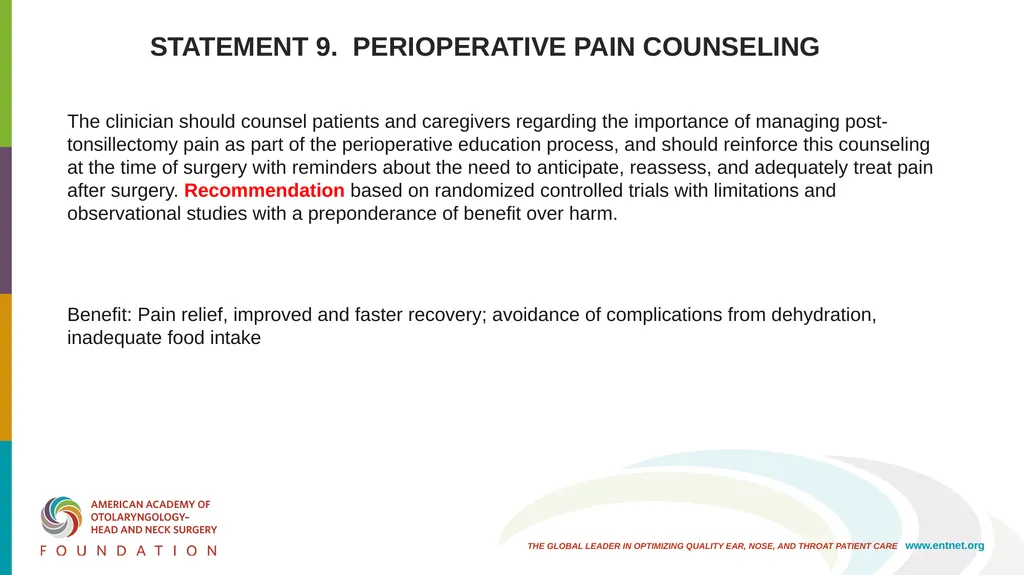
slide35. STATEMENT 9. PERIOPERATIVE PAIN COUNSELING The clinician should counsel patients and caregivers regarding the importance of managing post-tonsillectomy pain as part of the perioperative education process, and should reinforce this counseling at the time of surgery with reminders about the need to anticipate, reassess, and adequately treat pain after surgery. Recommendation based on randomized controlled trials with limitations and observational studies with a preponderance of benefit over harm.
Benefit: Pain relief, improved and faster recovery; avoidance of complications from dehydration, inadequate food intake<br>
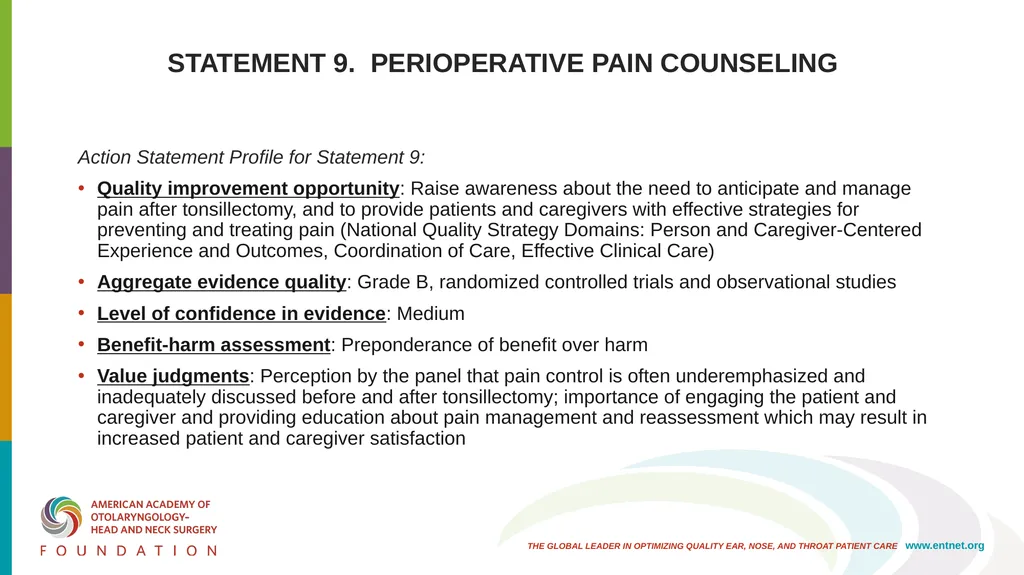
slide36. STATEMENT 9. PERIOPERATIVE PAIN COUNSELING Action Statement Profile for Statement 9:
Quality improvement opportunity: Raise awareness about the need to anticipate and manage pain after tonsillectomy, and to provide patients and caregivers with effective strategies for preventing and treating pain (National Quality Strategy Domains: Person and Caregiver-Centered Experience and Outcomes, Coordination of Care, Effective Clinical Care)
Aggregate evidence quality: Grade B, randomized controlled trials and observational studies
Level of confidence in evidence: Medium
Benefit-harm assessment: Preponderance of benefit over harm
Value judgments: Perception by the panel that pain control is often underemphasized and inadequately discussed before and after tonsillectomy; importance of engaging the patient and caregiver and providing education about pain management and reassessment which may result in increased patient and caregiver satisfaction<br>
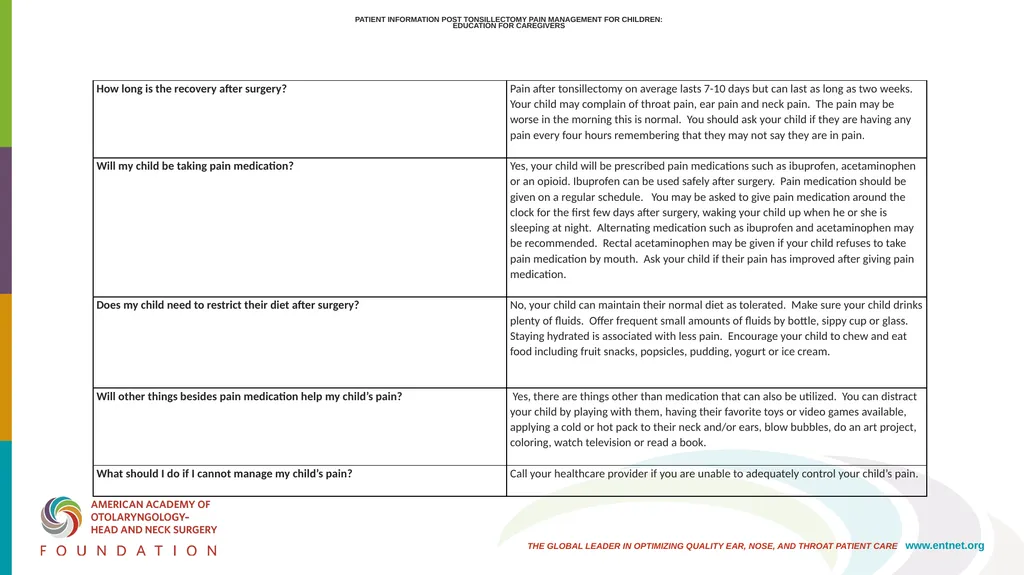
slide37. PATIENT INFORMATION POST TONSILLECTOMY PAIN MANAGEMENT FOR CHILDREN: EDUCATION FOR CAREGIVERS<br>
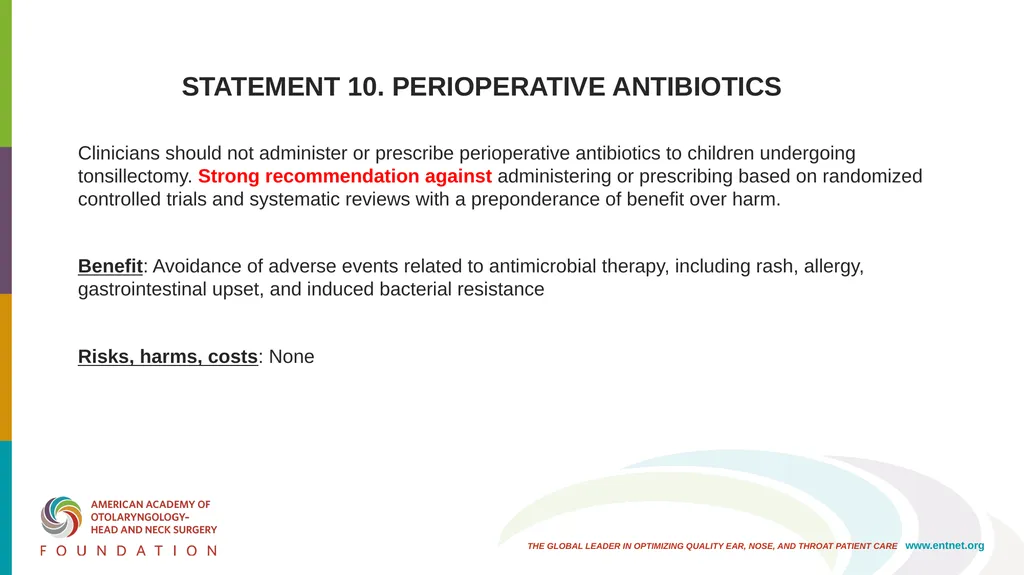
slide38. STATEMENT 10. PERIOPERATIVE ANTIBIOTICS Clinicians should not administer or prescribe perioperative antibiotics to children undergoing tonsillectomy. Strong recommendation against administering or prescribing based on randomized controlled trials and systematic reviews with a preponderance of benefit over harm.
Benefit: Avoidance of adverse events related to antimicrobial therapy, including rash, allergy, gastrointestinal upset, and induced bacterial resistance
Risks, harms, costs: None<br>
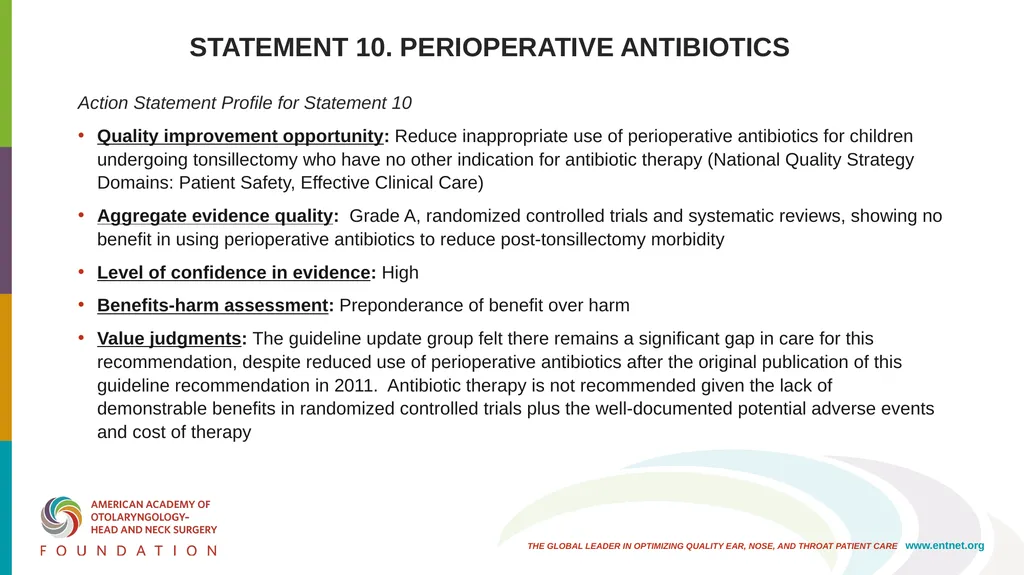
slide39. STATEMENT 10. PERIOPERATIVE ANTIBIOTICS Action Statement Profile for Statement 10
Quality improvement opportunity: Reduce inappropriate use of perioperative antibiotics for children undergoing tonsillectomy who have no other indication for antibiotic therapy (National Quality Strategy Domains: Patient Safety, Effective Clinical Care)
Aggregate evidence quality: Grade A, randomized controlled trials and systematic reviews, showing no benefit in using perioperative antibiotics to reduce post-tonsillectomy morbidity
Level of confidence in evidence: High
Benefits-harm assessment: Preponderance of benefit over harm
Value judgments: The guideline update group felt there remains a significant gap in care for this recommendation, despite reduced use of perioperative antibiotics after the original publication of this guideline recommendation in 2011. Antibiotic therapy is not recommended given the lack of demonstrable benefits in randomized controlled trials plus the well-documented potential adverse events and cost of therapy<br>
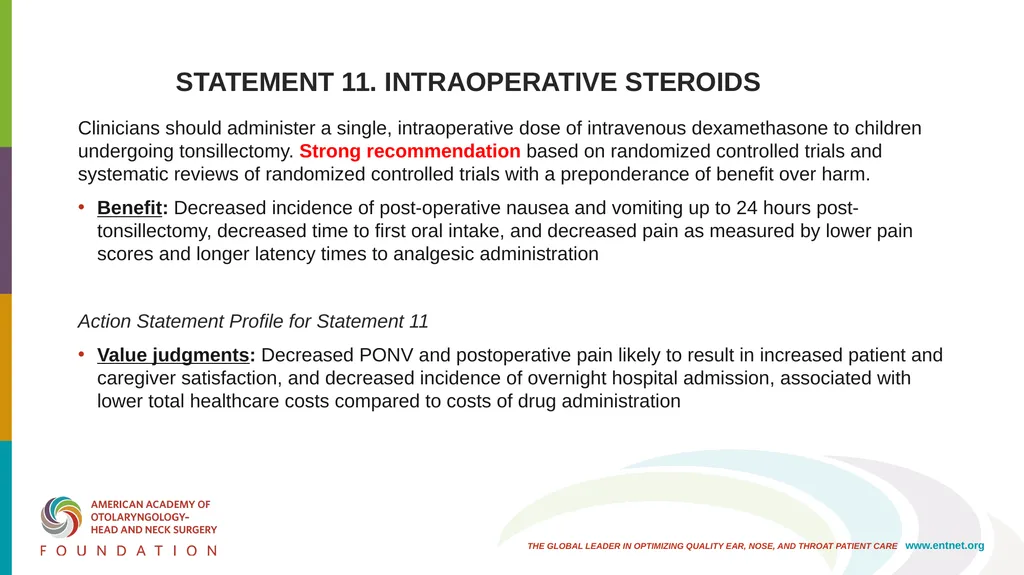
slide40. STATEMENT 11. INTRAOPERATIVE STEROIDS Clinicians should administer a single, intraoperative dose of intravenous dexamethasone to children undergoing tonsillectomy. Strong recommendation based on randomized controlled trials and systematic reviews of randomized controlled trials with a preponderance of benefit over harm.
Benefit: Decreased incidence of post-operative nausea and vomiting up to 24 hours post-tonsillectomy, decreased time to first oral intake, and decreased pain as measured by lower pain scores and longer latency times to analgesic administration
Action Statement Profile for Statement 11
Value judgments: Decreased PONV and postoperative pain likely to result in increased patient and caregiver satisfaction, and decreased incidence of overnight hospital admission, associated with lower total healthcare costs compared to costs of drug administration<br>
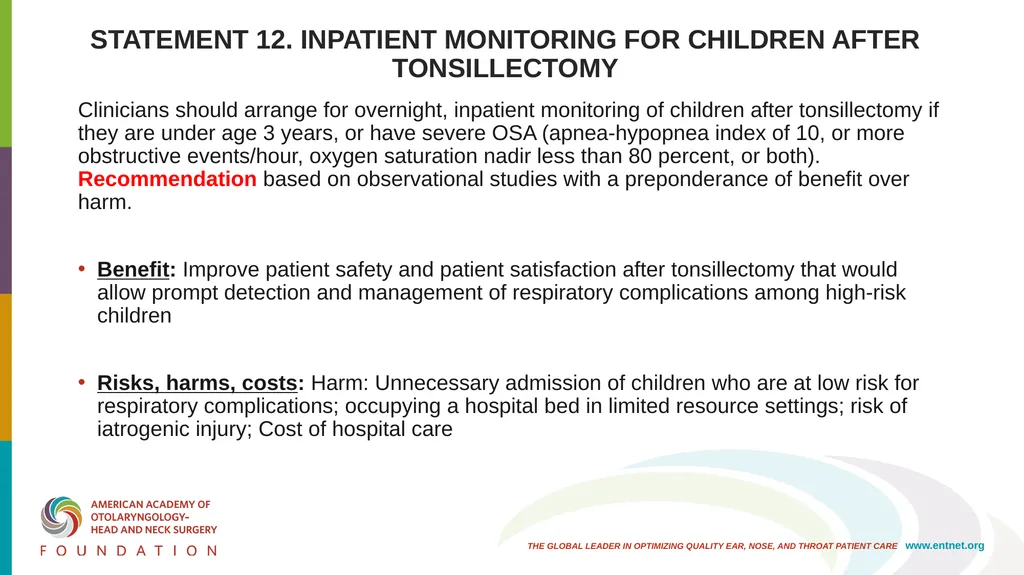
slide41. STATEMENT 12. INPATIENT MONITORING FOR CHILDREN AFTER TONSILLECTOMY Clinicians should arrange for overnight, inpatient monitoring of children after tonsillectomy if they are under age 3 years, or have severe OSA (apnea-hypopnea index of 10, or more obstructive events/hour, oxygen saturation nadir less than 80 percent, or both). Recommendation based on observational studies with a preponderance of benefit over harm.
Benefit: Improve patient safety and patient satisfaction after tonsillectomy that would allow prompt detection and management of respiratory complications among high-risk children
Risks, harms, costs: Harm: Unnecessary admission of children who are at low risk for respiratory complications; occupying a hospital bed in limited resource settings; risk of iatrogenic injury; Cost of hospital care<br>
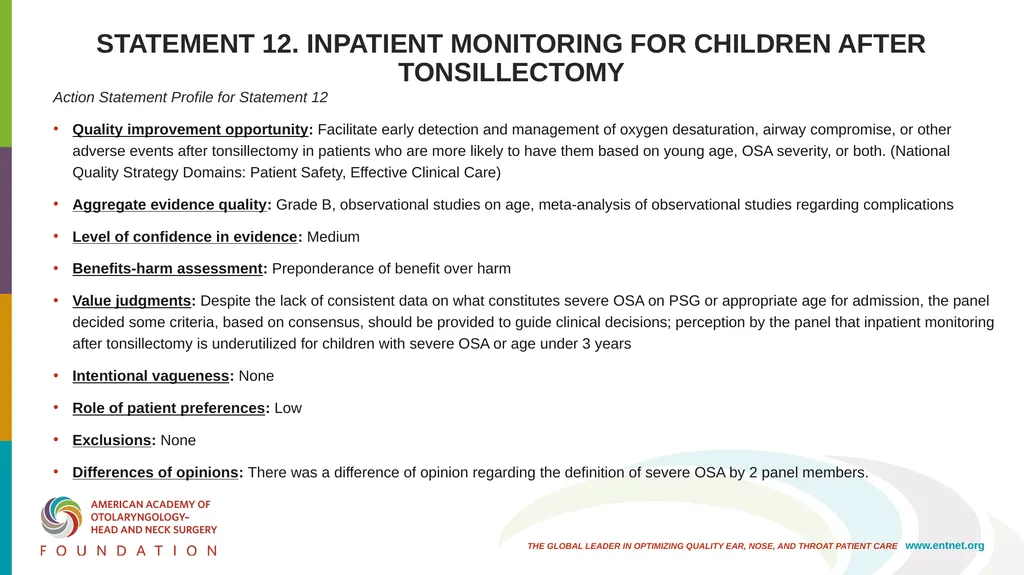
slide42. STATEMENT 12. INPATIENT MONITORING FOR CHILDREN AFTER TONSILLECTOMY Action Statement Profile for Statement 12
Quality improvement opportunity: Facilitate early detection and management of oxygen desaturation, airway compromise, or other adverse events after tonsillectomy in patients who are more likely to have them based on young age, OSA severity, or both. (National Quality Strategy Domains: Patient Safety, Effective Clinical Care)
Aggregate evidence quality: Grade B, observational studies on age, meta-analysis of observational studies regarding complications
Level of confidence in evidence: Medium
Benefits-harm assessment: Preponderance of benefit over harm
Value judgments: Despite the lack of consistent data on what constitutes severe OSA on PSG or appropriate age for admission, the panel decided some criteria, based on consensus, should be provided to guide clinical decisions; perception by the panel that inpatient monitoring after tonsillectomy is underutilized for children with severe OSA or age under 3 years
Intentional vagueness: None
Role of patient preferences: Low
Exclusions: None
Differences of opinions: There was a difference of opinion regarding the definition of severe OSA by 2 panel members.<br>
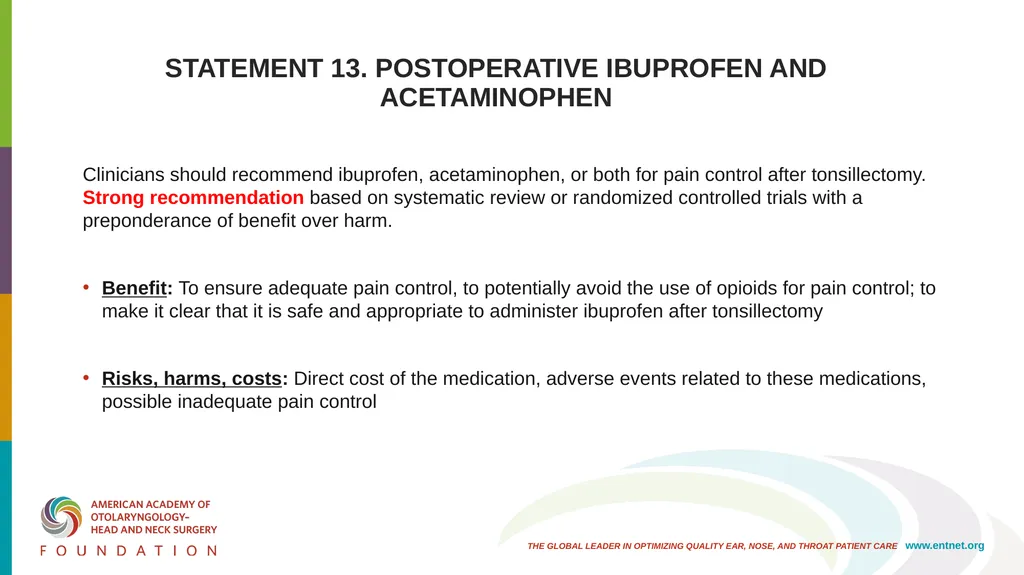
slide43. STATEMENT 13. POSTOPERATIVE IBUPROFEN AND ACETAMINOPHEN Clinicians should recommend ibuprofen, acetaminophen, or both for pain control after tonsillectomy. Strong recommendation based on systematic review or randomized controlled trials with a preponderance of benefit over harm.
Benefit: To ensure adequate pain control, to potentially avoid the use of opioids for pain control; to make it clear that it is safe and appropriate to administer ibuprofen after tonsillectomy
Risks, harms, costs: Direct cost of the medication, adverse events related to these medications, possible inadequate pain control<br>
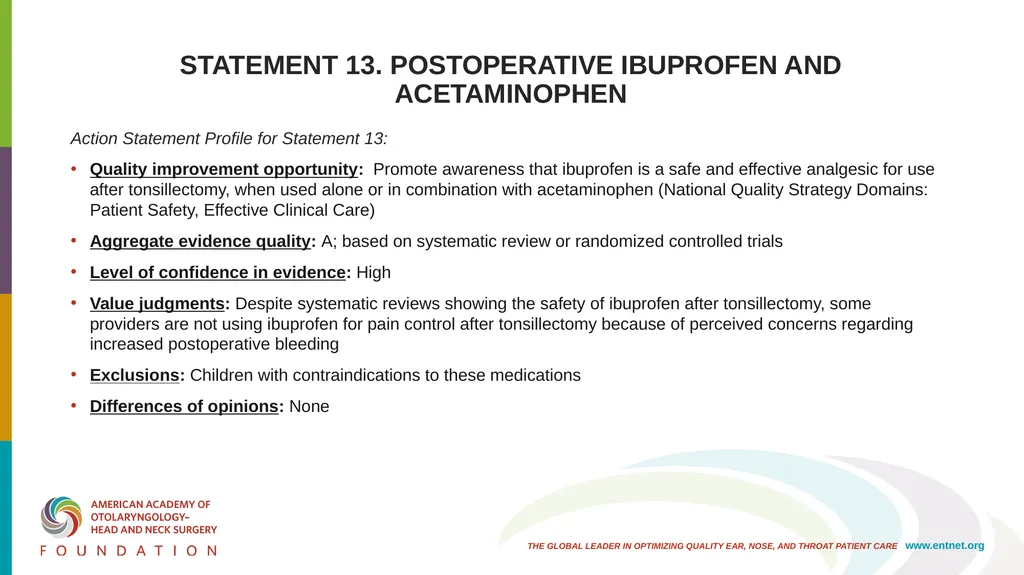
slide44. STATEMENT 13. POSTOPERATIVE IBUPROFEN AND ACETAMINOPHEN Action Statement Profile for Statement 13:
Quality improvement opportunity: Promote awareness that ibuprofen is a safe and effective analgesic for use after tonsillectomy, when used alone or in combination with acetaminophen (National Quality Strategy Domains: Patient Safety, Effective Clinical Care)
Aggregate evidence quality: A; based on systematic review or randomized controlled trials
Level of confidence in evidence: High
Value judgments: Despite systematic reviews showing the safety of ibuprofen after tonsillectomy, some providers are not using ibuprofen for pain control after tonsillectomy because of perceived concerns regarding increased postoperative bleeding
Exclusions: Children with contraindications to these medications
Differences of opinions: None<br>
slide45. 8 y.o. boy with recurrent throat infections has been treated 3 times for “strep throat” in the last 7 months most recently 3 weeks ago when he received an oral antibiotic followed by an IM shot 3 days later as he was not improving.
He was also treated on weekends in an Urgent Treatment Center (UTC) 3 times and once in the ER this past year, all for documented strep throat infections (+ cultures in all cases). Case 3<br>
slide46. He developed a severe rash early on with penicillin and had to be switched to another antibiotic.
His younger brother and sister have “caught” his infection several times after he was diagnosed and required antibiotic treatment as well.
He missed 11 days of school this past year related to his throat infections.
He has no other significant medical or surgical history (no significant bleeding or anesthesia risks).
He has no sleep-disordered breathing problems. Case 3 (Continued)<br>
slide47. Case 1: Physical Examination Well developed 8 y.o. male appropriate in size and weight.
Good nasal airway.
2-3+ tonsils.
Normal palatal shape and movement.
Normal speech pattern.
Shoddy non-tender bilateral cervical adenopathy.
Rest of exam completely normal.<br>
slide48. Case 1: Management Surgical options were discussed with Mom, and the risks and benefits of tonsillectomy and adenoidectomy were reviewed.
Mom is not interested in further antibiotic management.
The patient is brought to the ambulatory surgicenter for T & A, anesthesia meets the child and his mom and discusses perioperative management with the surgeon and anesthesiologist.
Mom asks if any further antibiotics will be necessary.
Surgeon discusses postoperative risks of bleeding and pain management strategies with Mom and child.<br>
slide49. Case 1: Intra-operative care Surgeon requests one dose of steroids after the IV is started.
A routine, uncomplicated T&A is performed using cold techniques and selective suction cauterization of tonsillar bed.
The child is brought to the PACU extubated and stable and in good condition.
Discharge discussion is held with the family, reminding of the importance of hydration, limited activity and pain management.
Nursing discharge paperwork lists dos and don’ts and a physician phone number for postop concerns.<br>
slide50. STATEMENT 14. POSTOPERATIVE CODEINE Clinicians must not administer or prescribe codeine, or any medication containing codeine, after tonsillectomy in children younger than 12 years. Strong recommendation against administering or prescribing based on observational studies with dramatic effect and supporting high-level pharmacogenetic studies with a preponderance of benefit over harm
Benefit: Avoiding severe or life-threatening complications in children who are ultra-rapid metabolizers of codeine who might be first exposed to this medication after tonsillectomy
Risks, harms, costs: There is a potential for inadequate pain control if alternative appropriate medications are not recommended<br>
slide51. STATEMENT 14. POSTOPERATIVE CODEINE Action Statement Profile for Statement 14:
Quality improvement opportunity: Reduce harmful therapy. (National Quality Strategy Domains: Patient Safety, Effective Clinical Care)
Aggregate evidence quality: Grade B, based on observational studies with dramatic effect and supporting high-level pharmacogenetic studies
Value judgments: None
Intentional vagueness: None
Role of patient preferences: None
Exclusions: None
Differences of opinions: None<br>
slide52. STATEMENT 15a. OUTCOME ASSESSMENT FOR BLEEDING : Clinicians should follow-up with patients and/or caregivers after tonsillectomy and document in the medical record the presence or absence of bleeding within 24 hours of surgery (primary bleeding) and bleeding occurring later than 24 hours after surgery (bleeding). Recommendation based on observational studies with a preponderance of benefit over harm.
STATEMENT 15b. POST-TONSILLECTOMY BLEEDING RATE: Clinicians should determine their rate of primary and secondary post-tonsillectomy bleeding (PTB) at least annually. Recommendation based on observational studies with a preponderance of benefit over harm.
Benefit: Improve self-awareness of outcomes for the surgeon and improve the confidence of patients and referring physicians, the ability to compare personal outcomes with national metrics; encourage quality improvement efforts
Risks, harms, costs: Administrative burden<br>
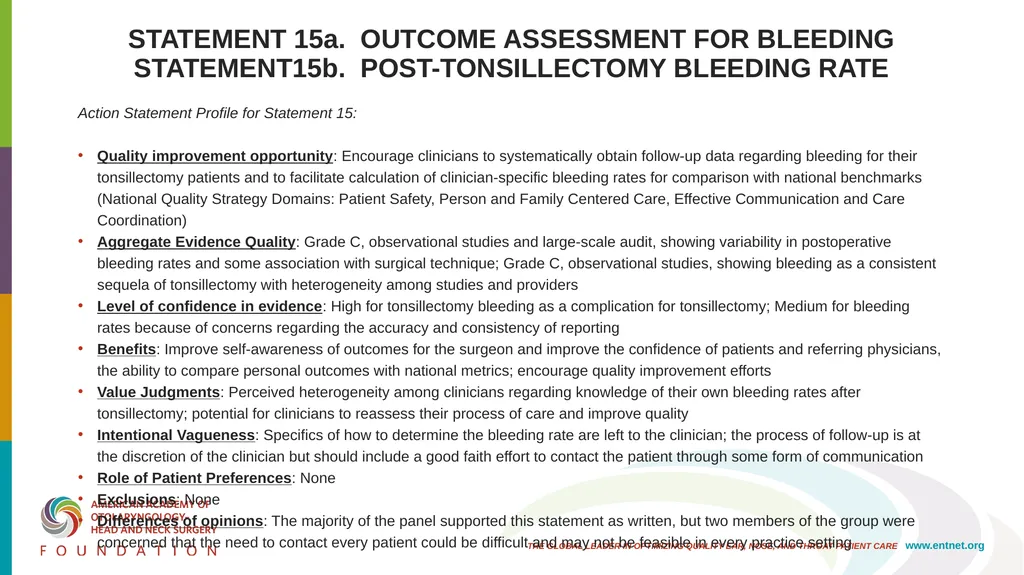
slide53. STATEMENT 15a. OUTCOME ASSESSMENT FOR BLEEDING STATEMENT15b. POST-TONSILLECTOMY BLEEDING RATE Action Statement Profile for Statement 15:
Quality improvement opportunity: Encourage clinicians to systematically obtain follow-up data regarding bleeding for their tonsillectomy patients and to facilitate calculation of clinician-specific bleeding rates for comparison with national benchmarks (National Quality Strategy Domains: Patient Safety, Person and Family Centered Care, Effective Communication and Care Coordination)
Aggregate Evidence Quality: Grade C, observational studies and large-scale audit, showing variability in postoperative bleeding rates and some association with surgical technique; Grade C, observational studies, showing bleeding as a consistent sequela of tonsillectomy with heterogeneity among studies and providers
Level of confidence in evidence: High for tonsillectomy bleeding as a complication for tonsillectomy; Medium for bleeding rates because of concerns regarding the accuracy and consistency of reporting
Benefits: Improve self-awareness of outcomes for the surgeon and improve the confidence of patients and referring physicians, the ability to compare personal outcomes with national metrics; encourage quality improvement efforts
Value Judgments: Perceived heterogeneity among clinicians regarding knowledge of their own bleeding rates after tonsillectomy; potential for clinicians to reassess their process of care and improve quality
Intentional Vagueness: Specifics of how to determine the bleeding rate are left to the clinician; the process of follow-up is at the discretion of the clinician but should include a good faith effort to contact the patient through some form of communication
Role of Patient Preferences: None
Exclusions: None
Differences of opinions: The majority of the panel supported this statement as written, but two members of the group were concerned that the need to contact every patient could be difficult and may not be feasible in every practice setting<br>
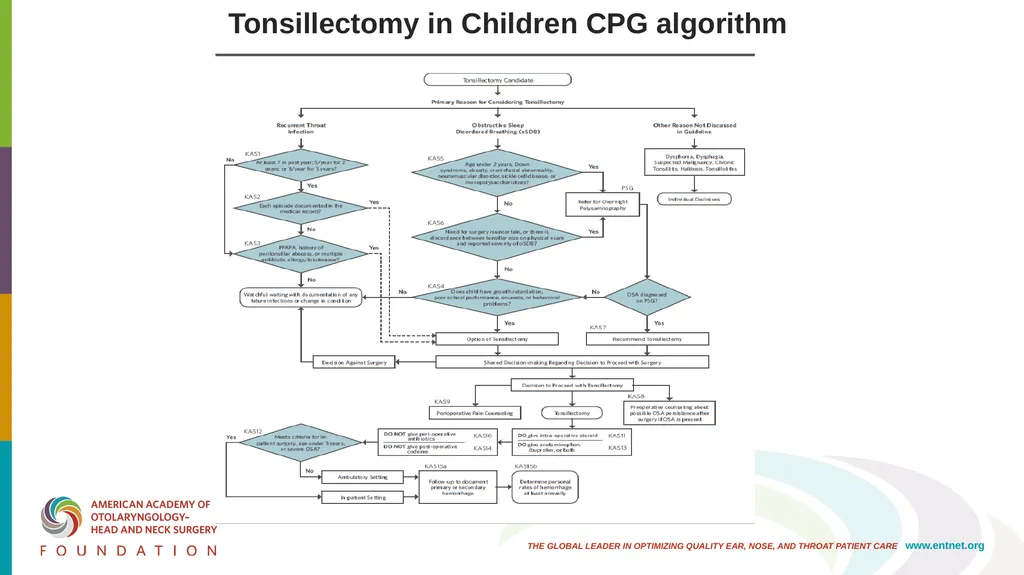
slide54. Tonsillectomy in Children CPG algorithm<br>
slide55. Thank you for your attention. Questions?<br>
slide2. What is Tonsillectomy? Tonsillectomy is defined as a surgical procedure performed with or without adenoidectomy that completely removes the tonsil including its capsule by dissecting the peritonsillar space between the tonsil capsule and the muscular wall.<br>
slide3. Definitions of Common Terminology Tonsillectomy is defined as a surgical procedure performed with or without adenoidectomy that completely removes the tonsil, including its capsule, by dissecting the peritonsillar space between the tonsil capsule and the muscular wall.
Throat infection is defined as a sore throat caused by viral or bacterial infection of the pharynx, palatine tonsils, or both, which may or may not be culture positive for group A streptococcus. This includes the terms strep throat, acute tonsillitis, pharyngitis, adenotonsillitis or tonsillopharyngitis.
Obstructive sleep-disordered breathing (oSDB) is a clinical diagnosis characterized by obstructive abnormalities of the respiratory pattern; or the adequacy of oxygenation/ventilation during sleep, which include snoring, mouth breathing, and pauses in breathing. oSDB encompasses a spectrum of obstructive disorders that increases in severity from primary snoring to obstructive sleep apnea (OSA). Daytime symptoms associated with oSDB may include inattention, poor concentration, hyperactivity or excessive sleepiness. The term oSDB is used to distinguish oSDB from SDB that includes central apnea and/or abnormalities of ventilation (e.g. hypopnea associated hypoventilation).
Obstructive sleep apnea (OSA) is diagnosed when oSDB is accompanied by an abnormal polysomnography (PSG) with an obstructive apnea- hypopnea index (AHI) ≥ 1. It is a disorder of breathing during sleep characterized by prolonged partial upper airway obstruction and/or intermittent complete obstruction (obstructive apnea) that disrupts normal ventilation during sleep and normal sleep patterns.5
The term “caregiver” is used throughout the document to refer to parents, guardians or other adults providing care to children under consideration for or undergoing tonsillectomy.<br>
slide4. Burden of Tonsillectomy in Children Tonsillectomy is the second most common ambulatory surgical procedure performed on children in the United States.
There were 289,000 tonsillectomies performed in children under 15 years of age in 2017, constituting 16% of all ambulatory surgery in this age group.
Tonsillectomy is a surgical procedure with an associated morbidity that includes possible hospitalization, risks of anesthesia, prolonged throat pain, and financial costs.
Mortality rates for tonsillectomy have been estimated at between 1 in 16,000 to 1 in 35,000, based on data from the 1970s. There are no current estimates of tonsillectomy mortality.<br>
slide5. Why bother with an update? National Academies of Sciences, Engineering, and Medicine (formerly Institute of Medicine) Clinical Practice Guidelines We Can Trust Standard 8 states:
Literature should be monitored regularly following CPG publication to identify the emergence of new, potentially relevant evidence and to evaluate the continued validity of the CPG.
The AAO-HNSF strives to update every 5-years<br>
slide6. Inclusion of PSG Guideline Due to the overlap of information in the Clinical Practice Guideline: Polysomnography (PSG) for Sleep-Disordered Breathing Prior to Tonsillectomy in Children (2011), portions of this CPG were incorporated into the CPG: Tonsillectomy in Children (update) as deemed relevant by the guideline update panel.<br>
slide7. Clinical Practice Guideline Development Manual: Third Edition Rosenfeld, Shiffman, and Robertson Pragmatic, transparent approach to creating guidelines for performance assessment
Evidence-based, multidisciplinary process leading to publication in 12-18 months
Emphasizes a focused set of key action statements to promote quality improvement
Uses action statement profiles to summarize decisions in recommendations<br>
slide8. Clinical Practice Guideline (CPG) Goals Focus on quality improvement opportunities
Define actionable recommendations for clinicians regardless of discipline to improve care
The guideline is not intended to be comprehensive
The guideline is not intended to limit or restrict care provided by clinicians to individual patients<br>
slide9. AAO-HNSF Guideline Update Group<br>
slide10. AAO-HNSF Guideline Update Group<br>
slide11. Purpose & Target Audience PURPOSE: : The purpose of this multidisciplinary guideline is to identify quality improvement opportunities in managing children under consideration for tonsillectomy and to create explicit and actionable recommendations to implement these opportunities in clinical practice.
TARGET PATIENT: All children aged 1 to 18 years old under consideration for tonsillectomy
TARGET AUDIENCE: The guideline is intended for all clinicians in any setting who interact with children 1 to 18 years of age who may be candidates for tonsillectomy.<br>
slide12. Literature Search Performed by an information specialist.
New evidence included:
Clinical Practice Guidelines: 1
Systematic Reviews: 23
Randomized Control Trials: 13<br>
slide13. What’s new? Addition of consumer advocate to guideline update group.
Emphasis on patient education and shared decision-making.
Expanded action statement profiles with quality improvement opportunities, confidence in the evidence, intentional vagueness, differences of opinion, role of patient preferences.
Enhanced external review process to include public comment and journal peer review.
New algorithm*** to clarify decision making.<br>
slide14. What’s new? Changes to the Key Action Statements (KAS) from the original guideline:<br>
slide15. Additional Guideline Statements<br>
slide16. Strength of Action Terms /Implied Levels of Obligation<br>
slide17. STATEMENT 1. Watchful waiting for recurrent throat infection Clinicians should recommend watchful waiting for recurrent throat infection if there have been fewer than seven episodes in the past year, or fewer than 5 episodes per year in the past 2 years, or fewer than three episodes per year in the past 3 years. Strong recommendation based on systematic reviews of randomized controlled trials with limitations and observational studies with a preponderance of benefit over harm.
Benefit: Avoid unnecessary surgery with potential complications of vomiting, bleeding, pain, infection or anesthesia problems
Risks, harms, costs: Waiting may result in delayed treatment in patients who have unusually frequent and severe recurrent throat infections; Cost: Potential direct cost of managing future throat infections<br>
slide18. STATEMENT 1. Watchful waiting for recurrent throat infection Action Statement Profile for Statement 1:
Quality improvement opportunity: To avoid surgery and its potential complications for children who do not meet the criteria showing benefit in randomized-controlled trials. (National Quality Strategy Domain: Patient Safety)
Aggregate evidence quality: Grade A, systematic reviews of randomized-controlled trials that fail to show clinically important advantages of surgery over observation alone (as stated in Statement 1); and Grade C, observational studies showing improvement with watchful waiting.
Level of confidence in evidence: High
Benefits-harm assessment: Preponderance of benefits over harm
Value judgments: Panel consensus that tonsillectomy for recurrent throat infection should be limited to circumstances for which clinically important benefits are shown in randomized controlled trials; emphasis on avoiding harm related to surgery or anesthesia in a condition that may be largely self-limited
Intentional vagueness: None
Role of patient preferences: None
Exclusions: Patients with more than 1 peritonsillar abscess, personal or family history of rheumatic heart disease, Lemierre’s syndrome, or severe infections requiring hospitalization
Policy level: Strong Recommendation
Differences of opinions: None<br>
slide19. Paradise Criteria for Tonsillectomy<br>
slide20. STATEMENT 2. RECURRENT THROAT INFECTION WITH DOCUMENTATION Clinicians may recommend tonsillectomy for recurrent throat infection with a frequency of at least 7 episodes in the past year, or at least five episodes per year for 2 years, or at least three episodes per year for 3 years with documentation in the medical record for each episode of sore throat and one or more of the following: T>38.3 0C (101.0F), cervical adenopathy, tonsillar exudate, or positive test for group A beta-hemolytic streptococcus. Option based on systematic reviews of randomized controlled trials, with a balance between benefit and harm.
Benefit: Patients who proceed with the option of tonsillectomy will achieve a modest reduction in the frequency and severity of recurrent throat infection for 1 year after surgery, and a modest reduction in frequency of group A streptococcal infection for 1 year after surgery<br>
slide21. STATEMENT 2. RECURRENT THROAT INFECTION WITH DOCUMENTATION Action Statement Profile for Statement 2:
Aggregate evidence quality: Grade B, systematic review of randomized controlled trials with limitations in the consistency with the randomization process regarding recruitment and follow-up; some Grade C observational studies
Role of patient preferences: Large role for shared decision making, given favorable natural history of recurrent throat infections and modest short-term improvement associated with tonsillectomy
Differences of opinions: There was near-consensus among the guideline update group that tonsillectomy should be an option for children who meet the eligibility criteria in this statement, but one member of the group felt that tonsillectomy should not be recommended, even with appropriate documentation. Also, a minority of group members felt that the statement should list both tonsillectomy and watchful waiting as options for management, instead of just including tonsillectomy in the statement and discussing watchful waiting in the supporting text.<br>
slide22. Case 1 8 yo boy presents to the otolaryngologist with a history of 4 strep throats in the previous 6 months.
No previous strep throat
2 of these throat infections were complicated by a left PTA. Both had I&D in the ER, no hospitalization and full recovery within 10 days<br>
slide23. Case 1 (Continued) Child does not satisfy the “Paradise criteria” but has a modifying factor that can lead to significant morbidity
Modifying factor: left PTA
Is tonsillectomy indicated?<br>
slide24. STATEMENT 3. TONSILLECTOMY FOR RECURRENT INFECTION WITH MODIFYING FACTORS Clinicians should assess the child with recurrent throat infection who does not meet criteria in Key Action Statement 2 for modifying factors that may nonetheless favor tonsillectomy, which may include but are not limited to multiple antibiotic allergy/intolerance, PFAPA (periodic fever, aphthous stomatitis, pharyngitis and adenitis), or history of more than one peritonsillar abscess. Recommendation based on randomized controlled trials and observational studies with a preponderance of benefit over harm.
Benefit: Identifying factors that might otherwise have been overlooked, which may influence the decision to perform tonsillectomy and ultimately improve patient outcomes
Risks, harms, costs: None<br>
slide25. STATEMENT 3. TONSILLECTOMY FOR RECURRENT INFECTION WITH MODIFYING FACTORS Action Statement Profile for Statement 3:
Quality improvement opportunity: To raise awareness about children with modifying factors who may still benefit from tonsillectomy, even though they do not meet the criteria in Statement 2 regarding documentation, frequency, or clinical features. (National Quality Strategy Domains: Patient Safety, Communication and Care Coordination, Effective Clinical Care)
Aggregate evidence quality: Grade A, systematic review of randomized controlled trials with limitations, for PFAPA; Grade C, observational studies for all other factors
Benefits-harm assessment: Preponderance of benefit over harm
Intentional vagueness: This statement is not a recommendation for surgery, but a prompt to discuss additional factors which may weigh into the decision to consider surgery
Role of patient preferences: None
Exclusions: None
Differences of opinions: None<br>
slide26. STATEMENT 4. TONSILLECTOMY FOR OBSTRUCTIVE SLEEP-DISORDERED BREATHING Clinicians should ask caregivers of children with obstructive sleep-disordered breathing (oSDB) with tonsil hypertrophy about co-morbid conditions that may might improve after tonsillectomy, including growth retardation, poor school performance, enuresis, and behavioral problems. Recommendation based on a randomized controlled trial and observational before-and-after studies with a preponderance of benefit over harm.
Benefit: To improve decision-making in children with oSDB by identifying co-morbid conditions associated with oSDB, which might otherwise have been overlooked, and may improve after tonsillectomy
Risks, harms, costs: None<br>
slide27. STATEMENT 4. TONSILLECTOMY FOR OBSTRUCTIVE SLEEP-DISORDERED BREATHING Action Statement Profile for Statement 4:
Quality improvement opportunity: To raise awareness about conditions that may be overlooked when assessing children for tonsillectomy, but should be included in the decision-making process because they could increase the likelihood that children might benefit from surgery. (National Quality Strategy Domains: Patient Safety, Communication and Care Coordination, Effective Clinical Care)
Aggregate evidence quality: Grade B, a randomized controlled trial and before-and-after observational studies.
Value judgments: Perception that potentially important co-morbid conditions may be overlooked or not included in routine assessment of children with oSDB, even though they may improve after intervention; consensus that substantial evidence supports inquiring about these conditions<br>
slide28. STATEMENT 5. INDICATIONS FOR POLYSOMNOGRAPHY (PSG) Before performing tonsillectomy, the clinician should refer children with obstructive sleep-disordered breathing (oSDB) for polysomnography (PSG) if they are under 2 years of age, or if they exhibit any of the following: obesity, Down syndrome, craniofacial abnormalities, neuromuscular disorders, sickle cell disease, or mucopolysaccharidoses. Recommendation based on observational studies with a preponderance of benefit over harm.
Benefit: PSG confirms indications and appropriateness of tonsillectomy, helps plan perioperative management, provides a baseline for postoperative PSG, and defines severity of OSA
Risks, harms, costs: Delay in treatment; procedural cost; indirect cost of missed work<br>
slide29. STATEMENT 5. INDICATIONS FOR POLYSOMNOGRAPHY (PSG): Action Statement Profile for Statement 5:
Quality improvement opportunity: Reduce underuse of PSG in children with risk factors placing them at high risk for severe OSA or for surgical complications related to their underlying conditions and OSA. (National Quality Strategy Domains: Patient Safety; Person and Caregiver-Centered Experience and Outcomes, Coordination of Care, Effective Clinical Care)
Aggregate evidence quality: Grade B, observational studies with consistently applied reference standard; Grade A for the one systematic review of observational studies on obesity
Intentional vagueness: The panel decided to use the broad categories of neuromuscular disorders and craniofacial anomalies, rather than a comprehensive list of diseases and syndromes, to emphasize the need for individualized assessment.
Role of patient preferences: High
Differences in opinions: None<br>
slide30. Role of PSG in assessing high-risk populations before tonsillectomy for oSDB<br>
slide31. STATEMENT 6. ADDITIONAL RECOMMENDATIONS FOR PSG The clinician should advocate for polysomnography (PSG) prior to tonsillectomy for obstructive sleep-disordered breathing (oSDB) in children without any of the comorbidities listed in Key Action Statement 5 for whom the need for tonsillectomy is uncertain, or when there is discordance between the physical examination and the reported severity of oSDB. Recommendation based on observational and case-control studies with a preponderance of benefit over harm.
Benefit: Selection of appropriate candidates for tonsillectomy and avoidance of surgery for those where it is not indicated
Action Statement Profile for Statement 6:
Intentional vagueness: The panel decided to “advocate for” PSG rather than to “recommend” PSG in these circumstances to avoid setting a legal standard for care and to recognize the role for individualized decisions based on needs of the child and caregiver(s). Further, the word “uncertain” is used in the statement to encompass a variety of circumstances regarding the need for tonsillectomy that include, but are not limited to, disagreement among clinicians or caregivers, questions about the severity of oSDB or validity of the oSDB diagnosis, or any other situation where the additional information provided by PSG would facilitate shared decisions.<br>
slide32. Case 2 5 yo girl presents with a 1 year history of snoring and daytime sleepiness. Caregivers report “attention” problems, poor school performance and occasional enuresis
On examination she has 1+ tonsils and an otherwise normal examination
Is PSG indicated?
Is tonsillectomy indicated?
What is the best way of counseling parents about the long-term results of surgery?<br>
slide33. STATEMENT 7. Tonsillectomy for Obstructive Sleep Apnea Clinicians should recommend tonsillectomy for children with obstructive sleep apnea (OSA) documented by overnight polysomnography. Recommendation based on randomized controlled trial and observational before-and-after studies with a preponderance of benefit over harm.
Action Statement Profile for Statement 7:
Quality improvement opportunity: Promote appropriate use of tonsillectomy for children with documented OSA; reduce morbidity from OSA in children by encouraging timely and effective intervention. (National Quality Strategy Domains: Patient Safety, Effective Clinical Care)
Intentional vagueness: The diagnostic criteria and definitions of severity for OSA are not specified, recognizing that there is variability among sleep laboratories and clinicians, with a broad range of values that may not correlate with surgical outcomes
Role of patient preferences: Moderate
Exclusions: Children who are high risk surgical candidates, have significant comorbidities or are interested in<br>
slide34. STATEMENT 8. Education regarding persistent or recurrent obstructive sleep-disordered breathing (oSDB) Clinicians should counsel patients and caregivers and explain that oSDB may persist or recur after tonsillectomy and may require further management. Recommendation based on a randomized, controlled trial and observational studies, case-control and cohort design, with a preponderance of benefit over harm.
Benefit: Improve patient expectations through education.
Action Statement Profile for Statement 8:
Quality improvement opportunity: Increase awareness of possible residual oSDB after tonsillectomy (National Quality Strategy Domains: Person and Caregiver-Centered Experience and Outcomes; Effective Clinical Care)<br>
slide35. STATEMENT 9. PERIOPERATIVE PAIN COUNSELING The clinician should counsel patients and caregivers regarding the importance of managing post-tonsillectomy pain as part of the perioperative education process, and should reinforce this counseling at the time of surgery with reminders about the need to anticipate, reassess, and adequately treat pain after surgery. Recommendation based on randomized controlled trials with limitations and observational studies with a preponderance of benefit over harm.
Benefit: Pain relief, improved and faster recovery; avoidance of complications from dehydration, inadequate food intake<br>
slide36. STATEMENT 9. PERIOPERATIVE PAIN COUNSELING Action Statement Profile for Statement 9:
Quality improvement opportunity: Raise awareness about the need to anticipate and manage pain after tonsillectomy, and to provide patients and caregivers with effective strategies for preventing and treating pain (National Quality Strategy Domains: Person and Caregiver-Centered Experience and Outcomes, Coordination of Care, Effective Clinical Care)
Aggregate evidence quality: Grade B, randomized controlled trials and observational studies
Level of confidence in evidence: Medium
Benefit-harm assessment: Preponderance of benefit over harm
Value judgments: Perception by the panel that pain control is often underemphasized and inadequately discussed before and after tonsillectomy; importance of engaging the patient and caregiver and providing education about pain management and reassessment which may result in increased patient and caregiver satisfaction<br>
slide37. PATIENT INFORMATION POST TONSILLECTOMY PAIN MANAGEMENT FOR CHILDREN: EDUCATION FOR CAREGIVERS<br>
slide38. STATEMENT 10. PERIOPERATIVE ANTIBIOTICS Clinicians should not administer or prescribe perioperative antibiotics to children undergoing tonsillectomy. Strong recommendation against administering or prescribing based on randomized controlled trials and systematic reviews with a preponderance of benefit over harm.
Benefit: Avoidance of adverse events related to antimicrobial therapy, including rash, allergy, gastrointestinal upset, and induced bacterial resistance
Risks, harms, costs: None<br>
slide39. STATEMENT 10. PERIOPERATIVE ANTIBIOTICS Action Statement Profile for Statement 10
Quality improvement opportunity: Reduce inappropriate use of perioperative antibiotics for children undergoing tonsillectomy who have no other indication for antibiotic therapy (National Quality Strategy Domains: Patient Safety, Effective Clinical Care)
Aggregate evidence quality: Grade A, randomized controlled trials and systematic reviews, showing no benefit in using perioperative antibiotics to reduce post-tonsillectomy morbidity
Level of confidence in evidence: High
Benefits-harm assessment: Preponderance of benefit over harm
Value judgments: The guideline update group felt there remains a significant gap in care for this recommendation, despite reduced use of perioperative antibiotics after the original publication of this guideline recommendation in 2011. Antibiotic therapy is not recommended given the lack of demonstrable benefits in randomized controlled trials plus the well-documented potential adverse events and cost of therapy<br>
slide40. STATEMENT 11. INTRAOPERATIVE STEROIDS Clinicians should administer a single, intraoperative dose of intravenous dexamethasone to children undergoing tonsillectomy. Strong recommendation based on randomized controlled trials and systematic reviews of randomized controlled trials with a preponderance of benefit over harm.
Benefit: Decreased incidence of post-operative nausea and vomiting up to 24 hours post-tonsillectomy, decreased time to first oral intake, and decreased pain as measured by lower pain scores and longer latency times to analgesic administration
Action Statement Profile for Statement 11
Value judgments: Decreased PONV and postoperative pain likely to result in increased patient and caregiver satisfaction, and decreased incidence of overnight hospital admission, associated with lower total healthcare costs compared to costs of drug administration<br>
slide41. STATEMENT 12. INPATIENT MONITORING FOR CHILDREN AFTER TONSILLECTOMY Clinicians should arrange for overnight, inpatient monitoring of children after tonsillectomy if they are under age 3 years, or have severe OSA (apnea-hypopnea index of 10, or more obstructive events/hour, oxygen saturation nadir less than 80 percent, or both). Recommendation based on observational studies with a preponderance of benefit over harm.
Benefit: Improve patient safety and patient satisfaction after tonsillectomy that would allow prompt detection and management of respiratory complications among high-risk children
Risks, harms, costs: Harm: Unnecessary admission of children who are at low risk for respiratory complications; occupying a hospital bed in limited resource settings; risk of iatrogenic injury; Cost of hospital care<br>
slide42. STATEMENT 12. INPATIENT MONITORING FOR CHILDREN AFTER TONSILLECTOMY Action Statement Profile for Statement 12
Quality improvement opportunity: Facilitate early detection and management of oxygen desaturation, airway compromise, or other adverse events after tonsillectomy in patients who are more likely to have them based on young age, OSA severity, or both. (National Quality Strategy Domains: Patient Safety, Effective Clinical Care)
Aggregate evidence quality: Grade B, observational studies on age, meta-analysis of observational studies regarding complications
Level of confidence in evidence: Medium
Benefits-harm assessment: Preponderance of benefit over harm
Value judgments: Despite the lack of consistent data on what constitutes severe OSA on PSG or appropriate age for admission, the panel decided some criteria, based on consensus, should be provided to guide clinical decisions; perception by the panel that inpatient monitoring after tonsillectomy is underutilized for children with severe OSA or age under 3 years
Intentional vagueness: None
Role of patient preferences: Low
Exclusions: None
Differences of opinions: There was a difference of opinion regarding the definition of severe OSA by 2 panel members.<br>
slide43. STATEMENT 13. POSTOPERATIVE IBUPROFEN AND ACETAMINOPHEN Clinicians should recommend ibuprofen, acetaminophen, or both for pain control after tonsillectomy. Strong recommendation based on systematic review or randomized controlled trials with a preponderance of benefit over harm.
Benefit: To ensure adequate pain control, to potentially avoid the use of opioids for pain control; to make it clear that it is safe and appropriate to administer ibuprofen after tonsillectomy
Risks, harms, costs: Direct cost of the medication, adverse events related to these medications, possible inadequate pain control<br>
slide44. STATEMENT 13. POSTOPERATIVE IBUPROFEN AND ACETAMINOPHEN Action Statement Profile for Statement 13:
Quality improvement opportunity: Promote awareness that ibuprofen is a safe and effective analgesic for use after tonsillectomy, when used alone or in combination with acetaminophen (National Quality Strategy Domains: Patient Safety, Effective Clinical Care)
Aggregate evidence quality: A; based on systematic review or randomized controlled trials
Level of confidence in evidence: High
Value judgments: Despite systematic reviews showing the safety of ibuprofen after tonsillectomy, some providers are not using ibuprofen for pain control after tonsillectomy because of perceived concerns regarding increased postoperative bleeding
Exclusions: Children with contraindications to these medications
Differences of opinions: None<br>
slide45. 8 y.o. boy with recurrent throat infections has been treated 3 times for “strep throat” in the last 7 months most recently 3 weeks ago when he received an oral antibiotic followed by an IM shot 3 days later as he was not improving.
He was also treated on weekends in an Urgent Treatment Center (UTC) 3 times and once in the ER this past year, all for documented strep throat infections (+ cultures in all cases). Case 3<br>
slide46. He developed a severe rash early on with penicillin and had to be switched to another antibiotic.
His younger brother and sister have “caught” his infection several times after he was diagnosed and required antibiotic treatment as well.
He missed 11 days of school this past year related to his throat infections.
He has no other significant medical or surgical history (no significant bleeding or anesthesia risks).
He has no sleep-disordered breathing problems. Case 3 (Continued)<br>
slide47. Case 1: Physical Examination Well developed 8 y.o. male appropriate in size and weight.
Good nasal airway.
2-3+ tonsils.
Normal palatal shape and movement.
Normal speech pattern.
Shoddy non-tender bilateral cervical adenopathy.
Rest of exam completely normal.<br>
slide48. Case 1: Management Surgical options were discussed with Mom, and the risks and benefits of tonsillectomy and adenoidectomy were reviewed.
Mom is not interested in further antibiotic management.
The patient is brought to the ambulatory surgicenter for T & A, anesthesia meets the child and his mom and discusses perioperative management with the surgeon and anesthesiologist.
Mom asks if any further antibiotics will be necessary.
Surgeon discusses postoperative risks of bleeding and pain management strategies with Mom and child.<br>
slide49. Case 1: Intra-operative care Surgeon requests one dose of steroids after the IV is started.
A routine, uncomplicated T&A is performed using cold techniques and selective suction cauterization of tonsillar bed.
The child is brought to the PACU extubated and stable and in good condition.
Discharge discussion is held with the family, reminding of the importance of hydration, limited activity and pain management.
Nursing discharge paperwork lists dos and don’ts and a physician phone number for postop concerns.<br>
slide50. STATEMENT 14. POSTOPERATIVE CODEINE Clinicians must not administer or prescribe codeine, or any medication containing codeine, after tonsillectomy in children younger than 12 years. Strong recommendation against administering or prescribing based on observational studies with dramatic effect and supporting high-level pharmacogenetic studies with a preponderance of benefit over harm
Benefit: Avoiding severe or life-threatening complications in children who are ultra-rapid metabolizers of codeine who might be first exposed to this medication after tonsillectomy
Risks, harms, costs: There is a potential for inadequate pain control if alternative appropriate medications are not recommended<br>
slide51. STATEMENT 14. POSTOPERATIVE CODEINE Action Statement Profile for Statement 14:
Quality improvement opportunity: Reduce harmful therapy. (National Quality Strategy Domains: Patient Safety, Effective Clinical Care)
Aggregate evidence quality: Grade B, based on observational studies with dramatic effect and supporting high-level pharmacogenetic studies
Value judgments: None
Intentional vagueness: None
Role of patient preferences: None
Exclusions: None
Differences of opinions: None<br>
slide52. STATEMENT 15a. OUTCOME ASSESSMENT FOR BLEEDING : Clinicians should follow-up with patients and/or caregivers after tonsillectomy and document in the medical record the presence or absence of bleeding within 24 hours of surgery (primary bleeding) and bleeding occurring later than 24 hours after surgery (bleeding). Recommendation based on observational studies with a preponderance of benefit over harm.
STATEMENT 15b. POST-TONSILLECTOMY BLEEDING RATE: Clinicians should determine their rate of primary and secondary post-tonsillectomy bleeding (PTB) at least annually. Recommendation based on observational studies with a preponderance of benefit over harm.
Benefit: Improve self-awareness of outcomes for the surgeon and improve the confidence of patients and referring physicians, the ability to compare personal outcomes with national metrics; encourage quality improvement efforts
Risks, harms, costs: Administrative burden<br>
slide53. STATEMENT 15a. OUTCOME ASSESSMENT FOR BLEEDING STATEMENT15b. POST-TONSILLECTOMY BLEEDING RATE Action Statement Profile for Statement 15:
Quality improvement opportunity: Encourage clinicians to systematically obtain follow-up data regarding bleeding for their tonsillectomy patients and to facilitate calculation of clinician-specific bleeding rates for comparison with national benchmarks (National Quality Strategy Domains: Patient Safety, Person and Family Centered Care, Effective Communication and Care Coordination)
Aggregate Evidence Quality: Grade C, observational studies and large-scale audit, showing variability in postoperative bleeding rates and some association with surgical technique; Grade C, observational studies, showing bleeding as a consistent sequela of tonsillectomy with heterogeneity among studies and providers
Level of confidence in evidence: High for tonsillectomy bleeding as a complication for tonsillectomy; Medium for bleeding rates because of concerns regarding the accuracy and consistency of reporting
Benefits: Improve self-awareness of outcomes for the surgeon and improve the confidence of patients and referring physicians, the ability to compare personal outcomes with national metrics; encourage quality improvement efforts
Value Judgments: Perceived heterogeneity among clinicians regarding knowledge of their own bleeding rates after tonsillectomy; potential for clinicians to reassess their process of care and improve quality
Intentional Vagueness: Specifics of how to determine the bleeding rate are left to the clinician; the process of follow-up is at the discretion of the clinician but should include a good faith effort to contact the patient through some form of communication
Role of Patient Preferences: None
Exclusions: None
Differences of opinions: The majority of the panel supported this statement as written, but two members of the group were concerned that the need to contact every patient could be difficult and may not be feasible in every practice setting<br>
slide54. Tonsillectomy in Children CPG algorithm<br>
slide55. Thank you for your attention. Questions?<br>