
Achieving Best EE in a High Ambient Temp.
LS
Published · 29 slides · 0 views
1 / 1

Description
Achieving Best EE in a High Ambient Temp. Environment Using Both Equipment and Building Design Kingdom of Saudi Arabia Saudi Energy Efficiency Program July 2018 The Saudi Energy Efficiency Center was initiated based on a clear case for
Related Topics
Share
Embed code
Download this presentation From Below
"Achieving Best EE in a High Ambient Temp." is the property of its rightful owner. Permission is granted to download and print the materials on this website for personal, non-commercial use only, and to display it on your personal computer provided you do not modify the materials and that you retain all copyright notices contained in the materials. By downloading content from our website, you accept the terms of this agreement.
Presentation Transcript
01
Achieving Best EE in a High Ambient Temp. Environment Using Both Equipment and Building Design Kingdom of Saudi Arabia
Saudi Energy Efficiency Program July 2018<br>
Saudi Energy Efficiency Program July 2018<br>
02
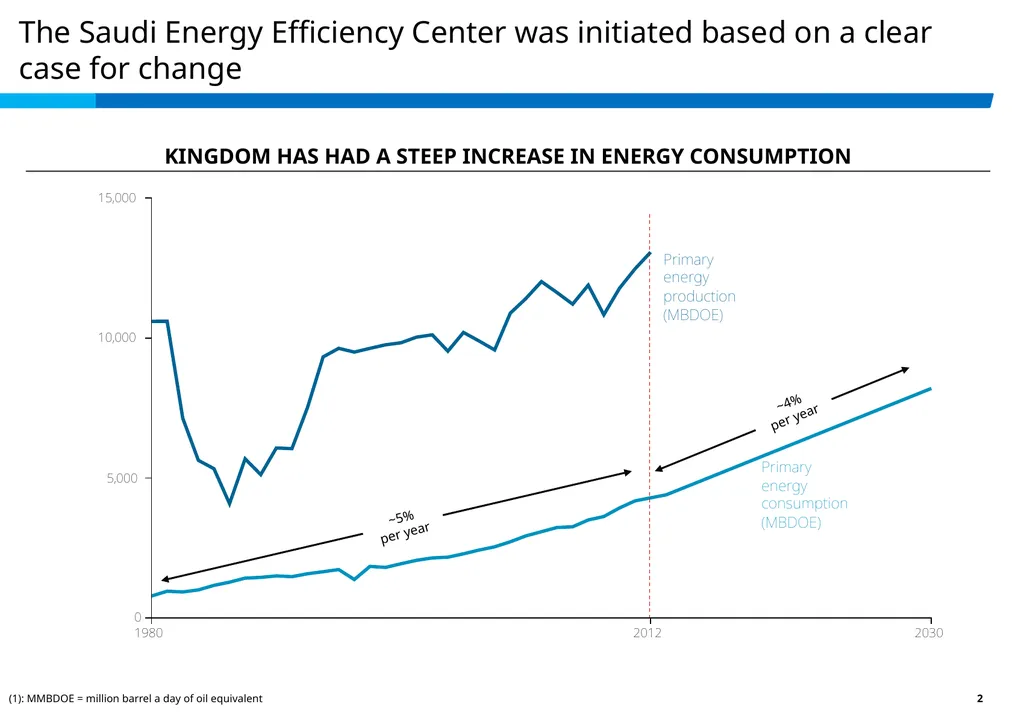
The Saudi Energy Efficiency Center was initiated based on a clear case for change Kingdom has had a steep increase in energy consumption 61_84 ~5%
per year ~4%
per year (1): MMBDOE = million barrel a day of oil equivalent overall_1_131751620661391479 columns_1_131751620661391479<br>
03
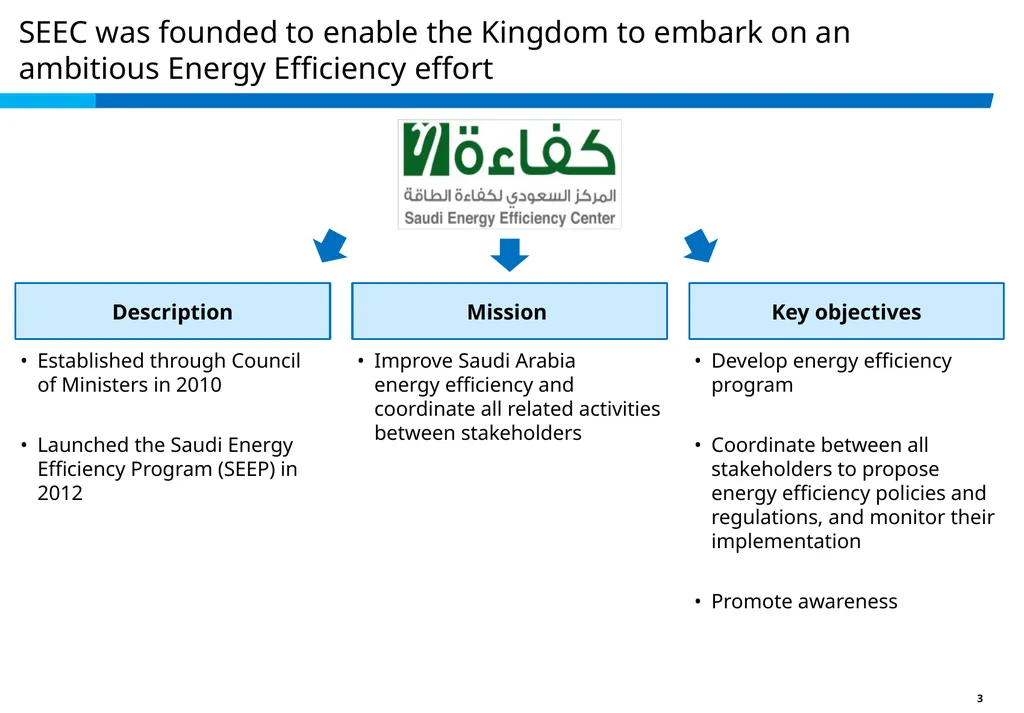
Description SEEC was founded to enable the Kingdom to embark on an ambitious Energy Efficiency effort Established through Council of Ministers in 2010
Launched the Saudi Energy Efficiency Program (SEEP) in 2012 Improve Saudi Arabia energy efficiency and coordinate all related activities between stakeholders Develop energy efficiency program
Coordinate between all stakeholders to propose energy efficiency policies and regulations, and monitor their implementation
Promote awareness Mission Key objectives<br>
Launched the Saudi Energy Efficiency Program (SEEP) in 2012 Improve Saudi Arabia energy efficiency and coordinate all related activities between stakeholders Develop energy efficiency program
Coordinate between all stakeholders to propose energy efficiency policies and regulations, and monitor their implementation
Promote awareness Mission Key objectives<br>
04
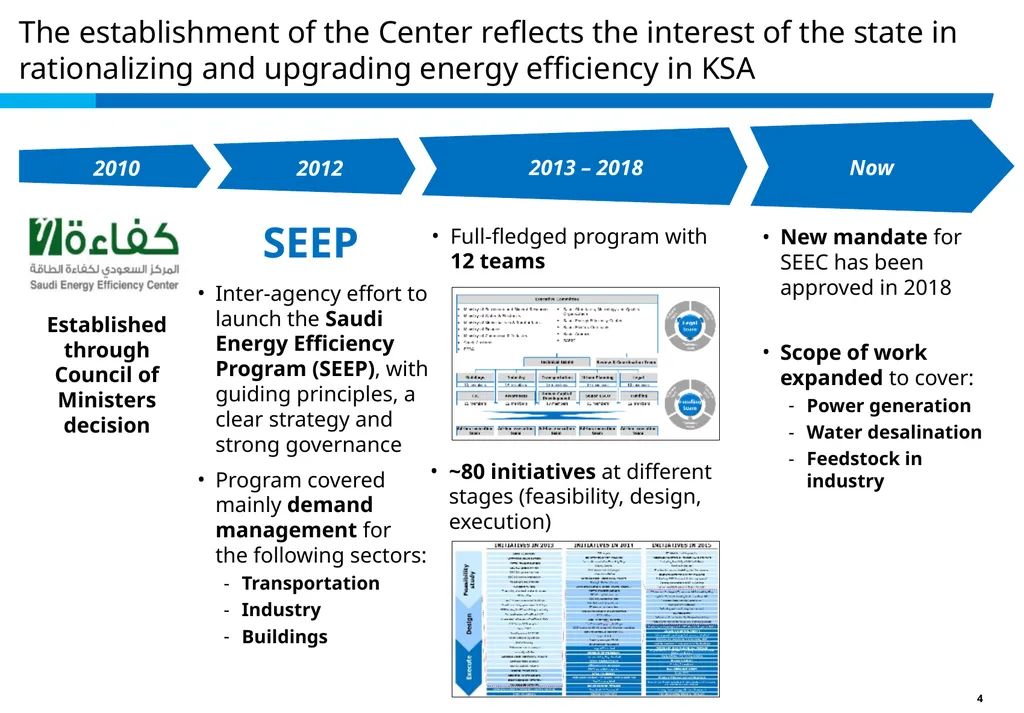
The establishment of the Center reflects the interest of the state in rationalizing and upgrading energy efficiency in KSA 2010 2012 2013 – 2018 28_85 30_85 31_85 21_85 Established through Council of Ministers decision Inter-agency effort to launch the Saudi Energy Efficiency Program (SEEP), with guiding principles, a clear strategy and strong governance
Program covered mainly demand management for the following sectors:
Transportation
Industry
Buildings Full-fledged program with 12 teams ~80 initiatives at different stages (feasibility, design, execution) SEEP Now New mandate for SEEC has been approved in 2018
Scope of work expanded to cover:
Power generation
Water desalination
Feedstock in industry overall_0_131713865921696692 columns_1_131713865921696692<br>
Program covered mainly demand management for the following sectors:
Transportation
Industry
Buildings Full-fledged program with 12 teams ~80 initiatives at different stages (feasibility, design, execution) SEEP Now New mandate for SEEC has been approved in 2018
Scope of work expanded to cover:
Power generation
Water desalination
Feedstock in industry overall_0_131713865921696692 columns_1_131713865921696692<br>
05
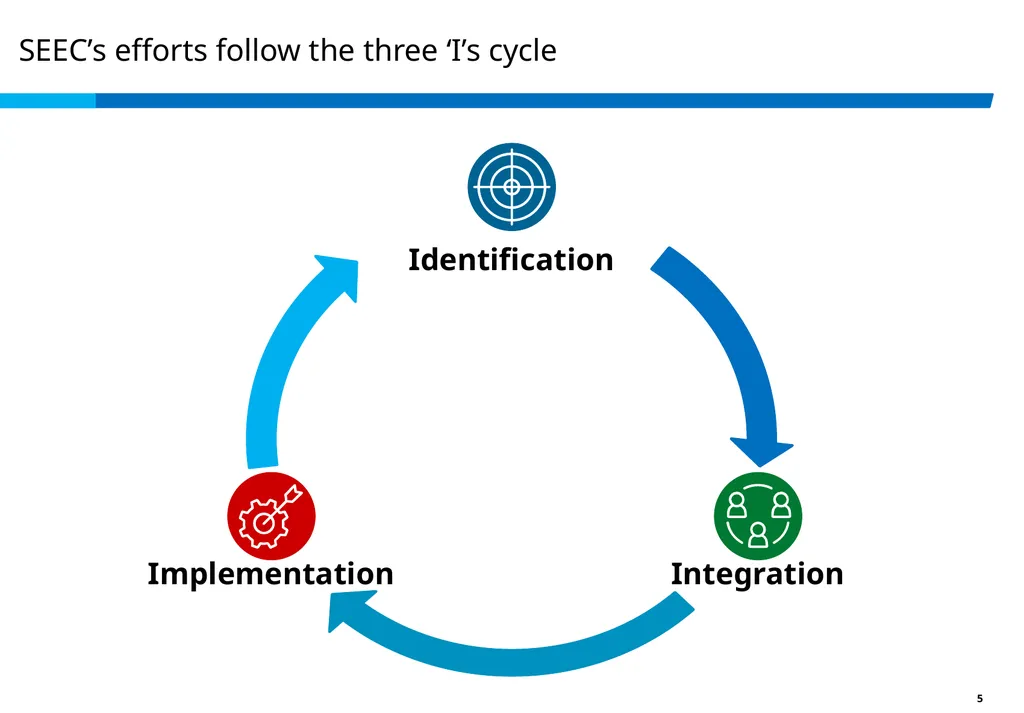
SEEC’s efforts follow the three ‘I’s cycle 4_84<br>
06
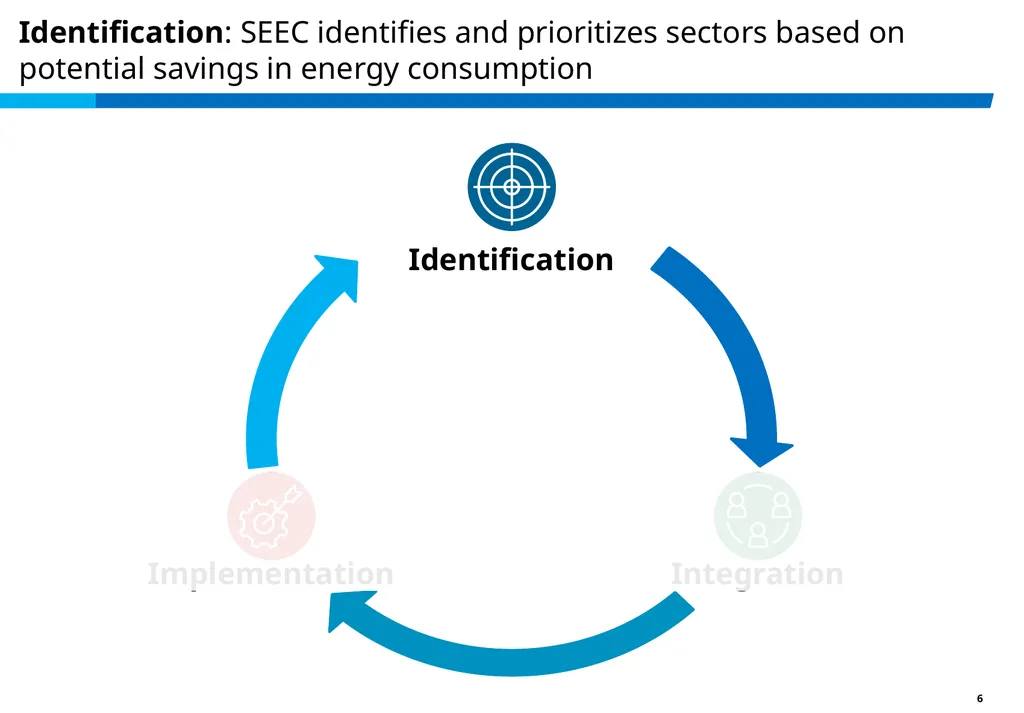
Identification: SEEC identifies and prioritizes sectors based on potential savings in energy consumption 38_84<br>
07
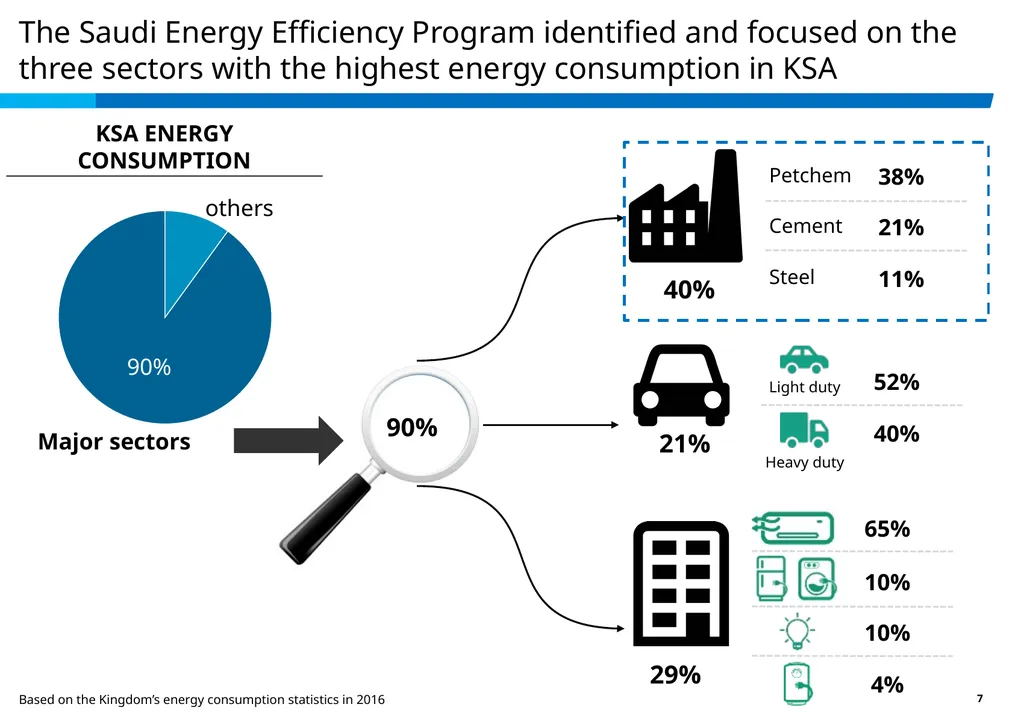
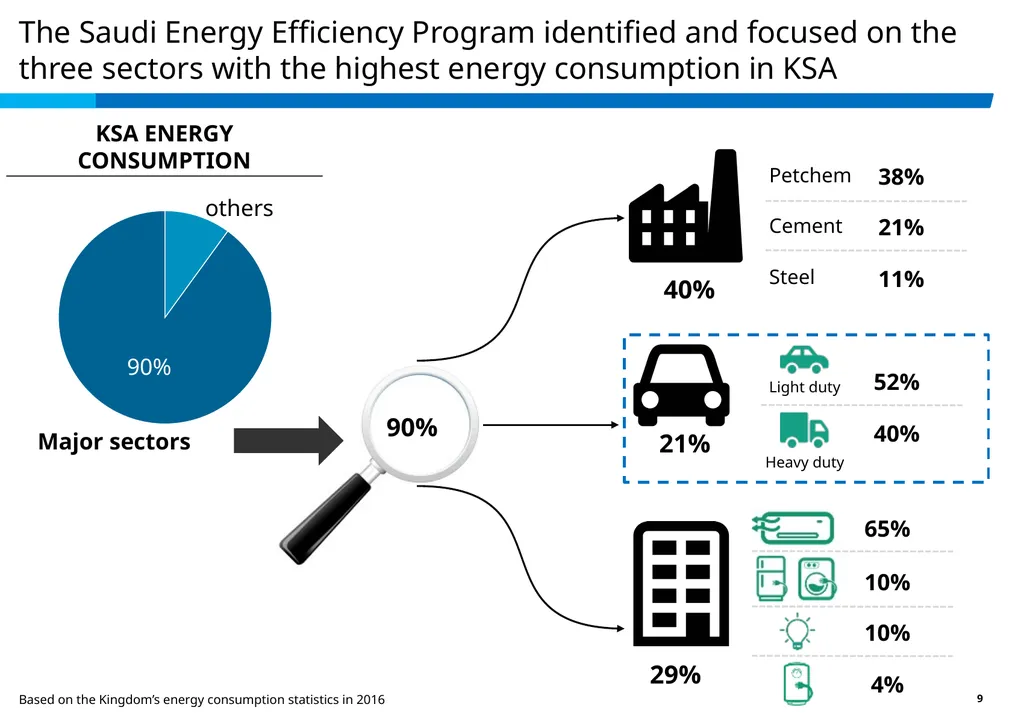
The Saudi Energy Efficiency Program identified and focused on the three sectors with the highest energy consumption in KSA Based on the Kingdom’s energy consumption statistics in 2016 90% 1038_84 11_84 6_84 5_84 Major sectors others KSA energy consumption 90%<br>
08
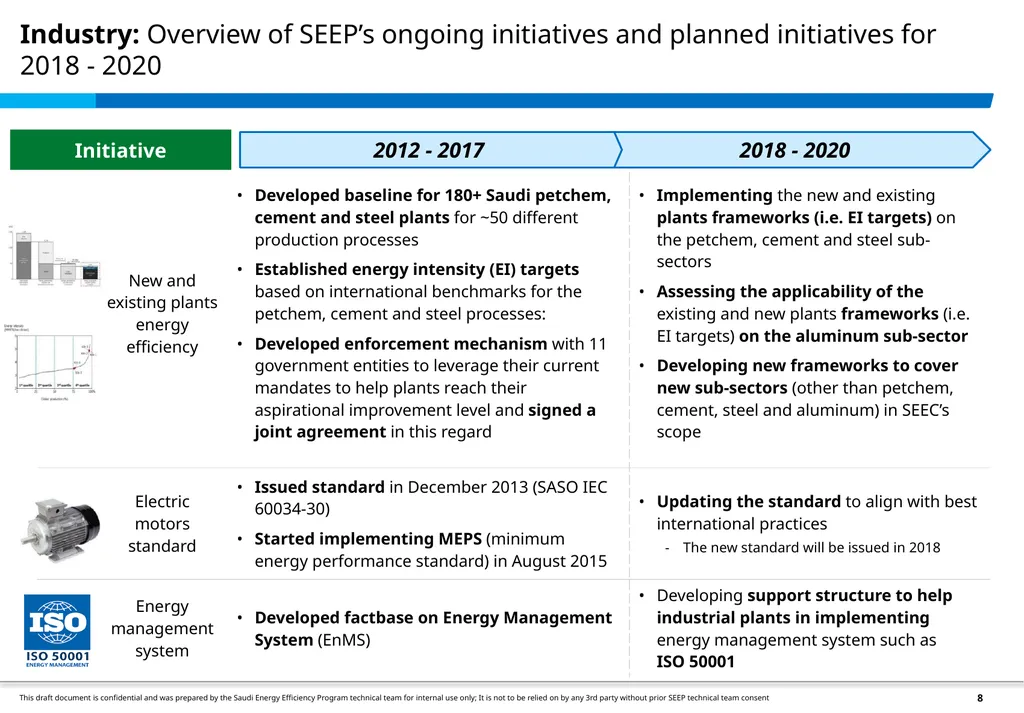
Industry: Overview of SEEP’s ongoing initiatives and planned initiatives for 2018 - 2020 24_85 2018 - 2020 2012 - 2017 Initiative<br>
09
The Saudi Energy Efficiency Program identified and focused on the three sectors with the highest energy consumption in KSA Based on the Kingdom’s energy consumption statistics in 2016 90% 1038_84 11_84 6_84 5_84 Major sectors others KSA energy consumption 90%<br>
10
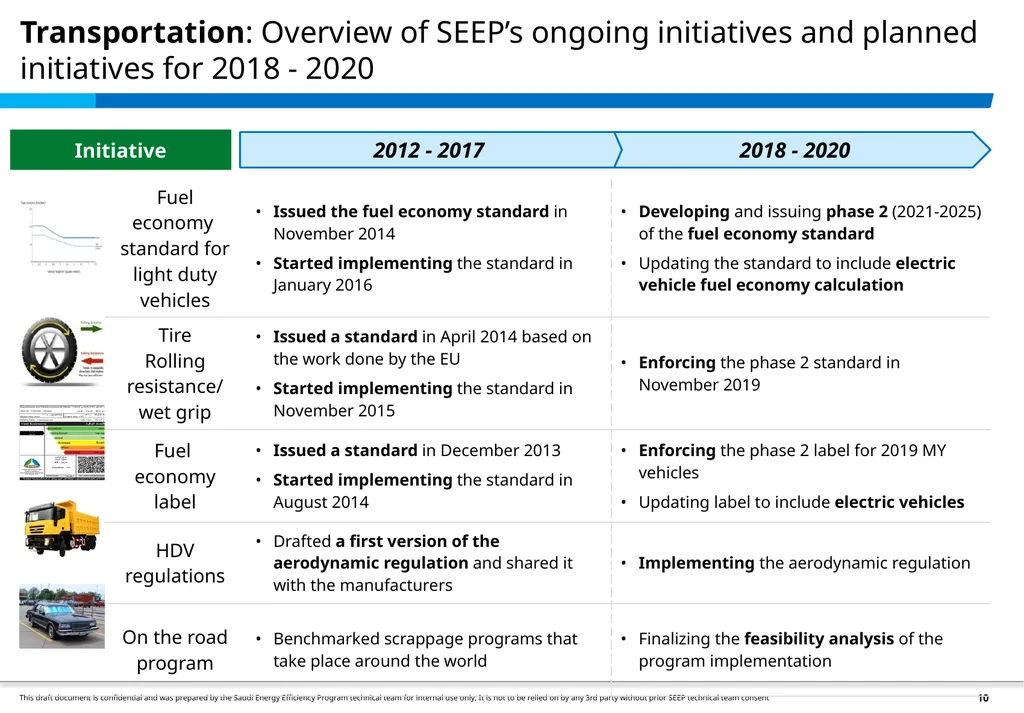
Transportation: Overview of SEEP’s ongoing initiatives and planned initiatives for 2018 - 2020 22_85 2018 - 2020 2012 - 2017 Initiative<br>
11
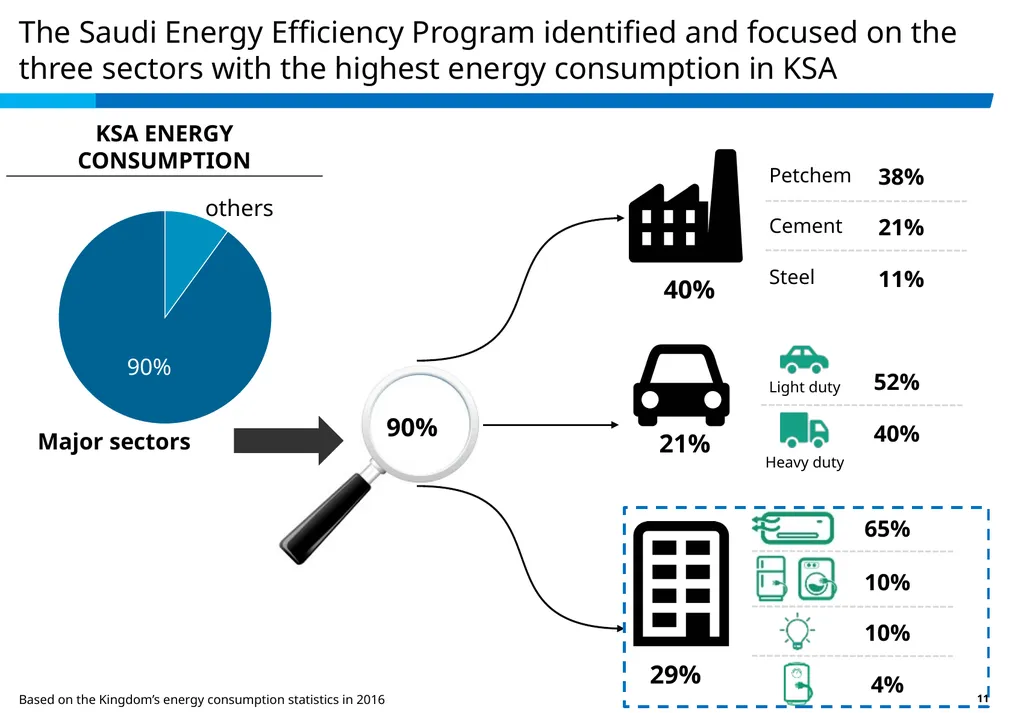
The Saudi Energy Efficiency Program identified and focused on the three sectors with the highest energy consumption in KSA Based on the Kingdom’s energy consumption statistics in 2016 90% 1038_84 11_84 6_84 5_84 Major sectors others KSA energy consumption 90%<br>
12
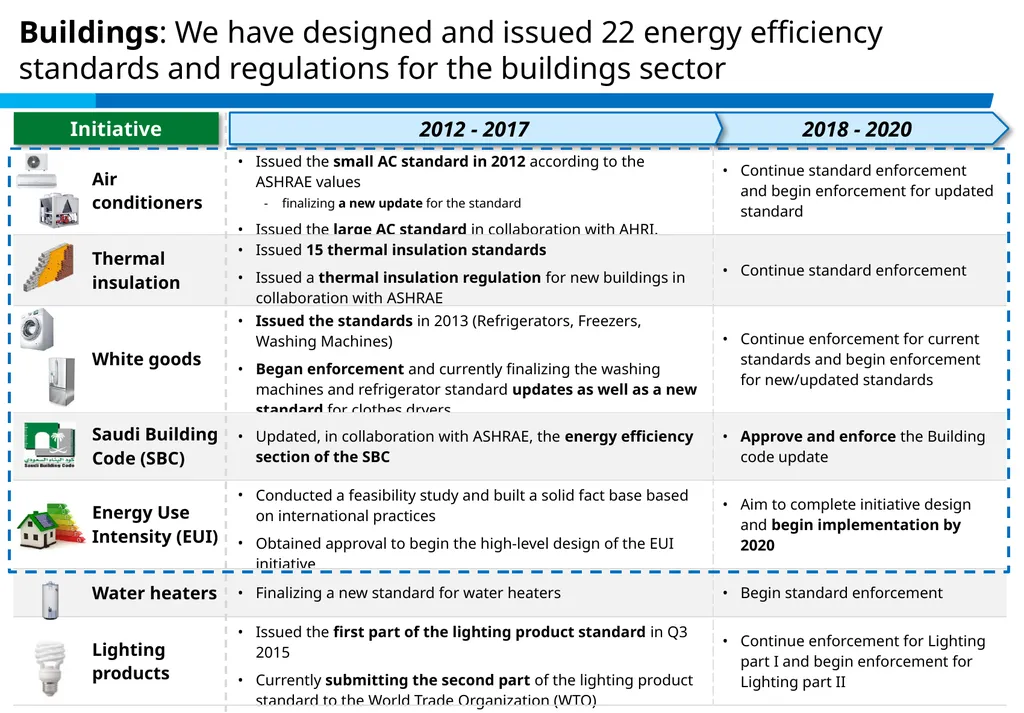
2018 - 2020 2012 - 2017 Initiative 35_85 28_84 Buildings: We have designed and issued 22 energy efficiency standards and regulations for the buildings sector<br>
13
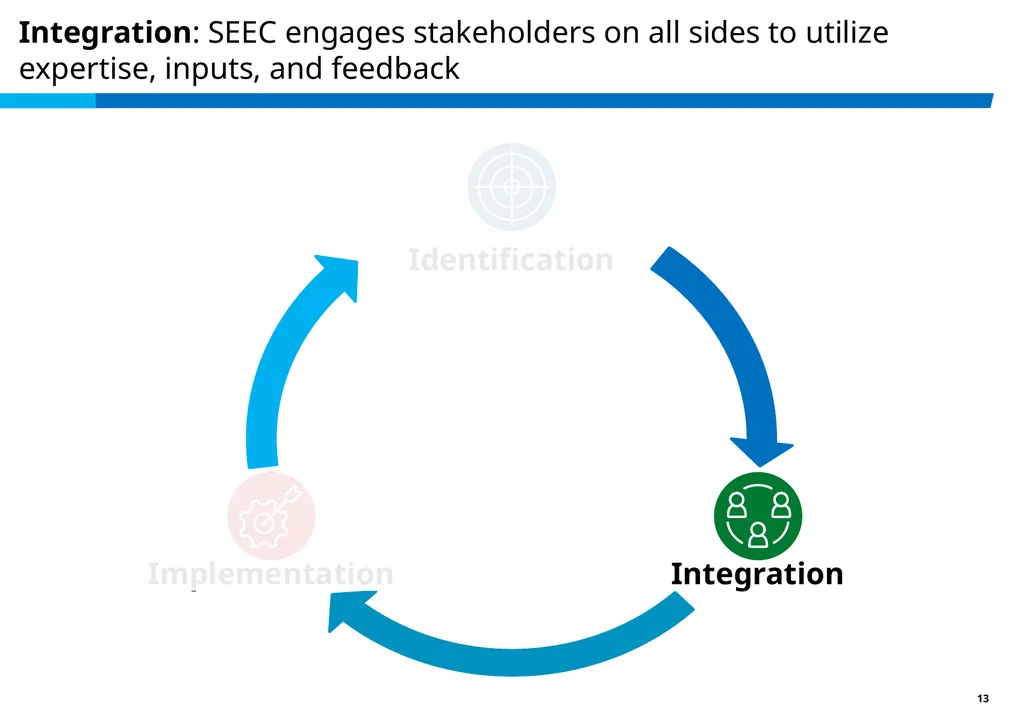
Integration: SEEC engages stakeholders on all sides to utilize expertise, inputs, and feedback 26_84<br>
14
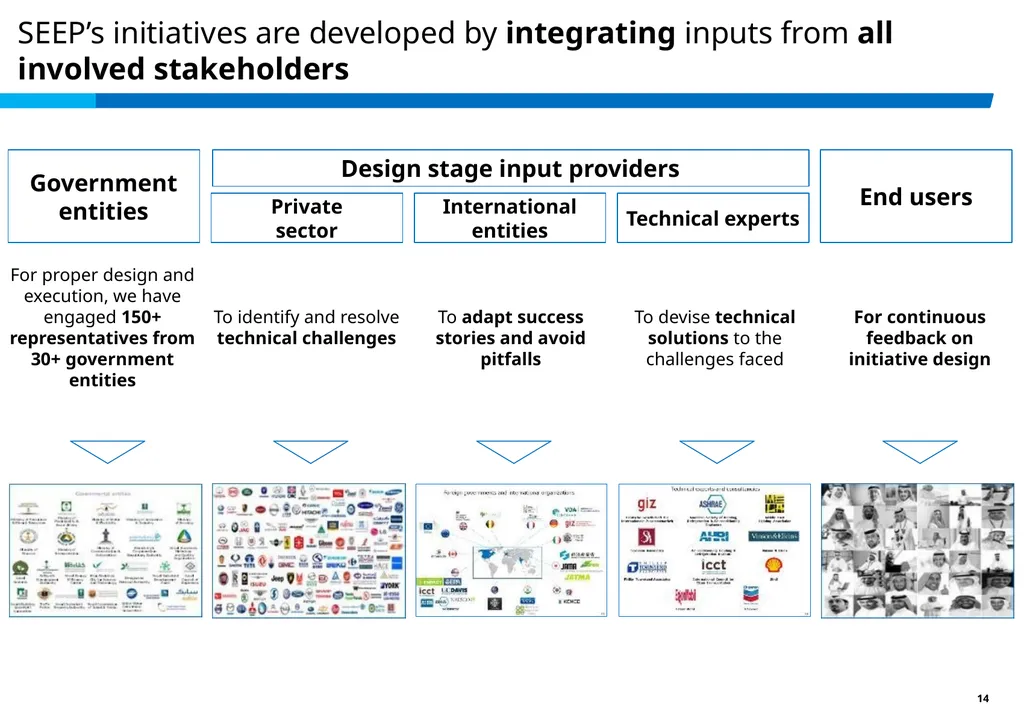
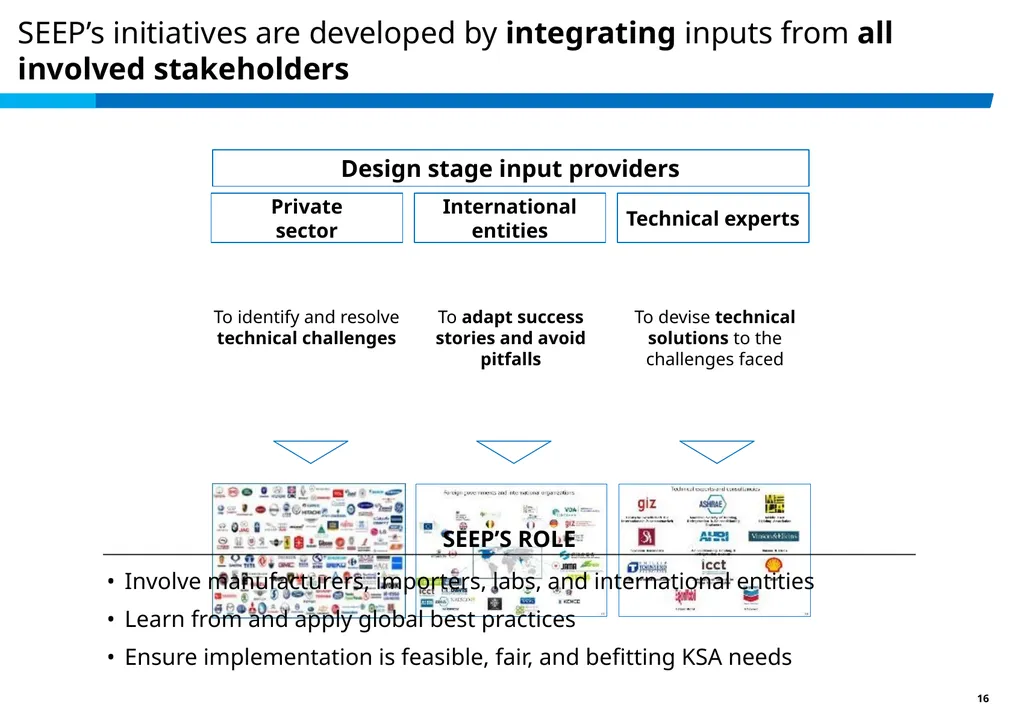
SEEP’s initiatives are developed by integrating inputs from all involved stakeholders 5_84<br>
15
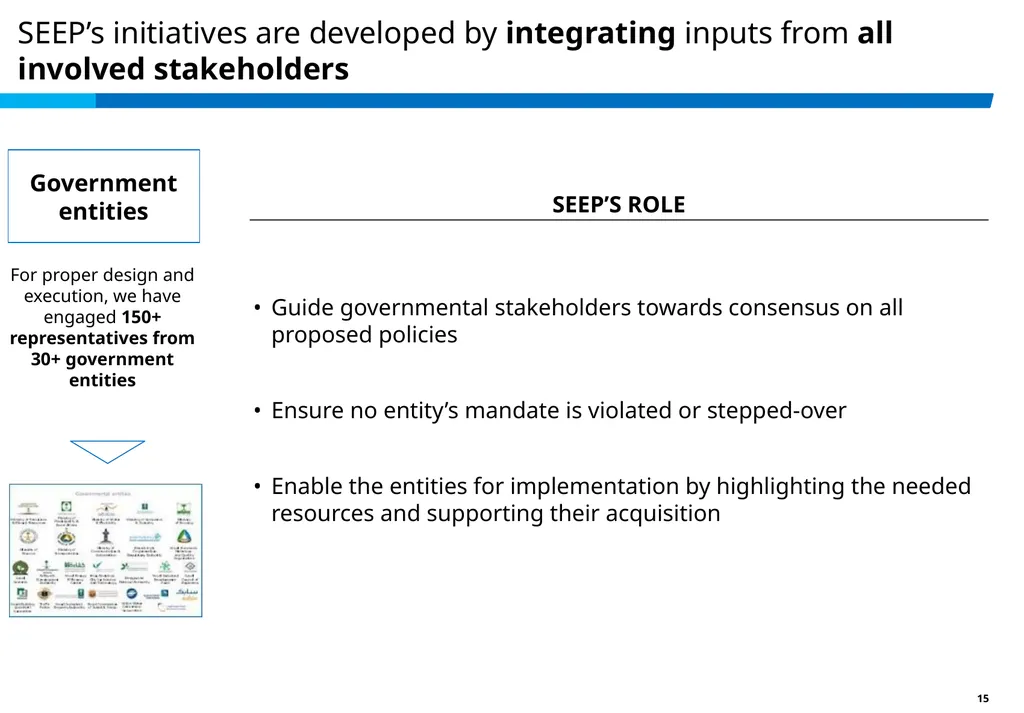
14_85 45_84 SEEP’s initiatives are developed by integrating inputs from all involved stakeholders<br>
16
13_84 14_84 16_84 46_85 SEEP’s initiatives are developed by integrating inputs from all involved stakeholders<br>
17
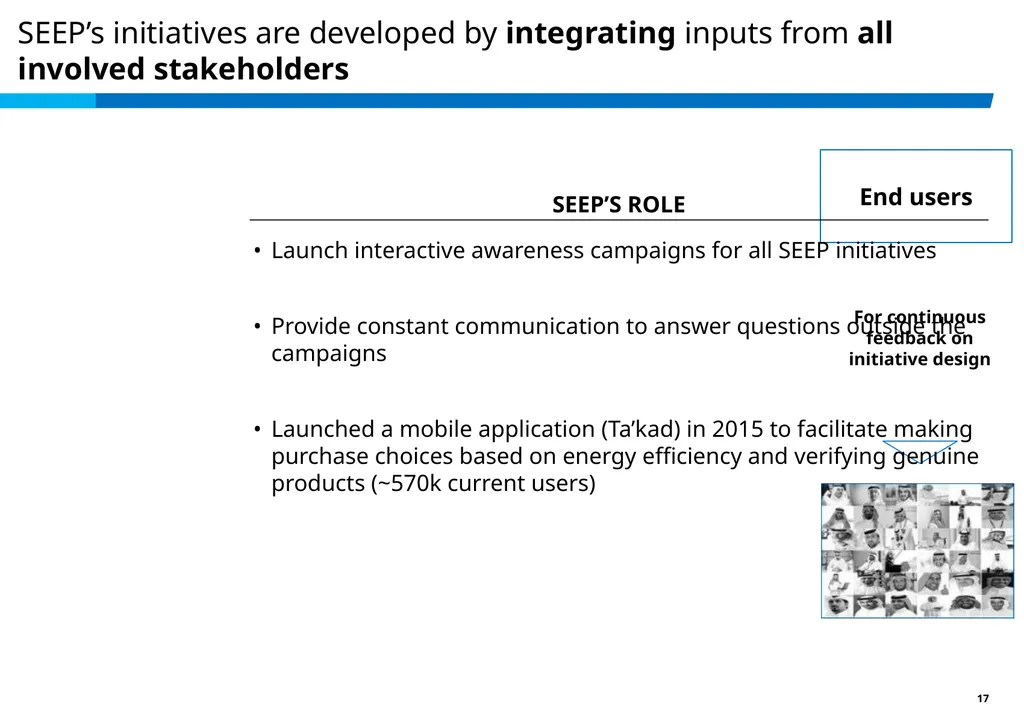
8_84 32_85 SEEP’s initiatives are developed by integrating inputs from all involved stakeholders<br>
18
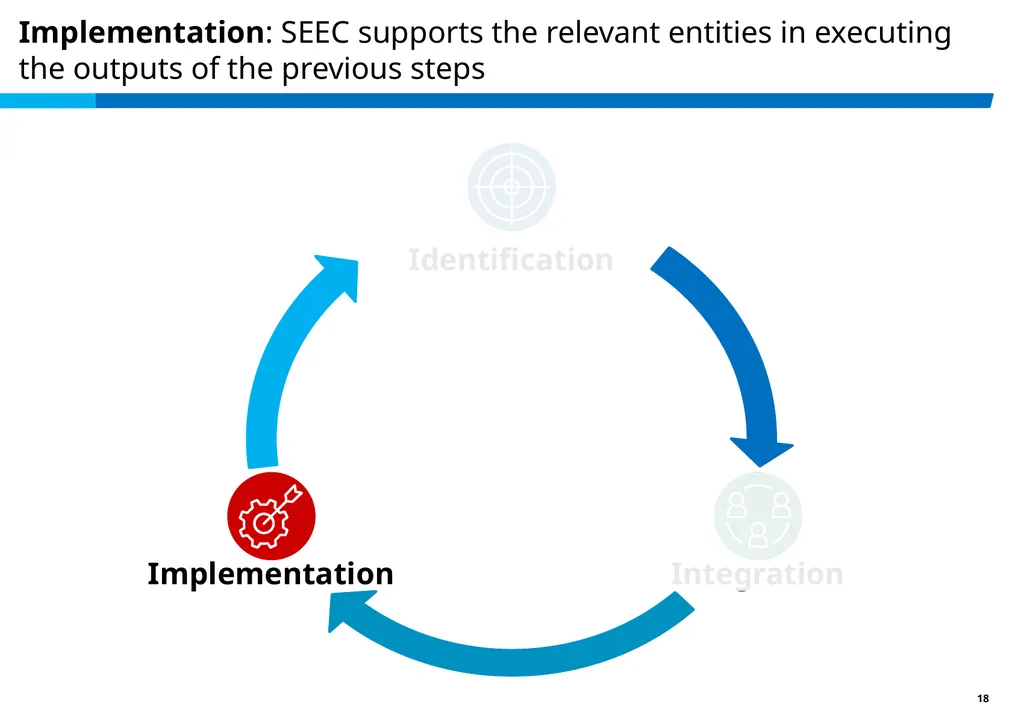
Implementation: SEEC supports the relevant entities in executing the outputs of the previous steps 28_84<br>
19
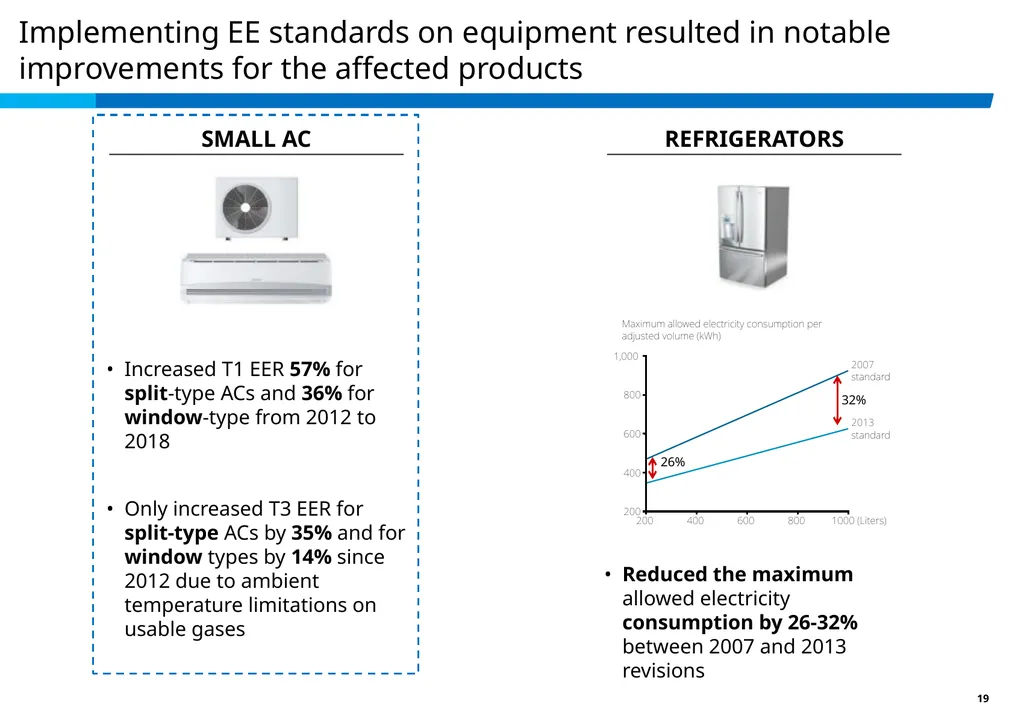
Implementing EE standards on equipment resulted in notable improvements for the affected products Increased T1 EER 57% for split-type ACs and 36% for window-type from 2012 to 2018
Only increased T3 EER for split-type ACs by 35% and for window types by 14% since 2012 due to ambient temperature limitations on usable gases Small ac 24_85 7_85<br>
Only increased T3 EER for split-type ACs by 35% and for window types by 14% since 2012 due to ambient temperature limitations on usable gases Small ac 24_85 7_85<br>
20
Improvements in T3 EER for small ACs were limited in comparison to T1 Increased T1 EER 57% for split-type ACs and 36% for window-type from 2012 to 2018
Only increased T3 EER for split-type ACs by 35% and for window types by 14% since 2012 due to ambient temperature limitations on usable gases Small ac 7_85 Any alternative gases considered should allow raising the T3 EER limitations<br>
Only increased T3 EER for split-type ACs by 35% and for window types by 14% since 2012 due to ambient temperature limitations on usable gases Small ac 7_85 Any alternative gases considered should allow raising the T3 EER limitations<br>
21
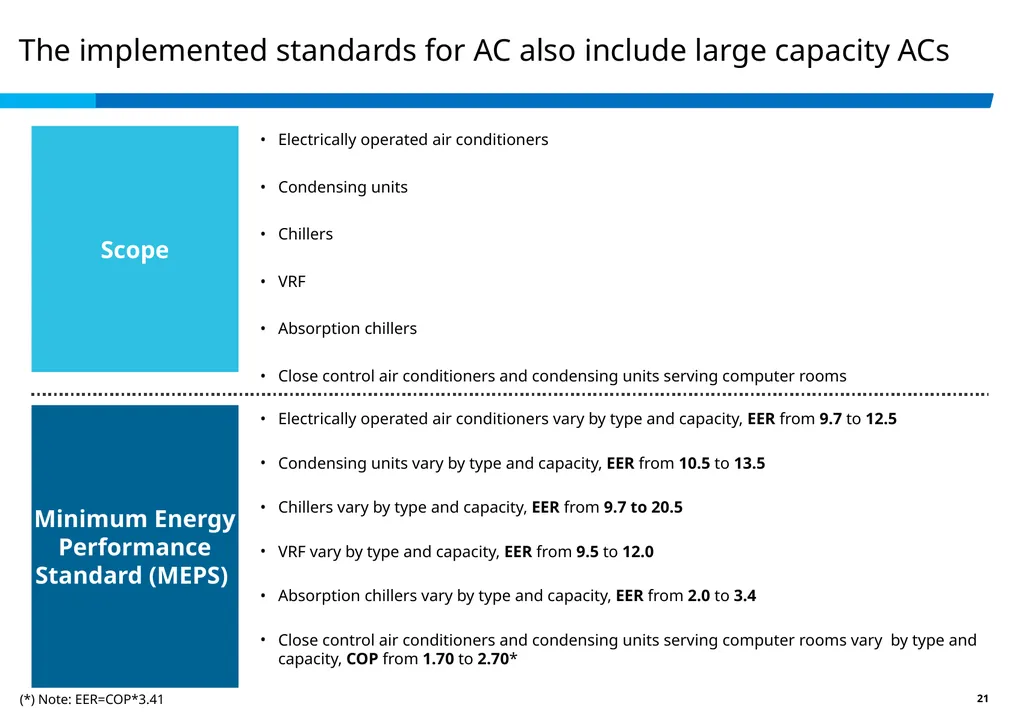
Electrically operated air conditioners
Condensing units
Chillers
VRF
Absorption chillers
Close control air conditioners and condensing units serving computer rooms Scope Minimum Energy Performance Standard (MEPS) The implemented standards for AC also include large capacity ACs 31_89 Electrically operated air conditioners vary by type and capacity, EER from 9.7 to 12.5
Condensing units vary by type and capacity, EER from 10.5 to 13.5
Chillers vary by type and capacity, EER from 9.7 to 20.5
VRF vary by type and capacity, EER from 9.5 to 12.0
Absorption chillers vary by type and capacity, EER from 2.0 to 3.4
Close control air conditioners and condensing units serving computer rooms vary by type and capacity, COP from 1.70 to 2.70* (*) Note: EER=COP*3.41<br>
Condensing units
Chillers
VRF
Absorption chillers
Close control air conditioners and condensing units serving computer rooms Scope Minimum Energy Performance Standard (MEPS) The implemented standards for AC also include large capacity ACs 31_89 Electrically operated air conditioners vary by type and capacity, EER from 9.7 to 12.5
Condensing units vary by type and capacity, EER from 10.5 to 13.5
Chillers vary by type and capacity, EER from 9.7 to 20.5
VRF vary by type and capacity, EER from 9.5 to 12.0
Absorption chillers vary by type and capacity, EER from 2.0 to 3.4
Close control air conditioners and condensing units serving computer rooms vary by type and capacity, COP from 1.70 to 2.70* (*) Note: EER=COP*3.41<br>
22
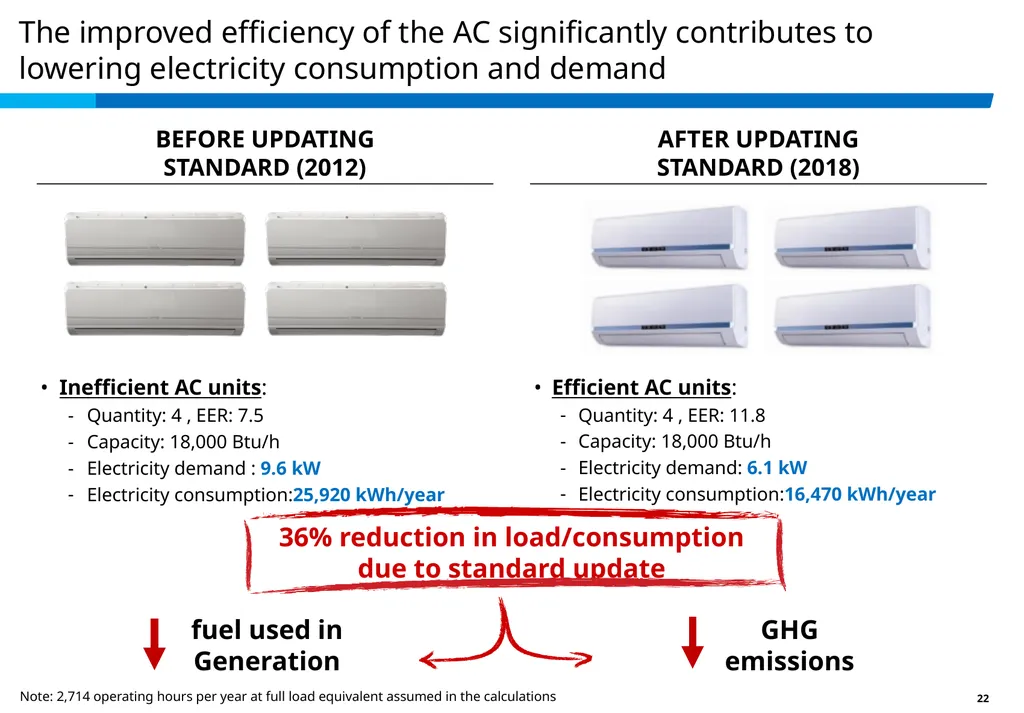
20_85 58_85 31_84 4_84 Inefficient AC units:
Quantity: 4 , EER: 7.5
Capacity: 18,000 Btu/h
Electricity demand : 9.6 kW
Electricity consumption:25,920 kWh/year Efficient AC units:
Quantity: 4 , EER: 11.8
Capacity: 18,000 Btu/h
Electricity demand: 6.1 kW
Electricity consumption:16,470 kWh/year Before updating
standard (2012) After updating
standard (2018) Note: 2,714 operating hours per year at full load equivalent assumed in the calculations The improved efficiency of the AC significantly contributes to lowering electricity consumption and demand 36% reduction in load/consumption
due to standard update fuel used in Generation GHG
emissions<br>
Quantity: 4 , EER: 7.5
Capacity: 18,000 Btu/h
Electricity demand : 9.6 kW
Electricity consumption:25,920 kWh/year Efficient AC units:
Quantity: 4 , EER: 11.8
Capacity: 18,000 Btu/h
Electricity demand: 6.1 kW
Electricity consumption:16,470 kWh/year Before updating
standard (2012) After updating
standard (2018) Note: 2,714 operating hours per year at full load equivalent assumed in the calculations The improved efficiency of the AC significantly contributes to lowering electricity consumption and demand 36% reduction in load/consumption
due to standard update fuel used in Generation GHG
emissions<br>
23
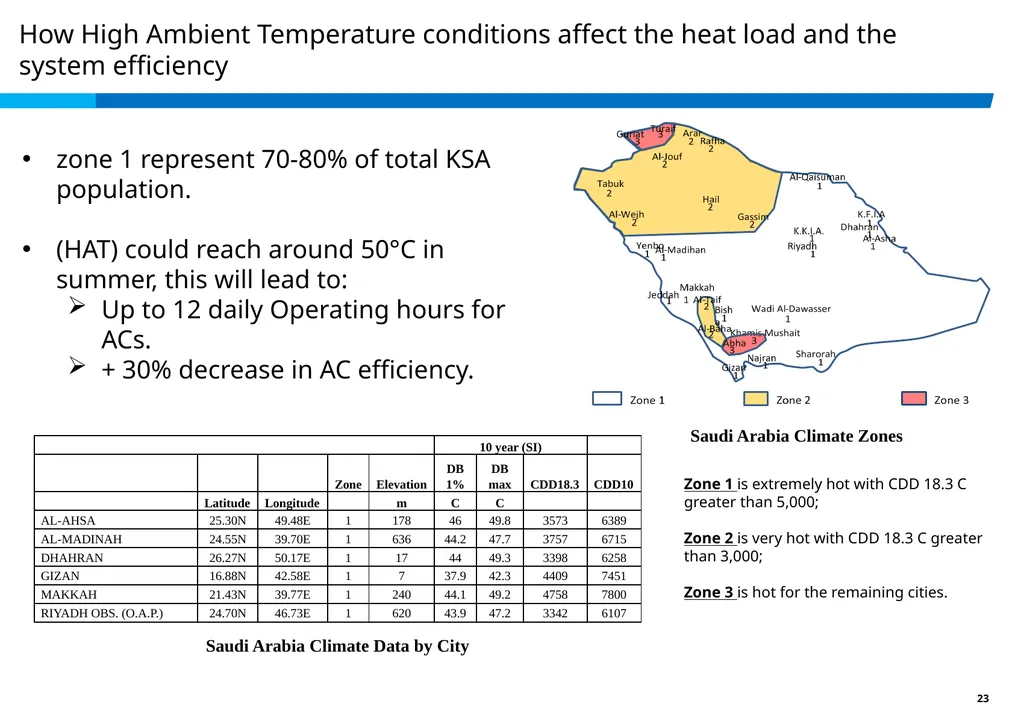
How High Ambient Temperature conditions affect the heat load and the system efficiency Saudi Arabia Climate Data by City zone 1 represent 70-80% of total KSA population.
(HAT) could reach around 50°C in summer, this will lead to:
Up to 12 daily Operating hours for ACs.
+ 30% decrease in AC efficiency. Saudi Arabia Climate Zones Zone 1 is extremely hot with CDD 18.3 C greater than 5,000;
Zone 2 is very hot with CDD 18.3 C greater than 3,000;
Zone 3 is hot for the remaining cities.<br>
(HAT) could reach around 50°C in summer, this will lead to:
Up to 12 daily Operating hours for ACs.
+ 30% decrease in AC efficiency. Saudi Arabia Climate Zones Zone 1 is extremely hot with CDD 18.3 C greater than 5,000;
Zone 2 is very hot with CDD 18.3 C greater than 3,000;
Zone 3 is hot for the remaining cities.<br>
24
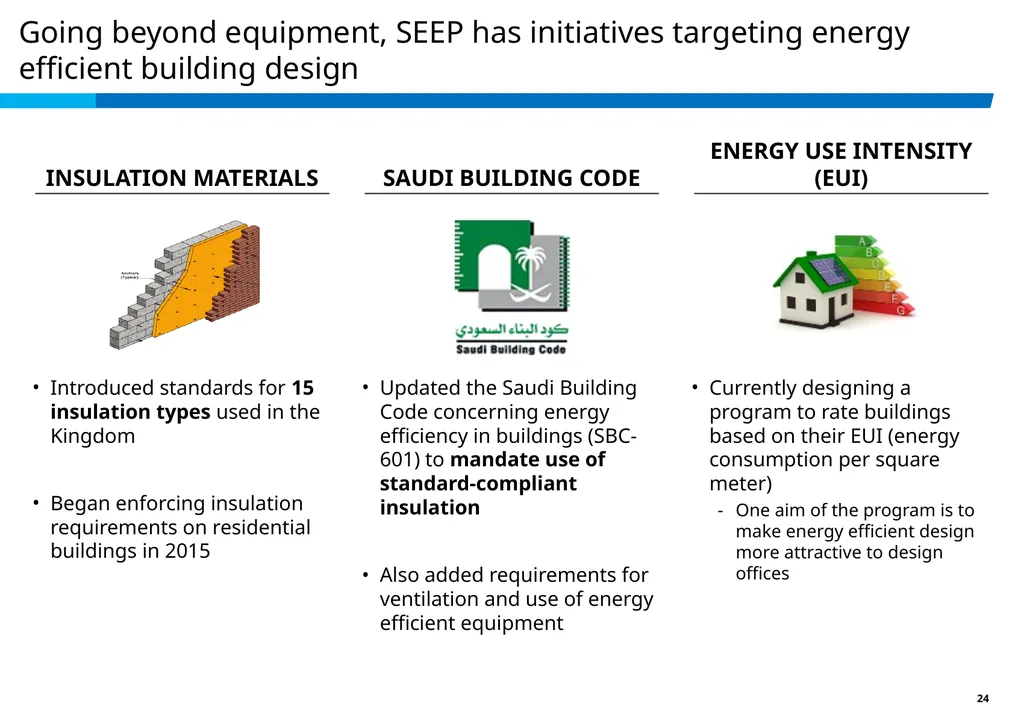
Going beyond equipment, SEEP has initiatives targeting energy efficient building design Introduced standards for 15 insulation types used in the Kingdom
Began enforcing insulation requirements on residential buildings in 2015 Insulation materials Saudi Building code Energy use intensity (EUI) Updated the Saudi Building Code concerning energy efficiency in buildings (SBC-601) to mandate use of standard-compliant insulation
Also added requirements for ventilation and use of energy efficient equipment Currently designing a program to rate buildings based on their EUI (energy consumption per square meter)
One aim of the program is to make energy efficient design more attractive to design offices 5_85 11_85 12_85<br>
Began enforcing insulation requirements on residential buildings in 2015 Insulation materials Saudi Building code Energy use intensity (EUI) Updated the Saudi Building Code concerning energy efficiency in buildings (SBC-601) to mandate use of standard-compliant insulation
Also added requirements for ventilation and use of energy efficient equipment Currently designing a program to rate buildings based on their EUI (energy consumption per square meter)
One aim of the program is to make energy efficient design more attractive to design offices 5_85 11_85 12_85<br>
25
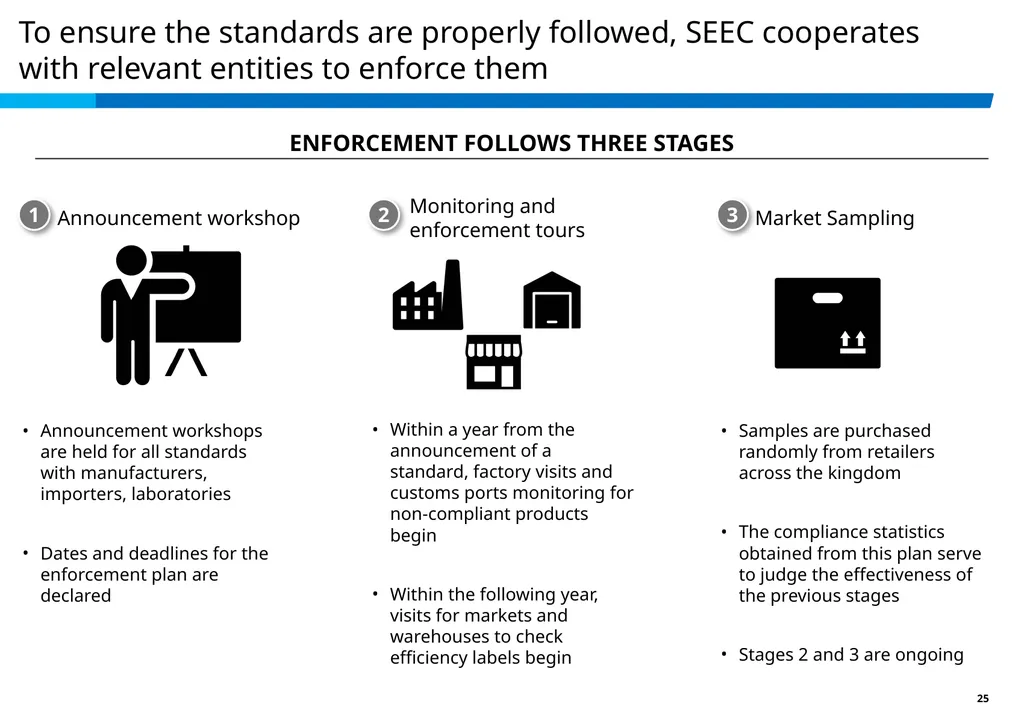
To ensure the standards are properly followed, SEEC cooperates with relevant entities to enforce them 9_85 11_84 17_85 18_85 Enforcement follows three stages 1 2 3 Announcement workshops are held for all standards with manufacturers, importers, laboratories
Dates and deadlines for the enforcement plan are declared Announcement workshop Monitoring and enforcement tours Market Sampling Within a year from the announcement of a standard, factory visits and customs ports monitoring for non-compliant products begin
Within the following year, visits for markets and warehouses to check efficiency labels begin Samples are purchased randomly from retailers across the kingdom
The compliance statistics obtained from this plan serve to judge the effectiveness of the previous stages
Stages 2 and 3 are ongoing<br>
Dates and deadlines for the enforcement plan are declared Announcement workshop Monitoring and enforcement tours Market Sampling Within a year from the announcement of a standard, factory visits and customs ports monitoring for non-compliant products begin
Within the following year, visits for markets and warehouses to check efficiency labels begin Samples are purchased randomly from retailers across the kingdom
The compliance statistics obtained from this plan serve to judge the effectiveness of the previous stages
Stages 2 and 3 are ongoing<br>
26
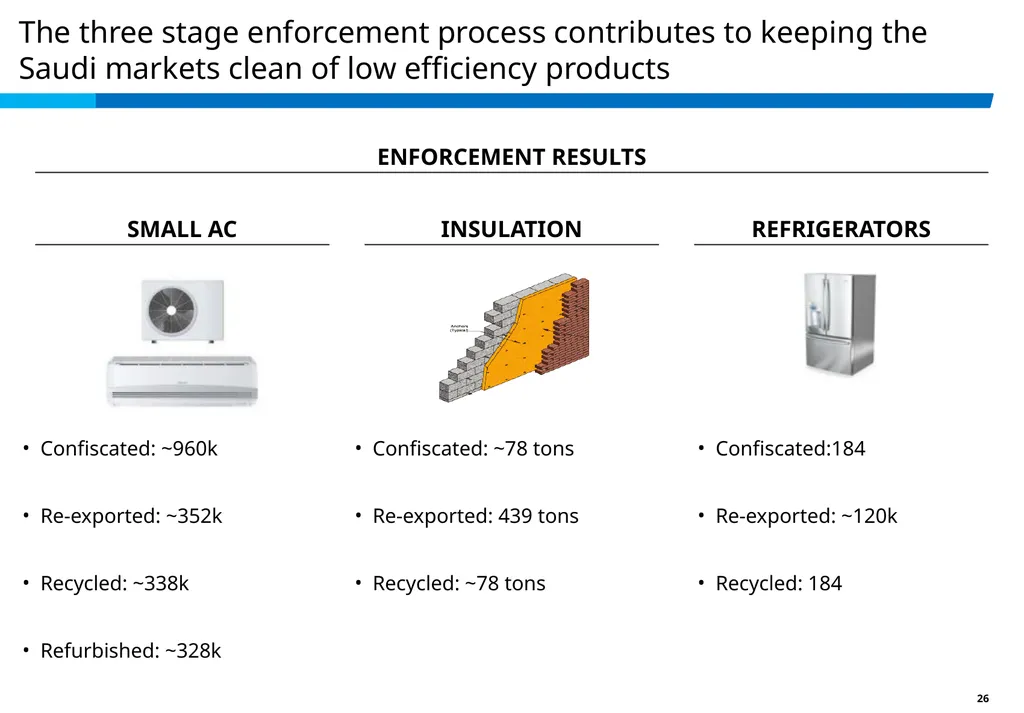
The three stage enforcement process contributes to keeping the Saudi markets clean of low efficiency products Small ac insulation refrigerators Confiscated:184
Re-exported: ~120k
Recycled: 184 Confiscated: ~78 tons
Re-exported: 439 tons
Recycled: ~78 tons Confiscated: ~960k
Re-exported: ~352k
Recycled: ~338k
Refurbished: ~328k 10_85 11_85 12_85 enforcement results<br>
Re-exported: ~120k
Recycled: 184 Confiscated: ~78 tons
Re-exported: 439 tons
Recycled: ~78 tons Confiscated: ~960k
Re-exported: ~352k
Recycled: ~338k
Refurbished: ~328k 10_85 11_85 12_85 enforcement results<br>
27
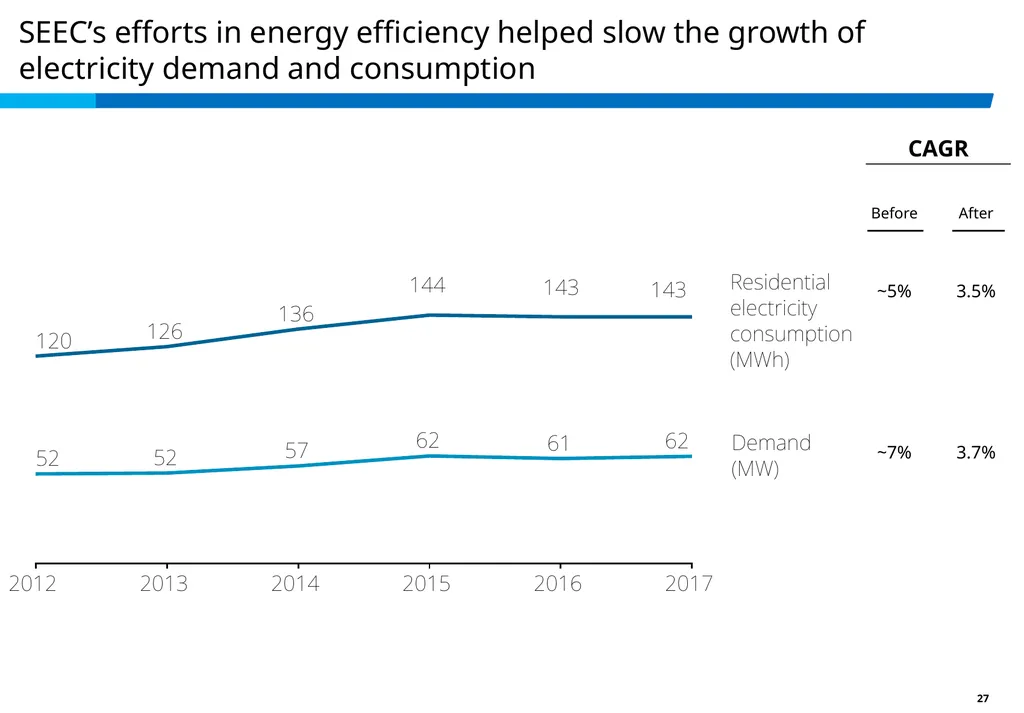
CAGR SEEC’s efforts in energy efficiency helped slow the growth of electricity demand and consumption ~5% 3.5% ~7% 3.7%<br>
28
But these results can be severely impacted by changes to the allowed cooling gases If the alternatives proposed for the Montreal Protocol do not achieve the efficiency, safety, and the high ambient temperature requirements for KSA, we may lose the results of our efforts so far<br>
29
Thank you<br>