Action-Reflection-Action Method of Learning Spiritual Care Partners Reflective Practice If God is at work within us, we are either like a sponge or a slate. It is absorbed (the movement of the Spirit) or it can be deflected and not
"Action-Reflection-Action Method of Learning" is the property of its rightful owner. Permission is granted to
download and print the materials on this website for personal, non-commercial use only, and to display it
on your personal computer provided you do not modify the materials and that you retain all copyright
notices contained in the materials. By downloading content from our website, you accept the terms of this
agreement.
Presentation Transcript
01
Action-Reflection-Action Method of Learning
Spiritual Care Partners<br>
02
Reflective Practice “If God is at work within us, we are either like a sponge or a slate. It is absorbed (the movement of the Spirit) or it can be deflected and not absorbed.”
—St. Ignatius of Loyola
“An unexamined life is one not worth living.”
— Socrates<br>
03
Fundamentals of Learning Process A mentality of openness and reflection
A mentality of non-judgment towards self and others
A desire to offer and receive constructive criticism
A commitment to spending time reflecting on ministry in order to grow and improve<br>
04
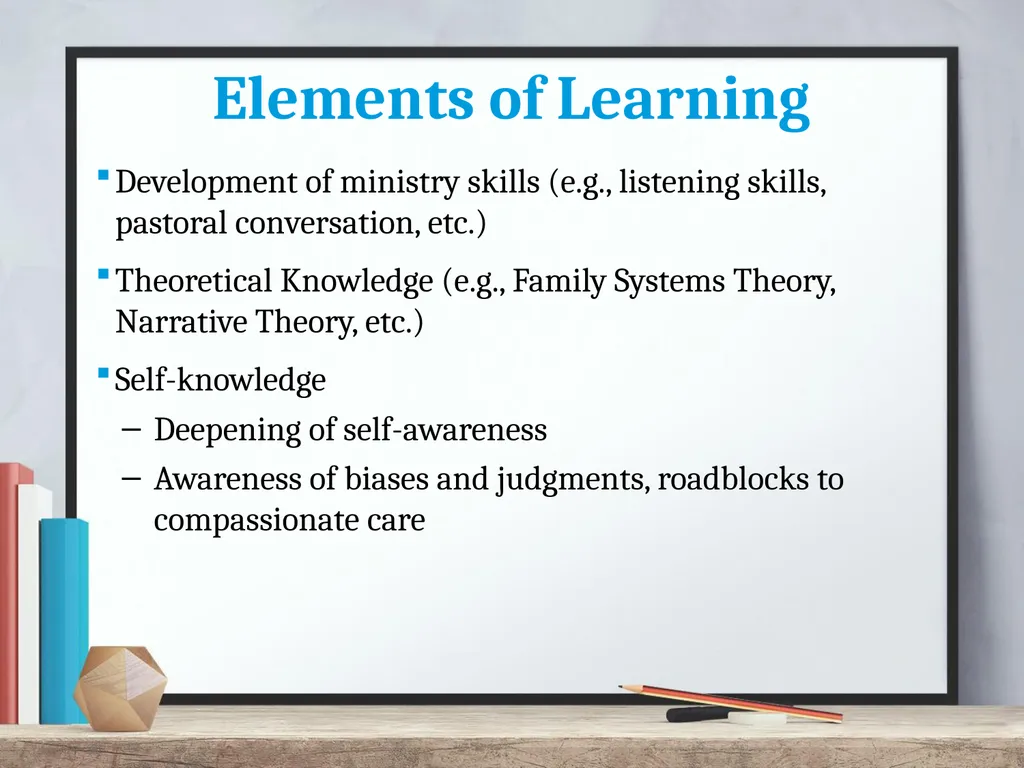
Elements of Learning Development of ministry skills (e.g., listening skills, pastoral conversation, etc.)
Theoretical Knowledge (e.g., Family Systems Theory, Narrative Theory, etc.)
Self-knowledge
Deepening of self-awareness
Awareness of biases and judgments, roadblocks to compassionate care<br>
05
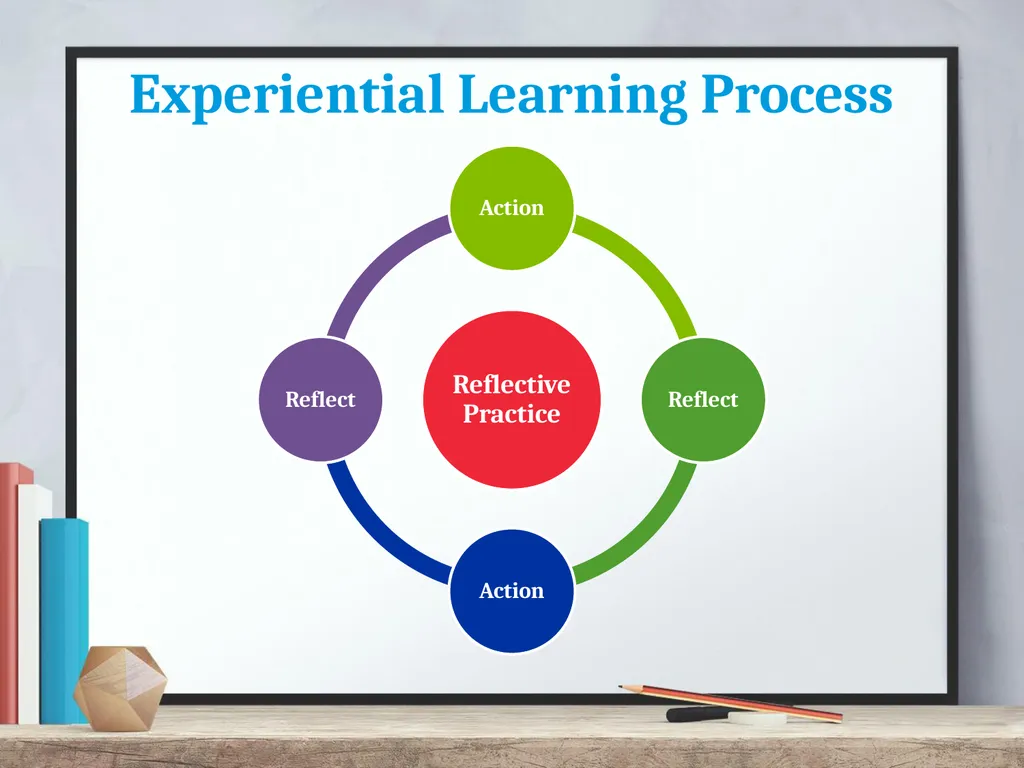
Experiential Learning Process<br>
06
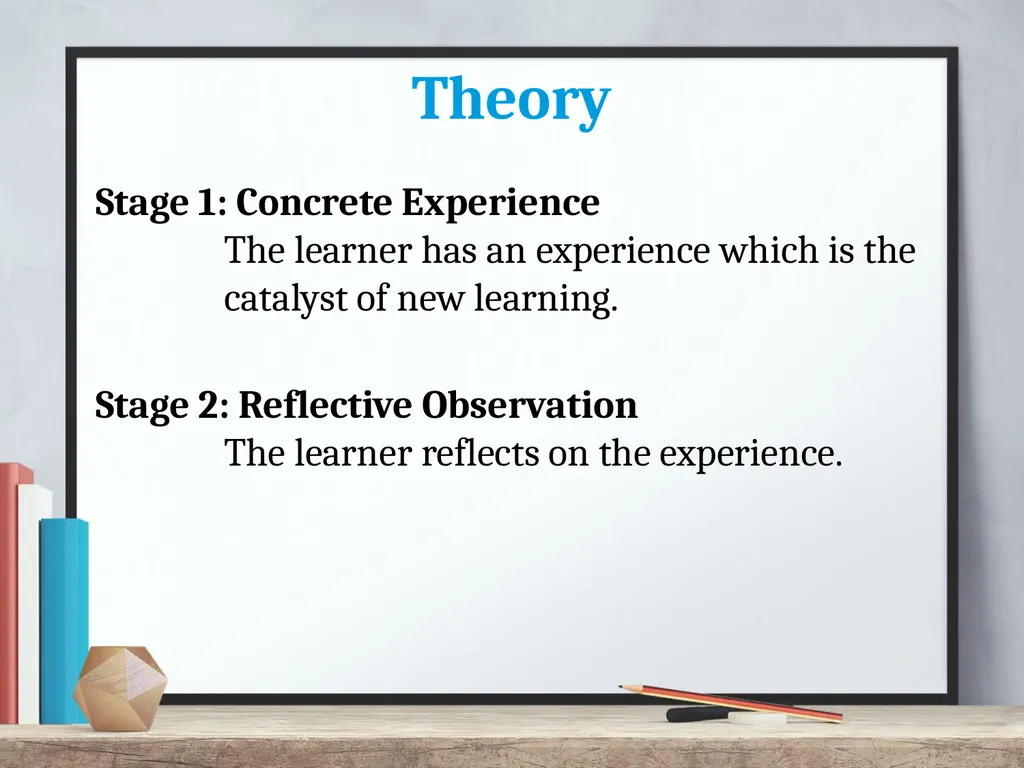
Theory Stage 1: Concrete Experience The learner has an experience which is the catalyst of new learning.
Stage 2: Reflective Observation The learner reflects on the experience.<br>
07
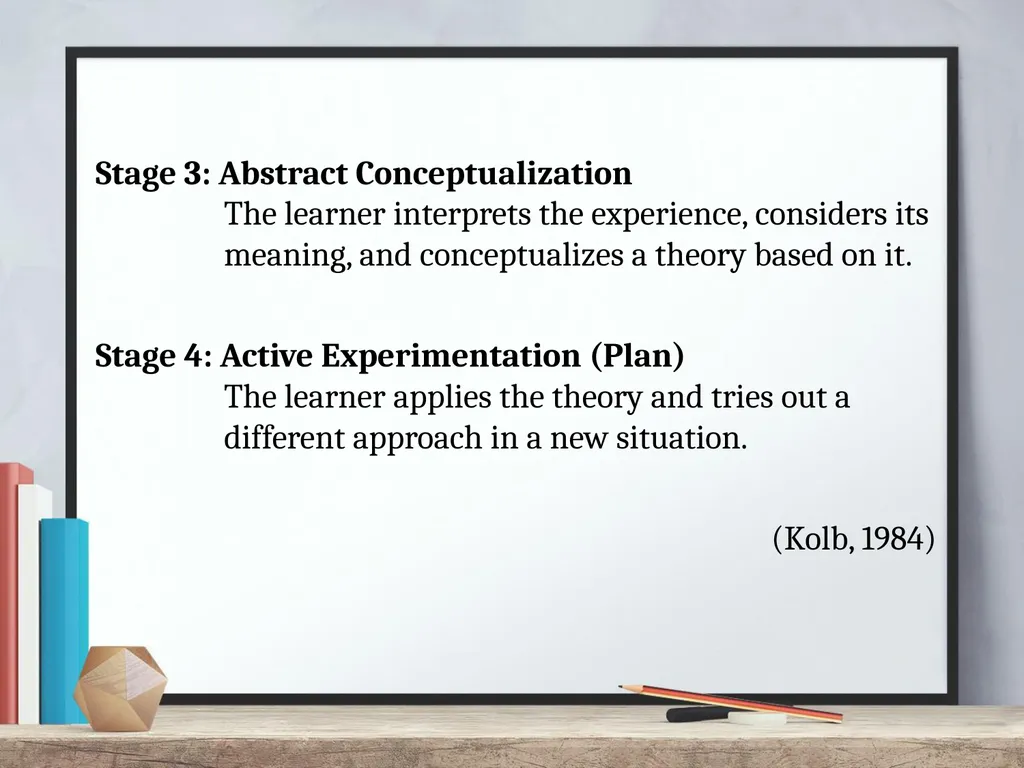
Stage 3: Abstract Conceptualization The learner interprets the experience, considers its meaning, and conceptualizes a theory based on it.
Stage 4: Active Experimentation (Plan) The learner applies the theory and tries out a different approach in a new situation.
(Kolb, 1984)<br>
08
Growth Mindset Important to maintain a “growth” mindset vs. a “fixed” mindset.
Fixed Mindset: I am not able to change or grow. My qualities are fixed.
Growth Mindset: My basic qualities are not fixed; they can be cultivated. Everyone can grow regardless of basic talents and abilities.
(Dweck, 2006)<br>
09
Example from History The Society of Jesus (Jesuits), Catholic religious order
Founded by St. Ignatius of Loyola
16th century Spanish soldier; conversion experience while healing from wounds.
Wrote The Spiritual Exercises, a 28-30 day regimen of silence and prayer.<br>
10
“Contemplatives in Action”; missionaries; social justice work; educators.
Called to be people of prayer and action simultaneously.
Encourages us to see the world as our monastery, our source of spiritual growth.
(Martin, 2010)
Application to spiritual care: important to ground care for others with prayer and reflection.<br>
11
An Example of the Process Situation: A struggling patient asks you: “Is this sickness my punishment for past sins?”
Action: You respond in the best way you know how but feel that it was inadequate.
Reflection:
You explain the scenario to a chaplain and ask for guidance on how to approach this type of situation in the future.
The chaplain offers constructive feedback and you might journal and pray about it.
Action: You apply what you learned during the reflection process to a future encounter.<br>
12
“Learning is the process whereby knowledge is created through the transformation of experience.”
David A. Kolb, Educational Theorist
“Failure is information – we label it failure, but it’s more like, ‘This didn’t work, and I’m a problem solver, so I’ll try something else.’”
Carol Dweck, Psychologist<br>
13
Opportunities Verbatim Presentations
One-on-One Supervision
Group Process and Reflection<br>
14
Writing a Verbatim<br>
15
Instructions for Writing a Verbatim Record a meaningful visit:
Record a visit where you encountered a challenge. Examples include:
Conversations with people who have different theological viewpoints than yours
Conversations where you were stumped and did not know what to do or say
Conversations with patients who ask difficult questions like, “What did I do to deserve this?” or “Why did God allow this to happen?”
Etc.<br>
16
Record one that you remember well (word-for-word to the best of your ability).
Note parenthetically any non-verbal communications such as gestures, facial expressions, etc.<br>
17
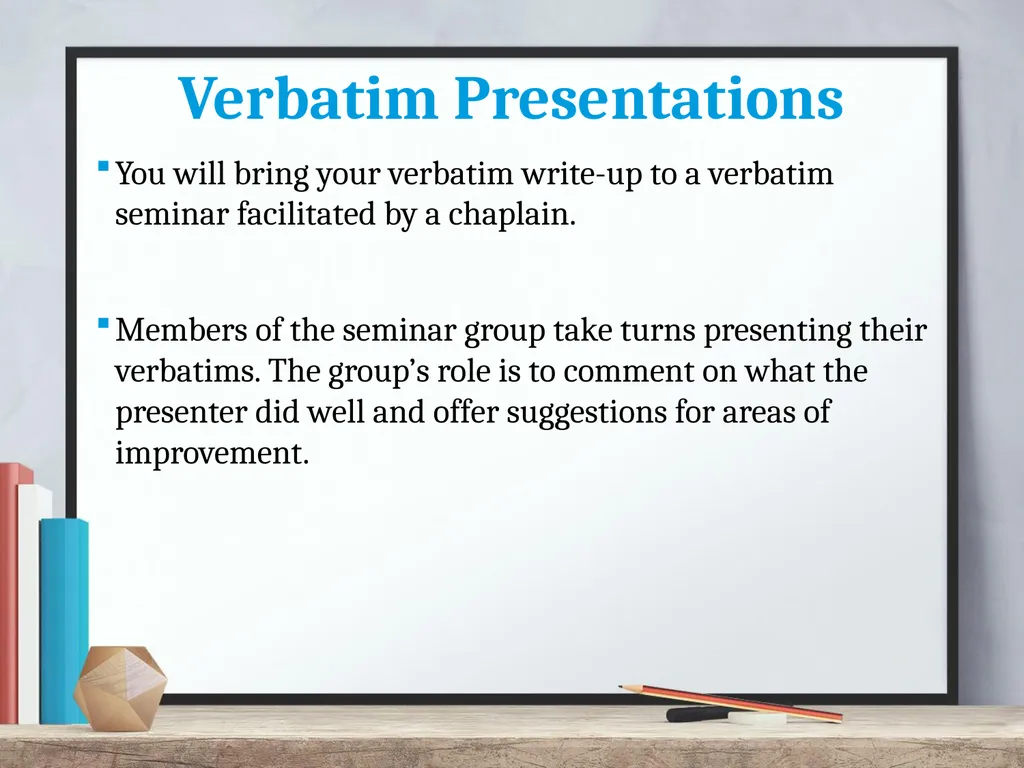
Verbatim Presentations You will bring your verbatim write-up to a verbatim seminar facilitated by a chaplain.
Members of the seminar group take turns presenting their verbatims. The group’s role is to comment on what the presenter did well and offer suggestions for areas of improvement.<br>
18
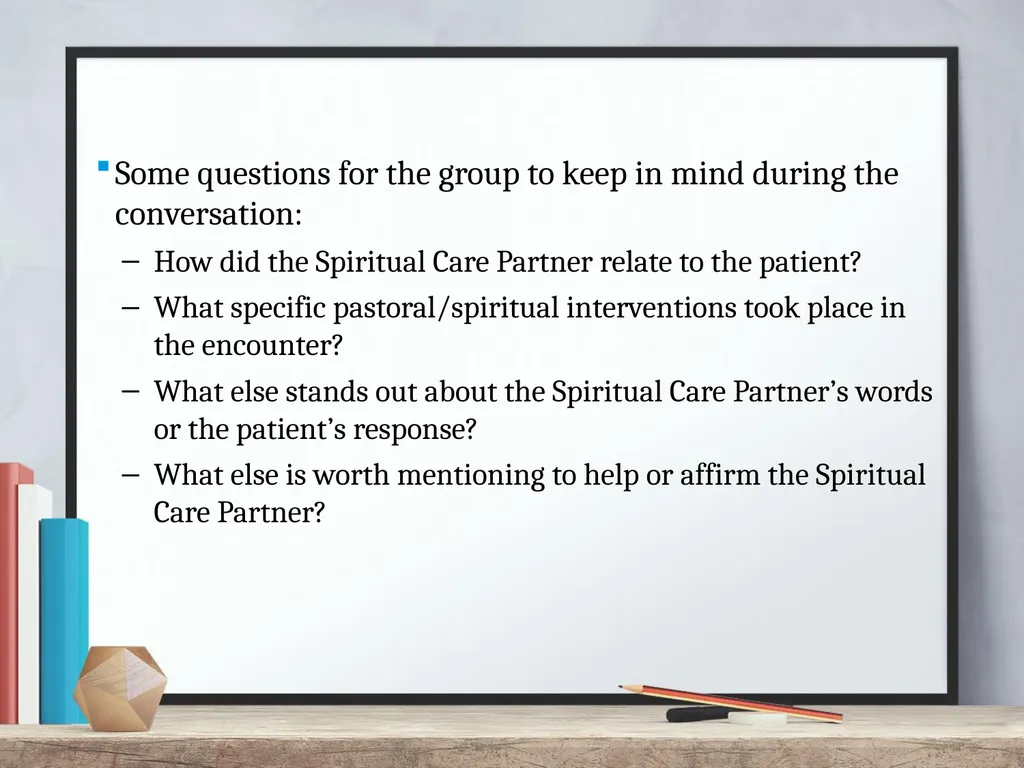
Some questions for the group to keep in mind during the conversation:
How did the Spiritual Care Partner relate to the patient?
What specific pastoral/spiritual interventions took place in the encounter?
What else stands out about the Spiritual Care Partner’s words or the patient’s response?
What else is worth mentioning to help or affirm the Spiritual Care Partner?<br>
19
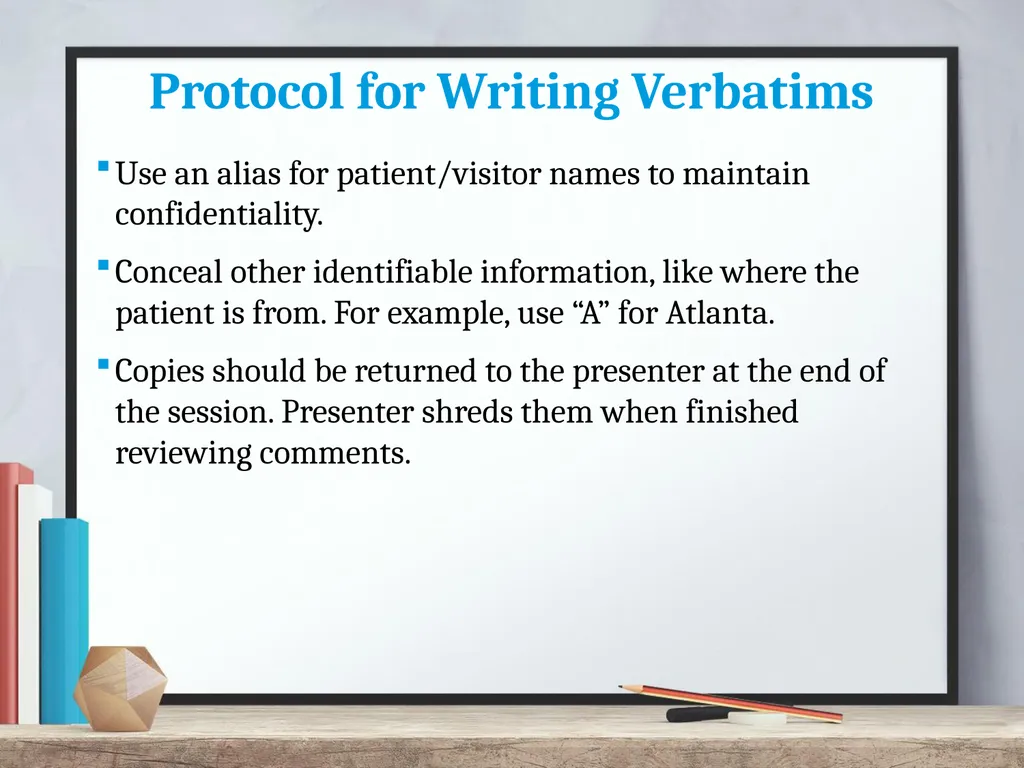
Protocol for Writing Verbatims Use an alias for patient/visitor names to maintain confidentiality.
Conceal other identifiable information, like where the patient is from. For example, use “A” for Atlanta.
Copies should be returned to the presenter at the end of the session. Presenter shreds them when finished reviewing comments.<br>
20
Sources Dweck, Carol S. Mindset: The New Psychology of Success. New York: Ballantine Books, 2006.
Kolb, David A. Experiential Learning: Experience as the Source of Learning and Development. New Jersey: Prentice Hall, 1984.
Martin, James. The Jesuit Guide to (Almost) Everything: A Spirituality for Real Life. New York: HarperCollins, 2010.<br>