ACUTE BRONCHITIS CLINICAL PATHWAY CLINICAL DIAGNOSIS Cough for 1 week or more, productive of purulent sputum may suggest acute bronchitis Fever, chills, dyspnea easy fatigability and hoarseness may or may not be present HOSPITAL ADMISSION
"ACUTE BRONCHITIS CLINICAL PATHWAY CLINICAL" is the property of its rightful owner. Permission is granted to
download and print the materials on this website for personal, non-commercial use only, and to display it
on your personal computer provided you do not modify the materials and that you retain all copyright
notices contained in the materials. By downloading content from our website, you accept the terms of this
agreement.
Presentation Transcript
01
ACUTE BRONCHITIS CLINICAL PATHWAY<br>
02
CLINICAL DIAGNOSIS Cough for 1 week or more, productive of purulent sputum may suggest acute bronchitis
Fever, chills, dyspnea easy fatigability and hoarseness may or may not be present<br>
03
HOSPITAL ADMISSION Confinement is not usually needed<br>
04
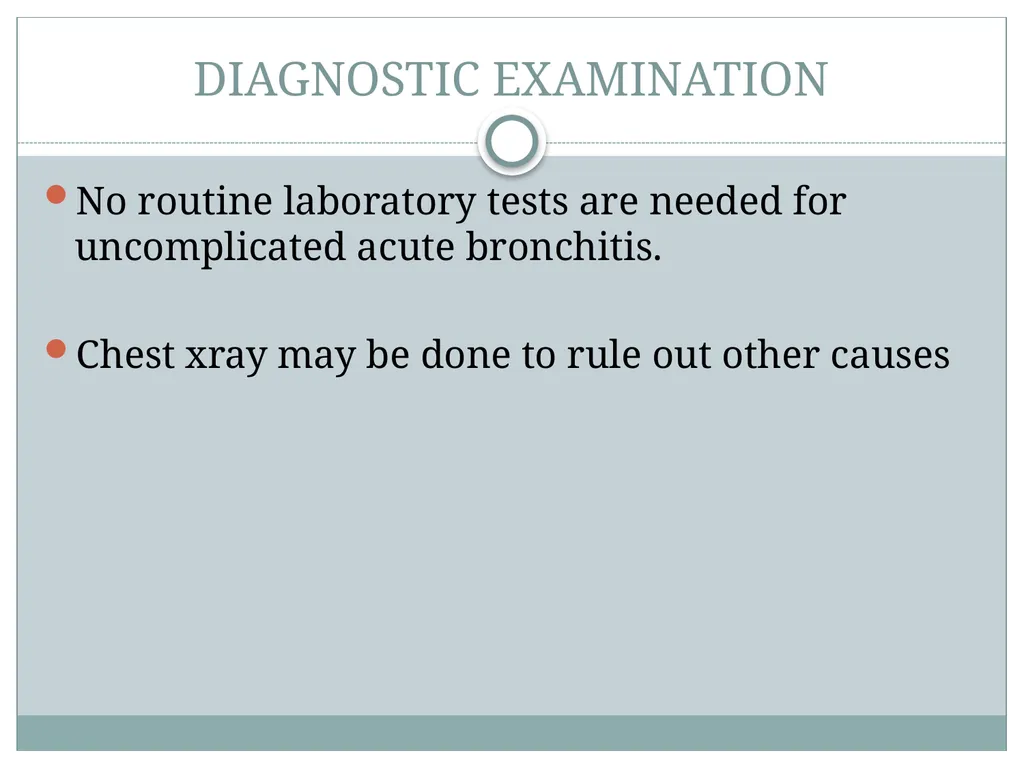
DIAGNOSTIC EXAMINATION No routine laboratory tests are needed for uncomplicated acute bronchitis.
Chest xray may be done to rule out other causes<br>
05
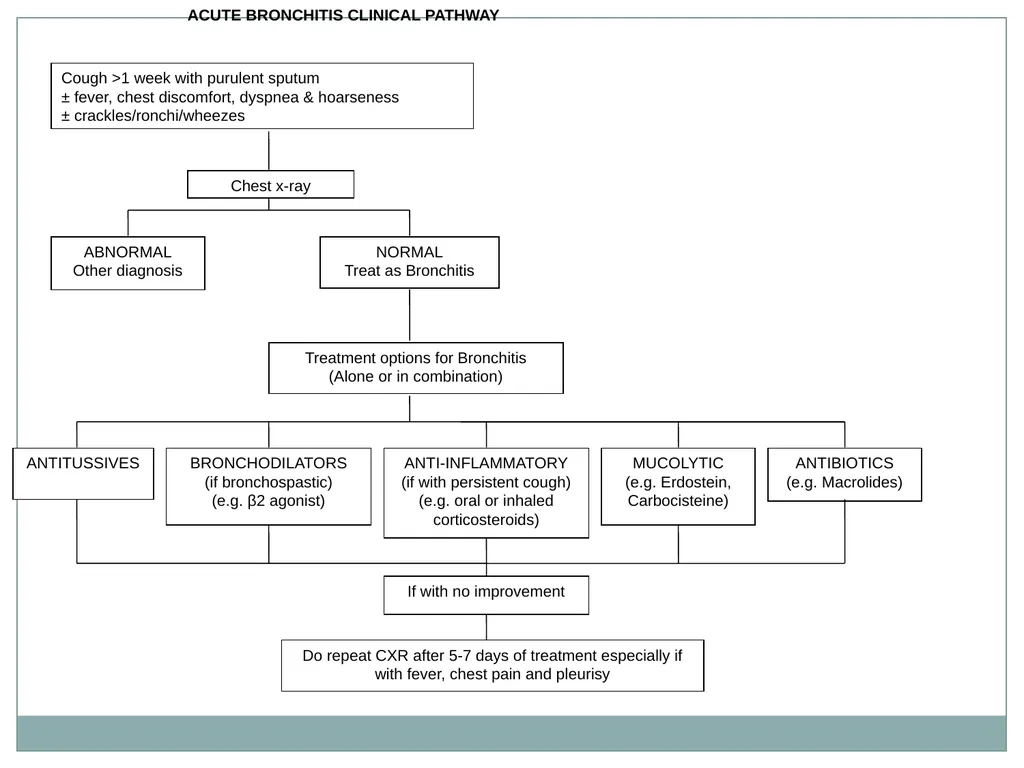
Cough >1 week with purulent sputum
± fever, chest discomfort, dyspnea & hoarseness
± crackles/ronchi/wheezes Chest x-ray ABNORMAL
Other diagnosis NORMAL
Treat as Bronchitis Treatment options for Bronchitis
(Alone or in combination) ANTITUSSIVES BRONCHODILATORS
(if bronchospastic)
(e.g. β2 agonist) ANTI-INFLAMMATORY
(if with persistent cough)
(e.g. oral or inhaled corticosteroids) MUCOLYTIC
(e.g. Erdostein, Carbocisteine) ANTIBIOTICS
(e.g. Macrolides) Do repeat CXR after 5-7 days of treatment especially if with fever, chest pain and pleurisy If with no improvement ACUTE BRONCHITIS CLINICAL PATHWAY<br>
06
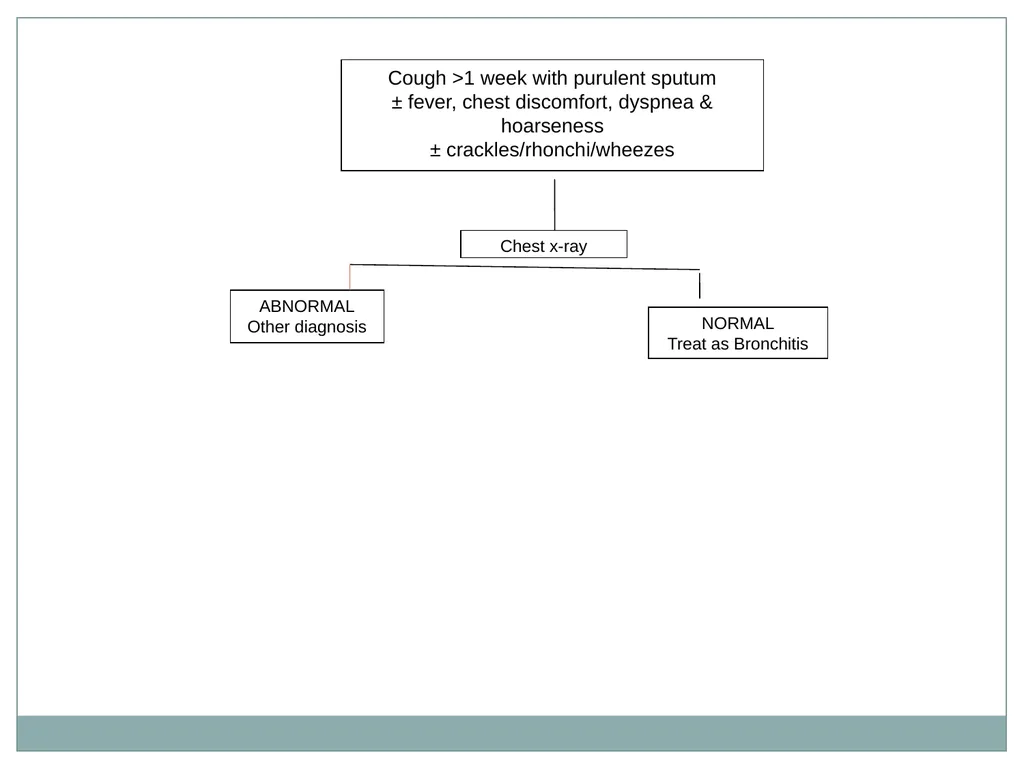
Cough >1 week with purulent sputum
± fever, chest discomfort, dyspnea & hoarseness
± crackles/rhonchi/wheezes Chest x-ray ABNORMAL
Other diagnosis NORMAL
Treat as Bronchitis<br>
07
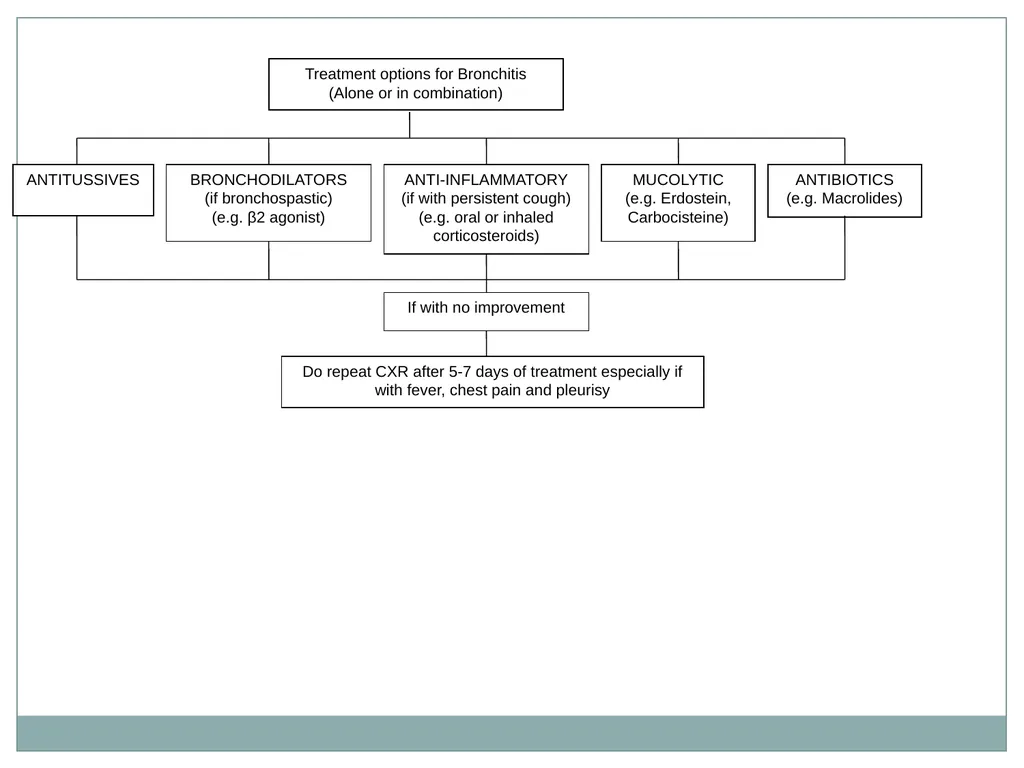
Treatment options for Bronchitis
(Alone or in combination) ANTITUSSIVES BRONCHODILATORS
(if bronchospastic)
(e.g. β2 agonist) ANTI-INFLAMMATORY
(if with persistent cough)
(e.g. oral or inhaled corticosteroids) MUCOLYTIC
(e.g. Erdostein, Carbocisteine) ANTIBIOTICS
(e.g. Macrolides) Do repeat CXR after 5-7 days of treatment especially if with fever, chest pain and pleurisy If with no improvement<br>
08
MONITORING RESPONSE TO THERAPY Prognosis is good and special monitoring or referral for specialty care is not required<br>
09
REFERENCES Philhealth HTA Committee, Proceedings Workshop on the Critical Appraisal of Clinical Practice Guidelines and Development of Policy Statements. Sept 19-21, 2005