04
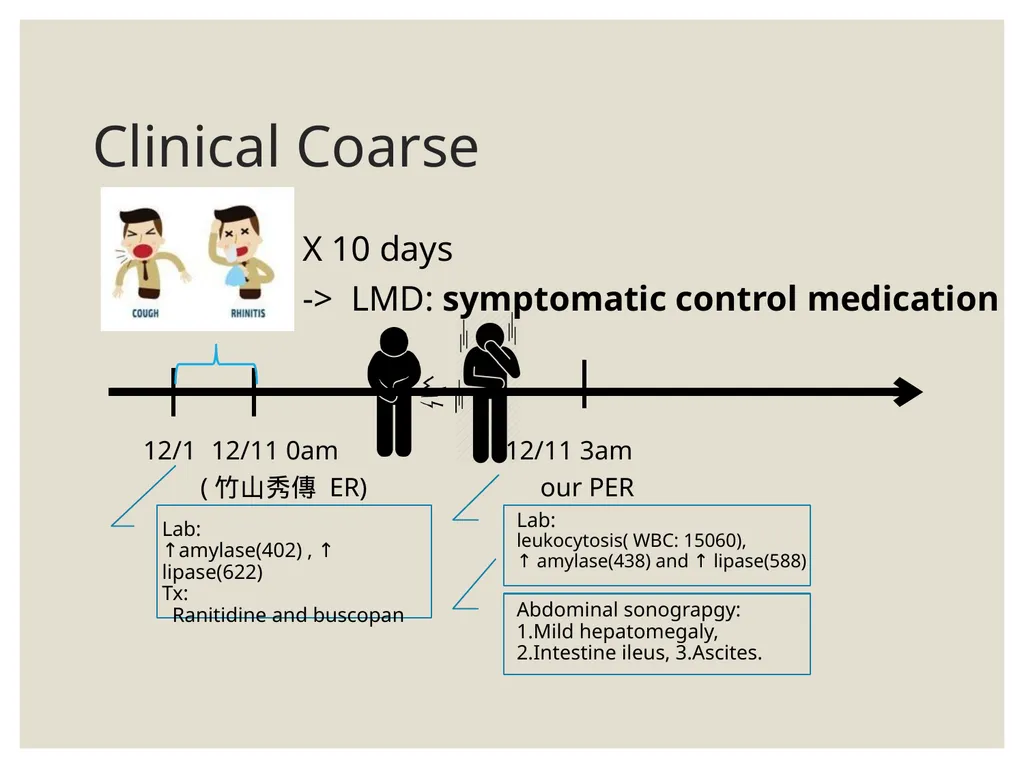
Clinical Coarse X 10 days
-> LMD: symptomatic control medication
12/1 12/11 0am 12/11 3am
(竹山秀傳 ER) our PER Lab:
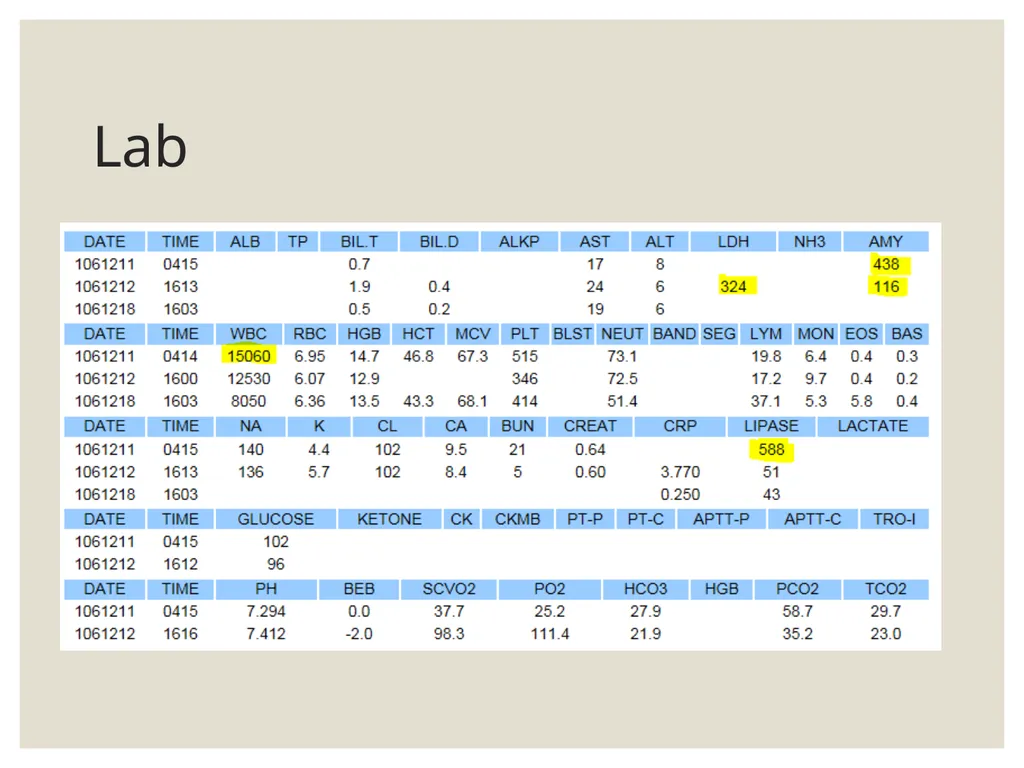
↑amylase(402) , ↑ lipase(622)
Tx:
Ranitidine and buscopan Lab:
leukocytosis( WBC: 15060),
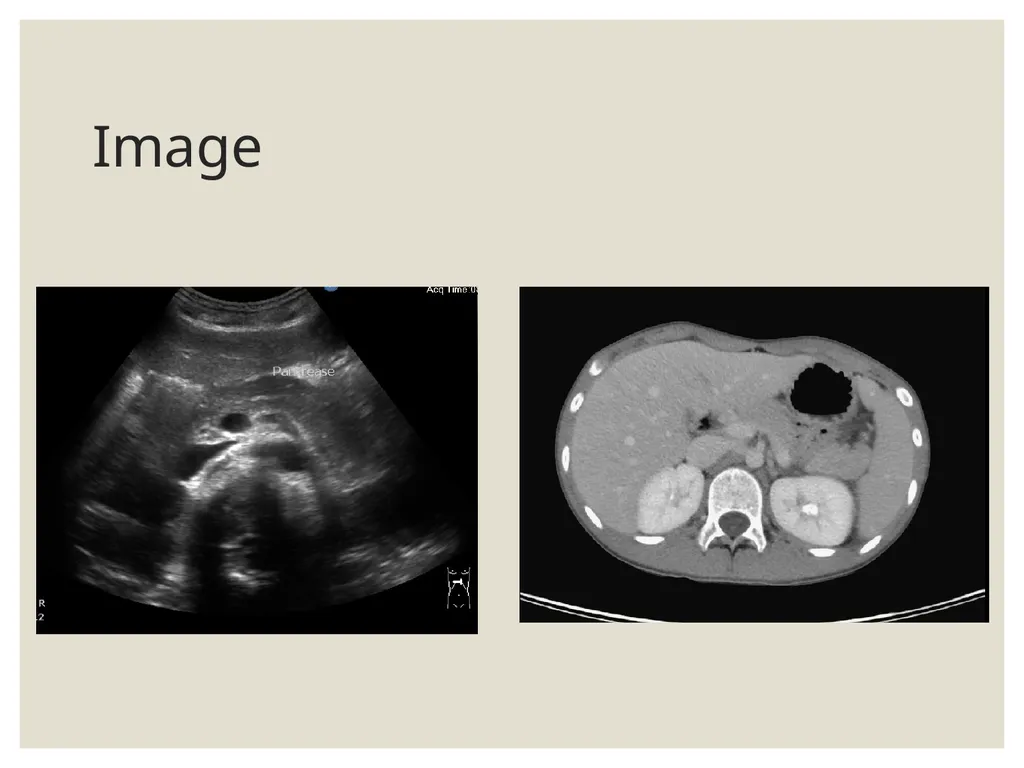
↑ amylase(438) and ↑ lipase(588) Abdominal sonograpgy:
1.Mild hepatomegaly, �2.Intestine ileus, 3.Ascites.<br>
05
Others Birth history: G3P2A1, C/S, BBW: ~ 3000gm
Family history:
Parents: both thalassemia minor
older sister died shortly after birth due to severe thalassemia.<br>
07
Impression 1. Acute pancreatitis
2. Thalassemia<br>
09
Treatment Pain control with Pethidine
NPO until no vomiting
Fluid supplement<br>
10
Acute pancreatitis �in pediatrics<br>
11
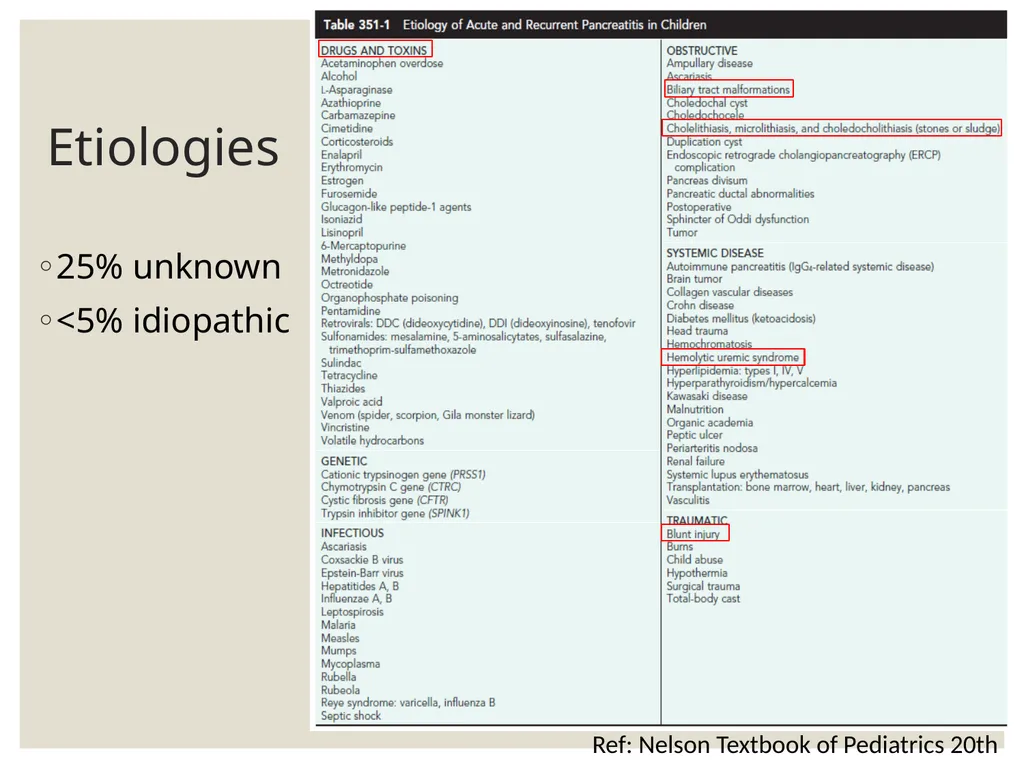
Etiologies 25% unknown
<5% idiopathic Ref: Nelson Textbook of Pediatrics 20th<br>
12
Histopathology Interstitial edema
Localized and confluent necrosis
Blood vessel disruption leading to hemorrhage,
Inflammatory response in the peritoneum<br>
13
Criteria 2 of 3 of the following:
abdominal pain
serum amylase +/- lipase > 3x ULN
imaging findings Ref: Nelson Textbook of Pediatrics 20th<br>
14
Clinical Manifestations Mild Acute Pancreatitis
Severe abdominal pain(87%), persistent vomiting(64%), possibly fever.
The pain increase in intensity for 24-48 hr
The prognosis : excellent<br>
15
Severe Acute Pancreatitis (rare)
Severe nausea, vomiting, abdominal pain.
Shock, high fever, jaundice, ascites, hypocalcemia, PLE
Cullen sign or Grey Turner sign:
necrotic, inflammatory
Mortality rate: ~ 20%
The percentage of necrosis on CT scan : the severity of the disease.<br>
16
LAB Lipase:
rises by 4-8 hr,
peaks at 24-48 hr,
remains elevated 8-14 days
Amylase : elevated for 4 days
Others: HCT↑, WBC↑, glucose↑, rGT↑, Bilirubin↑, glucosuria, coagulopathy, Ca↓<br>
17
Abdominal X-rays sentinel loop, dilation of the transverse colon (cutoff sign)
Ileus
pancreatic calcification (if recurrent)
blurring of the left psoas margin
a pseudocyst
Diffuse abdominal haziness (ascites)
peripancreatic extraluminal gas bubbles.<br>
18
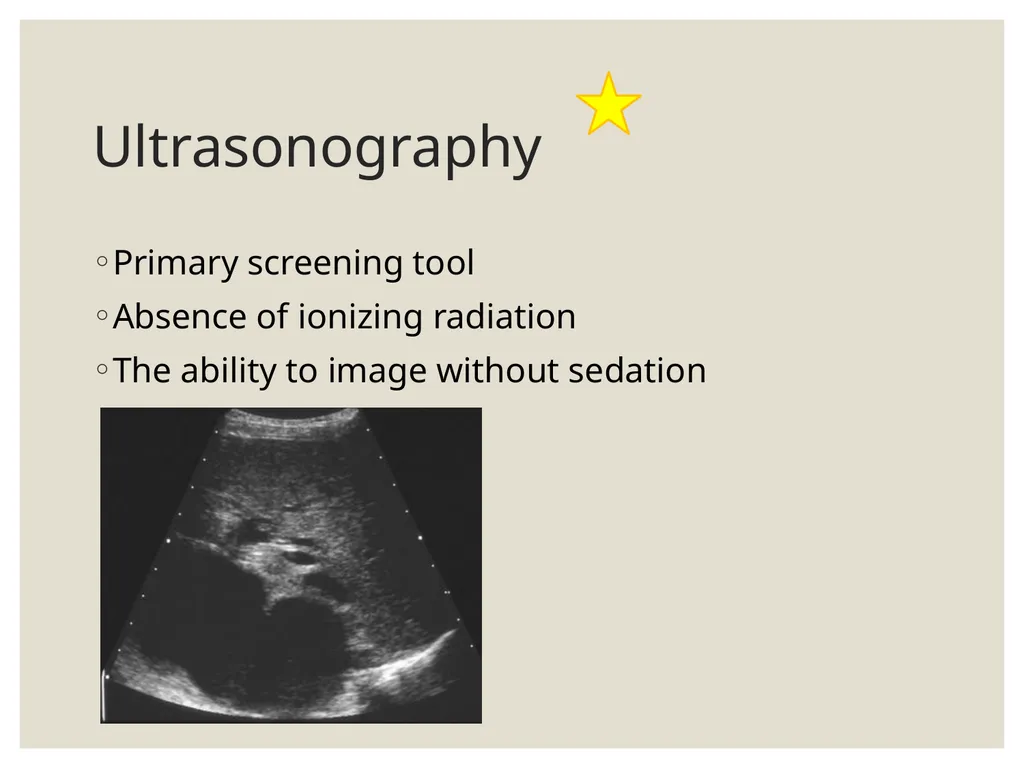
Ultrasonography Primary screening tool
Absence of ionizing radiation
The ability to image without sedation<br>
19
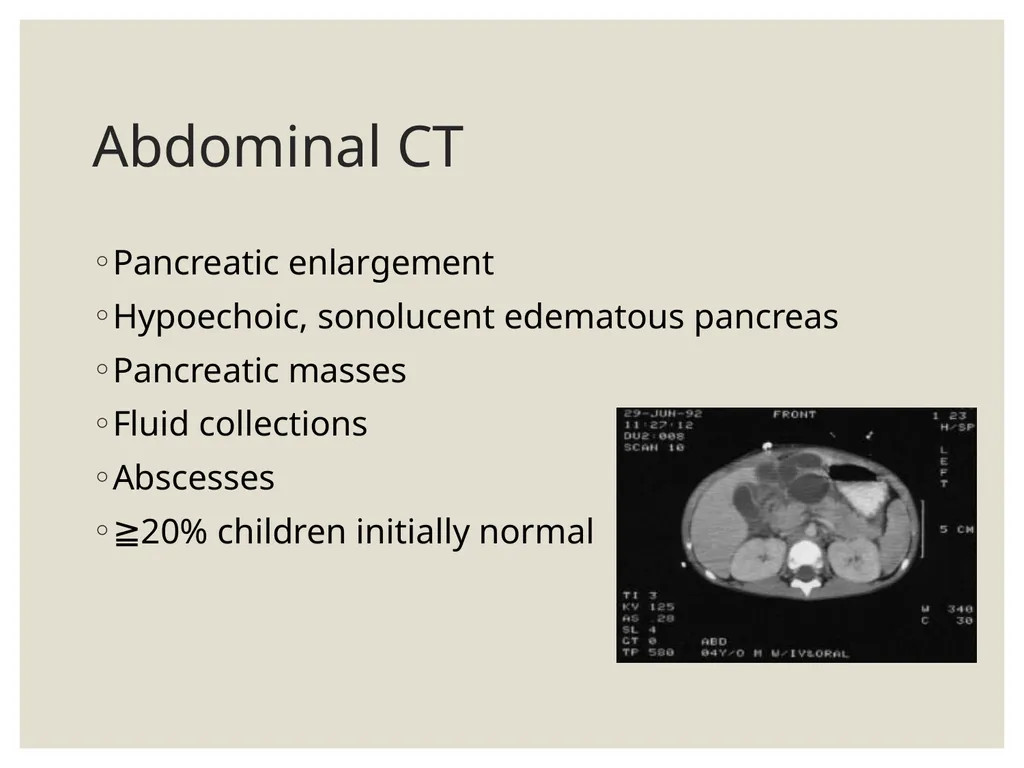
Abdominal CT Pancreatic enlargement
Hypoechoic, sonolucent edematous pancreas
Pancreatic masses
Fluid collections
Abscesses
≧20% children initially normal<br>
21
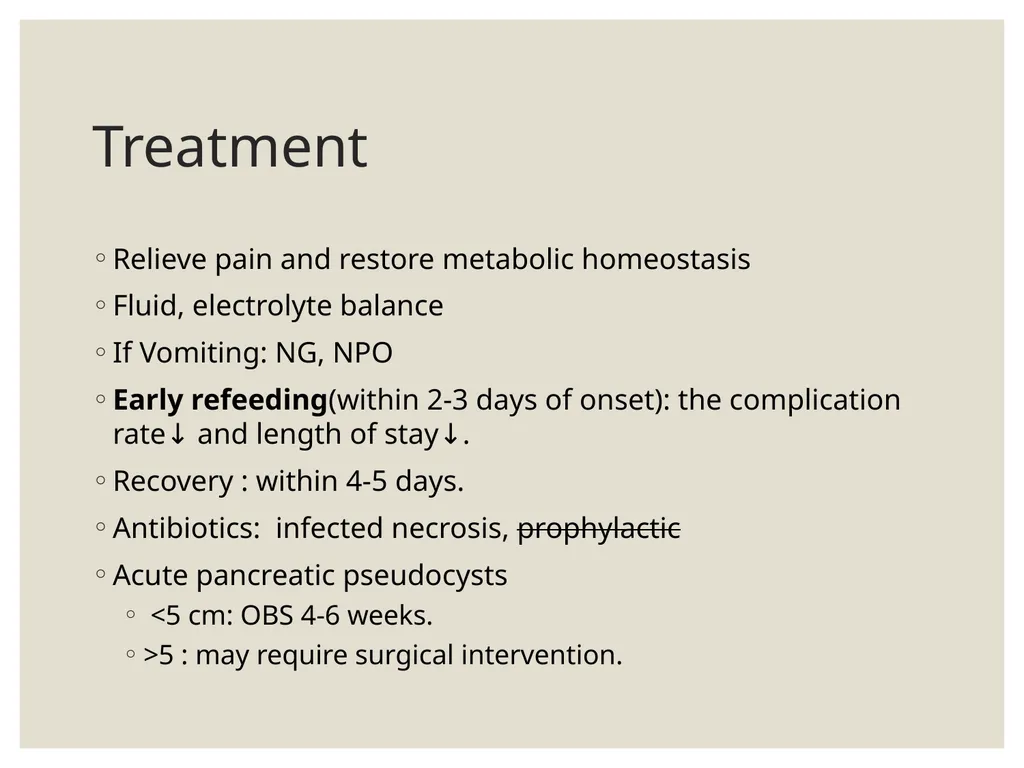
Treatment Relieve pain and restore metabolic homeostasis
Fluid, electrolyte balance
If Vomiting: NG, NPO
Early refeeding(within 2-3 days of onset): the complication rate↓ and length of stay↓.
Recovery : within 4-5 days.
Antibiotics: infected necrosis, prophylactic
Acute pancreatic pseudocysts
<5 cm: OBS 4-6 weeks.
>5 : may require surgical intervention.<br>
22
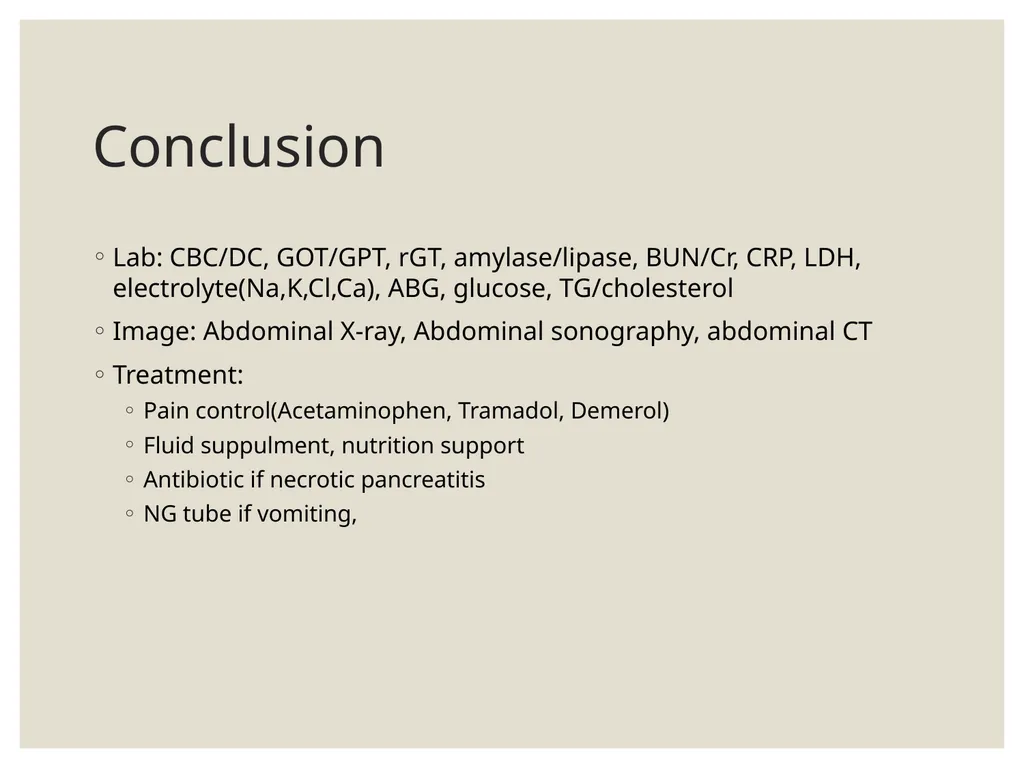
Conclusion Lab: CBC/DC, GOT/GPT, rGT, amylase/lipase, BUN/Cr, CRP, LDH, electrolyte(Na,K,Cl,Ca), ABG, glucose, TG/cholesterol
Image: Abdominal X-ray, Abdominal sonography, abdominal CT
Treatment:
Pain control(Acetaminophen, Tramadol, Demerol)
Fluid suppulment, nutrition support
Antibiotic if necrotic pancreatitis
NG tube if vomiting,<br>
23
Chronic pancreatitis Genetic mutations
Congenital anomalies of the pancreatic or biliary ductal system.<br>
24
Referance Nelson Textbook of Pediatrics 20th
Medscape<br>