
Advancing Image Transfer Through Semantic-aided




Description: Advancing Image Transfer Through Semantic-aided Approaches: A Multi-modal Exploration 22 October 2024 Nargis Fayaz Ph.D. Scholar, IITD Session 7 Enabling technologies Outline Semantic Communication Motivation for Advancing Semantic
Related Topics
Download Presentation
"Advancing Image Transfer Through Semantic-aided" is the property of its rightful owner. Permission is granted to download and print the materials on this website for personal, non-commercial use only, and to display it on your personal computer provided you do not modify the materials and that you retain all copyright notices contained in the materials. By downloading content from our website, you accept the terms of this agreement.
Presentation Transcript
slide2. Advancing Image Transfer Through Semantic-aided Approaches: A Multi-modal Exploration 22 October 2024<br>
slide3. Nargis Fayaz
Ph.D. Scholar, IITD Session 7 – Enabling technologies<br>
slide4. Outline Semantic Communication
Motivation for Advancing Semantic Communication
Challenges in Current Image Transfer Systems
Proposed Solution: Multi-modal Image Transfer
System Overview
Multimodality in Semantic Communication
Comparison of Secondary Mode
Results
Conclusion<br>
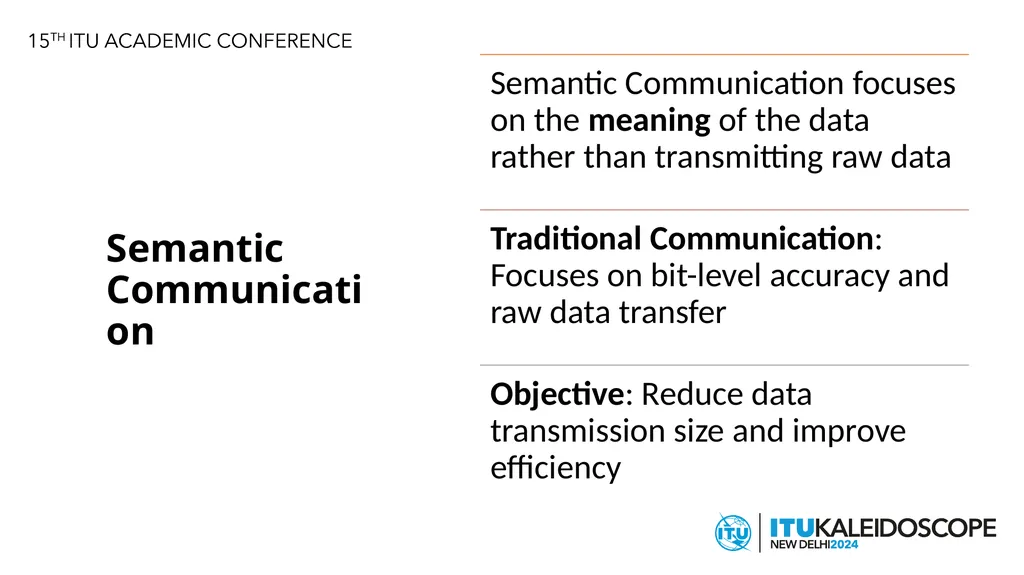
slide5. Semantic Communication<br>
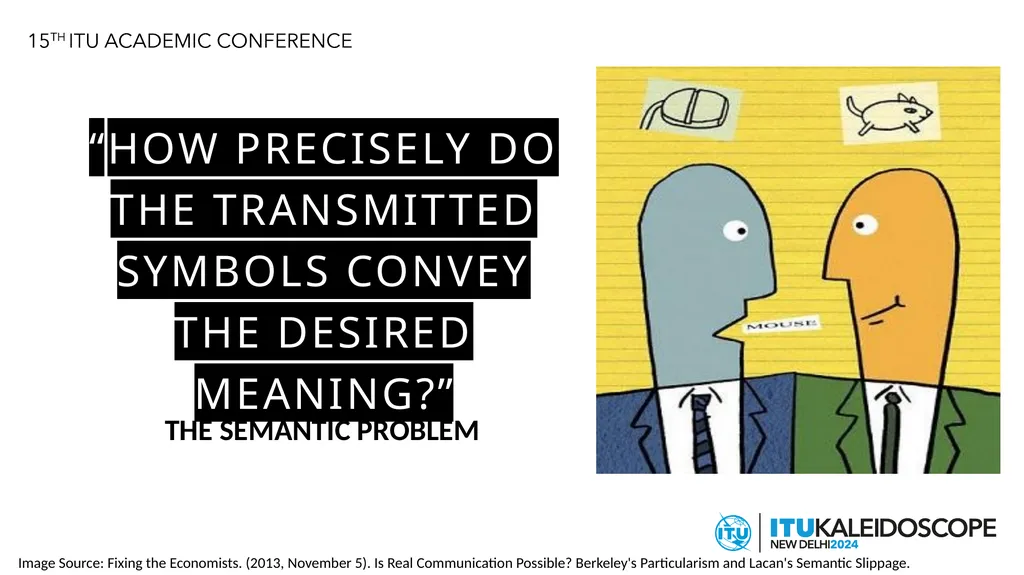
slide6. “How precisely do the transmitted symbols convey the desired meaning?” THE SEMANTIC PROBLEM Image Source: Fixing the Economists. (2013, November 5). Is Real Communication Possible? Berkeley's Particularism and Lacan's Semantic Slippage.<br>
slide7. Motivation for Advancing Semantic Communication<br>
slide8. Challenges in Current Image Transfer Systems<br>
slide9. Proposed solution: multi-modal image transfer<br>
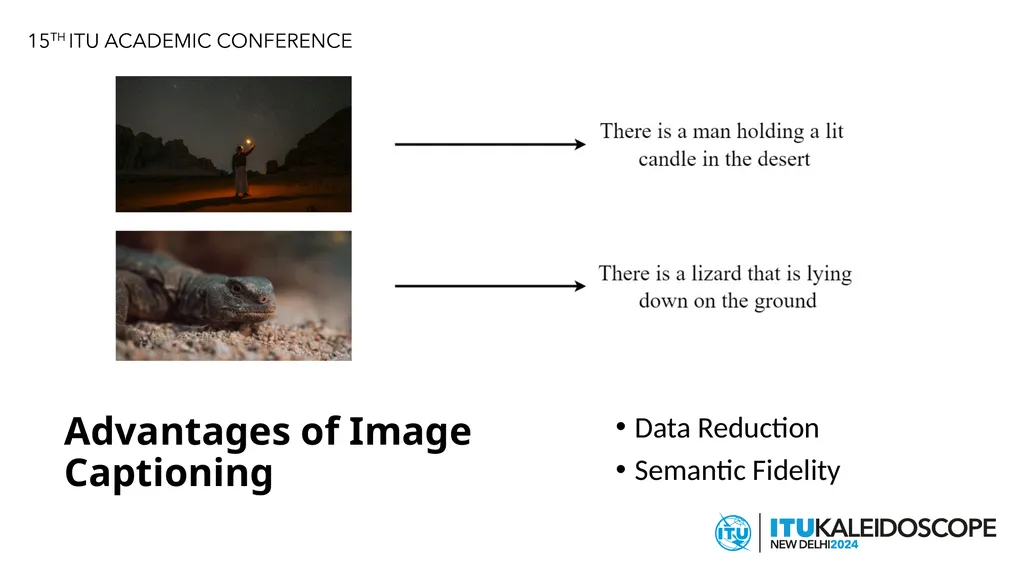
slide10. Advantages of Image Captioning Data Reduction
Semantic Fidelity<br>
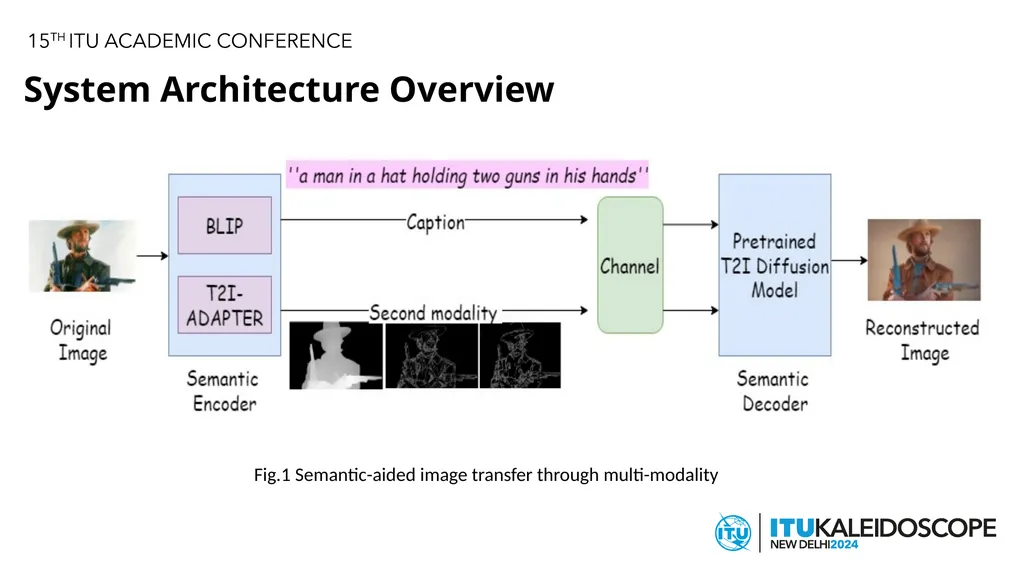
slide11. System Architecture Overview Fig.1 Semantic-aided image transfer through multi-modality<br>
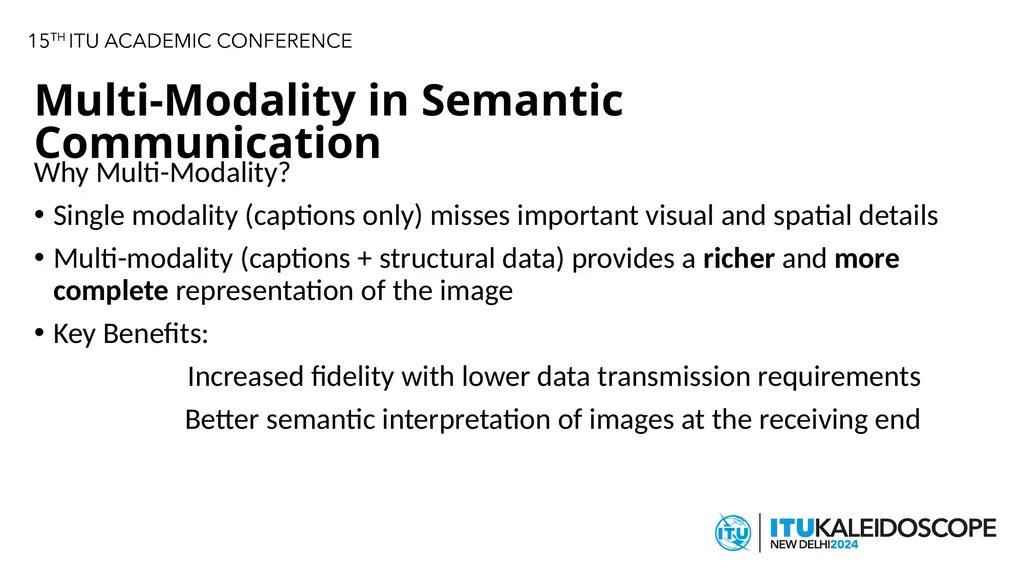
slide12. Multi-Modality in Semantic Communication Why Multi-Modality?
Single modality (captions only) misses important visual and spatial details
Multi-modality (captions + structural data) provides a richer and more complete representation of the image
Key Benefits:
Increased fidelity with lower data transmission requirements
Better semantic interpretation of images at the receiving end<br>
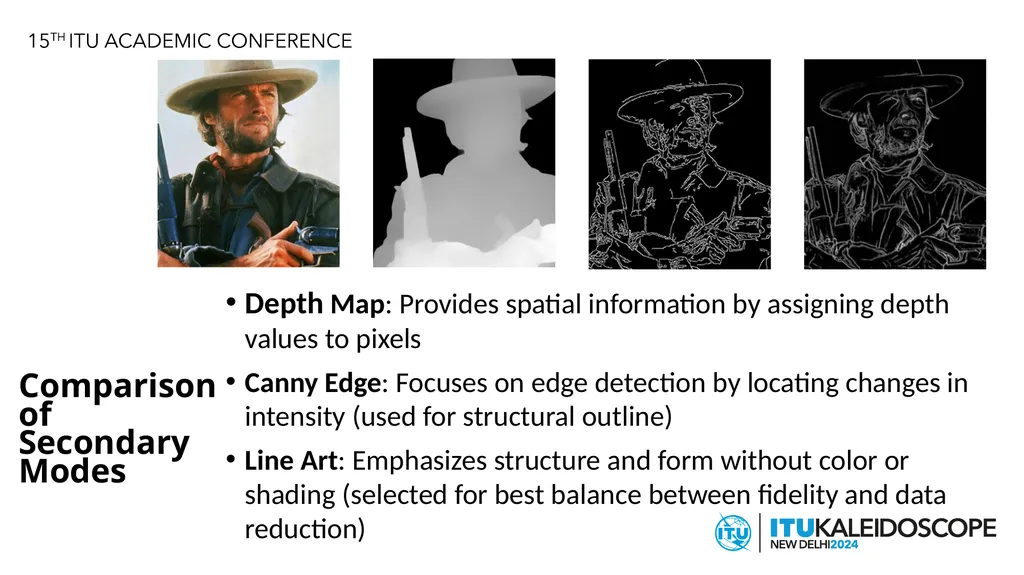
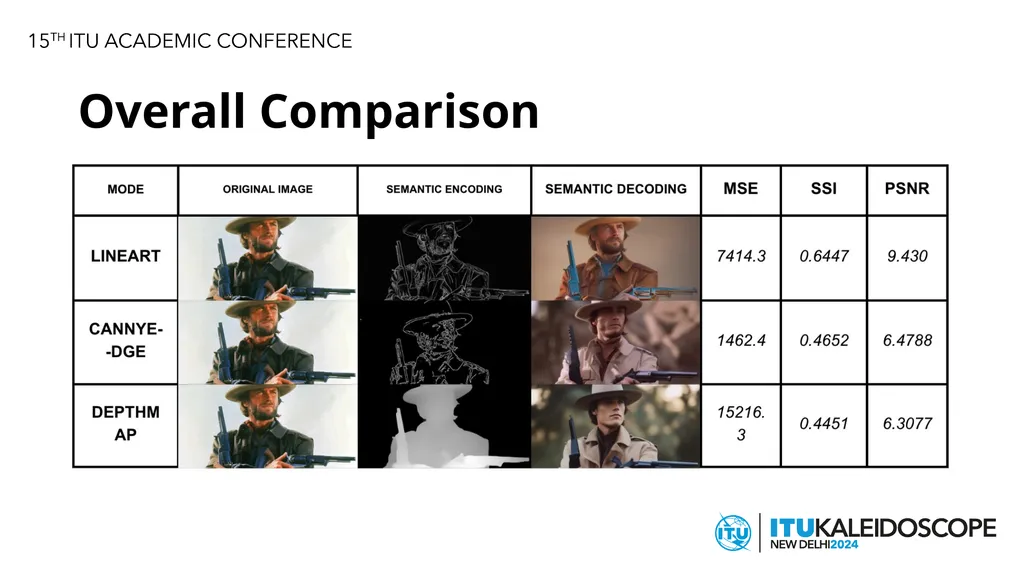
slide13. Comparison of Secondary Modes Depth Map: Provides spatial information by assigning depth values to pixels
Canny Edge: Focuses on edge detection by locating changes in intensity (used for structural outline)
Line Art: Emphasizes structure and form without color or shading (selected for best balance between fidelity and data reduction)<br>
slide14. Performance Metrics for Evaluation Mean Squared Error (MSE): Measures the pixel-level error between the original and reconstructed images
Peak Signal-to-Noise Ratio (PSNR): Indicates the signal quality; higher values represent better reconstructions
Structural Similarity Index (SSI): Evaluates perceptual similarity, focusing on how closely the reconstructed image matches the original from a human visual perspective<br>
slide15. Overall Comparison<br>
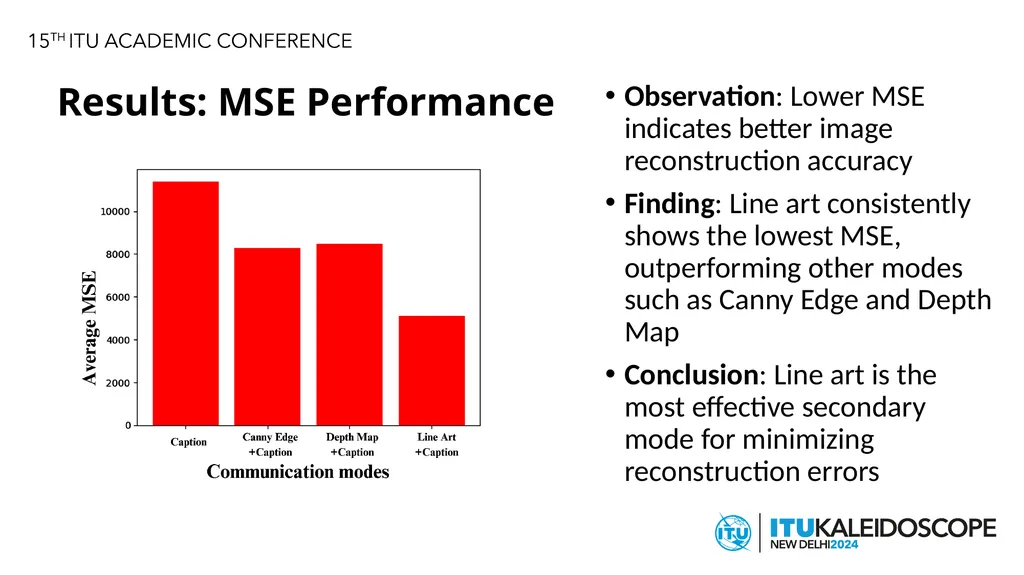
slide16. Results: MSE Performance Observation: Lower MSE indicates better image reconstruction accuracy
Finding: Line art consistently shows the lowest MSE, outperforming other modes such as Canny Edge and Depth Map
Conclusion: Line art is the most effective secondary mode for minimizing reconstruction errors<br>
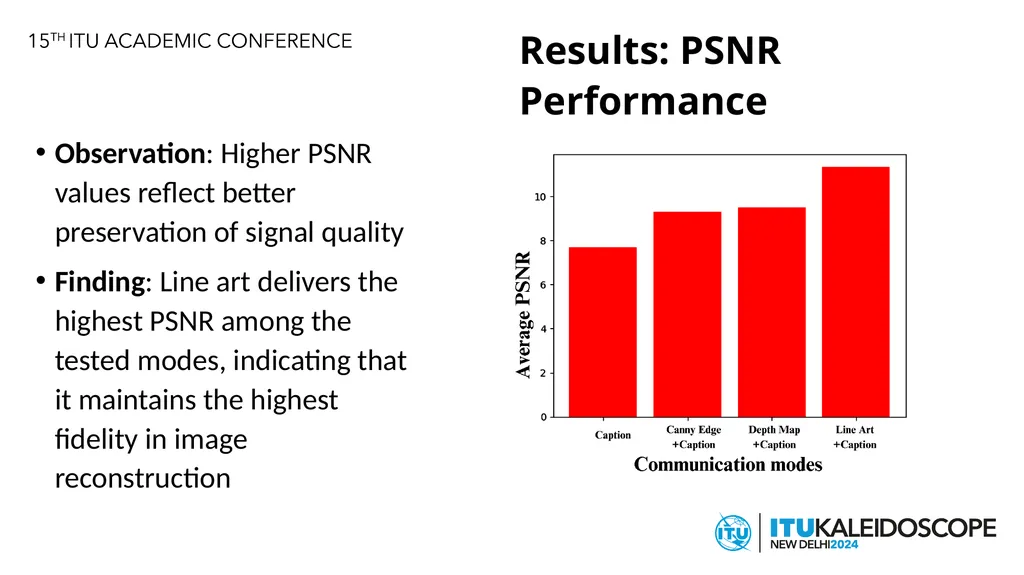
slide17. Results: PSNR Performance Observation: Higher PSNR values reflect better preservation of signal quality
Finding: Line art delivers the highest PSNR among the tested modes, indicating that it maintains the highest fidelity in image reconstruction<br>
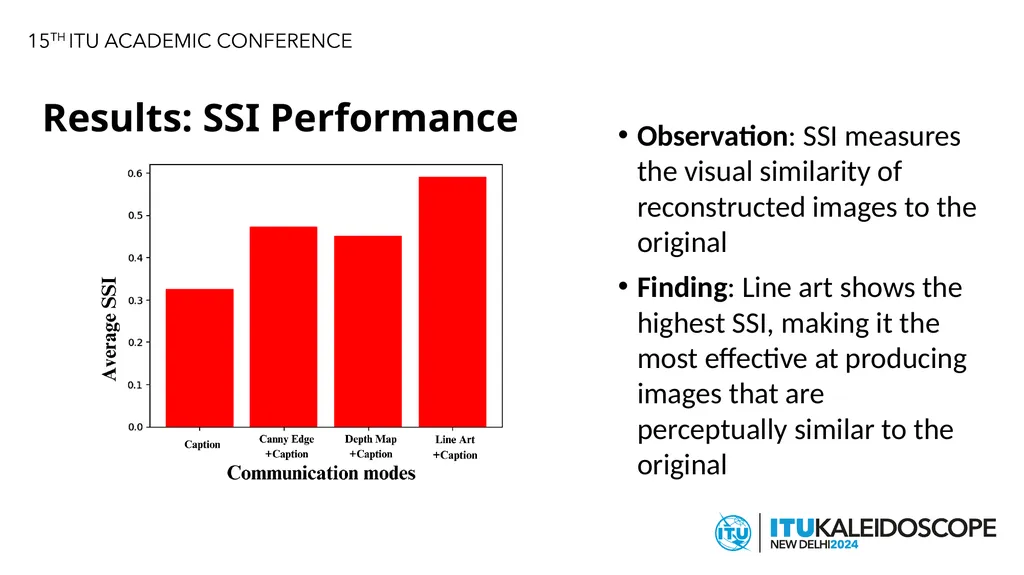
slide18. Results: SSI Performance Observation: SSI measures the visual similarity of reconstructed images to the original
Finding: Line art shows the highest SSI, making it the most effective at producing images that are perceptually similar to the original<br>
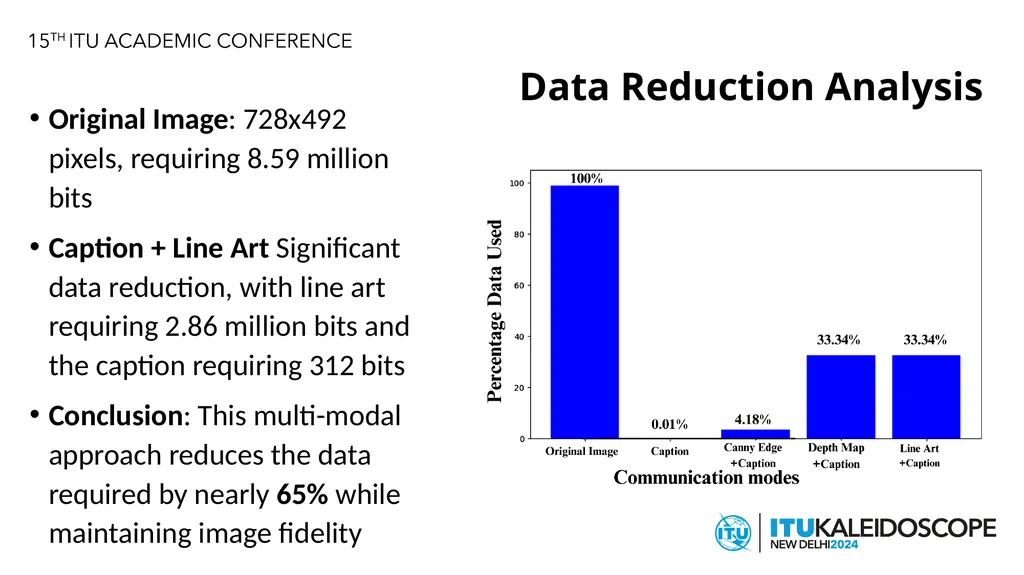
slide19. Data Reduction Analysis Original Image: 728x492 pixels, requiring 8.59 million bits
Caption + Line Art Significant data reduction, with line art requiring 2.86 million bits and the caption requiring 312 bits
Conclusion: This multi-modal approach reduces the data required by nearly 65% while maintaining image fidelity<br>
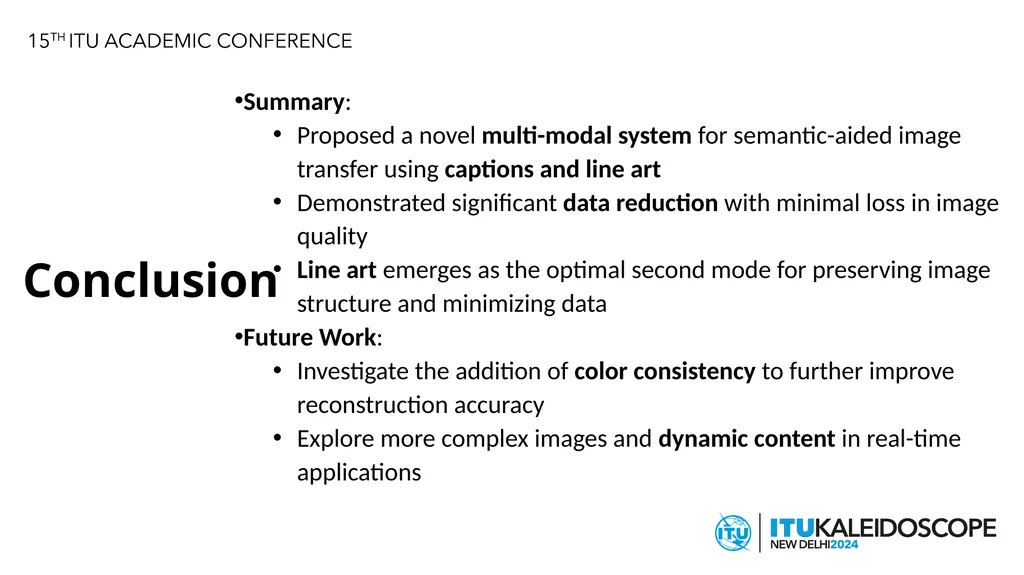
slide20. Conclusion Summary:
Proposed a novel multi-modal system for semantic-aided image transfer using captions and line art
Demonstrated significant data reduction with minimal loss in image quality
Line art emerges as the optimal second mode for preserving image structure and minimizing data
Future Work:
Investigate the addition of color consistency to further improve reconstruction accuracy
Explore more complex images and dynamic content in real-time applications<br>
slide21. References [1] X. Luo, H.-H. Chen, and Q. Guo, “Semantic communications: Overview, open issues, and future research directions,” IEEE Wireless Communications, Vol. 29, no. 1, pp. 210–219, 2022.
[2] D. Gündüz, Z. Qin, I. E. Aguerri, H. S. Dhillon, Z. Yang,A. Yener, K. K. Wong, and C.-B. Chae, “Beyond transmitting bits: Context, semantics, and task-oriented communications,” IEEE Journal on Selected Areas in Communications, vol. 41, no. 1, pp. 5–41, Jan. 2023.
[3] W. Yang, H. Du, Z. Q. Liew, W. Y. B. Lim, Z. Xiong,D. Niyato, X. Chi, X. Shen, and C. Miao, “Semantic communications for future internet: Fundamentals, applications, and challenges,” IEEE Communications Surveys Tutorials, vol. 25, no. 1, pp. 213–250, 2023.
[4] G. Yin, B. Liu, L. Sheng, N. Yu, X. Wang, and J. Shao, "Semantics disentangling for text-to-image generation,” in Proceedings of the IEEE/CVF Conference on computer vision and pattern recognition, 2019, pp.2327–2336.
[5] M. U. Lokumarambage, V. S. S. Gowrisetty, H. Rezaei,T. Sivalingam, N. Rajatheva, and A. Fernando, "Wireless end-to-end image transmission system using semantic communications,” IEEE Access, 2023.
[6] J. Li, D. Li, C. Xiong, and S. Hoi, “Blip: Bootstrapping language-image pre-training for unified vision-language understanding and generation,” International conference on machine learning. PMLR,2022, pp. 12 888–12 900.
[7] C. Mou, X. Wang, L. Xie, Y. Wu, J. Zhang, Z. Qi, and Y. Shan, “T2i-adapter: Learning adapters to dig out more controllable ability for text-to-image diffusion models,” in Proceedings of the AAAI Conference on Artificial Intelligence, vol. 38, no. 5, 2024, pp.4296–4304.[
8] M. Z. Hossain, F. Sohel, M. F. Shiratuddin, and H. Laga, “A comprehensive survey of deep learning for image captioning,” ACM Computing Surveys (CsUR), vol. 51,no. 6, pp. 1–36, 2019.
[9] Z. Wang, A. C. Bovik, H. R. Sheikh, and E. P.Simoncelli, “Image quality assessment: from error visibility to structural similarity,” IEEE Transactions on image processing, vol. 13, no. 4, pp. 600–612, 2004.
[10] A. Hertzmann, “Why do line drawings work? a realism hypothesis,” Journal of Vision, vol. 21, no. 9, pp.2029–2029, 2021.<br>
slide22. Thank you for your attention. Any questions? Authors’ emails: Dawood Aziz Zargar dawoodaziz_2021bece016@nitsri.ac.in
Hashim Aijaz hashim_2021bece007@nitsri.ac.in
Nargis Fayaz eez218533@ee.iitd.ac.in<br>
slide3. Nargis Fayaz
Ph.D. Scholar, IITD Session 7 – Enabling technologies<br>
slide4. Outline Semantic Communication
Motivation for Advancing Semantic Communication
Challenges in Current Image Transfer Systems
Proposed Solution: Multi-modal Image Transfer
System Overview
Multimodality in Semantic Communication
Comparison of Secondary Mode
Results
Conclusion<br>
slide5. Semantic Communication<br>
slide6. “How precisely do the transmitted symbols convey the desired meaning?” THE SEMANTIC PROBLEM Image Source: Fixing the Economists. (2013, November 5). Is Real Communication Possible? Berkeley's Particularism and Lacan's Semantic Slippage.<br>
slide7. Motivation for Advancing Semantic Communication<br>
slide8. Challenges in Current Image Transfer Systems<br>
slide9. Proposed solution: multi-modal image transfer<br>
slide10. Advantages of Image Captioning Data Reduction
Semantic Fidelity<br>
slide11. System Architecture Overview Fig.1 Semantic-aided image transfer through multi-modality<br>
slide12. Multi-Modality in Semantic Communication Why Multi-Modality?
Single modality (captions only) misses important visual and spatial details
Multi-modality (captions + structural data) provides a richer and more complete representation of the image
Key Benefits:
Increased fidelity with lower data transmission requirements
Better semantic interpretation of images at the receiving end<br>
slide13. Comparison of Secondary Modes Depth Map: Provides spatial information by assigning depth values to pixels
Canny Edge: Focuses on edge detection by locating changes in intensity (used for structural outline)
Line Art: Emphasizes structure and form without color or shading (selected for best balance between fidelity and data reduction)<br>
slide14. Performance Metrics for Evaluation Mean Squared Error (MSE): Measures the pixel-level error between the original and reconstructed images
Peak Signal-to-Noise Ratio (PSNR): Indicates the signal quality; higher values represent better reconstructions
Structural Similarity Index (SSI): Evaluates perceptual similarity, focusing on how closely the reconstructed image matches the original from a human visual perspective<br>
slide15. Overall Comparison<br>
slide16. Results: MSE Performance Observation: Lower MSE indicates better image reconstruction accuracy
Finding: Line art consistently shows the lowest MSE, outperforming other modes such as Canny Edge and Depth Map
Conclusion: Line art is the most effective secondary mode for minimizing reconstruction errors<br>
slide17. Results: PSNR Performance Observation: Higher PSNR values reflect better preservation of signal quality
Finding: Line art delivers the highest PSNR among the tested modes, indicating that it maintains the highest fidelity in image reconstruction<br>
slide18. Results: SSI Performance Observation: SSI measures the visual similarity of reconstructed images to the original
Finding: Line art shows the highest SSI, making it the most effective at producing images that are perceptually similar to the original<br>
slide19. Data Reduction Analysis Original Image: 728x492 pixels, requiring 8.59 million bits
Caption + Line Art Significant data reduction, with line art requiring 2.86 million bits and the caption requiring 312 bits
Conclusion: This multi-modal approach reduces the data required by nearly 65% while maintaining image fidelity<br>
slide20. Conclusion Summary:
Proposed a novel multi-modal system for semantic-aided image transfer using captions and line art
Demonstrated significant data reduction with minimal loss in image quality
Line art emerges as the optimal second mode for preserving image structure and minimizing data
Future Work:
Investigate the addition of color consistency to further improve reconstruction accuracy
Explore more complex images and dynamic content in real-time applications<br>
slide21. References [1] X. Luo, H.-H. Chen, and Q. Guo, “Semantic communications: Overview, open issues, and future research directions,” IEEE Wireless Communications, Vol. 29, no. 1, pp. 210–219, 2022.
[2] D. Gündüz, Z. Qin, I. E. Aguerri, H. S. Dhillon, Z. Yang,A. Yener, K. K. Wong, and C.-B. Chae, “Beyond transmitting bits: Context, semantics, and task-oriented communications,” IEEE Journal on Selected Areas in Communications, vol. 41, no. 1, pp. 5–41, Jan. 2023.
[3] W. Yang, H. Du, Z. Q. Liew, W. Y. B. Lim, Z. Xiong,D. Niyato, X. Chi, X. Shen, and C. Miao, “Semantic communications for future internet: Fundamentals, applications, and challenges,” IEEE Communications Surveys Tutorials, vol. 25, no. 1, pp. 213–250, 2023.
[4] G. Yin, B. Liu, L. Sheng, N. Yu, X. Wang, and J. Shao, "Semantics disentangling for text-to-image generation,” in Proceedings of the IEEE/CVF Conference on computer vision and pattern recognition, 2019, pp.2327–2336.
[5] M. U. Lokumarambage, V. S. S. Gowrisetty, H. Rezaei,T. Sivalingam, N. Rajatheva, and A. Fernando, "Wireless end-to-end image transmission system using semantic communications,” IEEE Access, 2023.
[6] J. Li, D. Li, C. Xiong, and S. Hoi, “Blip: Bootstrapping language-image pre-training for unified vision-language understanding and generation,” International conference on machine learning. PMLR,2022, pp. 12 888–12 900.
[7] C. Mou, X. Wang, L. Xie, Y. Wu, J. Zhang, Z. Qi, and Y. Shan, “T2i-adapter: Learning adapters to dig out more controllable ability for text-to-image diffusion models,” in Proceedings of the AAAI Conference on Artificial Intelligence, vol. 38, no. 5, 2024, pp.4296–4304.[
8] M. Z. Hossain, F. Sohel, M. F. Shiratuddin, and H. Laga, “A comprehensive survey of deep learning for image captioning,” ACM Computing Surveys (CsUR), vol. 51,no. 6, pp. 1–36, 2019.
[9] Z. Wang, A. C. Bovik, H. R. Sheikh, and E. P.Simoncelli, “Image quality assessment: from error visibility to structural similarity,” IEEE Transactions on image processing, vol. 13, no. 4, pp. 600–612, 2004.
[10] A. Hertzmann, “Why do line drawings work? a realism hypothesis,” Journal of Vision, vol. 21, no. 9, pp.2029–2029, 2021.<br>
slide22. Thank you for your attention. Any questions? Authors’ emails: Dawood Aziz Zargar dawoodaziz_2021bece016@nitsri.ac.in
Hashim Aijaz hashim_2021bece007@nitsri.ac.in
Nargis Fayaz eez218533@ee.iitd.ac.in<br>