Agent Orange: Trump, Soft Power, and Exports
Description: Agent Orange: Trump, Soft Power, and Exports Andrew K Rose Berkeley-Haas, ABFER, CEPR and NBER Todays Agenda What Effect is Trump Himself Having on American Exports? New Research linking Soft Power to Trade New Research on Macroeconomic
Related Topics
Download Presentation
"Agent Orange: Trump, Soft Power, and Exports" is the property of its rightful owner. Permission is granted to download and print the materials on this website for personal, non-commercial use only, and to display it on your personal computer provided you do not modify the materials and that you retain all copyright notices contained in the materials. By downloading content from our website, you accept the terms of this agreement.
Presentation Transcript
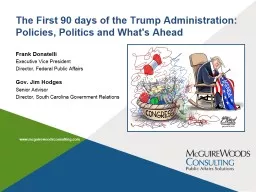
slide1. Agent Orange:Trump, Soft Power, and Exports Andrew K Rose
Berkeley-Haas, ABFER, CEPR and NBER<br>
slide2. Today’s Agenda What Effect is Trump Himself Having on American Exports?
New Research linking “Soft Power” to Trade
New Research on Macroeconomic Tariff Effects
What Do Economists Think of Protectionism and Why? Agent Orange: Andrew Rose 2<br>
slide3. Soft Power and Trade Does Trump’s Leadership Style affect trade in and of itself?
Hard power is the ability to coerce
Grows out of country’s military and economic might
“Soft Power” (Nye) arises from attractiveness of country’s culture, political ideals and policies
“… the ability to attract, [since] attraction often leads to acquiescence … soft power uses a different type of currency (not force, not money) to engender cooperation – an attraction to shared values ...”
Does Trump’s effect on US soft power affect trade? Agent Orange: Andrew Rose 3<br>
slide4. How is Soft Power Measured? Gallup asks (≈1000) participants in (>150) countries:
“Do you approve or disapprove of the job performance of the leadership of China/Germany/Russia/UK/USA”
A standard measure of soft power
Alternatives exist (deliver similar results)
BBC/GlobeScan asks people in (>40) countries about (17) other countries:
“Please tell me if you think each of the following are having a mainly positive or negative influence in the world?”
Pew Research asks people in (>60) countries about (27) other countries:
“Please tell me if you have a very favorable, somewhat favorable, somewhat unfavorable or very unfavorable opinion of _____?” Agent Orange: Andrew Rose 4<br>
slide5. Informally: Trump has Harmed US Soft Power Agent Orange: Andrew Rose 5<br>
slide6. Still, a Range of Views Across Countries Agent Orange: Andrew Rose 6<br>
slide7. Histograms of Gallup Net Approval Agent Orange: Andrew Rose 7<br>
slide8. Heterogeneity Critical Cross-country variation allows panel estimation
Time-Series variation allows within estimation (fixed effects)
Note that Trump about as popular as Bush
So data within standard range of variation Agent Orange: Andrew Rose 8<br>
slide9. Importers of US Goods Preferred Obama Agent Orange: Andrew Rose 9<br>
slide10. Contrast China and Russia: Lined up on 45⁰ Agent Orange: Andrew Rose 10<br>
slide11. Bush vs. Trump; roughly comparable Agent Orange: Andrew Rose 11<br>
slide12. But Does Soft Power Actually Affect Exports? Need to control for other export determinants via “Gravity Model”
One country (e.g., US) trades more with countries which are:
Larger in economic mass (GDP)
Closer
Geographically: distance, common land border
Culturally: share language, colonial heritage
Politically: regional trade agreement
Gravity: a (rare) example of an economic model that works well in both theory and practice
Fits well; large and similar (across study) effects of income, distance
Heritage of Tinbergen (and Newton) Agent Orange: Andrew Rose 12<br>
slide13. Estimating Equation Least Squares with Dummy Variables (Head-Mayer LSDV):
ln(Xijt) = SOFTPOWERijt + 1ln(Dij) + 2Langij + 3Contij + 4RTAijt + 5Colonyij
+ {λit} + {ψjt} + ijt
One-way trade flows a function of measures of distance (geography, language, policy, history)
Fixed effects (exporter/importer x time) do most of the work, cover all monadic constant/time-varying determinants
55 Exporter-Year/1426 Importer-Year FE Agent Orange: Andrew Rose 13<br>
slide14. Data Bilateral DoTS data from IMF
2006-17, for 5 exporters, 157 importers, 6,331 observations, LS estimation
CIA World Factbook for country-specific variables
(All available online at my website) Agent Orange: Andrew Rose 14<br>
slide15. Soft Power Has a Big Effect! Agent Orange: Andrew Rose 15<br>
slide16. Result is Robust Different Measures of Soft Power
Different cuts of the data, variants of the functional form, …
Different estimators;
Instrumental variables
Dyadic (pair-specific) fixed effects
PPML to account for zeros in regressand, heterogeneity ... Agent Orange: Andrew Rose 16<br>
slide17. Robustness: Different Measures of Soft Power Agent Orange: Andrew Rose 17<br>
slide18. Sensitivity Analysis Agent Orange: Andrew Rose 18<br>
slide19. PPML, with Dyadic FE added Agent Orange: Andrew Rose 19<br>
slide20. How Big is the Trump Effect on Exports? A 1 percentage point improvement in leadership approval raises exports by ≈.1%
Average net approval by foreigners of the American leadership fell from +16.6% in 2016 (Obama’s final year in office) to -7.4% in 2017 (the first year of the Trump presidency)
Swing of 24 percentage points in average net approval lowers American exports by (.24*.91*$1.45tn≈) .22% or $3.3 billion
Probably more because both Canada and Mexico (largest US importers) had >50% declines in net American leadership approval
Long run effects bigger than short run effects Agent Orange: Andrew Rose 20<br>
slide21. Today’s Agenda What Effect is Trump Himself Having on American Exports?
New Research linking “Soft Power” to Trade
New Research on Macroeconomic Tariff Effects
What Do Economists Think of Protectionism and Why? Agent Orange: Andrew Rose 21<br>
slide22. Joint work with Furceri, Hannan and Ostry Key Question:
What are the macro effects of tariffs?
Output
Productivity
Unemployment
Inequality
Real exchange rate
Trade balance Agent Orange: Andrew Rose 22<br>
slide23. Gap in Literature Much work on protectionism theoretical
Most empirical work microeconomic
Sensible, given heterogeneity in protectionism, identification requiremen
But even reduced form empirical work at macro level: missing! Agent Orange: Andrew Rose 23<br>
slide24. Stress on Sensitivity Analysis Are Results Symmetric?
Tariffs rising/falling
Advanced economies/others
Good times/recessions
Conservative strategy: only medium term; ignore NTBs; domestic focus; ignore retaliation
All complemented with industry-level data Agent Orange: Andrew Rose 24<br>
slide25. Methodology Plain Vanilla: Jorda’s (2005) LPM, to account for non-linearity without imposing dynamic restrictions
Large (unbalanced ) panel data covering 151 countries from 1996 to 2014 Agent Orange: Andrew Rose 25<br>
slide26. Key Findings Tariff increases lead to:
Economically and statistically significant declines in output and productivity
Increases in inequality and unemployment
Exchange rate appreciation, and little effect on trade balance
The effects of tariffs are larger:
When tariffs go up
In advanced economies
During economic expansions Agent Orange: Andrew Rose 26<br>
slide27. Macro Data Annual GDP, labor productivity (defined as the ratio of GDP to employment), unemployment rate, real effective exchange rates (period average, deflated by CPI) and trade balance (period average, deflated by GDP): IMF WEO and World Bank WDI
Gini coefficient from the Standardized World Income Inequality Database (SWIID) Agent Orange: Andrew Rose 27<br>
slide28. Tariff Data Based on trade tariff rate data at the product level. The main sources are the World Integrated Trade Solution (WITS) and World Development Indicators (WDI); other data sources include: the World Trade Organization (WTO); the General Agreement on Tariffs and Trade (GATT); and the Brussels Customs Union database (BTN)
We aggregate product-level tariff data by calculating weighted averages, with weights given by the export share of each product, measured as fractions of value Agent Orange: Andrew Rose 28<br>
slide29. LPM (Jorda) Methodology Agent Orange: Andrew Rose 29<br>
slide30. Tariff rises lead to declines in output and productivity Output (%) Productivity (%) Note: The solid lines indicate the response of output (productivity) to one-standard deviation (about 3.6 percentage points) increase in the tariff rate; dotted lines correspond to 90 percent confidence bands. The x-axis denotes time. t=0 is the year of the reform. Estimates based on equation (1). 30<br>
slide31. Increases in unemployment and inequality Unemployment (ppt) Inequality (ppt) 31<br>
slide32. RER appreciates; little effect on trade balance RER (%) Trade balance (ppt of GDP) 32<br>
slide33. Productivity (%)—tariff increases Larger effects for tariff increases… Output (%)—tariff increases Output (%)—tariff decreases Productivity (%)—tariff decreases 33<br>
slide34. …in advanced economies… Output (%)—AEs Productivity (%)—AEs Output (%)—EMDEs Productivity (%)—EMDEs 34<br>
slide35. …and in expansions Output (%)—Expansions Productivity (%)—Expansions Output (%)—Recessions Productivity (%)—Recessions 35<br>
slide36. Robustness checks—endogeneity Output (%)—VAR Productivity (%)—VAR Output (%)—IV Productivity (%)—IV 36<br>
slide37. Summary and caveats Aversion of economics profession to the deadweight losses caused by protectionism seems well-founded
Tariffs lead to declines in output and productivity, increases in unemployment and inequality
Effects larger for tariff increases, for advanced economies and in expansions
Caveats and Limitations
Reduced-form, purely empirical approach
Hard to isolate causal effects, though robustness checks mitigate this concern
Results may underestimate the effect in case of retaliation 37<br>
slide38. Today’s Agenda What Effect is Trump Himself Having on American Exports?
New Research linking “Soft Power” to Trade
New Research on Macroeconomic Tariff Effects
What Do Economists Think of Protectionism and Why? Agent Orange: Andrew Rose 38<br>
slide39. Free Trade Best: Essentially all Economists Agent Orange: Andrew Rose 39<br>
slide40. Why do Essentially all Economists Agree? (Noting how rare such agreement is)
If unrestricted markets are typically good, then protectionism is bad for the same reason
Absent a distortion/externality/market failure, one should let markets rule
Trade is a positive sum game, the way domestic transactions are
Who takes advantage of whom in a mutually agreed transaction (absent constraints, information asymmetries, etc.)?
Of course …
Free trade doesn’t help everyone in theory or practice; some factors of production can lose Agent Orange: Andrew Rose 40<br>
slide41. There are sometimes market failures But tariffs are almost never a targeted solution
One can find almost always find other policy tools with fewer side effects
Ex: if job losses painful, should assist transition across space/industry/occupation
Hence existence of social safety net; facilitates adjustment (counter to Trump policies)
Other trade barriers (quotas, NTBs, VERs) are worse than tariffs
Tariffs (as all taxes) create microeconomic distortions, inefficiency
Consumers lose (pay more) more than producers gain (higher prices)
“Harberger Triangles” are small … but add up over long periods of time
Trade is often “deflected” or “redirected”
What is a “German” car? BMWs produced in America? Agent Orange: Andrew Rose 41<br>
slide42. Traditional Analysis of Tariff: Micro(Harberger Triangles) Agent Orange: Andrew Rose 42<br>
slide43. Economists and Free Trade, continued Imports are often intermediate inputs, so raise costs
Especially true in Asia … and with commodities … like steel, aluminum
Tariffs redistribute “the wrong way”
From many consumers (some poor) to a few producers (usually rich)
Corrupt customs officials and smugglers benefit
Tariffs create wasteful vested interests, so hard to eliminate
Agriculture in rich countries
Tariffs invite retaliation
Especially with legacy of national humiliation – Chinese “Unequal Treaties” after Opium Wars
Tariffs have minor macroeconomic effects, especially with floating exchange rates (which tend to offset)
Without changing savings or investment, protectionism can’t change current account Agent Orange: Andrew Rose 43<br>
slide44. Economists and Free Trade, more No special concern about trade deficit
A country is not a company (Krugman); trade balance is not bottom line akin to business
Adam Smith: both sides gain even if trade is balanced
Trade deficit results from consumption > production, not “bad trade deals”
In any case, US is different:
US$ has three special roles as a currency of choice for: a) trade invoicing, b) official reserves, and c) debt issuance.
Issuing “safe assets” delivers “exorbitant privilege” Agent Orange: Andrew Rose 44<br>
slide45. More on Capital Flows and Exchange Rates American fiscal expansion pushing up US interest rates
Similarly, monetary tightening is also raising US rates
Both serve to attract capital inflows, appreciate US$
Appreciation of dollar, worsening of US current account seems likely
Will affect all countries in American sphere of financial influence – especially developing and emerging markets in Latin America, Caribbean, Asia-Pacific
Because of special role of US$ and resulting currency mismatch, US$ appreciation and access to US markets often leads to problems in developing countries (Turkey!)
Trump concern with current account deficit (≡ Savings – Investment) means that savings should rise not fall to lower current account deficit Agent Orange: Andrew Rose 45<br>
slide46. Back to Economists and Free Trade To avoid protectionism, need sustainable institutional commitment to liberal trade
Rules (on protectionism, dispute settlement, etc.) better than discretion
Uncertainty critical to encourage costly investment (but Trump likes uncertainty …)
Institutions are better than individuals
But the WTO, regional trade agreements (like NAFTA), and the rules-based trade institutions are being undermined by Team Trump
Belief that US can win more concessions unilaterally
Little supporting evidence thus far Agent Orange: Andrew Rose 46<br>
slide47. Special Trumpian Points Focusing on trade in goods, ignoring services is just dumb
What’s special about something you can drop on your foot?
Thinking of a G&S surplus as “good” is just dumb
Especially to potential defaulters … like Trump …
Think of a trade balance after a typical currency crisis … or Japan … or my trade balance with my son … or my son’s with UChicago …
Focus on bilateral trade balance is just dumb
Think of my trade balance with my barber
One can understand protectionism during bad times like the early 1980s (even if don’t agree). But protectionism during good times is especially perplexing
Liking strong US$ and trade surplus is contradictory and dumb Agent Orange: Andrew Rose 47<br>
slide48. Trump Induces Trade Policy Uncertainty Who gains? Agent Orange: Andrew Rose 48<br>
slide49. But Trump really REALLY cares about Trade Reducing US bilateral trade deficits is the one national “issue” Trump has consistently cared about
“Other countries are taking advantage of us”
“The United States has trade deficits with many, many countries, and we cannot allow that to continue”
“Trade wars are good and easy to win”
US is being “ripped off so badly” and “losing billions” Agent Orange: Andrew Rose 49<br>
slide50. The Big Mystery Why has my president found such a large audience?
Why no political cost from raising taxes?
Why protect inputs, focus on bilateral deficits, …?
Why has the profession failed? Agent Orange: Andrew Rose 50<br>
slide51. Summary Trump has had a large negative effect on global and American trade
Wrong-minded fixation on a) bilateral b) deficits in c) goods
Ignores economic and political benefits of trade, costs of protectionism, causes of aggregate deficit
Inducing retaliation and dollar appreciation
Undermining rules-based international order in trade (and security)
Ironically, reducing American soft-power lowers US exports
Fundamental Problem: protectionism seems to be a “solution” in search of a problem
Incoherence stems from inability to answer: What is the American objective?
Worse to come likely! Agent Orange: Andrew Rose 51<br>
Berkeley-Haas, ABFER, CEPR and NBER<br>
slide2. Today’s Agenda What Effect is Trump Himself Having on American Exports?
New Research linking “Soft Power” to Trade
New Research on Macroeconomic Tariff Effects
What Do Economists Think of Protectionism and Why? Agent Orange: Andrew Rose 2<br>
slide3. Soft Power and Trade Does Trump’s Leadership Style affect trade in and of itself?
Hard power is the ability to coerce
Grows out of country’s military and economic might
“Soft Power” (Nye) arises from attractiveness of country’s culture, political ideals and policies
“… the ability to attract, [since] attraction often leads to acquiescence … soft power uses a different type of currency (not force, not money) to engender cooperation – an attraction to shared values ...”
Does Trump’s effect on US soft power affect trade? Agent Orange: Andrew Rose 3<br>
slide4. How is Soft Power Measured? Gallup asks (≈1000) participants in (>150) countries:
“Do you approve or disapprove of the job performance of the leadership of China/Germany/Russia/UK/USA”
A standard measure of soft power
Alternatives exist (deliver similar results)
BBC/GlobeScan asks people in (>40) countries about (17) other countries:
“Please tell me if you think each of the following are having a mainly positive or negative influence in the world?”
Pew Research asks people in (>60) countries about (27) other countries:
“Please tell me if you have a very favorable, somewhat favorable, somewhat unfavorable or very unfavorable opinion of _____?” Agent Orange: Andrew Rose 4<br>
slide5. Informally: Trump has Harmed US Soft Power Agent Orange: Andrew Rose 5<br>
slide6. Still, a Range of Views Across Countries Agent Orange: Andrew Rose 6<br>
slide7. Histograms of Gallup Net Approval Agent Orange: Andrew Rose 7<br>
slide8. Heterogeneity Critical Cross-country variation allows panel estimation
Time-Series variation allows within estimation (fixed effects)
Note that Trump about as popular as Bush
So data within standard range of variation Agent Orange: Andrew Rose 8<br>
slide9. Importers of US Goods Preferred Obama Agent Orange: Andrew Rose 9<br>
slide10. Contrast China and Russia: Lined up on 45⁰ Agent Orange: Andrew Rose 10<br>
slide11. Bush vs. Trump; roughly comparable Agent Orange: Andrew Rose 11<br>
slide12. But Does Soft Power Actually Affect Exports? Need to control for other export determinants via “Gravity Model”
One country (e.g., US) trades more with countries which are:
Larger in economic mass (GDP)
Closer
Geographically: distance, common land border
Culturally: share language, colonial heritage
Politically: regional trade agreement
Gravity: a (rare) example of an economic model that works well in both theory and practice
Fits well; large and similar (across study) effects of income, distance
Heritage of Tinbergen (and Newton) Agent Orange: Andrew Rose 12<br>
slide13. Estimating Equation Least Squares with Dummy Variables (Head-Mayer LSDV):
ln(Xijt) = SOFTPOWERijt + 1ln(Dij) + 2Langij + 3Contij + 4RTAijt + 5Colonyij
+ {λit} + {ψjt} + ijt
One-way trade flows a function of measures of distance (geography, language, policy, history)
Fixed effects (exporter/importer x time) do most of the work, cover all monadic constant/time-varying determinants
55 Exporter-Year/1426 Importer-Year FE Agent Orange: Andrew Rose 13<br>
slide14. Data Bilateral DoTS data from IMF
2006-17, for 5 exporters, 157 importers, 6,331 observations, LS estimation
CIA World Factbook for country-specific variables
(All available online at my website) Agent Orange: Andrew Rose 14<br>
slide15. Soft Power Has a Big Effect! Agent Orange: Andrew Rose 15<br>
slide16. Result is Robust Different Measures of Soft Power
Different cuts of the data, variants of the functional form, …
Different estimators;
Instrumental variables
Dyadic (pair-specific) fixed effects
PPML to account for zeros in regressand, heterogeneity ... Agent Orange: Andrew Rose 16<br>
slide17. Robustness: Different Measures of Soft Power Agent Orange: Andrew Rose 17<br>
slide18. Sensitivity Analysis Agent Orange: Andrew Rose 18<br>
slide19. PPML, with Dyadic FE added Agent Orange: Andrew Rose 19<br>
slide20. How Big is the Trump Effect on Exports? A 1 percentage point improvement in leadership approval raises exports by ≈.1%
Average net approval by foreigners of the American leadership fell from +16.6% in 2016 (Obama’s final year in office) to -7.4% in 2017 (the first year of the Trump presidency)
Swing of 24 percentage points in average net approval lowers American exports by (.24*.91*$1.45tn≈) .22% or $3.3 billion
Probably more because both Canada and Mexico (largest US importers) had >50% declines in net American leadership approval
Long run effects bigger than short run effects Agent Orange: Andrew Rose 20<br>
slide21. Today’s Agenda What Effect is Trump Himself Having on American Exports?
New Research linking “Soft Power” to Trade
New Research on Macroeconomic Tariff Effects
What Do Economists Think of Protectionism and Why? Agent Orange: Andrew Rose 21<br>
slide22. Joint work with Furceri, Hannan and Ostry Key Question:
What are the macro effects of tariffs?
Output
Productivity
Unemployment
Inequality
Real exchange rate
Trade balance Agent Orange: Andrew Rose 22<br>
slide23. Gap in Literature Much work on protectionism theoretical
Most empirical work microeconomic
Sensible, given heterogeneity in protectionism, identification requiremen
But even reduced form empirical work at macro level: missing! Agent Orange: Andrew Rose 23<br>
slide24. Stress on Sensitivity Analysis Are Results Symmetric?
Tariffs rising/falling
Advanced economies/others
Good times/recessions
Conservative strategy: only medium term; ignore NTBs; domestic focus; ignore retaliation
All complemented with industry-level data Agent Orange: Andrew Rose 24<br>
slide25. Methodology Plain Vanilla: Jorda’s (2005) LPM, to account for non-linearity without imposing dynamic restrictions
Large (unbalanced ) panel data covering 151 countries from 1996 to 2014 Agent Orange: Andrew Rose 25<br>
slide26. Key Findings Tariff increases lead to:
Economically and statistically significant declines in output and productivity
Increases in inequality and unemployment
Exchange rate appreciation, and little effect on trade balance
The effects of tariffs are larger:
When tariffs go up
In advanced economies
During economic expansions Agent Orange: Andrew Rose 26<br>
slide27. Macro Data Annual GDP, labor productivity (defined as the ratio of GDP to employment), unemployment rate, real effective exchange rates (period average, deflated by CPI) and trade balance (period average, deflated by GDP): IMF WEO and World Bank WDI
Gini coefficient from the Standardized World Income Inequality Database (SWIID) Agent Orange: Andrew Rose 27<br>
slide28. Tariff Data Based on trade tariff rate data at the product level. The main sources are the World Integrated Trade Solution (WITS) and World Development Indicators (WDI); other data sources include: the World Trade Organization (WTO); the General Agreement on Tariffs and Trade (GATT); and the Brussels Customs Union database (BTN)
We aggregate product-level tariff data by calculating weighted averages, with weights given by the export share of each product, measured as fractions of value Agent Orange: Andrew Rose 28<br>
slide29. LPM (Jorda) Methodology Agent Orange: Andrew Rose 29<br>
slide30. Tariff rises lead to declines in output and productivity Output (%) Productivity (%) Note: The solid lines indicate the response of output (productivity) to one-standard deviation (about 3.6 percentage points) increase in the tariff rate; dotted lines correspond to 90 percent confidence bands. The x-axis denotes time. t=0 is the year of the reform. Estimates based on equation (1). 30<br>
slide31. Increases in unemployment and inequality Unemployment (ppt) Inequality (ppt) 31<br>
slide32. RER appreciates; little effect on trade balance RER (%) Trade balance (ppt of GDP) 32<br>
slide33. Productivity (%)—tariff increases Larger effects for tariff increases… Output (%)—tariff increases Output (%)—tariff decreases Productivity (%)—tariff decreases 33<br>
slide34. …in advanced economies… Output (%)—AEs Productivity (%)—AEs Output (%)—EMDEs Productivity (%)—EMDEs 34<br>
slide35. …and in expansions Output (%)—Expansions Productivity (%)—Expansions Output (%)—Recessions Productivity (%)—Recessions 35<br>
slide36. Robustness checks—endogeneity Output (%)—VAR Productivity (%)—VAR Output (%)—IV Productivity (%)—IV 36<br>
slide37. Summary and caveats Aversion of economics profession to the deadweight losses caused by protectionism seems well-founded
Tariffs lead to declines in output and productivity, increases in unemployment and inequality
Effects larger for tariff increases, for advanced economies and in expansions
Caveats and Limitations
Reduced-form, purely empirical approach
Hard to isolate causal effects, though robustness checks mitigate this concern
Results may underestimate the effect in case of retaliation 37<br>
slide38. Today’s Agenda What Effect is Trump Himself Having on American Exports?
New Research linking “Soft Power” to Trade
New Research on Macroeconomic Tariff Effects
What Do Economists Think of Protectionism and Why? Agent Orange: Andrew Rose 38<br>
slide39. Free Trade Best: Essentially all Economists Agent Orange: Andrew Rose 39<br>
slide40. Why do Essentially all Economists Agree? (Noting how rare such agreement is)
If unrestricted markets are typically good, then protectionism is bad for the same reason
Absent a distortion/externality/market failure, one should let markets rule
Trade is a positive sum game, the way domestic transactions are
Who takes advantage of whom in a mutually agreed transaction (absent constraints, information asymmetries, etc.)?
Of course …
Free trade doesn’t help everyone in theory or practice; some factors of production can lose Agent Orange: Andrew Rose 40<br>
slide41. There are sometimes market failures But tariffs are almost never a targeted solution
One can find almost always find other policy tools with fewer side effects
Ex: if job losses painful, should assist transition across space/industry/occupation
Hence existence of social safety net; facilitates adjustment (counter to Trump policies)
Other trade barriers (quotas, NTBs, VERs) are worse than tariffs
Tariffs (as all taxes) create microeconomic distortions, inefficiency
Consumers lose (pay more) more than producers gain (higher prices)
“Harberger Triangles” are small … but add up over long periods of time
Trade is often “deflected” or “redirected”
What is a “German” car? BMWs produced in America? Agent Orange: Andrew Rose 41<br>
slide42. Traditional Analysis of Tariff: Micro(Harberger Triangles) Agent Orange: Andrew Rose 42<br>
slide43. Economists and Free Trade, continued Imports are often intermediate inputs, so raise costs
Especially true in Asia … and with commodities … like steel, aluminum
Tariffs redistribute “the wrong way”
From many consumers (some poor) to a few producers (usually rich)
Corrupt customs officials and smugglers benefit
Tariffs create wasteful vested interests, so hard to eliminate
Agriculture in rich countries
Tariffs invite retaliation
Especially with legacy of national humiliation – Chinese “Unequal Treaties” after Opium Wars
Tariffs have minor macroeconomic effects, especially with floating exchange rates (which tend to offset)
Without changing savings or investment, protectionism can’t change current account Agent Orange: Andrew Rose 43<br>
slide44. Economists and Free Trade, more No special concern about trade deficit
A country is not a company (Krugman); trade balance is not bottom line akin to business
Adam Smith: both sides gain even if trade is balanced
Trade deficit results from consumption > production, not “bad trade deals”
In any case, US is different:
US$ has three special roles as a currency of choice for: a) trade invoicing, b) official reserves, and c) debt issuance.
Issuing “safe assets” delivers “exorbitant privilege” Agent Orange: Andrew Rose 44<br>
slide45. More on Capital Flows and Exchange Rates American fiscal expansion pushing up US interest rates
Similarly, monetary tightening is also raising US rates
Both serve to attract capital inflows, appreciate US$
Appreciation of dollar, worsening of US current account seems likely
Will affect all countries in American sphere of financial influence – especially developing and emerging markets in Latin America, Caribbean, Asia-Pacific
Because of special role of US$ and resulting currency mismatch, US$ appreciation and access to US markets often leads to problems in developing countries (Turkey!)
Trump concern with current account deficit (≡ Savings – Investment) means that savings should rise not fall to lower current account deficit Agent Orange: Andrew Rose 45<br>
slide46. Back to Economists and Free Trade To avoid protectionism, need sustainable institutional commitment to liberal trade
Rules (on protectionism, dispute settlement, etc.) better than discretion
Uncertainty critical to encourage costly investment (but Trump likes uncertainty …)
Institutions are better than individuals
But the WTO, regional trade agreements (like NAFTA), and the rules-based trade institutions are being undermined by Team Trump
Belief that US can win more concessions unilaterally
Little supporting evidence thus far Agent Orange: Andrew Rose 46<br>
slide47. Special Trumpian Points Focusing on trade in goods, ignoring services is just dumb
What’s special about something you can drop on your foot?
Thinking of a G&S surplus as “good” is just dumb
Especially to potential defaulters … like Trump …
Think of a trade balance after a typical currency crisis … or Japan … or my trade balance with my son … or my son’s with UChicago …
Focus on bilateral trade balance is just dumb
Think of my trade balance with my barber
One can understand protectionism during bad times like the early 1980s (even if don’t agree). But protectionism during good times is especially perplexing
Liking strong US$ and trade surplus is contradictory and dumb Agent Orange: Andrew Rose 47<br>
slide48. Trump Induces Trade Policy Uncertainty Who gains? Agent Orange: Andrew Rose 48<br>
slide49. But Trump really REALLY cares about Trade Reducing US bilateral trade deficits is the one national “issue” Trump has consistently cared about
“Other countries are taking advantage of us”
“The United States has trade deficits with many, many countries, and we cannot allow that to continue”
“Trade wars are good and easy to win”
US is being “ripped off so badly” and “losing billions” Agent Orange: Andrew Rose 49<br>
slide50. The Big Mystery Why has my president found such a large audience?
Why no political cost from raising taxes?
Why protect inputs, focus on bilateral deficits, …?
Why has the profession failed? Agent Orange: Andrew Rose 50<br>
slide51. Summary Trump has had a large negative effect on global and American trade
Wrong-minded fixation on a) bilateral b) deficits in c) goods
Ignores economic and political benefits of trade, costs of protectionism, causes of aggregate deficit
Inducing retaliation and dollar appreciation
Undermining rules-based international order in trade (and security)
Ironically, reducing American soft-power lowers US exports
Fundamental Problem: protectionism seems to be a “solution” in search of a problem
Incoherence stems from inability to answer: What is the American objective?
Worse to come likely! Agent Orange: Andrew Rose 51<br>