
Aid effectiveness and public-private partnership:




Description: Aid effectiveness and public-private partnership: Thailands development assistance in lao pdr and cambodia Siriporn wajjwalku Thammasat university 2014 australasian aid and international development policy workshop 13-14 february, 2014
Related Topics
Download Presentation
"Aid effectiveness and public-private partnership:" is the property of its rightful owner. Permission is granted to download and print the materials on this website for personal, non-commercial use only, and to display it on your personal computer provided you do not modify the materials and that you retain all copyright notices contained in the materials. By downloading content from our website, you accept the terms of this agreement.
Presentation Transcript
slide1. Aid effectiveness and public-private partnership: Thailand’s development assistance in lao pdr and cambodia Siriporn wajjwalku
Thammasat university
2014 australasian aid and
international development policy workshop
13-14 february, 2014
Canberra, australia<br>
slide2. Thailand’s international development cooperation policy and institutions Thailand as an emerging donor
1. Policy of being donor since 2003
2. Institutions
- Thailand International Development Cooperation Agency (TICA)
- The Neighboring Countries Economic Development
Agency (NEDA)<br>
slide3. Outline of the presentation Introduction
NEDA’s projects in Lao PDR and Cambodia: Some observations
NEDA and involvement of private sector in aid process
NEDA and PPPs: The possibility?<br>
slide4. introduction The research project titled “Institutional Arrangement and Aid Effectiveness: The relations between government agency and private sector”
to examine NEDA’s existing aid process in Lao PDR and Cambodia focusing on the involvement of for-profit private sector
to explore the possibility to promote PPPs as a tool to involve for-profit private sector in aid process<br>
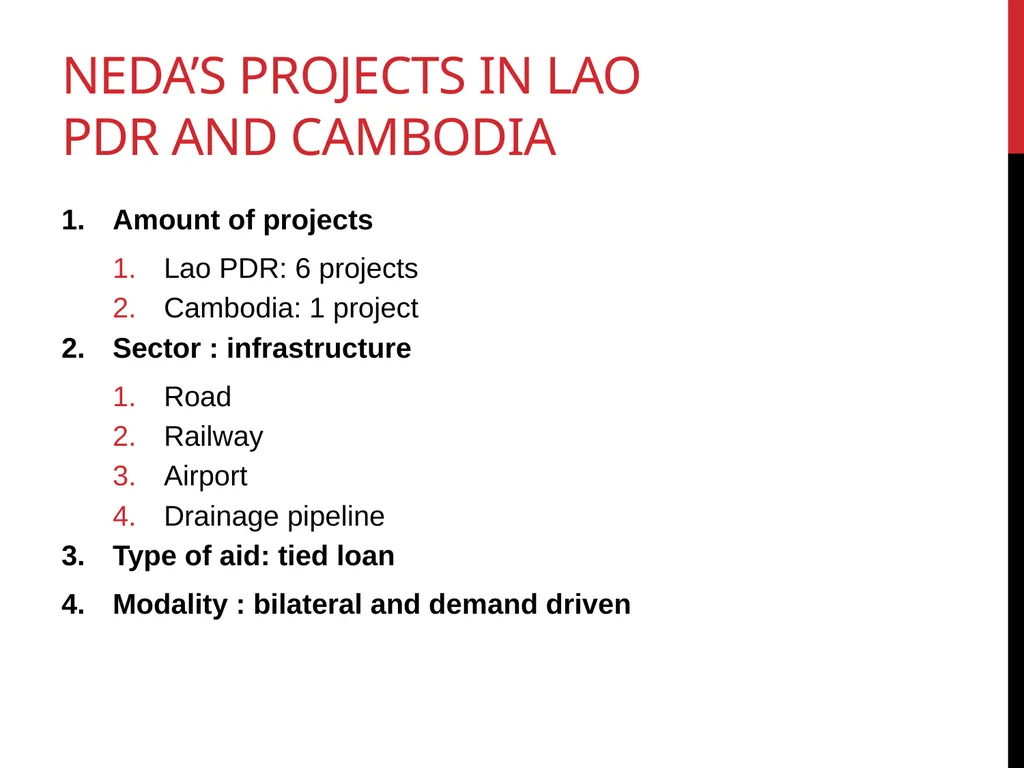
slide5. Neda’s projects in lao pdr and cambodia Amount of projects
Lao PDR: 6 projects
Cambodia: 1 project
Sector : infrastructure
Road
Railway
Airport
Drainage pipeline
Type of aid: tied loan
Modality : bilateral and demand driven<br>
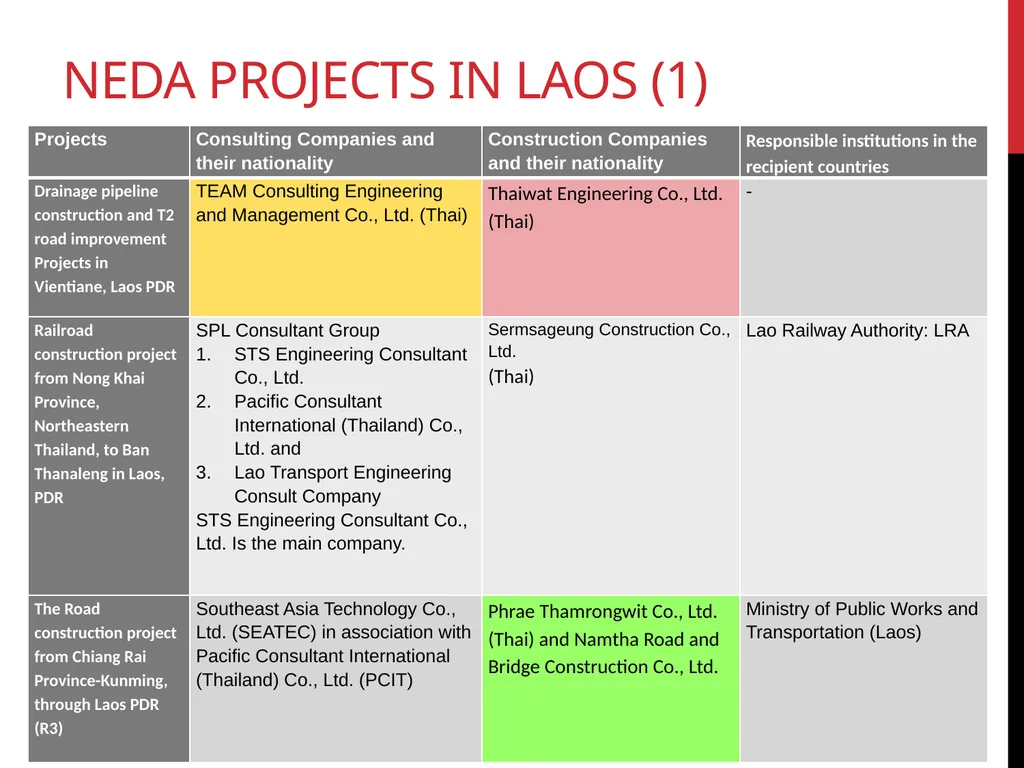
slide6. NEDA projects in Laos (1)<br>
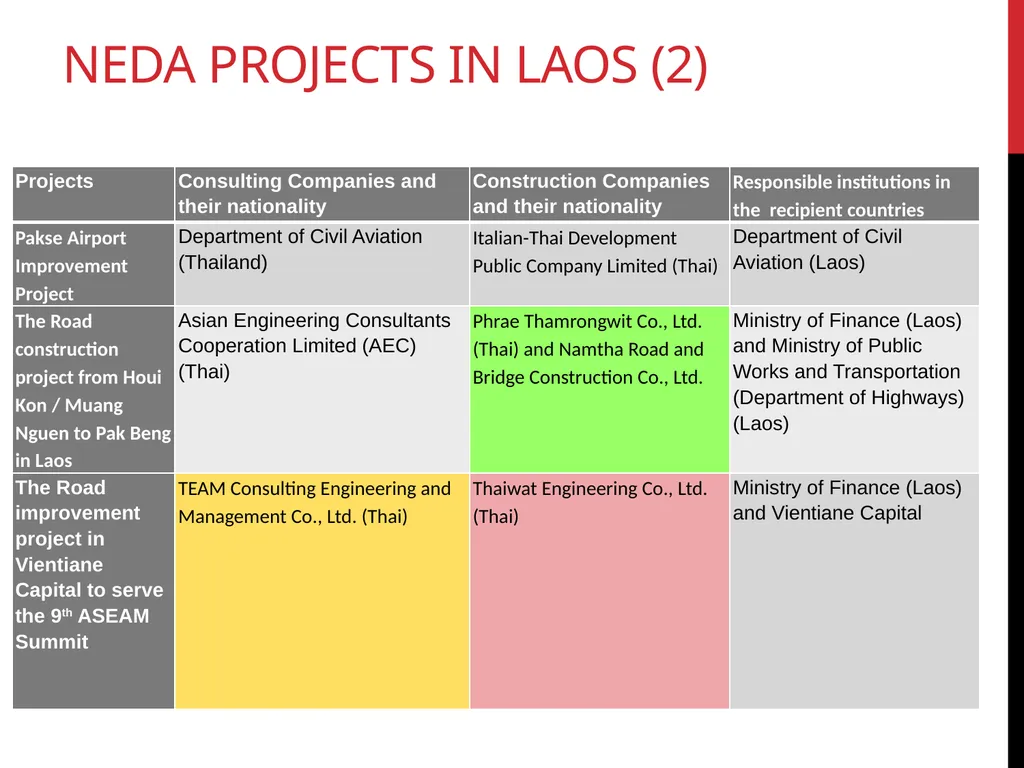
slide7. Neda projects in laos (2)<br>
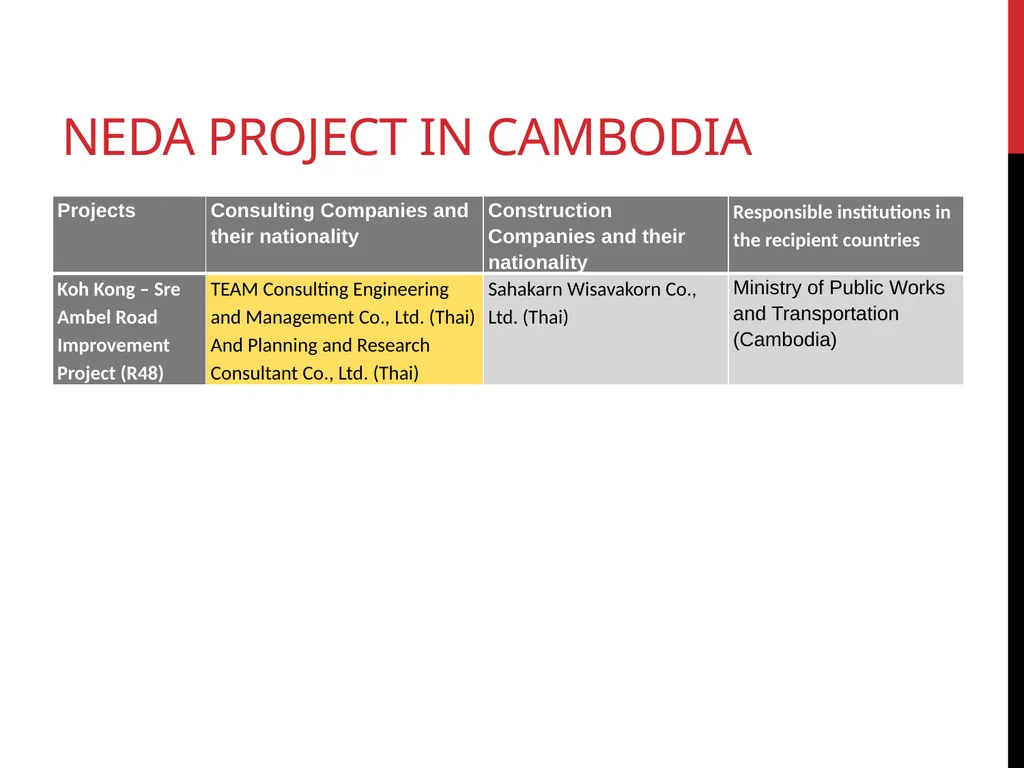
slide8. Neda project in cambodia<br>
slide9. Neda’s project in lao pdr and cambodia: budget<br>
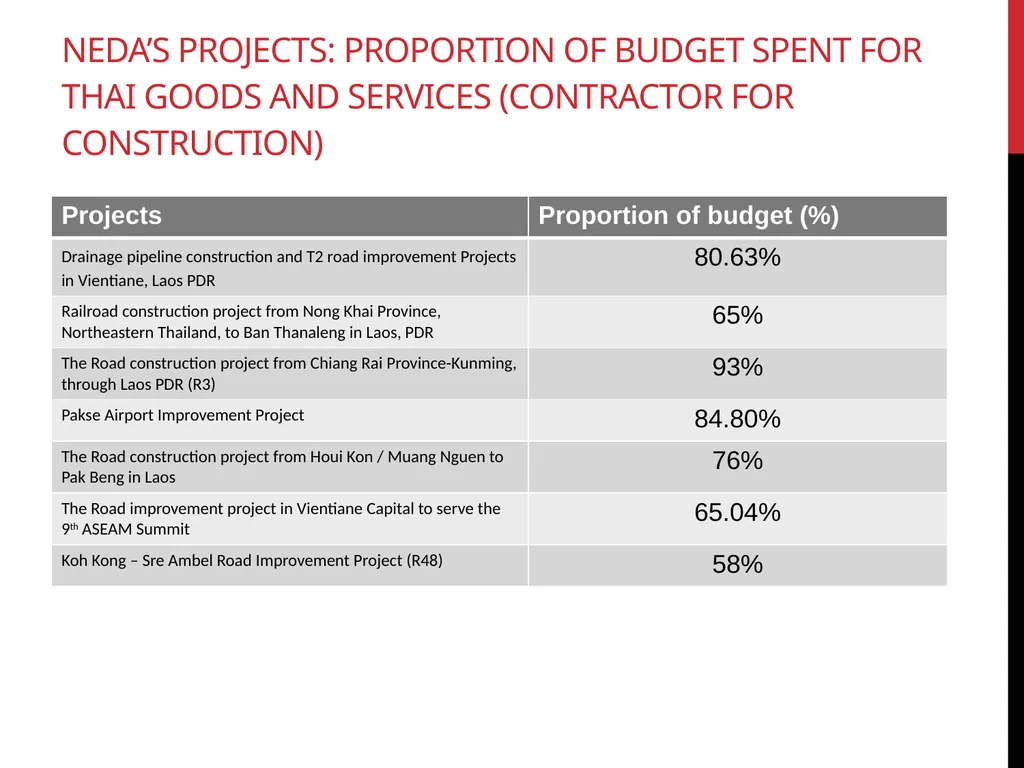
slide10. Neda’s projects: proportion of budget spent for thai goods and services (contractor for construction)<br>
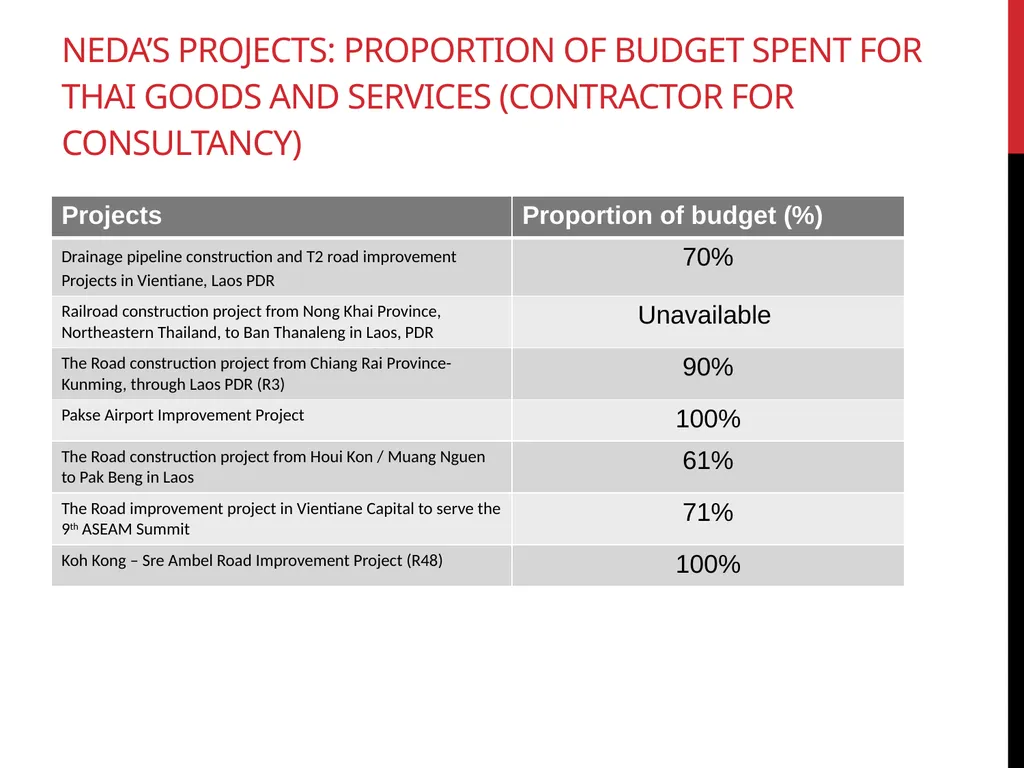
slide11. Neda’s projects: proportion of budget spent for thai goods and services (contractor for consultancy)<br>
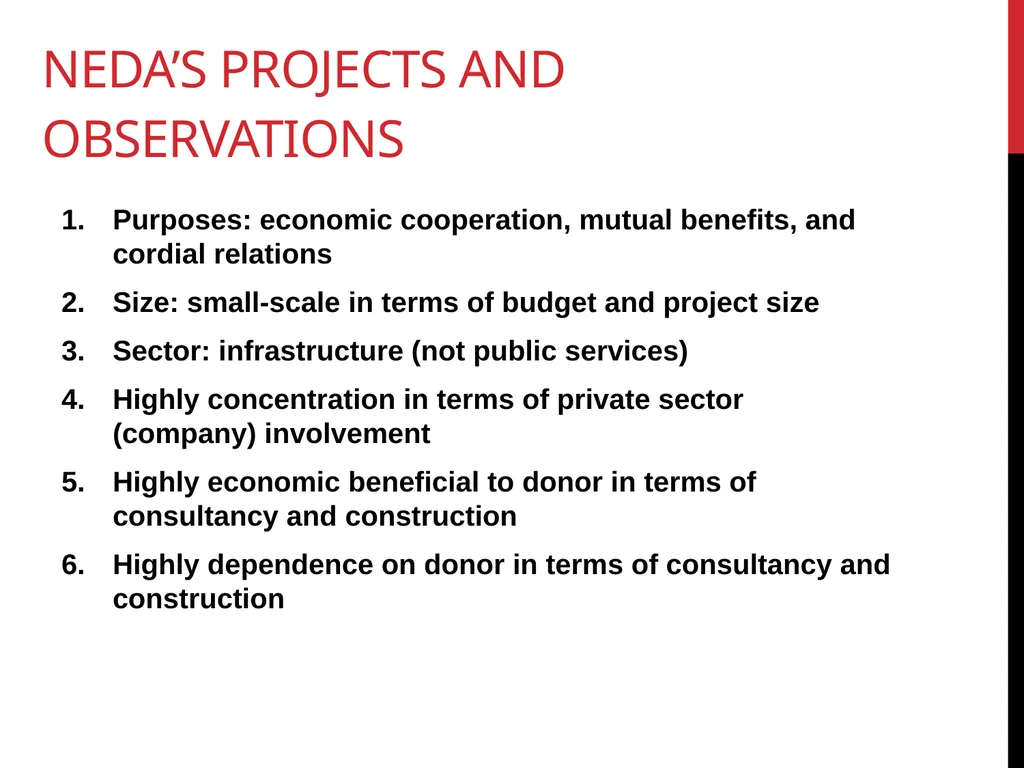
slide12. NEDA’s projects and observations Purposes: economic cooperation, mutual benefits, and cordial relations
Size: small-scale in terms of budget and project size
Sector: infrastructure (not public services)
Highly concentration in terms of private sector (company) involvement
Highly economic beneficial to donor in terms of consultancy and construction
Highly dependence on donor in terms of consultancy and construction<br>
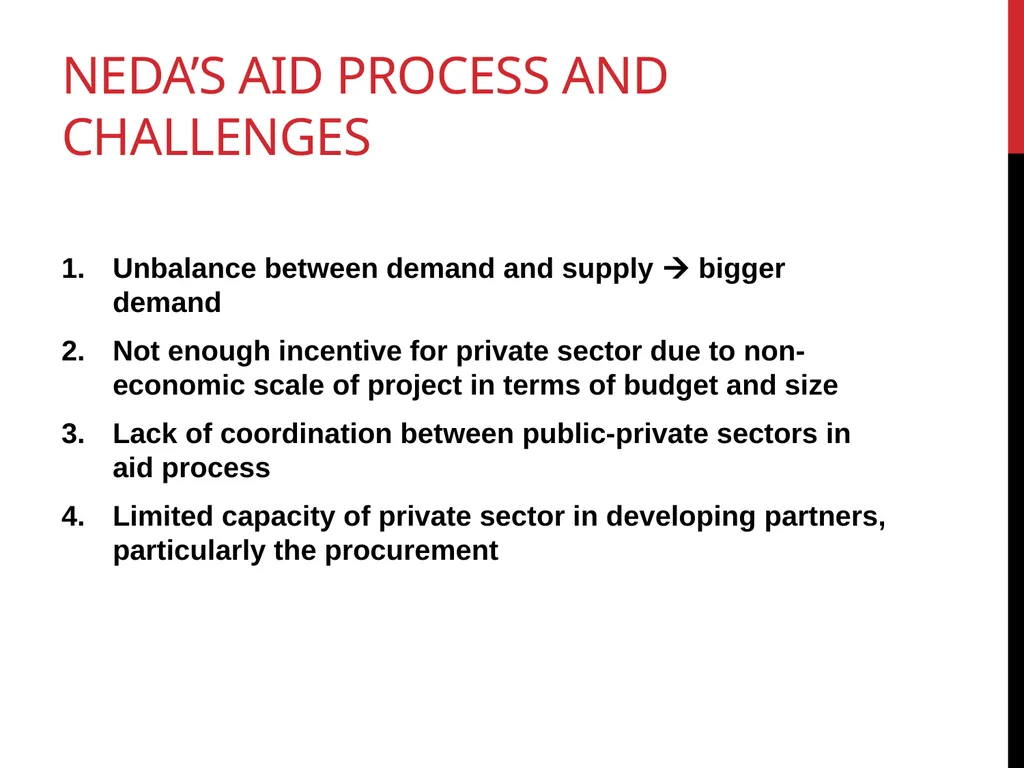
slide13. Neda’s aid process and challenges Unbalance between demand and supply bigger demand
Not enough incentive for private sector due to non-economic scale of project in terms of budget and size
Lack of coordination between public-private sectors in aid process
Limited capacity of private sector in developing partners, particularly the procurement<br>
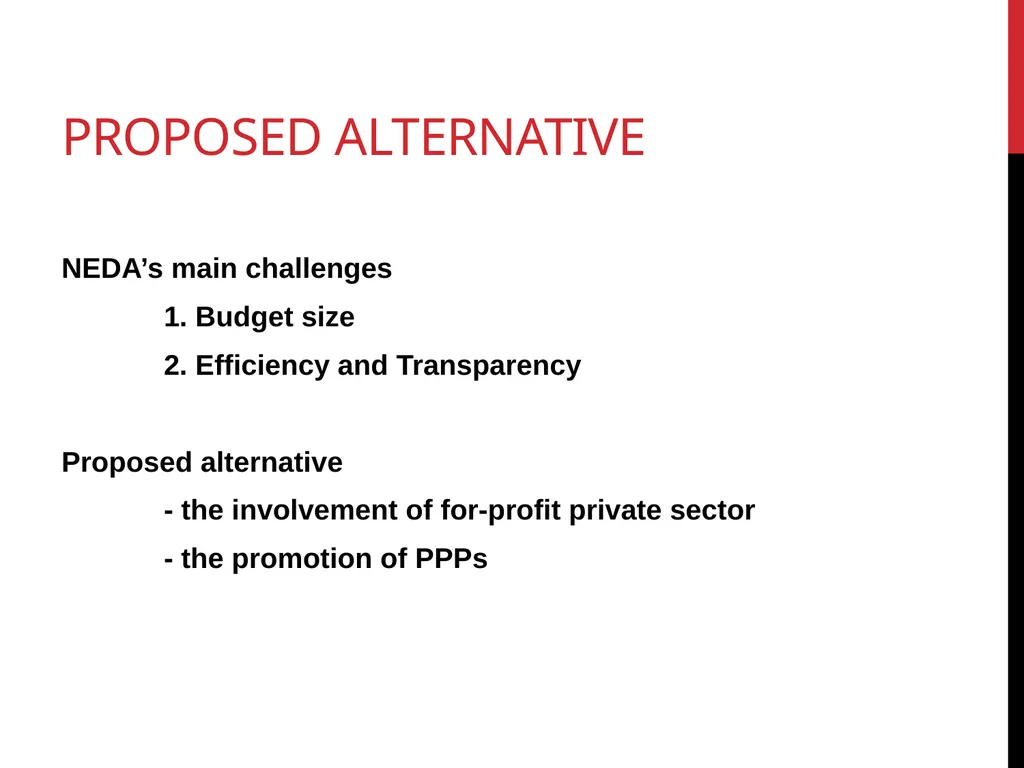
slide14. Proposed alternative NEDA’s main challenges
1. Budget size
2. Efficiency and Transparency
Proposed alternative
- the involvement of for-profit private sector
- the promotion of PPPs<br>
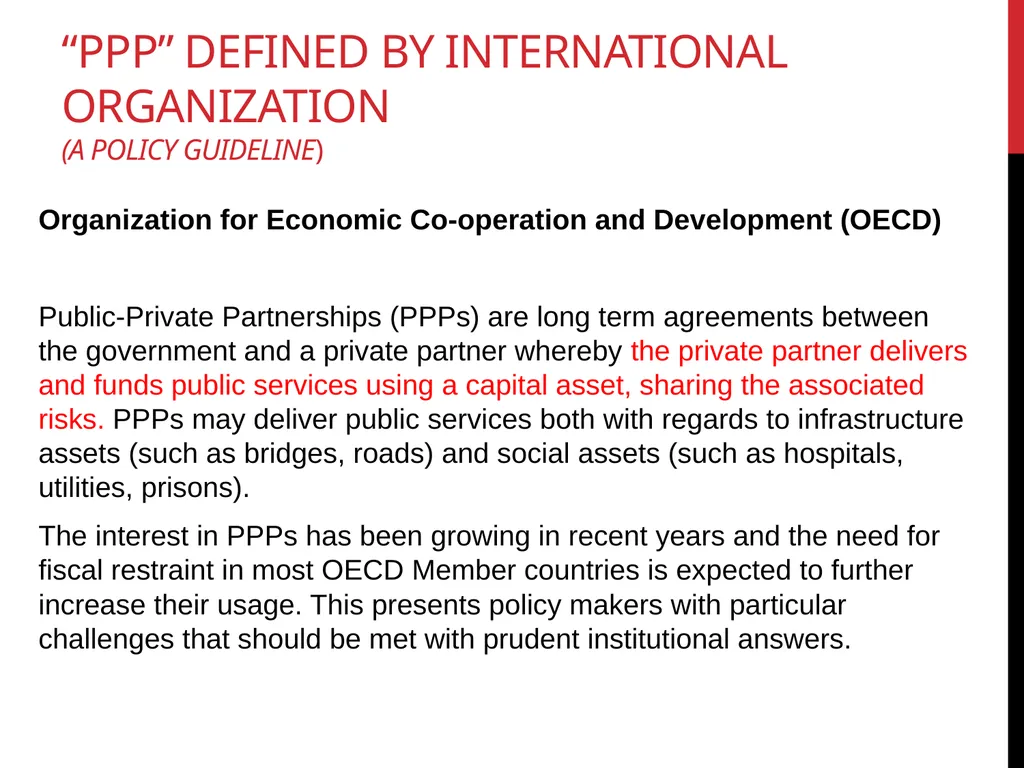
slide15. “PPP” defined by international organization (a policy guideline) Organization for Economic Co-operation and Development (OECD)
Public-Private Partnerships (PPPs) are long term agreements between the government and a private partner whereby the private partner delivers and funds public services using a capital asset, sharing the associated risks. PPPs may deliver public services both with regards to infrastructure assets (such as bridges, roads) and social assets (such as hospitals, utilities, prisons).
The interest in PPPs has been growing in recent years and the need for fiscal restraint in most OECD Member countries is expected to further increase their usage. This presents policy makers with particular challenges that should be met with prudent institutional answers.<br>
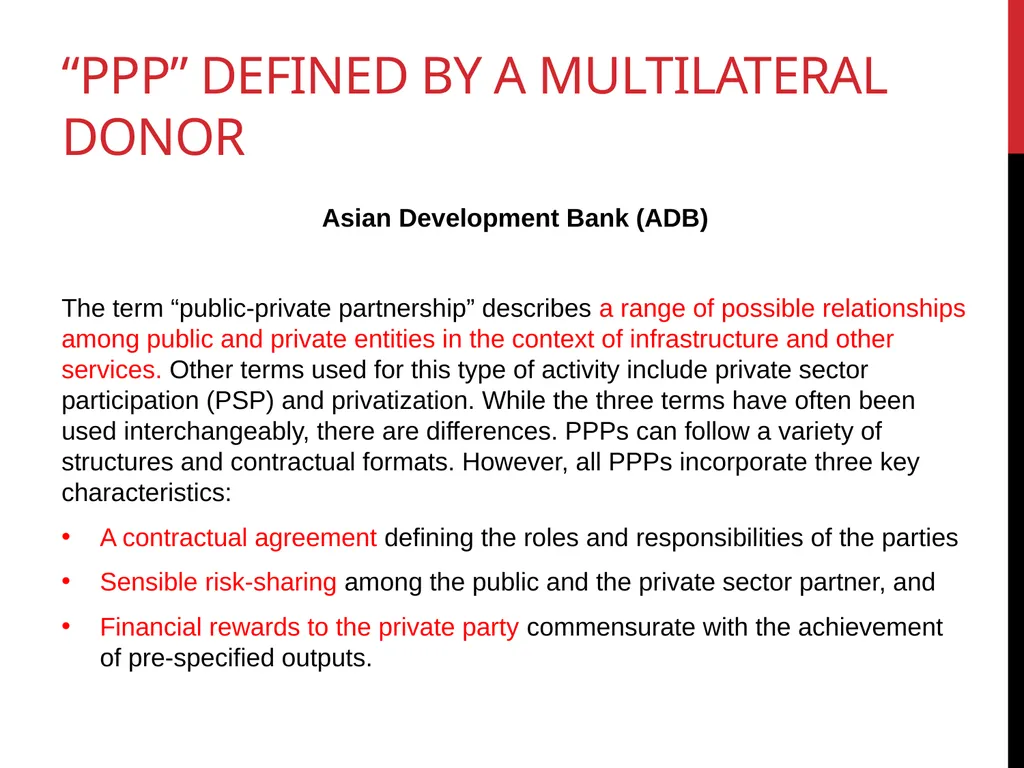
slide16. “ppp” defined by a multilateral donor Asian Development Bank (ADB)
The term “public-private partnership” describes a range of possible relationships among public and private entities in the context of infrastructure and other services. Other terms used for this type of activity include private sector participation (PSP) and privatization. While the three terms have often been used interchangeably, there are differences. PPPs can follow a variety of structures and contractual formats. However, all PPPs incorporate three key characteristics:
A contractual agreement defining the roles and responsibilities of the parties
Sensible risk-sharing among the public and the private sector partner, and
Financial rewards to the private party commensurate with the achievement of pre-specified outputs.<br>
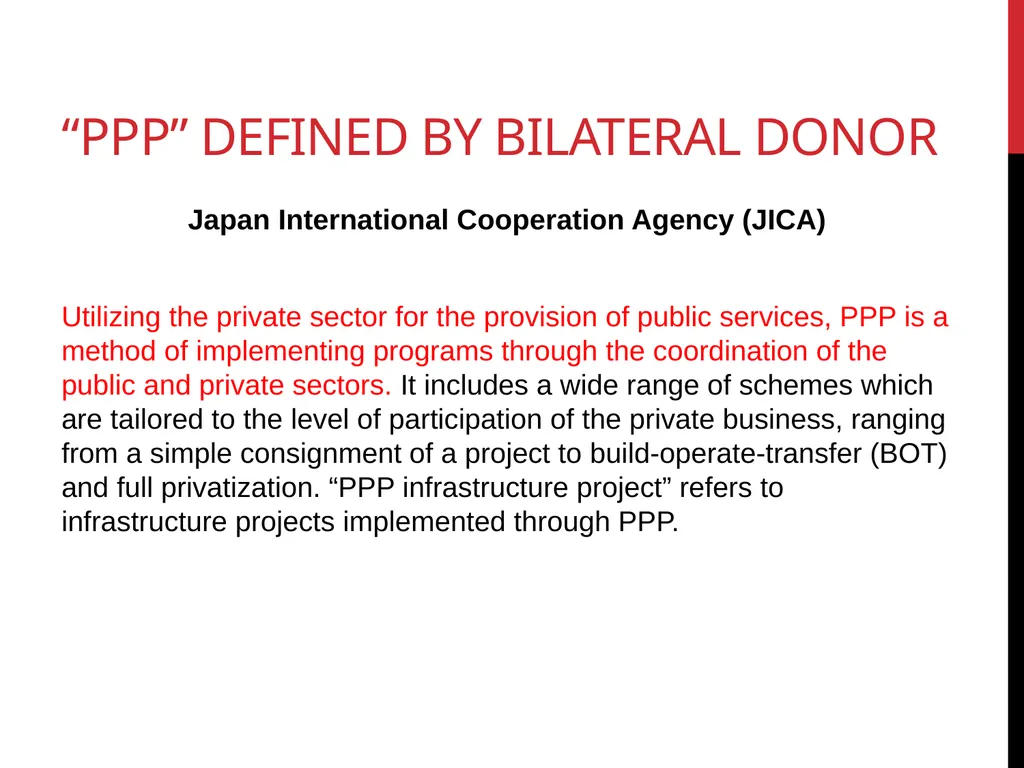
slide17. “PPP” defined by bilateral donor Japan International Cooperation Agency (JICA)
Utilizing the private sector for the provision of public services, PPP is a method of implementing programs through the coordination of the public and private sectors. It includes a wide range of schemes which are tailored to the level of participation of the private business, ranging from a simple consignment of a project to build-operate-transfer (BOT) and full privatization. “PPP infrastructure project” refers to infrastructure projects implemented through PPP.<br>
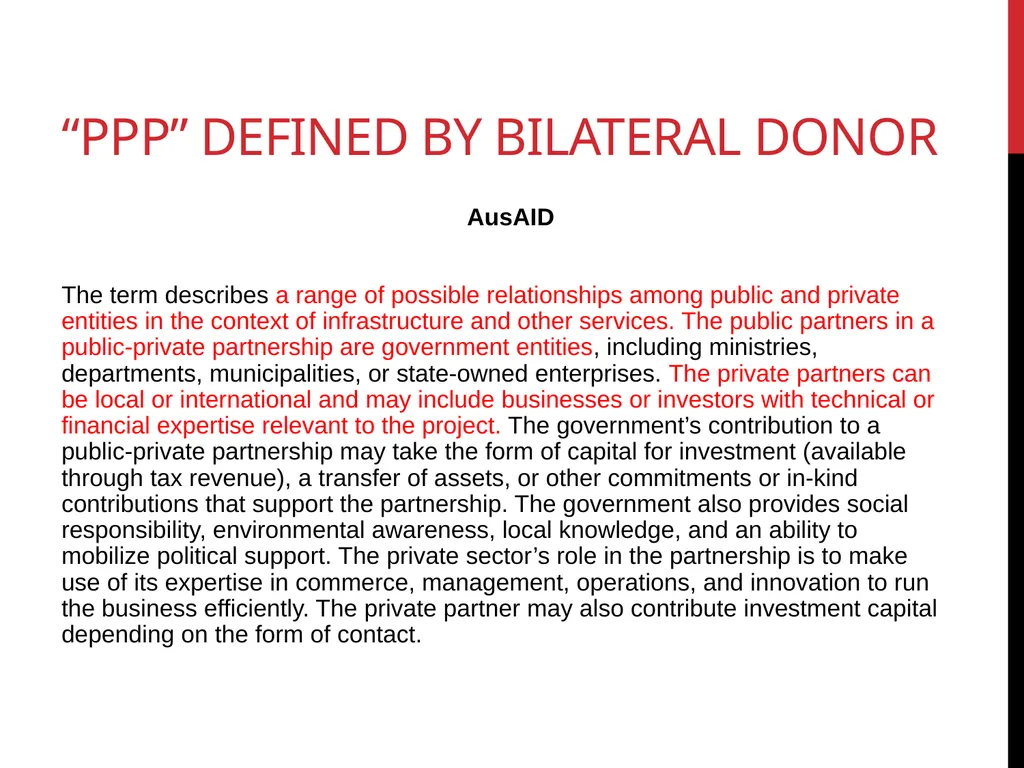
slide18. “ppp” defined by bilateral donor AusAID
The term describes a range of possible relationships among public and private entities in the context of infrastructure and other services. The public partners in a public-private partnership are government entities, including ministries, departments, municipalities, or state-owned enterprises. The private partners can be local or international and may include businesses or investors with technical or financial expertise relevant to the project. The government’s contribution to a public-private partnership may take the form of capital for investment (available through tax revenue), a transfer of assets, or other commitments or in-kind contributions that support the partnership. The government also provides social responsibility, environmental awareness, local knowledge, and an ability to mobilize political support. The private sector’s role in the partnership is to make use of its expertise in commerce, management, operations, and innovation to run the business efficiently. The private partner may also contribute investment capital depending on the form of contact.<br>
slide19. Merits of ppp Utilization of the private sector for the provision of public services enlargement of budget size
For-profit private sector’s contribution to aid process
Providers of goods and services
Implementers or contractors of aid projects
Co-investors of aid projects
Private Sector = Partner for development<br>
slide20. Conditions for for-profit private sector involvement Environment that makes private sector to engage in aid process
Rule of law
Effective public sector
Tax system
Open market and fair competition
Incentives for for-profit private sector to engage in aid process
Business opportunities
Tapping into emerging markets<br>
slide21. NEDA and ppp: The possibility ? NEDA’s Strategy
NEDA’s strategic plan 2012-2014
1. Integration between public – private sectors within the country, and with those of the recipient countries
2. Promotion of private sector (for-profit private sector and private organization-civil society) involvement
3. Less dependence on national budget
4. Alternative sources of budget<br>
slide22. Thank you<br>
Thammasat university
2014 australasian aid and
international development policy workshop
13-14 february, 2014
Canberra, australia<br>
slide2. Thailand’s international development cooperation policy and institutions Thailand as an emerging donor
1. Policy of being donor since 2003
2. Institutions
- Thailand International Development Cooperation Agency (TICA)
- The Neighboring Countries Economic Development
Agency (NEDA)<br>
slide3. Outline of the presentation Introduction
NEDA’s projects in Lao PDR and Cambodia: Some observations
NEDA and involvement of private sector in aid process
NEDA and PPPs: The possibility?<br>
slide4. introduction The research project titled “Institutional Arrangement and Aid Effectiveness: The relations between government agency and private sector”
to examine NEDA’s existing aid process in Lao PDR and Cambodia focusing on the involvement of for-profit private sector
to explore the possibility to promote PPPs as a tool to involve for-profit private sector in aid process<br>
slide5. Neda’s projects in lao pdr and cambodia Amount of projects
Lao PDR: 6 projects
Cambodia: 1 project
Sector : infrastructure
Road
Railway
Airport
Drainage pipeline
Type of aid: tied loan
Modality : bilateral and demand driven<br>
slide6. NEDA projects in Laos (1)<br>
slide7. Neda projects in laos (2)<br>
slide8. Neda project in cambodia<br>
slide9. Neda’s project in lao pdr and cambodia: budget<br>
slide10. Neda’s projects: proportion of budget spent for thai goods and services (contractor for construction)<br>
slide11. Neda’s projects: proportion of budget spent for thai goods and services (contractor for consultancy)<br>
slide12. NEDA’s projects and observations Purposes: economic cooperation, mutual benefits, and cordial relations
Size: small-scale in terms of budget and project size
Sector: infrastructure (not public services)
Highly concentration in terms of private sector (company) involvement
Highly economic beneficial to donor in terms of consultancy and construction
Highly dependence on donor in terms of consultancy and construction<br>
slide13. Neda’s aid process and challenges Unbalance between demand and supply bigger demand
Not enough incentive for private sector due to non-economic scale of project in terms of budget and size
Lack of coordination between public-private sectors in aid process
Limited capacity of private sector in developing partners, particularly the procurement<br>
slide14. Proposed alternative NEDA’s main challenges
1. Budget size
2. Efficiency and Transparency
Proposed alternative
- the involvement of for-profit private sector
- the promotion of PPPs<br>
slide15. “PPP” defined by international organization (a policy guideline) Organization for Economic Co-operation and Development (OECD)
Public-Private Partnerships (PPPs) are long term agreements between the government and a private partner whereby the private partner delivers and funds public services using a capital asset, sharing the associated risks. PPPs may deliver public services both with regards to infrastructure assets (such as bridges, roads) and social assets (such as hospitals, utilities, prisons).
The interest in PPPs has been growing in recent years and the need for fiscal restraint in most OECD Member countries is expected to further increase their usage. This presents policy makers with particular challenges that should be met with prudent institutional answers.<br>
slide16. “ppp” defined by a multilateral donor Asian Development Bank (ADB)
The term “public-private partnership” describes a range of possible relationships among public and private entities in the context of infrastructure and other services. Other terms used for this type of activity include private sector participation (PSP) and privatization. While the three terms have often been used interchangeably, there are differences. PPPs can follow a variety of structures and contractual formats. However, all PPPs incorporate three key characteristics:
A contractual agreement defining the roles and responsibilities of the parties
Sensible risk-sharing among the public and the private sector partner, and
Financial rewards to the private party commensurate with the achievement of pre-specified outputs.<br>
slide17. “PPP” defined by bilateral donor Japan International Cooperation Agency (JICA)
Utilizing the private sector for the provision of public services, PPP is a method of implementing programs through the coordination of the public and private sectors. It includes a wide range of schemes which are tailored to the level of participation of the private business, ranging from a simple consignment of a project to build-operate-transfer (BOT) and full privatization. “PPP infrastructure project” refers to infrastructure projects implemented through PPP.<br>
slide18. “ppp” defined by bilateral donor AusAID
The term describes a range of possible relationships among public and private entities in the context of infrastructure and other services. The public partners in a public-private partnership are government entities, including ministries, departments, municipalities, or state-owned enterprises. The private partners can be local or international and may include businesses or investors with technical or financial expertise relevant to the project. The government’s contribution to a public-private partnership may take the form of capital for investment (available through tax revenue), a transfer of assets, or other commitments or in-kind contributions that support the partnership. The government also provides social responsibility, environmental awareness, local knowledge, and an ability to mobilize political support. The private sector’s role in the partnership is to make use of its expertise in commerce, management, operations, and innovation to run the business efficiently. The private partner may also contribute investment capital depending on the form of contact.<br>
slide19. Merits of ppp Utilization of the private sector for the provision of public services enlargement of budget size
For-profit private sector’s contribution to aid process
Providers of goods and services
Implementers or contractors of aid projects
Co-investors of aid projects
Private Sector = Partner for development<br>
slide20. Conditions for for-profit private sector involvement Environment that makes private sector to engage in aid process
Rule of law
Effective public sector
Tax system
Open market and fair competition
Incentives for for-profit private sector to engage in aid process
Business opportunities
Tapping into emerging markets<br>
slide21. NEDA and ppp: The possibility ? NEDA’s Strategy
NEDA’s strategic plan 2012-2014
1. Integration between public – private sectors within the country, and with those of the recipient countries
2. Promotion of private sector (for-profit private sector and private organization-civil society) involvement
3. Less dependence on national budget
4. Alternative sources of budget<br>
slide22. Thank you<br>