American Chestnut: Communicating and Tracking Conservation, Preservation, and Restoration Efforts Tree Rescue Workshop, March 6, 2020 Kendra Collins, The American Chestnut Foundation Questions: 1.) How are conservation, preservation andor
"American Chestnut: Communicating and Tracking" is the property of its rightful owner. Permission is granted to
download and print the materials on this website for personal, non-commercial use only, and to display it
on your personal computer provided you do not modify the materials and that you retain all copyright
notices contained in the materials. By downloading content from our website, you accept the terms of this
agreement.
Presentation Transcript
01
American Chestnut: Communicating and Tracking Conservation, Preservation, and Restoration Efforts Tree Rescue Workshop, March 6, 2020
Kendra Collins, The American Chestnut Foundation<br>
02
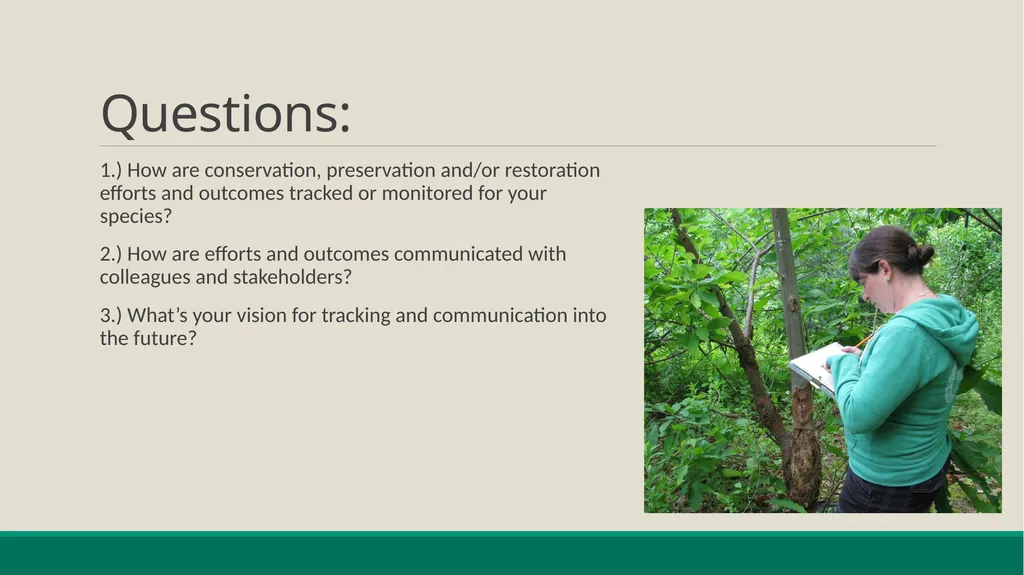
Questions: 1.) How are conservation, preservation and/or restoration efforts and outcomes tracked or monitored for your species?
2.) How are efforts and outcomes communicated with colleagues and stakeholders?
3.) What’s your vision for tracking and communication into the future?<br>
03
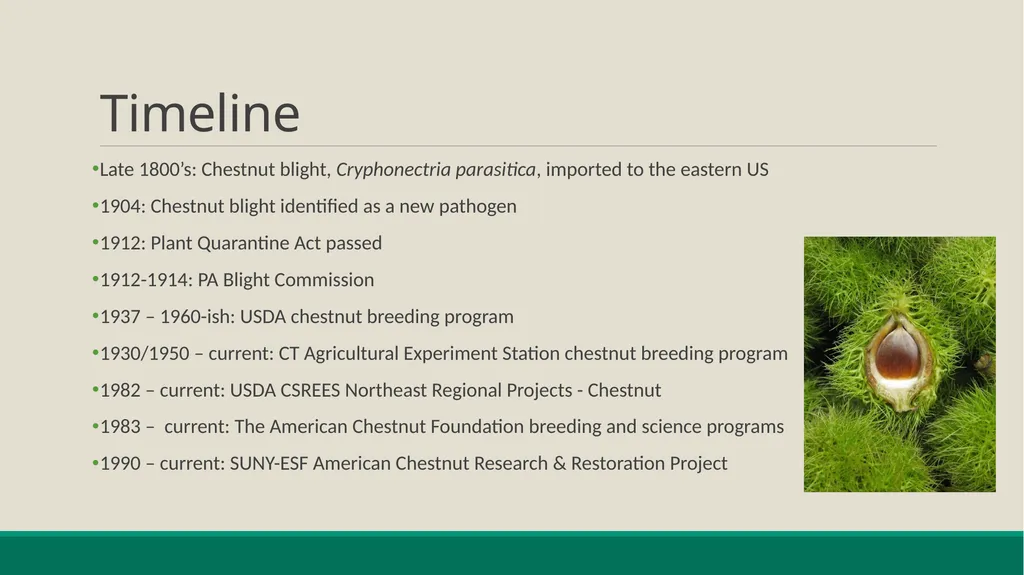
Timeline Late 1800’s: Chestnut blight, Cryphonectria parasitica, imported to the eastern US
1904: Chestnut blight identified as a new pathogen
1912: Plant Quarantine Act passed
1912-1914: PA Blight Commission
1937 – 1960-ish: USDA chestnut breeding program
1930/1950 – current: CT Agricultural Experiment Station chestnut breeding program
1982 – current: USDA CSREES Northeast Regional Projects - Chestnut
1983 – current: The American Chestnut Foundation breeding and science programs
1990 – current: SUNY-ESF American Chestnut Research & Restoration Project<br>
04
Primary Organizers The American Chestnut Foundation Member-based organization
Staffed research farm
Regional science staff
Volunteer state chapters
Citizen science participation in:
Species identification, reporting and tracking
Germplasm conservation
Breeding for resistance
Reintroduction trials
Education and outreach
Collaborators and Partners – Federal, State, local, University/College
Small external grants program USDA CSREES Northeast Regional Projects - Chestnut NE140: Biological Improvement of Chestnut and Management of the Chestnut Pathogens and Pests (1982-2003)
NE1015: Biological Improvement, Habitat Restoration, and Horticultural Development of Chestnut by Management of Populations, Pathogens, and Pests (2003-2008)
NE1033/1333/1833: Biological Improvement of Chestnut through Technologies that Address Management of the Species, its Pathogens and Pests (2008-2023)<br>
05
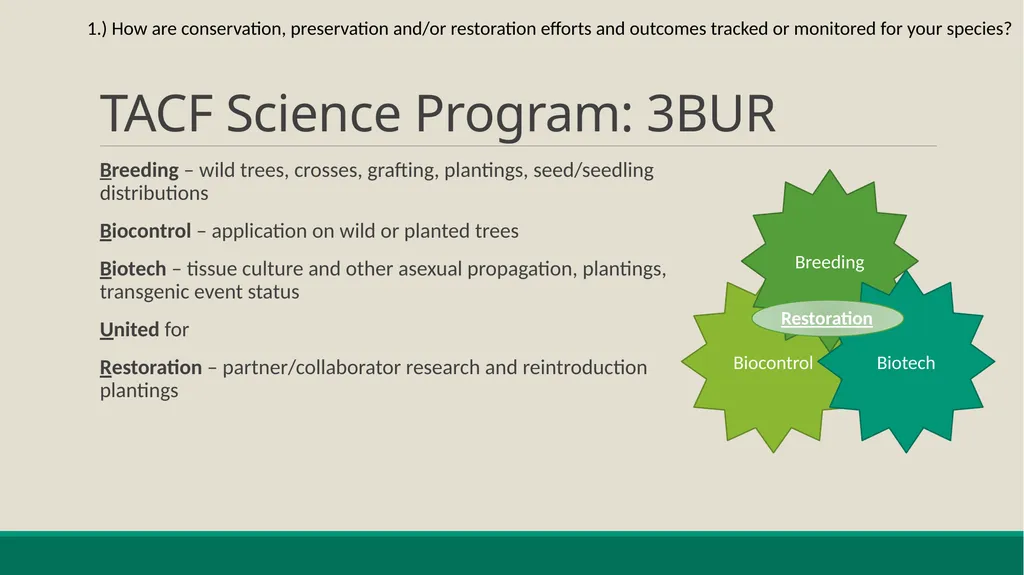
TACF Science Program: 3BUR Breeding – wild trees, crosses, grafting, plantings, seed/seedling distributions
Biocontrol – application on wild or planted trees
Biotech – tissue culture and other asexual propagation, plantings, transgenic event status
United for
Restoration – partner/collaborator research and reintroduction plantings 1.) How are conservation, preservation and/or restoration efforts and outcomes tracked or monitored for your species?<br>
06
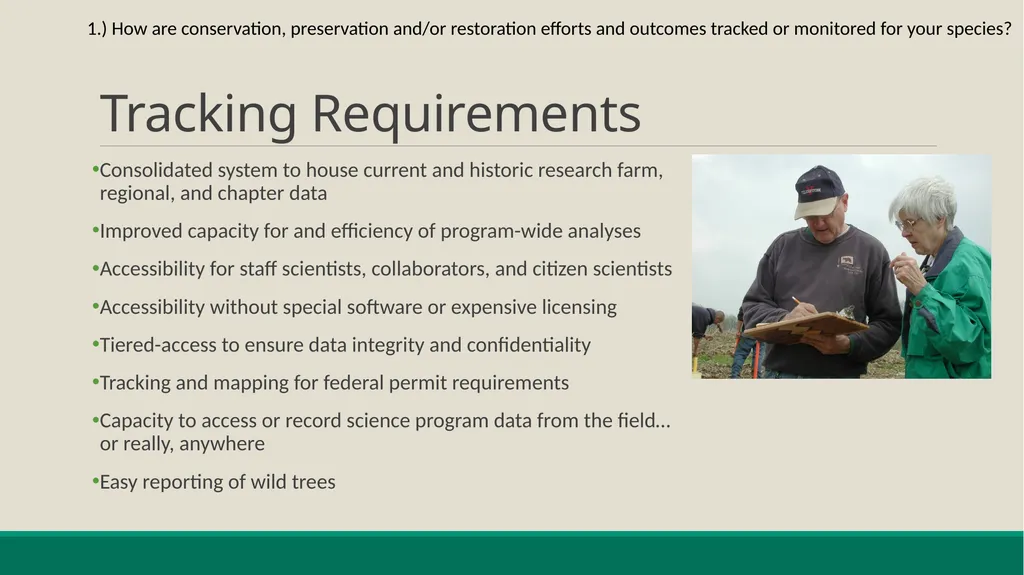
Tracking Requirements Consolidated system to house current and historic research farm, regional, and chapter data
Improved capacity for and efficiency of program-wide analyses
Accessibility for staff scientists, collaborators, and citizen scientists
Accessibility without special software or expensive licensing
Tiered-access to ensure data integrity and confidentiality
Tracking and mapping for federal permit requirements
Capacity to access or record science program data from the field…or really, anywhere
Easy reporting of wild trees 1.) How are conservation, preservation and/or restoration efforts and outcomes tracked or monitored for your species?<br>
07
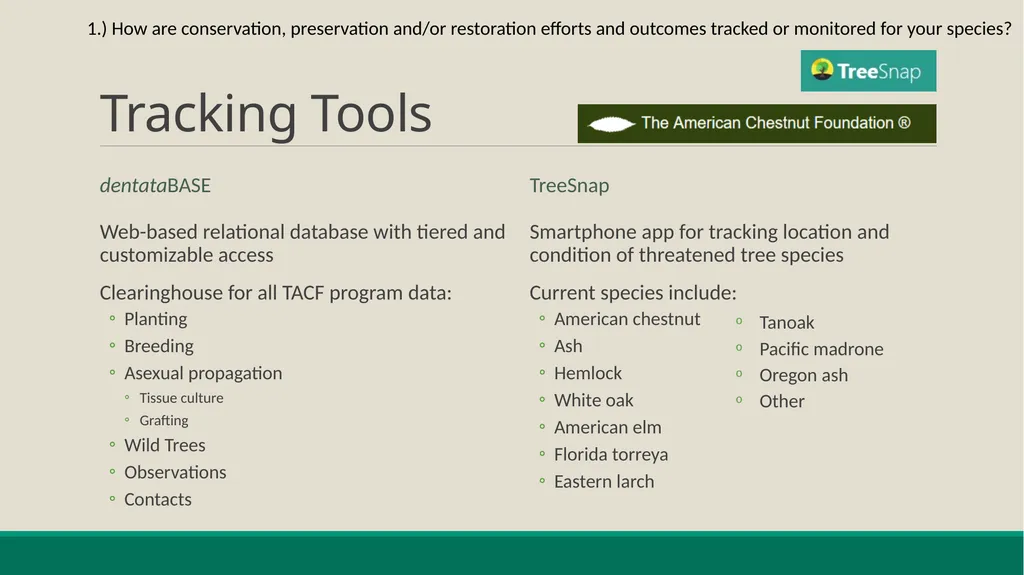
Tracking Tools dentataBase Web-based relational database with tiered and customizable access
Clearinghouse for all TACF program data:
Planting
Breeding
Asexual propagation
Tissue culture
Grafting
Wild Trees
Observations
Contacts TreeSnap Smartphone app for tracking location and condition of threatened tree species
Current species include:
American chestnut
Ash
Hemlock
White oak
American elm
Florida torreya
Eastern larch Tanoak
Pacific madrone
Oregon ash
Other 1.) How are conservation, preservation and/or restoration efforts and outcomes tracked or monitored for your species?<br>
08
Integration of Tracking Tools dentataBase Staff scientists handle regional data curation
Trained volunteers and collaborators enter data specific to their projects
Volunteers with read-only access can see important information about their programs
Can be accessed from smart device
Data sheets are all .csv and can be downloaded ahead of field work TreeSnap Anyone can record the location and health status of a wild American chestnut
Partnership with developers = admin access to chestnut data to download a/o help curate
We still require a leaf and twig sample to confirm ID before entering any trees into dentataBase 1.) How are conservation, preservation and/or restoration efforts and outcomes tracked or monitored for your species?<br>
09
Communicating with Stakeholders The American Chestnut Foundation Website and social media
eSpout – eNewsletter (open to all)
Chestnut magazine (member benefit)
Annual meeting, board and committee meetings, regional meetings
Webinars and workshops
Contributed and invited talks
Communications and regional staff, volunteer network
External grant reports USDA CSREES Northeast Regional Projects - Chestnut Annual meeting
Website
Detailed meeting notes
Research station reports
Peer-reviewed publications
Participant in International Chestnut Congress
Every four years; hosted in North America, Europe and Asia 2.) How are efforts and outcomes communicated with colleagues and stakeholders?<br>
10
Future Tracking and Communication Tracking: dentataBase
Improved usability and functionality to support broader use by volunteers, partners, and collaborators
Improved use from a smart device
Better integration of TreeSnap data, possibly other tree tracking apps as well (iNaturalist?)
Explore use for other programs/species
Communication:
Continue to maintain and expand professional partner/collaborator network
Expand web-based lectures, trainings, and workshops; video offerings
Streamline communication and training within volunteer state chapters 3.) What’s your vision for tracking and communication into the future?<br>