Animal Use Protocol Reviews Procedures and Responsibilities for FACC Members Devon Merza Training Advisors McGill University Animal Compliance Office June 2024 General Review Information Must have Scientific or Pedagogical Merit Align
"Animal Use Protocol Reviews Procedures and" is the property of its rightful owner. Permission is granted to
download and print the materials on this website for personal, non-commercial use only, and to display it
on your personal computer provided you do not modify the materials and that you retain all copyright
notices contained in the materials. By downloading content from our website, you accept the terms of this
agreement.
Presentation Transcript
01
Animal Use Protocol Reviews Procedures and Responsibilities for FACC Members Devon Merza
Training Advisors – McGill University Animal Compliance Office
June 2024<br>
02
General Review Information Must have Scientific or Pedagogical Merit
Align with CCAC Guidelines/Regulatory Frameworks/University Standard Operating Procedures
Deviations must be SCIENTIFICALLY JUSTIFIED
Limited technical jargon
Amendments and Annual Reviews<br>
03
General Information Section Keywords
Procedures
Wildlife Studies must be identified
Description, Objectives and Goals
Limited technical jargon<br>
04
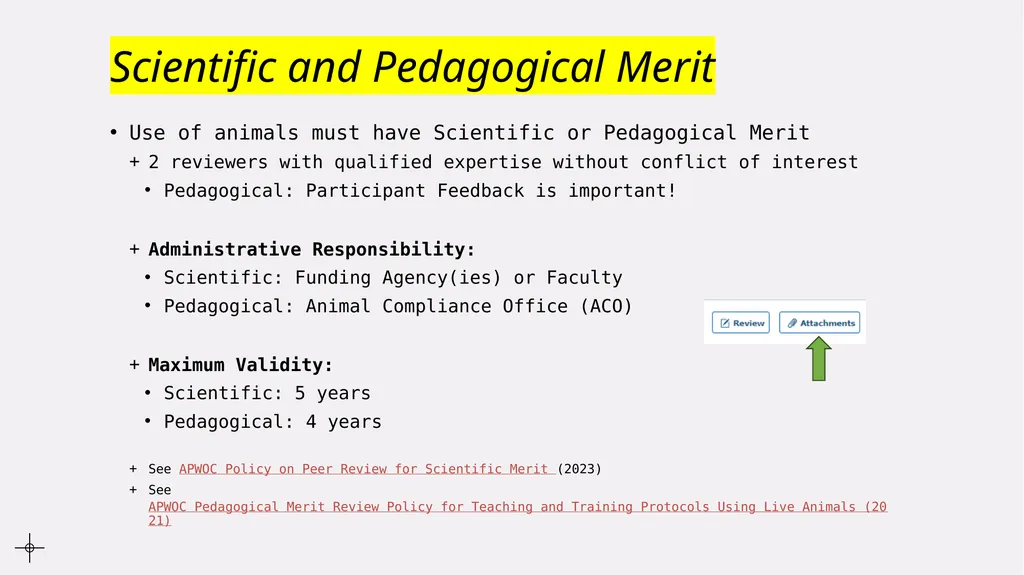
Scientific and Pedagogical Merit Use of animals must have Scientific or Pedagogical Merit
2 reviewers with qualified expertise without conflict of interest
Pedagogical: Participant Feedback is important!
Maximum Validity:
Scientific: 5 years
Pedagogical: 4 years
See APWOC Policy on Peer Review for Scientific Merit (2023)
See APWOC Pedagogical Merit Review Policy for Teaching and Training Protocols Using Live Animals (2021)<br>
05
Species and animal numbers Justification for the use of species
Non-animal modules/low sentience
Evidence must be provided
“A simple statement that there is no replacement alternative is insufficient”
Characteristics
Animal Numbers<br>
06
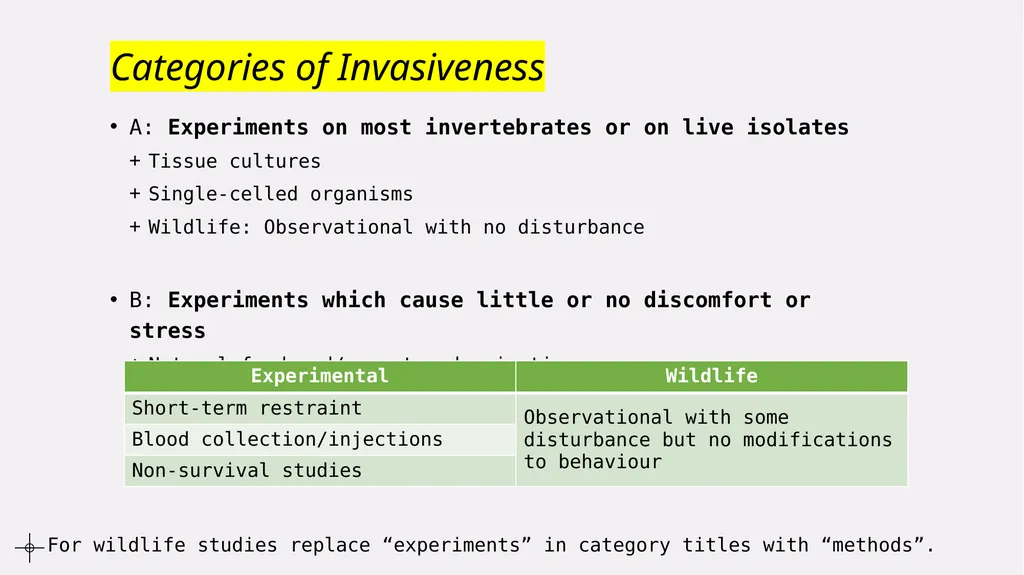
Categories of Invasiveness A: Experiments on most invertebrates or on live isolates
Tissue cultures
Single-celled organisms
Wildlife: Observational with no disturbance
B: Experiments which cause little or no discomfort or stress
Natural food and/or water deprivation For wildlife studies replace “experiments” in category titles with “methods”.<br>
07
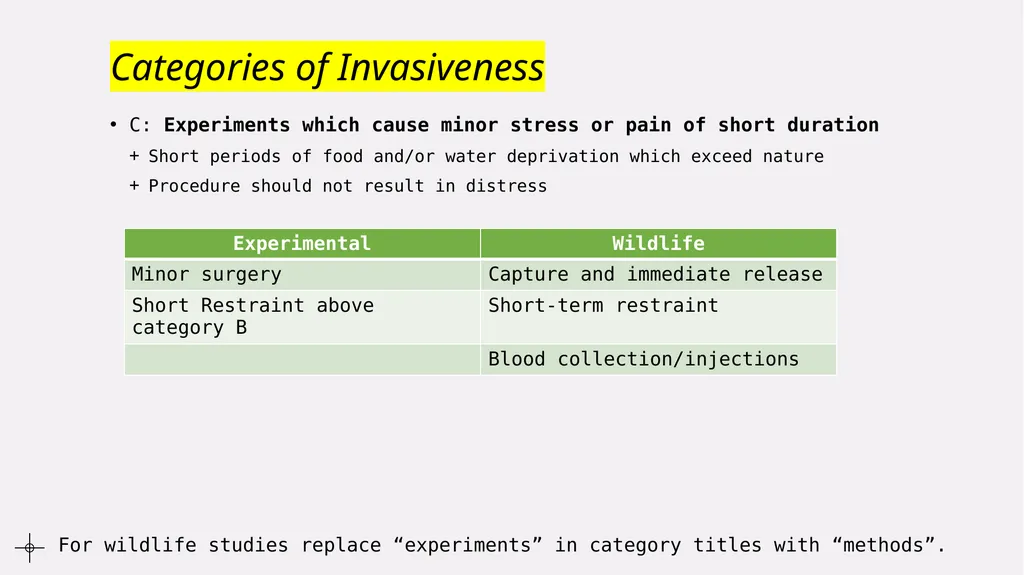
Categories of Invasiveness C: Experiments which cause minor stress or pain of short duration
Short periods of food and/or water deprivation which exceed nature
Procedure should not result in distress For wildlife studies replace “experiments” in category titles with “methods”.<br>
08
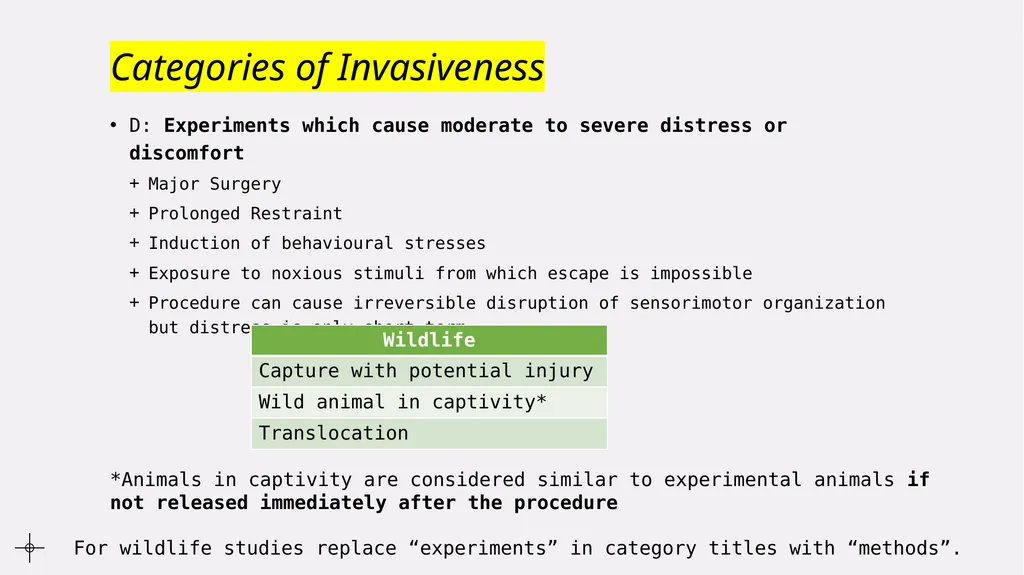
Categories of Invasiveness D: Experiments which cause moderate to severe distress or discomfort
Major Surgery
Prolonged Restraint
Induction of behavioural stresses
Exposure to noxious stimuli from which escape is impossible
Procedure can cause irreversible disruption of sensorimotor organization but distress is only short-term For wildlife studies replace “experiments” in category titles with “methods”. *Animals in captivity are considered similar to experimental animals if not released immediately after the procedure<br>
09
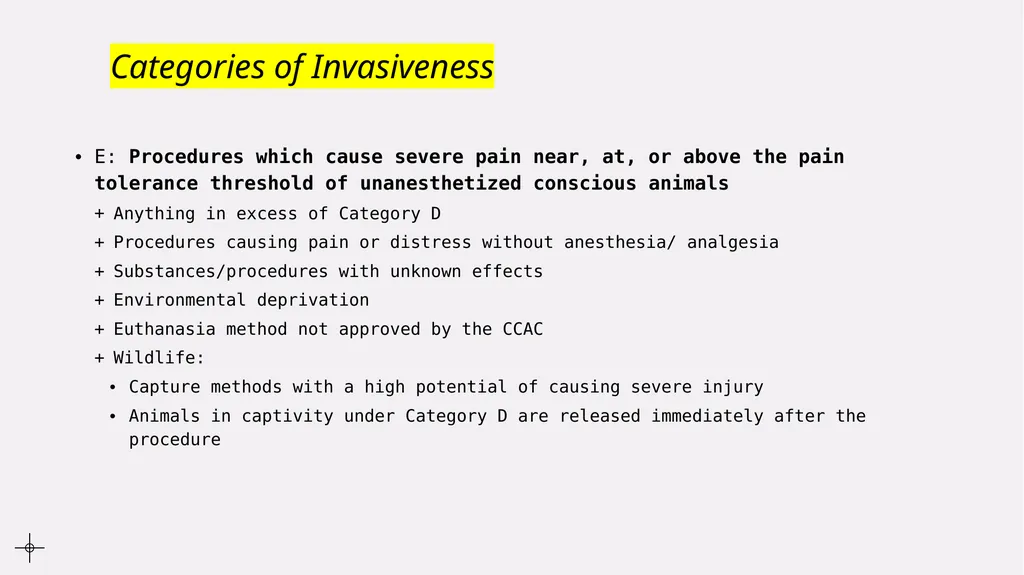
Categories of Invasiveness E: Procedures which cause severe pain near, at, or above the pain tolerance threshold of unanesthetized conscious animals
Anything in excess of Category D
Procedures causing pain or distress without anesthesia/ analgesia
Substances/procedures with unknown effects
Environmental deprivation
Euthanasia method not approved by the CCAC
Wildlife:
Capture methods with a high potential of causing severe injury
Animals in captivity under Category D are released immediately after the procedure<br>
10
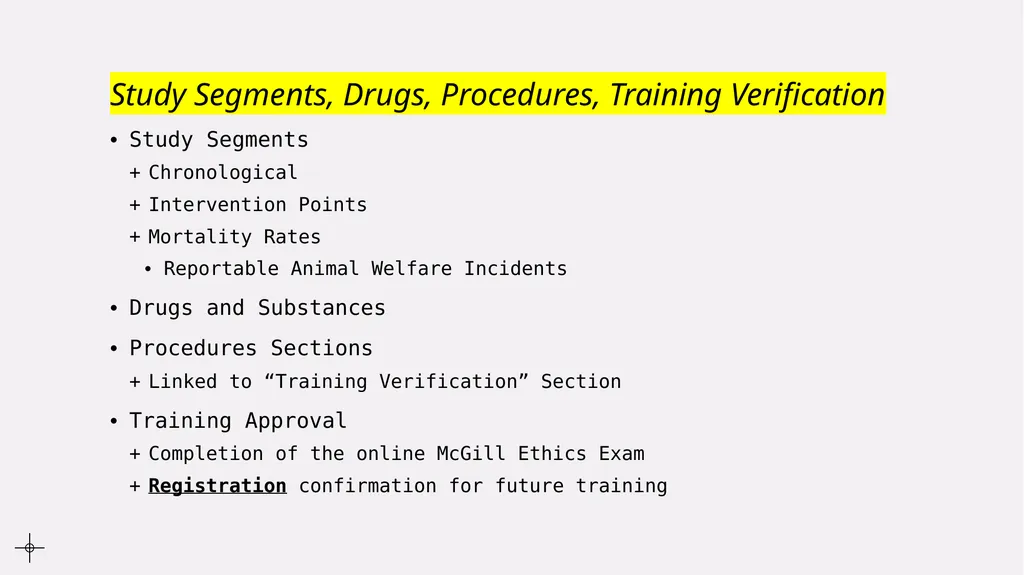
Study Segments, Drugs, Procedures, Training Verification Study Segments
Chronological
Intervention Points
Mortality Rates
Reportable Animal Welfare Incidents
Drugs and Substances
Procedures Sections
Linked to “Training Verification” Section
Training Approval
Completion of the online McGill Ethics Exam
Registration confirmation for future training<br>
11
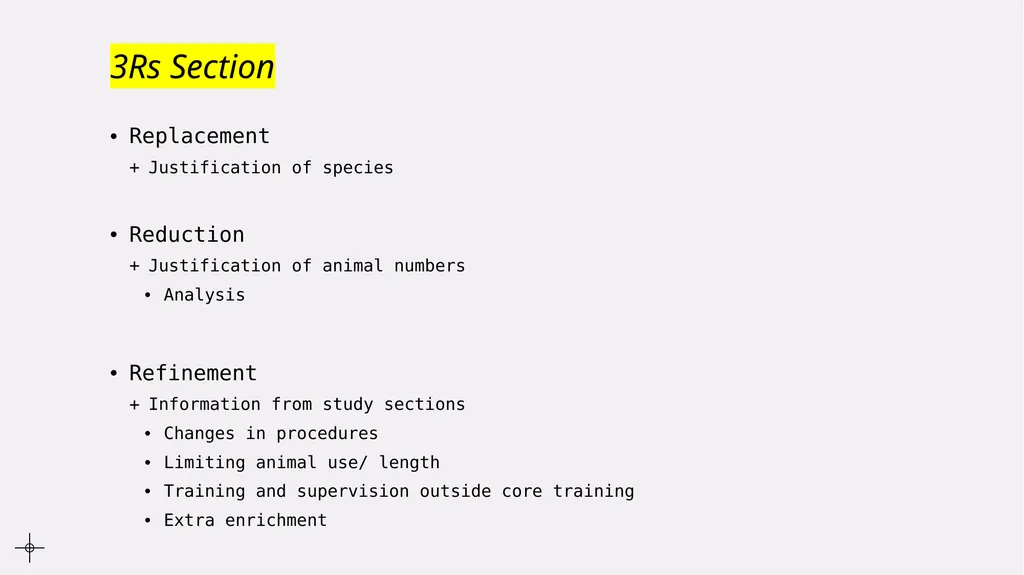
3Rs Section Replacement
Justification of species
Reduction
Justification of animal numbers
Analysis
Refinement
Information from study sections
Changes in procedures
Limiting animal use/ length
Training and supervision outside core training
Extra enrichment<br>
12
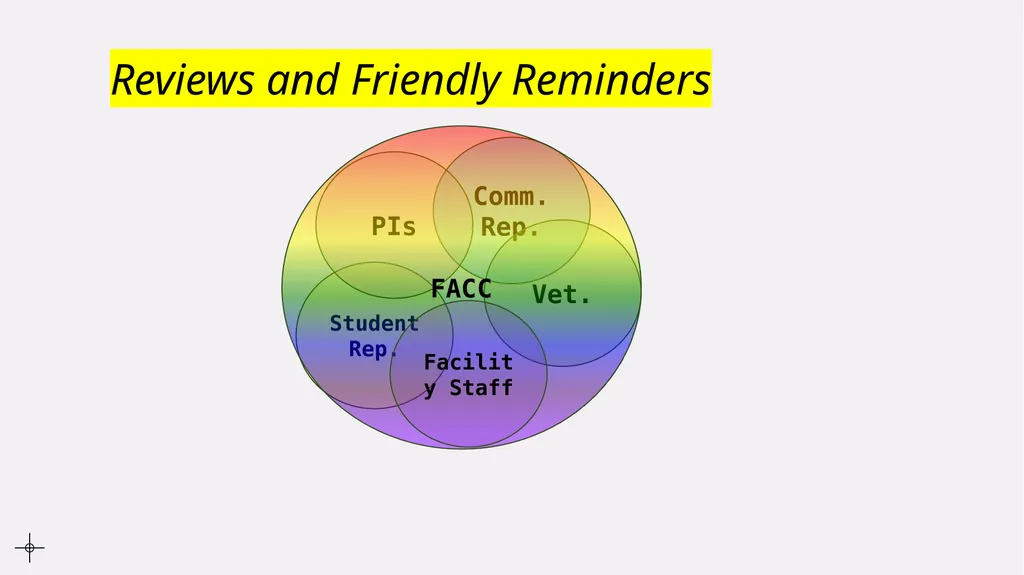
Reviews and Friendly Reminders Off-topic comments (Amendments, Annual Reviews)
Review as soon as possible, respect deadlines
Constructive criticism
Repeat posts Student
Rep. Comm. Rep. PIs Vet. FACC Facility Staff<br>
13
Reviews and Friendly Reminders Review Questions
What?
How?
Why?
Scope of Review
Review as soon as possible, respect deadlines
Constructive criticism Please be respectful in your comments
Repeat posts<br>
14
New AUPs and 4-Year Renewals New AUPs must ensure all sections of the AUP are completed.
4-Year Renewals are treated like new AUPs
Reviewers:
Full Committee
Required Quorum:
Chair
Veterinarian
Community Representative
Deadline:
Minimum of 7 days<br>
15
Minor Amendments Personnel or Funding Information,
<20% In Animal Numbers,
New Strain,
Change in Procedure or Housing Location,
Less Invasive or Distressing Procedures
Reviewers:
Chair and/or delegate
Required Quorum: N/A
Deadline:
5 Business days<br>
16
Major Amendments A Change In The Fundamental Objective, Species, And/Or Use Of More Invasive Or More Frequent Procedures,
Increase Of 20% > In The Number Of Animals
Reviewers:
Full Committee
Required Quorum:
Chair
Veterinarian
Community Representative
Deadline
5 Business Days<br>
17
Annual Review Justification for animal use and the 3 R’s
Number of animals and the categories of invasiveness
Endpoints
Reviewers:
Full Committee
Required Quorum:
Chair
Veterinarian
Community Representative
Deadline
5 Business Days<br>
18
There are various times where it is required that researchers need to “show their work” (References, Literature Searches, Attachments).
Out of the following options, which one is not a time when this is required?
Animal Numbers
Animal Justification
Three R’s
Categories of Invasiveness Quiz<br>
19
Quiz A researcher is trying to determine which category of invasiveness to use for their animals. Here are the details:
Experimental study using rats
Normal housing conditions
Non-survival surgery under Anesthesia
Iso+CO2 Euthanasia followed by Decapitation
Which COI would most likely be appropriate?
A
B
C
D<br>
20
References APWOC Policy on the Study and Use of Animals (2022)
APWOC Policy on Peer Review for Scientific Merit (2023)
APWOC Policy on Pedagogical Merit Review for Teaching and Training Protocols Using Live Animals (2021)
CCAC Instructions for Completion of CCAC Annual Use Data From (2023)
CCAC Guidelines on Animal Use Protocol Review (1997)
CCAC The Animal Care Committee and the Role of Its Members (2021)
CCAC Terms of Reference for ACC (2006)
McGill University FACC Terms of Reference (2023)<br>
21
Next Presentations (Tentative) Animal Facilities and Alternative Sites Inspections (July 2024)
August no FACCs
Endpoints and Animal Welfare Assessments (September 2024)
Literature Searches and Reporting for AUPs (October 2024)
MAWI? RAWI? It’s an Owie: Reporting and Procedures for Animal Welfare Incidents (November 2024)<br>