Antimicrobial prophylaxis for prevention of surgical site infection (Orthopedics) National Center for Global Health and Medicine Disease Control and Prevention Center Introduction SSIs are the most common and the costliest
"Antimicrobial prophylaxis for prevention of" is the property of its rightful owner. Permission is granted to
download and print the materials on this website for personal, non-commercial use only, and to display it
on your personal computer provided you do not modify the materials and that you retain all copyright
notices contained in the materials. By downloading content from our website, you accept the terms of this
agreement.
Presentation Transcript
01
Antimicrobial prophylaxis for prevention of surgical site infection
(Orthopedics) National Center for Global Health and Medicine
Disease Control and Prevention Center<br>
02
Introduction SSIs are the most common and the costliest healthcare-associated infections. Among surgical patients, SSIs account for 38 percent of nosocomial infections in US.
It is estimated that SSIs develop in 2 to 5 percent of the patients undergoing surgical procedures each year. JAMA Intern Med. 2013 Dec;173(22):2039-46.<br>
03
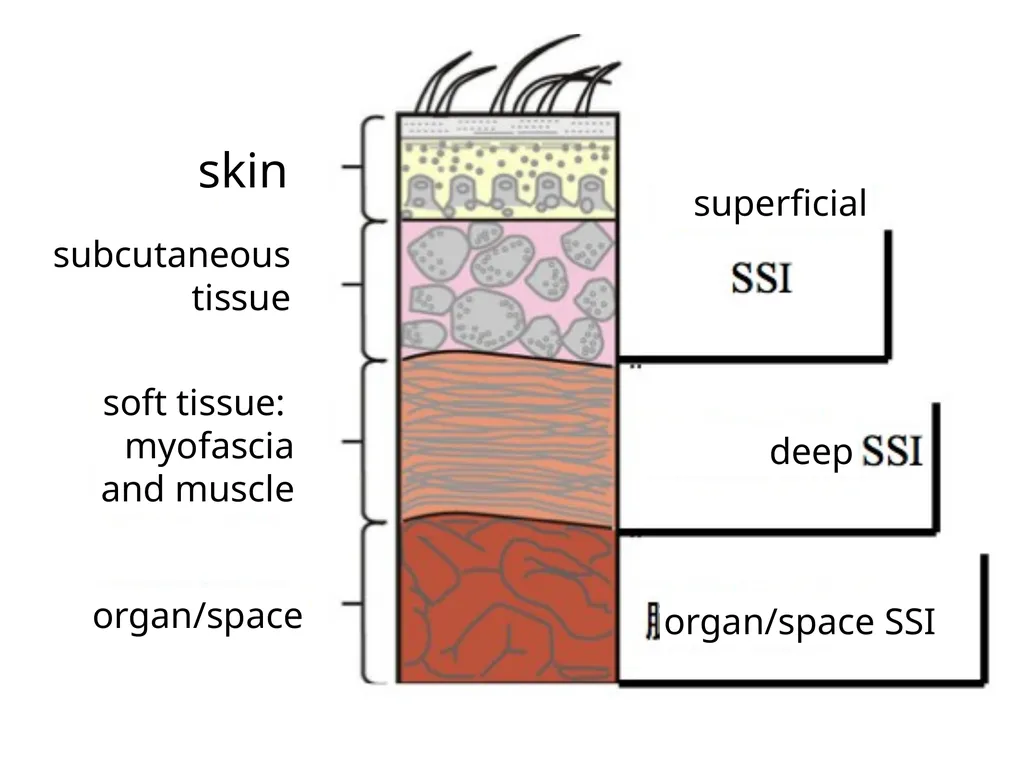
skin subcutaneous
tissue soft tissue:
myofascia
and muscle organ/space superficial deep organ/space SSI<br>
04
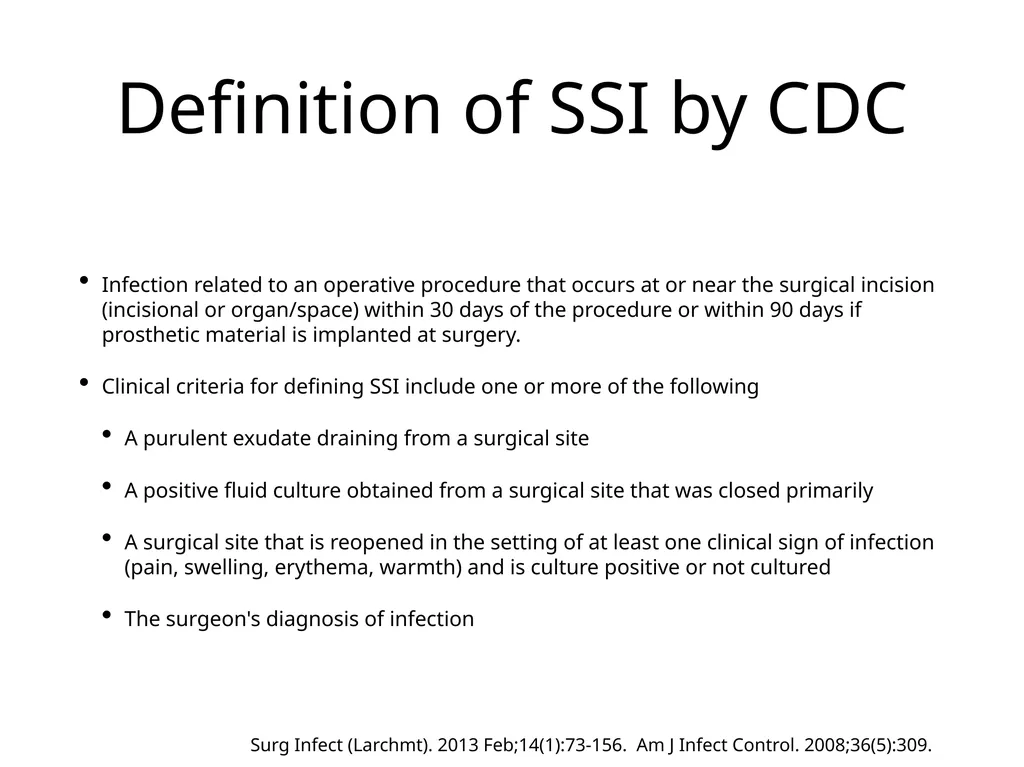
Definition of SSI by CDC Infection related to an operative procedure that occurs at or near the surgical incision (incisional or organ/space) within 30 days of the procedure or within 90 days if prosthetic material is implanted at surgery.
Clinical criteria for defining SSI include one or more of the following
A purulent exudate draining from a surgical site
A positive fluid culture obtained from a surgical site that was closed primarily
A surgical site that is reopened in the setting of at least one clinical sign of infection (pain, swelling, erythema, warmth) and is culture positive or not cultured
The surgeon's diagnosis of infection Surg Infect (Larchmt). 2013 Feb;14(1):73-156. Am J Infect Control. 2008;36(5):309.<br>
05
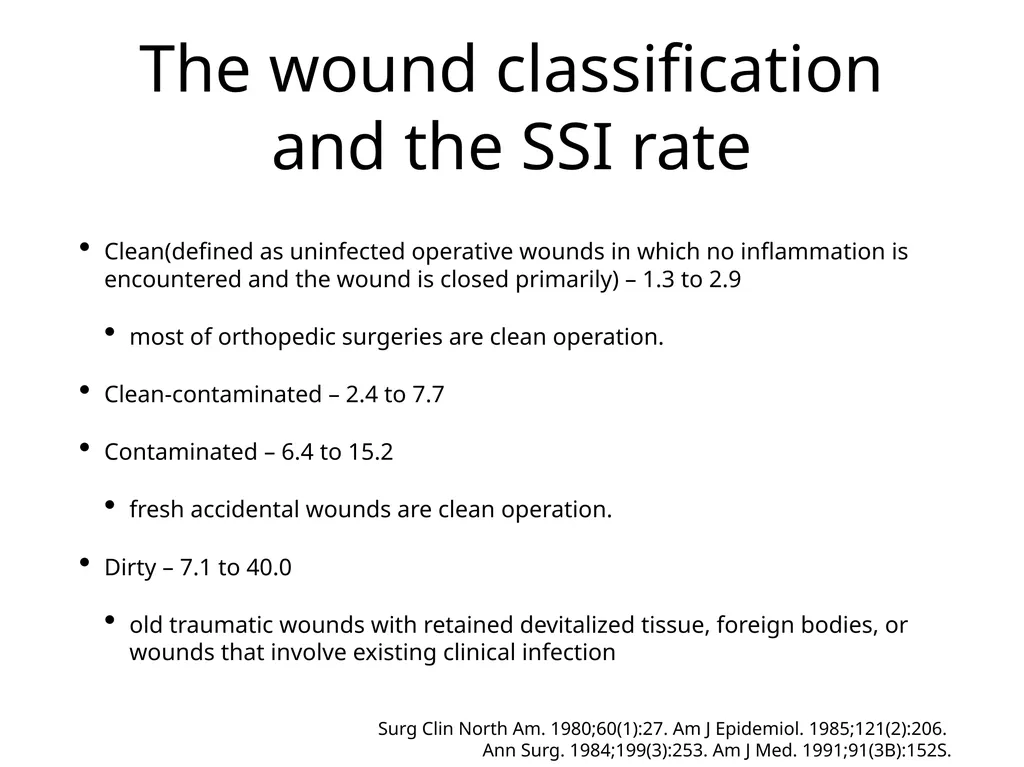
The wound classification and the SSI rate Clean(defined as uninfected operative wounds in which no inflammation is encountered and the wound is closed primarily) – 1.3 to 2.9
most of orthopedic surgeries are clean operation.
Clean-contaminated – 2.4 to 7.7
Contaminated – 6.4 to 15.2
fresh accidental wounds are clean operation.
Dirty – 7.1 to 40.0
old traumatic wounds with retained devitalized tissue, foreign bodies, or wounds that involve existing clinical infection Surg Clin North Am. 1980;60(1):27. Am J Epidemiol. 1985;121(2):206.
Ann Surg. 1984;199(3):253. Am J Med. 1991;91(3B):152S.<br>
06
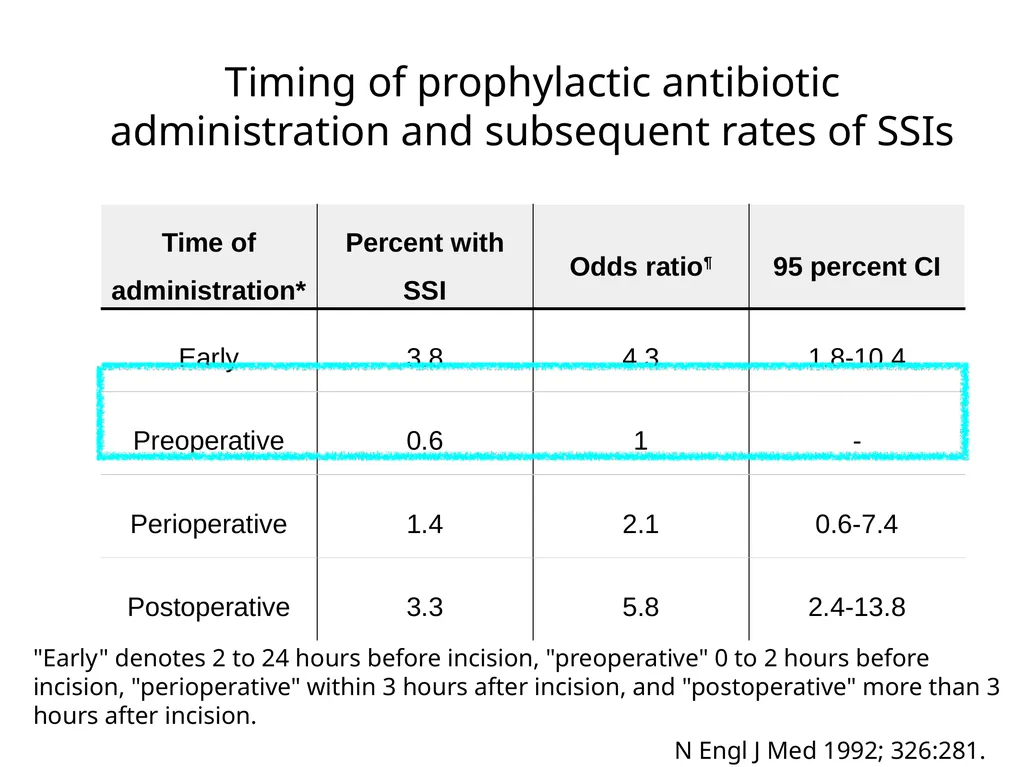
Timing of prophylactic antibiotic administration and subsequent rates of SSIs "Early" denotes 2 to 24 hours before incision, "preoperative" 0 to 2 hours before incision, "perioperative" within 3 hours after incision, and "postoperative" more than 3 hours after incision. N Engl J Med 1992; 326:281.<br>
07
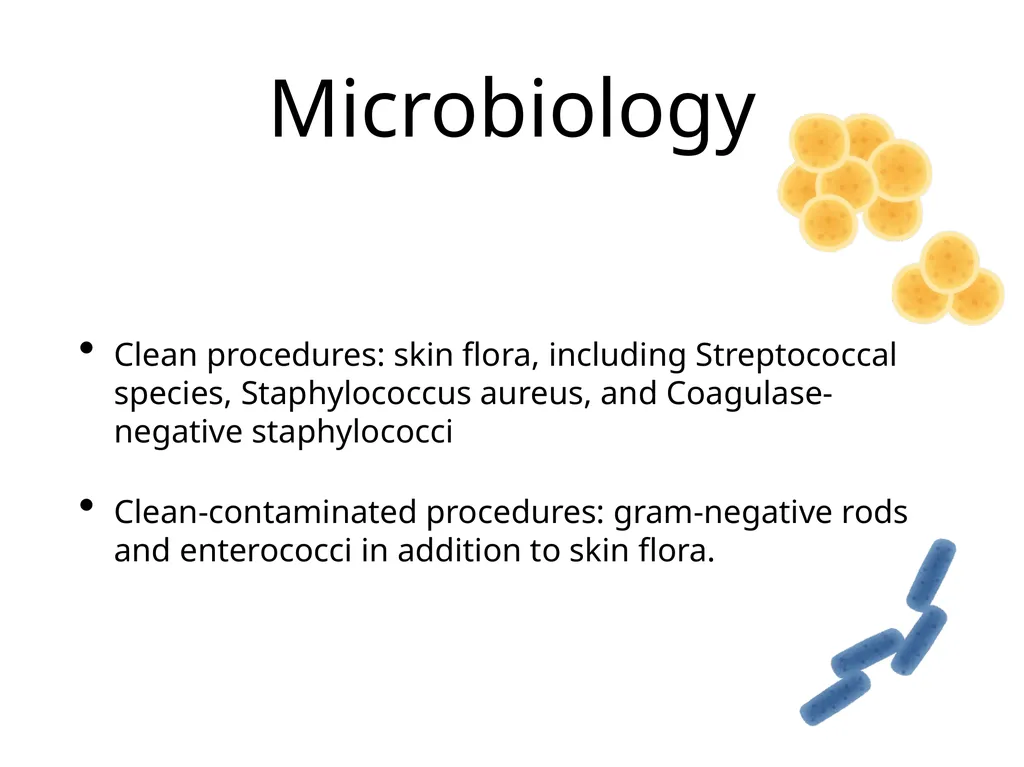
Microbiology Clean procedures: skin flora, including Streptococcal species, Staphylococcus aureus, and Coagulase-negative staphylococci
Clean-contaminated procedures: gram-negative rods and enterococci in addition to skin flora.<br>
08
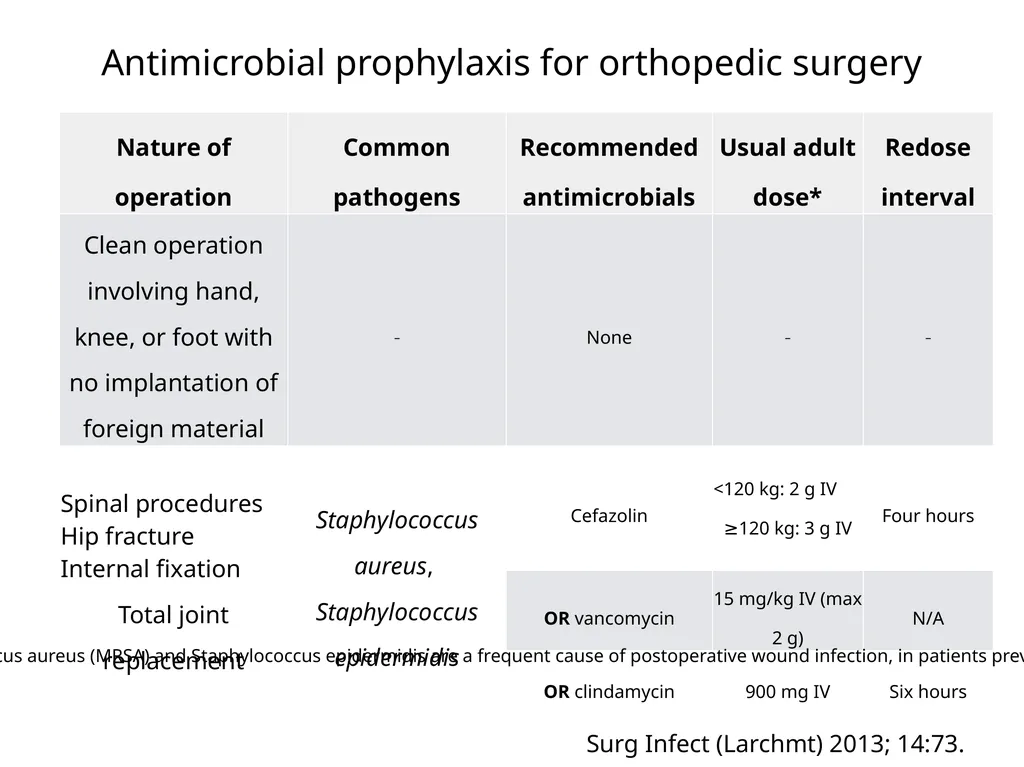
Antimicrobial prophylaxis for orthopedic surgery Surg Infect (Larchmt) 2013; 14:73. ※Use of vancomycin is appropriate in hospitals in which methicillin-resistant Staphylococcus aureus (MRSA) and Staphylococcus epidermidis are a frequent cause of postoperative wound infection, in patients previously colonized with MRSA, or for those who are allergic to penicillins or cephalosporins.<br>
09
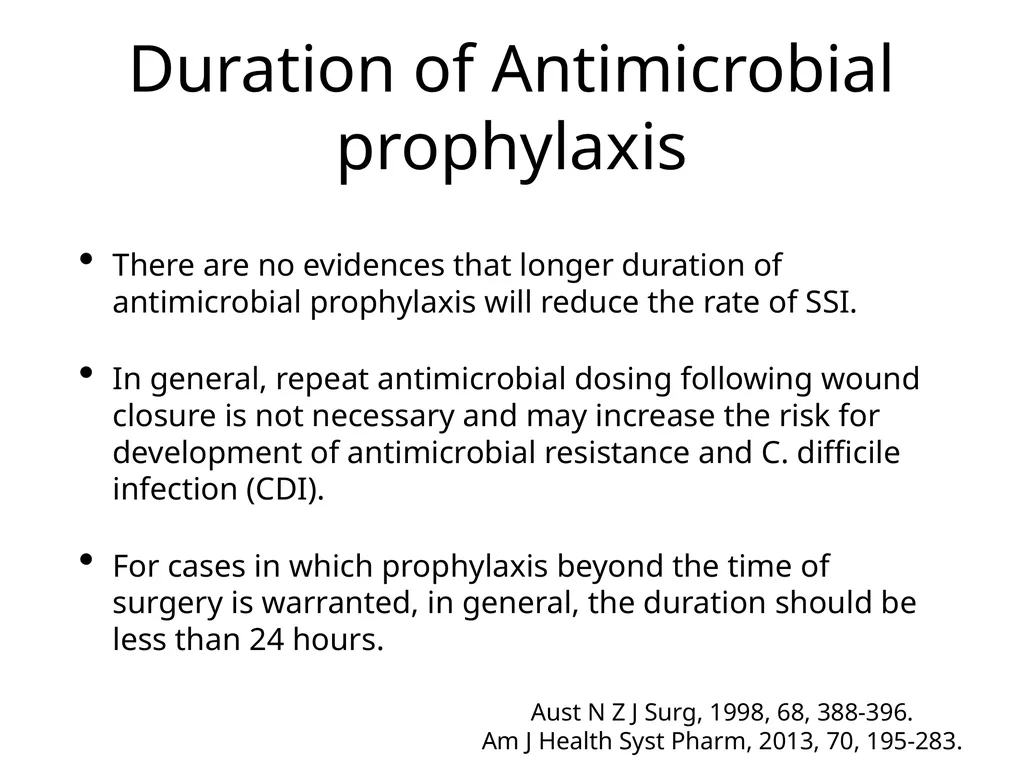
Duration of Antimicrobial prophylaxis There are no evidences that longer duration of antimicrobial prophylaxis will reduce the rate of SSI.
In general, repeat antimicrobial dosing following wound closure is not necessary and may increase the risk for development of antimicrobial resistance and C. difficile infection (CDI).
For cases in which prophylaxis beyond the time of surgery is warranted, in general, the duration should be less than 24 hours. Aust N Z J Surg, 1998, 68, 388-396.
Am J Health Syst Pharm, 2013, 70, 195-283.<br>
10
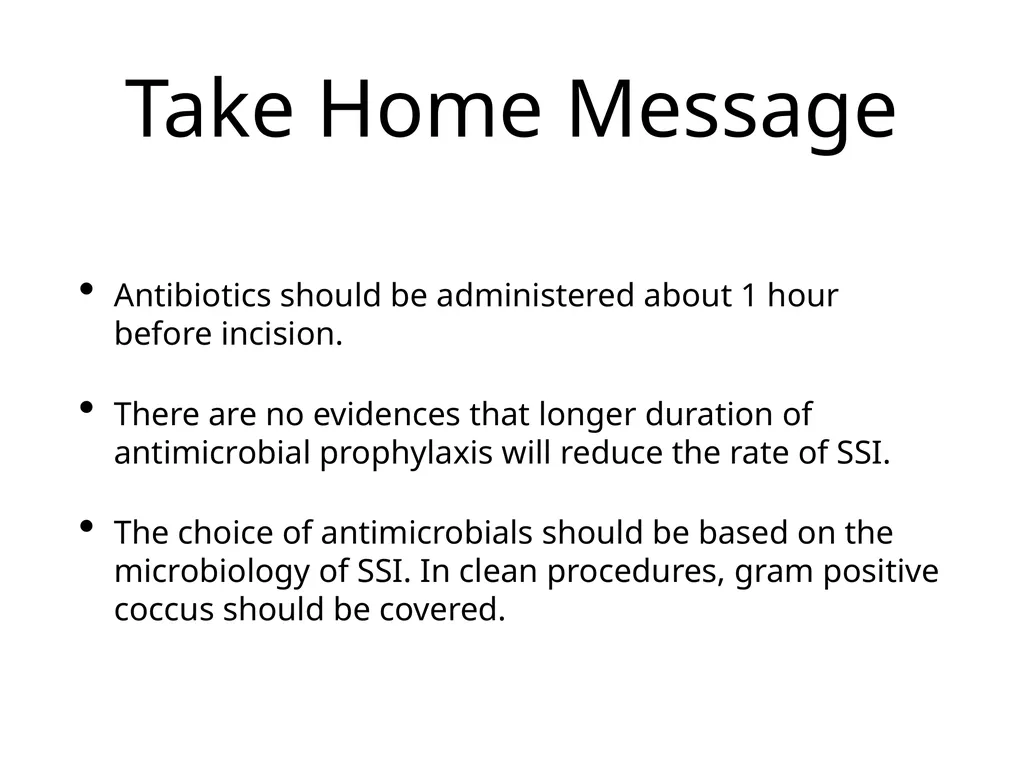
Take Home Message Antibiotics should be administered about 1 hour before incision.
There are no evidences that longer duration of antimicrobial prophylaxis will reduce the rate of SSI.
The choice of antimicrobials should be based on the microbiology of SSI. In clean procedures, gram positive coccus should be covered.<br>