
Architecture in the Cloud
Description: Architecture in the Cloud https:commons.wikimedia.orgwikiFile:AbovetheClouds.jpg 2 Origin of the term Cloud Computing Comes from the early days of the Internet where we drew the network as a cloud we didnt care where the
Related Topics
Download Presentation
"Architecture in the Cloud" is the property of its rightful owner. Permission is granted to download and print the materials on this website for personal, non-commercial use only, and to display it on your personal computer provided you do not modify the materials and that you retain all copyright notices contained in the materials. By downloading content from our website, you accept the terms of this agreement.
Presentation Transcript
slide1. Architecture in the Cloud https://commons.wikimedia.org/wiki/File:Above_the_Clouds.jpg<br>
slide2. 2 Origin of the term “Cloud Computing”* “Comes from the early days of the Internet where we drew the network as a cloud… we didn’t care where the messages went… the cloud hid it from us” – Kevin Marks, Google
First cloud around networking (TCP/IP abstraction)
Second cloud around documents (WWW data abstraction)
The emerging cloud abstracts infrastructure complexities of servers, applications, data, and heterogeneous platforms
(“muck” as Amazon’s CEO Jeff Bezos calls it) *Architectural Implications of Cloud Computing, SATURN 2011, May 18, 2011, © 2011 Carnegie Mellon University
Jeff Bezos’ quote: http://news.cnet.com/8301-13953_3-9977100-80.html?tag=mncol
Kevin Marks quote: http://news.cnet.com/8301-13953_3-9938949-80.html?tag=mncol video interview<br>
slide3. What is Cloud computing? External compute resources
No assets owned
Access delivered over the network
Clients are ‘tenants’, not owners
Scalable w/o purchasing new equipment
Ideally dynamic
Financial model is by usage (vs. by asset)<br>
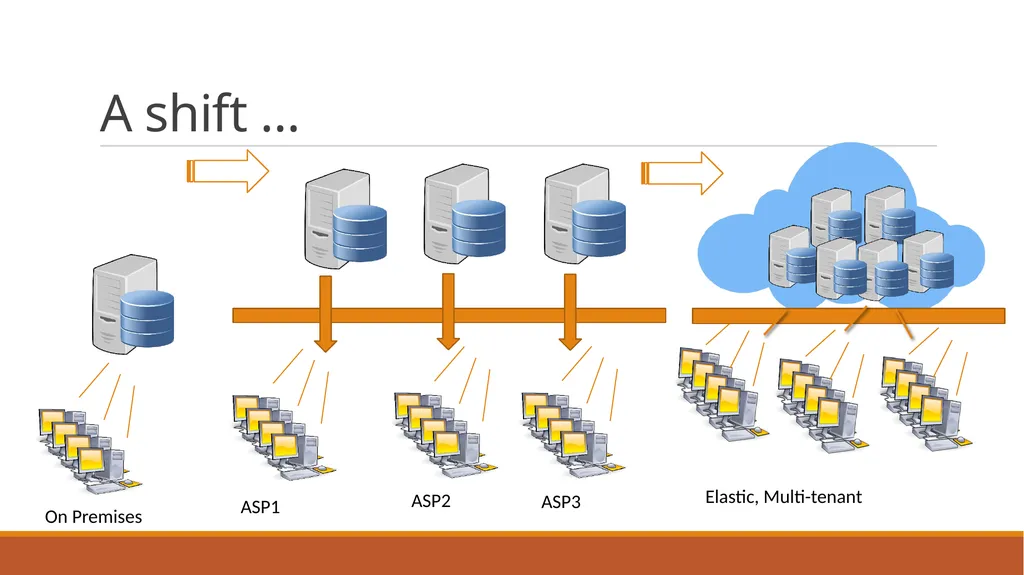
slide4. A shift … On Premises ASP1 ASP2 ASP3 Elastic, Multi-tenant<br>
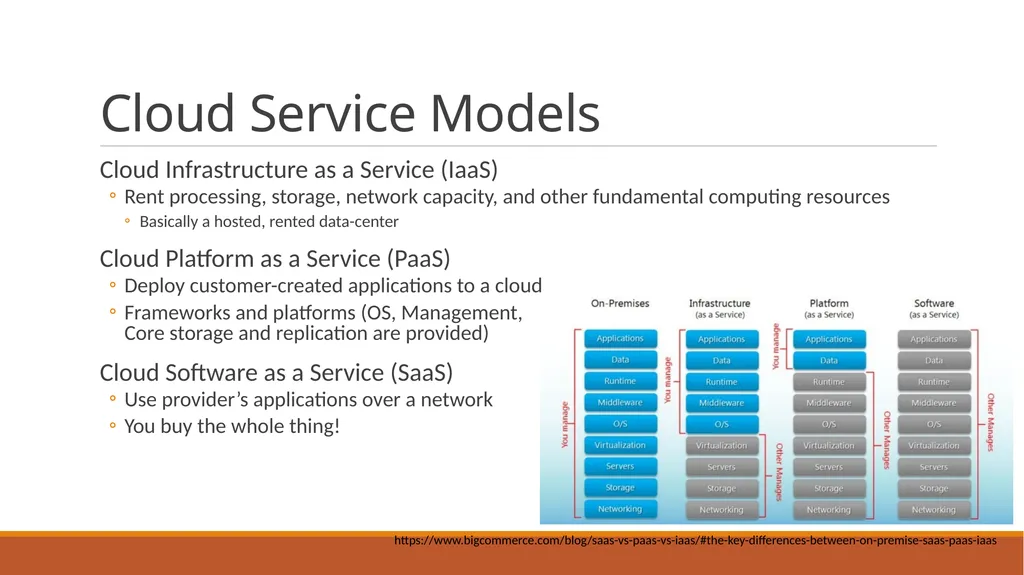
slide5. Cloud Service Models Cloud Infrastructure as a Service (IaaS)
Rent processing, storage, network capacity, and other fundamental computing resources
Basically a hosted, rented data-center
Cloud Platform as a Service (PaaS)
Deploy customer-created applications to a cloud
Frameworks and platforms (OS, Management, Core storage and replication are provided)
Cloud Software as a Service (SaaS)
Use provider’s applications over a network
You buy the whole thing! https://www.bigcommerce.com/blog/saas-vs-paas-vs-iaas/#the-key-differences-between-on-premise-saas-paas-iaas<br>
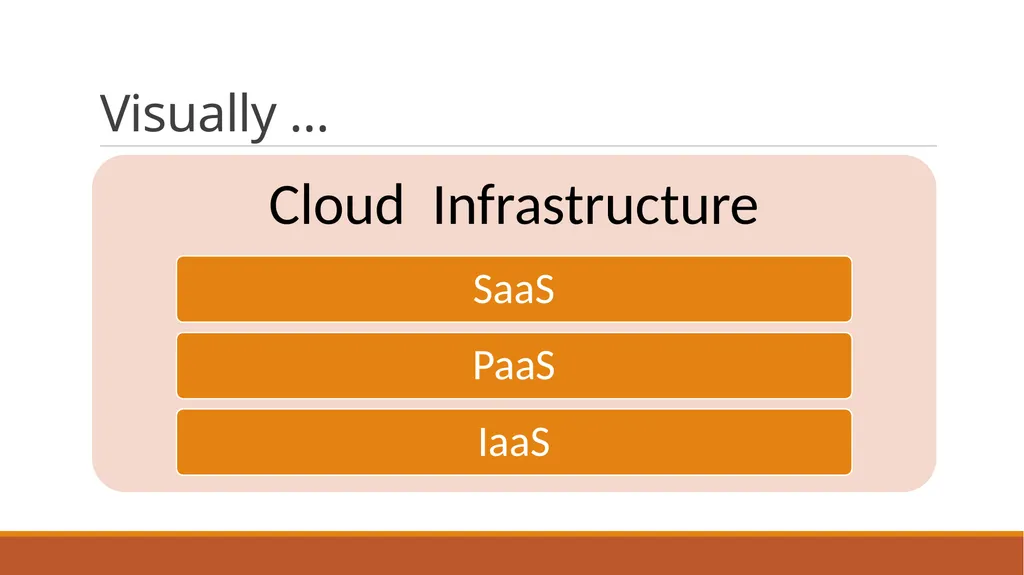
slide6. Visually …<br>
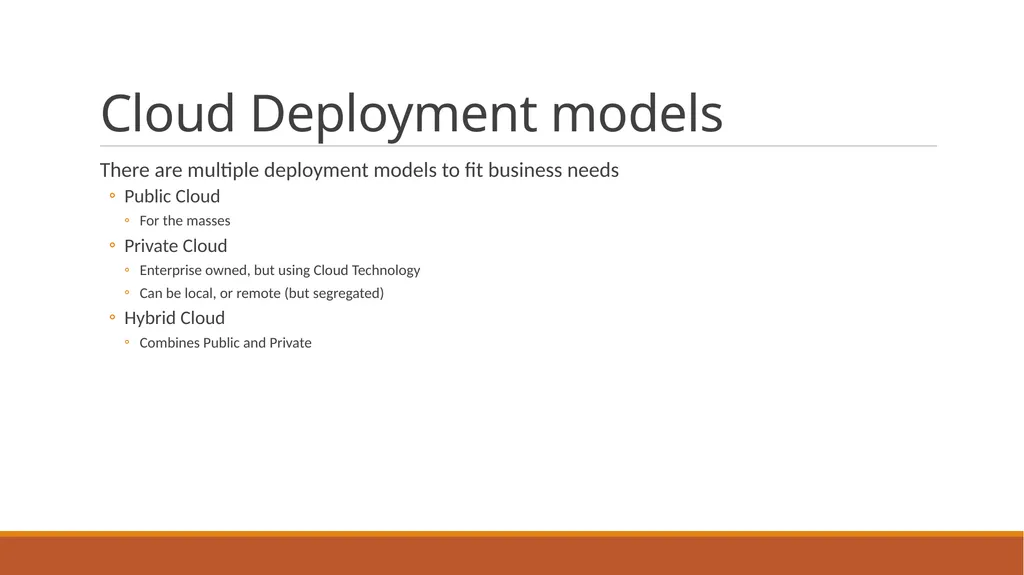
slide7. Cloud Deployment models There are multiple deployment models to fit business needs
Public Cloud
For the masses
Private Cloud
Enterprise owned, but using Cloud Technology
Can be local, or remote (but segregated)
Hybrid Cloud
Combines Public and Private<br>
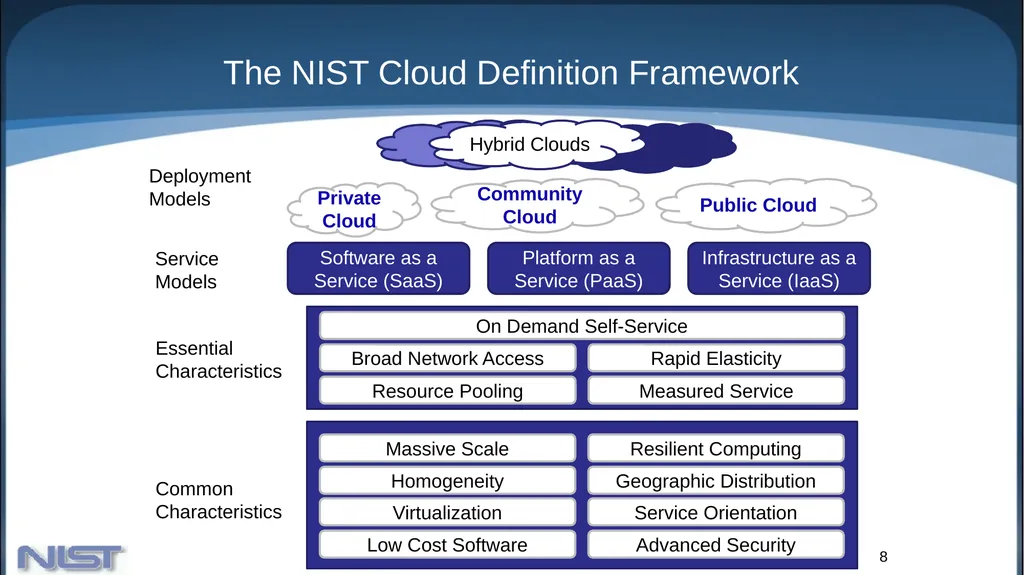
slide8. The NIST Cloud Definition Framework 8 Deployment
Models Service
Models Essential
Characteristics Common
Characteristics Homogeneity Massive Scale Resilient Computing Geographic Distribution<br>
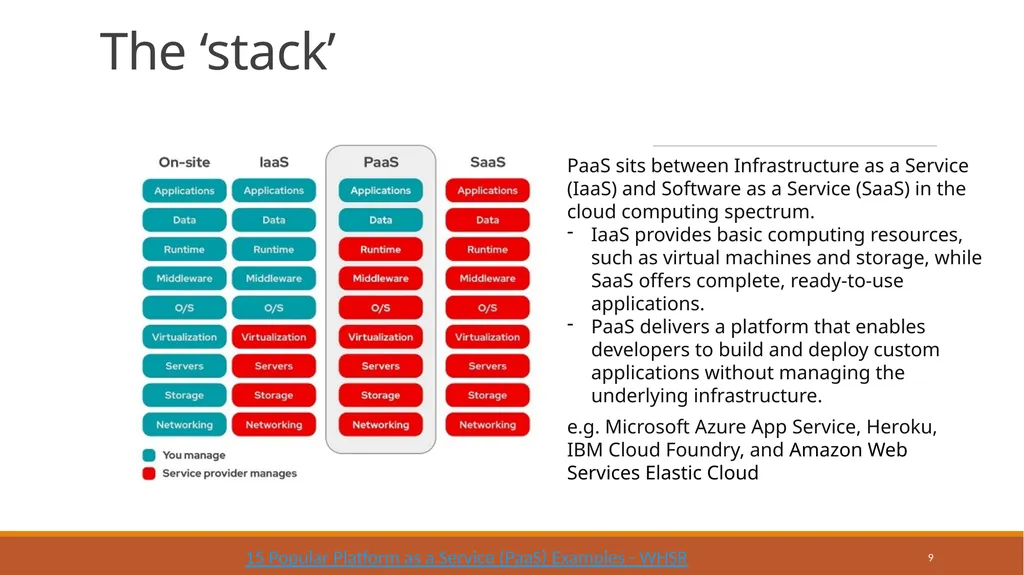
slide9. The ‘stack’ 9 15 Popular Platform as a Service (PaaS) Examples - WHSR e.g. Microsoft Azure App Service, Heroku, IBM Cloud Foundry, and Amazon Web Services Elastic Cloud PaaS sits between Infrastructure as a Service (IaaS) and Software as a Service (SaaS) in the cloud computing spectrum.
IaaS provides basic computing resources, such as virtual machines and storage, while SaaS offers complete, ready-to-use applications.
PaaS delivers a platform that enables developers to build and deploy custom applications without managing the underlying infrastructure.<br>
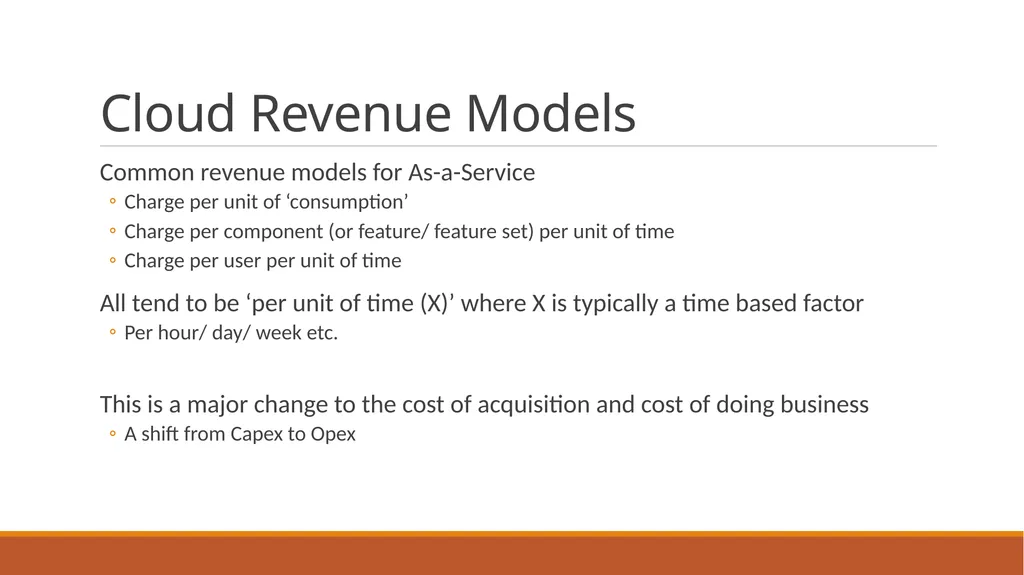
slide10. Cloud Revenue Models Common revenue models for As-a-Service
Charge per unit of ‘consumption’
Charge per component (or feature/ feature set) per unit of time
Charge per user per unit of time
All tend to be ‘per unit of time (X)’ where X is typically a time based factor
Per hour/ day/ week etc.
This is a major change to the cost of acquisition and cost of doing business
A shift from Capex to Opex<br>
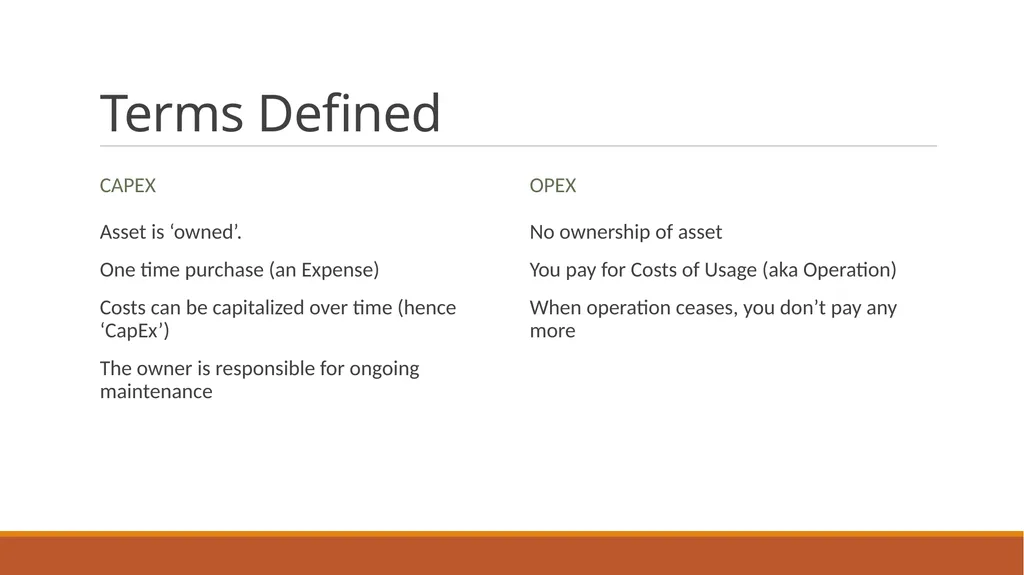
slide11. Terms Defined capex Asset is ‘owned’.
One time purchase (an Expense)
Costs can be capitalized over time (hence ‘CapEx’)
The owner is responsible for ongoing maintenance opex No ownership of asset
You pay for Costs of Usage (aka Operation)
When operation ceases, you don’t pay any more<br>
slide12. Model vs adoption (1) Charge per unit of consumption
Usually done for IaaS (infrastructure as a service)
E.g. Bandwidth (kb/ month); CPU (unit/ hour)
Works best with things are controllable by the provider; tightly measured; legitimately provable (auditable)
Requires effort to establish tools, methods, and billing to do this<br>
slide13. Model vs adoption (2) Charge per component or feature set (per month or other)
Commonly used for software-as-a-service
Low cost of entry for small set of features
Allows customer to ‘try at low cost’ before they fully commit
Allows provider to onboard and prove value earlier/ faster
Allows up-sell after customer shows satisfaction<br>
slide14. Model vs adoption (3) Charge per user per month (or other unit of time)
Commonly used for software-as-a-service
Frequently used in combination with ‘feature bundles’
Logical and understandable to customers
Allows revenue to scale as more adoption occurs
Fairly easy to track & bill<br>
slide15. Examples Infrastructure Providers
Amazon, Microsoft, Google
You pay for:
- Service Instance
- Network packets in/ out
- Additional modules/ functions Service Providers
Netflix, Spotify
You pay for:
- Membership
- Tiers of service IaaS and PaaS are very intertwined … most situations end up as PaaS … unless you purchase pure IaaS and install/ manage OS and Applications on your own (‘bare’ VM/ Server)<br>
slide16. Challenges for Cloud adoption Many challenges have been overcome with time, but the common concerns remain
Security
Performance
Availability
Integration (with other systems)
Customizability
Cost
Loss of control 16<br>
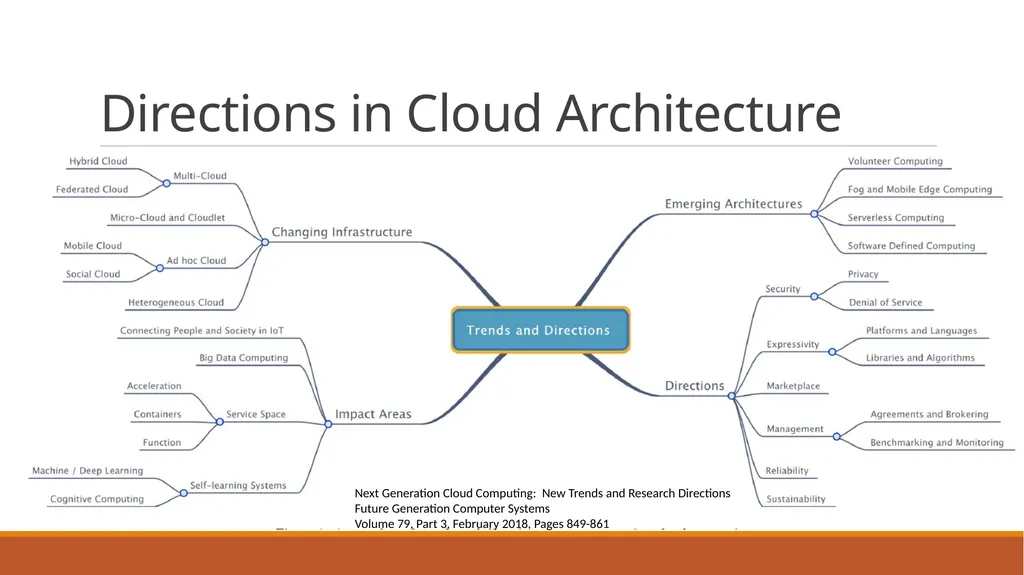
slide17. Directions in Cloud Architecture Next Generation Cloud Computing: New Trends and Research Directions
Future Generation Computer Systems
Volume 79, Part 3, February 2018, Pages 849-861<br>
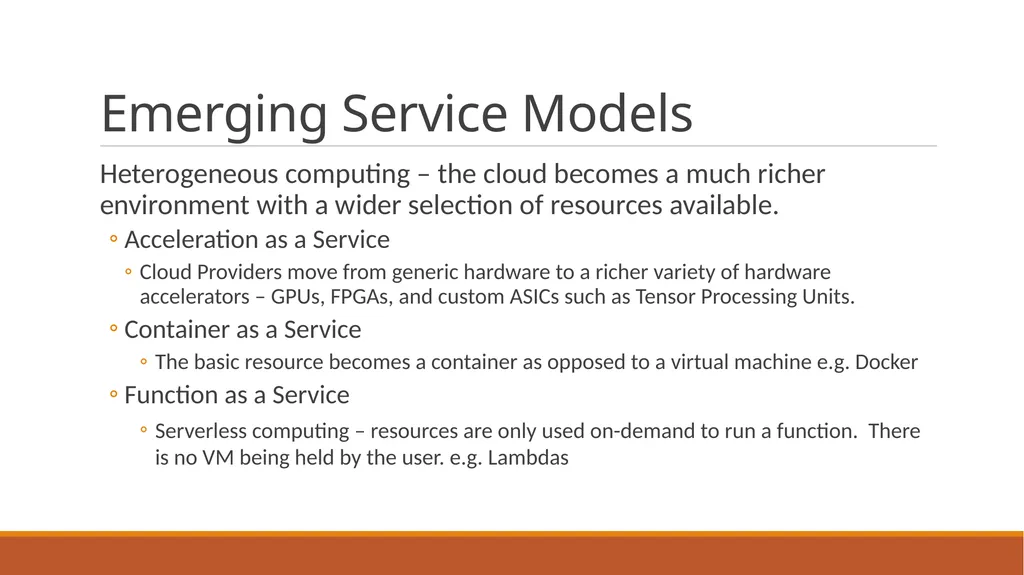
slide18. Emerging Service Models Heterogeneous computing – the cloud becomes a much richer environment with a wider selection of resources available.
Acceleration as a Service
Cloud Providers move from generic hardware to a richer variety of hardware accelerators – GPUs, FPGAs, and custom ASICs such as Tensor Processing Units.
Container as a Service
The basic resource becomes a container as opposed to a virtual machine e.g. Docker
Function as a Service
Serverless computing – resources are only used on-demand to run a function. There is no VM being held by the user. e.g. Lambdas<br>
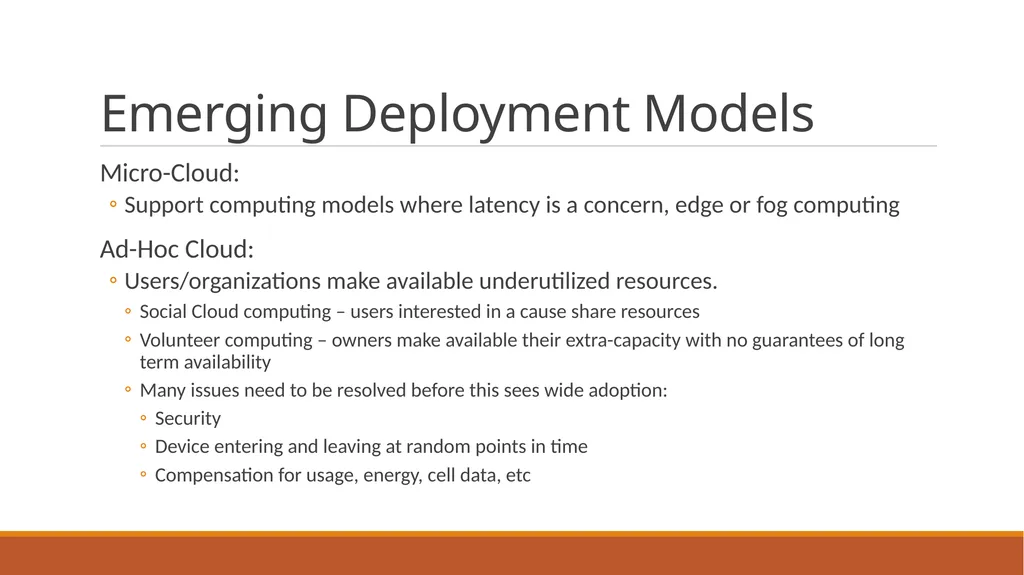
slide19. Emerging Deployment Models Micro-Cloud:
Support computing models where latency is a concern, edge or fog computing
Ad-Hoc Cloud:
Users/organizations make available underutilized resources.
Social Cloud computing – users interested in a cause share resources
Volunteer computing – owners make available their extra-capacity with no guarantees of long term availability
Many issues need to be resolved before this sees wide adoption:
Security
Device entering and leaving at random points in time
Compensation for usage, energy, cell data, etc<br>
slide20. Continued Evolution of Computing Centralized mainframes to smaller department computers to desktop models
Cloud computing reversed this trend pushing for consolidation of resources. Addressing issues of cost and maintenance.
New models are now evolving that push processing from the cloud back closer to the user.
Even with the current push towards edge computing, a huge amount of compute power goes underutilized in each person’s pocket. A typical cell phone’s usage is at most 25%, leaving lots of cycle wasted.
Can this resource be leveraged? And, if so, how will the owner be compensated?
Or will needs and usage patterns change drastically in the coming years and necessitate new models of computing.<br>
slide2. 2 Origin of the term “Cloud Computing”* “Comes from the early days of the Internet where we drew the network as a cloud… we didn’t care where the messages went… the cloud hid it from us” – Kevin Marks, Google
First cloud around networking (TCP/IP abstraction)
Second cloud around documents (WWW data abstraction)
The emerging cloud abstracts infrastructure complexities of servers, applications, data, and heterogeneous platforms
(“muck” as Amazon’s CEO Jeff Bezos calls it) *Architectural Implications of Cloud Computing, SATURN 2011, May 18, 2011, © 2011 Carnegie Mellon University
Jeff Bezos’ quote: http://news.cnet.com/8301-13953_3-9977100-80.html?tag=mncol
Kevin Marks quote: http://news.cnet.com/8301-13953_3-9938949-80.html?tag=mncol video interview<br>
slide3. What is Cloud computing? External compute resources
No assets owned
Access delivered over the network
Clients are ‘tenants’, not owners
Scalable w/o purchasing new equipment
Ideally dynamic
Financial model is by usage (vs. by asset)<br>
slide4. A shift … On Premises ASP1 ASP2 ASP3 Elastic, Multi-tenant<br>
slide5. Cloud Service Models Cloud Infrastructure as a Service (IaaS)
Rent processing, storage, network capacity, and other fundamental computing resources
Basically a hosted, rented data-center
Cloud Platform as a Service (PaaS)
Deploy customer-created applications to a cloud
Frameworks and platforms (OS, Management, Core storage and replication are provided)
Cloud Software as a Service (SaaS)
Use provider’s applications over a network
You buy the whole thing! https://www.bigcommerce.com/blog/saas-vs-paas-vs-iaas/#the-key-differences-between-on-premise-saas-paas-iaas<br>
slide6. Visually …<br>
slide7. Cloud Deployment models There are multiple deployment models to fit business needs
Public Cloud
For the masses
Private Cloud
Enterprise owned, but using Cloud Technology
Can be local, or remote (but segregated)
Hybrid Cloud
Combines Public and Private<br>
slide8. The NIST Cloud Definition Framework 8 Deployment
Models Service
Models Essential
Characteristics Common
Characteristics Homogeneity Massive Scale Resilient Computing Geographic Distribution<br>
slide9. The ‘stack’ 9 15 Popular Platform as a Service (PaaS) Examples - WHSR e.g. Microsoft Azure App Service, Heroku, IBM Cloud Foundry, and Amazon Web Services Elastic Cloud PaaS sits between Infrastructure as a Service (IaaS) and Software as a Service (SaaS) in the cloud computing spectrum.
IaaS provides basic computing resources, such as virtual machines and storage, while SaaS offers complete, ready-to-use applications.
PaaS delivers a platform that enables developers to build and deploy custom applications without managing the underlying infrastructure.<br>
slide10. Cloud Revenue Models Common revenue models for As-a-Service
Charge per unit of ‘consumption’
Charge per component (or feature/ feature set) per unit of time
Charge per user per unit of time
All tend to be ‘per unit of time (X)’ where X is typically a time based factor
Per hour/ day/ week etc.
This is a major change to the cost of acquisition and cost of doing business
A shift from Capex to Opex<br>
slide11. Terms Defined capex Asset is ‘owned’.
One time purchase (an Expense)
Costs can be capitalized over time (hence ‘CapEx’)
The owner is responsible for ongoing maintenance opex No ownership of asset
You pay for Costs of Usage (aka Operation)
When operation ceases, you don’t pay any more<br>
slide12. Model vs adoption (1) Charge per unit of consumption
Usually done for IaaS (infrastructure as a service)
E.g. Bandwidth (kb/ month); CPU (unit/ hour)
Works best with things are controllable by the provider; tightly measured; legitimately provable (auditable)
Requires effort to establish tools, methods, and billing to do this<br>
slide13. Model vs adoption (2) Charge per component or feature set (per month or other)
Commonly used for software-as-a-service
Low cost of entry for small set of features
Allows customer to ‘try at low cost’ before they fully commit
Allows provider to onboard and prove value earlier/ faster
Allows up-sell after customer shows satisfaction<br>
slide14. Model vs adoption (3) Charge per user per month (or other unit of time)
Commonly used for software-as-a-service
Frequently used in combination with ‘feature bundles’
Logical and understandable to customers
Allows revenue to scale as more adoption occurs
Fairly easy to track & bill<br>
slide15. Examples Infrastructure Providers
Amazon, Microsoft, Google
You pay for:
- Service Instance
- Network packets in/ out
- Additional modules/ functions Service Providers
Netflix, Spotify
You pay for:
- Membership
- Tiers of service IaaS and PaaS are very intertwined … most situations end up as PaaS … unless you purchase pure IaaS and install/ manage OS and Applications on your own (‘bare’ VM/ Server)<br>
slide16. Challenges for Cloud adoption Many challenges have been overcome with time, but the common concerns remain
Security
Performance
Availability
Integration (with other systems)
Customizability
Cost
Loss of control 16<br>
slide17. Directions in Cloud Architecture Next Generation Cloud Computing: New Trends and Research Directions
Future Generation Computer Systems
Volume 79, Part 3, February 2018, Pages 849-861<br>
slide18. Emerging Service Models Heterogeneous computing – the cloud becomes a much richer environment with a wider selection of resources available.
Acceleration as a Service
Cloud Providers move from generic hardware to a richer variety of hardware accelerators – GPUs, FPGAs, and custom ASICs such as Tensor Processing Units.
Container as a Service
The basic resource becomes a container as opposed to a virtual machine e.g. Docker
Function as a Service
Serverless computing – resources are only used on-demand to run a function. There is no VM being held by the user. e.g. Lambdas<br>
slide19. Emerging Deployment Models Micro-Cloud:
Support computing models where latency is a concern, edge or fog computing
Ad-Hoc Cloud:
Users/organizations make available underutilized resources.
Social Cloud computing – users interested in a cause share resources
Volunteer computing – owners make available their extra-capacity with no guarantees of long term availability
Many issues need to be resolved before this sees wide adoption:
Security
Device entering and leaving at random points in time
Compensation for usage, energy, cell data, etc<br>
slide20. Continued Evolution of Computing Centralized mainframes to smaller department computers to desktop models
Cloud computing reversed this trend pushing for consolidation of resources. Addressing issues of cost and maintenance.
New models are now evolving that push processing from the cloud back closer to the user.
Even with the current push towards edge computing, a huge amount of compute power goes underutilized in each person’s pocket. A typical cell phone’s usage is at most 25%, leaving lots of cycle wasted.
Can this resource be leveraged? And, if so, how will the owner be compensated?
Or will needs and usage patterns change drastically in the coming years and necessitate new models of computing.<br>