Arkansas Work Requirements Kevin De Liban,
Description: Arkansas Work Requirements Kevin De Liban, Attorney, Legal Aid of Arkansas The Beautiful Road Map Dilemma We have a beautiful road map of how not to do it. Dr. Jennifer Walthall, Secretary, Indiana Family and Social Services

Related Topics
Download Presentation
"Arkansas Work Requirements Kevin De Liban," is the property of its rightful owner. Permission is granted to download and print the materials on this website for personal, non-commercial use only, and to display it on your personal computer provided you do not modify the materials and that you retain all copyright notices contained in the materials. By downloading content from our website, you accept the terms of this agreement.
Presentation Transcript
slide1. Arkansas Work Requirements Kevin De Liban, Attorney, Legal Aid of Arkansas<br>
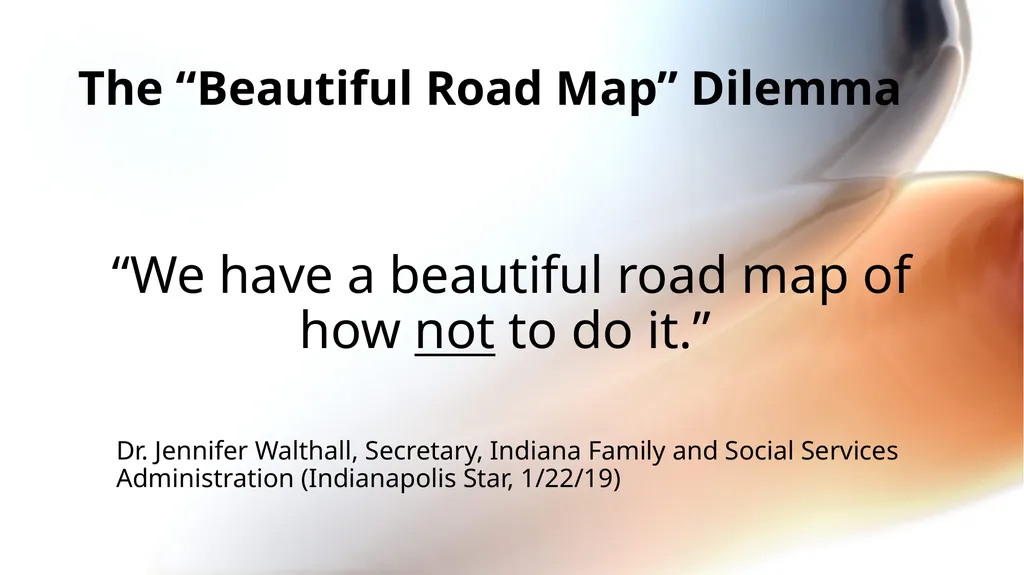
slide2. The “Beautiful Road Map” Dilemma “We have a beautiful road map of how not to do it.”
Dr. Jennifer Walthall, Secretary, Indiana Family and Social Services Administration (Indianapolis Star, 1/22/19)<br>
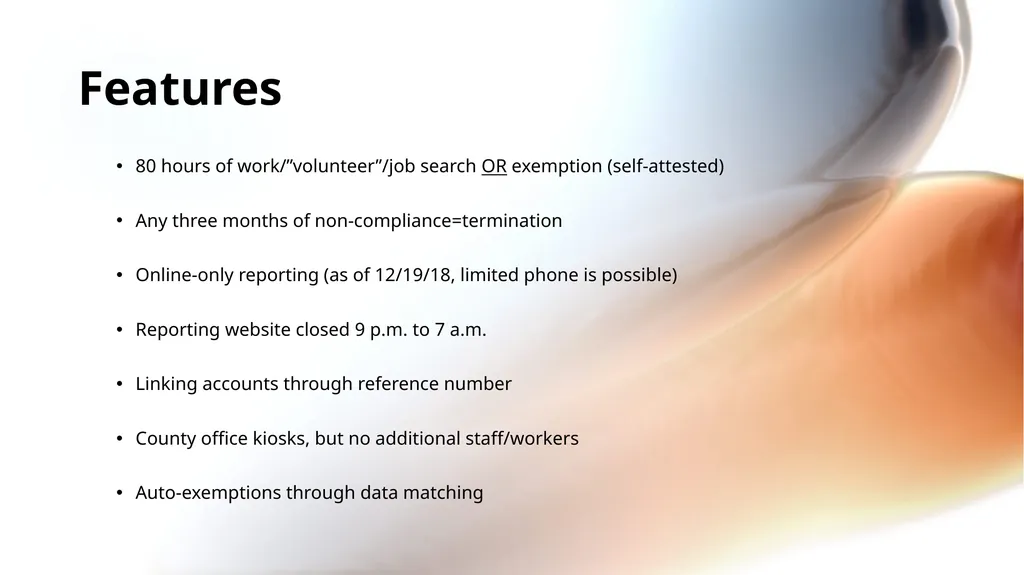
slide3. Features 80 hours of work/”volunteer”/job search OR exemption (self-attested)
Any three months of non-compliance=termination
Online-only reporting (as of 12/19/18, limited phone is possible)
Reporting website closed 9 p.m. to 7 a.m.
Linking accounts through reference number
County office kiosks, but no additional staff/workers
Auto-exemptions through data matching<br>
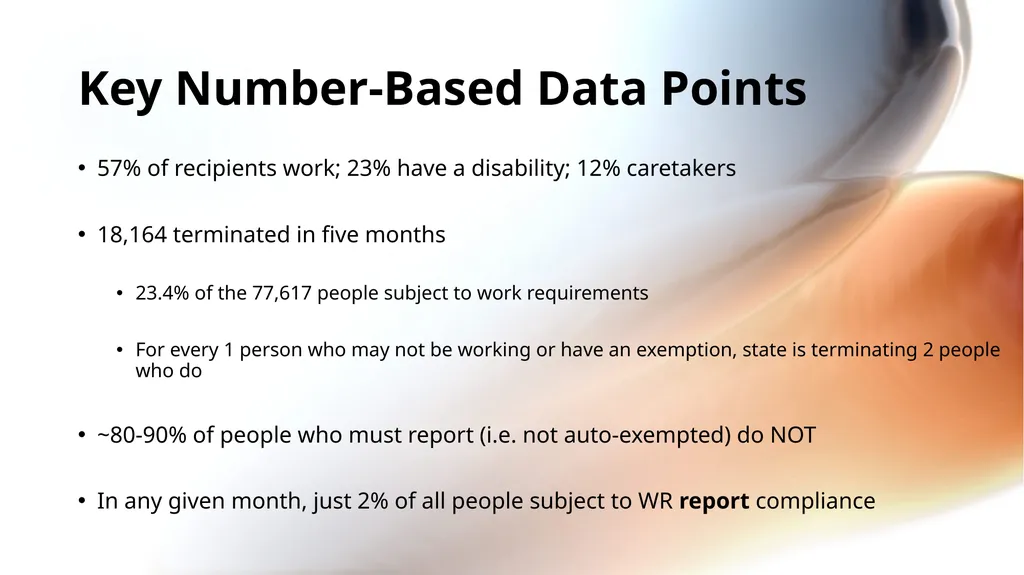
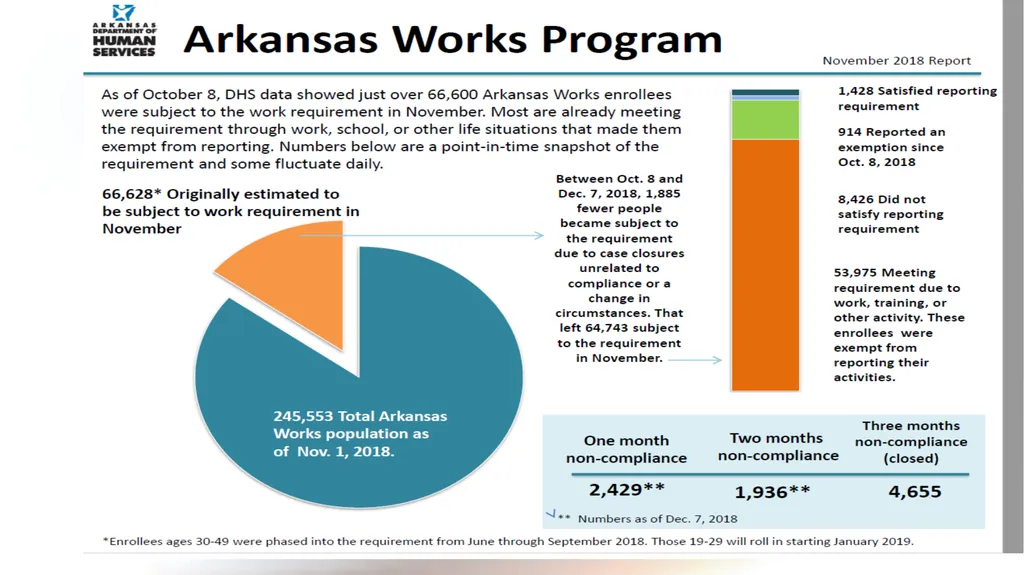
slide4. Key Number-Based Data Points 57% of recipients work; 23% have a disability; 12% caretakers
18,164 terminated in five months
23.4% of the 77,617 people subject to work requirements
For every 1 person who may not be working or have an exemption, state is terminating 2 people who do
~80-90% of people who must report (i.e. not auto-exempted) do NOT
In any given month, just 2% of all people subject to WR report compliance<br>
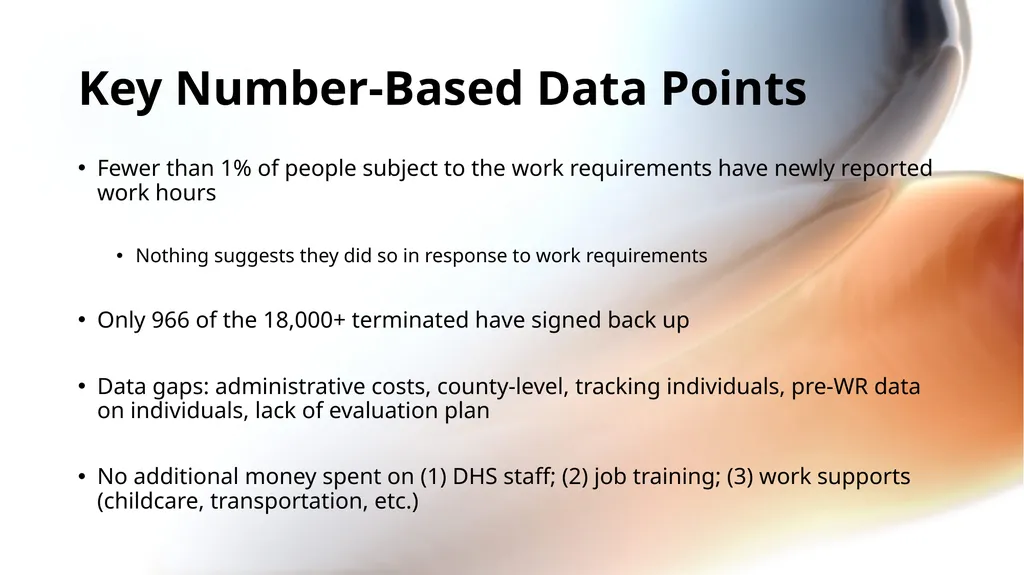
slide5. Key Number-Based Data Points Fewer than 1% of people subject to the work requirements have newly reported work hours
Nothing suggests they did so in response to work requirements
Only 966 of the 18,000+ terminated have signed back up
Data gaps: administrative costs, county-level, tracking individuals, pre-WR data on individuals, lack of evaluation plan
No additional money spent on (1) DHS staff; (2) job training; (3) work supports (childcare, transportation, etc.)<br>
slide7. Other Data Points (experience is evidence) Have to be healthy to work, be involved in community/family, etc.
Lack of knowledge of WR
Difficulty complying
Inconsistent low-wage work; meaningless job training
Frustration—long wait times, rudeness, DHS worker limits
Other hoops—increased verification and churn<br>
slide8. Outreach and Education Community meetings and events
Client database (letters, neighborhoods, etc.)
Libraries, gas stations, convenience stores, churches
Front-line providers
Community health clinics and rural doctors’ offices
Mental health clinics; substance use treatment facilities
Homeless service providers
Pharmacists
Provider groups or associations
Colleges and campus groups (with 19-29 year olds)<br>
slide9. Outreach and Education Electronic
Boosted Facebook posts with videos
E-mails/updates to interested parties
IG/Snapchat (?); direct texts (?)
Media
Lets clients know about the issue and help available
Explains real-life impact<br>
slide10. Working with Media What do clients or affected individuals want to do?
What are your goals?
What is the story? What is your angle on the story?
What are reporter deadlines?
How to manage competing outlets?
In-state or national
Print or visual
Expertise
Track record<br>
slide11. Working with Other Organizations How does this fit with larger org goals?
Identify each org’s strengths and unique capabilities
Understand limitations and political realities
Joint presentations and speaking opportunities
Consider media interaction/roles
Discuss data, stories, developments; regular feedback
Think of nat’l orgs (CBPP, KFF, Georgetown CCF, YI, etc.)<br>
slide12. Working with Legal Aid Orgs Federal funding comes with some limitations. We CANNOT:
“Attempt to influence” legislation/rulemaking or do grassroots lobbying
Participate in class action lawsuits
Initiate the formation of coalitions
Represent immigrants without status (in most situations)
WE CAN: talk to media, analyze and explain impact, offer public comments, inform clients, educate public, testify at legislature, sue in a meaningful way
Resources—1 attorney for every 18,000 financially eligible people
Possibility of political reprisal (especially if org receives state funds)<br>
slide13. Parting Considerations Is there a way work requirements can work?
1/10/19 CBPP publication explains why not
PBS Newshour, 11/19/18 (Catherine Rampell)
https://www.arktimes.com/arkansas/when-arkansas-works-doesnt/Content?oid=25890378
Will lack of work requirements threaten program future?
Will organizations change positions as time goes on in response to pressures or other goals? How to manage?<br>
slide14. Happy to Help Kevin De Liban, Attorney, Legal Aid of Arkansas
800-967-9224 x 2206
kdeliban@arlegalaid.org<br>
slide2. The “Beautiful Road Map” Dilemma “We have a beautiful road map of how not to do it.”
Dr. Jennifer Walthall, Secretary, Indiana Family and Social Services Administration (Indianapolis Star, 1/22/19)<br>
slide3. Features 80 hours of work/”volunteer”/job search OR exemption (self-attested)
Any three months of non-compliance=termination
Online-only reporting (as of 12/19/18, limited phone is possible)
Reporting website closed 9 p.m. to 7 a.m.
Linking accounts through reference number
County office kiosks, but no additional staff/workers
Auto-exemptions through data matching<br>
slide4. Key Number-Based Data Points 57% of recipients work; 23% have a disability; 12% caretakers
18,164 terminated in five months
23.4% of the 77,617 people subject to work requirements
For every 1 person who may not be working or have an exemption, state is terminating 2 people who do
~80-90% of people who must report (i.e. not auto-exempted) do NOT
In any given month, just 2% of all people subject to WR report compliance<br>
slide5. Key Number-Based Data Points Fewer than 1% of people subject to the work requirements have newly reported work hours
Nothing suggests they did so in response to work requirements
Only 966 of the 18,000+ terminated have signed back up
Data gaps: administrative costs, county-level, tracking individuals, pre-WR data on individuals, lack of evaluation plan
No additional money spent on (1) DHS staff; (2) job training; (3) work supports (childcare, transportation, etc.)<br>
slide7. Other Data Points (experience is evidence) Have to be healthy to work, be involved in community/family, etc.
Lack of knowledge of WR
Difficulty complying
Inconsistent low-wage work; meaningless job training
Frustration—long wait times, rudeness, DHS worker limits
Other hoops—increased verification and churn<br>
slide8. Outreach and Education Community meetings and events
Client database (letters, neighborhoods, etc.)
Libraries, gas stations, convenience stores, churches
Front-line providers
Community health clinics and rural doctors’ offices
Mental health clinics; substance use treatment facilities
Homeless service providers
Pharmacists
Provider groups or associations
Colleges and campus groups (with 19-29 year olds)<br>
slide9. Outreach and Education Electronic
Boosted Facebook posts with videos
E-mails/updates to interested parties
IG/Snapchat (?); direct texts (?)
Media
Lets clients know about the issue and help available
Explains real-life impact<br>
slide10. Working with Media What do clients or affected individuals want to do?
What are your goals?
What is the story? What is your angle on the story?
What are reporter deadlines?
How to manage competing outlets?
In-state or national
Print or visual
Expertise
Track record<br>
slide11. Working with Other Organizations How does this fit with larger org goals?
Identify each org’s strengths and unique capabilities
Understand limitations and political realities
Joint presentations and speaking opportunities
Consider media interaction/roles
Discuss data, stories, developments; regular feedback
Think of nat’l orgs (CBPP, KFF, Georgetown CCF, YI, etc.)<br>
slide12. Working with Legal Aid Orgs Federal funding comes with some limitations. We CANNOT:
“Attempt to influence” legislation/rulemaking or do grassroots lobbying
Participate in class action lawsuits
Initiate the formation of coalitions
Represent immigrants without status (in most situations)
WE CAN: talk to media, analyze and explain impact, offer public comments, inform clients, educate public, testify at legislature, sue in a meaningful way
Resources—1 attorney for every 18,000 financially eligible people
Possibility of political reprisal (especially if org receives state funds)<br>
slide13. Parting Considerations Is there a way work requirements can work?
1/10/19 CBPP publication explains why not
PBS Newshour, 11/19/18 (Catherine Rampell)
https://www.arktimes.com/arkansas/when-arkansas-works-doesnt/Content?oid=25890378
Will lack of work requirements threaten program future?
Will organizations change positions as time goes on in response to pressures or other goals? How to manage?<br>
slide14. Happy to Help Kevin De Liban, Attorney, Legal Aid of Arkansas
800-967-9224 x 2206
kdeliban@arlegalaid.org<br>