
Assessing suitability: Research & Due Diligence
Description: Assessing suitability: Research Due Diligence (RDD) 1 Agenda Why look at RDD? Thematic Review What we did Key findings Areas for consideration (including goodpoor practice) Key takeaways and next steps 2 Why look at RDD? What is the
Related Topics
Download Presentation
"Assessing suitability: Research & Due Diligence" is the property of its rightful owner. Permission is granted to download and print the materials on this website for personal, non-commercial use only, and to display it on your personal computer provided you do not modify the materials and that you retain all copyright notices contained in the materials. By downloading content from our website, you accept the terms of this agreement.
Presentation Transcript
slide1. Assessing suitability:
Research & Due Diligence
(R&DD) 1<br>
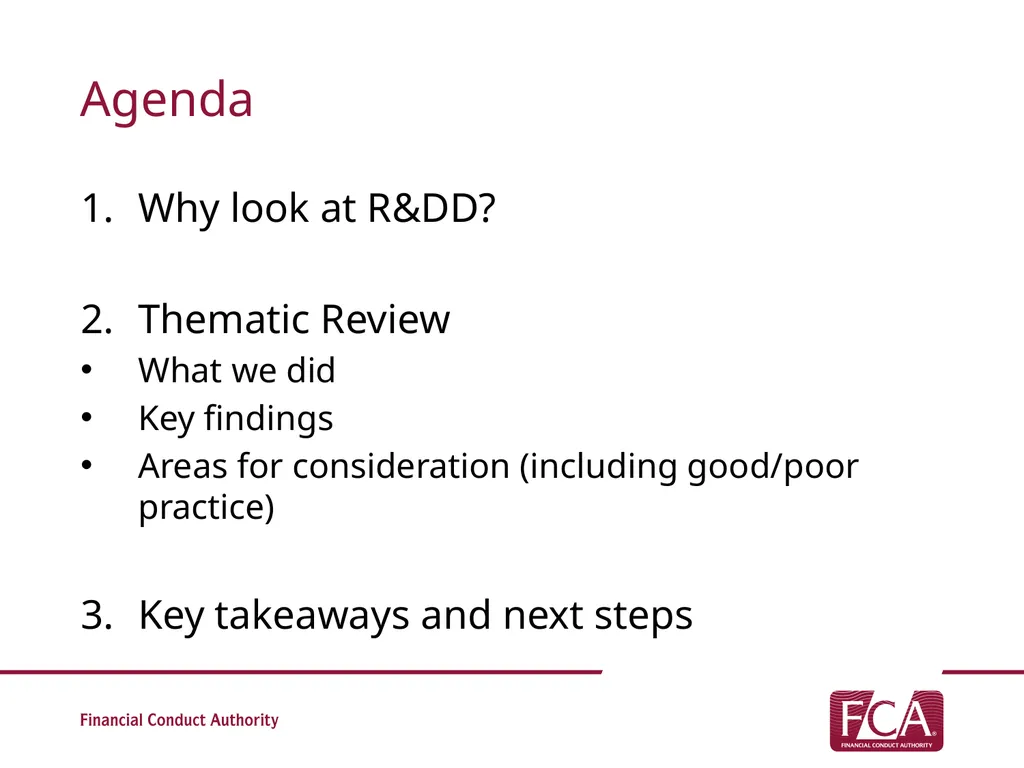
slide2. Agenda Why look at R&DD?
Thematic Review
What we did
Key findings
Areas for consideration (including good/poor practice)
Key takeaways and next steps 2<br>
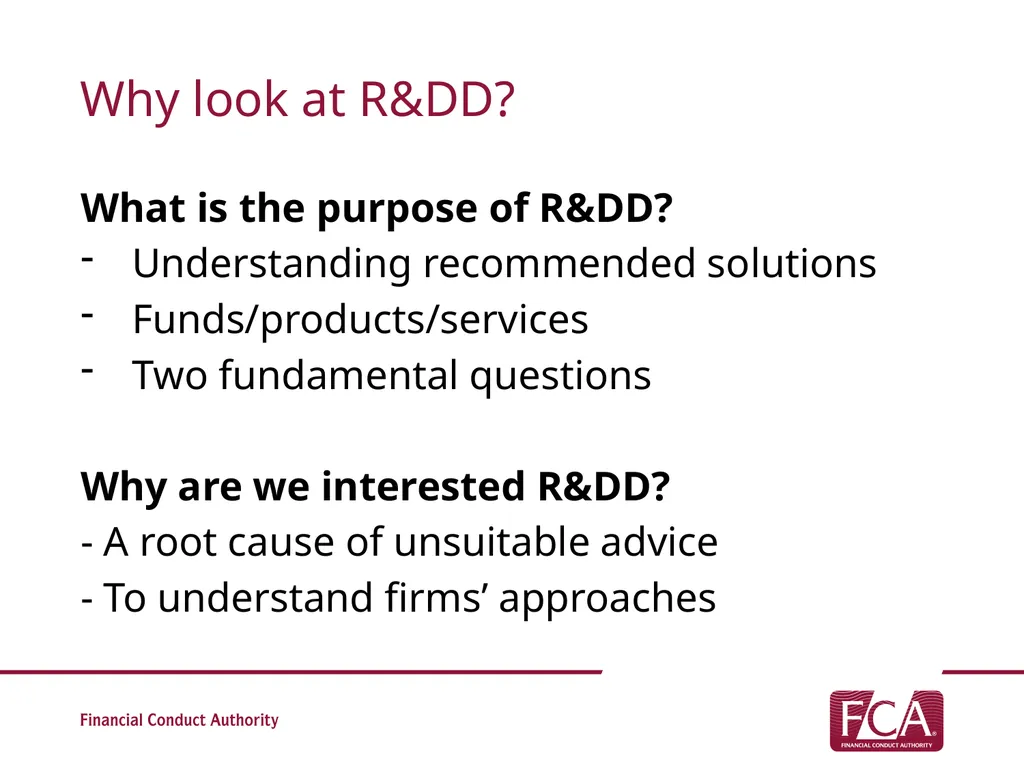
slide3. Why look at R&DD? What is the purpose of R&DD?
Understanding recommended solutions
Funds/products/services
Two fundamental questions
Why are we interested R&DD?
- A root cause of unsuitable advice
- To understand firms’ approaches 3<br>
slide4. What we did Pre-consultation
13 Advisory firms
3 Provider firms
7 Third party consultancies 4<br>
slide5. Key findings Majority of firms demonstrated elements of good practice
Often not replicated across the entire approach
Importance of culture of challenge 5<br>
slide6. Criteria for selecting an investment solution Prescription
Various criteria used for selecting investment solutions
Link to customer needs and objectives
Review of criteria 6<br>
slide7. Assessing risks Volatility
Various factors to consider including:
Risks of underlying investment
Product structure & complexity
Presence/Absence of protections
Fact vs opinion
Familiarity with product/provider/assets 7<br>
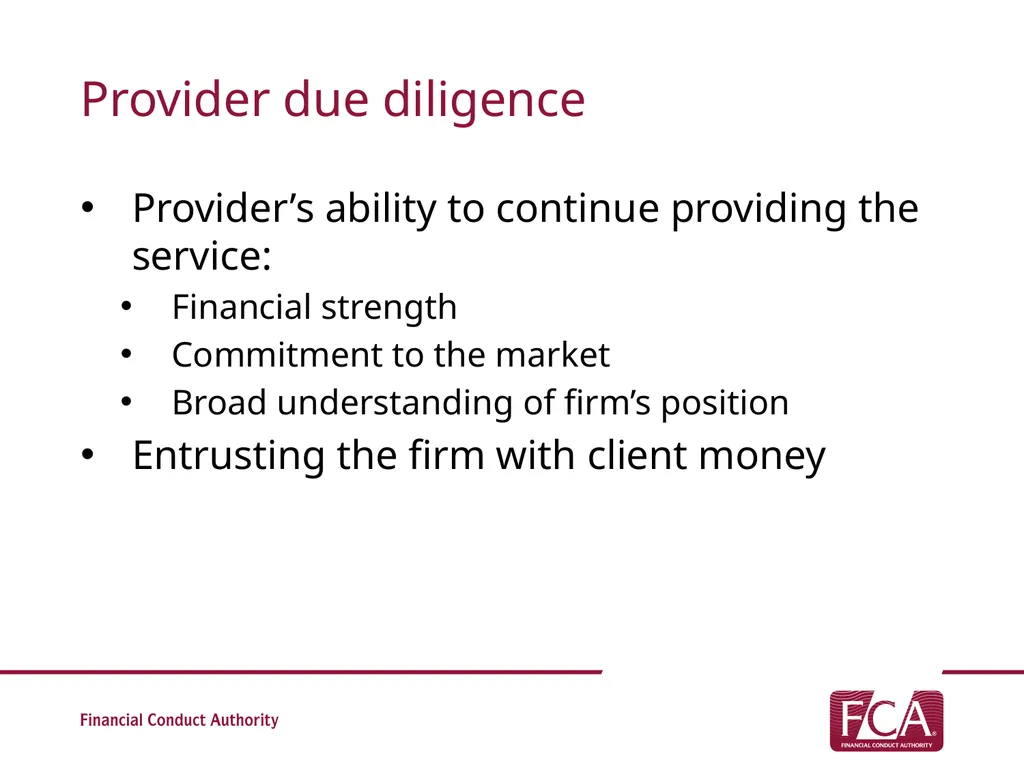
slide8. Provider due diligence Provider’s ability to continue providing the service:
Financial strength
Commitment to the market
Broad understanding of firm’s position
Entrusting the firm with client money 8<br>
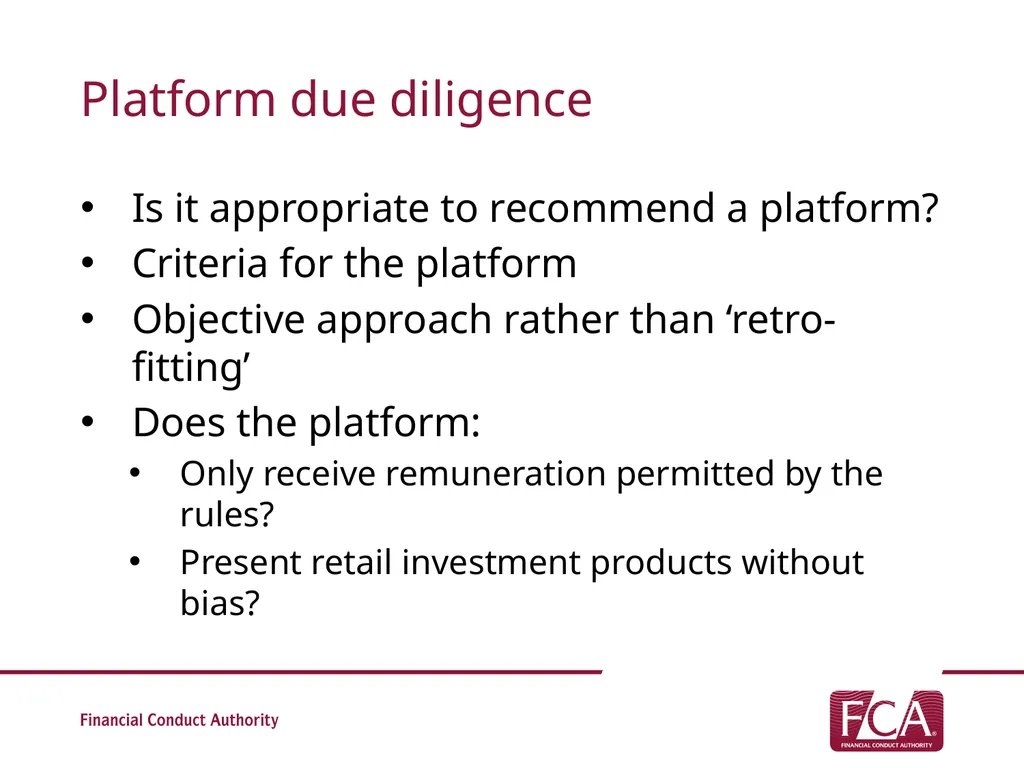
slide9. Platform due diligence Is it appropriate to recommend a platform?
Criteria for the platform
Objective approach rather than ‘retro-fitting’
Does the platform:
Only receive remuneration permitted by the rules?
Present retail investment products without bias? 9<br>
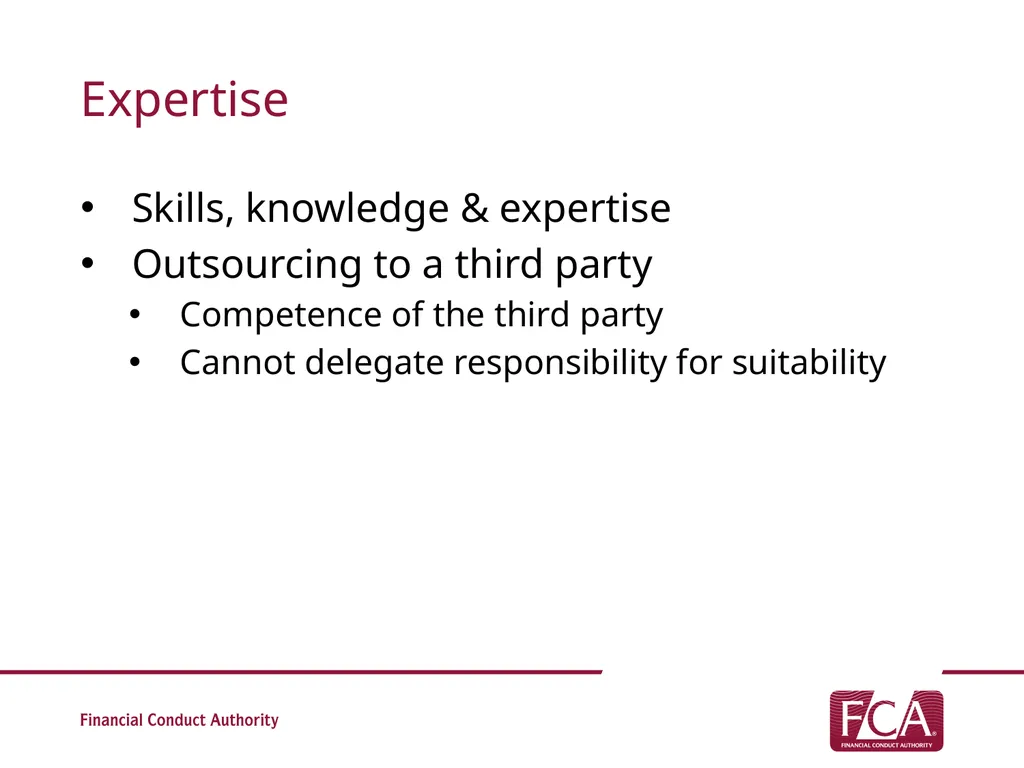
slide10. Expertise Skills, knowledge & expertise
Outsourcing to a third party
Competence of the third party
Cannot delegate responsibility for suitability 10<br>
slide11. Implementation Effective communication of R&DD results throughout the firm
Alerts
Training/guidance 11<br>
slide12. Ongoing reviews Constant change
Structure of markets
Proposition offerings
Your client banks
Revisit and refresh
Periodic reviews vs ad hoc reviews 12<br>
slide13. Key takeaways Culture of challenge
Revisit & refresh
Size doesn’t matter
TR16/1
Assessing suitability web-page
Watch this space 13<br>
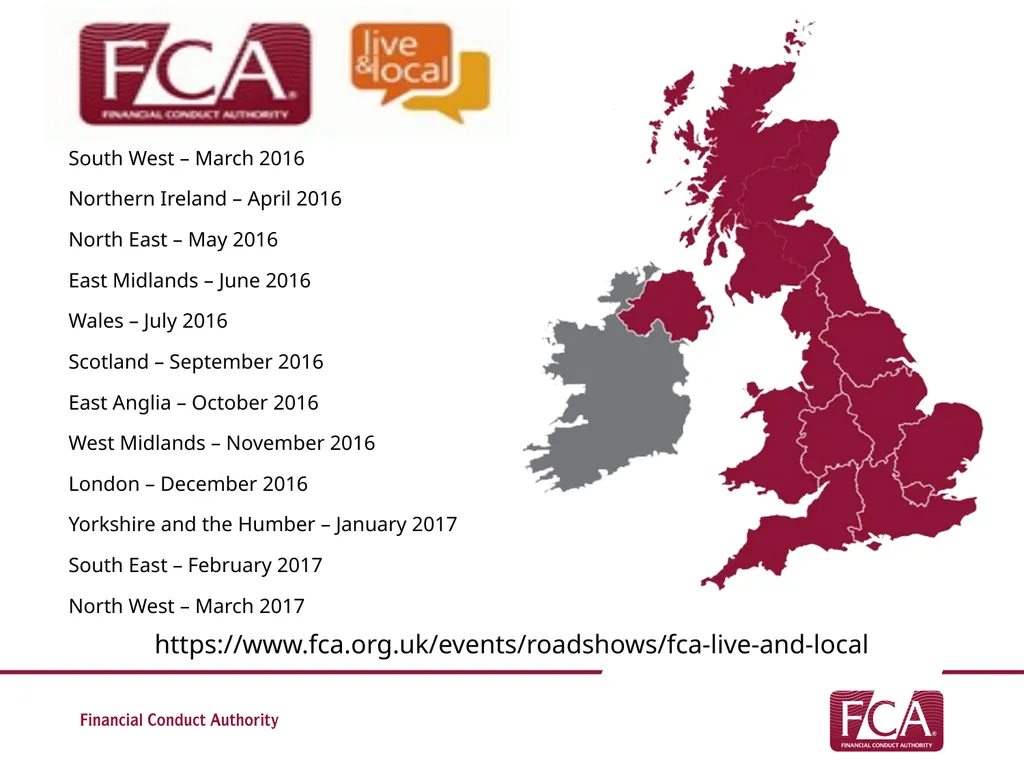
slide14. South West – March 2016
Northern Ireland – April 2016
North East – May 2016
East Midlands – June 2016
Wales – July 2016
Scotland – September 2016
East Anglia – October 2016
West Midlands – November 2016
London – December 2016
Yorkshire and the Humber – January 2017
South East – February 2017
North West – March 2017 14 https://www.fca.org.uk/events/roadshows/fca-live-and-local<br>
slide15. QUESTIONS? 15<br>
Research & Due Diligence
(R&DD) 1<br>
slide2. Agenda Why look at R&DD?
Thematic Review
What we did
Key findings
Areas for consideration (including good/poor practice)
Key takeaways and next steps 2<br>
slide3. Why look at R&DD? What is the purpose of R&DD?
Understanding recommended solutions
Funds/products/services
Two fundamental questions
Why are we interested R&DD?
- A root cause of unsuitable advice
- To understand firms’ approaches 3<br>
slide4. What we did Pre-consultation
13 Advisory firms
3 Provider firms
7 Third party consultancies 4<br>
slide5. Key findings Majority of firms demonstrated elements of good practice
Often not replicated across the entire approach
Importance of culture of challenge 5<br>
slide6. Criteria for selecting an investment solution Prescription
Various criteria used for selecting investment solutions
Link to customer needs and objectives
Review of criteria 6<br>
slide7. Assessing risks Volatility
Various factors to consider including:
Risks of underlying investment
Product structure & complexity
Presence/Absence of protections
Fact vs opinion
Familiarity with product/provider/assets 7<br>
slide8. Provider due diligence Provider’s ability to continue providing the service:
Financial strength
Commitment to the market
Broad understanding of firm’s position
Entrusting the firm with client money 8<br>
slide9. Platform due diligence Is it appropriate to recommend a platform?
Criteria for the platform
Objective approach rather than ‘retro-fitting’
Does the platform:
Only receive remuneration permitted by the rules?
Present retail investment products without bias? 9<br>
slide10. Expertise Skills, knowledge & expertise
Outsourcing to a third party
Competence of the third party
Cannot delegate responsibility for suitability 10<br>
slide11. Implementation Effective communication of R&DD results throughout the firm
Alerts
Training/guidance 11<br>
slide12. Ongoing reviews Constant change
Structure of markets
Proposition offerings
Your client banks
Revisit and refresh
Periodic reviews vs ad hoc reviews 12<br>
slide13. Key takeaways Culture of challenge
Revisit & refresh
Size doesn’t matter
TR16/1
Assessing suitability web-page
Watch this space 13<br>
slide14. South West – March 2016
Northern Ireland – April 2016
North East – May 2016
East Midlands – June 2016
Wales – July 2016
Scotland – September 2016
East Anglia – October 2016
West Midlands – November 2016
London – December 2016
Yorkshire and the Humber – January 2017
South East – February 2017
North West – March 2017 14 https://www.fca.org.uk/events/roadshows/fca-live-and-local<br>
slide15. QUESTIONS? 15<br>