
August 2023 Goal To help increase your knowledge
Description: August 2023 Goal To help increase your knowledge of: Seizures Epilepsy how to best support the student with epilepsy basic first aid procedures for seizures What is a Seizure? A seizure is a brief, temporary disturbance in the electrical
Related Topics
Download Presentation
"August 2023 Goal To help increase your knowledge" is the property of its rightful owner. Permission is granted to download and print the materials on this website for personal, non-commercial use only, and to display it on your personal computer provided you do not modify the materials and that you retain all copyright notices contained in the materials. By downloading content from our website, you accept the terms of this agreement.
Presentation Transcript
slide1. August 2023<br>
slide2. Goal To help increase your knowledge of:
Seizures
Epilepsy
how to best support the student with epilepsy
basic first aid procedures for seizures<br>
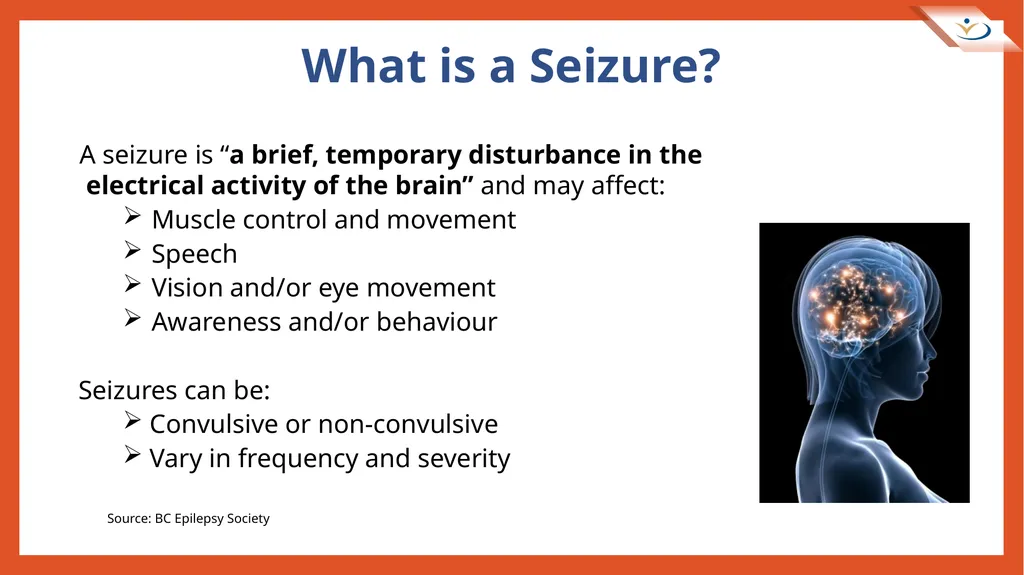
slide3. What is a Seizure? A seizure is “a brief, temporary disturbance in the electrical activity of the brain” and may affect:
Muscle control and movement
Speech
Vision and/or eye movement
Awareness and/or behaviour
Seizures can be:
Convulsive or non-convulsive
Vary in frequency and severity
Source: BC Epilepsy Society<br>
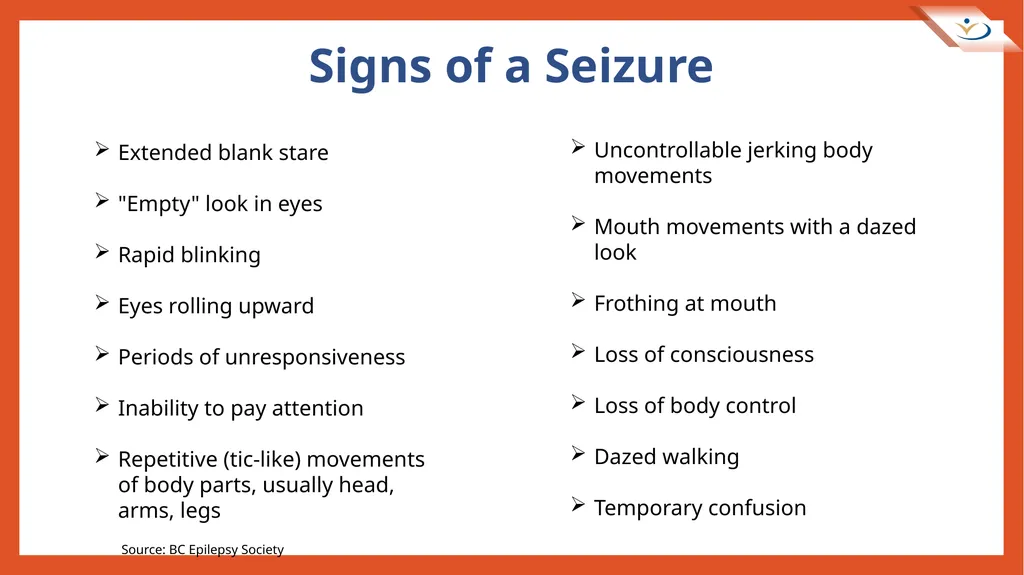
slide4. Signs of a Seizure Extended blank stare
"Empty" look in eyes
Rapid blinking
Eyes rolling upward
Periods of unresponsiveness
Inability to pay attention
Repetitive (tic-like) movements of body parts, usually head, arms, legs Uncontrollable jerking body movements
Mouth movements with a dazed look
Frothing at mouth
Loss of consciousness
Loss of body control
Dazed walking
Temporary confusion Source: BC Epilepsy Society<br>
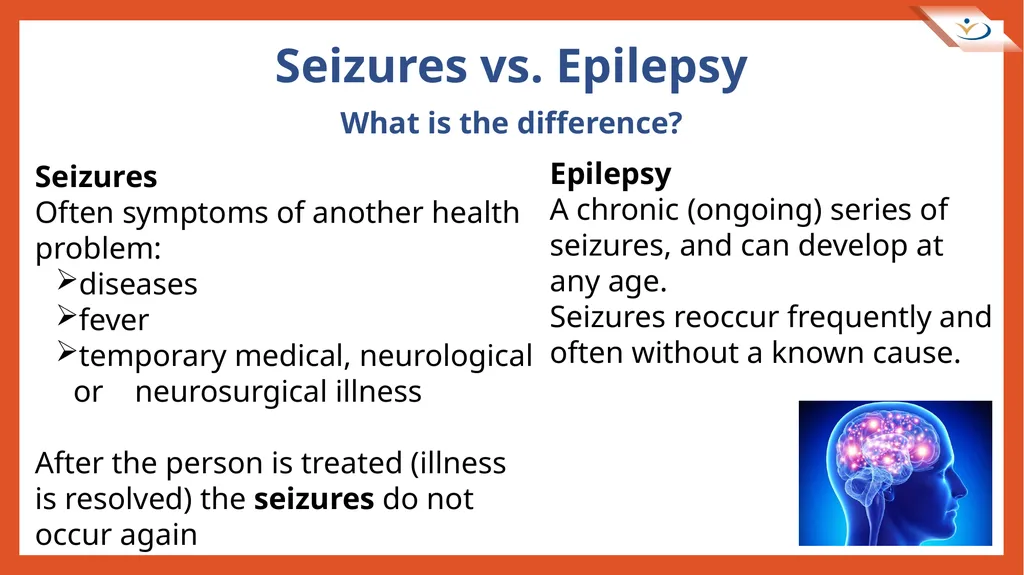
slide5. Seizures vs. Epilepsy
What is the difference? Seizures
Often symptoms of another health problem:
diseases
fever
temporary medical, neurological or neurosurgical illness
After the person is treated (illness is resolved) the seizures do not occur again Epilepsy
A chronic (ongoing) series of seizures, and can develop at any age.
Seizures reoccur frequently and often without a known cause.<br>
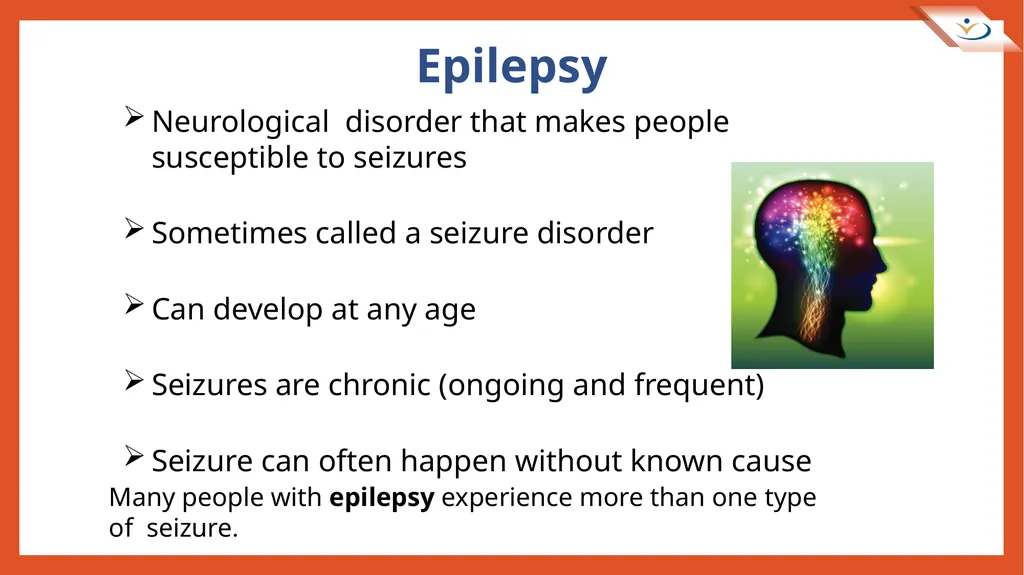
slide6. Epilepsy Neurological disorder that makes people susceptible to seizures
Sometimes called a seizure disorder
Can develop at any age
Seizures are chronic (ongoing and frequent)
Seizure can often happen without known cause
Many people with epilepsy experience more than one type of seizure.<br>
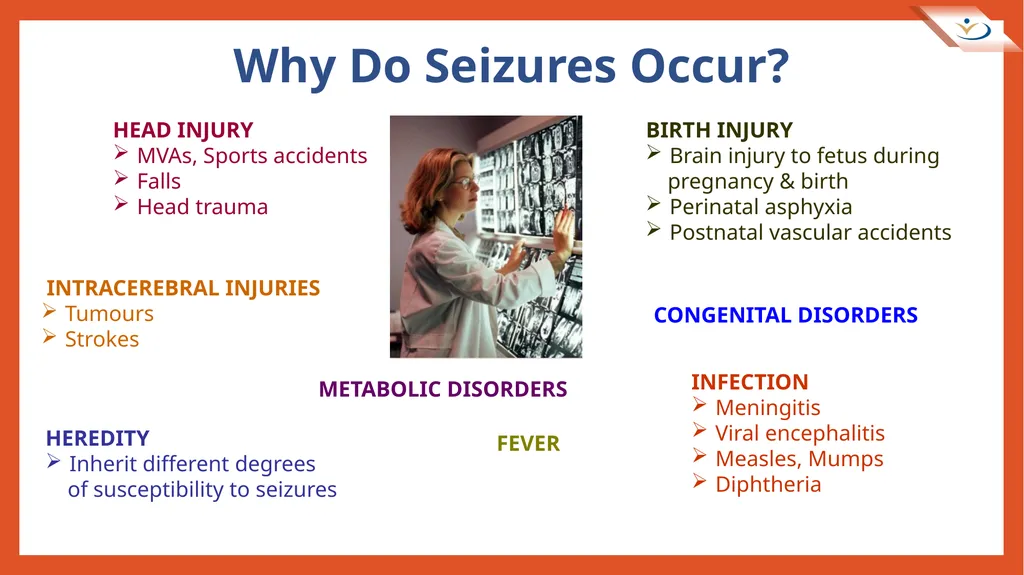
slide7. Why Do Seizures Occur? HEAD INJURY
MVAs, Sports accidents
Falls
Head trauma BIRTH INJURY
Brain injury to fetus during
pregnancy & birth
Perinatal asphyxia
Postnatal vascular accidents INTRACEREBRAL INJURIES
Tumours
Strokes METABOLIC DISORDERS HEREDITY
Inherit different degrees
of susceptibility to seizures FEVER CONGENITAL DISORDERS INFECTION
Meningitis
Viral encephalitis
Measles, Mumps
Diphtheria<br>
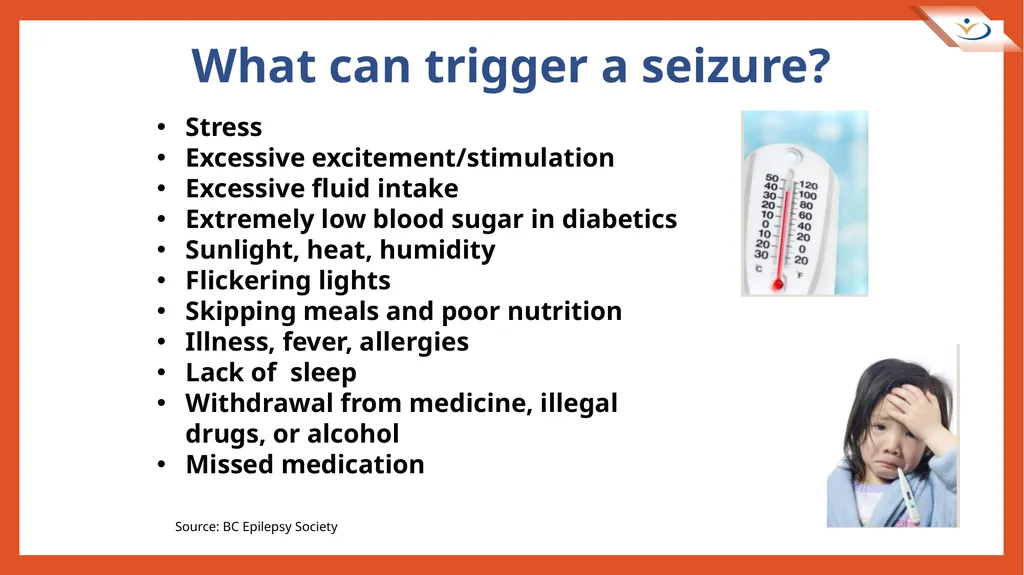
slide8. What can trigger a seizure? Stress
Excessive excitement/stimulation
Excessive fluid intake
Extremely low blood sugar in diabetics
Sunlight, heat, humidity
Flickering lights
Skipping meals and poor nutrition
Illness, fever, allergies
Lack of sleep
Withdrawal from medicine, illegal drugs, or alcohol
Missed medication Source: BC Epilepsy Society<br>
slide9. Types of Seizures Focal (partial) GENERALIZED Occurs in PART of the brain Occurs in the WHOLE brain Simple Partial
Complex Partial Tonic
Atonic
Tonic-clonic
Myoclonic
Absence https://www.youtube.com/watch?v=MZBGNVlaa2s<br>
slide10. Treatment Medication
Most common
Seizures can be completely controlled in about 70% of all cases
A control, not a cure
*Goal: To use the least amount of drugs and to have the least amount of side effects
Surgery may be effective for some children
Special diet may be used in some cases<br>
slide11. How does epilepsy affect a child at school? When managed effectively, and with support and planning, students with epilepsy should be encouraged to participate in all school activities.
Some students may need extra support at school due to difficulties with learning, behaviour and/or mobility.
Some children may occasionally be more sleepy than usual due to a recent medication adjustment. This should be temporary.<br>
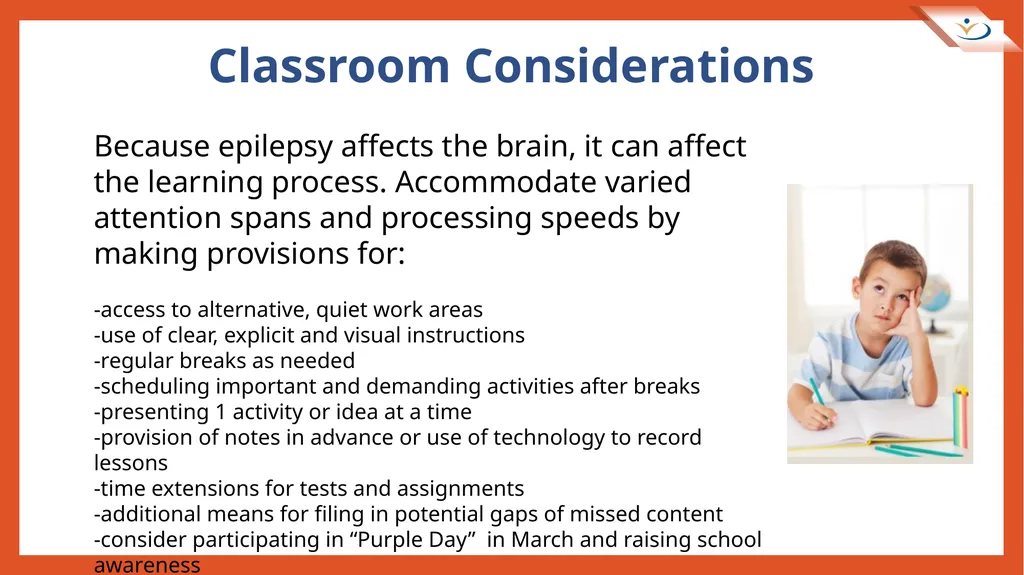
slide12. Classroom Considerations Because epilepsy affects the brain, it can affect the learning process. Accommodate varied attention spans and processing speeds by making provisions for:
-access to alternative, quiet work areas
-use of clear, explicit and visual instructions
-regular breaks as needed
-scheduling important and demanding activities after breaks
-presenting 1 activity or idea at a time
-provision of notes in advance or use of technology to record lessons
-time extensions for tests and assignments
-additional means for filing in potential gaps of missed content
-consider participating in “Purple Day” in March and raising school awareness
Source: Supporting Students With Epilepsy Section 3 (epilepsyontario.org)<br>
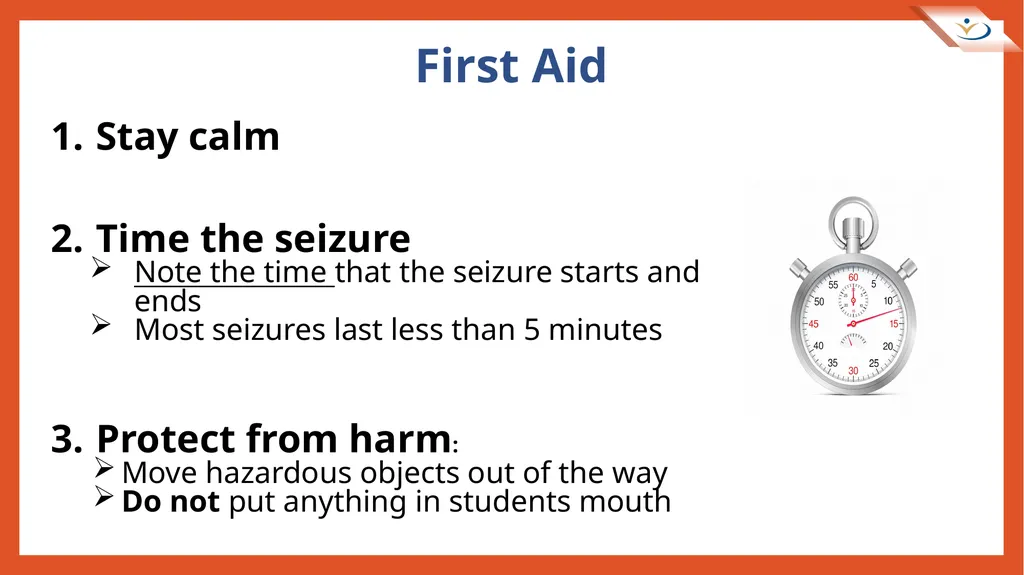
slide13. First Aid Stay calm
Time the seizure
Note the time that the seizure starts and ends
Most seizures last less than 5 minutes
Protect from harm:
Move hazardous objects out of the way
Do not put anything in students mouth<br>
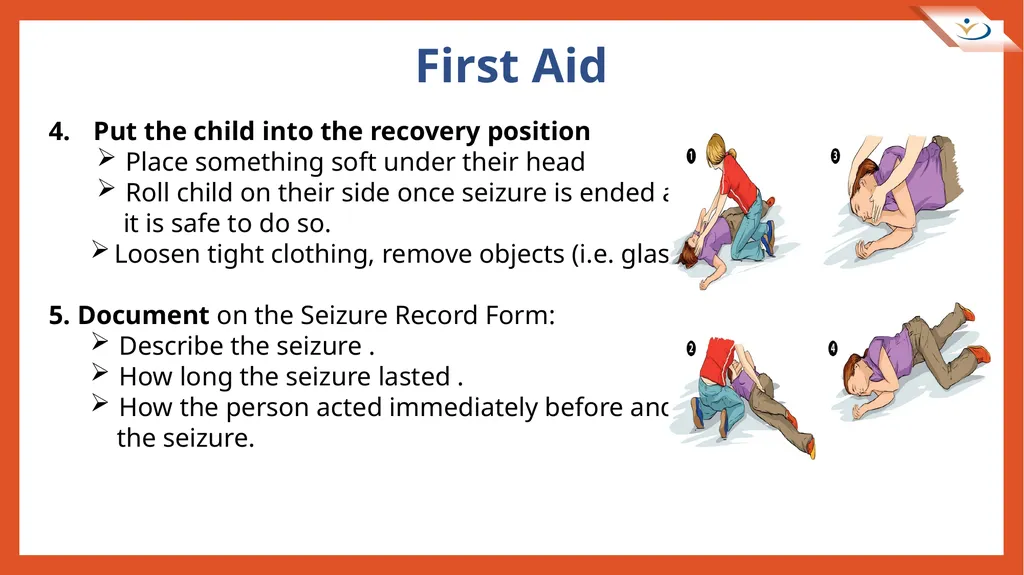
slide14. First Aid Put the child into the recovery position
Place something soft under their head
Roll child on their side once seizure is ended and
it is safe to do so.
Loosen tight clothing, remove objects (i.e. glasses).
5. Document on the Seizure Record Form:
Describe the seizure .
How long the seizure lasted .
How the person acted immediately before and after
the seizure.<br>
slide15. Recovery Reassure and provide comfort
Talk gently to comfort and reassure the student
Stay with them until they are re-oriented.
Post seizure period:
Check for injuries
Call parents if necessary/as per care plan
Allow student to change clothing if necessary
Allow student to rest or sleep
Student may complain of headache or be confused
No food or drink until the student is fully awake and alert
Have someone remain with student until fully recovered<br>
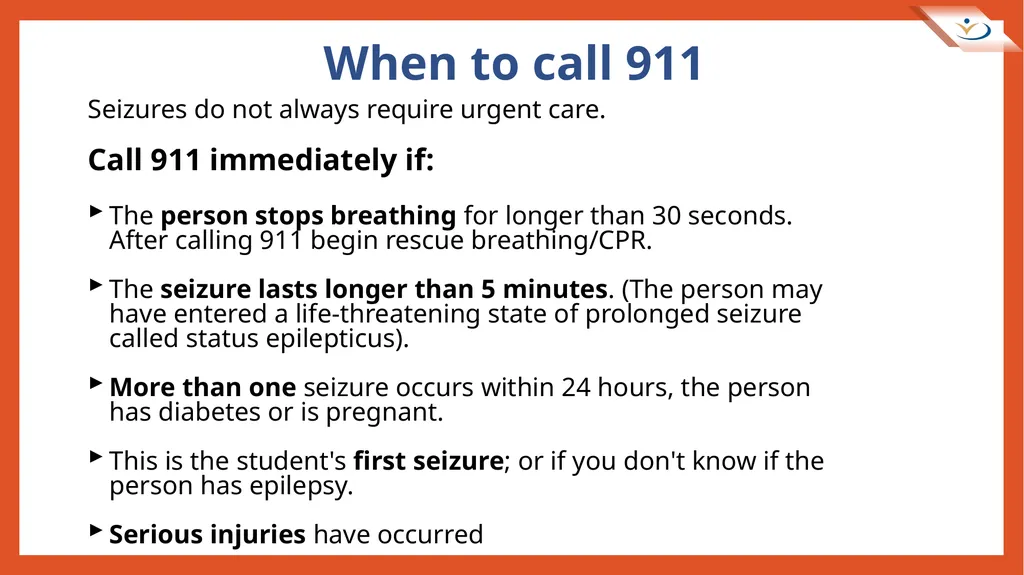
slide16. When to call 911 Seizures do not always require urgent care.
Call 911 immediately if:
The person stops breathing for longer than 30 seconds.
After calling 911 begin rescue breathing/CPR.
The seizure lasts longer than 5 minutes. (The person may have entered a life-threatening state of prolonged seizure called status epilepticus).
More than one seizure occurs within 24 hours, the person has diabetes or is pregnant.
This is the student's first seizure; or if you don't know if the person has epilepsy.
Serious injuries have occurred<br>
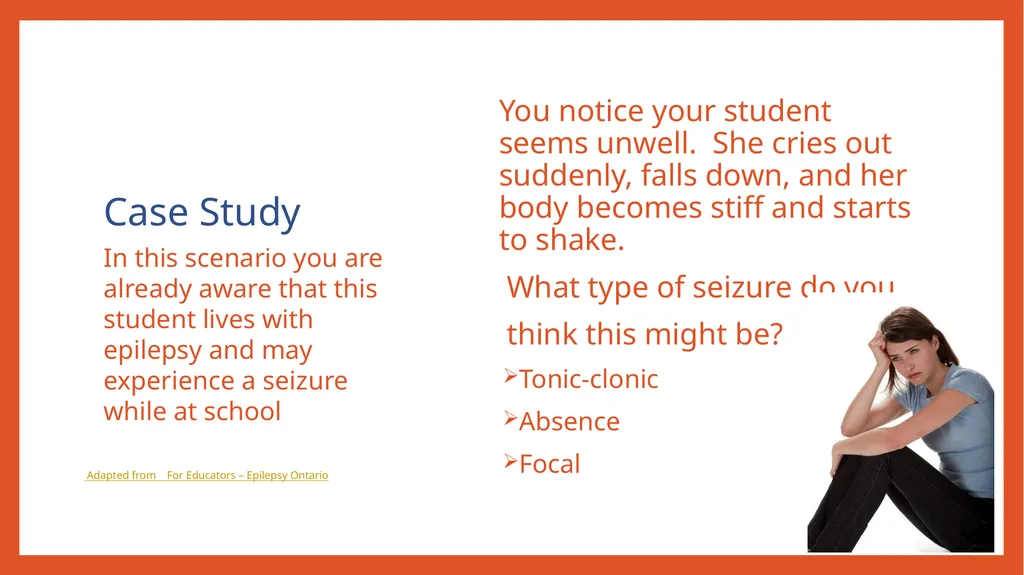
slide17. Case Study You notice your student seems unwell. She cries out suddenly, falls down, and her body becomes stiff and starts to shake.
What type of seizure do you
think this might be?
Tonic-clonic
Absence
Focal In this scenario you are already aware that this student lives with epilepsy and may experience a seizure while at school Adapted from For Educators – Epilepsy Ontario<br>
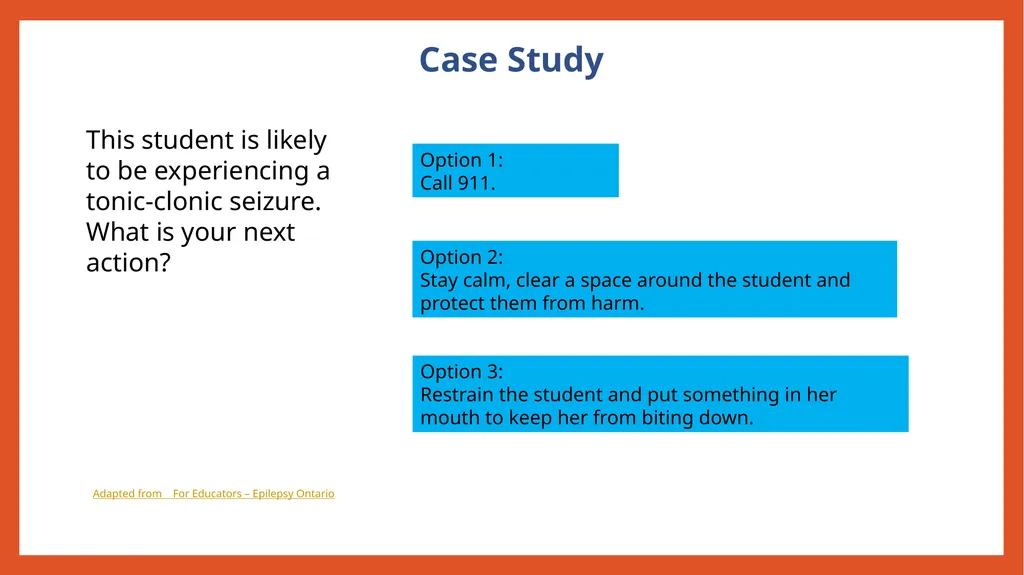
slide18. Case Study This student is likely to be experiencing a tonic-clonic seizure.
What is your next action? Option 1:
Call 911. Option 2:
Stay calm, clear a space around the student and protect them from harm. Option 3:
Restrain the student and put something in her mouth to keep her from biting down. Adapted from For Educators – Epilepsy Ontario<br>
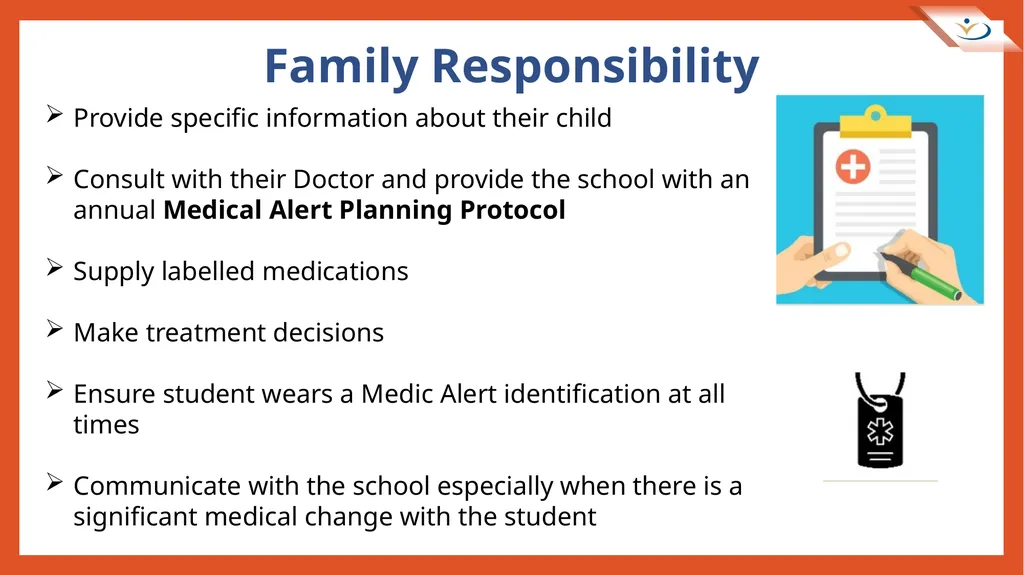
slide19. Family Responsibility Provide specific information about their child
Consult with their Doctor and provide the school with an annual Medical Alert Planning Protocol
Supply labelled medications
Make treatment decisions
Ensure student wears a Medic Alert identification at all times
Communicate with the school especially when there is a significant medical change with the student<br>
slide20. School Responsibility Ensure that school staff are aware of :
which students have seizures
seizure management protocol and seizure first aid
School District policy regarding medical conditions at school
Medical Alert Planning and Request for Medication forms have been received from the family
Safely store the student’s labelled medications
Document seizures in a seizure record
Communicate with the family<br>
slide21. Questions ? For more information visit the Medical Conditions at School page on the Interior Health website<br>
slide2. Goal To help increase your knowledge of:
Seizures
Epilepsy
how to best support the student with epilepsy
basic first aid procedures for seizures<br>
slide3. What is a Seizure? A seizure is “a brief, temporary disturbance in the electrical activity of the brain” and may affect:
Muscle control and movement
Speech
Vision and/or eye movement
Awareness and/or behaviour
Seizures can be:
Convulsive or non-convulsive
Vary in frequency and severity
Source: BC Epilepsy Society<br>
slide4. Signs of a Seizure Extended blank stare
"Empty" look in eyes
Rapid blinking
Eyes rolling upward
Periods of unresponsiveness
Inability to pay attention
Repetitive (tic-like) movements of body parts, usually head, arms, legs Uncontrollable jerking body movements
Mouth movements with a dazed look
Frothing at mouth
Loss of consciousness
Loss of body control
Dazed walking
Temporary confusion Source: BC Epilepsy Society<br>
slide5. Seizures vs. Epilepsy
What is the difference? Seizures
Often symptoms of another health problem:
diseases
fever
temporary medical, neurological or neurosurgical illness
After the person is treated (illness is resolved) the seizures do not occur again Epilepsy
A chronic (ongoing) series of seizures, and can develop at any age.
Seizures reoccur frequently and often without a known cause.<br>
slide6. Epilepsy Neurological disorder that makes people susceptible to seizures
Sometimes called a seizure disorder
Can develop at any age
Seizures are chronic (ongoing and frequent)
Seizure can often happen without known cause
Many people with epilepsy experience more than one type of seizure.<br>
slide7. Why Do Seizures Occur? HEAD INJURY
MVAs, Sports accidents
Falls
Head trauma BIRTH INJURY
Brain injury to fetus during
pregnancy & birth
Perinatal asphyxia
Postnatal vascular accidents INTRACEREBRAL INJURIES
Tumours
Strokes METABOLIC DISORDERS HEREDITY
Inherit different degrees
of susceptibility to seizures FEVER CONGENITAL DISORDERS INFECTION
Meningitis
Viral encephalitis
Measles, Mumps
Diphtheria<br>
slide8. What can trigger a seizure? Stress
Excessive excitement/stimulation
Excessive fluid intake
Extremely low blood sugar in diabetics
Sunlight, heat, humidity
Flickering lights
Skipping meals and poor nutrition
Illness, fever, allergies
Lack of sleep
Withdrawal from medicine, illegal drugs, or alcohol
Missed medication Source: BC Epilepsy Society<br>
slide9. Types of Seizures Focal (partial) GENERALIZED Occurs in PART of the brain Occurs in the WHOLE brain Simple Partial
Complex Partial Tonic
Atonic
Tonic-clonic
Myoclonic
Absence https://www.youtube.com/watch?v=MZBGNVlaa2s<br>
slide10. Treatment Medication
Most common
Seizures can be completely controlled in about 70% of all cases
A control, not a cure
*Goal: To use the least amount of drugs and to have the least amount of side effects
Surgery may be effective for some children
Special diet may be used in some cases<br>
slide11. How does epilepsy affect a child at school? When managed effectively, and with support and planning, students with epilepsy should be encouraged to participate in all school activities.
Some students may need extra support at school due to difficulties with learning, behaviour and/or mobility.
Some children may occasionally be more sleepy than usual due to a recent medication adjustment. This should be temporary.<br>
slide12. Classroom Considerations Because epilepsy affects the brain, it can affect the learning process. Accommodate varied attention spans and processing speeds by making provisions for:
-access to alternative, quiet work areas
-use of clear, explicit and visual instructions
-regular breaks as needed
-scheduling important and demanding activities after breaks
-presenting 1 activity or idea at a time
-provision of notes in advance or use of technology to record lessons
-time extensions for tests and assignments
-additional means for filing in potential gaps of missed content
-consider participating in “Purple Day” in March and raising school awareness
Source: Supporting Students With Epilepsy Section 3 (epilepsyontario.org)<br>
slide13. First Aid Stay calm
Time the seizure
Note the time that the seizure starts and ends
Most seizures last less than 5 minutes
Protect from harm:
Move hazardous objects out of the way
Do not put anything in students mouth<br>
slide14. First Aid Put the child into the recovery position
Place something soft under their head
Roll child on their side once seizure is ended and
it is safe to do so.
Loosen tight clothing, remove objects (i.e. glasses).
5. Document on the Seizure Record Form:
Describe the seizure .
How long the seizure lasted .
How the person acted immediately before and after
the seizure.<br>
slide15. Recovery Reassure and provide comfort
Talk gently to comfort and reassure the student
Stay with them until they are re-oriented.
Post seizure period:
Check for injuries
Call parents if necessary/as per care plan
Allow student to change clothing if necessary
Allow student to rest or sleep
Student may complain of headache or be confused
No food or drink until the student is fully awake and alert
Have someone remain with student until fully recovered<br>
slide16. When to call 911 Seizures do not always require urgent care.
Call 911 immediately if:
The person stops breathing for longer than 30 seconds.
After calling 911 begin rescue breathing/CPR.
The seizure lasts longer than 5 minutes. (The person may have entered a life-threatening state of prolonged seizure called status epilepticus).
More than one seizure occurs within 24 hours, the person has diabetes or is pregnant.
This is the student's first seizure; or if you don't know if the person has epilepsy.
Serious injuries have occurred<br>
slide17. Case Study You notice your student seems unwell. She cries out suddenly, falls down, and her body becomes stiff and starts to shake.
What type of seizure do you
think this might be?
Tonic-clonic
Absence
Focal In this scenario you are already aware that this student lives with epilepsy and may experience a seizure while at school Adapted from For Educators – Epilepsy Ontario<br>
slide18. Case Study This student is likely to be experiencing a tonic-clonic seizure.
What is your next action? Option 1:
Call 911. Option 2:
Stay calm, clear a space around the student and protect them from harm. Option 3:
Restrain the student and put something in her mouth to keep her from biting down. Adapted from For Educators – Epilepsy Ontario<br>
slide19. Family Responsibility Provide specific information about their child
Consult with their Doctor and provide the school with an annual Medical Alert Planning Protocol
Supply labelled medications
Make treatment decisions
Ensure student wears a Medic Alert identification at all times
Communicate with the school especially when there is a significant medical change with the student<br>
slide20. School Responsibility Ensure that school staff are aware of :
which students have seizures
seizure management protocol and seizure first aid
School District policy regarding medical conditions at school
Medical Alert Planning and Request for Medication forms have been received from the family
Safely store the student’s labelled medications
Document seizures in a seizure record
Communicate with the family<br>
slide21. Questions ? For more information visit the Medical Conditions at School page on the Interior Health website<br>