Automotive Grade 10 Joining Methods(Locking Devices) Locking devices We use locking devices to prevent nuts from wearing loose due to movement and vibration. They can be divided into three main groups: friction-locking devices,
"Automotive Grade 10 Joining Methods(Locking" is the property of its rightful owner. Permission is granted to
download and print the materials on this website for personal, non-commercial use only, and to display it
on your personal computer provided you do not modify the materials and that you retain all copyright
notices contained in the materials. By downloading content from our website, you accept the terms of this
agreement.
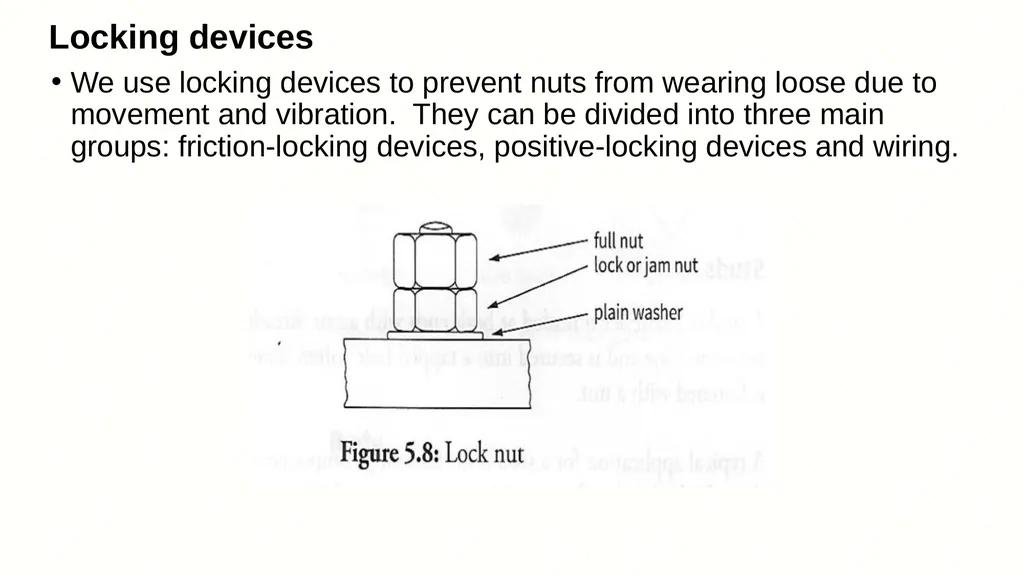
Locking devices We use locking devices to prevent nuts from wearing loose due to movement and vibration. They can be divided into three main groups: friction-locking devices, positive-locking devices and wiring.<br>
03
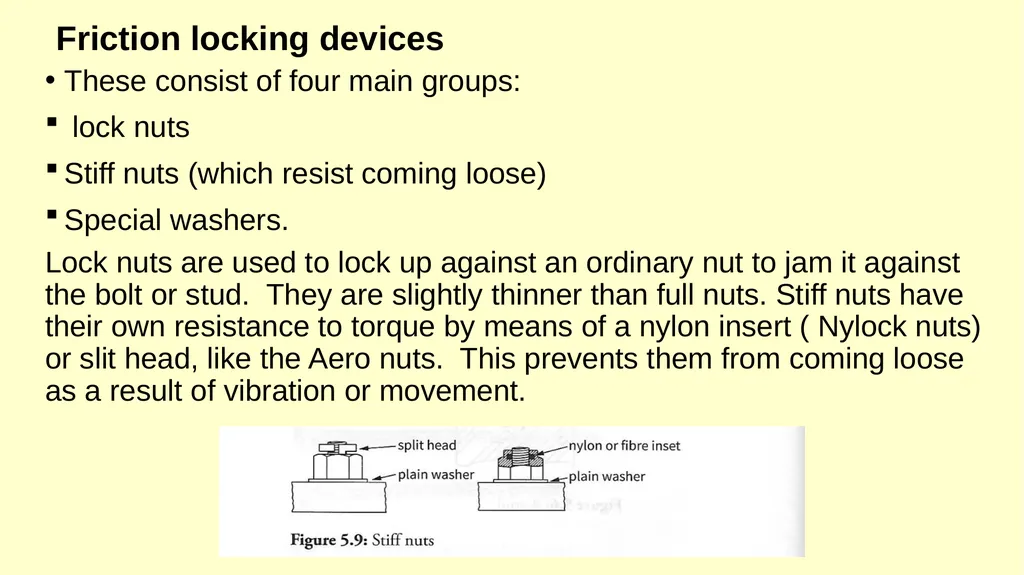
Friction locking devices These consist of four main groups:
lock nuts
Stiff nuts (which resist coming loose)
Special washers.
Lock nuts are used to lock up against an ordinary nut to jam it against the bolt or stud. They are slightly thinner than full nuts. Stiff nuts have their own resistance to torque by means of a nylon insert ( Nylock nuts) or slit head, like the Aero nuts. This prevents them from coming loose as a result of vibration or movement.<br>
04
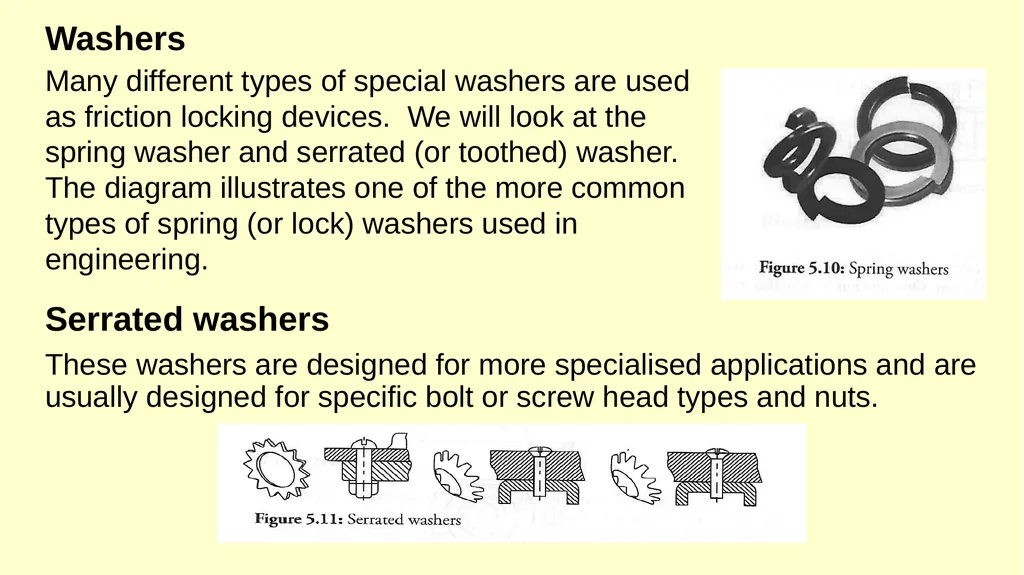
Washers Many different types of special washers are used
as friction locking devices. We will look at the
spring washer and serrated (or toothed) washer.
The diagram illustrates one of the more common
types of spring (or lock) washers used in
engineering.
Serrated washers
These washers are designed for more specialised applications and are usually designed for specific bolt or screw head types and nuts.<br>
05
Positive locking devices These devices tighten nuts very securely and can be diivided into four main categories.
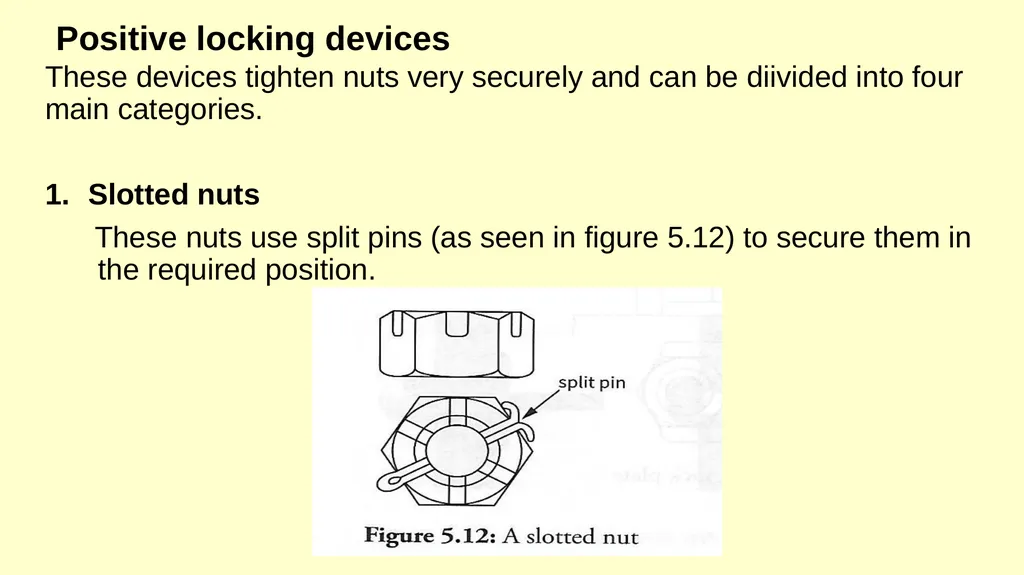
Slotted nuts
These nuts use split pins (as seen in figure 5.12) to secure them in the required position.<br>
06
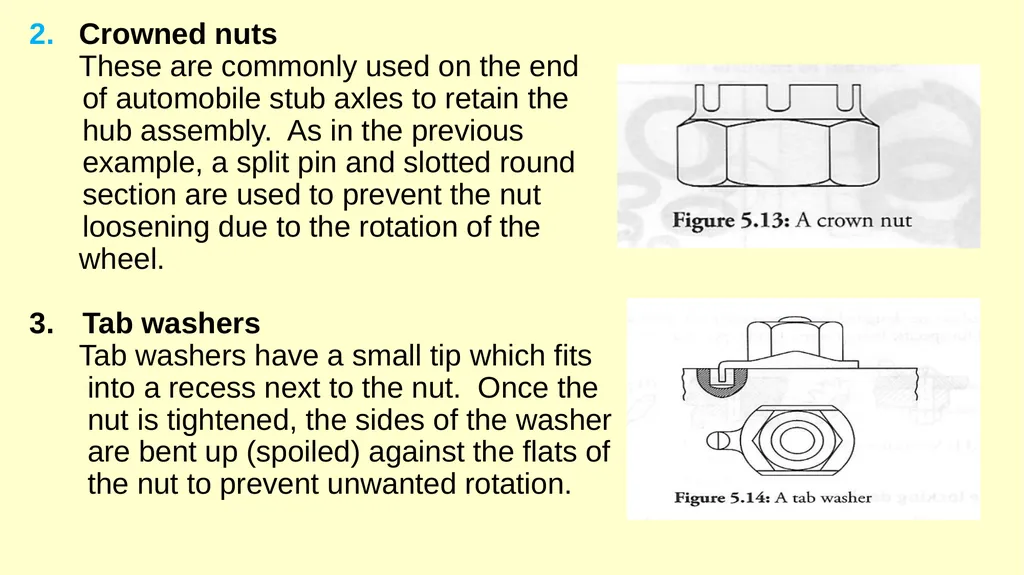
2. Crowned nuts
These are commonly used on the end
of automobile stub axles to retain the
hub assembly. As in the previous
example, a split pin and slotted round
section are used to prevent the nut
loosening due to the rotation of the
wheel.
Tab washers
Tab washers have a small tip which fits
into a recess next to the nut. Once the
nut is tightened, the sides of the washer
are bent up (spoiled) against the flats of
the nut to prevent unwanted rotation.<br>
07
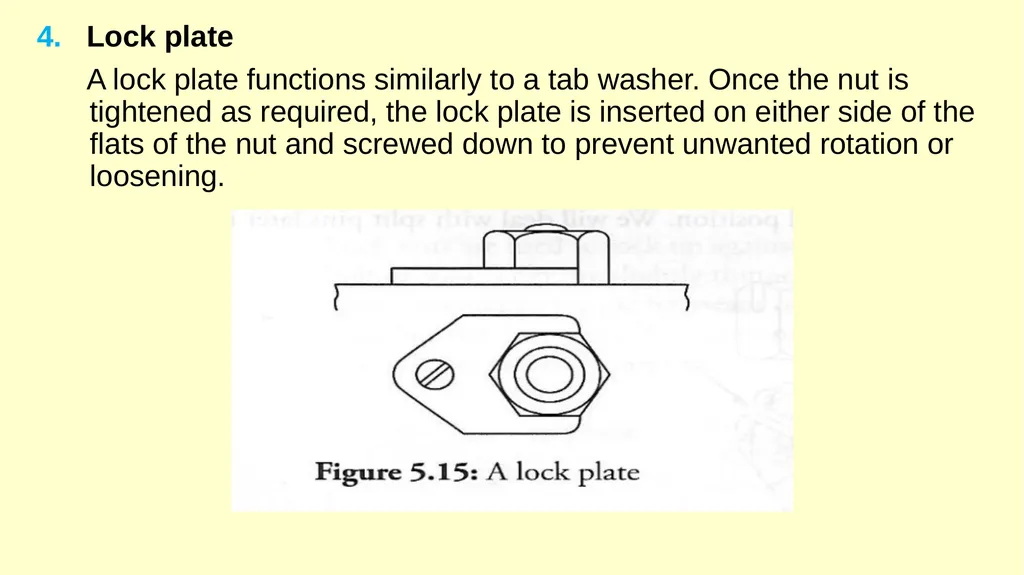
4. Lock plate
A lock plate functions similarly to a tab washer. Once the nut is tightened as required, the lock plate is inserted on either side of the flats of the nut and screwed down to prevent unwanted rotation or loosening.<br>