03
Direct Fuel Injection (1 of 2) Port Injection vs. Direct Injection
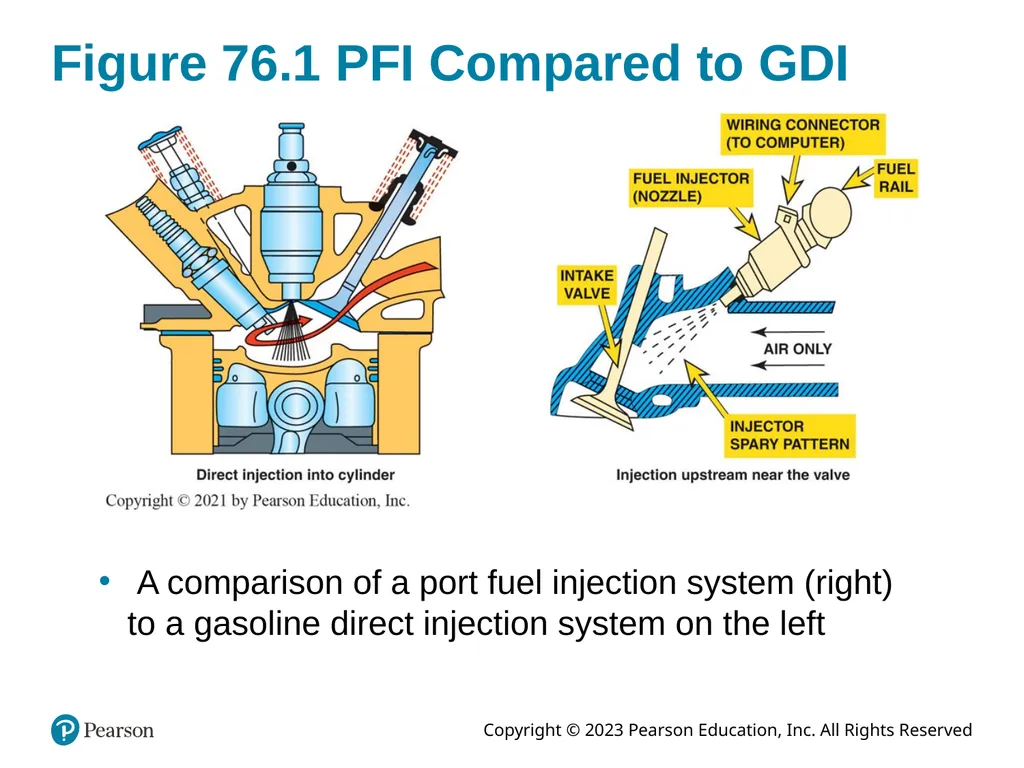
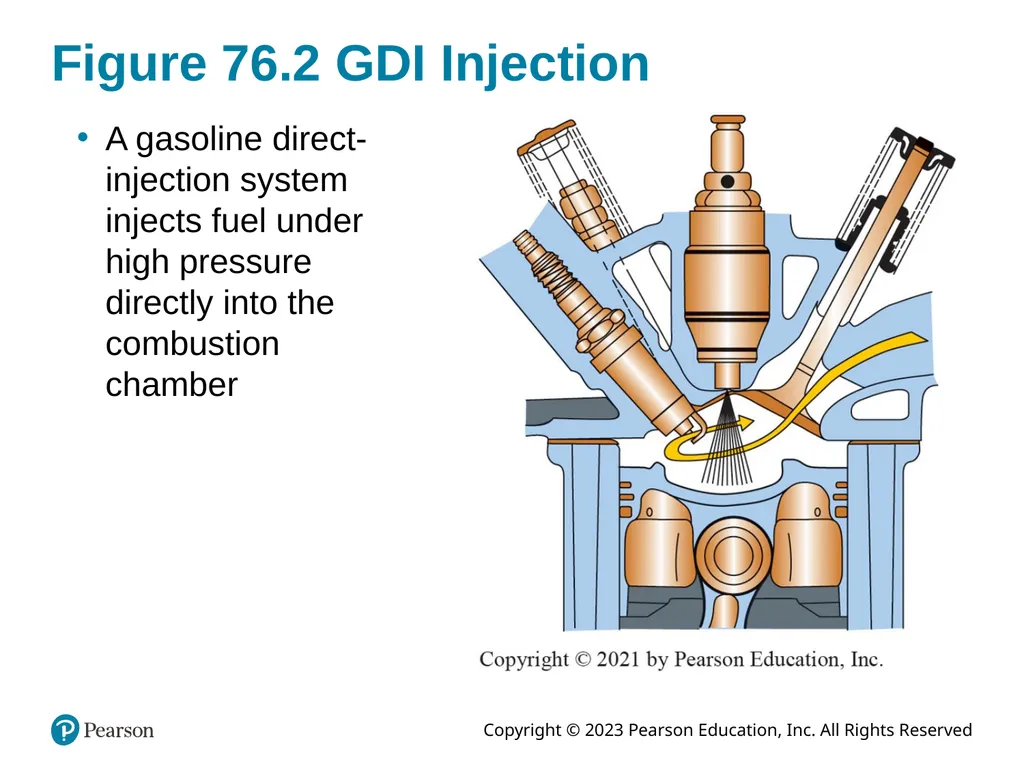
In G D I system, fuel is squirted directly into combustion chamber.
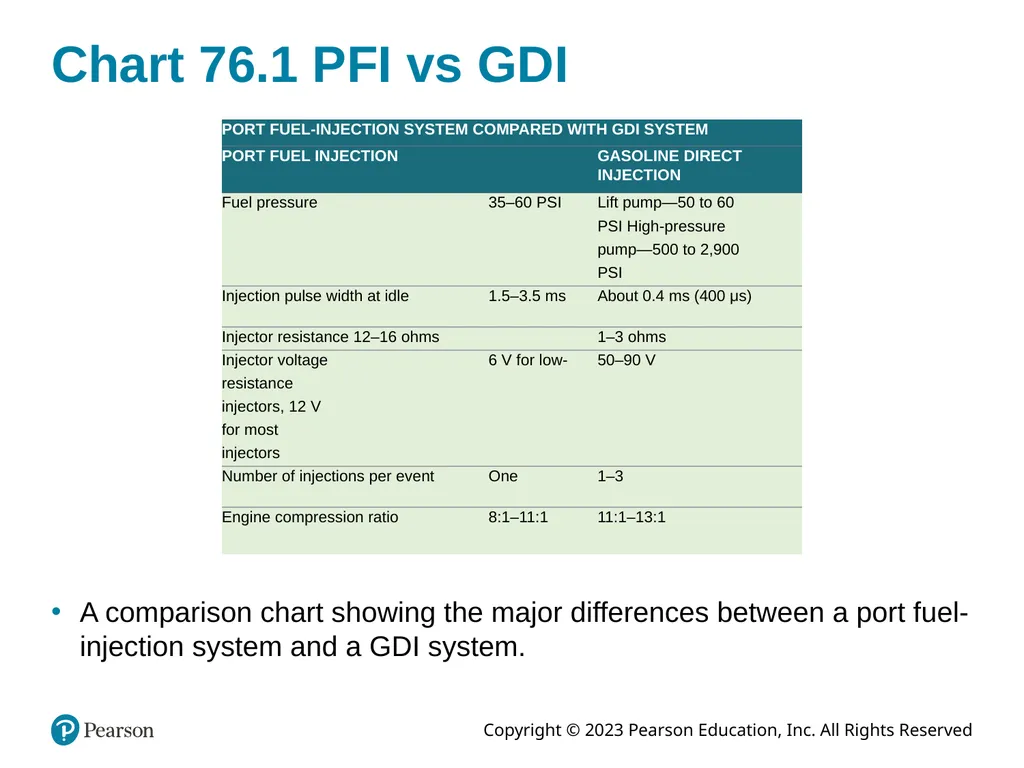
In a port fuel-injection system, there is constant fuel pressure but variable injector pulse width.
In a G D I, there is almost constant injector pulse width with varying fuel pressure.
Parts and Operation
A direct-injection system sprays high-pressure fuel, up to 2,900 P S I, into the combustion chamber.<br>
04
Direct Fuel Injection (2 of 2) Advantages of Gasoline Direct Injection
Improved fuel economy and lower emissions
Higher compression ratio for higher engine efficiency
Use of lower-octane gasoline
Higher volumetric efficiency
Disadvantages of Gasoline Direct Injection
Higher cost due to high-pressure pump and injectors
More components compared with port fuel injection
Higher N Ox emissions<br>
05
Figure 76.1 PFI Compared to GDI A comparison of a port fuel injection system (right) to a gasoline direct injection system on the left<br>
06
Figure 76.2 GDI Injection A gasoline direct-injection system injects fuel under high pressure directly into the combustion chamber<br>
07
Question 1: ? What are two advantages of gasoline direct injection compared with port fuel injection?<br>
08
Answer 1 Better fuel economy and lower emissions.<br>
09
Direct-Injection Fuel Delivery System (1 of 2) Low-Pressure Supply Pump
The fuel pump in the fuel tank supplies fuel to the high-pressure fuel pump at a pressure of approximately 60 P S I.
High-Pressure Pump
A typical G D I high-pressure pump has a range of between 500 P S I (3,440 kPa) and 2,900 P S I (15,200 kPa) during engine operation.<br>
10
Direct-Injection Fuel Delivery System (2 of 2) Fuel Rail
The fuel rail stores the fuel from the high-pressure pump and stores high-pressure fuel for use to each injector.
Fuel Pressure Regulator
An electric pressure-control valve is installed between the pump inlet and outlet valves.<br>
11
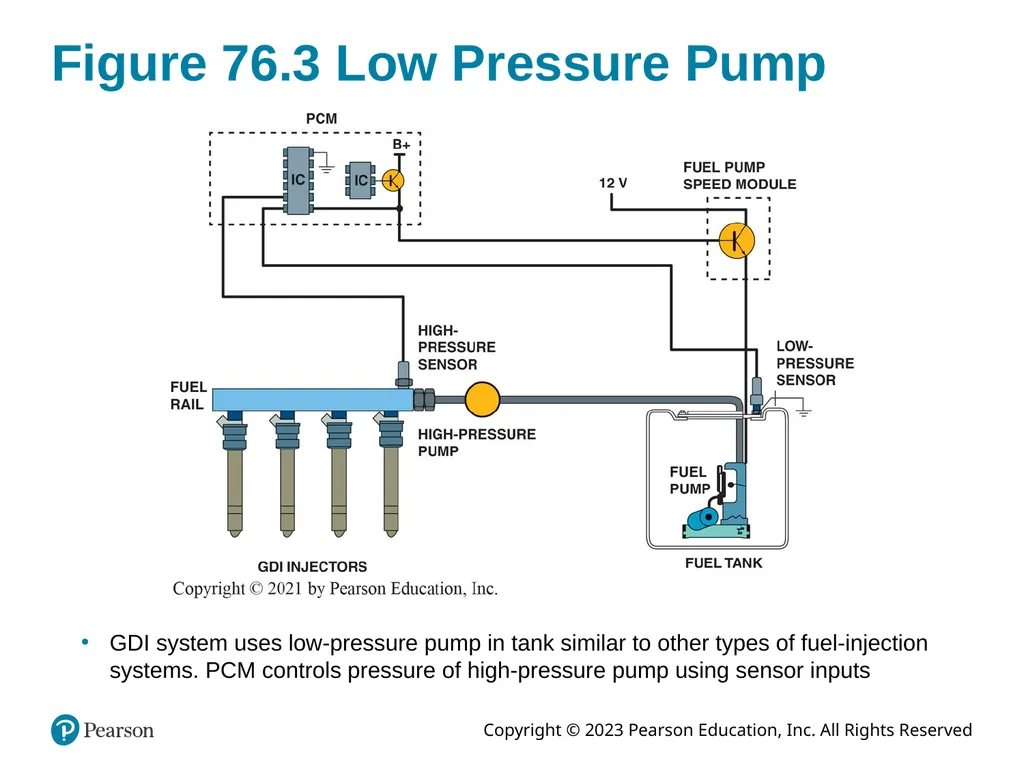
Figure 76.3 Low Pressure Pump GDI system uses low-pressure pump in tank similar to other types of fuel-injection systems. PCM controls pressure of high-pressure pump using sensor inputs<br>
12
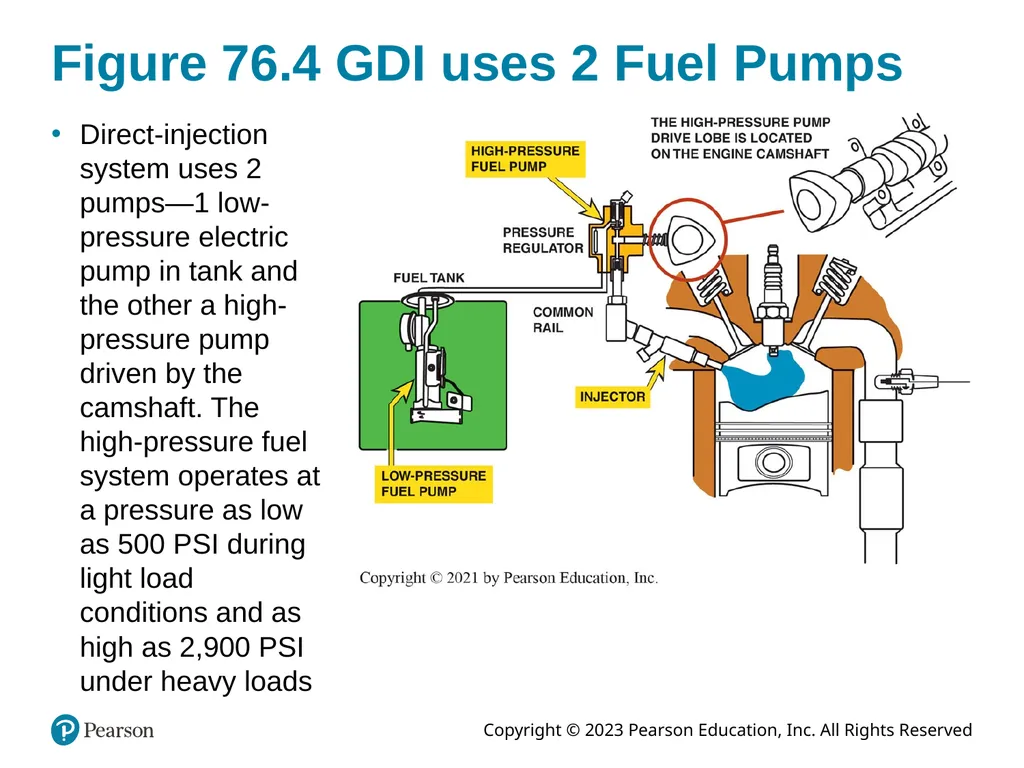
Figure 76.4 GDI uses 2 Fuel Pumps Direct-injection system uses 2 pumps—1 low-pressure electric pump in tank and the other a high-pressure pump driven by the camshaft. The high-pressure fuel system operates at a pressure as low as 500 PSI during light load conditions and as high as 2,900 PSI under heavy loads<br>
13
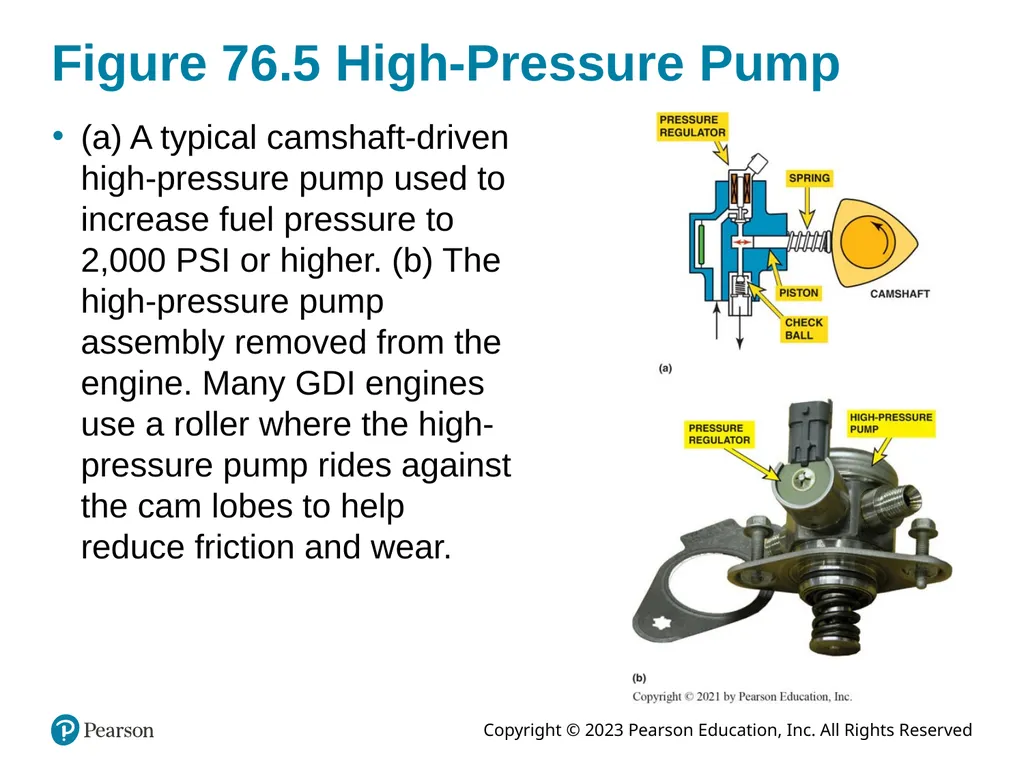
Figure 76.5 High-Pressure Pump (a) A typical camshaft-driven high-pressure pump used to increase fuel pressure to 2,000 PSI or higher. (b) The high-pressure pump assembly removed from the engine. Many GDI engines use a roller where the high-pressure pump rides against the cam lobes to help reduce friction and wear.<br>
14
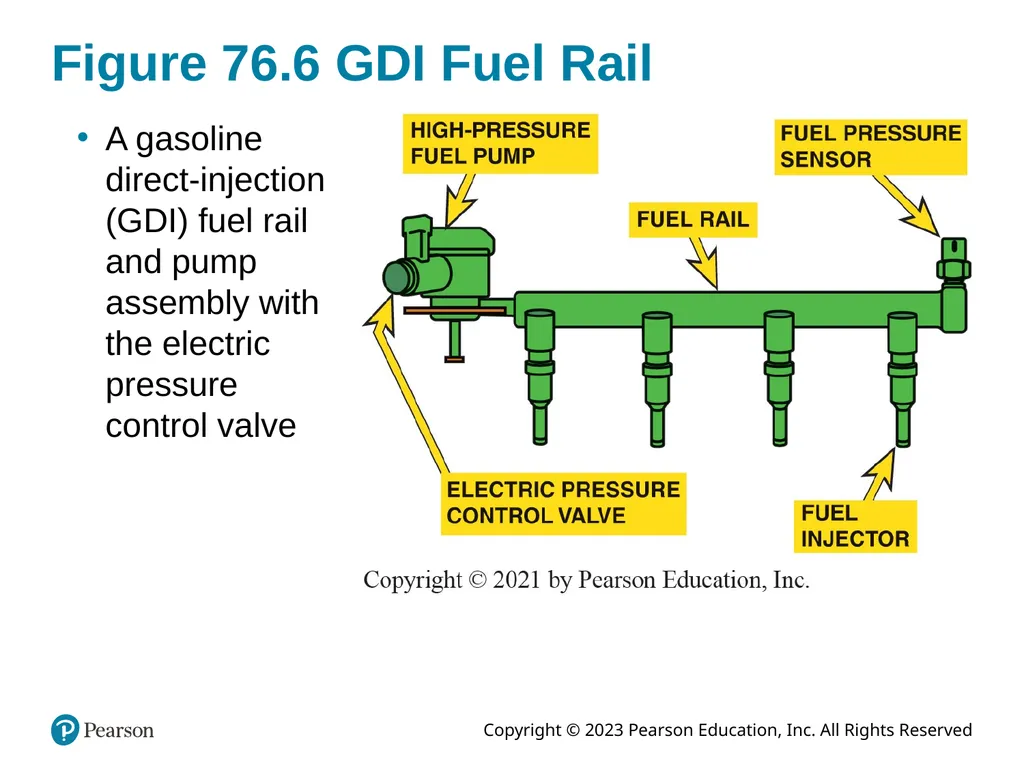
Figure 76.6 GDI Fuel Rail A gasoline direct-injection (GDI) fuel rail and pump assembly with the electric pressure control valve<br>
15
Chart 76.1 PFI vs GDI A comparison chart showing the major differences between a port fuel-injection system and a GDI system.<br>
16
Gasoline Direct-injection Fuel Injectors Each high-pressure fuel injector assembly is an electrically magnetic injector mounted in the cylinder head.
The P C M controls each fuel injector with 50 to 90 volts (usually 60 to 70 volts), depending on the system, which is created by a boost capacitor in the P C M.<br>
17
Modes of Operation (1 of 2) Stratified Mode
In this mode of operation, the air–fuel mixture is richer around the spark plug than it is in the rest of the cylinder.
Homogeneous Mode
In this mode of operation, the air–fuel mixture is the same throughout the cylinder.<br>
18
Modes of Operation (2 of 2) There are variations of these modes that can be used to fine-tune the air–fuel mixture inside the cylinder.
Homogeneous lean mode
Homogeneous stratified mode
Homogeneous knock-protection mode
Stratified catalyst heating mode<br>
19
Piston Top Designs Three of the most commonly used designs include:
Spray-guided combustion
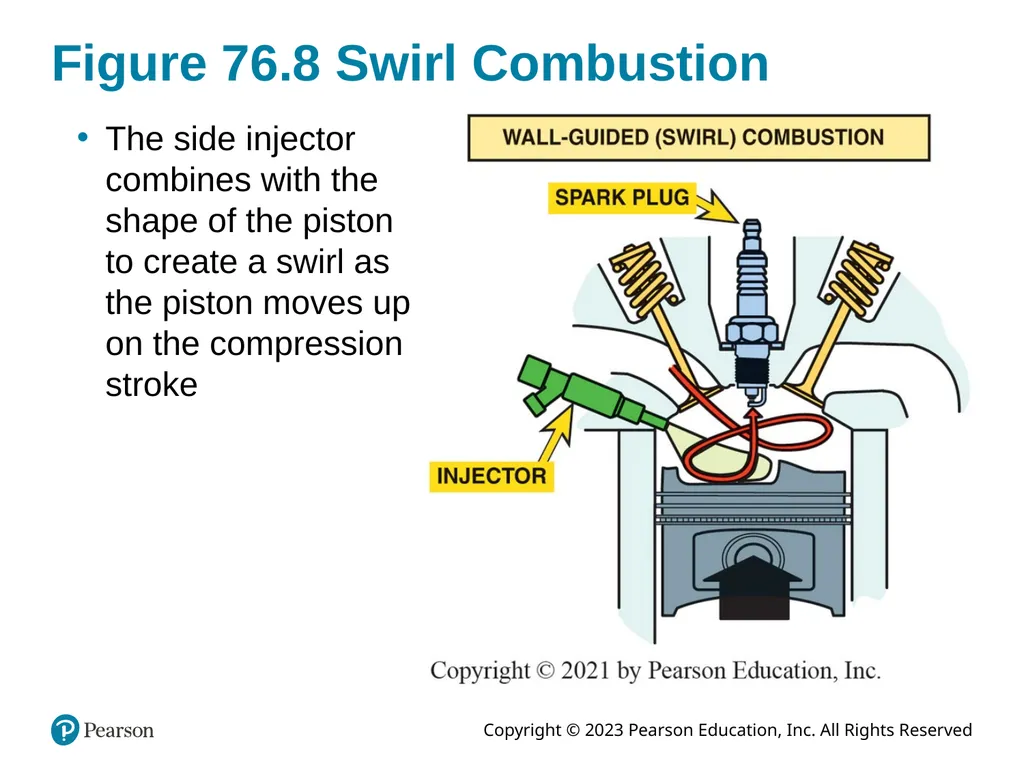
Swirl combustion
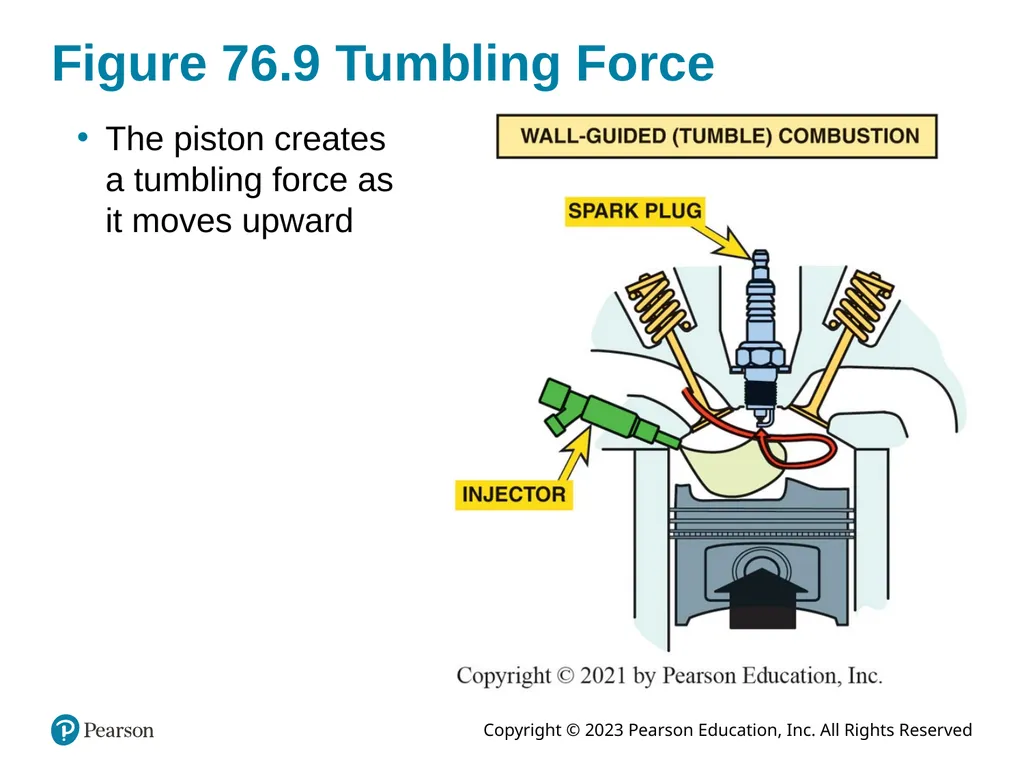
Tumble combustion<br>
20
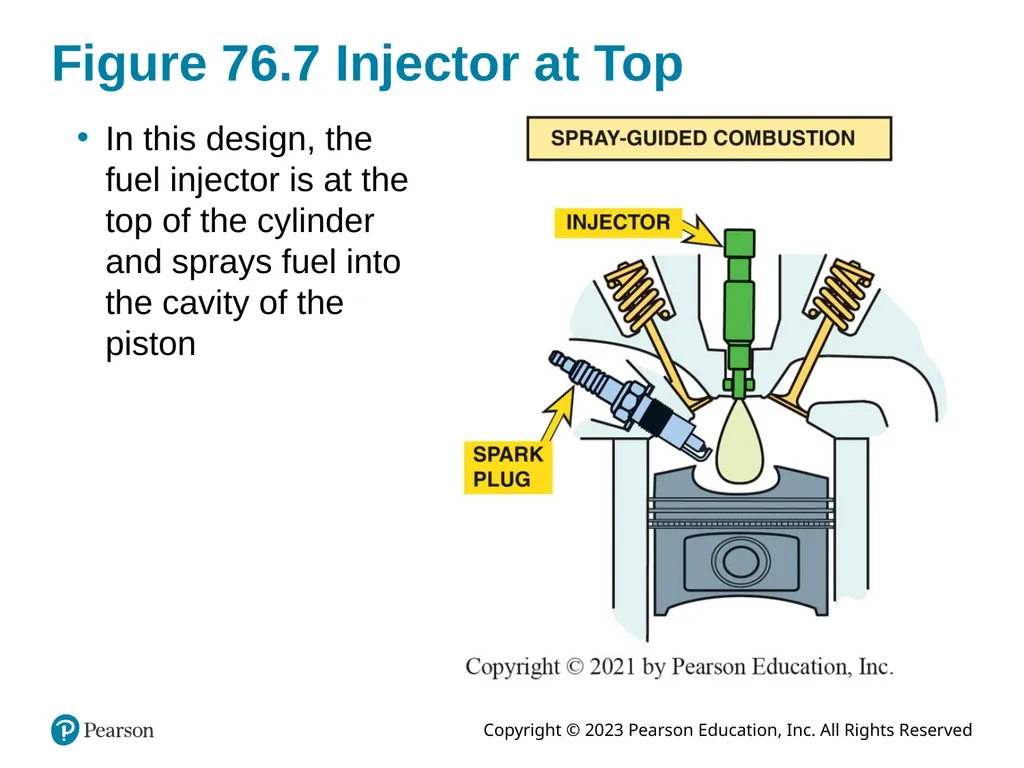
Figure 76.7 Injector at Top In this design, the fuel injector is at the top of the cylinder and sprays fuel into the cavity of the piston<br>
21
Figure 76.8 Swirl Combustion The side injector combines with the shape of the piston to create a swirl as the piston moves up on the compression stroke<br>
22
Figure 76.9 Tumbling Force The piston creates a tumbling force as it moves upward<br>
23
Question 2: ? What are the two primary modes of operation?<br>
24
Answer 2 Stratified and homogeneous mode.<br>
25
Port- and Direct-injection Systems Overview
This system combines direct-injection injectors located in the combustion chamber with port fuel-injectors in the intake manifold near the intake valve.
Cold-Start Warm-Up
To help reduce exhaust emissions after a cold start, the fuel system uses a stratified change mode.
The catalytic converter rapidly reaches operating temperature, which reduces exhaust emissions.<br>
26
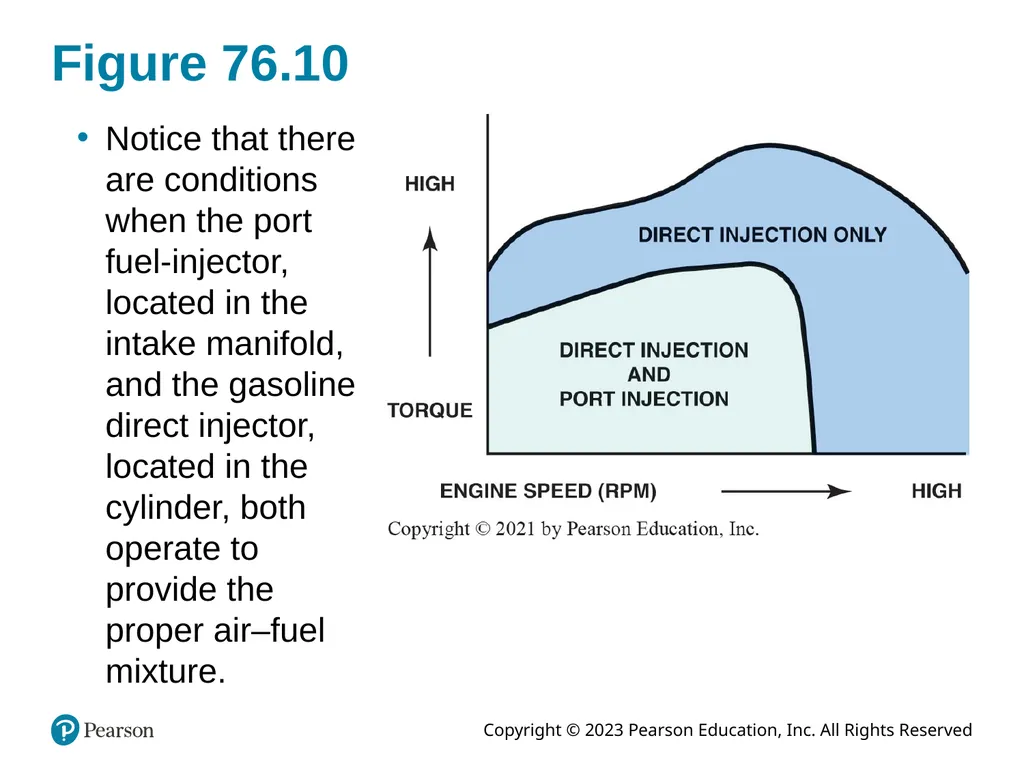
Figure 76.10 Notice that there are conditions when the port fuel-injector, located in the intake manifold, and the gasoline direct injector, located in the cylinder, both operate to provide the proper air–fuel mixture.<br>
27
Gasoline Direct-injection Issues Noise Issues
Injectors can often be heard with the engine running and the hood open. (Likely a normal condition)
Carbon Issues
Carbon can accumulate on the tip of the injector.
Carbon can accumulate on the back side of the intake valve.<br>
28
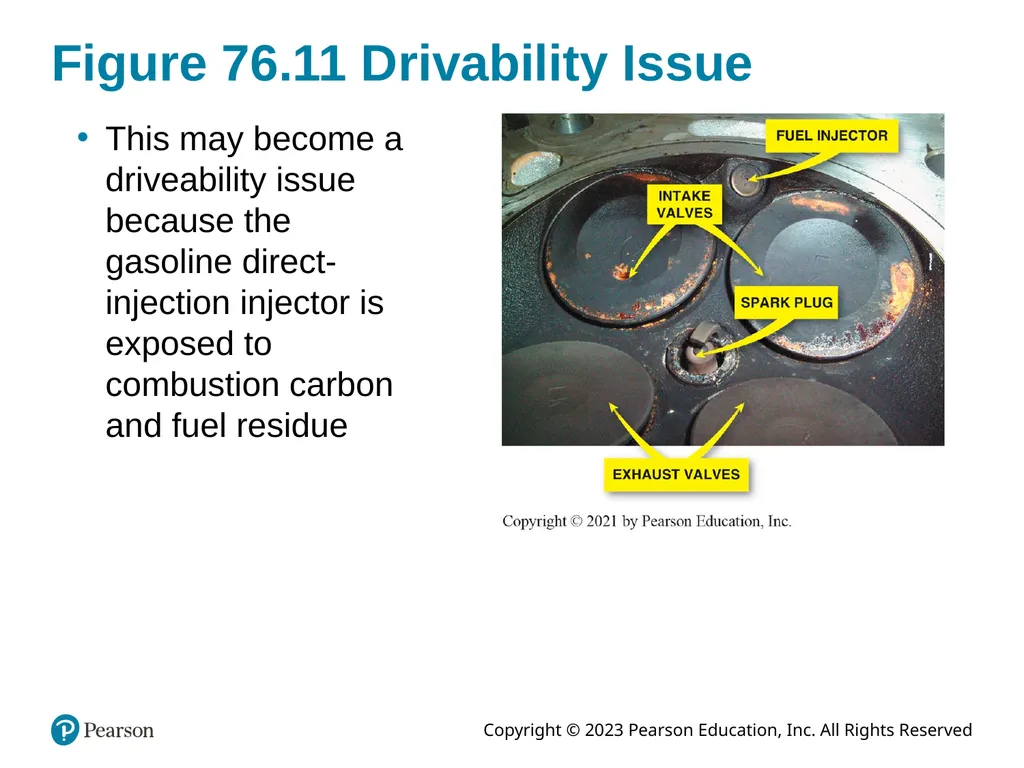
Figure 76.11 Drivability Issue This may become a driveability issue because the gasoline direct-injection injector is exposed to combustion carbon and fuel residue<br>
29
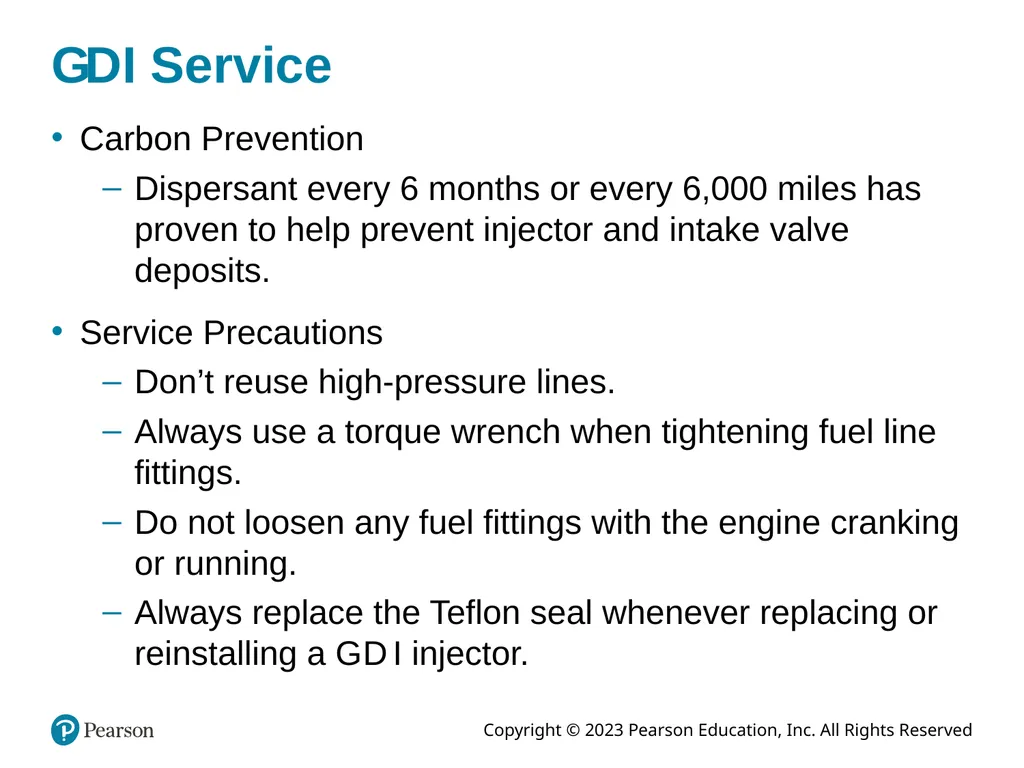
GDI Service Carbon Prevention
Dispersant every 6 months or every 6,000 miles has proven to help prevent injector and intake valve deposits.
Service Precautions
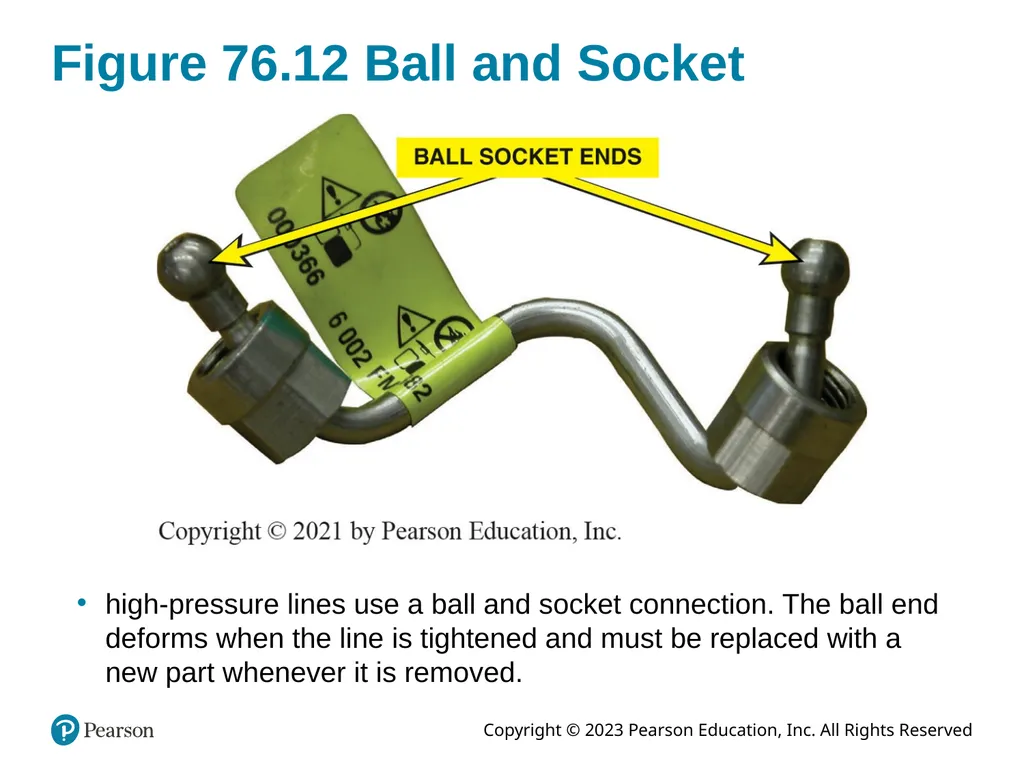
Don’t reuse high-pressure lines.
Always use a torque wrench when tightening fuel line fittings.
Do not loosen any fuel fittings with the engine cranking or running.
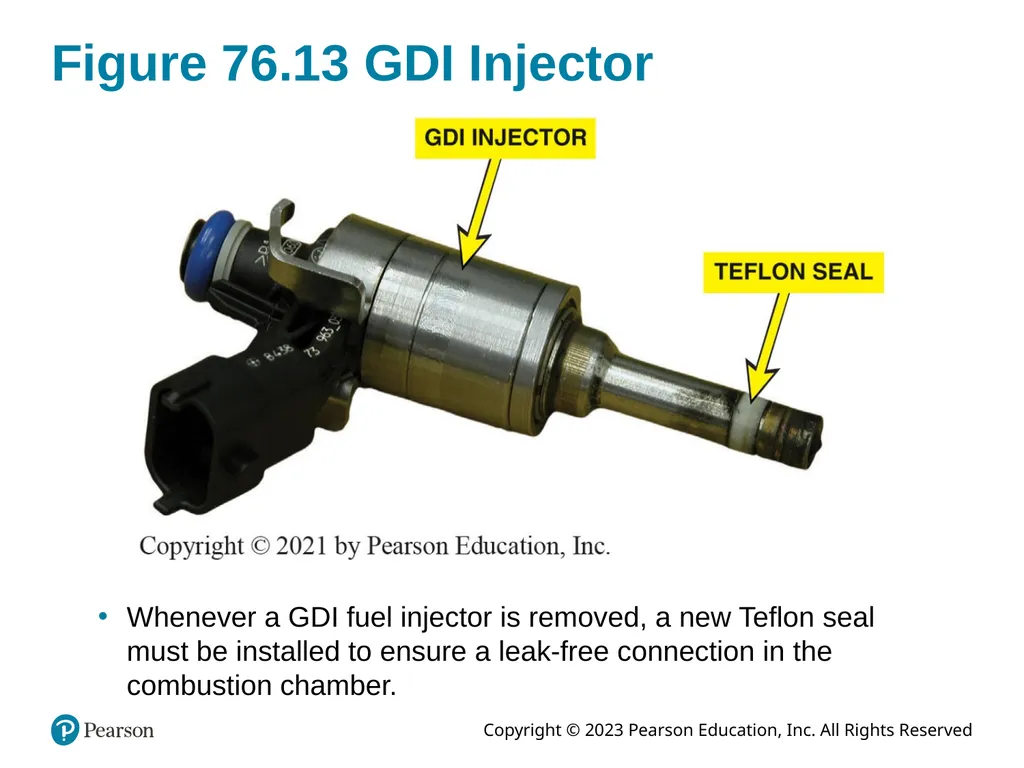
Always replace the Teflon seal whenever replacing or reinstalling a G D I injector.<br>
30
Figure 76.12 Ball and Socket high-pressure lines use a ball and socket connection. The ball end deforms when the line is tightened and must be replaced with a new part whenever it is removed.<br>
31
Figure 76.13 GDI Injector Whenever a GDI fuel injector is removed, a new Teflon seal must be installed to ensure a leak-free connection in the combustion chamber.<br>
32
Question 3: ? What should be replaced any time a high-pressure injector is serviced?<br>
33
Answer 3 The Teflon seal.<br>
34
Engine Performance Videos and Animations Videos Link: (A8) Engine Performance Videos Animations Link: (A8) Engine Performance Animations<br>
35
Copyright This work is protected by United States copyright laws and is provided solely for the use of instructors in teaching their courses and assessing student learning. Dissemination or sale of any part of this work (including on the World Wide Web) will destroy the integrity of the work and is not permitted. The work and materials from it should never be made available to students except by instructors using the accompanying text in their classes. All recipients of this work are expected to abide by these restrictions and to honor the intended pedagogical purposes and the needs of other instructors who rely on these materials.<br>